mirror of
https://github.com/GreptimeTeam/greptimedb.git
synced 2025-12-23 22:49:58 +00:00
Compare commits
23 Commits
docs/vecto
...
release/v0
| Author | SHA1 | Date | |
|---|---|---|---|

|
e46efb3d6c | ||

|
34af9580e0 | ||

|
b19d23d665 | ||

|
209f15dd51 | ||

|
0829fb204c | ||
|
|
c8e470e8ed | ||
|
|
f66803622d | ||

|
e7774437b8 | ||
|
|
c272b25456 | ||
|
|
724b802018 | ||
|
|
f3ca5f5d7f | ||
|
|
6c672b96bf | ||
|
|
83018d6670 | ||
|
|
69f1cbd484 | ||
|
|
e1dad69648 | ||
|
|
6c976bc737 | ||

|
b20c1ac797 | ||
|
|
d7cfb741a5 | ||

|
1b3efef15c | ||
|
|
1ca2dbd240 | ||

|
d596dba240 | ||
|
|
5c9cbb5f4c | ||
|
|
e2df38d0d1 |
@@ -2,7 +2,7 @@
|
||||
linker = "aarch64-linux-gnu-gcc"
|
||||
|
||||
[alias]
|
||||
sqlness = "run --bin sqlness-runner --target-dir target/sqlness --"
|
||||
sqlness = "run --bin sqlness-runner --"
|
||||
|
||||
[unstable.git]
|
||||
shallow_index = true
|
||||
@@ -12,6 +12,3 @@ fetch = true
|
||||
checkout = true
|
||||
list_files = true
|
||||
internal_use_git2 = false
|
||||
|
||||
[env]
|
||||
CARGO_WORKSPACE_DIR = { value = "", relative = true }
|
||||
|
||||
24
.github/CODEOWNERS
vendored
24
.github/CODEOWNERS
vendored
@@ -4,24 +4,24 @@
|
||||
|
||||
* @GreptimeTeam/db-approver
|
||||
|
||||
## [Module] Database Engine
|
||||
/src/index @evenyag @discord9 @WenyXu
|
||||
## [Module] Databse Engine
|
||||
/src/index @zhongzc
|
||||
/src/mito2 @evenyag @v0y4g3r @waynexia
|
||||
/src/query @evenyag @waynexia @discord9
|
||||
/src/query @evenyag
|
||||
|
||||
## [Module] Distributed
|
||||
/src/common/meta @MichaelScofield @WenyXu
|
||||
/src/common/procedure @MichaelScofield @WenyXu
|
||||
/src/meta-client @MichaelScofield @WenyXu
|
||||
/src/meta-srv @MichaelScofield @WenyXu
|
||||
/src/common/meta @MichaelScofield
|
||||
/src/common/procedure @MichaelScofield
|
||||
/src/meta-client @MichaelScofield
|
||||
/src/meta-srv @MichaelScofield
|
||||
|
||||
## [Module] Write Ahead Log
|
||||
/src/log-store @v0y4g3r @WenyXu
|
||||
/src/store-api @v0y4g3r @evenyag
|
||||
/src/log-store @v0y4g3r
|
||||
/src/store-api @v0y4g3r
|
||||
|
||||
## [Module] Metrics Engine
|
||||
/src/metric-engine @waynexia @WenyXu
|
||||
/src/promql @waynexia @evenyag @discord9
|
||||
/src/metric-engine @waynexia
|
||||
/src/promql @waynexia
|
||||
|
||||
## [Module] Flow
|
||||
/src/flow @discord9 @waynexia
|
||||
/src/flow @zhongzc @waynexia
|
||||
|
||||
17
.github/actions/build-greptime-binary/action.yml
vendored
17
.github/actions/build-greptime-binary/action.yml
vendored
@@ -32,23 +32,9 @@ inputs:
|
||||
description: Image Registry
|
||||
required: false
|
||||
default: 'docker.io'
|
||||
large-page-size:
|
||||
description: Build GreptimeDB with large page size (65536).
|
||||
required: false
|
||||
default: 'false'
|
||||
|
||||
runs:
|
||||
using: composite
|
||||
steps:
|
||||
- name: Set extra build environment variables
|
||||
shell: bash
|
||||
run: |
|
||||
if [[ '${{ inputs.large-page-size }}' == 'true' ]]; then
|
||||
echo 'EXTRA_BUILD_ENVS="JEMALLOC_SYS_WITH_LG_PAGE=16"' >> $GITHUB_ENV
|
||||
else
|
||||
echo 'EXTRA_BUILD_ENVS=' >> $GITHUB_ENV
|
||||
fi
|
||||
|
||||
- name: Build greptime binary
|
||||
shell: bash
|
||||
if: ${{ inputs.build-android-artifacts == 'false' }}
|
||||
@@ -59,8 +45,7 @@ runs:
|
||||
FEATURES=${{ inputs.features }} \
|
||||
BASE_IMAGE=${{ inputs.base-image }} \
|
||||
IMAGE_NAMESPACE=${{ inputs.image-namespace }} \
|
||||
IMAGE_REGISTRY=${{ inputs.image-registry }} \
|
||||
EXTRA_BUILD_ENVS=$EXTRA_BUILD_ENVS
|
||||
IMAGE_REGISTRY=${{ inputs.image-registry }}
|
||||
|
||||
- name: Upload artifacts
|
||||
uses: ./.github/actions/upload-artifacts
|
||||
|
||||
11
.github/actions/build-linux-artifacts/action.yml
vendored
11
.github/actions/build-linux-artifacts/action.yml
vendored
@@ -27,10 +27,6 @@ inputs:
|
||||
description: Working directory to build the artifacts
|
||||
required: false
|
||||
default: .
|
||||
large-page-size:
|
||||
description: Build GreptimeDB with large page size (65536).
|
||||
required: false
|
||||
default: 'false'
|
||||
runs:
|
||||
using: composite
|
||||
steps:
|
||||
@@ -56,14 +52,13 @@ runs:
|
||||
uses: ./.github/actions/build-greptime-binary
|
||||
with:
|
||||
base-image: ubuntu
|
||||
features: servers/dashboard
|
||||
features: servers/dashboard,pg_kvbackend,mysql_kvbackend
|
||||
cargo-profile: ${{ inputs.cargo-profile }}
|
||||
artifacts-dir: greptime-linux-${{ inputs.arch }}-${{ inputs.version }}
|
||||
version: ${{ inputs.version }}
|
||||
working-dir: ${{ inputs.working-dir }}
|
||||
image-registry: ${{ inputs.image-registry }}
|
||||
image-namespace: ${{ inputs.image-namespace }}
|
||||
large-page-size: ${{ inputs.large-page-size }}
|
||||
|
||||
- name: Clean up the target directory # Clean up the target directory for the centos7 base image, or it will still use the objects of last build.
|
||||
shell: bash
|
||||
@@ -75,14 +70,13 @@ runs:
|
||||
if: ${{ inputs.arch == 'amd64' && inputs.dev-mode == 'false' }} # Builds greptime for centos if the host machine is amd64.
|
||||
with:
|
||||
base-image: centos
|
||||
features: servers/dashboard
|
||||
features: servers/dashboard,pg_kvbackend,mysql_kvbackend
|
||||
cargo-profile: ${{ inputs.cargo-profile }}
|
||||
artifacts-dir: greptime-linux-${{ inputs.arch }}-centos-${{ inputs.version }}
|
||||
version: ${{ inputs.version }}
|
||||
working-dir: ${{ inputs.working-dir }}
|
||||
image-registry: ${{ inputs.image-registry }}
|
||||
image-namespace: ${{ inputs.image-namespace }}
|
||||
large-page-size: ${{ inputs.large-page-size }}
|
||||
|
||||
- name: Build greptime on android base image
|
||||
uses: ./.github/actions/build-greptime-binary
|
||||
@@ -95,4 +89,3 @@ runs:
|
||||
build-android-artifacts: true
|
||||
image-registry: ${{ inputs.image-registry }}
|
||||
image-namespace: ${{ inputs.image-namespace }}
|
||||
large-page-size: ${{ inputs.large-page-size }}
|
||||
|
||||
@@ -64,11 +64,11 @@ inputs:
|
||||
upload-max-retry-times:
|
||||
description: Max retry times for uploading artifacts to S3
|
||||
required: false
|
||||
default: "30"
|
||||
default: "20"
|
||||
upload-retry-timeout:
|
||||
description: Timeout for uploading artifacts to S3
|
||||
required: false
|
||||
default: "120" # minutes
|
||||
default: "30" # minutes
|
||||
runs:
|
||||
using: composite
|
||||
steps:
|
||||
|
||||
@@ -24,9 +24,4 @@ runs:
|
||||
--set auth.rbac.token.enabled=false \
|
||||
--set persistence.size=2Gi \
|
||||
--create-namespace \
|
||||
--set global.security.allowInsecureImages=true \
|
||||
--set image.registry=docker.io \
|
||||
--set image.repository=greptime/etcd \
|
||||
--set image.tag=3.6.1-debian-12-r3 \
|
||||
--version 12.0.8 \
|
||||
-n ${{ inputs.namespace }}
|
||||
|
||||
@@ -51,7 +51,7 @@ runs:
|
||||
run: |
|
||||
helm upgrade \
|
||||
--install my-greptimedb \
|
||||
--set meta.backendStorage.etcd.endpoints=${{ inputs.etcd-endpoints }} \
|
||||
--set meta.etcdEndpoints=${{ inputs.etcd-endpoints }} \
|
||||
--set meta.enableRegionFailover=${{ inputs.enable-region-failover }} \
|
||||
--set image.registry=${{ inputs.image-registry }} \
|
||||
--set image.repository=${{ inputs.image-repository }} \
|
||||
@@ -59,7 +59,7 @@ runs:
|
||||
--set base.podTemplate.main.resources.requests.cpu=50m \
|
||||
--set base.podTemplate.main.resources.requests.memory=256Mi \
|
||||
--set base.podTemplate.main.resources.limits.cpu=2000m \
|
||||
--set base.podTemplate.main.resources.limits.memory=3Gi \
|
||||
--set base.podTemplate.main.resources.limits.memory=2Gi \
|
||||
--set frontend.replicas=${{ inputs.frontend-replicas }} \
|
||||
--set datanode.replicas=${{ inputs.datanode-replicas }} \
|
||||
--set meta.replicas=${{ inputs.meta-replicas }} \
|
||||
|
||||
@@ -1,8 +1,3 @@
|
||||
logging:
|
||||
level: "info"
|
||||
format: "json"
|
||||
filters:
|
||||
- log_store=debug
|
||||
meta:
|
||||
configData: |-
|
||||
[runtime]
|
||||
@@ -27,6 +22,7 @@ datanode:
|
||||
[wal]
|
||||
provider = "kafka"
|
||||
broker_endpoints = ["kafka.kafka-cluster.svc.cluster.local:9092"]
|
||||
linger = "2ms"
|
||||
overwrite_entry_start_id = true
|
||||
frontend:
|
||||
configData: |-
|
||||
|
||||
@@ -23,8 +23,4 @@ runs:
|
||||
--set listeners.controller.protocol=PLAINTEXT \
|
||||
--set listeners.client.protocol=PLAINTEXT \
|
||||
--create-namespace \
|
||||
--set image.registry=docker.io \
|
||||
--set image.repository=greptime/kafka \
|
||||
--set image.tag=3.9.0-debian-12-r1 \
|
||||
--version 31.0.0 \
|
||||
-n ${{ inputs.namespace }}
|
||||
|
||||
@@ -6,7 +6,9 @@ inputs:
|
||||
description: "Number of PostgreSQL replicas"
|
||||
namespace:
|
||||
default: "postgres-namespace"
|
||||
description: "The PostgreSQL namespace"
|
||||
postgres-version:
|
||||
default: "14.2"
|
||||
description: "PostgreSQL version"
|
||||
storage-size:
|
||||
default: "1Gi"
|
||||
description: "Storage size for PostgreSQL"
|
||||
@@ -20,11 +22,7 @@ runs:
|
||||
helm upgrade \
|
||||
--install postgresql oci://registry-1.docker.io/bitnamicharts/postgresql \
|
||||
--set replicaCount=${{ inputs.postgres-replicas }} \
|
||||
--set global.security.allowInsecureImages=true \
|
||||
--set image.registry=docker.io \
|
||||
--set image.repository=greptime/postgresql \
|
||||
--set image.tag=17.5.0-debian-12-r3 \
|
||||
--version 16.7.4 \
|
||||
--set image.tag=${{ inputs.postgres-version }} \
|
||||
--set persistence.size=${{ inputs.storage-size }} \
|
||||
--set postgresql.username=greptimedb \
|
||||
--set postgresql.password=admin \
|
||||
|
||||
15
.github/labeler.yaml
vendored
15
.github/labeler.yaml
vendored
@@ -1,15 +0,0 @@
|
||||
ci:
|
||||
- changed-files:
|
||||
- any-glob-to-any-file: .github/**
|
||||
|
||||
docker:
|
||||
- changed-files:
|
||||
- any-glob-to-any-file: docker/**
|
||||
|
||||
documentation:
|
||||
- changed-files:
|
||||
- any-glob-to-any-file: docs/**
|
||||
|
||||
dashboard:
|
||||
- changed-files:
|
||||
- any-glob-to-any-file: grafana/**
|
||||
42
.github/scripts/check-version.sh
vendored
42
.github/scripts/check-version.sh
vendored
@@ -1,42 +0,0 @@
|
||||
#!/bin/bash
|
||||
|
||||
# Get current version
|
||||
CURRENT_VERSION=$1
|
||||
if [ -z "$CURRENT_VERSION" ]; then
|
||||
echo "Error: Failed to get current version"
|
||||
exit 1
|
||||
fi
|
||||
|
||||
# Get the latest version from GitHub Releases
|
||||
API_RESPONSE=$(curl -s "https://api.github.com/repos/GreptimeTeam/greptimedb/releases/latest")
|
||||
|
||||
if [ -z "$API_RESPONSE" ] || [ "$(echo "$API_RESPONSE" | jq -r '.message')" = "Not Found" ]; then
|
||||
echo "Error: Failed to fetch latest version from GitHub"
|
||||
exit 1
|
||||
fi
|
||||
|
||||
# Get the latest version
|
||||
LATEST_VERSION=$(echo "$API_RESPONSE" | jq -r '.tag_name')
|
||||
|
||||
if [ -z "$LATEST_VERSION" ] || [ "$LATEST_VERSION" = "null" ]; then
|
||||
echo "Error: No valid version found in GitHub releases"
|
||||
exit 1
|
||||
fi
|
||||
|
||||
# Cleaned up version number format (removed possible 'v' prefix and -nightly suffix)
|
||||
CLEAN_CURRENT=$(echo "$CURRENT_VERSION" | sed 's/^v//' | sed 's/-nightly-.*//')
|
||||
CLEAN_LATEST=$(echo "$LATEST_VERSION" | sed 's/^v//' | sed 's/-nightly-.*//')
|
||||
|
||||
echo "Current version: $CLEAN_CURRENT"
|
||||
echo "Latest release version: $CLEAN_LATEST"
|
||||
|
||||
# Use sort -V to compare versions
|
||||
HIGHER_VERSION=$(printf "%s\n%s" "$CLEAN_CURRENT" "$CLEAN_LATEST" | sort -V | tail -n1)
|
||||
|
||||
if [ "$HIGHER_VERSION" = "$CLEAN_CURRENT" ]; then
|
||||
echo "Current version ($CLEAN_CURRENT) is NEWER than or EQUAL to latest ($CLEAN_LATEST)"
|
||||
echo "is-current-version-latest=true" >> $GITHUB_OUTPUT
|
||||
else
|
||||
echo "Current version ($CLEAN_CURRENT) is OLDER than latest ($CLEAN_LATEST)"
|
||||
echo "is-current-version-latest=false" >> $GITHUB_OUTPUT
|
||||
fi
|
||||
17
.github/scripts/create-version.sh
vendored
17
.github/scripts/create-version.sh
vendored
@@ -8,20 +8,19 @@ set -e
|
||||
# - If it's a nightly build, the version is 'nightly-YYYYMMDD-$(git rev-parse --short HEAD)', like 'nightly-20230712-e5b243c'.
|
||||
# create_version ${GIHUB_EVENT_NAME} ${NEXT_RELEASE_VERSION} ${NIGHTLY_RELEASE_PREFIX}
|
||||
function create_version() {
|
||||
# Read from environment variables.
|
||||
# Read from envrionment variables.
|
||||
if [ -z "$GITHUB_EVENT_NAME" ]; then
|
||||
echo "GITHUB_EVENT_NAME is empty" >&2
|
||||
echo "GITHUB_EVENT_NAME is empty"
|
||||
exit 1
|
||||
fi
|
||||
|
||||
if [ -z "$NEXT_RELEASE_VERSION" ]; then
|
||||
echo "NEXT_RELEASE_VERSION is empty, use version from Cargo.toml" >&2
|
||||
# NOTE: Need a `v` prefix for the version string.
|
||||
export NEXT_RELEASE_VERSION=v$(grep '^version = ' Cargo.toml | cut -d '"' -f 2 | head -n 1)
|
||||
echo "NEXT_RELEASE_VERSION is empty"
|
||||
exit 1
|
||||
fi
|
||||
|
||||
if [ -z "$NIGHTLY_RELEASE_PREFIX" ]; then
|
||||
echo "NIGHTLY_RELEASE_PREFIX is empty" >&2
|
||||
echo "NIGHTLY_RELEASE_PREFIX is empty"
|
||||
exit 1
|
||||
fi
|
||||
|
||||
@@ -36,7 +35,7 @@ function create_version() {
|
||||
# It will be like 'dev-2023080819-f0e7216c'.
|
||||
if [ "$NEXT_RELEASE_VERSION" = dev ]; then
|
||||
if [ -z "$COMMIT_SHA" ]; then
|
||||
echo "COMMIT_SHA is empty in dev build" >&2
|
||||
echo "COMMIT_SHA is empty in dev build"
|
||||
exit 1
|
||||
fi
|
||||
echo "dev-$(date "+%Y%m%d-%s")-$(echo "$COMMIT_SHA" | cut -c1-8)"
|
||||
@@ -46,7 +45,7 @@ function create_version() {
|
||||
# Note: Only output 'version=xxx' to stdout when everything is ok, so that it can be used in GitHub Actions Outputs.
|
||||
if [ "$GITHUB_EVENT_NAME" = push ]; then
|
||||
if [ -z "$GITHUB_REF_NAME" ]; then
|
||||
echo "GITHUB_REF_NAME is empty in push event" >&2
|
||||
echo "GITHUB_REF_NAME is empty in push event"
|
||||
exit 1
|
||||
fi
|
||||
echo "$GITHUB_REF_NAME"
|
||||
@@ -55,7 +54,7 @@ function create_version() {
|
||||
elif [ "$GITHUB_EVENT_NAME" = schedule ]; then
|
||||
echo "$NEXT_RELEASE_VERSION-$NIGHTLY_RELEASE_PREFIX-$(date "+%Y%m%d")"
|
||||
else
|
||||
echo "Unsupported GITHUB_EVENT_NAME: $GITHUB_EVENT_NAME" >&2
|
||||
echo "Unsupported GITHUB_EVENT_NAME: $GITHUB_EVENT_NAME"
|
||||
exit 1
|
||||
fi
|
||||
}
|
||||
|
||||
52
.github/scripts/deploy-greptimedb.sh
vendored
52
.github/scripts/deploy-greptimedb.sh
vendored
@@ -3,18 +3,14 @@
|
||||
set -e
|
||||
set -o pipefail
|
||||
|
||||
KUBERNETES_VERSION="${KUBERNETES_VERSION:-v1.32.0}"
|
||||
KUBERNETES_VERSION="${KUBERNETES_VERSION:-v1.24.0}"
|
||||
ENABLE_STANDALONE_MODE="${ENABLE_STANDALONE_MODE:-true}"
|
||||
DEFAULT_INSTALL_NAMESPACE=${DEFAULT_INSTALL_NAMESPACE:-default}
|
||||
GREPTIMEDB_IMAGE_TAG=${GREPTIMEDB_IMAGE_TAG:-latest}
|
||||
GREPTIMEDB_OPERATOR_IMAGE_TAG=${GREPTIMEDB_OPERATOR_IMAGE_TAG:-v0.5.1}
|
||||
GREPTIMEDB_INITIALIZER_IMAGE_TAG="${GREPTIMEDB_OPERATOR_IMAGE_TAG}"
|
||||
GREPTIME_CHART="https://greptimeteam.github.io/helm-charts/"
|
||||
ETCD_CHART="oci://registry-1.docker.io/bitnamicharts/etcd"
|
||||
ETCD_CHART_VERSION="${ETCD_CHART_VERSION:-12.0.8}"
|
||||
ETCD_IMAGE_TAG="${ETCD_IMAGE_TAG:-3.6.1-debian-12-r3}"
|
||||
GREPTIME_CHART="https://greptimeteam.github.io/helm-charts/"
|
||||
|
||||
# Create a cluster with 1 control-plane node and 5 workers.
|
||||
# Ceate a cluster with 1 control-plane node and 5 workers.
|
||||
function create_kind_cluster() {
|
||||
cat <<EOF | kind create cluster --name "${CLUSTER}" --image kindest/node:"$KUBERNETES_VERSION" --config=-
|
||||
kind: Cluster
|
||||
@@ -39,16 +35,10 @@ function add_greptime_chart() {
|
||||
function deploy_etcd_cluster() {
|
||||
local namespace="$1"
|
||||
|
||||
helm upgrade --install etcd "$ETCD_CHART" \
|
||||
--version "$ETCD_CHART_VERSION" \
|
||||
--create-namespace \
|
||||
helm install etcd "$ETCD_CHART" \
|
||||
--set replicaCount=3 \
|
||||
--set auth.rbac.create=false \
|
||||
--set auth.rbac.token.enabled=false \
|
||||
--set global.security.allowInsecureImages=true \
|
||||
--set image.registry=docker.io \
|
||||
--set image.repository=greptime/etcd \
|
||||
--set image.tag="$ETCD_IMAGE_TAG" \
|
||||
-n "$namespace"
|
||||
|
||||
# Wait for etcd cluster to be ready.
|
||||
@@ -58,9 +48,8 @@ function deploy_etcd_cluster() {
|
||||
# Deploy greptimedb-operator.
|
||||
function deploy_greptimedb_operator() {
|
||||
# Use the latest chart and image.
|
||||
helm upgrade --install greptimedb-operator greptime/greptimedb-operator \
|
||||
--create-namespace \
|
||||
--set image.tag="$GREPTIMEDB_OPERATOR_IMAGE_TAG" \
|
||||
helm install greptimedb-operator greptime/greptimedb-operator \
|
||||
--set image.tag=latest \
|
||||
-n "$DEFAULT_INSTALL_NAMESPACE"
|
||||
|
||||
# Wait for greptimedb-operator to be ready.
|
||||
@@ -77,12 +66,9 @@ function deploy_greptimedb_cluster() {
|
||||
|
||||
deploy_etcd_cluster "$install_namespace"
|
||||
|
||||
helm upgrade --install "$cluster_name" greptime/greptimedb-cluster \
|
||||
--create-namespace \
|
||||
helm install "$cluster_name" greptime/greptimedb-cluster \
|
||||
--set image.tag="$GREPTIMEDB_IMAGE_TAG" \
|
||||
--set initializer.tag="$GREPTIMEDB_INITIALIZER_IMAGE_TAG" \
|
||||
--set meta.backendStorage.etcd.endpoints="etcd.$install_namespace:2379" \
|
||||
--set meta.backendStorage.etcd.storeKeyPrefix="$cluster_name" \
|
||||
--set meta.etcdEndpoints="etcd.$install_namespace:2379" \
|
||||
-n "$install_namespace"
|
||||
|
||||
# Wait for greptimedb cluster to be ready.
|
||||
@@ -115,18 +101,15 @@ function deploy_greptimedb_cluster_with_s3_storage() {
|
||||
|
||||
deploy_etcd_cluster "$install_namespace"
|
||||
|
||||
helm upgrade --install "$cluster_name" greptime/greptimedb-cluster -n "$install_namespace" \
|
||||
--create-namespace \
|
||||
helm install "$cluster_name" greptime/greptimedb-cluster -n "$install_namespace" \
|
||||
--set image.tag="$GREPTIMEDB_IMAGE_TAG" \
|
||||
--set initializer.tag="$GREPTIMEDB_INITIALIZER_IMAGE_TAG" \
|
||||
--set meta.backendStorage.etcd.endpoints="etcd.$install_namespace:2379" \
|
||||
--set meta.backendStorage.etcd.storeKeyPrefix="$cluster_name" \
|
||||
--set objectStorage.s3.bucket="$AWS_CI_TEST_BUCKET" \
|
||||
--set objectStorage.s3.region="$AWS_REGION" \
|
||||
--set objectStorage.s3.root="$DATA_ROOT" \
|
||||
--set objectStorage.credentials.secretName=s3-credentials \
|
||||
--set objectStorage.credentials.accessKeyId="$AWS_ACCESS_KEY_ID" \
|
||||
--set objectStorage.credentials.secretAccessKey="$AWS_SECRET_ACCESS_KEY"
|
||||
--set meta.etcdEndpoints="etcd.$install_namespace:2379" \
|
||||
--set storage.s3.bucket="$AWS_CI_TEST_BUCKET" \
|
||||
--set storage.s3.region="$AWS_REGION" \
|
||||
--set storage.s3.root="$DATA_ROOT" \
|
||||
--set storage.credentials.secretName=s3-credentials \
|
||||
--set storage.credentials.accessKeyId="$AWS_ACCESS_KEY_ID" \
|
||||
--set storage.credentials.secretAccessKey="$AWS_SECRET_ACCESS_KEY"
|
||||
|
||||
# Wait for greptimedb cluster to be ready.
|
||||
while true; do
|
||||
@@ -151,8 +134,7 @@ function deploy_greptimedb_cluster_with_s3_storage() {
|
||||
# Deploy standalone greptimedb.
|
||||
# It will expose cluster service ports as '34000', '34001', '34002', '34003' to local access.
|
||||
function deploy_standalone_greptimedb() {
|
||||
helm upgrade --install greptimedb-standalone greptime/greptimedb-standalone \
|
||||
--create-namespace \
|
||||
helm install greptimedb-standalone greptime/greptimedb-standalone \
|
||||
--set image.tag="$GREPTIMEDB_IMAGE_TAG" \
|
||||
-n "$DEFAULT_INSTALL_NAMESPACE"
|
||||
|
||||
|
||||
507
.github/scripts/package-lock.json
generated
vendored
507
.github/scripts/package-lock.json
generated
vendored
@@ -1,507 +0,0 @@
|
||||
{
|
||||
"name": "greptimedb-github-scripts",
|
||||
"version": "1.0.0",
|
||||
"lockfileVersion": 3,
|
||||
"requires": true,
|
||||
"packages": {
|
||||
"": {
|
||||
"name": "greptimedb-github-scripts",
|
||||
"version": "1.0.0",
|
||||
"dependencies": {
|
||||
"@octokit/rest": "^21.0.0",
|
||||
"axios": "^1.7.0"
|
||||
}
|
||||
},
|
||||
"node_modules/@octokit/auth-token": {
|
||||
"version": "5.1.2",
|
||||
"resolved": "https://registry.npmjs.org/@octokit/auth-token/-/auth-token-5.1.2.tgz",
|
||||
"integrity": "sha512-JcQDsBdg49Yky2w2ld20IHAlwr8d/d8N6NiOXbtuoPCqzbsiJgF633mVUw3x4mo0H5ypataQIX7SFu3yy44Mpw==",
|
||||
"license": "MIT",
|
||||
"engines": {
|
||||
"node": ">= 18"
|
||||
}
|
||||
},
|
||||
"node_modules/@octokit/core": {
|
||||
"version": "6.1.6",
|
||||
"resolved": "https://registry.npmjs.org/@octokit/core/-/core-6.1.6.tgz",
|
||||
"integrity": "sha512-kIU8SLQkYWGp3pVKiYzA5OSaNF5EE03P/R8zEmmrG6XwOg5oBjXyQVVIauQ0dgau4zYhpZEhJrvIYt6oM+zZZA==",
|
||||
"license": "MIT",
|
||||
"dependencies": {
|
||||
"@octokit/auth-token": "^5.0.0",
|
||||
"@octokit/graphql": "^8.2.2",
|
||||
"@octokit/request": "^9.2.3",
|
||||
"@octokit/request-error": "^6.1.8",
|
||||
"@octokit/types": "^14.0.0",
|
||||
"before-after-hook": "^3.0.2",
|
||||
"universal-user-agent": "^7.0.0"
|
||||
},
|
||||
"engines": {
|
||||
"node": ">= 18"
|
||||
}
|
||||
},
|
||||
"node_modules/@octokit/endpoint": {
|
||||
"version": "10.1.4",
|
||||
"resolved": "https://registry.npmjs.org/@octokit/endpoint/-/endpoint-10.1.4.tgz",
|
||||
"integrity": "sha512-OlYOlZIsfEVZm5HCSR8aSg02T2lbUWOsCQoPKfTXJwDzcHQBrVBGdGXb89dv2Kw2ToZaRtudp8O3ZIYoaOjKlA==",
|
||||
"license": "MIT",
|
||||
"dependencies": {
|
||||
"@octokit/types": "^14.0.0",
|
||||
"universal-user-agent": "^7.0.2"
|
||||
},
|
||||
"engines": {
|
||||
"node": ">= 18"
|
||||
}
|
||||
},
|
||||
"node_modules/@octokit/graphql": {
|
||||
"version": "8.2.2",
|
||||
"resolved": "https://registry.npmjs.org/@octokit/graphql/-/graphql-8.2.2.tgz",
|
||||
"integrity": "sha512-Yi8hcoqsrXGdt0yObxbebHXFOiUA+2v3n53epuOg1QUgOB6c4XzvisBNVXJSl8RYA5KrDuSL2yq9Qmqe5N0ryA==",
|
||||
"license": "MIT",
|
||||
"dependencies": {
|
||||
"@octokit/request": "^9.2.3",
|
||||
"@octokit/types": "^14.0.0",
|
||||
"universal-user-agent": "^7.0.0"
|
||||
},
|
||||
"engines": {
|
||||
"node": ">= 18"
|
||||
}
|
||||
},
|
||||
"node_modules/@octokit/openapi-types": {
|
||||
"version": "25.1.0",
|
||||
"resolved": "https://registry.npmjs.org/@octokit/openapi-types/-/openapi-types-25.1.0.tgz",
|
||||
"integrity": "sha512-idsIggNXUKkk0+BExUn1dQ92sfysJrje03Q0bv0e+KPLrvyqZF8MnBpFz8UNfYDwB3Ie7Z0TByjWfzxt7vseaA==",
|
||||
"license": "MIT"
|
||||
},
|
||||
"node_modules/@octokit/plugin-paginate-rest": {
|
||||
"version": "11.6.0",
|
||||
"resolved": "https://registry.npmjs.org/@octokit/plugin-paginate-rest/-/plugin-paginate-rest-11.6.0.tgz",
|
||||
"integrity": "sha512-n5KPteiF7pWKgBIBJSk8qzoZWcUkza2O6A0za97pMGVrGfPdltxrfmfF5GucHYvHGZD8BdaZmmHGz5cX/3gdpw==",
|
||||
"license": "MIT",
|
||||
"dependencies": {
|
||||
"@octokit/types": "^13.10.0"
|
||||
},
|
||||
"engines": {
|
||||
"node": ">= 18"
|
||||
},
|
||||
"peerDependencies": {
|
||||
"@octokit/core": ">=6"
|
||||
}
|
||||
},
|
||||
"node_modules/@octokit/plugin-paginate-rest/node_modules/@octokit/openapi-types": {
|
||||
"version": "24.2.0",
|
||||
"resolved": "https://registry.npmjs.org/@octokit/openapi-types/-/openapi-types-24.2.0.tgz",
|
||||
"integrity": "sha512-9sIH3nSUttelJSXUrmGzl7QUBFul0/mB8HRYl3fOlgHbIWG+WnYDXU3v/2zMtAvuzZ/ed00Ei6on975FhBfzrg==",
|
||||
"license": "MIT"
|
||||
},
|
||||
"node_modules/@octokit/plugin-paginate-rest/node_modules/@octokit/types": {
|
||||
"version": "13.10.0",
|
||||
"resolved": "https://registry.npmjs.org/@octokit/types/-/types-13.10.0.tgz",
|
||||
"integrity": "sha512-ifLaO34EbbPj0Xgro4G5lP5asESjwHracYJvVaPIyXMuiuXLlhic3S47cBdTb+jfODkTE5YtGCLt3Ay3+J97sA==",
|
||||
"license": "MIT",
|
||||
"dependencies": {
|
||||
"@octokit/openapi-types": "^24.2.0"
|
||||
}
|
||||
},
|
||||
"node_modules/@octokit/plugin-request-log": {
|
||||
"version": "5.3.1",
|
||||
"resolved": "https://registry.npmjs.org/@octokit/plugin-request-log/-/plugin-request-log-5.3.1.tgz",
|
||||
"integrity": "sha512-n/lNeCtq+9ofhC15xzmJCNKP2BWTv8Ih2TTy+jatNCCq/gQP/V7rK3fjIfuz0pDWDALO/o/4QY4hyOF6TQQFUw==",
|
||||
"license": "MIT",
|
||||
"engines": {
|
||||
"node": ">= 18"
|
||||
},
|
||||
"peerDependencies": {
|
||||
"@octokit/core": ">=6"
|
||||
}
|
||||
},
|
||||
"node_modules/@octokit/plugin-rest-endpoint-methods": {
|
||||
"version": "13.5.0",
|
||||
"resolved": "https://registry.npmjs.org/@octokit/plugin-rest-endpoint-methods/-/plugin-rest-endpoint-methods-13.5.0.tgz",
|
||||
"integrity": "sha512-9Pas60Iv9ejO3WlAX3maE1+38c5nqbJXV5GrncEfkndIpZrJ/WPMRd2xYDcPPEt5yzpxcjw9fWNoPhsSGzqKqw==",
|
||||
"license": "MIT",
|
||||
"dependencies": {
|
||||
"@octokit/types": "^13.10.0"
|
||||
},
|
||||
"engines": {
|
||||
"node": ">= 18"
|
||||
},
|
||||
"peerDependencies": {
|
||||
"@octokit/core": ">=6"
|
||||
}
|
||||
},
|
||||
"node_modules/@octokit/plugin-rest-endpoint-methods/node_modules/@octokit/openapi-types": {
|
||||
"version": "24.2.0",
|
||||
"resolved": "https://registry.npmjs.org/@octokit/openapi-types/-/openapi-types-24.2.0.tgz",
|
||||
"integrity": "sha512-9sIH3nSUttelJSXUrmGzl7QUBFul0/mB8HRYl3fOlgHbIWG+WnYDXU3v/2zMtAvuzZ/ed00Ei6on975FhBfzrg==",
|
||||
"license": "MIT"
|
||||
},
|
||||
"node_modules/@octokit/plugin-rest-endpoint-methods/node_modules/@octokit/types": {
|
||||
"version": "13.10.0",
|
||||
"resolved": "https://registry.npmjs.org/@octokit/types/-/types-13.10.0.tgz",
|
||||
"integrity": "sha512-ifLaO34EbbPj0Xgro4G5lP5asESjwHracYJvVaPIyXMuiuXLlhic3S47cBdTb+jfODkTE5YtGCLt3Ay3+J97sA==",
|
||||
"license": "MIT",
|
||||
"dependencies": {
|
||||
"@octokit/openapi-types": "^24.2.0"
|
||||
}
|
||||
},
|
||||
"node_modules/@octokit/request": {
|
||||
"version": "9.2.4",
|
||||
"resolved": "https://registry.npmjs.org/@octokit/request/-/request-9.2.4.tgz",
|
||||
"integrity": "sha512-q8ybdytBmxa6KogWlNa818r0k1wlqzNC+yNkcQDECHvQo8Vmstrg18JwqJHdJdUiHD2sjlwBgSm9kHkOKe2iyA==",
|
||||
"license": "MIT",
|
||||
"dependencies": {
|
||||
"@octokit/endpoint": "^10.1.4",
|
||||
"@octokit/request-error": "^6.1.8",
|
||||
"@octokit/types": "^14.0.0",
|
||||
"fast-content-type-parse": "^2.0.0",
|
||||
"universal-user-agent": "^7.0.2"
|
||||
},
|
||||
"engines": {
|
||||
"node": ">= 18"
|
||||
}
|
||||
},
|
||||
"node_modules/@octokit/request-error": {
|
||||
"version": "6.1.8",
|
||||
"resolved": "https://registry.npmjs.org/@octokit/request-error/-/request-error-6.1.8.tgz",
|
||||
"integrity": "sha512-WEi/R0Jmq+IJKydWlKDmryPcmdYSVjL3ekaiEL1L9eo1sUnqMJ+grqmC9cjk7CA7+b2/T397tO5d8YLOH3qYpQ==",
|
||||
"license": "MIT",
|
||||
"dependencies": {
|
||||
"@octokit/types": "^14.0.0"
|
||||
},
|
||||
"engines": {
|
||||
"node": ">= 18"
|
||||
}
|
||||
},
|
||||
"node_modules/@octokit/rest": {
|
||||
"version": "21.1.1",
|
||||
"resolved": "https://registry.npmjs.org/@octokit/rest/-/rest-21.1.1.tgz",
|
||||
"integrity": "sha512-sTQV7va0IUVZcntzy1q3QqPm/r8rWtDCqpRAmb8eXXnKkjoQEtFe3Nt5GTVsHft+R6jJoHeSiVLcgcvhtue/rg==",
|
||||
"license": "MIT",
|
||||
"dependencies": {
|
||||
"@octokit/core": "^6.1.4",
|
||||
"@octokit/plugin-paginate-rest": "^11.4.2",
|
||||
"@octokit/plugin-request-log": "^5.3.1",
|
||||
"@octokit/plugin-rest-endpoint-methods": "^13.3.0"
|
||||
},
|
||||
"engines": {
|
||||
"node": ">= 18"
|
||||
}
|
||||
},
|
||||
"node_modules/@octokit/types": {
|
||||
"version": "14.1.0",
|
||||
"resolved": "https://registry.npmjs.org/@octokit/types/-/types-14.1.0.tgz",
|
||||
"integrity": "sha512-1y6DgTy8Jomcpu33N+p5w58l6xyt55Ar2I91RPiIA0xCJBXyUAhXCcmZaDWSANiha7R9a6qJJ2CRomGPZ6f46g==",
|
||||
"license": "MIT",
|
||||
"dependencies": {
|
||||
"@octokit/openapi-types": "^25.1.0"
|
||||
}
|
||||
},
|
||||
"node_modules/asynckit": {
|
||||
"version": "0.4.0",
|
||||
"resolved": "https://registry.npmjs.org/asynckit/-/asynckit-0.4.0.tgz",
|
||||
"integrity": "sha512-Oei9OH4tRh0YqU3GxhX79dM/mwVgvbZJaSNaRk+bshkj0S5cfHcgYakreBjrHwatXKbz+IoIdYLxrKim2MjW0Q==",
|
||||
"license": "MIT"
|
||||
},
|
||||
"node_modules/axios": {
|
||||
"version": "1.12.2",
|
||||
"resolved": "https://registry.npmjs.org/axios/-/axios-1.12.2.tgz",
|
||||
"integrity": "sha512-vMJzPewAlRyOgxV2dU0Cuz2O8zzzx9VYtbJOaBgXFeLc4IV/Eg50n4LowmehOOR61S8ZMpc2K5Sa7g6A4jfkUw==",
|
||||
"license": "MIT",
|
||||
"dependencies": {
|
||||
"follow-redirects": "^1.15.6",
|
||||
"form-data": "^4.0.4",
|
||||
"proxy-from-env": "^1.1.0"
|
||||
}
|
||||
},
|
||||
"node_modules/before-after-hook": {
|
||||
"version": "3.0.2",
|
||||
"resolved": "https://registry.npmjs.org/before-after-hook/-/before-after-hook-3.0.2.tgz",
|
||||
"integrity": "sha512-Nik3Sc0ncrMK4UUdXQmAnRtzmNQTAAXmXIopizwZ1W1t8QmfJj+zL4OA2I7XPTPW5z5TDqv4hRo/JzouDJnX3A==",
|
||||
"license": "Apache-2.0"
|
||||
},
|
||||
"node_modules/call-bind-apply-helpers": {
|
||||
"version": "1.0.2",
|
||||
"resolved": "https://registry.npmjs.org/call-bind-apply-helpers/-/call-bind-apply-helpers-1.0.2.tgz",
|
||||
"integrity": "sha512-Sp1ablJ0ivDkSzjcaJdxEunN5/XvksFJ2sMBFfq6x0ryhQV/2b/KwFe21cMpmHtPOSij8K99/wSfoEuTObmuMQ==",
|
||||
"license": "MIT",
|
||||
"dependencies": {
|
||||
"es-errors": "^1.3.0",
|
||||
"function-bind": "^1.1.2"
|
||||
},
|
||||
"engines": {
|
||||
"node": ">= 0.4"
|
||||
}
|
||||
},
|
||||
"node_modules/combined-stream": {
|
||||
"version": "1.0.8",
|
||||
"resolved": "https://registry.npmjs.org/combined-stream/-/combined-stream-1.0.8.tgz",
|
||||
"integrity": "sha512-FQN4MRfuJeHf7cBbBMJFXhKSDq+2kAArBlmRBvcvFE5BB1HZKXtSFASDhdlz9zOYwxh8lDdnvmMOe/+5cdoEdg==",
|
||||
"license": "MIT",
|
||||
"dependencies": {
|
||||
"delayed-stream": "~1.0.0"
|
||||
},
|
||||
"engines": {
|
||||
"node": ">= 0.8"
|
||||
}
|
||||
},
|
||||
"node_modules/delayed-stream": {
|
||||
"version": "1.0.0",
|
||||
"resolved": "https://registry.npmjs.org/delayed-stream/-/delayed-stream-1.0.0.tgz",
|
||||
"integrity": "sha512-ZySD7Nf91aLB0RxL4KGrKHBXl7Eds1DAmEdcoVawXnLD7SDhpNgtuII2aAkg7a7QS41jxPSZ17p4VdGnMHk3MQ==",
|
||||
"license": "MIT",
|
||||
"engines": {
|
||||
"node": ">=0.4.0"
|
||||
}
|
||||
},
|
||||
"node_modules/dunder-proto": {
|
||||
"version": "1.0.1",
|
||||
"resolved": "https://registry.npmjs.org/dunder-proto/-/dunder-proto-1.0.1.tgz",
|
||||
"integrity": "sha512-KIN/nDJBQRcXw0MLVhZE9iQHmG68qAVIBg9CqmUYjmQIhgij9U5MFvrqkUL5FbtyyzZuOeOt0zdeRe4UY7ct+A==",
|
||||
"license": "MIT",
|
||||
"dependencies": {
|
||||
"call-bind-apply-helpers": "^1.0.1",
|
||||
"es-errors": "^1.3.0",
|
||||
"gopd": "^1.2.0"
|
||||
},
|
||||
"engines": {
|
||||
"node": ">= 0.4"
|
||||
}
|
||||
},
|
||||
"node_modules/es-define-property": {
|
||||
"version": "1.0.1",
|
||||
"resolved": "https://registry.npmjs.org/es-define-property/-/es-define-property-1.0.1.tgz",
|
||||
"integrity": "sha512-e3nRfgfUZ4rNGL232gUgX06QNyyez04KdjFrF+LTRoOXmrOgFKDg4BCdsjW8EnT69eqdYGmRpJwiPVYNrCaW3g==",
|
||||
"license": "MIT",
|
||||
"engines": {
|
||||
"node": ">= 0.4"
|
||||
}
|
||||
},
|
||||
"node_modules/es-errors": {
|
||||
"version": "1.3.0",
|
||||
"resolved": "https://registry.npmjs.org/es-errors/-/es-errors-1.3.0.tgz",
|
||||
"integrity": "sha512-Zf5H2Kxt2xjTvbJvP2ZWLEICxA6j+hAmMzIlypy4xcBg1vKVnx89Wy0GbS+kf5cwCVFFzdCFh2XSCFNULS6csw==",
|
||||
"license": "MIT",
|
||||
"engines": {
|
||||
"node": ">= 0.4"
|
||||
}
|
||||
},
|
||||
"node_modules/es-object-atoms": {
|
||||
"version": "1.1.1",
|
||||
"resolved": "https://registry.npmjs.org/es-object-atoms/-/es-object-atoms-1.1.1.tgz",
|
||||
"integrity": "sha512-FGgH2h8zKNim9ljj7dankFPcICIK9Cp5bm+c2gQSYePhpaG5+esrLODihIorn+Pe6FGJzWhXQotPv73jTaldXA==",
|
||||
"license": "MIT",
|
||||
"dependencies": {
|
||||
"es-errors": "^1.3.0"
|
||||
},
|
||||
"engines": {
|
||||
"node": ">= 0.4"
|
||||
}
|
||||
},
|
||||
"node_modules/es-set-tostringtag": {
|
||||
"version": "2.1.0",
|
||||
"resolved": "https://registry.npmjs.org/es-set-tostringtag/-/es-set-tostringtag-2.1.0.tgz",
|
||||
"integrity": "sha512-j6vWzfrGVfyXxge+O0x5sh6cvxAog0a/4Rdd2K36zCMV5eJ+/+tOAngRO8cODMNWbVRdVlmGZQL2YS3yR8bIUA==",
|
||||
"license": "MIT",
|
||||
"dependencies": {
|
||||
"es-errors": "^1.3.0",
|
||||
"get-intrinsic": "^1.2.6",
|
||||
"has-tostringtag": "^1.0.2",
|
||||
"hasown": "^2.0.2"
|
||||
},
|
||||
"engines": {
|
||||
"node": ">= 0.4"
|
||||
}
|
||||
},
|
||||
"node_modules/fast-content-type-parse": {
|
||||
"version": "2.0.1",
|
||||
"resolved": "https://registry.npmjs.org/fast-content-type-parse/-/fast-content-type-parse-2.0.1.tgz",
|
||||
"integrity": "sha512-nGqtvLrj5w0naR6tDPfB4cUmYCqouzyQiz6C5y/LtcDllJdrcc6WaWW6iXyIIOErTa/XRybj28aasdn4LkVk6Q==",
|
||||
"funding": [
|
||||
{
|
||||
"type": "github",
|
||||
"url": "https://github.com/sponsors/fastify"
|
||||
},
|
||||
{
|
||||
"type": "opencollective",
|
||||
"url": "https://opencollective.com/fastify"
|
||||
}
|
||||
],
|
||||
"license": "MIT"
|
||||
},
|
||||
"node_modules/follow-redirects": {
|
||||
"version": "1.15.11",
|
||||
"resolved": "https://registry.npmjs.org/follow-redirects/-/follow-redirects-1.15.11.tgz",
|
||||
"integrity": "sha512-deG2P0JfjrTxl50XGCDyfI97ZGVCxIpfKYmfyrQ54n5FO/0gfIES8C/Psl6kWVDolizcaaxZJnTS0QSMxvnsBQ==",
|
||||
"funding": [
|
||||
{
|
||||
"type": "individual",
|
||||
"url": "https://github.com/sponsors/RubenVerborgh"
|
||||
}
|
||||
],
|
||||
"license": "MIT",
|
||||
"engines": {
|
||||
"node": ">=4.0"
|
||||
},
|
||||
"peerDependenciesMeta": {
|
||||
"debug": {
|
||||
"optional": true
|
||||
}
|
||||
}
|
||||
},
|
||||
"node_modules/form-data": {
|
||||
"version": "4.0.4",
|
||||
"resolved": "https://registry.npmjs.org/form-data/-/form-data-4.0.4.tgz",
|
||||
"integrity": "sha512-KrGhL9Q4zjj0kiUt5OO4Mr/A/jlI2jDYs5eHBpYHPcBEVSiipAvn2Ko2HnPe20rmcuuvMHNdZFp+4IlGTMF0Ow==",
|
||||
"license": "MIT",
|
||||
"dependencies": {
|
||||
"asynckit": "^0.4.0",
|
||||
"combined-stream": "^1.0.8",
|
||||
"es-set-tostringtag": "^2.1.0",
|
||||
"hasown": "^2.0.2",
|
||||
"mime-types": "^2.1.12"
|
||||
},
|
||||
"engines": {
|
||||
"node": ">= 6"
|
||||
}
|
||||
},
|
||||
"node_modules/function-bind": {
|
||||
"version": "1.1.2",
|
||||
"resolved": "https://registry.npmjs.org/function-bind/-/function-bind-1.1.2.tgz",
|
||||
"integrity": "sha512-7XHNxH7qX9xG5mIwxkhumTox/MIRNcOgDrxWsMt2pAr23WHp6MrRlN7FBSFpCpr+oVO0F744iUgR82nJMfG2SA==",
|
||||
"license": "MIT",
|
||||
"funding": {
|
||||
"url": "https://github.com/sponsors/ljharb"
|
||||
}
|
||||
},
|
||||
"node_modules/get-intrinsic": {
|
||||
"version": "1.3.0",
|
||||
"resolved": "https://registry.npmjs.org/get-intrinsic/-/get-intrinsic-1.3.0.tgz",
|
||||
"integrity": "sha512-9fSjSaos/fRIVIp+xSJlE6lfwhES7LNtKaCBIamHsjr2na1BiABJPo0mOjjz8GJDURarmCPGqaiVg5mfjb98CQ==",
|
||||
"license": "MIT",
|
||||
"dependencies": {
|
||||
"call-bind-apply-helpers": "^1.0.2",
|
||||
"es-define-property": "^1.0.1",
|
||||
"es-errors": "^1.3.0",
|
||||
"es-object-atoms": "^1.1.1",
|
||||
"function-bind": "^1.1.2",
|
||||
"get-proto": "^1.0.1",
|
||||
"gopd": "^1.2.0",
|
||||
"has-symbols": "^1.1.0",
|
||||
"hasown": "^2.0.2",
|
||||
"math-intrinsics": "^1.1.0"
|
||||
},
|
||||
"engines": {
|
||||
"node": ">= 0.4"
|
||||
},
|
||||
"funding": {
|
||||
"url": "https://github.com/sponsors/ljharb"
|
||||
}
|
||||
},
|
||||
"node_modules/get-proto": {
|
||||
"version": "1.0.1",
|
||||
"resolved": "https://registry.npmjs.org/get-proto/-/get-proto-1.0.1.tgz",
|
||||
"integrity": "sha512-sTSfBjoXBp89JvIKIefqw7U2CCebsc74kiY6awiGogKtoSGbgjYE/G/+l9sF3MWFPNc9IcoOC4ODfKHfxFmp0g==",
|
||||
"license": "MIT",
|
||||
"dependencies": {
|
||||
"dunder-proto": "^1.0.1",
|
||||
"es-object-atoms": "^1.0.0"
|
||||
},
|
||||
"engines": {
|
||||
"node": ">= 0.4"
|
||||
}
|
||||
},
|
||||
"node_modules/gopd": {
|
||||
"version": "1.2.0",
|
||||
"resolved": "https://registry.npmjs.org/gopd/-/gopd-1.2.0.tgz",
|
||||
"integrity": "sha512-ZUKRh6/kUFoAiTAtTYPZJ3hw9wNxx+BIBOijnlG9PnrJsCcSjs1wyyD6vJpaYtgnzDrKYRSqf3OO6Rfa93xsRg==",
|
||||
"license": "MIT",
|
||||
"engines": {
|
||||
"node": ">= 0.4"
|
||||
},
|
||||
"funding": {
|
||||
"url": "https://github.com/sponsors/ljharb"
|
||||
}
|
||||
},
|
||||
"node_modules/has-symbols": {
|
||||
"version": "1.1.0",
|
||||
"resolved": "https://registry.npmjs.org/has-symbols/-/has-symbols-1.1.0.tgz",
|
||||
"integrity": "sha512-1cDNdwJ2Jaohmb3sg4OmKaMBwuC48sYni5HUw2DvsC8LjGTLK9h+eb1X6RyuOHe4hT0ULCW68iomhjUoKUqlPQ==",
|
||||
"license": "MIT",
|
||||
"engines": {
|
||||
"node": ">= 0.4"
|
||||
},
|
||||
"funding": {
|
||||
"url": "https://github.com/sponsors/ljharb"
|
||||
}
|
||||
},
|
||||
"node_modules/has-tostringtag": {
|
||||
"version": "1.0.2",
|
||||
"resolved": "https://registry.npmjs.org/has-tostringtag/-/has-tostringtag-1.0.2.tgz",
|
||||
"integrity": "sha512-NqADB8VjPFLM2V0VvHUewwwsw0ZWBaIdgo+ieHtK3hasLz4qeCRjYcqfB6AQrBggRKppKF8L52/VqdVsO47Dlw==",
|
||||
"license": "MIT",
|
||||
"dependencies": {
|
||||
"has-symbols": "^1.0.3"
|
||||
},
|
||||
"engines": {
|
||||
"node": ">= 0.4"
|
||||
},
|
||||
"funding": {
|
||||
"url": "https://github.com/sponsors/ljharb"
|
||||
}
|
||||
},
|
||||
"node_modules/hasown": {
|
||||
"version": "2.0.2",
|
||||
"resolved": "https://registry.npmjs.org/hasown/-/hasown-2.0.2.tgz",
|
||||
"integrity": "sha512-0hJU9SCPvmMzIBdZFqNPXWa6dqh7WdH0cII9y+CyS8rG3nL48Bclra9HmKhVVUHyPWNH5Y7xDwAB7bfgSjkUMQ==",
|
||||
"license": "MIT",
|
||||
"dependencies": {
|
||||
"function-bind": "^1.1.2"
|
||||
},
|
||||
"engines": {
|
||||
"node": ">= 0.4"
|
||||
}
|
||||
},
|
||||
"node_modules/math-intrinsics": {
|
||||
"version": "1.1.0",
|
||||
"resolved": "https://registry.npmjs.org/math-intrinsics/-/math-intrinsics-1.1.0.tgz",
|
||||
"integrity": "sha512-/IXtbwEk5HTPyEwyKX6hGkYXxM9nbj64B+ilVJnC/R6B0pH5G4V3b0pVbL7DBj4tkhBAppbQUlf6F6Xl9LHu1g==",
|
||||
"license": "MIT",
|
||||
"engines": {
|
||||
"node": ">= 0.4"
|
||||
}
|
||||
},
|
||||
"node_modules/mime-db": {
|
||||
"version": "1.52.0",
|
||||
"resolved": "https://registry.npmjs.org/mime-db/-/mime-db-1.52.0.tgz",
|
||||
"integrity": "sha512-sPU4uV7dYlvtWJxwwxHD0PuihVNiE7TyAbQ5SWxDCB9mUYvOgroQOwYQQOKPJ8CIbE+1ETVlOoK1UC2nU3gYvg==",
|
||||
"license": "MIT",
|
||||
"engines": {
|
||||
"node": ">= 0.6"
|
||||
}
|
||||
},
|
||||
"node_modules/mime-types": {
|
||||
"version": "2.1.35",
|
||||
"resolved": "https://registry.npmjs.org/mime-types/-/mime-types-2.1.35.tgz",
|
||||
"integrity": "sha512-ZDY+bPm5zTTF+YpCrAU9nK0UgICYPT0QtT1NZWFv4s++TNkcgVaT0g6+4R2uI4MjQjzysHB1zxuWL50hzaeXiw==",
|
||||
"license": "MIT",
|
||||
"dependencies": {
|
||||
"mime-db": "1.52.0"
|
||||
},
|
||||
"engines": {
|
||||
"node": ">= 0.6"
|
||||
}
|
||||
},
|
||||
"node_modules/proxy-from-env": {
|
||||
"version": "1.1.0",
|
||||
"resolved": "https://registry.npmjs.org/proxy-from-env/-/proxy-from-env-1.1.0.tgz",
|
||||
"integrity": "sha512-D+zkORCbA9f1tdWRK0RaCR3GPv50cMxcrz4X8k5LTSUD1Dkw47mKJEZQNunItRTkWwgtaUSo1RVFRIG9ZXiFYg==",
|
||||
"license": "MIT"
|
||||
},
|
||||
"node_modules/universal-user-agent": {
|
||||
"version": "7.0.3",
|
||||
"resolved": "https://registry.npmjs.org/universal-user-agent/-/universal-user-agent-7.0.3.tgz",
|
||||
"integrity": "sha512-TmnEAEAsBJVZM/AADELsK76llnwcf9vMKuPz8JflO1frO8Lchitr0fNaN9d+Ap0BjKtqWqd/J17qeDnXh8CL2A==",
|
||||
"license": "ISC"
|
||||
}
|
||||
}
|
||||
}
|
||||
10
.github/scripts/package.json
vendored
10
.github/scripts/package.json
vendored
@@ -1,10 +0,0 @@
|
||||
{
|
||||
"name": "greptimedb-github-scripts",
|
||||
"version": "1.0.0",
|
||||
"type": "module",
|
||||
"description": "GitHub automation scripts for GreptimeDB",
|
||||
"dependencies": {
|
||||
"@octokit/rest": "^21.0.0",
|
||||
"axios": "^1.7.0"
|
||||
}
|
||||
}
|
||||
152
.github/scripts/pr-review-reminder.js
vendored
152
.github/scripts/pr-review-reminder.js
vendored
@@ -1,152 +0,0 @@
|
||||
// Daily PR Review Reminder Script
|
||||
// Fetches open PRs from GreptimeDB repository and sends Slack notifications
|
||||
// to PR owners and assigned reviewers to keep review process moving.
|
||||
|
||||
(async () => {
|
||||
const { Octokit } = await import("@octokit/rest");
|
||||
const { default: axios } = await import('axios');
|
||||
|
||||
// Configuration
|
||||
const GITHUB_TOKEN = process.env.GITHUB_TOKEN;
|
||||
const SLACK_WEBHOOK_URL = process.env.SLACK_PR_REVIEW_WEBHOOK_URL;
|
||||
const REPO_OWNER = "GreptimeTeam";
|
||||
const REPO_NAME = "greptimedb";
|
||||
const GITHUB_TO_SLACK = JSON.parse(process.env.GITHUBID_SLACKID_MAPPING || '{}');
|
||||
|
||||
// Debug: Print environment variable status
|
||||
console.log("=== Environment Variables Debug ===");
|
||||
console.log(`GITHUB_TOKEN: ${GITHUB_TOKEN ? 'Set ✓' : 'NOT SET ✗'}`);
|
||||
console.log(`SLACK_PR_REVIEW_WEBHOOK_URL: ${SLACK_WEBHOOK_URL ? 'Set ✓' : 'NOT SET ✗'}`);
|
||||
console.log(`GITHUBID_SLACKID_MAPPING: ${process.env.GITHUBID_SLACKID_MAPPING ? `Set ✓ (${Object.keys(GITHUB_TO_SLACK).length} mappings)` : 'NOT SET ✗'}`);
|
||||
console.log("===================================\n");
|
||||
|
||||
const octokit = new Octokit({
|
||||
auth: GITHUB_TOKEN
|
||||
});
|
||||
|
||||
// Fetch all open PRs from the repository
|
||||
async function fetchOpenPRs() {
|
||||
try {
|
||||
const prs = await octokit.pulls.list({
|
||||
owner: REPO_OWNER,
|
||||
repo: REPO_NAME,
|
||||
state: "open",
|
||||
per_page: 100,
|
||||
sort: "created",
|
||||
direction: "asc"
|
||||
});
|
||||
return prs.data.filter((pr) => !pr.draft);
|
||||
} catch (error) {
|
||||
console.error("Error fetching PRs:", error);
|
||||
return [];
|
||||
}
|
||||
}
|
||||
|
||||
// Convert GitHub username to Slack mention or fallback to GitHub username
|
||||
function toSlackMention(githubUser) {
|
||||
const slackUserId = GITHUB_TO_SLACK[githubUser];
|
||||
return slackUserId ? `<@${slackUserId}>` : `@${githubUser}`;
|
||||
}
|
||||
|
||||
// Calculate days since PR was opened
|
||||
function getDaysOpen(createdAt) {
|
||||
const created = new Date(createdAt);
|
||||
const now = new Date();
|
||||
const diffMs = now - created;
|
||||
const days = Math.floor(diffMs / (1000 * 60 * 60 * 24));
|
||||
return days;
|
||||
}
|
||||
|
||||
// Build Slack notification message from PR list
|
||||
function buildSlackMessage(prs) {
|
||||
if (prs.length === 0) {
|
||||
return "*🎉 Great job! No pending PRs for review.*";
|
||||
}
|
||||
|
||||
// Separate PRs by age threshold (14 days)
|
||||
const criticalPRs = [];
|
||||
const recentPRs = [];
|
||||
|
||||
prs.forEach(pr => {
|
||||
const daysOpen = getDaysOpen(pr.created_at);
|
||||
if (daysOpen >= 14) {
|
||||
criticalPRs.push(pr);
|
||||
} else {
|
||||
recentPRs.push(pr);
|
||||
}
|
||||
});
|
||||
|
||||
const lines = [
|
||||
`*🔍 Daily PR Review Reminder 🔍*`,
|
||||
`Found *${criticalPRs.length}* critical PR(s) (14+ days old)\n`
|
||||
];
|
||||
|
||||
// Show critical PRs (14+ days) in detail
|
||||
if (criticalPRs.length > 0) {
|
||||
criticalPRs.forEach((pr, index) => {
|
||||
const owner = toSlackMention(pr.user.login);
|
||||
const reviewers = pr.requested_reviewers || [];
|
||||
const reviewerMentions = reviewers.map(r => toSlackMention(r.login)).join(", ");
|
||||
const daysOpen = getDaysOpen(pr.created_at);
|
||||
|
||||
const prInfo = `${index + 1}. <${pr.html_url}|#${pr.number}: ${pr.title}>`;
|
||||
const ageInfo = ` 🔴 Opened *${daysOpen}* day(s) ago`;
|
||||
const ownerInfo = ` 👤 Owner: ${owner}`;
|
||||
const reviewerInfo = reviewers.length > 0
|
||||
? ` 👁️ Reviewers: ${reviewerMentions}`
|
||||
: ` 👁️ Reviewers: _Not assigned yet_`;
|
||||
|
||||
lines.push(prInfo);
|
||||
lines.push(ageInfo);
|
||||
lines.push(ownerInfo);
|
||||
lines.push(reviewerInfo);
|
||||
lines.push(""); // Empty line between PRs
|
||||
});
|
||||
}
|
||||
|
||||
lines.push("_Let's keep the code review process moving! 🚀_");
|
||||
|
||||
return lines.join("\n");
|
||||
}
|
||||
|
||||
// Send notification to Slack webhook
|
||||
async function sendSlackNotification(message) {
|
||||
if (!SLACK_WEBHOOK_URL) {
|
||||
console.log("⚠️ SLACK_PR_REVIEW_WEBHOOK_URL not configured. Message preview:");
|
||||
console.log("=".repeat(60));
|
||||
console.log(message);
|
||||
console.log("=".repeat(60));
|
||||
return;
|
||||
}
|
||||
|
||||
try {
|
||||
const response = await axios.post(SLACK_WEBHOOK_URL, {
|
||||
text: message
|
||||
});
|
||||
|
||||
if (response.status !== 200) {
|
||||
throw new Error(`Slack API returned status ${response.status}`);
|
||||
}
|
||||
console.log("Slack notification sent successfully.");
|
||||
} catch (error) {
|
||||
console.error("Error sending Slack notification:", error);
|
||||
throw error;
|
||||
}
|
||||
}
|
||||
|
||||
// Main execution flow
|
||||
async function run() {
|
||||
console.log(`Fetching open PRs from ${REPO_OWNER}/${REPO_NAME}...`);
|
||||
const prs = await fetchOpenPRs();
|
||||
console.log(`Found ${prs.length} open PR(s).`);
|
||||
|
||||
const message = buildSlackMessage(prs);
|
||||
console.log("Sending Slack notification...");
|
||||
await sendSlackNotification(message);
|
||||
}
|
||||
|
||||
run().catch(error => {
|
||||
console.error("Script execution failed:", error);
|
||||
process.exit(1);
|
||||
});
|
||||
})();
|
||||
34
.github/scripts/pull-test-deps-images.sh
vendored
34
.github/scripts/pull-test-deps-images.sh
vendored
@@ -1,34 +0,0 @@
|
||||
#!/bin/bash
|
||||
|
||||
# This script is used to pull the test dependency images that are stored in public ECR one by one to avoid rate limiting.
|
||||
|
||||
set -e
|
||||
|
||||
MAX_RETRIES=3
|
||||
|
||||
IMAGES=(
|
||||
"greptime/zookeeper:3.7"
|
||||
"greptime/kafka:3.9.0-debian-12-r1"
|
||||
"greptime/etcd:3.6.1-debian-12-r3"
|
||||
"greptime/minio:2024"
|
||||
"greptime/mysql:5.7"
|
||||
)
|
||||
|
||||
for image in "${IMAGES[@]}"; do
|
||||
for ((attempt=1; attempt<=MAX_RETRIES; attempt++)); do
|
||||
if docker pull "$image"; then
|
||||
# Successfully pulled the image.
|
||||
break
|
||||
else
|
||||
# Use some simple exponential backoff to avoid rate limiting.
|
||||
if [ $attempt -lt $MAX_RETRIES ]; then
|
||||
sleep_seconds=$((attempt * 5))
|
||||
echo "Attempt $attempt failed for $image, waiting $sleep_seconds seconds"
|
||||
sleep $sleep_seconds # 5s, 10s delays
|
||||
else
|
||||
echo "Failed to pull $image after $MAX_RETRIES attempts"
|
||||
exit 1
|
||||
fi
|
||||
fi
|
||||
done
|
||||
done
|
||||
@@ -17,11 +17,11 @@ update_dev_builder_version() {
|
||||
git checkout -b $BRANCH_NAME
|
||||
|
||||
# Update the dev-builder image tag in the Makefile.
|
||||
sed -i "s/DEV_BUILDER_IMAGE_TAG ?=.*/DEV_BUILDER_IMAGE_TAG ?= ${DEV_BUILDER_IMAGE_TAG}/g" Makefile
|
||||
gsed -i "s/DEV_BUILDER_IMAGE_TAG ?=.*/DEV_BUILDER_IMAGE_TAG ?= ${DEV_BUILDER_IMAGE_TAG}/g" Makefile
|
||||
|
||||
# Commit the changes.
|
||||
git add Makefile
|
||||
git commit -s -m "ci: update dev-builder image tag"
|
||||
git commit -m "ci: update dev-builder image tag"
|
||||
git push origin $BRANCH_NAME
|
||||
|
||||
# Create a Pull Request.
|
||||
|
||||
49
.github/scripts/update-helm-charts-version.sh
vendored
49
.github/scripts/update-helm-charts-version.sh
vendored
@@ -1,49 +0,0 @@
|
||||
#!/bin/bash
|
||||
|
||||
set -e
|
||||
|
||||
VERSION=${VERSION}
|
||||
GITHUB_TOKEN=${GITHUB_TOKEN}
|
||||
|
||||
update_helm_charts_version() {
|
||||
# Configure Git configs.
|
||||
git config --global user.email update-helm-charts-version@greptime.com
|
||||
git config --global user.name update-helm-charts-version
|
||||
|
||||
# Clone helm-charts repository.
|
||||
git clone "https://x-access-token:${GITHUB_TOKEN}@github.com/GreptimeTeam/helm-charts.git"
|
||||
cd helm-charts
|
||||
|
||||
# Set default remote for gh CLI
|
||||
gh repo set-default GreptimeTeam/helm-charts
|
||||
|
||||
# Checkout a new branch.
|
||||
BRANCH_NAME="chore/greptimedb-${VERSION}"
|
||||
git checkout -b $BRANCH_NAME
|
||||
|
||||
# Update version.
|
||||
make update-version CHART=greptimedb-cluster VERSION=${VERSION}
|
||||
make update-version CHART=greptimedb-standalone VERSION=${VERSION}
|
||||
|
||||
# Update docs.
|
||||
make docs
|
||||
|
||||
# Commit the changes.
|
||||
git add .
|
||||
git commit -s -m "chore: Update GreptimeDB version to ${VERSION}"
|
||||
git push origin $BRANCH_NAME
|
||||
|
||||
# Create a Pull Request.
|
||||
gh pr create \
|
||||
--title "chore: Update GreptimeDB version to ${VERSION}" \
|
||||
--body "This PR updates the GreptimeDB version." \
|
||||
--base main \
|
||||
--head $BRANCH_NAME \
|
||||
--reviewer sunng87 \
|
||||
--reviewer daviderli614 \
|
||||
--reviewer killme2008 \
|
||||
--reviewer evenyag \
|
||||
--reviewer fengjiachun
|
||||
}
|
||||
|
||||
update_helm_charts_version
|
||||
@@ -1,45 +0,0 @@
|
||||
#!/bin/bash
|
||||
|
||||
set -e
|
||||
|
||||
VERSION=${VERSION}
|
||||
GITHUB_TOKEN=${GITHUB_TOKEN}
|
||||
|
||||
update_homebrew_greptime_version() {
|
||||
# Configure Git configs.
|
||||
git config --global user.email update-greptime-version@greptime.com
|
||||
git config --global user.name update-greptime-version
|
||||
|
||||
# Clone helm-charts repository.
|
||||
git clone "https://x-access-token:${GITHUB_TOKEN}@github.com/GreptimeTeam/homebrew-greptime.git"
|
||||
cd homebrew-greptime
|
||||
|
||||
# Set default remote for gh CLI
|
||||
gh repo set-default GreptimeTeam/homebrew-greptime
|
||||
|
||||
# Checkout a new branch.
|
||||
BRANCH_NAME="chore/greptimedb-${VERSION}"
|
||||
git checkout -b $BRANCH_NAME
|
||||
|
||||
# Update version.
|
||||
make update-greptime-version VERSION=${VERSION}
|
||||
|
||||
# Commit the changes.
|
||||
git add .
|
||||
git commit -s -m "chore: Update GreptimeDB version to ${VERSION}"
|
||||
git push origin $BRANCH_NAME
|
||||
|
||||
# Create a Pull Request.
|
||||
gh pr create \
|
||||
--title "chore: Update GreptimeDB version to ${VERSION}" \
|
||||
--body "This PR updates the GreptimeDB version." \
|
||||
--base main \
|
||||
--head $BRANCH_NAME \
|
||||
--reviewer sunng87 \
|
||||
--reviewer daviderli614 \
|
||||
--reviewer killme2008 \
|
||||
--reviewer evenyag \
|
||||
--reviewer fengjiachun
|
||||
}
|
||||
|
||||
update_homebrew_greptime_version
|
||||
2
.github/scripts/upload-artifacts-to-s3.sh
vendored
2
.github/scripts/upload-artifacts-to-s3.sh
vendored
@@ -41,7 +41,7 @@ function upload_artifacts() {
|
||||
# Updates the latest version information in AWS S3 if UPDATE_VERSION_INFO is true.
|
||||
function update_version_info() {
|
||||
if [ "$UPDATE_VERSION_INFO" == "true" ]; then
|
||||
# If it's the official release(like v1.0.0, v1.0.1, v1.0.2, etc.), update latest-version.txt.
|
||||
# If it's the officail release(like v1.0.0, v1.0.1, v1.0.2, etc.), update latest-version.txt.
|
||||
if [[ "$VERSION" =~ ^v[0-9]+\.[0-9]+\.[0-9]+$ ]]; then
|
||||
echo "Updating latest-version.txt"
|
||||
echo "$VERSION" > latest-version.txt
|
||||
|
||||
16
.github/workflows/dev-build.yml
vendored
16
.github/workflows/dev-build.yml
vendored
@@ -4,11 +4,10 @@ name: GreptimeDB Development Build
|
||||
on:
|
||||
workflow_dispatch: # Allows you to run this workflow manually.
|
||||
inputs:
|
||||
large-page-size:
|
||||
description: Build GreptimeDB with large page size (65536).
|
||||
type: boolean
|
||||
repository:
|
||||
description: The public repository to build
|
||||
required: false
|
||||
default: false
|
||||
default: GreptimeTeam/greptimedb
|
||||
commit: # Note: We only pull the source code and use the current workflow to build the artifacts.
|
||||
description: The commit to build
|
||||
required: true
|
||||
@@ -56,11 +55,6 @@ on:
|
||||
description: Build and push images to DockerHub and ACR
|
||||
required: false
|
||||
default: true
|
||||
upload_artifacts_to_s3:
|
||||
type: boolean
|
||||
description: Whether upload artifacts to s3
|
||||
required: false
|
||||
default: false
|
||||
cargo_profile:
|
||||
type: choice
|
||||
description: The cargo profile to use in building GreptimeDB.
|
||||
@@ -182,7 +176,6 @@ jobs:
|
||||
working-dir: ${{ env.CHECKOUT_GREPTIMEDB_PATH }}
|
||||
image-registry: ${{ vars.ECR_IMAGE_REGISTRY }}
|
||||
image-namespace: ${{ vars.ECR_IMAGE_NAMESPACE }}
|
||||
large-page-size: ${{ inputs.large-page-size }}
|
||||
|
||||
build-linux-arm64-artifacts:
|
||||
name: Build linux-arm64 artifacts
|
||||
@@ -216,7 +209,6 @@ jobs:
|
||||
working-dir: ${{ env.CHECKOUT_GREPTIMEDB_PATH }}
|
||||
image-registry: ${{ vars.ECR_IMAGE_REGISTRY }}
|
||||
image-namespace: ${{ vars.ECR_IMAGE_NAMESPACE }}
|
||||
large-page-size: ${{ inputs.large-page-size }}
|
||||
|
||||
release-images-to-dockerhub:
|
||||
name: Build and push images to DockerHub
|
||||
@@ -289,7 +281,7 @@ jobs:
|
||||
aws-cn-access-key-id: ${{ secrets.AWS_CN_ACCESS_KEY_ID }}
|
||||
aws-cn-secret-access-key: ${{ secrets.AWS_CN_SECRET_ACCESS_KEY }}
|
||||
aws-cn-region: ${{ vars.AWS_RELEASE_BUCKET_REGION }}
|
||||
upload-to-s3: ${{ inputs.upload_artifacts_to_s3 }}
|
||||
upload-to-s3: false
|
||||
dev-mode: true # Only build the standard images(exclude centos images).
|
||||
push-latest-tag: false # Don't push the latest tag to registry.
|
||||
update-version-info: false # Don't update the version info in S3.
|
||||
|
||||
102
.github/workflows/develop.yml
vendored
102
.github/workflows/develop.yml
vendored
@@ -12,7 +12,6 @@ on:
|
||||
- 'docker/**'
|
||||
- '.gitignore'
|
||||
- 'grafana/**'
|
||||
- 'Makefile'
|
||||
workflow_dispatch:
|
||||
|
||||
name: CI
|
||||
@@ -23,7 +22,6 @@ concurrency:
|
||||
|
||||
jobs:
|
||||
check-typos-and-docs:
|
||||
if: ${{ github.repository == 'GreptimeTeam/greptimedb' }}
|
||||
name: Check typos and docs
|
||||
runs-on: ubuntu-latest
|
||||
steps:
|
||||
@@ -38,7 +36,6 @@ jobs:
|
||||
|| (echo "'config/config.md' is not up-to-date, please run 'make config-docs'." && exit 1)
|
||||
|
||||
license-header-check:
|
||||
if: ${{ github.repository == 'GreptimeTeam/greptimedb' }}
|
||||
runs-on: ubuntu-latest
|
||||
name: Check License Header
|
||||
steps:
|
||||
@@ -48,7 +45,6 @@ jobs:
|
||||
- uses: korandoru/hawkeye@v5
|
||||
|
||||
check:
|
||||
if: ${{ github.repository == 'GreptimeTeam/greptimedb' }}
|
||||
name: Check
|
||||
runs-on: ${{ matrix.os }}
|
||||
strategy:
|
||||
@@ -75,7 +71,6 @@ jobs:
|
||||
run: cargo check --locked --workspace --all-targets
|
||||
|
||||
toml:
|
||||
if: ${{ github.repository == 'GreptimeTeam/greptimedb' }}
|
||||
name: Toml Check
|
||||
runs-on: ubuntu-latest
|
||||
timeout-minutes: 60
|
||||
@@ -90,7 +85,6 @@ jobs:
|
||||
run: taplo format --check
|
||||
|
||||
build:
|
||||
if: ${{ github.repository == 'GreptimeTeam/greptimedb' }}
|
||||
name: Build GreptimeDB binaries
|
||||
runs-on: ${{ matrix.os }}
|
||||
strategy:
|
||||
@@ -133,7 +127,6 @@ jobs:
|
||||
version: current
|
||||
|
||||
fuzztest:
|
||||
if: ${{ github.repository == 'GreptimeTeam/greptimedb' }}
|
||||
name: Fuzz Test
|
||||
needs: build
|
||||
runs-on: ubuntu-latest
|
||||
@@ -190,13 +183,11 @@ jobs:
|
||||
max-total-time: 120
|
||||
|
||||
unstable-fuzztest:
|
||||
if: ${{ github.repository == 'GreptimeTeam/greptimedb' }}
|
||||
name: Unstable Fuzz Test
|
||||
needs: build-greptime-ci
|
||||
runs-on: ubuntu-latest
|
||||
timeout-minutes: 60
|
||||
strategy:
|
||||
fail-fast: false
|
||||
matrix:
|
||||
target: [ "unstable_fuzz_create_table_standalone" ]
|
||||
steps:
|
||||
@@ -224,12 +215,12 @@ jobs:
|
||||
run: |
|
||||
sudo apt update && sudo apt install -y libfuzzer-14-dev
|
||||
cargo install cargo-fuzz cargo-gc-bin --force
|
||||
- name: Download pre-built binary
|
||||
- name: Download pre-built binariy
|
||||
uses: actions/download-artifact@v4
|
||||
with:
|
||||
name: bin
|
||||
path: .
|
||||
- name: Unzip binary
|
||||
- name: Unzip bianry
|
||||
run: |
|
||||
tar -xvf ./bin.tar.gz
|
||||
rm ./bin.tar.gz
|
||||
@@ -251,14 +242,8 @@ jobs:
|
||||
name: unstable-fuzz-logs
|
||||
path: /tmp/unstable-greptime/
|
||||
retention-days: 3
|
||||
- name: Describe pods
|
||||
if: failure()
|
||||
shell: bash
|
||||
run: |
|
||||
kubectl describe pod -n my-greptimedb
|
||||
|
||||
build-greptime-ci:
|
||||
if: ${{ github.repository == 'GreptimeTeam/greptimedb' }}
|
||||
name: Build GreptimeDB binary (profile-CI)
|
||||
runs-on: ${{ matrix.os }}
|
||||
strategy:
|
||||
@@ -282,7 +267,7 @@ jobs:
|
||||
- name: Install cargo-gc-bin
|
||||
shell: bash
|
||||
run: cargo install cargo-gc-bin --force
|
||||
- name: Build greptime binary
|
||||
- name: Build greptime bianry
|
||||
shell: bash
|
||||
# `cargo gc` will invoke `cargo build` with specified args
|
||||
run: cargo gc --profile ci -- --bin greptime --features "pg_kvbackend,mysql_kvbackend"
|
||||
@@ -300,13 +285,11 @@ jobs:
|
||||
version: current
|
||||
|
||||
distributed-fuzztest:
|
||||
if: ${{ github.repository == 'GreptimeTeam/greptimedb' }}
|
||||
name: Fuzz Test (Distributed, ${{ matrix.mode.name }}, ${{ matrix.target }})
|
||||
runs-on: ubuntu-latest
|
||||
needs: build-greptime-ci
|
||||
timeout-minutes: 60
|
||||
strategy:
|
||||
fail-fast: false
|
||||
matrix:
|
||||
target: [ "fuzz_create_table", "fuzz_alter_table", "fuzz_create_database", "fuzz_create_logical_table", "fuzz_alter_logical_table", "fuzz_insert", "fuzz_insert_logical_table" ]
|
||||
mode:
|
||||
@@ -336,9 +319,9 @@ jobs:
|
||||
name: Setup Minio
|
||||
uses: ./.github/actions/setup-minio
|
||||
- if: matrix.mode.kafka
|
||||
name: Setup Kafka cluster
|
||||
name: Setup Kafka cluser
|
||||
uses: ./.github/actions/setup-kafka-cluster
|
||||
- name: Setup Etcd cluster
|
||||
- name: Setup Etcd cluser
|
||||
uses: ./.github/actions/setup-etcd-cluster
|
||||
# Prepares for fuzz tests
|
||||
- uses: arduino/setup-protoc@v3
|
||||
@@ -411,11 +394,6 @@ jobs:
|
||||
shell: bash
|
||||
run: |
|
||||
kubectl describe nodes
|
||||
- name: Describe pod
|
||||
if: failure()
|
||||
shell: bash
|
||||
run: |
|
||||
kubectl describe pod -n my-greptimedb
|
||||
- name: Export kind logs
|
||||
if: failure()
|
||||
shell: bash
|
||||
@@ -438,13 +416,11 @@ jobs:
|
||||
docker system prune -f
|
||||
|
||||
distributed-fuzztest-with-chaos:
|
||||
if: ${{ github.repository == 'GreptimeTeam/greptimedb' }}
|
||||
name: Fuzz Test with Chaos (Distributed, ${{ matrix.mode.name }}, ${{ matrix.target }})
|
||||
runs-on: ubuntu-latest
|
||||
needs: build-greptime-ci
|
||||
timeout-minutes: 60
|
||||
strategy:
|
||||
fail-fast: false
|
||||
matrix:
|
||||
target: ["fuzz_migrate_mito_regions", "fuzz_migrate_metric_regions", "fuzz_failover_mito_regions", "fuzz_failover_metric_regions"]
|
||||
mode:
|
||||
@@ -489,9 +465,9 @@ jobs:
|
||||
name: Setup Minio
|
||||
uses: ./.github/actions/setup-minio
|
||||
- if: matrix.mode.kafka
|
||||
name: Setup Kafka cluster
|
||||
name: Setup Kafka cluser
|
||||
uses: ./.github/actions/setup-kafka-cluster
|
||||
- name: Setup Etcd cluster
|
||||
- name: Setup Etcd cluser
|
||||
uses: ./.github/actions/setup-etcd-cluster
|
||||
# Prepares for fuzz tests
|
||||
- uses: arduino/setup-protoc@v3
|
||||
@@ -565,11 +541,6 @@ jobs:
|
||||
shell: bash
|
||||
run: |
|
||||
kubectl describe nodes
|
||||
- name: Describe pods
|
||||
if: failure()
|
||||
shell: bash
|
||||
run: |
|
||||
kubectl describe pod -n my-greptimedb
|
||||
- name: Export kind logs
|
||||
if: failure()
|
||||
shell: bash
|
||||
@@ -592,12 +563,10 @@ jobs:
|
||||
docker system prune -f
|
||||
|
||||
sqlness:
|
||||
if: ${{ github.repository == 'GreptimeTeam/greptimedb' }}
|
||||
name: Sqlness Test (${{ matrix.mode.name }})
|
||||
needs: build
|
||||
runs-on: ${{ matrix.os }}
|
||||
strategy:
|
||||
fail-fast: false
|
||||
matrix:
|
||||
os: [ ubuntu-latest ]
|
||||
mode:
|
||||
@@ -613,20 +582,15 @@ jobs:
|
||||
- name: "MySQL Kvbackend"
|
||||
opts: "--setup-mysql"
|
||||
kafka: false
|
||||
- name: "Flat format"
|
||||
opts: "--enable-flat-format"
|
||||
kafka: false
|
||||
timeout-minutes: 60
|
||||
steps:
|
||||
- uses: actions/checkout@v4
|
||||
with:
|
||||
persist-credentials: false
|
||||
|
||||
- if: matrix.mode.kafka
|
||||
name: Setup kafka server
|
||||
working-directory: tests-integration/fixtures
|
||||
run: ../../.github/scripts/pull-test-deps-images.sh && docker compose up -d --wait kafka
|
||||
|
||||
run: docker compose up -d --wait kafka
|
||||
- name: Download pre-built binaries
|
||||
uses: actions/download-artifact@v4
|
||||
with:
|
||||
@@ -635,7 +599,7 @@ jobs:
|
||||
- name: Unzip binaries
|
||||
run: tar -xvf ./bins.tar.gz
|
||||
- name: Run sqlness
|
||||
run: RUST_BACKTRACE=1 ./bins/sqlness-runner bare ${{ matrix.mode.opts }} -c ./tests/cases --bins-dir ./bins --preserve-state
|
||||
run: RUST_BACKTRACE=1 ./bins/sqlness-runner ${{ matrix.mode.opts }} -c ./tests/cases --bins-dir ./bins --preserve-state
|
||||
- name: Upload sqlness logs
|
||||
if: failure()
|
||||
uses: actions/upload-artifact@v4
|
||||
@@ -645,7 +609,6 @@ jobs:
|
||||
retention-days: 3
|
||||
|
||||
fmt:
|
||||
if: ${{ github.repository == 'GreptimeTeam/greptimedb' }}
|
||||
name: Rustfmt
|
||||
runs-on: ubuntu-latest
|
||||
timeout-minutes: 60
|
||||
@@ -663,7 +626,6 @@ jobs:
|
||||
run: make fmt-check
|
||||
|
||||
clippy:
|
||||
if: ${{ github.repository == 'GreptimeTeam/greptimedb' }}
|
||||
name: Clippy
|
||||
runs-on: ubuntu-latest
|
||||
timeout-minutes: 60
|
||||
@@ -688,32 +650,7 @@ jobs:
|
||||
- name: Run cargo clippy
|
||||
run: make clippy
|
||||
|
||||
check-udeps:
|
||||
if: ${{ github.repository == 'GreptimeTeam/greptimedb' }}
|
||||
name: Check Unused Dependencies
|
||||
runs-on: ubuntu-latest
|
||||
timeout-minutes: 60
|
||||
steps:
|
||||
- uses: actions/checkout@v4
|
||||
with:
|
||||
persist-credentials: false
|
||||
- uses: arduino/setup-protoc@v3
|
||||
with:
|
||||
repo-token: ${{ secrets.GITHUB_TOKEN }}
|
||||
- uses: actions-rust-lang/setup-rust-toolchain@v1
|
||||
- name: Rust Cache
|
||||
uses: Swatinem/rust-cache@v2
|
||||
with:
|
||||
shared-key: "check-udeps"
|
||||
cache-all-crates: "true"
|
||||
save-if: ${{ github.ref == 'refs/heads/main' }}
|
||||
- name: Install cargo-udeps
|
||||
run: cargo install cargo-udeps --locked
|
||||
- name: Check unused dependencies
|
||||
run: make check-udeps
|
||||
|
||||
conflict-check:
|
||||
if: ${{ github.repository == 'GreptimeTeam/greptimedb' }}
|
||||
name: Check for conflict
|
||||
runs-on: ubuntu-latest
|
||||
steps:
|
||||
@@ -724,10 +661,10 @@ jobs:
|
||||
uses: olivernybroe/action-conflict-finder@v4.0
|
||||
|
||||
test:
|
||||
if: ${{ github.repository == 'GreptimeTeam/greptimedb' && github.event_name != 'merge_group' }}
|
||||
if: github.event_name != 'merge_group'
|
||||
runs-on: ubuntu-22.04-arm
|
||||
timeout-minutes: 60
|
||||
needs: [conflict-check, clippy, fmt, check-udeps]
|
||||
needs: [conflict-check, clippy, fmt]
|
||||
steps:
|
||||
- uses: actions/checkout@v4
|
||||
with:
|
||||
@@ -749,11 +686,9 @@ jobs:
|
||||
save-if: ${{ github.ref == 'refs/heads/main' }}
|
||||
- name: Install latest nextest release
|
||||
uses: taiki-e/install-action@nextest
|
||||
|
||||
- name: Setup external services
|
||||
working-directory: tests-integration/fixtures
|
||||
run: ../../.github/scripts/pull-test-deps-images.sh && docker compose up -d --wait
|
||||
|
||||
run: docker compose up -d --wait
|
||||
- name: Run nextest cases
|
||||
run: cargo nextest run --workspace -F dashboard -F pg_kvbackend -F mysql_kvbackend
|
||||
env:
|
||||
@@ -770,18 +705,15 @@ jobs:
|
||||
GT_MINIO_ACCESS_KEY: superpower_password
|
||||
GT_MINIO_REGION: us-west-2
|
||||
GT_MINIO_ENDPOINT_URL: http://127.0.0.1:9000
|
||||
GT_ETCD_TLS_ENDPOINTS: https://127.0.0.1:2378
|
||||
GT_ETCD_ENDPOINTS: http://127.0.0.1:2379
|
||||
GT_POSTGRES_ENDPOINTS: postgres://greptimedb:admin@127.0.0.1:5432/postgres
|
||||
GT_POSTGRES15_ENDPOINTS: postgres://test_user:test_password@127.0.0.1:5433/postgres
|
||||
GT_POSTGRES15_SCHEMA: test_schema
|
||||
GT_MYSQL_ENDPOINTS: mysql://greptimedb:admin@127.0.0.1:3306/mysql
|
||||
GT_KAFKA_ENDPOINTS: 127.0.0.1:9092
|
||||
GT_KAFKA_SASL_ENDPOINTS: 127.0.0.1:9093
|
||||
UNITTEST_LOG_DIR: "__unittest_logs"
|
||||
|
||||
coverage:
|
||||
if: ${{ github.repository == 'GreptimeTeam/greptimedb' && github.event_name == 'merge_group' }}
|
||||
if: github.event_name == 'merge_group'
|
||||
runs-on: ubuntu-22.04-8-cores
|
||||
timeout-minutes: 60
|
||||
steps:
|
||||
@@ -807,11 +739,9 @@ jobs:
|
||||
uses: taiki-e/install-action@nextest
|
||||
- name: Install cargo-llvm-cov
|
||||
uses: taiki-e/install-action@cargo-llvm-cov
|
||||
|
||||
- name: Setup external services
|
||||
working-directory: tests-integration/fixtures
|
||||
run: ../../.github/scripts/pull-test-deps-images.sh && docker compose up -d --wait
|
||||
|
||||
run: docker compose up -d --wait
|
||||
- name: Run nextest cases
|
||||
run: cargo llvm-cov nextest --workspace --lcov --output-path lcov.info -F dashboard -F pg_kvbackend -F mysql_kvbackend
|
||||
env:
|
||||
@@ -827,11 +757,8 @@ jobs:
|
||||
GT_MINIO_ACCESS_KEY: superpower_password
|
||||
GT_MINIO_REGION: us-west-2
|
||||
GT_MINIO_ENDPOINT_URL: http://127.0.0.1:9000
|
||||
GT_ETCD_TLS_ENDPOINTS: https://127.0.0.1:2378
|
||||
GT_ETCD_ENDPOINTS: http://127.0.0.1:2379
|
||||
GT_POSTGRES_ENDPOINTS: postgres://greptimedb:admin@127.0.0.1:5432/postgres
|
||||
GT_POSTGRES15_ENDPOINTS: postgres://test_user:test_password@127.0.0.1:5433/postgres
|
||||
GT_POSTGRES15_SCHEMA: test_schema
|
||||
GT_MYSQL_ENDPOINTS: mysql://greptimedb:admin@127.0.0.1:3306/mysql
|
||||
GT_KAFKA_ENDPOINTS: 127.0.0.1:9092
|
||||
GT_KAFKA_SASL_ENDPOINTS: 127.0.0.1:9093
|
||||
@@ -846,7 +773,6 @@ jobs:
|
||||
verbose: true
|
||||
|
||||
# compat:
|
||||
# if: ${{ github.repository == 'GreptimeTeam/greptimedb' }}
|
||||
# name: Compatibility Test
|
||||
# needs: build
|
||||
# runs-on: ubuntu-22.04
|
||||
|
||||
9
.github/workflows/docs.yml
vendored
9
.github/workflows/docs.yml
vendored
@@ -10,7 +10,6 @@ on:
|
||||
- 'docker/**'
|
||||
- '.gitignore'
|
||||
- 'grafana/**'
|
||||
- 'Makefile'
|
||||
push:
|
||||
branches:
|
||||
- main
|
||||
@@ -22,7 +21,6 @@ on:
|
||||
- 'docker/**'
|
||||
- '.gitignore'
|
||||
- 'grafana/**'
|
||||
- 'Makefile'
|
||||
workflow_dispatch:
|
||||
|
||||
name: CI
|
||||
@@ -67,12 +65,6 @@ jobs:
|
||||
steps:
|
||||
- run: 'echo "No action required"'
|
||||
|
||||
check-udeps:
|
||||
name: Unused Dependencies
|
||||
runs-on: ubuntu-latest
|
||||
steps:
|
||||
- run: 'echo "No action required"'
|
||||
|
||||
coverage:
|
||||
runs-on: ubuntu-latest
|
||||
steps:
|
||||
@@ -92,6 +84,5 @@ jobs:
|
||||
mode:
|
||||
- name: "Basic"
|
||||
- name: "Remote WAL"
|
||||
- name: "Flat format"
|
||||
steps:
|
||||
- run: 'echo "No action required"'
|
||||
|
||||
57
.github/workflows/multi-lang-tests.yml
vendored
57
.github/workflows/multi-lang-tests.yml
vendored
@@ -1,57 +0,0 @@
|
||||
name: Multi-language Integration Tests
|
||||
|
||||
on:
|
||||
push:
|
||||
branches:
|
||||
- main
|
||||
workflow_dispatch:
|
||||
|
||||
concurrency:
|
||||
group: ${{ github.workflow }}-${{ github.head_ref || github.run_id }}
|
||||
cancel-in-progress: true
|
||||
|
||||
jobs:
|
||||
build-greptimedb:
|
||||
if: ${{ github.repository == 'GreptimeTeam/greptimedb' }}
|
||||
name: Build GreptimeDB binary
|
||||
runs-on: ubuntu-latest
|
||||
timeout-minutes: 60
|
||||
steps:
|
||||
- uses: actions/checkout@v4
|
||||
with:
|
||||
persist-credentials: false
|
||||
- uses: arduino/setup-protoc@v3
|
||||
with:
|
||||
repo-token: ${{ secrets.GITHUB_TOKEN }}
|
||||
- uses: actions-rust-lang/setup-rust-toolchain@v1
|
||||
- uses: Swatinem/rust-cache@v2
|
||||
with:
|
||||
shared-key: "multi-lang-build"
|
||||
cache-all-crates: "true"
|
||||
save-if: ${{ github.ref == 'refs/heads/main' }}
|
||||
- name: Install cargo-gc-bin
|
||||
shell: bash
|
||||
run: cargo install cargo-gc-bin --force
|
||||
- name: Build greptime binary
|
||||
shell: bash
|
||||
run: cargo gc -- --bin greptime --features "pg_kvbackend,mysql_kvbackend"
|
||||
- name: Pack greptime binary
|
||||
shell: bash
|
||||
run: |
|
||||
mkdir bin && \
|
||||
mv ./target/debug/greptime bin
|
||||
- name: Print greptime binary info
|
||||
run: ls -lh bin
|
||||
- name: Upload greptime binary
|
||||
uses: actions/upload-artifact@v4
|
||||
with:
|
||||
name: greptime-bin
|
||||
path: bin/
|
||||
retention-days: 1
|
||||
|
||||
run-multi-lang-tests:
|
||||
name: Run Multi-language SDK Tests
|
||||
needs: build-greptimedb
|
||||
uses: ./.github/workflows/run-multi-lang-tests.yml
|
||||
with:
|
||||
artifact-name: greptime-bin
|
||||
21
.github/workflows/nightly-build.yml
vendored
21
.github/workflows/nightly-build.yml
vendored
@@ -174,18 +174,6 @@ jobs:
|
||||
image-registry: ${{ vars.ECR_IMAGE_REGISTRY }}
|
||||
image-namespace: ${{ vars.ECR_IMAGE_NAMESPACE }}
|
||||
|
||||
run-multi-lang-tests:
|
||||
name: Run Multi-language SDK Tests
|
||||
if: ${{ inputs.build_linux_amd64_artifacts || github.event_name == 'schedule' }}
|
||||
needs: [
|
||||
allocate-runners,
|
||||
build-linux-amd64-artifacts,
|
||||
]
|
||||
uses: ./.github/workflows/run-multi-lang-tests.yml
|
||||
with:
|
||||
artifact-name: greptime-linux-amd64-${{ needs.allocate-runners.outputs.version }}
|
||||
artifact-is-tarball: true
|
||||
|
||||
release-images-to-dockerhub:
|
||||
name: Build and push images to DockerHub
|
||||
if: ${{ inputs.release_images || github.event_name == 'schedule' }}
|
||||
@@ -313,8 +301,7 @@ jobs:
|
||||
if: ${{ github.repository == 'GreptimeTeam/greptimedb' && always() }} # Not requiring successful dependent jobs, always run.
|
||||
name: Send notification to Greptime team
|
||||
needs: [
|
||||
release-images-to-dockerhub,
|
||||
run-multi-lang-tests,
|
||||
release-images-to-dockerhub
|
||||
]
|
||||
runs-on: ubuntu-latest
|
||||
permissions:
|
||||
@@ -332,17 +319,17 @@ jobs:
|
||||
run: pnpm tsx bin/report-ci-failure.ts
|
||||
env:
|
||||
GITHUB_TOKEN: ${{ secrets.GITHUB_TOKEN }}
|
||||
CI_REPORT_STATUS: ${{ needs.release-images-to-dockerhub.outputs.nightly-build-result == 'success' && (needs.run-multi-lang-tests.result == 'success' || needs.run-multi-lang-tests.result == 'skipped') }}
|
||||
CI_REPORT_STATUS: ${{ needs.release-images-to-dockerhub.outputs.nightly-build-result == 'success' }}
|
||||
- name: Notify nightly build successful result
|
||||
uses: slackapi/slack-github-action@v1.23.0
|
||||
if: ${{ needs.release-images-to-dockerhub.outputs.nightly-build-result == 'success' && (needs.run-multi-lang-tests.result == 'success' || needs.run-multi-lang-tests.result == 'skipped') }}
|
||||
if: ${{ needs.release-images-to-dockerhub.outputs.nightly-build-result == 'success' }}
|
||||
with:
|
||||
payload: |
|
||||
{"text": "GreptimeDB's ${{ env.NEXT_RELEASE_VERSION }} build has completed successfully."}
|
||||
|
||||
- name: Notify nightly build failed result
|
||||
uses: slackapi/slack-github-action@v1.23.0
|
||||
if: ${{ needs.release-images-to-dockerhub.outputs.nightly-build-result != 'success' || needs.run-multi-lang-tests.result == 'failure' }}
|
||||
if: ${{ needs.release-images-to-dockerhub.outputs.nightly-build-result != 'success' }}
|
||||
with:
|
||||
payload: |
|
||||
{"text": "GreptimeDB's ${{ env.NEXT_RELEASE_VERSION }} build has failed, please check ${{ steps.report-ci-status.outputs.html_url }}."}
|
||||
|
||||
10
.github/workflows/nightly-ci.yml
vendored
10
.github/workflows/nightly-ci.yml
vendored
@@ -117,16 +117,16 @@ jobs:
|
||||
name: Run clean build on Linux
|
||||
runs-on: ubuntu-latest
|
||||
if: ${{ github.repository == 'GreptimeTeam/greptimedb' }}
|
||||
timeout-minutes: 45
|
||||
timeout-minutes: 60
|
||||
steps:
|
||||
- uses: actions/checkout@v4
|
||||
with:
|
||||
fetch-depth: 0
|
||||
persist-credentials: false
|
||||
- uses: cachix/install-nix-action@v31
|
||||
- run: nix develop --command cargo check --bin greptime
|
||||
env:
|
||||
CARGO_BUILD_RUSTFLAGS: "-C link-arg=-fuse-ld=mold"
|
||||
- uses: cachix/install-nix-action@v27
|
||||
with:
|
||||
nix_path: nixpkgs=channel:nixos-24.11
|
||||
- run: nix develop --command cargo build
|
||||
|
||||
check-status:
|
||||
name: Check status
|
||||
|
||||
42
.github/workflows/pr-labeling.yaml
vendored
42
.github/workflows/pr-labeling.yaml
vendored
@@ -1,42 +0,0 @@
|
||||
name: 'PR Labeling'
|
||||
|
||||
on:
|
||||
pull_request_target:
|
||||
types:
|
||||
- opened
|
||||
- synchronize
|
||||
- reopened
|
||||
|
||||
permissions:
|
||||
contents: read
|
||||
pull-requests: write
|
||||
issues: write
|
||||
|
||||
jobs:
|
||||
labeler:
|
||||
runs-on: ubuntu-latest
|
||||
steps:
|
||||
- name: Checkout sources
|
||||
uses: actions/checkout@v4
|
||||
|
||||
- uses: actions/labeler@v5
|
||||
with:
|
||||
configuration-path: ".github/labeler.yaml"
|
||||
repo-token: "${{ secrets.GITHUB_TOKEN }}"
|
||||
|
||||
size-label:
|
||||
runs-on: ubuntu-latest
|
||||
steps:
|
||||
- uses: pascalgn/size-label-action@v0.5.5
|
||||
env:
|
||||
GITHUB_TOKEN: "${{ secrets.GITHUB_TOKEN }}"
|
||||
with:
|
||||
sizes: >
|
||||
{
|
||||
"0": "XS",
|
||||
"100": "S",
|
||||
"300": "M",
|
||||
"1000": "L",
|
||||
"1500": "XL",
|
||||
"2000": "XXL"
|
||||
}
|
||||
36
.github/workflows/pr-review-reminder.yml
vendored
36
.github/workflows/pr-review-reminder.yml
vendored
@@ -1,36 +0,0 @@
|
||||
name: PR Review Reminder
|
||||
|
||||
on:
|
||||
schedule:
|
||||
# Run at 9:00 AM UTC+8 (01:00 AM UTC) on Monday, Wednesday, Friday
|
||||
- cron: '0 1 * * 1,3,5'
|
||||
workflow_dispatch:
|
||||
|
||||
jobs:
|
||||
pr-review-reminder:
|
||||
name: Send PR Review Reminders
|
||||
runs-on: ubuntu-latest
|
||||
permissions:
|
||||
contents: read
|
||||
pull-requests: read
|
||||
if: ${{ github.repository == 'GreptimeTeam/greptimedb' }}
|
||||
steps:
|
||||
- name: Checkout repository
|
||||
uses: actions/checkout@v4
|
||||
|
||||
- name: Setup Node.js
|
||||
uses: actions/setup-node@v4
|
||||
with:
|
||||
node-version: '20'
|
||||
|
||||
- name: Install dependencies
|
||||
working-directory: .github/scripts
|
||||
run: npm ci
|
||||
|
||||
- name: Run PR review reminder
|
||||
working-directory: .github/scripts
|
||||
run: node pr-review-reminder.js
|
||||
env:
|
||||
GITHUB_TOKEN: ${{ secrets.GITHUB_TOKEN }}
|
||||
SLACK_PR_REVIEW_WEBHOOK_URL: ${{ vars.SLACK_PR_REVIEW_WEBHOOK_URL }}
|
||||
GITHUBID_SLACKID_MAPPING: ${{ vars.GITHUBID_SLACKID_MAPPING }}
|
||||
92
.github/workflows/release.yml
vendored
92
.github/workflows/release.yml
vendored
@@ -88,8 +88,10 @@ env:
|
||||
# Controls whether to run tests, include unit-test, integration-test and sqlness.
|
||||
DISABLE_RUN_TESTS: ${{ inputs.skip_test || vars.DEFAULT_SKIP_TEST }}
|
||||
|
||||
# The scheduled version is '${{ env.NEXT_RELEASE_VERSION }}-nightly-YYYYMMDD', like v0.2.0-nightly-20230313;
|
||||
# The scheduled version is '${{ env.NEXT_RELEASE_VERSION }}-nightly-YYYYMMDD', like v0.2.0-nigthly-20230313;
|
||||
NIGHTLY_RELEASE_PREFIX: nightly
|
||||
# Note: The NEXT_RELEASE_VERSION should be modified manually by every formal release.
|
||||
NEXT_RELEASE_VERSION: v0.14.0
|
||||
|
||||
jobs:
|
||||
allocate-runners:
|
||||
@@ -110,9 +112,6 @@ jobs:
|
||||
|
||||
# The 'version' use as the global tag name of the release workflow.
|
||||
version: ${{ steps.create-version.outputs.version }}
|
||||
|
||||
# The 'is-current-version-latest' determines whether to update 'latest' Docker tags and downstream repositories.
|
||||
is-current-version-latest: ${{ steps.check-version.outputs.is-current-version-latest }}
|
||||
steps:
|
||||
- name: Checkout
|
||||
uses: actions/checkout@v4
|
||||
@@ -127,7 +126,7 @@ jobs:
|
||||
|
||||
# The create-version will create a global variable named 'version' in the global workflows.
|
||||
# - If it's a tag push release, the version is the tag name(${{ github.ref_name }});
|
||||
# - If it's a scheduled release, the version is '${{ env.NEXT_RELEASE_VERSION }}-nightly-$buildTime', like v0.2.0-nightly-20230313;
|
||||
# - If it's a scheduled release, the version is '${{ env.NEXT_RELEASE_VERSION }}-nightly-$buildTime', like v0.2.0-nigthly-20230313;
|
||||
# - If it's a manual release, the version is '${{ env.NEXT_RELEASE_VERSION }}-<short-git-sha>-YYYYMMDDSS', like v0.2.0-e5b243c-2023071245;
|
||||
- name: Create version
|
||||
id: create-version
|
||||
@@ -136,13 +135,9 @@ jobs:
|
||||
env:
|
||||
GITHUB_EVENT_NAME: ${{ github.event_name }}
|
||||
GITHUB_REF_NAME: ${{ github.ref_name }}
|
||||
NEXT_RELEASE_VERSION: ${{ env.NEXT_RELEASE_VERSION }}
|
||||
NIGHTLY_RELEASE_PREFIX: ${{ env.NIGHTLY_RELEASE_PREFIX }}
|
||||
|
||||
- name: Check version
|
||||
id: check-version
|
||||
run: |
|
||||
./.github/scripts/check-version.sh "${{ steps.create-version.outputs.version }}"
|
||||
|
||||
- name: Allocate linux-amd64 runner
|
||||
if: ${{ inputs.build_linux_amd64_artifacts || github.event_name == 'push' || github.event_name == 'schedule' }}
|
||||
uses: ./.github/actions/start-runner
|
||||
@@ -215,18 +210,6 @@ jobs:
|
||||
image-registry: ${{ vars.ECR_IMAGE_REGISTRY }}
|
||||
image-namespace: ${{ vars.ECR_IMAGE_NAMESPACE }}
|
||||
|
||||
run-multi-lang-tests:
|
||||
name: Run Multi-language SDK Tests
|
||||
if: ${{ inputs.build_linux_amd64_artifacts || github.event_name == 'push' || github.event_name == 'schedule' }}
|
||||
needs: [
|
||||
allocate-runners,
|
||||
build-linux-amd64-artifacts,
|
||||
]
|
||||
uses: ./.github/workflows/run-multi-lang-tests.yml
|
||||
with:
|
||||
artifact-name: greptime-linux-amd64-${{ needs.allocate-runners.outputs.version }}
|
||||
artifact-is-tarball: true
|
||||
|
||||
build-macos-artifacts:
|
||||
name: Build macOS artifacts
|
||||
strategy:
|
||||
@@ -315,7 +298,6 @@ jobs:
|
||||
allocate-runners,
|
||||
build-linux-amd64-artifacts,
|
||||
build-linux-arm64-artifacts,
|
||||
run-multi-lang-tests,
|
||||
]
|
||||
runs-on: ubuntu-latest
|
||||
outputs:
|
||||
@@ -335,7 +317,7 @@ jobs:
|
||||
image-registry-username: ${{ secrets.DOCKERHUB_USERNAME }}
|
||||
image-registry-password: ${{ secrets.DOCKERHUB_TOKEN }}
|
||||
version: ${{ needs.allocate-runners.outputs.version }}
|
||||
push-latest-tag: ${{ needs.allocate-runners.outputs.is-current-version-latest == 'true' && github.ref_type == 'tag' && !contains(github.ref_name, 'nightly') && github.event_name != 'schedule' }}
|
||||
push-latest-tag: ${{ github.ref_type == 'tag' && !contains(github.ref_name, 'nightly') && github.event_name != 'schedule' }}
|
||||
|
||||
- name: Set build image result
|
||||
id: set-build-image-result
|
||||
@@ -353,7 +335,7 @@ jobs:
|
||||
build-windows-artifacts,
|
||||
release-images-to-dockerhub,
|
||||
]
|
||||
runs-on: ubuntu-latest-16-cores
|
||||
runs-on: ubuntu-latest
|
||||
# When we push to ACR, it's easy to fail due to some unknown network issues.
|
||||
# However, we don't want to fail the whole workflow because of this.
|
||||
# The ACR have daily sync with DockerHub, so don't worry about the image not being updated.
|
||||
@@ -382,7 +364,7 @@ jobs:
|
||||
dev-mode: false
|
||||
upload-to-s3: true
|
||||
update-version-info: true
|
||||
push-latest-tag: ${{ needs.allocate-runners.outputs.is-current-version-latest == 'true' && github.ref_type == 'tag' && !contains(github.ref_name, 'nightly') && github.event_name != 'schedule' }}
|
||||
push-latest-tag: ${{ github.ref_type == 'tag' && !contains(github.ref_name, 'nightly') && github.event_name != 'schedule' }}
|
||||
|
||||
publish-github-release:
|
||||
name: Create GitHub release and upload artifacts
|
||||
@@ -394,7 +376,6 @@ jobs:
|
||||
build-macos-artifacts,
|
||||
build-windows-artifacts,
|
||||
release-images-to-dockerhub,
|
||||
run-multi-lang-tests,
|
||||
]
|
||||
runs-on: ubuntu-latest
|
||||
steps:
|
||||
@@ -410,7 +391,7 @@ jobs:
|
||||
|
||||
### Stop runners ###
|
||||
# It's very necessary to split the job of releasing runners into 'stop-linux-amd64-runner' and 'stop-linux-arm64-runner'.
|
||||
# Because we can terminate the specified EC2 instance immediately after the job is finished without unnecessary waiting.
|
||||
# Because we can terminate the specified EC2 instance immediately after the job is finished without uncessary waiting.
|
||||
stop-linux-amd64-runner: # It's always run as the last job in the workflow to make sure that the runner is released.
|
||||
name: Stop linux-amd64 runner
|
||||
# Only run this job when the runner is allocated.
|
||||
@@ -463,10 +444,10 @@ jobs:
|
||||
aws-region: ${{ vars.EC2_RUNNER_REGION }}
|
||||
github-token: ${{ secrets.GH_PERSONAL_ACCESS_TOKEN }}
|
||||
|
||||
bump-downstream-repo-versions:
|
||||
name: Bump downstream repo versions
|
||||
bump-doc-version:
|
||||
name: Bump doc version
|
||||
if: ${{ github.event_name == 'push' || github.event_name == 'schedule' }}
|
||||
needs: [allocate-runners, publish-github-release]
|
||||
needs: [allocate-runners]
|
||||
runs-on: ubuntu-latest
|
||||
# Permission reference: https://docs.github.com/en/actions/using-jobs/assigning-permissions-to-jobs
|
||||
permissions:
|
||||
@@ -478,58 +459,13 @@ jobs:
|
||||
fetch-depth: 0
|
||||
persist-credentials: false
|
||||
- uses: ./.github/actions/setup-cyborg
|
||||
- name: Bump downstream repo versions
|
||||
- name: Bump doc version
|
||||
working-directory: cyborg
|
||||
run: pnpm tsx bin/bump-versions.ts
|
||||
run: pnpm tsx bin/bump-doc-version.ts
|
||||
env:
|
||||
TARGET_REPOS: website,docs,demo
|
||||
VERSION: ${{ needs.allocate-runners.outputs.version }}
|
||||
GITHUB_TOKEN: ${{ secrets.GITHUB_TOKEN }}
|
||||
WEBSITE_REPO_TOKEN: ${{ secrets.WEBSITE_REPO_TOKEN }}
|
||||
DOCS_REPO_TOKEN: ${{ secrets.DOCS_REPO_TOKEN }}
|
||||
DEMO_REPO_TOKEN: ${{ secrets.DEMO_REPO_TOKEN }}
|
||||
|
||||
bump-helm-charts-version:
|
||||
name: Bump helm charts version
|
||||
if: ${{ github.ref_type == 'tag' && !contains(github.ref_name, 'nightly') && github.event_name != 'schedule' && needs.allocate-runners.outputs.is-current-version-latest == 'true' }}
|
||||
needs: [allocate-runners, publish-github-release]
|
||||
runs-on: ubuntu-latest
|
||||
permissions:
|
||||
contents: write
|
||||
pull-requests: write
|
||||
steps:
|
||||
- name: Checkout repository
|
||||
uses: actions/checkout@v4
|
||||
with:
|
||||
fetch-depth: 0
|
||||
|
||||
- name: Bump helm charts version
|
||||
env:
|
||||
GITHUB_TOKEN: ${{ secrets.HELM_CHARTS_REPO_TOKEN }}
|
||||
VERSION: ${{ needs.allocate-runners.outputs.version }}
|
||||
run: |
|
||||
./.github/scripts/update-helm-charts-version.sh
|
||||
|
||||
bump-homebrew-greptime-version:
|
||||
name: Bump homebrew greptime version
|
||||
if: ${{ github.ref_type == 'tag' && !contains(github.ref_name, 'nightly') && github.event_name != 'schedule' && needs.allocate-runners.outputs.is-current-version-latest == 'true' }}
|
||||
needs: [allocate-runners, publish-github-release]
|
||||
runs-on: ubuntu-latest
|
||||
permissions:
|
||||
contents: write
|
||||
pull-requests: write
|
||||
steps:
|
||||
- name: Checkout repository
|
||||
uses: actions/checkout@v4
|
||||
with:
|
||||
fetch-depth: 0
|
||||
|
||||
- name: Bump homebrew greptime version
|
||||
env:
|
||||
GITHUB_TOKEN: ${{ secrets.HOMEBREW_GREPTIME_REPO_TOKEN }}
|
||||
VERSION: ${{ needs.allocate-runners.outputs.version }}
|
||||
run: |
|
||||
./.github/scripts/update-homebrew-greptme-version.sh
|
||||
|
||||
notification:
|
||||
if: ${{ github.repository == 'GreptimeTeam/greptimedb' && (github.event_name == 'push' || github.event_name == 'schedule') && always() }}
|
||||
|
||||
194
.github/workflows/run-multi-lang-tests.yml
vendored
194
.github/workflows/run-multi-lang-tests.yml
vendored
@@ -1,194 +0,0 @@
|
||||
# Reusable workflow for running multi-language SDK tests against GreptimeDB
|
||||
# Used by: multi-lang-tests.yml, release.yml, nightly-build.yml
|
||||
# Supports both direct binary artifacts and tarball artifacts
|
||||
|
||||
name: Run Multi-language SDK Tests
|
||||
|
||||
on:
|
||||
workflow_call:
|
||||
inputs:
|
||||
artifact-name:
|
||||
required: true
|
||||
type: string
|
||||
description: 'Name of the artifact containing greptime binary'
|
||||
http-port:
|
||||
required: false
|
||||
type: string
|
||||
default: '4000'
|
||||
description: 'HTTP server port'
|
||||
mysql-port:
|
||||
required: false
|
||||
type: string
|
||||
default: '4002'
|
||||
description: 'MySQL server port'
|
||||
postgres-port:
|
||||
required: false
|
||||
type: string
|
||||
default: '4003'
|
||||
description: 'PostgreSQL server port'
|
||||
db-name:
|
||||
required: false
|
||||
type: string
|
||||
default: 'test_db'
|
||||
description: 'Test database name'
|
||||
username:
|
||||
required: false
|
||||
type: string
|
||||
default: 'greptime_user'
|
||||
description: 'Authentication username'
|
||||
password:
|
||||
required: false
|
||||
type: string
|
||||
default: 'greptime_pwd'
|
||||
description: 'Authentication password'
|
||||
timeout-minutes:
|
||||
required: false
|
||||
type: number
|
||||
default: 30
|
||||
description: 'Job timeout in minutes'
|
||||
artifact-is-tarball:
|
||||
required: false
|
||||
type: boolean
|
||||
default: false
|
||||
description: 'Whether the artifact is a tarball (tar.gz) that needs to be extracted'
|
||||
|
||||
jobs:
|
||||
run-tests:
|
||||
name: Run Multi-language SDK Tests
|
||||
runs-on: ubuntu-latest
|
||||
timeout-minutes: ${{ inputs.timeout-minutes }}
|
||||
steps:
|
||||
- name: Checkout greptimedb-tests repository
|
||||
uses: actions/checkout@v4
|
||||
with:
|
||||
repository: GreptimeTeam/greptimedb-tests
|
||||
persist-credentials: false
|
||||
|
||||
- name: Download pre-built greptime binary
|
||||
uses: actions/download-artifact@v4
|
||||
with:
|
||||
name: ${{ inputs.artifact-name }}
|
||||
path: artifact
|
||||
|
||||
- name: Setup greptime binary
|
||||
run: |
|
||||
mkdir -p bin
|
||||
if [ "${{ inputs.artifact-is-tarball }}" = "true" ]; then
|
||||
# Extract tarball and find greptime binary
|
||||
tar -xzf artifact/*.tar.gz -C artifact
|
||||
find artifact -name "greptime" -type f -exec cp {} bin/greptime \;
|
||||
else
|
||||
# Direct binary format
|
||||
if [ -f artifact/greptime ]; then
|
||||
cp artifact/greptime bin/greptime
|
||||
else
|
||||
cp artifact/* bin/greptime
|
||||
fi
|
||||
fi
|
||||
chmod +x ./bin/greptime
|
||||
ls -lh ./bin/greptime
|
||||
./bin/greptime --version
|
||||
|
||||
- name: Setup Java 17
|
||||
uses: actions/setup-java@v4
|
||||
with:
|
||||
distribution: 'temurin'
|
||||
java-version: '17'
|
||||
cache: 'maven'
|
||||
|
||||
- name: Setup Python 3.8
|
||||
uses: actions/setup-python@v5
|
||||
with:
|
||||
python-version: '3.8'
|
||||
|
||||
- name: Setup Go 1.24
|
||||
uses: actions/setup-go@v5
|
||||
with:
|
||||
go-version: '1.24'
|
||||
cache: true
|
||||
cache-dependency-path: go-tests/go.sum
|
||||
|
||||
- name: Set up Node.js
|
||||
uses: actions/setup-node@v4
|
||||
with:
|
||||
node-version: '18'
|
||||
|
||||
- name: Install Python dependencies
|
||||
run: |
|
||||
pip install mysql-connector-python psycopg2-binary
|
||||
python3 -c "import mysql.connector; print(f'mysql-connector-python {mysql.connector.__version__}')"
|
||||
python3 -c "import psycopg2; print(f'psycopg2 {psycopg2.__version__}')"
|
||||
|
||||
- name: Install Go dependencies
|
||||
working-directory: go-tests
|
||||
run: |
|
||||
go mod download
|
||||
go mod verify
|
||||
go version
|
||||
|
||||
- name: Kill existing GreptimeDB processes
|
||||
run: |
|
||||
pkill -f greptime || true
|
||||
sleep 2
|
||||
|
||||
- name: Start GreptimeDB standalone
|
||||
run: |
|
||||
./bin/greptime standalone start \
|
||||
--http-addr 0.0.0.0:${{ inputs.http-port }} \
|
||||
--rpc-addr 0.0.0.0:4001 \
|
||||
--mysql-addr 0.0.0.0:${{ inputs.mysql-port }} \
|
||||
--postgres-addr 0.0.0.0:${{ inputs.postgres-port }} \
|
||||
--user-provider=static_user_provider:cmd:${{ inputs.username }}=${{ inputs.password }} > /tmp/greptimedb.log 2>&1 &
|
||||
|
||||
- name: Wait for GreptimeDB to be ready
|
||||
run: |
|
||||
echo "Waiting for GreptimeDB..."
|
||||
for i in {1..60}; do
|
||||
if curl -sf http://localhost:${{ inputs.http-port }}/health > /dev/null; then
|
||||
echo "✅ GreptimeDB is ready"
|
||||
exit 0
|
||||
fi
|
||||
sleep 2
|
||||
done
|
||||
echo "❌ GreptimeDB failed to start"
|
||||
cat /tmp/greptimedb.log
|
||||
exit 1
|
||||
|
||||
- name: Run multi-language tests
|
||||
env:
|
||||
DB_NAME: ${{ inputs.db-name }}
|
||||
MYSQL_HOST: 127.0.0.1
|
||||
MYSQL_PORT: ${{ inputs.mysql-port }}
|
||||
POSTGRES_HOST: 127.0.0.1
|
||||
POSTGRES_PORT: ${{ inputs.postgres-port }}
|
||||
HTTP_HOST: 127.0.0.1
|
||||
HTTP_PORT: ${{ inputs.http-port }}
|
||||
GREPTIME_USERNAME: ${{ inputs.username }}
|
||||
GREPTIME_PASSWORD: ${{ inputs.password }}
|
||||
run: |
|
||||
chmod +x ./run_tests.sh
|
||||
./run_tests.sh
|
||||
|
||||
- name: Collect logs on failure
|
||||
if: failure()
|
||||
run: |
|
||||
echo "=== GreptimeDB Logs ==="
|
||||
cat /tmp/greptimedb.log || true
|
||||
|
||||
- name: Upload test logs on failure
|
||||
if: failure()
|
||||
uses: actions/upload-artifact@v4
|
||||
with:
|
||||
name: test-logs
|
||||
path: |
|
||||
/tmp/greptimedb.log
|
||||
java-tests/target/surefire-reports/
|
||||
python-tests/.pytest_cache/
|
||||
go-tests/*.log
|
||||
**/test-output/
|
||||
retention-days: 7
|
||||
|
||||
- name: Cleanup
|
||||
if: always()
|
||||
run: |
|
||||
pkill -f greptime || true
|
||||
9
.github/workflows/semantic-pull-request.yml
vendored
9
.github/workflows/semantic-pull-request.yml
vendored
@@ -1,7 +1,7 @@
|
||||
name: "Semantic Pull Request"
|
||||
|
||||
on:
|
||||
pull_request_target:
|
||||
pull_request:
|
||||
types:
|
||||
- opened
|
||||
- reopened
|
||||
@@ -11,17 +11,14 @@ concurrency:
|
||||
group: ${{ github.workflow }}-${{ github.head_ref || github.run_id }}
|
||||
cancel-in-progress: true
|
||||
|
||||
permissions:
|
||||
contents: read
|
||||
pull-requests: write
|
||||
issues: write
|
||||
|
||||
jobs:
|
||||
check:
|
||||
runs-on: ubuntu-latest
|
||||
timeout-minutes: 10
|
||||
steps:
|
||||
- uses: actions/checkout@v4
|
||||
with:
|
||||
persist-credentials: false
|
||||
- uses: ./.github/actions/setup-cyborg
|
||||
- name: Check Pull Request
|
||||
working-directory: cyborg
|
||||
|
||||
10
.gitignore
vendored
10
.gitignore
vendored
@@ -28,7 +28,6 @@ debug/
|
||||
# Logs
|
||||
**/__unittest_logs
|
||||
logs/
|
||||
!grafana/dashboards/logs/
|
||||
|
||||
# cpython's generated python byte code
|
||||
**/__pycache__/
|
||||
@@ -52,18 +51,9 @@ venv/
|
||||
tests-fuzz/artifacts/
|
||||
tests-fuzz/corpus/
|
||||
|
||||
# cargo-udeps reports
|
||||
udeps-report.json
|
||||
|
||||
# Nix
|
||||
.direnv
|
||||
.envrc
|
||||
|
||||
## default data home
|
||||
greptimedb_data
|
||||
|
||||
# github
|
||||
!/.github
|
||||
|
||||
# Claude code
|
||||
CLAUDE.md
|
||||
|
||||
66
AUTHOR.md
66
AUTHOR.md
@@ -2,41 +2,43 @@
|
||||
|
||||
## Individual Committers (in alphabetical order)
|
||||
|
||||
- [apdong2022](https://github.com/apdong2022)
|
||||
- [beryl678](https://github.com/beryl678)
|
||||
- [CookiePieWw](https://github.com/CookiePieWw)
|
||||
- [etolbakov](https://github.com/etolbakov)
|
||||
- [irenjj](https://github.com/irenjj)
|
||||
- [KKould](https://github.com/KKould)
|
||||
- [Lanqing Yang](https://github.com/lyang24)
|
||||
- [nicecui](https://github.com/nicecui)
|
||||
- [NiwakaDev](https://github.com/NiwakaDev)
|
||||
- [paomian](https://github.com/paomian)
|
||||
- [tisonkun](https://github.com/tisonkun)
|
||||
- [Wenjie0329](https://github.com/Wenjie0329)
|
||||
- [zhaoyingnan01](https://github.com/zhaoyingnan01)
|
||||
- [zhongzc](https://github.com/zhongzc)
|
||||
- [ZonaHex](https://github.com/ZonaHex)
|
||||
- [zyy17](https://github.com/zyy17)
|
||||
* [CookiePieWw](https://github.com/CookiePieWw)
|
||||
* [etolbakov](https://github.com/etolbakov)
|
||||
* [irenjj](https://github.com/irenjj)
|
||||
* [KKould](https://github.com/KKould)
|
||||
* [Lanqing Yang](https://github.com/lyang24)
|
||||
* [NiwakaDev](https://github.com/NiwakaDev)
|
||||
* [tisonkun](https://github.com/tisonkun)
|
||||
|
||||
|
||||
## Team Members (in alphabetical order)
|
||||
|
||||
- [daviderli614](https://github.com/daviderli614)
|
||||
- [discord9](https://github.com/discord9)
|
||||
- [evenyag](https://github.com/evenyag)
|
||||
- [fengjiachun](https://github.com/fengjiachun)
|
||||
- [fengys1996](https://github.com/fengys1996)
|
||||
- [GrepTime](https://github.com/GrepTime)
|
||||
- [holalengyu](https://github.com/holalengyu)
|
||||
- [killme2008](https://github.com/killme2008)
|
||||
- [MichaelScofield](https://github.com/MichaelScofield)
|
||||
- [shuiyisong](https://github.com/shuiyisong)
|
||||
- [sunchanglong](https://github.com/sunchanglong)
|
||||
- [sunng87](https://github.com/sunng87)
|
||||
- [v0y4g3r](https://github.com/v0y4g3r)
|
||||
- [waynexia](https://github.com/waynexia)
|
||||
- [WenyXu](https://github.com/WenyXu)
|
||||
- [xtang](https://github.com/xtang)
|
||||
* [apdong2022](https://github.com/apdong2022)
|
||||
* [beryl678](https://github.com/beryl678)
|
||||
* [Breeze-P](https://github.com/Breeze-P)
|
||||
* [daviderli614](https://github.com/daviderli614)
|
||||
* [discord9](https://github.com/discord9)
|
||||
* [evenyag](https://github.com/evenyag)
|
||||
* [fengjiachun](https://github.com/fengjiachun)
|
||||
* [fengys1996](https://github.com/fengys1996)
|
||||
* [GrepTime](https://github.com/GrepTime)
|
||||
* [holalengyu](https://github.com/holalengyu)
|
||||
* [killme2008](https://github.com/killme2008)
|
||||
* [MichaelScofield](https://github.com/MichaelScofield)
|
||||
* [nicecui](https://github.com/nicecui)
|
||||
* [paomian](https://github.com/paomian)
|
||||
* [shuiyisong](https://github.com/shuiyisong)
|
||||
* [sunchanglong](https://github.com/sunchanglong)
|
||||
* [sunng87](https://github.com/sunng87)
|
||||
* [v0y4g3r](https://github.com/v0y4g3r)
|
||||
* [waynexia](https://github.com/waynexia)
|
||||
* [Wenjie0329](https://github.com/Wenjie0329)
|
||||
* [WenyXu](https://github.com/WenyXu)
|
||||
* [xtang](https://github.com/xtang)
|
||||
* [zhaoyingnan01](https://github.com/zhaoyingnan01)
|
||||
* [zhongzc](https://github.com/zhongzc)
|
||||
* [ZonaHex](https://github.com/ZonaHex)
|
||||
* [zyy17](https://github.com/zyy17)
|
||||
|
||||
## All Contributors
|
||||
|
||||
|
||||
@@ -55,12 +55,8 @@ GreptimeDB uses the [Apache 2.0 license](https://github.com/GreptimeTeam/greptim
|
||||
- To ensure that community is free and confident in its ability to use your contributions, please sign the Contributor License Agreement (CLA) which will be incorporated in the pull request process.
|
||||
- Make sure all files have proper license header (running `docker run --rm -v $(pwd):/github/workspace ghcr.io/korandoru/hawkeye-native:v3 format` from the project root).
|
||||
- Make sure all your codes are formatted and follow the [coding style](https://pingcap.github.io/style-guide/rust/) and [style guide](docs/style-guide.md).
|
||||
- Make sure all unit tests are passed using [nextest](https://nexte.st/index.html) `cargo nextest run --workspace --features pg_kvbackend,mysql_kvbackend` or `make test`.
|
||||
- Make sure all clippy warnings are fixed (you can check it locally by running `cargo clippy --workspace --all-targets -- -D warnings` or `make clippy`).
|
||||
- Ensure there are no unused dependencies by running `make check-udeps` (clean them up with `make fix-udeps` if reported).
|
||||
- If you must keep a target-specific dependency (e.g. under `[target.'cfg(...)'.dev-dependencies]`), add a cargo-udeps ignore entry in the same `Cargo.toml`, for example:
|
||||
`[package.metadata.cargo-udeps.ignore]` with `development = ["rexpect"]` (or `dependencies`/`build` as appropriate).
|
||||
- When modifying sample configuration files in `config/`, run `make config-docs` (which requires Docker to be installed) to update the configuration documentation and include it in your commit.
|
||||
- Make sure all unit tests are passed using [nextest](https://nexte.st/index.html) `cargo nextest run`.
|
||||
- Make sure all clippy warnings are fixed (you can check it locally by running `cargo clippy --workspace --all-targets -- -D warnings`).
|
||||
|
||||
#### `pre-commit` Hooks
|
||||
|
||||
@@ -112,7 +108,7 @@ of what you were trying to do and what went wrong. You can also reach for help i
|
||||
The core team will be thrilled if you would like to participate in any way you like. When you are stuck, try to ask for help by filing an issue, with a detailed description of what you were trying to do and what went wrong. If you have any questions or if you would like to get involved in our community, please check out:
|
||||
|
||||
- [GreptimeDB Community Slack](https://greptime.com/slack)
|
||||
- [GreptimeDB GitHub Discussions](https://github.com/GreptimeTeam/greptimedb/discussions)
|
||||
- [GreptimeDB Github Discussions](https://github.com/GreptimeTeam/greptimedb/discussions)
|
||||
|
||||
Also, see some extra GreptimeDB content:
|
||||
|
||||
|
||||
6541
Cargo.lock
generated
6541
Cargo.lock
generated
File diff suppressed because it is too large
Load Diff
129
Cargo.toml
129
Cargo.toml
@@ -13,7 +13,6 @@ members = [
|
||||
"src/common/datasource",
|
||||
"src/common/decimal",
|
||||
"src/common/error",
|
||||
"src/common/event-recorder",
|
||||
"src/common/frontend",
|
||||
"src/common/function",
|
||||
"src/common/greptimedb-telemetry",
|
||||
@@ -31,15 +30,12 @@ members = [
|
||||
"src/common/recordbatch",
|
||||
"src/common/runtime",
|
||||
"src/common/session",
|
||||
"src/common/sql",
|
||||
"src/common/stat",
|
||||
"src/common/substrait",
|
||||
"src/common/telemetry",
|
||||
"src/common/test-util",
|
||||
"src/common/time",
|
||||
"src/common/version",
|
||||
"src/common/wal",
|
||||
"src/common/workload",
|
||||
"src/datanode",
|
||||
"src/datatypes",
|
||||
"src/file-engine",
|
||||
@@ -51,7 +47,6 @@ members = [
|
||||
"src/meta-client",
|
||||
"src/meta-srv",
|
||||
"src/metric-engine",
|
||||
"src/mito-codec",
|
||||
"src/mito2",
|
||||
"src/object-store",
|
||||
"src/operator",
|
||||
@@ -61,7 +56,6 @@ members = [
|
||||
"src/promql",
|
||||
"src/puffin",
|
||||
"src/query",
|
||||
"src/standalone",
|
||||
"src/servers",
|
||||
"src/session",
|
||||
"src/sql",
|
||||
@@ -74,8 +68,8 @@ members = [
|
||||
resolver = "2"
|
||||
|
||||
[workspace.package]
|
||||
version = "1.0.0-beta.2"
|
||||
edition = "2024"
|
||||
version = "0.14.4"
|
||||
edition = "2021"
|
||||
license = "Apache-2.0"
|
||||
|
||||
[workspace.lints]
|
||||
@@ -83,10 +77,6 @@ clippy.print_stdout = "warn"
|
||||
clippy.print_stderr = "warn"
|
||||
clippy.dbg_macro = "warn"
|
||||
clippy.implicit_clone = "warn"
|
||||
clippy.result_large_err = "allow"
|
||||
clippy.large_enum_variant = "allow"
|
||||
clippy.doc_overindented_list_items = "allow"
|
||||
clippy.uninlined_format_args = "allow"
|
||||
rust.unknown_lints = "deny"
|
||||
rust.unexpected_cfgs = { level = "warn", check-cfg = ['cfg(tokio_unstable)'] }
|
||||
|
||||
@@ -99,12 +89,11 @@ rust.unexpected_cfgs = { level = "warn", check-cfg = ['cfg(tokio_unstable)'] }
|
||||
# See for more detaiils: https://github.com/rust-lang/cargo/issues/11329
|
||||
ahash = { version = "0.8", features = ["compile-time-rng"] }
|
||||
aquamarine = "0.6"
|
||||
arrow = { version = "56.2", features = ["prettyprint"] }
|
||||
arrow-array = { version = "56.2", default-features = false, features = ["chrono-tz"] }
|
||||
arrow-buffer = "56.2"
|
||||
arrow-flight = "56.2"
|
||||
arrow-ipc = { version = "56.2", default-features = false, features = ["lz4", "zstd"] }
|
||||
arrow-schema = { version = "56.2", features = ["serde"] }
|
||||
arrow = { version = "54.2", features = ["prettyprint"] }
|
||||
arrow-array = { version = "54.2", default-features = false, features = ["chrono-tz"] }
|
||||
arrow-flight = "54.2"
|
||||
arrow-ipc = { version = "54.2", default-features = false, features = ["lz4", "zstd"] }
|
||||
arrow-schema = { version = "54.2", features = ["serde"] }
|
||||
async-stream = "0.3"
|
||||
async-trait = "0.1"
|
||||
# Remember to update axum-extra, axum-macros when updating axum
|
||||
@@ -118,37 +107,29 @@ bitflags = "2.4.1"
|
||||
bytemuck = "1.12"
|
||||
bytes = { version = "1.7", features = ["serde"] }
|
||||
chrono = { version = "0.4", features = ["serde"] }
|
||||
chrono-tz = { version = "0.10.1", features = ["case-insensitive"] }
|
||||
chrono-tz = "0.10.1"
|
||||
clap = { version = "4.4", features = ["derive"] }
|
||||
config = "0.13.0"
|
||||
const_format = "0.2"
|
||||
crossbeam-utils = "0.8"
|
||||
dashmap = "6.1"
|
||||
datafusion = "50"
|
||||
datafusion-common = "50"
|
||||
datafusion-expr = "50"
|
||||
datafusion-functions = "50"
|
||||
datafusion-functions-aggregate-common = "50"
|
||||
datafusion-optimizer = "50"
|
||||
datafusion-orc = "0.5"
|
||||
datafusion-pg-catalog = "0.12.2"
|
||||
datafusion-physical-expr = "50"
|
||||
datafusion-physical-plan = "50"
|
||||
datafusion-sql = "50"
|
||||
datafusion-substrait = "50"
|
||||
datafusion = { git = "https://github.com/waynexia/arrow-datafusion.git", rev = "e104c7cf62b11dd5fe41461b82514978234326b4" }
|
||||
datafusion-common = { git = "https://github.com/waynexia/arrow-datafusion.git", rev = "e104c7cf62b11dd5fe41461b82514978234326b4" }
|
||||
datafusion-expr = { git = "https://github.com/waynexia/arrow-datafusion.git", rev = "e104c7cf62b11dd5fe41461b82514978234326b4" }
|
||||
datafusion-functions = { git = "https://github.com/waynexia/arrow-datafusion.git", rev = "e104c7cf62b11dd5fe41461b82514978234326b4" }
|
||||
datafusion-optimizer = { git = "https://github.com/waynexia/arrow-datafusion.git", rev = "e104c7cf62b11dd5fe41461b82514978234326b4" }
|
||||
datafusion-physical-expr = { git = "https://github.com/waynexia/arrow-datafusion.git", rev = "e104c7cf62b11dd5fe41461b82514978234326b4" }
|
||||
datafusion-physical-plan = { git = "https://github.com/waynexia/arrow-datafusion.git", rev = "e104c7cf62b11dd5fe41461b82514978234326b4" }
|
||||
datafusion-sql = { git = "https://github.com/waynexia/arrow-datafusion.git", rev = "e104c7cf62b11dd5fe41461b82514978234326b4" }
|
||||
datafusion-substrait = { git = "https://github.com/waynexia/arrow-datafusion.git", rev = "e104c7cf62b11dd5fe41461b82514978234326b4" }
|
||||
deadpool = "0.12"
|
||||
deadpool-postgres = "0.14"
|
||||
derive_builder = "0.20"
|
||||
dotenv = "0.15"
|
||||
either = "1.15"
|
||||
etcd-client = { git = "https://github.com/GreptimeTeam/etcd-client", rev = "f62df834f0cffda355eba96691fe1a9a332b75a7", features = [
|
||||
"tls",
|
||||
"tls-roots",
|
||||
] }
|
||||
etcd-client = "0.14"
|
||||
fst = "0.4.7"
|
||||
futures = "0.3"
|
||||
futures-util = "0.3"
|
||||
greptime-proto = { git = "https://github.com/GreptimeTeam/greptime-proto.git", rev = "0df99f09f1d6785055b2d9da96fc4ecc2bdf6803" }
|
||||
greptime-proto = { git = "https://github.com/GreptimeTeam/greptime-proto.git", rev = "4d4136692fe7fbbd509ebc8c902f6afcc0ce61e4" }
|
||||
hex = "0.4"
|
||||
http = "1"
|
||||
humantime = "2.1"
|
||||
@@ -159,40 +140,35 @@ itertools = "0.14"
|
||||
jsonb = { git = "https://github.com/databendlabs/jsonb.git", rev = "8c8d2fc294a39f3ff08909d60f718639cfba3875", default-features = false }
|
||||
lazy_static = "1.4"
|
||||
local-ip-address = "0.6"
|
||||
loki-proto = { git = "https://github.com/GreptimeTeam/loki-proto.git", rev = "3b7cd33234358b18ece977bf689dc6fb760f29ab" }
|
||||
loki-proto = { git = "https://github.com/GreptimeTeam/loki-proto.git", rev = "1434ecf23a2654025d86188fb5205e7a74b225d3" }
|
||||
meter-core = { git = "https://github.com/GreptimeTeam/greptime-meter.git", rev = "5618e779cf2bb4755b499c630fba4c35e91898cb" }
|
||||
mockall = "0.13"
|
||||
moka = "0.12"
|
||||
nalgebra = "0.33"
|
||||
nix = { version = "0.30.1", default-features = false, features = ["event", "fs", "process"] }
|
||||
notify = "8.0"
|
||||
num_cpus = "1.16"
|
||||
object_store_opendal = "0.54"
|
||||
object_store_opendal = "0.50"
|
||||
once_cell = "1.18"
|
||||
opentelemetry-proto = { version = "0.30", features = [
|
||||
opentelemetry-proto = { version = "0.27", features = [
|
||||
"gen-tonic",
|
||||
"metrics",
|
||||
"trace",
|
||||
"with-serde",
|
||||
"logs",
|
||||
] }
|
||||
ordered-float = { version = "4.3", features = ["serde"] }
|
||||
otel-arrow-rust = { git = "https://github.com/GreptimeTeam/otel-arrow", rev = "2d64b7c0fa95642028a8205b36fe9ea0b023ec59", features = [
|
||||
"server",
|
||||
] }
|
||||
parking_lot = "0.12"
|
||||
parquet = { version = "56.2", default-features = false, features = ["arrow", "async", "object_store"] }
|
||||
parquet = { version = "54.2", default-features = false, features = ["arrow", "async", "object_store"] }
|
||||
paste = "1.0"
|
||||
pin-project = "1.0"
|
||||
pretty_assertions = "1.4.0"
|
||||
prometheus = { version = "0.13.3", features = ["process"] }
|
||||
promql-parser = { version = "0.6", features = ["ser"] }
|
||||
promql-parser = { git = "https://github.com/GreptimeTeam/promql-parser.git", rev = "0410e8b459dda7cb222ce9596f8bf3971bd07bd2", features = [
|
||||
"ser",
|
||||
] }
|
||||
prost = { version = "0.13", features = ["no-recursion-limit"] }
|
||||
prost-types = "0.13"
|
||||
raft-engine = { version = "0.4.1", default-features = false }
|
||||
rand = "0.9"
|
||||
ratelimit = "0.10"
|
||||
regex = "1.12"
|
||||
regex = "1.8"
|
||||
regex-automata = "0.4"
|
||||
reqwest = { version = "0.12", default-features = false, features = [
|
||||
"json",
|
||||
@@ -200,7 +176,7 @@ reqwest = { version = "0.12", default-features = false, features = [
|
||||
"stream",
|
||||
"multipart",
|
||||
] }
|
||||
rskafka = { git = "https://github.com/WenyXu/rskafka.git", rev = "7b0f31ed39db049b4ee2e5f1e95b5a30be9baf76", features = [
|
||||
rskafka = { git = "https://github.com/influxdata/rskafka.git", rev = "75535b5ad9bae4a5dbb582c82e44dfd81ec10105", features = [
|
||||
"transport-tls",
|
||||
] }
|
||||
rstest = "0.25"
|
||||
@@ -208,37 +184,40 @@ rstest_reuse = "0.7"
|
||||
rust_decimal = "1.33"
|
||||
rustc-hash = "2.0"
|
||||
# It is worth noting that we should try to avoid using aws-lc-rs until it can be compiled on various platforms.
|
||||
hostname = "0.4.0"
|
||||
rustls = { version = "0.23.25", default-features = false }
|
||||
sea-query = "0.32"
|
||||
serde = { version = "1.0", features = ["derive"] }
|
||||
serde_json = { version = "1.0", features = ["float_roundtrip"] }
|
||||
serde_with = "3"
|
||||
shadow-rs = "1.1"
|
||||
simd-json = "0.15"
|
||||
similar-asserts = "1.6.0"
|
||||
smallvec = { version = "1", features = ["serde"] }
|
||||
snafu = "0.8"
|
||||
sqlparser = { version = "0.58.0", default-features = false, features = ["std", "visitor", "serde"] }
|
||||
sqlx = { version = "0.8", default-features = false, features = ["any", "macros", "json", "runtime-tokio-rustls"] }
|
||||
sqlparser = { git = "https://github.com/GreptimeTeam/sqlparser-rs.git", rev = "0cf6c04490d59435ee965edd2078e8855bd8471e", features = [
|
||||
"visitor",
|
||||
"serde",
|
||||
] } # branch = "v0.54.x"
|
||||
sqlx = { version = "0.8", features = [
|
||||
"runtime-tokio-rustls",
|
||||
"mysql",
|
||||
"postgres",
|
||||
"chrono",
|
||||
] }
|
||||
strum = { version = "0.27", features = ["derive"] }
|
||||
sysinfo = "0.33"
|
||||
tempfile = "3"
|
||||
tokio = { version = "1.47", features = ["full"] }
|
||||
tokio = { version = "1.40", features = ["full"] }
|
||||
tokio-postgres = "0.7"
|
||||
tokio-rustls = { version = "0.26.2", default-features = false }
|
||||
tokio-stream = "0.1"
|
||||
tokio-util = { version = "0.7", features = ["io-util", "compat"] }
|
||||
toml = "0.8.8"
|
||||
tonic = { version = "0.13", features = ["tls-ring", "gzip", "zstd"] }
|
||||
tonic = { version = "0.12", features = ["tls", "gzip", "zstd"] }
|
||||
tower = "0.5"
|
||||
tower-http = "0.6"
|
||||
tracing = "0.1"
|
||||
tracing-appender = "0.2"
|
||||
tracing-opentelemetry = "0.31.0"
|
||||
tracing-subscriber = { version = "0.3", features = ["env-filter", "json", "fmt"] }
|
||||
typetag = "0.2"
|
||||
uuid = { version = "1.17", features = ["serde", "v4", "fast-rng"] }
|
||||
vrl = "0.25"
|
||||
uuid = { version = "1.7", features = ["serde", "v4", "fast-rng"] }
|
||||
zstd = "0.13"
|
||||
# DO_NOT_REMOVE_THIS: END_OF_EXTERNAL_DEPENDENCIES
|
||||
|
||||
@@ -256,7 +235,6 @@ common-config = { path = "src/common/config" }
|
||||
common-datasource = { path = "src/common/datasource" }
|
||||
common-decimal = { path = "src/common/decimal" }
|
||||
common-error = { path = "src/common/error" }
|
||||
common-event-recorder = { path = "src/common/event-recorder" }
|
||||
common-frontend = { path = "src/common/frontend" }
|
||||
common-function = { path = "src/common/function" }
|
||||
common-greptimedb-telemetry = { path = "src/common/greptimedb-telemetry" }
|
||||
@@ -274,14 +252,11 @@ common-query = { path = "src/common/query" }
|
||||
common-recordbatch = { path = "src/common/recordbatch" }
|
||||
common-runtime = { path = "src/common/runtime" }
|
||||
common-session = { path = "src/common/session" }
|
||||
common-sql = { path = "src/common/sql" }
|
||||
common-stat = { path = "src/common/stat" }
|
||||
common-telemetry = { path = "src/common/telemetry" }
|
||||
common-test-util = { path = "src/common/test-util" }
|
||||
common-time = { path = "src/common/time" }
|
||||
common-version = { path = "src/common/version" }
|
||||
common-wal = { path = "src/common/wal" }
|
||||
common-workload = { path = "src/common/workload" }
|
||||
datanode = { path = "src/datanode" }
|
||||
datatypes = { path = "src/datatypes" }
|
||||
file-engine = { path = "src/file-engine" }
|
||||
@@ -293,10 +268,12 @@ log-store = { path = "src/log-store" }
|
||||
meta-client = { path = "src/meta-client" }
|
||||
meta-srv = { path = "src/meta-srv" }
|
||||
metric-engine = { path = "src/metric-engine" }
|
||||
mito-codec = { path = "src/mito-codec" }
|
||||
mito2 = { path = "src/mito2" }
|
||||
object-store = { path = "src/object-store" }
|
||||
operator = { path = "src/operator" }
|
||||
otel-arrow-rust = { git = "https://github.com/open-telemetry/otel-arrow", rev = "5d551412d2a12e689cde4d84c14ef29e36784e51", features = [
|
||||
"server",
|
||||
] }
|
||||
partition = { path = "src/partition" }
|
||||
pipeline = { path = "src/pipeline" }
|
||||
plugins = { path = "src/plugins" }
|
||||
@@ -306,7 +283,6 @@ query = { path = "src/query" }
|
||||
servers = { path = "src/servers" }
|
||||
session = { path = "src/session" }
|
||||
sql = { path = "src/sql" }
|
||||
standalone = { path = "src/standalone" }
|
||||
store-api = { path = "src/store-api" }
|
||||
substrait = { path = "src/common/substrait" }
|
||||
table = { path = "src/table" }
|
||||
@@ -315,21 +291,6 @@ table = { path = "src/table" }
|
||||
git = "https://github.com/GreptimeTeam/greptime-meter.git"
|
||||
rev = "5618e779cf2bb4755b499c630fba4c35e91898cb"
|
||||
|
||||
[patch.crates-io]
|
||||
datafusion = { git = "https://github.com/GreptimeTeam/datafusion.git", rev = "fd4b2abcf3c3e43e94951bda452c9fd35243aab0" }
|
||||
datafusion-common = { git = "https://github.com/GreptimeTeam/datafusion.git", rev = "fd4b2abcf3c3e43e94951bda452c9fd35243aab0" }
|
||||
datafusion-expr = { git = "https://github.com/GreptimeTeam/datafusion.git", rev = "fd4b2abcf3c3e43e94951bda452c9fd35243aab0" }
|
||||
datafusion-functions = { git = "https://github.com/GreptimeTeam/datafusion.git", rev = "fd4b2abcf3c3e43e94951bda452c9fd35243aab0" }
|
||||
datafusion-functions-aggregate-common = { git = "https://github.com/GreptimeTeam/datafusion.git", rev = "fd4b2abcf3c3e43e94951bda452c9fd35243aab0" }
|
||||
datafusion-optimizer = { git = "https://github.com/GreptimeTeam/datafusion.git", rev = "fd4b2abcf3c3e43e94951bda452c9fd35243aab0" }
|
||||
datafusion-physical-expr = { git = "https://github.com/GreptimeTeam/datafusion.git", rev = "fd4b2abcf3c3e43e94951bda452c9fd35243aab0" }
|
||||
datafusion-physical-expr-common = { git = "https://github.com/GreptimeTeam/datafusion.git", rev = "fd4b2abcf3c3e43e94951bda452c9fd35243aab0" }
|
||||
datafusion-physical-plan = { git = "https://github.com/GreptimeTeam/datafusion.git", rev = "fd4b2abcf3c3e43e94951bda452c9fd35243aab0" }
|
||||
datafusion-datasource = { git = "https://github.com/GreptimeTeam/datafusion.git", rev = "fd4b2abcf3c3e43e94951bda452c9fd35243aab0" }
|
||||
datafusion-sql = { git = "https://github.com/GreptimeTeam/datafusion.git", rev = "fd4b2abcf3c3e43e94951bda452c9fd35243aab0" }
|
||||
datafusion-substrait = { git = "https://github.com/GreptimeTeam/datafusion.git", rev = "fd4b2abcf3c3e43e94951bda452c9fd35243aab0" }
|
||||
sqlparser = { git = "https://github.com/GreptimeTeam/sqlparser-rs.git", rev = "4b519a5caa95472cc3988f5556813a583dd35af1" } # branch = "v0.58.x"
|
||||
|
||||
[profile.release]
|
||||
debug = 1
|
||||
|
||||
|
||||
20
Makefile
20
Makefile
@@ -8,7 +8,7 @@ CARGO_BUILD_OPTS := --locked
|
||||
IMAGE_REGISTRY ?= docker.io
|
||||
IMAGE_NAMESPACE ?= greptime
|
||||
IMAGE_TAG ?= latest
|
||||
DEV_BUILDER_IMAGE_TAG ?= 2025-10-01-8fe17d43-20251011080129
|
||||
DEV_BUILDER_IMAGE_TAG ?= 2024-12-25-a71b93dd-20250305072908
|
||||
BUILDX_MULTI_PLATFORM_BUILD ?= false
|
||||
BUILDX_BUILDER_NAME ?= gtbuilder
|
||||
BASE_IMAGE ?= ubuntu
|
||||
@@ -17,14 +17,12 @@ CARGO_REGISTRY_CACHE ?= ${HOME}/.cargo/registry
|
||||
ARCH := $(shell uname -m | sed 's/x86_64/amd64/' | sed 's/aarch64/arm64/')
|
||||
OUTPUT_DIR := $(shell if [ "$(RELEASE)" = "true" ]; then echo "release"; elif [ ! -z "$(CARGO_PROFILE)" ]; then echo "$(CARGO_PROFILE)" ; else echo "debug"; fi)
|
||||
SQLNESS_OPTS ?=
|
||||
EXTRA_BUILD_ENVS ?=
|
||||
ASSEMBLED_EXTRA_BUILD_ENV := $(foreach var,$(EXTRA_BUILD_ENVS),-e $(var))
|
||||
|
||||
# The arguments for running integration tests.
|
||||
ETCD_VERSION ?= v3.5.9
|
||||
ETCD_IMAGE ?= quay.io/coreos/etcd:${ETCD_VERSION}
|
||||
RETRY_COUNT ?= 3
|
||||
NEXTEST_OPTS := --retries ${RETRY_COUNT} --features pg_kvbackend,mysql_kvbackend
|
||||
NEXTEST_OPTS := --retries ${RETRY_COUNT}
|
||||
BUILD_JOBS ?= $(shell which nproc 1>/dev/null && expr $$(nproc) / 2) # If nproc is not available, we don't set the build jobs.
|
||||
ifeq ($(BUILD_JOBS), 0) # If the number of cores is less than 2, set the build jobs to 1.
|
||||
BUILD_JOBS := 1
|
||||
@@ -85,7 +83,6 @@ build: ## Build debug version greptime.
|
||||
.PHONY: build-by-dev-builder
|
||||
build-by-dev-builder: ## Build greptime by dev-builder.
|
||||
docker run --network=host \
|
||||
${ASSEMBLED_EXTRA_BUILD_ENV} \
|
||||
-v ${PWD}:/greptimedb -v ${CARGO_REGISTRY_CACHE}:/root/.cargo/registry \
|
||||
-w /greptimedb ${IMAGE_REGISTRY}/${IMAGE_NAMESPACE}/dev-builder-${BASE_IMAGE}:${DEV_BUILDER_IMAGE_TAG} \
|
||||
make build \
|
||||
@@ -172,7 +169,7 @@ nextest: ## Install nextest tools.
|
||||
|
||||
.PHONY: sqlness-test
|
||||
sqlness-test: ## Run sqlness test.
|
||||
cargo sqlness bare ${SQLNESS_OPTS}
|
||||
cargo sqlness ${SQLNESS_OPTS}
|
||||
|
||||
RUNS ?= 1
|
||||
FUZZ_TARGET ?= fuzz_alter_table
|
||||
@@ -196,17 +193,6 @@ clippy: ## Check clippy rules.
|
||||
fix-clippy: ## Fix clippy violations.
|
||||
cargo clippy --workspace --all-targets --all-features --fix
|
||||
|
||||
.PHONY: check-udeps
|
||||
check-udeps: ## Check unused dependencies.
|
||||
cargo udeps --workspace --all-targets
|
||||
|
||||
.PHONY: fix-udeps
|
||||
fix-udeps: ## Remove unused dependencies automatically.
|
||||
@echo "Running cargo-udeps to find unused dependencies..."
|
||||
@cargo udeps --workspace --all-targets --output json > udeps-report.json || true
|
||||
@echo "Removing unused dependencies..."
|
||||
@python3 scripts/fix-udeps.py udeps-report.json
|
||||
|
||||
.PHONY: fmt-check
|
||||
fmt-check: ## Check code format.
|
||||
cargo fmt --all -- --check
|
||||
|
||||
215
README.md
215
README.md
@@ -8,11 +8,10 @@
|
||||
|
||||
<h2 align="center">Real-Time & Cloud-Native Observability Database<br/>for metrics, logs, and traces</h2>
|
||||
|
||||
> Delivers sub-second querying at PB scale and exceptional cost efficiency from edge to cloud.
|
||||
|
||||
<div align="center">
|
||||
<h3 align="center">
|
||||
<a href="https://docs.greptime.com/user-guide/overview/">User Guide</a> |
|
||||
<a href="https://greptime.com/product/cloud">GreptimeCloud</a> |
|
||||
<a href="https://docs.greptime.com/">User Guide</a> |
|
||||
<a href="https://greptimedb.rs/">API Docs</a> |
|
||||
<a href="https://github.com/GreptimeTeam/greptimedb/issues/5446">Roadmap 2025</a>
|
||||
</h4>
|
||||
@@ -50,80 +49,74 @@
|
||||
</div>
|
||||
|
||||
- [Introduction](#introduction)
|
||||
- [⭐ Key Features](#features)
|
||||
- [Quick Comparison](#quick-comparison)
|
||||
- [Architecture](#architecture)
|
||||
- [Try GreptimeDB](#try-greptimedb)
|
||||
- [**Features: Why GreptimeDB**](#why-greptimedb)
|
||||
- [Architecture](https://docs.greptime.com/contributor-guide/overview/#architecture)
|
||||
- [Try it for free](#try-greptimedb)
|
||||
- [Getting Started](#getting-started)
|
||||
- [Build From Source](#build-from-source)
|
||||
- [Tools & Extensions](#tools--extensions)
|
||||
- [Project Status](#project-status)
|
||||
- [Community](#community)
|
||||
- [Join the community](#community)
|
||||
- [Contributing](#contributing)
|
||||
- [Tools & Extensions](#tools--extensions)
|
||||
- [License](#license)
|
||||
- [Commercial Support](#commercial-support)
|
||||
- [Contributing](#contributing)
|
||||
- [Acknowledgement](#acknowledgement)
|
||||
|
||||
## Introduction
|
||||
|
||||
**GreptimeDB** is an open-source, cloud-native database that unifies metrics, logs, and traces, enabling real-time observability at any scale — across edge, cloud, and hybrid environments.
|
||||
**GreptimeDB** is an open-source, cloud-native, unified & cost-effective observability database for **Metrics**, **Logs**, and **Traces**. You can gain real-time insights from Edge to Cloud at Any Scale.
|
||||
|
||||
## Features
|
||||
## News
|
||||
|
||||
| Feature | Description |
|
||||
| --------- | ----------- |
|
||||
| [All-in-One Observability](https://docs.greptime.com/user-guide/concepts/why-greptimedb) | OpenTelemetry-native platform unifying metrics, logs, and traces. Query via [SQL](https://docs.greptime.com/user-guide/query-data/sql), [PromQL](https://docs.greptime.com/user-guide/query-data/promql), and [Flow](https://docs.greptime.com/user-guide/flow-computation/overview). |
|
||||
| [High Performance](https://docs.greptime.com/user-guide/manage-data/data-index) | Written in Rust with [rich indexing](https://docs.greptime.com/user-guide/manage-data/data-index) (inverted, fulltext, skipping, vector), delivering sub-second responses at PB scale. |
|
||||
| [Cost Efficiency](https://docs.greptime.com/user-guide/concepts/architecture) | 50x lower operational and storage costs with compute-storage separation and native object storage (S3, Azure Blob, etc.). |
|
||||
| [Cloud-Native & Scalable](https://docs.greptime.com/user-guide/deployments-administration/deploy-on-kubernetes/greptimedb-operator-management) | Purpose-built for [Kubernetes](https://docs.greptime.com/user-guide/deployments-administration/deploy-on-kubernetes/greptimedb-operator-management) with unlimited cross-cloud scaling, handling hundreds of thousands of concurrent requests. |
|
||||
| [Developer-Friendly](https://docs.greptime.com/user-guide/protocols/overview) | SQL/PromQL interfaces, built-in web dashboard, REST API, MySQL/PostgreSQL protocol compatibility, and native [OpenTelemetry](https://docs.greptime.com/user-guide/ingest-data/for-observability/opentelemetry/) support. |
|
||||
| [Flexible Deployment](https://docs.greptime.com/user-guide/deployments-administration/overview) | Deploy anywhere from ARM-based edge devices (including [Android](https://docs.greptime.com/user-guide/deployments-administration/run-on-android)) to cloud, with unified APIs and efficient data sync. |
|
||||
**[GreptimeDB tops JSONBench's billion-record cold run test!](https://greptime.com/blogs/2025-03-18-jsonbench-greptimedb-performance)**
|
||||
|
||||
✅ **Perfect for:**
|
||||
- Unified observability stack replacing Prometheus + Loki + Tempo
|
||||
- Large-scale metrics with high cardinality (millions to billions of time series)
|
||||
- Large-scale observability platform requiring cost efficiency and scalability
|
||||
- IoT and edge computing with resource and bandwidth constraints
|
||||
## Why GreptimeDB
|
||||
|
||||
Learn more in [Why GreptimeDB](https://docs.greptime.com/user-guide/concepts/why-greptimedb) and [Observability 2.0 and the Database for It](https://greptime.com/blogs/2025-04-25-greptimedb-observability2-new-database).
|
||||
Our core developers have been building observability data platforms for years. Based on our best practices, GreptimeDB was born to give you:
|
||||
|
||||
## Quick Comparison
|
||||
* **Unified Processing of Observability Data**
|
||||
|
||||
| Feature | GreptimeDB | Traditional TSDB | Log Stores |
|
||||
|----------------------------------|-----------------------|--------------------|-----------------|
|
||||
| Data Types | Metrics, Logs, Traces | Metrics only | Logs only |
|
||||
| Query Language | SQL, PromQL | Custom/PromQL | Custom/DSL |
|
||||
| Deployment | Edge + Cloud | Cloud/On-prem | Mostly central |
|
||||
| Indexing & Performance | PB-Scale, Sub-second | Varies | Varies |
|
||||
| Integration | REST API, SQL, Common protocols | Varies | Varies |
|
||||
A unified database that treats metrics, logs, and traces as timestamped wide events with context, supporting [SQL](https://docs.greptime.com/user-guide/query-data/sql)/[PromQL](https://docs.greptime.com/user-guide/query-data/promql) queries and [stream processing](https://docs.greptime.com/user-guide/flow-computation/overview) to simplify complex data stacks.
|
||||
|
||||
**Performance:**
|
||||
* [GreptimeDB tops JSONBench's billion-record cold run test!](https://greptime.com/blogs/2025-03-18-jsonbench-greptimedb-performance)
|
||||
* [TSBS Benchmark](https://github.com/GreptimeTeam/greptimedb/tree/main/docs/benchmarks/tsbs)
|
||||
* **High Performance and Cost-effective**
|
||||
|
||||
Read [more benchmark reports](https://docs.greptime.com/user-guide/concepts/features-that-you-concern#how-is-greptimedbs-performance-compared-to-other-solutions).
|
||||
Written in Rust, combines a distributed query engine with [rich indexing](https://docs.greptime.com/user-guide/manage-data/data-index) (inverted, fulltext, skip data, and vector) and optimized columnar storage to deliver sub-second responses on petabyte-scale data and high-cost efficiency.
|
||||
|
||||
## Architecture
|
||||
* **Cloud-native Distributed Database**
|
||||
|
||||
GreptimeDB can run in two modes:
|
||||
* **Standalone Mode** - Single binary for development and small deployments
|
||||
* **Distributed Mode** - Separate components for production scale:
|
||||
- Frontend: Query processing and protocol handling
|
||||
- Datanode: Data storage and retrieval
|
||||
- Metasrv: Metadata management and coordination
|
||||
Built for [Kubernetes](https://docs.greptime.com/user-guide/deployments/deploy-on-kubernetes/greptimedb-operator-management). GreptimeDB achieves seamless scalability with its [cloud-native architecture](https://docs.greptime.com/user-guide/concepts/architecture) of separated compute and storage, built on object storage (AWS S3, Azure Blob Storage, etc.) while enabling cross-cloud deployment through a unified data access layer.
|
||||
|
||||
Read the [architecture](https://docs.greptime.com/contributor-guide/overview/#architecture) document. [DeepWiki](https://deepwiki.com/GreptimeTeam/greptimedb/1-overview) provides an in-depth look at GreptimeDB:
|
||||
<img alt="GreptimeDB System Overview" src="docs/architecture.png">
|
||||
* **Developer-Friendly**
|
||||
|
||||
Access standardized SQL/PromQL interfaces through built-in web dashboard, REST API, and MySQL/PostgreSQL protocols. Supports widely adopted data ingestion [protocols](https://docs.greptime.com/user-guide/protocols/overview) for seamless migration and integration.
|
||||
|
||||
* **Flexible Deployment Options**
|
||||
|
||||
Deploy GreptimeDB anywhere from ARM-based edge devices to cloud environments with unified APIs and bandwidth-efficient data synchronization. Query edge and cloud data seamlessly through identical APIs. [Learn how to run on Android](https://docs.greptime.com/user-guide/deployments/run-on-android/).
|
||||
|
||||
For more detailed info please read [Why GreptimeDB](https://docs.greptime.com/user-guide/concepts/why-greptimedb).
|
||||
|
||||
## Try GreptimeDB
|
||||
|
||||
### 1. [Live Demo](https://greptime.com/playground)
|
||||
|
||||
Try out the features of GreptimeDB right from your browser.
|
||||
|
||||
### 2. [GreptimeCloud](https://console.greptime.cloud/)
|
||||
|
||||
Start instantly with a free cluster.
|
||||
|
||||
### 3. Docker Image
|
||||
|
||||
To install GreptimeDB locally, the recommended way is via Docker:
|
||||
|
||||
```shell
|
||||
docker pull greptime/greptimedb
|
||||
```
|
||||
|
||||
Start a GreptimeDB container with:
|
||||
|
||||
```shell
|
||||
docker run -p 127.0.0.1:4000-4003:4000-4003 \
|
||||
-v "$(pwd)/greptimedb_data:/greptimedb_data" \
|
||||
-v "$(pwd)/greptimedb:./greptimedb_data" \
|
||||
--name greptime --rm \
|
||||
greptime/greptimedb:latest standalone start \
|
||||
--http-addr 0.0.0.0:4000 \
|
||||
@@ -131,96 +124,114 @@ docker run -p 127.0.0.1:4000-4003:4000-4003 \
|
||||
--mysql-addr 0.0.0.0:4002 \
|
||||
--postgres-addr 0.0.0.0:4003
|
||||
```
|
||||
Dashboard: [http://localhost:4000/dashboard](http://localhost:4000/dashboard)
|
||||
|
||||
Read more in the [full Install Guide](https://docs.greptime.com/getting-started/installation/overview).
|
||||
Access the dashboard via `http://localhost:4000/dashboard`.
|
||||
|
||||
**Troubleshooting:**
|
||||
* Cannot connect to the database? Ensure that ports `4000`, `4001`, `4002`, and `4003` are not blocked by a firewall or used by other services.
|
||||
* Failed to start? Check the container logs with `docker logs greptime` for further details.
|
||||
Read more about [Installation](https://docs.greptime.com/getting-started/installation/overview) on docs.
|
||||
|
||||
## Getting Started
|
||||
|
||||
- [Quickstart](https://docs.greptime.com/getting-started/quick-start)
|
||||
- [User Guide](https://docs.greptime.com/user-guide/overview)
|
||||
- [Demo Scenes](https://github.com/GreptimeTeam/demo-scene)
|
||||
- [FAQ](https://docs.greptime.com/faq-and-others/faq)
|
||||
* [Quickstart](https://docs.greptime.com/getting-started/quick-start)
|
||||
* [User Guide](https://docs.greptime.com/user-guide/overview)
|
||||
* [Demos](https://github.com/GreptimeTeam/demo-scene)
|
||||
* [FAQ](https://docs.greptime.com/faq-and-others/faq)
|
||||
|
||||
## Build From Source
|
||||
## Build
|
||||
|
||||
Check the prerequisite:
|
||||
|
||||
**Prerequisites:**
|
||||
* [Rust toolchain](https://www.rust-lang.org/tools/install) (nightly)
|
||||
* [Protobuf compiler](https://grpc.io/docs/protoc-installation/) (>= 3.15)
|
||||
* C/C++ building essentials, including `gcc`/`g++`/`autoconf` and glibc library (eg. `libc6-dev` on Ubuntu and `glibc-devel` on Fedora)
|
||||
* Python toolchain (optional): Required only if using some test scripts.
|
||||
|
||||
**Build and Run:**
|
||||
```bash
|
||||
Build GreptimeDB binary:
|
||||
|
||||
```shell
|
||||
make
|
||||
```
|
||||
|
||||
Run a standalone server:
|
||||
|
||||
```shell
|
||||
cargo run -- standalone start
|
||||
```
|
||||
|
||||
## Tools & Extensions
|
||||
|
||||
- **Kubernetes**: [GreptimeDB Operator](https://github.com/GrepTimeTeam/greptimedb-operator)
|
||||
- **Helm Charts**: [Greptime Helm Charts](https://github.com/GreptimeTeam/helm-charts)
|
||||
- **Dashboard**: [Web UI](https://github.com/GreptimeTeam/dashboard)
|
||||
- **gRPC Ingester**: [Go](https://github.com/GreptimeTeam/greptimedb-ingester-go), [Java](https://github.com/GreptimeTeam/greptimedb-ingester-java), [C++](https://github.com/GreptimeTeam/greptimedb-ingester-cpp), [Erlang](https://github.com/GreptimeTeam/greptimedb-ingester-erl), [Rust](https://github.com/GreptimeTeam/greptimedb-ingester-rust)
|
||||
- **Grafana Data Source**: [GreptimeDB Grafana data source plugin](https://github.com/GreptimeTeam/greptimedb-grafana-datasource)
|
||||
- **Grafana Dashboard**: [Official Dashboard for monitoring](https://github.com/GreptimeTeam/greptimedb/blob/main/grafana/README.md)
|
||||
### Kubernetes
|
||||
|
||||
- [GreptimeDB Operator](https://github.com/GrepTimeTeam/greptimedb-operator)
|
||||
|
||||
### Dashboard
|
||||
|
||||
- [The dashboard UI for GreptimeDB](https://github.com/GreptimeTeam/dashboard)
|
||||
|
||||
### SDK
|
||||
|
||||
- [GreptimeDB Go Ingester](https://github.com/GreptimeTeam/greptimedb-ingester-go)
|
||||
- [GreptimeDB Java Ingester](https://github.com/GreptimeTeam/greptimedb-ingester-java)
|
||||
- [GreptimeDB C++ Ingester](https://github.com/GreptimeTeam/greptimedb-ingester-cpp)
|
||||
- [GreptimeDB Erlang Ingester](https://github.com/GreptimeTeam/greptimedb-ingester-erl)
|
||||
- [GreptimeDB Rust Ingester](https://github.com/GreptimeTeam/greptimedb-ingester-rust)
|
||||
- [GreptimeDB JavaScript Ingester](https://github.com/GreptimeTeam/greptimedb-ingester-js)
|
||||
|
||||
### Grafana Dashboard
|
||||
|
||||
Our official Grafana dashboard for monitoring GreptimeDB is available at [grafana](grafana/README.md) directory.
|
||||
|
||||
## Project Status
|
||||
|
||||
> **Status:** Beta — marching toward v1.0 GA!
|
||||
> **GA (v1.0):** January 10, 2026
|
||||
GreptimeDB is currently in Beta. We are targeting GA (General Availability) with v1.0 release by Early 2025.
|
||||
|
||||
- Deployed in production by open-source projects and commercial users
|
||||
- Stable, actively maintained, with regular releases ([version info](https://docs.greptime.com/nightly/reference/about-greptimedb-version))
|
||||
- Suitable for evaluation and pilot deployments
|
||||
While in Beta, GreptimeDB is already:
|
||||
|
||||
GreptimeDB v1.0 represents a major milestone toward maturity — marking stable APIs, production readiness, and proven performance.
|
||||
|
||||
**Roadmap:** Beta1 (Nov 10) → Beta2 (Nov 24) → RC1 (Dec 8) → GA (Jan 10, 2026), please read [v1.0 highlights and release plan](https://greptime.com/blogs/2025-11-05-greptimedb-v1-highlights) for details.
|
||||
* Being used in production by early adopters
|
||||
* Actively maintained with regular releases, [about version number](https://docs.greptime.com/nightly/reference/about-greptimedb-version)
|
||||
* Suitable for testing and evaluation
|
||||
|
||||
For production use, we recommend using the latest stable release.
|
||||
[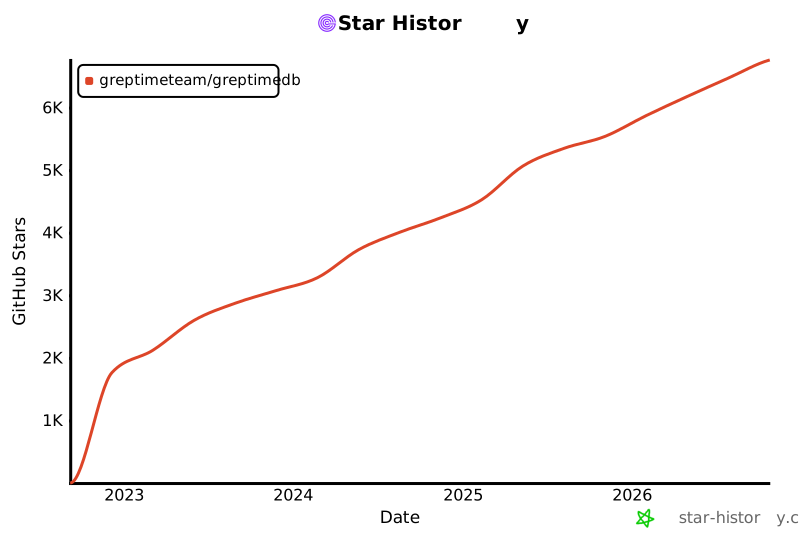](https://www.star-history.com/#GreptimeTeam/GreptimeDB&Date)
|
||||
|
||||
If you find this project useful, a ⭐ would mean a lot to us!
|
||||
<img alt="Known Users" src="https://greptime.com/logo/img/users.png"/>
|
||||
|
||||
## Community
|
||||
|
||||
We invite you to engage and contribute!
|
||||
Our core team is thrilled to see you participate in any ways you like. When you are stuck, try to
|
||||
ask for help by filling an issue with a detailed description of what you were trying to do
|
||||
and what went wrong. If you have any questions or if you would like to get involved in our
|
||||
community, please check out:
|
||||
|
||||
- [Slack](https://greptime.com/slack)
|
||||
- [Discussions](https://github.com/GreptimeTeam/greptimedb/discussions)
|
||||
- [Official Website](https://greptime.com/)
|
||||
- [Blog](https://greptime.com/blogs/)
|
||||
- [LinkedIn](https://www.linkedin.com/company/greptime/)
|
||||
- [X (Twitter)](https://X.com/greptime)
|
||||
- [YouTube](https://www.youtube.com/@greptime)
|
||||
- GreptimeDB Community on [Slack](https://greptime.com/slack)
|
||||
- GreptimeDB [GitHub Discussions forum](https://github.com/GreptimeTeam/greptimedb/discussions)
|
||||
- Greptime official [website](https://greptime.com)
|
||||
|
||||
## License
|
||||
In addition, you may:
|
||||
|
||||
GreptimeDB is licensed under the [Apache License 2.0](https://apache.org/licenses/LICENSE-2.0.txt).
|
||||
- View our official [Blog](https://greptime.com/blogs/)
|
||||
- Connect us with [Linkedin](https://www.linkedin.com/company/greptime/)
|
||||
- Follow us on [Twitter](https://twitter.com/greptime)
|
||||
|
||||
## Commercial Support
|
||||
|
||||
Running GreptimeDB in your organization?
|
||||
We offer enterprise add-ons, services, training, and consulting.
|
||||
[Contact us](https://greptime.com/contactus) for details.
|
||||
If you are running GreptimeDB OSS in your organization, we offer additional
|
||||
enterprise add-ons, installation services, training, and consulting. [Contact
|
||||
us](https://greptime.com/contactus) and we will reach out to you with more
|
||||
detail of our commercial license.
|
||||
|
||||
## License
|
||||
|
||||
GreptimeDB uses the [Apache License 2.0](https://apache.org/licenses/LICENSE-2.0.txt) to strike a balance between
|
||||
open contributions and allowing you to use the software however you want.
|
||||
|
||||
## Contributing
|
||||
|
||||
- Read our [Contribution Guidelines](https://github.com/GreptimeTeam/greptimedb/blob/main/CONTRIBUTING.md).
|
||||
- Explore [Internal Concepts](https://docs.greptime.com/contributor-guide/overview.html) and [DeepWiki](https://deepwiki.com/GreptimeTeam/greptimedb).
|
||||
- Pick up a [good first issue](https://github.com/GreptimeTeam/greptimedb/issues?q=is%3Aissue+is%3Aopen+label%3A%22good+first+issue%22) and join the #contributors [Slack](https://greptime.com/slack) channel.
|
||||
Please refer to [contribution guidelines](CONTRIBUTING.md) and [internal concepts docs](https://docs.greptime.com/contributor-guide/overview.html) for more information.
|
||||
|
||||
## Acknowledgement
|
||||
|
||||
Special thanks to all contributors! See [AUTHORS.md](https://github.com/GreptimeTeam/greptimedb/blob/main/AUTHOR.md).
|
||||
Special thanks to all the contributors who have propelled GreptimeDB forward. For a complete list of contributors, please refer to [AUTHOR.md](AUTHOR.md).
|
||||
|
||||
- Uses [Apache Arrow™](https://arrow.apache.org/) (memory model)
|
||||
- [Apache Parquet™](https://parquet.apache.org/) (file storage)
|
||||
- [Apache DataFusion™](https://arrow.apache.org/datafusion/) (query engine)
|
||||
- [Apache OpenDAL™](https://opendal.apache.org/) (data access abstraction)
|
||||
- GreptimeDB uses [Apache Arrow™](https://arrow.apache.org/) as the memory model and [Apache Parquet™](https://parquet.apache.org/) as the persistent file format.
|
||||
- GreptimeDB's query engine is powered by [Apache Arrow DataFusion™](https://arrow.apache.org/datafusion/).
|
||||
- [Apache OpenDAL™](https://opendal.apache.org) gives GreptimeDB a very general and elegant data access abstraction layer.
|
||||
- GreptimeDB's meta service is based on [etcd](https://etcd.io/).
|
||||
|
||||
<img alt="Known Users" src="https://greptime.com/logo/img/users.png"/>
|
||||
250
config/config.md
250
config/config.md
@@ -13,10 +13,9 @@
|
||||
| Key | Type | Default | Descriptions |
|
||||
| --- | -----| ------- | ----------- |
|
||||
| `default_timezone` | String | Unset | The default timezone of the server. |
|
||||
| `default_column_prefix` | String | Unset | The default column prefix for auto-created time index and value columns. |
|
||||
| `init_regions_in_background` | Bool | `false` | Initialize all regions in the background during the startup.<br/>By default, it provides services after all regions have been initialized. |
|
||||
| `init_regions_parallelism` | Integer | `16` | Parallelism of initializing regions. |
|
||||
| `max_concurrent_queries` | Integer | `0` | The maximum current queries allowed to be executed. Zero means unlimited.<br/>NOTE: This setting affects scan_memory_limit's privileged tier allocation.<br/>When set, 70% of queries get privileged memory access (full scan_memory_limit).<br/>The remaining 30% get standard tier access (70% of scan_memory_limit). |
|
||||
| `max_concurrent_queries` | Integer | `0` | The maximum current queries allowed to be executed. Zero means unlimited. |
|
||||
| `enable_telemetry` | Bool | `true` | Enable telemetry to collect anonymous usage data. Enabled by default. |
|
||||
| `max_in_flight_write_bytes` | String | Unset | The maximum in-flight write bytes. |
|
||||
| `runtime` | -- | -- | The runtime options. |
|
||||
@@ -26,15 +25,11 @@
|
||||
| `http.addr` | String | `127.0.0.1:4000` | The address to bind the HTTP server. |
|
||||
| `http.timeout` | String | `0s` | HTTP request timeout. Set to 0 to disable timeout. |
|
||||
| `http.body_limit` | String | `64MB` | HTTP request body limit.<br/>The following units are supported: `B`, `KB`, `KiB`, `MB`, `MiB`, `GB`, `GiB`, `TB`, `TiB`, `PB`, `PiB`.<br/>Set to 0 to disable limit. |
|
||||
| `http.max_total_body_memory` | String | Unset | Maximum total memory for all concurrent HTTP request bodies.<br/>Set to 0 to disable the limit. Default: "0" (unlimited) |
|
||||
| `http.enable_cors` | Bool | `true` | HTTP CORS support, it's turned on by default<br/>This allows browser to access http APIs without CORS restrictions |
|
||||
| `http.cors_allowed_origins` | Array | Unset | Customize allowed origins for HTTP CORS. |
|
||||
| `http.prom_validation_mode` | String | `strict` | Whether to enable validation for Prometheus remote write requests.<br/>Available options:<br/>- strict: deny invalid UTF-8 strings (default).<br/>- lossy: allow invalid UTF-8 strings, replace invalid characters with REPLACEMENT_CHARACTER(U+FFFD).<br/>- unchecked: do not valid strings. |
|
||||
| `grpc` | -- | -- | The gRPC server options. |
|
||||
| `grpc.bind_addr` | String | `127.0.0.1:4001` | The address to bind the gRPC server. |
|
||||
| `grpc.runtime_size` | Integer | `8` | The number of server worker threads. |
|
||||
| `grpc.max_total_message_memory` | String | Unset | Maximum total memory for all concurrent gRPC request messages.<br/>Set to 0 to disable the limit. Default: "0" (unlimited) |
|
||||
| `grpc.max_connection_age` | String | Unset | The maximum connection age for gRPC connection.<br/>The value can be a human-readable time string. For example: `10m` for ten minutes or `1h` for one hour.<br/>Refer to https://grpc.io/docs/guides/keepalive/ for more details. |
|
||||
| `grpc.tls` | -- | -- | gRPC server TLS options, see `mysql.tls` section. |
|
||||
| `grpc.tls.mode` | String | `disable` | TLS mode. |
|
||||
| `grpc.tls.cert_path` | String | Unset | Certificate file path. |
|
||||
@@ -45,7 +40,6 @@
|
||||
| `mysql.addr` | String | `127.0.0.1:4002` | The addr to bind the MySQL server. |
|
||||
| `mysql.runtime_size` | Integer | `2` | The number of server worker threads. |
|
||||
| `mysql.keep_alive` | String | `0s` | Server-side keep-alive time.<br/>Set to 0 (default) to disable. |
|
||||
| `mysql.prepared_stmt_cache_size` | Integer | `10000` | Maximum entries in the MySQL prepared statement cache; default is 10,000. |
|
||||
| `mysql.tls` | -- | -- | -- |
|
||||
| `mysql.tls.mode` | String | `disable` | TLS mode, refer to https://www.postgresql.org/docs/current/libpq-ssl.html<br/>- `disable` (default value)<br/>- `prefer`<br/>- `require`<br/>- `verify-ca`<br/>- `verify-full` |
|
||||
| `mysql.tls.cert_path` | String | Unset | Certificate file path. |
|
||||
@@ -104,11 +98,9 @@
|
||||
| `flow.num_workers` | Integer | `0` | The number of flow worker in flownode.<br/>Not setting(or set to 0) this value will use the number of CPU cores divided by 2. |
|
||||
| `query` | -- | -- | The query engine options. |
|
||||
| `query.parallelism` | Integer | `0` | Parallelism of the query engine.<br/>Default to 0, which means the number of CPU cores. |
|
||||
| `query.memory_pool_size` | String | `50%` | Memory pool size for query execution operators (aggregation, sorting, join).<br/>Supports absolute size (e.g., "2GB", "4GB") or percentage of system memory (e.g., "20%").<br/>Setting it to 0 disables the limit (unbounded, default behavior).<br/>When this limit is reached, queries will fail with ResourceExhausted error.<br/>NOTE: This does NOT limit memory used by table scans. |
|
||||
| `storage` | -- | -- | The data storage options. |
|
||||
| `storage.data_home` | String | `./greptimedb_data` | The working home directory. |
|
||||
| `storage.data_home` | String | `./greptimedb_data/` | The working home directory. |
|
||||
| `storage.type` | String | `File` | The storage type used to store the data.<br/>- `File`: the data is stored in the local file system.<br/>- `S3`: the data is stored in the S3 object storage.<br/>- `Gcs`: the data is stored in the Google Cloud Storage.<br/>- `Azblob`: the data is stored in the Azure Blob Storage.<br/>- `Oss`: the data is stored in the Aliyun OSS. |
|
||||
| `storage.enable_read_cache` | Bool | `true` | Whether to enable read cache. If not set, the read cache will be enabled by default when using object storage. |
|
||||
| `storage.cache_path` | String | Unset | Read cache configuration for object storage such as 'S3' etc, it's configured by default when using object storage. It is recommended to configure it when using object storage for better performance.<br/>A local file directory, defaults to `{data_home}`. An empty string means disabling. |
|
||||
| `storage.cache_capacity` | String | Unset | The local file cache capacity in bytes. If your disk space is sufficient, it is recommended to set it larger. |
|
||||
| `storage.bucket` | String | Unset | The S3 bucket name.<br/>**It's only used when the storage type is `S3`, `Oss` and `Gcs`**. |
|
||||
@@ -130,7 +122,6 @@
|
||||
| `storage.http_client.connect_timeout` | String | `30s` | The timeout for only the connect phase of a http client. |
|
||||
| `storage.http_client.timeout` | String | `30s` | The total request timeout, applied from when the request starts connecting until the response body has finished.<br/>Also considered a total deadline. |
|
||||
| `storage.http_client.pool_idle_timeout` | String | `90s` | The timeout for idle sockets being kept-alive. |
|
||||
| `storage.http_client.skip_ssl_validation` | Bool | `false` | To skip the ssl verification<br/>**Security Notice**: Setting `skip_ssl_validation = true` disables certificate verification, making connections vulnerable to man-in-the-middle attacks. Only use this in development or trusted private networks. |
|
||||
| `[[region_engine]]` | -- | -- | The region engine options. You can configure multiple region engines. |
|
||||
| `region_engine.mito` | -- | -- | The Mito engine options. |
|
||||
| `region_engine.mito.num_workers` | Integer | `8` | Number of region workers. |
|
||||
@@ -152,15 +143,10 @@
|
||||
| `region_engine.mito.write_cache_path` | String | `""` | File system path for write cache, defaults to `{data_home}`. |
|
||||
| `region_engine.mito.write_cache_size` | String | `5GiB` | Capacity for write cache. If your disk space is sufficient, it is recommended to set it larger. |
|
||||
| `region_engine.mito.write_cache_ttl` | String | Unset | TTL for write cache. |
|
||||
| `region_engine.mito.preload_index_cache` | Bool | `true` | Preload index (puffin) files into cache on region open (default: true).<br/>When enabled, index files are loaded into the write cache during region initialization,<br/>which can improve query performance at the cost of longer startup times. |
|
||||
| `region_engine.mito.index_cache_percent` | Integer | `20` | Percentage of write cache capacity allocated for index (puffin) files (default: 20).<br/>The remaining capacity is used for data (parquet) files.<br/>Must be between 0 and 100 (exclusive). For example, with a 5GiB write cache and 20% allocation,<br/>1GiB is reserved for index files and 4GiB for data files. |
|
||||
| `region_engine.mito.sst_write_buffer_size` | String | `8MB` | Buffer size for SST writing. |
|
||||
| `region_engine.mito.parallel_scan_channel_size` | Integer | `32` | Capacity of the channel to send data from parallel scan tasks to the main task. |
|
||||
| `region_engine.mito.max_concurrent_scan_files` | Integer | `384` | Maximum number of SST files to scan concurrently. |
|
||||
| `region_engine.mito.allow_stale_entries` | Bool | `false` | Whether to allow stale WAL entries read during replay. |
|
||||
| `region_engine.mito.scan_memory_limit` | String | `50%` | Memory limit for table scans across all queries.<br/>Supports absolute size (e.g., "2GB") or percentage of system memory (e.g., "20%").<br/>Setting it to 0 disables the limit.<br/>NOTE: Works with max_concurrent_queries for tiered memory allocation.<br/>- If max_concurrent_queries is set: 70% of queries get full access, 30% get 70% access.<br/>- If max_concurrent_queries is 0 (unlimited): first 20 queries get full access, rest get 70% access. |
|
||||
| `region_engine.mito.min_compaction_interval` | String | `0m` | Minimum time interval between two compactions.<br/>To align with the old behavior, the default value is 0 (no restrictions). |
|
||||
| `region_engine.mito.default_experimental_flat_format` | Bool | `false` | Whether to enable experimental flat format as the default format. |
|
||||
| `region_engine.mito.index` | -- | -- | The options for index in Mito engine. |
|
||||
| `region_engine.mito.index.aux_path` | String | `""` | Auxiliary directory path for the index in filesystem, used to store intermediate files for<br/>creating the index and staging files for searching the index, defaults to `{data_home}/index_intermediate`.<br/>The default name for this directory is `index_intermediate` for backward compatibility.<br/><br/>This path contains two subdirectories:<br/>- `__intm`: for storing intermediate files used during creating index.<br/>- `staging`: for storing staging files used during searching index. |
|
||||
| `region_engine.mito.index.staging_size` | String | `2GB` | The max capacity of the staging directory. |
|
||||
@@ -168,7 +154,6 @@
|
||||
| `region_engine.mito.index.metadata_cache_size` | String | `64MiB` | Cache size for inverted index metadata. |
|
||||
| `region_engine.mito.index.content_cache_size` | String | `128MiB` | Cache size for inverted index content. |
|
||||
| `region_engine.mito.index.content_cache_page_size` | String | `64KiB` | Page size for inverted index content cache. |
|
||||
| `region_engine.mito.index.result_cache_size` | String | `128MiB` | Cache size for index result. |
|
||||
| `region_engine.mito.inverted_index` | -- | -- | The options for inverted index in Mito engine. |
|
||||
| `region_engine.mito.inverted_index.create_on_flush` | String | `auto` | Whether to create the index on flush.<br/>- `auto`: automatically (default)<br/>- `disable`: never |
|
||||
| `region_engine.mito.inverted_index.create_on_compaction` | String | `auto` | Whether to create the index on compaction.<br/>- `auto`: automatically (default)<br/>- `disable`: never |
|
||||
@@ -192,28 +177,31 @@
|
||||
| `region_engine.mito.memtable.fork_dictionary_bytes` | String | `1GiB` | Max dictionary bytes.<br/>Only available for `partition_tree` memtable. |
|
||||
| `region_engine.file` | -- | -- | Enable the file engine. |
|
||||
| `region_engine.metric` | -- | -- | Metric engine options. |
|
||||
| `region_engine.metric.sparse_primary_key_encoding` | Bool | `true` | Whether to use sparse primary key encoding. |
|
||||
| `region_engine.metric.experimental_sparse_primary_key_encoding` | Bool | `false` | Whether to enable the experimental sparse primary key encoding. |
|
||||
| `logging` | -- | -- | The logging options. |
|
||||
| `logging.dir` | String | `./greptimedb_data/logs` | The directory to store the log files. If set to empty, logs will not be written to files. |
|
||||
| `logging.level` | String | Unset | The log level. Can be `info`/`debug`/`warn`/`error`. |
|
||||
| `logging.enable_otlp_tracing` | Bool | `false` | Enable OTLP tracing. |
|
||||
| `logging.otlp_endpoint` | String | `http://localhost:4318/v1/traces` | The OTLP tracing endpoint. |
|
||||
| `logging.otlp_endpoint` | String | `http://localhost:4317` | The OTLP tracing endpoint. |
|
||||
| `logging.append_stdout` | Bool | `true` | Whether to append logs to stdout. |
|
||||
| `logging.log_format` | String | `text` | The log format. Can be `text`/`json`. |
|
||||
| `logging.max_log_files` | Integer | `720` | The maximum amount of log files. |
|
||||
| `logging.otlp_export_protocol` | String | `http` | The OTLP tracing export protocol. Can be `grpc`/`http`. |
|
||||
| `logging.otlp_headers` | -- | -- | Additional OTLP headers, only valid when using OTLP http |
|
||||
| `logging.tracing_sample_ratio` | -- | Unset | The percentage of tracing will be sampled and exported.<br/>Valid range `[0, 1]`, 1 means all traces are sampled, 0 means all traces are not sampled, the default value is 1.<br/>ratio > 1 are treated as 1. Fractions < 0 are treated as 0 |
|
||||
| `logging.tracing_sample_ratio` | -- | -- | The percentage of tracing will be sampled and exported.<br/>Valid range `[0, 1]`, 1 means all traces are sampled, 0 means all traces are not sampled, the default value is 1.<br/>ratio > 1 are treated as 1. Fractions < 0 are treated as 0 |
|
||||
| `logging.tracing_sample_ratio.default_ratio` | Float | `1.0` | -- |
|
||||
| `slow_query` | -- | -- | The slow query log options. |
|
||||
| `slow_query.enable` | Bool | `false` | Whether to enable slow query log. |
|
||||
| `slow_query.record_type` | String | Unset | The record type of slow queries. It can be `system_table` or `log`. |
|
||||
| `slow_query.threshold` | String | Unset | The threshold of slow query. |
|
||||
| `slow_query.sample_ratio` | Float | Unset | The sampling ratio of slow query log. The value should be in the range of (0, 1]. |
|
||||
| `logging.slow_query` | -- | -- | The slow query log options. |
|
||||
| `logging.slow_query.enable` | Bool | `false` | Whether to enable slow query log. |
|
||||
| `logging.slow_query.threshold` | String | Unset | The threshold of slow query. |
|
||||
| `logging.slow_query.sample_ratio` | Float | Unset | The sampling ratio of slow query log. The value should be in the range of (0, 1]. |
|
||||
| `export_metrics` | -- | -- | The datanode can export its metrics and send to Prometheus compatible service (e.g. send to `greptimedb` itself) from remote-write API.<br/>This is only used for `greptimedb` to export its own metrics internally. It's different from prometheus scrape. |
|
||||
| `export_metrics.enable` | Bool | `false` | whether enable export metrics. |
|
||||
| `export_metrics.write_interval` | String | `30s` | The interval of export metrics. |
|
||||
| `export_metrics.self_import` | -- | -- | For `standalone` mode, `self_import` is recommended to collect metrics generated by itself<br/>You must create the database before enabling it. |
|
||||
| `export_metrics.self_import.db` | String | Unset | -- |
|
||||
| `export_metrics.remote_write` | -- | -- | -- |
|
||||
| `export_metrics.remote_write.url` | String | `""` | The url the metrics send to. The url example can be: `http://127.0.0.1:4000/v1/prometheus/write?db=greptime_metrics`. |
|
||||
| `export_metrics.remote_write.headers` | InlineTable | -- | HTTP headers of Prometheus remote-write carry. |
|
||||
| `tracing` | -- | -- | The tracing options. Only effect when compiled with `tokio-console` feature. |
|
||||
| `tracing.tokio_console_addr` | String | Unset | The tokio console address. |
|
||||
| `memory` | -- | -- | The memory options. |
|
||||
| `memory.enable_heap_profiling` | Bool | `true` | Whether to enable heap profiling activation during startup.<br/>When enabled, heap profiling will be activated if the `MALLOC_CONF` environment variable<br/>is set to "prof:true,prof_active:false". The official image adds this env variable.<br/>Default is true. |
|
||||
|
||||
|
||||
## Distributed Mode
|
||||
@@ -223,7 +211,6 @@
|
||||
| Key | Type | Default | Descriptions |
|
||||
| --- | -----| ------- | ----------- |
|
||||
| `default_timezone` | String | Unset | The default timezone of the server. |
|
||||
| `default_column_prefix` | String | Unset | The default column prefix for auto-created time index and value columns. |
|
||||
| `max_in_flight_write_bytes` | String | Unset | The maximum in-flight write bytes. |
|
||||
| `runtime` | -- | -- | The runtime options. |
|
||||
| `runtime.global_rt_size` | Integer | `8` | The number of threads to execute the runtime for global read operations. |
|
||||
@@ -235,38 +222,22 @@
|
||||
| `http.addr` | String | `127.0.0.1:4000` | The address to bind the HTTP server. |
|
||||
| `http.timeout` | String | `0s` | HTTP request timeout. Set to 0 to disable timeout. |
|
||||
| `http.body_limit` | String | `64MB` | HTTP request body limit.<br/>The following units are supported: `B`, `KB`, `KiB`, `MB`, `MiB`, `GB`, `GiB`, `TB`, `TiB`, `PB`, `PiB`.<br/>Set to 0 to disable limit. |
|
||||
| `http.max_total_body_memory` | String | Unset | Maximum total memory for all concurrent HTTP request bodies.<br/>Set to 0 to disable the limit. Default: "0" (unlimited) |
|
||||
| `http.enable_cors` | Bool | `true` | HTTP CORS support, it's turned on by default<br/>This allows browser to access http APIs without CORS restrictions |
|
||||
| `http.cors_allowed_origins` | Array | Unset | Customize allowed origins for HTTP CORS. |
|
||||
| `http.prom_validation_mode` | String | `strict` | Whether to enable validation for Prometheus remote write requests.<br/>Available options:<br/>- strict: deny invalid UTF-8 strings (default).<br/>- lossy: allow invalid UTF-8 strings, replace invalid characters with REPLACEMENT_CHARACTER(U+FFFD).<br/>- unchecked: do not valid strings. |
|
||||
| `grpc` | -- | -- | The gRPC server options. |
|
||||
| `grpc.bind_addr` | String | `127.0.0.1:4001` | The address to bind the gRPC server. |
|
||||
| `grpc.server_addr` | String | `127.0.0.1:4001` | The address advertised to the metasrv, and used for connections from outside the host.<br/>If left empty or unset, the server will automatically use the IP address of the first network interface<br/>on the host, with the same port number as the one specified in `grpc.bind_addr`. |
|
||||
| `grpc.runtime_size` | Integer | `8` | The number of server worker threads. |
|
||||
| `grpc.max_total_message_memory` | String | Unset | Maximum total memory for all concurrent gRPC request messages.<br/>Set to 0 to disable the limit. Default: "0" (unlimited) |
|
||||
| `grpc.flight_compression` | String | `arrow_ipc` | Compression mode for frontend side Arrow IPC service. Available options:<br/>- `none`: disable all compression<br/>- `transport`: only enable gRPC transport compression (zstd)<br/>- `arrow_ipc`: only enable Arrow IPC compression (lz4)<br/>- `all`: enable all compression.<br/>Default to `none` |
|
||||
| `grpc.max_connection_age` | String | Unset | The maximum connection age for gRPC connection.<br/>The value can be a human-readable time string. For example: `10m` for ten minutes or `1h` for one hour.<br/>Refer to https://grpc.io/docs/guides/keepalive/ for more details. |
|
||||
| `grpc.tls` | -- | -- | gRPC server TLS options, see `mysql.tls` section. |
|
||||
| `grpc.tls.mode` | String | `disable` | TLS mode. |
|
||||
| `grpc.tls.cert_path` | String | Unset | Certificate file path. |
|
||||
| `grpc.tls.key_path` | String | Unset | Private key file path. |
|
||||
| `grpc.tls.watch` | Bool | `false` | Watch for Certificate and key file change and auto reload.<br/>For now, gRPC tls config does not support auto reload. |
|
||||
| `internal_grpc` | -- | -- | The internal gRPC server options. Internal gRPC port for nodes inside cluster to access frontend. |
|
||||
| `internal_grpc.bind_addr` | String | `127.0.0.1:4010` | The address to bind the gRPC server. |
|
||||
| `internal_grpc.server_addr` | String | `127.0.0.1:4010` | The address advertised to the metasrv, and used for connections from outside the host.<br/>If left empty or unset, the server will automatically use the IP address of the first network interface<br/>on the host, with the same port number as the one specified in `grpc.bind_addr`. |
|
||||
| `internal_grpc.runtime_size` | Integer | `8` | The number of server worker threads. |
|
||||
| `internal_grpc.flight_compression` | String | `arrow_ipc` | Compression mode for frontend side Arrow IPC service. Available options:<br/>- `none`: disable all compression<br/>- `transport`: only enable gRPC transport compression (zstd)<br/>- `arrow_ipc`: only enable Arrow IPC compression (lz4)<br/>- `all`: enable all compression.<br/>Default to `none` |
|
||||
| `internal_grpc.tls` | -- | -- | internal gRPC server TLS options, see `mysql.tls` section. |
|
||||
| `internal_grpc.tls.mode` | String | `disable` | TLS mode. |
|
||||
| `internal_grpc.tls.cert_path` | String | Unset | Certificate file path. |
|
||||
| `internal_grpc.tls.key_path` | String | Unset | Private key file path. |
|
||||
| `internal_grpc.tls.watch` | Bool | `false` | Watch for Certificate and key file change and auto reload.<br/>For now, gRPC tls config does not support auto reload. |
|
||||
| `mysql` | -- | -- | MySQL server options. |
|
||||
| `mysql.enable` | Bool | `true` | Whether to enable. |
|
||||
| `mysql.addr` | String | `127.0.0.1:4002` | The addr to bind the MySQL server. |
|
||||
| `mysql.runtime_size` | Integer | `2` | The number of server worker threads. |
|
||||
| `mysql.keep_alive` | String | `0s` | Server-side keep-alive time.<br/>Set to 0 (default) to disable. |
|
||||
| `mysql.prepared_stmt_cache_size` | Integer | `10000` | Maximum entries in the MySQL prepared statement cache; default is 10,000. |
|
||||
| `mysql.tls` | -- | -- | -- |
|
||||
| `mysql.tls.mode` | String | `disable` | TLS mode, refer to https://www.postgresql.org/docs/current/libpq-ssl.html<br/>- `disable` (default value)<br/>- `prefer`<br/>- `require`<br/>- `verify-ca`<br/>- `verify-full` |
|
||||
| `mysql.tls.cert_path` | String | Unset | Certificate file path. |
|
||||
@@ -294,6 +265,7 @@
|
||||
| `meta_client` | -- | -- | The metasrv client options. |
|
||||
| `meta_client.metasrv_addrs` | Array | -- | The addresses of the metasrv. |
|
||||
| `meta_client.timeout` | String | `3s` | Operation timeout. |
|
||||
| `meta_client.heartbeat_timeout` | String | `500ms` | Heartbeat timeout. |
|
||||
| `meta_client.ddl_timeout` | String | `10s` | DDL timeout. |
|
||||
| `meta_client.connect_timeout` | String | `1s` | Connect server timeout. |
|
||||
| `meta_client.tcp_nodelay` | Bool | `true` | `TCP_NODELAY` option for accepted connections. |
|
||||
@@ -302,8 +274,6 @@
|
||||
| `meta_client.metadata_cache_tti` | String | `5m` | -- |
|
||||
| `query` | -- | -- | The query engine options. |
|
||||
| `query.parallelism` | Integer | `0` | Parallelism of the query engine.<br/>Default to 0, which means the number of CPU cores. |
|
||||
| `query.allow_query_fallback` | Bool | `false` | Whether to allow query fallback when push down optimize fails.<br/>Default to false, meaning when push down optimize failed, return error msg |
|
||||
| `query.memory_pool_size` | String | `50%` | Memory pool size for query execution operators (aggregation, sorting, join).<br/>Supports absolute size (e.g., "4GB", "8GB") or percentage of system memory (e.g., "30%").<br/>Setting it to 0 disables the limit (unbounded, default behavior).<br/>When this limit is reached, queries will fail with ResourceExhausted error.<br/>NOTE: This does NOT limit memory used by table scans (only applies to datanodes). |
|
||||
| `datanode` | -- | -- | Datanode options. |
|
||||
| `datanode.client` | -- | -- | Datanode client options. |
|
||||
| `datanode.client.connect_timeout` | String | `10s` | -- |
|
||||
@@ -312,73 +282,59 @@
|
||||
| `logging.dir` | String | `./greptimedb_data/logs` | The directory to store the log files. If set to empty, logs will not be written to files. |
|
||||
| `logging.level` | String | Unset | The log level. Can be `info`/`debug`/`warn`/`error`. |
|
||||
| `logging.enable_otlp_tracing` | Bool | `false` | Enable OTLP tracing. |
|
||||
| `logging.otlp_endpoint` | String | `http://localhost:4318/v1/traces` | The OTLP tracing endpoint. |
|
||||
| `logging.otlp_endpoint` | String | `http://localhost:4317` | The OTLP tracing endpoint. |
|
||||
| `logging.append_stdout` | Bool | `true` | Whether to append logs to stdout. |
|
||||
| `logging.log_format` | String | `text` | The log format. Can be `text`/`json`. |
|
||||
| `logging.max_log_files` | Integer | `720` | The maximum amount of log files. |
|
||||
| `logging.otlp_export_protocol` | String | `http` | The OTLP tracing export protocol. Can be `grpc`/`http`. |
|
||||
| `logging.otlp_headers` | -- | -- | Additional OTLP headers, only valid when using OTLP http |
|
||||
| `logging.tracing_sample_ratio` | -- | Unset | The percentage of tracing will be sampled and exported.<br/>Valid range `[0, 1]`, 1 means all traces are sampled, 0 means all traces are not sampled, the default value is 1.<br/>ratio > 1 are treated as 1. Fractions < 0 are treated as 0 |
|
||||
| `logging.tracing_sample_ratio` | -- | -- | The percentage of tracing will be sampled and exported.<br/>Valid range `[0, 1]`, 1 means all traces are sampled, 0 means all traces are not sampled, the default value is 1.<br/>ratio > 1 are treated as 1. Fractions < 0 are treated as 0 |
|
||||
| `logging.tracing_sample_ratio.default_ratio` | Float | `1.0` | -- |
|
||||
| `slow_query` | -- | -- | The slow query log options. |
|
||||
| `slow_query.enable` | Bool | `true` | Whether to enable slow query log. |
|
||||
| `slow_query.record_type` | String | `system_table` | The record type of slow queries. It can be `system_table` or `log`.<br/>If `system_table` is selected, the slow queries will be recorded in a system table `greptime_private.slow_queries`.<br/>If `log` is selected, the slow queries will be logged in a log file `greptimedb-slow-queries.*`. |
|
||||
| `slow_query.threshold` | String | `30s` | The threshold of slow query. It can be human readable time string, for example: `10s`, `100ms`, `1s`. |
|
||||
| `slow_query.sample_ratio` | Float | `1.0` | The sampling ratio of slow query log. The value should be in the range of (0, 1]. For example, `0.1` means 10% of the slow queries will be logged and `1.0` means all slow queries will be logged. |
|
||||
| `slow_query.ttl` | String | `90d` | The TTL of the `slow_queries` system table. Default is `90d` when `record_type` is `system_table`. |
|
||||
| `logging.slow_query` | -- | -- | The slow query log options. |
|
||||
| `logging.slow_query.enable` | Bool | `false` | Whether to enable slow query log. |
|
||||
| `logging.slow_query.threshold` | String | Unset | The threshold of slow query. |
|
||||
| `logging.slow_query.sample_ratio` | Float | Unset | The sampling ratio of slow query log. The value should be in the range of (0, 1]. |
|
||||
| `export_metrics` | -- | -- | The datanode can export its metrics and send to Prometheus compatible service (e.g. send to `greptimedb` itself) from remote-write API.<br/>This is only used for `greptimedb` to export its own metrics internally. It's different from prometheus scrape. |
|
||||
| `export_metrics.enable` | Bool | `false` | whether enable export metrics. |
|
||||
| `export_metrics.write_interval` | String | `30s` | The interval of export metrics. |
|
||||
| `export_metrics.self_import` | -- | -- | For `standalone` mode, `self_import` is recommend to collect metrics generated by itself<br/>You must create the database before enabling it. |
|
||||
| `export_metrics.self_import.db` | String | Unset | -- |
|
||||
| `export_metrics.remote_write` | -- | -- | -- |
|
||||
| `export_metrics.remote_write.url` | String | `""` | The url the metrics send to. The url example can be: `http://127.0.0.1:4000/v1/prometheus/write?db=greptime_metrics`. |
|
||||
| `export_metrics.remote_write.headers` | InlineTable | -- | HTTP headers of Prometheus remote-write carry. |
|
||||
| `tracing` | -- | -- | The tracing options. Only effect when compiled with `tokio-console` feature. |
|
||||
| `tracing.tokio_console_addr` | String | Unset | The tokio console address. |
|
||||
| `memory` | -- | -- | The memory options. |
|
||||
| `memory.enable_heap_profiling` | Bool | `true` | Whether to enable heap profiling activation during startup.<br/>When enabled, heap profiling will be activated if the `MALLOC_CONF` environment variable<br/>is set to "prof:true,prof_active:false". The official image adds this env variable.<br/>Default is true. |
|
||||
| `event_recorder` | -- | -- | Configuration options for the event recorder. |
|
||||
| `event_recorder.ttl` | String | `90d` | TTL for the events table that will be used to store the events. Default is `90d`. |
|
||||
|
||||
|
||||
### Metasrv
|
||||
|
||||
| Key | Type | Default | Descriptions |
|
||||
| --- | -----| ------- | ----------- |
|
||||
| `data_home` | String | `./greptimedb_data` | The working home directory. |
|
||||
| `store_addrs` | Array | -- | Store server address(es). The format depends on the selected backend.<br/><br/>For etcd: a list of "host:port" endpoints.<br/>e.g. ["192.168.1.1:2379", "192.168.1.2:2379"]<br/><br/>For PostgreSQL: a connection string in libpq format or URI.<br/>e.g.<br/>- "host=localhost port=5432 user=postgres password=<PASSWORD> dbname=postgres"<br/>- "postgresql://user:password@localhost:5432/mydb?connect_timeout=10"<br/>The detail see: https://docs.rs/tokio-postgres/latest/tokio_postgres/config/struct.Config.html<br/><br/>For mysql store, the format is a MySQL connection URL.<br/>e.g. "mysql://user:password@localhost:3306/greptime_meta?ssl-mode=VERIFY_CA&ssl-ca=/path/to/ca.pem" |
|
||||
| `data_home` | String | `./greptimedb_data/metasrv/` | The working home directory. |
|
||||
| `bind_addr` | String | `127.0.0.1:3002` | The bind address of metasrv. |
|
||||
| `server_addr` | String | `127.0.0.1:3002` | The communication server address for the frontend and datanode to connect to metasrv.<br/>If left empty or unset, the server will automatically use the IP address of the first network interface<br/>on the host, with the same port number as the one specified in `bind_addr`. |
|
||||
| `store_addrs` | Array | -- | Store server address default to etcd store.<br/>For postgres store, the format is:<br/>"password=password dbname=postgres user=postgres host=localhost port=5432"<br/>For etcd store, the format is:<br/>"127.0.0.1:2379" |
|
||||
| `store_key_prefix` | String | `""` | If it's not empty, the metasrv will store all data with this key prefix. |
|
||||
| `backend` | String | `etcd_store` | The datastore for meta server.<br/>Available values:<br/>- `etcd_store` (default value)<br/>- `memory_store`<br/>- `postgres_store`<br/>- `mysql_store` |
|
||||
| `backend` | String | `etcd_store` | The datastore for meta server.<br/>Available values:<br/>- `etcd_store` (default value)<br/>- `memory_store`<br/>- `postgres_store` |
|
||||
| `meta_table_name` | String | `greptime_metakv` | Table name in RDS to store metadata. Effect when using a RDS kvbackend.<br/>**Only used when backend is `postgres_store`.** |
|
||||
| `meta_schema_name` | String | `greptime_schema` | Optional PostgreSQL schema for metadata table and election table name qualification.<br/>When PostgreSQL public schema is not writable (e.g., PostgreSQL 15+ with restricted public),<br/>set this to a writable schema. GreptimeDB will use `meta_schema_name`.`meta_table_name`.<br/>GreptimeDB will NOT create the schema automatically; please ensure it exists or the user has permission.<br/>**Only used when backend is `postgres_store`.** |
|
||||
| `meta_election_lock_id` | Integer | `1` | Advisory lock id in PostgreSQL for election. Effect when using PostgreSQL as kvbackend<br/>Only used when backend is `postgres_store`. |
|
||||
| `selector` | String | `round_robin` | Datanode selector type.<br/>- `round_robin` (default value)<br/>- `lease_based`<br/>- `load_based`<br/>For details, please see "https://docs.greptime.com/developer-guide/metasrv/selector". |
|
||||
| `use_memory_store` | Bool | `false` | Store data in memory. |
|
||||
| `enable_region_failover` | Bool | `false` | Whether to enable region failover.<br/>This feature is only available on GreptimeDB running on cluster mode and<br/>- Using Remote WAL<br/>- Using shared storage (e.g., s3). |
|
||||
| `region_failure_detector_initialization_delay` | String | `10m` | The delay before starting region failure detection.<br/>This delay helps prevent Metasrv from triggering unnecessary region failovers before all Datanodes are fully started.<br/>Especially useful when the cluster is not deployed with GreptimeDB Operator and maintenance mode is not enabled. |
|
||||
| `allow_region_failover_on_local_wal` | Bool | `false` | Whether to allow region failover on local WAL.<br/>**This option is not recommended to be set to true, because it may lead to data loss during failover.** |
|
||||
| `node_max_idle_time` | String | `24hours` | Max allowed idle time before removing node info from metasrv memory. |
|
||||
| `enable_telemetry` | Bool | `true` | Whether to enable greptimedb telemetry. Enabled by default. |
|
||||
| `runtime` | -- | -- | The runtime options. |
|
||||
| `runtime.global_rt_size` | Integer | `8` | The number of threads to execute the runtime for global read operations. |
|
||||
| `runtime.compact_rt_size` | Integer | `4` | The number of threads to execute the runtime for global write operations. |
|
||||
| `backend_tls` | -- | -- | TLS configuration for kv store backend (applicable for etcd, PostgreSQL, and MySQL backends)<br/>When using etcd, PostgreSQL, or MySQL as metadata store, you can configure TLS here<br/><br/>Note: if TLS is configured in both this section and the `store_addrs` connection string, the<br/>settings here will override the TLS settings in `store_addrs`. |
|
||||
| `backend_tls.mode` | String | `prefer` | TLS mode, refer to https://www.postgresql.org/docs/current/libpq-ssl.html<br/>- "disable" - No TLS<br/>- "prefer" (default) - Try TLS, fallback to plain<br/>- "require" - Require TLS<br/>- "verify_ca" - Require TLS and verify CA<br/>- "verify_full" - Require TLS and verify hostname |
|
||||
| `backend_tls.cert_path` | String | `""` | Path to client certificate file (for client authentication)<br/>Like "/path/to/client.crt" |
|
||||
| `backend_tls.key_path` | String | `""` | Path to client private key file (for client authentication)<br/>Like "/path/to/client.key" |
|
||||
| `backend_tls.ca_cert_path` | String | `""` | Path to CA certificate file (for server certificate verification)<br/>Required when using custom CAs or self-signed certificates<br/>Leave empty to use system root certificates only<br/>Like "/path/to/ca.crt" |
|
||||
| `grpc` | -- | -- | The gRPC server options. |
|
||||
| `grpc.bind_addr` | String | `127.0.0.1:3002` | The address to bind the gRPC server. |
|
||||
| `grpc.server_addr` | String | `127.0.0.1:3002` | The communication server address for the frontend and datanode to connect to metasrv.<br/>If left empty or unset, the server will automatically use the IP address of the first network interface<br/>on the host, with the same port number as the one specified in `bind_addr`. |
|
||||
| `grpc.runtime_size` | Integer | `8` | The number of server worker threads. |
|
||||
| `grpc.max_recv_message_size` | String | `512MB` | The maximum receive message size for gRPC server. |
|
||||
| `grpc.max_send_message_size` | String | `512MB` | The maximum send message size for gRPC server. |
|
||||
| `http` | -- | -- | The HTTP server options. |
|
||||
| `http.addr` | String | `127.0.0.1:4000` | The address to bind the HTTP server. |
|
||||
| `http.timeout` | String | `0s` | HTTP request timeout. Set to 0 to disable timeout. |
|
||||
| `http.body_limit` | String | `64MB` | HTTP request body limit.<br/>The following units are supported: `B`, `KB`, `KiB`, `MB`, `MiB`, `GB`, `GiB`, `TB`, `TiB`, `PB`, `PiB`.<br/>Set to 0 to disable limit. |
|
||||
| `procedure` | -- | -- | Procedure storage options. |
|
||||
| `procedure.max_retry_times` | Integer | `12` | Procedure max retry time. |
|
||||
| `procedure.retry_delay` | String | `500ms` | Initial retry delay of procedures, increases exponentially |
|
||||
| `procedure.max_metadata_value_size` | String | `1500KiB` | Auto split large value<br/>GreptimeDB procedure uses etcd as the default metadata storage backend.<br/>The etcd the maximum size of any request is 1.5 MiB<br/>1500KiB = 1536KiB (1.5MiB) - 36KiB (reserved size of key)<br/>Comments out the `max_metadata_value_size`, for don't split large value (no limit). |
|
||||
| `procedure.max_running_procedures` | Integer | `128` | Max running procedures.<br/>The maximum number of procedures that can be running at the same time.<br/>If the number of running procedures exceeds this limit, the procedure will be rejected. |
|
||||
| `failure_detector` | -- | -- | -- |
|
||||
| `failure_detector.threshold` | Float | `8.0` | Maximum acceptable φ before the peer is treated as failed.<br/>Lower values react faster but yield more false positives. |
|
||||
| `failure_detector.min_std_deviation` | String | `100ms` | The minimum standard deviation of the heartbeat intervals.<br/>So tiny variations don’t make φ explode. Prevents hypersensitivity when heartbeat intervals barely vary. |
|
||||
| `failure_detector.acceptable_heartbeat_pause` | String | `10000ms` | The acceptable pause duration between heartbeats.<br/>Additional extra grace period to the learned mean interval before φ rises, absorbing temporary network hiccups or GC pauses. |
|
||||
| `failure_detector.threshold` | Float | `8.0` | The threshold value used by the failure detector to determine failure conditions. |
|
||||
| `failure_detector.min_std_deviation` | String | `100ms` | The minimum standard deviation of the heartbeat intervals, used to calculate acceptable variations. |
|
||||
| `failure_detector.acceptable_heartbeat_pause` | String | `10000ms` | The acceptable pause duration between heartbeats, used to determine if a heartbeat interval is acceptable. |
|
||||
| `failure_detector.first_heartbeat_estimate` | String | `1000ms` | The initial estimate of the heartbeat interval used by the failure detector. |
|
||||
| `datanode` | -- | -- | Datanode options. |
|
||||
| `datanode.client` | -- | -- | Datanode client options. |
|
||||
| `datanode.client.timeout` | String | `10s` | Operation timeout. |
|
||||
@@ -386,38 +342,40 @@
|
||||
| `datanode.client.tcp_nodelay` | Bool | `true` | `TCP_NODELAY` option for accepted connections. |
|
||||
| `wal` | -- | -- | -- |
|
||||
| `wal.provider` | String | `raft_engine` | -- |
|
||||
| `wal.broker_endpoints` | Array | -- | The broker endpoints of the Kafka cluster.<br/><br/>**It's only used when the provider is `kafka`**. |
|
||||
| `wal.auto_create_topics` | Bool | `true` | Automatically create topics for WAL.<br/>Set to `true` to automatically create topics for WAL.<br/>Otherwise, use topics named `topic_name_prefix_[0..num_topics)`<br/>**It's only used when the provider is `kafka`**. |
|
||||
| `wal.auto_prune_interval` | String | `30m` | Interval of automatically WAL pruning.<br/>Set to `0s` to disable automatically WAL pruning which delete unused remote WAL entries periodically.<br/>**It's only used when the provider is `kafka`**. |
|
||||
| `wal.flush_trigger_size` | String | `512MB` | Estimated size threshold to trigger a flush when using Kafka remote WAL.<br/>Since multiple regions may share a Kafka topic, the estimated size is calculated as:<br/> (latest_entry_id - flushed_entry_id) * avg_record_size<br/>MetaSrv triggers a flush for a region when this estimated size exceeds `flush_trigger_size`.<br/>- `latest_entry_id`: The latest entry ID in the topic.<br/>- `flushed_entry_id`: The last flushed entry ID for the region.<br/>Set to "0" to let the system decide the flush trigger size.<br/>**It's only used when the provider is `kafka`**. |
|
||||
| `wal.checkpoint_trigger_size` | String | `128MB` | Estimated size threshold to trigger a checkpoint when using Kafka remote WAL.<br/>The estimated size is calculated as:<br/> (latest_entry_id - last_checkpoint_entry_id) * avg_record_size<br/>MetaSrv triggers a checkpoint for a region when this estimated size exceeds `checkpoint_trigger_size`.<br/>Set to "0" to let the system decide the checkpoint trigger size.<br/>**It's only used when the provider is `kafka`**. |
|
||||
| `wal.auto_prune_parallelism` | Integer | `10` | Concurrent task limit for automatically WAL pruning.<br/>**It's only used when the provider is `kafka`**. |
|
||||
| `wal.num_topics` | Integer | `64` | Number of topics used for remote WAL.<br/>**It's only used when the provider is `kafka`**. |
|
||||
| `wal.selector_type` | String | `round_robin` | Topic selector type.<br/>Available selector types:<br/>- `round_robin` (default)<br/>**It's only used when the provider is `kafka`**. |
|
||||
| `wal.topic_name_prefix` | String | `greptimedb_wal_topic` | A Kafka topic is constructed by concatenating `topic_name_prefix` and `topic_id`.<br/>Only accepts strings that match the following regular expression pattern:<br/>[a-zA-Z_:-][a-zA-Z0-9_:\-\.@#]*<br/>i.g., greptimedb_wal_topic_0, greptimedb_wal_topic_1.<br/>**It's only used when the provider is `kafka`**. |
|
||||
| `wal.replication_factor` | Integer | `1` | Expected number of replicas of each partition.<br/>**It's only used when the provider is `kafka`**. |
|
||||
| `wal.create_topic_timeout` | String | `30s` | The timeout for creating a Kafka topic.<br/>**It's only used when the provider is `kafka`**. |
|
||||
| `event_recorder` | -- | -- | Configuration options for the event recorder. |
|
||||
| `event_recorder.ttl` | String | `90d` | TTL for the events table that will be used to store the events. Default is `90d`. |
|
||||
| `stats_persistence` | -- | -- | Configuration options for the stats persistence. |
|
||||
| `stats_persistence.ttl` | String | `0s` | TTL for the stats table that will be used to store the stats.<br/>Set to `0s` to disable stats persistence.<br/>Default is `0s`.<br/>If you want to enable stats persistence, set the TTL to a value greater than 0.<br/>It is recommended to set a small value, e.g., `3h`. |
|
||||
| `stats_persistence.interval` | String | `10m` | The interval to persist the stats. Default is `10m`.<br/>The minimum value is `10m`, if the value is less than `10m`, it will be overridden to `10m`. |
|
||||
| `wal.broker_endpoints` | Array | -- | The broker endpoints of the Kafka cluster. |
|
||||
| `wal.auto_create_topics` | Bool | `true` | Automatically create topics for WAL.<br/>Set to `true` to automatically create topics for WAL.<br/>Otherwise, use topics named `topic_name_prefix_[0..num_topics)` |
|
||||
| `wal.auto_prune_interval` | String | `0s` | Interval of automatically WAL pruning.<br/>Set to `0s` to disable automatically WAL pruning which delete unused remote WAL entries periodically. |
|
||||
| `wal.trigger_flush_threshold` | Integer | `0` | The threshold to trigger a flush operation of a region in automatically WAL pruning.<br/>Metasrv will send a flush request to flush the region when:<br/>`trigger_flush_threshold` + `prunable_entry_id` < `max_prunable_entry_id`<br/>where:<br/>- `prunable_entry_id` is the maximum entry id that can be pruned of the region.<br/>- `max_prunable_entry_id` is the maximum prunable entry id among all regions in the same topic.<br/>Set to `0` to disable the flush operation. |
|
||||
| `wal.auto_prune_parallelism` | Integer | `10` | Concurrent task limit for automatically WAL pruning. |
|
||||
| `wal.num_topics` | Integer | `64` | Number of topics. |
|
||||
| `wal.selector_type` | String | `round_robin` | Topic selector type.<br/>Available selector types:<br/>- `round_robin` (default) |
|
||||
| `wal.topic_name_prefix` | String | `greptimedb_wal_topic` | A Kafka topic is constructed by concatenating `topic_name_prefix` and `topic_id`.<br/>Only accepts strings that match the following regular expression pattern:<br/>[a-zA-Z_:-][a-zA-Z0-9_:\-\.@#]*<br/>i.g., greptimedb_wal_topic_0, greptimedb_wal_topic_1. |
|
||||
| `wal.replication_factor` | Integer | `1` | Expected number of replicas of each partition. |
|
||||
| `wal.create_topic_timeout` | String | `30s` | Above which a topic creation operation will be cancelled. |
|
||||
| `logging` | -- | -- | The logging options. |
|
||||
| `logging.dir` | String | `./greptimedb_data/logs` | The directory to store the log files. If set to empty, logs will not be written to files. |
|
||||
| `logging.level` | String | Unset | The log level. Can be `info`/`debug`/`warn`/`error`. |
|
||||
| `logging.enable_otlp_tracing` | Bool | `false` | Enable OTLP tracing. |
|
||||
| `logging.otlp_endpoint` | String | `http://localhost:4318/v1/traces` | The OTLP tracing endpoint. |
|
||||
| `logging.otlp_endpoint` | String | `http://localhost:4317` | The OTLP tracing endpoint. |
|
||||
| `logging.append_stdout` | Bool | `true` | Whether to append logs to stdout. |
|
||||
| `logging.log_format` | String | `text` | The log format. Can be `text`/`json`. |
|
||||
| `logging.max_log_files` | Integer | `720` | The maximum amount of log files. |
|
||||
| `logging.otlp_export_protocol` | String | `http` | The OTLP tracing export protocol. Can be `grpc`/`http`. |
|
||||
| `logging.otlp_headers` | -- | -- | Additional OTLP headers, only valid when using OTLP http |
|
||||
| `logging.tracing_sample_ratio` | -- | Unset | The percentage of tracing will be sampled and exported.<br/>Valid range `[0, 1]`, 1 means all traces are sampled, 0 means all traces are not sampled, the default value is 1.<br/>ratio > 1 are treated as 1. Fractions < 0 are treated as 0 |
|
||||
| `logging.tracing_sample_ratio` | -- | -- | The percentage of tracing will be sampled and exported.<br/>Valid range `[0, 1]`, 1 means all traces are sampled, 0 means all traces are not sampled, the default value is 1.<br/>ratio > 1 are treated as 1. Fractions < 0 are treated as 0 |
|
||||
| `logging.tracing_sample_ratio.default_ratio` | Float | `1.0` | -- |
|
||||
| `logging.slow_query` | -- | -- | The slow query log options. |
|
||||
| `logging.slow_query.enable` | Bool | `false` | Whether to enable slow query log. |
|
||||
| `logging.slow_query.threshold` | String | Unset | The threshold of slow query. |
|
||||
| `logging.slow_query.sample_ratio` | Float | Unset | The sampling ratio of slow query log. The value should be in the range of (0, 1]. |
|
||||
| `export_metrics` | -- | -- | The datanode can export its metrics and send to Prometheus compatible service (e.g. send to `greptimedb` itself) from remote-write API.<br/>This is only used for `greptimedb` to export its own metrics internally. It's different from prometheus scrape. |
|
||||
| `export_metrics.enable` | Bool | `false` | whether enable export metrics. |
|
||||
| `export_metrics.write_interval` | String | `30s` | The interval of export metrics. |
|
||||
| `export_metrics.self_import` | -- | -- | For `standalone` mode, `self_import` is recommend to collect metrics generated by itself<br/>You must create the database before enabling it. |
|
||||
| `export_metrics.self_import.db` | String | Unset | -- |
|
||||
| `export_metrics.remote_write` | -- | -- | -- |
|
||||
| `export_metrics.remote_write.url` | String | `""` | The url the metrics send to. The url example can be: `http://127.0.0.1:4000/v1/prometheus/write?db=greptime_metrics`. |
|
||||
| `export_metrics.remote_write.headers` | InlineTable | -- | HTTP headers of Prometheus remote-write carry. |
|
||||
| `tracing` | -- | -- | The tracing options. Only effect when compiled with `tokio-console` feature. |
|
||||
| `tracing.tokio_console_addr` | String | Unset | The tokio console address. |
|
||||
| `memory` | -- | -- | The memory options. |
|
||||
| `memory.enable_heap_profiling` | Bool | `true` | Whether to enable heap profiling activation during startup.<br/>When enabled, heap profiling will be activated if the `MALLOC_CONF` environment variable<br/>is set to "prof:true,prof_active:false". The official image adds this env variable.<br/>Default is true. |
|
||||
|
||||
|
||||
### Datanode
|
||||
@@ -425,11 +383,10 @@
|
||||
| Key | Type | Default | Descriptions |
|
||||
| --- | -----| ------- | ----------- |
|
||||
| `node_id` | Integer | Unset | The datanode identifier and should be unique in the cluster. |
|
||||
| `default_column_prefix` | String | Unset | The default column prefix for auto-created time index and value columns. |
|
||||
| `require_lease_before_startup` | Bool | `false` | Start services after regions have obtained leases.<br/>It will block the datanode start if it can't receive leases in the heartbeat from metasrv. |
|
||||
| `init_regions_in_background` | Bool | `false` | Initialize all regions in the background during the startup.<br/>By default, it provides services after all regions have been initialized. |
|
||||
| `init_regions_parallelism` | Integer | `16` | Parallelism of initializing regions. |
|
||||
| `max_concurrent_queries` | Integer | `0` | The maximum current queries allowed to be executed. Zero means unlimited.<br/>NOTE: This setting affects scan_memory_limit's privileged tier allocation.<br/>When set, 70% of queries get privileged memory access (full scan_memory_limit).<br/>The remaining 30% get standard tier access (70% of scan_memory_limit). |
|
||||
| `max_concurrent_queries` | Integer | `0` | The maximum current queries allowed to be executed. Zero means unlimited. |
|
||||
| `enable_telemetry` | Bool | `true` | Enable telemetry to collect anonymous usage data. Enabled by default. |
|
||||
| `http` | -- | -- | The HTTP server options. |
|
||||
| `http.addr` | String | `127.0.0.1:4000` | The address to bind the HTTP server. |
|
||||
@@ -441,7 +398,6 @@
|
||||
| `grpc.runtime_size` | Integer | `8` | The number of server worker threads. |
|
||||
| `grpc.max_recv_message_size` | String | `512MB` | The maximum receive message size for gRPC server. |
|
||||
| `grpc.max_send_message_size` | String | `512MB` | The maximum send message size for gRPC server. |
|
||||
| `grpc.flight_compression` | String | `arrow_ipc` | Compression mode for datanode side Arrow IPC service. Available options:<br/>- `none`: disable all compression<br/>- `transport`: only enable gRPC transport compression (zstd)<br/>- `arrow_ipc`: only enable Arrow IPC compression (lz4)<br/>- `all`: enable all compression.<br/>Default to `none` |
|
||||
| `grpc.tls` | -- | -- | gRPC server TLS options, see `mysql.tls` section. |
|
||||
| `grpc.tls.mode` | String | `disable` | TLS mode. |
|
||||
| `grpc.tls.cert_path` | String | Unset | Certificate file path. |
|
||||
@@ -456,6 +412,7 @@
|
||||
| `meta_client` | -- | -- | The metasrv client options. |
|
||||
| `meta_client.metasrv_addrs` | Array | -- | The addresses of the metasrv. |
|
||||
| `meta_client.timeout` | String | `3s` | Operation timeout. |
|
||||
| `meta_client.heartbeat_timeout` | String | `500ms` | Heartbeat timeout. |
|
||||
| `meta_client.ddl_timeout` | String | `10s` | DDL timeout. |
|
||||
| `meta_client.connect_timeout` | String | `1s` | Connect server timeout. |
|
||||
| `meta_client.tcp_nodelay` | Bool | `true` | `TCP_NODELAY` option for accepted connections. |
|
||||
@@ -463,11 +420,11 @@
|
||||
| `meta_client.metadata_cache_ttl` | String | `10m` | TTL of the metadata cache. |
|
||||
| `meta_client.metadata_cache_tti` | String | `5m` | -- |
|
||||
| `wal` | -- | -- | The WAL options. |
|
||||
| `wal.provider` | String | `raft_engine` | The provider of the WAL.<br/>- `raft_engine`: the wal is stored in the local file system by raft-engine.<br/>- `kafka`: it's remote wal that data is stored in Kafka.<br/>- `noop`: it's a no-op WAL provider that does not store any WAL data.<br/>**Notes: any unflushed data will be lost when the datanode is shutdown.** |
|
||||
| `wal.provider` | String | `raft_engine` | The provider of the WAL.<br/>- `raft_engine`: the wal is stored in the local file system by raft-engine.<br/>- `kafka`: it's remote wal that data is stored in Kafka. |
|
||||
| `wal.dir` | String | Unset | The directory to store the WAL files.<br/>**It's only used when the provider is `raft_engine`**. |
|
||||
| `wal.file_size` | String | `128MB` | The size of the WAL segment file.<br/>**It's only used when the provider is `raft_engine`**. |
|
||||
| `wal.purge_threshold` | String | `1GB` | The threshold of the WAL size to trigger a purge.<br/>**It's only used when the provider is `raft_engine`**. |
|
||||
| `wal.purge_interval` | String | `1m` | The interval to trigger a purge.<br/>**It's only used when the provider is `raft_engine`**. |
|
||||
| `wal.purge_threshold` | String | `1GB` | The threshold of the WAL size to trigger a flush.<br/>**It's only used when the provider is `raft_engine`**. |
|
||||
| `wal.purge_interval` | String | `1m` | The interval to trigger a flush.<br/>**It's only used when the provider is `raft_engine`**. |
|
||||
| `wal.read_batch_size` | Integer | `128` | The read batch size.<br/>**It's only used when the provider is `raft_engine`**. |
|
||||
| `wal.sync_write` | Bool | `false` | Whether to use sync write.<br/>**It's only used when the provider is `raft_engine`**. |
|
||||
| `wal.enable_log_recycle` | Bool | `true` | Whether to reuse logically truncated log files.<br/>**It's only used when the provider is `raft_engine`**. |
|
||||
@@ -482,12 +439,10 @@
|
||||
| `wal.overwrite_entry_start_id` | Bool | `false` | Ignore missing entries during read WAL.<br/>**It's only used when the provider is `kafka`**.<br/><br/>This option ensures that when Kafka messages are deleted, the system<br/>can still successfully replay memtable data without throwing an<br/>out-of-range error.<br/>However, enabling this option might lead to unexpected data loss,<br/>as the system will skip over missing entries instead of treating<br/>them as critical errors. |
|
||||
| `query` | -- | -- | The query engine options. |
|
||||
| `query.parallelism` | Integer | `0` | Parallelism of the query engine.<br/>Default to 0, which means the number of CPU cores. |
|
||||
| `query.memory_pool_size` | String | `50%` | Memory pool size for query execution operators (aggregation, sorting, join).<br/>Supports absolute size (e.g., "2GB", "4GB") or percentage of system memory (e.g., "20%").<br/>Setting it to 0 disables the limit (unbounded, default behavior).<br/>When this limit is reached, queries will fail with ResourceExhausted error.<br/>NOTE: This does NOT limit memory used by table scans. |
|
||||
| `storage` | -- | -- | The data storage options. |
|
||||
| `storage.data_home` | String | `./greptimedb_data` | The working home directory. |
|
||||
| `storage.data_home` | String | `./greptimedb_data/` | The working home directory. |
|
||||
| `storage.type` | String | `File` | The storage type used to store the data.<br/>- `File`: the data is stored in the local file system.<br/>- `S3`: the data is stored in the S3 object storage.<br/>- `Gcs`: the data is stored in the Google Cloud Storage.<br/>- `Azblob`: the data is stored in the Azure Blob Storage.<br/>- `Oss`: the data is stored in the Aliyun OSS. |
|
||||
| `storage.cache_path` | String | Unset | Read cache configuration for object storage such as 'S3' etc, it's configured by default when using object storage. It is recommended to configure it when using object storage for better performance.<br/>A local file directory, defaults to `{data_home}`. An empty string means disabling. |
|
||||
| `storage.enable_read_cache` | Bool | `true` | Whether to enable read cache. If not set, the read cache will be enabled by default when using object storage. |
|
||||
| `storage.cache_capacity` | String | Unset | The local file cache capacity in bytes. If your disk space is sufficient, it is recommended to set it larger. |
|
||||
| `storage.bucket` | String | Unset | The S3 bucket name.<br/>**It's only used when the storage type is `S3`, `Oss` and `Gcs`**. |
|
||||
| `storage.root` | String | Unset | The S3 data will be stored in the specified prefix, for example, `s3://${bucket}/${root}`.<br/>**It's only used when the storage type is `S3`, `Oss` and `Azblob`**. |
|
||||
@@ -508,15 +463,12 @@
|
||||
| `storage.http_client.connect_timeout` | String | `30s` | The timeout for only the connect phase of a http client. |
|
||||
| `storage.http_client.timeout` | String | `30s` | The total request timeout, applied from when the request starts connecting until the response body has finished.<br/>Also considered a total deadline. |
|
||||
| `storage.http_client.pool_idle_timeout` | String | `90s` | The timeout for idle sockets being kept-alive. |
|
||||
| `storage.http_client.skip_ssl_validation` | Bool | `false` | To skip the ssl verification<br/>**Security Notice**: Setting `skip_ssl_validation = true` disables certificate verification, making connections vulnerable to man-in-the-middle attacks. Only use this in development or trusted private networks. |
|
||||
| `[[region_engine]]` | -- | -- | The region engine options. You can configure multiple region engines. |
|
||||
| `region_engine.mito` | -- | -- | The Mito engine options. |
|
||||
| `region_engine.mito.num_workers` | Integer | `8` | Number of region workers. |
|
||||
| `region_engine.mito.worker_channel_size` | Integer | `128` | Request channel size of each worker. |
|
||||
| `region_engine.mito.worker_request_batch_size` | Integer | `64` | Max batch size for a worker to handle requests. |
|
||||
| `region_engine.mito.manifest_checkpoint_distance` | Integer | `10` | Number of meta action updated to trigger a new checkpoint for the manifest. |
|
||||
| `region_engine.mito.experimental_manifest_keep_removed_file_count` | Integer | `256` | Number of removed files to keep in manifest's `removed_files` field before also<br/>remove them from `removed_files`. Mostly for debugging purpose.<br/>If set to 0, it will only use `keep_removed_file_ttl` to decide when to remove files<br/>from `removed_files` field. |
|
||||
| `region_engine.mito.experimental_manifest_keep_removed_file_ttl` | String | `1h` | How long to keep removed files in the `removed_files` field of manifest<br/>after they are removed from manifest.<br/>files will only be removed from `removed_files` field<br/>if both `keep_removed_file_count` and `keep_removed_file_ttl` is reached. |
|
||||
| `region_engine.mito.compress_manifest` | Bool | `false` | Whether to compress manifest and checkpoint file by gzip (default false). |
|
||||
| `region_engine.mito.max_background_flushes` | Integer | Auto | Max number of running background flush jobs (default: 1/2 of cpu cores). |
|
||||
| `region_engine.mito.max_background_compactions` | Integer | Auto | Max number of running background compaction jobs (default: 1/4 of cpu cores). |
|
||||
@@ -532,15 +484,10 @@
|
||||
| `region_engine.mito.write_cache_path` | String | `""` | File system path for write cache, defaults to `{data_home}`. |
|
||||
| `region_engine.mito.write_cache_size` | String | `5GiB` | Capacity for write cache. If your disk space is sufficient, it is recommended to set it larger. |
|
||||
| `region_engine.mito.write_cache_ttl` | String | Unset | TTL for write cache. |
|
||||
| `region_engine.mito.preload_index_cache` | Bool | `true` | Preload index (puffin) files into cache on region open (default: true).<br/>When enabled, index files are loaded into the write cache during region initialization,<br/>which can improve query performance at the cost of longer startup times. |
|
||||
| `region_engine.mito.index_cache_percent` | Integer | `20` | Percentage of write cache capacity allocated for index (puffin) files (default: 20).<br/>The remaining capacity is used for data (parquet) files.<br/>Must be between 0 and 100 (exclusive). For example, with a 5GiB write cache and 20% allocation,<br/>1GiB is reserved for index files and 4GiB for data files. |
|
||||
| `region_engine.mito.sst_write_buffer_size` | String | `8MB` | Buffer size for SST writing. |
|
||||
| `region_engine.mito.parallel_scan_channel_size` | Integer | `32` | Capacity of the channel to send data from parallel scan tasks to the main task. |
|
||||
| `region_engine.mito.max_concurrent_scan_files` | Integer | `384` | Maximum number of SST files to scan concurrently. |
|
||||
| `region_engine.mito.allow_stale_entries` | Bool | `false` | Whether to allow stale WAL entries read during replay. |
|
||||
| `region_engine.mito.scan_memory_limit` | String | `50%` | Memory limit for table scans across all queries.<br/>Supports absolute size (e.g., "2GB") or percentage of system memory (e.g., "20%").<br/>Setting it to 0 disables the limit.<br/>NOTE: Works with max_concurrent_queries for tiered memory allocation.<br/>- If max_concurrent_queries is set: 70% of queries get full access, 30% get 70% access.<br/>- If max_concurrent_queries is 0 (unlimited): first 20 queries get full access, rest get 70% access. |
|
||||
| `region_engine.mito.min_compaction_interval` | String | `0m` | Minimum time interval between two compactions.<br/>To align with the old behavior, the default value is 0 (no restrictions). |
|
||||
| `region_engine.mito.default_experimental_flat_format` | Bool | `false` | Whether to enable experimental flat format as the default format. |
|
||||
| `region_engine.mito.index` | -- | -- | The options for index in Mito engine. |
|
||||
| `region_engine.mito.index.aux_path` | String | `""` | Auxiliary directory path for the index in filesystem, used to store intermediate files for<br/>creating the index and staging files for searching the index, defaults to `{data_home}/index_intermediate`.<br/>The default name for this directory is `index_intermediate` for backward compatibility.<br/><br/>This path contains two subdirectories:<br/>- `__intm`: for storing intermediate files used during creating index.<br/>- `staging`: for storing staging files used during searching index. |
|
||||
| `region_engine.mito.index.staging_size` | String | `2GB` | The max capacity of the staging directory. |
|
||||
@@ -548,7 +495,6 @@
|
||||
| `region_engine.mito.index.metadata_cache_size` | String | `64MiB` | Cache size for inverted index metadata. |
|
||||
| `region_engine.mito.index.content_cache_size` | String | `128MiB` | Cache size for inverted index content. |
|
||||
| `region_engine.mito.index.content_cache_page_size` | String | `64KiB` | Page size for inverted index content cache. |
|
||||
| `region_engine.mito.index.result_cache_size` | String | `128MiB` | Cache size for index result. |
|
||||
| `region_engine.mito.inverted_index` | -- | -- | The options for inverted index in Mito engine. |
|
||||
| `region_engine.mito.inverted_index.create_on_flush` | String | `auto` | Whether to create the index on flush.<br/>- `auto`: automatically (default)<br/>- `disable`: never |
|
||||
| `region_engine.mito.inverted_index.create_on_compaction` | String | `auto` | Whether to create the index on compaction.<br/>- `auto`: automatically (default)<br/>- `disable`: never |
|
||||
@@ -572,23 +518,31 @@
|
||||
| `region_engine.mito.memtable.fork_dictionary_bytes` | String | `1GiB` | Max dictionary bytes.<br/>Only available for `partition_tree` memtable. |
|
||||
| `region_engine.file` | -- | -- | Enable the file engine. |
|
||||
| `region_engine.metric` | -- | -- | Metric engine options. |
|
||||
| `region_engine.metric.sparse_primary_key_encoding` | Bool | `true` | Whether to use sparse primary key encoding. |
|
||||
| `region_engine.metric.experimental_sparse_primary_key_encoding` | Bool | `false` | Whether to enable the experimental sparse primary key encoding. |
|
||||
| `logging` | -- | -- | The logging options. |
|
||||
| `logging.dir` | String | `./greptimedb_data/logs` | The directory to store the log files. If set to empty, logs will not be written to files. |
|
||||
| `logging.level` | String | Unset | The log level. Can be `info`/`debug`/`warn`/`error`. |
|
||||
| `logging.enable_otlp_tracing` | Bool | `false` | Enable OTLP tracing. |
|
||||
| `logging.otlp_endpoint` | String | `http://localhost:4318/v1/traces` | The OTLP tracing endpoint. |
|
||||
| `logging.otlp_endpoint` | String | `http://localhost:4317` | The OTLP tracing endpoint. |
|
||||
| `logging.append_stdout` | Bool | `true` | Whether to append logs to stdout. |
|
||||
| `logging.log_format` | String | `text` | The log format. Can be `text`/`json`. |
|
||||
| `logging.max_log_files` | Integer | `720` | The maximum amount of log files. |
|
||||
| `logging.otlp_export_protocol` | String | `http` | The OTLP tracing export protocol. Can be `grpc`/`http`. |
|
||||
| `logging.otlp_headers` | -- | -- | Additional OTLP headers, only valid when using OTLP http |
|
||||
| `logging.tracing_sample_ratio` | -- | Unset | The percentage of tracing will be sampled and exported.<br/>Valid range `[0, 1]`, 1 means all traces are sampled, 0 means all traces are not sampled, the default value is 1.<br/>ratio > 1 are treated as 1. Fractions < 0 are treated as 0 |
|
||||
| `logging.tracing_sample_ratio` | -- | -- | The percentage of tracing will be sampled and exported.<br/>Valid range `[0, 1]`, 1 means all traces are sampled, 0 means all traces are not sampled, the default value is 1.<br/>ratio > 1 are treated as 1. Fractions < 0 are treated as 0 |
|
||||
| `logging.tracing_sample_ratio.default_ratio` | Float | `1.0` | -- |
|
||||
| `logging.slow_query` | -- | -- | The slow query log options. |
|
||||
| `logging.slow_query.enable` | Bool | `false` | Whether to enable slow query log. |
|
||||
| `logging.slow_query.threshold` | String | Unset | The threshold of slow query. |
|
||||
| `logging.slow_query.sample_ratio` | Float | Unset | The sampling ratio of slow query log. The value should be in the range of (0, 1]. |
|
||||
| `export_metrics` | -- | -- | The datanode can export its metrics and send to Prometheus compatible service (e.g. send to `greptimedb` itself) from remote-write API.<br/>This is only used for `greptimedb` to export its own metrics internally. It's different from prometheus scrape. |
|
||||
| `export_metrics.enable` | Bool | `false` | whether enable export metrics. |
|
||||
| `export_metrics.write_interval` | String | `30s` | The interval of export metrics. |
|
||||
| `export_metrics.self_import` | -- | -- | For `standalone` mode, `self_import` is recommend to collect metrics generated by itself<br/>You must create the database before enabling it. |
|
||||
| `export_metrics.self_import.db` | String | Unset | -- |
|
||||
| `export_metrics.remote_write` | -- | -- | -- |
|
||||
| `export_metrics.remote_write.url` | String | `""` | The url the metrics send to. The url example can be: `http://127.0.0.1:4000/v1/prometheus/write?db=greptime_metrics`. |
|
||||
| `export_metrics.remote_write.headers` | InlineTable | -- | HTTP headers of Prometheus remote-write carry. |
|
||||
| `tracing` | -- | -- | The tracing options. Only effect when compiled with `tokio-console` feature. |
|
||||
| `tracing.tokio_console_addr` | String | Unset | The tokio console address. |
|
||||
| `memory` | -- | -- | The memory options. |
|
||||
| `memory.enable_heap_profiling` | Bool | `true` | Whether to enable heap profiling activation during startup.<br/>When enabled, heap profiling will be activated if the `MALLOC_CONF` environment variable<br/>is set to "prof:true,prof_active:false". The official image adds this env variable.<br/>Default is true. |
|
||||
|
||||
|
||||
### Flownode
|
||||
@@ -598,22 +552,6 @@
|
||||
| `node_id` | Integer | Unset | The flownode identifier and should be unique in the cluster. |
|
||||
| `flow` | -- | -- | flow engine options. |
|
||||
| `flow.num_workers` | Integer | `0` | The number of flow worker in flownode.<br/>Not setting(or set to 0) this value will use the number of CPU cores divided by 2. |
|
||||
| `flow.batching_mode` | -- | -- | -- |
|
||||
| `flow.batching_mode.query_timeout` | String | `600s` | The default batching engine query timeout is 10 minutes. |
|
||||
| `flow.batching_mode.slow_query_threshold` | String | `60s` | will output a warn log for any query that runs for more that this threshold |
|
||||
| `flow.batching_mode.experimental_min_refresh_duration` | String | `5s` | The minimum duration between two queries execution by batching mode task |
|
||||
| `flow.batching_mode.grpc_conn_timeout` | String | `5s` | The gRPC connection timeout |
|
||||
| `flow.batching_mode.experimental_grpc_max_retries` | Integer | `3` | The gRPC max retry number |
|
||||
| `flow.batching_mode.experimental_frontend_scan_timeout` | String | `30s` | Flow wait for available frontend timeout,<br/>if failed to find available frontend after frontend_scan_timeout elapsed, return error<br/>which prevent flownode from starting |
|
||||
| `flow.batching_mode.experimental_frontend_activity_timeout` | String | `60s` | Frontend activity timeout<br/>if frontend is down(not sending heartbeat) for more than frontend_activity_timeout,<br/>it will be removed from the list that flownode use to connect |
|
||||
| `flow.batching_mode.experimental_max_filter_num_per_query` | Integer | `20` | Maximum number of filters allowed in a single query |
|
||||
| `flow.batching_mode.experimental_time_window_merge_threshold` | Integer | `3` | Time window merge distance |
|
||||
| `flow.batching_mode.read_preference` | String | `Leader` | Read preference of the Frontend client. |
|
||||
| `flow.batching_mode.frontend_tls` | -- | -- | -- |
|
||||
| `flow.batching_mode.frontend_tls.enabled` | Bool | `false` | Whether to enable TLS for client. |
|
||||
| `flow.batching_mode.frontend_tls.server_ca_cert_path` | String | Unset | Server Certificate file path. |
|
||||
| `flow.batching_mode.frontend_tls.client_cert_path` | String | Unset | Client Certificate file path. |
|
||||
| `flow.batching_mode.frontend_tls.client_key_path` | String | Unset | Client Private key file path. |
|
||||
| `grpc` | -- | -- | The gRPC server options. |
|
||||
| `grpc.bind_addr` | String | `127.0.0.1:6800` | The address to bind the gRPC server. |
|
||||
| `grpc.server_addr` | String | `127.0.0.1:6800` | The address advertised to the metasrv,<br/>and used for connections from outside the host |
|
||||
@@ -627,6 +565,7 @@
|
||||
| `meta_client` | -- | -- | The metasrv client options. |
|
||||
| `meta_client.metasrv_addrs` | Array | -- | The addresses of the metasrv. |
|
||||
| `meta_client.timeout` | String | `3s` | Operation timeout. |
|
||||
| `meta_client.heartbeat_timeout` | String | `500ms` | Heartbeat timeout. |
|
||||
| `meta_client.ddl_timeout` | String | `10s` | DDL timeout. |
|
||||
| `meta_client.connect_timeout` | String | `1s` | Connect server timeout. |
|
||||
| `meta_client.tcp_nodelay` | Bool | `true` | `TCP_NODELAY` option for accepted connections. |
|
||||
@@ -640,18 +579,15 @@
|
||||
| `logging.dir` | String | `./greptimedb_data/logs` | The directory to store the log files. If set to empty, logs will not be written to files. |
|
||||
| `logging.level` | String | Unset | The log level. Can be `info`/`debug`/`warn`/`error`. |
|
||||
| `logging.enable_otlp_tracing` | Bool | `false` | Enable OTLP tracing. |
|
||||
| `logging.otlp_endpoint` | String | `http://localhost:4318/v1/traces` | The OTLP tracing endpoint. |
|
||||
| `logging.otlp_endpoint` | String | `http://localhost:4317` | The OTLP tracing endpoint. |
|
||||
| `logging.append_stdout` | Bool | `true` | Whether to append logs to stdout. |
|
||||
| `logging.log_format` | String | `text` | The log format. Can be `text`/`json`. |
|
||||
| `logging.max_log_files` | Integer | `720` | The maximum amount of log files. |
|
||||
| `logging.otlp_export_protocol` | String | `http` | The OTLP tracing export protocol. Can be `grpc`/`http`. |
|
||||
| `logging.otlp_headers` | -- | -- | Additional OTLP headers, only valid when using OTLP http |
|
||||
| `logging.tracing_sample_ratio` | -- | Unset | The percentage of tracing will be sampled and exported.<br/>Valid range `[0, 1]`, 1 means all traces are sampled, 0 means all traces are not sampled, the default value is 1.<br/>ratio > 1 are treated as 1. Fractions < 0 are treated as 0 |
|
||||
| `logging.tracing_sample_ratio` | -- | -- | The percentage of tracing will be sampled and exported.<br/>Valid range `[0, 1]`, 1 means all traces are sampled, 0 means all traces are not sampled, the default value is 1.<br/>ratio > 1 are treated as 1. Fractions < 0 are treated as 0 |
|
||||
| `logging.tracing_sample_ratio.default_ratio` | Float | `1.0` | -- |
|
||||
| `logging.slow_query` | -- | -- | The slow query log options. |
|
||||
| `logging.slow_query.enable` | Bool | `false` | Whether to enable slow query log. |
|
||||
| `logging.slow_query.threshold` | String | Unset | The threshold of slow query. |
|
||||
| `logging.slow_query.sample_ratio` | Float | Unset | The sampling ratio of slow query log. The value should be in the range of (0, 1]. |
|
||||
| `tracing` | -- | -- | The tracing options. Only effect when compiled with `tokio-console` feature. |
|
||||
| `tracing.tokio_console_addr` | String | Unset | The tokio console address. |
|
||||
| `query` | -- | -- | -- |
|
||||
| `query.parallelism` | Integer | `1` | Parallelism of the query engine for query sent by flownode.<br/>Default to 1, so it won't use too much cpu or memory |
|
||||
| `query.memory_pool_size` | String | `50%` | Memory pool size for query execution operators (aggregation, sorting, join).<br/>Supports absolute size (e.g., "1GB", "2GB") or percentage of system memory (e.g., "20%").<br/>Setting it to 0 disables the limit (unbounded, default behavior).<br/>When this limit is reached, queries will fail with ResourceExhausted error.<br/>NOTE: This does NOT limit memory used by table scans. |
|
||||
| `memory` | -- | -- | The memory options. |
|
||||
| `memory.enable_heap_profiling` | Bool | `true` | Whether to enable heap profiling activation during startup.<br/>When enabled, heap profiling will be activated if the `MALLOC_CONF` environment variable<br/>is set to "prof:true,prof_active:false". The official image adds this env variable.<br/>Default is true. |
|
||||
|
||||
@@ -2,10 +2,6 @@
|
||||
## @toml2docs:none-default
|
||||
node_id = 42
|
||||
|
||||
## The default column prefix for auto-created time index and value columns.
|
||||
## @toml2docs:none-default
|
||||
default_column_prefix = "greptime"
|
||||
|
||||
## Start services after regions have obtained leases.
|
||||
## It will block the datanode start if it can't receive leases in the heartbeat from metasrv.
|
||||
require_lease_before_startup = false
|
||||
@@ -18,9 +14,6 @@ init_regions_in_background = false
|
||||
init_regions_parallelism = 16
|
||||
|
||||
## The maximum current queries allowed to be executed. Zero means unlimited.
|
||||
## NOTE: This setting affects scan_memory_limit's privileged tier allocation.
|
||||
## When set, 70% of queries get privileged memory access (full scan_memory_limit).
|
||||
## The remaining 30% get standard tier access (70% of scan_memory_limit).
|
||||
max_concurrent_queries = 0
|
||||
|
||||
## Enable telemetry to collect anonymous usage data. Enabled by default.
|
||||
@@ -51,13 +44,6 @@ runtime_size = 8
|
||||
max_recv_message_size = "512MB"
|
||||
## The maximum send message size for gRPC server.
|
||||
max_send_message_size = "512MB"
|
||||
## Compression mode for datanode side Arrow IPC service. Available options:
|
||||
## - `none`: disable all compression
|
||||
## - `transport`: only enable gRPC transport compression (zstd)
|
||||
## - `arrow_ipc`: only enable Arrow IPC compression (lz4)
|
||||
## - `all`: enable all compression.
|
||||
## Default to `none`
|
||||
flight_compression = "arrow_ipc"
|
||||
|
||||
## gRPC server TLS options, see `mysql.tls` section.
|
||||
[grpc.tls]
|
||||
@@ -99,6 +85,9 @@ metasrv_addrs = ["127.0.0.1:3002"]
|
||||
## Operation timeout.
|
||||
timeout = "3s"
|
||||
|
||||
## Heartbeat timeout.
|
||||
heartbeat_timeout = "500ms"
|
||||
|
||||
## DDL timeout.
|
||||
ddl_timeout = "10s"
|
||||
|
||||
@@ -122,7 +111,6 @@ metadata_cache_tti = "5m"
|
||||
## The provider of the WAL.
|
||||
## - `raft_engine`: the wal is stored in the local file system by raft-engine.
|
||||
## - `kafka`: it's remote wal that data is stored in Kafka.
|
||||
## - `noop`: it's a no-op WAL provider that does not store any WAL data.<br/>**Notes: any unflushed data will be lost when the datanode is shutdown.**
|
||||
provider = "raft_engine"
|
||||
|
||||
## The directory to store the WAL files.
|
||||
@@ -134,11 +122,11 @@ dir = "./greptimedb_data/wal"
|
||||
## **It's only used when the provider is `raft_engine`**.
|
||||
file_size = "128MB"
|
||||
|
||||
## The threshold of the WAL size to trigger a purge.
|
||||
## The threshold of the WAL size to trigger a flush.
|
||||
## **It's only used when the provider is `raft_engine`**.
|
||||
purge_threshold = "1GB"
|
||||
|
||||
## The interval to trigger a purge.
|
||||
## The interval to trigger a flush.
|
||||
## **It's only used when the provider is `raft_engine`**.
|
||||
purge_interval = "1m"
|
||||
|
||||
@@ -261,17 +249,10 @@ overwrite_entry_start_id = false
|
||||
## Default to 0, which means the number of CPU cores.
|
||||
parallelism = 0
|
||||
|
||||
## Memory pool size for query execution operators (aggregation, sorting, join).
|
||||
## Supports absolute size (e.g., "2GB", "4GB") or percentage of system memory (e.g., "20%").
|
||||
## Setting it to 0 disables the limit (unbounded, default behavior).
|
||||
## When this limit is reached, queries will fail with ResourceExhausted error.
|
||||
## NOTE: This does NOT limit memory used by table scans.
|
||||
memory_pool_size = "50%"
|
||||
|
||||
## The data storage options.
|
||||
[storage]
|
||||
## The working home directory.
|
||||
data_home = "./greptimedb_data"
|
||||
data_home = "./greptimedb_data/"
|
||||
|
||||
## The storage type used to store the data.
|
||||
## - `File`: the data is stored in the local file system.
|
||||
@@ -286,9 +267,6 @@ type = "File"
|
||||
## @toml2docs:none-default
|
||||
#+ cache_path = ""
|
||||
|
||||
## Whether to enable read cache. If not set, the read cache will be enabled by default when using object storage.
|
||||
#+ enable_read_cache = true
|
||||
|
||||
## The local file cache capacity in bytes. If your disk space is sufficient, it is recommended to set it larger.
|
||||
## @toml2docs:none-default
|
||||
cache_capacity = "5GiB"
|
||||
@@ -382,10 +360,6 @@ timeout = "30s"
|
||||
## The timeout for idle sockets being kept-alive.
|
||||
pool_idle_timeout = "90s"
|
||||
|
||||
## To skip the ssl verification
|
||||
## **Security Notice**: Setting `skip_ssl_validation = true` disables certificate verification, making connections vulnerable to man-in-the-middle attacks. Only use this in development or trusted private networks.
|
||||
skip_ssl_validation = false
|
||||
|
||||
# Custom storage options
|
||||
# [[storage.providers]]
|
||||
# name = "S3"
|
||||
@@ -424,19 +398,6 @@ worker_request_batch_size = 64
|
||||
## Number of meta action updated to trigger a new checkpoint for the manifest.
|
||||
manifest_checkpoint_distance = 10
|
||||
|
||||
|
||||
## Number of removed files to keep in manifest's `removed_files` field before also
|
||||
## remove them from `removed_files`. Mostly for debugging purpose.
|
||||
## If set to 0, it will only use `keep_removed_file_ttl` to decide when to remove files
|
||||
## from `removed_files` field.
|
||||
experimental_manifest_keep_removed_file_count = 256
|
||||
|
||||
## How long to keep removed files in the `removed_files` field of manifest
|
||||
## after they are removed from manifest.
|
||||
## files will only be removed from `removed_files` field
|
||||
## if both `keep_removed_file_count` and `keep_removed_file_ttl` is reached.
|
||||
experimental_manifest_keep_removed_file_ttl = "1h"
|
||||
|
||||
## Whether to compress manifest and checkpoint file by gzip (default false).
|
||||
compress_manifest = false
|
||||
|
||||
@@ -496,44 +457,19 @@ write_cache_size = "5GiB"
|
||||
## @toml2docs:none-default
|
||||
write_cache_ttl = "8h"
|
||||
|
||||
## Preload index (puffin) files into cache on region open (default: true).
|
||||
## When enabled, index files are loaded into the write cache during region initialization,
|
||||
## which can improve query performance at the cost of longer startup times.
|
||||
preload_index_cache = true
|
||||
|
||||
## Percentage of write cache capacity allocated for index (puffin) files (default: 20).
|
||||
## The remaining capacity is used for data (parquet) files.
|
||||
## Must be between 0 and 100 (exclusive). For example, with a 5GiB write cache and 20% allocation,
|
||||
## 1GiB is reserved for index files and 4GiB for data files.
|
||||
index_cache_percent = 20
|
||||
|
||||
## Buffer size for SST writing.
|
||||
sst_write_buffer_size = "8MB"
|
||||
|
||||
## Capacity of the channel to send data from parallel scan tasks to the main task.
|
||||
parallel_scan_channel_size = 32
|
||||
|
||||
## Maximum number of SST files to scan concurrently.
|
||||
max_concurrent_scan_files = 384
|
||||
|
||||
## Whether to allow stale WAL entries read during replay.
|
||||
allow_stale_entries = false
|
||||
|
||||
## Memory limit for table scans across all queries.
|
||||
## Supports absolute size (e.g., "2GB") or percentage of system memory (e.g., "20%").
|
||||
## Setting it to 0 disables the limit.
|
||||
## NOTE: Works with max_concurrent_queries for tiered memory allocation.
|
||||
## - If max_concurrent_queries is set: 70% of queries get full access, 30% get 70% access.
|
||||
## - If max_concurrent_queries is 0 (unlimited): first 20 queries get full access, rest get 70% access.
|
||||
scan_memory_limit = "50%"
|
||||
|
||||
## Minimum time interval between two compactions.
|
||||
## To align with the old behavior, the default value is 0 (no restrictions).
|
||||
min_compaction_interval = "0m"
|
||||
|
||||
## Whether to enable experimental flat format as the default format.
|
||||
default_experimental_flat_format = false
|
||||
|
||||
## The options for index in Mito engine.
|
||||
[region_engine.mito.index]
|
||||
|
||||
@@ -563,9 +499,6 @@ content_cache_size = "128MiB"
|
||||
## Page size for inverted index content cache.
|
||||
content_cache_page_size = "64KiB"
|
||||
|
||||
## Cache size for index result.
|
||||
result_cache_size = "128MiB"
|
||||
|
||||
## The options for inverted index in Mito engine.
|
||||
[region_engine.mito.inverted_index]
|
||||
|
||||
@@ -666,8 +599,8 @@ fork_dictionary_bytes = "1GiB"
|
||||
[[region_engine]]
|
||||
## Metric engine options.
|
||||
[region_engine.metric]
|
||||
## Whether to use sparse primary key encoding.
|
||||
sparse_primary_key_encoding = true
|
||||
## Whether to enable the experimental sparse primary key encoding.
|
||||
experimental_sparse_primary_key_encoding = false
|
||||
|
||||
## The logging options.
|
||||
[logging]
|
||||
@@ -682,7 +615,7 @@ level = "info"
|
||||
enable_otlp_tracing = false
|
||||
|
||||
## The OTLP tracing endpoint.
|
||||
otlp_endpoint = "http://localhost:4318/v1/traces"
|
||||
otlp_endpoint = "http://localhost:4317"
|
||||
|
||||
## Whether to append logs to stdout.
|
||||
append_stdout = true
|
||||
@@ -693,32 +626,50 @@ log_format = "text"
|
||||
## The maximum amount of log files.
|
||||
max_log_files = 720
|
||||
|
||||
## The OTLP tracing export protocol. Can be `grpc`/`http`.
|
||||
otlp_export_protocol = "http"
|
||||
|
||||
## Additional OTLP headers, only valid when using OTLP http
|
||||
[logging.otlp_headers]
|
||||
## @toml2docs:none-default
|
||||
#Authorization = "Bearer my-token"
|
||||
## @toml2docs:none-default
|
||||
#Database = "My database"
|
||||
|
||||
## The percentage of tracing will be sampled and exported.
|
||||
## Valid range `[0, 1]`, 1 means all traces are sampled, 0 means all traces are not sampled, the default value is 1.
|
||||
## ratio > 1 are treated as 1. Fractions < 0 are treated as 0
|
||||
[logging.tracing_sample_ratio]
|
||||
default_ratio = 1.0
|
||||
|
||||
## The slow query log options.
|
||||
[logging.slow_query]
|
||||
## Whether to enable slow query log.
|
||||
enable = false
|
||||
|
||||
## The threshold of slow query.
|
||||
## @toml2docs:none-default
|
||||
threshold = "10s"
|
||||
|
||||
## The sampling ratio of slow query log. The value should be in the range of (0, 1].
|
||||
## @toml2docs:none-default
|
||||
sample_ratio = 1.0
|
||||
|
||||
## The datanode can export its metrics and send to Prometheus compatible service (e.g. send to `greptimedb` itself) from remote-write API.
|
||||
## This is only used for `greptimedb` to export its own metrics internally. It's different from prometheus scrape.
|
||||
[export_metrics]
|
||||
|
||||
## whether enable export metrics.
|
||||
enable = false
|
||||
|
||||
## The interval of export metrics.
|
||||
write_interval = "30s"
|
||||
|
||||
## For `standalone` mode, `self_import` is recommend to collect metrics generated by itself
|
||||
## You must create the database before enabling it.
|
||||
[export_metrics.self_import]
|
||||
## @toml2docs:none-default
|
||||
db = "greptime_metrics"
|
||||
|
||||
[export_metrics.remote_write]
|
||||
## The url the metrics send to. The url example can be: `http://127.0.0.1:4000/v1/prometheus/write?db=greptime_metrics`.
|
||||
url = ""
|
||||
|
||||
## HTTP headers of Prometheus remote-write carry.
|
||||
headers = { }
|
||||
|
||||
## The tracing options. Only effect when compiled with `tokio-console` feature.
|
||||
#+ [tracing]
|
||||
## The tokio console address.
|
||||
## @toml2docs:none-default
|
||||
#+ tokio_console_addr = "127.0.0.1"
|
||||
|
||||
## The memory options.
|
||||
[memory]
|
||||
## Whether to enable heap profiling activation during startup.
|
||||
## When enabled, heap profiling will be activated if the `MALLOC_CONF` environment variable
|
||||
## is set to "prof:true,prof_active:false". The official image adds this env variable.
|
||||
## Default is true.
|
||||
enable_heap_profiling = true
|
||||
|
||||
@@ -7,43 +7,6 @@ node_id = 14
|
||||
## The number of flow worker in flownode.
|
||||
## Not setting(or set to 0) this value will use the number of CPU cores divided by 2.
|
||||
#+num_workers=0
|
||||
[flow.batching_mode]
|
||||
## The default batching engine query timeout is 10 minutes.
|
||||
#+query_timeout="600s"
|
||||
## will output a warn log for any query that runs for more that this threshold
|
||||
#+slow_query_threshold="60s"
|
||||
## The minimum duration between two queries execution by batching mode task
|
||||
#+experimental_min_refresh_duration="5s"
|
||||
## The gRPC connection timeout
|
||||
#+grpc_conn_timeout="5s"
|
||||
## The gRPC max retry number
|
||||
#+experimental_grpc_max_retries=3
|
||||
## Flow wait for available frontend timeout,
|
||||
## if failed to find available frontend after frontend_scan_timeout elapsed, return error
|
||||
## which prevent flownode from starting
|
||||
#+experimental_frontend_scan_timeout="30s"
|
||||
## Frontend activity timeout
|
||||
## if frontend is down(not sending heartbeat) for more than frontend_activity_timeout,
|
||||
## it will be removed from the list that flownode use to connect
|
||||
#+experimental_frontend_activity_timeout="60s"
|
||||
## Maximum number of filters allowed in a single query
|
||||
#+experimental_max_filter_num_per_query=20
|
||||
## Time window merge distance
|
||||
#+experimental_time_window_merge_threshold=3
|
||||
## Read preference of the Frontend client.
|
||||
#+read_preference="Leader"
|
||||
[flow.batching_mode.frontend_tls]
|
||||
## Whether to enable TLS for client.
|
||||
#+enabled=false
|
||||
## Server Certificate file path.
|
||||
## @toml2docs:none-default
|
||||
#+server_ca_cert_path=""
|
||||
## Client Certificate file path.
|
||||
## @toml2docs:none-default
|
||||
#+client_cert_path=""
|
||||
## Client Private key file path.
|
||||
## @toml2docs:none-default
|
||||
#+client_key_path=""
|
||||
|
||||
## The gRPC server options.
|
||||
[grpc]
|
||||
@@ -78,6 +41,9 @@ metasrv_addrs = ["127.0.0.1:3002"]
|
||||
## Operation timeout.
|
||||
timeout = "3s"
|
||||
|
||||
## Heartbeat timeout.
|
||||
heartbeat_timeout = "500ms"
|
||||
|
||||
## DDL timeout.
|
||||
ddl_timeout = "10s"
|
||||
|
||||
@@ -117,7 +83,7 @@ level = "info"
|
||||
enable_otlp_tracing = false
|
||||
|
||||
## The OTLP tracing endpoint.
|
||||
otlp_endpoint = "http://localhost:4318/v1/traces"
|
||||
otlp_endpoint = "http://localhost:4317"
|
||||
|
||||
## Whether to append logs to stdout.
|
||||
append_stdout = true
|
||||
@@ -128,44 +94,27 @@ log_format = "text"
|
||||
## The maximum amount of log files.
|
||||
max_log_files = 720
|
||||
|
||||
## The OTLP tracing export protocol. Can be `grpc`/`http`.
|
||||
otlp_export_protocol = "http"
|
||||
|
||||
## Additional OTLP headers, only valid when using OTLP http
|
||||
[logging.otlp_headers]
|
||||
## @toml2docs:none-default
|
||||
#Authorization = "Bearer my-token"
|
||||
## @toml2docs:none-default
|
||||
#Database = "My database"
|
||||
|
||||
## The percentage of tracing will be sampled and exported.
|
||||
## Valid range `[0, 1]`, 1 means all traces are sampled, 0 means all traces are not sampled, the default value is 1.
|
||||
## ratio > 1 are treated as 1. Fractions < 0 are treated as 0
|
||||
[logging.tracing_sample_ratio]
|
||||
default_ratio = 1.0
|
||||
|
||||
## The slow query log options.
|
||||
[logging.slow_query]
|
||||
## Whether to enable slow query log.
|
||||
enable = false
|
||||
|
||||
## The threshold of slow query.
|
||||
## @toml2docs:none-default
|
||||
threshold = "10s"
|
||||
|
||||
## The sampling ratio of slow query log. The value should be in the range of (0, 1].
|
||||
## @toml2docs:none-default
|
||||
sample_ratio = 1.0
|
||||
|
||||
## The tracing options. Only effect when compiled with `tokio-console` feature.
|
||||
#+ [tracing]
|
||||
## The tokio console address.
|
||||
## @toml2docs:none-default
|
||||
#+ tokio_console_addr = "127.0.0.1"
|
||||
|
||||
[query]
|
||||
## Parallelism of the query engine for query sent by flownode.
|
||||
## Default to 1, so it won't use too much cpu or memory
|
||||
parallelism = 1
|
||||
|
||||
## Memory pool size for query execution operators (aggregation, sorting, join).
|
||||
## Supports absolute size (e.g., "1GB", "2GB") or percentage of system memory (e.g., "20%").
|
||||
## Setting it to 0 disables the limit (unbounded, default behavior).
|
||||
## When this limit is reached, queries will fail with ResourceExhausted error.
|
||||
## NOTE: This does NOT limit memory used by table scans.
|
||||
memory_pool_size = "50%"
|
||||
|
||||
## The memory options.
|
||||
[memory]
|
||||
## Whether to enable heap profiling activation during startup.
|
||||
## When enabled, heap profiling will be activated if the `MALLOC_CONF` environment variable
|
||||
## is set to "prof:true,prof_active:false". The official image adds this env variable.
|
||||
## Default is true.
|
||||
enable_heap_profiling = true
|
||||
|
||||
@@ -2,10 +2,6 @@
|
||||
## @toml2docs:none-default
|
||||
default_timezone = "UTC"
|
||||
|
||||
## The default column prefix for auto-created time index and value columns.
|
||||
## @toml2docs:none-default
|
||||
default_column_prefix = "greptime"
|
||||
|
||||
## The maximum in-flight write bytes.
|
||||
## @toml2docs:none-default
|
||||
#+ max_in_flight_write_bytes = "500MB"
|
||||
@@ -35,22 +31,12 @@ timeout = "0s"
|
||||
## The following units are supported: `B`, `KB`, `KiB`, `MB`, `MiB`, `GB`, `GiB`, `TB`, `TiB`, `PB`, `PiB`.
|
||||
## Set to 0 to disable limit.
|
||||
body_limit = "64MB"
|
||||
## Maximum total memory for all concurrent HTTP request bodies.
|
||||
## Set to 0 to disable the limit. Default: "0" (unlimited)
|
||||
## @toml2docs:none-default
|
||||
#+ max_total_body_memory = "1GB"
|
||||
## HTTP CORS support, it's turned on by default
|
||||
## This allows browser to access http APIs without CORS restrictions
|
||||
enable_cors = true
|
||||
## Customize allowed origins for HTTP CORS.
|
||||
## @toml2docs:none-default
|
||||
cors_allowed_origins = ["https://example.com"]
|
||||
## Whether to enable validation for Prometheus remote write requests.
|
||||
## Available options:
|
||||
## - strict: deny invalid UTF-8 strings (default).
|
||||
## - lossy: allow invalid UTF-8 strings, replace invalid characters with REPLACEMENT_CHARACTER(U+FFFD).
|
||||
## - unchecked: do not valid strings.
|
||||
prom_validation_mode = "strict"
|
||||
|
||||
## The gRPC server options.
|
||||
[grpc]
|
||||
@@ -62,22 +48,6 @@ bind_addr = "127.0.0.1:4001"
|
||||
server_addr = "127.0.0.1:4001"
|
||||
## The number of server worker threads.
|
||||
runtime_size = 8
|
||||
## Maximum total memory for all concurrent gRPC request messages.
|
||||
## Set to 0 to disable the limit. Default: "0" (unlimited)
|
||||
## @toml2docs:none-default
|
||||
#+ max_total_message_memory = "1GB"
|
||||
## Compression mode for frontend side Arrow IPC service. Available options:
|
||||
## - `none`: disable all compression
|
||||
## - `transport`: only enable gRPC transport compression (zstd)
|
||||
## - `arrow_ipc`: only enable Arrow IPC compression (lz4)
|
||||
## - `all`: enable all compression.
|
||||
## Default to `none`
|
||||
flight_compression = "arrow_ipc"
|
||||
## The maximum connection age for gRPC connection.
|
||||
## The value can be a human-readable time string. For example: `10m` for ten minutes or `1h` for one hour.
|
||||
## Refer to https://grpc.io/docs/guides/keepalive/ for more details.
|
||||
## @toml2docs:none-default
|
||||
#+ max_connection_age = "10m"
|
||||
|
||||
## gRPC server TLS options, see `mysql.tls` section.
|
||||
[grpc.tls]
|
||||
@@ -96,42 +66,6 @@ key_path = ""
|
||||
## For now, gRPC tls config does not support auto reload.
|
||||
watch = false
|
||||
|
||||
## The internal gRPC server options. Internal gRPC port for nodes inside cluster to access frontend.
|
||||
[internal_grpc]
|
||||
## The address to bind the gRPC server.
|
||||
bind_addr = "127.0.0.1:4010"
|
||||
## The address advertised to the metasrv, and used for connections from outside the host.
|
||||
## If left empty or unset, the server will automatically use the IP address of the first network interface
|
||||
## on the host, with the same port number as the one specified in `grpc.bind_addr`.
|
||||
server_addr = "127.0.0.1:4010"
|
||||
## The number of server worker threads.
|
||||
runtime_size = 8
|
||||
## Compression mode for frontend side Arrow IPC service. Available options:
|
||||
## - `none`: disable all compression
|
||||
## - `transport`: only enable gRPC transport compression (zstd)
|
||||
## - `arrow_ipc`: only enable Arrow IPC compression (lz4)
|
||||
## - `all`: enable all compression.
|
||||
## Default to `none`
|
||||
flight_compression = "arrow_ipc"
|
||||
|
||||
## internal gRPC server TLS options, see `mysql.tls` section.
|
||||
[internal_grpc.tls]
|
||||
## TLS mode.
|
||||
mode = "disable"
|
||||
|
||||
## Certificate file path.
|
||||
## @toml2docs:none-default
|
||||
cert_path = ""
|
||||
|
||||
## Private key file path.
|
||||
## @toml2docs:none-default
|
||||
key_path = ""
|
||||
|
||||
## Watch for Certificate and key file change and auto reload.
|
||||
## For now, gRPC tls config does not support auto reload.
|
||||
watch = false
|
||||
|
||||
|
||||
## MySQL server options.
|
||||
[mysql]
|
||||
## Whether to enable.
|
||||
@@ -143,8 +77,6 @@ runtime_size = 2
|
||||
## Server-side keep-alive time.
|
||||
## Set to 0 (default) to disable.
|
||||
keep_alive = "0s"
|
||||
## Maximum entries in the MySQL prepared statement cache; default is 10,000.
|
||||
prepared_stmt_cache_size = 10000
|
||||
|
||||
# MySQL server TLS options.
|
||||
[mysql.tls]
|
||||
@@ -226,6 +158,9 @@ metasrv_addrs = ["127.0.0.1:3002"]
|
||||
## Operation timeout.
|
||||
timeout = "3s"
|
||||
|
||||
## Heartbeat timeout.
|
||||
heartbeat_timeout = "500ms"
|
||||
|
||||
## DDL timeout.
|
||||
ddl_timeout = "10s"
|
||||
|
||||
@@ -249,16 +184,6 @@ metadata_cache_tti = "5m"
|
||||
## Parallelism of the query engine.
|
||||
## Default to 0, which means the number of CPU cores.
|
||||
parallelism = 0
|
||||
## Whether to allow query fallback when push down optimize fails.
|
||||
## Default to false, meaning when push down optimize failed, return error msg
|
||||
allow_query_fallback = false
|
||||
|
||||
## Memory pool size for query execution operators (aggregation, sorting, join).
|
||||
## Supports absolute size (e.g., "4GB", "8GB") or percentage of system memory (e.g., "30%").
|
||||
## Setting it to 0 disables the limit (unbounded, default behavior).
|
||||
## When this limit is reached, queries will fail with ResourceExhausted error.
|
||||
## NOTE: This does NOT limit memory used by table scans (only applies to datanodes).
|
||||
memory_pool_size = "50%"
|
||||
|
||||
## Datanode options.
|
||||
[datanode]
|
||||
@@ -280,7 +205,7 @@ level = "info"
|
||||
enable_otlp_tracing = false
|
||||
|
||||
## The OTLP tracing endpoint.
|
||||
otlp_endpoint = "http://localhost:4318/v1/traces"
|
||||
otlp_endpoint = "http://localhost:4317"
|
||||
|
||||
## Whether to append logs to stdout.
|
||||
append_stdout = true
|
||||
@@ -291,16 +216,6 @@ log_format = "text"
|
||||
## The maximum amount of log files.
|
||||
max_log_files = 720
|
||||
|
||||
## The OTLP tracing export protocol. Can be `grpc`/`http`.
|
||||
otlp_export_protocol = "http"
|
||||
|
||||
## Additional OTLP headers, only valid when using OTLP http
|
||||
[logging.otlp_headers]
|
||||
## @toml2docs:none-default
|
||||
#Authorization = "Bearer my-token"
|
||||
## @toml2docs:none-default
|
||||
#Database = "My database"
|
||||
|
||||
## The percentage of tracing will be sampled and exported.
|
||||
## Valid range `[0, 1]`, 1 means all traces are sampled, 0 means all traces are not sampled, the default value is 1.
|
||||
## ratio > 1 are treated as 1. Fractions < 0 are treated as 0
|
||||
@@ -308,39 +223,43 @@ otlp_export_protocol = "http"
|
||||
default_ratio = 1.0
|
||||
|
||||
## The slow query log options.
|
||||
[slow_query]
|
||||
[logging.slow_query]
|
||||
## Whether to enable slow query log.
|
||||
enable = true
|
||||
enable = false
|
||||
|
||||
## The record type of slow queries. It can be `system_table` or `log`.
|
||||
## If `system_table` is selected, the slow queries will be recorded in a system table `greptime_private.slow_queries`.
|
||||
## If `log` is selected, the slow queries will be logged in a log file `greptimedb-slow-queries.*`.
|
||||
record_type = "system_table"
|
||||
## The threshold of slow query.
|
||||
## @toml2docs:none-default
|
||||
threshold = "10s"
|
||||
|
||||
## The threshold of slow query. It can be human readable time string, for example: `10s`, `100ms`, `1s`.
|
||||
threshold = "30s"
|
||||
|
||||
## The sampling ratio of slow query log. The value should be in the range of (0, 1]. For example, `0.1` means 10% of the slow queries will be logged and `1.0` means all slow queries will be logged.
|
||||
## The sampling ratio of slow query log. The value should be in the range of (0, 1].
|
||||
## @toml2docs:none-default
|
||||
sample_ratio = 1.0
|
||||
|
||||
## The TTL of the `slow_queries` system table. Default is `90d` when `record_type` is `system_table`.
|
||||
ttl = "90d"
|
||||
## The datanode can export its metrics and send to Prometheus compatible service (e.g. send to `greptimedb` itself) from remote-write API.
|
||||
## This is only used for `greptimedb` to export its own metrics internally. It's different from prometheus scrape.
|
||||
[export_metrics]
|
||||
|
||||
## whether enable export metrics.
|
||||
enable = false
|
||||
|
||||
## The interval of export metrics.
|
||||
write_interval = "30s"
|
||||
|
||||
## For `standalone` mode, `self_import` is recommend to collect metrics generated by itself
|
||||
## You must create the database before enabling it.
|
||||
[export_metrics.self_import]
|
||||
## @toml2docs:none-default
|
||||
db = "greptime_metrics"
|
||||
|
||||
[export_metrics.remote_write]
|
||||
## The url the metrics send to. The url example can be: `http://127.0.0.1:4000/v1/prometheus/write?db=greptime_metrics`.
|
||||
url = ""
|
||||
|
||||
## HTTP headers of Prometheus remote-write carry.
|
||||
headers = { }
|
||||
|
||||
## The tracing options. Only effect when compiled with `tokio-console` feature.
|
||||
#+ [tracing]
|
||||
## The tokio console address.
|
||||
## @toml2docs:none-default
|
||||
#+ tokio_console_addr = "127.0.0.1"
|
||||
|
||||
## The memory options.
|
||||
[memory]
|
||||
## Whether to enable heap profiling activation during startup.
|
||||
## When enabled, heap profiling will be activated if the `MALLOC_CONF` environment variable
|
||||
## is set to "prof:true,prof_active:false". The official image adds this env variable.
|
||||
## Default is true.
|
||||
enable_heap_profiling = true
|
||||
|
||||
## Configuration options for the event recorder.
|
||||
[event_recorder]
|
||||
## TTL for the events table that will be used to store the events. Default is `90d`.
|
||||
ttl = "90d"
|
||||
|
||||
@@ -1,19 +1,19 @@
|
||||
## The working home directory.
|
||||
data_home = "./greptimedb_data"
|
||||
data_home = "./greptimedb_data/metasrv/"
|
||||
|
||||
## Store server address(es). The format depends on the selected backend.
|
||||
##
|
||||
## For etcd: a list of "host:port" endpoints.
|
||||
## e.g. ["192.168.1.1:2379", "192.168.1.2:2379"]
|
||||
##
|
||||
## For PostgreSQL: a connection string in libpq format or URI.
|
||||
## e.g.
|
||||
## - "host=localhost port=5432 user=postgres password=<PASSWORD> dbname=postgres"
|
||||
## - "postgresql://user:password@localhost:5432/mydb?connect_timeout=10"
|
||||
## The detail see: https://docs.rs/tokio-postgres/latest/tokio_postgres/config/struct.Config.html
|
||||
##
|
||||
## For mysql store, the format is a MySQL connection URL.
|
||||
## e.g. "mysql://user:password@localhost:3306/greptime_meta?ssl-mode=VERIFY_CA&ssl-ca=/path/to/ca.pem"
|
||||
## The bind address of metasrv.
|
||||
bind_addr = "127.0.0.1:3002"
|
||||
|
||||
## The communication server address for the frontend and datanode to connect to metasrv.
|
||||
## If left empty or unset, the server will automatically use the IP address of the first network interface
|
||||
## on the host, with the same port number as the one specified in `bind_addr`.
|
||||
server_addr = "127.0.0.1:3002"
|
||||
|
||||
## Store server address default to etcd store.
|
||||
## For postgres store, the format is:
|
||||
## "password=password dbname=postgres user=postgres host=localhost port=5432"
|
||||
## For etcd store, the format is:
|
||||
## "127.0.0.1:2379"
|
||||
store_addrs = ["127.0.0.1:2379"]
|
||||
|
||||
## If it's not empty, the metasrv will store all data with this key prefix.
|
||||
@@ -24,21 +24,12 @@ store_key_prefix = ""
|
||||
## - `etcd_store` (default value)
|
||||
## - `memory_store`
|
||||
## - `postgres_store`
|
||||
## - `mysql_store`
|
||||
backend = "etcd_store"
|
||||
|
||||
## Table name in RDS to store metadata. Effect when using a RDS kvbackend.
|
||||
## **Only used when backend is `postgres_store`.**
|
||||
meta_table_name = "greptime_metakv"
|
||||
|
||||
## Optional PostgreSQL schema for metadata table and election table name qualification.
|
||||
## When PostgreSQL public schema is not writable (e.g., PostgreSQL 15+ with restricted public),
|
||||
## set this to a writable schema. GreptimeDB will use `meta_schema_name`.`meta_table_name`.
|
||||
## GreptimeDB will NOT create the schema automatically; please ensure it exists or the user has permission.
|
||||
## **Only used when backend is `postgres_store`.**
|
||||
|
||||
meta_schema_name = "greptime_schema"
|
||||
|
||||
## Advisory lock id in PostgreSQL for election. Effect when using PostgreSQL as kvbackend
|
||||
## Only used when backend is `postgres_store`.
|
||||
meta_election_lock_id = 1
|
||||
@@ -59,11 +50,6 @@ use_memory_store = false
|
||||
## - Using shared storage (e.g., s3).
|
||||
enable_region_failover = false
|
||||
|
||||
## The delay before starting region failure detection.
|
||||
## This delay helps prevent Metasrv from triggering unnecessary region failovers before all Datanodes are fully started.
|
||||
## Especially useful when the cluster is not deployed with GreptimeDB Operator and maintenance mode is not enabled.
|
||||
region_failure_detector_initialization_delay = '10m'
|
||||
|
||||
## Whether to allow region failover on local WAL.
|
||||
## **This option is not recommended to be set to true, because it may lead to data loss during failover.**
|
||||
allow_region_failover_on_local_wal = false
|
||||
@@ -81,60 +67,6 @@ node_max_idle_time = "24hours"
|
||||
## The number of threads to execute the runtime for global write operations.
|
||||
#+ compact_rt_size = 4
|
||||
|
||||
## TLS configuration for kv store backend (applicable for etcd, PostgreSQL, and MySQL backends)
|
||||
## When using etcd, PostgreSQL, or MySQL as metadata store, you can configure TLS here
|
||||
##
|
||||
## Note: if TLS is configured in both this section and the `store_addrs` connection string, the
|
||||
## settings here will override the TLS settings in `store_addrs`.
|
||||
[backend_tls]
|
||||
## TLS mode, refer to https://www.postgresql.org/docs/current/libpq-ssl.html
|
||||
## - "disable" - No TLS
|
||||
## - "prefer" (default) - Try TLS, fallback to plain
|
||||
## - "require" - Require TLS
|
||||
## - "verify_ca" - Require TLS and verify CA
|
||||
## - "verify_full" - Require TLS and verify hostname
|
||||
mode = "prefer"
|
||||
|
||||
## Path to client certificate file (for client authentication)
|
||||
## Like "/path/to/client.crt"
|
||||
cert_path = ""
|
||||
|
||||
## Path to client private key file (for client authentication)
|
||||
## Like "/path/to/client.key"
|
||||
key_path = ""
|
||||
|
||||
## Path to CA certificate file (for server certificate verification)
|
||||
## Required when using custom CAs or self-signed certificates
|
||||
## Leave empty to use system root certificates only
|
||||
## Like "/path/to/ca.crt"
|
||||
ca_cert_path = ""
|
||||
|
||||
## The gRPC server options.
|
||||
[grpc]
|
||||
## The address to bind the gRPC server.
|
||||
bind_addr = "127.0.0.1:3002"
|
||||
## The communication server address for the frontend and datanode to connect to metasrv.
|
||||
## If left empty or unset, the server will automatically use the IP address of the first network interface
|
||||
## on the host, with the same port number as the one specified in `bind_addr`.
|
||||
server_addr = "127.0.0.1:3002"
|
||||
## The number of server worker threads.
|
||||
runtime_size = 8
|
||||
## The maximum receive message size for gRPC server.
|
||||
max_recv_message_size = "512MB"
|
||||
## The maximum send message size for gRPC server.
|
||||
max_send_message_size = "512MB"
|
||||
|
||||
## The HTTP server options.
|
||||
[http]
|
||||
## The address to bind the HTTP server.
|
||||
addr = "127.0.0.1:4000"
|
||||
## HTTP request timeout. Set to 0 to disable timeout.
|
||||
timeout = "0s"
|
||||
## HTTP request body limit.
|
||||
## The following units are supported: `B`, `KB`, `KiB`, `MB`, `MiB`, `GB`, `GiB`, `TB`, `TiB`, `PB`, `PiB`.
|
||||
## Set to 0 to disable limit.
|
||||
body_limit = "64MB"
|
||||
|
||||
## Procedure storage options.
|
||||
[procedure]
|
||||
|
||||
@@ -157,18 +89,20 @@ max_metadata_value_size = "1500KiB"
|
||||
max_running_procedures = 128
|
||||
|
||||
# Failure detectors options.
|
||||
# GreptimeDB uses the Phi Accrual Failure Detector algorithm to detect datanode failures.
|
||||
[failure_detector]
|
||||
## Maximum acceptable φ before the peer is treated as failed.
|
||||
## Lower values react faster but yield more false positives.
|
||||
|
||||
## The threshold value used by the failure detector to determine failure conditions.
|
||||
threshold = 8.0
|
||||
## The minimum standard deviation of the heartbeat intervals.
|
||||
## So tiny variations don’t make φ explode. Prevents hypersensitivity when heartbeat intervals barely vary.
|
||||
|
||||
## The minimum standard deviation of the heartbeat intervals, used to calculate acceptable variations.
|
||||
min_std_deviation = "100ms"
|
||||
## The acceptable pause duration between heartbeats.
|
||||
## Additional extra grace period to the learned mean interval before φ rises, absorbing temporary network hiccups or GC pauses.
|
||||
|
||||
## The acceptable pause duration between heartbeats, used to determine if a heartbeat interval is acceptable.
|
||||
acceptable_heartbeat_pause = "10000ms"
|
||||
|
||||
## The initial estimate of the heartbeat interval used by the failure detector.
|
||||
first_heartbeat_estimate = "1000ms"
|
||||
|
||||
## Datanode options.
|
||||
[datanode]
|
||||
|
||||
@@ -190,69 +124,50 @@ tcp_nodelay = true
|
||||
# - `kafka`: metasrv **have to be** configured with kafka wal config when using kafka wal provider in datanode.
|
||||
provider = "raft_engine"
|
||||
|
||||
# Kafka wal config.
|
||||
|
||||
## The broker endpoints of the Kafka cluster.
|
||||
##
|
||||
## **It's only used when the provider is `kafka`**.
|
||||
broker_endpoints = ["127.0.0.1:9092"]
|
||||
|
||||
## Automatically create topics for WAL.
|
||||
## Set to `true` to automatically create topics for WAL.
|
||||
## Otherwise, use topics named `topic_name_prefix_[0..num_topics)`
|
||||
## **It's only used when the provider is `kafka`**.
|
||||
auto_create_topics = true
|
||||
|
||||
## Interval of automatically WAL pruning.
|
||||
## Set to `0s` to disable automatically WAL pruning which delete unused remote WAL entries periodically.
|
||||
## **It's only used when the provider is `kafka`**.
|
||||
auto_prune_interval = "30m"
|
||||
auto_prune_interval = "0s"
|
||||
|
||||
|
||||
## Estimated size threshold to trigger a flush when using Kafka remote WAL.
|
||||
## Since multiple regions may share a Kafka topic, the estimated size is calculated as:
|
||||
## (latest_entry_id - flushed_entry_id) * avg_record_size
|
||||
## MetaSrv triggers a flush for a region when this estimated size exceeds `flush_trigger_size`.
|
||||
## - `latest_entry_id`: The latest entry ID in the topic.
|
||||
## - `flushed_entry_id`: The last flushed entry ID for the region.
|
||||
## Set to "0" to let the system decide the flush trigger size.
|
||||
## **It's only used when the provider is `kafka`**.
|
||||
flush_trigger_size = "512MB"
|
||||
|
||||
## Estimated size threshold to trigger a checkpoint when using Kafka remote WAL.
|
||||
## The estimated size is calculated as:
|
||||
## (latest_entry_id - last_checkpoint_entry_id) * avg_record_size
|
||||
## MetaSrv triggers a checkpoint for a region when this estimated size exceeds `checkpoint_trigger_size`.
|
||||
## Set to "0" to let the system decide the checkpoint trigger size.
|
||||
## **It's only used when the provider is `kafka`**.
|
||||
checkpoint_trigger_size = "128MB"
|
||||
## The threshold to trigger a flush operation of a region in automatically WAL pruning.
|
||||
## Metasrv will send a flush request to flush the region when:
|
||||
## `trigger_flush_threshold` + `prunable_entry_id` < `max_prunable_entry_id`
|
||||
## where:
|
||||
## - `prunable_entry_id` is the maximum entry id that can be pruned of the region.
|
||||
## - `max_prunable_entry_id` is the maximum prunable entry id among all regions in the same topic.
|
||||
## Set to `0` to disable the flush operation.
|
||||
trigger_flush_threshold = 0
|
||||
|
||||
## Concurrent task limit for automatically WAL pruning.
|
||||
## **It's only used when the provider is `kafka`**.
|
||||
auto_prune_parallelism = 10
|
||||
|
||||
## Number of topics used for remote WAL.
|
||||
## **It's only used when the provider is `kafka`**.
|
||||
## Number of topics.
|
||||
num_topics = 64
|
||||
|
||||
## Topic selector type.
|
||||
## Available selector types:
|
||||
## - `round_robin` (default)
|
||||
## **It's only used when the provider is `kafka`**.
|
||||
selector_type = "round_robin"
|
||||
|
||||
|
||||
## A Kafka topic is constructed by concatenating `topic_name_prefix` and `topic_id`.
|
||||
## Only accepts strings that match the following regular expression pattern:
|
||||
## [a-zA-Z_:-][a-zA-Z0-9_:\-\.@#]*
|
||||
## i.g., greptimedb_wal_topic_0, greptimedb_wal_topic_1.
|
||||
## **It's only used when the provider is `kafka`**.
|
||||
topic_name_prefix = "greptimedb_wal_topic"
|
||||
|
||||
## Expected number of replicas of each partition.
|
||||
## **It's only used when the provider is `kafka`**.
|
||||
replication_factor = 1
|
||||
|
||||
## The timeout for creating a Kafka topic.
|
||||
## **It's only used when the provider is `kafka`**.
|
||||
## Above which a topic creation operation will be cancelled.
|
||||
create_topic_timeout = "30s"
|
||||
|
||||
# The Kafka SASL configuration.
|
||||
@@ -273,23 +188,6 @@ create_topic_timeout = "30s"
|
||||
# client_cert_path = "/path/to/client_cert"
|
||||
# client_key_path = "/path/to/key"
|
||||
|
||||
## Configuration options for the event recorder.
|
||||
[event_recorder]
|
||||
## TTL for the events table that will be used to store the events. Default is `90d`.
|
||||
ttl = "90d"
|
||||
|
||||
## Configuration options for the stats persistence.
|
||||
[stats_persistence]
|
||||
## TTL for the stats table that will be used to store the stats.
|
||||
## Set to `0s` to disable stats persistence.
|
||||
## Default is `0s`.
|
||||
## If you want to enable stats persistence, set the TTL to a value greater than 0.
|
||||
## It is recommended to set a small value, e.g., `3h`.
|
||||
ttl = "0s"
|
||||
## The interval to persist the stats. Default is `10m`.
|
||||
## The minimum value is `10m`, if the value is less than `10m`, it will be overridden to `10m`.
|
||||
interval = "10m"
|
||||
|
||||
## The logging options.
|
||||
[logging]
|
||||
## The directory to store the log files. If set to empty, logs will not be written to files.
|
||||
@@ -303,7 +201,7 @@ level = "info"
|
||||
enable_otlp_tracing = false
|
||||
|
||||
## The OTLP tracing endpoint.
|
||||
otlp_endpoint = "http://localhost:4318/v1/traces"
|
||||
otlp_endpoint = "http://localhost:4317"
|
||||
|
||||
## Whether to append logs to stdout.
|
||||
append_stdout = true
|
||||
@@ -314,33 +212,50 @@ log_format = "text"
|
||||
## The maximum amount of log files.
|
||||
max_log_files = 720
|
||||
|
||||
## The OTLP tracing export protocol. Can be `grpc`/`http`.
|
||||
otlp_export_protocol = "http"
|
||||
|
||||
## Additional OTLP headers, only valid when using OTLP http
|
||||
[logging.otlp_headers]
|
||||
## @toml2docs:none-default
|
||||
#Authorization = "Bearer my-token"
|
||||
## @toml2docs:none-default
|
||||
#Database = "My database"
|
||||
|
||||
|
||||
## The percentage of tracing will be sampled and exported.
|
||||
## Valid range `[0, 1]`, 1 means all traces are sampled, 0 means all traces are not sampled, the default value is 1.
|
||||
## ratio > 1 are treated as 1. Fractions < 0 are treated as 0
|
||||
[logging.tracing_sample_ratio]
|
||||
default_ratio = 1.0
|
||||
|
||||
## The slow query log options.
|
||||
[logging.slow_query]
|
||||
## Whether to enable slow query log.
|
||||
enable = false
|
||||
|
||||
## The threshold of slow query.
|
||||
## @toml2docs:none-default
|
||||
threshold = "10s"
|
||||
|
||||
## The sampling ratio of slow query log. The value should be in the range of (0, 1].
|
||||
## @toml2docs:none-default
|
||||
sample_ratio = 1.0
|
||||
|
||||
## The datanode can export its metrics and send to Prometheus compatible service (e.g. send to `greptimedb` itself) from remote-write API.
|
||||
## This is only used for `greptimedb` to export its own metrics internally. It's different from prometheus scrape.
|
||||
[export_metrics]
|
||||
|
||||
## whether enable export metrics.
|
||||
enable = false
|
||||
|
||||
## The interval of export metrics.
|
||||
write_interval = "30s"
|
||||
|
||||
## For `standalone` mode, `self_import` is recommend to collect metrics generated by itself
|
||||
## You must create the database before enabling it.
|
||||
[export_metrics.self_import]
|
||||
## @toml2docs:none-default
|
||||
db = "greptime_metrics"
|
||||
|
||||
[export_metrics.remote_write]
|
||||
## The url the metrics send to. The url example can be: `http://127.0.0.1:4000/v1/prometheus/write?db=greptime_metrics`.
|
||||
url = ""
|
||||
|
||||
## HTTP headers of Prometheus remote-write carry.
|
||||
headers = { }
|
||||
|
||||
## The tracing options. Only effect when compiled with `tokio-console` feature.
|
||||
#+ [tracing]
|
||||
## The tokio console address.
|
||||
## @toml2docs:none-default
|
||||
#+ tokio_console_addr = "127.0.0.1"
|
||||
|
||||
## The memory options.
|
||||
[memory]
|
||||
## Whether to enable heap profiling activation during startup.
|
||||
## When enabled, heap profiling will be activated if the `MALLOC_CONF` environment variable
|
||||
## is set to "prof:true,prof_active:false". The official image adds this env variable.
|
||||
## Default is true.
|
||||
enable_heap_profiling = true
|
||||
|
||||
@@ -2,10 +2,6 @@
|
||||
## @toml2docs:none-default
|
||||
default_timezone = "UTC"
|
||||
|
||||
## The default column prefix for auto-created time index and value columns.
|
||||
## @toml2docs:none-default
|
||||
default_column_prefix = "greptime"
|
||||
|
||||
## Initialize all regions in the background during the startup.
|
||||
## By default, it provides services after all regions have been initialized.
|
||||
init_regions_in_background = false
|
||||
@@ -14,9 +10,6 @@ init_regions_in_background = false
|
||||
init_regions_parallelism = 16
|
||||
|
||||
## The maximum current queries allowed to be executed. Zero means unlimited.
|
||||
## NOTE: This setting affects scan_memory_limit's privileged tier allocation.
|
||||
## When set, 70% of queries get privileged memory access (full scan_memory_limit).
|
||||
## The remaining 30% get standard tier access (70% of scan_memory_limit).
|
||||
max_concurrent_queries = 0
|
||||
|
||||
## Enable telemetry to collect anonymous usage data. Enabled by default.
|
||||
@@ -43,10 +36,6 @@ timeout = "0s"
|
||||
## The following units are supported: `B`, `KB`, `KiB`, `MB`, `MiB`, `GB`, `GiB`, `TB`, `TiB`, `PB`, `PiB`.
|
||||
## Set to 0 to disable limit.
|
||||
body_limit = "64MB"
|
||||
## Maximum total memory for all concurrent HTTP request bodies.
|
||||
## Set to 0 to disable the limit. Default: "0" (unlimited)
|
||||
## @toml2docs:none-default
|
||||
#+ max_total_body_memory = "1GB"
|
||||
## HTTP CORS support, it's turned on by default
|
||||
## This allows browser to access http APIs without CORS restrictions
|
||||
enable_cors = true
|
||||
@@ -54,28 +43,12 @@ enable_cors = true
|
||||
## @toml2docs:none-default
|
||||
cors_allowed_origins = ["https://example.com"]
|
||||
|
||||
## Whether to enable validation for Prometheus remote write requests.
|
||||
## Available options:
|
||||
## - strict: deny invalid UTF-8 strings (default).
|
||||
## - lossy: allow invalid UTF-8 strings, replace invalid characters with REPLACEMENT_CHARACTER(U+FFFD).
|
||||
## - unchecked: do not valid strings.
|
||||
prom_validation_mode = "strict"
|
||||
|
||||
## The gRPC server options.
|
||||
[grpc]
|
||||
## The address to bind the gRPC server.
|
||||
bind_addr = "127.0.0.1:4001"
|
||||
## The number of server worker threads.
|
||||
runtime_size = 8
|
||||
## Maximum total memory for all concurrent gRPC request messages.
|
||||
## Set to 0 to disable the limit. Default: "0" (unlimited)
|
||||
## @toml2docs:none-default
|
||||
#+ max_total_message_memory = "1GB"
|
||||
## The maximum connection age for gRPC connection.
|
||||
## The value can be a human-readable time string. For example: `10m` for ten minutes or `1h` for one hour.
|
||||
## Refer to https://grpc.io/docs/guides/keepalive/ for more details.
|
||||
## @toml2docs:none-default
|
||||
#+ max_connection_age = "10m"
|
||||
|
||||
## gRPC server TLS options, see `mysql.tls` section.
|
||||
[grpc.tls]
|
||||
@@ -105,8 +78,7 @@ runtime_size = 2
|
||||
## Server-side keep-alive time.
|
||||
## Set to 0 (default) to disable.
|
||||
keep_alive = "0s"
|
||||
## Maximum entries in the MySQL prepared statement cache; default is 10,000.
|
||||
prepared_stmt_cache_size= 10000
|
||||
|
||||
# MySQL server TLS options.
|
||||
[mysql.tls]
|
||||
|
||||
@@ -368,17 +340,10 @@ max_running_procedures = 128
|
||||
## Default to 0, which means the number of CPU cores.
|
||||
parallelism = 0
|
||||
|
||||
## Memory pool size for query execution operators (aggregation, sorting, join).
|
||||
## Supports absolute size (e.g., "2GB", "4GB") or percentage of system memory (e.g., "20%").
|
||||
## Setting it to 0 disables the limit (unbounded, default behavior).
|
||||
## When this limit is reached, queries will fail with ResourceExhausted error.
|
||||
## NOTE: This does NOT limit memory used by table scans.
|
||||
memory_pool_size = "50%"
|
||||
|
||||
## The data storage options.
|
||||
[storage]
|
||||
## The working home directory.
|
||||
data_home = "./greptimedb_data"
|
||||
data_home = "./greptimedb_data/"
|
||||
|
||||
## The storage type used to store the data.
|
||||
## - `File`: the data is stored in the local file system.
|
||||
@@ -388,9 +353,6 @@ data_home = "./greptimedb_data"
|
||||
## - `Oss`: the data is stored in the Aliyun OSS.
|
||||
type = "File"
|
||||
|
||||
## Whether to enable read cache. If not set, the read cache will be enabled by default when using object storage.
|
||||
#+ enable_read_cache = true
|
||||
|
||||
## Read cache configuration for object storage such as 'S3' etc, it's configured by default when using object storage. It is recommended to configure it when using object storage for better performance.
|
||||
## A local file directory, defaults to `{data_home}`. An empty string means disabling.
|
||||
## @toml2docs:none-default
|
||||
@@ -489,10 +451,6 @@ timeout = "30s"
|
||||
## The timeout for idle sockets being kept-alive.
|
||||
pool_idle_timeout = "90s"
|
||||
|
||||
## To skip the ssl verification
|
||||
## **Security Notice**: Setting `skip_ssl_validation = true` disables certificate verification, making connections vulnerable to man-in-the-middle attacks. Only use this in development or trusted private networks.
|
||||
skip_ssl_validation = false
|
||||
|
||||
# Custom storage options
|
||||
# [[storage.providers]]
|
||||
# name = "S3"
|
||||
@@ -590,44 +548,19 @@ write_cache_size = "5GiB"
|
||||
## @toml2docs:none-default
|
||||
write_cache_ttl = "8h"
|
||||
|
||||
## Preload index (puffin) files into cache on region open (default: true).
|
||||
## When enabled, index files are loaded into the write cache during region initialization,
|
||||
## which can improve query performance at the cost of longer startup times.
|
||||
preload_index_cache = true
|
||||
|
||||
## Percentage of write cache capacity allocated for index (puffin) files (default: 20).
|
||||
## The remaining capacity is used for data (parquet) files.
|
||||
## Must be between 0 and 100 (exclusive). For example, with a 5GiB write cache and 20% allocation,
|
||||
## 1GiB is reserved for index files and 4GiB for data files.
|
||||
index_cache_percent = 20
|
||||
|
||||
## Buffer size for SST writing.
|
||||
sst_write_buffer_size = "8MB"
|
||||
|
||||
## Capacity of the channel to send data from parallel scan tasks to the main task.
|
||||
parallel_scan_channel_size = 32
|
||||
|
||||
## Maximum number of SST files to scan concurrently.
|
||||
max_concurrent_scan_files = 384
|
||||
|
||||
## Whether to allow stale WAL entries read during replay.
|
||||
allow_stale_entries = false
|
||||
|
||||
## Memory limit for table scans across all queries.
|
||||
## Supports absolute size (e.g., "2GB") or percentage of system memory (e.g., "20%").
|
||||
## Setting it to 0 disables the limit.
|
||||
## NOTE: Works with max_concurrent_queries for tiered memory allocation.
|
||||
## - If max_concurrent_queries is set: 70% of queries get full access, 30% get 70% access.
|
||||
## - If max_concurrent_queries is 0 (unlimited): first 20 queries get full access, rest get 70% access.
|
||||
scan_memory_limit = "50%"
|
||||
|
||||
## Minimum time interval between two compactions.
|
||||
## To align with the old behavior, the default value is 0 (no restrictions).
|
||||
min_compaction_interval = "0m"
|
||||
|
||||
## Whether to enable experimental flat format as the default format.
|
||||
default_experimental_flat_format = false
|
||||
|
||||
## The options for index in Mito engine.
|
||||
[region_engine.mito.index]
|
||||
|
||||
@@ -657,9 +590,6 @@ content_cache_size = "128MiB"
|
||||
## Page size for inverted index content cache.
|
||||
content_cache_page_size = "64KiB"
|
||||
|
||||
## Cache size for index result.
|
||||
result_cache_size = "128MiB"
|
||||
|
||||
## The options for inverted index in Mito engine.
|
||||
[region_engine.mito.inverted_index]
|
||||
|
||||
@@ -760,8 +690,8 @@ fork_dictionary_bytes = "1GiB"
|
||||
[[region_engine]]
|
||||
## Metric engine options.
|
||||
[region_engine.metric]
|
||||
## Whether to use sparse primary key encoding.
|
||||
sparse_primary_key_encoding = true
|
||||
## Whether to enable the experimental sparse primary key encoding.
|
||||
experimental_sparse_primary_key_encoding = false
|
||||
|
||||
## The logging options.
|
||||
[logging]
|
||||
@@ -776,7 +706,7 @@ level = "info"
|
||||
enable_otlp_tracing = false
|
||||
|
||||
## The OTLP tracing endpoint.
|
||||
otlp_endpoint = "http://localhost:4318/v1/traces"
|
||||
otlp_endpoint = "http://localhost:4317"
|
||||
|
||||
## Whether to append logs to stdout.
|
||||
append_stdout = true
|
||||
@@ -787,16 +717,6 @@ log_format = "text"
|
||||
## The maximum amount of log files.
|
||||
max_log_files = 720
|
||||
|
||||
## The OTLP tracing export protocol. Can be `grpc`/`http`.
|
||||
otlp_export_protocol = "http"
|
||||
|
||||
## Additional OTLP headers, only valid when using OTLP http
|
||||
[logging.otlp_headers]
|
||||
## @toml2docs:none-default
|
||||
#Authorization = "Bearer my-token"
|
||||
## @toml2docs:none-default
|
||||
#Database = "My database"
|
||||
|
||||
## The percentage of tracing will be sampled and exported.
|
||||
## Valid range `[0, 1]`, 1 means all traces are sampled, 0 means all traces are not sampled, the default value is 1.
|
||||
## ratio > 1 are treated as 1. Fractions < 0 are treated as 0
|
||||
@@ -804,32 +724,43 @@ otlp_export_protocol = "http"
|
||||
default_ratio = 1.0
|
||||
|
||||
## The slow query log options.
|
||||
[slow_query]
|
||||
[logging.slow_query]
|
||||
## Whether to enable slow query log.
|
||||
#+ enable = false
|
||||
|
||||
## The record type of slow queries. It can be `system_table` or `log`.
|
||||
## @toml2docs:none-default
|
||||
#+ record_type = "system_table"
|
||||
enable = false
|
||||
|
||||
## The threshold of slow query.
|
||||
## @toml2docs:none-default
|
||||
#+ threshold = "10s"
|
||||
threshold = "10s"
|
||||
|
||||
## The sampling ratio of slow query log. The value should be in the range of (0, 1].
|
||||
## @toml2docs:none-default
|
||||
#+ sample_ratio = 1.0
|
||||
sample_ratio = 1.0
|
||||
|
||||
## The datanode can export its metrics and send to Prometheus compatible service (e.g. send to `greptimedb` itself) from remote-write API.
|
||||
## This is only used for `greptimedb` to export its own metrics internally. It's different from prometheus scrape.
|
||||
[export_metrics]
|
||||
|
||||
## whether enable export metrics.
|
||||
enable = false
|
||||
|
||||
## The interval of export metrics.
|
||||
write_interval = "30s"
|
||||
|
||||
## For `standalone` mode, `self_import` is recommended to collect metrics generated by itself
|
||||
## You must create the database before enabling it.
|
||||
[export_metrics.self_import]
|
||||
## @toml2docs:none-default
|
||||
db = "greptime_metrics"
|
||||
|
||||
[export_metrics.remote_write]
|
||||
## The url the metrics send to. The url example can be: `http://127.0.0.1:4000/v1/prometheus/write?db=greptime_metrics`.
|
||||
url = ""
|
||||
|
||||
## HTTP headers of Prometheus remote-write carry.
|
||||
headers = { }
|
||||
|
||||
## The tracing options. Only effect when compiled with `tokio-console` feature.
|
||||
#+ [tracing]
|
||||
## The tokio console address.
|
||||
## @toml2docs:none-default
|
||||
#+ tokio_console_addr = "127.0.0.1"
|
||||
|
||||
## The memory options.
|
||||
[memory]
|
||||
## Whether to enable heap profiling activation during startup.
|
||||
## When enabled, heap profiling will be activated if the `MALLOC_CONF` environment variable
|
||||
## is set to "prof:true,prof_active:false". The official image adds this env variable.
|
||||
## Default is true.
|
||||
enable_heap_profiling = true
|
||||
|
||||
75
cyborg/bin/bump-doc-version.ts
Normal file
75
cyborg/bin/bump-doc-version.ts
Normal file
@@ -0,0 +1,75 @@
|
||||
/*
|
||||
* Copyright 2023 Greptime Team
|
||||
*
|
||||
* Licensed under the Apache License, Version 2.0 (the "License");
|
||||
* you may not use this file except in compliance with the License.
|
||||
* You may obtain a copy of the License at
|
||||
*
|
||||
* http://www.apache.org/licenses/LICENSE-2.0
|
||||
*
|
||||
* Unless required by applicable law or agreed to in writing, software
|
||||
* distributed under the License is distributed on an "AS IS" BASIS,
|
||||
* WITHOUT WARRANTIES OR CONDITIONS OF ANY KIND, either express or implied.
|
||||
* See the License for the specific language governing permissions and
|
||||
* limitations under the License.
|
||||
*/
|
||||
|
||||
import * as core from "@actions/core";
|
||||
import {obtainClient} from "@/common";
|
||||
|
||||
async function triggerWorkflow(workflowId: string, version: string) {
|
||||
const docsClient = obtainClient("DOCS_REPO_TOKEN")
|
||||
try {
|
||||
await docsClient.rest.actions.createWorkflowDispatch({
|
||||
owner: "GreptimeTeam",
|
||||
repo: "docs",
|
||||
workflow_id: workflowId,
|
||||
ref: "main",
|
||||
inputs: {
|
||||
version,
|
||||
},
|
||||
});
|
||||
console.log(`Successfully triggered ${workflowId} workflow with version ${version}`);
|
||||
} catch (error) {
|
||||
core.setFailed(`Failed to trigger workflow: ${error.message}`);
|
||||
}
|
||||
}
|
||||
|
||||
function determineWorkflow(version: string): [string, string] {
|
||||
// Check if it's a nightly version
|
||||
if (version.includes('nightly')) {
|
||||
return ['bump-nightly-version.yml', version];
|
||||
}
|
||||
|
||||
const parts = version.split('.');
|
||||
|
||||
if (parts.length !== 3) {
|
||||
throw new Error('Invalid version format');
|
||||
}
|
||||
|
||||
// If patch version (last number) is 0, it's a major version
|
||||
// Return only major.minor version
|
||||
if (parts[2] === '0') {
|
||||
return ['bump-version.yml', `${parts[0]}.${parts[1]}`];
|
||||
}
|
||||
|
||||
// Otherwise it's a patch version, use full version
|
||||
return ['bump-patch-version.yml', version];
|
||||
}
|
||||
|
||||
const version = process.env.VERSION;
|
||||
if (!version) {
|
||||
core.setFailed("VERSION environment variable is required");
|
||||
process.exit(1);
|
||||
}
|
||||
|
||||
// Remove 'v' prefix if exists
|
||||
const cleanVersion = version.startsWith('v') ? version.slice(1) : version;
|
||||
|
||||
try {
|
||||
const [workflowId, apiVersion] = determineWorkflow(cleanVersion);
|
||||
triggerWorkflow(workflowId, apiVersion);
|
||||
} catch (error) {
|
||||
core.setFailed(`Error processing version: ${error.message}`);
|
||||
process.exit(1);
|
||||
}
|
||||
@@ -1,156 +0,0 @@
|
||||
/*
|
||||
* Copyright 2023 Greptime Team
|
||||
*
|
||||
* Licensed under the Apache License, Version 2.0 (the "License");
|
||||
* you may not use this file except in compliance with the License.
|
||||
* You may obtain a copy of the License at
|
||||
*
|
||||
* http://www.apache.org/licenses/LICENSE-2.0
|
||||
*
|
||||
* Unless required by applicable law or agreed to in writing, software
|
||||
* distributed under the License is distributed on an "AS IS" BASIS,
|
||||
* WITHOUT WARRANTIES OR CONDITIONS OF ANY KIND, either express or implied.
|
||||
* See the License for the specific language governing permissions and
|
||||
* limitations under the License.
|
||||
*/
|
||||
|
||||
import * as core from "@actions/core";
|
||||
import {obtainClient} from "@/common";
|
||||
|
||||
interface RepoConfig {
|
||||
tokenEnv: string;
|
||||
repo: string;
|
||||
workflowLogic: (version: string) => [string, string] | null;
|
||||
}
|
||||
|
||||
const REPO_CONFIGS: Record<string, RepoConfig> = {
|
||||
website: {
|
||||
tokenEnv: "WEBSITE_REPO_TOKEN",
|
||||
repo: "website",
|
||||
workflowLogic: (version: string) => {
|
||||
// Skip nightly versions for website
|
||||
if (version.includes('nightly')) {
|
||||
console.log('Nightly version detected for website, skipping workflow trigger.');
|
||||
return null;
|
||||
}
|
||||
return ['bump-patch-version.yml', version];
|
||||
}
|
||||
},
|
||||
demo: {
|
||||
tokenEnv: "DEMO_REPO_TOKEN",
|
||||
repo: "demo-scene",
|
||||
workflowLogic: (version: string) => {
|
||||
// Skip nightly versions for demo
|
||||
if (version.includes('nightly')) {
|
||||
console.log('Nightly version detected for demo, skipping workflow trigger.');
|
||||
return null;
|
||||
}
|
||||
return ['bump-patch-version.yml', version];
|
||||
}
|
||||
},
|
||||
docs: {
|
||||
tokenEnv: "DOCS_REPO_TOKEN",
|
||||
repo: "docs",
|
||||
workflowLogic: (version: string) => {
|
||||
// Check if it's a nightly version
|
||||
if (version.includes('nightly')) {
|
||||
return ['bump-nightly-version.yml', version];
|
||||
}
|
||||
|
||||
const parts = version.split('.');
|
||||
if (parts.length !== 3) {
|
||||
throw new Error('Invalid version format');
|
||||
}
|
||||
|
||||
// If patch version (last number) is 0, it's a major version
|
||||
// Return only major.minor version
|
||||
if (parts[2] === '0') {
|
||||
return ['bump-version.yml', `${parts[0]}.${parts[1]}`];
|
||||
}
|
||||
|
||||
// Otherwise it's a patch version, use full version
|
||||
return ['bump-patch-version.yml', version];
|
||||
}
|
||||
}
|
||||
};
|
||||
|
||||
async function triggerWorkflow(repoConfig: RepoConfig, workflowId: string, version: string) {
|
||||
const client = obtainClient(repoConfig.tokenEnv);
|
||||
try {
|
||||
await client.rest.actions.createWorkflowDispatch({
|
||||
owner: "GreptimeTeam",
|
||||
repo: repoConfig.repo,
|
||||
workflow_id: workflowId,
|
||||
ref: "main",
|
||||
inputs: {
|
||||
version,
|
||||
},
|
||||
});
|
||||
console.log(`Successfully triggered ${workflowId} workflow for ${repoConfig.repo} with version ${version}`);
|
||||
} catch (error) {
|
||||
core.setFailed(`Failed to trigger workflow for ${repoConfig.repo}: ${error.message}`);
|
||||
throw error;
|
||||
}
|
||||
}
|
||||
|
||||
async function processRepo(repoName: string, version: string) {
|
||||
const repoConfig = REPO_CONFIGS[repoName];
|
||||
if (!repoConfig) {
|
||||
throw new Error(`Unknown repository: ${repoName}`);
|
||||
}
|
||||
|
||||
try {
|
||||
const workflowResult = repoConfig.workflowLogic(version);
|
||||
if (workflowResult === null) {
|
||||
// Skip this repo (e.g., nightly version for website)
|
||||
return;
|
||||
}
|
||||
|
||||
const [workflowId, apiVersion] = workflowResult;
|
||||
await triggerWorkflow(repoConfig, workflowId, apiVersion);
|
||||
} catch (error) {
|
||||
core.setFailed(`Error processing ${repoName} with version ${version}: ${error.message}`);
|
||||
throw error;
|
||||
}
|
||||
}
|
||||
|
||||
async function main() {
|
||||
const version = process.env.VERSION;
|
||||
if (!version) {
|
||||
core.setFailed("VERSION environment variable is required");
|
||||
process.exit(1);
|
||||
}
|
||||
|
||||
// Remove 'v' prefix if exists
|
||||
const cleanVersion = version.startsWith('v') ? version.slice(1) : version;
|
||||
|
||||
// Get target repositories from environment variable
|
||||
// Default to both if not specified
|
||||
const targetRepos = process.env.TARGET_REPOS?.split(',').map(repo => repo.trim()) || ['website', 'docs'];
|
||||
|
||||
console.log(`Processing version ${cleanVersion} for repositories: ${targetRepos.join(', ')}`);
|
||||
|
||||
const errors: string[] = [];
|
||||
|
||||
// Process each repository
|
||||
for (const repo of targetRepos) {
|
||||
try {
|
||||
await processRepo(repo, cleanVersion);
|
||||
} catch (error) {
|
||||
errors.push(`${repo}: ${error.message}`);
|
||||
}
|
||||
}
|
||||
|
||||
if (errors.length > 0) {
|
||||
core.setFailed(`Failed to process some repositories: ${errors.join('; ')}`);
|
||||
process.exit(1);
|
||||
}
|
||||
|
||||
console.log('All repositories processed successfully');
|
||||
}
|
||||
|
||||
// Execute main function
|
||||
main().catch((error) => {
|
||||
core.setFailed(`Unexpected error: ${error.message}`);
|
||||
process.exit(1);
|
||||
});
|
||||
@@ -55,25 +55,12 @@ async function main() {
|
||||
await client.rest.issues.addLabels({
|
||||
owner, repo, issue_number: number, labels: [labelDocsRequired],
|
||||
})
|
||||
|
||||
// Get available assignees for the docs repo
|
||||
const assigneesResponse = await docsClient.rest.issues.listAssignees({
|
||||
owner: 'GreptimeTeam',
|
||||
repo: 'docs',
|
||||
})
|
||||
const validAssignees = assigneesResponse.data.map(assignee => assignee.login)
|
||||
core.info(`Available assignees: ${validAssignees.join(', ')}`)
|
||||
|
||||
// Check if the actor is a valid assignee, otherwise fallback to fengjiachun
|
||||
const assignee = validAssignees.includes(actor) ? actor : 'fengjiachun'
|
||||
core.info(`Assigning issue to: ${assignee}`)
|
||||
|
||||
await docsClient.rest.issues.create({
|
||||
owner: 'GreptimeTeam',
|
||||
repo: 'docs',
|
||||
title: `Update docs for ${title}`,
|
||||
body: `A document change request is generated from ${html_url}`,
|
||||
assignee: assignee,
|
||||
assignee: actor,
|
||||
}).then((res) => {
|
||||
core.info(`Created issue ${res.data}`)
|
||||
})
|
||||
|
||||
@@ -1,10 +1,10 @@
|
||||
FROM centos:7 AS builder
|
||||
FROM centos:7 as builder
|
||||
|
||||
ARG CARGO_PROFILE
|
||||
ARG FEATURES
|
||||
ARG OUTPUT_DIR
|
||||
|
||||
ENV LANG=en_US.utf8
|
||||
ENV LANG en_US.utf8
|
||||
WORKDIR /greptimedb
|
||||
|
||||
# Install dependencies
|
||||
@@ -22,7 +22,7 @@ RUN unzip protoc-3.15.8-linux-x86_64.zip -d /usr/local/
|
||||
# Install Rust
|
||||
SHELL ["/bin/bash", "-c"]
|
||||
RUN curl --proto '=https' --tlsv1.2 -sSf https://sh.rustup.rs | sh -s -- --no-modify-path --default-toolchain none -y
|
||||
ENV PATH=/usr/local/bin:/root/.cargo/bin/:$PATH
|
||||
ENV PATH /usr/local/bin:/root/.cargo/bin/:$PATH
|
||||
|
||||
# Build the project in release mode.
|
||||
RUN --mount=target=.,rw \
|
||||
@@ -33,7 +33,7 @@ RUN --mount=target=.,rw \
|
||||
TARGET_DIR=/out/target
|
||||
|
||||
# Export the binary to the clean image.
|
||||
FROM centos:7 AS base
|
||||
FROM centos:7 as base
|
||||
|
||||
ARG OUTPUT_DIR
|
||||
|
||||
@@ -45,8 +45,6 @@ RUN yum install -y epel-release \
|
||||
|
||||
WORKDIR /greptime
|
||||
COPY --from=builder /out/target/${OUTPUT_DIR}/greptime /greptime/bin/
|
||||
ENV PATH=/greptime/bin/:$PATH
|
||||
|
||||
ENV MALLOC_CONF="prof:true,prof_active:false"
|
||||
ENV PATH /greptime/bin/:$PATH
|
||||
|
||||
ENTRYPOINT ["greptime"]
|
||||
|
||||
@@ -1,65 +0,0 @@
|
||||
FROM ubuntu:22.04 AS builder
|
||||
|
||||
ARG CARGO_PROFILE
|
||||
ARG FEATURES
|
||||
ARG OUTPUT_DIR
|
||||
|
||||
ENV LANG=en_US.utf8
|
||||
WORKDIR /greptimedb
|
||||
|
||||
RUN apt-get update && \
|
||||
DEBIAN_FRONTEND=noninteractive apt-get install -y software-properties-common
|
||||
|
||||
# Install dependencies.
|
||||
RUN --mount=type=cache,target=/var/cache/apt \
|
||||
apt-get update && apt-get install -y \
|
||||
libssl-dev \
|
||||
protobuf-compiler \
|
||||
curl \
|
||||
git \
|
||||
build-essential \
|
||||
pkg-config
|
||||
|
||||
# Install Rust.
|
||||
SHELL ["/bin/bash", "-c"]
|
||||
RUN curl --proto '=https' --tlsv1.2 -sSf https://sh.rustup.rs | sh -s -- --no-modify-path --default-toolchain none -y
|
||||
ENV PATH=/root/.cargo/bin/:$PATH
|
||||
|
||||
# Build the project in release mode.
|
||||
RUN --mount=target=. \
|
||||
--mount=type=cache,target=/root/.cargo/registry \
|
||||
make build \
|
||||
CARGO_PROFILE=${CARGO_PROFILE} \
|
||||
FEATURES=${FEATURES} \
|
||||
TARGET_DIR=/out/target
|
||||
|
||||
FROM ubuntu:22.04 AS libs
|
||||
|
||||
ARG TARGETARCH
|
||||
|
||||
# Copy required library dependencies based on architecture
|
||||
RUN if [ "$TARGETARCH" = "amd64" ]; then \
|
||||
cp /lib/x86_64-linux-gnu/libz.so.1.2.11 /lib/x86_64-linux-gnu/libz.so.1; \
|
||||
elif [ "$TARGETARCH" = "arm64" ]; then \
|
||||
cp /lib/aarch64-linux-gnu/libz.so.1.2.11 /lib/aarch64-linux-gnu/libz.so.1; \
|
||||
else \
|
||||
echo "Unsupported architecture: $TARGETARCH" && exit 1; \
|
||||
fi
|
||||
|
||||
# Export the binary to the clean distroless image.
|
||||
FROM gcr.io/distroless/cc-debian12:latest AS base
|
||||
|
||||
ARG OUTPUT_DIR
|
||||
ARG TARGETARCH
|
||||
|
||||
# Copy required library dependencies
|
||||
COPY --from=libs /lib /lib
|
||||
COPY --from=busybox:stable /bin/busybox /bin/busybox
|
||||
|
||||
WORKDIR /greptime
|
||||
COPY --from=builder /out/target/${OUTPUT_DIR}/greptime /greptime/bin/greptime
|
||||
ENV PATH=/greptime/bin/:$PATH
|
||||
|
||||
ENV MALLOC_CONF="prof:true,prof_active:false"
|
||||
|
||||
ENTRYPOINT ["greptime"]
|
||||
@@ -1,10 +1,10 @@
|
||||
FROM ubuntu:22.04 AS builder
|
||||
FROM ubuntu:22.04 as builder
|
||||
|
||||
ARG CARGO_PROFILE
|
||||
ARG FEATURES
|
||||
ARG OUTPUT_DIR
|
||||
|
||||
ENV LANG=en_US.utf8
|
||||
ENV LANG en_US.utf8
|
||||
WORKDIR /greptimedb
|
||||
|
||||
RUN apt-get update && \
|
||||
@@ -23,7 +23,7 @@ RUN --mount=type=cache,target=/var/cache/apt \
|
||||
# Install Rust.
|
||||
SHELL ["/bin/bash", "-c"]
|
||||
RUN curl --proto '=https' --tlsv1.2 -sSf https://sh.rustup.rs | sh -s -- --no-modify-path --default-toolchain none -y
|
||||
ENV PATH=/root/.cargo/bin/:$PATH
|
||||
ENV PATH /root/.cargo/bin/:$PATH
|
||||
|
||||
# Build the project in release mode.
|
||||
RUN --mount=target=. \
|
||||
@@ -35,7 +35,7 @@ RUN --mount=target=. \
|
||||
|
||||
# Export the binary to the clean image.
|
||||
# TODO(zyy17): Maybe should use the more secure container image.
|
||||
FROM ubuntu:22.04 AS base
|
||||
FROM ubuntu:22.04 as base
|
||||
|
||||
ARG OUTPUT_DIR
|
||||
|
||||
@@ -45,8 +45,6 @@ RUN apt-get update && DEBIAN_FRONTEND=noninteractive apt-get \
|
||||
|
||||
WORKDIR /greptime
|
||||
COPY --from=builder /out/target/${OUTPUT_DIR}/greptime /greptime/bin/
|
||||
ENV PATH=/greptime/bin/:$PATH
|
||||
|
||||
ENV MALLOC_CONF="prof:true,prof_active:false"
|
||||
ENV PATH /greptime/bin/:$PATH
|
||||
|
||||
ENTRYPOINT ["greptime"]
|
||||
|
||||
@@ -13,8 +13,6 @@ ARG TARGETARCH
|
||||
|
||||
ADD $TARGETARCH/greptime /greptime/bin/
|
||||
|
||||
ENV PATH=/greptime/bin/:$PATH
|
||||
|
||||
ENV MALLOC_CONF="prof:true,prof_active:false"
|
||||
ENV PATH /greptime/bin/:$PATH
|
||||
|
||||
ENTRYPOINT ["greptime"]
|
||||
|
||||
@@ -1,40 +0,0 @@
|
||||
FROM ubuntu:22.04 AS libs
|
||||
|
||||
ARG TARGETARCH
|
||||
|
||||
# Copy required library dependencies based on architecture
|
||||
# TARGETARCH values: amd64, arm64
|
||||
# Ubuntu library paths: x86_64-linux-gnu, aarch64-linux-gnu
|
||||
RUN if [ "$TARGETARCH" = "amd64" ]; then \
|
||||
mkdir -p /output/x86_64-linux-gnu && \
|
||||
cp /lib/x86_64-linux-gnu/libz.so.1.2.11 /output/x86_64-linux-gnu/libz.so.1; \
|
||||
elif [ "$TARGETARCH" = "arm64" ]; then \
|
||||
mkdir -p /output/aarch64-linux-gnu && \
|
||||
cp /lib/aarch64-linux-gnu/libz.so.1.2.11 /output/aarch64-linux-gnu/libz.so.1; \
|
||||
else \
|
||||
echo "Unsupported architecture: $TARGETARCH" && exit 1; \
|
||||
fi
|
||||
|
||||
FROM gcr.io/distroless/cc-debian12:latest
|
||||
|
||||
# The root path under which contains all the dependencies to build this Dockerfile.
|
||||
ARG DOCKER_BUILD_ROOT=.
|
||||
# The binary name of GreptimeDB executable.
|
||||
# Defaults to "greptime", but sometimes in other projects it might be different.
|
||||
ARG TARGET_BIN=greptime
|
||||
|
||||
ARG TARGETARCH
|
||||
|
||||
# Copy required library dependencies
|
||||
COPY --from=libs /output /lib
|
||||
COPY --from=busybox:stable /bin/busybox /bin/busybox
|
||||
|
||||
ADD $TARGETARCH/$TARGET_BIN /greptime/bin/
|
||||
|
||||
ENV PATH=/greptime/bin/:$PATH
|
||||
|
||||
ENV TARGET_BIN=$TARGET_BIN
|
||||
|
||||
ENV MALLOC_CONF="prof:true,prof_active:false"
|
||||
|
||||
ENTRYPOINT ["greptime"]
|
||||
@@ -14,10 +14,8 @@ ARG TARGETARCH
|
||||
|
||||
ADD $TARGETARCH/$TARGET_BIN /greptime/bin/
|
||||
|
||||
ENV PATH=/greptime/bin/:$PATH
|
||||
ENV PATH /greptime/bin/:$PATH
|
||||
|
||||
ENV TARGET_BIN=$TARGET_BIN
|
||||
|
||||
ENV MALLOC_CONF="prof:true,prof_active:false"
|
||||
|
||||
ENTRYPOINT ["sh", "-c", "exec $TARGET_BIN \"$@\"", "--"]
|
||||
|
||||
@@ -13,8 +13,7 @@ RUN apt-get update && apt-get install -y \
|
||||
git \
|
||||
unzip \
|
||||
build-essential \
|
||||
pkg-config \
|
||||
openssh-client
|
||||
pkg-config
|
||||
|
||||
# Install protoc
|
||||
ARG PROTOBUF_VERSION=29.3
|
||||
|
||||
@@ -34,48 +34,6 @@ services:
|
||||
networks:
|
||||
- greptimedb
|
||||
|
||||
etcd-tls:
|
||||
<<: *etcd_common_settings
|
||||
container_name: etcd-tls
|
||||
ports:
|
||||
- 2378:2378
|
||||
- 2381:2381
|
||||
command:
|
||||
- --name=etcd-tls
|
||||
- --data-dir=/var/lib/etcd
|
||||
- --initial-advertise-peer-urls=https://etcd-tls:2381
|
||||
- --listen-peer-urls=https://0.0.0.0:2381
|
||||
- --listen-client-urls=https://0.0.0.0:2378
|
||||
- --advertise-client-urls=https://etcd-tls:2378
|
||||
- --heartbeat-interval=250
|
||||
- --election-timeout=1250
|
||||
- --initial-cluster=etcd-tls=https://etcd-tls:2381
|
||||
- --initial-cluster-state=new
|
||||
- --initial-cluster-token=etcd-tls-cluster
|
||||
- --cert-file=/certs/server.crt
|
||||
- --key-file=/certs/server-key.pem
|
||||
- --peer-cert-file=/certs/server.crt
|
||||
- --peer-key-file=/certs/server-key.pem
|
||||
- --trusted-ca-file=/certs/ca.crt
|
||||
- --peer-trusted-ca-file=/certs/ca.crt
|
||||
- --client-cert-auth
|
||||
- --peer-client-cert-auth
|
||||
volumes:
|
||||
- ./greptimedb-cluster-docker-compose/etcd-tls:/var/lib/etcd
|
||||
- ./greptimedb-cluster-docker-compose/certs:/certs:ro
|
||||
environment:
|
||||
- ETCDCTL_API=3
|
||||
- ETCDCTL_CACERT=/certs/ca.crt
|
||||
- ETCDCTL_CERT=/certs/server.crt
|
||||
- ETCDCTL_KEY=/certs/server-key.pem
|
||||
healthcheck:
|
||||
test: [ "CMD", "etcdctl", "--endpoints=https://etcd-tls:2378", "--cacert=/certs/ca.crt", "--cert=/certs/server.crt", "--key=/certs/server-key.pem", "endpoint", "health" ]
|
||||
interval: 10s
|
||||
timeout: 5s
|
||||
retries: 5
|
||||
networks:
|
||||
- greptimedb
|
||||
|
||||
metasrv:
|
||||
image: *greptimedb_image
|
||||
container_name: metasrv
|
||||
|
||||

Binary file not shown.
|
Before Width: | Height: | Size: 173 KiB |
@@ -48,4 +48,4 @@ Please refer to [SQL query](./query.sql) for GreptimeDB and Clickhouse, and [que
|
||||
|
||||
## Addition
|
||||
- You can tune GreptimeDB's configuration to get better performance.
|
||||
- You can setup GreptimeDB to use S3 as storage, see [here](https://docs.greptime.com/user-guide/deployments-administration/configuration#storage-options).
|
||||
- You can setup GreptimeDB to use S3 as storage, see [here](https://docs.greptime.com/user-guide/deployments/configuration#storage-options).
|
||||
|
||||
@@ -11,21 +11,6 @@ And database will reply with something like:
|
||||
Log Level changed from Some("info") to "trace,flow=debug"%
|
||||
```
|
||||
|
||||
The data is a string in the format of `global_level,module1=level1,module2=level2,...` that follows the same rule of `RUST_LOG`.
|
||||
The data is a string in the format of `global_level,module1=level1,module2=level2,...` that follow the same rule of `RUST_LOG`.
|
||||
|
||||
The module is the module name of the log, and the level is the log level. The log level can be one of the following: `trace`, `debug`, `info`, `warn`, `error`, `off`(case insensitive).
|
||||
|
||||
# Enable/Disable Trace on the Fly
|
||||
|
||||
## HTTP API
|
||||
|
||||
example:
|
||||
```bash
|
||||
curl --data "true" 127.0.0.1:4000/debug/enable_trace
|
||||
```
|
||||
And database will reply with something like:
|
||||
```
|
||||
trace enabled%
|
||||
```
|
||||
|
||||
Possible values are "true" or "false".
|
||||
|
||||
@@ -14,7 +14,7 @@ impl SqlQueryHandler for Instance {
|
||||
```
|
||||
|
||||
Normally, when a SQL query arrives at GreptimeDB, the `do_query` method will be called. After some parsing work, the SQL
|
||||
will be fed into `StatementExecutor`:
|
||||
will be feed into `StatementExecutor`:
|
||||
|
||||
```rust
|
||||
// in Frontend Instance:
|
||||
@@ -27,7 +27,7 @@ an example.
|
||||
|
||||
Now, what if the statements should be handled differently for GreptimeDB Standalone and Cluster? You can see there's
|
||||
a `SqlStatementExecutor` field in `StatementExecutor`. Each GreptimeDB Standalone and Cluster has its own implementation
|
||||
of `SqlStatementExecutor`. If you are going to implement the statements differently in the two modes (
|
||||
of `SqlStatementExecutor`. If you are going to implement the statements differently in the two mode (
|
||||
like `CREATE TABLE`), you have to implement them in their own `SqlStatementExecutor`s.
|
||||
|
||||
Summarize as the diagram below:
|
||||
|
||||
@@ -1,6 +1,6 @@
|
||||
# Profile memory usage of GreptimeDB
|
||||
|
||||
This crate provides an easy approach to dump memory profiling info. A set of ready to use scripts is provided in [docs/how-to/memory-profile-scripts](./memory-profile-scripts/scripts).
|
||||
This crate provides an easy approach to dump memory profiling info. A set of ready to use scripts is provided in [docs/how-to/memory-profile-scripts](docs/how-to/memory-profile-scripts).
|
||||
|
||||
## Prerequisites
|
||||
### jemalloc
|
||||
@@ -30,8 +30,6 @@ curl https://raw.githubusercontent.com/brendangregg/FlameGraph/master/flamegraph
|
||||
|
||||
## Profiling
|
||||
|
||||
### Enable memory profiling for greptimedb binary
|
||||
|
||||
Start GreptimeDB instance with environment variables:
|
||||
|
||||
```bash
|
||||
@@ -42,56 +40,10 @@ MALLOC_CONF=prof:true ./target/debug/greptime standalone start
|
||||
_RJEM_MALLOC_CONF=prof:true ./target/debug/greptime standalone start
|
||||
```
|
||||
|
||||
### Memory profiling for greptimedb docker image
|
||||
|
||||
We have memory profiling enabled and activated by default in our official docker
|
||||
image.
|
||||
|
||||
This behavior is controlled by configuration `enable_heap_profiling`:
|
||||
|
||||
```toml
|
||||
[memory]
|
||||
# Whether to enable heap profiling activation during startup.
|
||||
# Default is true.
|
||||
enable_heap_profiling = true
|
||||
```
|
||||
|
||||
To disable memory profiling, set `enable_heap_profiling` to `false`.
|
||||
|
||||
### Memory profiling control
|
||||
|
||||
You can control heap profiling activation using the new HTTP APIs:
|
||||
|
||||
```bash
|
||||
# Check current profiling status
|
||||
curl -X GET localhost:4000/debug/prof/mem/status
|
||||
|
||||
# Activate heap profiling (if not already active)
|
||||
curl -X POST localhost:4000/debug/prof/mem/activate
|
||||
|
||||
# Deactivate heap profiling
|
||||
curl -X POST localhost:4000/debug/prof/mem/deactivate
|
||||
|
||||
# Activate gdump feature that dumps memory profiling data every time virtual memory usage exceeds previous maximum value.
|
||||
curl -X POST localhost:4000/debug/prof/mem/gdump -d 'activate=true'
|
||||
|
||||
# Deactivate gdump.
|
||||
curl -X POST localhost:4000/debug/prof/mem/gdump -d 'activate=false'
|
||||
|
||||
# Retrieve current gdump status.
|
||||
curl -X GET localhost:4000/debug/prof/mem/gdump
|
||||
```
|
||||
|
||||
### Dump memory profiling data
|
||||
|
||||
Dump memory profiling data through HTTP API:
|
||||
|
||||
```bash
|
||||
curl -X POST localhost:4000/debug/prof/mem > greptime.hprof
|
||||
# or output flamegraph directly
|
||||
curl -X POST "localhost:4000/debug/prof/mem?output=flamegraph" > greptime.svg
|
||||
# or output pprof format
|
||||
curl -X POST "localhost:4000/debug/prof/mem?output=proto" > greptime.pprof
|
||||
```
|
||||
|
||||
You can periodically dump profiling data and compare them to find the delta memory usage.
|
||||
|
||||
72
docs/how-to/how-to-write-aggregate-function.md
Normal file
72
docs/how-to/how-to-write-aggregate-function.md
Normal file
@@ -0,0 +1,72 @@
|
||||
Currently, our query engine is based on DataFusion, so all aggregate function is executed by DataFusion, through its UDAF interface. You can find DataFusion's UDAF example [here](https://github.com/apache/arrow-datafusion/blob/arrow2/datafusion-examples/examples/simple_udaf.rs). Basically, we provide the same way as DataFusion to write aggregate functions: both are centered in a struct called "Accumulator" to accumulates states along the way in aggregation.
|
||||
|
||||
However, DataFusion's UDAF implementation has a huge restriction, that it requires user to provide a concrete "Accumulator". Take `Median` aggregate function for example, to aggregate a `u32` datatype column, you have to write a `MedianU32`, and use `SELECT MEDIANU32(x)` in SQL. `MedianU32` cannot be used to aggregate a `i32` datatype column. Or, there's another way: you can use a special type that can hold all kinds of data (like our `Value` enum or Arrow's `ScalarValue`), and `match` all the way up to do aggregate calculations. It might work, though rather tedious. (But I think it's DataFusion's prefer way to write UDAF.)
|
||||
|
||||
So is there a way we can make an aggregate function that automatically match the input data's type? For example, a `Median` aggregator that can work on both `u32` column and `i32`? The answer is yes until we found a way to bypassing DataFusion's restriction, a restriction that DataFusion simply don't pass the input data's type when creating an Accumulator.
|
||||
|
||||
> There's an example in `my_sum_udaf_example.rs`, take that as quick start.
|
||||
|
||||
# 1. Impl `AggregateFunctionCreator` trait for your accumulator creator.
|
||||
|
||||
You must first define a struct that will be used to create your accumulator. For example,
|
||||
|
||||
```Rust
|
||||
#[as_aggr_func_creator]
|
||||
#[derive(Debug, AggrFuncTypeStore)]
|
||||
struct MySumAccumulatorCreator {}
|
||||
```
|
||||
|
||||
Attribute macro `#[as_aggr_func_creator]` and derive macro `#[derive(Debug, AggrFuncTypeStore)]` must both annotated on the struct. They work together to provide a storage of aggregate function's input data types, which are needed for creating generic accumulator later.
|
||||
|
||||
> Note that the `as_aggr_func_creator` macro will add fields to the struct, so the struct cannot be defined as an empty struct without field like `struct Foo;`, neither as a new type like `struct Foo(bar)`.
|
||||
|
||||
Then impl `AggregateFunctionCreator` trait on it. The definition of the trait is:
|
||||
|
||||
```Rust
|
||||
pub trait AggregateFunctionCreator: Send + Sync + Debug {
|
||||
fn creator(&self) -> AccumulatorCreatorFunction;
|
||||
fn output_type(&self) -> ConcreteDataType;
|
||||
fn state_types(&self) -> Vec<ConcreteDataType>;
|
||||
}
|
||||
```
|
||||
|
||||
You can use input data's type in methods that return output type and state types (just invoke `input_types()`).
|
||||
|
||||
The output type is aggregate function's output data's type. For example, `SUM` aggregate function's output type is `u64` for a `u32` datatype column. The state types are accumulator's internal states' types. Take `AVG` aggregate function on a `i32` column as example, it's state types are `i64` (for sum) and `u64` (for count).
|
||||
|
||||
The `creator` function is where you define how an accumulator (that will be used in DataFusion) is created. You define "how" to create the accumulator (instead of "what" to create), using the input data's type as arguments. With input datatype known, you can create accumulator generically.
|
||||
|
||||
# 2. Impl `Accumulator` trait for you accumulator.
|
||||
|
||||
The accumulator is where you store the aggregate calculation states and evaluate a result. You must impl `Accumulator` trait for it. The trait's definition is:
|
||||
|
||||
```Rust
|
||||
pub trait Accumulator: Send + Sync + Debug {
|
||||
fn state(&self) -> Result<Vec<Value>>;
|
||||
fn update_batch(&mut self, values: &[VectorRef]) -> Result<()>;
|
||||
fn merge_batch(&mut self, states: &[VectorRef]) -> Result<()>;
|
||||
fn evaluate(&self) -> Result<Value>;
|
||||
}
|
||||
```
|
||||
|
||||
The DataFusion basically execute aggregate like this:
|
||||
|
||||
1. Partitioning all input data for aggregate. Create an accumulator for each part.
|
||||
2. Call `update_batch` on each accumulator with partitioned data, to let you update your aggregate calculation.
|
||||
3. Call `state` to get each accumulator's internal state, the medial calculation result.
|
||||
4. Call `merge_batch` to merge all accumulator's internal state to one.
|
||||
5. Execute `evaluate` on the chosen one to get the final calculation result.
|
||||
|
||||
Once you know the meaning of each method, you can easily write your accumulator. You can refer to `Median` accumulator or `SUM` accumulator defined in file `my_sum_udaf_example.rs` for more details.
|
||||
|
||||
# 3. Register your aggregate function to our query engine.
|
||||
|
||||
You can call `register_aggregate_function` method in query engine to register your aggregate function. To do that, you have to new an instance of struct `AggregateFunctionMeta`. The struct has three fields, first is the name of your aggregate function's name. The function name is case-sensitive due to DataFusion's restriction. We strongly recommend using lowercase for your name. If you have to use uppercase name, wrap your aggregate function with quotation marks. For example, if you define an aggregate function named "my_aggr", you can use "`SELECT MY_AGGR(x)`"; if you define "my_AGGR", you have to use "`SELECT "my_AGGR"(x)`".
|
||||
|
||||
The second field is arg_counts ,the count of the arguments. Like accumulator `percentile`, calculating the p_number of the column. We need to input the value of column and the value of p to cacalate, and so the count of the arguments is two.
|
||||
|
||||
The third field is a function about how to create your accumulator creator that you defined in step 1 above. Create creator, that's a bit intertwined, but it is how we make DataFusion use a newly created aggregate function each time it executes a SQL, preventing the stored input types from affecting each other. The key detail can be starting looking at our `DfContextProviderAdapter` struct's `get_aggregate_meta` method.
|
||||
|
||||
# (Optional) 4. Make your aggregate function automatically registered.
|
||||
|
||||
If you've written a great aggregate function that want to let everyone use it, you can make it automatically registered to our query engine at start time. It's quick simple, just refer to the `AggregateFunctions::register` function in `common/function/src/scalars/aggregate/mod.rs`.
|
||||
@@ -3,7 +3,7 @@
|
||||
This document introduces how to write fuzz tests in GreptimeDB.
|
||||
|
||||
## What is a fuzz test
|
||||
Fuzz test is tool that leverages deterministic random generation to assist in finding bugs. The goal of fuzz tests is to identify inputs generated by the fuzzer that cause system panics, crashes, or unexpected behaviors to occur. And we are using the [cargo-fuzz](https://github.com/rust-fuzz/cargo-fuzz) to run our fuzz test targets.
|
||||
Fuzz test is tool that leverage deterministic random generation to assist in finding bugs. The goal of fuzz tests is to identify inputs generated by the fuzzer that cause system panics, crashes, or unexpected behaviors to occur. And we are using the [cargo-fuzz](https://github.com/rust-fuzz/cargo-fuzz) to run our fuzz test targets.
|
||||
|
||||
## Why we need them
|
||||
- Find bugs by leveraging random generation
|
||||
|
||||
@@ -76,7 +76,7 @@ pub trait CompactionStrategy {
|
||||
```
|
||||
|
||||
The most suitable compaction strategy for time-series scenario would be
|
||||
a hybrid strategy that combines time window compaction with size-tired compaction, just like [Cassandra](https://cassandra.apache.org/doc/latest/cassandra/managing/operating/compaction/twcs.html) and [ScyllaDB](https://docs.scylladb.com/stable/architecture/compaction/compaction-strategies.html#time-window-compaction-strategy-twcs) does.
|
||||
a hybrid strategy that combines time window compaction with size-tired compaction, just like [Cassandra](https://cassandra.apache.org/doc/latest/cassandra/operating/compaction/twcs.html) and [ScyllaDB](https://docs.scylladb.com/stable/architecture/compaction/compaction-strategies.html#time-window-compaction-strategy-twcs) does.
|
||||
|
||||
We can first group SSTs in level n into buckets according to some predefined time window. Within that window,
|
||||
SSTs are compacted in a size-tired manner (find SSTs with similar size and compact them to level n+1).
|
||||
|
||||
@@ -28,7 +28,7 @@ In order to do those things while maintaining a low memory footprint, you need t
|
||||
- Greptime Flow's is built on top of [Hydroflow](https://github.com/hydro-project/hydroflow).
|
||||
- We have three choices for the Dataflow/Streaming process framework for our simple continuous aggregation feature:
|
||||
1. Based on the timely/differential dataflow crate that [materialize](https://github.com/MaterializeInc/materialize) based on. Later, it's proved too obscure for a simple usage, and is hard to customize memory usage control.
|
||||
2. Based on a simple dataflow framework that we write from ground up, like what [arroyo](https://www.arroyo.dev/) or [risingwave](https://www.risingwave.dev/) did, for example the core streaming logic of [arroyo](https://github.com/ArroyoSystems/arroyo/blob/master/crates/arroyo-datastream/src/lib.rs) only takes up to 2000 line of codes. However, it means maintaining another layer of dataflow framework, which might seem easy in the beginning, but I fear it might be too burdensome to maintain once we need more features.
|
||||
2. Based on a simple dataflow framework that we write from ground up, like what [arroyo](https://www.arroyo.dev/) or [risingwave](https://www.risingwave.dev/) did, for example the core streaming logic of [arroyo](https://github.com/ArroyoSystems/arroyo/blob/master/arroyo-datastream/src/lib.rs) only takes up to 2000 line of codes. However, it means maintaining another layer of dataflow framework, which might seem easy in the beginning, but I fear it might be too burdensome to maintain once we need more features.
|
||||
3. Based on a simple and lower level dataflow framework that someone else write, like [hydroflow](https://github.com/hydro-project/hydroflow), this approach combines the best of both worlds. Firstly, it boasts ease of comprehension and customization. Secondly, the dataflow framework offers precisely the necessary features for crafting uncomplicated single-node dataflow programs while delivering decent performance.
|
||||
|
||||
Hence, we choose the third option, and use a simple logical plan that's anagonistic to the underlying dataflow framework, as it only describe how the dataflow graph should be doing, not how it do that. And we built operator in hydroflow to execute the plan. And the result hydroflow graph is wrapped in a engine that only support data in/out and tick event to flush and compute the result. This provide a thin middle layer that's easy to maintain and allow switching to other dataflow framework if necessary.
|
||||
|
||||
@@ -1,154 +0,0 @@
|
||||
---
|
||||
Feature Name: Repartition
|
||||
Tracking Issue: https://github.com/GreptimeTeam/greptimedb/issues/6558
|
||||
Date: 2025-06-20
|
||||
Author: "Ruihang Xia <waynestxia@gmail.com>"
|
||||
---
|
||||
|
||||
# Summary
|
||||
|
||||
This RFC proposes a method for repartitioning a table, to adjust the partition rule and data distribution.
|
||||
|
||||
# Motivation
|
||||
|
||||
With time passing, the data distribution and skew pattern of a table might change. We need a way to repartition the table to suit the new pattern.
|
||||
|
||||
# Details
|
||||
|
||||
Here is a rough workflow diagram of the entire repartition process, each step is described in detail below.
|
||||
|
||||
```mermaid
|
||||
sequenceDiagram
|
||||
participant Frontend
|
||||
participant Metasrv
|
||||
participant Datanodes
|
||||
participant Region0 as Region 0
|
||||
|
||||
Frontend->>Frontend: Process request, validation etc.
|
||||
Frontend->>Metasrv: Submit procedure
|
||||
Metasrv->>Metasrv: Compute diff and generate migration plan
|
||||
Metasrv->>Metasrv: Allocate necessary region resources (with Paas)
|
||||
Metasrv->>Datanodes: Stop compaction and snapshot
|
||||
rect rgb(255, 225, 225)
|
||||
note over Frontend, Region0: No Ingestion Period
|
||||
Metasrv->>Frontend: Stop processing write requests
|
||||
Metasrv->>Metasrv: Update metadata
|
||||
Metasrv->>Frontend: Start processing read requests
|
||||
end
|
||||
Metasrv->>Datanodes: Update region rule, stage version changes from now on
|
||||
Region0->>Region0: Compute new manifests for all regions
|
||||
Region0->>Datanodes: Submit manifest changes
|
||||
Metasrv->>Datanodes: Recover compaction and snapshot, make staged changes visible
|
||||
|
||||
note over Frontend, Datanodes: Reload Cache
|
||||
Metasrv->>Metasrv: Release resources (with Paas)
|
||||
Metasrv->>Metasrv: Schedule optional compaction (to remote compactor)
|
||||
```
|
||||
|
||||
## Preprocessing
|
||||
|
||||
This phase is for static analysis of the new partition rule. The server can know whether the repartitioning is possible, how to do the repartitioning, and how much resources are needed.
|
||||
|
||||
In theory, the input and output partition rules for repartitioning can be completely unrelated. But in practice, to avoid a very large change set, we'll only allow two simple kinds of change. One splits one region into two regions (region split) and another merges two regions into one (region merge).
|
||||
|
||||
After validating the new partition rule using the same validation logic as table creation, we compute the difference between the old and new partition rules. The resulting diff may contain several independent groups of changes. During subsequent processing, each group of changes can be handled independently and can succeed or fail without affecting other groups or creating non-idempotently retryable scenarios.
|
||||
|
||||
Next, we generate a repartition plan for each group of changes. Each plan contains this information for all regions involved in that particular plan. And one target region will only be referenced by a single plan.
|
||||
|
||||
With those plans, we can determine the resource requirements for the repartition operation, where resources here primarily refer to Regions. Metasrv will coordinate with PaaS layer to pre-allocate the necessary regions at this stage. These new regions start completely empty, and their metadata and manifests will be populated during subsequent modification steps.
|
||||
|
||||
## Data Processing
|
||||
|
||||
This phase is primarily for region's change, including region's metadata (route table and the corresponding rule) and manifest.
|
||||
|
||||
Once we start processing one plan through a procedure, we'll first stop the region's compaction and snapshot. This is to avoid any states being removed due to compaction (which may removes old SST files) and snapshot (which may removes old manifest files).
|
||||
|
||||
Metasrv will trying to update the metadata of partition, or the region route table (related to `PartitionRuleManager`). This step is in the "no ingestion" scope, so no new data will be ingested. Since this won't take much time, the affection to the cluster is minimized. Metasrv will also update the region rule to corresponding regions on Datanodes.
|
||||
|
||||
Every regions and all the ingestion requests to the region server will have a version of region rule, to identify under which rule the request is processed. The version can be something like `hash(region_rule)`. Once the region rule on region server is updated, all ingestion request with old rule will be rejected, and all requests with new rule will be accepted but not visible. They can still be flushed to persisted storage, but their version change (new manifest) will be staged.
|
||||
|
||||
Then region 0 (or let metasrv to pick any operational region) will compute the new manifests for all target regions. This step is done by first reading all old manifests, and remapping the files with new partition rule, to get the content of new manifests. Notice this step only handles the manifests before region rule change on region server, and won't touch those staged manifests, as they are already with the new rule.
|
||||
|
||||
Those new manifest will be submitted to the corresponding target regions by region 0 via a `RegionEdit` request. If this request falls after a few retries, region 0 will try to rollback this change by directly overwriting the manifest on object storage. and report this failure to metasrv and let the entire repartition procedure to fail. And we can also optionally compute the new manifest for those staged version changes (like another repartition) and submit them to the target regions to make the also visible even if the repartition fails.
|
||||
|
||||
In the other hand, a successful `RegionEdit` request also acknowledges those staged version changes and make them visible.
|
||||
|
||||
After this step, the repartition is done in the data plane. We can start to process compaction and snapshot again.
|
||||
|
||||
## Postprocessing
|
||||
|
||||
After the main processing is done, we can do some extra postprocessing to reduce the performance impact of repartition. Including reloading caches in frontend's route table, metasrv's kv cache and datanode's read/write/page cache etc.
|
||||
|
||||
We can also schedule an optional compaction to reorganize all the data file under the new partition rule to reduce potential fragmentation or read amplification.
|
||||
|
||||
## Procedure
|
||||
|
||||
Here describe the repartition procedure step by step:
|
||||
|
||||
- <on frontend> Validating repartition request
|
||||
- <on frontend> Initialize the repartition procedure
|
||||
- Calculate rule diff and repartition plan group
|
||||
- Allocate necessary new regions
|
||||
- Lock the table key
|
||||
- For each repartition subprocedure
|
||||
- Stop compaction and snapshot
|
||||
- Forbid new ingestion requests, update metadata, allow ingestion requests.
|
||||
- Update region rule to regions
|
||||
- Pick one region to calculate new manifest for all regions in this repartition group
|
||||
- Let that region to apply new manifest to each region via `RegionEdit`
|
||||
- If failed after some retries, revert this manifest change to other succeeded regions and mark this failure.
|
||||
- If all succeeded, acknowledge those staged version changes and make them visible.
|
||||
- Return result
|
||||
- Collect results from subprocedure.
|
||||
- For those who failed, we need to restart those regions to force reconstruct their status from manifests
|
||||
- For those who succeeded, collect and merge their rule diff
|
||||
- Unlock the table key
|
||||
- Report the result to user.
|
||||
- <in background> Reload cache
|
||||
- <in background> Maybe trigger a special compaction
|
||||
|
||||
In addition of sequential step, rollback is also an important part of this procedure. There are three steps can be rolled back when unrecoverable failure occurs.
|
||||
|
||||
If the metadata update is not committed, we can overwrite the metadata to previous version. This step is scoped in the "no ingestion" period, so no new data will be ingested and the status of both datanode and metasrv will be consistent.
|
||||
|
||||
If the `RegionEdit` to other regions is not acknowledged, or partial acknowledged, we can directly overwrite the manifest on object storage from the central region (who computes the new manifest), and force region server to reload corresponding region to load its state from object storage to recover.
|
||||
|
||||
If the staged version changes are not acknowledged, we can re-compute manifest based on old rule for staged data, and apply them directly like above. This is like another smaller repartition for those staged data.
|
||||
|
||||
## Region rule validation and diff calculation
|
||||
|
||||
In the current codebase, the rule checker is not complete. It can't check uniqueness and completeness of the rule. This RFC also propose a new way to validate the rule.
|
||||
|
||||
The proposed validation way is based on a check-point system, which first generates a group of check-points from the rule, and then check if all the point is covered and only covered by one rule.
|
||||
|
||||
All the partition rule expressionis limited to be the form of `<column> <operator> <value>`, and the operator is limited to be comparison operators. Those expressions are allowed to be nested with `AND` and `OR` operators. Based on this, we can first extract all the unique values on each column, adding and subtracting a little epsilon to cover its left and right boundary.
|
||||
|
||||
Since we accept integer, float and string as the value type, compute on them directly is not convenient. So we'll first normalize them to a common type and only need to preserve the relative partial ordering. This also avoids the problem of "what is next/previous value" of string and "what's a good precision" for float.
|
||||
|
||||
After normalization, we get a set of scatter points for each column. Then we can generate a set of check-points by combining all the scatter points like building a cartesian product. This might bring a large number of check-points, so we can do an prune optimization to remove some of them by merging some of the expression zones. Those expressions who have identical N-1 edge sub-expressions with one adjacent edge can be merged together. This prune check is with a time complexity of O(N * M * log(M)), where N is the number of active dimensions and M is the number of expression zones. Diff calculation is also done by finding different expression zones between the old and new rule set, and check if we can transform one to another by merging some of the expression zones.
|
||||
|
||||
The step to validate the check-points set against expressions can be treated as a tiny expression of `PhysicalExpr`. This evaluation will give a boolean matrix of K*M shape, where K is the number of check-points. We then check in each row of the matrix, if there is one and only one true value.
|
||||
|
||||
## Compute and use new manifest
|
||||
|
||||
We can generate a new set of manifest file based on old manifest and two versions of rule. From abvoe rule processing part, we can tell how a new rule & region is from previous one. So a simple way to get the new manifest is also apply the step of change to manifest files. E.g., if region A is from region B and C, we simply combine all file IDs from B and C to generate the content of A.
|
||||
|
||||
If necessary, we can do this better by involving some metadata related to data, like min-max statistics of each file, and pre-evaluate over min-max to filter out unneeded files when generating new manifest.
|
||||
|
||||
The way to use new manifest needs one more extra step based on the current implementation. We'll need to record either in manifest or in file metadata, of what rule is used when generating (flush or compaction) a SST file. Then in every single read request, we need to append the current region rule as predicate to the read request, to ensure no data belong to other regions will be read. We can use the stored region rule to reduce the number of new predicates to apply, by removing the identical predicate between the current region rule and the stored region rule. So ideally in a table that has not been repartitioned recently, the overhead of checking region rule is minimal.
|
||||
|
||||
## Pre-required tasks
|
||||
|
||||
In above steps, we assume some functionalities are implemented. Here list them with where they are used and how to implement them.
|
||||
|
||||
### Cross-region read
|
||||
|
||||
The current data directory structure is `{table_id}/{region_id}/[data/metadata]/{file_id}`, every region can only access files under their own directory. After repartition, data file may be placed in other previous old regions. So we need to support cross-region read. This new access method allows region to access any file under the same table. Related tracking issue is <https://github.com/GreptimeTeam/greptimedb/issues/6409>.
|
||||
|
||||
### Global GC worker
|
||||
|
||||
This is to simplify state management of data files. As one file may be referenced in multiple manifests, or no manifest at all. After this, every region and the repartition process only need to care about generateing and using new files, without tracking whether a file should be deleted or not. Leaving the deletion to the global GC worker. This worker basically works by counting reference from manifest file, and remove unused one. Related tracking issue is **TBD**.
|
||||
|
||||
# Alternatives
|
||||
|
||||
In the "Data Processing" section, we can enlarge the "no ingestion" period to include almost all the steps. This can simplify the entire procedure by a lot, but will bring a longer time of ingestion pause which may not be acceptable.
|
||||
@@ -1,151 +0,0 @@
|
||||
---
|
||||
Feature Name: Compatibility Test Framework
|
||||
Tracking Issue: TBD
|
||||
Date: 2025-07-04
|
||||
Author: "Ruihang Xia <waynestxia@gmail.com>"
|
||||
---
|
||||
|
||||
# Summary
|
||||
|
||||
This RFC proposes a compatibility test framework for GreptimeDB to ensure backward/forward compatibility for different versions of GreptimeDB.
|
||||
|
||||
# Motivation
|
||||
|
||||
In current practice, we don't have a systematic way to test and ensure the compatibility of different versions of GreptimeDB. Each time we release a new version, we need to manually test the compatibility with ad-hoc cases. This is not only time-consuming, but also prone to errors and unmaintainable. Highly rely on the release manager to ensure the compatibility of different versions of GreptimeDB.
|
||||
|
||||
We don't have a detailed guide on the release SoP of how to test and ensure the compatibility of the new version. And has broken the compatibility of the new version many times (`v0.14.1` and `v0.15.1` are two examples, which are both released right after the major release).
|
||||
|
||||
# Details
|
||||
|
||||
This RFC proposes a compatibility test framework that is easy to maintain, extend and run. It can tell the compatibility between any given two versions of GreptimeDB, both backward and forward. It's based on the Sqlness library but used in a different way.
|
||||
|
||||
Generally speaking, the framework is composed of two parts:
|
||||
|
||||
1. Test cases: A set of test cases that are maintained dedicatedly for the compatibility test. Still in the `.sql` and `.result` format.
|
||||
2. Test framework: A new sqlness runner that is used to run the test cases. With some new features that is not required by the integration sqlness test.
|
||||
|
||||
## Test Cases
|
||||
|
||||
### Structure
|
||||
|
||||
The case set is organized in three parts:
|
||||
|
||||
- `1.feature`: Use a new feature
|
||||
- `2.verify`: Verify database behavior
|
||||
- `3.cleanup`: Paired with `1.feature`, cleanup the test environment.
|
||||
|
||||
These three parts are organized in a tree structure, and should be run in sequence:
|
||||
|
||||
```
|
||||
compatibility_test/
|
||||
├── 1.feature/
|
||||
│ ├── feature-a/
|
||||
│ ├── feature-b/
|
||||
│ └── feature-c/
|
||||
├── 2.verify/
|
||||
│ ├── verify-metadata/
|
||||
│ ├── verify-data/
|
||||
│ └── verify-schema/
|
||||
└── 3.cleanup/
|
||||
├── cleanup-a/
|
||||
├── cleanup-b/
|
||||
└── cleanup-c/
|
||||
```
|
||||
|
||||
### Example
|
||||
|
||||
For example, for a new feature like adding new index option ([#6416](https://github.com/GreptimeTeam/greptimedb/pull/6416)), we (who implement the feature) create a new test case like this:
|
||||
|
||||
```sql
|
||||
-- path: compatibility_test/1.feature/index-option/granularity_and_false_positive_rate.sql
|
||||
|
||||
-- SQLNESS ARG since=0.15.0
|
||||
-- SQLNESS IGNORE_RESULT
|
||||
CREATE TABLE granularity_and_false_positive_rate (ts timestamp time index, val double) with ("index.granularity" = "8192", "index.false_positive_rate" = "0.01");
|
||||
```
|
||||
|
||||
And
|
||||
|
||||
```sql
|
||||
-- path: compatibility_test/3.cleanup/index-option/granularity_and_false_positive_rate.sql
|
||||
drop table granularity_and_false_positive_rate;
|
||||
```
|
||||
|
||||
Since this new feature don't require some special way to verify the database behavior, we can reuse existing test cases in `2.verify/` to verify the database behavior. For example, we can reuse the `verify-metadata` test case to verify the metadata of the table.
|
||||
|
||||
```sql
|
||||
-- path: compatibility_test/2.verify/verify-metadata/show-create-table.sql
|
||||
|
||||
-- SQLNESS TEMPLATE TABLE="SHOW TABLES";
|
||||
SHOW CREATE TABLE $TABLE;
|
||||
```
|
||||
|
||||
In this example, we use some new sqlness features that will be introduced in the next section (`since`, `IGNORE_RESULT`, `TEMPLATE`).
|
||||
|
||||
### Maintenance
|
||||
|
||||
Each time implement a new feature that should be covered by the compatibility test, we should create a new test case in `1.feature/` and `3.cleanup/` for them. And check if existing cases in `2.verify/` can be reused to verify the database behavior.
|
||||
|
||||
This simulates an enthusiastic user who uses all the new features at the first time. All the new Maintenance burden is on the feature implementer to write one more test case for the new feature, to "fixation" the behavior. And once there is a breaking change in the future, it can be detected by the compatibility test framework automatically.
|
||||
|
||||
Another topic is about deprecation. If a feature is deprecated, we should also mark it in the test case. Still use above example, assume we deprecate the `index.granularity` and `index.false_positive_rate` index options in `v0.99.0`, we can mark them as:
|
||||
```sql
|
||||
-- SQLNESS ARG since=0.15.0 till=0.99.0
|
||||
...
|
||||
```
|
||||
|
||||
This tells the framework to ignore this feature in version `v0.99.0` and later. Currently, we have so many experimental features that are scheduled to be broken in the future, this is a good way to mark them.
|
||||
|
||||
## Test Framework
|
||||
|
||||
This section is about new sqlness features required by this framework.
|
||||
|
||||
### Since and Till
|
||||
|
||||
Follows the `ARG` interceptor in sqlness, we can mark a feature is available between two given versions. Only the `since` is required:
|
||||
|
||||
```sql
|
||||
-- SQLNESS ARG since=VERSION_STRING [till=VERSION_STRING]
|
||||
```
|
||||
|
||||
### IGNORE_RESULT
|
||||
|
||||
`IGNORE_RESULT` is a new interceptor, it tells the runner to ignore the result of the query, only check whether the query is executed successfully.
|
||||
|
||||
This is useful to reduce the Maintenance burden of the test cases, unlike the integration sqlness test, in most cases we don't care about the result of the query, only need to make sure the query is executed successfully.
|
||||
|
||||
### TEMPLATE
|
||||
|
||||
`TEMPLATE` is another new interceptor, it can generate queries from a template based on a runtime data.
|
||||
|
||||
In above example, we need to run the `SHOW CREATE TABLE` query for all existing tables, so we can use the `TEMPLATE` interceptor to generate the query with a dynamic table list.
|
||||
|
||||
### RUNNER
|
||||
|
||||
There are also some extra requirement for the runner itself:
|
||||
|
||||
- It should run the test cases in sequence, first `1.feature/`, then `2.verify/`, and finally `3.cleanup/`.
|
||||
- It should be able to fetch required version automatically to finish the test.
|
||||
- It should handle the `since` and `till` properly.
|
||||
|
||||
On the `1.feature` phase, the runner needs to identify all features need to be tested by version number. And then restart with a new version (the `to` version) to run `2.verify/` and `3.cleanup/` phase.
|
||||
|
||||
## Test Report
|
||||
|
||||
Finally, we can run the compatibility test to verify the compatibility between any given two versions of GreptimeDB, for example:
|
||||
|
||||
```bash
|
||||
# check backward compatibility between v0.15.0 and v0.16.0 when releasing v0.16.0
|
||||
./sqlness run --from=0.15.0 --to=0.16.0
|
||||
|
||||
# check forward compatibility when downgrading from v0.15.0 to v0.13.0
|
||||
./sqlness run --from=0.15.0 --to=0.13.0
|
||||
```
|
||||
|
||||
We can also use a script to run the compatibility test for all the versions in a given range to give a quick report with all versions we need.
|
||||
|
||||
And we always bump the version in `Cargo.toml` to the next major release version, so the next major release version can be used as "latest" unpublished version for scenarios like local testing.
|
||||
|
||||
# Alternatives
|
||||
|
||||
There was a previous attempt to implement a compatibility test framework that was disabled due to some reasons [#3728](https://github.com/GreptimeTeam/greptimedb/issues/3728).
|
||||
@@ -1,188 +0,0 @@
|
||||
---
|
||||
Feature Name: "global-gc-worker"
|
||||
Tracking Issue: https://github.com/GreptimeTeam/greptimedb/issues/6571
|
||||
Date: 2025-07-23
|
||||
Author: "discord9 <discord9@163.com>"
|
||||
---
|
||||
|
||||
# Global GC Worker
|
||||
|
||||
## Summary
|
||||
|
||||
This RFC proposes the integration of a garbage collection (GC) mechanism within the Compaction process. This mechanism aims to manage and remove stale files that are no longer actively used by any system component, thereby reclaiming storage space.
|
||||
|
||||
## Motivation
|
||||
|
||||
With the introduction of features such as table repartitioning, a substantial number of Parquet files can become obsolete. Furthermore, failures during manifest updates may result in orphaned files that are never referenced by the system. Therefore, a periodic garbage collection mechanism is essential to reclaim storage space by systematically removing these unused files.
|
||||
|
||||
## Details
|
||||
|
||||
### Overview
|
||||
|
||||
The garbage collection process will be integrated directly into the Compaction process. Upon the completion of a Compaction for a given region, the GC worker will be automatically triggered. Its primary function will be to identify and subsequently delete obsolete files that have persisted beyond their designated retention period. This integration ensures that garbage collection is performed in close conjunction with data lifecycle management, effectively leveraging the compaction process's inherent knowledge of file states.
|
||||
|
||||
This design prioritizes correctness and safety by explicitly linking GC execution to a well-defined operational boundary: the successful completion of a compaction cycle.
|
||||
|
||||
### Terminology
|
||||
|
||||
- **Unused File**: Refers to a file present in the storage directory that has never been formally recorded in any manifest. A common scenario for this includes cases where a new SST file is successfully written to storage, but the subsequent update to the manifest fails, leaving the file unreferenced.
|
||||
- **Obsolete File**: Denotes a file that was previously recorded in a manifest but has since been explicitly marked for removal. This typically occurs following operations such as data repartitioning or compaction.
|
||||
|
||||
### GC Worker Process
|
||||
|
||||
The GC worker operates as an integral part of the Compaction process. Once a Compaction for a specific region is completed, the GC worker is automatically triggered. Executing this process on a `datanode` is preferred to eliminate the overhead associated with having to set object storage configurations in the `metasrv`.
|
||||
|
||||
The detailed process is as follows:
|
||||
|
||||
1. **Invocation**: Upon the successful completion of a Compaction for a region, the GC worker is invoked.
|
||||
2. **Manifest Reading**: The worker reads the region's primary manifest to obtain a comprehensive list of all files marked as obsolete. Concurrently, it reads any temporary manifests generated by long-running queries to identify files that are currently in active use, thereby preventing their premature deletion.
|
||||
3. **Lingering Time Check (Obsolete Files)**: For each identified obsolete file, the GC worker evaluates its "lingering time." Which is the time passed after it had been removed from manifest.
|
||||
4. **Deletion Marking (Obsolete Files)**: Files that have exceeded their maximum configurable lingering time and are not referenced by any active temporary manifests are marked for deletion.
|
||||
5. **Lingering Time (Unused Files)**: Unused files (those never recorded in any manifest) are also subject to a configurable maximum lingering time before they are eligible for deletion.
|
||||
|
||||
Following flowchart illustrates the GC worker's process:
|
||||
|
||||
```mermaid
|
||||
flowchart TD
|
||||
A[Compaction Completed] --> B[Trigger GC Worker]
|
||||
B --> C[Scan Region Manifest]
|
||||
C --> D[Identify File Types]
|
||||
D --> E[Unused Files<br/>Never recorded in manifest]
|
||||
D --> F[Obsolete Files<br/>Previously in manifest<br/>but marked for removal]
|
||||
E --> G[Check Lingering Time]
|
||||
F --> G
|
||||
G --> H{File exceeds<br/>configured lingering time?}
|
||||
H -->|No| I[Skip deletion]
|
||||
H -->|Yes| J[Check Temporary Manifest]
|
||||
J --> K{File in use by<br/>active queries?}
|
||||
K -->|Yes| L[Retain file<br/>Wait for next GC cycle]
|
||||
K -->|No| M[Safely delete file]
|
||||
I --> N[End GC cycle]
|
||||
L --> N
|
||||
M --> O[Update Manifest]
|
||||
O --> N
|
||||
N --> P[Wait for next Compaction]
|
||||
P --> A
|
||||
style A fill:#e1f5fe
|
||||
style B fill:#f3e5f5
|
||||
style M fill:#e8f5e8
|
||||
style L fill:#fff3e0
|
||||
```
|
||||
|
||||
#### Handling Obsolete Files
|
||||
|
||||
An obsolete file is permanently deleted only if two conditions are met:
|
||||
1. The time elapsed since its removal from the manifest (its obsolescence timestamp) exceeds a configurable threshold.
|
||||
2. It is not currently referenced by any active temporary manifests.
|
||||
|
||||
|
||||
#### Handling Unused Files
|
||||
|
||||
With the integration of the GC worker into the Compaction process, the risk of accidentally deleting newly created SST files that have not yet been recorded in the manifest is significantly mitigated. Consequently, the concept of "Unused Files" as a distinct category primarily susceptible to accidental deletion is largely resolved. Any files that are genuinely "unused" (i.e., never referenced by any manifest, including temporary ones) can be safely deleted after a configurable maximum lingering time.
|
||||
|
||||
For debugging and auditing purposes, a comprehensive list of recently deleted files can be maintained.
|
||||
|
||||
### Ensuring Read Consistency
|
||||
|
||||
To prevent the GC worker from inadvertently deleting files that are actively being utilized by long-running analytical queries, a robust protection mechanism is introduced. This mechanism relies on temporary manifests that are actively kept "alive" by the queries using them.
|
||||
|
||||
When a long-running query is detected (e.g., by a slow query recorder), it will write a temporary manifest to the region's manifest directory. This manifest lists all files required for the query. However, simply creating this file is not enough, as a query runner might crash, leaving the temporary manifest orphaned and preventing garbage collection indefinitely.
|
||||
|
||||
To address this, the following "heartbeat" mechanism is implemented:
|
||||
1. **Periodic Updates**: The process executing the long-running query is responsible for periodically updating the modification timestamp of its temporary manifest file (i.e., "touching" the file). This serves as a heartbeat, signaling that the query is still active.
|
||||
2. **GC Worker Verification**: When the GC worker runs, it scans for temporary manifests. For each one it finds, it checks the file's last modification time.
|
||||
3. **Stale File Handling**: If a temporary manifest's last modification time is older than a configurable threshold, the GC worker considers it stale (left over from a crashed or terminated query). The GC worker will then delete this stale temporary manifest. Files that were protected only by this stale manifest are no longer shielded from garbage collection.
|
||||
|
||||
This approach ensures that only files for genuinely active queries are protected. The lifecycle of the temporary manifest is managed dynamically: it is created when a long query starts, kept alive through periodic updates, and is either deleted by the query upon normal completion or automatically cleaned up by the GC worker if the query terminates unexpectedly.
|
||||
|
||||
This mechanism may be too complex to implement at once. We can consider a two-phased approach:
|
||||
1. **Phase 1 (Simple Time-Based Deletion)**: Initially, implement a simpler GC strategy that deletes obsolete files based solely on a configurable lingering time. This provides a baseline for space reclamation without the complexity of temporary manifests.
|
||||
2. **Phase 2 (Consistency-Aware GC)**: Based on the practical effectiveness and observed issues from Phase 1, we can then decide whether to implement the full temporary manifest and heartbeat mechanism to handle long-running queries. This iterative approach allows for a quicker initial implementation while gathering real-world data to justify the need for a more complex solution.
|
||||
|
||||
## Drawbacks
|
||||
|
||||
- **Dependency on Compaction Frequency**: The integration of the GC worker with Compaction means that GC cycles are directly tied to the frequency of compactions. In environments with infrequent compaction operations, obsolete files may accumulate for extended periods before being reclaimed, potentially leading to increased storage consumption.
|
||||
- **Race Condition with Long-Running Queries**: A potential race condition exists if a long-running query initiates but haven't write its temporary manifest in time, while a compaction process simultaneously begins and marks files used by that query as obsolete. This scenario could lead to the premature deletion of files still required by the active query. To mitigate this, the threshold time for writing a temporary manifest should be significantly shorter than the lingering time configured for obsolete files, ensuring that next GC worker runs do not delete files that are now referenced by a temporary manifest if the query is still running.
|
||||
Also the read replica shouldn't be later in manifest version for more than the lingering time of obsolete files, otherwise it might ref to files that are already deleted by the GC worker.
|
||||
- need to upload tmp manifest to object storage, which may introduce additional complexity and potential performance overhead. But since long-running queries are typically not frequent, the performance impact is expected to be minimal.
|
||||
|
||||
one potential race condition with region-migration is illustrated below:
|
||||
|
||||
```mermaid
|
||||
sequenceDiagram
|
||||
participant gc_worker as GC Worker(same dn as region 1)
|
||||
participant region1 as Region 1 (Leader → Follower)
|
||||
participant region2 as Region 2 (Follower → Leader)
|
||||
participant region_dir as Region Directory
|
||||
|
||||
gc_worker->>region1: Start GC, get region manifest
|
||||
activate region1
|
||||
region1-->>gc_worker: Region 1 manifest
|
||||
deactivate region1
|
||||
gc_worker->>region_dir: Scan region directory
|
||||
|
||||
Note over region1,region2: Region Migration Occurs
|
||||
region1-->>region2: Downgrade to Follower
|
||||
region2-->>region1: Becomes Leader
|
||||
|
||||
region2->>region_dir: Add new file
|
||||
|
||||
gc_worker->>region_dir: Continue scanning
|
||||
gc_worker-->>region_dir: Discovers new file
|
||||
Note over gc_worker: New file not in Region 1's manifest
|
||||
gc_worker->>gc_worker: Mark file as orphan(incorrectly)
|
||||
```
|
||||
which could cause gc worker to incorrectly mark the new file as orphan and delete it, if config the lingering time for orphan files(files not mentioned anywhere(in used or unused)) is not long enough.
|
||||
|
||||
A good enough solution could be to use lock to prevent gc worker to happen on the region if region migration is happening on the region, and vise versa.
|
||||
|
||||
The race condition between gc worker and repartition also needs to be considered carefully. For now, acquiring lock for both region-migration and repartition during gc worker process could be a simple solution.
|
||||
|
||||
## Conclusion and Rationale
|
||||
|
||||
This section summarizes the key aspects and trade-offs of the proposed integrated GC worker, highlighting its advantages and potential challenges.
|
||||
|
||||
| Aspect | Current Proposal (Integrated GC) |
|
||||
| :--- | :--- |
|
||||
| **Implementation Complexity** | **Medium**. Requires careful integration with the compaction process and the slow query recorder for temporary manifest management. |
|
||||
| **Reliability** | **High**. Integration with compaction and leveraging temporary manifests from long-running queries significantly mitigates the risk of incorrect deletion. Accurate management of lingering times for obsolete files and prevention of accidental deletion of newly created SSTs enhance data safety. |
|
||||
| **Performance Overhead** | **Low to Medium**. The GC worker runs post-compaction, minimizing direct impact on write paths. Overhead from temporary manifest management by the slow query recorder is expected to be acceptable for long-running queries. |
|
||||
| **Impact on Other Components** | **Moderate**. Requires modifications to the compaction process to trigger GC and the slow query recorder to manage temporary manifests. This introduces some coupling but enhances overall data safety. |
|
||||
| **Deletion Strategy** | **State- and Time-Based**. Obsolete files are deleted based on a configurable lingering time, which is paused if the file is referenced by a temporary manifest. Unused files (never in a manifest) are also subject to a lingering time. |
|
||||
|
||||
## Unresolved Questions and Future Work
|
||||
|
||||
This section outlines key areas requiring further discussion and defines potential avenues for future development.
|
||||
|
||||
* **Slow Query Recorder Implementation**: Detailed specifications for modify slow query recorder's implementation and its precise interaction mechanisms with temporary manifests are needed.
|
||||
* **Configurable Lingering Times**: Establish and make configurable the specific lingering times for both obsolete and unused files to optimize storage reclamation and data availability.
|
||||
|
||||
## Alternatives
|
||||
|
||||
### 1. Standalone GC Service
|
||||
|
||||
Instead of integrating the GC worker directly into the Compaction process, a standalone GC service could be implemented. This service would operate independently, periodically scanning the storage for obsolete and unused files based on manifest information and predefined retention policies.
|
||||
|
||||
**Pros:**
|
||||
* **Decoupling**: Separates GC logic from compaction, allowing independent scaling and deployment.
|
||||
* **Flexibility**: Can be configured to run at different frequencies and with different strategies than compaction.
|
||||
|
||||
**Cons:**
|
||||
* **Increased Complexity**: Requires a separate service to manage, monitor, and coordinate with other components.
|
||||
* **Potential for Redundancy**: May duplicate some file scanning logic already present in compaction.
|
||||
* **Consistency Challenges**: Ensuring read consistency would require more complex coordination mechanisms between the standalone GC service and active queries, potentially involving a distributed lock manager or a more sophisticated temporary manifest system.
|
||||
|
||||
This alternative could be implemented in the future if the integrated GC worker proves insufficient or if there is a need for more advanced GC strategies.
|
||||
|
||||
### 2. Manifest-Driven Deletion (No Lingering Time)
|
||||
|
||||
This alternative would involve immediate deletion of files once they are removed from the manifest, without a lingering time.
|
||||
|
||||
**Pros:**
|
||||
* **Simplicity**: Simplifies the GC logic by removing the need for lingering time management.
|
||||
* **Immediate Space Reclamation**: Storage space is reclaimed as soon as files are marked for deletion.
|
||||
|
||||
**Cons:**
|
||||
* **Increased Risk of Data Loss**: Higher risk of deleting files still in use by long-running queries or other processes if not perfectly synchronized.
|
||||
* **Complex Read Consistency**: Requires extremely robust and immediate mechanisms to ensure that no active queries are referencing files marked for deletion, potentially leading to performance bottlenecks or complex error handling.
|
||||
* **Debugging Challenges**: Difficult to debug issues related to premature file deletion due to the immediate nature of the operation.
|
||||
@@ -1,112 +0,0 @@
|
||||
---
|
||||
Feature Name: Async Index Build
|
||||
Tracking Issue: https://github.com/GreptimeTeam/greptimedb/issues/6756
|
||||
Date: 2025-08-16
|
||||
Author: "SNC123 <sinhco@outlook.com>"
|
||||
---
|
||||
|
||||
# Summary
|
||||
This RFC proposes an asynchronous index build mechanism in the database, with a configuration option to choose between synchronous and asynchronous modes, aiming to improve flexibility and adapt to different workload requirements.
|
||||
|
||||
# Motivation
|
||||
Currently, index creation is performed synchronously, which may lead to prolonged write suspension and impact business continuity. As data volume grows, the time required for index building increases significantly. An asynchronous solution is urgently needed to enhance user experience and system throughput.
|
||||
|
||||
# Details
|
||||
|
||||
## Overview
|
||||
|
||||
The following table highlights the difference between async and sync index approach:
|
||||
|
||||
| Approach | Trigger | Data Source | Additional Index Metadata Installation | Fine-grained `FileMeta` Index |
|
||||
| :--- | :--- | :--- | :--- | :--- |
|
||||
| Sync Index | On `write_sst` | Memory (on flush) / Disk (on compact) | Not required(already installed synchronously) | Not required |
|
||||
| Async Index | 4 trigger types | Disk | Required | Required |
|
||||
|
||||
The index build mode (synchronous or asynchronous) can be selected via configuration file.
|
||||
|
||||
### Four Trigger Types
|
||||
|
||||
This RFC introduces four `IndexBuildType`s to trigger index building:
|
||||
|
||||
- **Manual Rebuild**: Triggered by the user via `ADMIN build_index("table_name")`, for scenarios like recovering from failed builds or migrating data. SST files whose `ColumnIndexMetadata` (see below) is already consistent with the `RegionMetadata` will be skipped.
|
||||
- **Schema Change**: Automatically triggered when the schema of an indexed column is altered.
|
||||
- **Flush**: Automatically builds indexes for new SST files created by a flush.
|
||||
- **Compact**: Automatically builds indexes for new SST files created by a compaction.
|
||||
|
||||
### Additional Index Metadata Installation
|
||||
|
||||
Previously, index information in the in-memory `FileMeta` was updated synchronously. The async approach requires an explicit installation step.
|
||||
|
||||
A race condition can occur when compaction and index building run concurrently, leading to:
|
||||
1. Building an index for a file that is about to be deleted by compaction.
|
||||
2. Creating an unnecessary index file and an incorrect manifest record.
|
||||
3. On restart, replaying the manifest could load metadata for a non-existent file.
|
||||
|
||||
To prevent this, the system checks if a file's `FileMeta` is in a `compacting` state before updating the manifest. If it is, the installation is aborted.
|
||||
|
||||
### Fine-grained `FileMeta` Index
|
||||
|
||||
The original `FileMeta` only stored file-level index information. However, manual rebuilds require column-level details to identify files inconsistent with the current DDL. Therefore, the `indexes` field in `FileMeta` is updated as follows:
|
||||
```rust
|
||||
struct FileMeta {
|
||||
...
|
||||
// From file-level:
|
||||
// available_indexes: SmallVec<[IndexType; 4]>
|
||||
// To column-level:
|
||||
indexes: Vec<ColumnIndexMetadata>,
|
||||
...
|
||||
}
|
||||
pub struct ColumnIndexMetadata {
|
||||
pub column_id: ColumnId,
|
||||
pub created_indexes: IndexTypes,
|
||||
}
|
||||
```
|
||||
|
||||
## Process
|
||||
|
||||
The index building process is similar to a flush and is illustrated below:
|
||||
|
||||
```mermaid
|
||||
sequenceDiagram
|
||||
Region0->>Region0: Triggered by one of 4 conditions, targets specific files
|
||||
loop For each target file
|
||||
Region0->>IndexBuildScheduler: Submits an index build task
|
||||
end
|
||||
IndexBuildScheduler->>IndexBuildTask: Executes the task
|
||||
IndexBuildTask->>Storage Interfaces: Reads SST data from disk
|
||||
IndexBuildTask->>IndexBuildTask: Builds the index file
|
||||
alt Index file size > 0
|
||||
IndexBuildTask->>Region0: Sends IndexBuildFinished notification
|
||||
end
|
||||
alt File exists in Version and is not compacting
|
||||
Region0->>Storage Interfaces: Updates manifest and Version
|
||||
end
|
||||
```
|
||||
|
||||
### Task Triggering and Scheduling
|
||||
|
||||
The process starts with one of the four `IndexBuildType` triggers. In `handle_rebuild_index`, the `RegionWorkerLoop` identifies target SSTs from the request or the current region version. It then creates an `IndexBuildTask` for each file and submits it to the `index_build_scheduler`.
|
||||
|
||||
Similar to Flush and Compact operations, index build tasks are ultimately dispatched to the LocalScheduler. Resource usage can be adjusted via configuration files. Since asynchronous index tasks are both memory-intensive and IO-intensive but have lower priority, it is recommended to allocate fewer resources to them compared to compaction and flush tasks—for example, limiting them to 1/8 of the CPU cores.
|
||||
|
||||
### Index Building and Notification
|
||||
|
||||
The scheduled `IndexBuildTask` executes its `index_build` method. It uses an `indexer_builder` to create an `Indexer` that reads SST data and builds the index. If a new index file is created (`IndexOutput.file_size > 0`), the task sends an `IndexBuildFinished` notification back to the `RegionWorkerLoop`.
|
||||
|
||||
### Index Metadata Installation
|
||||
|
||||
Upon receiving the `IndexBuildFinished` notification in `handle_index_build_finished`, the `RegionWorkerLoop` verifies that the file still exists in the current `version` and is not being compacted. If the check passes, it calls `manifest_ctx.update_manifest` to apply a `RegionEdit` with the new index information, completing the installation.
|
||||
|
||||
# Drawbacks
|
||||
|
||||
Asynchronous index building may consume extra system resources, potentially affecting overall performance during peak periods.
|
||||
|
||||
There may be a delay before the new index becomes available for queries, which could impact certain use cases.
|
||||
|
||||
# Unresolved Questions and Future Work
|
||||
|
||||
**Resource Management and Throttling**: The resource consumption (CPU, I/O) of background index building can be managed and limited to some extent by configuring a dedicated background thread pool. However, this approach cannot fully eliminate resource contention, especially under heavy workloads or when I/O is highly competitive. Additional throttling mechanisms or dynamic prioritization may still be necessary to avoid impacting foreground operations.
|
||||
|
||||
# Alternatives
|
||||
|
||||
Instead of being triggered by events like Flush or Compact, index building could be performed in batches during scheduled maintenance windows. This offers predictable resource usage but delays index availability.
|
||||
@@ -1,463 +0,0 @@
|
||||
---
|
||||
Feature Name: "laminar-flow"
|
||||
Tracking Issue: https://github.com/GreptimeTeam/greptimedb/issues/TBD
|
||||
Date: 2025-09-08
|
||||
Author: "discord9 <discord9@163.com>"
|
||||
---
|
||||
|
||||
# laminar Flow
|
||||
|
||||
## Summary
|
||||
|
||||
This RFC proposes a redesign of the flow architecture where flownode becomes a lightweight in-memory state management node with an embedded frontend for direct computation. This approach optimizes resource utilization and improves scalability by eliminating network hops while maintaining clear separation between coordination and computation tasks.
|
||||
|
||||
## Motivation
|
||||
|
||||
The current flow architecture has several limitations:
|
||||
|
||||
1. **Resource Inefficiency**: Flownodes perform both state management and computation, leading to resource duplication and inefficient utilization.
|
||||
2. **Scalability Constraints**: Computation resources are tied to flownode instances, limiting horizontal scaling capabilities.
|
||||
3. **State Management Complexity**: Mixing computation with state management makes the system harder to maintain and debug.
|
||||
4. **Network Overhead**: Additional network hops between flownode and separate frontend nodes add latency.
|
||||
|
||||
The laminar Flow architecture addresses these issues by:
|
||||
- Consolidating computation within flownode through embedded frontend
|
||||
- Eliminating network overhead by removing separate frontend node communication
|
||||
- Simplifying state management by focusing flownode on its core responsibility
|
||||
- Improving system scalability and maintainability
|
||||
|
||||
## Details
|
||||
|
||||
### Architecture Overview
|
||||
|
||||
The laminar Flow architecture transforms flownode into a lightweight coordinator that maintains flow state with an embedded frontend for computation. The key components involved are:
|
||||
|
||||
1. **Flownode**: Maintains in-memory state, coordinates computation, and includes an embedded frontend for query execution
|
||||
2. **Embedded Frontend**: Executes **incremental** computations within the flownode
|
||||
3. **Datanode**: Stores final results and source data
|
||||
|
||||
```mermaid
|
||||
graph TB
|
||||
subgraph "laminar Flow Architecture"
|
||||
subgraph Flownode["Flownode (State Manager + Embedded Frontend)"]
|
||||
StateMap["Flow State Map<br/>Map<Timestamp, (Map<Key, Value>, Sequence)>"]
|
||||
Coordinator["Computation Coordinator"]
|
||||
subgraph EmbeddedFrontend["Embedded Frontend"]
|
||||
QueryEngine["Query Engine"]
|
||||
AggrState["__aggr_state Executor"]
|
||||
end
|
||||
end
|
||||
|
||||
subgraph Datanode["Datanode"]
|
||||
Storage["Data Storage"]
|
||||
Results["Result Tables"]
|
||||
end
|
||||
end
|
||||
|
||||
Coordinator -->|Internal Query| EmbeddedFrontend
|
||||
EmbeddedFrontend -->|Incremental States| Coordinator
|
||||
Flownode -->|Incremental Results| Datanode
|
||||
EmbeddedFrontend -.->|Read Data| Datanode
|
||||
```
|
||||
|
||||
### Core Components
|
||||
|
||||
#### 1. Flow State Management
|
||||
|
||||
Flownode maintains a state map for each flow:
|
||||
|
||||
```rust
|
||||
type FlowState = Map<Timestamp, (Map<Key, Value>, Sequence)>;
|
||||
```
|
||||
|
||||
Where:
|
||||
- **Timestamp**: Time window identifier for aggregation groups
|
||||
- **Key**: Aggregation group expressions (`group_exprs`)
|
||||
- **Value**: Aggregation expressions results (`aggr_exprs`)
|
||||
- **Sequence**: Computation progress marker for incremental updates
|
||||
|
||||
#### 2. Incremental Computation Process
|
||||
|
||||
The computation process follows these steps:
|
||||
|
||||
1. **Trigger Evaluation**: Flownode determines when to trigger computation based on:
|
||||
- Time intervals (periodic updates)
|
||||
- Data volume thresholds
|
||||
- Sequence progress requirements
|
||||
|
||||
2. **Query Execution**: Flownode executes `__aggr_state` queries using its embedded frontend with:
|
||||
- Time window filters
|
||||
- Sequence range constraints
|
||||
|
||||
3. **State Update**: Flownode receives partial state results and updates its internal state:
|
||||
- Merges new values with existing aggregation state
|
||||
- Updates sequence markers to track progress
|
||||
- Identifies changed time windows for result computation
|
||||
|
||||
4. **Result Materialization**: Flownode computes final results using `__aggr_merge` operations:
|
||||
- Processes only updated time windows(and time series) for efficiency
|
||||
- Writes results back to datanode directly through its embedded frontend
|
||||
|
||||
### Detailed Workflow
|
||||
|
||||
#### Incremental State Query
|
||||
|
||||
```sql
|
||||
-- Example incremental state query executed by embedded frontend
|
||||
SELECT
|
||||
__aggr_state(avg(value)) as state,
|
||||
time_window,
|
||||
group_key
|
||||
FROM source_table
|
||||
WHERE
|
||||
timestamp >= :window_start
|
||||
AND timestamp < :window_end
|
||||
AND __sequence >= :last_sequence
|
||||
AND __sequence < :current_sequence
|
||||
-- sequence range is actually written in grpc header, but shown here for clarity
|
||||
GROUP BY time_window, group_key;
|
||||
```
|
||||
|
||||
#### State Merge Process
|
||||
|
||||
```mermaid
|
||||
sequenceDiagram
|
||||
participant F as Flownode (Coordinator)
|
||||
participant EF as Embedded Frontend (Lightweight)
|
||||
participant DN as Datanode (Heavy Computation)
|
||||
|
||||
F->>F: Evaluate trigger conditions
|
||||
F->>EF: Execute __aggr_state query with sequence range
|
||||
EF->>DN: Send query to datanode (Heavy scan & aggregation)
|
||||
DN->>DN: Scan data and compute partial aggregation state (Heavy CPU/I/O)
|
||||
DN->>EF: Return aggregated state results
|
||||
EF->>F: Forward state results (Lightweight merge)
|
||||
F->>F: Merge with existing state
|
||||
F->>F: Update sequence markers (Lightweight)
|
||||
F->>EF: Compute incremental results with __aggr_merge
|
||||
EF->>DN: Write incremental results to datanode
|
||||
```
|
||||
|
||||
### Refill Implementation and State Management
|
||||
|
||||
#### Refill Process
|
||||
|
||||
Refill is implemented as a straightforward `__aggr_state` query with time and sequence constraints:
|
||||
|
||||
```sql
|
||||
-- Refill query for flow state recovery
|
||||
SELECT
|
||||
__aggr_state(aggregation_functions) as state,
|
||||
time_window,
|
||||
group_keys
|
||||
FROM source_table
|
||||
WHERE
|
||||
timestamp >= :refill_start_time
|
||||
AND timestamp < :refill_end_time
|
||||
AND __sequence >= :start_sequence
|
||||
AND __sequence < :end_sequence
|
||||
-- sequence range is actually written in grpc header, but shown here for clarity
|
||||
GROUP BY time_window, group_keys;
|
||||
```
|
||||
|
||||
#### State Recovery Strategy
|
||||
|
||||
1. **Recent Data (Stream Mode)**: For recent time windows, flownode refills state using incremental queries
|
||||
2. **Historical Data (Batch Mode)**: For older time windows, flownode triggers batch computation directly and no need to refill state
|
||||
3. **Hybrid Approach**: Combines stream and batch processing based on data age and availability
|
||||
|
||||
#### Mirror Write Optimization
|
||||
|
||||
Mirror writes are simplified to only transmit timestamps to flownode:
|
||||
|
||||
```rust
|
||||
struct MirrorWrite {
|
||||
timestamps: Vec<Timestamp>,
|
||||
// Removed: actual data payload
|
||||
}
|
||||
```
|
||||
|
||||
This optimization:
|
||||
- Eliminates network overhead by using embedded frontend
|
||||
- Enables flownode to track pending time windows efficiently
|
||||
- Allows flownode to decide processing mode (stream vs batch) based on timestamp age
|
||||
|
||||
Another optimization could be just send dirty time windows range for each flow to flownode directly, no need to send timestamps one by one.
|
||||
|
||||
### Query Optimization Strategies
|
||||
|
||||
#### Sequence-Based Incremental Processing
|
||||
|
||||
The core optimization relies on sequence-constrained queries:
|
||||
|
||||
```sql
|
||||
-- Optimized incremental query
|
||||
SELECT __aggr_state(expr)
|
||||
FROM table
|
||||
WHERE time_range AND sequence_range
|
||||
```
|
||||
|
||||
Benefits:
|
||||
- **Reduced Scan Volume**: Only processes data since last computation
|
||||
- **Efficient Resource Usage**: Minimizes CPU and I/O overhead
|
||||
- **Predictable Performance**: Query cost scales with incremental data size
|
||||
|
||||
#### Time Window Partitioning
|
||||
|
||||
```mermaid
|
||||
graph LR
|
||||
subgraph "Time Windows"
|
||||
W1["Window 1<br/>09:00-09:05"]
|
||||
W2["Window 2<br/>09:05-09:10"]
|
||||
W3["Window 3<br/>09:10-09:15"]
|
||||
end
|
||||
|
||||
subgraph "Processing Strategy"
|
||||
W1 --> Batch["Batch Mode<br/>(Old Data)"]
|
||||
W2 --> Stream["Stream Mode<br/>(Recent Data)"]
|
||||
W3 --> Stream2["Stream Mode<br/>(Current Data)"]
|
||||
end
|
||||
```
|
||||
|
||||
### Performance Characteristics
|
||||
|
||||
#### Memory Usage
|
||||
|
||||
- **Flownode**: O(active_time_windows × group_cardinality) for state storage
|
||||
- **Embedded Frontend**: O(query_batch_size) for temporary computation
|
||||
- **Overall**: Significantly reduced compared to current architecture
|
||||
|
||||
#### Computation Distribution
|
||||
|
||||
- **Direct Processing**: Queries processed directly within flownode's embedded frontend
|
||||
- **Fault Tolerance**: Simplified error handling with fewer distributed components
|
||||
- **Scalability**: Computation capacity scales with flownode instances
|
||||
|
||||
#### Network Optimization
|
||||
|
||||
- **Reduced Payload**: Mirror writes only contain timestamps
|
||||
- **Efficient Queries**: Sequence constraints minimize data transfer
|
||||
- **Result Caching**: State results cached in flownode memory
|
||||
|
||||
### Sequential Read Implementation for Incremental Queries
|
||||
|
||||
#### Sequence Management
|
||||
|
||||
Flow maintains two critical sequences to track incremental query progress for each region:
|
||||
|
||||
- **`memtable_last_seq`**: Tracks the latest sequence number read from the memtable
|
||||
- **`sst_last_seq`**: Tracks the latest sequence number read from SST files
|
||||
|
||||
These sequences enable precise incremental data processing by defining the exact range of data to query in subsequent iterations.
|
||||
|
||||
#### Query Protocol
|
||||
|
||||
When executing incremental queries, flownode provides both sequence parameters to datanode:
|
||||
|
||||
```rust
|
||||
struct GrpcHeader {
|
||||
...
|
||||
// Sequence tracking for incremental reads
|
||||
memtable_last_seq: HashMap<RegionId, SequenceNumber>,
|
||||
sst_last_seqs: HashMap<RegionId, SequenceNumber>,
|
||||
}
|
||||
```
|
||||
|
||||
The datanode processes these parameters to return only the data within the specified sequence ranges, ensuring efficient incremental processing.
|
||||
|
||||
#### Sequence Invalidation and Refill Mechanism
|
||||
|
||||
A critical challenge occurs when data referenced by `memtable_last_seq` gets flushed from memory to disk. Since SST files only maintain a single maximum sequence number for the entire file (rather than per-record sequence tracking), precise incremental queries become impossible for the affected time ranges.
|
||||
|
||||
**Detection of Invalidation:**
|
||||
```rust
|
||||
// When memtable_last_seq data has been flushed to SST
|
||||
if memtable_last_seq_flushed_to_disk {
|
||||
// Incremental query is no longer feasible
|
||||
// Need to trigger refill for affected time ranges
|
||||
}
|
||||
```
|
||||
|
||||
**Refill Process:**
|
||||
1. **Identify Affected Time Range**: Query the time range corresponding to the flushed `memtable_last_seq` data
|
||||
2. **Full Recomputation**: Execute a complete aggregation query for the affected time windows
|
||||
3. **State Replacement**: Replace the existing flow state for these time ranges with newly computed values
|
||||
4. **Sequence Update**: Update `memtable_last_seq` to the current latest sequence, while `sst_last_seq` continues normal incremental updates
|
||||
|
||||
```sql
|
||||
-- Refill query when memtable data has been flushed
|
||||
SELECT
|
||||
__aggr_state(aggregation_functions) as state,
|
||||
time_window,
|
||||
group_keys
|
||||
FROM source_table
|
||||
WHERE
|
||||
timestamp >= :affected_time_start
|
||||
AND timestamp < :affected_time_end
|
||||
-- Full scan required since sequence precision is lost in SST
|
||||
GROUP BY time_window, group_keys;
|
||||
```
|
||||
|
||||
#### Datanode Implementation Requirements
|
||||
|
||||
Datanode must implement enhanced query processing capabilities to support sequence-based incremental reads:
|
||||
|
||||
**Input Processing:**
|
||||
- Accept `memtable_last_seq` and `sst_last_seq` parameters in query requests
|
||||
- Filter data based on sequence ranges across both memtable and SST storage layers
|
||||
|
||||
**Output Enhancement:**
|
||||
```rust
|
||||
struct OutputMeta {
|
||||
pub plan: Option<Arc<dyn ExecutionPlan>>,
|
||||
pub cost: OutputCost,
|
||||
pub sequence_info: HashMap<RegionId, SequenceInfo>, // New field for sequence tracking per regions involved in the query
|
||||
}
|
||||
|
||||
struct SequenceInfo {
|
||||
// Sequence tracking for next iteration
|
||||
max_memtable_seq: SequenceNumber, // Highest sequence from memtable in this result
|
||||
max_sst_seq: SequenceNumber, // Highest sequence from SST in this result
|
||||
}
|
||||
```
|
||||
|
||||
**Sequence Tracking Logic:**
|
||||
datanode already impl `max_sst_seq` in leader range read, can reuse similar logic for `max_memtable_seq`.
|
||||
|
||||
#### Sequence Update Strategy
|
||||
|
||||
**Normal Incremental Updates:**
|
||||
- Update both `memtable_last_seq` and `sst_last_seq` after successful query execution
|
||||
- Use returned `max_memtable_seq` and `max_sst_seq` values for next iteration
|
||||
|
||||
**Refill Scenario:**
|
||||
- Reset `memtable_last_seq` to current maximum after refill completion
|
||||
- Continue normal `sst_last_seq` updates based on successful query responses
|
||||
- Maintain separate tracking to detect future flush events
|
||||
|
||||
#### Performance Considerations
|
||||
|
||||
**Sequence Range Optimization:**
|
||||
- Minimize sequence range spans to reduce scan overhead
|
||||
- Batch multiple small incremental updates when beneficial
|
||||
- Balance between query frequency and processing efficiency
|
||||
|
||||
**Memory Management:**
|
||||
- Monitor memtable flush frequency to predict refill requirements
|
||||
- Implement adaptive query scheduling based on flush patterns
|
||||
- Optimize state storage to handle frequent updates efficiently
|
||||
|
||||
This sequential read implementation ensures reliable incremental processing while gracefully handling the complexities of storage architecture, maintaining both correctness and performance in the face of background compaction and flush operations.
|
||||
|
||||
## Implementation Plan
|
||||
|
||||
### Phase 1: Core Infrastructure
|
||||
|
||||
1. **State Management**: Implement in-memory state map in flownode
|
||||
2. **Query Interface**: Integrate `__aggr_state` query interface in embedded frontend(Already done in previous query pushdown optimizer work)
|
||||
3. **Basic Coordination**: Implement query dispatch and result collection
|
||||
4. **Sequence Tracking**: Implement sequence-based incremental processing(Can use similar interface which leader range read use)
|
||||
|
||||
After phase 1, the system should support basic flow operations with incremental updates.
|
||||
|
||||
### Phase 2: Optimization Features
|
||||
|
||||
1. **Refill Logic**: Develop state recovery mechanisms
|
||||
2. **Mirror Write Optimization**: Simplify mirror write protocol
|
||||
|
||||
### Phase 3: Advanced Features
|
||||
|
||||
1. **Load Balancing**: Implement intelligent resource allocation for partitioned flow(Flow distributed executed on multiple flownodes)
|
||||
2. **Fault Tolerance**: Add retry mechanisms and error handling
|
||||
3. **Performance Tuning**: Optimize query batching and state management
|
||||
|
||||
## Drawbacks
|
||||
|
||||
### Reduced Network Communication
|
||||
|
||||
- **Eliminated Hops**: Direct communication between flownode and datanode through embedded frontend
|
||||
- **Reduced Latency**: No separate frontend node communication overhead
|
||||
- **Simplified Network Topology**: Fewer network dependencies and failure points
|
||||
|
||||
### Complexity in Error Handling
|
||||
|
||||
- **Distributed Failures**: Need to handle failures across multiple components
|
||||
- **State Consistency**: Ensuring state consistency during partial failures
|
||||
- **Recovery Complexity**: More complex recovery procedures
|
||||
|
||||
### Datanode Resource Requirements
|
||||
|
||||
- **Computation Load**: Datanode handles the heavy computational workload for flow queries
|
||||
- **Query Interference**: Flow queries may impact regular query performance on datanode
|
||||
- **Resource Contention**: Need careful resource management and isolation on datanode
|
||||
|
||||
## Alternatives
|
||||
|
||||
### Alternative 1: Enhanced Current Architecture
|
||||
|
||||
Keep computation in flownode but optimize through:
|
||||
- Better resource management
|
||||
- Improved query optimization
|
||||
- Enhanced state persistence
|
||||
|
||||
**Pros:**
|
||||
- Simpler architecture
|
||||
- Fewer network hops
|
||||
- Easier debugging
|
||||
|
||||
**Cons:**
|
||||
- Limited scalability
|
||||
- Resource inefficiency
|
||||
- Harder to optimize computation distribution
|
||||
|
||||
### Alternative 2: Embedded Computation
|
||||
|
||||
Embed lightweight computation engines within flownode:
|
||||
|
||||
**Pros:**
|
||||
- Reduced network communication
|
||||
- Better performance for simple queries
|
||||
- Simpler deployment
|
||||
|
||||
**Cons:**
|
||||
- Limited scalability
|
||||
- Resource constraints
|
||||
- Harder to leverage existing frontend optimizations
|
||||
|
||||
## Future Work
|
||||
|
||||
### Advanced Query Optimization
|
||||
|
||||
- **Parallel Processing**: Enable parallel execution of flow queries
|
||||
- **Query Caching**: Cache frequently executed query patterns
|
||||
|
||||
### Enhanced State Management
|
||||
|
||||
- **State Compression**: Implement efficient state serialization
|
||||
- **Distributed State**: Support state distribution across multiple flownodes
|
||||
- **State Persistence**: Add optional state persistence for durability
|
||||
|
||||
### Monitoring and Observability
|
||||
|
||||
- **Performance Metrics**: Track query execution times and resource usage
|
||||
- **State Visualization**: Provide tools for state inspection and debugging
|
||||
- **Health Monitoring**: Monitor system health and performance characteristics
|
||||
|
||||
### Integration Improvements
|
||||
|
||||
- **Embedded Frontend Optimization**: Optimize embedded frontend query planning and execution
|
||||
- **Datanode Optimization**: Optimize result writing from flownode
|
||||
- **Metasrv Coordination**: Enhanced metadata management and coordination
|
||||
|
||||
## Conclusion
|
||||
|
||||
The laminar Flow architecture represents a significant improvement over the current flow system by separating state management from computation execution. This design enables better resource utilization, improved scalability, and simplified maintenance while maintaining the core functionality of continuous aggregation.
|
||||
|
||||
The key benefits include:
|
||||
|
||||
1. **Improved Scalability**: Computation can scale independently of state management
|
||||
2. **Better Resource Utilization**: Eliminates network overhead and leverages embedded frontend infrastructure
|
||||
3. **Simplified Architecture**: Clear separation of concerns between components
|
||||
4. **Enhanced Performance**: Sequence-based incremental processing reduces computational overhead
|
||||
|
||||
While the architecture introduces some complexity in terms of distributed coordination and error handling, the benefits significantly outweigh the drawbacks, making it a compelling evolution of the flow system.
|
||||
@@ -1,94 +0,0 @@
|
||||
---
|
||||
Feature Name: Vector Index
|
||||
Tracking Issue: TBD
|
||||
Date: 2025-12-04
|
||||
Author: "TBD"
|
||||
---
|
||||
|
||||
# Summary
|
||||
Introduce a per-SST approximate nearest neighbor (ANN) index for `VECTOR(dim)` columns with a pluggable engine. USearch HNSW is the initial engine, while the design keeps VSAG (default when linked) and future engines selectable at DDL or alter time and encoded in the index metadata. The index is built alongside SST creation and accelerates `ORDER BY vec_*_distance(column, <literal vector>) LIMIT k` queries, falling back to the existing brute-force path when an index is unavailable or ineligible.
|
||||
|
||||
# Motivation
|
||||
Vector distances are currently computed with nalgebra across all rows (O(N)) before sorting, which does not scale to millions of vectors. An on-disk ANN index with sub-linear search reduces latency and compute cost for common RAG, semantic search, and recommendation workloads without changing SQL.
|
||||
|
||||
# Details
|
||||
|
||||
## Current Behavior
|
||||
`VECTOR(dim)` values are stored as binary blobs. Queries call `vec_cos_distance`/`vec_l2sq_distance`/`vec_dot_product` via nalgebra for every row and then sort; there is no indexing or caching.
|
||||
|
||||
## Index Eligibility and Configuration
|
||||
Only `VECTOR(dim)` columns can be indexed. A column metadata flag follows the existing column-option pattern with an intentionally small surface area:
|
||||
- `engine`: `vsag` (default when the binding is built) or `usearch`. If a configured engine is unavailable at runtime, the builder logs and falls back to `usearch` while leaving the option intact for future rebuilds.
|
||||
- `metric`: `cosine` (default), `l2sq`, or `dot`; mismatches with query functions force brute-force execution.
|
||||
- `m`: HNSW graph connectivity (higher = denser graph, more memory, better recall), default `16`.
|
||||
- `ef_construct`: build-time expansion, default `128`.
|
||||
- `ef_search`: query-time expansion, default `64`; engines may clamp values.
|
||||
|
||||
Option semantics mirror HNSW defaults so both USearch and VSAG can honor them; engine-specific tunables stay in reserved key-value pairs inside the blob header for forward compatibility.
|
||||
|
||||
DDL reuses column extensions similar to inverted/fulltext indexes:
|
||||
|
||||
```sql
|
||||
CREATE TABLE embeddings (
|
||||
ts TIMESTAMP TIME INDEX,
|
||||
id STRING PRIMARY KEY,
|
||||
vec VECTOR(384) VECTOR INDEX WITH (engine = 'vsag', metric = 'cosine', ef_search = 64)
|
||||
);
|
||||
```
|
||||
|
||||
Altering column options toggles the flag, can switch engines (for example `usearch` -> `vsag`), and triggers rebuilds through the existing alter/compaction flow. Engine choice stays in table metadata and each blob header; new SSTs use the configured engine while older SSTs remain readable under their recorded engine until compaction or a manual rebuild rewrites them.
|
||||
|
||||
## Storage and Format
|
||||
- One vector index per indexed column per SST, stored as a Puffin blob with type `greptime-vector-index-v1`.
|
||||
- Each blob records the engine (`usearch`, `vsag`, future values) and engine parameters in the header so readers can select the matching decoder. Mixed-engine SSTs remain readable because the engine id travels with the blob.
|
||||
- USearch uses `f32` vectors and SST row offsets (`u64`) as keys; nulls and `OpType::Delete` rows are skipped. Row ids are the absolute SST ordinal so readers can derive `RowSelection` directly from parquet row group lengths without extra side tables.
|
||||
- Blob layout:
|
||||
- Header: version, column id, dimension, engine id, metric, `m`, `ef_construct`, `ef_search`, and reserved engine-specific key-value pairs.
|
||||
- Counts: total rows written and indexed rows.
|
||||
- Payload: USearch binary produced by `save_to_buffer`.
|
||||
- An empty index (no eligible vectors) results in no available index entry for that column.
|
||||
- `puffin_manager` registers the blob type so caches and readers discover it alongside inverted/fulltext/bloom blobs in the same index file.
|
||||
|
||||
## Row Visibility and Duplicates
|
||||
- The indexer increments `row_offset` for every incoming row (including skipped/null/delete rows) so offsets stay aligned with parquet ordering across row groups.
|
||||
- Only `OpType::Put` rows with the expected dimension are inserted; `OpType::Delete` and malformed rows are skipped but still advance `row_offset`, matching the data plane’s visibility rules.
|
||||
- Multiple versions of the same primary key remain in the graph; the read path intersects search hits with the standard mito2 deduplication/visibility pipeline (sequence-aware dedup, delete filtering, projection) before returning results.
|
||||
- Searches overfetch beyond `k` to compensate for rows discarded by visibility checks and to avoid reissuing index reads.
|
||||
|
||||
## Build Path (mito2 write)
|
||||
Extend `sst::index::Indexer` to optionally create a `VectorIndexer` when region metadata marks a column as vector-indexed, mirroring how inverted/fulltext/bloom filters attach to `IndexerBuilderImpl` in `mito2`.
|
||||
|
||||
The indexer consumes `Batch`/`RecordBatch` data and shares memory tracking and abort semantics with existing indexers:
|
||||
- Maintain a running `row_offset` that follows SST write order and spans row groups so the search result can be turned into `RowSelection`.
|
||||
- For each `OpType::Put`, if the vector is non-null and matches the declared dimension, insert into USearch with `row_offset` as the key; otherwise skip.
|
||||
- Track memory with existing index build metrics; on failure, abort only the vector index while keeping SST writing unaffected.
|
||||
|
||||
Engine selection is table-driven: the builder picks the configured engine (default `vsag`, fallback `usearch` if `vsag` is not compiled in) and dispatches to the matching implementation. Unknown engines skip index build with a warning.
|
||||
|
||||
On `finish`, serialize the engine-tagged index into the Puffin writer and record `IndexType::Vector` metadata for the column. `IndexOutput` and `FileMeta::indexes/available_indexes` gain a vector entry so manifest updates and `RegionVersion` surface per-column presence, following patterns used by inverted/fulltext/bloom indexes. Planner/metadata validation ensures that mismatched dimensions only reduce the indexed-row count and do not break reads.
|
||||
|
||||
## Read Path (mito2 query)
|
||||
A planner rule in `query` identifies eligible plans on mito2 tables: a single `ORDER BY vec_cos_distance|vec_l2sq_distance|vec_dot_product(<vector column>, <literal vector>)` in ascending order plus a `LIMIT`/`TopK`. The rule rejects plans with multiple sort keys, non-literal query vectors, or additional projections that would change the distance expression and falls back to brute-force in those cases.
|
||||
|
||||
For eligible scans, build a `VectorIndexScan` execution node that:
|
||||
- Consults SST metadata for `IndexType::Vector`, loads the index via Puffin using the existing `mito2::cache::index` infrastructure, and dispatches to the engine declared in the blob header (USearch/VSAG/etc.).
|
||||
- Runs the engine’s `search` with an overfetch (for example 2×k) to tolerate rows filtered by deletes, dimension mismatches, or late-stage dedup; keys already match SST row offsets produced by the writer.
|
||||
- Converts hits to `RowSelection` using parquet row group lengths and reuses the parquet reader so visibility, projection, and deduplication logic stay unchanged; distances are recomputed with `vec_*_distance` before the final trim to k to guarantee ordering and to merge distributed partial results deterministically.
|
||||
|
||||
Any unsupported shape, load error, or cache miss falls back to the current brute-force execution path.
|
||||
|
||||
## Lifecycle and Maintenance
|
||||
Lifecycle piggybacks on the existing SST/index flow: rebuilds run where other secondary indexes do, graphs are always rebuilt from source rows (no HNSW merge), and cleanup/versioning/caching reuse the existing Puffin and index cache paths.
|
||||
|
||||
# Implementation Plan
|
||||
1. Add the `usearch` dependency (wrapper module in `index` or `mito2`) and map minimal HNSW options; keep an engine trait that allows plugging VSAG without changing the rest of the pipeline.
|
||||
2. Introduce `IndexType::Vector` and a column metadata key for vector index options (including `engine`); add SQL parser and `SHOW CREATE TABLE` support for `VECTOR INDEX WITH (...)`.
|
||||
3. Implement `vector_index` build/read modules under `mito2` (and `index` if shared), including Puffin serialization that records engine id, blob-type registration with `puffin_manager`, and integration with the `Indexer` builder, `IndexOutput`, manifest updates, and compaction rebuild.
|
||||
4. Extend the query planner/execution to detect eligible plans and drive a `RowSelection`-based ANN scan with a fallback path, dispatching by engine at read time and using existing Puffin and index caches.
|
||||
5. Add unit tests for serialization/search correctness and an end-to-end test covering plan rewrite, cache usage, engine selection, and fallback; add a mixed-engine test to confirm old USearch blobs still serve after a VSAG switch.
|
||||
6. Follow up with an optional VSAG engine binding (feature flag), validate parity with USearch on dense vectors, exercise alternative algorithms (for example PQ), and flip the default `engine` to `vsag` when the binding is present.
|
||||
|
||||
# Alternatives
|
||||
- **VSAG (follow-up engine):** C++ library with HNSW and additional algorithms (for example SINDI for sparse vectors and PQ) targeting in-memory and disk-friendly search. Provides parameter generators and a roadmap for GPU-assisted build and graph compression. Compared to FAISS it is newer with fewer integrations but bundles sparse/dense coverage and out-of-core focus in one engine. Fits the pluggable-engine design and would become the default `engine = 'vsag'` when linked; USearch remains available for lighter dependencies.
|
||||
- **FAISS:** Broad feature set (IVF/IVFPQ/PQ/HNSW, GPU acceleration, scalar filtering, pre/post filters) and battle-tested performance across datasets, but it requires a heavier C++/GPU toolchain, has no official Rust binding, and is less disk-centric than VSAG; integrating it would add more build/distribution burden than USearch/VSAG.
|
||||
- **Do nothing:** Keep brute-force evaluation, which remains O(N) and unacceptable at scale.
|
||||
20
flake.lock
generated
20
flake.lock
generated
@@ -8,11 +8,11 @@
|
||||
"rust-analyzer-src": "rust-analyzer-src"
|
||||
},
|
||||
"locked": {
|
||||
"lastModified": 1760078406,
|
||||
"narHash": "sha256-JeJK0ZA845PtkCHkfo4KjeI1mYrsr2s3cxBYKhF4BoE=",
|
||||
"lastModified": 1737613896,
|
||||
"narHash": "sha256-ldqXIglq74C7yKMFUzrS9xMT/EVs26vZpOD68Sh7OcU=",
|
||||
"owner": "nix-community",
|
||||
"repo": "fenix",
|
||||
"rev": "351277c60d104944122ee389cdf581c5ce2c6732",
|
||||
"rev": "303a062fdd8e89f233db05868468975d17855d80",
|
||||
"type": "github"
|
||||
},
|
||||
"original": {
|
||||
@@ -41,16 +41,16 @@
|
||||
},
|
||||
"nixpkgs": {
|
||||
"locked": {
|
||||
"lastModified": 1759994382,
|
||||
"narHash": "sha256-wSK+3UkalDZRVHGCRikZ//CyZUJWDJkBDTQX1+G77Ow=",
|
||||
"lastModified": 1737569578,
|
||||
"narHash": "sha256-6qY0pk2QmUtBT9Mywdvif0i/CLVgpCjMUn6g9vB+f3M=",
|
||||
"owner": "NixOS",
|
||||
"repo": "nixpkgs",
|
||||
"rev": "5da4a26309e796daa7ffca72df93dbe53b8164c7",
|
||||
"rev": "47addd76727f42d351590c905d9d1905ca895b82",
|
||||
"type": "github"
|
||||
},
|
||||
"original": {
|
||||
"owner": "NixOS",
|
||||
"ref": "nixos-25.05",
|
||||
"ref": "nixos-24.11",
|
||||
"repo": "nixpkgs",
|
||||
"type": "github"
|
||||
}
|
||||
@@ -65,11 +65,11 @@
|
||||
"rust-analyzer-src": {
|
||||
"flake": false,
|
||||
"locked": {
|
||||
"lastModified": 1760014945,
|
||||
"narHash": "sha256-ySdl7F9+oeWNHVrg3QL/brazqmJvYFEdpGnF3pyoDH8=",
|
||||
"lastModified": 1737581772,
|
||||
"narHash": "sha256-t1P2Pe3FAX9TlJsCZbmJ3wn+C4qr6aSMypAOu8WNsN0=",
|
||||
"owner": "rust-lang",
|
||||
"repo": "rust-analyzer",
|
||||
"rev": "90d2e1ce4dfe7dc49250a8b88a0f08ffdb9cb23f",
|
||||
"rev": "582af7ee9c8d84f5d534272fc7de9f292bd849be",
|
||||
"type": "github"
|
||||
},
|
||||
"original": {
|
||||
|
||||
@@ -2,7 +2,7 @@
|
||||
description = "Development environment flake";
|
||||
|
||||
inputs = {
|
||||
nixpkgs.url = "github:NixOS/nixpkgs/nixos-25.05";
|
||||
nixpkgs.url = "github:NixOS/nixpkgs/nixos-24.11";
|
||||
fenix = {
|
||||
url = "github:nix-community/fenix";
|
||||
inputs.nixpkgs.follows = "nixpkgs";
|
||||
@@ -15,11 +15,13 @@
|
||||
let
|
||||
pkgs = nixpkgs.legacyPackages.${system};
|
||||
buildInputs = with pkgs; [
|
||||
libgit2
|
||||
libz
|
||||
];
|
||||
lib = nixpkgs.lib;
|
||||
rustToolchain = fenix.packages.${system}.fromToolchainName {
|
||||
name = (lib.importTOML ./rust-toolchain.toml).toolchain.channel;
|
||||
sha256 = "sha256-GCGEXGZeJySLND0KU5TdtTrqFV76TF3UdvAHSUegSsk=";
|
||||
sha256 = "sha256-f/CVA1EC61EWbh0SjaRNhLL0Ypx2ObupbzigZp8NmL4=";
|
||||
};
|
||||
in
|
||||
{
|
||||
@@ -49,7 +51,6 @@
|
||||
];
|
||||
|
||||
LD_LIBRARY_PATH = pkgs.lib.makeLibraryPath buildInputs;
|
||||
NIX_HARDENING_ENABLE = "";
|
||||
};
|
||||
});
|
||||
}
|
||||
|
||||
@@ -2,63 +2,30 @@
|
||||
|
||||
## Overview
|
||||
|
||||
This repository contains Grafana dashboards for visualizing metrics and logs of GreptimeDB instances running in either cluster or standalone mode. **The Grafana version should be greater than 9.0**.
|
||||
This repository maintains the Grafana dashboards for GreptimeDB. It has two types of dashboards:
|
||||
|
||||
We highly recommend using the self-monitoring feature provided by [GreptimeDB Operator](https://github.com/GrepTimeTeam/greptimedb-operator) to automatically collect metrics and logs from your GreptimeDB instances and store them in a dedicated GreptimeDB instance.
|
||||
- `cluster/dashboard.json`: The Grafana dashboard for the GreptimeDB cluster. Read the [dashboard.md](./dashboards/cluster/dashboard.md) for more details.
|
||||
- `standalone/dashboard.json`: The Grafana dashboard for the standalone GreptimeDB instance. **It's generated from the `cluster/dashboard.json` by removing the instance filter through the `make dashboards` command**. Read the [dashboard.md](./dashboards/standalone/dashboard.md) for more details.
|
||||
|
||||
- **Metrics Dashboards**
|
||||
As the rapid development of GreptimeDB, the metrics may be changed, and please feel free to submit your feedback and/or contribution to this dashboard 🤗
|
||||
|
||||
- `dashboards/metrics/cluster/dashboard.json`: The Grafana dashboard for the GreptimeDB cluster. Read the [dashboard.md](./dashboards/metrics/cluster/dashboard.md) for more details.
|
||||
**NOTE**:
|
||||
|
||||
- `dashboards/metrics/standalone/dashboard.json`: The Grafana dashboard for the standalone GreptimeDB instance. **It's generated from the `cluster/dashboard.json` by removing the instance filter through the `make dashboards` command**. Read the [dashboard.md](./dashboards/metrics/standalone/dashboard.md) for more details.
|
||||
- The Grafana version should be greater than 9.0.
|
||||
|
||||
- **Logs Dashboard**
|
||||
- If you want to modify the dashboards, you only need to modify the `cluster/dashboard.json` and run the `make dashboards` command to generate the `standalone/dashboard.json` and other related files.
|
||||
|
||||
The `dashboards/logs/dashboard.json` provides a comprehensive Grafana dashboard for visualizing GreptimeDB logs. To utilize this dashboard effectively, you need to collect logs in JSON format from your GreptimeDB instances and store them in a dedicated GreptimeDB instance.
|
||||
To maintain the dashboards easily, we use the [`dac`](https://github.com/zyy17/dac) tool to generate the intermediate dashboards and markdown documents:
|
||||
|
||||
For proper integration, the logs table must adhere to the following schema design with the table name `_gt_logs`:
|
||||
|
||||
```sql
|
||||
CREATE TABLE IF NOT EXISTS `_gt_logs` (
|
||||
`pod_ip` STRING NULL,
|
||||
`namespace` STRING NULL,
|
||||
`cluster` STRING NULL,
|
||||
`file` STRING NULL,
|
||||
`module_path` STRING NULL,
|
||||
`level` STRING NULL,
|
||||
`target` STRING NULL,
|
||||
`role` STRING NULL,
|
||||
`pod` STRING NULL SKIPPING INDEX WITH(granularity = '10240', type = 'BLOOM'),
|
||||
`message` STRING NULL FULLTEXT INDEX WITH(analyzer = 'English', backend = 'bloom', case_sensitive = 'false'),
|
||||
`err` STRING NULL FULLTEXT INDEX WITH(analyzer = 'English', backend = 'bloom', case_sensitive = 'false'),
|
||||
`timestamp` TIMESTAMP(9) NOT NULL,
|
||||
TIME INDEX (`timestamp`),
|
||||
PRIMARY KEY (`level`, `target`, `role`)
|
||||
)
|
||||
ENGINE=mito
|
||||
WITH (
|
||||
append_mode = 'true'
|
||||
)
|
||||
```
|
||||
|
||||
## Development
|
||||
|
||||
As GreptimeDB evolves rapidly, metrics may change over time. We welcome your feedback and contributions to improve these dashboards 🤗
|
||||
|
||||
To modify the metrics dashboards, simply edit the `dashboards/metrics/cluster/dashboard.json` file and run the `make dashboards` command. This will automatically generate the updated `dashboards/metrics/standalone/dashboard.json` and other related files.
|
||||
|
||||
For easier dashboard maintenance, we utilize the [`dac`](https://github.com/zyy17/dac) tool to generate human-readable intermediate dashboards and documentation:
|
||||
|
||||
- `dashboards/metrics/cluster/dashboard.yaml`: The intermediate dashboard file for the GreptimeDB cluster.
|
||||
- `dashboards/metrics/standalone/dashboard.yaml`: The intermediate dashboard file for standalone GreptimeDB instances.
|
||||
- `cluster/dashboard.yaml`: The intermediate dashboard for the GreptimeDB cluster.
|
||||
- `standalone/dashboard.yaml`: The intermediate dashboard for the standalone GreptimeDB instance.
|
||||
|
||||
## Data Sources
|
||||
|
||||
The following data sources are used to fetch metrics and logs:
|
||||
There are two data sources for the dashboards to fetch the metrics:
|
||||
|
||||
- **`${metrics}`**: Prometheus data source for providing the GreptimeDB metrics.
|
||||
- **`${logs}`**: MySQL data source for providing the GreptimeDB logs.
|
||||
- **`${information_schema}`**: MySQL data source for providing the information schema of the current instance and used for the `overview` panel. It is the MySQL port of the current monitored instance.
|
||||
- **Prometheus**: Expose the metrics of GreptimeDB.
|
||||
- **Information Schema**: It is the MySQL port of the current monitored instance. The `overview` dashboard will use this datasource to show the information schema of the current instance.
|
||||
|
||||
## Instance Filters
|
||||
|
||||
@@ -76,14 +43,14 @@ And the legend will be like: `[{{instance}}]-[{{ pod }}]`.
|
||||
|
||||
## Deployment
|
||||
|
||||
### (Recommended) Helm Chart
|
||||
### Helm
|
||||
|
||||
If you use the [Helm Chart](https://github.com/GreptimeTeam/helm-charts) to deploy a GreptimeDB cluster, you can enable self-monitoring by setting the following values in your Helm chart:
|
||||
If you use the Helm [chart](https://github.com/GreptimeTeam/helm-charts) to deploy a GreptimeDB cluster, you can enable self-monitoring by setting the following values in your Helm chart:
|
||||
|
||||
- `monitoring.enabled=true`: Deploys a standalone GreptimeDB instance dedicated to monitoring the cluster;
|
||||
- `grafana.enabled=true`: Deploys Grafana and automatically imports the monitoring dashboard;
|
||||
|
||||
The standalone GreptimeDB instance will collect metrics from your cluster, and the dashboard will be available in the Grafana UI. For detailed deployment instructions, please refer to our [Kubernetes deployment guide](https://docs.greptime.com/user-guide/deployments-administration/deploy-on-kubernetes/overview).
|
||||
The standalone GreptimeDB instance will collect metrics from your cluster, and the dashboard will be available in the Grafana UI. For detailed deployment instructions, please refer to our [Kubernetes deployment guide](https://docs.greptime.com/nightly/user-guide/deployments/deploy-on-kubernetes/getting-started).
|
||||
|
||||
### Self-host Prometheus and import dashboards manually
|
||||
|
||||
@@ -118,5 +85,5 @@ The standalone GreptimeDB instance will collect metrics from your cluster, and t
|
||||
|
||||
3. **Import the dashboards based on your deployment scenario**
|
||||
|
||||
- **Cluster**: Import the `dashboards/metrics/cluster/dashboard.json` dashboard.
|
||||
- **Standalone**: Import the `dashboards/metrics/standalone/dashboard.json` dashboard.
|
||||
- **Cluster**: Import the `cluster/dashboard.json` dashboard.
|
||||
- **Standalone**: Import the `standalone/dashboard.json` dashboard.
|
||||
|
||||
File diff suppressed because it is too large
Load Diff
@@ -21,14 +21,14 @@
|
||||
# Resources
|
||||
| Title | Query | Type | Description | Datasource | Unit | Legend Format |
|
||||
| --- | --- | --- | --- | --- | --- | --- |
|
||||
| Datanode Memory per Instance | `sum(process_resident_memory_bytes{instance=~"$datanode"}) by (instance, pod)`<br/>`max(greptime_memory_limit_in_bytes{instance=~"$datanode"})` | `timeseries` | Current memory usage by instance | `prometheus` | `bytes` | `[{{instance}}]-[{{ pod }}]` |
|
||||
| Datanode CPU Usage per Instance | `sum(rate(process_cpu_seconds_total{instance=~"$datanode"}[$__rate_interval]) * 1000) by (instance, pod)`<br/>`max(greptime_cpu_limit_in_millicores{instance=~"$datanode"})` | `timeseries` | Current cpu usage by instance | `prometheus` | `none` | `[{{ instance }}]-[{{ pod }}]` |
|
||||
| Frontend Memory per Instance | `sum(process_resident_memory_bytes{instance=~"$frontend"}) by (instance, pod)`<br/>`max(greptime_memory_limit_in_bytes{instance=~"$frontend"})` | `timeseries` | Current memory usage by instance | `prometheus` | `bytes` | `[{{ instance }}]-[{{ pod }}]` |
|
||||
| Frontend CPU Usage per Instance | `sum(rate(process_cpu_seconds_total{instance=~"$frontend"}[$__rate_interval]) * 1000) by (instance, pod)`<br/>`max(greptime_cpu_limit_in_millicores{instance=~"$frontend"})` | `timeseries` | Current cpu usage by instance | `prometheus` | `none` | `[{{ instance }}]-[{{ pod }}]-cpu` |
|
||||
| Metasrv Memory per Instance | `sum(process_resident_memory_bytes{instance=~"$metasrv"}) by (instance, pod)`<br/>`max(greptime_memory_limit_in_bytes{instance=~"$metasrv"})` | `timeseries` | Current memory usage by instance | `prometheus` | `bytes` | `[{{ instance }}]-[{{ pod }}]-resident` |
|
||||
| Metasrv CPU Usage per Instance | `sum(rate(process_cpu_seconds_total{instance=~"$metasrv"}[$__rate_interval]) * 1000) by (instance, pod)`<br/>`max(greptime_cpu_limit_in_millicores{instance=~"$metasrv"})` | `timeseries` | Current cpu usage by instance | `prometheus` | `none` | `[{{ instance }}]-[{{ pod }}]` |
|
||||
| Flownode Memory per Instance | `sum(process_resident_memory_bytes{instance=~"$flownode"}) by (instance, pod)`<br/>`max(greptime_memory_limit_in_bytes{instance=~"$flownode"})` | `timeseries` | Current memory usage by instance | `prometheus` | `bytes` | `[{{ instance }}]-[{{ pod }}]` |
|
||||
| Flownode CPU Usage per Instance | `sum(rate(process_cpu_seconds_total{instance=~"$flownode"}[$__rate_interval]) * 1000) by (instance, pod)`<br/>`max(greptime_cpu_limit_in_millicores{instance=~"$flownode"})` | `timeseries` | Current cpu usage by instance | `prometheus` | `none` | `[{{ instance }}]-[{{ pod }}]` |
|
||||
| Datanode Memory per Instance | `sum(process_resident_memory_bytes{instance=~"$datanode"}) by (instance, pod)` | `timeseries` | Current memory usage by instance | `prometheus` | `decbytes` | `[{{instance}}]-[{{ pod }}]` |
|
||||
| Datanode CPU Usage per Instance | `sum(rate(process_cpu_seconds_total{instance=~"$datanode"}[$__rate_interval]) * 1000) by (instance, pod)` | `timeseries` | Current cpu usage by instance | `prometheus` | `none` | `[{{ instance }}]-[{{ pod }}]` |
|
||||
| Frontend Memory per Instance | `sum(process_resident_memory_bytes{instance=~"$frontend"}) by (instance, pod)` | `timeseries` | Current memory usage by instance | `prometheus` | `decbytes` | `[{{ instance }}]-[{{ pod }}]` |
|
||||
| Frontend CPU Usage per Instance | `sum(rate(process_cpu_seconds_total{instance=~"$frontend"}[$__rate_interval]) * 1000) by (instance, pod)` | `timeseries` | Current cpu usage by instance | `prometheus` | `none` | `[{{ instance }}]-[{{ pod }}]-cpu` |
|
||||
| Metasrv Memory per Instance | `sum(process_resident_memory_bytes{instance=~"$metasrv"}) by (instance, pod)` | `timeseries` | Current memory usage by instance | `prometheus` | `decbytes` | `[{{ instance }}]-[{{ pod }}]-resident` |
|
||||
| Metasrv CPU Usage per Instance | `sum(rate(process_cpu_seconds_total{instance=~"$metasrv"}[$__rate_interval]) * 1000) by (instance, pod)` | `timeseries` | Current cpu usage by instance | `prometheus` | `none` | `[{{ instance }}]-[{{ pod }}]` |
|
||||
| Flownode Memory per Instance | `sum(process_resident_memory_bytes{instance=~"$flownode"}) by (instance, pod)` | `timeseries` | Current memory usage by instance | `prometheus` | `decbytes` | `[{{ instance }}]-[{{ pod }}]` |
|
||||
| Flownode CPU Usage per Instance | `sum(rate(process_cpu_seconds_total{instance=~"$flownode"}[$__rate_interval]) * 1000) by (instance, pod)` | `timeseries` | Current cpu usage by instance | `prometheus` | `none` | `[{{ instance }}]-[{{ pod }}]` |
|
||||
# Frontend Requests
|
||||
| Title | Query | Type | Description | Datasource | Unit | Legend Format |
|
||||
| --- | --- | --- | --- | --- | --- | --- |
|
||||
@@ -46,7 +46,6 @@
|
||||
| Ingest Rows per Instance | `sum by(instance, pod)(rate(greptime_table_operator_ingest_rows{instance=~"$frontend"}[$__rate_interval]))` | `timeseries` | Ingestion rate by row as in each frontend | `prometheus` | `rowsps` | `[{{instance}}]-[{{pod}}]` |
|
||||
| Region Call QPS per Instance | `sum by(instance, pod, request_type) (rate(greptime_grpc_region_request_count{instance=~"$frontend"}[$__rate_interval]))` | `timeseries` | Region Call QPS per Instance. | `prometheus` | `ops` | `[{{instance}}]-[{{pod}}]-[{{request_type}}]` |
|
||||
| Region Call P99 per Instance | `histogram_quantile(0.99, sum by(instance, pod, le, request_type) (rate(greptime_grpc_region_request_bucket{instance=~"$frontend"}[$__rate_interval])))` | `timeseries` | Region Call P99 per Instance. | `prometheus` | `s` | `[{{instance}}]-[{{pod}}]-[{{request_type}}]` |
|
||||
| Frontend Handle Bulk Insert Elapsed Time | `sum by(instance, pod, stage) (rate(greptime_table_operator_handle_bulk_insert_sum[$__rate_interval]))/sum by(instance, pod, stage) (rate(greptime_table_operator_handle_bulk_insert_count[$__rate_interval]))`<br/>`histogram_quantile(0.99, sum by(instance, pod, stage, le) (rate(greptime_table_operator_handle_bulk_insert_bucket[$__rate_interval])))` | `timeseries` | Per-stage time for frontend to handle bulk insert requests | `prometheus` | `s` | `[{{instance}}]-[{{pod}}]-[{{stage}}]-AVG` |
|
||||
# Mito Engine
|
||||
| Title | Query | Type | Description | Datasource | Unit | Legend Format |
|
||||
| --- | --- | --- | --- | --- | --- | --- |
|
||||
@@ -60,7 +59,7 @@
|
||||
| Read Stage P99 per Instance | `histogram_quantile(0.99, sum by(instance, pod, le, stage) (rate(greptime_mito_read_stage_elapsed_bucket{instance=~"$datanode"}[$__rate_interval])))` | `timeseries` | Read Stage P99 per Instance. | `prometheus` | `s` | `[{{instance}}]-[{{pod}}]-[{{stage}}]` |
|
||||
| Write Stage P99 per Instance | `histogram_quantile(0.99, sum by(instance, pod, le, stage) (rate(greptime_mito_write_stage_elapsed_bucket{instance=~"$datanode"}[$__rate_interval])))` | `timeseries` | Write Stage P99 per Instance. | `prometheus` | `s` | `[{{instance}}]-[{{pod}}]-[{{stage}}]` |
|
||||
| Compaction OPS per Instance | `sum by(instance, pod) (rate(greptime_mito_compaction_total_elapsed_count{instance=~"$datanode"}[$__rate_interval]))` | `timeseries` | Compaction OPS per Instance. | `prometheus` | `ops` | `[{{ instance }}]-[{{pod}}]` |
|
||||
| Compaction Elapsed Time per Instance by Stage | `histogram_quantile(0.99, sum by(instance, pod, le, stage) (rate(greptime_mito_compaction_stage_elapsed_bucket{instance=~"$datanode"}[$__rate_interval])))`<br/>`sum by(instance, pod, stage) (rate(greptime_mito_compaction_stage_elapsed_sum{instance=~"$datanode"}[$__rate_interval]))/sum by(instance, pod, stage) (rate(greptime_mito_compaction_stage_elapsed_count{instance=~"$datanode"}[$__rate_interval]))` | `timeseries` | Compaction latency by stage | `prometheus` | `s` | `[{{instance}}]-[{{pod}}]-[{{stage}}]-p99` |
|
||||
| Compaction P99 per Instance by Stage | `histogram_quantile(0.99, sum by(instance, pod, le, stage) (rate(greptime_mito_compaction_stage_elapsed_bucket{instance=~"$datanode"}[$__rate_interval])))` | `timeseries` | Compaction latency by stage | `prometheus` | `s` | `[{{instance}}]-[{{pod}}]-[{{stage}}]-p99` |
|
||||
| Compaction P99 per Instance | `histogram_quantile(0.99, sum by(instance, pod, le,stage) (rate(greptime_mito_compaction_total_elapsed_bucket{instance=~"$datanode"}[$__rate_interval])))` | `timeseries` | Compaction P99 per Instance. | `prometheus` | `s` | `[{{instance}}]-[{{pod}}]-[{{stage}}]-compaction` |
|
||||
| WAL write size | `histogram_quantile(0.95, sum by(le,instance, pod) (rate(raft_engine_write_size_bucket[$__rate_interval])))`<br/>`histogram_quantile(0.99, sum by(le,instance,pod) (rate(raft_engine_write_size_bucket[$__rate_interval])))`<br/>`sum by (instance, pod)(rate(raft_engine_write_size_sum[$__rate_interval]))` | `timeseries` | Write-ahead logs write size as bytes. This chart includes stats of p95 and p99 size by instance, total WAL write rate. | `prometheus` | `bytes` | `[{{instance}}]-[{{pod}}]-req-size-p95` |
|
||||
| Cached Bytes per Instance | `greptime_mito_cache_bytes{instance=~"$datanode"}` | `timeseries` | Cached Bytes per Instance. | `prometheus` | `decbytes` | `[{{instance}}]-[{{pod}}]-[{{type}}]` |
|
||||
@@ -68,50 +67,26 @@
|
||||
| WAL sync duration seconds | `histogram_quantile(0.99, sum by(le, type, node, instance, pod) (rate(raft_engine_sync_log_duration_seconds_bucket[$__rate_interval])))` | `timeseries` | Raft engine (local disk) log store sync latency, p99 | `prometheus` | `s` | `[{{instance}}]-[{{pod}}]-p99` |
|
||||
| Log Store op duration seconds | `histogram_quantile(0.99, sum by(le,logstore,optype,instance, pod) (rate(greptime_logstore_op_elapsed_bucket[$__rate_interval])))` | `timeseries` | Write-ahead log operations latency at p99 | `prometheus` | `s` | `[{{instance}}]-[{{pod}}]-[{{logstore}}]-[{{optype}}]-p99` |
|
||||
| Inflight Flush | `greptime_mito_inflight_flush_count` | `timeseries` | Ongoing flush task count | `prometheus` | `none` | `[{{instance}}]-[{{pod}}]` |
|
||||
| Compaction Input/Output Bytes | `sum by(instance, pod) (greptime_mito_compaction_input_bytes)`<br/>`sum by(instance, pod) (greptime_mito_compaction_output_bytes)` | `timeseries` | Compaction oinput output bytes | `prometheus` | `bytes` | `[{{instance}}]-[{{pod}}]-input` |
|
||||
| Region Worker Handle Bulk Insert Requests | `histogram_quantile(0.95, sum by(le,instance, stage, pod) (rate(greptime_region_worker_handle_write_bucket[$__rate_interval])))`<br/>`sum by(instance, stage, pod) (rate(greptime_region_worker_handle_write_sum[$__rate_interval]))/sum by(instance, stage, pod) (rate(greptime_region_worker_handle_write_count[$__rate_interval]))` | `timeseries` | Per-stage elapsed time for region worker to handle bulk insert region requests. | `prometheus` | `s` | `[{{instance}}]-[{{pod}}]-[{{stage}}]-P95` |
|
||||
| Active Series and Field Builders Count | `sum by(instance, pod) (greptime_mito_memtable_active_series_count)`<br/>`sum by(instance, pod) (greptime_mito_memtable_field_builder_count)` | `timeseries` | Compaction oinput output bytes | `prometheus` | `none` | `[{{instance}}]-[{{pod}}]-series` |
|
||||
| Region Worker Convert Requests | `histogram_quantile(0.95, sum by(le, instance, stage, pod) (rate(greptime_datanode_convert_region_request_bucket[$__rate_interval])))`<br/>`sum by(le,instance, stage, pod) (rate(greptime_datanode_convert_region_request_sum[$__rate_interval]))/sum by(le,instance, stage, pod) (rate(greptime_datanode_convert_region_request_count[$__rate_interval]))` | `timeseries` | Per-stage elapsed time for region worker to decode requests. | `prometheus` | `s` | `[{{instance}}]-[{{pod}}]-[{{stage}}]-P95` |
|
||||
| Cache Miss | `sum by (instance,pod, type) (rate(greptime_mito_cache_miss{instance=~"$datanode"}[$__rate_interval]))` | `timeseries` | The local cache miss of the datanode. | `prometheus` | -- | `[{{instance}}]-[{{pod}}]-[{{type}}]` |
|
||||
# OpenDAL
|
||||
| Title | Query | Type | Description | Datasource | Unit | Legend Format |
|
||||
| --- | --- | --- | --- | --- | --- | --- |
|
||||
| QPS per Instance | `sum by(instance, pod, scheme, operation) (rate(opendal_operation_duration_seconds_count{instance=~"$datanode"}[$__rate_interval]))` | `timeseries` | QPS per Instance. | `prometheus` | `ops` | `[{{instance}}]-[{{pod}}]-[{{scheme}}]-[{{operation}}]` |
|
||||
| Read QPS per Instance | `sum by(instance, pod, scheme, operation) (rate(opendal_operation_duration_seconds_count{instance=~"$datanode", operation=~"read\|Reader::read"}[$__rate_interval]))` | `timeseries` | Read QPS per Instance. | `prometheus` | `ops` | `[{{instance}}]-[{{pod}}]-[{{scheme}}]-[{{operation}}]` |
|
||||
| Read P99 per Instance | `histogram_quantile(0.99, sum by(instance, pod, le, scheme, operation) (rate(opendal_operation_duration_seconds_bucket{instance=~"$datanode",operation=~"read\|Reader::read"}[$__rate_interval])))` | `timeseries` | Read P99 per Instance. | `prometheus` | `s` | `[{{instance}}]-[{{pod}}]-[{{scheme}}]-[{{operation}}]` |
|
||||
| Write QPS per Instance | `sum by(instance, pod, scheme, operation) (rate(opendal_operation_duration_seconds_count{instance=~"$datanode", operation=~"write\|Writer::write\|Writer::close"}[$__rate_interval]))` | `timeseries` | Write QPS per Instance. | `prometheus` | `ops` | `[{{instance}}]-[{{pod}}]-[{{scheme}}]-[{{operation}}]` |
|
||||
| Write P99 per Instance | `histogram_quantile(0.99, sum by(instance, pod, le, scheme, operation) (rate(opendal_operation_duration_seconds_bucket{instance=~"$datanode", operation =~ "Writer::write\|Writer::close\|write"}[$__rate_interval])))` | `timeseries` | Write P99 per Instance. | `prometheus` | `s` | `[{{instance}}]-[{{pod}}]-[{{scheme}}]-[{{operation}}]` |
|
||||
| Read QPS per Instance | `sum by(instance, pod, scheme) (rate(opendal_operation_duration_seconds_count{instance=~"$datanode", operation="read"}[$__rate_interval]))` | `timeseries` | Read QPS per Instance. | `prometheus` | `ops` | `[{{instance}}]-[{{pod}}]-[{{scheme}}]` |
|
||||
| Read P99 per Instance | `histogram_quantile(0.99, sum by(instance, pod, le, scheme) (rate(opendal_operation_duration_seconds_bucket{instance=~"$datanode",operation="read"}[$__rate_interval])))` | `timeseries` | Read P99 per Instance. | `prometheus` | `s` | `[{{instance}}]-[{{pod}}]-{{scheme}}` |
|
||||
| Write QPS per Instance | `sum by(instance, pod, scheme) (rate(opendal_operation_duration_seconds_count{instance=~"$datanode", operation="write"}[$__rate_interval]))` | `timeseries` | Write QPS per Instance. | `prometheus` | `ops` | `[{{instance}}]-[{{pod}}]-{{scheme}}` |
|
||||
| Write P99 per Instance | `histogram_quantile(0.99, sum by(instance, pod, le, scheme) (rate(opendal_operation_duration_seconds_bucket{instance=~"$datanode", operation="write"}[$__rate_interval])))` | `timeseries` | Write P99 per Instance. | `prometheus` | `s` | `[{{instance}}]-[{{pod}}]-[{{scheme}}]` |
|
||||
| List QPS per Instance | `sum by(instance, pod, scheme) (rate(opendal_operation_duration_seconds_count{instance=~"$datanode", operation="list"}[$__rate_interval]))` | `timeseries` | List QPS per Instance. | `prometheus` | `ops` | `[{{instance}}]-[{{pod}}]-[{{scheme}}]` |
|
||||
| List P99 per Instance | `histogram_quantile(0.99, sum by(instance, pod, le, scheme) (rate(opendal_operation_duration_seconds_bucket{instance=~"$datanode", operation="list"}[$__rate_interval])))` | `timeseries` | List P99 per Instance. | `prometheus` | `s` | `[{{instance}}]-[{{pod}}]-[{{scheme}}]` |
|
||||
| Other Requests per Instance | `sum by(instance, pod, scheme, operation) (rate(opendal_operation_duration_seconds_count{instance=~"$datanode",operation!~"read\|write\|list\|stat"}[$__rate_interval]))` | `timeseries` | Other Requests per Instance. | `prometheus` | `ops` | `[{{instance}}]-[{{pod}}]-[{{scheme}}]-[{{operation}}]` |
|
||||
| Other Request P99 per Instance | `histogram_quantile(0.99, sum by(instance, pod, le, scheme, operation) (rate(opendal_operation_duration_seconds_bucket{instance=~"$datanode", operation!~"read\|write\|list\|Writer::write\|Writer::close\|Reader::read"}[$__rate_interval])))` | `timeseries` | Other Request P99 per Instance. | `prometheus` | `s` | `[{{instance}}]-[{{pod}}]-[{{scheme}}]-[{{operation}}]` |
|
||||
| Other Request P99 per Instance | `histogram_quantile(0.99, sum by(instance, pod, le, scheme, operation) (rate(opendal_operation_duration_seconds_bucket{instance=~"$datanode", operation!~"read\|write\|list"}[$__rate_interval])))` | `timeseries` | Other Request P99 per Instance. | `prometheus` | `s` | `[{{instance}}]-[{{pod}}]-[{{scheme}}]-[{{operation}}]` |
|
||||
| Opendal traffic | `sum by(instance, pod, scheme, operation) (rate(opendal_operation_bytes_sum{instance=~"$datanode"}[$__rate_interval]))` | `timeseries` | Total traffic as in bytes by instance and operation | `prometheus` | `decbytes` | `[{{instance}}]-[{{pod}}]-[{{scheme}}]-[{{operation}}]` |
|
||||
| OpenDAL errors per Instance | `sum by(instance, pod, scheme, operation, error) (rate(opendal_operation_errors_total{instance=~"$datanode", error!="NotFound"}[$__rate_interval]))` | `timeseries` | OpenDAL error counts per Instance. | `prometheus` | -- | `[{{instance}}]-[{{pod}}]-[{{scheme}}]-[{{operation}}]-[{{error}}]` |
|
||||
# Remote WAL
|
||||
| Title | Query | Type | Description | Datasource | Unit | Legend Format |
|
||||
| --- | --- | --- | --- | --- | --- | --- |
|
||||
| Triggered region flush total | `meta_triggered_region_flush_total` | `timeseries` | Triggered region flush total | `prometheus` | `none` | `{{pod}}-{{topic_name}}` |
|
||||
| Triggered region checkpoint total | `meta_triggered_region_checkpoint_total` | `timeseries` | Triggered region checkpoint total | `prometheus` | `none` | `{{pod}}-{{topic_name}}` |
|
||||
| Topic estimated replay size | `meta_topic_estimated_replay_size` | `timeseries` | Topic estimated max replay size | `prometheus` | `bytes` | `{{pod}}-{{topic_name}}` |
|
||||
| Kafka logstore's bytes traffic | `rate(greptime_logstore_kafka_client_bytes_total[$__rate_interval])` | `timeseries` | Kafka logstore's bytes traffic | `prometheus` | `bytes` | `{{pod}}-{{logstore}}` |
|
||||
# Metasrv
|
||||
| Title | Query | Type | Description | Datasource | Unit | Legend Format |
|
||||
| --- | --- | --- | --- | --- | --- | --- |
|
||||
| Region migration datanode | `greptime_meta_region_migration_stat{datanode_type="src"}`<br/>`greptime_meta_region_migration_stat{datanode_type="desc"}` | `status-history` | Counter of region migration by source and destination | `prometheus` | -- | `from-datanode-{{datanode_id}}` |
|
||||
| Region migration error | `greptime_meta_region_migration_error` | `timeseries` | Counter of region migration error | `prometheus` | `none` | `{{pod}}-{{state}}-{{error_type}}` |
|
||||
| Datanode load | `greptime_datanode_load` | `timeseries` | Gauge of load information of each datanode, collected via heartbeat between datanode and metasrv. This information is for metasrv to schedule workloads. | `prometheus` | `binBps` | `Datanode-{{datanode_id}}-writeload` |
|
||||
| Rate of SQL Executions (RDS) | `rate(greptime_meta_rds_pg_sql_execute_elapsed_ms_count[$__rate_interval])` | `timeseries` | Displays the rate of SQL executions processed by the Meta service using the RDS backend. | `prometheus` | `none` | `{{pod}} {{op}} {{type}} {{result}} ` |
|
||||
| SQL Execution Latency (RDS) | `histogram_quantile(0.90, sum by(pod, op, type, result, le) (rate(greptime_meta_rds_pg_sql_execute_elapsed_ms_bucket[$__rate_interval])))` | `timeseries` | Measures the response time of SQL executions via the RDS backend. | `prometheus` | `ms` | `{{pod}} {{op}} {{type}} {{result}} p90` |
|
||||
| Handler Execution Latency | `histogram_quantile(0.90, sum by(pod, le, name) (
|
||||
rate(greptime_meta_handler_execute_bucket[$__rate_interval])
|
||||
))` | `timeseries` | Shows latency of Meta handlers by pod and handler name, useful for monitoring handler performance and detecting latency spikes.<br/> | `prometheus` | `s` | `{{pod}} {{name}} p90` |
|
||||
| Heartbeat Packet Size | `histogram_quantile(0.9, sum by(pod, le) (greptime_meta_heartbeat_stat_memory_size_bucket))` | `timeseries` | Shows p90 heartbeat message sizes, helping track network usage and identify anomalies in heartbeat payload.<br/> | `prometheus` | `bytes` | `{{pod}}` |
|
||||
| Meta Heartbeat Receive Rate | `rate(greptime_meta_heartbeat_rate[$__rate_interval])` | `timeseries` | Gauge of load information of each datanode, collected via heartbeat between datanode and metasrv. This information is for metasrv to schedule workloads. | `prometheus` | `s` | `{{pod}}` |
|
||||
| Meta KV Ops Latency | `histogram_quantile(0.99, sum by(pod, le, op, target) (greptime_meta_kv_request_elapsed_bucket))` | `timeseries` | Gauge of load information of each datanode, collected via heartbeat between datanode and metasrv. This information is for metasrv to schedule workloads. | `prometheus` | `s` | `{{pod}}-{{op}} p99` |
|
||||
| Rate of meta KV Ops | `rate(greptime_meta_kv_request_elapsed_count[$__rate_interval])` | `timeseries` | Gauge of load information of each datanode, collected via heartbeat between datanode and metasrv. This information is for metasrv to schedule workloads. | `prometheus` | `none` | `{{pod}}-{{op}} p99` |
|
||||
| DDL Latency | `histogram_quantile(0.9, sum by(le, pod, step) (greptime_meta_procedure_create_tables_bucket))`<br/>`histogram_quantile(0.9, sum by(le, pod, step) (greptime_meta_procedure_create_table))`<br/>`histogram_quantile(0.9, sum by(le, pod, step) (greptime_meta_procedure_create_view))`<br/>`histogram_quantile(0.9, sum by(le, pod, step) (greptime_meta_procedure_create_flow))`<br/>`histogram_quantile(0.9, sum by(le, pod, step) (greptime_meta_procedure_drop_table))`<br/>`histogram_quantile(0.9, sum by(le, pod, step) (greptime_meta_procedure_alter_table))` | `timeseries` | Gauge of load information of each datanode, collected via heartbeat between datanode and metasrv. This information is for metasrv to schedule workloads. | `prometheus` | `s` | `CreateLogicalTables-{{step}} p90` |
|
||||
| Reconciliation stats | `greptime_meta_reconciliation_stats` | `timeseries` | Reconciliation stats | `prometheus` | `s` | `{{pod}}-{{table_type}}-{{type}}` |
|
||||
| Reconciliation steps | `histogram_quantile(0.9, greptime_meta_reconciliation_procedure_bucket)` | `timeseries` | Elapsed of Reconciliation steps | `prometheus` | `s` | `{{procedure_name}}-{{step}}-P90` |
|
||||
| Region migration datanode | `greptime_meta_region_migration_stat{datanode_type="src"}`<br/>`greptime_meta_region_migration_stat{datanode_type="desc"}` | `state-timeline` | Counter of region migration by source and destination | `prometheus` | `none` | `from-datanode-{{datanode_id}}` |
|
||||
| Region migration error | `greptime_meta_region_migration_error` | `timeseries` | Counter of region migration error | `prometheus` | `none` | `__auto` |
|
||||
| Datanode load | `greptime_datanode_load` | `timeseries` | Gauge of load information of each datanode, collected via heartbeat between datanode and metasrv. This information is for metasrv to schedule workloads. | `prometheus` | `none` | `__auto` |
|
||||
# Flownode
|
||||
| Title | Query | Type | Description | Datasource | Unit | Legend Format |
|
||||
| --- | --- | --- | --- | --- | --- | --- |
|
||||
@@ -180,18 +180,13 @@ groups:
|
||||
- title: Datanode Memory per Instance
|
||||
type: timeseries
|
||||
description: Current memory usage by instance
|
||||
unit: bytes
|
||||
unit: decbytes
|
||||
queries:
|
||||
- expr: sum(process_resident_memory_bytes{instance=~"$datanode"}) by (instance, pod)
|
||||
datasource:
|
||||
type: prometheus
|
||||
uid: ${metrics}
|
||||
legendFormat: '[{{instance}}]-[{{ pod }}]'
|
||||
- expr: max(greptime_memory_limit_in_bytes{instance=~"$datanode"})
|
||||
datasource:
|
||||
type: prometheus
|
||||
uid: ${metrics}
|
||||
legendFormat: limit
|
||||
- title: Datanode CPU Usage per Instance
|
||||
type: timeseries
|
||||
description: Current cpu usage by instance
|
||||
@@ -202,26 +197,16 @@ groups:
|
||||
type: prometheus
|
||||
uid: ${metrics}
|
||||
legendFormat: '[{{ instance }}]-[{{ pod }}]'
|
||||
- expr: max(greptime_cpu_limit_in_millicores{instance=~"$datanode"})
|
||||
datasource:
|
||||
type: prometheus
|
||||
uid: ${metrics}
|
||||
legendFormat: limit
|
||||
- title: Frontend Memory per Instance
|
||||
type: timeseries
|
||||
description: Current memory usage by instance
|
||||
unit: bytes
|
||||
unit: decbytes
|
||||
queries:
|
||||
- expr: sum(process_resident_memory_bytes{instance=~"$frontend"}) by (instance, pod)
|
||||
datasource:
|
||||
type: prometheus
|
||||
uid: ${metrics}
|
||||
legendFormat: '[{{ instance }}]-[{{ pod }}]'
|
||||
- expr: max(greptime_memory_limit_in_bytes{instance=~"$frontend"})
|
||||
datasource:
|
||||
type: prometheus
|
||||
uid: ${metrics}
|
||||
legendFormat: limit
|
||||
- title: Frontend CPU Usage per Instance
|
||||
type: timeseries
|
||||
description: Current cpu usage by instance
|
||||
@@ -232,26 +217,16 @@ groups:
|
||||
type: prometheus
|
||||
uid: ${metrics}
|
||||
legendFormat: '[{{ instance }}]-[{{ pod }}]-cpu'
|
||||
- expr: max(greptime_cpu_limit_in_millicores{instance=~"$frontend"})
|
||||
datasource:
|
||||
type: prometheus
|
||||
uid: ${metrics}
|
||||
legendFormat: limit
|
||||
- title: Metasrv Memory per Instance
|
||||
type: timeseries
|
||||
description: Current memory usage by instance
|
||||
unit: bytes
|
||||
unit: decbytes
|
||||
queries:
|
||||
- expr: sum(process_resident_memory_bytes{instance=~"$metasrv"}) by (instance, pod)
|
||||
datasource:
|
||||
type: prometheus
|
||||
uid: ${metrics}
|
||||
legendFormat: '[{{ instance }}]-[{{ pod }}]-resident'
|
||||
- expr: max(greptime_memory_limit_in_bytes{instance=~"$metasrv"})
|
||||
datasource:
|
||||
type: prometheus
|
||||
uid: ${metrics}
|
||||
legendFormat: limit
|
||||
- title: Metasrv CPU Usage per Instance
|
||||
type: timeseries
|
||||
description: Current cpu usage by instance
|
||||
@@ -262,26 +237,16 @@ groups:
|
||||
type: prometheus
|
||||
uid: ${metrics}
|
||||
legendFormat: '[{{ instance }}]-[{{ pod }}]'
|
||||
- expr: max(greptime_cpu_limit_in_millicores{instance=~"$metasrv"})
|
||||
datasource:
|
||||
type: prometheus
|
||||
uid: ${metrics}
|
||||
legendFormat: limit
|
||||
- title: Flownode Memory per Instance
|
||||
type: timeseries
|
||||
description: Current memory usage by instance
|
||||
unit: bytes
|
||||
unit: decbytes
|
||||
queries:
|
||||
- expr: sum(process_resident_memory_bytes{instance=~"$flownode"}) by (instance, pod)
|
||||
datasource:
|
||||
type: prometheus
|
||||
uid: ${metrics}
|
||||
legendFormat: '[{{ instance }}]-[{{ pod }}]'
|
||||
- expr: max(greptime_memory_limit_in_bytes{instance=~"$flownode"})
|
||||
datasource:
|
||||
type: prometheus
|
||||
uid: ${metrics}
|
||||
legendFormat: limit
|
||||
- title: Flownode CPU Usage per Instance
|
||||
type: timeseries
|
||||
description: Current cpu usage by instance
|
||||
@@ -292,11 +257,6 @@ groups:
|
||||
type: prometheus
|
||||
uid: ${metrics}
|
||||
legendFormat: '[{{ instance }}]-[{{ pod }}]'
|
||||
- expr: max(greptime_cpu_limit_in_millicores{instance=~"$flownode"})
|
||||
datasource:
|
||||
type: prometheus
|
||||
uid: ${metrics}
|
||||
legendFormat: limit
|
||||
- title: Frontend Requests
|
||||
panels:
|
||||
- title: HTTP QPS per Instance
|
||||
@@ -411,21 +371,6 @@ groups:
|
||||
type: prometheus
|
||||
uid: ${metrics}
|
||||
legendFormat: '[{{instance}}]-[{{pod}}]-[{{request_type}}]'
|
||||
- title: 'Frontend Handle Bulk Insert Elapsed Time '
|
||||
type: timeseries
|
||||
description: Per-stage time for frontend to handle bulk insert requests
|
||||
unit: s
|
||||
queries:
|
||||
- expr: sum by(instance, pod, stage) (rate(greptime_table_operator_handle_bulk_insert_sum[$__rate_interval]))/sum by(instance, pod, stage) (rate(greptime_table_operator_handle_bulk_insert_count[$__rate_interval]))
|
||||
datasource:
|
||||
type: prometheus
|
||||
uid: ${metrics}
|
||||
legendFormat: '[{{instance}}]-[{{pod}}]-[{{stage}}]-AVG'
|
||||
- expr: histogram_quantile(0.99, sum by(instance, pod, stage, le) (rate(greptime_table_operator_handle_bulk_insert_bucket[$__rate_interval])))
|
||||
datasource:
|
||||
type: prometheus
|
||||
uid: ${metrics}
|
||||
legendFormat: '[{{instance}}]-[{{pod}}]-[{{stage}}]-P95'
|
||||
- title: Mito Engine
|
||||
panels:
|
||||
- title: Request OPS per Instance
|
||||
@@ -527,7 +472,7 @@ groups:
|
||||
type: prometheus
|
||||
uid: ${metrics}
|
||||
legendFormat: '[{{ instance }}]-[{{pod}}]'
|
||||
- title: Compaction Elapsed Time per Instance by Stage
|
||||
- title: Compaction P99 per Instance by Stage
|
||||
type: timeseries
|
||||
description: Compaction latency by stage
|
||||
unit: s
|
||||
@@ -537,11 +482,6 @@ groups:
|
||||
type: prometheus
|
||||
uid: ${metrics}
|
||||
legendFormat: '[{{instance}}]-[{{pod}}]-[{{stage}}]-p99'
|
||||
- expr: sum by(instance, pod, stage) (rate(greptime_mito_compaction_stage_elapsed_sum{instance=~"$datanode"}[$__rate_interval]))/sum by(instance, pod, stage) (rate(greptime_mito_compaction_stage_elapsed_count{instance=~"$datanode"}[$__rate_interval]))
|
||||
datasource:
|
||||
type: prometheus
|
||||
uid: ${metrics}
|
||||
legendFormat: '[{{instance}}]-[{{pod}}]-[{{stage}}]-avg'
|
||||
- title: Compaction P99 per Instance
|
||||
type: timeseries
|
||||
description: Compaction P99 per Instance.
|
||||
@@ -622,75 +562,6 @@ groups:
|
||||
type: prometheus
|
||||
uid: ${metrics}
|
||||
legendFormat: '[{{instance}}]-[{{pod}}]'
|
||||
- title: Compaction Input/Output Bytes
|
||||
type: timeseries
|
||||
description: Compaction oinput output bytes
|
||||
unit: bytes
|
||||
queries:
|
||||
- expr: sum by(instance, pod) (greptime_mito_compaction_input_bytes)
|
||||
datasource:
|
||||
type: prometheus
|
||||
uid: ${metrics}
|
||||
legendFormat: '[{{instance}}]-[{{pod}}]-input'
|
||||
- expr: sum by(instance, pod) (greptime_mito_compaction_output_bytes)
|
||||
datasource:
|
||||
type: prometheus
|
||||
uid: ${metrics}
|
||||
legendFormat: '[{{instance}}]-[{{pod}}]-output'
|
||||
- title: Region Worker Handle Bulk Insert Requests
|
||||
type: timeseries
|
||||
description: Per-stage elapsed time for region worker to handle bulk insert region requests.
|
||||
unit: s
|
||||
queries:
|
||||
- expr: histogram_quantile(0.95, sum by(le,instance, stage, pod) (rate(greptime_region_worker_handle_write_bucket[$__rate_interval])))
|
||||
datasource:
|
||||
type: prometheus
|
||||
uid: ${metrics}
|
||||
legendFormat: '[{{instance}}]-[{{pod}}]-[{{stage}}]-P95'
|
||||
- expr: sum by(instance, stage, pod) (rate(greptime_region_worker_handle_write_sum[$__rate_interval]))/sum by(instance, stage, pod) (rate(greptime_region_worker_handle_write_count[$__rate_interval]))
|
||||
datasource:
|
||||
type: prometheus
|
||||
uid: ${metrics}
|
||||
legendFormat: '[{{instance}}]-[{{pod}}]-[{{stage}}]-AVG'
|
||||
- title: Active Series and Field Builders Count
|
||||
type: timeseries
|
||||
description: Compaction oinput output bytes
|
||||
unit: none
|
||||
queries:
|
||||
- expr: sum by(instance, pod) (greptime_mito_memtable_active_series_count)
|
||||
datasource:
|
||||
type: prometheus
|
||||
uid: ${metrics}
|
||||
legendFormat: '[{{instance}}]-[{{pod}}]-series'
|
||||
- expr: sum by(instance, pod) (greptime_mito_memtable_field_builder_count)
|
||||
datasource:
|
||||
type: prometheus
|
||||
uid: ${metrics}
|
||||
legendFormat: '[{{instance}}]-[{{pod}}]-field_builders'
|
||||
- title: Region Worker Convert Requests
|
||||
type: timeseries
|
||||
description: Per-stage elapsed time for region worker to decode requests.
|
||||
unit: s
|
||||
queries:
|
||||
- expr: histogram_quantile(0.95, sum by(le, instance, stage, pod) (rate(greptime_datanode_convert_region_request_bucket[$__rate_interval])))
|
||||
datasource:
|
||||
type: prometheus
|
||||
uid: ${metrics}
|
||||
legendFormat: '[{{instance}}]-[{{pod}}]-[{{stage}}]-P95'
|
||||
- expr: sum by(le,instance, stage, pod) (rate(greptime_datanode_convert_region_request_sum[$__rate_interval]))/sum by(le,instance, stage, pod) (rate(greptime_datanode_convert_region_request_count[$__rate_interval]))
|
||||
datasource:
|
||||
type: prometheus
|
||||
uid: ${metrics}
|
||||
legendFormat: '[{{instance}}]-[{{pod}}]-[{{stage}}]-AVG'
|
||||
- title: Cache Miss
|
||||
type: timeseries
|
||||
description: The local cache miss of the datanode.
|
||||
queries:
|
||||
- expr: sum by (instance,pod, type) (rate(greptime_mito_cache_miss{instance=~"$datanode"}[$__rate_interval]))
|
||||
datasource:
|
||||
type: prometheus
|
||||
uid: ${metrics}
|
||||
legendFormat: '[{{instance}}]-[{{pod}}]-[{{type}}]'
|
||||
- title: OpenDAL
|
||||
panels:
|
||||
- title: QPS per Instance
|
||||
@@ -708,41 +579,41 @@ groups:
|
||||
description: Read QPS per Instance.
|
||||
unit: ops
|
||||
queries:
|
||||
- expr: sum by(instance, pod, scheme, operation) (rate(opendal_operation_duration_seconds_count{instance=~"$datanode", operation=~"read|Reader::read"}[$__rate_interval]))
|
||||
- expr: sum by(instance, pod, scheme) (rate(opendal_operation_duration_seconds_count{instance=~"$datanode", operation="read"}[$__rate_interval]))
|
||||
datasource:
|
||||
type: prometheus
|
||||
uid: ${metrics}
|
||||
legendFormat: '[{{instance}}]-[{{pod}}]-[{{scheme}}]-[{{operation}}]'
|
||||
legendFormat: '[{{instance}}]-[{{pod}}]-[{{scheme}}]'
|
||||
- title: Read P99 per Instance
|
||||
type: timeseries
|
||||
description: Read P99 per Instance.
|
||||
unit: s
|
||||
queries:
|
||||
- expr: histogram_quantile(0.99, sum by(instance, pod, le, scheme, operation) (rate(opendal_operation_duration_seconds_bucket{instance=~"$datanode",operation=~"read|Reader::read"}[$__rate_interval])))
|
||||
- expr: histogram_quantile(0.99, sum by(instance, pod, le, scheme) (rate(opendal_operation_duration_seconds_bucket{instance=~"$datanode",operation="read"}[$__rate_interval])))
|
||||
datasource:
|
||||
type: prometheus
|
||||
uid: ${metrics}
|
||||
legendFormat: '[{{instance}}]-[{{pod}}]-[{{scheme}}]-[{{operation}}]'
|
||||
legendFormat: '[{{instance}}]-[{{pod}}]-{{scheme}}'
|
||||
- title: Write QPS per Instance
|
||||
type: timeseries
|
||||
description: Write QPS per Instance.
|
||||
unit: ops
|
||||
queries:
|
||||
- expr: sum by(instance, pod, scheme, operation) (rate(opendal_operation_duration_seconds_count{instance=~"$datanode", operation=~"write|Writer::write|Writer::close"}[$__rate_interval]))
|
||||
- expr: sum by(instance, pod, scheme) (rate(opendal_operation_duration_seconds_count{instance=~"$datanode", operation="write"}[$__rate_interval]))
|
||||
datasource:
|
||||
type: prometheus
|
||||
uid: ${metrics}
|
||||
legendFormat: '[{{instance}}]-[{{pod}}]-[{{scheme}}]-[{{operation}}]'
|
||||
legendFormat: '[{{instance}}]-[{{pod}}]-{{scheme}}'
|
||||
- title: Write P99 per Instance
|
||||
type: timeseries
|
||||
description: Write P99 per Instance.
|
||||
unit: s
|
||||
queries:
|
||||
- expr: histogram_quantile(0.99, sum by(instance, pod, le, scheme, operation) (rate(opendal_operation_duration_seconds_bucket{instance=~"$datanode", operation =~ "Writer::write|Writer::close|write"}[$__rate_interval])))
|
||||
- expr: histogram_quantile(0.99, sum by(instance, pod, le, scheme) (rate(opendal_operation_duration_seconds_bucket{instance=~"$datanode", operation="write"}[$__rate_interval])))
|
||||
datasource:
|
||||
type: prometheus
|
||||
uid: ${metrics}
|
||||
legendFormat: '[{{instance}}]-[{{pod}}]-[{{scheme}}]-[{{operation}}]'
|
||||
legendFormat: '[{{instance}}]-[{{pod}}]-[{{scheme}}]'
|
||||
- title: List QPS per Instance
|
||||
type: timeseries
|
||||
description: List QPS per Instance.
|
||||
@@ -778,7 +649,7 @@ groups:
|
||||
description: Other Request P99 per Instance.
|
||||
unit: s
|
||||
queries:
|
||||
- expr: histogram_quantile(0.99, sum by(instance, pod, le, scheme, operation) (rate(opendal_operation_duration_seconds_bucket{instance=~"$datanode", operation!~"read|write|list|Writer::write|Writer::close|Reader::read"}[$__rate_interval])))
|
||||
- expr: histogram_quantile(0.99, sum by(instance, pod, le, scheme, operation) (rate(opendal_operation_duration_seconds_bucket{instance=~"$datanode", operation!~"read|write|list"}[$__rate_interval])))
|
||||
datasource:
|
||||
type: prometheus
|
||||
uid: ${metrics}
|
||||
@@ -802,53 +673,12 @@ groups:
|
||||
type: prometheus
|
||||
uid: ${metrics}
|
||||
legendFormat: '[{{instance}}]-[{{pod}}]-[{{scheme}}]-[{{operation}}]-[{{error}}]'
|
||||
- title: Remote WAL
|
||||
panels:
|
||||
- title: Triggered region flush total
|
||||
type: timeseries
|
||||
description: Triggered region flush total
|
||||
unit: none
|
||||
queries:
|
||||
- expr: meta_triggered_region_flush_total
|
||||
datasource:
|
||||
type: prometheus
|
||||
uid: ${metrics}
|
||||
legendFormat: '{{pod}}-{{topic_name}}'
|
||||
- title: Triggered region checkpoint total
|
||||
type: timeseries
|
||||
description: Triggered region checkpoint total
|
||||
unit: none
|
||||
queries:
|
||||
- expr: meta_triggered_region_checkpoint_total
|
||||
datasource:
|
||||
type: prometheus
|
||||
uid: ${metrics}
|
||||
legendFormat: '{{pod}}-{{topic_name}}'
|
||||
- title: Topic estimated replay size
|
||||
type: timeseries
|
||||
description: Topic estimated max replay size
|
||||
unit: bytes
|
||||
queries:
|
||||
- expr: meta_topic_estimated_replay_size
|
||||
datasource:
|
||||
type: prometheus
|
||||
uid: ${metrics}
|
||||
legendFormat: '{{pod}}-{{topic_name}}'
|
||||
- title: Kafka logstore's bytes traffic
|
||||
type: timeseries
|
||||
description: Kafka logstore's bytes traffic
|
||||
unit: bytes
|
||||
queries:
|
||||
- expr: rate(greptime_logstore_kafka_client_bytes_total[$__rate_interval])
|
||||
datasource:
|
||||
type: prometheus
|
||||
uid: ${metrics}
|
||||
legendFormat: '{{pod}}-{{logstore}}'
|
||||
- title: Metasrv
|
||||
panels:
|
||||
- title: Region migration datanode
|
||||
type: status-history
|
||||
type: state-timeline
|
||||
description: Counter of region migration by source and destination
|
||||
unit: none
|
||||
queries:
|
||||
- expr: greptime_meta_region_migration_stat{datanode_type="src"}
|
||||
datasource:
|
||||
@@ -869,147 +699,17 @@ groups:
|
||||
datasource:
|
||||
type: prometheus
|
||||
uid: ${metrics}
|
||||
legendFormat: '{{pod}}-{{state}}-{{error_type}}'
|
||||
legendFormat: __auto
|
||||
- title: Datanode load
|
||||
type: timeseries
|
||||
description: Gauge of load information of each datanode, collected via heartbeat between datanode and metasrv. This information is for metasrv to schedule workloads.
|
||||
unit: binBps
|
||||
unit: none
|
||||
queries:
|
||||
- expr: greptime_datanode_load
|
||||
datasource:
|
||||
type: prometheus
|
||||
uid: ${metrics}
|
||||
legendFormat: Datanode-{{datanode_id}}-writeload
|
||||
- title: Rate of SQL Executions (RDS)
|
||||
type: timeseries
|
||||
description: Displays the rate of SQL executions processed by the Meta service using the RDS backend.
|
||||
unit: none
|
||||
queries:
|
||||
- expr: rate(greptime_meta_rds_pg_sql_execute_elapsed_ms_count[$__rate_interval])
|
||||
datasource:
|
||||
type: prometheus
|
||||
uid: ${metrics}
|
||||
legendFormat: '{{pod}} {{op}} {{type}} {{result}} '
|
||||
- title: SQL Execution Latency (RDS)
|
||||
type: timeseries
|
||||
description: 'Measures the response time of SQL executions via the RDS backend. '
|
||||
unit: ms
|
||||
queries:
|
||||
- expr: histogram_quantile(0.90, sum by(pod, op, type, result, le) (rate(greptime_meta_rds_pg_sql_execute_elapsed_ms_bucket[$__rate_interval])))
|
||||
datasource:
|
||||
type: prometheus
|
||||
uid: ${metrics}
|
||||
legendFormat: '{{pod}} {{op}} {{type}} {{result}} p90'
|
||||
- title: Handler Execution Latency
|
||||
type: timeseries
|
||||
description: |
|
||||
Shows latency of Meta handlers by pod and handler name, useful for monitoring handler performance and detecting latency spikes.
|
||||
unit: s
|
||||
queries:
|
||||
- expr: |-
|
||||
histogram_quantile(0.90, sum by(pod, le, name) (
|
||||
rate(greptime_meta_handler_execute_bucket[$__rate_interval])
|
||||
))
|
||||
datasource:
|
||||
type: prometheus
|
||||
uid: ${metrics}
|
||||
legendFormat: '{{pod}} {{name}} p90'
|
||||
- title: Heartbeat Packet Size
|
||||
type: timeseries
|
||||
description: |
|
||||
Shows p90 heartbeat message sizes, helping track network usage and identify anomalies in heartbeat payload.
|
||||
unit: bytes
|
||||
queries:
|
||||
- expr: histogram_quantile(0.9, sum by(pod, le) (greptime_meta_heartbeat_stat_memory_size_bucket))
|
||||
datasource:
|
||||
type: prometheus
|
||||
uid: ${metrics}
|
||||
legendFormat: '{{pod}}'
|
||||
- title: Meta Heartbeat Receive Rate
|
||||
type: timeseries
|
||||
description: Gauge of load information of each datanode, collected via heartbeat between datanode and metasrv. This information is for metasrv to schedule workloads.
|
||||
unit: s
|
||||
queries:
|
||||
- expr: rate(greptime_meta_heartbeat_rate[$__rate_interval])
|
||||
datasource:
|
||||
type: prometheus
|
||||
uid: ${metrics}
|
||||
legendFormat: '{{pod}}'
|
||||
- title: Meta KV Ops Latency
|
||||
type: timeseries
|
||||
description: Gauge of load information of each datanode, collected via heartbeat between datanode and metasrv. This information is for metasrv to schedule workloads.
|
||||
unit: s
|
||||
queries:
|
||||
- expr: histogram_quantile(0.99, sum by(pod, le, op, target) (greptime_meta_kv_request_elapsed_bucket))
|
||||
datasource:
|
||||
type: prometheus
|
||||
uid: ${metrics}
|
||||
legendFormat: '{{pod}}-{{op}} p99'
|
||||
- title: Rate of meta KV Ops
|
||||
type: timeseries
|
||||
description: Gauge of load information of each datanode, collected via heartbeat between datanode and metasrv. This information is for metasrv to schedule workloads.
|
||||
unit: none
|
||||
queries:
|
||||
- expr: rate(greptime_meta_kv_request_elapsed_count[$__rate_interval])
|
||||
datasource:
|
||||
type: prometheus
|
||||
uid: ${metrics}
|
||||
legendFormat: '{{pod}}-{{op}} p99'
|
||||
- title: DDL Latency
|
||||
type: timeseries
|
||||
description: Gauge of load information of each datanode, collected via heartbeat between datanode and metasrv. This information is for metasrv to schedule workloads.
|
||||
unit: s
|
||||
queries:
|
||||
- expr: histogram_quantile(0.9, sum by(le, pod, step) (greptime_meta_procedure_create_tables_bucket))
|
||||
datasource:
|
||||
type: prometheus
|
||||
uid: ${metrics}
|
||||
legendFormat: CreateLogicalTables-{{step}} p90
|
||||
- expr: histogram_quantile(0.9, sum by(le, pod, step) (greptime_meta_procedure_create_table))
|
||||
datasource:
|
||||
type: prometheus
|
||||
uid: ${metrics}
|
||||
legendFormat: CreateTable-{{step}} p90
|
||||
- expr: histogram_quantile(0.9, sum by(le, pod, step) (greptime_meta_procedure_create_view))
|
||||
datasource:
|
||||
type: prometheus
|
||||
uid: ${metrics}
|
||||
legendFormat: CreateView-{{step}} p90
|
||||
- expr: histogram_quantile(0.9, sum by(le, pod, step) (greptime_meta_procedure_create_flow))
|
||||
datasource:
|
||||
type: prometheus
|
||||
uid: ${metrics}
|
||||
legendFormat: CreateFlow-{{step}} p90
|
||||
- expr: histogram_quantile(0.9, sum by(le, pod, step) (greptime_meta_procedure_drop_table))
|
||||
datasource:
|
||||
type: prometheus
|
||||
uid: ${metrics}
|
||||
legendFormat: DropTable-{{step}} p90
|
||||
- expr: histogram_quantile(0.9, sum by(le, pod, step) (greptime_meta_procedure_alter_table))
|
||||
datasource:
|
||||
type: prometheus
|
||||
uid: ${metrics}
|
||||
legendFormat: AlterTable-{{step}} p90
|
||||
- title: Reconciliation stats
|
||||
type: timeseries
|
||||
description: Reconciliation stats
|
||||
unit: s
|
||||
queries:
|
||||
- expr: greptime_meta_reconciliation_stats
|
||||
datasource:
|
||||
type: prometheus
|
||||
uid: ${metrics}
|
||||
legendFormat: '{{pod}}-{{table_type}}-{{type}}'
|
||||
- title: Reconciliation steps
|
||||
type: timeseries
|
||||
description: 'Elapsed of Reconciliation steps '
|
||||
unit: s
|
||||
queries:
|
||||
- expr: histogram_quantile(0.9, greptime_meta_reconciliation_procedure_bucket)
|
||||
datasource:
|
||||
type: prometheus
|
||||
uid: ${metrics}
|
||||
legendFormat: '{{procedure_name}}-{{step}}-P90'
|
||||
legendFormat: __auto
|
||||
- title: Flownode
|
||||
panels:
|
||||
- title: Flow Ingest / Output Rate
|
||||
@@ -1,292 +0,0 @@
|
||||
{
|
||||
"annotations": {
|
||||
"list": [
|
||||
{
|
||||
"builtIn": 1,
|
||||
"datasource": {
|
||||
"type": "grafana",
|
||||
"uid": "-- Grafana --"
|
||||
},
|
||||
"enable": true,
|
||||
"hide": true,
|
||||
"iconColor": "rgba(0, 211, 255, 1)",
|
||||
"name": "Annotations & Alerts",
|
||||
"type": "dashboard"
|
||||
}
|
||||
]
|
||||
},
|
||||
"editable": true,
|
||||
"fiscalYearStartMonth": 0,
|
||||
"graphTooltip": 0,
|
||||
"id": 12,
|
||||
"links": [],
|
||||
"panels": [
|
||||
{
|
||||
"datasource": {
|
||||
"default": false,
|
||||
"type": "mysql",
|
||||
"uid": "${datasource}"
|
||||
},
|
||||
"fieldConfig": {
|
||||
"defaults": {},
|
||||
"overrides": []
|
||||
},
|
||||
"gridPos": {
|
||||
"h": 20,
|
||||
"w": 24,
|
||||
"x": 0,
|
||||
"y": 0
|
||||
},
|
||||
"id": 1,
|
||||
"options": {
|
||||
"dedupStrategy": "none",
|
||||
"enableInfiniteScrolling": true,
|
||||
"enableLogDetails": true,
|
||||
"prettifyLogMessage": false,
|
||||
"showCommonLabels": false,
|
||||
"showLabels": false,
|
||||
"showTime": true,
|
||||
"sortOrder": "Descending",
|
||||
"wrapLogMessage": false
|
||||
},
|
||||
"pluginVersion": "11.6.0",
|
||||
"targets": [
|
||||
{
|
||||
"dataset": "greptime_private",
|
||||
"datasource": {
|
||||
"type": "mysql",
|
||||
"uid": "${datasource}"
|
||||
},
|
||||
"editorMode": "code",
|
||||
"format": "table",
|
||||
"rawQuery": true,
|
||||
"rawSql": "SELECT `timestamp`, CONCAT('[', `level`, ']', ' ', '<', `target`, '>', ' ', `message`),\n `role`,\n `pod`,\n `pod_ip`,\n `namespace`,\n `cluster`,\n `err`,\n `file`,\n `module_path`\nFROM\n `_gt_logs`\nWHERE\n (\n \"$level\" = \"'all'\"\n OR `level` IN ($level)\n ) \n AND (\n \"$role\" = \"'all'\"\n OR `role` IN ($role)\n )\n AND (\n \"$pod\" = \"\"\n OR `pod` = '$pod'\n )\n AND (\n \"$target\" = \"\"\n OR `target` = '$target'\n )\n AND (\n \"$search\" = \"\"\n OR matches_term(`message`, '$search')\n )\n AND (\n \"$exclude\" = \"\"\n OR NOT matches_term(`message`, '$exclude')\n )\n AND $__timeFilter(`timestamp`)\nORDER BY `timestamp` DESC\nLIMIT $limit;\n",
|
||||
"refId": "A",
|
||||
"sql": {
|
||||
"columns": [
|
||||
{
|
||||
"parameters": [],
|
||||
"type": "function"
|
||||
}
|
||||
],
|
||||
"groupBy": [
|
||||
{
|
||||
"property": {
|
||||
"type": "string"
|
||||
},
|
||||
"type": "groupBy"
|
||||
}
|
||||
],
|
||||
"limit": 50
|
||||
}
|
||||
}
|
||||
],
|
||||
"title": "Logs",
|
||||
"type": "logs"
|
||||
}
|
||||
],
|
||||
"preload": false,
|
||||
"refresh": "",
|
||||
"schemaVersion": 41,
|
||||
"tags": [],
|
||||
"templating": {
|
||||
"list": [
|
||||
{
|
||||
"current": {
|
||||
"text": "logs",
|
||||
"value": "P98F38F12DB221A8C"
|
||||
},
|
||||
"includeAll": false,
|
||||
"name": "datasource",
|
||||
"options": [],
|
||||
"query": "mysql",
|
||||
"refresh": 1,
|
||||
"regex": "",
|
||||
"type": "datasource"
|
||||
},
|
||||
{
|
||||
"allValue": "'all'",
|
||||
"current": {
|
||||
"text": [
|
||||
"$__all"
|
||||
],
|
||||
"value": [
|
||||
"$__all"
|
||||
]
|
||||
},
|
||||
"includeAll": true,
|
||||
"label": "level",
|
||||
"multi": true,
|
||||
"name": "level",
|
||||
"options": [
|
||||
{
|
||||
"selected": false,
|
||||
"text": "INFO",
|
||||
"value": "INFO"
|
||||
},
|
||||
{
|
||||
"selected": false,
|
||||
"text": "ERROR",
|
||||
"value": "ERROR"
|
||||
},
|
||||
{
|
||||
"selected": false,
|
||||
"text": "WARN",
|
||||
"value": "WARN"
|
||||
},
|
||||
{
|
||||
"selected": false,
|
||||
"text": "DEBUG",
|
||||
"value": "DEBUG"
|
||||
},
|
||||
{
|
||||
"selected": false,
|
||||
"text": "TRACE",
|
||||
"value": "TRACE"
|
||||
}
|
||||
],
|
||||
"query": "INFO,ERROR,WARN,DEBUG,TRACE",
|
||||
"type": "custom"
|
||||
},
|
||||
{
|
||||
"allValue": "'all'",
|
||||
"current": {
|
||||
"text": [
|
||||
"$__all"
|
||||
],
|
||||
"value": [
|
||||
"$__all"
|
||||
]
|
||||
},
|
||||
"includeAll": true,
|
||||
"label": "role",
|
||||
"multi": true,
|
||||
"name": "role",
|
||||
"options": [
|
||||
{
|
||||
"selected": false,
|
||||
"text": "datanode",
|
||||
"value": "datanode"
|
||||
},
|
||||
{
|
||||
"selected": false,
|
||||
"text": "frontend",
|
||||
"value": "frontend"
|
||||
},
|
||||
{
|
||||
"selected": false,
|
||||
"text": "meta",
|
||||
"value": "meta"
|
||||
}
|
||||
],
|
||||
"query": "datanode,frontend,meta",
|
||||
"type": "custom"
|
||||
},
|
||||
{
|
||||
"current": {
|
||||
"text": "",
|
||||
"value": ""
|
||||
},
|
||||
"label": "pod",
|
||||
"name": "pod",
|
||||
"options": [
|
||||
{
|
||||
"selected": true,
|
||||
"text": "",
|
||||
"value": ""
|
||||
}
|
||||
],
|
||||
"query": "",
|
||||
"type": "textbox"
|
||||
},
|
||||
{
|
||||
"current": {
|
||||
"text": "",
|
||||
"value": ""
|
||||
},
|
||||
"label": "target",
|
||||
"name": "target",
|
||||
"options": [
|
||||
{
|
||||
"selected": true,
|
||||
"text": "",
|
||||
"value": ""
|
||||
}
|
||||
],
|
||||
"query": "",
|
||||
"type": "textbox"
|
||||
},
|
||||
{
|
||||
"current": {
|
||||
"text": "",
|
||||
"value": ""
|
||||
},
|
||||
"label": "search",
|
||||
"name": "search",
|
||||
"options": [
|
||||
{
|
||||
"selected": true,
|
||||
"text": "",
|
||||
"value": ""
|
||||
}
|
||||
],
|
||||
"query": "",
|
||||
"type": "textbox"
|
||||
},
|
||||
{
|
||||
"current": {
|
||||
"text": "",
|
||||
"value": ""
|
||||
},
|
||||
"label": "exclude",
|
||||
"name": "exclude",
|
||||
"options": [
|
||||
{
|
||||
"selected": true,
|
||||
"text": "",
|
||||
"value": ""
|
||||
}
|
||||
],
|
||||
"query": "",
|
||||
"type": "textbox"
|
||||
},
|
||||
{
|
||||
"current": {
|
||||
"text": "2000",
|
||||
"value": "2000"
|
||||
},
|
||||
"includeAll": false,
|
||||
"label": "limit",
|
||||
"name": "limit",
|
||||
"options": [
|
||||
{
|
||||
"selected": true,
|
||||
"text": "2000",
|
||||
"value": "2000"
|
||||
},
|
||||
{
|
||||
"selected": false,
|
||||
"text": "5000",
|
||||
"value": "5000"
|
||||
},
|
||||
{
|
||||
"selected": false,
|
||||
"text": "8000",
|
||||
"value": "8000"
|
||||
}
|
||||
],
|
||||
"query": "2000,5000,8000",
|
||||
"type": "custom"
|
||||
}
|
||||
]
|
||||
},
|
||||
"time": {
|
||||
"from": "now-6h",
|
||||
"to": "now"
|
||||
},
|
||||
"timepicker": {},
|
||||
"timezone": "browser",
|
||||
"title": "GreptimeDB Logs",
|
||||
"uid": "edx5veo4rd3wge2",
|
||||
"version": 1
|
||||
}
|
||||
File diff suppressed because it is too large
Load Diff
@@ -21,14 +21,14 @@
|
||||
# Resources
|
||||
| Title | Query | Type | Description | Datasource | Unit | Legend Format |
|
||||
| --- | --- | --- | --- | --- | --- | --- |
|
||||
| Datanode Memory per Instance | `sum(process_resident_memory_bytes{}) by (instance, pod)`<br/>`max(greptime_memory_limit_in_bytes{})` | `timeseries` | Current memory usage by instance | `prometheus` | `bytes` | `[{{instance}}]-[{{ pod }}]` |
|
||||
| Datanode CPU Usage per Instance | `sum(rate(process_cpu_seconds_total{}[$__rate_interval]) * 1000) by (instance, pod)`<br/>`max(greptime_cpu_limit_in_millicores{})` | `timeseries` | Current cpu usage by instance | `prometheus` | `none` | `[{{ instance }}]-[{{ pod }}]` |
|
||||
| Frontend Memory per Instance | `sum(process_resident_memory_bytes{}) by (instance, pod)`<br/>`max(greptime_memory_limit_in_bytes{})` | `timeseries` | Current memory usage by instance | `prometheus` | `bytes` | `[{{ instance }}]-[{{ pod }}]` |
|
||||
| Frontend CPU Usage per Instance | `sum(rate(process_cpu_seconds_total{}[$__rate_interval]) * 1000) by (instance, pod)`<br/>`max(greptime_cpu_limit_in_millicores{})` | `timeseries` | Current cpu usage by instance | `prometheus` | `none` | `[{{ instance }}]-[{{ pod }}]-cpu` |
|
||||
| Metasrv Memory per Instance | `sum(process_resident_memory_bytes{}) by (instance, pod)`<br/>`max(greptime_memory_limit_in_bytes{})` | `timeseries` | Current memory usage by instance | `prometheus` | `bytes` | `[{{ instance }}]-[{{ pod }}]-resident` |
|
||||
| Metasrv CPU Usage per Instance | `sum(rate(process_cpu_seconds_total{}[$__rate_interval]) * 1000) by (instance, pod)`<br/>`max(greptime_cpu_limit_in_millicores{})` | `timeseries` | Current cpu usage by instance | `prometheus` | `none` | `[{{ instance }}]-[{{ pod }}]` |
|
||||
| Flownode Memory per Instance | `sum(process_resident_memory_bytes{}) by (instance, pod)`<br/>`max(greptime_memory_limit_in_bytes{})` | `timeseries` | Current memory usage by instance | `prometheus` | `bytes` | `[{{ instance }}]-[{{ pod }}]` |
|
||||
| Flownode CPU Usage per Instance | `sum(rate(process_cpu_seconds_total{}[$__rate_interval]) * 1000) by (instance, pod)`<br/>`max(greptime_cpu_limit_in_millicores{})` | `timeseries` | Current cpu usage by instance | `prometheus` | `none` | `[{{ instance }}]-[{{ pod }}]` |
|
||||
| Datanode Memory per Instance | `sum(process_resident_memory_bytes{}) by (instance, pod)` | `timeseries` | Current memory usage by instance | `prometheus` | `decbytes` | `[{{instance}}]-[{{ pod }}]` |
|
||||
| Datanode CPU Usage per Instance | `sum(rate(process_cpu_seconds_total{}[$__rate_interval]) * 1000) by (instance, pod)` | `timeseries` | Current cpu usage by instance | `prometheus` | `none` | `[{{ instance }}]-[{{ pod }}]` |
|
||||
| Frontend Memory per Instance | `sum(process_resident_memory_bytes{}) by (instance, pod)` | `timeseries` | Current memory usage by instance | `prometheus` | `decbytes` | `[{{ instance }}]-[{{ pod }}]` |
|
||||
| Frontend CPU Usage per Instance | `sum(rate(process_cpu_seconds_total{}[$__rate_interval]) * 1000) by (instance, pod)` | `timeseries` | Current cpu usage by instance | `prometheus` | `none` | `[{{ instance }}]-[{{ pod }}]-cpu` |
|
||||
| Metasrv Memory per Instance | `sum(process_resident_memory_bytes{}) by (instance, pod)` | `timeseries` | Current memory usage by instance | `prometheus` | `decbytes` | `[{{ instance }}]-[{{ pod }}]-resident` |
|
||||
| Metasrv CPU Usage per Instance | `sum(rate(process_cpu_seconds_total{}[$__rate_interval]) * 1000) by (instance, pod)` | `timeseries` | Current cpu usage by instance | `prometheus` | `none` | `[{{ instance }}]-[{{ pod }}]` |
|
||||
| Flownode Memory per Instance | `sum(process_resident_memory_bytes{}) by (instance, pod)` | `timeseries` | Current memory usage by instance | `prometheus` | `decbytes` | `[{{ instance }}]-[{{ pod }}]` |
|
||||
| Flownode CPU Usage per Instance | `sum(rate(process_cpu_seconds_total{}[$__rate_interval]) * 1000) by (instance, pod)` | `timeseries` | Current cpu usage by instance | `prometheus` | `none` | `[{{ instance }}]-[{{ pod }}]` |
|
||||
# Frontend Requests
|
||||
| Title | Query | Type | Description | Datasource | Unit | Legend Format |
|
||||
| --- | --- | --- | --- | --- | --- | --- |
|
||||
@@ -46,7 +46,6 @@
|
||||
| Ingest Rows per Instance | `sum by(instance, pod)(rate(greptime_table_operator_ingest_rows{}[$__rate_interval]))` | `timeseries` | Ingestion rate by row as in each frontend | `prometheus` | `rowsps` | `[{{instance}}]-[{{pod}}]` |
|
||||
| Region Call QPS per Instance | `sum by(instance, pod, request_type) (rate(greptime_grpc_region_request_count{}[$__rate_interval]))` | `timeseries` | Region Call QPS per Instance. | `prometheus` | `ops` | `[{{instance}}]-[{{pod}}]-[{{request_type}}]` |
|
||||
| Region Call P99 per Instance | `histogram_quantile(0.99, sum by(instance, pod, le, request_type) (rate(greptime_grpc_region_request_bucket{}[$__rate_interval])))` | `timeseries` | Region Call P99 per Instance. | `prometheus` | `s` | `[{{instance}}]-[{{pod}}]-[{{request_type}}]` |
|
||||
| Frontend Handle Bulk Insert Elapsed Time | `sum by(instance, pod, stage) (rate(greptime_table_operator_handle_bulk_insert_sum[$__rate_interval]))/sum by(instance, pod, stage) (rate(greptime_table_operator_handle_bulk_insert_count[$__rate_interval]))`<br/>`histogram_quantile(0.99, sum by(instance, pod, stage, le) (rate(greptime_table_operator_handle_bulk_insert_bucket[$__rate_interval])))` | `timeseries` | Per-stage time for frontend to handle bulk insert requests | `prometheus` | `s` | `[{{instance}}]-[{{pod}}]-[{{stage}}]-AVG` |
|
||||
# Mito Engine
|
||||
| Title | Query | Type | Description | Datasource | Unit | Legend Format |
|
||||
| --- | --- | --- | --- | --- | --- | --- |
|
||||
@@ -60,7 +59,7 @@
|
||||
| Read Stage P99 per Instance | `histogram_quantile(0.99, sum by(instance, pod, le, stage) (rate(greptime_mito_read_stage_elapsed_bucket{}[$__rate_interval])))` | `timeseries` | Read Stage P99 per Instance. | `prometheus` | `s` | `[{{instance}}]-[{{pod}}]-[{{stage}}]` |
|
||||
| Write Stage P99 per Instance | `histogram_quantile(0.99, sum by(instance, pod, le, stage) (rate(greptime_mito_write_stage_elapsed_bucket{}[$__rate_interval])))` | `timeseries` | Write Stage P99 per Instance. | `prometheus` | `s` | `[{{instance}}]-[{{pod}}]-[{{stage}}]` |
|
||||
| Compaction OPS per Instance | `sum by(instance, pod) (rate(greptime_mito_compaction_total_elapsed_count{}[$__rate_interval]))` | `timeseries` | Compaction OPS per Instance. | `prometheus` | `ops` | `[{{ instance }}]-[{{pod}}]` |
|
||||
| Compaction Elapsed Time per Instance by Stage | `histogram_quantile(0.99, sum by(instance, pod, le, stage) (rate(greptime_mito_compaction_stage_elapsed_bucket{}[$__rate_interval])))`<br/>`sum by(instance, pod, stage) (rate(greptime_mito_compaction_stage_elapsed_sum{}[$__rate_interval]))/sum by(instance, pod, stage) (rate(greptime_mito_compaction_stage_elapsed_count{}[$__rate_interval]))` | `timeseries` | Compaction latency by stage | `prometheus` | `s` | `[{{instance}}]-[{{pod}}]-[{{stage}}]-p99` |
|
||||
| Compaction P99 per Instance by Stage | `histogram_quantile(0.99, sum by(instance, pod, le, stage) (rate(greptime_mito_compaction_stage_elapsed_bucket{}[$__rate_interval])))` | `timeseries` | Compaction latency by stage | `prometheus` | `s` | `[{{instance}}]-[{{pod}}]-[{{stage}}]-p99` |
|
||||
| Compaction P99 per Instance | `histogram_quantile(0.99, sum by(instance, pod, le,stage) (rate(greptime_mito_compaction_total_elapsed_bucket{}[$__rate_interval])))` | `timeseries` | Compaction P99 per Instance. | `prometheus` | `s` | `[{{instance}}]-[{{pod}}]-[{{stage}}]-compaction` |
|
||||
| WAL write size | `histogram_quantile(0.95, sum by(le,instance, pod) (rate(raft_engine_write_size_bucket[$__rate_interval])))`<br/>`histogram_quantile(0.99, sum by(le,instance,pod) (rate(raft_engine_write_size_bucket[$__rate_interval])))`<br/>`sum by (instance, pod)(rate(raft_engine_write_size_sum[$__rate_interval]))` | `timeseries` | Write-ahead logs write size as bytes. This chart includes stats of p95 and p99 size by instance, total WAL write rate. | `prometheus` | `bytes` | `[{{instance}}]-[{{pod}}]-req-size-p95` |
|
||||
| Cached Bytes per Instance | `greptime_mito_cache_bytes{}` | `timeseries` | Cached Bytes per Instance. | `prometheus` | `decbytes` | `[{{instance}}]-[{{pod}}]-[{{type}}]` |
|
||||
@@ -68,50 +67,26 @@
|
||||
| WAL sync duration seconds | `histogram_quantile(0.99, sum by(le, type, node, instance, pod) (rate(raft_engine_sync_log_duration_seconds_bucket[$__rate_interval])))` | `timeseries` | Raft engine (local disk) log store sync latency, p99 | `prometheus` | `s` | `[{{instance}}]-[{{pod}}]-p99` |
|
||||
| Log Store op duration seconds | `histogram_quantile(0.99, sum by(le,logstore,optype,instance, pod) (rate(greptime_logstore_op_elapsed_bucket[$__rate_interval])))` | `timeseries` | Write-ahead log operations latency at p99 | `prometheus` | `s` | `[{{instance}}]-[{{pod}}]-[{{logstore}}]-[{{optype}}]-p99` |
|
||||
| Inflight Flush | `greptime_mito_inflight_flush_count` | `timeseries` | Ongoing flush task count | `prometheus` | `none` | `[{{instance}}]-[{{pod}}]` |
|
||||
| Compaction Input/Output Bytes | `sum by(instance, pod) (greptime_mito_compaction_input_bytes)`<br/>`sum by(instance, pod) (greptime_mito_compaction_output_bytes)` | `timeseries` | Compaction oinput output bytes | `prometheus` | `bytes` | `[{{instance}}]-[{{pod}}]-input` |
|
||||
| Region Worker Handle Bulk Insert Requests | `histogram_quantile(0.95, sum by(le,instance, stage, pod) (rate(greptime_region_worker_handle_write_bucket[$__rate_interval])))`<br/>`sum by(instance, stage, pod) (rate(greptime_region_worker_handle_write_sum[$__rate_interval]))/sum by(instance, stage, pod) (rate(greptime_region_worker_handle_write_count[$__rate_interval]))` | `timeseries` | Per-stage elapsed time for region worker to handle bulk insert region requests. | `prometheus` | `s` | `[{{instance}}]-[{{pod}}]-[{{stage}}]-P95` |
|
||||
| Active Series and Field Builders Count | `sum by(instance, pod) (greptime_mito_memtable_active_series_count)`<br/>`sum by(instance, pod) (greptime_mito_memtable_field_builder_count)` | `timeseries` | Compaction oinput output bytes | `prometheus` | `none` | `[{{instance}}]-[{{pod}}]-series` |
|
||||
| Region Worker Convert Requests | `histogram_quantile(0.95, sum by(le, instance, stage, pod) (rate(greptime_datanode_convert_region_request_bucket[$__rate_interval])))`<br/>`sum by(le,instance, stage, pod) (rate(greptime_datanode_convert_region_request_sum[$__rate_interval]))/sum by(le,instance, stage, pod) (rate(greptime_datanode_convert_region_request_count[$__rate_interval]))` | `timeseries` | Per-stage elapsed time for region worker to decode requests. | `prometheus` | `s` | `[{{instance}}]-[{{pod}}]-[{{stage}}]-P95` |
|
||||
| Cache Miss | `sum by (instance,pod, type) (rate(greptime_mito_cache_miss{}[$__rate_interval]))` | `timeseries` | The local cache miss of the datanode. | `prometheus` | -- | `[{{instance}}]-[{{pod}}]-[{{type}}]` |
|
||||
# OpenDAL
|
||||
| Title | Query | Type | Description | Datasource | Unit | Legend Format |
|
||||
| --- | --- | --- | --- | --- | --- | --- |
|
||||
| QPS per Instance | `sum by(instance, pod, scheme, operation) (rate(opendal_operation_duration_seconds_count{}[$__rate_interval]))` | `timeseries` | QPS per Instance. | `prometheus` | `ops` | `[{{instance}}]-[{{pod}}]-[{{scheme}}]-[{{operation}}]` |
|
||||
| Read QPS per Instance | `sum by(instance, pod, scheme, operation) (rate(opendal_operation_duration_seconds_count{ operation=~"read\|Reader::read"}[$__rate_interval]))` | `timeseries` | Read QPS per Instance. | `prometheus` | `ops` | `[{{instance}}]-[{{pod}}]-[{{scheme}}]-[{{operation}}]` |
|
||||
| Read P99 per Instance | `histogram_quantile(0.99, sum by(instance, pod, le, scheme, operation) (rate(opendal_operation_duration_seconds_bucket{operation=~"read\|Reader::read"}[$__rate_interval])))` | `timeseries` | Read P99 per Instance. | `prometheus` | `s` | `[{{instance}}]-[{{pod}}]-[{{scheme}}]-[{{operation}}]` |
|
||||
| Write QPS per Instance | `sum by(instance, pod, scheme, operation) (rate(opendal_operation_duration_seconds_count{ operation=~"write\|Writer::write\|Writer::close"}[$__rate_interval]))` | `timeseries` | Write QPS per Instance. | `prometheus` | `ops` | `[{{instance}}]-[{{pod}}]-[{{scheme}}]-[{{operation}}]` |
|
||||
| Write P99 per Instance | `histogram_quantile(0.99, sum by(instance, pod, le, scheme, operation) (rate(opendal_operation_duration_seconds_bucket{ operation =~ "Writer::write\|Writer::close\|write"}[$__rate_interval])))` | `timeseries` | Write P99 per Instance. | `prometheus` | `s` | `[{{instance}}]-[{{pod}}]-[{{scheme}}]-[{{operation}}]` |
|
||||
| Read QPS per Instance | `sum by(instance, pod, scheme) (rate(opendal_operation_duration_seconds_count{ operation="read"}[$__rate_interval]))` | `timeseries` | Read QPS per Instance. | `prometheus` | `ops` | `[{{instance}}]-[{{pod}}]-[{{scheme}}]` |
|
||||
| Read P99 per Instance | `histogram_quantile(0.99, sum by(instance, pod, le, scheme) (rate(opendal_operation_duration_seconds_bucket{operation="read"}[$__rate_interval])))` | `timeseries` | Read P99 per Instance. | `prometheus` | `s` | `[{{instance}}]-[{{pod}}]-{{scheme}}` |
|
||||
| Write QPS per Instance | `sum by(instance, pod, scheme) (rate(opendal_operation_duration_seconds_count{ operation="write"}[$__rate_interval]))` | `timeseries` | Write QPS per Instance. | `prometheus` | `ops` | `[{{instance}}]-[{{pod}}]-{{scheme}}` |
|
||||
| Write P99 per Instance | `histogram_quantile(0.99, sum by(instance, pod, le, scheme) (rate(opendal_operation_duration_seconds_bucket{ operation="write"}[$__rate_interval])))` | `timeseries` | Write P99 per Instance. | `prometheus` | `s` | `[{{instance}}]-[{{pod}}]-[{{scheme}}]` |
|
||||
| List QPS per Instance | `sum by(instance, pod, scheme) (rate(opendal_operation_duration_seconds_count{ operation="list"}[$__rate_interval]))` | `timeseries` | List QPS per Instance. | `prometheus` | `ops` | `[{{instance}}]-[{{pod}}]-[{{scheme}}]` |
|
||||
| List P99 per Instance | `histogram_quantile(0.99, sum by(instance, pod, le, scheme) (rate(opendal_operation_duration_seconds_bucket{ operation="list"}[$__rate_interval])))` | `timeseries` | List P99 per Instance. | `prometheus` | `s` | `[{{instance}}]-[{{pod}}]-[{{scheme}}]` |
|
||||
| Other Requests per Instance | `sum by(instance, pod, scheme, operation) (rate(opendal_operation_duration_seconds_count{operation!~"read\|write\|list\|stat"}[$__rate_interval]))` | `timeseries` | Other Requests per Instance. | `prometheus` | `ops` | `[{{instance}}]-[{{pod}}]-[{{scheme}}]-[{{operation}}]` |
|
||||
| Other Request P99 per Instance | `histogram_quantile(0.99, sum by(instance, pod, le, scheme, operation) (rate(opendal_operation_duration_seconds_bucket{ operation!~"read\|write\|list\|Writer::write\|Writer::close\|Reader::read"}[$__rate_interval])))` | `timeseries` | Other Request P99 per Instance. | `prometheus` | `s` | `[{{instance}}]-[{{pod}}]-[{{scheme}}]-[{{operation}}]` |
|
||||
| Other Request P99 per Instance | `histogram_quantile(0.99, sum by(instance, pod, le, scheme, operation) (rate(opendal_operation_duration_seconds_bucket{ operation!~"read\|write\|list"}[$__rate_interval])))` | `timeseries` | Other Request P99 per Instance. | `prometheus` | `s` | `[{{instance}}]-[{{pod}}]-[{{scheme}}]-[{{operation}}]` |
|
||||
| Opendal traffic | `sum by(instance, pod, scheme, operation) (rate(opendal_operation_bytes_sum{}[$__rate_interval]))` | `timeseries` | Total traffic as in bytes by instance and operation | `prometheus` | `decbytes` | `[{{instance}}]-[{{pod}}]-[{{scheme}}]-[{{operation}}]` |
|
||||
| OpenDAL errors per Instance | `sum by(instance, pod, scheme, operation, error) (rate(opendal_operation_errors_total{ error!="NotFound"}[$__rate_interval]))` | `timeseries` | OpenDAL error counts per Instance. | `prometheus` | -- | `[{{instance}}]-[{{pod}}]-[{{scheme}}]-[{{operation}}]-[{{error}}]` |
|
||||
# Remote WAL
|
||||
| Title | Query | Type | Description | Datasource | Unit | Legend Format |
|
||||
| --- | --- | --- | --- | --- | --- | --- |
|
||||
| Triggered region flush total | `meta_triggered_region_flush_total` | `timeseries` | Triggered region flush total | `prometheus` | `none` | `{{pod}}-{{topic_name}}` |
|
||||
| Triggered region checkpoint total | `meta_triggered_region_checkpoint_total` | `timeseries` | Triggered region checkpoint total | `prometheus` | `none` | `{{pod}}-{{topic_name}}` |
|
||||
| Topic estimated replay size | `meta_topic_estimated_replay_size` | `timeseries` | Topic estimated max replay size | `prometheus` | `bytes` | `{{pod}}-{{topic_name}}` |
|
||||
| Kafka logstore's bytes traffic | `rate(greptime_logstore_kafka_client_bytes_total[$__rate_interval])` | `timeseries` | Kafka logstore's bytes traffic | `prometheus` | `bytes` | `{{pod}}-{{logstore}}` |
|
||||
# Metasrv
|
||||
| Title | Query | Type | Description | Datasource | Unit | Legend Format |
|
||||
| --- | --- | --- | --- | --- | --- | --- |
|
||||
| Region migration datanode | `greptime_meta_region_migration_stat{datanode_type="src"}`<br/>`greptime_meta_region_migration_stat{datanode_type="desc"}` | `status-history` | Counter of region migration by source and destination | `prometheus` | -- | `from-datanode-{{datanode_id}}` |
|
||||
| Region migration error | `greptime_meta_region_migration_error` | `timeseries` | Counter of region migration error | `prometheus` | `none` | `{{pod}}-{{state}}-{{error_type}}` |
|
||||
| Datanode load | `greptime_datanode_load` | `timeseries` | Gauge of load information of each datanode, collected via heartbeat between datanode and metasrv. This information is for metasrv to schedule workloads. | `prometheus` | `binBps` | `Datanode-{{datanode_id}}-writeload` |
|
||||
| Rate of SQL Executions (RDS) | `rate(greptime_meta_rds_pg_sql_execute_elapsed_ms_count[$__rate_interval])` | `timeseries` | Displays the rate of SQL executions processed by the Meta service using the RDS backend. | `prometheus` | `none` | `{{pod}} {{op}} {{type}} {{result}} ` |
|
||||
| SQL Execution Latency (RDS) | `histogram_quantile(0.90, sum by(pod, op, type, result, le) (rate(greptime_meta_rds_pg_sql_execute_elapsed_ms_bucket[$__rate_interval])))` | `timeseries` | Measures the response time of SQL executions via the RDS backend. | `prometheus` | `ms` | `{{pod}} {{op}} {{type}} {{result}} p90` |
|
||||
| Handler Execution Latency | `histogram_quantile(0.90, sum by(pod, le, name) (
|
||||
rate(greptime_meta_handler_execute_bucket[$__rate_interval])
|
||||
))` | `timeseries` | Shows latency of Meta handlers by pod and handler name, useful for monitoring handler performance and detecting latency spikes.<br/> | `prometheus` | `s` | `{{pod}} {{name}} p90` |
|
||||
| Heartbeat Packet Size | `histogram_quantile(0.9, sum by(pod, le) (greptime_meta_heartbeat_stat_memory_size_bucket))` | `timeseries` | Shows p90 heartbeat message sizes, helping track network usage and identify anomalies in heartbeat payload.<br/> | `prometheus` | `bytes` | `{{pod}}` |
|
||||
| Meta Heartbeat Receive Rate | `rate(greptime_meta_heartbeat_rate[$__rate_interval])` | `timeseries` | Gauge of load information of each datanode, collected via heartbeat between datanode and metasrv. This information is for metasrv to schedule workloads. | `prometheus` | `s` | `{{pod}}` |
|
||||
| Meta KV Ops Latency | `histogram_quantile(0.99, sum by(pod, le, op, target) (greptime_meta_kv_request_elapsed_bucket))` | `timeseries` | Gauge of load information of each datanode, collected via heartbeat between datanode and metasrv. This information is for metasrv to schedule workloads. | `prometheus` | `s` | `{{pod}}-{{op}} p99` |
|
||||
| Rate of meta KV Ops | `rate(greptime_meta_kv_request_elapsed_count[$__rate_interval])` | `timeseries` | Gauge of load information of each datanode, collected via heartbeat between datanode and metasrv. This information is for metasrv to schedule workloads. | `prometheus` | `none` | `{{pod}}-{{op}} p99` |
|
||||
| DDL Latency | `histogram_quantile(0.9, sum by(le, pod, step) (greptime_meta_procedure_create_tables_bucket))`<br/>`histogram_quantile(0.9, sum by(le, pod, step) (greptime_meta_procedure_create_table))`<br/>`histogram_quantile(0.9, sum by(le, pod, step) (greptime_meta_procedure_create_view))`<br/>`histogram_quantile(0.9, sum by(le, pod, step) (greptime_meta_procedure_create_flow))`<br/>`histogram_quantile(0.9, sum by(le, pod, step) (greptime_meta_procedure_drop_table))`<br/>`histogram_quantile(0.9, sum by(le, pod, step) (greptime_meta_procedure_alter_table))` | `timeseries` | Gauge of load information of each datanode, collected via heartbeat between datanode and metasrv. This information is for metasrv to schedule workloads. | `prometheus` | `s` | `CreateLogicalTables-{{step}} p90` |
|
||||
| Reconciliation stats | `greptime_meta_reconciliation_stats` | `timeseries` | Reconciliation stats | `prometheus` | `s` | `{{pod}}-{{table_type}}-{{type}}` |
|
||||
| Reconciliation steps | `histogram_quantile(0.9, greptime_meta_reconciliation_procedure_bucket)` | `timeseries` | Elapsed of Reconciliation steps | `prometheus` | `s` | `{{procedure_name}}-{{step}}-P90` |
|
||||
| Region migration datanode | `greptime_meta_region_migration_stat{datanode_type="src"}`<br/>`greptime_meta_region_migration_stat{datanode_type="desc"}` | `state-timeline` | Counter of region migration by source and destination | `prometheus` | `none` | `from-datanode-{{datanode_id}}` |
|
||||
| Region migration error | `greptime_meta_region_migration_error` | `timeseries` | Counter of region migration error | `prometheus` | `none` | `__auto` |
|
||||
| Datanode load | `greptime_datanode_load` | `timeseries` | Gauge of load information of each datanode, collected via heartbeat between datanode and metasrv. This information is for metasrv to schedule workloads. | `prometheus` | `none` | `__auto` |
|
||||
# Flownode
|
||||
| Title | Query | Type | Description | Datasource | Unit | Legend Format |
|
||||
| --- | --- | --- | --- | --- | --- | --- |
|
||||
@@ -180,18 +180,13 @@ groups:
|
||||
- title: Datanode Memory per Instance
|
||||
type: timeseries
|
||||
description: Current memory usage by instance
|
||||
unit: bytes
|
||||
unit: decbytes
|
||||
queries:
|
||||
- expr: sum(process_resident_memory_bytes{}) by (instance, pod)
|
||||
datasource:
|
||||
type: prometheus
|
||||
uid: ${metrics}
|
||||
legendFormat: '[{{instance}}]-[{{ pod }}]'
|
||||
- expr: max(greptime_memory_limit_in_bytes{})
|
||||
datasource:
|
||||
type: prometheus
|
||||
uid: ${metrics}
|
||||
legendFormat: limit
|
||||
- title: Datanode CPU Usage per Instance
|
||||
type: timeseries
|
||||
description: Current cpu usage by instance
|
||||
@@ -202,26 +197,16 @@ groups:
|
||||
type: prometheus
|
||||
uid: ${metrics}
|
||||
legendFormat: '[{{ instance }}]-[{{ pod }}]'
|
||||
- expr: max(greptime_cpu_limit_in_millicores{})
|
||||
datasource:
|
||||
type: prometheus
|
||||
uid: ${metrics}
|
||||
legendFormat: limit
|
||||
- title: Frontend Memory per Instance
|
||||
type: timeseries
|
||||
description: Current memory usage by instance
|
||||
unit: bytes
|
||||
unit: decbytes
|
||||
queries:
|
||||
- expr: sum(process_resident_memory_bytes{}) by (instance, pod)
|
||||
datasource:
|
||||
type: prometheus
|
||||
uid: ${metrics}
|
||||
legendFormat: '[{{ instance }}]-[{{ pod }}]'
|
||||
- expr: max(greptime_memory_limit_in_bytes{})
|
||||
datasource:
|
||||
type: prometheus
|
||||
uid: ${metrics}
|
||||
legendFormat: limit
|
||||
- title: Frontend CPU Usage per Instance
|
||||
type: timeseries
|
||||
description: Current cpu usage by instance
|
||||
@@ -232,26 +217,16 @@ groups:
|
||||
type: prometheus
|
||||
uid: ${metrics}
|
||||
legendFormat: '[{{ instance }}]-[{{ pod }}]-cpu'
|
||||
- expr: max(greptime_cpu_limit_in_millicores{})
|
||||
datasource:
|
||||
type: prometheus
|
||||
uid: ${metrics}
|
||||
legendFormat: limit
|
||||
- title: Metasrv Memory per Instance
|
||||
type: timeseries
|
||||
description: Current memory usage by instance
|
||||
unit: bytes
|
||||
unit: decbytes
|
||||
queries:
|
||||
- expr: sum(process_resident_memory_bytes{}) by (instance, pod)
|
||||
datasource:
|
||||
type: prometheus
|
||||
uid: ${metrics}
|
||||
legendFormat: '[{{ instance }}]-[{{ pod }}]-resident'
|
||||
- expr: max(greptime_memory_limit_in_bytes{})
|
||||
datasource:
|
||||
type: prometheus
|
||||
uid: ${metrics}
|
||||
legendFormat: limit
|
||||
- title: Metasrv CPU Usage per Instance
|
||||
type: timeseries
|
||||
description: Current cpu usage by instance
|
||||
@@ -262,26 +237,16 @@ groups:
|
||||
type: prometheus
|
||||
uid: ${metrics}
|
||||
legendFormat: '[{{ instance }}]-[{{ pod }}]'
|
||||
- expr: max(greptime_cpu_limit_in_millicores{})
|
||||
datasource:
|
||||
type: prometheus
|
||||
uid: ${metrics}
|
||||
legendFormat: limit
|
||||
- title: Flownode Memory per Instance
|
||||
type: timeseries
|
||||
description: Current memory usage by instance
|
||||
unit: bytes
|
||||
unit: decbytes
|
||||
queries:
|
||||
- expr: sum(process_resident_memory_bytes{}) by (instance, pod)
|
||||
datasource:
|
||||
type: prometheus
|
||||
uid: ${metrics}
|
||||
legendFormat: '[{{ instance }}]-[{{ pod }}]'
|
||||
- expr: max(greptime_memory_limit_in_bytes{})
|
||||
datasource:
|
||||
type: prometheus
|
||||
uid: ${metrics}
|
||||
legendFormat: limit
|
||||
- title: Flownode CPU Usage per Instance
|
||||
type: timeseries
|
||||
description: Current cpu usage by instance
|
||||
@@ -292,11 +257,6 @@ groups:
|
||||
type: prometheus
|
||||
uid: ${metrics}
|
||||
legendFormat: '[{{ instance }}]-[{{ pod }}]'
|
||||
- expr: max(greptime_cpu_limit_in_millicores{})
|
||||
datasource:
|
||||
type: prometheus
|
||||
uid: ${metrics}
|
||||
legendFormat: limit
|
||||
- title: Frontend Requests
|
||||
panels:
|
||||
- title: HTTP QPS per Instance
|
||||
@@ -411,21 +371,6 @@ groups:
|
||||
type: prometheus
|
||||
uid: ${metrics}
|
||||
legendFormat: '[{{instance}}]-[{{pod}}]-[{{request_type}}]'
|
||||
- title: 'Frontend Handle Bulk Insert Elapsed Time '
|
||||
type: timeseries
|
||||
description: Per-stage time for frontend to handle bulk insert requests
|
||||
unit: s
|
||||
queries:
|
||||
- expr: sum by(instance, pod, stage) (rate(greptime_table_operator_handle_bulk_insert_sum[$__rate_interval]))/sum by(instance, pod, stage) (rate(greptime_table_operator_handle_bulk_insert_count[$__rate_interval]))
|
||||
datasource:
|
||||
type: prometheus
|
||||
uid: ${metrics}
|
||||
legendFormat: '[{{instance}}]-[{{pod}}]-[{{stage}}]-AVG'
|
||||
- expr: histogram_quantile(0.99, sum by(instance, pod, stage, le) (rate(greptime_table_operator_handle_bulk_insert_bucket[$__rate_interval])))
|
||||
datasource:
|
||||
type: prometheus
|
||||
uid: ${metrics}
|
||||
legendFormat: '[{{instance}}]-[{{pod}}]-[{{stage}}]-P95'
|
||||
- title: Mito Engine
|
||||
panels:
|
||||
- title: Request OPS per Instance
|
||||
@@ -527,7 +472,7 @@ groups:
|
||||
type: prometheus
|
||||
uid: ${metrics}
|
||||
legendFormat: '[{{ instance }}]-[{{pod}}]'
|
||||
- title: Compaction Elapsed Time per Instance by Stage
|
||||
- title: Compaction P99 per Instance by Stage
|
||||
type: timeseries
|
||||
description: Compaction latency by stage
|
||||
unit: s
|
||||
@@ -537,11 +482,6 @@ groups:
|
||||
type: prometheus
|
||||
uid: ${metrics}
|
||||
legendFormat: '[{{instance}}]-[{{pod}}]-[{{stage}}]-p99'
|
||||
- expr: sum by(instance, pod, stage) (rate(greptime_mito_compaction_stage_elapsed_sum{}[$__rate_interval]))/sum by(instance, pod, stage) (rate(greptime_mito_compaction_stage_elapsed_count{}[$__rate_interval]))
|
||||
datasource:
|
||||
type: prometheus
|
||||
uid: ${metrics}
|
||||
legendFormat: '[{{instance}}]-[{{pod}}]-[{{stage}}]-avg'
|
||||
- title: Compaction P99 per Instance
|
||||
type: timeseries
|
||||
description: Compaction P99 per Instance.
|
||||
@@ -622,75 +562,6 @@ groups:
|
||||
type: prometheus
|
||||
uid: ${metrics}
|
||||
legendFormat: '[{{instance}}]-[{{pod}}]'
|
||||
- title: Compaction Input/Output Bytes
|
||||
type: timeseries
|
||||
description: Compaction oinput output bytes
|
||||
unit: bytes
|
||||
queries:
|
||||
- expr: sum by(instance, pod) (greptime_mito_compaction_input_bytes)
|
||||
datasource:
|
||||
type: prometheus
|
||||
uid: ${metrics}
|
||||
legendFormat: '[{{instance}}]-[{{pod}}]-input'
|
||||
- expr: sum by(instance, pod) (greptime_mito_compaction_output_bytes)
|
||||
datasource:
|
||||
type: prometheus
|
||||
uid: ${metrics}
|
||||
legendFormat: '[{{instance}}]-[{{pod}}]-output'
|
||||
- title: Region Worker Handle Bulk Insert Requests
|
||||
type: timeseries
|
||||
description: Per-stage elapsed time for region worker to handle bulk insert region requests.
|
||||
unit: s
|
||||
queries:
|
||||
- expr: histogram_quantile(0.95, sum by(le,instance, stage, pod) (rate(greptime_region_worker_handle_write_bucket[$__rate_interval])))
|
||||
datasource:
|
||||
type: prometheus
|
||||
uid: ${metrics}
|
||||
legendFormat: '[{{instance}}]-[{{pod}}]-[{{stage}}]-P95'
|
||||
- expr: sum by(instance, stage, pod) (rate(greptime_region_worker_handle_write_sum[$__rate_interval]))/sum by(instance, stage, pod) (rate(greptime_region_worker_handle_write_count[$__rate_interval]))
|
||||
datasource:
|
||||
type: prometheus
|
||||
uid: ${metrics}
|
||||
legendFormat: '[{{instance}}]-[{{pod}}]-[{{stage}}]-AVG'
|
||||
- title: Active Series and Field Builders Count
|
||||
type: timeseries
|
||||
description: Compaction oinput output bytes
|
||||
unit: none
|
||||
queries:
|
||||
- expr: sum by(instance, pod) (greptime_mito_memtable_active_series_count)
|
||||
datasource:
|
||||
type: prometheus
|
||||
uid: ${metrics}
|
||||
legendFormat: '[{{instance}}]-[{{pod}}]-series'
|
||||
- expr: sum by(instance, pod) (greptime_mito_memtable_field_builder_count)
|
||||
datasource:
|
||||
type: prometheus
|
||||
uid: ${metrics}
|
||||
legendFormat: '[{{instance}}]-[{{pod}}]-field_builders'
|
||||
- title: Region Worker Convert Requests
|
||||
type: timeseries
|
||||
description: Per-stage elapsed time for region worker to decode requests.
|
||||
unit: s
|
||||
queries:
|
||||
- expr: histogram_quantile(0.95, sum by(le, instance, stage, pod) (rate(greptime_datanode_convert_region_request_bucket[$__rate_interval])))
|
||||
datasource:
|
||||
type: prometheus
|
||||
uid: ${metrics}
|
||||
legendFormat: '[{{instance}}]-[{{pod}}]-[{{stage}}]-P95'
|
||||
- expr: sum by(le,instance, stage, pod) (rate(greptime_datanode_convert_region_request_sum[$__rate_interval]))/sum by(le,instance, stage, pod) (rate(greptime_datanode_convert_region_request_count[$__rate_interval]))
|
||||
datasource:
|
||||
type: prometheus
|
||||
uid: ${metrics}
|
||||
legendFormat: '[{{instance}}]-[{{pod}}]-[{{stage}}]-AVG'
|
||||
- title: Cache Miss
|
||||
type: timeseries
|
||||
description: The local cache miss of the datanode.
|
||||
queries:
|
||||
- expr: sum by (instance,pod, type) (rate(greptime_mito_cache_miss{}[$__rate_interval]))
|
||||
datasource:
|
||||
type: prometheus
|
||||
uid: ${metrics}
|
||||
legendFormat: '[{{instance}}]-[{{pod}}]-[{{type}}]'
|
||||
- title: OpenDAL
|
||||
panels:
|
||||
- title: QPS per Instance
|
||||
@@ -708,41 +579,41 @@ groups:
|
||||
description: Read QPS per Instance.
|
||||
unit: ops
|
||||
queries:
|
||||
- expr: sum by(instance, pod, scheme, operation) (rate(opendal_operation_duration_seconds_count{ operation=~"read|Reader::read"}[$__rate_interval]))
|
||||
- expr: sum by(instance, pod, scheme) (rate(opendal_operation_duration_seconds_count{ operation="read"}[$__rate_interval]))
|
||||
datasource:
|
||||
type: prometheus
|
||||
uid: ${metrics}
|
||||
legendFormat: '[{{instance}}]-[{{pod}}]-[{{scheme}}]-[{{operation}}]'
|
||||
legendFormat: '[{{instance}}]-[{{pod}}]-[{{scheme}}]'
|
||||
- title: Read P99 per Instance
|
||||
type: timeseries
|
||||
description: Read P99 per Instance.
|
||||
unit: s
|
||||
queries:
|
||||
- expr: histogram_quantile(0.99, sum by(instance, pod, le, scheme, operation) (rate(opendal_operation_duration_seconds_bucket{operation=~"read|Reader::read"}[$__rate_interval])))
|
||||
- expr: histogram_quantile(0.99, sum by(instance, pod, le, scheme) (rate(opendal_operation_duration_seconds_bucket{operation="read"}[$__rate_interval])))
|
||||
datasource:
|
||||
type: prometheus
|
||||
uid: ${metrics}
|
||||
legendFormat: '[{{instance}}]-[{{pod}}]-[{{scheme}}]-[{{operation}}]'
|
||||
legendFormat: '[{{instance}}]-[{{pod}}]-{{scheme}}'
|
||||
- title: Write QPS per Instance
|
||||
type: timeseries
|
||||
description: Write QPS per Instance.
|
||||
unit: ops
|
||||
queries:
|
||||
- expr: sum by(instance, pod, scheme, operation) (rate(opendal_operation_duration_seconds_count{ operation=~"write|Writer::write|Writer::close"}[$__rate_interval]))
|
||||
- expr: sum by(instance, pod, scheme) (rate(opendal_operation_duration_seconds_count{ operation="write"}[$__rate_interval]))
|
||||
datasource:
|
||||
type: prometheus
|
||||
uid: ${metrics}
|
||||
legendFormat: '[{{instance}}]-[{{pod}}]-[{{scheme}}]-[{{operation}}]'
|
||||
legendFormat: '[{{instance}}]-[{{pod}}]-{{scheme}}'
|
||||
- title: Write P99 per Instance
|
||||
type: timeseries
|
||||
description: Write P99 per Instance.
|
||||
unit: s
|
||||
queries:
|
||||
- expr: histogram_quantile(0.99, sum by(instance, pod, le, scheme, operation) (rate(opendal_operation_duration_seconds_bucket{ operation =~ "Writer::write|Writer::close|write"}[$__rate_interval])))
|
||||
- expr: histogram_quantile(0.99, sum by(instance, pod, le, scheme) (rate(opendal_operation_duration_seconds_bucket{ operation="write"}[$__rate_interval])))
|
||||
datasource:
|
||||
type: prometheus
|
||||
uid: ${metrics}
|
||||
legendFormat: '[{{instance}}]-[{{pod}}]-[{{scheme}}]-[{{operation}}]'
|
||||
legendFormat: '[{{instance}}]-[{{pod}}]-[{{scheme}}]'
|
||||
- title: List QPS per Instance
|
||||
type: timeseries
|
||||
description: List QPS per Instance.
|
||||
@@ -778,7 +649,7 @@ groups:
|
||||
description: Other Request P99 per Instance.
|
||||
unit: s
|
||||
queries:
|
||||
- expr: histogram_quantile(0.99, sum by(instance, pod, le, scheme, operation) (rate(opendal_operation_duration_seconds_bucket{ operation!~"read|write|list|Writer::write|Writer::close|Reader::read"}[$__rate_interval])))
|
||||
- expr: histogram_quantile(0.99, sum by(instance, pod, le, scheme, operation) (rate(opendal_operation_duration_seconds_bucket{ operation!~"read|write|list"}[$__rate_interval])))
|
||||
datasource:
|
||||
type: prometheus
|
||||
uid: ${metrics}
|
||||
@@ -802,53 +673,12 @@ groups:
|
||||
type: prometheus
|
||||
uid: ${metrics}
|
||||
legendFormat: '[{{instance}}]-[{{pod}}]-[{{scheme}}]-[{{operation}}]-[{{error}}]'
|
||||
- title: Remote WAL
|
||||
panels:
|
||||
- title: Triggered region flush total
|
||||
type: timeseries
|
||||
description: Triggered region flush total
|
||||
unit: none
|
||||
queries:
|
||||
- expr: meta_triggered_region_flush_total
|
||||
datasource:
|
||||
type: prometheus
|
||||
uid: ${metrics}
|
||||
legendFormat: '{{pod}}-{{topic_name}}'
|
||||
- title: Triggered region checkpoint total
|
||||
type: timeseries
|
||||
description: Triggered region checkpoint total
|
||||
unit: none
|
||||
queries:
|
||||
- expr: meta_triggered_region_checkpoint_total
|
||||
datasource:
|
||||
type: prometheus
|
||||
uid: ${metrics}
|
||||
legendFormat: '{{pod}}-{{topic_name}}'
|
||||
- title: Topic estimated replay size
|
||||
type: timeseries
|
||||
description: Topic estimated max replay size
|
||||
unit: bytes
|
||||
queries:
|
||||
- expr: meta_topic_estimated_replay_size
|
||||
datasource:
|
||||
type: prometheus
|
||||
uid: ${metrics}
|
||||
legendFormat: '{{pod}}-{{topic_name}}'
|
||||
- title: Kafka logstore's bytes traffic
|
||||
type: timeseries
|
||||
description: Kafka logstore's bytes traffic
|
||||
unit: bytes
|
||||
queries:
|
||||
- expr: rate(greptime_logstore_kafka_client_bytes_total[$__rate_interval])
|
||||
datasource:
|
||||
type: prometheus
|
||||
uid: ${metrics}
|
||||
legendFormat: '{{pod}}-{{logstore}}'
|
||||
- title: Metasrv
|
||||
panels:
|
||||
- title: Region migration datanode
|
||||
type: status-history
|
||||
type: state-timeline
|
||||
description: Counter of region migration by source and destination
|
||||
unit: none
|
||||
queries:
|
||||
- expr: greptime_meta_region_migration_stat{datanode_type="src"}
|
||||
datasource:
|
||||
@@ -869,147 +699,17 @@ groups:
|
||||
datasource:
|
||||
type: prometheus
|
||||
uid: ${metrics}
|
||||
legendFormat: '{{pod}}-{{state}}-{{error_type}}'
|
||||
legendFormat: __auto
|
||||
- title: Datanode load
|
||||
type: timeseries
|
||||
description: Gauge of load information of each datanode, collected via heartbeat between datanode and metasrv. This information is for metasrv to schedule workloads.
|
||||
unit: binBps
|
||||
unit: none
|
||||
queries:
|
||||
- expr: greptime_datanode_load
|
||||
datasource:
|
||||
type: prometheus
|
||||
uid: ${metrics}
|
||||
legendFormat: Datanode-{{datanode_id}}-writeload
|
||||
- title: Rate of SQL Executions (RDS)
|
||||
type: timeseries
|
||||
description: Displays the rate of SQL executions processed by the Meta service using the RDS backend.
|
||||
unit: none
|
||||
queries:
|
||||
- expr: rate(greptime_meta_rds_pg_sql_execute_elapsed_ms_count[$__rate_interval])
|
||||
datasource:
|
||||
type: prometheus
|
||||
uid: ${metrics}
|
||||
legendFormat: '{{pod}} {{op}} {{type}} {{result}} '
|
||||
- title: SQL Execution Latency (RDS)
|
||||
type: timeseries
|
||||
description: 'Measures the response time of SQL executions via the RDS backend. '
|
||||
unit: ms
|
||||
queries:
|
||||
- expr: histogram_quantile(0.90, sum by(pod, op, type, result, le) (rate(greptime_meta_rds_pg_sql_execute_elapsed_ms_bucket[$__rate_interval])))
|
||||
datasource:
|
||||
type: prometheus
|
||||
uid: ${metrics}
|
||||
legendFormat: '{{pod}} {{op}} {{type}} {{result}} p90'
|
||||
- title: Handler Execution Latency
|
||||
type: timeseries
|
||||
description: |
|
||||
Shows latency of Meta handlers by pod and handler name, useful for monitoring handler performance and detecting latency spikes.
|
||||
unit: s
|
||||
queries:
|
||||
- expr: |-
|
||||
histogram_quantile(0.90, sum by(pod, le, name) (
|
||||
rate(greptime_meta_handler_execute_bucket[$__rate_interval])
|
||||
))
|
||||
datasource:
|
||||
type: prometheus
|
||||
uid: ${metrics}
|
||||
legendFormat: '{{pod}} {{name}} p90'
|
||||
- title: Heartbeat Packet Size
|
||||
type: timeseries
|
||||
description: |
|
||||
Shows p90 heartbeat message sizes, helping track network usage and identify anomalies in heartbeat payload.
|
||||
unit: bytes
|
||||
queries:
|
||||
- expr: histogram_quantile(0.9, sum by(pod, le) (greptime_meta_heartbeat_stat_memory_size_bucket))
|
||||
datasource:
|
||||
type: prometheus
|
||||
uid: ${metrics}
|
||||
legendFormat: '{{pod}}'
|
||||
- title: Meta Heartbeat Receive Rate
|
||||
type: timeseries
|
||||
description: Gauge of load information of each datanode, collected via heartbeat between datanode and metasrv. This information is for metasrv to schedule workloads.
|
||||
unit: s
|
||||
queries:
|
||||
- expr: rate(greptime_meta_heartbeat_rate[$__rate_interval])
|
||||
datasource:
|
||||
type: prometheus
|
||||
uid: ${metrics}
|
||||
legendFormat: '{{pod}}'
|
||||
- title: Meta KV Ops Latency
|
||||
type: timeseries
|
||||
description: Gauge of load information of each datanode, collected via heartbeat between datanode and metasrv. This information is for metasrv to schedule workloads.
|
||||
unit: s
|
||||
queries:
|
||||
- expr: histogram_quantile(0.99, sum by(pod, le, op, target) (greptime_meta_kv_request_elapsed_bucket))
|
||||
datasource:
|
||||
type: prometheus
|
||||
uid: ${metrics}
|
||||
legendFormat: '{{pod}}-{{op}} p99'
|
||||
- title: Rate of meta KV Ops
|
||||
type: timeseries
|
||||
description: Gauge of load information of each datanode, collected via heartbeat between datanode and metasrv. This information is for metasrv to schedule workloads.
|
||||
unit: none
|
||||
queries:
|
||||
- expr: rate(greptime_meta_kv_request_elapsed_count[$__rate_interval])
|
||||
datasource:
|
||||
type: prometheus
|
||||
uid: ${metrics}
|
||||
legendFormat: '{{pod}}-{{op}} p99'
|
||||
- title: DDL Latency
|
||||
type: timeseries
|
||||
description: Gauge of load information of each datanode, collected via heartbeat between datanode and metasrv. This information is for metasrv to schedule workloads.
|
||||
unit: s
|
||||
queries:
|
||||
- expr: histogram_quantile(0.9, sum by(le, pod, step) (greptime_meta_procedure_create_tables_bucket))
|
||||
datasource:
|
||||
type: prometheus
|
||||
uid: ${metrics}
|
||||
legendFormat: CreateLogicalTables-{{step}} p90
|
||||
- expr: histogram_quantile(0.9, sum by(le, pod, step) (greptime_meta_procedure_create_table))
|
||||
datasource:
|
||||
type: prometheus
|
||||
uid: ${metrics}
|
||||
legendFormat: CreateTable-{{step}} p90
|
||||
- expr: histogram_quantile(0.9, sum by(le, pod, step) (greptime_meta_procedure_create_view))
|
||||
datasource:
|
||||
type: prometheus
|
||||
uid: ${metrics}
|
||||
legendFormat: CreateView-{{step}} p90
|
||||
- expr: histogram_quantile(0.9, sum by(le, pod, step) (greptime_meta_procedure_create_flow))
|
||||
datasource:
|
||||
type: prometheus
|
||||
uid: ${metrics}
|
||||
legendFormat: CreateFlow-{{step}} p90
|
||||
- expr: histogram_quantile(0.9, sum by(le, pod, step) (greptime_meta_procedure_drop_table))
|
||||
datasource:
|
||||
type: prometheus
|
||||
uid: ${metrics}
|
||||
legendFormat: DropTable-{{step}} p90
|
||||
- expr: histogram_quantile(0.9, sum by(le, pod, step) (greptime_meta_procedure_alter_table))
|
||||
datasource:
|
||||
type: prometheus
|
||||
uid: ${metrics}
|
||||
legendFormat: AlterTable-{{step}} p90
|
||||
- title: Reconciliation stats
|
||||
type: timeseries
|
||||
description: Reconciliation stats
|
||||
unit: s
|
||||
queries:
|
||||
- expr: greptime_meta_reconciliation_stats
|
||||
datasource:
|
||||
type: prometheus
|
||||
uid: ${metrics}
|
||||
legendFormat: '{{pod}}-{{table_type}}-{{type}}'
|
||||
- title: Reconciliation steps
|
||||
type: timeseries
|
||||
description: 'Elapsed of Reconciliation steps '
|
||||
unit: s
|
||||
queries:
|
||||
- expr: histogram_quantile(0.9, greptime_meta_reconciliation_procedure_bucket)
|
||||
datasource:
|
||||
type: prometheus
|
||||
uid: ${metrics}
|
||||
legendFormat: '{{procedure_name}}-{{step}}-P90'
|
||||
legendFormat: __auto
|
||||
- title: Flownode
|
||||
panels:
|
||||
- title: Flow Ingest / Output Rate
|
||||
@@ -1,6 +1,6 @@
|
||||
#!/usr/bin/env bash
|
||||
|
||||
DASHBOARD_DIR=${1:-grafana/dashboards/metrics}
|
||||
DASHBOARD_DIR=${1:-grafana/dashboards}
|
||||
|
||||
check_dashboard_description() {
|
||||
for dashboard in $(find $DASHBOARD_DIR -name "*.json"); do
|
||||
@@ -25,8 +25,8 @@ check_dashboard_description() {
|
||||
check_dashboards_generation() {
|
||||
./grafana/scripts/gen-dashboards.sh
|
||||
|
||||
if [[ -n "$(git diff --name-only grafana/dashboards/metrics)" ]]; then
|
||||
echo "Error: The dashboards are not generated correctly. You should execute the 'make dashboards' command."
|
||||
if [[ -n "$(git diff --name-only grafana/dashboards)" ]]; then
|
||||
echo "Error: The dashboards are not generated correctly. You should execute the `make dashboards` command."
|
||||
exit 1
|
||||
fi
|
||||
}
|
||||
|
||||
@@ -1,12 +1,12 @@
|
||||
#! /usr/bin/env bash
|
||||
|
||||
CLUSTER_DASHBOARD_DIR=${1:-grafana/dashboards/metrics/cluster}
|
||||
STANDALONE_DASHBOARD_DIR=${2:-grafana/dashboards/metrics/standalone}
|
||||
CLUSTER_DASHBOARD_DIR=${1:-grafana/dashboards/cluster}
|
||||
STANDALONE_DASHBOARD_DIR=${2:-grafana/dashboards/standalone}
|
||||
DAC_IMAGE=ghcr.io/zyy17/dac:20250423-522bd35
|
||||
|
||||
remove_instance_filters() {
|
||||
# Remove the instance filters for the standalone dashboards.
|
||||
sed -E 's/instance=~\\"(\$datanode|\$frontend|\$metasrv|\$flownode)\\",?//g' "$CLUSTER_DASHBOARD_DIR/dashboard.json" > "$STANDALONE_DASHBOARD_DIR/dashboard.json"
|
||||
sed 's/instance=~\\"$datanode\\",//; s/instance=~\\"$datanode\\"//; s/instance=~\\"$frontend\\",//; s/instance=~\\"$frontend\\"//; s/instance=~\\"$metasrv\\",//; s/instance=~\\"$metasrv\\"//; s/instance=~\\"$flownode\\",//; s/instance=~\\"$flownode\\"//;' $CLUSTER_DASHBOARD_DIR/dashboard.json > $STANDALONE_DASHBOARD_DIR/dashboard.json
|
||||
}
|
||||
|
||||
generate_intermediate_dashboards_and_docs() {
|
||||
|
||||
@@ -26,17 +26,6 @@ excludes = [
|
||||
"src/common/base/src/secrets.rs",
|
||||
"src/servers/src/repeated_field.rs",
|
||||
"src/servers/src/http/test_helpers.rs",
|
||||
# enterprise
|
||||
"src/common/meta/src/rpc/ddl/trigger.rs",
|
||||
"src/operator/src/expr_helper/trigger.rs",
|
||||
"src/sql/src/statements/alter/trigger.rs",
|
||||
"src/sql/src/statements/create/trigger.rs",
|
||||
"src/sql/src/statements/show/trigger.rs",
|
||||
"src/sql/src/statements/drop/trigger.rs",
|
||||
"src/sql/src/parsers/alter_parser/trigger.rs",
|
||||
"src/sql/src/parsers/create_parser/trigger.rs",
|
||||
"src/sql/src/parsers/show_parser/trigger.rs",
|
||||
"src/mito2/src/extension.rs",
|
||||
]
|
||||
|
||||
[properties]
|
||||
|
||||
@@ -1,2 +1,2 @@
|
||||
[toolchain]
|
||||
channel = "nightly-2025-10-01"
|
||||
channel = "nightly-2024-12-25"
|
||||
|
||||
@@ -13,8 +13,8 @@
|
||||
# limitations under the License.
|
||||
|
||||
import os
|
||||
import re
|
||||
from multiprocessing import Pool
|
||||
from pathlib import Path
|
||||
|
||||
|
||||
def find_rust_files(directory):
|
||||
@@ -24,10 +24,6 @@ def find_rust_files(directory):
|
||||
if "test" in root.lower():
|
||||
continue
|
||||
|
||||
# Skip the target directory
|
||||
if "target" in Path(root).parts:
|
||||
continue
|
||||
|
||||
for file in files:
|
||||
# Skip files with "test" in the filename
|
||||
if "test" in file.lower():
|
||||
|
||||
@@ -1,265 +0,0 @@
|
||||
# Copyright 2023 Greptime Team
|
||||
#
|
||||
# Licensed under the Apache License, Version 2.0 (the "License");
|
||||
# you may not use this file except in compliance with the License.
|
||||
# You may obtain a copy of the License at
|
||||
#
|
||||
# http://www.apache.org/licenses/LICENSE-2.0
|
||||
#
|
||||
# Unless required by applicable law or agreed to in writing, software
|
||||
# distributed under the License is distributed on an "AS IS" BASIS,
|
||||
# WITHOUT WARRANTIES OR CONDITIONS OF ANY KIND, either express or implied.
|
||||
# See the License for the specific language governing permissions and
|
||||
# limitations under the License.
|
||||
|
||||
import json
|
||||
import os
|
||||
import re
|
||||
import sys
|
||||
|
||||
|
||||
def load_udeps_report(report_path):
|
||||
try:
|
||||
with open(report_path, "r") as f:
|
||||
return json.load(f)
|
||||
except FileNotFoundError:
|
||||
print(f"Error: Report file '{report_path}' not found.")
|
||||
return None
|
||||
except json.JSONDecodeError as e:
|
||||
print(f"Error: Invalid JSON in report file: {e}")
|
||||
return None
|
||||
|
||||
|
||||
def extract_unused_dependencies(report):
|
||||
"""
|
||||
Extract and organize unused dependencies from the cargo-udeps JSON report.
|
||||
|
||||
The cargo-udeps report has this structure:
|
||||
{
|
||||
"unused_deps": {
|
||||
"package_name v0.1.0 (/path/to/package)": {
|
||||
"normal": ["dep1", "dep2"],
|
||||
"development": ["dev_dep1"],
|
||||
"build": ["build_dep1"],
|
||||
"manifest_path": "/path/to/Cargo.toml"
|
||||
}
|
||||
}
|
||||
}
|
||||
|
||||
Args:
|
||||
report (dict): The parsed JSON report from cargo-udeps
|
||||
|
||||
Returns:
|
||||
dict: Organized unused dependencies by package name:
|
||||
{
|
||||
"package_name": {
|
||||
"dependencies": [("dep1", "normal"), ("dev_dep1", "dev")],
|
||||
"manifest_path": "/path/to/Cargo.toml"
|
||||
}
|
||||
}
|
||||
"""
|
||||
if not report or "unused_deps" not in report:
|
||||
return {}
|
||||
|
||||
unused_deps = {}
|
||||
for package_full_name, deps_info in report["unused_deps"].items():
|
||||
package_name = package_full_name.split(" ")[0]
|
||||
|
||||
all_unused = []
|
||||
if deps_info.get("normal"):
|
||||
all_unused.extend([(dep, "normal") for dep in deps_info["normal"]])
|
||||
if deps_info.get("development"):
|
||||
all_unused.extend([(dep, "dev") for dep in deps_info["development"]])
|
||||
if deps_info.get("build"):
|
||||
all_unused.extend([(dep, "build") for dep in deps_info["build"]])
|
||||
|
||||
if all_unused:
|
||||
unused_deps[package_name] = {
|
||||
"dependencies": all_unused,
|
||||
"manifest_path": deps_info.get("manifest_path", "unknown"),
|
||||
}
|
||||
|
||||
return unused_deps
|
||||
|
||||
|
||||
def get_section_pattern(dep_type):
|
||||
"""
|
||||
Get regex patterns to identify different dependency sections in Cargo.toml.
|
||||
|
||||
Args:
|
||||
dep_type (str): Type of dependency ("normal", "dev", or "build")
|
||||
|
||||
Returns:
|
||||
list: List of regex patterns to match the appropriate section headers
|
||||
|
||||
"""
|
||||
patterns = {
|
||||
"normal": [r"\[dependencies\]", r"\[dependencies\..*?\]"],
|
||||
"dev": [r"\[dev-dependencies\]", r"\[dev-dependencies\..*?\]"],
|
||||
"build": [r"\[build-dependencies\]", r"\[build-dependencies\..*?\]"],
|
||||
}
|
||||
return patterns.get(dep_type, [])
|
||||
|
||||
|
||||
def remove_dependency_line(content, dep_name, section_start, section_end):
|
||||
"""
|
||||
Remove a dependency line from a specific section of a Cargo.toml file.
|
||||
|
||||
Args:
|
||||
content (str): The entire content of the Cargo.toml file
|
||||
dep_name (str): Name of the dependency to remove (e.g., "serde", "tokio")
|
||||
section_start (int): Starting position of the section in the content
|
||||
section_end (int): Ending position of the section in the content
|
||||
|
||||
Returns:
|
||||
tuple: (new_content, removed) where:
|
||||
- new_content (str): The modified content with dependency removed
|
||||
- removed (bool): True if dependency was found and removed, False otherwise
|
||||
|
||||
Example input content format:
|
||||
content = '''
|
||||
[package]
|
||||
name = "my-crate"
|
||||
version = "0.1.0"
|
||||
|
||||
[dependencies]
|
||||
serde = "1.0"
|
||||
tokio = { version = "1.0", features = ["full"] }
|
||||
serde_json.workspace = true
|
||||
|
||||
[dev-dependencies]
|
||||
tempfile = "3.0"
|
||||
'''
|
||||
|
||||
# If dep_name = "serde", section_start = start of [dependencies],
|
||||
# section_end = start of [dev-dependencies], this function will:
|
||||
# 1. Extract the section: "serde = "1.0"\ntokio = { version = "1.0", features = ["full"] }\nserde_json.workspace = true\n"
|
||||
# 2. Find and remove the line: "serde = "1.0""
|
||||
# 3. Return the modified content with that line removed
|
||||
"""
|
||||
section_content = content[section_start:section_end]
|
||||
|
||||
dep_patterns = [
|
||||
rf"^{re.escape(dep_name)}\s*=.*$", # e.g., "serde = "1.0""
|
||||
rf"^{re.escape(dep_name)}\.workspace\s*=.*$", # e.g., "serde_json.workspace = true"
|
||||
]
|
||||
|
||||
for pattern in dep_patterns:
|
||||
match = re.search(pattern, section_content, re.MULTILINE)
|
||||
if match:
|
||||
line_start = section_start + match.start() # Start of the matched line
|
||||
line_end = section_start + match.end() # End of the matched line
|
||||
|
||||
if line_end < len(content) and content[line_end] == "\n":
|
||||
line_end += 1
|
||||
|
||||
return content[:line_start] + content[line_end:], True
|
||||
|
||||
return content, False
|
||||
|
||||
|
||||
def remove_dependency_from_toml(file_path, dep_name, dep_type):
|
||||
"""
|
||||
Remove a specific dependency from a Cargo.toml file.
|
||||
|
||||
Args:
|
||||
file_path (str): Path to the Cargo.toml file
|
||||
dep_name (str): Name of the dependency to remove
|
||||
dep_type (str): Type of dependency ("normal", "dev", or "build")
|
||||
|
||||
Returns:
|
||||
bool: True if dependency was successfully removed, False otherwise
|
||||
"""
|
||||
try:
|
||||
with open(file_path, "r") as f:
|
||||
content = f.read()
|
||||
|
||||
section_patterns = get_section_pattern(dep_type)
|
||||
if not section_patterns:
|
||||
return False
|
||||
|
||||
for pattern in section_patterns:
|
||||
section_match = re.search(pattern, content, re.IGNORECASE)
|
||||
if not section_match:
|
||||
continue
|
||||
|
||||
section_start = section_match.end()
|
||||
next_section = re.search(r"\n\s*\[", content[section_start:])
|
||||
section_end = (
|
||||
section_start + next_section.start() if next_section else len(content)
|
||||
)
|
||||
|
||||
new_content, removed = remove_dependency_line(
|
||||
content, dep_name, section_start, section_end
|
||||
)
|
||||
if removed:
|
||||
with open(file_path, "w") as f:
|
||||
f.write(new_content)
|
||||
return True
|
||||
|
||||
return False
|
||||
|
||||
except Exception as e:
|
||||
print(f"Error processing {file_path}: {e}")
|
||||
return False
|
||||
|
||||
|
||||
def process_unused_dependencies(unused_deps):
|
||||
"""
|
||||
Process and remove all unused dependencies from their respective Cargo.toml files.
|
||||
|
||||
Args:
|
||||
unused_deps (dict): Dictionary of unused dependencies organized by package:
|
||||
{
|
||||
"package_name": {
|
||||
"dependencies": [("dep1", "normal"), ("dev_dep1", "dev")],
|
||||
"manifest_path": "/path/to/Cargo.toml"
|
||||
}
|
||||
}
|
||||
|
||||
"""
|
||||
if not unused_deps:
|
||||
print("No unused dependencies found.")
|
||||
return
|
||||
|
||||
total_removed = 0
|
||||
total_failed = 0
|
||||
|
||||
for package, info in unused_deps.items():
|
||||
deps = info["dependencies"]
|
||||
manifest_path = info["manifest_path"]
|
||||
|
||||
if not os.path.exists(manifest_path):
|
||||
print(f"Manifest file not found: {manifest_path}")
|
||||
total_failed += len(deps)
|
||||
continue
|
||||
|
||||
for dep, dep_type in deps:
|
||||
if remove_dependency_from_toml(manifest_path, dep, dep_type):
|
||||
print(f"Removed {dep} from {package}")
|
||||
total_removed += 1
|
||||
else:
|
||||
print(f"Failed to remove {dep} from {package}")
|
||||
total_failed += 1
|
||||
|
||||
print(f"Removed {total_removed} dependencies")
|
||||
if total_failed > 0:
|
||||
print(f"Failed to remove {total_failed} dependencies")
|
||||
|
||||
|
||||
def main():
|
||||
if len(sys.argv) > 1:
|
||||
report_path = sys.argv[1]
|
||||
else:
|
||||
report_path = "udeps-report.json"
|
||||
|
||||
report = load_udeps_report(report_path)
|
||||
if report is None:
|
||||
sys.exit(1)
|
||||
|
||||
unused_deps = extract_unused_dependencies(report)
|
||||
process_unused_dependencies(unused_deps)
|
||||
|
||||
|
||||
if __name__ == "__main__":
|
||||
main()
|
||||
@@ -1,71 +0,0 @@
|
||||
#!/bin/bash
|
||||
|
||||
# Generate TLS certificates for etcd testing
|
||||
# This script creates certificates for TLS-enabled etcd in testing environments
|
||||
|
||||
set -euo pipefail
|
||||
|
||||
CERT_DIR="${1:-$(dirname "$0")/../tests-integration/fixtures/etcd-tls-certs}"
|
||||
DAYS="${2:-365}"
|
||||
|
||||
echo "Generating TLS certificates for etcd in ${CERT_DIR}..."
|
||||
|
||||
mkdir -p "${CERT_DIR}"
|
||||
cd "${CERT_DIR}"
|
||||
|
||||
echo "Generating CA private key..."
|
||||
openssl genrsa -out ca-key.pem 2048
|
||||
|
||||
echo "Generating CA certificate..."
|
||||
openssl req -new -x509 -key ca-key.pem -out ca.crt -days "${DAYS}" \
|
||||
-subj "/C=US/ST=CA/L=SF/O=Greptime/CN=etcd-ca"
|
||||
|
||||
# Create server certificate config with Subject Alternative Names
|
||||
echo "Creating server certificate configuration..."
|
||||
cat > server.conf << 'EOF'
|
||||
[req]
|
||||
distinguished_name = req
|
||||
[v3_req]
|
||||
basicConstraints = CA:FALSE
|
||||
keyUsage = keyEncipherment, dataEncipherment
|
||||
subjectAltName = @alt_names
|
||||
[alt_names]
|
||||
DNS.1 = localhost
|
||||
DNS.2 = etcd-tls
|
||||
DNS.3 = 127.0.0.1
|
||||
IP.1 = 127.0.0.1
|
||||
IP.2 = ::1
|
||||
EOF
|
||||
|
||||
echo "Generating server private key..."
|
||||
openssl genrsa -out server-key.pem 2048
|
||||
|
||||
echo "Generating server certificate signing request..."
|
||||
openssl req -new -key server-key.pem -out server.csr \
|
||||
-subj "/CN=etcd-tls"
|
||||
|
||||
echo "Generating server certificate..."
|
||||
openssl x509 -req -in server.csr -CA ca.crt \
|
||||
-CAkey ca-key.pem -CAcreateserial -out server.crt \
|
||||
-days "${DAYS}" -extensions v3_req -extfile server.conf
|
||||
|
||||
echo "Generating client private key..."
|
||||
openssl genrsa -out client-key.pem 2048
|
||||
|
||||
echo "Generating client certificate signing request..."
|
||||
openssl req -new -key client-key.pem -out client.csr \
|
||||
-subj "/CN=etcd-client"
|
||||
|
||||
echo "Generating client certificate..."
|
||||
openssl x509 -req -in client.csr -CA ca.crt \
|
||||
-CAkey ca-key.pem -CAcreateserial -out client.crt \
|
||||
-days "${DAYS}"
|
||||
|
||||
echo "Setting proper file permissions..."
|
||||
chmod 644 ca.crt server.crt client.crt
|
||||
chmod 600 ca-key.pem server-key.pem client-key.pem
|
||||
|
||||
# Clean up intermediate files
|
||||
rm -f server.csr client.csr server.conf
|
||||
|
||||
echo "TLS certificates generated successfully in ${CERT_DIR}"
|
||||
@@ -1,41 +0,0 @@
|
||||
#!/usr/bin/env bash
|
||||
set -euo pipefail
|
||||
|
||||
CERT_DIR="${1:-$(dirname "$0")/../tests-integration/fixtures/certs}"
|
||||
DAYS="${2:-365}"
|
||||
|
||||
mkdir -p "${CERT_DIR}"
|
||||
cd "${CERT_DIR}"
|
||||
|
||||
echo "Generating CA certificate..."
|
||||
openssl req -new -x509 -days "${DAYS}" -nodes -text \
|
||||
-out root.crt -keyout root.key \
|
||||
-subj "/CN=GreptimeDBRootCA"
|
||||
|
||||
|
||||
echo "Generating server certificate..."
|
||||
openssl req -new -nodes -text \
|
||||
-out server.csr -keyout server.key \
|
||||
-subj "/CN=greptime"
|
||||
|
||||
openssl x509 -req -in server.csr -text -days "${DAYS}" \
|
||||
-CA root.crt -CAkey root.key -CAcreateserial \
|
||||
-out server.crt \
|
||||
-extensions v3_req -extfile <(printf "[v3_req]\nsubjectAltName=DNS:localhost,IP:127.0.0.1")
|
||||
|
||||
echo "Generating client certificate..."
|
||||
# Make sure the client certificate is for the greptimedb user
|
||||
openssl req -new -nodes -text \
|
||||
-out client.csr -keyout client.key \
|
||||
-subj "/CN=greptimedb"
|
||||
|
||||
openssl x509 -req -in client.csr -CA root.crt -CAkey root.key -CAcreateserial \
|
||||
-out client.crt -days 365 -extensions v3_req -extfile <(printf "[v3_req]\nsubjectAltName=DNS:localhost")
|
||||
|
||||
rm -f *.csr
|
||||
|
||||
echo "TLS certificates generated successfully in ${CERT_DIR}"
|
||||
|
||||
chmod 644 root.key
|
||||
chmod 644 client.key
|
||||
chmod 644 server.key
|
||||
147
scripts/install.sh
Normal file → Executable file
147
scripts/install.sh
Normal file → Executable file
@@ -53,54 +53,6 @@ get_arch_type() {
|
||||
esac
|
||||
}
|
||||
|
||||
# Verify SHA256 checksum
|
||||
verify_sha256() {
|
||||
file="$1"
|
||||
expected_sha256="$2"
|
||||
|
||||
if command -v sha256sum >/dev/null 2>&1; then
|
||||
actual_sha256=$(sha256sum "$file" | cut -d' ' -f1)
|
||||
elif command -v shasum >/dev/null 2>&1; then
|
||||
actual_sha256=$(shasum -a 256 "$file" | cut -d' ' -f1)
|
||||
else
|
||||
echo "Warning: No SHA256 verification tool found (sha256sum or shasum). Skipping checksum verification."
|
||||
return 0
|
||||
fi
|
||||
|
||||
if [ "$actual_sha256" = "$expected_sha256" ]; then
|
||||
echo "SHA256 checksum verified successfully."
|
||||
return 0
|
||||
else
|
||||
echo "Error: SHA256 checksum verification failed!"
|
||||
echo "Expected: $expected_sha256"
|
||||
echo "Actual: $actual_sha256"
|
||||
return 1
|
||||
fi
|
||||
}
|
||||
|
||||
# Prompt for user confirmation (compatible with different shells)
|
||||
prompt_confirmation() {
|
||||
message="$1"
|
||||
printf "%s (y/N): " "$message"
|
||||
|
||||
# Try to read user input, fallback if read fails
|
||||
answer=""
|
||||
if read answer </dev/tty 2>/dev/null; then
|
||||
case "$answer" in
|
||||
[Yy]|[Yy][Ee][Ss])
|
||||
return 0
|
||||
;;
|
||||
*)
|
||||
return 1
|
||||
;;
|
||||
esac
|
||||
else
|
||||
echo ""
|
||||
echo "Cannot read user input. Defaulting to No."
|
||||
return 1
|
||||
fi
|
||||
}
|
||||
|
||||
download_artifact() {
|
||||
if [ -n "${OS_TYPE}" ] && [ -n "${ARCH_TYPE}" ]; then
|
||||
# Use the latest stable released version.
|
||||
@@ -119,104 +71,17 @@ download_artifact() {
|
||||
fi
|
||||
|
||||
echo "Downloading ${BIN}, OS: ${OS_TYPE}, Arch: ${ARCH_TYPE}, Version: ${VERSION}"
|
||||
PKG_NAME="${BIN}-${OS_TYPE}-${ARCH_TYPE}-${VERSION}"
|
||||
PACKAGE_NAME="${PKG_NAME}.tar.gz"
|
||||
SHA256_FILE="${PKG_NAME}.sha256sum"
|
||||
PACKAGE_NAME="${BIN}-${OS_TYPE}-${ARCH_TYPE}-${VERSION}.tar.gz"
|
||||
|
||||
if [ -n "${PACKAGE_NAME}" ]; then
|
||||
# Check if files already exist and prompt for override
|
||||
if [ -f "${PACKAGE_NAME}" ]; then
|
||||
echo "File ${PACKAGE_NAME} already exists."
|
||||
if prompt_confirmation "Do you want to override it?"; then
|
||||
echo "Overriding existing file..."
|
||||
rm -f "${PACKAGE_NAME}"
|
||||
else
|
||||
echo "Skipping download. Using existing file."
|
||||
fi
|
||||
fi
|
||||
|
||||
if [ -f "${BIN}" ]; then
|
||||
echo "Binary ${BIN} already exists."
|
||||
if prompt_confirmation "Do you want to override it?"; then
|
||||
echo "Will override existing binary..."
|
||||
rm -f "${BIN}"
|
||||
else
|
||||
echo "Installation cancelled."
|
||||
exit 0
|
||||
fi
|
||||
fi
|
||||
|
||||
# Download package if not exists
|
||||
if [ ! -f "${PACKAGE_NAME}" ]; then
|
||||
echo "Downloading ${PACKAGE_NAME}..."
|
||||
# Use curl instead of wget for better compatibility
|
||||
if command -v curl >/dev/null 2>&1; then
|
||||
if ! curl -L -o "${PACKAGE_NAME}" "https://github.com/${GITHUB_ORG}/${GITHUB_REPO}/releases/download/${VERSION}/${PACKAGE_NAME}"; then
|
||||
echo "Error: Failed to download ${PACKAGE_NAME}"
|
||||
exit 1
|
||||
fi
|
||||
elif command -v wget >/dev/null 2>&1; then
|
||||
if ! wget -O "${PACKAGE_NAME}" "https://github.com/${GITHUB_ORG}/${GITHUB_REPO}/releases/download/${VERSION}/${PACKAGE_NAME}"; then
|
||||
echo "Error: Failed to download ${PACKAGE_NAME}"
|
||||
exit 1
|
||||
fi
|
||||
else
|
||||
echo "Error: Neither curl nor wget is available for downloading."
|
||||
exit 1
|
||||
fi
|
||||
fi
|
||||
|
||||
# Download and verify SHA256 checksum
|
||||
echo "Downloading SHA256 checksum..."
|
||||
sha256_download_success=0
|
||||
if command -v curl >/dev/null 2>&1; then
|
||||
if curl -L -s -o "${SHA256_FILE}" "https://github.com/${GITHUB_ORG}/${GITHUB_REPO}/releases/download/${VERSION}/${SHA256_FILE}" 2>/dev/null; then
|
||||
sha256_download_success=1
|
||||
fi
|
||||
elif command -v wget >/dev/null 2>&1; then
|
||||
if wget -q -O "${SHA256_FILE}" "https://github.com/${GITHUB_ORG}/${GITHUB_REPO}/releases/download/${VERSION}/${SHA256_FILE}" 2>/dev/null; then
|
||||
sha256_download_success=1
|
||||
fi
|
||||
fi
|
||||
|
||||
if [ $sha256_download_success -eq 1 ] && [ -f "${SHA256_FILE}" ]; then
|
||||
expected_sha256=$(cat "${SHA256_FILE}" | cut -d' ' -f1)
|
||||
if [ -n "$expected_sha256" ]; then
|
||||
if ! verify_sha256 "${PACKAGE_NAME}" "${expected_sha256}"; then
|
||||
echo "SHA256 verification failed. Removing downloaded file."
|
||||
rm -f "${PACKAGE_NAME}" "${SHA256_FILE}"
|
||||
exit 1
|
||||
fi
|
||||
else
|
||||
echo "Warning: Could not parse SHA256 checksum from file."
|
||||
fi
|
||||
rm -f "${SHA256_FILE}"
|
||||
else
|
||||
echo "Warning: Could not download SHA256 checksum file. Skipping verification."
|
||||
fi
|
||||
wget "https://github.com/${GITHUB_ORG}/${GITHUB_REPO}/releases/download/${VERSION}/${PACKAGE_NAME}"
|
||||
|
||||
# Extract the binary and clean the rest.
|
||||
echo "Extracting ${PACKAGE_NAME}..."
|
||||
if ! tar xf "${PACKAGE_NAME}"; then
|
||||
echo "Error: Failed to extract ${PACKAGE_NAME}"
|
||||
exit 1
|
||||
fi
|
||||
|
||||
# Find the binary in the extracted directory
|
||||
extracted_dir="${PACKAGE_NAME%.tar.gz}"
|
||||
if [ -f "${extracted_dir}/${BIN}" ]; then
|
||||
mv "${extracted_dir}/${BIN}" "${PWD}/"
|
||||
rm -f "${PACKAGE_NAME}"
|
||||
rm -rf "${extracted_dir}"
|
||||
chmod +x "${BIN}"
|
||||
echo "Installation completed successfully!"
|
||||
tar xvf "${PACKAGE_NAME}" && \
|
||||
mv "${PACKAGE_NAME%.tar.gz}/${BIN}" "${PWD}" && \
|
||||
rm -r "${PACKAGE_NAME}" && \
|
||||
rm -r "${PACKAGE_NAME%.tar.gz}" && \
|
||||
echo "Run './${BIN} --help' to get started"
|
||||
else
|
||||
echo "Error: Binary ${BIN} not found in extracted archive"
|
||||
rm -f "${PACKAGE_NAME}"
|
||||
rm -rf "${extracted_dir}"
|
||||
exit 1
|
||||
fi
|
||||
fi
|
||||
fi
|
||||
}
|
||||
|
||||
@@ -8,7 +8,6 @@ license.workspace = true
|
||||
workspace = true
|
||||
|
||||
[dependencies]
|
||||
arrow-schema.workspace = true
|
||||
common-base.workspace = true
|
||||
common-decimal.workspace = true
|
||||
common-error.workspace = true
|
||||
@@ -20,3 +19,6 @@ paste.workspace = true
|
||||
prost.workspace = true
|
||||
serde_json.workspace = true
|
||||
snafu.workspace = true
|
||||
|
||||
[build-dependencies]
|
||||
tonic-build = "0.11"
|
||||
|
||||
@@ -17,10 +17,9 @@ use std::any::Any;
|
||||
use common_error::ext::ErrorExt;
|
||||
use common_error::status_code::StatusCode;
|
||||
use common_macro::stack_trace_debug;
|
||||
use common_time::timestamp::TimeUnit;
|
||||
use datatypes::prelude::ConcreteDataType;
|
||||
use snafu::Location;
|
||||
use snafu::prelude::*;
|
||||
use snafu::Location;
|
||||
|
||||
pub type Result<T> = std::result::Result<T, Error>;
|
||||
|
||||
@@ -67,28 +66,12 @@ pub enum Error {
|
||||
#[snafu(implicit)]
|
||||
location: Location,
|
||||
},
|
||||
|
||||
#[snafu(display("Invalid time unit: {time_unit}"))]
|
||||
InvalidTimeUnit {
|
||||
time_unit: i32,
|
||||
#[snafu(implicit)]
|
||||
location: Location,
|
||||
},
|
||||
|
||||
#[snafu(display("Inconsistent time unit: {:?}", units))]
|
||||
InconsistentTimeUnit {
|
||||
units: Vec<TimeUnit>,
|
||||
#[snafu(implicit)]
|
||||
location: Location,
|
||||
},
|
||||
}
|
||||
|
||||
impl ErrorExt for Error {
|
||||
fn status_code(&self) -> StatusCode {
|
||||
match self {
|
||||
Error::UnknownColumnDataType { .. }
|
||||
| Error::InvalidTimeUnit { .. }
|
||||
| Error::InconsistentTimeUnit { .. } => StatusCode::InvalidArguments,
|
||||
Error::UnknownColumnDataType { .. } => StatusCode::InvalidArguments,
|
||||
Error::IntoColumnDataType { .. } | Error::SerializeJson { .. } => {
|
||||
StatusCode::Unexpected
|
||||
}
|
||||
|
||||
File diff suppressed because it is too large
Load Diff
@@ -12,6 +12,8 @@
|
||||
// See the License for the specific language governing permissions and
|
||||
// limitations under the License.
|
||||
|
||||
#![feature(let_chains)]
|
||||
|
||||
pub mod error;
|
||||
pub mod helper;
|
||||
|
||||
|
||||
@@ -22,7 +22,6 @@ use greptime_proto::v1::region::RegionResponse as RegionResponseV1;
|
||||
pub struct RegionResponse {
|
||||
pub affected_rows: AffectedRows,
|
||||
pub extensions: HashMap<String, Vec<u8>>,
|
||||
pub metadata: Vec<u8>,
|
||||
}
|
||||
|
||||
impl RegionResponse {
|
||||
@@ -30,7 +29,6 @@ impl RegionResponse {
|
||||
Self {
|
||||
affected_rows: region_response.affected_rows as _,
|
||||
extensions: region_response.extensions,
|
||||
metadata: region_response.metadata,
|
||||
}
|
||||
}
|
||||
|
||||
@@ -39,16 +37,6 @@ impl RegionResponse {
|
||||
Self {
|
||||
affected_rows,
|
||||
extensions: Default::default(),
|
||||
metadata: Vec::new(),
|
||||
}
|
||||
}
|
||||
|
||||
/// Creates one response with metadata.
|
||||
pub fn from_metadata(metadata: Vec<u8>) -> Self {
|
||||
Self {
|
||||
affected_rows: 0,
|
||||
extensions: Default::default(),
|
||||
metadata,
|
||||
}
|
||||
}
|
||||
}
|
||||
|
||||
@@ -14,8 +14,6 @@
|
||||
|
||||
pub mod column_def;
|
||||
|
||||
pub mod helper;
|
||||
|
||||
pub mod meta {
|
||||
pub use greptime_proto::v1::meta::*;
|
||||
}
|
||||
|
||||
@@ -14,18 +14,17 @@
|
||||
|
||||
use std::collections::HashMap;
|
||||
|
||||
use arrow_schema::extension::{EXTENSION_TYPE_METADATA_KEY, EXTENSION_TYPE_NAME_KEY};
|
||||
use datatypes::schema::{
|
||||
COMMENT_KEY, ColumnDefaultConstraint, ColumnSchema, FULLTEXT_KEY, FulltextAnalyzer,
|
||||
FulltextBackend, FulltextOptions, INVERTED_INDEX_KEY, SKIPPING_INDEX_KEY, SkippingIndexOptions,
|
||||
SkippingIndexType,
|
||||
ColumnDefaultConstraint, ColumnSchema, FulltextAnalyzer, FulltextBackend, FulltextOptions,
|
||||
SkippingIndexOptions, SkippingIndexType, COMMENT_KEY, FULLTEXT_KEY, INVERTED_INDEX_KEY,
|
||||
SKIPPING_INDEX_KEY,
|
||||
};
|
||||
use greptime_proto::v1::{
|
||||
Analyzer, FulltextBackend as PbFulltextBackend, SkippingIndexType as PbSkippingIndexType,
|
||||
};
|
||||
use snafu::ResultExt;
|
||||
|
||||
use crate::error::{self, ConvertColumnDefaultConstraintSnafu, Result};
|
||||
use crate::error::{self, Result};
|
||||
use crate::helper::ColumnDataTypeWrapper;
|
||||
use crate::v1::{ColumnDef, ColumnOptions, SemanticType};
|
||||
|
||||
@@ -38,10 +37,8 @@ const SKIPPING_INDEX_GRPC_KEY: &str = "skipping_index";
|
||||
|
||||
/// Tries to construct a `ColumnSchema` from the given `ColumnDef`.
|
||||
pub fn try_as_column_schema(column_def: &ColumnDef) -> Result<ColumnSchema> {
|
||||
let data_type = ColumnDataTypeWrapper::try_new(
|
||||
column_def.data_type,
|
||||
column_def.datatype_extension.clone(),
|
||||
)?;
|
||||
let data_type =
|
||||
ColumnDataTypeWrapper::try_new(column_def.data_type, column_def.datatype_extension)?;
|
||||
|
||||
let constraint = if column_def.default_constraint.is_empty() {
|
||||
None
|
||||
@@ -69,15 +66,6 @@ pub fn try_as_column_schema(column_def: &ColumnDef) -> Result<ColumnSchema> {
|
||||
if let Some(skipping_index) = options.options.get(SKIPPING_INDEX_GRPC_KEY) {
|
||||
metadata.insert(SKIPPING_INDEX_KEY.to_string(), skipping_index.to_owned());
|
||||
}
|
||||
if let Some(extension_name) = options.options.get(EXTENSION_TYPE_NAME_KEY) {
|
||||
metadata.insert(EXTENSION_TYPE_NAME_KEY.to_string(), extension_name.clone());
|
||||
}
|
||||
if let Some(extension_metadata) = options.options.get(EXTENSION_TYPE_METADATA_KEY) {
|
||||
metadata.insert(
|
||||
EXTENSION_TYPE_METADATA_KEY.to_string(),
|
||||
extension_metadata.clone(),
|
||||
);
|
||||
}
|
||||
}
|
||||
|
||||
ColumnSchema::new(&column_def.name, data_type.into(), column_def.is_nullable)
|
||||
@@ -89,48 +77,6 @@ pub fn try_as_column_schema(column_def: &ColumnDef) -> Result<ColumnSchema> {
|
||||
})
|
||||
}
|
||||
|
||||
/// Tries to construct a `ColumnDef` from the given `ColumnSchema`.
|
||||
///
|
||||
/// TODO(weny): Add tests for this function.
|
||||
pub fn try_as_column_def(column_schema: &ColumnSchema, is_primary_key: bool) -> Result<ColumnDef> {
|
||||
let column_datatype =
|
||||
ColumnDataTypeWrapper::try_from(column_schema.data_type.clone()).map(|w| w.to_parts())?;
|
||||
|
||||
let semantic_type = if column_schema.is_time_index() {
|
||||
SemanticType::Timestamp
|
||||
} else if is_primary_key {
|
||||
SemanticType::Tag
|
||||
} else {
|
||||
SemanticType::Field
|
||||
} as i32;
|
||||
let comment = column_schema
|
||||
.metadata()
|
||||
.get(COMMENT_KEY)
|
||||
.cloned()
|
||||
.unwrap_or_default();
|
||||
|
||||
let default_constraint = match column_schema.default_constraint() {
|
||||
None => vec![],
|
||||
Some(v) => v
|
||||
.clone()
|
||||
.try_into()
|
||||
.context(ConvertColumnDefaultConstraintSnafu {
|
||||
column: &column_schema.name,
|
||||
})?,
|
||||
};
|
||||
let options = options_from_column_schema(column_schema);
|
||||
Ok(ColumnDef {
|
||||
name: column_schema.name.clone(),
|
||||
data_type: column_datatype.0 as i32,
|
||||
is_nullable: column_schema.is_nullable(),
|
||||
default_constraint,
|
||||
semantic_type,
|
||||
comment,
|
||||
datatype_extension: column_datatype.1,
|
||||
options,
|
||||
})
|
||||
}
|
||||
|
||||
/// Constructs a `ColumnOptions` from the given `ColumnSchema`.
|
||||
pub fn options_from_column_schema(column_schema: &ColumnSchema) -> Option<ColumnOptions> {
|
||||
let mut options = ColumnOptions::default();
|
||||
@@ -149,17 +95,6 @@ pub fn options_from_column_schema(column_schema: &ColumnSchema) -> Option<Column
|
||||
.options
|
||||
.insert(SKIPPING_INDEX_GRPC_KEY.to_string(), skipping_index.clone());
|
||||
}
|
||||
if let Some(extension_name) = column_schema.metadata().get(EXTENSION_TYPE_NAME_KEY) {
|
||||
options
|
||||
.options
|
||||
.insert(EXTENSION_TYPE_NAME_KEY.to_string(), extension_name.clone());
|
||||
}
|
||||
if let Some(extension_metadata) = column_schema.metadata().get(EXTENSION_TYPE_METADATA_KEY) {
|
||||
options.options.insert(
|
||||
EXTENSION_TYPE_METADATA_KEY.to_string(),
|
||||
extension_metadata.clone(),
|
||||
);
|
||||
}
|
||||
|
||||
(!options.options.is_empty()).then_some(options)
|
||||
}
|
||||
@@ -291,20 +226,18 @@ mod tests {
|
||||
assert!(options.is_none());
|
||||
|
||||
let mut schema = ColumnSchema::new("test", ConcreteDataType::string_datatype(), true)
|
||||
.with_fulltext_options(FulltextOptions::new_unchecked(
|
||||
true,
|
||||
FulltextAnalyzer::English,
|
||||
false,
|
||||
FulltextBackend::Bloom,
|
||||
10240,
|
||||
0.01,
|
||||
))
|
||||
.with_fulltext_options(FulltextOptions {
|
||||
enable: true,
|
||||
analyzer: FulltextAnalyzer::English,
|
||||
case_sensitive: false,
|
||||
backend: FulltextBackend::Bloom,
|
||||
})
|
||||
.unwrap();
|
||||
schema.set_inverted_index(true);
|
||||
let options = options_from_column_schema(&schema).unwrap();
|
||||
assert_eq!(
|
||||
options.options.get(FULLTEXT_GRPC_KEY).unwrap(),
|
||||
"{\"enable\":true,\"analyzer\":\"English\",\"case-sensitive\":false,\"backend\":\"bloom\",\"granularity\":10240,\"false-positive-rate-in-10000\":100}"
|
||||
"{\"enable\":true,\"analyzer\":\"English\",\"case-sensitive\":false,\"backend\":\"bloom\"}"
|
||||
);
|
||||
assert_eq!(
|
||||
options.options.get(INVERTED_INDEX_GRPC_KEY).unwrap(),
|
||||
@@ -314,18 +247,16 @@ mod tests {
|
||||
|
||||
#[test]
|
||||
fn test_options_with_fulltext() {
|
||||
let fulltext = FulltextOptions::new_unchecked(
|
||||
true,
|
||||
FulltextAnalyzer::English,
|
||||
false,
|
||||
FulltextBackend::Bloom,
|
||||
10240,
|
||||
0.01,
|
||||
);
|
||||
let fulltext = FulltextOptions {
|
||||
enable: true,
|
||||
analyzer: FulltextAnalyzer::English,
|
||||
case_sensitive: false,
|
||||
backend: FulltextBackend::Bloom,
|
||||
};
|
||||
let options = options_from_fulltext(&fulltext).unwrap().unwrap();
|
||||
assert_eq!(
|
||||
options.options.get(FULLTEXT_GRPC_KEY).unwrap(),
|
||||
"{\"enable\":true,\"analyzer\":\"English\",\"case-sensitive\":false,\"backend\":\"bloom\",\"granularity\":10240,\"false-positive-rate-in-10000\":100}"
|
||||
"{\"enable\":true,\"analyzer\":\"English\",\"case-sensitive\":false,\"backend\":\"bloom\"}"
|
||||
);
|
||||
}
|
||||
|
||||
|
||||
@@ -1,65 +0,0 @@
|
||||
// Copyright 2023 Greptime Team
|
||||
//
|
||||
// Licensed under the Apache License, Version 2.0 (the "License");
|
||||
// you may not use this file except in compliance with the License.
|
||||
// You may obtain a copy of the License at
|
||||
//
|
||||
// http://www.apache.org/licenses/LICENSE-2.0
|
||||
//
|
||||
// Unless required by applicable law or agreed to in writing, software
|
||||
// distributed under the License is distributed on an "AS IS" BASIS,
|
||||
// WITHOUT WARRANTIES OR CONDITIONS OF ANY KIND, either express or implied.
|
||||
// See the License for the specific language governing permissions and
|
||||
// limitations under the License.
|
||||
|
||||
use greptime_proto::v1::value::ValueData;
|
||||
use greptime_proto::v1::{ColumnDataType, ColumnSchema, Row, SemanticType, Value};
|
||||
|
||||
/// Create a time index [ColumnSchema] with column's name and datatype.
|
||||
/// Other fields are left default.
|
||||
/// Useful when you just want to create a simple [ColumnSchema] without providing much struct fields.
|
||||
pub fn time_index_column_schema(name: &str, datatype: ColumnDataType) -> ColumnSchema {
|
||||
ColumnSchema {
|
||||
column_name: name.to_string(),
|
||||
datatype: datatype as i32,
|
||||
semantic_type: SemanticType::Timestamp as i32,
|
||||
..Default::default()
|
||||
}
|
||||
}
|
||||
|
||||
/// Create a tag [ColumnSchema] with column's name and datatype.
|
||||
/// Other fields are left default.
|
||||
/// Useful when you just want to create a simple [ColumnSchema] without providing much struct fields.
|
||||
pub fn tag_column_schema(name: &str, datatype: ColumnDataType) -> ColumnSchema {
|
||||
ColumnSchema {
|
||||
column_name: name.to_string(),
|
||||
datatype: datatype as i32,
|
||||
semantic_type: SemanticType::Tag as i32,
|
||||
..Default::default()
|
||||
}
|
||||
}
|
||||
|
||||
/// Create a field [ColumnSchema] with column's name and datatype.
|
||||
/// Other fields are left default.
|
||||
/// Useful when you just want to create a simple [ColumnSchema] without providing much struct fields.
|
||||
pub fn field_column_schema(name: &str, datatype: ColumnDataType) -> ColumnSchema {
|
||||
ColumnSchema {
|
||||
column_name: name.to_string(),
|
||||
datatype: datatype as i32,
|
||||
semantic_type: SemanticType::Field as i32,
|
||||
..Default::default()
|
||||
}
|
||||
}
|
||||
|
||||
/// Create a [Row] from [ValueData]s.
|
||||
/// Useful when you don't want to write much verbose codes.
|
||||
pub fn row(values: Vec<ValueData>) -> Row {
|
||||
Row {
|
||||
values: values
|
||||
.into_iter()
|
||||
.map(|x| Value {
|
||||
value_data: Some(x),
|
||||
})
|
||||
.collect::<Vec<_>>(),
|
||||
}
|
||||
}
|
||||
@@ -17,13 +17,13 @@ use std::sync::Arc;
|
||||
use common_base::secrets::SecretString;
|
||||
use digest::Digest;
|
||||
use sha1::Sha1;
|
||||
use snafu::{OptionExt, ensure};
|
||||
use snafu::{ensure, OptionExt};
|
||||
|
||||
use crate::error::{IllegalParamSnafu, InvalidConfigSnafu, Result, UserPasswordMismatchSnafu};
|
||||
use crate::user_info::DefaultUserInfo;
|
||||
use crate::user_provider::static_user_provider::{STATIC_USER_PROVIDER, StaticUserProvider};
|
||||
use crate::user_provider::static_user_provider::{StaticUserProvider, STATIC_USER_PROVIDER};
|
||||
use crate::user_provider::watch_file_user_provider::{
|
||||
WATCH_FILE_USER_PROVIDER, WatchFileUserProvider,
|
||||
WatchFileUserProvider, WATCH_FILE_USER_PROVIDER,
|
||||
};
|
||||
use crate::{UserInfoRef, UserProviderRef};
|
||||
|
||||
@@ -35,8 +35,8 @@ pub fn userinfo_by_name(username: Option<String>) -> UserInfoRef {
|
||||
DefaultUserInfo::with_name(username.unwrap_or_else(|| DEFAULT_USERNAME.to_string()))
|
||||
}
|
||||
|
||||
pub fn user_provider_from_option(opt: &str) -> Result<UserProviderRef> {
|
||||
let (name, content) = opt.split_once(':').with_context(|| InvalidConfigSnafu {
|
||||
pub fn user_provider_from_option(opt: &String) -> Result<UserProviderRef> {
|
||||
let (name, content) = opt.split_once(':').context(InvalidConfigSnafu {
|
||||
value: opt.to_string(),
|
||||
msg: "UserProviderOption must be in format `<option>:<value>`",
|
||||
})?;
|
||||
@@ -57,24 +57,6 @@ pub fn user_provider_from_option(opt: &str) -> Result<UserProviderRef> {
|
||||
}
|
||||
}
|
||||
|
||||
pub fn static_user_provider_from_option(opt: &str) -> Result<StaticUserProvider> {
|
||||
let (name, content) = opt.split_once(':').with_context(|| InvalidConfigSnafu {
|
||||
value: opt.to_string(),
|
||||
msg: "UserProviderOption must be in format `<option>:<value>`",
|
||||
})?;
|
||||
match name {
|
||||
STATIC_USER_PROVIDER => {
|
||||
let provider = StaticUserProvider::new(content)?;
|
||||
Ok(provider)
|
||||
}
|
||||
_ => InvalidConfigSnafu {
|
||||
value: name.to_string(),
|
||||
msg: format!("Invalid UserProviderOption, expect only {STATIC_USER_PROVIDER}"),
|
||||
}
|
||||
.fail(),
|
||||
}
|
||||
}
|
||||
|
||||
type Username<'a> = &'a str;
|
||||
type HostOrIp<'a> = &'a str;
|
||||
|
||||
|
||||
Some files were not shown because too many files have changed in this diff Show More
Reference in New Issue
Block a user