Running or debugging a Java main class of a project attached to the window failed to compile (its Maven dependencies were missing): launch preparation used the primary project's root, build model, settings and cache. Run/Debug/test launches now resolve the owning attached project (innermost root containing the module) and use its build model, Maven reactor, settings, classpath and launch-snapshot cache; older saved configurations resolve the same way.
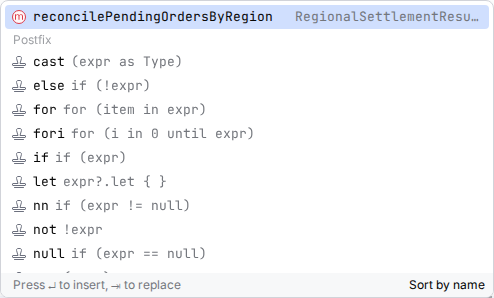
After expanding Java `fori`, the three occurrences of `i` were all editing selections, so arrow keys moved three carets. The shared snippet engine now selects only the first occurrence of each variable and mirrors edits to the others, for every live template and language and for LSP snippets with repeated placeholders; the Java-specific handling is gone.

Co-authored-by: jiejie1133 <116809768+jiejie1133@users.noreply.github.com>
Clicking a link to a heading in another file (e.g. [§5.2](b.md#52-状态机)) in the Markdown preview opened the file at the top. The destination now opens at the heading, in Preview Only and split mode, also when the file wasn't open yet (the preview scrolls once it has rendered). Markdown file-type aliases are honoured and a later link click wins over a slower earlier one.

Co-authored-by: fun90 <13536188+fun90@users.noreply.github.com>
Select Opened File could not reveal a class opened from a dependency JAR that used a Maven classifier and was absent from External Libraries. The document knew its exact archive, but the Project view only searches registered archive roots.
External Libraries now adds the exact archive referenced by the active library document, labels it with its Maven coordinate when available, and removes the temporary entry once the build model lists the same archive.

Co-authored-by: kradme <17811095+kradme@users.noreply.github.com>
Copy Path/Reference… built a different submenu per entry point: the project view and the editor caret chooser list the contributed copy items (features/vcs: Path From Repository Root, GitHub Link), while the editor tab menu and the External Libraries menu hand-wrote theirs and silently dropped every contribution. Both hand-written submenus now append the same `copyPath` menu group, so all four entry points agree — and future contributions appear everywhere at once.

Co-authored-by: muutot <92625353+muutot@users.noreply.github.com>
With **Settings › Editor › General › Editor Tabs › Enable preview tab** on, a single click on a file in the Project view now opens it in the preview tab, and the next single click reuses that tab. Before, the click did nothing. The cause was two switches that weren't connected. The Project view checked its own "Enable Preview Tab" view option, which was off by default and only reachable from the view's ⋮ menu. The Settings checkbox was a separate setting, `editor.tabs.previewTab`, which was only read when a preview tab was created.
IntelliJ IDEA documents these as two ways into one setting, so this PR makes them one. The Project view reads `editor.tabs.previewTab` for single click and for Autoscroll to Source. Its ⋮ › Behavior › Enable Preview Tab item and the `project.option.previewTab` action (the id is unchanged) now write that setting. The old view option is removed from the saved Project view options when they load.
What existing users will see:
- Defaults (Settings on, view option off): single click now opens a preview tab. This is the fix. The editor setting already defaulted to on, so users who never changed anything get single-click preview after this change.
- Both on: no change.
- Both off: no change.

Co-authored-by: bertyhell <1710840+bertyhell@users.noreply.github.com>
In the Project view, copy a keyword, press ⌘F, then ⌘V: the app reported "No files on the clipboard" and the search box stayed empty, instead of pasting the keyword the user had copied to search with.
A tree's speed search is not a text field — its query is built from printable keydowns. So `⌘V` never reached the query: the keymap dispatcher ran `project.paste` on the selected folder, and the paste event that followed bubbled to the Project view's clipboard fallback, which runs the same action again.
The shared `Tree` now claims `⌘V` while a search is active (as it already claims `⌫` since #3226) and takes the clipboard text into its query: pasted text is flattened onto one line and the search jumps to the nearest match. With the search closed, or with a clipboard that holds no text, the view's Paste runs exactly as before.
Every tree with a speed search gets this — the Project view, the Database view, the Services tree and the GitHub changes tree all render `src/ui/Tree.tsx`.

Co-authored-by: aconeshana <52204454+aconeshana@users.noreply.github.com>
With a User filter on a merge-heavy history, the first page of the Git Log fanned the top merge out into dozens of dashed lanes, and the graph column pushed the commit subjects to the right. It went back to one line only after every match was loaded. The cause: `pruneFilteredEdges` (the #2670 fix) only judges a filtered connection when its target is on the loaded page. With the first 300 rows of the issue's repository, the merge kept 43 connections, 42 of them to rows that weren't loaded yet.
Now, while another kept connection of the commit already leads below the page, a filtered connection to an unloaded target waits until that target loads, and is then judged exactly like before. If no kept connection leads below the page, one filtered connection stays, so a row never looks like the end of its history. This is a heuristic: a connection that turns out to be needed (two unrelated side branches, both below the page) appears once its target loads. The sibling-branch test pins that behaviour. An exact answer on the first page would need the backend projection (`Visibility::parents`) to drop ancestors that another projected parent already reaches. This PR doesn't touch Rust; that could be a follow-up.
Go to Parent now pages until every unpruned connection of the commit is loaded, as it did before, so a merge still offers all its parents.

Co-authored-by: bertyhell <1710840+bertyhell@users.noreply.github.com>
Closes#4112 (its remaining half: #4347 stopped the terminal sliding sideways while composing, the
candidate window still opened at the far right of pi's input box).
xterm anchors the IME candidate window on its hidden helper textarea, and keeps that textarea on the
terminal cursor — on every render, on `compositionstart` and again on each `compositionupdate`. A
program that paints its own caret leaves the terminal cursor elsewhere: pi asks for a column past the
right edge of its input box (`ESC[21;411H` in a 206-column terminal, which xterm clamps) while it
Co-authored-by: H-TWINKLE <34811911+H-TWINKLE@users.noreply.github.com>
Claude Code can return an image from a tool call without including a Markdown image in its final reply. OpenIDEA discarded that image while normalizing and saving the tool result, so the conversation showed no preview.
Preserve inline tool images separately from truncated text and show them below the folded work summary. The existing image viewer opens the full preview; expanding the work does not duplicate it, and old conversations without an image field still load.

Co-authored-by: YannABC <9603157+YannABC@users.noreply.github.com>
The **File mask** menu in Find in Files now lists every language file type present in the project, most common first, after the recently used masks. Before, `refreshProjectMasks` kept only the 5 most common types, so in a project with six (rs, md, json, toml, yml, properties) the least common one, `*.properties`, could not be picked. The menu already scrolls and stays inside the window, so a long list stays usable.

Co-authored-by: bertyhell <1710840+bertyhell@users.noreply.github.com>
The New menu had no built-in template for `.svelte` files. Add **Svelte Component** for Vite and Node.js projects, including SvelteKit workspace members. The template accepts SvelteKit filenames such as `+page.svelte`.

Co-authored-by: shohruh-genius <7658451+shohruh-genius@users.noreply.github.com>
The Git Log graph-equivalence test compares layouts for eight option combinations, each with five fragment configurations. Running all 40 comparisons in one Vitest case exceeded the five-second timeout on shared Linux runners. Give each option combination its own test for histories with and without refs. Each case still compares the complete layout with the dense reference implementation for all five fragment configurations and the same 2,400 commits.

Co-authored-by: faysou <893862+faysou@users.noreply.github.com>
Show History (and Add to VCS / the ignore actions) took the editor's file when the shortcut ran right after clicking a Project view row: the row publishes its selection on mousedown, but tree focus is a separate DOM event, so projectViewFocus was still false. File actions now use the Project view selection while the tree owns the context (its lead is set and the editor has no focus), the same rule External Tools use (shared projectViewContextLead helper).

Co-authored-by: akshathayadav378-boop <287247196+akshathayadav378-boop@users.noreply.github.com>
External Tools expanded $FilePath$ and the other file macros from the editor's file even while the Project view was the user's context. They now take the Project view's selected file while it is the context (no editor focus, not a virtual document); caret macros apply only when the editor shows that same file.

Co-authored-by: bertyhell <1710840+bertyhell@users.noreply.github.com>
Go to Hash/Branch/Tag reads refs from the repositories it searches (shown log tab, else the filtered ones, else every root) instead of an empty Repository filter, which offered only HEAD.
In the Git Log Branches pane with several repositories, a branch every
repository has is listed once with no repository name. Hovering it now
lists each repository with the branch it tracks there.
The wheel now scrolls only the innermost scrollable container under the
pointer: a run of tool calls from its headers, a tool output from its text,
the conversation elsewhere. A nested container at its edge no longer hands
the rest of the gesture to the conversation, and a gesture stays with the
container it started in.

Opening or closing a section keeps its header where it was. Closing one near
the end leaves temporary room below the conversation that scrolling up or new
content takes back.
The Whole Task / Last Turn switch in the agent Changes pane was a full-width
segmented pill. It now uses the compact Tabs strip that tool window sub-views
use elsewhere.
Unified Diff shows original line numbers in the first column and modified line numbers in the second. Matching rows show both. Removed and inserted rows show the number for their own revision.

Line numbers stay beside the start of their rows when code wraps, and follow scrolling inside a large removed block. Matching rows keep their original numbers when empty lines are ignored. The column order also applies when the editable side is the Git index.
- Align the repository, checkout, branch, name, location and setup fields in one label-and-control grid. Use the standard dialog type size for labels and keep the worktree path preview beneath the Location field.
- Let the `.worktreeinclude` edit action wrap below its checkbox in narrow windows. With setup expanded, the standard dialog is about 118 logical pixels shorter, and the setup field fits without scrolling in a 440 × 520 window.
The Compose project dashboard listed only container chips, so resource usage meant opening each container, and the project's named volumes were only findable in the global Volumes group among anonymous hashes. It now shows a per-service table (status, CPU, memory, network and block I/O, PIDs) sampled with bounded concurrency and refreshed every 3 s without overlapping requests while the dashboard is visible (paused when the tool window or app is hidden; the container dashboard's stats use the same live sampling instead of a manual Refresh), plus a Volumes section with the project's named volumes that links to each Volume Overview and back.

Co-authored-by: dengliu <5108773+dengliu@users.noreply.github.com>
Docker Compose containers carry their Compose files and service name but had no way back to the source. Jump to Source (F4 / Cmd+Down, context menu, docker.jumpToSource) on a Compose container opens the Compose file at its service declaration and on a Compose project at the services section; the container dashboard's Command row has a button that lands on the service's command value (else entrypoint, across inline values, block scalars and sequences, later override files taking precedence), and the Compose project dashboard lists its Compose files as links. Missing or unreadable files show a notification.

Co-authored-by: dengliu <5108773+dengliu@users.noreply.github.com>
Property rows in the Docker dashboards aligned items on their baseline; an inline-block value's baseline is its last line, so a wrapped multi-line command painted its earlier lines upward over the rows above it. Rows now align at start with a minmax(0, 1fr) value column, and container/image commands render as a single-line preview (newline markers, copy button, no auto-ellipsis tooltip via data-no-tooltip) that expands into a bounded scrollable block with Entrypoint and Command arguments shown separately.

Co-authored-by: dengliu <5108773+dengliu@users.noreply.github.com>
Find in Files and Replace in Files show up to three lines in each query field. Longer text scrolls within its field. Closer spacing between the search and replacement fields gives matches and the source preview more room in short windows.
Git > Commit… from the Project view ignored the selection. It now passes the selected paths, and the commit interface (modal or not) opens with only the changes at or below them checked: tracked and unversioned files included, conflicts left out, the rest of the working tree still listed.

Co-authored-by: kradme <17811095+kradme@users.noreply.github.com>
When the editor font's glyph box is taller than the line height (e.g. 18px font at 18px line height), Find matches, occurrence highlights, in-place rename spans, matched brackets, search results and plugin range marks painted the full inline box into the rows above and below. They now share a 1lh-capped background (and a 1px-framed variant), as selection marks already were, keeping background-color / outline fallbacks for Safari before 16.4.

Co-authored-by: dengliu <5108773+dengliu@users.noreply.github.com>
Every streamed file triggered a Find tool window update that rebuilt the whole result tree and its lookup tables, so a search matching thousands of files grew quadratically and froze the IDE. The session now publishes streamed results at most every 50 ms (the first file still at once), and the tool window builds its tree incrementally: only new files get nodes, merged into the sorted result; a list that is not an extension of the previous one is rebuilt.

Co-authored-by: Mr0Bread <55754540+Mr0Bread@users.noreply.github.com>
The Memory Instances tree gives field values room beside long names. The panel title uses the workbench font. Field names and value previews that run out of space use ellipses and show the full text on hover, and the row's Show Referrers button stays in reach.
WebKit skips clearing the selection highlight inside a subtree whose rendering is skipped, so a kept-alive tab (an Agent conversation) hidden with content-visibility kept a stale highlight after switching back. Hiding a kept tab now clears a selection inside it while keeping it rendered (invisibly) for one frame via a shared useSelectionVisibility hook, and the agent stream keeps data-selection independent of visibility so off-screen rows clear too.

Co-authored-by: dengliu <5108773+dengliu@users.noreply.github.com>
Make the Coverage table's Line and Branch columns adjustable. The divider next to Element gives space to the file tree, and the divider between the metrics redistributes space between them. Each column shows the full covered/total count when it has room. Compact columns keep the percentage visible and show the full count on hover.

Drag a divider or focus it and use the arrow keys. Double-click a divider to restore the default widths. The table remembers widths across reloads and fits them to smaller docks.
computeGraph kept its lanes in a dense array indexed by layout number, which grows with the log, and scanned every slot for each row, making each further page of Git Log quadratic in the loaded commits. Lanes are now kept sparsely so a row costs its live lanes, with identical output (checked against a reference implementation), and the graph is laid out again only when an option that shapes it changes.

Co-authored-by: Mr0Bread <55754540+Mr0Bread@users.noreply.github.com>
planRefresh and dropListings compared every loaded folder with every removed path or ignore-rule root. They now look up each folder and its ancestors in a set (insideAnyOf), with the same semantics as isSameOrInside.

Co-authored-by: Mr0Bread <55754540+Mr0Bread@users.noreply.github.com>
Each diagnostics event copied the whole problems map, so a storm of per-file events cost files^2 copies. The store now updates its data in place and publishes a new facade per change, so subscribers still see a new identity exactly when the content changed; the MCP problems report keeps its own copy to diff against, and profiledProblems builds its map without per-file copies.

Co-authored-by: Mr0Bread <55754540+Mr0Bread@users.noreply.github.com>
Each folder reloaded for an fs event copied the listings map and notified the store, so the mounted view rebuilt the whole tree model once per folder, and the reads were unbounded. One event now reads its folders at most eight at a time and applies all listings in one store update; a folder dropped while the batch was reading stays dropped.

Co-authored-by: Mr0Bread <55754540+Mr0Bread@users.noreply.github.com>
Send to Agent appended an @ mention for every target even when the message already held the same file and lines, leaving duplicate chips and file entries. Mentions already in the message are skipped (a different line range is still its own reference), the draft keeps one file entry per path, and the composer is still shown when nothing new was added. Part of #5296.

Co-authored-by: wildcatDownstairs <26499420+wildcatDownstairs@users.noreply.github.com>
The 500 ms notification timer did not cover a change-list read already running, so slow reads overlapped and an older snapshot could land last. Refreshes for one task now share one active read and one trailing read; results from an old project, a removed task or an evicted cache are dropped, and other tasks refresh independently. Refs #5335.

Co-authored-by: dengliu <5108773+dengliu@users.noreply.github.com>
A turn could take the next queued message before its row disappeared, so Send now / Edit / Remove on it failed with "already sent" once per click. The dequeue is now published as soon as the turn takes the message; a stale queue action returns OutOfSync after re-publishing the current queue, which the row ignores, and only the pending row is disabled. A missing task or other failure still shows an error.

Co-authored-by: dengliu <5108773+dengliu@users.noreply.github.com>
- Open the resizable text editor from its Git Log filter. It follows the visible Paths or More Filters control as the window narrows.
- Give paths a code-font editing area with soft wrapping. Keep the one-path-per-line hint and apply controls beneath it.
- Enter inserts a newline. The platform's primary modifier with Enter applies the filter, and Escape or clicking outside discards the draft.
Debug tabs were ordered by the backend's increasing session id, so Rerun or a replaced finished tab jumped to the end. Each tab now has a stable local slot that a rerun, a prepared start, a pinned tab's rerun and a browser page inherit; a new session reuses a stopped tab by configuration id, then name, then the selected one. Child sessions are ordered by their root's slot so they stay next to their parent.

Co-authored-by: kradme <17811095+kradme@users.noreply.github.com>
- Keep the shape and paging controls above the table and put the full-width slice expression below it, above Close. The grid scrolls between the controls.
- Open at 700 × 500 when there is room. Give short tables the available width, use workbench typography and center the row and column headers.
- Update the title when a slice is submitted and show expression errors below the field.
 l0ng-ai
 jiejie1133

 fun90andfun90

 langxpandkradme

 Muuandmuutot

 Bert Verhelstandbertyhell

 aconeshanaandaconeshana
 TWINKLE
 Yann

 faysouandfaysou

 Shohruh Ismoilovandshohruh-genius

 akshathayadav378-boopandakshathayadav378-boop

 Deng Liuanddengliu
 Mr0Bread

 LU XIANGRUIandwildcatDownstairs