mirror of
https://github.com/GreptimeTeam/greptimedb.git
synced 2025-12-23 06:30:05 +00:00
Compare commits
133 Commits
create-tab
...
v0.11.3
| Author | SHA1 | Date | |
|---|---|---|---|

|
ea0a347edc | ||

|
4d70589488 | ||

|
428f646fa3 | ||
|
|
1d1bb83a9f | ||

|
27918686d6 | ||

|
0f55afd167 | ||

|
ea02ddcde1 | ||
|
|
0404e2a132 | ||

|
7deb559a81 | ||
|
|
c470c6a172 | ||
|
|
efee2480d2 | ||
|
|
42aaf86c26 | ||
|
|
a952ebb2ff | ||
|
|
9a5b904db3 | ||
|
|
2e1a5d811a | ||
|
|
2d5824b3a5 | ||

|
5f67f2b58e | ||
|
|
c12fbcda9f | ||
|
|
7fe735009c | ||

|
f0298afaf0 | ||
|
|
5175dea6b3 | ||
|
|
7caa88abc7 | ||
|
|
eafb01dfff | ||

|
b0de816d3d | ||
|
|
5c6161a95e | ||
|
|
5e3c5945c4 | ||

|
f6feac26f5 | ||
|
|
4b2c59e626 | ||
|
|
cf605ecccc | ||
|
|
ab3f9c42f1 | ||
|
|
258fc6f31b | ||

|
e2dccc1d1a | ||
|
|
78c5707642 | ||
|
|
204b5e474f | ||
|
|
e9f1fa0b7d | ||
|
|
a988ff5acf | ||

|
ef0fca9388 | ||

|
b704e7f703 | ||
|
|
3a4c636e29 | ||
|
|
a22e8b421c | ||
|
|
5b42546204 | ||
|
|
0678a31ab1 | ||

|
589cc84048 | ||

|
ed8c072a5e | ||

|
9d172f1cae | ||
|
|
236888313d | ||
|
|
0b97ef0e4f | ||

|
316e6a83eb | ||
|
|
6dc57b7a6c | ||
|
|
1f5c2b32e5 | ||
|
|
01e907be40 | ||
|
|
e4dc5ea243 | ||
|
|
3ff5754b5a | ||
|
|
c22ca3ebd5 | ||
|
|
327d165ad9 | ||
|
|
fe63a620ef | ||
|
|
be81f0db5a | ||
|
|
6ca7a305ae | ||

|
1111a8bd57 | ||
|
|
66b21b29b5 | ||
|
|
31cfab81ad | ||
|
|
dd3a509607 | ||
|
|
d4cae6af1e | ||
|
|
3fec71b5c0 | ||
|
|
9e31a6478b | ||
|
|
bce291a8e1 | ||
|
|
c788eb67e2 | ||
|
|
0c32dcf46c | ||
|
|
68a05b38bd | ||
|
|
ee72ae8bd0 | ||
|
|
556bd796d8 | ||
|
|
1327e8809f | ||
|
|
17d75c767c | ||
|
|
a1ed450c0c | ||
|
|
ea4ce9d1e3 | ||
|
|
1f7d9666b7 | ||
|
|
9f1a0d78b2 | ||
|
|
ed8e418716 | ||
|
|
9e7121c1bb | ||

|
94a49ed4f0 | ||
|
|
f5e743379f | ||
|
|
6735e5867e | ||
|
|
925525726b | ||
|
|
6427682a9a | ||
|
|
55b0022676 | ||
|
|
2d84cc8d87 | ||
|
|
c030705b17 | ||
|
|
443c600bd0 | ||
|
|
39cadfe10b | ||
|
|
9b5e4e80f7 | ||
|
|
041a276b66 | ||
|
|
614a25ddc5 | ||
|
|
4337e20010 | ||

|
65c52cc698 | ||
|
|
50f31fd681 | ||
|
|
b5af5aaf8d | ||
|
|
27693c7f1e | ||
|
|
a59fef9ffb | ||
|
|
bcecd8ce52 | ||
|
|
ffdcb8c1ac | ||
|
|
554121ad79 | ||
|
|
43c12b4f2c | ||
|
|
7aa8c28fe4 | ||
|
|
34fbe7739e | ||

|
06d7bd99dd | ||
|
|
b71d842615 | ||
|
|
7f71693b8e | ||
|
|
615ea1a171 | ||
|
|
4e725d259d | ||

|
dc2252eb6d | ||
|
|
6d4cc2e070 | ||
|
|
6066ce2c4a | ||
|
|
b90d8f7dbd | ||
|
|
fdccf4ff84 | ||
|
|
8b1484c064 | ||
|
|
576e20ac78 | ||
|
|
10b3e3da0f | ||
|
|
4a3ef2d718 | ||
|
|
65eabb2a05 | ||
|
|
bc5a57f51f | ||
|
|
f24b9d8814 | ||
|
|
dd4d0a88ce | ||
|
|
3d2096fe9d | ||
|
|
35715bb710 | ||
|
|
08a3befa67 | ||
|
|
ca1758d4e7 | ||
|
|
42bf818167 | ||
|
|
2c9b117224 | ||
|
|
3edf2317e1 | ||
|
|
85d72a3cd0 | ||
|
|
928172bd82 | ||
|
|
e9f5bddeff | ||
|
|
486755d795 |
@@ -2,16 +2,4 @@
|
||||
linker = "aarch64-linux-gnu-gcc"
|
||||
|
||||
[alias]
|
||||
sqlness = "run --bin sqlness-runner --target-dir target/sqlness --"
|
||||
|
||||
[unstable.git]
|
||||
shallow_index = true
|
||||
shallow_deps = true
|
||||
[unstable.gitoxide]
|
||||
fetch = true
|
||||
checkout = true
|
||||
list_files = true
|
||||
internal_use_git2 = false
|
||||
|
||||
[env]
|
||||
CARGO_WORKSPACE_DIR = { value = "", relative = true }
|
||||
sqlness = "run --bin sqlness-runner --"
|
||||
|
||||
15
.coderabbit.yaml
Normal file
15
.coderabbit.yaml
Normal file
@@ -0,0 +1,15 @@
|
||||
# yaml-language-server: $schema=https://coderabbit.ai/integrations/schema.v2.json
|
||||
language: "en-US"
|
||||
early_access: false
|
||||
reviews:
|
||||
profile: "chill"
|
||||
request_changes_workflow: false
|
||||
high_level_summary: true
|
||||
poem: true
|
||||
review_status: true
|
||||
collapse_walkthrough: false
|
||||
auto_review:
|
||||
enabled: false
|
||||
drafts: false
|
||||
chat:
|
||||
auto_reply: true
|
||||
24
.github/CODEOWNERS
vendored
24
.github/CODEOWNERS
vendored
@@ -4,24 +4,24 @@
|
||||
|
||||
* @GreptimeTeam/db-approver
|
||||
|
||||
## [Module] Database Engine
|
||||
/src/index @evenyag @discord9 @WenyXu
|
||||
## [Module] Databse Engine
|
||||
/src/index @zhongzc
|
||||
/src/mito2 @evenyag @v0y4g3r @waynexia
|
||||
/src/query @evenyag @waynexia @discord9
|
||||
/src/query @evenyag
|
||||
|
||||
## [Module] Distributed
|
||||
/src/common/meta @MichaelScofield @WenyXu
|
||||
/src/common/procedure @MichaelScofield @WenyXu
|
||||
/src/meta-client @MichaelScofield @WenyXu
|
||||
/src/meta-srv @MichaelScofield @WenyXu
|
||||
/src/common/meta @MichaelScofield
|
||||
/src/common/procedure @MichaelScofield
|
||||
/src/meta-client @MichaelScofield
|
||||
/src/meta-srv @MichaelScofield
|
||||
|
||||
## [Module] Write Ahead Log
|
||||
/src/log-store @v0y4g3r @WenyXu
|
||||
/src/store-api @v0y4g3r @evenyag
|
||||
/src/log-store @v0y4g3r
|
||||
/src/store-api @v0y4g3r
|
||||
|
||||
## [Module] Metrics Engine
|
||||
/src/metric-engine @waynexia @WenyXu
|
||||
/src/promql @waynexia @evenyag @discord9
|
||||
/src/metric-engine @waynexia
|
||||
/src/promql @waynexia
|
||||
|
||||
## [Module] Flow
|
||||
/src/flow @discord9 @waynexia
|
||||
/src/flow @zhongzc @waynexia
|
||||
|
||||
@@ -41,14 +41,7 @@ runs:
|
||||
username: ${{ inputs.dockerhub-image-registry-username }}
|
||||
password: ${{ inputs.dockerhub-image-registry-token }}
|
||||
|
||||
- name: Set up qemu for multi-platform builds
|
||||
uses: docker/setup-qemu-action@v3
|
||||
with:
|
||||
platforms: linux/amd64,linux/arm64
|
||||
# The latest version will lead to segmentation fault.
|
||||
image: tonistiigi/binfmt:qemu-v7.0.0-28
|
||||
|
||||
- name: Build and push dev-builder-ubuntu image # Build image for amd64 and arm64 platform.
|
||||
- name: Build and push dev-builder-ubuntu image
|
||||
shell: bash
|
||||
if: ${{ inputs.build-dev-builder-ubuntu == 'true' }}
|
||||
run: |
|
||||
@@ -59,7 +52,7 @@ runs:
|
||||
IMAGE_NAMESPACE=${{ inputs.dockerhub-image-namespace }} \
|
||||
DEV_BUILDER_IMAGE_TAG=${{ inputs.version }}
|
||||
|
||||
- name: Build and push dev-builder-centos image # Only build image for amd64 platform.
|
||||
- name: Build and push dev-builder-centos image
|
||||
shell: bash
|
||||
if: ${{ inputs.build-dev-builder-centos == 'true' }}
|
||||
run: |
|
||||
@@ -76,7 +69,8 @@ runs:
|
||||
run: |
|
||||
make dev-builder \
|
||||
BASE_IMAGE=android \
|
||||
BUILDX_MULTI_PLATFORM_BUILD=amd64 \
|
||||
IMAGE_REGISTRY=${{ inputs.dockerhub-image-registry }} \
|
||||
IMAGE_NAMESPACE=${{ inputs.dockerhub-image-namespace }} \
|
||||
DEV_BUILDER_IMAGE_TAG=${{ inputs.version }}
|
||||
DEV_BUILDER_IMAGE_TAG=${{ inputs.version }} && \
|
||||
|
||||
docker push ${{ inputs.dockerhub-image-registry }}/${{ inputs.dockerhub-image-namespace }}/dev-builder-android:${{ inputs.version }}
|
||||
|
||||
17
.github/actions/build-greptime-binary/action.yml
vendored
17
.github/actions/build-greptime-binary/action.yml
vendored
@@ -32,23 +32,9 @@ inputs:
|
||||
description: Image Registry
|
||||
required: false
|
||||
default: 'docker.io'
|
||||
large-page-size:
|
||||
description: Build GreptimeDB with large page size (65536).
|
||||
required: false
|
||||
default: 'false'
|
||||
|
||||
runs:
|
||||
using: composite
|
||||
steps:
|
||||
- name: Set extra build environment variables
|
||||
shell: bash
|
||||
run: |
|
||||
if [[ '${{ inputs.large-page-size }}' == 'true' ]]; then
|
||||
echo 'EXTRA_BUILD_ENVS="JEMALLOC_SYS_WITH_LG_PAGE=16"' >> $GITHUB_ENV
|
||||
else
|
||||
echo 'EXTRA_BUILD_ENVS=' >> $GITHUB_ENV
|
||||
fi
|
||||
|
||||
- name: Build greptime binary
|
||||
shell: bash
|
||||
if: ${{ inputs.build-android-artifacts == 'false' }}
|
||||
@@ -59,8 +45,7 @@ runs:
|
||||
FEATURES=${{ inputs.features }} \
|
||||
BASE_IMAGE=${{ inputs.base-image }} \
|
||||
IMAGE_NAMESPACE=${{ inputs.image-namespace }} \
|
||||
IMAGE_REGISTRY=${{ inputs.image-registry }} \
|
||||
EXTRA_BUILD_ENVS=$EXTRA_BUILD_ENVS
|
||||
IMAGE_REGISTRY=${{ inputs.image-registry }}
|
||||
|
||||
- name: Upload artifacts
|
||||
uses: ./.github/actions/upload-artifacts
|
||||
|
||||
10
.github/actions/build-greptime-images/action.yml
vendored
10
.github/actions/build-greptime-images/action.yml
vendored
@@ -34,8 +34,8 @@ inputs:
|
||||
required: true
|
||||
push-latest-tag:
|
||||
description: Whether to push the latest tag
|
||||
required: true
|
||||
default: 'false'
|
||||
required: false
|
||||
default: 'true'
|
||||
runs:
|
||||
using: composite
|
||||
steps:
|
||||
@@ -47,11 +47,7 @@ runs:
|
||||
password: ${{ inputs.image-registry-password }}
|
||||
|
||||
- name: Set up qemu for multi-platform builds
|
||||
uses: docker/setup-qemu-action@v3
|
||||
with:
|
||||
platforms: linux/amd64,linux/arm64
|
||||
# The latest version will lead to segmentation fault.
|
||||
image: tonistiigi/binfmt:qemu-v7.0.0-28
|
||||
uses: docker/setup-qemu-action@v2
|
||||
|
||||
- name: Set up buildx
|
||||
uses: docker/setup-buildx-action@v2
|
||||
|
||||
4
.github/actions/build-images/action.yml
vendored
4
.github/actions/build-images/action.yml
vendored
@@ -22,8 +22,8 @@ inputs:
|
||||
required: true
|
||||
push-latest-tag:
|
||||
description: Whether to push the latest tag
|
||||
required: true
|
||||
default: 'false'
|
||||
required: false
|
||||
default: 'true'
|
||||
dev-mode:
|
||||
description: Enable dev mode, only build standard greptime
|
||||
required: false
|
||||
|
||||
10
.github/actions/build-linux-artifacts/action.yml
vendored
10
.github/actions/build-linux-artifacts/action.yml
vendored
@@ -27,10 +27,6 @@ inputs:
|
||||
description: Working directory to build the artifacts
|
||||
required: false
|
||||
default: .
|
||||
large-page-size:
|
||||
description: Build GreptimeDB with large page size (65536).
|
||||
required: false
|
||||
default: 'false'
|
||||
runs:
|
||||
using: composite
|
||||
steps:
|
||||
@@ -52,7 +48,8 @@ runs:
|
||||
path: /tmp/greptime-*.log
|
||||
retention-days: 3
|
||||
|
||||
- name: Build greptime # Builds standard greptime binary
|
||||
- name: Build greptime
|
||||
if: ${{ inputs.dev-mode == 'false' }}
|
||||
uses: ./.github/actions/build-greptime-binary
|
||||
with:
|
||||
base-image: ubuntu
|
||||
@@ -63,7 +60,6 @@ runs:
|
||||
working-dir: ${{ inputs.working-dir }}
|
||||
image-registry: ${{ inputs.image-registry }}
|
||||
image-namespace: ${{ inputs.image-namespace }}
|
||||
large-page-size: ${{ inputs.large-page-size }}
|
||||
|
||||
- name: Clean up the target directory # Clean up the target directory for the centos7 base image, or it will still use the objects of last build.
|
||||
shell: bash
|
||||
@@ -82,7 +78,6 @@ runs:
|
||||
working-dir: ${{ inputs.working-dir }}
|
||||
image-registry: ${{ inputs.image-registry }}
|
||||
image-namespace: ${{ inputs.image-namespace }}
|
||||
large-page-size: ${{ inputs.large-page-size }}
|
||||
|
||||
- name: Build greptime on android base image
|
||||
uses: ./.github/actions/build-greptime-binary
|
||||
@@ -95,4 +90,3 @@ runs:
|
||||
build-android-artifacts: true
|
||||
image-registry: ${{ inputs.image-registry }}
|
||||
image-namespace: ${{ inputs.image-namespace }}
|
||||
large-page-size: ${{ inputs.large-page-size }}
|
||||
|
||||
@@ -47,6 +47,7 @@ runs:
|
||||
shell: pwsh
|
||||
run: make test sqlness-test
|
||||
env:
|
||||
RUSTUP_WINDOWS_PATH_ADD_BIN: 1 # Workaround for https://github.com/nextest-rs/nextest/issues/1493
|
||||
RUST_BACKTRACE: 1
|
||||
SQLNESS_OPTS: "--preserve-state"
|
||||
|
||||
|
||||
@@ -9,8 +9,8 @@ runs:
|
||||
steps:
|
||||
# Download artifacts from previous jobs, the artifacts will be downloaded to:
|
||||
# ${WORKING_DIR}
|
||||
# |- greptime-darwin-amd64-v0.5.0/greptime-darwin-amd64-v0.5.0.tar.gz
|
||||
# |- greptime-darwin-amd64-v0.5.0.sha256sum/greptime-darwin-amd64-v0.5.0.sha256sum
|
||||
# |- greptime-darwin-amd64-pyo3-v0.5.0/greptime-darwin-amd64-pyo3-v0.5.0.tar.gz
|
||||
# |- greptime-darwin-amd64-pyo3-v0.5.0.sha256sum/greptime-darwin-amd64-pyo3-v0.5.0.sha256sum
|
||||
# |- greptime-darwin-amd64-v0.5.0/greptime-darwin-amd64-v0.5.0.tar.gz
|
||||
# |- greptime-darwin-amd64-v0.5.0.sha256sum/greptime-darwin-amd64-v0.5.0.sha256sum
|
||||
# ...
|
||||
|
||||
18
.github/actions/release-cn-artifacts/action.yaml
vendored
18
.github/actions/release-cn-artifacts/action.yaml
vendored
@@ -51,8 +51,8 @@ inputs:
|
||||
required: true
|
||||
upload-to-s3:
|
||||
description: Upload to S3
|
||||
required: true
|
||||
default: 'false'
|
||||
required: false
|
||||
default: 'true'
|
||||
artifacts-dir:
|
||||
description: Directory to store artifacts
|
||||
required: false
|
||||
@@ -64,11 +64,11 @@ inputs:
|
||||
upload-max-retry-times:
|
||||
description: Max retry times for uploading artifacts to S3
|
||||
required: false
|
||||
default: "30"
|
||||
default: "20"
|
||||
upload-retry-timeout:
|
||||
description: Timeout for uploading artifacts to S3
|
||||
required: false
|
||||
default: "120" # minutes
|
||||
default: "30" # minutes
|
||||
runs:
|
||||
using: composite
|
||||
steps:
|
||||
@@ -77,21 +77,13 @@ runs:
|
||||
with:
|
||||
path: ${{ inputs.artifacts-dir }}
|
||||
|
||||
- name: Install s5cmd
|
||||
shell: bash
|
||||
run: |
|
||||
wget https://github.com/peak/s5cmd/releases/download/v2.3.0/s5cmd_2.3.0_Linux-64bit.tar.gz
|
||||
tar -xzf s5cmd_2.3.0_Linux-64bit.tar.gz
|
||||
sudo mv s5cmd /usr/local/bin/
|
||||
sudo chmod +x /usr/local/bin/s5cmd
|
||||
|
||||
- name: Release artifacts to cn region
|
||||
uses: nick-invision/retry@v2
|
||||
if: ${{ inputs.upload-to-s3 == 'true' }}
|
||||
env:
|
||||
AWS_ACCESS_KEY_ID: ${{ inputs.aws-cn-access-key-id }}
|
||||
AWS_SECRET_ACCESS_KEY: ${{ inputs.aws-cn-secret-access-key }}
|
||||
AWS_REGION: ${{ inputs.aws-cn-region }}
|
||||
AWS_DEFAULT_REGION: ${{ inputs.aws-cn-region }}
|
||||
UPDATE_VERSION_INFO: ${{ inputs.update-version-info }}
|
||||
with:
|
||||
max_attempts: ${{ inputs.upload-max-retry-times }}
|
||||
|
||||
@@ -12,7 +12,7 @@ runs:
|
||||
steps:
|
||||
- name: Install Etcd cluster
|
||||
shell: bash
|
||||
run: |
|
||||
run: |
|
||||
helm upgrade \
|
||||
--install etcd oci://registry-1.docker.io/bitnamicharts/etcd \
|
||||
--set replicaCount=${{ inputs.etcd-replicas }} \
|
||||
@@ -24,9 +24,4 @@ runs:
|
||||
--set auth.rbac.token.enabled=false \
|
||||
--set persistence.size=2Gi \
|
||||
--create-namespace \
|
||||
--set global.security.allowInsecureImages=true \
|
||||
--set image.registry=docker.io \
|
||||
--set image.repository=greptime/etcd \
|
||||
--set image.tag=3.6.1-debian-12-r3 \
|
||||
--version 12.0.8 \
|
||||
-n ${{ inputs.namespace }}
|
||||
|
||||
@@ -8,15 +8,15 @@ inputs:
|
||||
default: 2
|
||||
description: "Number of Datanode replicas"
|
||||
meta-replicas:
|
||||
default: 2
|
||||
default: 1
|
||||
description: "Number of Metasrv replicas"
|
||||
image-registry:
|
||||
image-registry:
|
||||
default: "docker.io"
|
||||
description: "Image registry"
|
||||
image-repository:
|
||||
image-repository:
|
||||
default: "greptime/greptimedb"
|
||||
description: "Image repository"
|
||||
image-tag:
|
||||
image-tag:
|
||||
default: "latest"
|
||||
description: 'Image tag'
|
||||
etcd-endpoints:
|
||||
@@ -32,12 +32,12 @@ runs:
|
||||
steps:
|
||||
- name: Install GreptimeDB operator
|
||||
uses: nick-fields/retry@v3
|
||||
with:
|
||||
with:
|
||||
timeout_minutes: 3
|
||||
max_attempts: 3
|
||||
shell: bash
|
||||
command: |
|
||||
helm repo add greptime https://greptimeteam.github.io/helm-charts/
|
||||
helm repo add greptime https://greptimeteam.github.io/helm-charts/
|
||||
helm repo update
|
||||
helm upgrade \
|
||||
--install \
|
||||
@@ -48,10 +48,10 @@ runs:
|
||||
--wait-for-jobs
|
||||
- name: Install GreptimeDB cluster
|
||||
shell: bash
|
||||
run: |
|
||||
run: |
|
||||
helm upgrade \
|
||||
--install my-greptimedb \
|
||||
--set 'meta.backendStorage.etcd.endpoints[0]=${{ inputs.etcd-endpoints }}' \
|
||||
--set meta.etcdEndpoints=${{ inputs.etcd-endpoints }} \
|
||||
--set meta.enableRegionFailover=${{ inputs.enable-region-failover }} \
|
||||
--set image.registry=${{ inputs.image-registry }} \
|
||||
--set image.repository=${{ inputs.image-repository }} \
|
||||
@@ -59,7 +59,7 @@ runs:
|
||||
--set base.podTemplate.main.resources.requests.cpu=50m \
|
||||
--set base.podTemplate.main.resources.requests.memory=256Mi \
|
||||
--set base.podTemplate.main.resources.limits.cpu=2000m \
|
||||
--set base.podTemplate.main.resources.limits.memory=3Gi \
|
||||
--set base.podTemplate.main.resources.limits.memory=2Gi \
|
||||
--set frontend.replicas=${{ inputs.frontend-replicas }} \
|
||||
--set datanode.replicas=${{ inputs.datanode-replicas }} \
|
||||
--set meta.replicas=${{ inputs.meta-replicas }} \
|
||||
@@ -72,7 +72,7 @@ runs:
|
||||
- name: Wait for GreptimeDB
|
||||
shell: bash
|
||||
run: |
|
||||
while true; do
|
||||
while true; do
|
||||
PHASE=$(kubectl -n my-greptimedb get gtc my-greptimedb -o jsonpath='{.status.clusterPhase}')
|
||||
if [ "$PHASE" == "Running" ]; then
|
||||
echo "Cluster is ready"
|
||||
@@ -86,10 +86,10 @@ runs:
|
||||
- name: Print GreptimeDB info
|
||||
if: always()
|
||||
shell: bash
|
||||
run: |
|
||||
run: |
|
||||
kubectl get all --show-labels -n my-greptimedb
|
||||
- name: Describe Nodes
|
||||
if: always()
|
||||
shell: bash
|
||||
run: |
|
||||
run: |
|
||||
kubectl describe nodes
|
||||
|
||||
@@ -1,20 +1,14 @@
|
||||
logging:
|
||||
level: "info"
|
||||
format: "json"
|
||||
filters:
|
||||
- log_store=debug
|
||||
meta:
|
||||
configData: |-
|
||||
[runtime]
|
||||
global_rt_size = 4
|
||||
|
||||
|
||||
[wal]
|
||||
provider = "kafka"
|
||||
broker_endpoints = ["kafka.kafka-cluster.svc.cluster.local:9092"]
|
||||
num_topics = 3
|
||||
auto_prune_interval = "30s"
|
||||
trigger_flush_threshold = 100
|
||||
|
||||
|
||||
[datanode]
|
||||
[datanode.client]
|
||||
timeout = "120s"
|
||||
@@ -27,7 +21,7 @@ datanode:
|
||||
[wal]
|
||||
provider = "kafka"
|
||||
broker_endpoints = ["kafka.kafka-cluster.svc.cluster.local:9092"]
|
||||
overwrite_entry_start_id = true
|
||||
linger = "2ms"
|
||||
frontend:
|
||||
configData: |-
|
||||
[runtime]
|
||||
|
||||
@@ -12,7 +12,7 @@ runs:
|
||||
steps:
|
||||
- name: Install Kafka cluster
|
||||
shell: bash
|
||||
run: |
|
||||
run: |
|
||||
helm upgrade \
|
||||
--install kafka oci://registry-1.docker.io/bitnamicharts/kafka \
|
||||
--set controller.replicaCount=${{ inputs.controller-replicas }} \
|
||||
@@ -23,8 +23,4 @@ runs:
|
||||
--set listeners.controller.protocol=PLAINTEXT \
|
||||
--set listeners.client.protocol=PLAINTEXT \
|
||||
--create-namespace \
|
||||
--set image.registry=docker.io \
|
||||
--set image.repository=greptime/kafka \
|
||||
--set image.tag=3.9.0-debian-12-r1 \
|
||||
--version 31.0.0 \
|
||||
-n ${{ inputs.namespace }}
|
||||
|
||||
@@ -6,7 +6,9 @@ inputs:
|
||||
description: "Number of PostgreSQL replicas"
|
||||
namespace:
|
||||
default: "postgres-namespace"
|
||||
description: "The PostgreSQL namespace"
|
||||
postgres-version:
|
||||
default: "14.2"
|
||||
description: "PostgreSQL version"
|
||||
storage-size:
|
||||
default: "1Gi"
|
||||
description: "Storage size for PostgreSQL"
|
||||
@@ -20,11 +22,7 @@ runs:
|
||||
helm upgrade \
|
||||
--install postgresql oci://registry-1.docker.io/bitnamicharts/postgresql \
|
||||
--set replicaCount=${{ inputs.postgres-replicas }} \
|
||||
--set global.security.allowInsecureImages=true \
|
||||
--set image.registry=docker.io \
|
||||
--set image.repository=greptime/postgresql \
|
||||
--set image.tag=17.5.0-debian-12-r3 \
|
||||
--version 16.7.4 \
|
||||
--set image.tag=${{ inputs.postgres-version }} \
|
||||
--set persistence.size=${{ inputs.storage-size }} \
|
||||
--set postgresql.username=greptimedb \
|
||||
--set postgresql.password=admin \
|
||||
|
||||
2
.github/actions/start-runner/action.yml
vendored
2
.github/actions/start-runner/action.yml
vendored
@@ -56,7 +56,7 @@ runs:
|
||||
|
||||
- name: Start EC2 runner
|
||||
if: startsWith(inputs.runner, 'ec2')
|
||||
uses: machulav/ec2-github-runner@v2.3.8
|
||||
uses: machulav/ec2-github-runner@v2
|
||||
id: start-linux-arm64-ec2-runner
|
||||
with:
|
||||
mode: start
|
||||
|
||||
2
.github/actions/stop-runner/action.yml
vendored
2
.github/actions/stop-runner/action.yml
vendored
@@ -33,7 +33,7 @@ runs:
|
||||
|
||||
- name: Stop EC2 runner
|
||||
if: ${{ inputs.label && inputs.ec2-instance-id }}
|
||||
uses: machulav/ec2-github-runner@v2.3.8
|
||||
uses: machulav/ec2-github-runner@v2
|
||||
with:
|
||||
mode: stop
|
||||
label: ${{ inputs.label }}
|
||||
|
||||
6
.github/actions/upload-artifacts/action.yml
vendored
6
.github/actions/upload-artifacts/action.yml
vendored
@@ -30,9 +30,9 @@ runs:
|
||||
done
|
||||
|
||||
# The compressed artifacts will use the following layout:
|
||||
# greptime-linux-amd64-v0.3.0sha256sum
|
||||
# greptime-linux-amd64-v0.3.0.tar.gz
|
||||
# greptime-linux-amd64-v0.3.0
|
||||
# greptime-linux-amd64-pyo3-v0.3.0sha256sum
|
||||
# greptime-linux-amd64-pyo3-v0.3.0.tar.gz
|
||||
# greptime-linux-amd64-pyo3-v0.3.0
|
||||
# └── greptime
|
||||
- name: Compress artifacts and calculate checksum
|
||||
working-directory: ${{ inputs.working-dir }}
|
||||
|
||||
15
.github/labeler.yaml
vendored
15
.github/labeler.yaml
vendored
@@ -1,15 +0,0 @@
|
||||
ci:
|
||||
- changed-files:
|
||||
- any-glob-to-any-file: .github/**
|
||||
|
||||
docker:
|
||||
- changed-files:
|
||||
- any-glob-to-any-file: docker/**
|
||||
|
||||
documentation:
|
||||
- changed-files:
|
||||
- any-glob-to-any-file: docs/**
|
||||
|
||||
dashboard:
|
||||
- changed-files:
|
||||
- any-glob-to-any-file: grafana/**
|
||||
42
.github/scripts/check-version.sh
vendored
42
.github/scripts/check-version.sh
vendored
@@ -1,42 +0,0 @@
|
||||
#!/bin/bash
|
||||
|
||||
# Get current version
|
||||
CURRENT_VERSION=$1
|
||||
if [ -z "$CURRENT_VERSION" ]; then
|
||||
echo "Error: Failed to get current version"
|
||||
exit 1
|
||||
fi
|
||||
|
||||
# Get the latest version from GitHub Releases
|
||||
API_RESPONSE=$(curl -s "https://api.github.com/repos/GreptimeTeam/greptimedb/releases/latest")
|
||||
|
||||
if [ -z "$API_RESPONSE" ] || [ "$(echo "$API_RESPONSE" | jq -r '.message')" = "Not Found" ]; then
|
||||
echo "Error: Failed to fetch latest version from GitHub"
|
||||
exit 1
|
||||
fi
|
||||
|
||||
# Get the latest version
|
||||
LATEST_VERSION=$(echo "$API_RESPONSE" | jq -r '.tag_name')
|
||||
|
||||
if [ -z "$LATEST_VERSION" ] || [ "$LATEST_VERSION" = "null" ]; then
|
||||
echo "Error: No valid version found in GitHub releases"
|
||||
exit 1
|
||||
fi
|
||||
|
||||
# Cleaned up version number format (removed possible 'v' prefix and -nightly suffix)
|
||||
CLEAN_CURRENT=$(echo "$CURRENT_VERSION" | sed 's/^v//' | sed 's/-nightly-.*//')
|
||||
CLEAN_LATEST=$(echo "$LATEST_VERSION" | sed 's/^v//' | sed 's/-nightly-.*//')
|
||||
|
||||
echo "Current version: $CLEAN_CURRENT"
|
||||
echo "Latest release version: $CLEAN_LATEST"
|
||||
|
||||
# Use sort -V to compare versions
|
||||
HIGHER_VERSION=$(printf "%s\n%s" "$CLEAN_CURRENT" "$CLEAN_LATEST" | sort -V | tail -n1)
|
||||
|
||||
if [ "$HIGHER_VERSION" = "$CLEAN_CURRENT" ]; then
|
||||
echo "Current version ($CLEAN_CURRENT) is NEWER than or EQUAL to latest ($CLEAN_LATEST)"
|
||||
echo "is-current-version-latest=true" >> $GITHUB_OUTPUT
|
||||
else
|
||||
echo "Current version ($CLEAN_CURRENT) is OLDER than latest ($CLEAN_LATEST)"
|
||||
echo "is-current-version-latest=false" >> $GITHUB_OUTPUT
|
||||
fi
|
||||
40
.github/scripts/create-version.sh
vendored
40
.github/scripts/create-version.sh
vendored
@@ -8,25 +8,24 @@ set -e
|
||||
# - If it's a nightly build, the version is 'nightly-YYYYMMDD-$(git rev-parse --short HEAD)', like 'nightly-20230712-e5b243c'.
|
||||
# create_version ${GIHUB_EVENT_NAME} ${NEXT_RELEASE_VERSION} ${NIGHTLY_RELEASE_PREFIX}
|
||||
function create_version() {
|
||||
# Read from environment variables.
|
||||
# Read from envrionment variables.
|
||||
if [ -z "$GITHUB_EVENT_NAME" ]; then
|
||||
echo "GITHUB_EVENT_NAME is empty" >&2
|
||||
echo "GITHUB_EVENT_NAME is empty"
|
||||
exit 1
|
||||
fi
|
||||
|
||||
if [ -z "$NEXT_RELEASE_VERSION" ]; then
|
||||
echo "NEXT_RELEASE_VERSION is empty, use version from Cargo.toml" >&2
|
||||
# NOTE: Need a `v` prefix for the version string.
|
||||
export NEXT_RELEASE_VERSION=v$(grep '^version = ' Cargo.toml | cut -d '"' -f 2 | head -n 1)
|
||||
echo "NEXT_RELEASE_VERSION is empty"
|
||||
exit 1
|
||||
fi
|
||||
|
||||
if [ -z "$NIGHTLY_RELEASE_PREFIX" ]; then
|
||||
echo "NIGHTLY_RELEASE_PREFIX is empty" >&2
|
||||
echo "NIGHTLY_RELEASE_PREFIX is empty"
|
||||
exit 1
|
||||
fi
|
||||
|
||||
# Reuse $NEXT_RELEASE_VERSION to identify whether it's a nightly build.
|
||||
# It will be like 'nightly-20230808-7d0d8dc6'.
|
||||
# It will be like 'nigtly-20230808-7d0d8dc6'.
|
||||
if [ "$NEXT_RELEASE_VERSION" = nightly ]; then
|
||||
echo "$NIGHTLY_RELEASE_PREFIX-$(date "+%Y%m%d")-$(git rev-parse --short HEAD)"
|
||||
exit 0
|
||||
@@ -36,7 +35,7 @@ function create_version() {
|
||||
# It will be like 'dev-2023080819-f0e7216c'.
|
||||
if [ "$NEXT_RELEASE_VERSION" = dev ]; then
|
||||
if [ -z "$COMMIT_SHA" ]; then
|
||||
echo "COMMIT_SHA is empty in dev build" >&2
|
||||
echo "COMMIT_SHA is empty in dev build"
|
||||
exit 1
|
||||
fi
|
||||
echo "dev-$(date "+%Y%m%d-%s")-$(echo "$COMMIT_SHA" | cut -c1-8)"
|
||||
@@ -46,35 +45,24 @@ function create_version() {
|
||||
# Note: Only output 'version=xxx' to stdout when everything is ok, so that it can be used in GitHub Actions Outputs.
|
||||
if [ "$GITHUB_EVENT_NAME" = push ]; then
|
||||
if [ -z "$GITHUB_REF_NAME" ]; then
|
||||
echo "GITHUB_REF_NAME is empty in push event" >&2
|
||||
echo "GITHUB_REF_NAME is empty in push event"
|
||||
exit 1
|
||||
fi
|
||||
|
||||
# For tag releases, ensure GITHUB_REF_NAME matches the version in Cargo.toml
|
||||
CARGO_VERSION=$(grep '^version = ' Cargo.toml | cut -d '"' -f 2 | head -n 1)
|
||||
EXPECTED_REF_NAME="v${CARGO_VERSION}"
|
||||
|
||||
if [ "$GITHUB_REF_NAME" != "$EXPECTED_REF_NAME" ]; then
|
||||
echo "Error: GITHUB_REF_NAME '$GITHUB_REF_NAME' does not match Cargo.toml version 'v${CARGO_VERSION}'" >&2
|
||||
echo "Expected tag name: '$EXPECTED_REF_NAME'" >&2
|
||||
exit 1
|
||||
fi
|
||||
|
||||
echo "$GITHUB_REF_NAME"
|
||||
elif [ "$GITHUB_EVENT_NAME" = workflow_dispatch ]; then
|
||||
echo "$NEXT_RELEASE_VERSION-$(git rev-parse --short HEAD)-$(date "+%Y%m%d-%s")"
|
||||
elif [ "$GITHUB_EVENT_NAME" = schedule ]; then
|
||||
echo "$NEXT_RELEASE_VERSION-$NIGHTLY_RELEASE_PREFIX-$(date "+%Y%m%d")"
|
||||
else
|
||||
echo "Unsupported GITHUB_EVENT_NAME: $GITHUB_EVENT_NAME" >&2
|
||||
echo "Unsupported GITHUB_EVENT_NAME: $GITHUB_EVENT_NAME"
|
||||
exit 1
|
||||
fi
|
||||
}
|
||||
|
||||
# You can run as following examples:
|
||||
# GITHUB_EVENT_NAME=push NEXT_RELEASE_VERSION=v0.4.0 NIGHTLY_RELEASE_PREFIX=nightly GITHUB_REF_NAME=v0.3.0 ./create-version.sh
|
||||
# GITHUB_EVENT_NAME=workflow_dispatch NEXT_RELEASE_VERSION=v0.4.0 NIGHTLY_RELEASE_PREFIX=nightly ./create-version.sh
|
||||
# GITHUB_EVENT_NAME=schedule NEXT_RELEASE_VERSION=v0.4.0 NIGHTLY_RELEASE_PREFIX=nightly ./create-version.sh
|
||||
# GITHUB_EVENT_NAME=schedule NEXT_RELEASE_VERSION=nightly NIGHTLY_RELEASE_PREFIX=nightly ./create-version.sh
|
||||
# GITHUB_EVENT_NAME=workflow_dispatch COMMIT_SHA=f0e7216c4bb6acce9b29a21ec2d683be2e3f984a NEXT_RELEASE_VERSION=dev NIGHTLY_RELEASE_PREFIX=nightly ./create-version.sh
|
||||
# GITHUB_EVENT_NAME=push NEXT_RELEASE_VERSION=v0.4.0 NIGHTLY_RELEASE_PREFIX=nigtly GITHUB_REF_NAME=v0.3.0 ./create-version.sh
|
||||
# GITHUB_EVENT_NAME=workflow_dispatch NEXT_RELEASE_VERSION=v0.4.0 NIGHTLY_RELEASE_PREFIX=nigtly ./create-version.sh
|
||||
# GITHUB_EVENT_NAME=schedule NEXT_RELEASE_VERSION=v0.4.0 NIGHTLY_RELEASE_PREFIX=nigtly ./create-version.sh
|
||||
# GITHUB_EVENT_NAME=schedule NEXT_RELEASE_VERSION=nightly NIGHTLY_RELEASE_PREFIX=nigtly ./create-version.sh
|
||||
# GITHUB_EVENT_NAME=workflow_dispatch COMMIT_SHA=f0e7216c4bb6acce9b29a21ec2d683be2e3f984a NEXT_RELEASE_VERSION=dev NIGHTLY_RELEASE_PREFIX=nigtly ./create-version.sh
|
||||
create_version
|
||||
|
||||
52
.github/scripts/deploy-greptimedb.sh
vendored
52
.github/scripts/deploy-greptimedb.sh
vendored
@@ -3,18 +3,14 @@
|
||||
set -e
|
||||
set -o pipefail
|
||||
|
||||
KUBERNETES_VERSION="${KUBERNETES_VERSION:-v1.32.0}"
|
||||
KUBERNETES_VERSION="${KUBERNETES_VERSION:-v1.24.0}"
|
||||
ENABLE_STANDALONE_MODE="${ENABLE_STANDALONE_MODE:-true}"
|
||||
DEFAULT_INSTALL_NAMESPACE=${DEFAULT_INSTALL_NAMESPACE:-default}
|
||||
GREPTIMEDB_IMAGE_TAG=${GREPTIMEDB_IMAGE_TAG:-latest}
|
||||
GREPTIMEDB_OPERATOR_IMAGE_TAG=${GREPTIMEDB_OPERATOR_IMAGE_TAG:-v0.5.1}
|
||||
GREPTIMEDB_INITIALIZER_IMAGE_TAG="${GREPTIMEDB_OPERATOR_IMAGE_TAG}"
|
||||
GREPTIME_CHART="https://greptimeteam.github.io/helm-charts/"
|
||||
ETCD_CHART="oci://registry-1.docker.io/bitnamicharts/etcd"
|
||||
ETCD_CHART_VERSION="${ETCD_CHART_VERSION:-12.0.8}"
|
||||
ETCD_IMAGE_TAG="${ETCD_IMAGE_TAG:-3.6.1-debian-12-r3}"
|
||||
GREPTIME_CHART="https://greptimeteam.github.io/helm-charts/"
|
||||
|
||||
# Create a cluster with 1 control-plane node and 5 workers.
|
||||
# Ceate a cluster with 1 control-plane node and 5 workers.
|
||||
function create_kind_cluster() {
|
||||
cat <<EOF | kind create cluster --name "${CLUSTER}" --image kindest/node:"$KUBERNETES_VERSION" --config=-
|
||||
kind: Cluster
|
||||
@@ -39,16 +35,10 @@ function add_greptime_chart() {
|
||||
function deploy_etcd_cluster() {
|
||||
local namespace="$1"
|
||||
|
||||
helm upgrade --install etcd "$ETCD_CHART" \
|
||||
--version "$ETCD_CHART_VERSION" \
|
||||
--create-namespace \
|
||||
helm install etcd "$ETCD_CHART" \
|
||||
--set replicaCount=3 \
|
||||
--set auth.rbac.create=false \
|
||||
--set auth.rbac.token.enabled=false \
|
||||
--set global.security.allowInsecureImages=true \
|
||||
--set image.registry=docker.io \
|
||||
--set image.repository=greptime/etcd \
|
||||
--set image.tag="$ETCD_IMAGE_TAG" \
|
||||
-n "$namespace"
|
||||
|
||||
# Wait for etcd cluster to be ready.
|
||||
@@ -58,9 +48,8 @@ function deploy_etcd_cluster() {
|
||||
# Deploy greptimedb-operator.
|
||||
function deploy_greptimedb_operator() {
|
||||
# Use the latest chart and image.
|
||||
helm upgrade --install greptimedb-operator greptime/greptimedb-operator \
|
||||
--create-namespace \
|
||||
--set image.tag="$GREPTIMEDB_OPERATOR_IMAGE_TAG" \
|
||||
helm install greptimedb-operator greptime/greptimedb-operator \
|
||||
--set image.tag=latest \
|
||||
-n "$DEFAULT_INSTALL_NAMESPACE"
|
||||
|
||||
# Wait for greptimedb-operator to be ready.
|
||||
@@ -77,12 +66,9 @@ function deploy_greptimedb_cluster() {
|
||||
|
||||
deploy_etcd_cluster "$install_namespace"
|
||||
|
||||
helm upgrade --install "$cluster_name" greptime/greptimedb-cluster \
|
||||
--create-namespace \
|
||||
helm install "$cluster_name" greptime/greptimedb-cluster \
|
||||
--set image.tag="$GREPTIMEDB_IMAGE_TAG" \
|
||||
--set initializer.tag="$GREPTIMEDB_INITIALIZER_IMAGE_TAG" \
|
||||
--set "meta.backendStorage.etcd.endpoints[0]=etcd.$install_namespace.svc.cluster.local:2379" \
|
||||
--set meta.backendStorage.etcd.storeKeyPrefix="$cluster_name" \
|
||||
--set meta.etcdEndpoints="etcd.$install_namespace:2379" \
|
||||
-n "$install_namespace"
|
||||
|
||||
# Wait for greptimedb cluster to be ready.
|
||||
@@ -115,18 +101,15 @@ function deploy_greptimedb_cluster_with_s3_storage() {
|
||||
|
||||
deploy_etcd_cluster "$install_namespace"
|
||||
|
||||
helm upgrade --install "$cluster_name" greptime/greptimedb-cluster -n "$install_namespace" \
|
||||
--create-namespace \
|
||||
helm install "$cluster_name" greptime/greptimedb-cluster -n "$install_namespace" \
|
||||
--set image.tag="$GREPTIMEDB_IMAGE_TAG" \
|
||||
--set initializer.tag="$GREPTIMEDB_INITIALIZER_IMAGE_TAG" \
|
||||
--set "meta.backendStorage.etcd.endpoints[0]=etcd.$install_namespace.svc.cluster.local:2379" \
|
||||
--set meta.backendStorage.etcd.storeKeyPrefix="$cluster_name" \
|
||||
--set objectStorage.s3.bucket="$AWS_CI_TEST_BUCKET" \
|
||||
--set objectStorage.s3.region="$AWS_REGION" \
|
||||
--set objectStorage.s3.root="$DATA_ROOT" \
|
||||
--set objectStorage.credentials.secretName=s3-credentials \
|
||||
--set objectStorage.credentials.accessKeyId="$AWS_ACCESS_KEY_ID" \
|
||||
--set objectStorage.credentials.secretAccessKey="$AWS_SECRET_ACCESS_KEY"
|
||||
--set meta.etcdEndpoints="etcd.$install_namespace:2379" \
|
||||
--set storage.s3.bucket="$AWS_CI_TEST_BUCKET" \
|
||||
--set storage.s3.region="$AWS_REGION" \
|
||||
--set storage.s3.root="$DATA_ROOT" \
|
||||
--set storage.credentials.secretName=s3-credentials \
|
||||
--set storage.credentials.accessKeyId="$AWS_ACCESS_KEY_ID" \
|
||||
--set storage.credentials.secretAccessKey="$AWS_SECRET_ACCESS_KEY"
|
||||
|
||||
# Wait for greptimedb cluster to be ready.
|
||||
while true; do
|
||||
@@ -151,8 +134,7 @@ function deploy_greptimedb_cluster_with_s3_storage() {
|
||||
# Deploy standalone greptimedb.
|
||||
# It will expose cluster service ports as '34000', '34001', '34002', '34003' to local access.
|
||||
function deploy_standalone_greptimedb() {
|
||||
helm upgrade --install greptimedb-standalone greptime/greptimedb-standalone \
|
||||
--create-namespace \
|
||||
helm install greptimedb-standalone greptime/greptimedb-standalone \
|
||||
--set image.tag="$GREPTIMEDB_IMAGE_TAG" \
|
||||
-n "$DEFAULT_INSTALL_NAMESPACE"
|
||||
|
||||
|
||||
507
.github/scripts/package-lock.json
generated
vendored
507
.github/scripts/package-lock.json
generated
vendored
@@ -1,507 +0,0 @@
|
||||
{
|
||||
"name": "greptimedb-github-scripts",
|
||||
"version": "1.0.0",
|
||||
"lockfileVersion": 3,
|
||||
"requires": true,
|
||||
"packages": {
|
||||
"": {
|
||||
"name": "greptimedb-github-scripts",
|
||||
"version": "1.0.0",
|
||||
"dependencies": {
|
||||
"@octokit/rest": "^21.0.0",
|
||||
"axios": "^1.7.0"
|
||||
}
|
||||
},
|
||||
"node_modules/@octokit/auth-token": {
|
||||
"version": "5.1.2",
|
||||
"resolved": "https://registry.npmjs.org/@octokit/auth-token/-/auth-token-5.1.2.tgz",
|
||||
"integrity": "sha512-JcQDsBdg49Yky2w2ld20IHAlwr8d/d8N6NiOXbtuoPCqzbsiJgF633mVUw3x4mo0H5ypataQIX7SFu3yy44Mpw==",
|
||||
"license": "MIT",
|
||||
"engines": {
|
||||
"node": ">= 18"
|
||||
}
|
||||
},
|
||||
"node_modules/@octokit/core": {
|
||||
"version": "6.1.6",
|
||||
"resolved": "https://registry.npmjs.org/@octokit/core/-/core-6.1.6.tgz",
|
||||
"integrity": "sha512-kIU8SLQkYWGp3pVKiYzA5OSaNF5EE03P/R8zEmmrG6XwOg5oBjXyQVVIauQ0dgau4zYhpZEhJrvIYt6oM+zZZA==",
|
||||
"license": "MIT",
|
||||
"dependencies": {
|
||||
"@octokit/auth-token": "^5.0.0",
|
||||
"@octokit/graphql": "^8.2.2",
|
||||
"@octokit/request": "^9.2.3",
|
||||
"@octokit/request-error": "^6.1.8",
|
||||
"@octokit/types": "^14.0.0",
|
||||
"before-after-hook": "^3.0.2",
|
||||
"universal-user-agent": "^7.0.0"
|
||||
},
|
||||
"engines": {
|
||||
"node": ">= 18"
|
||||
}
|
||||
},
|
||||
"node_modules/@octokit/endpoint": {
|
||||
"version": "10.1.4",
|
||||
"resolved": "https://registry.npmjs.org/@octokit/endpoint/-/endpoint-10.1.4.tgz",
|
||||
"integrity": "sha512-OlYOlZIsfEVZm5HCSR8aSg02T2lbUWOsCQoPKfTXJwDzcHQBrVBGdGXb89dv2Kw2ToZaRtudp8O3ZIYoaOjKlA==",
|
||||
"license": "MIT",
|
||||
"dependencies": {
|
||||
"@octokit/types": "^14.0.0",
|
||||
"universal-user-agent": "^7.0.2"
|
||||
},
|
||||
"engines": {
|
||||
"node": ">= 18"
|
||||
}
|
||||
},
|
||||
"node_modules/@octokit/graphql": {
|
||||
"version": "8.2.2",
|
||||
"resolved": "https://registry.npmjs.org/@octokit/graphql/-/graphql-8.2.2.tgz",
|
||||
"integrity": "sha512-Yi8hcoqsrXGdt0yObxbebHXFOiUA+2v3n53epuOg1QUgOB6c4XzvisBNVXJSl8RYA5KrDuSL2yq9Qmqe5N0ryA==",
|
||||
"license": "MIT",
|
||||
"dependencies": {
|
||||
"@octokit/request": "^9.2.3",
|
||||
"@octokit/types": "^14.0.0",
|
||||
"universal-user-agent": "^7.0.0"
|
||||
},
|
||||
"engines": {
|
||||
"node": ">= 18"
|
||||
}
|
||||
},
|
||||
"node_modules/@octokit/openapi-types": {
|
||||
"version": "25.1.0",
|
||||
"resolved": "https://registry.npmjs.org/@octokit/openapi-types/-/openapi-types-25.1.0.tgz",
|
||||
"integrity": "sha512-idsIggNXUKkk0+BExUn1dQ92sfysJrje03Q0bv0e+KPLrvyqZF8MnBpFz8UNfYDwB3Ie7Z0TByjWfzxt7vseaA==",
|
||||
"license": "MIT"
|
||||
},
|
||||
"node_modules/@octokit/plugin-paginate-rest": {
|
||||
"version": "11.6.0",
|
||||
"resolved": "https://registry.npmjs.org/@octokit/plugin-paginate-rest/-/plugin-paginate-rest-11.6.0.tgz",
|
||||
"integrity": "sha512-n5KPteiF7pWKgBIBJSk8qzoZWcUkza2O6A0za97pMGVrGfPdltxrfmfF5GucHYvHGZD8BdaZmmHGz5cX/3gdpw==",
|
||||
"license": "MIT",
|
||||
"dependencies": {
|
||||
"@octokit/types": "^13.10.0"
|
||||
},
|
||||
"engines": {
|
||||
"node": ">= 18"
|
||||
},
|
||||
"peerDependencies": {
|
||||
"@octokit/core": ">=6"
|
||||
}
|
||||
},
|
||||
"node_modules/@octokit/plugin-paginate-rest/node_modules/@octokit/openapi-types": {
|
||||
"version": "24.2.0",
|
||||
"resolved": "https://registry.npmjs.org/@octokit/openapi-types/-/openapi-types-24.2.0.tgz",
|
||||
"integrity": "sha512-9sIH3nSUttelJSXUrmGzl7QUBFul0/mB8HRYl3fOlgHbIWG+WnYDXU3v/2zMtAvuzZ/ed00Ei6on975FhBfzrg==",
|
||||
"license": "MIT"
|
||||
},
|
||||
"node_modules/@octokit/plugin-paginate-rest/node_modules/@octokit/types": {
|
||||
"version": "13.10.0",
|
||||
"resolved": "https://registry.npmjs.org/@octokit/types/-/types-13.10.0.tgz",
|
||||
"integrity": "sha512-ifLaO34EbbPj0Xgro4G5lP5asESjwHracYJvVaPIyXMuiuXLlhic3S47cBdTb+jfODkTE5YtGCLt3Ay3+J97sA==",
|
||||
"license": "MIT",
|
||||
"dependencies": {
|
||||
"@octokit/openapi-types": "^24.2.0"
|
||||
}
|
||||
},
|
||||
"node_modules/@octokit/plugin-request-log": {
|
||||
"version": "5.3.1",
|
||||
"resolved": "https://registry.npmjs.org/@octokit/plugin-request-log/-/plugin-request-log-5.3.1.tgz",
|
||||
"integrity": "sha512-n/lNeCtq+9ofhC15xzmJCNKP2BWTv8Ih2TTy+jatNCCq/gQP/V7rK3fjIfuz0pDWDALO/o/4QY4hyOF6TQQFUw==",
|
||||
"license": "MIT",
|
||||
"engines": {
|
||||
"node": ">= 18"
|
||||
},
|
||||
"peerDependencies": {
|
||||
"@octokit/core": ">=6"
|
||||
}
|
||||
},
|
||||
"node_modules/@octokit/plugin-rest-endpoint-methods": {
|
||||
"version": "13.5.0",
|
||||
"resolved": "https://registry.npmjs.org/@octokit/plugin-rest-endpoint-methods/-/plugin-rest-endpoint-methods-13.5.0.tgz",
|
||||
"integrity": "sha512-9Pas60Iv9ejO3WlAX3maE1+38c5nqbJXV5GrncEfkndIpZrJ/WPMRd2xYDcPPEt5yzpxcjw9fWNoPhsSGzqKqw==",
|
||||
"license": "MIT",
|
||||
"dependencies": {
|
||||
"@octokit/types": "^13.10.0"
|
||||
},
|
||||
"engines": {
|
||||
"node": ">= 18"
|
||||
},
|
||||
"peerDependencies": {
|
||||
"@octokit/core": ">=6"
|
||||
}
|
||||
},
|
||||
"node_modules/@octokit/plugin-rest-endpoint-methods/node_modules/@octokit/openapi-types": {
|
||||
"version": "24.2.0",
|
||||
"resolved": "https://registry.npmjs.org/@octokit/openapi-types/-/openapi-types-24.2.0.tgz",
|
||||
"integrity": "sha512-9sIH3nSUttelJSXUrmGzl7QUBFul0/mB8HRYl3fOlgHbIWG+WnYDXU3v/2zMtAvuzZ/ed00Ei6on975FhBfzrg==",
|
||||
"license": "MIT"
|
||||
},
|
||||
"node_modules/@octokit/plugin-rest-endpoint-methods/node_modules/@octokit/types": {
|
||||
"version": "13.10.0",
|
||||
"resolved": "https://registry.npmjs.org/@octokit/types/-/types-13.10.0.tgz",
|
||||
"integrity": "sha512-ifLaO34EbbPj0Xgro4G5lP5asESjwHracYJvVaPIyXMuiuXLlhic3S47cBdTb+jfODkTE5YtGCLt3Ay3+J97sA==",
|
||||
"license": "MIT",
|
||||
"dependencies": {
|
||||
"@octokit/openapi-types": "^24.2.0"
|
||||
}
|
||||
},
|
||||
"node_modules/@octokit/request": {
|
||||
"version": "9.2.4",
|
||||
"resolved": "https://registry.npmjs.org/@octokit/request/-/request-9.2.4.tgz",
|
||||
"integrity": "sha512-q8ybdytBmxa6KogWlNa818r0k1wlqzNC+yNkcQDECHvQo8Vmstrg18JwqJHdJdUiHD2sjlwBgSm9kHkOKe2iyA==",
|
||||
"license": "MIT",
|
||||
"dependencies": {
|
||||
"@octokit/endpoint": "^10.1.4",
|
||||
"@octokit/request-error": "^6.1.8",
|
||||
"@octokit/types": "^14.0.0",
|
||||
"fast-content-type-parse": "^2.0.0",
|
||||
"universal-user-agent": "^7.0.2"
|
||||
},
|
||||
"engines": {
|
||||
"node": ">= 18"
|
||||
}
|
||||
},
|
||||
"node_modules/@octokit/request-error": {
|
||||
"version": "6.1.8",
|
||||
"resolved": "https://registry.npmjs.org/@octokit/request-error/-/request-error-6.1.8.tgz",
|
||||
"integrity": "sha512-WEi/R0Jmq+IJKydWlKDmryPcmdYSVjL3ekaiEL1L9eo1sUnqMJ+grqmC9cjk7CA7+b2/T397tO5d8YLOH3qYpQ==",
|
||||
"license": "MIT",
|
||||
"dependencies": {
|
||||
"@octokit/types": "^14.0.0"
|
||||
},
|
||||
"engines": {
|
||||
"node": ">= 18"
|
||||
}
|
||||
},
|
||||
"node_modules/@octokit/rest": {
|
||||
"version": "21.1.1",
|
||||
"resolved": "https://registry.npmjs.org/@octokit/rest/-/rest-21.1.1.tgz",
|
||||
"integrity": "sha512-sTQV7va0IUVZcntzy1q3QqPm/r8rWtDCqpRAmb8eXXnKkjoQEtFe3Nt5GTVsHft+R6jJoHeSiVLcgcvhtue/rg==",
|
||||
"license": "MIT",
|
||||
"dependencies": {
|
||||
"@octokit/core": "^6.1.4",
|
||||
"@octokit/plugin-paginate-rest": "^11.4.2",
|
||||
"@octokit/plugin-request-log": "^5.3.1",
|
||||
"@octokit/plugin-rest-endpoint-methods": "^13.3.0"
|
||||
},
|
||||
"engines": {
|
||||
"node": ">= 18"
|
||||
}
|
||||
},
|
||||
"node_modules/@octokit/types": {
|
||||
"version": "14.1.0",
|
||||
"resolved": "https://registry.npmjs.org/@octokit/types/-/types-14.1.0.tgz",
|
||||
"integrity": "sha512-1y6DgTy8Jomcpu33N+p5w58l6xyt55Ar2I91RPiIA0xCJBXyUAhXCcmZaDWSANiha7R9a6qJJ2CRomGPZ6f46g==",
|
||||
"license": "MIT",
|
||||
"dependencies": {
|
||||
"@octokit/openapi-types": "^25.1.0"
|
||||
}
|
||||
},
|
||||
"node_modules/asynckit": {
|
||||
"version": "0.4.0",
|
||||
"resolved": "https://registry.npmjs.org/asynckit/-/asynckit-0.4.0.tgz",
|
||||
"integrity": "sha512-Oei9OH4tRh0YqU3GxhX79dM/mwVgvbZJaSNaRk+bshkj0S5cfHcgYakreBjrHwatXKbz+IoIdYLxrKim2MjW0Q==",
|
||||
"license": "MIT"
|
||||
},
|
||||
"node_modules/axios": {
|
||||
"version": "1.12.2",
|
||||
"resolved": "https://registry.npmjs.org/axios/-/axios-1.12.2.tgz",
|
||||
"integrity": "sha512-vMJzPewAlRyOgxV2dU0Cuz2O8zzzx9VYtbJOaBgXFeLc4IV/Eg50n4LowmehOOR61S8ZMpc2K5Sa7g6A4jfkUw==",
|
||||
"license": "MIT",
|
||||
"dependencies": {
|
||||
"follow-redirects": "^1.15.6",
|
||||
"form-data": "^4.0.4",
|
||||
"proxy-from-env": "^1.1.0"
|
||||
}
|
||||
},
|
||||
"node_modules/before-after-hook": {
|
||||
"version": "3.0.2",
|
||||
"resolved": "https://registry.npmjs.org/before-after-hook/-/before-after-hook-3.0.2.tgz",
|
||||
"integrity": "sha512-Nik3Sc0ncrMK4UUdXQmAnRtzmNQTAAXmXIopizwZ1W1t8QmfJj+zL4OA2I7XPTPW5z5TDqv4hRo/JzouDJnX3A==",
|
||||
"license": "Apache-2.0"
|
||||
},
|
||||
"node_modules/call-bind-apply-helpers": {
|
||||
"version": "1.0.2",
|
||||
"resolved": "https://registry.npmjs.org/call-bind-apply-helpers/-/call-bind-apply-helpers-1.0.2.tgz",
|
||||
"integrity": "sha512-Sp1ablJ0ivDkSzjcaJdxEunN5/XvksFJ2sMBFfq6x0ryhQV/2b/KwFe21cMpmHtPOSij8K99/wSfoEuTObmuMQ==",
|
||||
"license": "MIT",
|
||||
"dependencies": {
|
||||
"es-errors": "^1.3.0",
|
||||
"function-bind": "^1.1.2"
|
||||
},
|
||||
"engines": {
|
||||
"node": ">= 0.4"
|
||||
}
|
||||
},
|
||||
"node_modules/combined-stream": {
|
||||
"version": "1.0.8",
|
||||
"resolved": "https://registry.npmjs.org/combined-stream/-/combined-stream-1.0.8.tgz",
|
||||
"integrity": "sha512-FQN4MRfuJeHf7cBbBMJFXhKSDq+2kAArBlmRBvcvFE5BB1HZKXtSFASDhdlz9zOYwxh8lDdnvmMOe/+5cdoEdg==",
|
||||
"license": "MIT",
|
||||
"dependencies": {
|
||||
"delayed-stream": "~1.0.0"
|
||||
},
|
||||
"engines": {
|
||||
"node": ">= 0.8"
|
||||
}
|
||||
},
|
||||
"node_modules/delayed-stream": {
|
||||
"version": "1.0.0",
|
||||
"resolved": "https://registry.npmjs.org/delayed-stream/-/delayed-stream-1.0.0.tgz",
|
||||
"integrity": "sha512-ZySD7Nf91aLB0RxL4KGrKHBXl7Eds1DAmEdcoVawXnLD7SDhpNgtuII2aAkg7a7QS41jxPSZ17p4VdGnMHk3MQ==",
|
||||
"license": "MIT",
|
||||
"engines": {
|
||||
"node": ">=0.4.0"
|
||||
}
|
||||
},
|
||||
"node_modules/dunder-proto": {
|
||||
"version": "1.0.1",
|
||||
"resolved": "https://registry.npmjs.org/dunder-proto/-/dunder-proto-1.0.1.tgz",
|
||||
"integrity": "sha512-KIN/nDJBQRcXw0MLVhZE9iQHmG68qAVIBg9CqmUYjmQIhgij9U5MFvrqkUL5FbtyyzZuOeOt0zdeRe4UY7ct+A==",
|
||||
"license": "MIT",
|
||||
"dependencies": {
|
||||
"call-bind-apply-helpers": "^1.0.1",
|
||||
"es-errors": "^1.3.0",
|
||||
"gopd": "^1.2.0"
|
||||
},
|
||||
"engines": {
|
||||
"node": ">= 0.4"
|
||||
}
|
||||
},
|
||||
"node_modules/es-define-property": {
|
||||
"version": "1.0.1",
|
||||
"resolved": "https://registry.npmjs.org/es-define-property/-/es-define-property-1.0.1.tgz",
|
||||
"integrity": "sha512-e3nRfgfUZ4rNGL232gUgX06QNyyez04KdjFrF+LTRoOXmrOgFKDg4BCdsjW8EnT69eqdYGmRpJwiPVYNrCaW3g==",
|
||||
"license": "MIT",
|
||||
"engines": {
|
||||
"node": ">= 0.4"
|
||||
}
|
||||
},
|
||||
"node_modules/es-errors": {
|
||||
"version": "1.3.0",
|
||||
"resolved": "https://registry.npmjs.org/es-errors/-/es-errors-1.3.0.tgz",
|
||||
"integrity": "sha512-Zf5H2Kxt2xjTvbJvP2ZWLEICxA6j+hAmMzIlypy4xcBg1vKVnx89Wy0GbS+kf5cwCVFFzdCFh2XSCFNULS6csw==",
|
||||
"license": "MIT",
|
||||
"engines": {
|
||||
"node": ">= 0.4"
|
||||
}
|
||||
},
|
||||
"node_modules/es-object-atoms": {
|
||||
"version": "1.1.1",
|
||||
"resolved": "https://registry.npmjs.org/es-object-atoms/-/es-object-atoms-1.1.1.tgz",
|
||||
"integrity": "sha512-FGgH2h8zKNim9ljj7dankFPcICIK9Cp5bm+c2gQSYePhpaG5+esrLODihIorn+Pe6FGJzWhXQotPv73jTaldXA==",
|
||||
"license": "MIT",
|
||||
"dependencies": {
|
||||
"es-errors": "^1.3.0"
|
||||
},
|
||||
"engines": {
|
||||
"node": ">= 0.4"
|
||||
}
|
||||
},
|
||||
"node_modules/es-set-tostringtag": {
|
||||
"version": "2.1.0",
|
||||
"resolved": "https://registry.npmjs.org/es-set-tostringtag/-/es-set-tostringtag-2.1.0.tgz",
|
||||
"integrity": "sha512-j6vWzfrGVfyXxge+O0x5sh6cvxAog0a/4Rdd2K36zCMV5eJ+/+tOAngRO8cODMNWbVRdVlmGZQL2YS3yR8bIUA==",
|
||||
"license": "MIT",
|
||||
"dependencies": {
|
||||
"es-errors": "^1.3.0",
|
||||
"get-intrinsic": "^1.2.6",
|
||||
"has-tostringtag": "^1.0.2",
|
||||
"hasown": "^2.0.2"
|
||||
},
|
||||
"engines": {
|
||||
"node": ">= 0.4"
|
||||
}
|
||||
},
|
||||
"node_modules/fast-content-type-parse": {
|
||||
"version": "2.0.1",
|
||||
"resolved": "https://registry.npmjs.org/fast-content-type-parse/-/fast-content-type-parse-2.0.1.tgz",
|
||||
"integrity": "sha512-nGqtvLrj5w0naR6tDPfB4cUmYCqouzyQiz6C5y/LtcDllJdrcc6WaWW6iXyIIOErTa/XRybj28aasdn4LkVk6Q==",
|
||||
"funding": [
|
||||
{
|
||||
"type": "github",
|
||||
"url": "https://github.com/sponsors/fastify"
|
||||
},
|
||||
{
|
||||
"type": "opencollective",
|
||||
"url": "https://opencollective.com/fastify"
|
||||
}
|
||||
],
|
||||
"license": "MIT"
|
||||
},
|
||||
"node_modules/follow-redirects": {
|
||||
"version": "1.15.11",
|
||||
"resolved": "https://registry.npmjs.org/follow-redirects/-/follow-redirects-1.15.11.tgz",
|
||||
"integrity": "sha512-deG2P0JfjrTxl50XGCDyfI97ZGVCxIpfKYmfyrQ54n5FO/0gfIES8C/Psl6kWVDolizcaaxZJnTS0QSMxvnsBQ==",
|
||||
"funding": [
|
||||
{
|
||||
"type": "individual",
|
||||
"url": "https://github.com/sponsors/RubenVerborgh"
|
||||
}
|
||||
],
|
||||
"license": "MIT",
|
||||
"engines": {
|
||||
"node": ">=4.0"
|
||||
},
|
||||
"peerDependenciesMeta": {
|
||||
"debug": {
|
||||
"optional": true
|
||||
}
|
||||
}
|
||||
},
|
||||
"node_modules/form-data": {
|
||||
"version": "4.0.4",
|
||||
"resolved": "https://registry.npmjs.org/form-data/-/form-data-4.0.4.tgz",
|
||||
"integrity": "sha512-KrGhL9Q4zjj0kiUt5OO4Mr/A/jlI2jDYs5eHBpYHPcBEVSiipAvn2Ko2HnPe20rmcuuvMHNdZFp+4IlGTMF0Ow==",
|
||||
"license": "MIT",
|
||||
"dependencies": {
|
||||
"asynckit": "^0.4.0",
|
||||
"combined-stream": "^1.0.8",
|
||||
"es-set-tostringtag": "^2.1.0",
|
||||
"hasown": "^2.0.2",
|
||||
"mime-types": "^2.1.12"
|
||||
},
|
||||
"engines": {
|
||||
"node": ">= 6"
|
||||
}
|
||||
},
|
||||
"node_modules/function-bind": {
|
||||
"version": "1.1.2",
|
||||
"resolved": "https://registry.npmjs.org/function-bind/-/function-bind-1.1.2.tgz",
|
||||
"integrity": "sha512-7XHNxH7qX9xG5mIwxkhumTox/MIRNcOgDrxWsMt2pAr23WHp6MrRlN7FBSFpCpr+oVO0F744iUgR82nJMfG2SA==",
|
||||
"license": "MIT",
|
||||
"funding": {
|
||||
"url": "https://github.com/sponsors/ljharb"
|
||||
}
|
||||
},
|
||||
"node_modules/get-intrinsic": {
|
||||
"version": "1.3.0",
|
||||
"resolved": "https://registry.npmjs.org/get-intrinsic/-/get-intrinsic-1.3.0.tgz",
|
||||
"integrity": "sha512-9fSjSaos/fRIVIp+xSJlE6lfwhES7LNtKaCBIamHsjr2na1BiABJPo0mOjjz8GJDURarmCPGqaiVg5mfjb98CQ==",
|
||||
"license": "MIT",
|
||||
"dependencies": {
|
||||
"call-bind-apply-helpers": "^1.0.2",
|
||||
"es-define-property": "^1.0.1",
|
||||
"es-errors": "^1.3.0",
|
||||
"es-object-atoms": "^1.1.1",
|
||||
"function-bind": "^1.1.2",
|
||||
"get-proto": "^1.0.1",
|
||||
"gopd": "^1.2.0",
|
||||
"has-symbols": "^1.1.0",
|
||||
"hasown": "^2.0.2",
|
||||
"math-intrinsics": "^1.1.0"
|
||||
},
|
||||
"engines": {
|
||||
"node": ">= 0.4"
|
||||
},
|
||||
"funding": {
|
||||
"url": "https://github.com/sponsors/ljharb"
|
||||
}
|
||||
},
|
||||
"node_modules/get-proto": {
|
||||
"version": "1.0.1",
|
||||
"resolved": "https://registry.npmjs.org/get-proto/-/get-proto-1.0.1.tgz",
|
||||
"integrity": "sha512-sTSfBjoXBp89JvIKIefqw7U2CCebsc74kiY6awiGogKtoSGbgjYE/G/+l9sF3MWFPNc9IcoOC4ODfKHfxFmp0g==",
|
||||
"license": "MIT",
|
||||
"dependencies": {
|
||||
"dunder-proto": "^1.0.1",
|
||||
"es-object-atoms": "^1.0.0"
|
||||
},
|
||||
"engines": {
|
||||
"node": ">= 0.4"
|
||||
}
|
||||
},
|
||||
"node_modules/gopd": {
|
||||
"version": "1.2.0",
|
||||
"resolved": "https://registry.npmjs.org/gopd/-/gopd-1.2.0.tgz",
|
||||
"integrity": "sha512-ZUKRh6/kUFoAiTAtTYPZJ3hw9wNxx+BIBOijnlG9PnrJsCcSjs1wyyD6vJpaYtgnzDrKYRSqf3OO6Rfa93xsRg==",
|
||||
"license": "MIT",
|
||||
"engines": {
|
||||
"node": ">= 0.4"
|
||||
},
|
||||
"funding": {
|
||||
"url": "https://github.com/sponsors/ljharb"
|
||||
}
|
||||
},
|
||||
"node_modules/has-symbols": {
|
||||
"version": "1.1.0",
|
||||
"resolved": "https://registry.npmjs.org/has-symbols/-/has-symbols-1.1.0.tgz",
|
||||
"integrity": "sha512-1cDNdwJ2Jaohmb3sg4OmKaMBwuC48sYni5HUw2DvsC8LjGTLK9h+eb1X6RyuOHe4hT0ULCW68iomhjUoKUqlPQ==",
|
||||
"license": "MIT",
|
||||
"engines": {
|
||||
"node": ">= 0.4"
|
||||
},
|
||||
"funding": {
|
||||
"url": "https://github.com/sponsors/ljharb"
|
||||
}
|
||||
},
|
||||
"node_modules/has-tostringtag": {
|
||||
"version": "1.0.2",
|
||||
"resolved": "https://registry.npmjs.org/has-tostringtag/-/has-tostringtag-1.0.2.tgz",
|
||||
"integrity": "sha512-NqADB8VjPFLM2V0VvHUewwwsw0ZWBaIdgo+ieHtK3hasLz4qeCRjYcqfB6AQrBggRKppKF8L52/VqdVsO47Dlw==",
|
||||
"license": "MIT",
|
||||
"dependencies": {
|
||||
"has-symbols": "^1.0.3"
|
||||
},
|
||||
"engines": {
|
||||
"node": ">= 0.4"
|
||||
},
|
||||
"funding": {
|
||||
"url": "https://github.com/sponsors/ljharb"
|
||||
}
|
||||
},
|
||||
"node_modules/hasown": {
|
||||
"version": "2.0.2",
|
||||
"resolved": "https://registry.npmjs.org/hasown/-/hasown-2.0.2.tgz",
|
||||
"integrity": "sha512-0hJU9SCPvmMzIBdZFqNPXWa6dqh7WdH0cII9y+CyS8rG3nL48Bclra9HmKhVVUHyPWNH5Y7xDwAB7bfgSjkUMQ==",
|
||||
"license": "MIT",
|
||||
"dependencies": {
|
||||
"function-bind": "^1.1.2"
|
||||
},
|
||||
"engines": {
|
||||
"node": ">= 0.4"
|
||||
}
|
||||
},
|
||||
"node_modules/math-intrinsics": {
|
||||
"version": "1.1.0",
|
||||
"resolved": "https://registry.npmjs.org/math-intrinsics/-/math-intrinsics-1.1.0.tgz",
|
||||
"integrity": "sha512-/IXtbwEk5HTPyEwyKX6hGkYXxM9nbj64B+ilVJnC/R6B0pH5G4V3b0pVbL7DBj4tkhBAppbQUlf6F6Xl9LHu1g==",
|
||||
"license": "MIT",
|
||||
"engines": {
|
||||
"node": ">= 0.4"
|
||||
}
|
||||
},
|
||||
"node_modules/mime-db": {
|
||||
"version": "1.52.0",
|
||||
"resolved": "https://registry.npmjs.org/mime-db/-/mime-db-1.52.0.tgz",
|
||||
"integrity": "sha512-sPU4uV7dYlvtWJxwwxHD0PuihVNiE7TyAbQ5SWxDCB9mUYvOgroQOwYQQOKPJ8CIbE+1ETVlOoK1UC2nU3gYvg==",
|
||||
"license": "MIT",
|
||||
"engines": {
|
||||
"node": ">= 0.6"
|
||||
}
|
||||
},
|
||||
"node_modules/mime-types": {
|
||||
"version": "2.1.35",
|
||||
"resolved": "https://registry.npmjs.org/mime-types/-/mime-types-2.1.35.tgz",
|
||||
"integrity": "sha512-ZDY+bPm5zTTF+YpCrAU9nK0UgICYPT0QtT1NZWFv4s++TNkcgVaT0g6+4R2uI4MjQjzysHB1zxuWL50hzaeXiw==",
|
||||
"license": "MIT",
|
||||
"dependencies": {
|
||||
"mime-db": "1.52.0"
|
||||
},
|
||||
"engines": {
|
||||
"node": ">= 0.6"
|
||||
}
|
||||
},
|
||||
"node_modules/proxy-from-env": {
|
||||
"version": "1.1.0",
|
||||
"resolved": "https://registry.npmjs.org/proxy-from-env/-/proxy-from-env-1.1.0.tgz",
|
||||
"integrity": "sha512-D+zkORCbA9f1tdWRK0RaCR3GPv50cMxcrz4X8k5LTSUD1Dkw47mKJEZQNunItRTkWwgtaUSo1RVFRIG9ZXiFYg==",
|
||||
"license": "MIT"
|
||||
},
|
||||
"node_modules/universal-user-agent": {
|
||||
"version": "7.0.3",
|
||||
"resolved": "https://registry.npmjs.org/universal-user-agent/-/universal-user-agent-7.0.3.tgz",
|
||||
"integrity": "sha512-TmnEAEAsBJVZM/AADELsK76llnwcf9vMKuPz8JflO1frO8Lchitr0fNaN9d+Ap0BjKtqWqd/J17qeDnXh8CL2A==",
|
||||
"license": "ISC"
|
||||
}
|
||||
}
|
||||
}
|
||||
10
.github/scripts/package.json
vendored
10
.github/scripts/package.json
vendored
@@ -1,10 +0,0 @@
|
||||
{
|
||||
"name": "greptimedb-github-scripts",
|
||||
"version": "1.0.0",
|
||||
"type": "module",
|
||||
"description": "GitHub automation scripts for GreptimeDB",
|
||||
"dependencies": {
|
||||
"@octokit/rest": "^21.0.0",
|
||||
"axios": "^1.7.0"
|
||||
}
|
||||
}
|
||||
152
.github/scripts/pr-review-reminder.js
vendored
152
.github/scripts/pr-review-reminder.js
vendored
@@ -1,152 +0,0 @@
|
||||
// Daily PR Review Reminder Script
|
||||
// Fetches open PRs from GreptimeDB repository and sends Slack notifications
|
||||
// to PR owners and assigned reviewers to keep review process moving.
|
||||
|
||||
(async () => {
|
||||
const { Octokit } = await import("@octokit/rest");
|
||||
const { default: axios } = await import('axios');
|
||||
|
||||
// Configuration
|
||||
const GITHUB_TOKEN = process.env.GITHUB_TOKEN;
|
||||
const SLACK_WEBHOOK_URL = process.env.SLACK_PR_REVIEW_WEBHOOK_URL;
|
||||
const REPO_OWNER = "GreptimeTeam";
|
||||
const REPO_NAME = "greptimedb";
|
||||
const GITHUB_TO_SLACK = JSON.parse(process.env.GITHUBID_SLACKID_MAPPING || '{}');
|
||||
|
||||
// Debug: Print environment variable status
|
||||
console.log("=== Environment Variables Debug ===");
|
||||
console.log(`GITHUB_TOKEN: ${GITHUB_TOKEN ? 'Set ✓' : 'NOT SET ✗'}`);
|
||||
console.log(`SLACK_PR_REVIEW_WEBHOOK_URL: ${SLACK_WEBHOOK_URL ? 'Set ✓' : 'NOT SET ✗'}`);
|
||||
console.log(`GITHUBID_SLACKID_MAPPING: ${process.env.GITHUBID_SLACKID_MAPPING ? `Set ✓ (${Object.keys(GITHUB_TO_SLACK).length} mappings)` : 'NOT SET ✗'}`);
|
||||
console.log("===================================\n");
|
||||
|
||||
const octokit = new Octokit({
|
||||
auth: GITHUB_TOKEN
|
||||
});
|
||||
|
||||
// Fetch all open PRs from the repository
|
||||
async function fetchOpenPRs() {
|
||||
try {
|
||||
const prs = await octokit.pulls.list({
|
||||
owner: REPO_OWNER,
|
||||
repo: REPO_NAME,
|
||||
state: "open",
|
||||
per_page: 100,
|
||||
sort: "created",
|
||||
direction: "asc"
|
||||
});
|
||||
return prs.data.filter((pr) => !pr.draft);
|
||||
} catch (error) {
|
||||
console.error("Error fetching PRs:", error);
|
||||
return [];
|
||||
}
|
||||
}
|
||||
|
||||
// Convert GitHub username to Slack mention or fallback to GitHub username
|
||||
function toSlackMention(githubUser) {
|
||||
const slackUserId = GITHUB_TO_SLACK[githubUser];
|
||||
return slackUserId ? `<@${slackUserId}>` : `@${githubUser}`;
|
||||
}
|
||||
|
||||
// Calculate days since PR was opened
|
||||
function getDaysOpen(createdAt) {
|
||||
const created = new Date(createdAt);
|
||||
const now = new Date();
|
||||
const diffMs = now - created;
|
||||
const days = Math.floor(diffMs / (1000 * 60 * 60 * 24));
|
||||
return days;
|
||||
}
|
||||
|
||||
// Build Slack notification message from PR list
|
||||
function buildSlackMessage(prs) {
|
||||
if (prs.length === 0) {
|
||||
return "*🎉 Great job! No pending PRs for review.*";
|
||||
}
|
||||
|
||||
// Separate PRs by age threshold (14 days)
|
||||
const criticalPRs = [];
|
||||
const recentPRs = [];
|
||||
|
||||
prs.forEach(pr => {
|
||||
const daysOpen = getDaysOpen(pr.created_at);
|
||||
if (daysOpen >= 14) {
|
||||
criticalPRs.push(pr);
|
||||
} else {
|
||||
recentPRs.push(pr);
|
||||
}
|
||||
});
|
||||
|
||||
const lines = [
|
||||
`*🔍 Daily PR Review Reminder 🔍*`,
|
||||
`Found *${criticalPRs.length}* critical PR(s) (14+ days old)\n`
|
||||
];
|
||||
|
||||
// Show critical PRs (14+ days) in detail
|
||||
if (criticalPRs.length > 0) {
|
||||
criticalPRs.forEach((pr, index) => {
|
||||
const owner = toSlackMention(pr.user.login);
|
||||
const reviewers = pr.requested_reviewers || [];
|
||||
const reviewerMentions = reviewers.map(r => toSlackMention(r.login)).join(", ");
|
||||
const daysOpen = getDaysOpen(pr.created_at);
|
||||
|
||||
const prInfo = `${index + 1}. <${pr.html_url}|#${pr.number}: ${pr.title}>`;
|
||||
const ageInfo = ` 🔴 Opened *${daysOpen}* day(s) ago`;
|
||||
const ownerInfo = ` 👤 Owner: ${owner}`;
|
||||
const reviewerInfo = reviewers.length > 0
|
||||
? ` 👁️ Reviewers: ${reviewerMentions}`
|
||||
: ` 👁️ Reviewers: _Not assigned yet_`;
|
||||
|
||||
lines.push(prInfo);
|
||||
lines.push(ageInfo);
|
||||
lines.push(ownerInfo);
|
||||
lines.push(reviewerInfo);
|
||||
lines.push(""); // Empty line between PRs
|
||||
});
|
||||
}
|
||||
|
||||
lines.push("_Let's keep the code review process moving! 🚀_");
|
||||
|
||||
return lines.join("\n");
|
||||
}
|
||||
|
||||
// Send notification to Slack webhook
|
||||
async function sendSlackNotification(message) {
|
||||
if (!SLACK_WEBHOOK_URL) {
|
||||
console.log("⚠️ SLACK_PR_REVIEW_WEBHOOK_URL not configured. Message preview:");
|
||||
console.log("=".repeat(60));
|
||||
console.log(message);
|
||||
console.log("=".repeat(60));
|
||||
return;
|
||||
}
|
||||
|
||||
try {
|
||||
const response = await axios.post(SLACK_WEBHOOK_URL, {
|
||||
text: message
|
||||
});
|
||||
|
||||
if (response.status !== 200) {
|
||||
throw new Error(`Slack API returned status ${response.status}`);
|
||||
}
|
||||
console.log("Slack notification sent successfully.");
|
||||
} catch (error) {
|
||||
console.error("Error sending Slack notification:", error);
|
||||
throw error;
|
||||
}
|
||||
}
|
||||
|
||||
// Main execution flow
|
||||
async function run() {
|
||||
console.log(`Fetching open PRs from ${REPO_OWNER}/${REPO_NAME}...`);
|
||||
const prs = await fetchOpenPRs();
|
||||
console.log(`Found ${prs.length} open PR(s).`);
|
||||
|
||||
const message = buildSlackMessage(prs);
|
||||
console.log("Sending Slack notification...");
|
||||
await sendSlackNotification(message);
|
||||
}
|
||||
|
||||
run().catch(error => {
|
||||
console.error("Script execution failed:", error);
|
||||
process.exit(1);
|
||||
});
|
||||
})();
|
||||
34
.github/scripts/pull-test-deps-images.sh
vendored
34
.github/scripts/pull-test-deps-images.sh
vendored
@@ -1,34 +0,0 @@
|
||||
#!/bin/bash
|
||||
|
||||
# This script is used to pull the test dependency images that are stored in public ECR one by one to avoid rate limiting.
|
||||
|
||||
set -e
|
||||
|
||||
MAX_RETRIES=3
|
||||
|
||||
IMAGES=(
|
||||
"greptime/zookeeper:3.7"
|
||||
"greptime/kafka:3.9.0-debian-12-r1"
|
||||
"greptime/etcd:3.6.1-debian-12-r3"
|
||||
"greptime/minio:2024"
|
||||
"greptime/mysql:5.7"
|
||||
)
|
||||
|
||||
for image in "${IMAGES[@]}"; do
|
||||
for ((attempt=1; attempt<=MAX_RETRIES; attempt++)); do
|
||||
if docker pull "$image"; then
|
||||
# Successfully pulled the image.
|
||||
break
|
||||
else
|
||||
# Use some simple exponential backoff to avoid rate limiting.
|
||||
if [ $attempt -lt $MAX_RETRIES ]; then
|
||||
sleep_seconds=$((attempt * 5))
|
||||
echo "Attempt $attempt failed for $image, waiting $sleep_seconds seconds"
|
||||
sleep $sleep_seconds # 5s, 10s delays
|
||||
else
|
||||
echo "Failed to pull $image after $MAX_RETRIES attempts"
|
||||
exit 1
|
||||
fi
|
||||
fi
|
||||
done
|
||||
done
|
||||
37
.github/scripts/update-dev-builder-version.sh
vendored
37
.github/scripts/update-dev-builder-version.sh
vendored
@@ -1,37 +0,0 @@
|
||||
#!/bin/bash
|
||||
|
||||
DEV_BUILDER_IMAGE_TAG=$1
|
||||
|
||||
update_dev_builder_version() {
|
||||
if [ -z "$DEV_BUILDER_IMAGE_TAG" ]; then
|
||||
echo "Error: Should specify the dev-builder image tag"
|
||||
exit 1
|
||||
fi
|
||||
|
||||
# Configure Git configs.
|
||||
git config --global user.email greptimedb-ci@greptime.com
|
||||
git config --global user.name greptimedb-ci
|
||||
|
||||
# Checkout a new branch.
|
||||
BRANCH_NAME="ci/update-dev-builder-$(date +%Y%m%d%H%M%S)"
|
||||
git checkout -b $BRANCH_NAME
|
||||
|
||||
# Update the dev-builder image tag in the Makefile.
|
||||
sed -i "s/DEV_BUILDER_IMAGE_TAG ?=.*/DEV_BUILDER_IMAGE_TAG ?= ${DEV_BUILDER_IMAGE_TAG}/g" Makefile
|
||||
|
||||
# Commit the changes.
|
||||
git add Makefile
|
||||
git commit -s -m "ci: update dev-builder image tag"
|
||||
git push origin $BRANCH_NAME
|
||||
|
||||
# Create a Pull Request.
|
||||
gh pr create \
|
||||
--title "ci: update dev-builder image tag" \
|
||||
--body "This PR updates the dev-builder image tag" \
|
||||
--base main \
|
||||
--head $BRANCH_NAME \
|
||||
--reviewer zyy17 \
|
||||
--reviewer daviderli614
|
||||
}
|
||||
|
||||
update_dev_builder_version
|
||||
49
.github/scripts/update-helm-charts-version.sh
vendored
49
.github/scripts/update-helm-charts-version.sh
vendored
@@ -1,49 +0,0 @@
|
||||
#!/bin/bash
|
||||
|
||||
set -e
|
||||
|
||||
VERSION=${VERSION}
|
||||
GITHUB_TOKEN=${GITHUB_TOKEN}
|
||||
|
||||
update_helm_charts_version() {
|
||||
# Configure Git configs.
|
||||
git config --global user.email update-helm-charts-version@greptime.com
|
||||
git config --global user.name update-helm-charts-version
|
||||
|
||||
# Clone helm-charts repository.
|
||||
git clone "https://x-access-token:${GITHUB_TOKEN}@github.com/GreptimeTeam/helm-charts.git"
|
||||
cd helm-charts
|
||||
|
||||
# Set default remote for gh CLI
|
||||
gh repo set-default GreptimeTeam/helm-charts
|
||||
|
||||
# Checkout a new branch.
|
||||
BRANCH_NAME="chore/greptimedb-${VERSION}"
|
||||
git checkout -b $BRANCH_NAME
|
||||
|
||||
# Update version.
|
||||
make update-version CHART=greptimedb-cluster VERSION=${VERSION}
|
||||
make update-version CHART=greptimedb-standalone VERSION=${VERSION}
|
||||
|
||||
# Update docs.
|
||||
make docs
|
||||
|
||||
# Commit the changes.
|
||||
git add .
|
||||
git commit -s -m "chore: Update GreptimeDB version to ${VERSION}"
|
||||
git push origin $BRANCH_NAME
|
||||
|
||||
# Create a Pull Request.
|
||||
gh pr create \
|
||||
--title "chore: Update GreptimeDB version to ${VERSION}" \
|
||||
--body "This PR updates the GreptimeDB version." \
|
||||
--base main \
|
||||
--head $BRANCH_NAME \
|
||||
--reviewer sunng87 \
|
||||
--reviewer daviderli614 \
|
||||
--reviewer killme2008 \
|
||||
--reviewer evenyag \
|
||||
--reviewer fengjiachun
|
||||
}
|
||||
|
||||
update_helm_charts_version
|
||||
@@ -1,45 +0,0 @@
|
||||
#!/bin/bash
|
||||
|
||||
set -e
|
||||
|
||||
VERSION=${VERSION}
|
||||
GITHUB_TOKEN=${GITHUB_TOKEN}
|
||||
|
||||
update_homebrew_greptime_version() {
|
||||
# Configure Git configs.
|
||||
git config --global user.email update-greptime-version@greptime.com
|
||||
git config --global user.name update-greptime-version
|
||||
|
||||
# Clone helm-charts repository.
|
||||
git clone "https://x-access-token:${GITHUB_TOKEN}@github.com/GreptimeTeam/homebrew-greptime.git"
|
||||
cd homebrew-greptime
|
||||
|
||||
# Set default remote for gh CLI
|
||||
gh repo set-default GreptimeTeam/homebrew-greptime
|
||||
|
||||
# Checkout a new branch.
|
||||
BRANCH_NAME="chore/greptimedb-${VERSION}"
|
||||
git checkout -b $BRANCH_NAME
|
||||
|
||||
# Update version.
|
||||
make update-greptime-version VERSION=${VERSION}
|
||||
|
||||
# Commit the changes.
|
||||
git add .
|
||||
git commit -s -m "chore: Update GreptimeDB version to ${VERSION}"
|
||||
git push origin $BRANCH_NAME
|
||||
|
||||
# Create a Pull Request.
|
||||
gh pr create \
|
||||
--title "chore: Update GreptimeDB version to ${VERSION}" \
|
||||
--body "This PR updates the GreptimeDB version." \
|
||||
--base main \
|
||||
--head $BRANCH_NAME \
|
||||
--reviewer sunng87 \
|
||||
--reviewer daviderli614 \
|
||||
--reviewer killme2008 \
|
||||
--reviewer evenyag \
|
||||
--reviewer fengjiachun
|
||||
}
|
||||
|
||||
update_homebrew_greptime_version
|
||||
16
.github/scripts/upload-artifacts-to-s3.sh
vendored
16
.github/scripts/upload-artifacts-to-s3.sh
vendored
@@ -27,13 +27,13 @@ function upload_artifacts() {
|
||||
# ├── latest-version.txt
|
||||
# ├── latest-nightly-version.txt
|
||||
# ├── v0.1.0
|
||||
# │ ├── greptime-darwin-amd64-v0.1.0.sha256sum
|
||||
# │ └── greptime-darwin-amd64-v0.1.0.tar.gz
|
||||
# │ ├── greptime-darwin-amd64-pyo3-v0.1.0.sha256sum
|
||||
# │ └── greptime-darwin-amd64-pyo3-v0.1.0.tar.gz
|
||||
# └── v0.2.0
|
||||
# ├── greptime-darwin-amd64-v0.2.0.sha256sum
|
||||
# └── greptime-darwin-amd64-v0.2.0.tar.gz
|
||||
# ├── greptime-darwin-amd64-pyo3-v0.2.0.sha256sum
|
||||
# └── greptime-darwin-amd64-pyo3-v0.2.0.tar.gz
|
||||
find "$ARTIFACTS_DIR" -type f \( -name "*.tar.gz" -o -name "*.sha256sum" \) | while IFS= read -r file; do
|
||||
s5cmd cp \
|
||||
aws s3 cp \
|
||||
"$file" "s3://$AWS_S3_BUCKET/$RELEASE_DIRS/$VERSION/$(basename "$file")"
|
||||
done
|
||||
}
|
||||
@@ -41,11 +41,11 @@ function upload_artifacts() {
|
||||
# Updates the latest version information in AWS S3 if UPDATE_VERSION_INFO is true.
|
||||
function update_version_info() {
|
||||
if [ "$UPDATE_VERSION_INFO" == "true" ]; then
|
||||
# If it's the official release(like v1.0.0, v1.0.1, v1.0.2, etc.), update latest-version.txt.
|
||||
# If it's the officail release(like v1.0.0, v1.0.1, v1.0.2, etc.), update latest-version.txt.
|
||||
if [[ "$VERSION" =~ ^v[0-9]+\.[0-9]+\.[0-9]+$ ]]; then
|
||||
echo "Updating latest-version.txt"
|
||||
echo "$VERSION" > latest-version.txt
|
||||
s5cmd cp \
|
||||
aws s3 cp \
|
||||
latest-version.txt "s3://$AWS_S3_BUCKET/$RELEASE_DIRS/latest-version.txt"
|
||||
fi
|
||||
|
||||
@@ -53,7 +53,7 @@ function update_version_info() {
|
||||
if [[ "$VERSION" == *"nightly"* ]]; then
|
||||
echo "Updating latest-nightly-version.txt"
|
||||
echo "$VERSION" > latest-nightly-version.txt
|
||||
s5cmd cp \
|
||||
aws s3 cp \
|
||||
latest-nightly-version.txt "s3://$AWS_S3_BUCKET/$RELEASE_DIRS/latest-nightly-version.txt"
|
||||
fi
|
||||
fi
|
||||
|
||||
4
.github/workflows/apidoc.yml
vendored
4
.github/workflows/apidoc.yml
vendored
@@ -14,11 +14,9 @@ name: Build API docs
|
||||
|
||||
jobs:
|
||||
apidoc:
|
||||
runs-on: ubuntu-latest
|
||||
runs-on: ubuntu-20.04
|
||||
steps:
|
||||
- uses: actions/checkout@v4
|
||||
with:
|
||||
persist-credentials: false
|
||||
- uses: arduino/setup-protoc@v3
|
||||
with:
|
||||
repo-token: ${{ secrets.GITHUB_TOKEN }}
|
||||
|
||||
154
.github/workflows/check-git-deps.yml
vendored
154
.github/workflows/check-git-deps.yml
vendored
@@ -1,154 +0,0 @@
|
||||
name: Check Git Dependencies on Main Branch
|
||||
|
||||
on:
|
||||
pull_request:
|
||||
branches: [main]
|
||||
paths:
|
||||
- 'Cargo.toml'
|
||||
push:
|
||||
branches: [main]
|
||||
paths:
|
||||
- 'Cargo.toml'
|
||||
|
||||
jobs:
|
||||
check-git-deps:
|
||||
runs-on: ubuntu-latest
|
||||
|
||||
steps:
|
||||
- name: Checkout repository
|
||||
uses: actions/checkout@v6
|
||||
|
||||
- name: Check git dependencies
|
||||
env:
|
||||
WHITELIST_DEPS: "greptime-proto,meter-core,meter-macros"
|
||||
run: |
|
||||
#!/bin/bash
|
||||
set -e
|
||||
|
||||
echo "Checking whitelisted git dependencies..."
|
||||
|
||||
# Function to check if a commit is on main branch
|
||||
check_commit_on_main() {
|
||||
local repo_url="$1"
|
||||
local commit="$2"
|
||||
local repo_name=$(basename "$repo_url" .git)
|
||||
|
||||
echo "Checking $repo_name"
|
||||
echo "Repo: $repo_url"
|
||||
echo "Commit: $commit"
|
||||
|
||||
# Create a temporary directory for cloning
|
||||
local temp_dir=$(mktemp -d)
|
||||
|
||||
# Clone the repository
|
||||
if git clone "$repo_url" "$temp_dir" 2>/dev/null; then
|
||||
cd "$temp_dir"
|
||||
|
||||
# Try to determine the main branch name
|
||||
local main_branch="main"
|
||||
if ! git rev-parse --verify origin/main >/dev/null 2>&1; then
|
||||
if git rev-parse --verify origin/master >/dev/null 2>&1; then
|
||||
main_branch="master"
|
||||
else
|
||||
# Try to get the default branch
|
||||
main_branch=$(git symbolic-ref refs/remotes/origin/HEAD | sed 's@^refs/remotes/origin/@@')
|
||||
fi
|
||||
fi
|
||||
|
||||
echo "Main branch: $main_branch"
|
||||
|
||||
# Check if commit exists
|
||||
if git cat-file -e "$commit" 2>/dev/null; then
|
||||
# Check if commit is on main branch
|
||||
if git merge-base --is-ancestor "$commit" "origin/$main_branch" 2>/dev/null; then
|
||||
echo "PASS: Commit $commit is on $main_branch branch"
|
||||
cd - >/dev/null
|
||||
rm -rf "$temp_dir"
|
||||
return 0
|
||||
else
|
||||
echo "FAIL: Commit $commit is NOT on $main_branch branch"
|
||||
|
||||
# Try to find which branch contains this commit
|
||||
local branch_name=$(git branch -r --contains "$commit" 2>/dev/null | head -1 | sed 's/^[[:space:]]*origin\///' | sed 's/[[:space:]]*$//')
|
||||
if [[ -n "$branch_name" ]]; then
|
||||
echo "Found on branch: $branch_name"
|
||||
fi
|
||||
cd - >/dev/null
|
||||
rm -rf "$temp_dir"
|
||||
return 1
|
||||
fi
|
||||
else
|
||||
echo "FAIL: Commit $commit not found in repository"
|
||||
cd - >/dev/null
|
||||
rm -rf "$temp_dir"
|
||||
return 1
|
||||
fi
|
||||
else
|
||||
echo "FAIL: Failed to clone $repo_url"
|
||||
rm -rf "$temp_dir"
|
||||
return 1
|
||||
fi
|
||||
}
|
||||
|
||||
# Extract whitelisted git dependencies from Cargo.toml
|
||||
echo "Extracting git dependencies from Cargo.toml..."
|
||||
|
||||
# Create temporary array to store dependencies
|
||||
declare -a deps=()
|
||||
|
||||
# Build awk pattern from whitelist
|
||||
IFS=',' read -ra WHITELIST <<< "$WHITELIST_DEPS"
|
||||
awk_pattern=""
|
||||
for dep in "${WHITELIST[@]}"; do
|
||||
if [[ -n "$awk_pattern" ]]; then
|
||||
awk_pattern="$awk_pattern|"
|
||||
fi
|
||||
awk_pattern="$awk_pattern$dep"
|
||||
done
|
||||
|
||||
# Extract whitelisted dependencies
|
||||
while IFS= read -r line; do
|
||||
if [[ -n "$line" ]]; then
|
||||
deps+=("$line")
|
||||
fi
|
||||
done < <(awk -v pattern="$awk_pattern" '
|
||||
$0 ~ pattern ".*git = \"https:/" {
|
||||
match($0, /git = "([^"]+)"/, arr)
|
||||
git_url = arr[1]
|
||||
if (match($0, /rev = "([^"]+)"/, rev_arr)) {
|
||||
rev = rev_arr[1]
|
||||
print git_url " " rev
|
||||
} else {
|
||||
# Check next line for rev
|
||||
getline
|
||||
if (match($0, /rev = "([^"]+)"/, rev_arr)) {
|
||||
rev = rev_arr[1]
|
||||
print git_url " " rev
|
||||
}
|
||||
}
|
||||
}
|
||||
' Cargo.toml)
|
||||
|
||||
echo "Found ${#deps[@]} dependencies to check:"
|
||||
for dep in "${deps[@]}"; do
|
||||
echo " $dep"
|
||||
done
|
||||
|
||||
failed=0
|
||||
|
||||
for dep in "${deps[@]}"; do
|
||||
read -r repo_url commit <<< "$dep"
|
||||
if ! check_commit_on_main "$repo_url" "$commit"; then
|
||||
failed=1
|
||||
fi
|
||||
done
|
||||
|
||||
echo "Check completed."
|
||||
|
||||
if [[ $failed -eq 1 ]]; then
|
||||
echo "ERROR: Some git dependencies are not on their main branches!"
|
||||
echo "Please update the commits to point to main branch commits."
|
||||
exit 1
|
||||
else
|
||||
echo "SUCCESS: All git dependencies are on their main branches!"
|
||||
fi
|
||||
2
.github/workflows/dependency-check.yml
vendored
2
.github/workflows/dependency-check.yml
vendored
@@ -12,8 +12,6 @@ jobs:
|
||||
steps:
|
||||
- name: Checkout code
|
||||
uses: actions/checkout@v4
|
||||
with:
|
||||
persist-credentials: false
|
||||
|
||||
- name: Set up Rust
|
||||
uses: actions-rust-lang/setup-rust-toolchain@v1
|
||||
|
||||
71
.github/workflows/dev-build.yml
vendored
71
.github/workflows/dev-build.yml
vendored
@@ -4,11 +4,10 @@ name: GreptimeDB Development Build
|
||||
on:
|
||||
workflow_dispatch: # Allows you to run this workflow manually.
|
||||
inputs:
|
||||
large-page-size:
|
||||
description: Build GreptimeDB with large page size (65536).
|
||||
type: boolean
|
||||
repository:
|
||||
description: The public repository to build
|
||||
required: false
|
||||
default: false
|
||||
default: GreptimeTeam/greptimedb
|
||||
commit: # Note: We only pull the source code and use the current workflow to build the artifacts.
|
||||
description: The commit to build
|
||||
required: true
|
||||
@@ -17,11 +16,11 @@ on:
|
||||
description: The runner uses to build linux-amd64 artifacts
|
||||
default: ec2-c6i.4xlarge-amd64
|
||||
options:
|
||||
- ubuntu-22.04
|
||||
- ubuntu-22.04-8-cores
|
||||
- ubuntu-22.04-16-cores
|
||||
- ubuntu-22.04-32-cores
|
||||
- ubuntu-22.04-64-cores
|
||||
- ubuntu-20.04
|
||||
- ubuntu-20.04-8-cores
|
||||
- ubuntu-20.04-16-cores
|
||||
- ubuntu-20.04-32-cores
|
||||
- ubuntu-20.04-64-cores
|
||||
- ec2-c6i.xlarge-amd64 # 4C8G
|
||||
- ec2-c6i.2xlarge-amd64 # 8C16G
|
||||
- ec2-c6i.4xlarge-amd64 # 16C32G
|
||||
@@ -30,7 +29,7 @@ on:
|
||||
linux_arm64_runner:
|
||||
type: choice
|
||||
description: The runner uses to build linux-arm64 artifacts
|
||||
default: ec2-c6g.4xlarge-arm64
|
||||
default: ec2-c6g.8xlarge-arm64
|
||||
options:
|
||||
- ec2-c6g.xlarge-arm64 # 4C8G
|
||||
- ec2-c6g.2xlarge-arm64 # 8C16G
|
||||
@@ -56,11 +55,6 @@ on:
|
||||
description: Build and push images to DockerHub and ACR
|
||||
required: false
|
||||
default: true
|
||||
upload_artifacts_to_s3:
|
||||
type: boolean
|
||||
description: Whether upload artifacts to s3
|
||||
required: false
|
||||
default: false
|
||||
cargo_profile:
|
||||
type: choice
|
||||
description: The cargo profile to use in building GreptimeDB.
|
||||
@@ -82,14 +76,20 @@ env:
|
||||
|
||||
NIGHTLY_RELEASE_PREFIX: nightly
|
||||
|
||||
# Use the different image name to avoid conflict with the release images.
|
||||
IMAGE_NAME: greptimedb-dev
|
||||
|
||||
# The source code will check out in the following path: '${WORKING_DIR}/dev/greptime'.
|
||||
CHECKOUT_GREPTIMEDB_PATH: dev/greptimedb
|
||||
|
||||
permissions:
|
||||
issues: write
|
||||
|
||||
jobs:
|
||||
allocate-runners:
|
||||
name: Allocate runners
|
||||
if: ${{ github.repository == 'GreptimeTeam/greptimedb' }}
|
||||
runs-on: ubuntu-latest
|
||||
runs-on: ubuntu-20.04
|
||||
outputs:
|
||||
linux-amd64-runner: ${{ steps.start-linux-amd64-runner.outputs.label }}
|
||||
linux-arm64-runner: ${{ steps.start-linux-arm64-runner.outputs.label }}
|
||||
@@ -107,7 +107,6 @@ jobs:
|
||||
uses: actions/checkout@v4
|
||||
with:
|
||||
fetch-depth: 0
|
||||
persist-credentials: false
|
||||
|
||||
- name: Create version
|
||||
id: create-version
|
||||
@@ -162,7 +161,6 @@ jobs:
|
||||
uses: actions/checkout@v4
|
||||
with:
|
||||
fetch-depth: 0
|
||||
persist-credentials: false
|
||||
|
||||
- name: Checkout greptimedb
|
||||
uses: actions/checkout@v4
|
||||
@@ -170,7 +168,6 @@ jobs:
|
||||
repository: ${{ inputs.repository }}
|
||||
ref: ${{ inputs.commit }}
|
||||
path: ${{ env.CHECKOUT_GREPTIMEDB_PATH }}
|
||||
persist-credentials: true
|
||||
|
||||
- uses: ./.github/actions/build-linux-artifacts
|
||||
with:
|
||||
@@ -182,7 +179,6 @@ jobs:
|
||||
working-dir: ${{ env.CHECKOUT_GREPTIMEDB_PATH }}
|
||||
image-registry: ${{ vars.ECR_IMAGE_REGISTRY }}
|
||||
image-namespace: ${{ vars.ECR_IMAGE_NAMESPACE }}
|
||||
large-page-size: ${{ inputs.large-page-size }}
|
||||
|
||||
build-linux-arm64-artifacts:
|
||||
name: Build linux-arm64 artifacts
|
||||
@@ -196,7 +192,6 @@ jobs:
|
||||
uses: actions/checkout@v4
|
||||
with:
|
||||
fetch-depth: 0
|
||||
persist-credentials: false
|
||||
|
||||
- name: Checkout greptimedb
|
||||
uses: actions/checkout@v4
|
||||
@@ -204,7 +199,6 @@ jobs:
|
||||
repository: ${{ inputs.repository }}
|
||||
ref: ${{ inputs.commit }}
|
||||
path: ${{ env.CHECKOUT_GREPTIMEDB_PATH }}
|
||||
persist-credentials: true
|
||||
|
||||
- uses: ./.github/actions/build-linux-artifacts
|
||||
with:
|
||||
@@ -216,7 +210,6 @@ jobs:
|
||||
working-dir: ${{ env.CHECKOUT_GREPTIMEDB_PATH }}
|
||||
image-registry: ${{ vars.ECR_IMAGE_REGISTRY }}
|
||||
image-namespace: ${{ vars.ECR_IMAGE_NAMESPACE }}
|
||||
large-page-size: ${{ inputs.large-page-size }}
|
||||
|
||||
release-images-to-dockerhub:
|
||||
name: Build and push images to DockerHub
|
||||
@@ -226,34 +219,26 @@ jobs:
|
||||
build-linux-amd64-artifacts,
|
||||
build-linux-arm64-artifacts,
|
||||
]
|
||||
runs-on: ubuntu-latest
|
||||
runs-on: ubuntu-20.04
|
||||
outputs:
|
||||
build-result: ${{ steps.set-build-result.outputs.build-result }}
|
||||
steps:
|
||||
- uses: actions/checkout@v4
|
||||
with:
|
||||
fetch-depth: 0
|
||||
persist-credentials: false
|
||||
|
||||
- name: Build and push images to dockerhub
|
||||
uses: ./.github/actions/build-images
|
||||
with:
|
||||
image-registry: docker.io
|
||||
image-namespace: ${{ vars.IMAGE_NAMESPACE }}
|
||||
image-name: ${{ vars.DEV_BUILD_IMAGE_NAME }}
|
||||
image-name: ${{ env.IMAGE_NAME }}
|
||||
image-registry-username: ${{ secrets.DOCKERHUB_USERNAME }}
|
||||
image-registry-password: ${{ secrets.DOCKERHUB_TOKEN }}
|
||||
version: ${{ needs.allocate-runners.outputs.version }}
|
||||
push-latest-tag: false # Don't push the latest tag to registry.
|
||||
dev-mode: true # Only build the standard images.
|
||||
|
||||
- name: Echo Docker image tag to step summary
|
||||
run: |
|
||||
echo "## Docker Image Tag" >> $GITHUB_STEP_SUMMARY
|
||||
echo "Image Tag: \`${{ needs.allocate-runners.outputs.version }}\`" >> $GITHUB_STEP_SUMMARY
|
||||
echo "Full Image Name: \`docker.io/${{ vars.IMAGE_NAMESPACE }}/${{ vars.DEV_BUILD_IMAGE_NAME }}:${{ needs.allocate-runners.outputs.version }}\`" >> $GITHUB_STEP_SUMMARY
|
||||
echo "Pull Command: \`docker pull docker.io/${{ vars.IMAGE_NAMESPACE }}/${{ vars.DEV_BUILD_IMAGE_NAME }}:${{ needs.allocate-runners.outputs.version }}\`" >> $GITHUB_STEP_SUMMARY
|
||||
|
||||
- name: Set build result
|
||||
id: set-build-result
|
||||
run: |
|
||||
@@ -266,20 +251,19 @@ jobs:
|
||||
allocate-runners,
|
||||
release-images-to-dockerhub,
|
||||
]
|
||||
runs-on: ubuntu-latest
|
||||
runs-on: ubuntu-20.04
|
||||
continue-on-error: true
|
||||
steps:
|
||||
- uses: actions/checkout@v4
|
||||
with:
|
||||
fetch-depth: 0
|
||||
persist-credentials: false
|
||||
|
||||
- name: Release artifacts to CN region
|
||||
uses: ./.github/actions/release-cn-artifacts
|
||||
with:
|
||||
src-image-registry: docker.io
|
||||
src-image-namespace: ${{ vars.IMAGE_NAMESPACE }}
|
||||
src-image-name: ${{ vars.DEV_BUILD_IMAGE_NAME }}
|
||||
src-image-name: ${{ env.IMAGE_NAME }}
|
||||
dst-image-registry-username: ${{ secrets.ALICLOUD_USERNAME }}
|
||||
dst-image-registry-password: ${{ secrets.ALICLOUD_PASSWORD }}
|
||||
dst-image-registry: ${{ vars.ACR_IMAGE_REGISTRY }}
|
||||
@@ -289,7 +273,6 @@ jobs:
|
||||
aws-cn-access-key-id: ${{ secrets.AWS_CN_ACCESS_KEY_ID }}
|
||||
aws-cn-secret-access-key: ${{ secrets.AWS_CN_SECRET_ACCESS_KEY }}
|
||||
aws-cn-region: ${{ vars.AWS_RELEASE_BUCKET_REGION }}
|
||||
upload-to-s3: ${{ inputs.upload_artifacts_to_s3 }}
|
||||
dev-mode: true # Only build the standard images(exclude centos images).
|
||||
push-latest-tag: false # Don't push the latest tag to registry.
|
||||
update-version-info: false # Don't update the version info in S3.
|
||||
@@ -298,7 +281,7 @@ jobs:
|
||||
name: Stop linux-amd64 runner
|
||||
# Only run this job when the runner is allocated.
|
||||
if: ${{ always() }}
|
||||
runs-on: ubuntu-latest
|
||||
runs-on: ubuntu-20.04
|
||||
needs: [
|
||||
allocate-runners,
|
||||
build-linux-amd64-artifacts,
|
||||
@@ -308,7 +291,6 @@ jobs:
|
||||
uses: actions/checkout@v4
|
||||
with:
|
||||
fetch-depth: 0
|
||||
persist-credentials: false
|
||||
|
||||
- name: Stop EC2 runner
|
||||
uses: ./.github/actions/stop-runner
|
||||
@@ -324,7 +306,7 @@ jobs:
|
||||
name: Stop linux-arm64 runner
|
||||
# Only run this job when the runner is allocated.
|
||||
if: ${{ always() }}
|
||||
runs-on: ubuntu-latest
|
||||
runs-on: ubuntu-20.04
|
||||
needs: [
|
||||
allocate-runners,
|
||||
build-linux-arm64-artifacts,
|
||||
@@ -334,7 +316,6 @@ jobs:
|
||||
uses: actions/checkout@v4
|
||||
with:
|
||||
fetch-depth: 0
|
||||
persist-credentials: false
|
||||
|
||||
- name: Stop EC2 runner
|
||||
uses: ./.github/actions/stop-runner
|
||||
@@ -352,17 +333,11 @@ jobs:
|
||||
needs: [
|
||||
release-images-to-dockerhub
|
||||
]
|
||||
runs-on: ubuntu-latest
|
||||
permissions:
|
||||
issues: write
|
||||
|
||||
runs-on: ubuntu-20.04
|
||||
env:
|
||||
SLACK_WEBHOOK_URL: ${{ secrets.SLACK_WEBHOOK_URL_DEVELOP_CHANNEL }}
|
||||
steps:
|
||||
- uses: actions/checkout@v4
|
||||
with:
|
||||
fetch-depth: 0
|
||||
persist-credentials: false
|
||||
- uses: ./.github/actions/setup-cyborg
|
||||
- name: Report CI status
|
||||
id: report-ci-status
|
||||
|
||||
179
.github/workflows/develop.yml
vendored
179
.github/workflows/develop.yml
vendored
@@ -1,6 +1,4 @@
|
||||
on:
|
||||
schedule:
|
||||
- cron: "0 15 * * 1-5"
|
||||
merge_group:
|
||||
pull_request:
|
||||
types: [ opened, synchronize, reopened, ready_for_review ]
|
||||
@@ -12,7 +10,6 @@ on:
|
||||
- 'docker/**'
|
||||
- '.gitignore'
|
||||
- 'grafana/**'
|
||||
- 'Makefile'
|
||||
workflow_dispatch:
|
||||
|
||||
name: CI
|
||||
@@ -23,13 +20,10 @@ concurrency:
|
||||
|
||||
jobs:
|
||||
check-typos-and-docs:
|
||||
if: ${{ github.repository == 'GreptimeTeam/greptimedb' }}
|
||||
name: Check typos and docs
|
||||
runs-on: ubuntu-latest
|
||||
runs-on: ubuntu-20.04
|
||||
steps:
|
||||
- uses: actions/checkout@v4
|
||||
with:
|
||||
persist-credentials: false
|
||||
- uses: crate-ci/typos@master
|
||||
- name: Check the config docs
|
||||
run: |
|
||||
@@ -38,27 +32,21 @@ jobs:
|
||||
|| (echo "'config/config.md' is not up-to-date, please run 'make config-docs'." && exit 1)
|
||||
|
||||
license-header-check:
|
||||
if: ${{ github.repository == 'GreptimeTeam/greptimedb' }}
|
||||
runs-on: ubuntu-latest
|
||||
runs-on: ubuntu-20.04
|
||||
name: Check License Header
|
||||
steps:
|
||||
- uses: actions/checkout@v4
|
||||
with:
|
||||
persist-credentials: false
|
||||
- uses: korandoru/hawkeye@v5
|
||||
|
||||
check:
|
||||
if: ${{ github.repository == 'GreptimeTeam/greptimedb' }}
|
||||
name: Check
|
||||
runs-on: ${{ matrix.os }}
|
||||
strategy:
|
||||
matrix:
|
||||
os: [ ubuntu-latest ]
|
||||
os: [ ubuntu-20.04 ]
|
||||
timeout-minutes: 60
|
||||
steps:
|
||||
- uses: actions/checkout@v4
|
||||
with:
|
||||
persist-credentials: false
|
||||
- uses: arduino/setup-protoc@v3
|
||||
with:
|
||||
repo-token: ${{ secrets.GITHUB_TOKEN }}
|
||||
@@ -75,14 +63,11 @@ jobs:
|
||||
run: cargo check --locked --workspace --all-targets
|
||||
|
||||
toml:
|
||||
if: ${{ github.repository == 'GreptimeTeam/greptimedb' }}
|
||||
name: Toml Check
|
||||
runs-on: ubuntu-latest
|
||||
runs-on: ubuntu-20.04
|
||||
timeout-minutes: 60
|
||||
steps:
|
||||
- uses: actions/checkout@v4
|
||||
with:
|
||||
persist-credentials: false
|
||||
- uses: actions-rust-lang/setup-rust-toolchain@v1
|
||||
- name: Install taplo
|
||||
run: cargo +stable install taplo-cli --version ^0.9 --locked --force
|
||||
@@ -90,17 +75,14 @@ jobs:
|
||||
run: taplo format --check
|
||||
|
||||
build:
|
||||
if: ${{ github.repository == 'GreptimeTeam/greptimedb' }}
|
||||
name: Build GreptimeDB binaries
|
||||
runs-on: ${{ matrix.os }}
|
||||
strategy:
|
||||
matrix:
|
||||
os: [ ubuntu-latest ]
|
||||
os: [ ubuntu-20.04 ]
|
||||
timeout-minutes: 60
|
||||
steps:
|
||||
- uses: actions/checkout@v4
|
||||
with:
|
||||
persist-credentials: false
|
||||
- uses: arduino/setup-protoc@v3
|
||||
with:
|
||||
repo-token: ${{ secrets.GITHUB_TOKEN }}
|
||||
@@ -117,7 +99,7 @@ jobs:
|
||||
- name: Build greptime binaries
|
||||
shell: bash
|
||||
# `cargo gc` will invoke `cargo build` with specified args
|
||||
run: cargo gc -- --bin greptime --bin sqlness-runner --features "pg_kvbackend,mysql_kvbackend"
|
||||
run: cargo gc -- --bin greptime --bin sqlness-runner --features pg_kvbackend
|
||||
- name: Pack greptime binaries
|
||||
shell: bash
|
||||
run: |
|
||||
@@ -133,7 +115,6 @@ jobs:
|
||||
version: current
|
||||
|
||||
fuzztest:
|
||||
if: ${{ github.repository == 'GreptimeTeam/greptimedb' }}
|
||||
name: Fuzz Test
|
||||
needs: build
|
||||
runs-on: ubuntu-latest
|
||||
@@ -156,8 +137,6 @@ jobs:
|
||||
echo "Disk space after:"
|
||||
df -h
|
||||
- uses: actions/checkout@v4
|
||||
with:
|
||||
persist-credentials: false
|
||||
- uses: arduino/setup-protoc@v3
|
||||
with:
|
||||
repo-token: ${{ secrets.GITHUB_TOKEN }}
|
||||
@@ -190,13 +169,11 @@ jobs:
|
||||
max-total-time: 120
|
||||
|
||||
unstable-fuzztest:
|
||||
if: ${{ github.repository == 'GreptimeTeam/greptimedb' }}
|
||||
name: Unstable Fuzz Test
|
||||
needs: build-greptime-ci
|
||||
runs-on: ubuntu-latest
|
||||
timeout-minutes: 60
|
||||
strategy:
|
||||
fail-fast: false
|
||||
matrix:
|
||||
target: [ "unstable_fuzz_create_table_standalone" ]
|
||||
steps:
|
||||
@@ -213,8 +190,6 @@ jobs:
|
||||
echo "Disk space after:"
|
||||
df -h
|
||||
- uses: actions/checkout@v4
|
||||
with:
|
||||
persist-credentials: false
|
||||
- uses: arduino/setup-protoc@v3
|
||||
with:
|
||||
repo-token: ${{ secrets.GITHUB_TOKEN }}
|
||||
@@ -224,12 +199,12 @@ jobs:
|
||||
run: |
|
||||
sudo apt update && sudo apt install -y libfuzzer-14-dev
|
||||
cargo install cargo-fuzz cargo-gc-bin --force
|
||||
- name: Download pre-built binary
|
||||
- name: Download pre-built binariy
|
||||
uses: actions/download-artifact@v4
|
||||
with:
|
||||
name: bin
|
||||
path: .
|
||||
- name: Unzip binary
|
||||
- name: Unzip bianry
|
||||
run: |
|
||||
tar -xvf ./bin.tar.gz
|
||||
rm ./bin.tar.gz
|
||||
@@ -251,24 +226,16 @@ jobs:
|
||||
name: unstable-fuzz-logs
|
||||
path: /tmp/unstable-greptime/
|
||||
retention-days: 3
|
||||
- name: Describe pods
|
||||
if: failure()
|
||||
shell: bash
|
||||
run: |
|
||||
kubectl describe pod -n my-greptimedb
|
||||
|
||||
build-greptime-ci:
|
||||
if: ${{ github.repository == 'GreptimeTeam/greptimedb' }}
|
||||
name: Build GreptimeDB binary (profile-CI)
|
||||
runs-on: ${{ matrix.os }}
|
||||
strategy:
|
||||
matrix:
|
||||
os: [ ubuntu-latest ]
|
||||
os: [ ubuntu-20.04 ]
|
||||
timeout-minutes: 60
|
||||
steps:
|
||||
- uses: actions/checkout@v4
|
||||
with:
|
||||
persist-credentials: false
|
||||
- uses: arduino/setup-protoc@v3
|
||||
with:
|
||||
repo-token: ${{ secrets.GITHUB_TOKEN }}
|
||||
@@ -282,10 +249,10 @@ jobs:
|
||||
- name: Install cargo-gc-bin
|
||||
shell: bash
|
||||
run: cargo install cargo-gc-bin --force
|
||||
- name: Build greptime binary
|
||||
- name: Build greptime bianry
|
||||
shell: bash
|
||||
# `cargo gc` will invoke `cargo build` with specified args
|
||||
run: cargo gc --profile ci -- --bin greptime --features "pg_kvbackend,mysql_kvbackend"
|
||||
run: cargo gc --profile ci -- --bin greptime --features pg_kvbackend
|
||||
- name: Pack greptime binary
|
||||
shell: bash
|
||||
run: |
|
||||
@@ -300,13 +267,11 @@ jobs:
|
||||
version: current
|
||||
|
||||
distributed-fuzztest:
|
||||
if: ${{ github.repository == 'GreptimeTeam/greptimedb' }}
|
||||
name: Fuzz Test (Distributed, ${{ matrix.mode.name }}, ${{ matrix.target }})
|
||||
runs-on: ubuntu-latest
|
||||
needs: build-greptime-ci
|
||||
timeout-minutes: 60
|
||||
strategy:
|
||||
fail-fast: false
|
||||
matrix:
|
||||
target: [ "fuzz_create_table", "fuzz_alter_table", "fuzz_create_database", "fuzz_create_logical_table", "fuzz_alter_logical_table", "fuzz_insert", "fuzz_insert_logical_table" ]
|
||||
mode:
|
||||
@@ -328,17 +293,15 @@ jobs:
|
||||
echo "Disk space after:"
|
||||
df -h
|
||||
- uses: actions/checkout@v4
|
||||
with:
|
||||
persist-credentials: false
|
||||
- name: Setup Kind
|
||||
uses: ./.github/actions/setup-kind
|
||||
- if: matrix.mode.minio
|
||||
name: Setup Minio
|
||||
uses: ./.github/actions/setup-minio
|
||||
- if: matrix.mode.kafka
|
||||
name: Setup Kafka cluster
|
||||
name: Setup Kafka cluser
|
||||
uses: ./.github/actions/setup-kafka-cluster
|
||||
- name: Setup Etcd cluster
|
||||
- name: Setup Etcd cluser
|
||||
uses: ./.github/actions/setup-etcd-cluster
|
||||
# Prepares for fuzz tests
|
||||
- uses: arduino/setup-protoc@v3
|
||||
@@ -411,11 +374,6 @@ jobs:
|
||||
shell: bash
|
||||
run: |
|
||||
kubectl describe nodes
|
||||
- name: Describe pod
|
||||
if: failure()
|
||||
shell: bash
|
||||
run: |
|
||||
kubectl describe pod -n my-greptimedb
|
||||
- name: Export kind logs
|
||||
if: failure()
|
||||
shell: bash
|
||||
@@ -438,13 +396,11 @@ jobs:
|
||||
docker system prune -f
|
||||
|
||||
distributed-fuzztest-with-chaos:
|
||||
if: ${{ github.repository == 'GreptimeTeam/greptimedb' }}
|
||||
name: Fuzz Test with Chaos (Distributed, ${{ matrix.mode.name }}, ${{ matrix.target }})
|
||||
runs-on: ubuntu-latest
|
||||
needs: build-greptime-ci
|
||||
timeout-minutes: 60
|
||||
strategy:
|
||||
fail-fast: false
|
||||
matrix:
|
||||
target: ["fuzz_migrate_mito_regions", "fuzz_migrate_metric_regions", "fuzz_failover_mito_regions", "fuzz_failover_metric_regions"]
|
||||
mode:
|
||||
@@ -479,8 +435,6 @@ jobs:
|
||||
echo "Disk space after:"
|
||||
df -h
|
||||
- uses: actions/checkout@v4
|
||||
with:
|
||||
persist-credentials: false
|
||||
- name: Setup Kind
|
||||
uses: ./.github/actions/setup-kind
|
||||
- name: Setup Chaos Mesh
|
||||
@@ -489,9 +443,9 @@ jobs:
|
||||
name: Setup Minio
|
||||
uses: ./.github/actions/setup-minio
|
||||
- if: matrix.mode.kafka
|
||||
name: Setup Kafka cluster
|
||||
name: Setup Kafka cluser
|
||||
uses: ./.github/actions/setup-kafka-cluster
|
||||
- name: Setup Etcd cluster
|
||||
- name: Setup Etcd cluser
|
||||
uses: ./.github/actions/setup-etcd-cluster
|
||||
# Prepares for fuzz tests
|
||||
- uses: arduino/setup-protoc@v3
|
||||
@@ -565,11 +519,6 @@ jobs:
|
||||
shell: bash
|
||||
run: |
|
||||
kubectl describe nodes
|
||||
- name: Describe pods
|
||||
if: failure()
|
||||
shell: bash
|
||||
run: |
|
||||
kubectl describe pod -n my-greptimedb
|
||||
- name: Export kind logs
|
||||
if: failure()
|
||||
shell: bash
|
||||
@@ -592,14 +541,12 @@ jobs:
|
||||
docker system prune -f
|
||||
|
||||
sqlness:
|
||||
if: ${{ github.repository == 'GreptimeTeam/greptimedb' }}
|
||||
name: Sqlness Test (${{ matrix.mode.name }})
|
||||
needs: build
|
||||
runs-on: ${{ matrix.os }}
|
||||
strategy:
|
||||
fail-fast: false
|
||||
matrix:
|
||||
os: [ ubuntu-latest ]
|
||||
os: [ ubuntu-20.04 ]
|
||||
mode:
|
||||
- name: "Basic"
|
||||
opts: ""
|
||||
@@ -607,26 +554,13 @@ jobs:
|
||||
- name: "Remote WAL"
|
||||
opts: "-w kafka -k 127.0.0.1:9092"
|
||||
kafka: true
|
||||
- name: "PostgreSQL KvBackend"
|
||||
opts: "--setup-pg"
|
||||
kafka: false
|
||||
- name: "MySQL Kvbackend"
|
||||
opts: "--setup-mysql"
|
||||
kafka: false
|
||||
- name: "Flat format"
|
||||
opts: "--enable-flat-format"
|
||||
kafka: false
|
||||
timeout-minutes: 60
|
||||
steps:
|
||||
- uses: actions/checkout@v4
|
||||
with:
|
||||
persist-credentials: false
|
||||
|
||||
- if: matrix.mode.kafka
|
||||
name: Setup kafka server
|
||||
working-directory: tests-integration/fixtures
|
||||
run: ../../.github/scripts/pull-test-deps-images.sh && docker compose up -d --wait kafka
|
||||
|
||||
run: docker compose up -d --wait kafka
|
||||
- name: Download pre-built binaries
|
||||
uses: actions/download-artifact@v4
|
||||
with:
|
||||
@@ -635,7 +569,7 @@ jobs:
|
||||
- name: Unzip binaries
|
||||
run: tar -xvf ./bins.tar.gz
|
||||
- name: Run sqlness
|
||||
run: RUST_BACKTRACE=1 ./bins/sqlness-runner bare ${{ matrix.mode.opts }} -c ./tests/cases --bins-dir ./bins --preserve-state
|
||||
run: RUST_BACKTRACE=1 ./bins/sqlness-runner ${{ matrix.mode.opts }} -c ./tests/cases --bins-dir ./bins --preserve-state
|
||||
- name: Upload sqlness logs
|
||||
if: failure()
|
||||
uses: actions/upload-artifact@v4
|
||||
@@ -645,14 +579,11 @@ jobs:
|
||||
retention-days: 3
|
||||
|
||||
fmt:
|
||||
if: ${{ github.repository == 'GreptimeTeam/greptimedb' }}
|
||||
name: Rustfmt
|
||||
runs-on: ubuntu-latest
|
||||
runs-on: ubuntu-20.04
|
||||
timeout-minutes: 60
|
||||
steps:
|
||||
- uses: actions/checkout@v4
|
||||
with:
|
||||
persist-credentials: false
|
||||
- uses: arduino/setup-protoc@v3
|
||||
with:
|
||||
repo-token: ${{ secrets.GITHUB_TOKEN }}
|
||||
@@ -663,14 +594,11 @@ jobs:
|
||||
run: make fmt-check
|
||||
|
||||
clippy:
|
||||
if: ${{ github.repository == 'GreptimeTeam/greptimedb' }}
|
||||
name: Clippy
|
||||
runs-on: ubuntu-latest
|
||||
runs-on: ubuntu-20.04
|
||||
timeout-minutes: 60
|
||||
steps:
|
||||
- uses: actions/checkout@v4
|
||||
with:
|
||||
persist-credentials: false
|
||||
- uses: arduino/setup-protoc@v3
|
||||
with:
|
||||
repo-token: ${{ secrets.GITHUB_TOKEN }}
|
||||
@@ -688,50 +616,21 @@ jobs:
|
||||
- name: Run cargo clippy
|
||||
run: make clippy
|
||||
|
||||
check-udeps:
|
||||
if: ${{ github.repository == 'GreptimeTeam/greptimedb' }}
|
||||
name: Check Unused Dependencies
|
||||
runs-on: ubuntu-latest
|
||||
timeout-minutes: 60
|
||||
steps:
|
||||
- uses: actions/checkout@v4
|
||||
with:
|
||||
persist-credentials: false
|
||||
- uses: arduino/setup-protoc@v3
|
||||
with:
|
||||
repo-token: ${{ secrets.GITHUB_TOKEN }}
|
||||
- uses: actions-rust-lang/setup-rust-toolchain@v1
|
||||
- name: Rust Cache
|
||||
uses: Swatinem/rust-cache@v2
|
||||
with:
|
||||
shared-key: "check-udeps"
|
||||
cache-all-crates: "true"
|
||||
save-if: ${{ github.ref == 'refs/heads/main' }}
|
||||
- name: Install cargo-udeps
|
||||
run: cargo install cargo-udeps --locked
|
||||
- name: Check unused dependencies
|
||||
run: make check-udeps
|
||||
|
||||
conflict-check:
|
||||
if: ${{ github.repository == 'GreptimeTeam/greptimedb' }}
|
||||
name: Check for conflict
|
||||
runs-on: ubuntu-latest
|
||||
steps:
|
||||
- uses: actions/checkout@v4
|
||||
with:
|
||||
persist-credentials: false
|
||||
- name: Merge Conflict Finder
|
||||
uses: olivernybroe/action-conflict-finder@v4.0
|
||||
|
||||
test:
|
||||
if: ${{ github.repository == 'GreptimeTeam/greptimedb' && github.event_name != 'merge_group' }}
|
||||
runs-on: ubuntu-22.04-arm
|
||||
if: github.event_name != 'merge_group'
|
||||
runs-on: ubuntu-24.04-arm
|
||||
timeout-minutes: 60
|
||||
needs: [conflict-check, clippy, fmt, check-udeps]
|
||||
needs: [conflict-check, clippy, fmt]
|
||||
steps:
|
||||
- uses: actions/checkout@v4
|
||||
with:
|
||||
persist-credentials: false
|
||||
- uses: arduino/setup-protoc@v3
|
||||
with:
|
||||
repo-token: ${{ secrets.GITHUB_TOKEN }}
|
||||
@@ -739,7 +638,7 @@ jobs:
|
||||
- name: Install toolchain
|
||||
uses: actions-rust-lang/setup-rust-toolchain@v1
|
||||
with:
|
||||
cache: false
|
||||
cache: false
|
||||
- name: Rust Cache
|
||||
uses: Swatinem/rust-cache@v2
|
||||
with:
|
||||
@@ -749,17 +648,14 @@ jobs:
|
||||
save-if: ${{ github.ref == 'refs/heads/main' }}
|
||||
- name: Install latest nextest release
|
||||
uses: taiki-e/install-action@nextest
|
||||
|
||||
- name: Setup external services
|
||||
working-directory: tests-integration/fixtures
|
||||
run: ../../.github/scripts/pull-test-deps-images.sh && docker compose up -d --wait
|
||||
|
||||
run: docker compose up -d --wait
|
||||
- name: Run nextest cases
|
||||
run: cargo nextest run --workspace -F dashboard -F pg_kvbackend -F mysql_kvbackend
|
||||
run: cargo nextest run --workspace -F dashboard -F pg_kvbackend
|
||||
env:
|
||||
CARGO_BUILD_RUSTFLAGS: "-C link-arg=-fuse-ld=mold"
|
||||
RUST_BACKTRACE: 1
|
||||
RUST_MIN_STACK: 8388608 # 8MB
|
||||
CARGO_INCREMENTAL: 0
|
||||
GT_S3_BUCKET: ${{ vars.AWS_CI_TEST_BUCKET }}
|
||||
GT_S3_ACCESS_KEY_ID: ${{ secrets.AWS_CI_TEST_ACCESS_KEY_ID }}
|
||||
@@ -770,24 +666,18 @@ jobs:
|
||||
GT_MINIO_ACCESS_KEY: superpower_password
|
||||
GT_MINIO_REGION: us-west-2
|
||||
GT_MINIO_ENDPOINT_URL: http://127.0.0.1:9000
|
||||
GT_ETCD_TLS_ENDPOINTS: https://127.0.0.1:2378
|
||||
GT_ETCD_ENDPOINTS: http://127.0.0.1:2379
|
||||
GT_POSTGRES_ENDPOINTS: postgres://greptimedb:admin@127.0.0.1:5432/postgres
|
||||
GT_POSTGRES15_ENDPOINTS: postgres://test_user:test_password@127.0.0.1:5433/postgres
|
||||
GT_POSTGRES15_SCHEMA: test_schema
|
||||
GT_MYSQL_ENDPOINTS: mysql://greptimedb:admin@127.0.0.1:3306/mysql
|
||||
GT_KAFKA_ENDPOINTS: 127.0.0.1:9092
|
||||
GT_KAFKA_SASL_ENDPOINTS: 127.0.0.1:9093
|
||||
UNITTEST_LOG_DIR: "__unittest_logs"
|
||||
|
||||
coverage:
|
||||
if: ${{ github.repository == 'GreptimeTeam/greptimedb' && github.event_name == 'merge_group' }}
|
||||
runs-on: ubuntu-22.04-8-cores
|
||||
if: github.event_name == 'merge_group'
|
||||
runs-on: ubuntu-20.04-8-cores
|
||||
timeout-minutes: 60
|
||||
steps:
|
||||
- uses: actions/checkout@v4
|
||||
with:
|
||||
persist-credentials: false
|
||||
- uses: arduino/setup-protoc@v3
|
||||
with:
|
||||
repo-token: ${{ secrets.GITHUB_TOKEN }}
|
||||
@@ -807,13 +697,11 @@ jobs:
|
||||
uses: taiki-e/install-action@nextest
|
||||
- name: Install cargo-llvm-cov
|
||||
uses: taiki-e/install-action@cargo-llvm-cov
|
||||
|
||||
- name: Setup external services
|
||||
working-directory: tests-integration/fixtures
|
||||
run: ../../.github/scripts/pull-test-deps-images.sh && docker compose up -d --wait
|
||||
|
||||
run: docker compose up -d --wait
|
||||
- name: Run nextest cases
|
||||
run: cargo llvm-cov nextest --workspace --lcov --output-path lcov.info -F dashboard -F pg_kvbackend -F mysql_kvbackend
|
||||
run: cargo llvm-cov nextest --workspace --lcov --output-path lcov.info -F dashboard -F pg_kvbackend
|
||||
env:
|
||||
CARGO_BUILD_RUSTFLAGS: "-C link-arg=-fuse-ld=mold"
|
||||
RUST_BACKTRACE: 1
|
||||
@@ -827,12 +715,8 @@ jobs:
|
||||
GT_MINIO_ACCESS_KEY: superpower_password
|
||||
GT_MINIO_REGION: us-west-2
|
||||
GT_MINIO_ENDPOINT_URL: http://127.0.0.1:9000
|
||||
GT_ETCD_TLS_ENDPOINTS: https://127.0.0.1:2378
|
||||
GT_ETCD_ENDPOINTS: http://127.0.0.1:2379
|
||||
GT_POSTGRES_ENDPOINTS: postgres://greptimedb:admin@127.0.0.1:5432/postgres
|
||||
GT_POSTGRES15_ENDPOINTS: postgres://test_user:test_password@127.0.0.1:5433/postgres
|
||||
GT_POSTGRES15_SCHEMA: test_schema
|
||||
GT_MYSQL_ENDPOINTS: mysql://greptimedb:admin@127.0.0.1:3306/mysql
|
||||
GT_KAFKA_ENDPOINTS: 127.0.0.1:9092
|
||||
GT_KAFKA_SASL_ENDPOINTS: 127.0.0.1:9093
|
||||
UNITTEST_LOG_DIR: "__unittest_logs"
|
||||
@@ -846,10 +730,9 @@ jobs:
|
||||
verbose: true
|
||||
|
||||
# compat:
|
||||
# if: ${{ github.repository == 'GreptimeTeam/greptimedb' }}
|
||||
# name: Compatibility Test
|
||||
# needs: build
|
||||
# runs-on: ubuntu-22.04
|
||||
# runs-on: ubuntu-20.04
|
||||
# timeout-minutes: 60
|
||||
# steps:
|
||||
# - uses: actions/checkout@v4
|
||||
|
||||
13
.github/workflows/docbot.yml
vendored
13
.github/workflows/docbot.yml
vendored
@@ -3,21 +3,16 @@ on:
|
||||
pull_request_target:
|
||||
types: [opened, edited]
|
||||
|
||||
concurrency:
|
||||
group: ${{ github.workflow }}-${{ github.head_ref || github.run_id }}
|
||||
cancel-in-progress: true
|
||||
permissions:
|
||||
pull-requests: write
|
||||
contents: read
|
||||
|
||||
jobs:
|
||||
docbot:
|
||||
runs-on: ubuntu-latest
|
||||
permissions:
|
||||
pull-requests: write
|
||||
contents: read
|
||||
runs-on: ubuntu-20.04
|
||||
timeout-minutes: 10
|
||||
steps:
|
||||
- uses: actions/checkout@v4
|
||||
with:
|
||||
persist-credentials: false
|
||||
- uses: ./.github/actions/setup-cyborg
|
||||
- name: Maybe Follow Up Docs Issue
|
||||
working-directory: cyborg
|
||||
|
||||
32
.github/workflows/docs.yml
vendored
32
.github/workflows/docs.yml
vendored
@@ -10,7 +10,6 @@ on:
|
||||
- 'docker/**'
|
||||
- '.gitignore'
|
||||
- 'grafana/**'
|
||||
- 'Makefile'
|
||||
push:
|
||||
branches:
|
||||
- main
|
||||
@@ -22,7 +21,6 @@ on:
|
||||
- 'docker/**'
|
||||
- '.gitignore'
|
||||
- 'grafana/**'
|
||||
- 'Makefile'
|
||||
workflow_dispatch:
|
||||
|
||||
name: CI
|
||||
@@ -33,53 +31,38 @@ name: CI
|
||||
jobs:
|
||||
typos:
|
||||
name: Spell Check with Typos
|
||||
runs-on: ubuntu-latest
|
||||
runs-on: ubuntu-20.04
|
||||
steps:
|
||||
- uses: actions/checkout@v4
|
||||
with:
|
||||
persist-credentials: false
|
||||
- uses: crate-ci/typos@master
|
||||
|
||||
license-header-check:
|
||||
runs-on: ubuntu-latest
|
||||
runs-on: ubuntu-20.04
|
||||
name: Check License Header
|
||||
steps:
|
||||
- uses: actions/checkout@v4
|
||||
with:
|
||||
persist-credentials: false
|
||||
- uses: korandoru/hawkeye@v5
|
||||
|
||||
check:
|
||||
name: Check
|
||||
runs-on: ubuntu-latest
|
||||
runs-on: ubuntu-20.04
|
||||
steps:
|
||||
- run: 'echo "No action required"'
|
||||
|
||||
fmt:
|
||||
name: Rustfmt
|
||||
runs-on: ubuntu-latest
|
||||
runs-on: ubuntu-20.04
|
||||
steps:
|
||||
- run: 'echo "No action required"'
|
||||
|
||||
clippy:
|
||||
name: Clippy
|
||||
runs-on: ubuntu-latest
|
||||
steps:
|
||||
- run: 'echo "No action required"'
|
||||
|
||||
check-udeps:
|
||||
name: Unused Dependencies
|
||||
runs-on: ubuntu-latest
|
||||
runs-on: ubuntu-20.04
|
||||
steps:
|
||||
- run: 'echo "No action required"'
|
||||
|
||||
coverage:
|
||||
runs-on: ubuntu-latest
|
||||
steps:
|
||||
- run: 'echo "No action required"'
|
||||
|
||||
test:
|
||||
runs-on: ubuntu-latest
|
||||
runs-on: ubuntu-20.04
|
||||
steps:
|
||||
- run: 'echo "No action required"'
|
||||
|
||||
@@ -88,10 +71,9 @@ jobs:
|
||||
runs-on: ${{ matrix.os }}
|
||||
strategy:
|
||||
matrix:
|
||||
os: [ ubuntu-latest ]
|
||||
os: [ ubuntu-20.04 ]
|
||||
mode:
|
||||
- name: "Basic"
|
||||
- name: "Remote WAL"
|
||||
- name: "Flat format"
|
||||
steps:
|
||||
- run: 'echo "No action required"'
|
||||
|
||||
26
.github/workflows/grafana.yml
vendored
26
.github/workflows/grafana.yml
vendored
@@ -1,26 +0,0 @@
|
||||
name: Check Grafana Panels
|
||||
|
||||
on:
|
||||
pull_request:
|
||||
branches:
|
||||
- main
|
||||
paths:
|
||||
- 'grafana/**' # Trigger only when files under the grafana/ directory change
|
||||
|
||||
jobs:
|
||||
check-panels:
|
||||
runs-on: ubuntu-latest
|
||||
|
||||
steps:
|
||||
# Check out the repository
|
||||
- name: Checkout repository
|
||||
uses: actions/checkout@v4
|
||||
|
||||
# Install jq (required for the script)
|
||||
- name: Install jq
|
||||
run: sudo apt-get install -y jq
|
||||
|
||||
# Make the check.sh script executable
|
||||
- name: Check grafana dashboards
|
||||
run: |
|
||||
make check-dashboards
|
||||
57
.github/workflows/multi-lang-tests.yml
vendored
57
.github/workflows/multi-lang-tests.yml
vendored
@@ -1,57 +0,0 @@
|
||||
name: Multi-language Integration Tests
|
||||
|
||||
on:
|
||||
push:
|
||||
branches:
|
||||
- main
|
||||
workflow_dispatch:
|
||||
|
||||
concurrency:
|
||||
group: ${{ github.workflow }}-${{ github.head_ref || github.run_id }}
|
||||
cancel-in-progress: true
|
||||
|
||||
jobs:
|
||||
build-greptimedb:
|
||||
if: ${{ github.repository == 'GreptimeTeam/greptimedb' }}
|
||||
name: Build GreptimeDB binary
|
||||
runs-on: ubuntu-latest
|
||||
timeout-minutes: 60
|
||||
steps:
|
||||
- uses: actions/checkout@v4
|
||||
with:
|
||||
persist-credentials: false
|
||||
- uses: arduino/setup-protoc@v3
|
||||
with:
|
||||
repo-token: ${{ secrets.GITHUB_TOKEN }}
|
||||
- uses: actions-rust-lang/setup-rust-toolchain@v1
|
||||
- uses: Swatinem/rust-cache@v2
|
||||
with:
|
||||
shared-key: "multi-lang-build"
|
||||
cache-all-crates: "true"
|
||||
save-if: ${{ github.ref == 'refs/heads/main' }}
|
||||
- name: Install cargo-gc-bin
|
||||
shell: bash
|
||||
run: cargo install cargo-gc-bin --force
|
||||
- name: Build greptime binary
|
||||
shell: bash
|
||||
run: cargo gc -- --bin greptime --features "pg_kvbackend,mysql_kvbackend"
|
||||
- name: Pack greptime binary
|
||||
shell: bash
|
||||
run: |
|
||||
mkdir bin && \
|
||||
mv ./target/debug/greptime bin
|
||||
- name: Print greptime binary info
|
||||
run: ls -lh bin
|
||||
- name: Upload greptime binary
|
||||
uses: actions/upload-artifact@v4
|
||||
with:
|
||||
name: greptime-bin
|
||||
path: bin/
|
||||
retention-days: 1
|
||||
|
||||
run-multi-lang-tests:
|
||||
name: Run Multi-language SDK Tests
|
||||
needs: build-greptimedb
|
||||
uses: ./.github/workflows/run-multi-lang-tests.yml
|
||||
with:
|
||||
artifact-name: greptime-bin
|
||||
72
.github/workflows/nightly-build.yml
vendored
72
.github/workflows/nightly-build.yml
vendored
@@ -14,11 +14,11 @@ on:
|
||||
description: The runner uses to build linux-amd64 artifacts
|
||||
default: ec2-c6i.4xlarge-amd64
|
||||
options:
|
||||
- ubuntu-22.04
|
||||
- ubuntu-22.04-8-cores
|
||||
- ubuntu-22.04-16-cores
|
||||
- ubuntu-22.04-32-cores
|
||||
- ubuntu-22.04-64-cores
|
||||
- ubuntu-20.04
|
||||
- ubuntu-20.04-8-cores
|
||||
- ubuntu-20.04-16-cores
|
||||
- ubuntu-20.04-32-cores
|
||||
- ubuntu-20.04-64-cores
|
||||
- ec2-c6i.xlarge-amd64 # 4C8G
|
||||
- ec2-c6i.2xlarge-amd64 # 8C16G
|
||||
- ec2-c6i.4xlarge-amd64 # 16C32G
|
||||
@@ -27,7 +27,7 @@ on:
|
||||
linux_arm64_runner:
|
||||
type: choice
|
||||
description: The runner uses to build linux-arm64 artifacts
|
||||
default: ec2-c6g.4xlarge-arm64
|
||||
default: ec2-c6g.8xlarge-arm64
|
||||
options:
|
||||
- ec2-c6g.xlarge-arm64 # 4C8G
|
||||
- ec2-c6g.2xlarge-arm64 # 8C16G
|
||||
@@ -66,11 +66,18 @@ env:
|
||||
|
||||
NIGHTLY_RELEASE_PREFIX: nightly
|
||||
|
||||
# Use the different image name to avoid conflict with the release images.
|
||||
# The DockerHub image will be greptime/greptimedb-nightly.
|
||||
IMAGE_NAME: greptimedb-nightly
|
||||
|
||||
permissions:
|
||||
issues: write
|
||||
|
||||
jobs:
|
||||
allocate-runners:
|
||||
name: Allocate runners
|
||||
if: ${{ github.repository == 'GreptimeTeam/greptimedb' }}
|
||||
runs-on: ubuntu-latest
|
||||
runs-on: ubuntu-20.04
|
||||
outputs:
|
||||
linux-amd64-runner: ${{ steps.start-linux-amd64-runner.outputs.label }}
|
||||
linux-arm64-runner: ${{ steps.start-linux-arm64-runner.outputs.label }}
|
||||
@@ -88,7 +95,6 @@ jobs:
|
||||
uses: actions/checkout@v4
|
||||
with:
|
||||
fetch-depth: 0
|
||||
persist-credentials: false
|
||||
|
||||
- name: Create version
|
||||
id: create-version
|
||||
@@ -141,7 +147,6 @@ jobs:
|
||||
- uses: actions/checkout@v4
|
||||
with:
|
||||
fetch-depth: 0
|
||||
persist-credentials: false
|
||||
|
||||
- uses: ./.github/actions/build-linux-artifacts
|
||||
with:
|
||||
@@ -163,7 +168,6 @@ jobs:
|
||||
- uses: actions/checkout@v4
|
||||
with:
|
||||
fetch-depth: 0
|
||||
persist-credentials: false
|
||||
|
||||
- uses: ./.github/actions/build-linux-artifacts
|
||||
with:
|
||||
@@ -174,18 +178,6 @@ jobs:
|
||||
image-registry: ${{ vars.ECR_IMAGE_REGISTRY }}
|
||||
image-namespace: ${{ vars.ECR_IMAGE_NAMESPACE }}
|
||||
|
||||
run-multi-lang-tests:
|
||||
name: Run Multi-language SDK Tests
|
||||
if: ${{ inputs.build_linux_amd64_artifacts || github.event_name == 'schedule' }}
|
||||
needs: [
|
||||
allocate-runners,
|
||||
build-linux-amd64-artifacts,
|
||||
]
|
||||
uses: ./.github/workflows/run-multi-lang-tests.yml
|
||||
with:
|
||||
artifact-name: greptime-linux-amd64-${{ needs.allocate-runners.outputs.version }}
|
||||
artifact-is-tarball: true
|
||||
|
||||
release-images-to-dockerhub:
|
||||
name: Build and push images to DockerHub
|
||||
if: ${{ inputs.release_images || github.event_name == 'schedule' }}
|
||||
@@ -194,25 +186,24 @@ jobs:
|
||||
build-linux-amd64-artifacts,
|
||||
build-linux-arm64-artifacts,
|
||||
]
|
||||
runs-on: ubuntu-latest
|
||||
runs-on: ubuntu-20.04
|
||||
outputs:
|
||||
nightly-build-result: ${{ steps.set-nightly-build-result.outputs.nightly-build-result }}
|
||||
steps:
|
||||
- uses: actions/checkout@v4
|
||||
with:
|
||||
fetch-depth: 0
|
||||
persist-credentials: false
|
||||
|
||||
- name: Build and push images to dockerhub
|
||||
uses: ./.github/actions/build-images
|
||||
with:
|
||||
image-registry: docker.io
|
||||
image-namespace: ${{ vars.IMAGE_NAMESPACE }}
|
||||
image-name: ${{ vars.NIGHTLY_BUILD_IMAGE_NAME }}
|
||||
image-name: ${{ env.IMAGE_NAME }}
|
||||
image-registry-username: ${{ secrets.DOCKERHUB_USERNAME }}
|
||||
image-registry-password: ${{ secrets.DOCKERHUB_TOKEN }}
|
||||
version: ${{ needs.allocate-runners.outputs.version }}
|
||||
push-latest-tag: false
|
||||
push-latest-tag: true
|
||||
|
||||
- name: Set nightly build result
|
||||
id: set-nightly-build-result
|
||||
@@ -226,7 +217,7 @@ jobs:
|
||||
allocate-runners,
|
||||
release-images-to-dockerhub,
|
||||
]
|
||||
runs-on: ubuntu-latest
|
||||
runs-on: ubuntu-20.04
|
||||
# When we push to ACR, it's easy to fail due to some unknown network issues.
|
||||
# However, we don't want to fail the whole workflow because of this.
|
||||
# The ACR have daily sync with DockerHub, so don't worry about the image not being updated.
|
||||
@@ -235,14 +226,13 @@ jobs:
|
||||
- uses: actions/checkout@v4
|
||||
with:
|
||||
fetch-depth: 0
|
||||
persist-credentials: false
|
||||
|
||||
- name: Release artifacts to CN region
|
||||
uses: ./.github/actions/release-cn-artifacts
|
||||
with:
|
||||
src-image-registry: docker.io
|
||||
src-image-namespace: ${{ vars.IMAGE_NAMESPACE }}
|
||||
src-image-name: ${{ vars.NIGHTLY_BUILD_IMAGE_NAME }}
|
||||
src-image-name: ${{ env.IMAGE_NAME }}
|
||||
dst-image-registry-username: ${{ secrets.ALICLOUD_USERNAME }}
|
||||
dst-image-registry-password: ${{ secrets.ALICLOUD_PASSWORD }}
|
||||
dst-image-registry: ${{ vars.ACR_IMAGE_REGISTRY }}
|
||||
@@ -252,16 +242,15 @@ jobs:
|
||||
aws-cn-access-key-id: ${{ secrets.AWS_CN_ACCESS_KEY_ID }}
|
||||
aws-cn-secret-access-key: ${{ secrets.AWS_CN_SECRET_ACCESS_KEY }}
|
||||
aws-cn-region: ${{ vars.AWS_RELEASE_BUCKET_REGION }}
|
||||
upload-to-s3: false
|
||||
dev-mode: false
|
||||
update-version-info: false # Don't update version info in S3.
|
||||
push-latest-tag: false
|
||||
push-latest-tag: true
|
||||
|
||||
stop-linux-amd64-runner: # It's always run as the last job in the workflow to make sure that the runner is released.
|
||||
name: Stop linux-amd64 runner
|
||||
# Only run this job when the runner is allocated.
|
||||
if: ${{ always() }}
|
||||
runs-on: ubuntu-latest
|
||||
runs-on: ubuntu-20.04
|
||||
needs: [
|
||||
allocate-runners,
|
||||
build-linux-amd64-artifacts,
|
||||
@@ -271,7 +260,6 @@ jobs:
|
||||
uses: actions/checkout@v4
|
||||
with:
|
||||
fetch-depth: 0
|
||||
persist-credentials: false
|
||||
|
||||
- name: Stop EC2 runner
|
||||
uses: ./.github/actions/stop-runner
|
||||
@@ -287,7 +275,7 @@ jobs:
|
||||
name: Stop linux-arm64 runner
|
||||
# Only run this job when the runner is allocated.
|
||||
if: ${{ always() }}
|
||||
runs-on: ubuntu-latest
|
||||
runs-on: ubuntu-20.04
|
||||
needs: [
|
||||
allocate-runners,
|
||||
build-linux-arm64-artifacts,
|
||||
@@ -297,7 +285,6 @@ jobs:
|
||||
uses: actions/checkout@v4
|
||||
with:
|
||||
fetch-depth: 0
|
||||
persist-credentials: false
|
||||
|
||||
- name: Stop EC2 runner
|
||||
uses: ./.github/actions/stop-runner
|
||||
@@ -313,18 +300,13 @@ jobs:
|
||||
if: ${{ github.repository == 'GreptimeTeam/greptimedb' && always() }} # Not requiring successful dependent jobs, always run.
|
||||
name: Send notification to Greptime team
|
||||
needs: [
|
||||
release-images-to-dockerhub,
|
||||
run-multi-lang-tests,
|
||||
release-images-to-dockerhub
|
||||
]
|
||||
runs-on: ubuntu-latest
|
||||
permissions:
|
||||
issues: write
|
||||
runs-on: ubuntu-20.04
|
||||
env:
|
||||
SLACK_WEBHOOK_URL: ${{ secrets.SLACK_WEBHOOK_URL_DEVELOP_CHANNEL }}
|
||||
steps:
|
||||
- uses: actions/checkout@v4
|
||||
with:
|
||||
persist-credentials: false
|
||||
- uses: ./.github/actions/setup-cyborg
|
||||
- name: Report CI status
|
||||
id: report-ci-status
|
||||
@@ -332,17 +314,17 @@ jobs:
|
||||
run: pnpm tsx bin/report-ci-failure.ts
|
||||
env:
|
||||
GITHUB_TOKEN: ${{ secrets.GITHUB_TOKEN }}
|
||||
CI_REPORT_STATUS: ${{ needs.release-images-to-dockerhub.outputs.nightly-build-result == 'success' && (needs.run-multi-lang-tests.result == 'success' || needs.run-multi-lang-tests.result == 'skipped') }}
|
||||
CI_REPORT_STATUS: ${{ needs.release-images-to-dockerhub.outputs.nightly-build-result == 'success' }}
|
||||
- name: Notify nightly build successful result
|
||||
uses: slackapi/slack-github-action@v1.23.0
|
||||
if: ${{ needs.release-images-to-dockerhub.outputs.nightly-build-result == 'success' && (needs.run-multi-lang-tests.result == 'success' || needs.run-multi-lang-tests.result == 'skipped') }}
|
||||
if: ${{ needs.release-images-to-dockerhub.outputs.nightly-build-result == 'success' }}
|
||||
with:
|
||||
payload: |
|
||||
{"text": "GreptimeDB's ${{ env.NEXT_RELEASE_VERSION }} build has completed successfully."}
|
||||
|
||||
- name: Notify nightly build failed result
|
||||
uses: slackapi/slack-github-action@v1.23.0
|
||||
if: ${{ needs.release-images-to-dockerhub.outputs.nightly-build-result != 'success' || needs.run-multi-lang-tests.result == 'failure' }}
|
||||
if: ${{ needs.release-images-to-dockerhub.outputs.nightly-build-result != 'success' }}
|
||||
with:
|
||||
payload: |
|
||||
{"text": "GreptimeDB's ${{ env.NEXT_RELEASE_VERSION }} build has failed, please check ${{ steps.report-ci-status.outputs.html_url }}."}
|
||||
|
||||
79
.github/workflows/nightly-ci.yml
vendored
79
.github/workflows/nightly-ci.yml
vendored
@@ -9,17 +9,19 @@ concurrency:
|
||||
group: ${{ github.workflow }}-${{ github.head_ref || github.run_id }}
|
||||
cancel-in-progress: true
|
||||
|
||||
permissions:
|
||||
issues: write
|
||||
|
||||
jobs:
|
||||
sqlness-test:
|
||||
name: Run sqlness test
|
||||
if: ${{ github.repository == 'GreptimeTeam/greptimedb' }}
|
||||
runs-on: ubuntu-latest
|
||||
runs-on: ubuntu-22.04
|
||||
steps:
|
||||
- name: Checkout
|
||||
uses: actions/checkout@v4
|
||||
with:
|
||||
fetch-depth: 0
|
||||
persist-credentials: false
|
||||
|
||||
- name: Check install.sh
|
||||
run: ./.github/scripts/check-install-script.sh
|
||||
@@ -44,14 +46,9 @@ jobs:
|
||||
name: Sqlness tests on Windows
|
||||
if: ${{ github.repository == 'GreptimeTeam/greptimedb' }}
|
||||
runs-on: windows-2022-8-cores
|
||||
permissions:
|
||||
issues: write
|
||||
timeout-minutes: 60
|
||||
steps:
|
||||
- uses: actions/checkout@v4
|
||||
with:
|
||||
fetch-depth: 0
|
||||
persist-credentials: false
|
||||
- uses: ./.github/actions/setup-cyborg
|
||||
- uses: arduino/setup-protoc@v3
|
||||
with:
|
||||
@@ -79,9 +76,6 @@ jobs:
|
||||
steps:
|
||||
- run: git config --global core.autocrlf false
|
||||
- uses: actions/checkout@v4
|
||||
with:
|
||||
fetch-depth: 0
|
||||
persist-credentials: false
|
||||
- uses: ./.github/actions/setup-cyborg
|
||||
- uses: arduino/setup-protoc@v3
|
||||
with:
|
||||
@@ -107,32 +101,74 @@ jobs:
|
||||
CARGO_BUILD_RUSTFLAGS: "-C linker=lld-link"
|
||||
RUST_BACKTRACE: 1
|
||||
CARGO_INCREMENTAL: 0
|
||||
RUSTUP_WINDOWS_PATH_ADD_BIN: 1 # Workaround for https://github.com/nextest-rs/nextest/issues/1493
|
||||
GT_S3_BUCKET: ${{ vars.AWS_CI_TEST_BUCKET }}
|
||||
GT_S3_ACCESS_KEY_ID: ${{ secrets.AWS_CI_TEST_ACCESS_KEY_ID }}
|
||||
GT_S3_ACCESS_KEY: ${{ secrets.AWS_CI_TEST_SECRET_ACCESS_KEY }}
|
||||
GT_S3_REGION: ${{ vars.AWS_CI_TEST_BUCKET_REGION }}
|
||||
UNITTEST_LOG_DIR: "__unittest_logs"
|
||||
|
||||
cleanbuild-linux-nix:
|
||||
name: Run clean build on Linux
|
||||
runs-on: ubuntu-latest
|
||||
## this is designed for generating cache that usable for pull requests
|
||||
test-on-linux:
|
||||
name: Run tests on Linux
|
||||
if: ${{ github.repository == 'GreptimeTeam/greptimedb' }}
|
||||
timeout-minutes: 45
|
||||
runs-on: ubuntu-20.04-8-cores
|
||||
timeout-minutes: 60
|
||||
steps:
|
||||
- uses: actions/checkout@v4
|
||||
- uses: arduino/setup-protoc@v3
|
||||
with:
|
||||
fetch-depth: 0
|
||||
persist-credentials: false
|
||||
- uses: cachix/install-nix-action@v31
|
||||
- run: nix develop --command cargo check --bin greptime
|
||||
repo-token: ${{ secrets.GITHUB_TOKEN }}
|
||||
- uses: rui314/setup-mold@v1
|
||||
- name: Install Rust toolchain
|
||||
uses: actions-rust-lang/setup-rust-toolchain@v1
|
||||
- name: Rust Cache
|
||||
uses: Swatinem/rust-cache@v2
|
||||
with:
|
||||
# Shares cross multiple jobs
|
||||
shared-key: "coverage-test"
|
||||
- name: Install Cargo Nextest
|
||||
uses: taiki-e/install-action@nextest
|
||||
- name: Setup external services
|
||||
working-directory: tests-integration/fixtures
|
||||
run: docker compose up -d --wait
|
||||
- name: Running tests
|
||||
run: cargo nextest run -F dashboard -F pg_kvbackend
|
||||
env:
|
||||
CARGO_BUILD_RUSTFLAGS: "-C link-arg=-fuse-ld=mold"
|
||||
RUST_BACKTRACE: 1
|
||||
CARGO_INCREMENTAL: 0
|
||||
GT_S3_BUCKET: ${{ vars.AWS_CI_TEST_BUCKET }}
|
||||
GT_S3_ACCESS_KEY_ID: ${{ secrets.AWS_CI_TEST_ACCESS_KEY_ID }}
|
||||
GT_S3_ACCESS_KEY: ${{ secrets.AWS_CI_TEST_SECRET_ACCESS_KEY }}
|
||||
GT_S3_REGION: ${{ vars.AWS_CI_TEST_BUCKET_REGION }}
|
||||
GT_MINIO_BUCKET: greptime
|
||||
GT_MINIO_ACCESS_KEY_ID: superpower_ci_user
|
||||
GT_MINIO_ACCESS_KEY: superpower_password
|
||||
GT_MINIO_REGION: us-west-2
|
||||
GT_MINIO_ENDPOINT_URL: http://127.0.0.1:9000
|
||||
GT_ETCD_ENDPOINTS: http://127.0.0.1:2379
|
||||
GT_POSTGRES_ENDPOINTS: postgres://greptimedb:admin@127.0.0.1:5432/postgres
|
||||
GT_KAFKA_ENDPOINTS: 127.0.0.1:9092
|
||||
GT_KAFKA_SASL_ENDPOINTS: 127.0.0.1:9093
|
||||
UNITTEST_LOG_DIR: "__unittest_logs"
|
||||
|
||||
cleanbuild-linux-nix:
|
||||
name: Run clean build on Linux
|
||||
runs-on: ubuntu-latest-8-cores
|
||||
timeout-minutes: 60
|
||||
steps:
|
||||
- uses: actions/checkout@v4
|
||||
- uses: cachix/install-nix-action@v27
|
||||
with:
|
||||
nix_path: nixpkgs=channel:nixos-unstable
|
||||
- run: nix-shell --pure --run "cargo build"
|
||||
|
||||
check-status:
|
||||
name: Check status
|
||||
needs: [sqlness-test, sqlness-windows, test-on-windows]
|
||||
if: ${{ github.repository == 'GreptimeTeam/greptimedb' }}
|
||||
runs-on: ubuntu-latest
|
||||
runs-on: ubuntu-20.04
|
||||
outputs:
|
||||
check-result: ${{ steps.set-check-result.outputs.check-result }}
|
||||
steps:
|
||||
@@ -145,14 +181,11 @@ jobs:
|
||||
if: ${{ github.repository == 'GreptimeTeam/greptimedb' && always() }} # Not requiring successful dependent jobs, always run.
|
||||
name: Send notification to Greptime team
|
||||
needs: [check-status]
|
||||
runs-on: ubuntu-latest
|
||||
runs-on: ubuntu-20.04
|
||||
env:
|
||||
SLACK_WEBHOOK_URL: ${{ secrets.SLACK_WEBHOOK_URL_DEVELOP_CHANNEL }}
|
||||
steps:
|
||||
- uses: actions/checkout@v4
|
||||
with:
|
||||
fetch-depth: 0
|
||||
persist-credentials: false
|
||||
- uses: ./.github/actions/setup-cyborg
|
||||
- name: Report CI status
|
||||
id: report-ci-status
|
||||
|
||||
42
.github/workflows/pr-labeling.yaml
vendored
42
.github/workflows/pr-labeling.yaml
vendored
@@ -1,42 +0,0 @@
|
||||
name: 'PR Labeling'
|
||||
|
||||
on:
|
||||
pull_request_target:
|
||||
types:
|
||||
- opened
|
||||
- synchronize
|
||||
- reopened
|
||||
|
||||
permissions:
|
||||
contents: read
|
||||
pull-requests: write
|
||||
issues: write
|
||||
|
||||
jobs:
|
||||
labeler:
|
||||
runs-on: ubuntu-latest
|
||||
steps:
|
||||
- name: Checkout sources
|
||||
uses: actions/checkout@v4
|
||||
|
||||
- uses: actions/labeler@v5
|
||||
with:
|
||||
configuration-path: ".github/labeler.yaml"
|
||||
repo-token: "${{ secrets.GITHUB_TOKEN }}"
|
||||
|
||||
size-label:
|
||||
runs-on: ubuntu-latest
|
||||
steps:
|
||||
- uses: pascalgn/size-label-action@v0.5.5
|
||||
env:
|
||||
GITHUB_TOKEN: "${{ secrets.GITHUB_TOKEN }}"
|
||||
with:
|
||||
sizes: >
|
||||
{
|
||||
"0": "XS",
|
||||
"100": "S",
|
||||
"300": "M",
|
||||
"1000": "L",
|
||||
"1500": "XL",
|
||||
"2000": "XXL"
|
||||
}
|
||||
36
.github/workflows/pr-review-reminder.yml
vendored
36
.github/workflows/pr-review-reminder.yml
vendored
@@ -1,36 +0,0 @@
|
||||
name: PR Review Reminder
|
||||
|
||||
on:
|
||||
schedule:
|
||||
# Run at 9:00 AM UTC+8 (01:00 AM UTC) on Monday, Wednesday, Friday
|
||||
- cron: '0 1 * * 1,3,5'
|
||||
workflow_dispatch:
|
||||
|
||||
jobs:
|
||||
pr-review-reminder:
|
||||
name: Send PR Review Reminders
|
||||
runs-on: ubuntu-latest
|
||||
permissions:
|
||||
contents: read
|
||||
pull-requests: read
|
||||
if: ${{ github.repository == 'GreptimeTeam/greptimedb' }}
|
||||
steps:
|
||||
- name: Checkout repository
|
||||
uses: actions/checkout@v4
|
||||
|
||||
- name: Setup Node.js
|
||||
uses: actions/setup-node@v4
|
||||
with:
|
||||
node-version: '20'
|
||||
|
||||
- name: Install dependencies
|
||||
working-directory: .github/scripts
|
||||
run: npm ci
|
||||
|
||||
- name: Run PR review reminder
|
||||
working-directory: .github/scripts
|
||||
run: node pr-review-reminder.js
|
||||
env:
|
||||
GITHUB_TOKEN: ${{ secrets.GITHUB_TOKEN }}
|
||||
SLACK_PR_REVIEW_WEBHOOK_URL: ${{ vars.SLACK_PR_REVIEW_WEBHOOK_URL }}
|
||||
GITHUBID_SLACKID_MAPPING: ${{ vars.GITHUBID_SLACKID_MAPPING }}
|
||||
122
.github/workflows/release-dev-builder-images.yaml
vendored
122
.github/workflows/release-dev-builder-images.yaml
vendored
@@ -24,20 +24,12 @@ on:
|
||||
description: Release dev-builder-android image
|
||||
required: false
|
||||
default: false
|
||||
update_dev_builder_image_tag:
|
||||
type: boolean
|
||||
description: Update the DEV_BUILDER_IMAGE_TAG in Makefile and create a PR
|
||||
required: false
|
||||
default: false
|
||||
|
||||
jobs:
|
||||
release-dev-builder-images:
|
||||
name: Release dev builder images
|
||||
# The jobs are triggered by the following events:
|
||||
# 1. Manually triggered workflow_dispatch event
|
||||
# 2. Push event when the PR that modifies the `rust-toolchain.toml` or `docker/dev-builder/**` is merged to main
|
||||
if: ${{ github.event_name == 'push' || inputs.release_dev_builder_ubuntu_image || inputs.release_dev_builder_centos_image || inputs.release_dev_builder_android_image }}
|
||||
runs-on: ubuntu-latest
|
||||
if: ${{ inputs.release_dev_builder_ubuntu_image || inputs.release_dev_builder_centos_image || inputs.release_dev_builder_android_image }} # Only manually trigger this job.
|
||||
runs-on: ubuntu-20.04-16-cores
|
||||
outputs:
|
||||
version: ${{ steps.set-version.outputs.version }}
|
||||
steps:
|
||||
@@ -45,7 +37,6 @@ jobs:
|
||||
uses: actions/checkout@v4
|
||||
with:
|
||||
fetch-depth: 0
|
||||
persist-credentials: false
|
||||
|
||||
- name: Configure build image version
|
||||
id: set-version
|
||||
@@ -65,13 +56,13 @@ jobs:
|
||||
version: ${{ env.VERSION }}
|
||||
dockerhub-image-registry-username: ${{ secrets.DOCKERHUB_USERNAME }}
|
||||
dockerhub-image-registry-token: ${{ secrets.DOCKERHUB_TOKEN }}
|
||||
build-dev-builder-ubuntu: ${{ inputs.release_dev_builder_ubuntu_image || github.event_name == 'push' }}
|
||||
build-dev-builder-centos: ${{ inputs.release_dev_builder_centos_image || github.event_name == 'push' }}
|
||||
build-dev-builder-android: ${{ inputs.release_dev_builder_android_image || github.event_name == 'push' }}
|
||||
build-dev-builder-ubuntu: ${{ inputs.release_dev_builder_ubuntu_image }}
|
||||
build-dev-builder-centos: ${{ inputs.release_dev_builder_centos_image }}
|
||||
build-dev-builder-android: ${{ inputs.release_dev_builder_android_image }}
|
||||
|
||||
release-dev-builder-images-ecr:
|
||||
name: Release dev builder images to AWS ECR
|
||||
runs-on: ubuntu-latest
|
||||
runs-on: ubuntu-20.04
|
||||
needs: [
|
||||
release-dev-builder-images
|
||||
]
|
||||
@@ -93,70 +84,52 @@ jobs:
|
||||
|
||||
- name: Push dev-builder-ubuntu image
|
||||
shell: bash
|
||||
if: ${{ inputs.release_dev_builder_ubuntu_image || github.event_name == 'push' }}
|
||||
env:
|
||||
IMAGE_VERSION: ${{ needs.release-dev-builder-images.outputs.version }}
|
||||
IMAGE_NAMESPACE: ${{ vars.IMAGE_NAMESPACE }}
|
||||
ECR_IMAGE_REGISTRY: ${{ vars.ECR_IMAGE_REGISTRY }}
|
||||
ECR_IMAGE_NAMESPACE: ${{ vars.ECR_IMAGE_NAMESPACE }}
|
||||
if: ${{ inputs.release_dev_builder_ubuntu_image }}
|
||||
run: |
|
||||
docker run -v "${DOCKER_CONFIG:-$HOME/.docker}:/root/.docker:ro" \
|
||||
-e "REGISTRY_AUTH_FILE=/root/.docker/config.json" \
|
||||
quay.io/skopeo/stable:latest \
|
||||
copy -a docker://docker.io/$IMAGE_NAMESPACE/dev-builder-ubuntu:$IMAGE_VERSION \
|
||||
docker://$ECR_IMAGE_REGISTRY/$ECR_IMAGE_NAMESPACE/dev-builder-ubuntu:$IMAGE_VERSION
|
||||
copy -a docker://docker.io/${{ vars.IMAGE_NAMESPACE }}/dev-builder-ubuntu:${{ needs.release-dev-builder-images.outputs.version }} \
|
||||
docker://${{ vars.ECR_IMAGE_REGISTRY }}/${{ vars.ECR_IMAGE_NAMESPACE }}/dev-builder-ubuntu:${{ needs.release-dev-builder-images.outputs.version }}
|
||||
|
||||
docker run -v "${DOCKER_CONFIG:-$HOME/.docker}:/root/.docker:ro" \
|
||||
-e "REGISTRY_AUTH_FILE=/root/.docker/config.json" \
|
||||
quay.io/skopeo/stable:latest \
|
||||
copy -a docker://docker.io/$IMAGE_NAMESPACE/dev-builder-ubuntu:latest \
|
||||
docker://$ECR_IMAGE_REGISTRY/$ECR_IMAGE_NAMESPACE/dev-builder-ubuntu:latest
|
||||
|
||||
copy -a docker://docker.io/${{ vars.IMAGE_NAMESPACE }}/dev-builder-ubuntu:latest \
|
||||
docker://${{ vars.ECR_IMAGE_REGISTRY }}/${{ vars.ECR_IMAGE_NAMESPACE }}/dev-builder-ubuntu:latest
|
||||
- name: Push dev-builder-centos image
|
||||
shell: bash
|
||||
if: ${{ inputs.release_dev_builder_centos_image || github.event_name == 'push' }}
|
||||
env:
|
||||
IMAGE_VERSION: ${{ needs.release-dev-builder-images.outputs.version }}
|
||||
IMAGE_NAMESPACE: ${{ vars.IMAGE_NAMESPACE }}
|
||||
ECR_IMAGE_REGISTRY: ${{ vars.ECR_IMAGE_REGISTRY }}
|
||||
ECR_IMAGE_NAMESPACE: ${{ vars.ECR_IMAGE_NAMESPACE }}
|
||||
if: ${{ inputs.release_dev_builder_centos_image }}
|
||||
run: |
|
||||
docker run -v "${DOCKER_CONFIG:-$HOME/.docker}:/root/.docker:ro" \
|
||||
-e "REGISTRY_AUTH_FILE=/root/.docker/config.json" \
|
||||
quay.io/skopeo/stable:latest \
|
||||
copy -a docker://docker.io/$IMAGE_NAMESPACE/dev-builder-centos:$IMAGE_VERSION \
|
||||
docker://$ECR_IMAGE_REGISTRY/$ECR_IMAGE_NAMESPACE/dev-builder-centos:$IMAGE_VERSION
|
||||
copy -a docker://docker.io/${{ vars.IMAGE_NAMESPACE }}/dev-builder-centos:${{ needs.release-dev-builder-images.outputs.version }} \
|
||||
docker://${{ vars.ECR_IMAGE_REGISTRY }}/${{ vars.ECR_IMAGE_NAMESPACE }}/dev-builder-centos:${{ needs.release-dev-builder-images.outputs.version }}
|
||||
|
||||
docker run -v "${DOCKER_CONFIG:-$HOME/.docker}:/root/.docker:ro" \
|
||||
-e "REGISTRY_AUTH_FILE=/root/.docker/config.json" \
|
||||
quay.io/skopeo/stable:latest \
|
||||
copy -a docker://docker.io/$IMAGE_NAMESPACE/dev-builder-centos:latest \
|
||||
docker://$ECR_IMAGE_REGISTRY/$ECR_IMAGE_NAMESPACE/dev-builder-centos:latest
|
||||
|
||||
copy -a docker://docker.io/${{ vars.IMAGE_NAMESPACE }}/dev-builder-centos:latest \
|
||||
docker://${{ vars.ECR_IMAGE_REGISTRY }}/${{ vars.ECR_IMAGE_NAMESPACE }}/dev-builder-centos:latest
|
||||
- name: Push dev-builder-android image
|
||||
shell: bash
|
||||
if: ${{ inputs.release_dev_builder_android_image || github.event_name == 'push' }}
|
||||
env:
|
||||
IMAGE_VERSION: ${{ needs.release-dev-builder-images.outputs.version }}
|
||||
IMAGE_NAMESPACE: ${{ vars.IMAGE_NAMESPACE }}
|
||||
ECR_IMAGE_REGISTRY: ${{ vars.ECR_IMAGE_REGISTRY }}
|
||||
ECR_IMAGE_NAMESPACE: ${{ vars.ECR_IMAGE_NAMESPACE }}
|
||||
if: ${{ inputs.release_dev_builder_android_image }}
|
||||
run: |
|
||||
docker run -v "${DOCKER_CONFIG:-$HOME/.docker}:/root/.docker:ro" \
|
||||
-e "REGISTRY_AUTH_FILE=/root/.docker/config.json" \
|
||||
quay.io/skopeo/stable:latest \
|
||||
copy -a docker://docker.io/$IMAGE_NAMESPACE/dev-builder-android:$IMAGE_VERSION \
|
||||
docker://$ECR_IMAGE_REGISTRY/$ECR_IMAGE_NAMESPACE/dev-builder-android:$IMAGE_VERSION
|
||||
copy -a docker://docker.io/${{ vars.IMAGE_NAMESPACE }}/dev-builder-android:${{ needs.release-dev-builder-images.outputs.version }} \
|
||||
docker://${{ vars.ECR_IMAGE_REGISTRY }}/${{ vars.ECR_IMAGE_NAMESPACE }}/dev-builder-android:${{ needs.release-dev-builder-images.outputs.version }}
|
||||
|
||||
docker run -v "${DOCKER_CONFIG:-$HOME/.docker}:/root/.docker:ro" \
|
||||
-e "REGISTRY_AUTH_FILE=/root/.docker/config.json" \
|
||||
quay.io/skopeo/stable:latest \
|
||||
copy -a docker://docker.io/$IMAGE_NAMESPACE/dev-builder-android:latest \
|
||||
docker://$ECR_IMAGE_REGISTRY/$ECR_IMAGE_NAMESPACE/dev-builder-android:latest
|
||||
|
||||
copy -a docker://docker.io/${{ vars.IMAGE_NAMESPACE }}/dev-builder-android:latest \
|
||||
docker://${{ vars.ECR_IMAGE_REGISTRY }}/${{ vars.ECR_IMAGE_NAMESPACE }}/dev-builder-android:latest
|
||||
release-dev-builder-images-cn: # Note: Be careful issue: https://github.com/containers/skopeo/issues/1874 and we decide to use the latest stable skopeo container.
|
||||
name: Release dev builder images to CN region
|
||||
runs-on: ubuntu-latest
|
||||
runs-on: ubuntu-20.04
|
||||
needs: [
|
||||
release-dev-builder-images
|
||||
]
|
||||
@@ -170,63 +143,30 @@ jobs:
|
||||
|
||||
- name: Push dev-builder-ubuntu image
|
||||
shell: bash
|
||||
if: ${{ inputs.release_dev_builder_ubuntu_image || github.event_name == 'push' }}
|
||||
env:
|
||||
IMAGE_VERSION: ${{ needs.release-dev-builder-images.outputs.version }}
|
||||
IMAGE_NAMESPACE: ${{ vars.IMAGE_NAMESPACE }}
|
||||
ACR_IMAGE_REGISTRY: ${{ vars.ACR_IMAGE_REGISTRY }}
|
||||
if: ${{ inputs.release_dev_builder_ubuntu_image }}
|
||||
run: |
|
||||
docker run -v "${DOCKER_CONFIG:-$HOME/.docker}:/root/.docker:ro" \
|
||||
-e "REGISTRY_AUTH_FILE=/root/.docker/config.json" \
|
||||
quay.io/skopeo/stable:latest \
|
||||
copy -a docker://docker.io/$IMAGE_NAMESPACE/dev-builder-ubuntu:$IMAGE_VERSION \
|
||||
docker://$ACR_IMAGE_REGISTRY/$IMAGE_NAMESPACE/dev-builder-ubuntu:$IMAGE_VERSION
|
||||
copy -a docker://docker.io/${{ vars.IMAGE_NAMESPACE }}/dev-builder-ubuntu:${{ needs.release-dev-builder-images.outputs.version }} \
|
||||
docker://${{ vars.ACR_IMAGE_REGISTRY }}/${{ vars.IMAGE_NAMESPACE }}/dev-builder-ubuntu:${{ needs.release-dev-builder-images.outputs.version }}
|
||||
|
||||
- name: Push dev-builder-centos image
|
||||
shell: bash
|
||||
if: ${{ inputs.release_dev_builder_centos_image || github.event_name == 'push' }}
|
||||
env:
|
||||
IMAGE_VERSION: ${{ needs.release-dev-builder-images.outputs.version }}
|
||||
IMAGE_NAMESPACE: ${{ vars.IMAGE_NAMESPACE }}
|
||||
ACR_IMAGE_REGISTRY: ${{ vars.ACR_IMAGE_REGISTRY }}
|
||||
if: ${{ inputs.release_dev_builder_centos_image }}
|
||||
run: |
|
||||
docker run -v "${DOCKER_CONFIG:-$HOME/.docker}:/root/.docker:ro" \
|
||||
-e "REGISTRY_AUTH_FILE=/root/.docker/config.json" \
|
||||
quay.io/skopeo/stable:latest \
|
||||
copy -a docker://docker.io/$IMAGE_NAMESPACE/dev-builder-centos:$IMAGE_VERSION \
|
||||
docker://$ACR_IMAGE_REGISTRY/$IMAGE_NAMESPACE/dev-builder-centos:$IMAGE_VERSION
|
||||
copy -a docker://docker.io/${{ vars.IMAGE_NAMESPACE }}/dev-builder-centos:${{ needs.release-dev-builder-images.outputs.version }} \
|
||||
docker://${{ vars.ACR_IMAGE_REGISTRY }}/${{ vars.IMAGE_NAMESPACE }}/dev-builder-centos:${{ needs.release-dev-builder-images.outputs.version }}
|
||||
|
||||
- name: Push dev-builder-android image
|
||||
shell: bash
|
||||
if: ${{ inputs.release_dev_builder_android_image || github.event_name == 'push' }}
|
||||
env:
|
||||
IMAGE_VERSION: ${{ needs.release-dev-builder-images.outputs.version }}
|
||||
IMAGE_NAMESPACE: ${{ vars.IMAGE_NAMESPACE }}
|
||||
ACR_IMAGE_REGISTRY: ${{ vars.ACR_IMAGE_REGISTRY }}
|
||||
if: ${{ inputs.release_dev_builder_android_image }}
|
||||
run: |
|
||||
docker run -v "${DOCKER_CONFIG:-$HOME/.docker}:/root/.docker:ro" \
|
||||
-e "REGISTRY_AUTH_FILE=/root/.docker/config.json" \
|
||||
quay.io/skopeo/stable:latest \
|
||||
copy -a docker://docker.io/$IMAGE_NAMESPACE/dev-builder-android:$IMAGE_VERSION \
|
||||
docker://$ACR_IMAGE_REGISTRY/$IMAGE_NAMESPACE/dev-builder-android:$IMAGE_VERSION
|
||||
|
||||
update-dev-builder-image-tag:
|
||||
name: Update dev-builder image tag
|
||||
runs-on: ubuntu-latest
|
||||
permissions:
|
||||
contents: write
|
||||
pull-requests: write
|
||||
if: ${{ github.event_name == 'push' || inputs.update_dev_builder_image_tag }}
|
||||
needs: [
|
||||
release-dev-builder-images
|
||||
]
|
||||
steps:
|
||||
- name: Checkout repository
|
||||
uses: actions/checkout@v4
|
||||
|
||||
- name: Update dev-builder image tag
|
||||
shell: bash
|
||||
env:
|
||||
GITHUB_TOKEN: ${{ secrets.GITHUB_TOKEN }}
|
||||
run: |
|
||||
./.github/scripts/update-dev-builder-version.sh ${{ needs.release-dev-builder-images.outputs.version }}
|
||||
copy -a docker://docker.io/${{ vars.IMAGE_NAMESPACE }}/dev-builder-android:${{ needs.release-dev-builder-images.outputs.version }} \
|
||||
docker://${{ vars.ACR_IMAGE_REGISTRY }}/${{ vars.IMAGE_NAMESPACE }}/dev-builder-android:${{ needs.release-dev-builder-images.outputs.version }}
|
||||
|
||||
178
.github/workflows/release.yml
vendored
178
.github/workflows/release.yml
vendored
@@ -18,11 +18,11 @@ on:
|
||||
description: The runner uses to build linux-amd64 artifacts
|
||||
default: ec2-c6i.4xlarge-amd64
|
||||
options:
|
||||
- ubuntu-22.04
|
||||
- ubuntu-22.04-8-cores
|
||||
- ubuntu-22.04-16-cores
|
||||
- ubuntu-22.04-32-cores
|
||||
- ubuntu-22.04-64-cores
|
||||
- ubuntu-20.04
|
||||
- ubuntu-20.04-8-cores
|
||||
- ubuntu-20.04-16-cores
|
||||
- ubuntu-20.04-32-cores
|
||||
- ubuntu-20.04-64-cores
|
||||
- ec2-c6i.xlarge-amd64 # 4C8G
|
||||
- ec2-c6i.2xlarge-amd64 # 8C16G
|
||||
- ec2-c6i.4xlarge-amd64 # 16C32G
|
||||
@@ -49,9 +49,14 @@ on:
|
||||
description: Do not run integration tests during the build
|
||||
type: boolean
|
||||
default: true
|
||||
build_linux_artifacts:
|
||||
build_linux_amd64_artifacts:
|
||||
type: boolean
|
||||
description: Build linux artifacts (both amd64 and arm64)
|
||||
description: Build linux-amd64 artifacts
|
||||
required: false
|
||||
default: false
|
||||
build_linux_arm64_artifacts:
|
||||
type: boolean
|
||||
description: Build linux-arm64 artifacts
|
||||
required: false
|
||||
default: false
|
||||
build_macos_artifacts:
|
||||
@@ -83,14 +88,21 @@ env:
|
||||
# Controls whether to run tests, include unit-test, integration-test and sqlness.
|
||||
DISABLE_RUN_TESTS: ${{ inputs.skip_test || vars.DEFAULT_SKIP_TEST }}
|
||||
|
||||
# The scheduled version is '${{ env.NEXT_RELEASE_VERSION }}-nightly-YYYYMMDD', like v0.2.0-nightly-20230313;
|
||||
# The scheduled version is '${{ env.NEXT_RELEASE_VERSION }}-nightly-YYYYMMDD', like v0.2.0-nigthly-20230313;
|
||||
NIGHTLY_RELEASE_PREFIX: nightly
|
||||
# Note: The NEXT_RELEASE_VERSION should be modified manually by every formal release.
|
||||
NEXT_RELEASE_VERSION: v0.11.0
|
||||
|
||||
# Permission reference: https://docs.github.com/en/actions/using-jobs/assigning-permissions-to-jobs
|
||||
permissions:
|
||||
issues: write # Allows the action to create issues for cyborg.
|
||||
contents: write # Allows the action to create a release.
|
||||
|
||||
jobs:
|
||||
allocate-runners:
|
||||
name: Allocate runners
|
||||
if: ${{ github.repository == 'GreptimeTeam/greptimedb' }}
|
||||
runs-on: ubuntu-latest
|
||||
runs-on: ubuntu-20.04
|
||||
outputs:
|
||||
linux-amd64-runner: ${{ steps.start-linux-amd64-runner.outputs.label }}
|
||||
linux-arm64-runner: ${{ steps.start-linux-arm64-runner.outputs.label }}
|
||||
@@ -105,15 +117,11 @@ jobs:
|
||||
|
||||
# The 'version' use as the global tag name of the release workflow.
|
||||
version: ${{ steps.create-version.outputs.version }}
|
||||
|
||||
# The 'is-current-version-latest' determines whether to update 'latest' Docker tags and downstream repositories.
|
||||
is-current-version-latest: ${{ steps.check-version.outputs.is-current-version-latest }}
|
||||
steps:
|
||||
- name: Checkout
|
||||
uses: actions/checkout@v4
|
||||
with:
|
||||
fetch-depth: 0
|
||||
persist-credentials: false
|
||||
|
||||
- name: Check Rust toolchain version
|
||||
shell: bash
|
||||
@@ -122,7 +130,7 @@ jobs:
|
||||
|
||||
# The create-version will create a global variable named 'version' in the global workflows.
|
||||
# - If it's a tag push release, the version is the tag name(${{ github.ref_name }});
|
||||
# - If it's a scheduled release, the version is '${{ env.NEXT_RELEASE_VERSION }}-nightly-$buildTime', like v0.2.0-nightly-20230313;
|
||||
# - If it's a scheduled release, the version is '${{ env.NEXT_RELEASE_VERSION }}-nightly-$buildTime', like v0.2.0-nigthly-20230313;
|
||||
# - If it's a manual release, the version is '${{ env.NEXT_RELEASE_VERSION }}-<short-git-sha>-YYYYMMDDSS', like v0.2.0-e5b243c-2023071245;
|
||||
- name: Create version
|
||||
id: create-version
|
||||
@@ -131,15 +139,11 @@ jobs:
|
||||
env:
|
||||
GITHUB_EVENT_NAME: ${{ github.event_name }}
|
||||
GITHUB_REF_NAME: ${{ github.ref_name }}
|
||||
NEXT_RELEASE_VERSION: ${{ env.NEXT_RELEASE_VERSION }}
|
||||
NIGHTLY_RELEASE_PREFIX: ${{ env.NIGHTLY_RELEASE_PREFIX }}
|
||||
|
||||
- name: Check version
|
||||
id: check-version
|
||||
run: |
|
||||
./.github/scripts/check-version.sh "${{ steps.create-version.outputs.version }}"
|
||||
|
||||
- name: Allocate linux-amd64 runner
|
||||
if: ${{ inputs.build_linux_artifacts || github.event_name == 'push' || github.event_name == 'schedule' }}
|
||||
if: ${{ inputs.build_linux_amd64_artifacts || github.event_name == 'push' || github.event_name == 'schedule' }}
|
||||
uses: ./.github/actions/start-runner
|
||||
id: start-linux-amd64-runner
|
||||
with:
|
||||
@@ -153,7 +157,7 @@ jobs:
|
||||
subnet-id: ${{ vars.EC2_RUNNER_SUBNET_ID }}
|
||||
|
||||
- name: Allocate linux-arm64 runner
|
||||
if: ${{ inputs.build_linux_artifacts || github.event_name == 'push' || github.event_name == 'schedule' }}
|
||||
if: ${{ inputs.build_linux_arm64_artifacts || github.event_name == 'push' || github.event_name == 'schedule' }}
|
||||
uses: ./.github/actions/start-runner
|
||||
id: start-linux-arm64-runner
|
||||
with:
|
||||
@@ -168,7 +172,7 @@ jobs:
|
||||
|
||||
build-linux-amd64-artifacts:
|
||||
name: Build linux-amd64 artifacts
|
||||
if: ${{ inputs.build_linux_artifacts || github.event_name == 'push' || github.event_name == 'schedule' }}
|
||||
if: ${{ inputs.build_linux_amd64_artifacts || github.event_name == 'push' || github.event_name == 'schedule' }}
|
||||
needs: [
|
||||
allocate-runners,
|
||||
]
|
||||
@@ -177,7 +181,6 @@ jobs:
|
||||
- uses: actions/checkout@v4
|
||||
with:
|
||||
fetch-depth: 0
|
||||
persist-credentials: false
|
||||
|
||||
- uses: ./.github/actions/build-linux-artifacts
|
||||
with:
|
||||
@@ -190,7 +193,7 @@ jobs:
|
||||
|
||||
build-linux-arm64-artifacts:
|
||||
name: Build linux-arm64 artifacts
|
||||
if: ${{ inputs.build_linux_artifacts || github.event_name == 'push' || github.event_name == 'schedule' }}
|
||||
if: ${{ inputs.build_linux_arm64_artifacts || github.event_name == 'push' || github.event_name == 'schedule' }}
|
||||
needs: [
|
||||
allocate-runners,
|
||||
]
|
||||
@@ -199,7 +202,6 @@ jobs:
|
||||
- uses: actions/checkout@v4
|
||||
with:
|
||||
fetch-depth: 0
|
||||
persist-credentials: false
|
||||
|
||||
- uses: ./.github/actions/build-linux-artifacts
|
||||
with:
|
||||
@@ -210,18 +212,6 @@ jobs:
|
||||
image-registry: ${{ vars.ECR_IMAGE_REGISTRY }}
|
||||
image-namespace: ${{ vars.ECR_IMAGE_NAMESPACE }}
|
||||
|
||||
run-multi-lang-tests:
|
||||
name: Run Multi-language SDK Tests
|
||||
if: ${{ inputs.build_linux_artifacts || github.event_name == 'push' || github.event_name == 'schedule' }}
|
||||
needs: [
|
||||
allocate-runners,
|
||||
build-linux-amd64-artifacts,
|
||||
]
|
||||
uses: ./.github/workflows/run-multi-lang-tests.yml
|
||||
with:
|
||||
artifact-name: greptime-linux-amd64-${{ needs.allocate-runners.outputs.version }}
|
||||
artifact-is-tarball: true
|
||||
|
||||
build-macos-artifacts:
|
||||
name: Build macOS artifacts
|
||||
strategy:
|
||||
@@ -247,7 +237,6 @@ jobs:
|
||||
- uses: actions/checkout@v4
|
||||
with:
|
||||
fetch-depth: 0
|
||||
persist-credentials: false
|
||||
|
||||
- uses: ./.github/actions/build-macos-artifacts
|
||||
with:
|
||||
@@ -287,7 +276,6 @@ jobs:
|
||||
- uses: actions/checkout@v4
|
||||
with:
|
||||
fetch-depth: 0
|
||||
persist-credentials: false
|
||||
|
||||
- uses: ./.github/actions/build-windows-artifacts
|
||||
with:
|
||||
@@ -310,27 +298,23 @@ jobs:
|
||||
allocate-runners,
|
||||
build-linux-amd64-artifacts,
|
||||
build-linux-arm64-artifacts,
|
||||
run-multi-lang-tests,
|
||||
]
|
||||
runs-on: ubuntu-latest
|
||||
runs-on: ubuntu-2004-16-cores
|
||||
outputs:
|
||||
build-image-result: ${{ steps.set-build-image-result.outputs.build-image-result }}
|
||||
steps:
|
||||
- uses: actions/checkout@v4
|
||||
with:
|
||||
fetch-depth: 0
|
||||
persist-credentials: false
|
||||
|
||||
- name: Build and push images to dockerhub
|
||||
uses: ./.github/actions/build-images
|
||||
with:
|
||||
image-registry: docker.io
|
||||
image-namespace: ${{ vars.IMAGE_NAMESPACE }}
|
||||
image-name: ${{ vars.GREPTIMEDB_IMAGE_NAME }}
|
||||
image-registry-username: ${{ secrets.DOCKERHUB_USERNAME }}
|
||||
image-registry-password: ${{ secrets.DOCKERHUB_TOKEN }}
|
||||
version: ${{ needs.allocate-runners.outputs.version }}
|
||||
push-latest-tag: ${{ needs.allocate-runners.outputs.is-current-version-latest == 'true' && github.ref_type == 'tag' && !contains(github.ref_name, 'nightly') && github.event_name != 'schedule' }}
|
||||
|
||||
- name: Set build image result
|
||||
id: set-build-image-result
|
||||
@@ -348,7 +332,7 @@ jobs:
|
||||
build-windows-artifacts,
|
||||
release-images-to-dockerhub,
|
||||
]
|
||||
runs-on: ubuntu-latest-16-cores
|
||||
runs-on: ubuntu-20.04
|
||||
# When we push to ACR, it's easy to fail due to some unknown network issues.
|
||||
# However, we don't want to fail the whole workflow because of this.
|
||||
# The ACR have daily sync with DockerHub, so don't worry about the image not being updated.
|
||||
@@ -357,14 +341,13 @@ jobs:
|
||||
- uses: actions/checkout@v4
|
||||
with:
|
||||
fetch-depth: 0
|
||||
persist-credentials: false
|
||||
|
||||
- name: Release artifacts to CN region
|
||||
uses: ./.github/actions/release-cn-artifacts
|
||||
with:
|
||||
src-image-registry: docker.io
|
||||
src-image-namespace: ${{ vars.IMAGE_NAMESPACE }}
|
||||
src-image-name: ${{ vars.GREPTIMEDB_IMAGE_NAME }}
|
||||
src-image-name: greptimedb
|
||||
dst-image-registry-username: ${{ secrets.ALICLOUD_USERNAME }}
|
||||
dst-image-registry-password: ${{ secrets.ALICLOUD_PASSWORD }}
|
||||
dst-image-registry: ${{ vars.ACR_IMAGE_REGISTRY }}
|
||||
@@ -375,24 +358,12 @@ jobs:
|
||||
aws-cn-secret-access-key: ${{ secrets.AWS_CN_SECRET_ACCESS_KEY }}
|
||||
aws-cn-region: ${{ vars.AWS_RELEASE_BUCKET_REGION }}
|
||||
dev-mode: false
|
||||
upload-to-s3: true
|
||||
update-version-info: true
|
||||
push-latest-tag: ${{ needs.allocate-runners.outputs.is-current-version-latest == 'true' && github.ref_type == 'tag' && !contains(github.ref_name, 'nightly') && github.event_name != 'schedule' }}
|
||||
push-latest-tag: true
|
||||
|
||||
publish-github-release:
|
||||
name: Create GitHub release and upload artifacts
|
||||
# Use always() to run even when optional jobs (macos, windows) are skipped.
|
||||
# Then check that required jobs succeeded and optional jobs didn't fail.
|
||||
if: |
|
||||
always() &&
|
||||
(inputs.publish_github_release || github.event_name == 'push' || github.event_name == 'schedule') &&
|
||||
needs.allocate-runners.result == 'success' &&
|
||||
(needs.build-linux-amd64-artifacts.result == 'success' || needs.build-linux-amd64-artifacts.result == 'skipped') &&
|
||||
(needs.build-linux-arm64-artifacts.result == 'success' || needs.build-linux-arm64-artifacts.result == 'skipped') &&
|
||||
(needs.build-macos-artifacts.result == 'success' || needs.build-macos-artifacts.result == 'skipped') &&
|
||||
(needs.build-windows-artifacts.result == 'success' || needs.build-windows-artifacts.result == 'skipped') &&
|
||||
(needs.release-images-to-dockerhub.result == 'success' || needs.release-images-to-dockerhub.result == 'skipped') &&
|
||||
(needs.run-multi-lang-tests.result == 'success' || needs.run-multi-lang-tests.result == 'skipped')
|
||||
if: ${{ inputs.publish_github_release || github.event_name == 'push' || github.event_name == 'schedule' }}
|
||||
needs: [ # The job have to wait for all the artifacts are built.
|
||||
allocate-runners,
|
||||
build-linux-amd64-artifacts,
|
||||
@@ -400,14 +371,12 @@ jobs:
|
||||
build-macos-artifacts,
|
||||
build-windows-artifacts,
|
||||
release-images-to-dockerhub,
|
||||
run-multi-lang-tests,
|
||||
]
|
||||
runs-on: ubuntu-latest
|
||||
runs-on: ubuntu-20.04
|
||||
steps:
|
||||
- uses: actions/checkout@v4
|
||||
with:
|
||||
fetch-depth: 0
|
||||
persist-credentials: false
|
||||
|
||||
- name: Publish GitHub release
|
||||
uses: ./.github/actions/publish-github-release
|
||||
@@ -416,12 +385,12 @@ jobs:
|
||||
|
||||
### Stop runners ###
|
||||
# It's very necessary to split the job of releasing runners into 'stop-linux-amd64-runner' and 'stop-linux-arm64-runner'.
|
||||
# Because we can terminate the specified EC2 instance immediately after the job is finished without unnecessary waiting.
|
||||
# Because we can terminate the specified EC2 instance immediately after the job is finished without uncessary waiting.
|
||||
stop-linux-amd64-runner: # It's always run as the last job in the workflow to make sure that the runner is released.
|
||||
name: Stop linux-amd64 runner
|
||||
# Only run this job when the runner is allocated.
|
||||
if: ${{ always() }}
|
||||
runs-on: ubuntu-latest
|
||||
runs-on: ubuntu-20.04
|
||||
needs: [
|
||||
allocate-runners,
|
||||
build-linux-amd64-artifacts,
|
||||
@@ -431,7 +400,6 @@ jobs:
|
||||
uses: actions/checkout@v4
|
||||
with:
|
||||
fetch-depth: 0
|
||||
persist-credentials: false
|
||||
|
||||
- name: Stop EC2 runner
|
||||
uses: ./.github/actions/stop-runner
|
||||
@@ -447,7 +415,7 @@ jobs:
|
||||
name: Stop linux-arm64 runner
|
||||
# Only run this job when the runner is allocated.
|
||||
if: ${{ always() }}
|
||||
runs-on: ubuntu-latest
|
||||
runs-on: ubuntu-20.04
|
||||
needs: [
|
||||
allocate-runners,
|
||||
build-linux-arm64-artifacts,
|
||||
@@ -457,7 +425,6 @@ jobs:
|
||||
uses: actions/checkout@v4
|
||||
with:
|
||||
fetch-depth: 0
|
||||
persist-credentials: false
|
||||
|
||||
- name: Stop EC2 runner
|
||||
uses: ./.github/actions/stop-runner
|
||||
@@ -469,73 +436,21 @@ jobs:
|
||||
aws-region: ${{ vars.EC2_RUNNER_REGION }}
|
||||
github-token: ${{ secrets.GH_PERSONAL_ACCESS_TOKEN }}
|
||||
|
||||
bump-downstream-repo-versions:
|
||||
name: Bump downstream repo versions
|
||||
bump-doc-version:
|
||||
name: Bump doc version
|
||||
if: ${{ github.event_name == 'push' || github.event_name == 'schedule' }}
|
||||
needs: [allocate-runners, publish-github-release]
|
||||
runs-on: ubuntu-latest
|
||||
# Permission reference: https://docs.github.com/en/actions/using-jobs/assigning-permissions-to-jobs
|
||||
permissions:
|
||||
issues: write # Allows the action to create issues for cyborg.
|
||||
contents: write # Allows the action to create a release.
|
||||
needs: [allocate-runners]
|
||||
runs-on: ubuntu-20.04
|
||||
steps:
|
||||
- uses: actions/checkout@v4
|
||||
with:
|
||||
fetch-depth: 0
|
||||
persist-credentials: false
|
||||
- uses: ./.github/actions/setup-cyborg
|
||||
- name: Bump downstream repo versions
|
||||
- name: Bump doc version
|
||||
working-directory: cyborg
|
||||
run: pnpm tsx bin/bump-versions.ts
|
||||
run: pnpm tsx bin/bump-doc-version.ts
|
||||
env:
|
||||
TARGET_REPOS: website,docs,demo
|
||||
VERSION: ${{ needs.allocate-runners.outputs.version }}
|
||||
GITHUB_TOKEN: ${{ secrets.GITHUB_TOKEN }}
|
||||
WEBSITE_REPO_TOKEN: ${{ secrets.WEBSITE_REPO_TOKEN }}
|
||||
DOCS_REPO_TOKEN: ${{ secrets.DOCS_REPO_TOKEN }}
|
||||
DEMO_REPO_TOKEN: ${{ secrets.DEMO_REPO_TOKEN }}
|
||||
|
||||
bump-helm-charts-version:
|
||||
name: Bump helm charts version
|
||||
if: ${{ github.ref_type == 'tag' && !contains(github.ref_name, 'nightly') && github.event_name != 'schedule' && needs.allocate-runners.outputs.is-current-version-latest == 'true' }}
|
||||
needs: [allocate-runners, publish-github-release]
|
||||
runs-on: ubuntu-latest
|
||||
permissions:
|
||||
contents: write
|
||||
pull-requests: write
|
||||
steps:
|
||||
- name: Checkout repository
|
||||
uses: actions/checkout@v4
|
||||
with:
|
||||
fetch-depth: 0
|
||||
|
||||
- name: Bump helm charts version
|
||||
env:
|
||||
GITHUB_TOKEN: ${{ secrets.HELM_CHARTS_REPO_TOKEN }}
|
||||
VERSION: ${{ needs.allocate-runners.outputs.version }}
|
||||
run: |
|
||||
./.github/scripts/update-helm-charts-version.sh
|
||||
|
||||
bump-homebrew-greptime-version:
|
||||
name: Bump homebrew greptime version
|
||||
if: ${{ github.ref_type == 'tag' && !contains(github.ref_name, 'nightly') && github.event_name != 'schedule' && needs.allocate-runners.outputs.is-current-version-latest == 'true' }}
|
||||
needs: [allocate-runners, publish-github-release]
|
||||
runs-on: ubuntu-latest
|
||||
permissions:
|
||||
contents: write
|
||||
pull-requests: write
|
||||
steps:
|
||||
- name: Checkout repository
|
||||
uses: actions/checkout@v4
|
||||
with:
|
||||
fetch-depth: 0
|
||||
|
||||
- name: Bump homebrew greptime version
|
||||
env:
|
||||
GITHUB_TOKEN: ${{ secrets.HOMEBREW_GREPTIME_REPO_TOKEN }}
|
||||
VERSION: ${{ needs.allocate-runners.outputs.version }}
|
||||
run: |
|
||||
./.github/scripts/update-homebrew-greptme-version.sh
|
||||
|
||||
notification:
|
||||
if: ${{ github.repository == 'GreptimeTeam/greptimedb' && (github.event_name == 'push' || github.event_name == 'schedule') && always() }}
|
||||
@@ -545,18 +460,11 @@ jobs:
|
||||
build-macos-artifacts,
|
||||
build-windows-artifacts,
|
||||
]
|
||||
runs-on: ubuntu-latest
|
||||
# Permission reference: https://docs.github.com/en/actions/using-jobs/assigning-permissions-to-jobs
|
||||
permissions:
|
||||
issues: write # Allows the action to create issues for cyborg.
|
||||
contents: write # Allows the action to create a release.
|
||||
runs-on: ubuntu-20.04
|
||||
env:
|
||||
SLACK_WEBHOOK_URL: ${{ secrets.SLACK_WEBHOOK_URL_DEVELOP_CHANNEL }}
|
||||
steps:
|
||||
- uses: actions/checkout@v4
|
||||
with:
|
||||
fetch-depth: 0
|
||||
persist-credentials: false
|
||||
- uses: ./.github/actions/setup-cyborg
|
||||
- name: Report CI status
|
||||
id: report-ci-status
|
||||
|
||||
194
.github/workflows/run-multi-lang-tests.yml
vendored
194
.github/workflows/run-multi-lang-tests.yml
vendored
@@ -1,194 +0,0 @@
|
||||
# Reusable workflow for running multi-language SDK tests against GreptimeDB
|
||||
# Used by: multi-lang-tests.yml, release.yml, nightly-build.yml
|
||||
# Supports both direct binary artifacts and tarball artifacts
|
||||
|
||||
name: Run Multi-language SDK Tests
|
||||
|
||||
on:
|
||||
workflow_call:
|
||||
inputs:
|
||||
artifact-name:
|
||||
required: true
|
||||
type: string
|
||||
description: 'Name of the artifact containing greptime binary'
|
||||
http-port:
|
||||
required: false
|
||||
type: string
|
||||
default: '4000'
|
||||
description: 'HTTP server port'
|
||||
mysql-port:
|
||||
required: false
|
||||
type: string
|
||||
default: '4002'
|
||||
description: 'MySQL server port'
|
||||
postgres-port:
|
||||
required: false
|
||||
type: string
|
||||
default: '4003'
|
||||
description: 'PostgreSQL server port'
|
||||
db-name:
|
||||
required: false
|
||||
type: string
|
||||
default: 'test_db'
|
||||
description: 'Test database name'
|
||||
username:
|
||||
required: false
|
||||
type: string
|
||||
default: 'greptime_user'
|
||||
description: 'Authentication username'
|
||||
password:
|
||||
required: false
|
||||
type: string
|
||||
default: 'greptime_pwd'
|
||||
description: 'Authentication password'
|
||||
timeout-minutes:
|
||||
required: false
|
||||
type: number
|
||||
default: 30
|
||||
description: 'Job timeout in minutes'
|
||||
artifact-is-tarball:
|
||||
required: false
|
||||
type: boolean
|
||||
default: false
|
||||
description: 'Whether the artifact is a tarball (tar.gz) that needs to be extracted'
|
||||
|
||||
jobs:
|
||||
run-tests:
|
||||
name: Run Multi-language SDK Tests
|
||||
runs-on: ubuntu-latest
|
||||
timeout-minutes: ${{ inputs.timeout-minutes }}
|
||||
steps:
|
||||
- name: Checkout greptimedb-tests repository
|
||||
uses: actions/checkout@v4
|
||||
with:
|
||||
repository: GreptimeTeam/greptimedb-tests
|
||||
persist-credentials: false
|
||||
|
||||
- name: Download pre-built greptime binary
|
||||
uses: actions/download-artifact@v4
|
||||
with:
|
||||
name: ${{ inputs.artifact-name }}
|
||||
path: artifact
|
||||
|
||||
- name: Setup greptime binary
|
||||
run: |
|
||||
mkdir -p bin
|
||||
if [ "${{ inputs.artifact-is-tarball }}" = "true" ]; then
|
||||
# Extract tarball and find greptime binary
|
||||
tar -xzf artifact/*.tar.gz -C artifact
|
||||
find artifact -name "greptime" -type f -exec cp {} bin/greptime \;
|
||||
else
|
||||
# Direct binary format
|
||||
if [ -f artifact/greptime ]; then
|
||||
cp artifact/greptime bin/greptime
|
||||
else
|
||||
cp artifact/* bin/greptime
|
||||
fi
|
||||
fi
|
||||
chmod +x ./bin/greptime
|
||||
ls -lh ./bin/greptime
|
||||
./bin/greptime --version
|
||||
|
||||
- name: Setup Java 17
|
||||
uses: actions/setup-java@v4
|
||||
with:
|
||||
distribution: 'temurin'
|
||||
java-version: '17'
|
||||
cache: 'maven'
|
||||
|
||||
- name: Setup Python 3.8
|
||||
uses: actions/setup-python@v5
|
||||
with:
|
||||
python-version: '3.8'
|
||||
|
||||
- name: Setup Go 1.24
|
||||
uses: actions/setup-go@v5
|
||||
with:
|
||||
go-version: '1.24'
|
||||
cache: true
|
||||
cache-dependency-path: go-tests/go.sum
|
||||
|
||||
- name: Set up Node.js
|
||||
uses: actions/setup-node@v4
|
||||
with:
|
||||
node-version: '18'
|
||||
|
||||
- name: Install Python dependencies
|
||||
run: |
|
||||
pip install mysql-connector-python psycopg2-binary
|
||||
python3 -c "import mysql.connector; print(f'mysql-connector-python {mysql.connector.__version__}')"
|
||||
python3 -c "import psycopg2; print(f'psycopg2 {psycopg2.__version__}')"
|
||||
|
||||
- name: Install Go dependencies
|
||||
working-directory: go-tests
|
||||
run: |
|
||||
go mod download
|
||||
go mod verify
|
||||
go version
|
||||
|
||||
- name: Kill existing GreptimeDB processes
|
||||
run: |
|
||||
pkill -f greptime || true
|
||||
sleep 2
|
||||
|
||||
- name: Start GreptimeDB standalone
|
||||
run: |
|
||||
./bin/greptime standalone start \
|
||||
--http-addr 0.0.0.0:${{ inputs.http-port }} \
|
||||
--rpc-addr 0.0.0.0:4001 \
|
||||
--mysql-addr 0.0.0.0:${{ inputs.mysql-port }} \
|
||||
--postgres-addr 0.0.0.0:${{ inputs.postgres-port }} \
|
||||
--user-provider=static_user_provider:cmd:${{ inputs.username }}=${{ inputs.password }} > /tmp/greptimedb.log 2>&1 &
|
||||
|
||||
- name: Wait for GreptimeDB to be ready
|
||||
run: |
|
||||
echo "Waiting for GreptimeDB..."
|
||||
for i in {1..60}; do
|
||||
if curl -sf http://localhost:${{ inputs.http-port }}/health > /dev/null; then
|
||||
echo "✅ GreptimeDB is ready"
|
||||
exit 0
|
||||
fi
|
||||
sleep 2
|
||||
done
|
||||
echo "❌ GreptimeDB failed to start"
|
||||
cat /tmp/greptimedb.log
|
||||
exit 1
|
||||
|
||||
- name: Run multi-language tests
|
||||
env:
|
||||
DB_NAME: ${{ inputs.db-name }}
|
||||
MYSQL_HOST: 127.0.0.1
|
||||
MYSQL_PORT: ${{ inputs.mysql-port }}
|
||||
POSTGRES_HOST: 127.0.0.1
|
||||
POSTGRES_PORT: ${{ inputs.postgres-port }}
|
||||
HTTP_HOST: 127.0.0.1
|
||||
HTTP_PORT: ${{ inputs.http-port }}
|
||||
GREPTIME_USERNAME: ${{ inputs.username }}
|
||||
GREPTIME_PASSWORD: ${{ inputs.password }}
|
||||
run: |
|
||||
chmod +x ./run_tests.sh
|
||||
./run_tests.sh
|
||||
|
||||
- name: Collect logs on failure
|
||||
if: failure()
|
||||
run: |
|
||||
echo "=== GreptimeDB Logs ==="
|
||||
cat /tmp/greptimedb.log || true
|
||||
|
||||
- name: Upload test logs on failure
|
||||
if: failure()
|
||||
uses: actions/upload-artifact@v4
|
||||
with:
|
||||
name: test-logs
|
||||
path: |
|
||||
/tmp/greptimedb.log
|
||||
java-tests/target/surefire-reports/
|
||||
python-tests/.pytest_cache/
|
||||
go-tests/*.log
|
||||
**/test-output/
|
||||
retention-days: 7
|
||||
|
||||
- name: Cleanup
|
||||
if: always()
|
||||
run: |
|
||||
pkill -f greptime || true
|
||||
10
.github/workflows/schedule.yml
vendored
10
.github/workflows/schedule.yml
vendored
@@ -4,20 +4,18 @@ on:
|
||||
- cron: '4 2 * * *'
|
||||
workflow_dispatch:
|
||||
|
||||
permissions:
|
||||
contents: read
|
||||
issues: write
|
||||
pull-requests: write
|
||||
|
||||
jobs:
|
||||
maintenance:
|
||||
name: Periodic Maintenance
|
||||
runs-on: ubuntu-latest
|
||||
permissions:
|
||||
contents: read
|
||||
issues: write
|
||||
pull-requests: write
|
||||
if: ${{ github.repository == 'GreptimeTeam/greptimedb' }}
|
||||
steps:
|
||||
- uses: actions/checkout@v4
|
||||
with:
|
||||
persist-credentials: false
|
||||
- uses: ./.github/actions/setup-cyborg
|
||||
- name: Do Maintenance
|
||||
working-directory: cyborg
|
||||
|
||||
11
.github/workflows/semantic-pull-request.yml
vendored
11
.github/workflows/semantic-pull-request.yml
vendored
@@ -7,18 +7,9 @@ on:
|
||||
- reopened
|
||||
- edited
|
||||
|
||||
concurrency:
|
||||
group: ${{ github.workflow }}-${{ github.head_ref || github.run_id }}
|
||||
cancel-in-progress: true
|
||||
|
||||
permissions:
|
||||
contents: read
|
||||
pull-requests: write
|
||||
issues: write
|
||||
|
||||
jobs:
|
||||
check:
|
||||
runs-on: ubuntu-latest
|
||||
runs-on: ubuntu-20.04
|
||||
timeout-minutes: 10
|
||||
steps:
|
||||
- uses: actions/checkout@v4
|
||||
|
||||
13
.gitignore
vendored
13
.gitignore
vendored
@@ -28,7 +28,6 @@ debug/
|
||||
# Logs
|
||||
**/__unittest_logs
|
||||
logs/
|
||||
!grafana/dashboards/logs/
|
||||
|
||||
# cpython's generated python byte code
|
||||
**/__pycache__/
|
||||
@@ -52,18 +51,6 @@ venv/
|
||||
tests-fuzz/artifacts/
|
||||
tests-fuzz/corpus/
|
||||
|
||||
# cargo-udeps reports
|
||||
udeps-report.json
|
||||
|
||||
# Nix
|
||||
.direnv
|
||||
.envrc
|
||||
|
||||
## default data home
|
||||
greptimedb_data
|
||||
|
||||
# github
|
||||
!/.github
|
||||
|
||||
# Claude code
|
||||
CLAUDE.md
|
||||
|
||||
67
AUTHOR.md
67
AUTHOR.md
@@ -2,42 +2,43 @@
|
||||
|
||||
## Individual Committers (in alphabetical order)
|
||||
|
||||
- [apdong2022](https://github.com/apdong2022)
|
||||
- [beryl678](https://github.com/beryl678)
|
||||
- [CookiePieWw](https://github.com/CookiePieWw)
|
||||
- [etolbakov](https://github.com/etolbakov)
|
||||
- [irenjj](https://github.com/irenjj)
|
||||
- [KKould](https://github.com/KKould)
|
||||
- [Lanqing Yang](https://github.com/lyang24)
|
||||
- [nicecui](https://github.com/nicecui)
|
||||
- [NiwakaDev](https://github.com/NiwakaDev)
|
||||
- [paomian](https://github.com/paomian)
|
||||
- [tisonkun](https://github.com/tisonkun)
|
||||
- [Wenjie0329](https://github.com/Wenjie0329)
|
||||
- [zhaoyingnan01](https://github.com/zhaoyingnan01)
|
||||
- [zhongzc](https://github.com/zhongzc)
|
||||
- [ZonaHex](https://github.com/ZonaHex)
|
||||
- [zyy17](https://github.com/zyy17)
|
||||
* [CookiePieWw](https://github.com/CookiePieWw)
|
||||
* [KKould](https://github.com/KKould)
|
||||
* [NiwakaDev](https://github.com/NiwakaDev)
|
||||
* [etolbakov](https://github.com/etolbakov)
|
||||
* [irenjj](https://github.com/irenjj)
|
||||
* [tisonkun](https://github.com/tisonkun)
|
||||
* [Lanqing Yang](https://github.com/lyang24)
|
||||
|
||||
## Team Members (in alphabetical order)
|
||||
|
||||
- [daviderli614](https://github.com/daviderli614)
|
||||
- [discord9](https://github.com/discord9)
|
||||
- [evenyag](https://github.com/evenyag)
|
||||
- [fengjiachun](https://github.com/fengjiachun)
|
||||
- [fengys1996](https://github.com/fengys1996)
|
||||
- [GrepTime](https://github.com/GrepTime)
|
||||
- [holalengyu](https://github.com/holalengyu)
|
||||
- [killme2008](https://github.com/killme2008)
|
||||
- [MichaelScofield](https://github.com/MichaelScofield)
|
||||
- [shuiyisong](https://github.com/shuiyisong)
|
||||
- [sunchanglong](https://github.com/sunchanglong)
|
||||
- [sunng87](https://github.com/sunng87)
|
||||
- [v0y4g3r](https://github.com/v0y4g3r)
|
||||
- [waynexia](https://github.com/waynexia)
|
||||
- [WenyXu](https://github.com/WenyXu)
|
||||
- [xtang](https://github.com/xtang)
|
||||
* [Breeze-P](https://github.com/Breeze-P)
|
||||
* [GrepTime](https://github.com/GrepTime)
|
||||
* [MichaelScofield](https://github.com/MichaelScofield)
|
||||
* [Wenjie0329](https://github.com/Wenjie0329)
|
||||
* [WenyXu](https://github.com/WenyXu)
|
||||
* [ZonaHex](https://github.com/ZonaHex)
|
||||
* [apdong2022](https://github.com/apdong2022)
|
||||
* [beryl678](https://github.com/beryl678)
|
||||
* [daviderli614](https://github.com/daviderli614)
|
||||
* [discord9](https://github.com/discord9)
|
||||
* [evenyag](https://github.com/evenyag)
|
||||
* [fengjiachun](https://github.com/fengjiachun)
|
||||
* [fengys1996](https://github.com/fengys1996)
|
||||
* [holalengyu](https://github.com/holalengyu)
|
||||
* [killme2008](https://github.com/killme2008)
|
||||
* [nicecui](https://github.com/nicecui)
|
||||
* [paomian](https://github.com/paomian)
|
||||
* [shuiyisong](https://github.com/shuiyisong)
|
||||
* [sunchanglong](https://github.com/sunchanglong)
|
||||
* [sunng87](https://github.com/sunng87)
|
||||
* [v0y4g3r](https://github.com/v0y4g3r)
|
||||
* [waynexia](https://github.com/waynexia)
|
||||
* [xtang](https://github.com/xtang)
|
||||
* [zhaoyingnan01](https://github.com/zhaoyingnan01)
|
||||
* [zhongzc](https://github.com/zhongzc)
|
||||
* [zyy17](https://github.com/zyy17)
|
||||
|
||||
## All Contributors
|
||||
|
||||
To see the full list of contributors, please visit our [Contributors page](https://github.com/GreptimeTeam/greptimedb/graphs/contributors)
|
||||
[](https://github.com/GreptimeTeam/greptimedb/graphs/contributors)
|
||||
|
||||
@@ -55,18 +55,14 @@ GreptimeDB uses the [Apache 2.0 license](https://github.com/GreptimeTeam/greptim
|
||||
- To ensure that community is free and confident in its ability to use your contributions, please sign the Contributor License Agreement (CLA) which will be incorporated in the pull request process.
|
||||
- Make sure all files have proper license header (running `docker run --rm -v $(pwd):/github/workspace ghcr.io/korandoru/hawkeye-native:v3 format` from the project root).
|
||||
- Make sure all your codes are formatted and follow the [coding style](https://pingcap.github.io/style-guide/rust/) and [style guide](docs/style-guide.md).
|
||||
- Make sure all unit tests are passed using [nextest](https://nexte.st/index.html) `cargo nextest run --workspace --features pg_kvbackend,mysql_kvbackend` or `make test`.
|
||||
- Make sure all clippy warnings are fixed (you can check it locally by running `cargo clippy --workspace --all-targets -- -D warnings` or `make clippy`).
|
||||
- Ensure there are no unused dependencies by running `make check-udeps` (clean them up with `make fix-udeps` if reported).
|
||||
- If you must keep a target-specific dependency (e.g. under `[target.'cfg(...)'.dev-dependencies]`), add a cargo-udeps ignore entry in the same `Cargo.toml`, for example:
|
||||
`[package.metadata.cargo-udeps.ignore]` with `development = ["rexpect"]` (or `dependencies`/`build` as appropriate).
|
||||
- When modifying sample configuration files in `config/`, run `make config-docs` (which requires Docker to be installed) to update the configuration documentation and include it in your commit.
|
||||
- Make sure all unit tests are passed using [nextest](https://nexte.st/index.html) `cargo nextest run`.
|
||||
- Make sure all clippy warnings are fixed (you can check it locally by running `cargo clippy --workspace --all-targets -- -D warnings`).
|
||||
|
||||
#### `pre-commit` Hooks
|
||||
|
||||
You could setup the [`pre-commit`](https://pre-commit.com/#plugins) hooks to run these checks on every commit automatically.
|
||||
|
||||
1. Install `pre-commit`
|
||||
1. Install `pre-commit`
|
||||
|
||||
pip install pre-commit
|
||||
|
||||
@@ -74,7 +70,7 @@ You could setup the [`pre-commit`](https://pre-commit.com/#plugins) hooks to run
|
||||
|
||||
brew install pre-commit
|
||||
|
||||
2. Install the `pre-commit` hooks
|
||||
2. Install the `pre-commit` hooks
|
||||
|
||||
$ pre-commit install
|
||||
pre-commit installed at .git/hooks/pre-commit
|
||||
@@ -112,7 +108,7 @@ of what you were trying to do and what went wrong. You can also reach for help i
|
||||
The core team will be thrilled if you would like to participate in any way you like. When you are stuck, try to ask for help by filing an issue, with a detailed description of what you were trying to do and what went wrong. If you have any questions or if you would like to get involved in our community, please check out:
|
||||
|
||||
- [GreptimeDB Community Slack](https://greptime.com/slack)
|
||||
- [GreptimeDB GitHub Discussions](https://github.com/GreptimeTeam/greptimedb/discussions)
|
||||
- [GreptimeDB Github Discussions](https://github.com/GreptimeTeam/greptimedb/discussions)
|
||||
|
||||
Also, see some extra GreptimeDB content:
|
||||
|
||||
|
||||
9728
Cargo.lock
generated
9728
Cargo.lock
generated
File diff suppressed because it is too large
Load Diff
189
Cargo.toml
189
Cargo.toml
@@ -13,7 +13,6 @@ members = [
|
||||
"src/common/datasource",
|
||||
"src/common/decimal",
|
||||
"src/common/error",
|
||||
"src/common/event-recorder",
|
||||
"src/common/frontend",
|
||||
"src/common/function",
|
||||
"src/common/greptimedb-telemetry",
|
||||
@@ -21,7 +20,6 @@ members = [
|
||||
"src/common/grpc-expr",
|
||||
"src/common/macro",
|
||||
"src/common/mem-prof",
|
||||
"src/common/memory-manager",
|
||||
"src/common/meta",
|
||||
"src/common/options",
|
||||
"src/common/plugins",
|
||||
@@ -31,16 +29,12 @@ members = [
|
||||
"src/common/query",
|
||||
"src/common/recordbatch",
|
||||
"src/common/runtime",
|
||||
"src/common/session",
|
||||
"src/common/sql",
|
||||
"src/common/stat",
|
||||
"src/common/substrait",
|
||||
"src/common/telemetry",
|
||||
"src/common/test-util",
|
||||
"src/common/time",
|
||||
"src/common/version",
|
||||
"src/common/wal",
|
||||
"src/common/workload",
|
||||
"src/datanode",
|
||||
"src/datatypes",
|
||||
"src/file-engine",
|
||||
@@ -52,7 +46,6 @@ members = [
|
||||
"src/meta-client",
|
||||
"src/meta-srv",
|
||||
"src/metric-engine",
|
||||
"src/mito-codec",
|
||||
"src/mito2",
|
||||
"src/object-store",
|
||||
"src/operator",
|
||||
@@ -62,7 +55,7 @@ members = [
|
||||
"src/promql",
|
||||
"src/puffin",
|
||||
"src/query",
|
||||
"src/standalone",
|
||||
"src/script",
|
||||
"src/servers",
|
||||
"src/session",
|
||||
"src/sql",
|
||||
@@ -75,8 +68,8 @@ members = [
|
||||
resolver = "2"
|
||||
|
||||
[workspace.package]
|
||||
version = "1.0.0-beta.3"
|
||||
edition = "2024"
|
||||
version = "0.11.3"
|
||||
edition = "2021"
|
||||
license = "Apache-2.0"
|
||||
|
||||
[workspace.lints]
|
||||
@@ -84,117 +77,86 @@ clippy.print_stdout = "warn"
|
||||
clippy.print_stderr = "warn"
|
||||
clippy.dbg_macro = "warn"
|
||||
clippy.implicit_clone = "warn"
|
||||
clippy.result_large_err = "allow"
|
||||
clippy.large_enum_variant = "allow"
|
||||
clippy.doc_overindented_list_items = "allow"
|
||||
clippy.uninlined_format_args = "allow"
|
||||
clippy.readonly_write_lock = "allow"
|
||||
rust.unknown_lints = "deny"
|
||||
# Remove this after https://github.com/PyO3/pyo3/issues/4094
|
||||
rust.non_local_definitions = "allow"
|
||||
rust.unexpected_cfgs = { level = "warn", check-cfg = ['cfg(tokio_unstable)'] }
|
||||
|
||||
[workspace.dependencies]
|
||||
# DO_NOT_REMOVE_THIS: BEGIN_OF_EXTERNAL_DEPENDENCIES
|
||||
# We turn off default-features for some dependencies here so the workspaces which inherit them can
|
||||
# selectively turn them on if needed, since we can override default-features = true (from false)
|
||||
# for the inherited dependency but cannot do the reverse (override from true to false).
|
||||
#
|
||||
# See for more detaiils: https://github.com/rust-lang/cargo/issues/11329
|
||||
ahash = { version = "0.8", features = ["compile-time-rng"] }
|
||||
aquamarine = "0.6"
|
||||
arrow = { version = "56.2", features = ["prettyprint"] }
|
||||
arrow-array = { version = "56.2", default-features = false, features = ["chrono-tz"] }
|
||||
arrow-buffer = "56.2"
|
||||
arrow-flight = "56.2"
|
||||
arrow-ipc = { version = "56.2", default-features = false, features = ["lz4", "zstd"] }
|
||||
arrow-schema = { version = "56.2", features = ["serde"] }
|
||||
aquamarine = "0.3"
|
||||
arrow = { version = "51.0.0", features = ["prettyprint"] }
|
||||
arrow-array = { version = "51.0.0", default-features = false, features = ["chrono-tz"] }
|
||||
arrow-flight = "51.0"
|
||||
arrow-ipc = { version = "51.0.0", default-features = false, features = ["lz4", "zstd"] }
|
||||
arrow-schema = { version = "51.0", features = ["serde"] }
|
||||
async-stream = "0.3"
|
||||
async-trait = "0.1"
|
||||
# Remember to update axum-extra, axum-macros when updating axum
|
||||
axum = "0.8"
|
||||
axum-extra = "0.10"
|
||||
axum-macros = "0.5"
|
||||
backon = "1"
|
||||
base64 = "0.22"
|
||||
axum = { version = "0.6", features = ["headers"] }
|
||||
base64 = "0.21"
|
||||
bigdecimal = "0.4.2"
|
||||
bitflags = "2.4.1"
|
||||
bytemuck = "1.12"
|
||||
bytes = { version = "1.7", features = ["serde"] }
|
||||
chrono = { version = "0.4", features = ["serde"] }
|
||||
chrono-tz = { version = "0.10.1", features = ["case-insensitive"] }
|
||||
clap = { version = "4.4", features = ["derive"] }
|
||||
config = "0.13.0"
|
||||
const_format = "0.2"
|
||||
crossbeam-utils = "0.8"
|
||||
dashmap = "6.1"
|
||||
datafusion = "50"
|
||||
datafusion-common = "50"
|
||||
datafusion-expr = "50"
|
||||
datafusion-functions = "50"
|
||||
datafusion-functions-aggregate-common = "50"
|
||||
datafusion-optimizer = "50"
|
||||
datafusion-orc = "0.5"
|
||||
datafusion-pg-catalog = "0.12.3"
|
||||
datafusion-physical-expr = "50"
|
||||
datafusion-physical-plan = "50"
|
||||
datafusion-sql = "50"
|
||||
datafusion-substrait = "50"
|
||||
deadpool = "0.12"
|
||||
deadpool-postgres = "0.14"
|
||||
derive_builder = "0.20"
|
||||
derive_more = { version = "2.1", features = ["full"] }
|
||||
dashmap = "5.4"
|
||||
datafusion = { git = "https://github.com/waynexia/arrow-datafusion.git", rev = "7823ef2f63663907edab46af0d51359900f608d6" }
|
||||
datafusion-common = { git = "https://github.com/waynexia/arrow-datafusion.git", rev = "7823ef2f63663907edab46af0d51359900f608d6" }
|
||||
datafusion-expr = { git = "https://github.com/waynexia/arrow-datafusion.git", rev = "7823ef2f63663907edab46af0d51359900f608d6" }
|
||||
datafusion-functions = { git = "https://github.com/waynexia/arrow-datafusion.git", rev = "7823ef2f63663907edab46af0d51359900f608d6" }
|
||||
datafusion-optimizer = { git = "https://github.com/waynexia/arrow-datafusion.git", rev = "7823ef2f63663907edab46af0d51359900f608d6" }
|
||||
datafusion-physical-expr = { git = "https://github.com/waynexia/arrow-datafusion.git", rev = "7823ef2f63663907edab46af0d51359900f608d6" }
|
||||
datafusion-physical-plan = { git = "https://github.com/waynexia/arrow-datafusion.git", rev = "7823ef2f63663907edab46af0d51359900f608d6" }
|
||||
datafusion-sql = { git = "https://github.com/waynexia/arrow-datafusion.git", rev = "7823ef2f63663907edab46af0d51359900f608d6" }
|
||||
datafusion-substrait = { git = "https://github.com/waynexia/arrow-datafusion.git", rev = "7823ef2f63663907edab46af0d51359900f608d6" }
|
||||
derive_builder = "0.12"
|
||||
dotenv = "0.15"
|
||||
either = "1.15"
|
||||
etcd-client = { version = "0.16.1", features = [
|
||||
"tls",
|
||||
"tls-roots",
|
||||
] }
|
||||
etcd-client = "0.13"
|
||||
fst = "0.4.7"
|
||||
futures = "0.3"
|
||||
futures-util = "0.3"
|
||||
greptime-proto = { git = "https://github.com/GreptimeTeam/greptime-proto.git", rev = "173efe5ec62722089db7c531c0b0d470a072b915" }
|
||||
greptime-proto = { git = "https://github.com/GreptimeTeam/greptime-proto.git", rev = "43ddd8dea69f4df0fe2e8b5cdc0044d2cfa35908" }
|
||||
hex = "0.4"
|
||||
http = "1"
|
||||
http = "0.2"
|
||||
humantime = "2.1"
|
||||
humantime-serde = "1.1"
|
||||
hyper = "1.1"
|
||||
hyper-util = "0.1"
|
||||
itertools = "0.14"
|
||||
itertools = "0.10"
|
||||
jsonb = { git = "https://github.com/databendlabs/jsonb.git", rev = "8c8d2fc294a39f3ff08909d60f718639cfba3875", default-features = false }
|
||||
lazy_static = "1.4"
|
||||
local-ip-address = "0.6"
|
||||
loki-proto = { git = "https://github.com/GreptimeTeam/loki-proto.git", rev = "3b7cd33234358b18ece977bf689dc6fb760f29ab" }
|
||||
meter-core = { git = "https://github.com/GreptimeTeam/greptime-meter.git", rev = "5618e779cf2bb4755b499c630fba4c35e91898cb" }
|
||||
mockall = "0.13"
|
||||
meter-core = { git = "https://github.com/GreptimeTeam/greptime-meter.git", rev = "a10facb353b41460eeb98578868ebf19c2084fac" }
|
||||
mockall = "0.11.4"
|
||||
moka = "0.12"
|
||||
nalgebra = "0.33"
|
||||
nix = { version = "0.30.1", default-features = false, features = ["event", "fs", "process"] }
|
||||
notify = "8.0"
|
||||
notify = "6.1"
|
||||
num_cpus = "1.16"
|
||||
object_store_opendal = "0.54"
|
||||
once_cell = "1.18"
|
||||
opentelemetry-proto = { version = "0.30", features = [
|
||||
opentelemetry-proto = { version = "0.5", features = [
|
||||
"gen-tonic",
|
||||
"metrics",
|
||||
"trace",
|
||||
"with-serde",
|
||||
"logs",
|
||||
] }
|
||||
ordered-float = { version = "4.3", features = ["serde"] }
|
||||
otel-arrow-rust = { git = "https://github.com/GreptimeTeam/otel-arrow", rev = "2d64b7c0fa95642028a8205b36fe9ea0b023ec59", features = [
|
||||
"server",
|
||||
] }
|
||||
parking_lot = "0.12"
|
||||
parquet = { version = "56.2", default-features = false, features = ["arrow", "async", "object_store"] }
|
||||
parquet = { version = "51.0.0", default-features = false, features = ["arrow", "async", "object_store"] }
|
||||
paste = "1.0"
|
||||
pin-project = "1.0"
|
||||
pretty_assertions = "1.4.0"
|
||||
prometheus = { version = "0.13.3", features = ["process"] }
|
||||
promql-parser = { version = "0.6", features = ["ser"] }
|
||||
prost = { version = "0.13", features = ["no-recursion-limit"] }
|
||||
prost-types = "0.13"
|
||||
promql-parser = { version = "0.4.3", features = ["ser"] }
|
||||
prost = "0.12"
|
||||
raft-engine = { version = "0.4.1", default-features = false }
|
||||
rand = "0.9"
|
||||
ratelimit = "0.10"
|
||||
regex = "1.12"
|
||||
rand = "0.8"
|
||||
ratelimit = "0.9"
|
||||
regex = "1.8"
|
||||
regex-automata = "0.4"
|
||||
reqwest = { version = "0.12", default-features = false, features = [
|
||||
"json",
|
||||
@@ -202,48 +164,40 @@ reqwest = { version = "0.12", default-features = false, features = [
|
||||
"stream",
|
||||
"multipart",
|
||||
] }
|
||||
# Branch: feat/request-timeout
|
||||
rskafka = { git = "https://github.com/GreptimeTeam/rskafka.git", rev = "f5688f83e7da591cda3f2674c2408b4c0ed4ed50", features = [
|
||||
rskafka = { git = "https://github.com/influxdata/rskafka.git", rev = "75535b5ad9bae4a5dbb582c82e44dfd81ec10105", features = [
|
||||
"transport-tls",
|
||||
] }
|
||||
rstest = "0.25"
|
||||
rstest = "0.21"
|
||||
rstest_reuse = "0.7"
|
||||
rust_decimal = "1.33"
|
||||
rustc-hash = "2.0"
|
||||
# It is worth noting that we should try to avoid using aws-lc-rs until it can be compiled on various platforms.
|
||||
hostname = "0.4.0"
|
||||
rustls = { version = "0.23.25", default-features = false }
|
||||
sea-query = "0.32"
|
||||
serde = { version = "1.0", features = ["derive"] }
|
||||
serde_json = { version = "1.0", features = ["float_roundtrip"] }
|
||||
serde_with = "3"
|
||||
simd-json = "0.15"
|
||||
shadow-rs = "0.35"
|
||||
similar-asserts = "1.6.0"
|
||||
smallvec = { version = "1", features = ["serde"] }
|
||||
snafu = "0.8"
|
||||
sqlparser = { version = "0.58.0", default-features = false, features = ["std", "visitor", "serde"] }
|
||||
sqlx = { version = "0.8", default-features = false, features = ["any", "macros", "json", "runtime-tokio-rustls"] }
|
||||
strum = { version = "0.27", features = ["derive"] }
|
||||
sysinfo = "0.33"
|
||||
sysinfo = "0.30"
|
||||
# on branch v0.44.x
|
||||
sqlparser = { git = "https://github.com/GreptimeTeam/sqlparser-rs.git", rev = "54a267ac89c09b11c0c88934690530807185d3e7", features = [
|
||||
"visitor",
|
||||
"serde",
|
||||
] }
|
||||
strum = { version = "0.25", features = ["derive"] }
|
||||
tempfile = "3"
|
||||
tokio = { version = "1.47", features = ["full"] }
|
||||
tokio = { version = "1.40", features = ["full"] }
|
||||
tokio-postgres = "0.7"
|
||||
tokio-rustls = { version = "0.26.2", default-features = false }
|
||||
tokio-stream = "0.1"
|
||||
tokio-util = { version = "0.7", features = ["io-util", "compat"] }
|
||||
toml = "0.8.8"
|
||||
tonic = { version = "0.13", features = ["tls-ring", "gzip", "zstd"] }
|
||||
tower = "0.5"
|
||||
tower-http = "0.6"
|
||||
tracing = "0.1"
|
||||
tonic = { version = "0.11", features = ["tls", "gzip", "zstd"] }
|
||||
tower = "0.4"
|
||||
tracing-appender = "0.2"
|
||||
tracing-opentelemetry = "0.31.0"
|
||||
tracing-subscriber = { version = "0.3", features = ["env-filter", "json", "fmt"] }
|
||||
typetag = "0.2"
|
||||
uuid = { version = "1.17", features = ["serde", "v4", "fast-rng"] }
|
||||
vrl = "0.25"
|
||||
uuid = { version = "1.7", features = ["serde", "v4", "fast-rng"] }
|
||||
zstd = "0.13"
|
||||
# DO_NOT_REMOVE_THIS: END_OF_EXTERNAL_DEPENDENCIES
|
||||
|
||||
## workspaces members
|
||||
api = { path = "src/api" }
|
||||
@@ -259,7 +213,6 @@ common-config = { path = "src/common/config" }
|
||||
common-datasource = { path = "src/common/datasource" }
|
||||
common-decimal = { path = "src/common/decimal" }
|
||||
common-error = { path = "src/common/error" }
|
||||
common-event-recorder = { path = "src/common/event-recorder" }
|
||||
common-frontend = { path = "src/common/frontend" }
|
||||
common-function = { path = "src/common/function" }
|
||||
common-greptimedb-telemetry = { path = "src/common/greptimedb-telemetry" }
|
||||
@@ -267,7 +220,6 @@ common-grpc = { path = "src/common/grpc" }
|
||||
common-grpc-expr = { path = "src/common/grpc-expr" }
|
||||
common-macro = { path = "src/common/macro" }
|
||||
common-mem-prof = { path = "src/common/mem-prof" }
|
||||
common-memory-manager = { path = "src/common/memory-manager" }
|
||||
common-meta = { path = "src/common/meta" }
|
||||
common-options = { path = "src/common/options" }
|
||||
common-plugins = { path = "src/common/plugins" }
|
||||
@@ -277,15 +229,11 @@ common-procedure-test = { path = "src/common/procedure-test" }
|
||||
common-query = { path = "src/common/query" }
|
||||
common-recordbatch = { path = "src/common/recordbatch" }
|
||||
common-runtime = { path = "src/common/runtime" }
|
||||
common-session = { path = "src/common/session" }
|
||||
common-sql = { path = "src/common/sql" }
|
||||
common-stat = { path = "src/common/stat" }
|
||||
common-telemetry = { path = "src/common/telemetry" }
|
||||
common-test-util = { path = "src/common/test-util" }
|
||||
common-time = { path = "src/common/time" }
|
||||
common-version = { path = "src/common/version" }
|
||||
common-wal = { path = "src/common/wal" }
|
||||
common-workload = { path = "src/common/workload" }
|
||||
datanode = { path = "src/datanode" }
|
||||
datatypes = { path = "src/datatypes" }
|
||||
file-engine = { path = "src/file-engine" }
|
||||
@@ -297,7 +245,6 @@ log-store = { path = "src/log-store" }
|
||||
meta-client = { path = "src/meta-client" }
|
||||
meta-srv = { path = "src/meta-srv" }
|
||||
metric-engine = { path = "src/metric-engine" }
|
||||
mito-codec = { path = "src/mito-codec" }
|
||||
mito2 = { path = "src/mito2" }
|
||||
object-store = { path = "src/object-store" }
|
||||
operator = { path = "src/operator" }
|
||||
@@ -307,32 +254,28 @@ plugins = { path = "src/plugins" }
|
||||
promql = { path = "src/promql" }
|
||||
puffin = { path = "src/puffin" }
|
||||
query = { path = "src/query" }
|
||||
script = { path = "src/script" }
|
||||
servers = { path = "src/servers" }
|
||||
session = { path = "src/session" }
|
||||
sql = { path = "src/sql" }
|
||||
standalone = { path = "src/standalone" }
|
||||
store-api = { path = "src/store-api" }
|
||||
substrait = { path = "src/common/substrait" }
|
||||
table = { path = "src/table" }
|
||||
|
||||
[patch.crates-io]
|
||||
# change all rustls dependencies to use our fork to default to `ring` to make it "just work"
|
||||
hyper-rustls = { git = "https://github.com/GreptimeTeam/hyper-rustls" }
|
||||
rustls = { git = "https://github.com/GreptimeTeam/rustls" }
|
||||
tokio-rustls = { git = "https://github.com/GreptimeTeam/tokio-rustls" }
|
||||
# This is commented, since we are not using aws-lc-sys, if we need to use it, we need to uncomment this line or use a release after this commit, or it wouldn't compile with gcc < 8.1
|
||||
# see https://github.com/aws/aws-lc-rs/pull/526
|
||||
# aws-lc-sys = { git ="https://github.com/aws/aws-lc-rs", rev = "556558441e3494af4b156ae95ebc07ebc2fd38aa" }
|
||||
# Apply a fix for pprof for unaligned pointer access
|
||||
pprof = { git = "https://github.com/GreptimeTeam/pprof-rs", rev = "1bd1e21" }
|
||||
|
||||
[workspace.dependencies.meter-macros]
|
||||
git = "https://github.com/GreptimeTeam/greptime-meter.git"
|
||||
rev = "5618e779cf2bb4755b499c630fba4c35e91898cb"
|
||||
|
||||
[patch.crates-io]
|
||||
datafusion = { git = "https://github.com/GreptimeTeam/datafusion.git", rev = "fd4b2abcf3c3e43e94951bda452c9fd35243aab0" }
|
||||
datafusion-common = { git = "https://github.com/GreptimeTeam/datafusion.git", rev = "fd4b2abcf3c3e43e94951bda452c9fd35243aab0" }
|
||||
datafusion-expr = { git = "https://github.com/GreptimeTeam/datafusion.git", rev = "fd4b2abcf3c3e43e94951bda452c9fd35243aab0" }
|
||||
datafusion-functions = { git = "https://github.com/GreptimeTeam/datafusion.git", rev = "fd4b2abcf3c3e43e94951bda452c9fd35243aab0" }
|
||||
datafusion-functions-aggregate-common = { git = "https://github.com/GreptimeTeam/datafusion.git", rev = "fd4b2abcf3c3e43e94951bda452c9fd35243aab0" }
|
||||
datafusion-optimizer = { git = "https://github.com/GreptimeTeam/datafusion.git", rev = "fd4b2abcf3c3e43e94951bda452c9fd35243aab0" }
|
||||
datafusion-physical-expr = { git = "https://github.com/GreptimeTeam/datafusion.git", rev = "fd4b2abcf3c3e43e94951bda452c9fd35243aab0" }
|
||||
datafusion-physical-expr-common = { git = "https://github.com/GreptimeTeam/datafusion.git", rev = "fd4b2abcf3c3e43e94951bda452c9fd35243aab0" }
|
||||
datafusion-physical-plan = { git = "https://github.com/GreptimeTeam/datafusion.git", rev = "fd4b2abcf3c3e43e94951bda452c9fd35243aab0" }
|
||||
datafusion-datasource = { git = "https://github.com/GreptimeTeam/datafusion.git", rev = "fd4b2abcf3c3e43e94951bda452c9fd35243aab0" }
|
||||
datafusion-sql = { git = "https://github.com/GreptimeTeam/datafusion.git", rev = "fd4b2abcf3c3e43e94951bda452c9fd35243aab0" }
|
||||
datafusion-substrait = { git = "https://github.com/GreptimeTeam/datafusion.git", rev = "fd4b2abcf3c3e43e94951bda452c9fd35243aab0" }
|
||||
sqlparser = { git = "https://github.com/GreptimeTeam/sqlparser-rs.git", rev = "a0ce2bc6eb3e804532932f39833c32432f5c9a39" } # branch = "v0.58.x"
|
||||
rev = "a10facb353b41460eeb98578868ebf19c2084fac"
|
||||
|
||||
[profile.release]
|
||||
debug = 1
|
||||
|
||||
@@ -1,6 +1,3 @@
|
||||
[target.aarch64-unknown-linux-gnu]
|
||||
image = "ghcr.io/cross-rs/aarch64-unknown-linux-gnu:0.2.5"
|
||||
|
||||
[build]
|
||||
pre-build = [
|
||||
"dpkg --add-architecture $CROSS_DEB_ARCH",
|
||||
@@ -8,8 +5,3 @@ pre-build = [
|
||||
"curl -LO https://github.com/protocolbuffers/protobuf/releases/download/v3.15.8/protoc-3.15.8-linux-x86_64.zip && unzip protoc-3.15.8-linux-x86_64.zip -d /usr/",
|
||||
"chmod a+x /usr/bin/protoc && chmod -R a+rx /usr/include/google",
|
||||
]
|
||||
|
||||
[build.env]
|
||||
passthrough = [
|
||||
"JEMALLOC_SYS_WITH_LG_PAGE",
|
||||
]
|
||||
|
||||
42
Makefile
42
Makefile
@@ -8,7 +8,7 @@ CARGO_BUILD_OPTS := --locked
|
||||
IMAGE_REGISTRY ?= docker.io
|
||||
IMAGE_NAMESPACE ?= greptime
|
||||
IMAGE_TAG ?= latest
|
||||
DEV_BUILDER_IMAGE_TAG ?= 2025-10-01-8fe17d43-20251011080129
|
||||
DEV_BUILDER_IMAGE_TAG ?= 2024-10-19-a5c00e85-20241024184445
|
||||
BUILDX_MULTI_PLATFORM_BUILD ?= false
|
||||
BUILDX_BUILDER_NAME ?= gtbuilder
|
||||
BASE_IMAGE ?= ubuntu
|
||||
@@ -17,14 +17,12 @@ CARGO_REGISTRY_CACHE ?= ${HOME}/.cargo/registry
|
||||
ARCH := $(shell uname -m | sed 's/x86_64/amd64/' | sed 's/aarch64/arm64/')
|
||||
OUTPUT_DIR := $(shell if [ "$(RELEASE)" = "true" ]; then echo "release"; elif [ ! -z "$(CARGO_PROFILE)" ]; then echo "$(CARGO_PROFILE)" ; else echo "debug"; fi)
|
||||
SQLNESS_OPTS ?=
|
||||
EXTRA_BUILD_ENVS ?=
|
||||
ASSEMBLED_EXTRA_BUILD_ENV := $(foreach var,$(EXTRA_BUILD_ENVS),-e $(var))
|
||||
|
||||
# The arguments for running integration tests.
|
||||
ETCD_VERSION ?= v3.5.9
|
||||
ETCD_IMAGE ?= quay.io/coreos/etcd:${ETCD_VERSION}
|
||||
RETRY_COUNT ?= 3
|
||||
NEXTEST_OPTS := --retries ${RETRY_COUNT} --features pg_kvbackend,mysql_kvbackend
|
||||
NEXTEST_OPTS := --retries ${RETRY_COUNT}
|
||||
BUILD_JOBS ?= $(shell which nproc 1>/dev/null && expr $$(nproc) / 2) # If nproc is not available, we don't set the build jobs.
|
||||
ifeq ($(BUILD_JOBS), 0) # If the number of cores is less than 2, set the build jobs to 1.
|
||||
BUILD_JOBS := 1
|
||||
@@ -34,10 +32,6 @@ ifneq ($(strip $(BUILD_JOBS)),)
|
||||
NEXTEST_OPTS += --build-jobs=${BUILD_JOBS}
|
||||
endif
|
||||
|
||||
ifneq ($(strip $(BUILD_JOBS)),)
|
||||
SQLNESS_OPTS += --jobs ${BUILD_JOBS}
|
||||
endif
|
||||
|
||||
ifneq ($(strip $(CARGO_PROFILE)),)
|
||||
CARGO_BUILD_OPTS += --profile ${CARGO_PROFILE}
|
||||
endif
|
||||
@@ -66,8 +60,6 @@ ifeq ($(BUILDX_MULTI_PLATFORM_BUILD), all)
|
||||
BUILDX_MULTI_PLATFORM_BUILD_OPTS := --platform linux/amd64,linux/arm64 --push
|
||||
else ifeq ($(BUILDX_MULTI_PLATFORM_BUILD), amd64)
|
||||
BUILDX_MULTI_PLATFORM_BUILD_OPTS := --platform linux/amd64 --push
|
||||
else ifeq ($(BUILDX_MULTI_PLATFORM_BUILD), arm64)
|
||||
BUILDX_MULTI_PLATFORM_BUILD_OPTS := --platform linux/arm64 --push
|
||||
else
|
||||
BUILDX_MULTI_PLATFORM_BUILD_OPTS := -o type=docker
|
||||
endif
|
||||
@@ -85,7 +77,6 @@ build: ## Build debug version greptime.
|
||||
.PHONY: build-by-dev-builder
|
||||
build-by-dev-builder: ## Build greptime by dev-builder.
|
||||
docker run --network=host \
|
||||
${ASSEMBLED_EXTRA_BUILD_ENV} \
|
||||
-v ${PWD}:/greptimedb -v ${CARGO_REGISTRY_CACHE}:/root/.cargo/registry \
|
||||
-w /greptimedb ${IMAGE_REGISTRY}/${IMAGE_NAMESPACE}/dev-builder-${BASE_IMAGE}:${DEV_BUILDER_IMAGE_TAG} \
|
||||
make build \
|
||||
@@ -172,16 +163,17 @@ nextest: ## Install nextest tools.
|
||||
|
||||
.PHONY: sqlness-test
|
||||
sqlness-test: ## Run sqlness test.
|
||||
cargo sqlness bare ${SQLNESS_OPTS}
|
||||
cargo sqlness ${SQLNESS_OPTS}
|
||||
|
||||
# Run fuzz test ${FUZZ_TARGET}.
|
||||
RUNS ?= 1
|
||||
FUZZ_TARGET ?= fuzz_alter_table
|
||||
.PHONY: fuzz
|
||||
fuzz: ## Run fuzz test ${FUZZ_TARGET}.
|
||||
fuzz:
|
||||
cargo fuzz run ${FUZZ_TARGET} --fuzz-dir tests-fuzz -D -s none -- -runs=${RUNS}
|
||||
|
||||
.PHONY: fuzz-ls
|
||||
fuzz-ls: ## List all fuzz targets.
|
||||
fuzz-ls:
|
||||
cargo fuzz list --fuzz-dir tests-fuzz
|
||||
|
||||
.PHONY: check
|
||||
@@ -196,22 +188,10 @@ clippy: ## Check clippy rules.
|
||||
fix-clippy: ## Fix clippy violations.
|
||||
cargo clippy --workspace --all-targets --all-features --fix
|
||||
|
||||
.PHONY: check-udeps
|
||||
check-udeps: ## Check unused dependencies.
|
||||
cargo udeps --workspace --all-targets
|
||||
|
||||
.PHONY: fix-udeps
|
||||
fix-udeps: ## Remove unused dependencies automatically.
|
||||
@echo "Running cargo-udeps to find unused dependencies..."
|
||||
@cargo udeps --workspace --all-targets --output json > udeps-report.json || true
|
||||
@echo "Removing unused dependencies..."
|
||||
@python3 scripts/fix-udeps.py udeps-report.json
|
||||
|
||||
.PHONY: fmt-check
|
||||
fmt-check: ## Check code format.
|
||||
cargo fmt --all -- --check
|
||||
python3 scripts/check-snafu.py
|
||||
python3 scripts/check-super-imports.py
|
||||
|
||||
.PHONY: start-etcd
|
||||
start-etcd: ## Start single node etcd for testing purpose.
|
||||
@@ -236,16 +216,6 @@ start-cluster: ## Start the greptimedb cluster with etcd by using docker compose
|
||||
stop-cluster: ## Stop the greptimedb cluster that created by docker compose.
|
||||
docker compose -f ./docker/docker-compose/cluster-with-etcd.yaml stop
|
||||
|
||||
##@ Grafana
|
||||
|
||||
.PHONY: check-dashboards
|
||||
check-dashboards: ## Check the Grafana dashboards.
|
||||
@./grafana/scripts/check.sh
|
||||
|
||||
.PHONY: dashboards
|
||||
dashboards: ## Generate the Grafana dashboards for standalone mode and intermediate dashboards.
|
||||
@./grafana/scripts/gen-dashboards.sh
|
||||
|
||||
##@ Docs
|
||||
config-docs: ## Generate configuration documentation from toml files.
|
||||
docker run --rm \
|
||||
|
||||
221
README.md
221
README.md
@@ -6,15 +6,14 @@
|
||||
</picture>
|
||||
</p>
|
||||
|
||||
<h2 align="center">Real-Time & Cloud-Native Observability Database<br/>for metrics, logs, and traces</h2>
|
||||
|
||||
> Delivers sub-second querying at PB scale and exceptional cost efficiency from edge to cloud.
|
||||
<h2 align="center">Unified & Cost-Effective Time Series Database for Metrics, Logs, and Events</h2>
|
||||
|
||||
<div align="center">
|
||||
<h3 align="center">
|
||||
<a href="https://docs.greptime.com/user-guide/overview/">User Guide</a> |
|
||||
<a href="https://greptime.com/product/cloud">GreptimeCloud</a> |
|
||||
<a href="https://docs.greptime.com/">User Guide</a> |
|
||||
<a href="https://greptimedb.rs/">API Docs</a> |
|
||||
<a href="https://github.com/GreptimeTeam/greptimedb/issues/5446">Roadmap 2025</a>
|
||||
<a href="https://github.com/GreptimeTeam/greptimedb/issues/3412">Roadmap 2024</a>
|
||||
</h4>
|
||||
|
||||
<a href="https://github.com/GreptimeTeam/greptimedb/releases/latest">
|
||||
@@ -50,177 +49,183 @@
|
||||
</div>
|
||||
|
||||
- [Introduction](#introduction)
|
||||
- [⭐ Key Features](#features)
|
||||
- [Quick Comparison](#quick-comparison)
|
||||
- [Architecture](#architecture)
|
||||
- [Try GreptimeDB](#try-greptimedb)
|
||||
- [**Features: Why GreptimeDB**](#why-greptimedb)
|
||||
- [Architecture](https://docs.greptime.com/contributor-guide/overview/#architecture)
|
||||
- [Try it for free](#try-greptimedb)
|
||||
- [Getting Started](#getting-started)
|
||||
- [Build From Source](#build-from-source)
|
||||
- [Tools & Extensions](#tools--extensions)
|
||||
- [Project Status](#project-status)
|
||||
- [Community](#community)
|
||||
- [Join the community](#community)
|
||||
- [Contributing](#contributing)
|
||||
- [Tools & Extensions](#tools--extensions)
|
||||
- [License](#license)
|
||||
- [Commercial Support](#commercial-support)
|
||||
- [Contributing](#contributing)
|
||||
- [Acknowledgement](#acknowledgement)
|
||||
|
||||
## Introduction
|
||||
|
||||
**GreptimeDB** is an open-source, cloud-native database that unifies metrics, logs, and traces, enabling real-time observability at any scale — across edge, cloud, and hybrid environments.
|
||||
**GreptimeDB** is an open-source unified & cost-effective time-series database for **Metrics**, **Logs**, and **Events** (also **Traces** in plan). You can gain real-time insights from Edge to Cloud at Any Scale.
|
||||
|
||||
## Features
|
||||
## Why GreptimeDB
|
||||
|
||||
| Feature | Description |
|
||||
| --------- | ----------- |
|
||||
| [All-in-One Observability](https://docs.greptime.com/user-guide/concepts/why-greptimedb) | OpenTelemetry-native platform unifying metrics, logs, and traces. Query via [SQL](https://docs.greptime.com/user-guide/query-data/sql), [PromQL](https://docs.greptime.com/user-guide/query-data/promql), and [Flow](https://docs.greptime.com/user-guide/flow-computation/overview). |
|
||||
| [High Performance](https://docs.greptime.com/user-guide/manage-data/data-index) | Written in Rust with [rich indexing](https://docs.greptime.com/user-guide/manage-data/data-index) (inverted, fulltext, skipping, vector), delivering sub-second responses at PB scale. |
|
||||
| [Cost Efficiency](https://docs.greptime.com/user-guide/concepts/architecture) | 50x lower operational and storage costs with compute-storage separation and native object storage (S3, Azure Blob, etc.). |
|
||||
| [Cloud-Native & Scalable](https://docs.greptime.com/user-guide/deployments-administration/deploy-on-kubernetes/greptimedb-operator-management) | Purpose-built for [Kubernetes](https://docs.greptime.com/user-guide/deployments-administration/deploy-on-kubernetes/greptimedb-operator-management) with unlimited cross-cloud scaling, handling hundreds of thousands of concurrent requests. |
|
||||
| [Developer-Friendly](https://docs.greptime.com/user-guide/protocols/overview) | SQL/PromQL interfaces, built-in web dashboard, REST API, MySQL/PostgreSQL protocol compatibility, and native [OpenTelemetry](https://docs.greptime.com/user-guide/ingest-data/for-observability/opentelemetry/) support. |
|
||||
| [Flexible Deployment](https://docs.greptime.com/user-guide/deployments-administration/overview) | Deploy anywhere from ARM-based edge devices (including [Android](https://docs.greptime.com/user-guide/deployments-administration/run-on-android)) to cloud, with unified APIs and efficient data sync. |
|
||||
Our core developers have been building time-series data platforms for years. Based on our best practices, GreptimeDB was born to give you:
|
||||
|
||||
✅ **Perfect for:**
|
||||
- Unified observability stack replacing Prometheus + Loki + Tempo
|
||||
- Large-scale metrics with high cardinality (millions to billions of time series)
|
||||
- Large-scale observability platform requiring cost efficiency and scalability
|
||||
- IoT and edge computing with resource and bandwidth constraints
|
||||
* **Unified Processing of Metrics, Logs, and Events**
|
||||
|
||||
Learn more in [Why GreptimeDB](https://docs.greptime.com/user-guide/concepts/why-greptimedb) and [Observability 2.0 and the Database for It](https://greptime.com/blogs/2025-04-25-greptimedb-observability2-new-database).
|
||||
GreptimeDB unifies time series data processing by treating all data - whether metrics, logs, or events - as timestamped events with context. Users can analyze this data using either [SQL](https://docs.greptime.com/user-guide/query-data/sql) or [PromQL](https://docs.greptime.com/user-guide/query-data/promql) and leverage stream processing ([Flow](https://docs.greptime.com/user-guide/flow-computation/overview)) to enable continuous aggregation. [Read more](https://docs.greptime.com/user-guide/concepts/data-model).
|
||||
|
||||
## Quick Comparison
|
||||
* **Cloud-native Distributed Database**
|
||||
|
||||
| Feature | GreptimeDB | Traditional TSDB | Log Stores |
|
||||
|----------------------------------|-----------------------|--------------------|-----------------|
|
||||
| Data Types | Metrics, Logs, Traces | Metrics only | Logs only |
|
||||
| Query Language | SQL, PromQL | Custom/PromQL | Custom/DSL |
|
||||
| Deployment | Edge + Cloud | Cloud/On-prem | Mostly central |
|
||||
| Indexing & Performance | PB-Scale, Sub-second | Varies | Varies |
|
||||
| Integration | REST API, SQL, Common protocols | Varies | Varies |
|
||||
Built for [Kubernetes](https://docs.greptime.com/user-guide/deployments/deploy-on-kubernetes/greptimedb-operator-management). GreptimeDB achieves seamless scalability with its [cloud-native architecture](https://docs.greptime.com/user-guide/concepts/architecture) of separated compute and storage, built on object storage (AWS S3, Azure Blob Storage, etc.) while enabling cross-cloud deployment through a unified data access layer.
|
||||
|
||||
**Performance:**
|
||||
* [GreptimeDB tops JSONBench's billion-record cold run test!](https://greptime.com/blogs/2025-03-18-jsonbench-greptimedb-performance)
|
||||
* [TSBS Benchmark](https://github.com/GreptimeTeam/greptimedb/tree/main/docs/benchmarks/tsbs)
|
||||
* **Performance and Cost-effective**
|
||||
|
||||
Read [more benchmark reports](https://docs.greptime.com/user-guide/concepts/features-that-you-concern#how-is-greptimedbs-performance-compared-to-other-solutions).
|
||||
Written in pure Rust for superior performance and reliability. GreptimeDB features a distributed query engine with intelligent indexing to handle high cardinality data efficiently. Its optimized columnar storage achieves 50x cost efficiency on cloud object storage through advanced compression. [Benchmark reports](https://www.greptime.com/blogs/2024-09-09-report-summary).
|
||||
|
||||
## Architecture
|
||||
* **Cloud-Edge Collaboration**
|
||||
|
||||
GreptimeDB can run in two modes:
|
||||
* **Standalone Mode** - Single binary for development and small deployments
|
||||
* **Distributed Mode** - Separate components for production scale:
|
||||
- Frontend: Query processing and protocol handling
|
||||
- Datanode: Data storage and retrieval
|
||||
- Metasrv: Metadata management and coordination
|
||||
|
||||
Read the [architecture](https://docs.greptime.com/contributor-guide/overview/#architecture) document. [DeepWiki](https://deepwiki.com/GreptimeTeam/greptimedb/1-overview) provides an in-depth look at GreptimeDB:
|
||||
<img alt="GreptimeDB System Overview" src="docs/architecture.png">
|
||||
GreptimeDB seamlessly operates across cloud and edge (ARM/Android/Linux), providing consistent APIs and control plane for unified data management and efficient synchronization. [Learn how to run on Android](https://docs.greptime.com/user-guide/deployments/run-on-android/).
|
||||
|
||||
* **Multi-protocol Ingestion, SQL & PromQL Ready**
|
||||
|
||||
Widely adopted database protocols and APIs, including MySQL, PostgreSQL, InfluxDB, OpenTelemetry, Loki and Prometheus, etc. Effortless Adoption & Seamless Migration. [Supported Protocols Overview](https://docs.greptime.com/user-guide/protocols/overview).
|
||||
|
||||
For more detailed info please read [Why GreptimeDB](https://docs.greptime.com/user-guide/concepts/why-greptimedb).
|
||||
|
||||
## Try GreptimeDB
|
||||
|
||||
### 1. [Live Demo](https://greptime.com/playground)
|
||||
|
||||
Try out the features of GreptimeDB right from your browser.
|
||||
|
||||
### 2. [GreptimeCloud](https://console.greptime.cloud/)
|
||||
|
||||
Start instantly with a free cluster.
|
||||
|
||||
### 3. Docker Image
|
||||
|
||||
To install GreptimeDB locally, the recommended way is via Docker:
|
||||
|
||||
```shell
|
||||
docker pull greptime/greptimedb
|
||||
```
|
||||
|
||||
Start a GreptimeDB container with:
|
||||
|
||||
```shell
|
||||
docker run -p 127.0.0.1:4000-4003:4000-4003 \
|
||||
-v "$(pwd)/greptimedb_data:/greptimedb_data" \
|
||||
-v "$(pwd)/greptimedb:/tmp/greptimedb" \
|
||||
--name greptime --rm \
|
||||
greptime/greptimedb:latest standalone start \
|
||||
--http-addr 0.0.0.0:4000 \
|
||||
--rpc-bind-addr 0.0.0.0:4001 \
|
||||
--rpc-addr 0.0.0.0:4001 \
|
||||
--mysql-addr 0.0.0.0:4002 \
|
||||
--postgres-addr 0.0.0.0:4003
|
||||
```
|
||||
Dashboard: [http://localhost:4000/dashboard](http://localhost:4000/dashboard)
|
||||
|
||||
Read more in the [full Install Guide](https://docs.greptime.com/getting-started/installation/overview).
|
||||
Access the dashboard via `http://localhost:4000/dashboard`.
|
||||
|
||||
**Troubleshooting:**
|
||||
* Cannot connect to the database? Ensure that ports `4000`, `4001`, `4002`, and `4003` are not blocked by a firewall or used by other services.
|
||||
* Failed to start? Check the container logs with `docker logs greptime` for further details.
|
||||
Read more about [Installation](https://docs.greptime.com/getting-started/installation/overview) on docs.
|
||||
|
||||
## Getting Started
|
||||
|
||||
- [Quickstart](https://docs.greptime.com/getting-started/quick-start)
|
||||
- [User Guide](https://docs.greptime.com/user-guide/overview)
|
||||
- [Demo Scenes](https://github.com/GreptimeTeam/demo-scene)
|
||||
- [FAQ](https://docs.greptime.com/faq-and-others/faq)
|
||||
* [Quickstart](https://docs.greptime.com/getting-started/quick-start)
|
||||
* [User Guide](https://docs.greptime.com/user-guide/overview)
|
||||
* [Demos](https://github.com/GreptimeTeam/demo-scene)
|
||||
* [FAQ](https://docs.greptime.com/faq-and-others/faq)
|
||||
|
||||
## Build From Source
|
||||
## Build
|
||||
|
||||
Check the prerequisite:
|
||||
|
||||
**Prerequisites:**
|
||||
* [Rust toolchain](https://www.rust-lang.org/tools/install) (nightly)
|
||||
* [Protobuf compiler](https://grpc.io/docs/protoc-installation/) (>= 3.15)
|
||||
* C/C++ building essentials, including `gcc`/`g++`/`autoconf` and glibc library (eg. `libc6-dev` on Ubuntu and `glibc-devel` on Fedora)
|
||||
* Python toolchain (optional): Required only if using some test scripts.
|
||||
* Python toolchain (optional): Required only if built with PyO3 backend. More details for compiling with PyO3 can be found in its [documentation](https://pyo3.rs/v0.18.1/building_and_distribution#configuring-the-python-version).
|
||||
|
||||
**Build and Run:**
|
||||
```bash
|
||||
Build GreptimeDB binary:
|
||||
|
||||
```shell
|
||||
make
|
||||
```
|
||||
|
||||
Run a standalone server:
|
||||
|
||||
```shell
|
||||
cargo run -- standalone start
|
||||
```
|
||||
|
||||
## Tools & Extensions
|
||||
|
||||
- **Kubernetes**: [GreptimeDB Operator](https://github.com/GrepTimeTeam/greptimedb-operator)
|
||||
- **Helm Charts**: [Greptime Helm Charts](https://github.com/GreptimeTeam/helm-charts)
|
||||
- **Dashboard**: [Web UI](https://github.com/GreptimeTeam/dashboard)
|
||||
- **gRPC Ingester**: [Go](https://github.com/GreptimeTeam/greptimedb-ingester-go), [Java](https://github.com/GreptimeTeam/greptimedb-ingester-java), [C++](https://github.com/GreptimeTeam/greptimedb-ingester-cpp), [Erlang](https://github.com/GreptimeTeam/greptimedb-ingester-erl), [Rust](https://github.com/GreptimeTeam/greptimedb-ingester-rust)
|
||||
- **Grafana Data Source**: [GreptimeDB Grafana data source plugin](https://github.com/GreptimeTeam/greptimedb-grafana-datasource)
|
||||
- **Grafana Dashboard**: [Official Dashboard for monitoring](https://github.com/GreptimeTeam/greptimedb/blob/main/grafana/README.md)
|
||||
### Kubernetes
|
||||
|
||||
- [GreptimeDB Operator](https://github.com/GrepTimeTeam/greptimedb-operator)
|
||||
|
||||
### Dashboard
|
||||
|
||||
- [The dashboard UI for GreptimeDB](https://github.com/GreptimeTeam/dashboard)
|
||||
|
||||
### SDK
|
||||
|
||||
- [GreptimeDB Go Ingester](https://github.com/GreptimeTeam/greptimedb-ingester-go)
|
||||
- [GreptimeDB Java Ingester](https://github.com/GreptimeTeam/greptimedb-ingester-java)
|
||||
- [GreptimeDB C++ Ingester](https://github.com/GreptimeTeam/greptimedb-ingester-cpp)
|
||||
- [GreptimeDB Erlang Ingester](https://github.com/GreptimeTeam/greptimedb-ingester-erl)
|
||||
- [GreptimeDB Rust Ingester](https://github.com/GreptimeTeam/greptimedb-ingester-rust)
|
||||
- [GreptimeDB JavaScript Ingester](https://github.com/GreptimeTeam/greptimedb-ingester-js)
|
||||
|
||||
### Grafana Dashboard
|
||||
|
||||
Our official Grafana dashboard for monitoring GreptimeDB is available at [grafana](grafana/README.md) directory.
|
||||
|
||||
## Project Status
|
||||
|
||||
> **Status:** Beta — marching toward v1.0 GA!
|
||||
> **GA (v1.0):** January 10, 2026
|
||||
GreptimeDB is currently in Beta. We are targeting GA (General Availability) with v1.0 release by Early 2025.
|
||||
|
||||
- Deployed in production by open-source projects and commercial users
|
||||
- Stable, actively maintained, with regular releases ([version info](https://docs.greptime.com/nightly/reference/about-greptimedb-version))
|
||||
- Suitable for evaluation and pilot deployments
|
||||
While in Beta, GreptimeDB is already:
|
||||
|
||||
GreptimeDB v1.0 represents a major milestone toward maturity — marking stable APIs, production readiness, and proven performance.
|
||||
|
||||
**Roadmap:** Beta1 (Nov 10) → Beta2 (Nov 24) → RC1 (Dec 8) → GA (Jan 10, 2026), please read [v1.0 highlights and release plan](https://greptime.com/blogs/2025-11-05-greptimedb-v1-highlights) for details.
|
||||
* Being used in production by early adopters
|
||||
* Actively maintained with regular releases, [about version number](https://docs.greptime.com/nightly/reference/about-greptimedb-version)
|
||||
* Suitable for testing and evaluation
|
||||
|
||||
For production use, we recommend using the latest stable release.
|
||||
[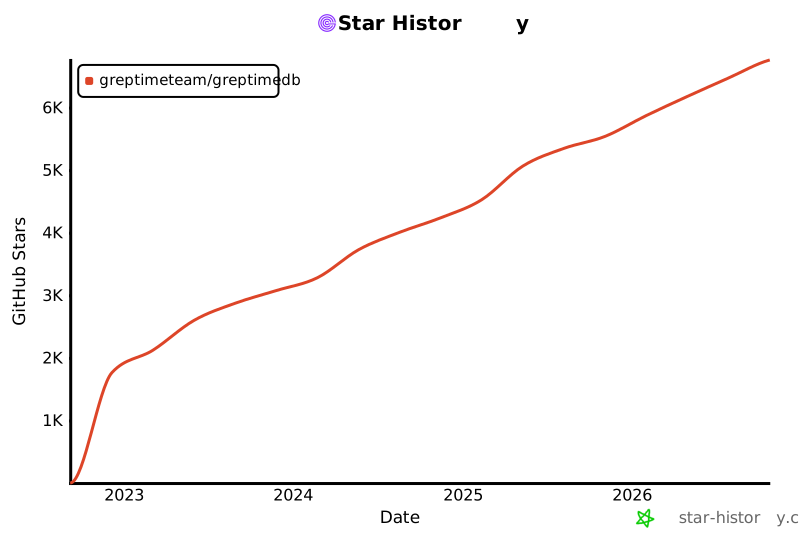](https://www.star-history.com/#GreptimeTeam/GreptimeDB&Date)
|
||||
|
||||
If you find this project useful, a ⭐ would mean a lot to us!
|
||||
<img alt="Known Users" src="https://greptime.com/logo/img/users.png"/>
|
||||
|
||||
## Community
|
||||
|
||||
We invite you to engage and contribute!
|
||||
Our core team is thrilled to see you participate in any ways you like. When you are stuck, try to
|
||||
ask for help by filling an issue with a detailed description of what you were trying to do
|
||||
and what went wrong. If you have any questions or if you would like to get involved in our
|
||||
community, please check out:
|
||||
|
||||
- [Slack](https://greptime.com/slack)
|
||||
- [Discussions](https://github.com/GreptimeTeam/greptimedb/discussions)
|
||||
- [Official Website](https://greptime.com/)
|
||||
- [Blog](https://greptime.com/blogs/)
|
||||
- [LinkedIn](https://www.linkedin.com/company/greptime/)
|
||||
- [X (Twitter)](https://X.com/greptime)
|
||||
- [YouTube](https://www.youtube.com/@greptime)
|
||||
- GreptimeDB Community on [Slack](https://greptime.com/slack)
|
||||
- GreptimeDB [GitHub Discussions forum](https://github.com/GreptimeTeam/greptimedb/discussions)
|
||||
- Greptime official [website](https://greptime.com)
|
||||
|
||||
## License
|
||||
In addition, you may:
|
||||
|
||||
GreptimeDB is licensed under the [Apache License 2.0](https://apache.org/licenses/LICENSE-2.0.txt).
|
||||
- View our official [Blog](https://greptime.com/blogs/)
|
||||
- Connect us with [Linkedin](https://www.linkedin.com/company/greptime/)
|
||||
- Follow us on [Twitter](https://twitter.com/greptime)
|
||||
|
||||
## Commercial Support
|
||||
|
||||
Running GreptimeDB in your organization?
|
||||
We offer enterprise add-ons, services, training, and consulting.
|
||||
[Contact us](https://greptime.com/contactus) for details.
|
||||
If you are running GreptimeDB OSS in your organization, we offer additional
|
||||
enterprise add-ons, installation services, training, and consulting. [Contact
|
||||
us](https://greptime.com/contactus) and we will reach out to you with more
|
||||
detail of our commercial license.
|
||||
|
||||
## License
|
||||
|
||||
GreptimeDB uses the [Apache License 2.0](https://apache.org/licenses/LICENSE-2.0.txt) to strike a balance between
|
||||
open contributions and allowing you to use the software however you want.
|
||||
|
||||
## Contributing
|
||||
|
||||
- Read our [Contribution Guidelines](https://github.com/GreptimeTeam/greptimedb/blob/main/CONTRIBUTING.md).
|
||||
- Explore [Internal Concepts](https://docs.greptime.com/contributor-guide/overview.html) and [DeepWiki](https://deepwiki.com/GreptimeTeam/greptimedb).
|
||||
- Pick up a [good first issue](https://github.com/GreptimeTeam/greptimedb/issues?q=is%3Aissue+is%3Aopen+label%3A%22good+first+issue%22) and join the #contributors [Slack](https://greptime.com/slack) channel.
|
||||
Please refer to [contribution guidelines](CONTRIBUTING.md) and [internal concepts docs](https://docs.greptime.com/contributor-guide/overview.html) for more information.
|
||||
|
||||
## Acknowledgement
|
||||
|
||||
Special thanks to all contributors! See [AUTHORS.md](https://github.com/GreptimeTeam/greptimedb/blob/main/AUTHOR.md).
|
||||
Special thanks to all the contributors who have propelled GreptimeDB forward. For a complete list of contributors, please refer to [AUTHOR.md](AUTHOR.md).
|
||||
|
||||
- Uses [Apache Arrow™](https://arrow.apache.org/) (memory model)
|
||||
- [Apache Parquet™](https://parquet.apache.org/) (file storage)
|
||||
- [Apache DataFusion™](https://arrow.apache.org/datafusion/) (query engine)
|
||||
- [Apache OpenDAL™](https://opendal.apache.org/) (data access abstraction)
|
||||
- GreptimeDB uses [Apache Arrow™](https://arrow.apache.org/) as the memory model and [Apache Parquet™](https://parquet.apache.org/) as the persistent file format.
|
||||
- GreptimeDB's query engine is powered by [Apache Arrow DataFusion™](https://arrow.apache.org/datafusion/).
|
||||
- [Apache OpenDAL™](https://opendal.apache.org) gives GreptimeDB a very general and elegant data access abstraction layer.
|
||||
- GreptimeDB's meta service is based on [etcd](https://etcd.io/).
|
||||
- GreptimeDB uses [RustPython](https://github.com/RustPython/RustPython) for experimental embedded python scripting.
|
||||
|
||||
389
config/config.md
389
config/config.md
@@ -12,11 +12,11 @@
|
||||
|
||||
| Key | Type | Default | Descriptions |
|
||||
| --- | -----| ------- | ----------- |
|
||||
| `mode` | String | `standalone` | The running mode of the datanode. It can be `standalone` or `distributed`. |
|
||||
| `default_timezone` | String | Unset | The default timezone of the server. |
|
||||
| `default_column_prefix` | String | Unset | The default column prefix for auto-created time index and value columns. |
|
||||
| `init_regions_in_background` | Bool | `false` | Initialize all regions in the background during the startup.<br/>By default, it provides services after all regions have been initialized. |
|
||||
| `init_regions_parallelism` | Integer | `16` | Parallelism of initializing regions. |
|
||||
| `max_concurrent_queries` | Integer | `0` | The maximum current queries allowed to be executed. Zero means unlimited.<br/>NOTE: This setting affects scan_memory_limit's privileged tier allocation.<br/>When set, 70% of queries get privileged memory access (full scan_memory_limit).<br/>The remaining 30% get standard tier access (70% of scan_memory_limit). |
|
||||
| `max_concurrent_queries` | Integer | `0` | The maximum current queries allowed to be executed. Zero means unlimited. |
|
||||
| `enable_telemetry` | Bool | `true` | Enable telemetry to collect anonymous usage data. Enabled by default. |
|
||||
| `max_in_flight_write_bytes` | String | Unset | The maximum in-flight write bytes. |
|
||||
| `runtime` | -- | -- | The runtime options. |
|
||||
@@ -24,17 +24,11 @@
|
||||
| `runtime.compact_rt_size` | Integer | `4` | The number of threads to execute the runtime for global write operations. |
|
||||
| `http` | -- | -- | The HTTP server options. |
|
||||
| `http.addr` | String | `127.0.0.1:4000` | The address to bind the HTTP server. |
|
||||
| `http.timeout` | String | `0s` | HTTP request timeout. Set to 0 to disable timeout. |
|
||||
| `http.timeout` | String | `30s` | HTTP request timeout. Set to 0 to disable timeout. |
|
||||
| `http.body_limit` | String | `64MB` | HTTP request body limit.<br/>The following units are supported: `B`, `KB`, `KiB`, `MB`, `MiB`, `GB`, `GiB`, `TB`, `TiB`, `PB`, `PiB`.<br/>Set to 0 to disable limit. |
|
||||
| `http.max_total_body_memory` | String | Unset | Maximum total memory for all concurrent HTTP request bodies.<br/>Set to 0 to disable the limit. Default: "0" (unlimited) |
|
||||
| `http.enable_cors` | Bool | `true` | HTTP CORS support, it's turned on by default<br/>This allows browser to access http APIs without CORS restrictions |
|
||||
| `http.cors_allowed_origins` | Array | Unset | Customize allowed origins for HTTP CORS. |
|
||||
| `http.prom_validation_mode` | String | `strict` | Whether to enable validation for Prometheus remote write requests.<br/>Available options:<br/>- strict: deny invalid UTF-8 strings (default).<br/>- lossy: allow invalid UTF-8 strings, replace invalid characters with REPLACEMENT_CHARACTER(U+FFFD).<br/>- unchecked: do not valid strings. |
|
||||
| `grpc` | -- | -- | The gRPC server options. |
|
||||
| `grpc.bind_addr` | String | `127.0.0.1:4001` | The address to bind the gRPC server. |
|
||||
| `grpc.addr` | String | `127.0.0.1:4001` | The address to bind the gRPC server. |
|
||||
| `grpc.runtime_size` | Integer | `8` | The number of server worker threads. |
|
||||
| `grpc.max_total_message_memory` | String | Unset | Maximum total memory for all concurrent gRPC request messages.<br/>Set to 0 to disable the limit. Default: "0" (unlimited) |
|
||||
| `grpc.max_connection_age` | String | Unset | The maximum connection age for gRPC connection.<br/>The value can be a human-readable time string. For example: `10m` for ten minutes or `1h` for one hour.<br/>Refer to https://grpc.io/docs/guides/keepalive/ for more details. |
|
||||
| `grpc.tls` | -- | -- | gRPC server TLS options, see `mysql.tls` section. |
|
||||
| `grpc.tls.mode` | String | `disable` | TLS mode. |
|
||||
| `grpc.tls.cert_path` | String | Unset | Certificate file path. |
|
||||
@@ -44,8 +38,6 @@
|
||||
| `mysql.enable` | Bool | `true` | Whether to enable. |
|
||||
| `mysql.addr` | String | `127.0.0.1:4002` | The addr to bind the MySQL server. |
|
||||
| `mysql.runtime_size` | Integer | `2` | The number of server worker threads. |
|
||||
| `mysql.keep_alive` | String | `0s` | Server-side keep-alive time.<br/>Set to 0 (default) to disable. |
|
||||
| `mysql.prepared_stmt_cache_size` | Integer | `10000` | Maximum entries in the MySQL prepared statement cache; default is 10,000. |
|
||||
| `mysql.tls` | -- | -- | -- |
|
||||
| `mysql.tls.mode` | String | `disable` | TLS mode, refer to https://www.postgresql.org/docs/current/libpq-ssl.html<br/>- `disable` (default value)<br/>- `prefer`<br/>- `require`<br/>- `verify-ca`<br/>- `verify-full` |
|
||||
| `mysql.tls.cert_path` | String | Unset | Certificate file path. |
|
||||
@@ -55,7 +47,6 @@
|
||||
| `postgres.enable` | Bool | `true` | Whether to enable |
|
||||
| `postgres.addr` | String | `127.0.0.1:4003` | The addr to bind the PostgresSQL server. |
|
||||
| `postgres.runtime_size` | Integer | `2` | The number of server worker threads. |
|
||||
| `postgres.keep_alive` | String | `0s` | Server-side keep-alive time.<br/>Set to 0 (default) to disable. |
|
||||
| `postgres.tls` | -- | -- | PostgresSQL server TLS options, see `mysql.tls` section. |
|
||||
| `postgres.tls.mode` | String | `disable` | TLS mode. |
|
||||
| `postgres.tls.cert_path` | String | Unset | Certificate file path. |
|
||||
@@ -65,8 +56,6 @@
|
||||
| `opentsdb.enable` | Bool | `true` | Whether to enable OpenTSDB put in HTTP API. |
|
||||
| `influxdb` | -- | -- | InfluxDB protocol options. |
|
||||
| `influxdb.enable` | Bool | `true` | Whether to enable InfluxDB protocol in HTTP API. |
|
||||
| `jaeger` | -- | -- | Jaeger protocol options. |
|
||||
| `jaeger.enable` | Bool | `true` | Whether to enable Jaeger protocol in HTTP API. |
|
||||
| `prom_store` | -- | -- | Prometheus remote storage options |
|
||||
| `prom_store.enable` | Bool | `true` | Whether to enable Prometheus remote write and read in HTTP API. |
|
||||
| `prom_store.with_metric_engine` | Bool | `true` | Whether to store the data from Prometheus remote write in metric engine. |
|
||||
@@ -74,8 +63,8 @@
|
||||
| `wal.provider` | String | `raft_engine` | The provider of the WAL.<br/>- `raft_engine`: the wal is stored in the local file system by raft-engine.<br/>- `kafka`: it's remote wal that data is stored in Kafka. |
|
||||
| `wal.dir` | String | Unset | The directory to store the WAL files.<br/>**It's only used when the provider is `raft_engine`**. |
|
||||
| `wal.file_size` | String | `128MB` | The size of the WAL segment file.<br/>**It's only used when the provider is `raft_engine`**. |
|
||||
| `wal.purge_threshold` | String | `1GB` | The threshold of the WAL size to trigger a purge.<br/>**It's only used when the provider is `raft_engine`**. |
|
||||
| `wal.purge_interval` | String | `1m` | The interval to trigger a purge.<br/>**It's only used when the provider is `raft_engine`**. |
|
||||
| `wal.purge_threshold` | String | `1GB` | The threshold of the WAL size to trigger a flush.<br/>**It's only used when the provider is `raft_engine`**. |
|
||||
| `wal.purge_interval` | String | `1m` | The interval to trigger a flush.<br/>**It's only used when the provider is `raft_engine`**. |
|
||||
| `wal.read_batch_size` | Integer | `128` | The read batch size.<br/>**It's only used when the provider is `raft_engine`**. |
|
||||
| `wal.sync_write` | Bool | `false` | Whether to use sync write.<br/>**It's only used when the provider is `raft_engine`**. |
|
||||
| `wal.enable_log_recycle` | Bool | `true` | Whether to reuse logically truncated log files.<br/>**It's only used when the provider is `raft_engine`**. |
|
||||
@@ -83,8 +72,6 @@
|
||||
| `wal.sync_period` | String | `10s` | Duration for fsyncing log files.<br/>**It's only used when the provider is `raft_engine`**. |
|
||||
| `wal.recovery_parallelism` | Integer | `2` | Parallelism during WAL recovery. |
|
||||
| `wal.broker_endpoints` | Array | -- | The Kafka broker endpoints.<br/>**It's only used when the provider is `kafka`**. |
|
||||
| `wal.connect_timeout` | String | `3s` | The connect timeout for kafka client.<br/>**It's only used when the provider is `kafka`**. |
|
||||
| `wal.timeout` | String | `3s` | The timeout for kafka client.<br/>**It's only used when the provider is `kafka`**. |
|
||||
| `wal.auto_create_topics` | Bool | `true` | Automatically create topics for WAL.<br/>Set to `true` to automatically create topics for WAL.<br/>Otherwise, use topics named `topic_name_prefix_[0..num_topics)` |
|
||||
| `wal.num_topics` | Integer | `64` | Number of topics.<br/>**It's only used when the provider is `kafka`**. |
|
||||
| `wal.selector_type` | String | `round_robin` | Topic selector type.<br/>Available selector types:<br/>- `round_robin` (default)<br/>**It's only used when the provider is `kafka`**. |
|
||||
@@ -93,23 +80,22 @@
|
||||
| `wal.create_topic_timeout` | String | `30s` | Above which a topic creation operation will be cancelled.<br/>**It's only used when the provider is `kafka`**. |
|
||||
| `wal.max_batch_bytes` | String | `1MB` | The max size of a single producer batch.<br/>Warning: Kafka has a default limit of 1MB per message in a topic.<br/>**It's only used when the provider is `kafka`**. |
|
||||
| `wal.consumer_wait_timeout` | String | `100ms` | The consumer wait timeout.<br/>**It's only used when the provider is `kafka`**. |
|
||||
| `wal.backoff_init` | String | `500ms` | The initial backoff delay.<br/>**It's only used when the provider is `kafka`**. |
|
||||
| `wal.backoff_max` | String | `10s` | The maximum backoff delay.<br/>**It's only used when the provider is `kafka`**. |
|
||||
| `wal.backoff_base` | Integer | `2` | The exponential backoff rate, i.e. next backoff = base * current backoff.<br/>**It's only used when the provider is `kafka`**. |
|
||||
| `wal.backoff_deadline` | String | `5mins` | The deadline of retries.<br/>**It's only used when the provider is `kafka`**. |
|
||||
| `wal.overwrite_entry_start_id` | Bool | `false` | Ignore missing entries during read WAL.<br/>**It's only used when the provider is `kafka`**.<br/><br/>This option ensures that when Kafka messages are deleted, the system<br/>can still successfully replay memtable data without throwing an<br/>out-of-range error.<br/>However, enabling this option might lead to unexpected data loss,<br/>as the system will skip over missing entries instead of treating<br/>them as critical errors. |
|
||||
| `metadata_store` | -- | -- | Metadata storage options. |
|
||||
| `metadata_store.file_size` | String | `64MB` | The size of the metadata store log file. |
|
||||
| `metadata_store.purge_threshold` | String | `256MB` | The threshold of the metadata store size to trigger a purge. |
|
||||
| `metadata_store.purge_interval` | String | `1m` | The interval of the metadata store to trigger a purge. |
|
||||
| `metadata_store.file_size` | String | `256MB` | Kv file size in bytes. |
|
||||
| `metadata_store.purge_threshold` | String | `4GB` | Kv purge threshold. |
|
||||
| `procedure` | -- | -- | Procedure storage options. |
|
||||
| `procedure.max_retry_times` | Integer | `3` | Procedure max retry time. |
|
||||
| `procedure.retry_delay` | String | `500ms` | Initial retry delay of procedures, increases exponentially |
|
||||
| `procedure.max_running_procedures` | Integer | `128` | Max running procedures.<br/>The maximum number of procedures that can be running at the same time.<br/>If the number of running procedures exceeds this limit, the procedure will be rejected. |
|
||||
| `flow` | -- | -- | flow engine options. |
|
||||
| `flow.num_workers` | Integer | `0` | The number of flow worker in flownode.<br/>Not setting(or set to 0) this value will use the number of CPU cores divided by 2. |
|
||||
| `query` | -- | -- | The query engine options. |
|
||||
| `query.parallelism` | Integer | `0` | Parallelism of the query engine.<br/>Default to 0, which means the number of CPU cores. |
|
||||
| `query.memory_pool_size` | String | `50%` | Memory pool size for query execution operators (aggregation, sorting, join).<br/>Supports absolute size (e.g., "2GB", "4GB") or percentage of system memory (e.g., "20%").<br/>Setting it to 0 disables the limit (unbounded, default behavior).<br/>When this limit is reached, queries will fail with ResourceExhausted error.<br/>NOTE: This does NOT limit memory used by table scans. |
|
||||
| `storage` | -- | -- | The data storage options. |
|
||||
| `storage.data_home` | String | `./greptimedb_data` | The working home directory. |
|
||||
| `storage.data_home` | String | `/tmp/greptimedb/` | The working home directory. |
|
||||
| `storage.type` | String | `File` | The storage type used to store the data.<br/>- `File`: the data is stored in the local file system.<br/>- `S3`: the data is stored in the S3 object storage.<br/>- `Gcs`: the data is stored in the Google Cloud Storage.<br/>- `Azblob`: the data is stored in the Azure Blob Storage.<br/>- `Oss`: the data is stored in the Aliyun OSS. |
|
||||
| `storage.cache_path` | String | Unset | Read cache configuration for object storage such as 'S3' etc, it's configured by default when using object storage. It is recommended to configure it when using object storage for better performance.<br/>A local file directory, defaults to `{data_home}/object_cache/read`. An empty string means disabling. |
|
||||
| `storage.cache_capacity` | String | Unset | The local file cache capacity in bytes. If your disk space is sufficient, it is recommended to set it larger. |
|
||||
| `storage.bucket` | String | Unset | The S3 bucket name.<br/>**It's only used when the storage type is `S3`, `Oss` and `Gcs`**. |
|
||||
| `storage.root` | String | Unset | The S3 data will be stored in the specified prefix, for example, `s3://${bucket}/${root}`.<br/>**It's only used when the storage type is `S3`, `Oss` and `Azblob`**. |
|
||||
| `storage.access_key_id` | String | Unset | The access key id of the aws account.<br/>It's **highly recommended** to use AWS IAM roles instead of hardcoding the access key id and secret key.<br/>**It's only used when the storage type is `S3` and `Oss`**. |
|
||||
@@ -129,7 +115,6 @@
|
||||
| `storage.http_client.connect_timeout` | String | `30s` | The timeout for only the connect phase of a http client. |
|
||||
| `storage.http_client.timeout` | String | `30s` | The total request timeout, applied from when the request starts connecting until the response body has finished.<br/>Also considered a total deadline. |
|
||||
| `storage.http_client.pool_idle_timeout` | String | `90s` | The timeout for idle sockets being kept-alive. |
|
||||
| `storage.http_client.skip_ssl_validation` | Bool | `false` | To skip the ssl verification<br/>**Security Notice**: Setting `skip_ssl_validation = true` disables certificate verification, making connections vulnerable to man-in-the-middle attacks. Only use this in development or trusted private networks. |
|
||||
| `[[region_engine]]` | -- | -- | The region engine options. You can configure multiple region engines. |
|
||||
| `region_engine.mito` | -- | -- | The Mito engine options. |
|
||||
| `region_engine.mito.num_workers` | Integer | `8` | Number of region workers. |
|
||||
@@ -140,8 +125,6 @@
|
||||
| `region_engine.mito.max_background_flushes` | Integer | Auto | Max number of running background flush jobs (default: 1/2 of cpu cores). |
|
||||
| `region_engine.mito.max_background_compactions` | Integer | Auto | Max number of running background compaction jobs (default: 1/4 of cpu cores). |
|
||||
| `region_engine.mito.max_background_purges` | Integer | Auto | Max number of running background purge jobs (default: number of cpu cores). |
|
||||
| `region_engine.mito.experimental_compaction_memory_limit` | String | 0 | Memory budget for compaction tasks. Setting it to 0 or "unlimited" disables the limit. |
|
||||
| `region_engine.mito.experimental_compaction_on_exhausted` | String | wait | Behavior when compaction cannot acquire memory from the budget.<br/>Options: "wait" (default, 10s), "wait(<duration>)", "fail" |
|
||||
| `region_engine.mito.auto_flush_interval` | String | `1h` | Interval to auto flush a region if it has not flushed yet. |
|
||||
| `region_engine.mito.global_write_buffer_size` | String | Auto | Global write buffer size for all regions. If not set, it's default to 1/8 of OS memory with a max limitation of 1GB. |
|
||||
| `region_engine.mito.global_write_buffer_reject_size` | String | Auto | Global write buffer size threshold to reject write requests. If not set, it's default to 2 times of `global_write_buffer_size`. |
|
||||
@@ -149,35 +132,26 @@
|
||||
| `region_engine.mito.vector_cache_size` | String | Auto | Cache size for vectors and arrow arrays. Setting it to 0 to disable the cache.<br/>If not set, it's default to 1/16 of OS memory with a max limitation of 512MB. |
|
||||
| `region_engine.mito.page_cache_size` | String | Auto | Cache size for pages of SST row groups. Setting it to 0 to disable the cache.<br/>If not set, it's default to 1/8 of OS memory. |
|
||||
| `region_engine.mito.selector_result_cache_size` | String | Auto | Cache size for time series selector (e.g. `last_value()`). Setting it to 0 to disable the cache.<br/>If not set, it's default to 1/16 of OS memory with a max limitation of 512MB. |
|
||||
| `region_engine.mito.enable_write_cache` | Bool | `false` | Whether to enable the write cache, it's enabled by default when using object storage. It is recommended to enable it when using object storage for better performance. |
|
||||
| `region_engine.mito.write_cache_path` | String | `""` | File system path for write cache, defaults to `{data_home}`. |
|
||||
| `region_engine.mito.write_cache_size` | String | `5GiB` | Capacity for write cache. If your disk space is sufficient, it is recommended to set it larger. |
|
||||
| `region_engine.mito.write_cache_ttl` | String | Unset | TTL for write cache. |
|
||||
| `region_engine.mito.preload_index_cache` | Bool | `true` | Preload index (puffin) files into cache on region open (default: true).<br/>When enabled, index files are loaded into the write cache during region initialization,<br/>which can improve query performance at the cost of longer startup times. |
|
||||
| `region_engine.mito.index_cache_percent` | Integer | `20` | Percentage of write cache capacity allocated for index (puffin) files (default: 20).<br/>The remaining capacity is used for data (parquet) files.<br/>Must be between 0 and 100 (exclusive). For example, with a 5GiB write cache and 20% allocation,<br/>1GiB is reserved for index files and 4GiB for data files. |
|
||||
| `region_engine.mito.enable_refill_cache_on_read` | Bool | `true` | Enable refilling cache on read operations (default: true).<br/>When disabled, cache refilling on read won't happen. |
|
||||
| `region_engine.mito.manifest_cache_size` | String | `256MB` | Capacity for manifest cache (default: 256MB). |
|
||||
| `region_engine.mito.enable_experimental_write_cache` | Bool | `false` | Whether to enable the experimental write cache, it's enabled by default when using object storage. It is recommended to enable it when using object storage for better performance. |
|
||||
| `region_engine.mito.experimental_write_cache_path` | String | `""` | File system path for write cache, defaults to `{data_home}/object_cache/write`. |
|
||||
| `region_engine.mito.experimental_write_cache_size` | String | `5GiB` | Capacity for write cache. If your disk space is sufficient, it is recommended to set it larger. |
|
||||
| `region_engine.mito.experimental_write_cache_ttl` | String | Unset | TTL for write cache. |
|
||||
| `region_engine.mito.sst_write_buffer_size` | String | `8MB` | Buffer size for SST writing. |
|
||||
| `region_engine.mito.parallel_scan_channel_size` | Integer | `32` | Capacity of the channel to send data from parallel scan tasks to the main task. |
|
||||
| `region_engine.mito.max_concurrent_scan_files` | Integer | `384` | Maximum number of SST files to scan concurrently. |
|
||||
| `region_engine.mito.allow_stale_entries` | Bool | `false` | Whether to allow stale WAL entries read during replay. |
|
||||
| `region_engine.mito.scan_memory_limit` | String | `50%` | Memory limit for table scans across all queries.<br/>Supports absolute size (e.g., "2GB") or percentage of system memory (e.g., "20%").<br/>Setting it to 0 disables the limit.<br/>NOTE: Works with max_concurrent_queries for tiered memory allocation.<br/>- If max_concurrent_queries is set: 70% of queries get full access, 30% get 70% access.<br/>- If max_concurrent_queries is 0 (unlimited): first 20 queries get full access, rest get 70% access. |
|
||||
| `region_engine.mito.min_compaction_interval` | String | `0m` | Minimum time interval between two compactions.<br/>To align with the old behavior, the default value is 0 (no restrictions). |
|
||||
| `region_engine.mito.default_experimental_flat_format` | Bool | `false` | Whether to enable experimental flat format as the default format. |
|
||||
| `region_engine.mito.index` | -- | -- | The options for index in Mito engine. |
|
||||
| `region_engine.mito.index.aux_path` | String | `""` | Auxiliary directory path for the index in filesystem, used to store intermediate files for<br/>creating the index and staging files for searching the index, defaults to `{data_home}/index_intermediate`.<br/>The default name for this directory is `index_intermediate` for backward compatibility.<br/><br/>This path contains two subdirectories:<br/>- `__intm`: for storing intermediate files used during creating index.<br/>- `staging`: for storing staging files used during searching index. |
|
||||
| `region_engine.mito.index.staging_size` | String | `2GB` | The max capacity of the staging directory. |
|
||||
| `region_engine.mito.index.staging_ttl` | String | `7d` | The TTL of the staging directory.<br/>Defaults to 7 days.<br/>Setting it to "0s" to disable TTL. |
|
||||
| `region_engine.mito.index.metadata_cache_size` | String | `64MiB` | Cache size for inverted index metadata. |
|
||||
| `region_engine.mito.index.content_cache_size` | String | `128MiB` | Cache size for inverted index content. |
|
||||
| `region_engine.mito.index.content_cache_page_size` | String | `64KiB` | Page size for inverted index content cache. |
|
||||
| `region_engine.mito.index.result_cache_size` | String | `128MiB` | Cache size for index result. |
|
||||
| `region_engine.mito.inverted_index` | -- | -- | The options for inverted index in Mito engine. |
|
||||
| `region_engine.mito.inverted_index.create_on_flush` | String | `auto` | Whether to create the index on flush.<br/>- `auto`: automatically (default)<br/>- `disable`: never |
|
||||
| `region_engine.mito.inverted_index.create_on_compaction` | String | `auto` | Whether to create the index on compaction.<br/>- `auto`: automatically (default)<br/>- `disable`: never |
|
||||
| `region_engine.mito.inverted_index.apply_on_query` | String | `auto` | Whether to apply the index on query<br/>- `auto`: automatically (default)<br/>- `disable`: never |
|
||||
| `region_engine.mito.inverted_index.mem_threshold_on_create` | String | `auto` | Memory threshold for performing an external sort during index creation.<br/>- `auto`: automatically determine the threshold based on the system memory size (default)<br/>- `unlimited`: no memory limit<br/>- `[size]` e.g. `64MB`: fixed memory threshold |
|
||||
| `region_engine.mito.inverted_index.intermediate_path` | String | `""` | Deprecated, use `region_engine.mito.index.aux_path` instead. |
|
||||
| `region_engine.mito.inverted_index.metadata_cache_size` | String | `64MiB` | Cache size for inverted index metadata. |
|
||||
| `region_engine.mito.inverted_index.content_cache_size` | String | `128MiB` | Cache size for inverted index content. |
|
||||
| `region_engine.mito.inverted_index.content_cache_page_size` | String | `64KiB` | Page size for inverted index content cache. |
|
||||
| `region_engine.mito.fulltext_index` | -- | -- | The options for full-text index in Mito engine. |
|
||||
| `region_engine.mito.fulltext_index.create_on_flush` | String | `auto` | Whether to create the index on flush.<br/>- `auto`: automatically (default)<br/>- `disable`: never |
|
||||
| `region_engine.mito.fulltext_index.create_on_compaction` | String | `auto` | Whether to create the index on compaction.<br/>- `auto`: automatically (default)<br/>- `disable`: never |
|
||||
@@ -194,29 +168,30 @@
|
||||
| `region_engine.mito.memtable.data_freeze_threshold` | Integer | `32768` | The max rows of data inside the actively writing buffer in one shard.<br/>Only available for `partition_tree` memtable. |
|
||||
| `region_engine.mito.memtable.fork_dictionary_bytes` | String | `1GiB` | Max dictionary bytes.<br/>Only available for `partition_tree` memtable. |
|
||||
| `region_engine.file` | -- | -- | Enable the file engine. |
|
||||
| `region_engine.metric` | -- | -- | Metric engine options. |
|
||||
| `region_engine.metric.sparse_primary_key_encoding` | Bool | `true` | Whether to use sparse primary key encoding. |
|
||||
| `logging` | -- | -- | The logging options. |
|
||||
| `logging.dir` | String | `./greptimedb_data/logs` | The directory to store the log files. If set to empty, logs will not be written to files. |
|
||||
| `logging.dir` | String | `/tmp/greptimedb/logs` | The directory to store the log files. If set to empty, logs will not be written to files. |
|
||||
| `logging.level` | String | Unset | The log level. Can be `info`/`debug`/`warn`/`error`. |
|
||||
| `logging.enable_otlp_tracing` | Bool | `false` | Enable OTLP tracing. |
|
||||
| `logging.otlp_endpoint` | String | `http://localhost:4318/v1/traces` | The OTLP tracing endpoint. |
|
||||
| `logging.otlp_endpoint` | String | `http://localhost:4317` | The OTLP tracing endpoint. |
|
||||
| `logging.append_stdout` | Bool | `true` | Whether to append logs to stdout. |
|
||||
| `logging.log_format` | String | `text` | The log format. Can be `text`/`json`. |
|
||||
| `logging.max_log_files` | Integer | `720` | The maximum amount of log files. |
|
||||
| `logging.otlp_export_protocol` | String | `http` | The OTLP tracing export protocol. Can be `grpc`/`http`. |
|
||||
| `logging.otlp_headers` | -- | -- | Additional OTLP headers, only valid when using OTLP http |
|
||||
| `logging.tracing_sample_ratio` | -- | Unset | The percentage of tracing will be sampled and exported.<br/>Valid range `[0, 1]`, 1 means all traces are sampled, 0 means all traces are not sampled, the default value is 1.<br/>ratio > 1 are treated as 1. Fractions < 0 are treated as 0 |
|
||||
| `logging.tracing_sample_ratio` | -- | -- | The percentage of tracing will be sampled and exported.<br/>Valid range `[0, 1]`, 1 means all traces are sampled, 0 means all traces are not sampled, the default value is 1.<br/>ratio > 1 are treated as 1. Fractions < 0 are treated as 0 |
|
||||
| `logging.tracing_sample_ratio.default_ratio` | Float | `1.0` | -- |
|
||||
| `slow_query` | -- | -- | The slow query log options. |
|
||||
| `slow_query.enable` | Bool | `false` | Whether to enable slow query log. |
|
||||
| `slow_query.record_type` | String | Unset | The record type of slow queries. It can be `system_table` or `log`. |
|
||||
| `slow_query.threshold` | String | Unset | The threshold of slow query. |
|
||||
| `slow_query.sample_ratio` | Float | Unset | The sampling ratio of slow query log. The value should be in the range of (0, 1]. |
|
||||
| `logging.slow_query` | -- | -- | The slow query log options. |
|
||||
| `logging.slow_query.enable` | Bool | `false` | Whether to enable slow query log. |
|
||||
| `logging.slow_query.threshold` | String | Unset | The threshold of slow query. |
|
||||
| `logging.slow_query.sample_ratio` | Float | Unset | The sampling ratio of slow query log. The value should be in the range of (0, 1]. |
|
||||
| `export_metrics` | -- | -- | The datanode can export its metrics and send to Prometheus compatible service (e.g. send to `greptimedb` itself) from remote-write API.<br/>This is only used for `greptimedb` to export its own metrics internally. It's different from prometheus scrape. |
|
||||
| `export_metrics.enable` | Bool | `false` | whether enable export metrics. |
|
||||
| `export_metrics.write_interval` | String | `30s` | The interval of export metrics. |
|
||||
| `export_metrics.self_import` | -- | -- | For `standalone` mode, `self_import` is recommended to collect metrics generated by itself<br/>You must create the database before enabling it. |
|
||||
| `export_metrics.self_import.db` | String | Unset | -- |
|
||||
| `export_metrics.remote_write` | -- | -- | -- |
|
||||
| `export_metrics.remote_write.url` | String | `""` | The url the metrics send to. The url example can be: `http://127.0.0.1:4000/v1/prometheus/write?db=greptime_metrics`. |
|
||||
| `export_metrics.remote_write.headers` | InlineTable | -- | HTTP headers of Prometheus remote-write carry. |
|
||||
| `tracing` | -- | -- | The tracing options. Only effect when compiled with `tokio-console` feature. |
|
||||
| `tracing.tokio_console_addr` | String | Unset | The tokio console address. |
|
||||
| `memory` | -- | -- | The memory options. |
|
||||
| `memory.enable_heap_profiling` | Bool | `true` | Whether to enable heap profiling activation during startup.<br/>When enabled, heap profiling will be activated if the `MALLOC_CONF` environment variable<br/>is set to "prof:true,prof_active:false". The official image adds this env variable.<br/>Default is true. |
|
||||
|
||||
|
||||
## Distributed Mode
|
||||
@@ -226,7 +201,6 @@
|
||||
| Key | Type | Default | Descriptions |
|
||||
| --- | -----| ------- | ----------- |
|
||||
| `default_timezone` | String | Unset | The default timezone of the server. |
|
||||
| `default_column_prefix` | String | Unset | The default column prefix for auto-created time index and value columns. |
|
||||
| `max_in_flight_write_bytes` | String | Unset | The maximum in-flight write bytes. |
|
||||
| `runtime` | -- | -- | The runtime options. |
|
||||
| `runtime.global_rt_size` | Integer | `8` | The number of threads to execute the runtime for global read operations. |
|
||||
@@ -236,40 +210,21 @@
|
||||
| `heartbeat.retry_interval` | String | `3s` | Interval for retrying to send heartbeat messages to the metasrv. |
|
||||
| `http` | -- | -- | The HTTP server options. |
|
||||
| `http.addr` | String | `127.0.0.1:4000` | The address to bind the HTTP server. |
|
||||
| `http.timeout` | String | `0s` | HTTP request timeout. Set to 0 to disable timeout. |
|
||||
| `http.timeout` | String | `30s` | HTTP request timeout. Set to 0 to disable timeout. |
|
||||
| `http.body_limit` | String | `64MB` | HTTP request body limit.<br/>The following units are supported: `B`, `KB`, `KiB`, `MB`, `MiB`, `GB`, `GiB`, `TB`, `TiB`, `PB`, `PiB`.<br/>Set to 0 to disable limit. |
|
||||
| `http.max_total_body_memory` | String | Unset | Maximum total memory for all concurrent HTTP request bodies.<br/>Set to 0 to disable the limit. Default: "0" (unlimited) |
|
||||
| `http.enable_cors` | Bool | `true` | HTTP CORS support, it's turned on by default<br/>This allows browser to access http APIs without CORS restrictions |
|
||||
| `http.cors_allowed_origins` | Array | Unset | Customize allowed origins for HTTP CORS. |
|
||||
| `http.prom_validation_mode` | String | `strict` | Whether to enable validation for Prometheus remote write requests.<br/>Available options:<br/>- strict: deny invalid UTF-8 strings (default).<br/>- lossy: allow invalid UTF-8 strings, replace invalid characters with REPLACEMENT_CHARACTER(U+FFFD).<br/>- unchecked: do not valid strings. |
|
||||
| `grpc` | -- | -- | The gRPC server options. |
|
||||
| `grpc.bind_addr` | String | `127.0.0.1:4001` | The address to bind the gRPC server. |
|
||||
| `grpc.server_addr` | String | `127.0.0.1:4001` | The address advertised to the metasrv, and used for connections from outside the host.<br/>If left empty or unset, the server will automatically use the IP address of the first network interface<br/>on the host, with the same port number as the one specified in `grpc.bind_addr`. |
|
||||
| `grpc.addr` | String | `127.0.0.1:4001` | The address to bind the gRPC server. |
|
||||
| `grpc.hostname` | String | `127.0.0.1` | The hostname advertised to the metasrv,<br/>and used for connections from outside the host |
|
||||
| `grpc.runtime_size` | Integer | `8` | The number of server worker threads. |
|
||||
| `grpc.max_total_message_memory` | String | Unset | Maximum total memory for all concurrent gRPC request messages.<br/>Set to 0 to disable the limit. Default: "0" (unlimited) |
|
||||
| `grpc.flight_compression` | String | `arrow_ipc` | Compression mode for frontend side Arrow IPC service. Available options:<br/>- `none`: disable all compression<br/>- `transport`: only enable gRPC transport compression (zstd)<br/>- `arrow_ipc`: only enable Arrow IPC compression (lz4)<br/>- `all`: enable all compression.<br/>Default to `none` |
|
||||
| `grpc.max_connection_age` | String | Unset | The maximum connection age for gRPC connection.<br/>The value can be a human-readable time string. For example: `10m` for ten minutes or `1h` for one hour.<br/>Refer to https://grpc.io/docs/guides/keepalive/ for more details. |
|
||||
| `grpc.tls` | -- | -- | gRPC server TLS options, see `mysql.tls` section. |
|
||||
| `grpc.tls.mode` | String | `disable` | TLS mode. |
|
||||
| `grpc.tls.cert_path` | String | Unset | Certificate file path. |
|
||||
| `grpc.tls.key_path` | String | Unset | Private key file path. |
|
||||
| `grpc.tls.watch` | Bool | `false` | Watch for Certificate and key file change and auto reload.<br/>For now, gRPC tls config does not support auto reload. |
|
||||
| `internal_grpc` | -- | -- | The internal gRPC server options. Internal gRPC port for nodes inside cluster to access frontend. |
|
||||
| `internal_grpc.bind_addr` | String | `127.0.0.1:4010` | The address to bind the gRPC server. |
|
||||
| `internal_grpc.server_addr` | String | `127.0.0.1:4010` | The address advertised to the metasrv, and used for connections from outside the host.<br/>If left empty or unset, the server will automatically use the IP address of the first network interface<br/>on the host, with the same port number as the one specified in `grpc.bind_addr`. |
|
||||
| `internal_grpc.runtime_size` | Integer | `8` | The number of server worker threads. |
|
||||
| `internal_grpc.flight_compression` | String | `arrow_ipc` | Compression mode for frontend side Arrow IPC service. Available options:<br/>- `none`: disable all compression<br/>- `transport`: only enable gRPC transport compression (zstd)<br/>- `arrow_ipc`: only enable Arrow IPC compression (lz4)<br/>- `all`: enable all compression.<br/>Default to `none` |
|
||||
| `internal_grpc.tls` | -- | -- | internal gRPC server TLS options, see `mysql.tls` section. |
|
||||
| `internal_grpc.tls.mode` | String | `disable` | TLS mode. |
|
||||
| `internal_grpc.tls.cert_path` | String | Unset | Certificate file path. |
|
||||
| `internal_grpc.tls.key_path` | String | Unset | Private key file path. |
|
||||
| `internal_grpc.tls.watch` | Bool | `false` | Watch for Certificate and key file change and auto reload.<br/>For now, gRPC tls config does not support auto reload. |
|
||||
| `mysql` | -- | -- | MySQL server options. |
|
||||
| `mysql.enable` | Bool | `true` | Whether to enable. |
|
||||
| `mysql.addr` | String | `127.0.0.1:4002` | The addr to bind the MySQL server. |
|
||||
| `mysql.runtime_size` | Integer | `2` | The number of server worker threads. |
|
||||
| `mysql.keep_alive` | String | `0s` | Server-side keep-alive time.<br/>Set to 0 (default) to disable. |
|
||||
| `mysql.prepared_stmt_cache_size` | Integer | `10000` | Maximum entries in the MySQL prepared statement cache; default is 10,000. |
|
||||
| `mysql.tls` | -- | -- | -- |
|
||||
| `mysql.tls.mode` | String | `disable` | TLS mode, refer to https://www.postgresql.org/docs/current/libpq-ssl.html<br/>- `disable` (default value)<br/>- `prefer`<br/>- `require`<br/>- `verify-ca`<br/>- `verify-full` |
|
||||
| `mysql.tls.cert_path` | String | Unset | Certificate file path. |
|
||||
@@ -279,7 +234,6 @@
|
||||
| `postgres.enable` | Bool | `true` | Whether to enable |
|
||||
| `postgres.addr` | String | `127.0.0.1:4003` | The addr to bind the PostgresSQL server. |
|
||||
| `postgres.runtime_size` | Integer | `2` | The number of server worker threads. |
|
||||
| `postgres.keep_alive` | String | `0s` | Server-side keep-alive time.<br/>Set to 0 (default) to disable. |
|
||||
| `postgres.tls` | -- | -- | PostgresSQL server TLS options, see `mysql.tls` section. |
|
||||
| `postgres.tls.mode` | String | `disable` | TLS mode. |
|
||||
| `postgres.tls.cert_path` | String | Unset | Certificate file path. |
|
||||
@@ -289,106 +243,75 @@
|
||||
| `opentsdb.enable` | Bool | `true` | Whether to enable OpenTSDB put in HTTP API. |
|
||||
| `influxdb` | -- | -- | InfluxDB protocol options. |
|
||||
| `influxdb.enable` | Bool | `true` | Whether to enable InfluxDB protocol in HTTP API. |
|
||||
| `jaeger` | -- | -- | Jaeger protocol options. |
|
||||
| `jaeger.enable` | Bool | `true` | Whether to enable Jaeger protocol in HTTP API. |
|
||||
| `prom_store` | -- | -- | Prometheus remote storage options |
|
||||
| `prom_store.enable` | Bool | `true` | Whether to enable Prometheus remote write and read in HTTP API. |
|
||||
| `prom_store.with_metric_engine` | Bool | `true` | Whether to store the data from Prometheus remote write in metric engine. |
|
||||
| `meta_client` | -- | -- | The metasrv client options. |
|
||||
| `meta_client.metasrv_addrs` | Array | -- | The addresses of the metasrv. |
|
||||
| `meta_client.timeout` | String | `3s` | Operation timeout. |
|
||||
| `meta_client.heartbeat_timeout` | String | `500ms` | Heartbeat timeout. |
|
||||
| `meta_client.ddl_timeout` | String | `10s` | DDL timeout. |
|
||||
| `meta_client.connect_timeout` | String | `1s` | Connect server timeout. |
|
||||
| `meta_client.tcp_nodelay` | Bool | `true` | `TCP_NODELAY` option for accepted connections. |
|
||||
| `meta_client.metadata_cache_max_capacity` | Integer | `100000` | The configuration about the cache of the metadata. |
|
||||
| `meta_client.metadata_cache_ttl` | String | `10m` | TTL of the metadata cache. |
|
||||
| `meta_client.metadata_cache_tti` | String | `5m` | -- |
|
||||
| `query` | -- | -- | The query engine options. |
|
||||
| `query.parallelism` | Integer | `0` | Parallelism of the query engine.<br/>Default to 0, which means the number of CPU cores. |
|
||||
| `query.allow_query_fallback` | Bool | `false` | Whether to allow query fallback when push down optimize fails.<br/>Default to false, meaning when push down optimize failed, return error msg |
|
||||
| `query.memory_pool_size` | String | `50%` | Memory pool size for query execution operators (aggregation, sorting, join).<br/>Supports absolute size (e.g., "4GB", "8GB") or percentage of system memory (e.g., "30%").<br/>Setting it to 0 disables the limit (unbounded, default behavior).<br/>When this limit is reached, queries will fail with ResourceExhausted error.<br/>NOTE: This does NOT limit memory used by table scans (only applies to datanodes). |
|
||||
| `datanode` | -- | -- | Datanode options. |
|
||||
| `datanode.client` | -- | -- | Datanode client options. |
|
||||
| `datanode.client.connect_timeout` | String | `10s` | -- |
|
||||
| `datanode.client.tcp_nodelay` | Bool | `true` | -- |
|
||||
| `logging` | -- | -- | The logging options. |
|
||||
| `logging.dir` | String | `./greptimedb_data/logs` | The directory to store the log files. If set to empty, logs will not be written to files. |
|
||||
| `logging.dir` | String | `/tmp/greptimedb/logs` | The directory to store the log files. If set to empty, logs will not be written to files. |
|
||||
| `logging.level` | String | Unset | The log level. Can be `info`/`debug`/`warn`/`error`. |
|
||||
| `logging.enable_otlp_tracing` | Bool | `false` | Enable OTLP tracing. |
|
||||
| `logging.otlp_endpoint` | String | `http://localhost:4318/v1/traces` | The OTLP tracing endpoint. |
|
||||
| `logging.otlp_endpoint` | String | `http://localhost:4317` | The OTLP tracing endpoint. |
|
||||
| `logging.append_stdout` | Bool | `true` | Whether to append logs to stdout. |
|
||||
| `logging.log_format` | String | `text` | The log format. Can be `text`/`json`. |
|
||||
| `logging.max_log_files` | Integer | `720` | The maximum amount of log files. |
|
||||
| `logging.otlp_export_protocol` | String | `http` | The OTLP tracing export protocol. Can be `grpc`/`http`. |
|
||||
| `logging.otlp_headers` | -- | -- | Additional OTLP headers, only valid when using OTLP http |
|
||||
| `logging.tracing_sample_ratio` | -- | Unset | The percentage of tracing will be sampled and exported.<br/>Valid range `[0, 1]`, 1 means all traces are sampled, 0 means all traces are not sampled, the default value is 1.<br/>ratio > 1 are treated as 1. Fractions < 0 are treated as 0 |
|
||||
| `logging.tracing_sample_ratio` | -- | -- | The percentage of tracing will be sampled and exported.<br/>Valid range `[0, 1]`, 1 means all traces are sampled, 0 means all traces are not sampled, the default value is 1.<br/>ratio > 1 are treated as 1. Fractions < 0 are treated as 0 |
|
||||
| `logging.tracing_sample_ratio.default_ratio` | Float | `1.0` | -- |
|
||||
| `slow_query` | -- | -- | The slow query log options. |
|
||||
| `slow_query.enable` | Bool | `true` | Whether to enable slow query log. |
|
||||
| `slow_query.record_type` | String | `system_table` | The record type of slow queries. It can be `system_table` or `log`.<br/>If `system_table` is selected, the slow queries will be recorded in a system table `greptime_private.slow_queries`.<br/>If `log` is selected, the slow queries will be logged in a log file `greptimedb-slow-queries.*`. |
|
||||
| `slow_query.threshold` | String | `30s` | The threshold of slow query. It can be human readable time string, for example: `10s`, `100ms`, `1s`. |
|
||||
| `slow_query.sample_ratio` | Float | `1.0` | The sampling ratio of slow query log. The value should be in the range of (0, 1]. For example, `0.1` means 10% of the slow queries will be logged and `1.0` means all slow queries will be logged. |
|
||||
| `slow_query.ttl` | String | `90d` | The TTL of the `slow_queries` system table. Default is `90d` when `record_type` is `system_table`. |
|
||||
| `logging.slow_query` | -- | -- | The slow query log options. |
|
||||
| `logging.slow_query.enable` | Bool | `false` | Whether to enable slow query log. |
|
||||
| `logging.slow_query.threshold` | String | Unset | The threshold of slow query. |
|
||||
| `logging.slow_query.sample_ratio` | Float | Unset | The sampling ratio of slow query log. The value should be in the range of (0, 1]. |
|
||||
| `export_metrics` | -- | -- | The datanode can export its metrics and send to Prometheus compatible service (e.g. send to `greptimedb` itself) from remote-write API.<br/>This is only used for `greptimedb` to export its own metrics internally. It's different from prometheus scrape. |
|
||||
| `export_metrics.enable` | Bool | `false` | whether enable export metrics. |
|
||||
| `export_metrics.write_interval` | String | `30s` | The interval of export metrics. |
|
||||
| `export_metrics.self_import` | -- | -- | For `standalone` mode, `self_import` is recommend to collect metrics generated by itself<br/>You must create the database before enabling it. |
|
||||
| `export_metrics.self_import.db` | String | Unset | -- |
|
||||
| `export_metrics.remote_write` | -- | -- | -- |
|
||||
| `export_metrics.remote_write.url` | String | `""` | The url the metrics send to. The url example can be: `http://127.0.0.1:4000/v1/prometheus/write?db=greptime_metrics`. |
|
||||
| `export_metrics.remote_write.headers` | InlineTable | -- | HTTP headers of Prometheus remote-write carry. |
|
||||
| `tracing` | -- | -- | The tracing options. Only effect when compiled with `tokio-console` feature. |
|
||||
| `tracing.tokio_console_addr` | String | Unset | The tokio console address. |
|
||||
| `memory` | -- | -- | The memory options. |
|
||||
| `memory.enable_heap_profiling` | Bool | `true` | Whether to enable heap profiling activation during startup.<br/>When enabled, heap profiling will be activated if the `MALLOC_CONF` environment variable<br/>is set to "prof:true,prof_active:false". The official image adds this env variable.<br/>Default is true. |
|
||||
| `event_recorder` | -- | -- | Configuration options for the event recorder. |
|
||||
| `event_recorder.ttl` | String | `90d` | TTL for the events table that will be used to store the events. Default is `90d`. |
|
||||
|
||||
|
||||
### Metasrv
|
||||
|
||||
| Key | Type | Default | Descriptions |
|
||||
| --- | -----| ------- | ----------- |
|
||||
| `data_home` | String | `./greptimedb_data` | The working home directory. |
|
||||
| `store_addrs` | Array | -- | Store server address(es). The format depends on the selected backend.<br/><br/>For etcd: a list of "host:port" endpoints.<br/>e.g. ["192.168.1.1:2379", "192.168.1.2:2379"]<br/><br/>For PostgreSQL: a connection string in libpq format or URI.<br/>e.g.<br/>- "host=localhost port=5432 user=postgres password=<PASSWORD> dbname=postgres"<br/>- "postgresql://user:password@localhost:5432/mydb?connect_timeout=10"<br/>The detail see: https://docs.rs/tokio-postgres/latest/tokio_postgres/config/struct.Config.html<br/><br/>For mysql store, the format is a MySQL connection URL.<br/>e.g. "mysql://user:password@localhost:3306/greptime_meta?ssl-mode=VERIFY_CA&ssl-ca=/path/to/ca.pem" |
|
||||
| `data_home` | String | `/tmp/metasrv/` | The working home directory. |
|
||||
| `bind_addr` | String | `127.0.0.1:3002` | The bind address of metasrv. |
|
||||
| `server_addr` | String | `127.0.0.1:3002` | The communication server address for frontend and datanode to connect to metasrv, "127.0.0.1:3002" by default for localhost. |
|
||||
| `store_addrs` | Array | -- | Store server address default to etcd store. |
|
||||
| `store_key_prefix` | String | `""` | If it's not empty, the metasrv will store all data with this key prefix. |
|
||||
| `backend` | String | `etcd_store` | The datastore for meta server.<br/>Available values:<br/>- `etcd_store` (default value)<br/>- `memory_store`<br/>- `postgres_store`<br/>- `mysql_store` |
|
||||
| `meta_table_name` | String | `greptime_metakv` | Table name in RDS to store metadata. Effect when using a RDS kvbackend.<br/>**Only used when backend is `postgres_store`.** |
|
||||
| `meta_schema_name` | String | `greptime_schema` | Optional PostgreSQL schema for metadata table and election table name qualification.<br/>When PostgreSQL public schema is not writable (e.g., PostgreSQL 15+ with restricted public),<br/>set this to a writable schema. GreptimeDB will use `meta_schema_name`.`meta_table_name`.<br/>GreptimeDB will NOT create the schema automatically; please ensure it exists or the user has permission.<br/>**Only used when backend is `postgres_store`.** |
|
||||
| `meta_election_lock_id` | Integer | `1` | Advisory lock id in PostgreSQL for election. Effect when using PostgreSQL as kvbackend<br/>Only used when backend is `postgres_store`. |
|
||||
| `backend` | String | `EtcdStore` | The datastore for meta server. |
|
||||
| `selector` | String | `round_robin` | Datanode selector type.<br/>- `round_robin` (default value)<br/>- `lease_based`<br/>- `load_based`<br/>For details, please see "https://docs.greptime.com/developer-guide/metasrv/selector". |
|
||||
| `use_memory_store` | Bool | `false` | Store data in memory. |
|
||||
| `enable_region_failover` | Bool | `false` | Whether to enable region failover.<br/>This feature is only available on GreptimeDB running on cluster mode and<br/>- Using Remote WAL<br/>- Using shared storage (e.g., s3). |
|
||||
| `region_failure_detector_initialization_delay` | String | `10m` | The delay before starting region failure detection.<br/>This delay helps prevent Metasrv from triggering unnecessary region failovers before all Datanodes are fully started.<br/>Especially useful when the cluster is not deployed with GreptimeDB Operator and maintenance mode is not enabled. |
|
||||
| `allow_region_failover_on_local_wal` | Bool | `false` | Whether to allow region failover on local WAL.<br/>**This option is not recommended to be set to true, because it may lead to data loss during failover.** |
|
||||
| `node_max_idle_time` | String | `24hours` | Max allowed idle time before removing node info from metasrv memory. |
|
||||
| `heartbeat_interval` | String | `3s` | Base heartbeat interval for calculating distributed time constants.<br/>The frontend heartbeat interval is 6 times of the base heartbeat interval.<br/>The flownode/datanode heartbeat interval is 1 times of the base heartbeat interval.<br/>e.g., If the base heartbeat interval is 3s, the frontend heartbeat interval is 18s, the flownode/datanode heartbeat interval is 3s.<br/>If you change this value, you need to change the heartbeat interval of the flownode/frontend/datanode accordingly. |
|
||||
| `enable_telemetry` | Bool | `true` | Whether to enable greptimedb telemetry. Enabled by default. |
|
||||
| `runtime` | -- | -- | The runtime options. |
|
||||
| `runtime.global_rt_size` | Integer | `8` | The number of threads to execute the runtime for global read operations. |
|
||||
| `runtime.compact_rt_size` | Integer | `4` | The number of threads to execute the runtime for global write operations. |
|
||||
| `backend_tls` | -- | -- | TLS configuration for kv store backend (applicable for etcd, PostgreSQL, and MySQL backends)<br/>When using etcd, PostgreSQL, or MySQL as metadata store, you can configure TLS here<br/><br/>Note: if TLS is configured in both this section and the `store_addrs` connection string, the<br/>settings here will override the TLS settings in `store_addrs`. |
|
||||
| `backend_tls.mode` | String | `prefer` | TLS mode, refer to https://www.postgresql.org/docs/current/libpq-ssl.html<br/>- "disable" - No TLS<br/>- "prefer" (default) - Try TLS, fallback to plain<br/>- "require" - Require TLS<br/>- "verify_ca" - Require TLS and verify CA<br/>- "verify_full" - Require TLS and verify hostname |
|
||||
| `backend_tls.cert_path` | String | `""` | Path to client certificate file (for client authentication)<br/>Like "/path/to/client.crt" |
|
||||
| `backend_tls.key_path` | String | `""` | Path to client private key file (for client authentication)<br/>Like "/path/to/client.key" |
|
||||
| `backend_tls.ca_cert_path` | String | `""` | Path to CA certificate file (for server certificate verification)<br/>Required when using custom CAs or self-signed certificates<br/>Leave empty to use system root certificates only<br/>Like "/path/to/ca.crt" |
|
||||
| `backend_client` | -- | -- | The backend client options.<br/>Currently, only applicable when using etcd as the metadata store. |
|
||||
| `backend_client.keep_alive_timeout` | String | `3s` | The keep alive timeout for backend client. |
|
||||
| `backend_client.keep_alive_interval` | String | `10s` | The keep alive interval for backend client. |
|
||||
| `backend_client.connect_timeout` | String | `3s` | The connect timeout for backend client. |
|
||||
| `grpc` | -- | -- | The gRPC server options. |
|
||||
| `grpc.bind_addr` | String | `127.0.0.1:3002` | The address to bind the gRPC server. |
|
||||
| `grpc.server_addr` | String | `127.0.0.1:3002` | The communication server address for the frontend and datanode to connect to metasrv.<br/>If left empty or unset, the server will automatically use the IP address of the first network interface<br/>on the host, with the same port number as the one specified in `bind_addr`. |
|
||||
| `grpc.runtime_size` | Integer | `8` | The number of server worker threads. |
|
||||
| `grpc.max_recv_message_size` | String | `512MB` | The maximum receive message size for gRPC server. |
|
||||
| `grpc.max_send_message_size` | String | `512MB` | The maximum send message size for gRPC server. |
|
||||
| `grpc.http2_keep_alive_interval` | String | `10s` | The server side HTTP/2 keep-alive interval |
|
||||
| `grpc.http2_keep_alive_timeout` | String | `3s` | The server side HTTP/2 keep-alive timeout. |
|
||||
| `http` | -- | -- | The HTTP server options. |
|
||||
| `http.addr` | String | `127.0.0.1:4000` | The address to bind the HTTP server. |
|
||||
| `http.timeout` | String | `0s` | HTTP request timeout. Set to 0 to disable timeout. |
|
||||
| `http.body_limit` | String | `64MB` | HTTP request body limit.<br/>The following units are supported: `B`, `KB`, `KiB`, `MB`, `MiB`, `GB`, `GiB`, `TB`, `TiB`, `PB`, `PiB`.<br/>Set to 0 to disable limit. |
|
||||
| `procedure` | -- | -- | Procedure storage options. |
|
||||
| `procedure.max_retry_times` | Integer | `12` | Procedure max retry time. |
|
||||
| `procedure.retry_delay` | String | `500ms` | Initial retry delay of procedures, increases exponentially |
|
||||
| `procedure.max_metadata_value_size` | String | `1500KiB` | Auto split large value<br/>GreptimeDB procedure uses etcd as the default metadata storage backend.<br/>The etcd the maximum size of any request is 1.5 MiB<br/>1500KiB = 1536KiB (1.5MiB) - 36KiB (reserved size of key)<br/>Comments out the `max_metadata_value_size`, for don't split large value (no limit). |
|
||||
| `procedure.max_running_procedures` | Integer | `128` | Max running procedures.<br/>The maximum number of procedures that can be running at the same time.<br/>If the number of running procedures exceeds this limit, the procedure will be rejected. |
|
||||
| `failure_detector` | -- | -- | -- |
|
||||
| `failure_detector.threshold` | Float | `8.0` | Maximum acceptable φ before the peer is treated as failed.<br/>Lower values react faster but yield more false positives. |
|
||||
| `failure_detector.min_std_deviation` | String | `100ms` | The minimum standard deviation of the heartbeat intervals.<br/>So tiny variations don’t make φ explode. Prevents hypersensitivity when heartbeat intervals barely vary. |
|
||||
| `failure_detector.acceptable_heartbeat_pause` | String | `10000ms` | The acceptable pause duration between heartbeats.<br/>Additional extra grace period to the learned mean interval before φ rises, absorbing temporary network hiccups or GC pauses. |
|
||||
| `failure_detector.threshold` | Float | `8.0` | The threshold value used by the failure detector to determine failure conditions. |
|
||||
| `failure_detector.min_std_deviation` | String | `100ms` | The minimum standard deviation of the heartbeat intervals, used to calculate acceptable variations. |
|
||||
| `failure_detector.acceptable_heartbeat_pause` | String | `10000ms` | The acceptable pause duration between heartbeats, used to determine if a heartbeat interval is acceptable. |
|
||||
| `failure_detector.first_heartbeat_estimate` | String | `1000ms` | The initial estimate of the heartbeat interval used by the failure detector. |
|
||||
| `datanode` | -- | -- | Datanode options. |
|
||||
| `datanode.client` | -- | -- | Datanode client options. |
|
||||
| `datanode.client.timeout` | String | `10s` | Operation timeout. |
|
||||
@@ -396,62 +319,69 @@
|
||||
| `datanode.client.tcp_nodelay` | Bool | `true` | `TCP_NODELAY` option for accepted connections. |
|
||||
| `wal` | -- | -- | -- |
|
||||
| `wal.provider` | String | `raft_engine` | -- |
|
||||
| `wal.broker_endpoints` | Array | -- | The broker endpoints of the Kafka cluster.<br/><br/>**It's only used when the provider is `kafka`**. |
|
||||
| `wal.auto_create_topics` | Bool | `true` | Automatically create topics for WAL.<br/>Set to `true` to automatically create topics for WAL.<br/>Otherwise, use topics named `topic_name_prefix_[0..num_topics)`<br/>**It's only used when the provider is `kafka`**. |
|
||||
| `wal.auto_prune_interval` | String | `30m` | Interval of automatically WAL pruning.<br/>Set to `0s` to disable automatically WAL pruning which delete unused remote WAL entries periodically.<br/>**It's only used when the provider is `kafka`**. |
|
||||
| `wal.flush_trigger_size` | String | `512MB` | Estimated size threshold to trigger a flush when using Kafka remote WAL.<br/>Since multiple regions may share a Kafka topic, the estimated size is calculated as:<br/> (latest_entry_id - flushed_entry_id) * avg_record_size<br/>MetaSrv triggers a flush for a region when this estimated size exceeds `flush_trigger_size`.<br/>- `latest_entry_id`: The latest entry ID in the topic.<br/>- `flushed_entry_id`: The last flushed entry ID for the region.<br/>Set to "0" to let the system decide the flush trigger size.<br/>**It's only used when the provider is `kafka`**. |
|
||||
| `wal.checkpoint_trigger_size` | String | `128MB` | Estimated size threshold to trigger a checkpoint when using Kafka remote WAL.<br/>The estimated size is calculated as:<br/> (latest_entry_id - last_checkpoint_entry_id) * avg_record_size<br/>MetaSrv triggers a checkpoint for a region when this estimated size exceeds `checkpoint_trigger_size`.<br/>Set to "0" to let the system decide the checkpoint trigger size.<br/>**It's only used when the provider is `kafka`**. |
|
||||
| `wal.auto_prune_parallelism` | Integer | `10` | Concurrent task limit for automatically WAL pruning.<br/>**It's only used when the provider is `kafka`**. |
|
||||
| `wal.num_topics` | Integer | `64` | Number of topics used for remote WAL.<br/>**It's only used when the provider is `kafka`**. |
|
||||
| `wal.selector_type` | String | `round_robin` | Topic selector type.<br/>Available selector types:<br/>- `round_robin` (default)<br/>**It's only used when the provider is `kafka`**. |
|
||||
| `wal.topic_name_prefix` | String | `greptimedb_wal_topic` | A Kafka topic is constructed by concatenating `topic_name_prefix` and `topic_id`.<br/>Only accepts strings that match the following regular expression pattern:<br/>[a-zA-Z_:-][a-zA-Z0-9_:\-\.@#]*<br/>i.g., greptimedb_wal_topic_0, greptimedb_wal_topic_1.<br/>**It's only used when the provider is `kafka`**. |
|
||||
| `wal.replication_factor` | Integer | `1` | Expected number of replicas of each partition.<br/>**It's only used when the provider is `kafka`**. |
|
||||
| `wal.create_topic_timeout` | String | `30s` | The timeout for creating a Kafka topic.<br/>**It's only used when the provider is `kafka`**. |
|
||||
| `event_recorder` | -- | -- | Configuration options for the event recorder. |
|
||||
| `event_recorder.ttl` | String | `90d` | TTL for the events table that will be used to store the events. Default is `90d`. |
|
||||
| `stats_persistence` | -- | -- | Configuration options for the stats persistence. |
|
||||
| `stats_persistence.ttl` | String | `0s` | TTL for the stats table that will be used to store the stats.<br/>Set to `0s` to disable stats persistence.<br/>Default is `0s`.<br/>If you want to enable stats persistence, set the TTL to a value greater than 0.<br/>It is recommended to set a small value, e.g., `3h`. |
|
||||
| `stats_persistence.interval` | String | `10m` | The interval to persist the stats. Default is `10m`.<br/>The minimum value is `10m`, if the value is less than `10m`, it will be overridden to `10m`. |
|
||||
| `wal.broker_endpoints` | Array | -- | The broker endpoints of the Kafka cluster. |
|
||||
| `wal.auto_create_topics` | Bool | `true` | Automatically create topics for WAL.<br/>Set to `true` to automatically create topics for WAL.<br/>Otherwise, use topics named `topic_name_prefix_[0..num_topics)` |
|
||||
| `wal.num_topics` | Integer | `64` | Number of topics. |
|
||||
| `wal.selector_type` | String | `round_robin` | Topic selector type.<br/>Available selector types:<br/>- `round_robin` (default) |
|
||||
| `wal.topic_name_prefix` | String | `greptimedb_wal_topic` | A Kafka topic is constructed by concatenating `topic_name_prefix` and `topic_id`.<br/>i.g., greptimedb_wal_topic_0, greptimedb_wal_topic_1. |
|
||||
| `wal.replication_factor` | Integer | `1` | Expected number of replicas of each partition. |
|
||||
| `wal.create_topic_timeout` | String | `30s` | Above which a topic creation operation will be cancelled. |
|
||||
| `wal.backoff_init` | String | `500ms` | The initial backoff for kafka clients. |
|
||||
| `wal.backoff_max` | String | `10s` | The maximum backoff for kafka clients. |
|
||||
| `wal.backoff_base` | Integer | `2` | Exponential backoff rate, i.e. next backoff = base * current backoff. |
|
||||
| `wal.backoff_deadline` | String | `5mins` | Stop reconnecting if the total wait time reaches the deadline. If this config is missing, the reconnecting won't terminate. |
|
||||
| `logging` | -- | -- | The logging options. |
|
||||
| `logging.dir` | String | `./greptimedb_data/logs` | The directory to store the log files. If set to empty, logs will not be written to files. |
|
||||
| `logging.dir` | String | `/tmp/greptimedb/logs` | The directory to store the log files. If set to empty, logs will not be written to files. |
|
||||
| `logging.level` | String | Unset | The log level. Can be `info`/`debug`/`warn`/`error`. |
|
||||
| `logging.enable_otlp_tracing` | Bool | `false` | Enable OTLP tracing. |
|
||||
| `logging.otlp_endpoint` | String | `http://localhost:4318/v1/traces` | The OTLP tracing endpoint. |
|
||||
| `logging.otlp_endpoint` | String | `http://localhost:4317` | The OTLP tracing endpoint. |
|
||||
| `logging.append_stdout` | Bool | `true` | Whether to append logs to stdout. |
|
||||
| `logging.log_format` | String | `text` | The log format. Can be `text`/`json`. |
|
||||
| `logging.max_log_files` | Integer | `720` | The maximum amount of log files. |
|
||||
| `logging.otlp_export_protocol` | String | `http` | The OTLP tracing export protocol. Can be `grpc`/`http`. |
|
||||
| `logging.otlp_headers` | -- | -- | Additional OTLP headers, only valid when using OTLP http |
|
||||
| `logging.tracing_sample_ratio` | -- | Unset | The percentage of tracing will be sampled and exported.<br/>Valid range `[0, 1]`, 1 means all traces are sampled, 0 means all traces are not sampled, the default value is 1.<br/>ratio > 1 are treated as 1. Fractions < 0 are treated as 0 |
|
||||
| `logging.tracing_sample_ratio` | -- | -- | The percentage of tracing will be sampled and exported.<br/>Valid range `[0, 1]`, 1 means all traces are sampled, 0 means all traces are not sampled, the default value is 1.<br/>ratio > 1 are treated as 1. Fractions < 0 are treated as 0 |
|
||||
| `logging.tracing_sample_ratio.default_ratio` | Float | `1.0` | -- |
|
||||
| `logging.slow_query` | -- | -- | The slow query log options. |
|
||||
| `logging.slow_query.enable` | Bool | `false` | Whether to enable slow query log. |
|
||||
| `logging.slow_query.threshold` | String | Unset | The threshold of slow query. |
|
||||
| `logging.slow_query.sample_ratio` | Float | Unset | The sampling ratio of slow query log. The value should be in the range of (0, 1]. |
|
||||
| `export_metrics` | -- | -- | The datanode can export its metrics and send to Prometheus compatible service (e.g. send to `greptimedb` itself) from remote-write API.<br/>This is only used for `greptimedb` to export its own metrics internally. It's different from prometheus scrape. |
|
||||
| `export_metrics.enable` | Bool | `false` | whether enable export metrics. |
|
||||
| `export_metrics.write_interval` | String | `30s` | The interval of export metrics. |
|
||||
| `export_metrics.self_import` | -- | -- | For `standalone` mode, `self_import` is recommend to collect metrics generated by itself<br/>You must create the database before enabling it. |
|
||||
| `export_metrics.self_import.db` | String | Unset | -- |
|
||||
| `export_metrics.remote_write` | -- | -- | -- |
|
||||
| `export_metrics.remote_write.url` | String | `""` | The url the metrics send to. The url example can be: `http://127.0.0.1:4000/v1/prometheus/write?db=greptime_metrics`. |
|
||||
| `export_metrics.remote_write.headers` | InlineTable | -- | HTTP headers of Prometheus remote-write carry. |
|
||||
| `tracing` | -- | -- | The tracing options. Only effect when compiled with `tokio-console` feature. |
|
||||
| `tracing.tokio_console_addr` | String | Unset | The tokio console address. |
|
||||
| `memory` | -- | -- | The memory options. |
|
||||
| `memory.enable_heap_profiling` | Bool | `true` | Whether to enable heap profiling activation during startup.<br/>When enabled, heap profiling will be activated if the `MALLOC_CONF` environment variable<br/>is set to "prof:true,prof_active:false". The official image adds this env variable.<br/>Default is true. |
|
||||
|
||||
|
||||
### Datanode
|
||||
|
||||
| Key | Type | Default | Descriptions |
|
||||
| --- | -----| ------- | ----------- |
|
||||
| `mode` | String | `standalone` | The running mode of the datanode. It can be `standalone` or `distributed`. |
|
||||
| `node_id` | Integer | Unset | The datanode identifier and should be unique in the cluster. |
|
||||
| `default_column_prefix` | String | Unset | The default column prefix for auto-created time index and value columns. |
|
||||
| `require_lease_before_startup` | Bool | `false` | Start services after regions have obtained leases.<br/>It will block the datanode start if it can't receive leases in the heartbeat from metasrv. |
|
||||
| `init_regions_in_background` | Bool | `false` | Initialize all regions in the background during the startup.<br/>By default, it provides services after all regions have been initialized. |
|
||||
| `init_regions_parallelism` | Integer | `16` | Parallelism of initializing regions. |
|
||||
| `max_concurrent_queries` | Integer | `0` | The maximum current queries allowed to be executed. Zero means unlimited.<br/>NOTE: This setting affects scan_memory_limit's privileged tier allocation.<br/>When set, 70% of queries get privileged memory access (full scan_memory_limit).<br/>The remaining 30% get standard tier access (70% of scan_memory_limit). |
|
||||
| `max_concurrent_queries` | Integer | `0` | The maximum current queries allowed to be executed. Zero means unlimited. |
|
||||
| `rpc_addr` | String | Unset | Deprecated, use `grpc.addr` instead. |
|
||||
| `rpc_hostname` | String | Unset | Deprecated, use `grpc.hostname` instead. |
|
||||
| `rpc_runtime_size` | Integer | Unset | Deprecated, use `grpc.runtime_size` instead. |
|
||||
| `rpc_max_recv_message_size` | String | Unset | Deprecated, use `grpc.rpc_max_recv_message_size` instead. |
|
||||
| `rpc_max_send_message_size` | String | Unset | Deprecated, use `grpc.rpc_max_send_message_size` instead. |
|
||||
| `enable_telemetry` | Bool | `true` | Enable telemetry to collect anonymous usage data. Enabled by default. |
|
||||
| `http` | -- | -- | The HTTP server options. |
|
||||
| `http.addr` | String | `127.0.0.1:4000` | The address to bind the HTTP server. |
|
||||
| `http.timeout` | String | `0s` | HTTP request timeout. Set to 0 to disable timeout. |
|
||||
| `http.timeout` | String | `30s` | HTTP request timeout. Set to 0 to disable timeout. |
|
||||
| `http.body_limit` | String | `64MB` | HTTP request body limit.<br/>The following units are supported: `B`, `KB`, `KiB`, `MB`, `MiB`, `GB`, `GiB`, `TB`, `TiB`, `PB`, `PiB`.<br/>Set to 0 to disable limit. |
|
||||
| `grpc` | -- | -- | The gRPC server options. |
|
||||
| `grpc.bind_addr` | String | `127.0.0.1:3001` | The address to bind the gRPC server. |
|
||||
| `grpc.server_addr` | String | `127.0.0.1:3001` | The address advertised to the metasrv, and used for connections from outside the host.<br/>If left empty or unset, the server will automatically use the IP address of the first network interface<br/>on the host, with the same port number as the one specified in `grpc.bind_addr`. |
|
||||
| `grpc.addr` | String | `127.0.0.1:3001` | The address to bind the gRPC server. |
|
||||
| `grpc.hostname` | String | `127.0.0.1` | The hostname advertised to the metasrv,<br/>and used for connections from outside the host |
|
||||
| `grpc.runtime_size` | Integer | `8` | The number of server worker threads. |
|
||||
| `grpc.max_recv_message_size` | String | `512MB` | The maximum receive message size for gRPC server. |
|
||||
| `grpc.max_send_message_size` | String | `512MB` | The maximum send message size for gRPC server. |
|
||||
| `grpc.flight_compression` | String | `arrow_ipc` | Compression mode for datanode side Arrow IPC service. Available options:<br/>- `none`: disable all compression<br/>- `transport`: only enable gRPC transport compression (zstd)<br/>- `arrow_ipc`: only enable Arrow IPC compression (lz4)<br/>- `all`: enable all compression.<br/>Default to `none` |
|
||||
| `grpc.tls` | -- | -- | gRPC server TLS options, see `mysql.tls` section. |
|
||||
| `grpc.tls.mode` | String | `disable` | TLS mode. |
|
||||
| `grpc.tls.cert_path` | String | Unset | Certificate file path. |
|
||||
@@ -466,6 +396,7 @@
|
||||
| `meta_client` | -- | -- | The metasrv client options. |
|
||||
| `meta_client.metasrv_addrs` | Array | -- | The addresses of the metasrv. |
|
||||
| `meta_client.timeout` | String | `3s` | Operation timeout. |
|
||||
| `meta_client.heartbeat_timeout` | String | `500ms` | Heartbeat timeout. |
|
||||
| `meta_client.ddl_timeout` | String | `10s` | DDL timeout. |
|
||||
| `meta_client.connect_timeout` | String | `1s` | Connect server timeout. |
|
||||
| `meta_client.tcp_nodelay` | Bool | `true` | `TCP_NODELAY` option for accepted connections. |
|
||||
@@ -473,11 +404,11 @@
|
||||
| `meta_client.metadata_cache_ttl` | String | `10m` | TTL of the metadata cache. |
|
||||
| `meta_client.metadata_cache_tti` | String | `5m` | -- |
|
||||
| `wal` | -- | -- | The WAL options. |
|
||||
| `wal.provider` | String | `raft_engine` | The provider of the WAL.<br/>- `raft_engine`: the wal is stored in the local file system by raft-engine.<br/>- `kafka`: it's remote wal that data is stored in Kafka.<br/>- `noop`: it's a no-op WAL provider that does not store any WAL data.<br/>**Notes: any unflushed data will be lost when the datanode is shutdown.** |
|
||||
| `wal.provider` | String | `raft_engine` | The provider of the WAL.<br/>- `raft_engine`: the wal is stored in the local file system by raft-engine.<br/>- `kafka`: it's remote wal that data is stored in Kafka. |
|
||||
| `wal.dir` | String | Unset | The directory to store the WAL files.<br/>**It's only used when the provider is `raft_engine`**. |
|
||||
| `wal.file_size` | String | `128MB` | The size of the WAL segment file.<br/>**It's only used when the provider is `raft_engine`**. |
|
||||
| `wal.purge_threshold` | String | `1GB` | The threshold of the WAL size to trigger a purge.<br/>**It's only used when the provider is `raft_engine`**. |
|
||||
| `wal.purge_interval` | String | `1m` | The interval to trigger a purge.<br/>**It's only used when the provider is `raft_engine`**. |
|
||||
| `wal.purge_threshold` | String | `1GB` | The threshold of the WAL size to trigger a flush.<br/>**It's only used when the provider is `raft_engine`**. |
|
||||
| `wal.purge_interval` | String | `1m` | The interval to trigger a flush.<br/>**It's only used when the provider is `raft_engine`**. |
|
||||
| `wal.read_batch_size` | Integer | `128` | The read batch size.<br/>**It's only used when the provider is `raft_engine`**. |
|
||||
| `wal.sync_write` | Bool | `false` | Whether to use sync write.<br/>**It's only used when the provider is `raft_engine`**. |
|
||||
| `wal.enable_log_recycle` | Bool | `true` | Whether to reuse logically truncated log files.<br/>**It's only used when the provider is `raft_engine`**. |
|
||||
@@ -485,19 +416,20 @@
|
||||
| `wal.sync_period` | String | `10s` | Duration for fsyncing log files.<br/>**It's only used when the provider is `raft_engine`**. |
|
||||
| `wal.recovery_parallelism` | Integer | `2` | Parallelism during WAL recovery. |
|
||||
| `wal.broker_endpoints` | Array | -- | The Kafka broker endpoints.<br/>**It's only used when the provider is `kafka`**. |
|
||||
| `wal.connect_timeout` | String | `3s` | The connect timeout for kafka client.<br/>**It's only used when the provider is `kafka`**. |
|
||||
| `wal.timeout` | String | `3s` | The timeout for kafka client.<br/>**It's only used when the provider is `kafka`**. |
|
||||
| `wal.max_batch_bytes` | String | `1MB` | The max size of a single producer batch.<br/>Warning: Kafka has a default limit of 1MB per message in a topic.<br/>**It's only used when the provider is `kafka`**. |
|
||||
| `wal.consumer_wait_timeout` | String | `100ms` | The consumer wait timeout.<br/>**It's only used when the provider is `kafka`**. |
|
||||
| `wal.backoff_init` | String | `500ms` | The initial backoff delay.<br/>**It's only used when the provider is `kafka`**. |
|
||||
| `wal.backoff_max` | String | `10s` | The maximum backoff delay.<br/>**It's only used when the provider is `kafka`**. |
|
||||
| `wal.backoff_base` | Integer | `2` | The exponential backoff rate, i.e. next backoff = base * current backoff.<br/>**It's only used when the provider is `kafka`**. |
|
||||
| `wal.backoff_deadline` | String | `5mins` | The deadline of retries.<br/>**It's only used when the provider is `kafka`**. |
|
||||
| `wal.create_index` | Bool | `true` | Whether to enable WAL index creation.<br/>**It's only used when the provider is `kafka`**. |
|
||||
| `wal.dump_index_interval` | String | `60s` | The interval for dumping WAL indexes.<br/>**It's only used when the provider is `kafka`**. |
|
||||
| `wal.overwrite_entry_start_id` | Bool | `false` | Ignore missing entries during read WAL.<br/>**It's only used when the provider is `kafka`**.<br/><br/>This option ensures that when Kafka messages are deleted, the system<br/>can still successfully replay memtable data without throwing an<br/>out-of-range error.<br/>However, enabling this option might lead to unexpected data loss,<br/>as the system will skip over missing entries instead of treating<br/>them as critical errors. |
|
||||
| `query` | -- | -- | The query engine options. |
|
||||
| `query.parallelism` | Integer | `0` | Parallelism of the query engine.<br/>Default to 0, which means the number of CPU cores. |
|
||||
| `query.memory_pool_size` | String | `50%` | Memory pool size for query execution operators (aggregation, sorting, join).<br/>Supports absolute size (e.g., "2GB", "4GB") or percentage of system memory (e.g., "20%").<br/>Setting it to 0 disables the limit (unbounded, default behavior).<br/>When this limit is reached, queries will fail with ResourceExhausted error.<br/>NOTE: This does NOT limit memory used by table scans. |
|
||||
| `storage` | -- | -- | The data storage options. |
|
||||
| `storage.data_home` | String | `./greptimedb_data` | The working home directory. |
|
||||
| `storage.data_home` | String | `/tmp/greptimedb/` | The working home directory. |
|
||||
| `storage.type` | String | `File` | The storage type used to store the data.<br/>- `File`: the data is stored in the local file system.<br/>- `S3`: the data is stored in the S3 object storage.<br/>- `Gcs`: the data is stored in the Google Cloud Storage.<br/>- `Azblob`: the data is stored in the Azure Blob Storage.<br/>- `Oss`: the data is stored in the Aliyun OSS. |
|
||||
| `storage.cache_path` | String | Unset | Read cache configuration for object storage such as 'S3' etc, it's configured by default when using object storage. It is recommended to configure it when using object storage for better performance.<br/>A local file directory, defaults to `{data_home}`. An empty string means disabling. |
|
||||
| `storage.cache_capacity` | String | Unset | The local file cache capacity in bytes. If your disk space is sufficient, it is recommended to set it larger. |
|
||||
| `storage.bucket` | String | Unset | The S3 bucket name.<br/>**It's only used when the storage type is `S3`, `Oss` and `Gcs`**. |
|
||||
| `storage.root` | String | Unset | The S3 data will be stored in the specified prefix, for example, `s3://${bucket}/${root}`.<br/>**It's only used when the storage type is `S3`, `Oss` and `Azblob`**. |
|
||||
| `storage.access_key_id` | String | Unset | The access key id of the aws account.<br/>It's **highly recommended** to use AWS IAM roles instead of hardcoding the access key id and secret key.<br/>**It's only used when the storage type is `S3` and `Oss`**. |
|
||||
@@ -517,21 +449,16 @@
|
||||
| `storage.http_client.connect_timeout` | String | `30s` | The timeout for only the connect phase of a http client. |
|
||||
| `storage.http_client.timeout` | String | `30s` | The total request timeout, applied from when the request starts connecting until the response body has finished.<br/>Also considered a total deadline. |
|
||||
| `storage.http_client.pool_idle_timeout` | String | `90s` | The timeout for idle sockets being kept-alive. |
|
||||
| `storage.http_client.skip_ssl_validation` | Bool | `false` | To skip the ssl verification<br/>**Security Notice**: Setting `skip_ssl_validation = true` disables certificate verification, making connections vulnerable to man-in-the-middle attacks. Only use this in development or trusted private networks. |
|
||||
| `[[region_engine]]` | -- | -- | The region engine options. You can configure multiple region engines. |
|
||||
| `region_engine.mito` | -- | -- | The Mito engine options. |
|
||||
| `region_engine.mito.num_workers` | Integer | `8` | Number of region workers. |
|
||||
| `region_engine.mito.worker_channel_size` | Integer | `128` | Request channel size of each worker. |
|
||||
| `region_engine.mito.worker_request_batch_size` | Integer | `64` | Max batch size for a worker to handle requests. |
|
||||
| `region_engine.mito.manifest_checkpoint_distance` | Integer | `10` | Number of meta action updated to trigger a new checkpoint for the manifest. |
|
||||
| `region_engine.mito.experimental_manifest_keep_removed_file_count` | Integer | `256` | Number of removed files to keep in manifest's `removed_files` field before also<br/>remove them from `removed_files`. Mostly for debugging purpose.<br/>If set to 0, it will only use `keep_removed_file_ttl` to decide when to remove files<br/>from `removed_files` field. |
|
||||
| `region_engine.mito.experimental_manifest_keep_removed_file_ttl` | String | `1h` | How long to keep removed files in the `removed_files` field of manifest<br/>after they are removed from manifest.<br/>files will only be removed from `removed_files` field<br/>if both `keep_removed_file_count` and `keep_removed_file_ttl` is reached. |
|
||||
| `region_engine.mito.compress_manifest` | Bool | `false` | Whether to compress manifest and checkpoint file by gzip (default false). |
|
||||
| `region_engine.mito.max_background_flushes` | Integer | Auto | Max number of running background flush jobs (default: 1/2 of cpu cores). |
|
||||
| `region_engine.mito.max_background_compactions` | Integer | Auto | Max number of running background compaction jobs (default: 1/4 of cpu cores). |
|
||||
| `region_engine.mito.max_background_purges` | Integer | Auto | Max number of running background purge jobs (default: number of cpu cores). |
|
||||
| `region_engine.mito.experimental_compaction_memory_limit` | String | 0 | Memory budget for compaction tasks. Setting it to 0 or "unlimited" disables the limit. |
|
||||
| `region_engine.mito.experimental_compaction_on_exhausted` | String | wait | Behavior when compaction cannot acquire memory from the budget.<br/>Options: "wait" (default, 10s), "wait(<duration>)", "fail" |
|
||||
| `region_engine.mito.auto_flush_interval` | String | `1h` | Interval to auto flush a region if it has not flushed yet. |
|
||||
| `region_engine.mito.global_write_buffer_size` | String | Auto | Global write buffer size for all regions. If not set, it's default to 1/8 of OS memory with a max limitation of 1GB. |
|
||||
| `region_engine.mito.global_write_buffer_reject_size` | String | Auto | Global write buffer size threshold to reject write requests. If not set, it's default to 2 times of `global_write_buffer_size` |
|
||||
@@ -539,35 +466,26 @@
|
||||
| `region_engine.mito.vector_cache_size` | String | Auto | Cache size for vectors and arrow arrays. Setting it to 0 to disable the cache.<br/>If not set, it's default to 1/16 of OS memory with a max limitation of 512MB. |
|
||||
| `region_engine.mito.page_cache_size` | String | Auto | Cache size for pages of SST row groups. Setting it to 0 to disable the cache.<br/>If not set, it's default to 1/8 of OS memory. |
|
||||
| `region_engine.mito.selector_result_cache_size` | String | Auto | Cache size for time series selector (e.g. `last_value()`). Setting it to 0 to disable the cache.<br/>If not set, it's default to 1/16 of OS memory with a max limitation of 512MB. |
|
||||
| `region_engine.mito.enable_write_cache` | Bool | `false` | Whether to enable the write cache, it's enabled by default when using object storage. It is recommended to enable it when using object storage for better performance. |
|
||||
| `region_engine.mito.write_cache_path` | String | `""` | File system path for write cache, defaults to `{data_home}`. |
|
||||
| `region_engine.mito.write_cache_size` | String | `5GiB` | Capacity for write cache. If your disk space is sufficient, it is recommended to set it larger. |
|
||||
| `region_engine.mito.write_cache_ttl` | String | Unset | TTL for write cache. |
|
||||
| `region_engine.mito.preload_index_cache` | Bool | `true` | Preload index (puffin) files into cache on region open (default: true).<br/>When enabled, index files are loaded into the write cache during region initialization,<br/>which can improve query performance at the cost of longer startup times. |
|
||||
| `region_engine.mito.index_cache_percent` | Integer | `20` | Percentage of write cache capacity allocated for index (puffin) files (default: 20).<br/>The remaining capacity is used for data (parquet) files.<br/>Must be between 0 and 100 (exclusive). For example, with a 5GiB write cache and 20% allocation,<br/>1GiB is reserved for index files and 4GiB for data files. |
|
||||
| `region_engine.mito.enable_refill_cache_on_read` | Bool | `true` | Enable refilling cache on read operations (default: true).<br/>When disabled, cache refilling on read won't happen. |
|
||||
| `region_engine.mito.manifest_cache_size` | String | `256MB` | Capacity for manifest cache (default: 256MB). |
|
||||
| `region_engine.mito.enable_experimental_write_cache` | Bool | `false` | Whether to enable the experimental write cache, it's enabled by default when using object storage. It is recommended to enable it when using object storage for better performance. |
|
||||
| `region_engine.mito.experimental_write_cache_path` | String | `""` | File system path for write cache, defaults to `{data_home}`. |
|
||||
| `region_engine.mito.experimental_write_cache_size` | String | `5GiB` | Capacity for write cache. If your disk space is sufficient, it is recommended to set it larger. |
|
||||
| `region_engine.mito.experimental_write_cache_ttl` | String | Unset | TTL for write cache. |
|
||||
| `region_engine.mito.sst_write_buffer_size` | String | `8MB` | Buffer size for SST writing. |
|
||||
| `region_engine.mito.parallel_scan_channel_size` | Integer | `32` | Capacity of the channel to send data from parallel scan tasks to the main task. |
|
||||
| `region_engine.mito.max_concurrent_scan_files` | Integer | `384` | Maximum number of SST files to scan concurrently. |
|
||||
| `region_engine.mito.allow_stale_entries` | Bool | `false` | Whether to allow stale WAL entries read during replay. |
|
||||
| `region_engine.mito.scan_memory_limit` | String | `50%` | Memory limit for table scans across all queries.<br/>Supports absolute size (e.g., "2GB") or percentage of system memory (e.g., "20%").<br/>Setting it to 0 disables the limit.<br/>NOTE: Works with max_concurrent_queries for tiered memory allocation.<br/>- If max_concurrent_queries is set: 70% of queries get full access, 30% get 70% access.<br/>- If max_concurrent_queries is 0 (unlimited): first 20 queries get full access, rest get 70% access. |
|
||||
| `region_engine.mito.min_compaction_interval` | String | `0m` | Minimum time interval between two compactions.<br/>To align with the old behavior, the default value is 0 (no restrictions). |
|
||||
| `region_engine.mito.default_experimental_flat_format` | Bool | `false` | Whether to enable experimental flat format as the default format. |
|
||||
| `region_engine.mito.index` | -- | -- | The options for index in Mito engine. |
|
||||
| `region_engine.mito.index.aux_path` | String | `""` | Auxiliary directory path for the index in filesystem, used to store intermediate files for<br/>creating the index and staging files for searching the index, defaults to `{data_home}/index_intermediate`.<br/>The default name for this directory is `index_intermediate` for backward compatibility.<br/><br/>This path contains two subdirectories:<br/>- `__intm`: for storing intermediate files used during creating index.<br/>- `staging`: for storing staging files used during searching index. |
|
||||
| `region_engine.mito.index.staging_size` | String | `2GB` | The max capacity of the staging directory. |
|
||||
| `region_engine.mito.index.staging_ttl` | String | `7d` | The TTL of the staging directory.<br/>Defaults to 7 days.<br/>Setting it to "0s" to disable TTL. |
|
||||
| `region_engine.mito.index.metadata_cache_size` | String | `64MiB` | Cache size for inverted index metadata. |
|
||||
| `region_engine.mito.index.content_cache_size` | String | `128MiB` | Cache size for inverted index content. |
|
||||
| `region_engine.mito.index.content_cache_page_size` | String | `64KiB` | Page size for inverted index content cache. |
|
||||
| `region_engine.mito.index.result_cache_size` | String | `128MiB` | Cache size for index result. |
|
||||
| `region_engine.mito.inverted_index` | -- | -- | The options for inverted index in Mito engine. |
|
||||
| `region_engine.mito.inverted_index.create_on_flush` | String | `auto` | Whether to create the index on flush.<br/>- `auto`: automatically (default)<br/>- `disable`: never |
|
||||
| `region_engine.mito.inverted_index.create_on_compaction` | String | `auto` | Whether to create the index on compaction.<br/>- `auto`: automatically (default)<br/>- `disable`: never |
|
||||
| `region_engine.mito.inverted_index.apply_on_query` | String | `auto` | Whether to apply the index on query<br/>- `auto`: automatically (default)<br/>- `disable`: never |
|
||||
| `region_engine.mito.inverted_index.mem_threshold_on_create` | String | `auto` | Memory threshold for performing an external sort during index creation.<br/>- `auto`: automatically determine the threshold based on the system memory size (default)<br/>- `unlimited`: no memory limit<br/>- `[size]` e.g. `64MB`: fixed memory threshold |
|
||||
| `region_engine.mito.inverted_index.intermediate_path` | String | `""` | Deprecated, use `region_engine.mito.index.aux_path` instead. |
|
||||
| `region_engine.mito.inverted_index.metadata_cache_size` | String | `64MiB` | Cache size for inverted index metadata. |
|
||||
| `region_engine.mito.inverted_index.content_cache_size` | String | `128MiB` | Cache size for inverted index content. |
|
||||
| `region_engine.mito.inverted_index.content_cache_page_size` | String | `64KiB` | Page size for inverted index content cache. |
|
||||
| `region_engine.mito.fulltext_index` | -- | -- | The options for full-text index in Mito engine. |
|
||||
| `region_engine.mito.fulltext_index.create_on_flush` | String | `auto` | Whether to create the index on flush.<br/>- `auto`: automatically (default)<br/>- `disable`: never |
|
||||
| `region_engine.mito.fulltext_index.create_on_compaction` | String | `auto` | Whether to create the index on compaction.<br/>- `auto`: automatically (default)<br/>- `disable`: never |
|
||||
@@ -584,62 +502,48 @@
|
||||
| `region_engine.mito.memtable.data_freeze_threshold` | Integer | `32768` | The max rows of data inside the actively writing buffer in one shard.<br/>Only available for `partition_tree` memtable. |
|
||||
| `region_engine.mito.memtable.fork_dictionary_bytes` | String | `1GiB` | Max dictionary bytes.<br/>Only available for `partition_tree` memtable. |
|
||||
| `region_engine.file` | -- | -- | Enable the file engine. |
|
||||
| `region_engine.metric` | -- | -- | Metric engine options. |
|
||||
| `region_engine.metric.sparse_primary_key_encoding` | Bool | `true` | Whether to use sparse primary key encoding. |
|
||||
| `logging` | -- | -- | The logging options. |
|
||||
| `logging.dir` | String | `./greptimedb_data/logs` | The directory to store the log files. If set to empty, logs will not be written to files. |
|
||||
| `logging.dir` | String | `/tmp/greptimedb/logs` | The directory to store the log files. If set to empty, logs will not be written to files. |
|
||||
| `logging.level` | String | Unset | The log level. Can be `info`/`debug`/`warn`/`error`. |
|
||||
| `logging.enable_otlp_tracing` | Bool | `false` | Enable OTLP tracing. |
|
||||
| `logging.otlp_endpoint` | String | `http://localhost:4318/v1/traces` | The OTLP tracing endpoint. |
|
||||
| `logging.otlp_endpoint` | String | `http://localhost:4317` | The OTLP tracing endpoint. |
|
||||
| `logging.append_stdout` | Bool | `true` | Whether to append logs to stdout. |
|
||||
| `logging.log_format` | String | `text` | The log format. Can be `text`/`json`. |
|
||||
| `logging.max_log_files` | Integer | `720` | The maximum amount of log files. |
|
||||
| `logging.otlp_export_protocol` | String | `http` | The OTLP tracing export protocol. Can be `grpc`/`http`. |
|
||||
| `logging.otlp_headers` | -- | -- | Additional OTLP headers, only valid when using OTLP http |
|
||||
| `logging.tracing_sample_ratio` | -- | Unset | The percentage of tracing will be sampled and exported.<br/>Valid range `[0, 1]`, 1 means all traces are sampled, 0 means all traces are not sampled, the default value is 1.<br/>ratio > 1 are treated as 1. Fractions < 0 are treated as 0 |
|
||||
| `logging.tracing_sample_ratio` | -- | -- | The percentage of tracing will be sampled and exported.<br/>Valid range `[0, 1]`, 1 means all traces are sampled, 0 means all traces are not sampled, the default value is 1.<br/>ratio > 1 are treated as 1. Fractions < 0 are treated as 0 |
|
||||
| `logging.tracing_sample_ratio.default_ratio` | Float | `1.0` | -- |
|
||||
| `logging.slow_query` | -- | -- | The slow query log options. |
|
||||
| `logging.slow_query.enable` | Bool | `false` | Whether to enable slow query log. |
|
||||
| `logging.slow_query.threshold` | String | Unset | The threshold of slow query. |
|
||||
| `logging.slow_query.sample_ratio` | Float | Unset | The sampling ratio of slow query log. The value should be in the range of (0, 1]. |
|
||||
| `export_metrics` | -- | -- | The datanode can export its metrics and send to Prometheus compatible service (e.g. send to `greptimedb` itself) from remote-write API.<br/>This is only used for `greptimedb` to export its own metrics internally. It's different from prometheus scrape. |
|
||||
| `export_metrics.enable` | Bool | `false` | whether enable export metrics. |
|
||||
| `export_metrics.write_interval` | String | `30s` | The interval of export metrics. |
|
||||
| `export_metrics.self_import` | -- | -- | For `standalone` mode, `self_import` is recommend to collect metrics generated by itself<br/>You must create the database before enabling it. |
|
||||
| `export_metrics.self_import.db` | String | Unset | -- |
|
||||
| `export_metrics.remote_write` | -- | -- | -- |
|
||||
| `export_metrics.remote_write.url` | String | `""` | The url the metrics send to. The url example can be: `http://127.0.0.1:4000/v1/prometheus/write?db=greptime_metrics`. |
|
||||
| `export_metrics.remote_write.headers` | InlineTable | -- | HTTP headers of Prometheus remote-write carry. |
|
||||
| `tracing` | -- | -- | The tracing options. Only effect when compiled with `tokio-console` feature. |
|
||||
| `tracing.tokio_console_addr` | String | Unset | The tokio console address. |
|
||||
| `memory` | -- | -- | The memory options. |
|
||||
| `memory.enable_heap_profiling` | Bool | `true` | Whether to enable heap profiling activation during startup.<br/>When enabled, heap profiling will be activated if the `MALLOC_CONF` environment variable<br/>is set to "prof:true,prof_active:false". The official image adds this env variable.<br/>Default is true. |
|
||||
|
||||
|
||||
### Flownode
|
||||
|
||||
| Key | Type | Default | Descriptions |
|
||||
| --- | -----| ------- | ----------- |
|
||||
| `mode` | String | `distributed` | The running mode of the flownode. It can be `standalone` or `distributed`. |
|
||||
| `node_id` | Integer | Unset | The flownode identifier and should be unique in the cluster. |
|
||||
| `flow` | -- | -- | flow engine options. |
|
||||
| `flow.num_workers` | Integer | `0` | The number of flow worker in flownode.<br/>Not setting(or set to 0) this value will use the number of CPU cores divided by 2. |
|
||||
| `flow.batching_mode` | -- | -- | -- |
|
||||
| `flow.batching_mode.query_timeout` | String | `600s` | The default batching engine query timeout is 10 minutes. |
|
||||
| `flow.batching_mode.slow_query_threshold` | String | `60s` | will output a warn log for any query that runs for more that this threshold |
|
||||
| `flow.batching_mode.experimental_min_refresh_duration` | String | `5s` | The minimum duration between two queries execution by batching mode task |
|
||||
| `flow.batching_mode.grpc_conn_timeout` | String | `5s` | The gRPC connection timeout |
|
||||
| `flow.batching_mode.experimental_grpc_max_retries` | Integer | `3` | The gRPC max retry number |
|
||||
| `flow.batching_mode.experimental_frontend_scan_timeout` | String | `30s` | Flow wait for available frontend timeout,<br/>if failed to find available frontend after frontend_scan_timeout elapsed, return error<br/>which prevent flownode from starting |
|
||||
| `flow.batching_mode.experimental_frontend_activity_timeout` | String | `60s` | Frontend activity timeout<br/>if frontend is down(not sending heartbeat) for more than frontend_activity_timeout,<br/>it will be removed from the list that flownode use to connect |
|
||||
| `flow.batching_mode.experimental_max_filter_num_per_query` | Integer | `20` | Maximum number of filters allowed in a single query |
|
||||
| `flow.batching_mode.experimental_time_window_merge_threshold` | Integer | `3` | Time window merge distance |
|
||||
| `flow.batching_mode.read_preference` | String | `Leader` | Read preference of the Frontend client. |
|
||||
| `flow.batching_mode.frontend_tls` | -- | -- | -- |
|
||||
| `flow.batching_mode.frontend_tls.enabled` | Bool | `false` | Whether to enable TLS for client. |
|
||||
| `flow.batching_mode.frontend_tls.server_ca_cert_path` | String | Unset | Server Certificate file path. |
|
||||
| `flow.batching_mode.frontend_tls.client_cert_path` | String | Unset | Client Certificate file path. |
|
||||
| `flow.batching_mode.frontend_tls.client_key_path` | String | Unset | Client Private key file path. |
|
||||
| `grpc` | -- | -- | The gRPC server options. |
|
||||
| `grpc.bind_addr` | String | `127.0.0.1:6800` | The address to bind the gRPC server. |
|
||||
| `grpc.server_addr` | String | `127.0.0.1:6800` | The address advertised to the metasrv,<br/>and used for connections from outside the host |
|
||||
| `grpc.addr` | String | `127.0.0.1:6800` | The address to bind the gRPC server. |
|
||||
| `grpc.hostname` | String | `127.0.0.1` | The hostname advertised to the metasrv,<br/>and used for connections from outside the host |
|
||||
| `grpc.runtime_size` | Integer | `2` | The number of server worker threads. |
|
||||
| `grpc.max_recv_message_size` | String | `512MB` | The maximum receive message size for gRPC server. |
|
||||
| `grpc.max_send_message_size` | String | `512MB` | The maximum send message size for gRPC server. |
|
||||
| `http` | -- | -- | The HTTP server options. |
|
||||
| `http.addr` | String | `127.0.0.1:4000` | The address to bind the HTTP server. |
|
||||
| `http.timeout` | String | `0s` | HTTP request timeout. Set to 0 to disable timeout. |
|
||||
| `http.body_limit` | String | `64MB` | HTTP request body limit.<br/>The following units are supported: `B`, `KB`, `KiB`, `MB`, `MiB`, `GB`, `GiB`, `TB`, `TiB`, `PB`, `PiB`.<br/>Set to 0 to disable limit. |
|
||||
| `meta_client` | -- | -- | The metasrv client options. |
|
||||
| `meta_client.metasrv_addrs` | Array | -- | The addresses of the metasrv. |
|
||||
| `meta_client.timeout` | String | `3s` | Operation timeout. |
|
||||
| `meta_client.heartbeat_timeout` | String | `500ms` | Heartbeat timeout. |
|
||||
| `meta_client.ddl_timeout` | String | `10s` | DDL timeout. |
|
||||
| `meta_client.connect_timeout` | String | `1s` | Connect server timeout. |
|
||||
| `meta_client.tcp_nodelay` | Bool | `true` | `TCP_NODELAY` option for accepted connections. |
|
||||
@@ -650,21 +554,18 @@
|
||||
| `heartbeat.interval` | String | `3s` | Interval for sending heartbeat messages to the metasrv. |
|
||||
| `heartbeat.retry_interval` | String | `3s` | Interval for retrying to send heartbeat messages to the metasrv. |
|
||||
| `logging` | -- | -- | The logging options. |
|
||||
| `logging.dir` | String | `./greptimedb_data/logs` | The directory to store the log files. If set to empty, logs will not be written to files. |
|
||||
| `logging.dir` | String | `/tmp/greptimedb/logs` | The directory to store the log files. If set to empty, logs will not be written to files. |
|
||||
| `logging.level` | String | Unset | The log level. Can be `info`/`debug`/`warn`/`error`. |
|
||||
| `logging.enable_otlp_tracing` | Bool | `false` | Enable OTLP tracing. |
|
||||
| `logging.otlp_endpoint` | String | `http://localhost:4318/v1/traces` | The OTLP tracing endpoint. |
|
||||
| `logging.otlp_endpoint` | String | `http://localhost:4317` | The OTLP tracing endpoint. |
|
||||
| `logging.append_stdout` | Bool | `true` | Whether to append logs to stdout. |
|
||||
| `logging.log_format` | String | `text` | The log format. Can be `text`/`json`. |
|
||||
| `logging.max_log_files` | Integer | `720` | The maximum amount of log files. |
|
||||
| `logging.otlp_export_protocol` | String | `http` | The OTLP tracing export protocol. Can be `grpc`/`http`. |
|
||||
| `logging.otlp_headers` | -- | -- | Additional OTLP headers, only valid when using OTLP http |
|
||||
| `logging.tracing_sample_ratio` | -- | Unset | The percentage of tracing will be sampled and exported.<br/>Valid range `[0, 1]`, 1 means all traces are sampled, 0 means all traces are not sampled, the default value is 1.<br/>ratio > 1 are treated as 1. Fractions < 0 are treated as 0 |
|
||||
| `logging.tracing_sample_ratio` | -- | -- | The percentage of tracing will be sampled and exported.<br/>Valid range `[0, 1]`, 1 means all traces are sampled, 0 means all traces are not sampled, the default value is 1.<br/>ratio > 1 are treated as 1. Fractions < 0 are treated as 0 |
|
||||
| `logging.tracing_sample_ratio.default_ratio` | Float | `1.0` | -- |
|
||||
| `logging.slow_query` | -- | -- | The slow query log options. |
|
||||
| `logging.slow_query.enable` | Bool | `false` | Whether to enable slow query log. |
|
||||
| `logging.slow_query.threshold` | String | Unset | The threshold of slow query. |
|
||||
| `logging.slow_query.sample_ratio` | Float | Unset | The sampling ratio of slow query log. The value should be in the range of (0, 1]. |
|
||||
| `tracing` | -- | -- | The tracing options. Only effect when compiled with `tokio-console` feature. |
|
||||
| `tracing.tokio_console_addr` | String | Unset | The tokio console address. |
|
||||
| `query` | -- | -- | -- |
|
||||
| `query.parallelism` | Integer | `1` | Parallelism of the query engine for query sent by flownode.<br/>Default to 1, so it won't use too much cpu or memory |
|
||||
| `query.memory_pool_size` | String | `50%` | Memory pool size for query execution operators (aggregation, sorting, join).<br/>Supports absolute size (e.g., "1GB", "2GB") or percentage of system memory (e.g., "20%").<br/>Setting it to 0 disables the limit (unbounded, default behavior).<br/>When this limit is reached, queries will fail with ResourceExhausted error.<br/>NOTE: This does NOT limit memory used by table scans. |
|
||||
| `memory` | -- | -- | The memory options. |
|
||||
| `memory.enable_heap_profiling` | Bool | `true` | Whether to enable heap profiling activation during startup.<br/>When enabled, heap profiling will be activated if the `MALLOC_CONF` environment variable<br/>is set to "prof:true,prof_active:false". The official image adds this env variable.<br/>Default is true. |
|
||||
|
||||
@@ -1,11 +1,10 @@
|
||||
## The running mode of the datanode. It can be `standalone` or `distributed`.
|
||||
mode = "standalone"
|
||||
|
||||
## The datanode identifier and should be unique in the cluster.
|
||||
## @toml2docs:none-default
|
||||
node_id = 42
|
||||
|
||||
## The default column prefix for auto-created time index and value columns.
|
||||
## @toml2docs:none-default
|
||||
default_column_prefix = "greptime"
|
||||
|
||||
## Start services after regions have obtained leases.
|
||||
## It will block the datanode start if it can't receive leases in the heartbeat from metasrv.
|
||||
require_lease_before_startup = false
|
||||
@@ -18,11 +17,28 @@ init_regions_in_background = false
|
||||
init_regions_parallelism = 16
|
||||
|
||||
## The maximum current queries allowed to be executed. Zero means unlimited.
|
||||
## NOTE: This setting affects scan_memory_limit's privileged tier allocation.
|
||||
## When set, 70% of queries get privileged memory access (full scan_memory_limit).
|
||||
## The remaining 30% get standard tier access (70% of scan_memory_limit).
|
||||
max_concurrent_queries = 0
|
||||
|
||||
## Deprecated, use `grpc.addr` instead.
|
||||
## @toml2docs:none-default
|
||||
rpc_addr = "127.0.0.1:3001"
|
||||
|
||||
## Deprecated, use `grpc.hostname` instead.
|
||||
## @toml2docs:none-default
|
||||
rpc_hostname = "127.0.0.1"
|
||||
|
||||
## Deprecated, use `grpc.runtime_size` instead.
|
||||
## @toml2docs:none-default
|
||||
rpc_runtime_size = 8
|
||||
|
||||
## Deprecated, use `grpc.rpc_max_recv_message_size` instead.
|
||||
## @toml2docs:none-default
|
||||
rpc_max_recv_message_size = "512MB"
|
||||
|
||||
## Deprecated, use `grpc.rpc_max_send_message_size` instead.
|
||||
## @toml2docs:none-default
|
||||
rpc_max_send_message_size = "512MB"
|
||||
|
||||
## Enable telemetry to collect anonymous usage data. Enabled by default.
|
||||
#+ enable_telemetry = true
|
||||
|
||||
@@ -31,7 +47,7 @@ max_concurrent_queries = 0
|
||||
## The address to bind the HTTP server.
|
||||
addr = "127.0.0.1:4000"
|
||||
## HTTP request timeout. Set to 0 to disable timeout.
|
||||
timeout = "0s"
|
||||
timeout = "30s"
|
||||
## HTTP request body limit.
|
||||
## The following units are supported: `B`, `KB`, `KiB`, `MB`, `MiB`, `GB`, `GiB`, `TB`, `TiB`, `PB`, `PiB`.
|
||||
## Set to 0 to disable limit.
|
||||
@@ -40,24 +56,16 @@ body_limit = "64MB"
|
||||
## The gRPC server options.
|
||||
[grpc]
|
||||
## The address to bind the gRPC server.
|
||||
bind_addr = "127.0.0.1:3001"
|
||||
## The address advertised to the metasrv, and used for connections from outside the host.
|
||||
## If left empty or unset, the server will automatically use the IP address of the first network interface
|
||||
## on the host, with the same port number as the one specified in `grpc.bind_addr`.
|
||||
server_addr = "127.0.0.1:3001"
|
||||
addr = "127.0.0.1:3001"
|
||||
## The hostname advertised to the metasrv,
|
||||
## and used for connections from outside the host
|
||||
hostname = "127.0.0.1"
|
||||
## The number of server worker threads.
|
||||
runtime_size = 8
|
||||
## The maximum receive message size for gRPC server.
|
||||
max_recv_message_size = "512MB"
|
||||
## The maximum send message size for gRPC server.
|
||||
max_send_message_size = "512MB"
|
||||
## Compression mode for datanode side Arrow IPC service. Available options:
|
||||
## - `none`: disable all compression
|
||||
## - `transport`: only enable gRPC transport compression (zstd)
|
||||
## - `arrow_ipc`: only enable Arrow IPC compression (lz4)
|
||||
## - `all`: enable all compression.
|
||||
## Default to `none`
|
||||
flight_compression = "arrow_ipc"
|
||||
|
||||
## gRPC server TLS options, see `mysql.tls` section.
|
||||
[grpc.tls]
|
||||
@@ -99,6 +107,9 @@ metasrv_addrs = ["127.0.0.1:3002"]
|
||||
## Operation timeout.
|
||||
timeout = "3s"
|
||||
|
||||
## Heartbeat timeout.
|
||||
heartbeat_timeout = "500ms"
|
||||
|
||||
## DDL timeout.
|
||||
ddl_timeout = "10s"
|
||||
|
||||
@@ -122,23 +133,22 @@ metadata_cache_tti = "5m"
|
||||
## The provider of the WAL.
|
||||
## - `raft_engine`: the wal is stored in the local file system by raft-engine.
|
||||
## - `kafka`: it's remote wal that data is stored in Kafka.
|
||||
## - `noop`: it's a no-op WAL provider that does not store any WAL data.<br/>**Notes: any unflushed data will be lost when the datanode is shutdown.**
|
||||
provider = "raft_engine"
|
||||
|
||||
## The directory to store the WAL files.
|
||||
## **It's only used when the provider is `raft_engine`**.
|
||||
## @toml2docs:none-default
|
||||
dir = "./greptimedb_data/wal"
|
||||
dir = "/tmp/greptimedb/wal"
|
||||
|
||||
## The size of the WAL segment file.
|
||||
## **It's only used when the provider is `raft_engine`**.
|
||||
file_size = "128MB"
|
||||
|
||||
## The threshold of the WAL size to trigger a purge.
|
||||
## The threshold of the WAL size to trigger a flush.
|
||||
## **It's only used when the provider is `raft_engine`**.
|
||||
purge_threshold = "1GB"
|
||||
|
||||
## The interval to trigger a purge.
|
||||
## The interval to trigger a flush.
|
||||
## **It's only used when the provider is `raft_engine`**.
|
||||
purge_interval = "1m"
|
||||
|
||||
@@ -169,14 +179,6 @@ recovery_parallelism = 2
|
||||
## **It's only used when the provider is `kafka`**.
|
||||
broker_endpoints = ["127.0.0.1:9092"]
|
||||
|
||||
## The connect timeout for kafka client.
|
||||
## **It's only used when the provider is `kafka`**.
|
||||
#+ connect_timeout = "3s"
|
||||
|
||||
## The timeout for kafka client.
|
||||
## **It's only used when the provider is `kafka`**.
|
||||
#+ timeout = "3s"
|
||||
|
||||
## The max size of a single producer batch.
|
||||
## Warning: Kafka has a default limit of 1MB per message in a topic.
|
||||
## **It's only used when the provider is `kafka`**.
|
||||
@@ -186,6 +188,22 @@ max_batch_bytes = "1MB"
|
||||
## **It's only used when the provider is `kafka`**.
|
||||
consumer_wait_timeout = "100ms"
|
||||
|
||||
## The initial backoff delay.
|
||||
## **It's only used when the provider is `kafka`**.
|
||||
backoff_init = "500ms"
|
||||
|
||||
## The maximum backoff delay.
|
||||
## **It's only used when the provider is `kafka`**.
|
||||
backoff_max = "10s"
|
||||
|
||||
## The exponential backoff rate, i.e. next backoff = base * current backoff.
|
||||
## **It's only used when the provider is `kafka`**.
|
||||
backoff_base = 2
|
||||
|
||||
## The deadline of retries.
|
||||
## **It's only used when the provider is `kafka`**.
|
||||
backoff_deadline = "5mins"
|
||||
|
||||
## Whether to enable WAL index creation.
|
||||
## **It's only used when the provider is `kafka`**.
|
||||
create_index = true
|
||||
@@ -232,8 +250,6 @@ overwrite_entry_start_id = false
|
||||
# secret_access_key = "123456"
|
||||
# endpoint = "https://s3.amazonaws.com"
|
||||
# region = "us-west-2"
|
||||
# enable_virtual_host_style = false
|
||||
# disable_ec2_metadata = false
|
||||
|
||||
# Example of using Oss as the storage.
|
||||
# [storage]
|
||||
@@ -264,23 +280,10 @@ overwrite_entry_start_id = false
|
||||
# credential = "base64-credential"
|
||||
# endpoint = "https://storage.googleapis.com"
|
||||
|
||||
## The query engine options.
|
||||
[query]
|
||||
## Parallelism of the query engine.
|
||||
## Default to 0, which means the number of CPU cores.
|
||||
parallelism = 0
|
||||
|
||||
## Memory pool size for query execution operators (aggregation, sorting, join).
|
||||
## Supports absolute size (e.g., "2GB", "4GB") or percentage of system memory (e.g., "20%").
|
||||
## Setting it to 0 disables the limit (unbounded, default behavior).
|
||||
## When this limit is reached, queries will fail with ResourceExhausted error.
|
||||
## NOTE: This does NOT limit memory used by table scans.
|
||||
memory_pool_size = "50%"
|
||||
|
||||
## The data storage options.
|
||||
[storage]
|
||||
## The working home directory.
|
||||
data_home = "./greptimedb_data"
|
||||
data_home = "/tmp/greptimedb/"
|
||||
|
||||
## The storage type used to store the data.
|
||||
## - `File`: the data is stored in the local file system.
|
||||
@@ -290,6 +293,15 @@ data_home = "./greptimedb_data"
|
||||
## - `Oss`: the data is stored in the Aliyun OSS.
|
||||
type = "File"
|
||||
|
||||
## Read cache configuration for object storage such as 'S3' etc, it's configured by default when using object storage. It is recommended to configure it when using object storage for better performance.
|
||||
## A local file directory, defaults to `{data_home}`. An empty string means disabling.
|
||||
## @toml2docs:none-default
|
||||
#+ cache_path = ""
|
||||
|
||||
## The local file cache capacity in bytes. If your disk space is sufficient, it is recommended to set it larger.
|
||||
## @toml2docs:none-default
|
||||
cache_capacity = "5GiB"
|
||||
|
||||
## The S3 bucket name.
|
||||
## **It's only used when the storage type is `S3`, `Oss` and `Gcs`**.
|
||||
## @toml2docs:none-default
|
||||
@@ -379,10 +391,6 @@ timeout = "30s"
|
||||
## The timeout for idle sockets being kept-alive.
|
||||
pool_idle_timeout = "90s"
|
||||
|
||||
## To skip the ssl verification
|
||||
## **Security Notice**: Setting `skip_ssl_validation = true` disables certificate verification, making connections vulnerable to man-in-the-middle attacks. Only use this in development or trusted private networks.
|
||||
skip_ssl_validation = false
|
||||
|
||||
# Custom storage options
|
||||
# [[storage.providers]]
|
||||
# name = "S3"
|
||||
@@ -421,19 +429,6 @@ worker_request_batch_size = 64
|
||||
## Number of meta action updated to trigger a new checkpoint for the manifest.
|
||||
manifest_checkpoint_distance = 10
|
||||
|
||||
|
||||
## Number of removed files to keep in manifest's `removed_files` field before also
|
||||
## remove them from `removed_files`. Mostly for debugging purpose.
|
||||
## If set to 0, it will only use `keep_removed_file_ttl` to decide when to remove files
|
||||
## from `removed_files` field.
|
||||
experimental_manifest_keep_removed_file_count = 256
|
||||
|
||||
## How long to keep removed files in the `removed_files` field of manifest
|
||||
## after they are removed from manifest.
|
||||
## files will only be removed from `removed_files` field
|
||||
## if both `keep_removed_file_count` and `keep_removed_file_ttl` is reached.
|
||||
experimental_manifest_keep_removed_file_ttl = "1h"
|
||||
|
||||
## Whether to compress manifest and checkpoint file by gzip (default false).
|
||||
compress_manifest = false
|
||||
|
||||
@@ -449,15 +444,6 @@ compress_manifest = false
|
||||
## @toml2docs:none-default="Auto"
|
||||
#+ max_background_purges = 8
|
||||
|
||||
## Memory budget for compaction tasks. Setting it to 0 or "unlimited" disables the limit.
|
||||
## @toml2docs:none-default="0"
|
||||
#+ experimental_compaction_memory_limit = "0"
|
||||
|
||||
## Behavior when compaction cannot acquire memory from the budget.
|
||||
## Options: "wait" (default, 10s), "wait(<duration>)", "fail"
|
||||
## @toml2docs:none-default="wait"
|
||||
#+ experimental_compaction_on_exhausted = "wait"
|
||||
|
||||
## Interval to auto flush a region if it has not flushed yet.
|
||||
auto_flush_interval = "1h"
|
||||
|
||||
@@ -489,36 +475,18 @@ auto_flush_interval = "1h"
|
||||
## @toml2docs:none-default="Auto"
|
||||
#+ selector_result_cache_size = "512MB"
|
||||
|
||||
## Whether to enable the write cache, it's enabled by default when using object storage. It is recommended to enable it when using object storage for better performance.
|
||||
enable_write_cache = false
|
||||
## Whether to enable the experimental write cache, it's enabled by default when using object storage. It is recommended to enable it when using object storage for better performance.
|
||||
enable_experimental_write_cache = false
|
||||
|
||||
## File system path for write cache, defaults to `{data_home}`.
|
||||
write_cache_path = ""
|
||||
experimental_write_cache_path = ""
|
||||
|
||||
## Capacity for write cache. If your disk space is sufficient, it is recommended to set it larger.
|
||||
write_cache_size = "5GiB"
|
||||
experimental_write_cache_size = "5GiB"
|
||||
|
||||
## TTL for write cache.
|
||||
## @toml2docs:none-default
|
||||
write_cache_ttl = "8h"
|
||||
|
||||
## Preload index (puffin) files into cache on region open (default: true).
|
||||
## When enabled, index files are loaded into the write cache during region initialization,
|
||||
## which can improve query performance at the cost of longer startup times.
|
||||
preload_index_cache = true
|
||||
|
||||
## Percentage of write cache capacity allocated for index (puffin) files (default: 20).
|
||||
## The remaining capacity is used for data (parquet) files.
|
||||
## Must be between 0 and 100 (exclusive). For example, with a 5GiB write cache and 20% allocation,
|
||||
## 1GiB is reserved for index files and 4GiB for data files.
|
||||
index_cache_percent = 20
|
||||
|
||||
## Enable refilling cache on read operations (default: true).
|
||||
## When disabled, cache refilling on read won't happen.
|
||||
enable_refill_cache_on_read = true
|
||||
|
||||
## Capacity for manifest cache (default: 256MB).
|
||||
manifest_cache_size = "256MB"
|
||||
experimental_write_cache_ttl = "8h"
|
||||
|
||||
## Buffer size for SST writing.
|
||||
sst_write_buffer_size = "8MB"
|
||||
@@ -526,27 +494,13 @@ sst_write_buffer_size = "8MB"
|
||||
## Capacity of the channel to send data from parallel scan tasks to the main task.
|
||||
parallel_scan_channel_size = 32
|
||||
|
||||
## Maximum number of SST files to scan concurrently.
|
||||
max_concurrent_scan_files = 384
|
||||
|
||||
## Whether to allow stale WAL entries read during replay.
|
||||
allow_stale_entries = false
|
||||
|
||||
## Memory limit for table scans across all queries.
|
||||
## Supports absolute size (e.g., "2GB") or percentage of system memory (e.g., "20%").
|
||||
## Setting it to 0 disables the limit.
|
||||
## NOTE: Works with max_concurrent_queries for tiered memory allocation.
|
||||
## - If max_concurrent_queries is set: 70% of queries get full access, 30% get 70% access.
|
||||
## - If max_concurrent_queries is 0 (unlimited): first 20 queries get full access, rest get 70% access.
|
||||
scan_memory_limit = "50%"
|
||||
|
||||
## Minimum time interval between two compactions.
|
||||
## To align with the old behavior, the default value is 0 (no restrictions).
|
||||
min_compaction_interval = "0m"
|
||||
|
||||
## Whether to enable experimental flat format as the default format.
|
||||
default_experimental_flat_format = false
|
||||
|
||||
## The options for index in Mito engine.
|
||||
[region_engine.mito.index]
|
||||
|
||||
@@ -562,23 +516,6 @@ aux_path = ""
|
||||
## The max capacity of the staging directory.
|
||||
staging_size = "2GB"
|
||||
|
||||
## The TTL of the staging directory.
|
||||
## Defaults to 7 days.
|
||||
## Setting it to "0s" to disable TTL.
|
||||
staging_ttl = "7d"
|
||||
|
||||
## Cache size for inverted index metadata.
|
||||
metadata_cache_size = "64MiB"
|
||||
|
||||
## Cache size for inverted index content.
|
||||
content_cache_size = "128MiB"
|
||||
|
||||
## Page size for inverted index content cache.
|
||||
content_cache_page_size = "64KiB"
|
||||
|
||||
## Cache size for index result.
|
||||
result_cache_size = "128MiB"
|
||||
|
||||
## The options for inverted index in Mito engine.
|
||||
[region_engine.mito.inverted_index]
|
||||
|
||||
@@ -606,6 +543,15 @@ mem_threshold_on_create = "auto"
|
||||
## Deprecated, use `region_engine.mito.index.aux_path` instead.
|
||||
intermediate_path = ""
|
||||
|
||||
## Cache size for inverted index metadata.
|
||||
metadata_cache_size = "64MiB"
|
||||
|
||||
## Cache size for inverted index content.
|
||||
content_cache_size = "128MiB"
|
||||
|
||||
## Page size for inverted index content cache.
|
||||
content_cache_page_size = "64KiB"
|
||||
|
||||
## The options for full-text index in Mito engine.
|
||||
[region_engine.mito.fulltext_index]
|
||||
|
||||
@@ -676,16 +622,10 @@ fork_dictionary_bytes = "1GiB"
|
||||
## Enable the file engine.
|
||||
[region_engine.file]
|
||||
|
||||
[[region_engine]]
|
||||
## Metric engine options.
|
||||
[region_engine.metric]
|
||||
## Whether to use sparse primary key encoding.
|
||||
sparse_primary_key_encoding = true
|
||||
|
||||
## The logging options.
|
||||
[logging]
|
||||
## The directory to store the log files. If set to empty, logs will not be written to files.
|
||||
dir = "./greptimedb_data/logs"
|
||||
dir = "/tmp/greptimedb/logs"
|
||||
|
||||
## The log level. Can be `info`/`debug`/`warn`/`error`.
|
||||
## @toml2docs:none-default
|
||||
@@ -695,7 +635,7 @@ level = "info"
|
||||
enable_otlp_tracing = false
|
||||
|
||||
## The OTLP tracing endpoint.
|
||||
otlp_endpoint = "http://localhost:4318/v1/traces"
|
||||
otlp_endpoint = "http://localhost:4317"
|
||||
|
||||
## Whether to append logs to stdout.
|
||||
append_stdout = true
|
||||
@@ -706,32 +646,50 @@ log_format = "text"
|
||||
## The maximum amount of log files.
|
||||
max_log_files = 720
|
||||
|
||||
## The OTLP tracing export protocol. Can be `grpc`/`http`.
|
||||
otlp_export_protocol = "http"
|
||||
|
||||
## Additional OTLP headers, only valid when using OTLP http
|
||||
[logging.otlp_headers]
|
||||
## @toml2docs:none-default
|
||||
#Authorization = "Bearer my-token"
|
||||
## @toml2docs:none-default
|
||||
#Database = "My database"
|
||||
|
||||
## The percentage of tracing will be sampled and exported.
|
||||
## Valid range `[0, 1]`, 1 means all traces are sampled, 0 means all traces are not sampled, the default value is 1.
|
||||
## ratio > 1 are treated as 1. Fractions < 0 are treated as 0
|
||||
[logging.tracing_sample_ratio]
|
||||
default_ratio = 1.0
|
||||
|
||||
## The slow query log options.
|
||||
[logging.slow_query]
|
||||
## Whether to enable slow query log.
|
||||
enable = false
|
||||
|
||||
## The threshold of slow query.
|
||||
## @toml2docs:none-default
|
||||
threshold = "10s"
|
||||
|
||||
## The sampling ratio of slow query log. The value should be in the range of (0, 1].
|
||||
## @toml2docs:none-default
|
||||
sample_ratio = 1.0
|
||||
|
||||
## The datanode can export its metrics and send to Prometheus compatible service (e.g. send to `greptimedb` itself) from remote-write API.
|
||||
## This is only used for `greptimedb` to export its own metrics internally. It's different from prometheus scrape.
|
||||
[export_metrics]
|
||||
|
||||
## whether enable export metrics.
|
||||
enable = false
|
||||
|
||||
## The interval of export metrics.
|
||||
write_interval = "30s"
|
||||
|
||||
## For `standalone` mode, `self_import` is recommend to collect metrics generated by itself
|
||||
## You must create the database before enabling it.
|
||||
[export_metrics.self_import]
|
||||
## @toml2docs:none-default
|
||||
db = "greptime_metrics"
|
||||
|
||||
[export_metrics.remote_write]
|
||||
## The url the metrics send to. The url example can be: `http://127.0.0.1:4000/v1/prometheus/write?db=greptime_metrics`.
|
||||
url = ""
|
||||
|
||||
## HTTP headers of Prometheus remote-write carry.
|
||||
headers = { }
|
||||
|
||||
## The tracing options. Only effect when compiled with `tokio-console` feature.
|
||||
#+ [tracing]
|
||||
## The tokio console address.
|
||||
## @toml2docs:none-default
|
||||
#+ tokio_console_addr = "127.0.0.1"
|
||||
|
||||
## The memory options.
|
||||
[memory]
|
||||
## Whether to enable heap profiling activation during startup.
|
||||
## When enabled, heap profiling will be activated if the `MALLOC_CONF` environment variable
|
||||
## is set to "prof:true,prof_active:false". The official image adds this env variable.
|
||||
## Default is true.
|
||||
enable_heap_profiling = true
|
||||
|
||||
@@ -1,57 +1,17 @@
|
||||
## The running mode of the flownode. It can be `standalone` or `distributed`.
|
||||
mode = "distributed"
|
||||
|
||||
## The flownode identifier and should be unique in the cluster.
|
||||
## @toml2docs:none-default
|
||||
node_id = 14
|
||||
|
||||
## flow engine options.
|
||||
[flow]
|
||||
## The number of flow worker in flownode.
|
||||
## Not setting(or set to 0) this value will use the number of CPU cores divided by 2.
|
||||
#+num_workers=0
|
||||
[flow.batching_mode]
|
||||
## The default batching engine query timeout is 10 minutes.
|
||||
#+query_timeout="600s"
|
||||
## will output a warn log for any query that runs for more that this threshold
|
||||
#+slow_query_threshold="60s"
|
||||
## The minimum duration between two queries execution by batching mode task
|
||||
#+experimental_min_refresh_duration="5s"
|
||||
## The gRPC connection timeout
|
||||
#+grpc_conn_timeout="5s"
|
||||
## The gRPC max retry number
|
||||
#+experimental_grpc_max_retries=3
|
||||
## Flow wait for available frontend timeout,
|
||||
## if failed to find available frontend after frontend_scan_timeout elapsed, return error
|
||||
## which prevent flownode from starting
|
||||
#+experimental_frontend_scan_timeout="30s"
|
||||
## Frontend activity timeout
|
||||
## if frontend is down(not sending heartbeat) for more than frontend_activity_timeout,
|
||||
## it will be removed from the list that flownode use to connect
|
||||
#+experimental_frontend_activity_timeout="60s"
|
||||
## Maximum number of filters allowed in a single query
|
||||
#+experimental_max_filter_num_per_query=20
|
||||
## Time window merge distance
|
||||
#+experimental_time_window_merge_threshold=3
|
||||
## Read preference of the Frontend client.
|
||||
#+read_preference="Leader"
|
||||
[flow.batching_mode.frontend_tls]
|
||||
## Whether to enable TLS for client.
|
||||
#+enabled=false
|
||||
## Server Certificate file path.
|
||||
## @toml2docs:none-default
|
||||
#+server_ca_cert_path=""
|
||||
## Client Certificate file path.
|
||||
## @toml2docs:none-default
|
||||
#+client_cert_path=""
|
||||
## Client Private key file path.
|
||||
## @toml2docs:none-default
|
||||
#+client_key_path=""
|
||||
|
||||
## The gRPC server options.
|
||||
[grpc]
|
||||
## The address to bind the gRPC server.
|
||||
bind_addr = "127.0.0.1:6800"
|
||||
## The address advertised to the metasrv,
|
||||
addr = "127.0.0.1:6800"
|
||||
## The hostname advertised to the metasrv,
|
||||
## and used for connections from outside the host
|
||||
server_addr = "127.0.0.1:6800"
|
||||
hostname = "127.0.0.1"
|
||||
## The number of server worker threads.
|
||||
runtime_size = 2
|
||||
## The maximum receive message size for gRPC server.
|
||||
@@ -59,16 +19,6 @@ max_recv_message_size = "512MB"
|
||||
## The maximum send message size for gRPC server.
|
||||
max_send_message_size = "512MB"
|
||||
|
||||
## The HTTP server options.
|
||||
[http]
|
||||
## The address to bind the HTTP server.
|
||||
addr = "127.0.0.1:4000"
|
||||
## HTTP request timeout. Set to 0 to disable timeout.
|
||||
timeout = "0s"
|
||||
## HTTP request body limit.
|
||||
## The following units are supported: `B`, `KB`, `KiB`, `MB`, `MiB`, `GB`, `GiB`, `TB`, `TiB`, `PB`, `PiB`.
|
||||
## Set to 0 to disable limit.
|
||||
body_limit = "64MB"
|
||||
|
||||
## The metasrv client options.
|
||||
[meta_client]
|
||||
@@ -78,6 +28,9 @@ metasrv_addrs = ["127.0.0.1:3002"]
|
||||
## Operation timeout.
|
||||
timeout = "3s"
|
||||
|
||||
## Heartbeat timeout.
|
||||
heartbeat_timeout = "500ms"
|
||||
|
||||
## DDL timeout.
|
||||
ddl_timeout = "10s"
|
||||
|
||||
@@ -107,7 +60,7 @@ retry_interval = "3s"
|
||||
## The logging options.
|
||||
[logging]
|
||||
## The directory to store the log files. If set to empty, logs will not be written to files.
|
||||
dir = "./greptimedb_data/logs"
|
||||
dir = "/tmp/greptimedb/logs"
|
||||
|
||||
## The log level. Can be `info`/`debug`/`warn`/`error`.
|
||||
## @toml2docs:none-default
|
||||
@@ -117,7 +70,7 @@ level = "info"
|
||||
enable_otlp_tracing = false
|
||||
|
||||
## The OTLP tracing endpoint.
|
||||
otlp_endpoint = "http://localhost:4318/v1/traces"
|
||||
otlp_endpoint = "http://localhost:4317"
|
||||
|
||||
## Whether to append logs to stdout.
|
||||
append_stdout = true
|
||||
@@ -128,44 +81,28 @@ log_format = "text"
|
||||
## The maximum amount of log files.
|
||||
max_log_files = 720
|
||||
|
||||
## The OTLP tracing export protocol. Can be `grpc`/`http`.
|
||||
otlp_export_protocol = "http"
|
||||
|
||||
## Additional OTLP headers, only valid when using OTLP http
|
||||
[logging.otlp_headers]
|
||||
## @toml2docs:none-default
|
||||
#Authorization = "Bearer my-token"
|
||||
## @toml2docs:none-default
|
||||
#Database = "My database"
|
||||
|
||||
## The percentage of tracing will be sampled and exported.
|
||||
## Valid range `[0, 1]`, 1 means all traces are sampled, 0 means all traces are not sampled, the default value is 1.
|
||||
## ratio > 1 are treated as 1. Fractions < 0 are treated as 0
|
||||
[logging.tracing_sample_ratio]
|
||||
default_ratio = 1.0
|
||||
|
||||
## The slow query log options.
|
||||
[logging.slow_query]
|
||||
## Whether to enable slow query log.
|
||||
enable = false
|
||||
|
||||
## The threshold of slow query.
|
||||
## @toml2docs:none-default
|
||||
threshold = "10s"
|
||||
|
||||
## The sampling ratio of slow query log. The value should be in the range of (0, 1].
|
||||
## @toml2docs:none-default
|
||||
sample_ratio = 1.0
|
||||
|
||||
## The tracing options. Only effect when compiled with `tokio-console` feature.
|
||||
#+ [tracing]
|
||||
## The tokio console address.
|
||||
## @toml2docs:none-default
|
||||
#+ tokio_console_addr = "127.0.0.1"
|
||||
|
||||
[query]
|
||||
## Parallelism of the query engine for query sent by flownode.
|
||||
## Default to 1, so it won't use too much cpu or memory
|
||||
parallelism = 1
|
||||
|
||||
## Memory pool size for query execution operators (aggregation, sorting, join).
|
||||
## Supports absolute size (e.g., "1GB", "2GB") or percentage of system memory (e.g., "20%").
|
||||
## Setting it to 0 disables the limit (unbounded, default behavior).
|
||||
## When this limit is reached, queries will fail with ResourceExhausted error.
|
||||
## NOTE: This does NOT limit memory used by table scans.
|
||||
memory_pool_size = "50%"
|
||||
|
||||
## The memory options.
|
||||
[memory]
|
||||
## Whether to enable heap profiling activation during startup.
|
||||
## When enabled, heap profiling will be activated if the `MALLOC_CONF` environment variable
|
||||
## is set to "prof:true,prof_active:false". The official image adds this env variable.
|
||||
## Default is true.
|
||||
enable_heap_profiling = true
|
||||
|
||||
@@ -2,10 +2,6 @@
|
||||
## @toml2docs:none-default
|
||||
default_timezone = "UTC"
|
||||
|
||||
## The default column prefix for auto-created time index and value columns.
|
||||
## @toml2docs:none-default
|
||||
default_column_prefix = "greptime"
|
||||
|
||||
## The maximum in-flight write bytes.
|
||||
## @toml2docs:none-default
|
||||
#+ max_in_flight_write_bytes = "500MB"
|
||||
@@ -30,54 +26,21 @@ retry_interval = "3s"
|
||||
## The address to bind the HTTP server.
|
||||
addr = "127.0.0.1:4000"
|
||||
## HTTP request timeout. Set to 0 to disable timeout.
|
||||
timeout = "0s"
|
||||
timeout = "30s"
|
||||
## HTTP request body limit.
|
||||
## The following units are supported: `B`, `KB`, `KiB`, `MB`, `MiB`, `GB`, `GiB`, `TB`, `TiB`, `PB`, `PiB`.
|
||||
## Set to 0 to disable limit.
|
||||
body_limit = "64MB"
|
||||
## Maximum total memory for all concurrent HTTP request bodies.
|
||||
## Set to 0 to disable the limit. Default: "0" (unlimited)
|
||||
## @toml2docs:none-default
|
||||
#+ max_total_body_memory = "1GB"
|
||||
## HTTP CORS support, it's turned on by default
|
||||
## This allows browser to access http APIs without CORS restrictions
|
||||
enable_cors = true
|
||||
## Customize allowed origins for HTTP CORS.
|
||||
## @toml2docs:none-default
|
||||
cors_allowed_origins = ["https://example.com"]
|
||||
## Whether to enable validation for Prometheus remote write requests.
|
||||
## Available options:
|
||||
## - strict: deny invalid UTF-8 strings (default).
|
||||
## - lossy: allow invalid UTF-8 strings, replace invalid characters with REPLACEMENT_CHARACTER(U+FFFD).
|
||||
## - unchecked: do not valid strings.
|
||||
prom_validation_mode = "strict"
|
||||
|
||||
## The gRPC server options.
|
||||
[grpc]
|
||||
## The address to bind the gRPC server.
|
||||
bind_addr = "127.0.0.1:4001"
|
||||
## The address advertised to the metasrv, and used for connections from outside the host.
|
||||
## If left empty or unset, the server will automatically use the IP address of the first network interface
|
||||
## on the host, with the same port number as the one specified in `grpc.bind_addr`.
|
||||
server_addr = "127.0.0.1:4001"
|
||||
addr = "127.0.0.1:4001"
|
||||
## The hostname advertised to the metasrv,
|
||||
## and used for connections from outside the host
|
||||
hostname = "127.0.0.1"
|
||||
## The number of server worker threads.
|
||||
runtime_size = 8
|
||||
## Maximum total memory for all concurrent gRPC request messages.
|
||||
## Set to 0 to disable the limit. Default: "0" (unlimited)
|
||||
## @toml2docs:none-default
|
||||
#+ max_total_message_memory = "1GB"
|
||||
## Compression mode for frontend side Arrow IPC service. Available options:
|
||||
## - `none`: disable all compression
|
||||
## - `transport`: only enable gRPC transport compression (zstd)
|
||||
## - `arrow_ipc`: only enable Arrow IPC compression (lz4)
|
||||
## - `all`: enable all compression.
|
||||
## Default to `none`
|
||||
flight_compression = "arrow_ipc"
|
||||
## The maximum connection age for gRPC connection.
|
||||
## The value can be a human-readable time string. For example: `10m` for ten minutes or `1h` for one hour.
|
||||
## Refer to https://grpc.io/docs/guides/keepalive/ for more details.
|
||||
## @toml2docs:none-default
|
||||
#+ max_connection_age = "10m"
|
||||
|
||||
## gRPC server TLS options, see `mysql.tls` section.
|
||||
[grpc.tls]
|
||||
@@ -96,41 +59,6 @@ key_path = ""
|
||||
## For now, gRPC tls config does not support auto reload.
|
||||
watch = false
|
||||
|
||||
## The internal gRPC server options. Internal gRPC port for nodes inside cluster to access frontend.
|
||||
[internal_grpc]
|
||||
## The address to bind the gRPC server.
|
||||
bind_addr = "127.0.0.1:4010"
|
||||
## The address advertised to the metasrv, and used for connections from outside the host.
|
||||
## If left empty or unset, the server will automatically use the IP address of the first network interface
|
||||
## on the host, with the same port number as the one specified in `grpc.bind_addr`.
|
||||
server_addr = "127.0.0.1:4010"
|
||||
## The number of server worker threads.
|
||||
runtime_size = 8
|
||||
## Compression mode for frontend side Arrow IPC service. Available options:
|
||||
## - `none`: disable all compression
|
||||
## - `transport`: only enable gRPC transport compression (zstd)
|
||||
## - `arrow_ipc`: only enable Arrow IPC compression (lz4)
|
||||
## - `all`: enable all compression.
|
||||
## Default to `none`
|
||||
flight_compression = "arrow_ipc"
|
||||
|
||||
## internal gRPC server TLS options, see `mysql.tls` section.
|
||||
[internal_grpc.tls]
|
||||
## TLS mode.
|
||||
mode = "disable"
|
||||
|
||||
## Certificate file path.
|
||||
## @toml2docs:none-default
|
||||
cert_path = ""
|
||||
|
||||
## Private key file path.
|
||||
## @toml2docs:none-default
|
||||
key_path = ""
|
||||
|
||||
## Watch for Certificate and key file change and auto reload.
|
||||
## For now, gRPC tls config does not support auto reload.
|
||||
watch = false
|
||||
|
||||
## MySQL server options.
|
||||
[mysql]
|
||||
## Whether to enable.
|
||||
@@ -139,11 +67,6 @@ enable = true
|
||||
addr = "127.0.0.1:4002"
|
||||
## The number of server worker threads.
|
||||
runtime_size = 2
|
||||
## Server-side keep-alive time.
|
||||
## Set to 0 (default) to disable.
|
||||
keep_alive = "0s"
|
||||
## Maximum entries in the MySQL prepared statement cache; default is 10,000.
|
||||
prepared_stmt_cache_size = 10000
|
||||
|
||||
# MySQL server TLS options.
|
||||
[mysql.tls]
|
||||
@@ -175,9 +98,6 @@ enable = true
|
||||
addr = "127.0.0.1:4003"
|
||||
## The number of server worker threads.
|
||||
runtime_size = 2
|
||||
## Server-side keep-alive time.
|
||||
## Set to 0 (default) to disable.
|
||||
keep_alive = "0s"
|
||||
|
||||
## PostgresSQL server TLS options, see `mysql.tls` section.
|
||||
[postgres.tls]
|
||||
@@ -205,11 +125,6 @@ enable = true
|
||||
## Whether to enable InfluxDB protocol in HTTP API.
|
||||
enable = true
|
||||
|
||||
## Jaeger protocol options.
|
||||
[jaeger]
|
||||
## Whether to enable Jaeger protocol in HTTP API.
|
||||
enable = true
|
||||
|
||||
## Prometheus remote storage options
|
||||
[prom_store]
|
||||
## Whether to enable Prometheus remote write and read in HTTP API.
|
||||
@@ -225,6 +140,9 @@ metasrv_addrs = ["127.0.0.1:3002"]
|
||||
## Operation timeout.
|
||||
timeout = "3s"
|
||||
|
||||
## Heartbeat timeout.
|
||||
heartbeat_timeout = "500ms"
|
||||
|
||||
## DDL timeout.
|
||||
ddl_timeout = "10s"
|
||||
|
||||
@@ -243,22 +161,6 @@ metadata_cache_ttl = "10m"
|
||||
# TTI of the metadata cache.
|
||||
metadata_cache_tti = "5m"
|
||||
|
||||
## The query engine options.
|
||||
[query]
|
||||
## Parallelism of the query engine.
|
||||
## Default to 0, which means the number of CPU cores.
|
||||
parallelism = 0
|
||||
## Whether to allow query fallback when push down optimize fails.
|
||||
## Default to false, meaning when push down optimize failed, return error msg
|
||||
allow_query_fallback = false
|
||||
|
||||
## Memory pool size for query execution operators (aggregation, sorting, join).
|
||||
## Supports absolute size (e.g., "4GB", "8GB") or percentage of system memory (e.g., "30%").
|
||||
## Setting it to 0 disables the limit (unbounded, default behavior).
|
||||
## When this limit is reached, queries will fail with ResourceExhausted error.
|
||||
## NOTE: This does NOT limit memory used by table scans (only applies to datanodes).
|
||||
memory_pool_size = "50%"
|
||||
|
||||
## Datanode options.
|
||||
[datanode]
|
||||
## Datanode client options.
|
||||
@@ -269,7 +171,7 @@ tcp_nodelay = true
|
||||
## The logging options.
|
||||
[logging]
|
||||
## The directory to store the log files. If set to empty, logs will not be written to files.
|
||||
dir = "./greptimedb_data/logs"
|
||||
dir = "/tmp/greptimedb/logs"
|
||||
|
||||
## The log level. Can be `info`/`debug`/`warn`/`error`.
|
||||
## @toml2docs:none-default
|
||||
@@ -279,7 +181,7 @@ level = "info"
|
||||
enable_otlp_tracing = false
|
||||
|
||||
## The OTLP tracing endpoint.
|
||||
otlp_endpoint = "http://localhost:4318/v1/traces"
|
||||
otlp_endpoint = "http://localhost:4317"
|
||||
|
||||
## Whether to append logs to stdout.
|
||||
append_stdout = true
|
||||
@@ -290,16 +192,6 @@ log_format = "text"
|
||||
## The maximum amount of log files.
|
||||
max_log_files = 720
|
||||
|
||||
## The OTLP tracing export protocol. Can be `grpc`/`http`.
|
||||
otlp_export_protocol = "http"
|
||||
|
||||
## Additional OTLP headers, only valid when using OTLP http
|
||||
[logging.otlp_headers]
|
||||
## @toml2docs:none-default
|
||||
#Authorization = "Bearer my-token"
|
||||
## @toml2docs:none-default
|
||||
#Database = "My database"
|
||||
|
||||
## The percentage of tracing will be sampled and exported.
|
||||
## Valid range `[0, 1]`, 1 means all traces are sampled, 0 means all traces are not sampled, the default value is 1.
|
||||
## ratio > 1 are treated as 1. Fractions < 0 are treated as 0
|
||||
@@ -307,39 +199,43 @@ otlp_export_protocol = "http"
|
||||
default_ratio = 1.0
|
||||
|
||||
## The slow query log options.
|
||||
[slow_query]
|
||||
[logging.slow_query]
|
||||
## Whether to enable slow query log.
|
||||
enable = true
|
||||
enable = false
|
||||
|
||||
## The record type of slow queries. It can be `system_table` or `log`.
|
||||
## If `system_table` is selected, the slow queries will be recorded in a system table `greptime_private.slow_queries`.
|
||||
## If `log` is selected, the slow queries will be logged in a log file `greptimedb-slow-queries.*`.
|
||||
record_type = "system_table"
|
||||
## The threshold of slow query.
|
||||
## @toml2docs:none-default
|
||||
threshold = "10s"
|
||||
|
||||
## The threshold of slow query. It can be human readable time string, for example: `10s`, `100ms`, `1s`.
|
||||
threshold = "30s"
|
||||
|
||||
## The sampling ratio of slow query log. The value should be in the range of (0, 1]. For example, `0.1` means 10% of the slow queries will be logged and `1.0` means all slow queries will be logged.
|
||||
## The sampling ratio of slow query log. The value should be in the range of (0, 1].
|
||||
## @toml2docs:none-default
|
||||
sample_ratio = 1.0
|
||||
|
||||
## The TTL of the `slow_queries` system table. Default is `90d` when `record_type` is `system_table`.
|
||||
ttl = "90d"
|
||||
## The datanode can export its metrics and send to Prometheus compatible service (e.g. send to `greptimedb` itself) from remote-write API.
|
||||
## This is only used for `greptimedb` to export its own metrics internally. It's different from prometheus scrape.
|
||||
[export_metrics]
|
||||
|
||||
## whether enable export metrics.
|
||||
enable = false
|
||||
|
||||
## The interval of export metrics.
|
||||
write_interval = "30s"
|
||||
|
||||
## For `standalone` mode, `self_import` is recommend to collect metrics generated by itself
|
||||
## You must create the database before enabling it.
|
||||
[export_metrics.self_import]
|
||||
## @toml2docs:none-default
|
||||
db = "greptime_metrics"
|
||||
|
||||
[export_metrics.remote_write]
|
||||
## The url the metrics send to. The url example can be: `http://127.0.0.1:4000/v1/prometheus/write?db=greptime_metrics`.
|
||||
url = ""
|
||||
|
||||
## HTTP headers of Prometheus remote-write carry.
|
||||
headers = { }
|
||||
|
||||
## The tracing options. Only effect when compiled with `tokio-console` feature.
|
||||
#+ [tracing]
|
||||
## The tokio console address.
|
||||
## @toml2docs:none-default
|
||||
#+ tokio_console_addr = "127.0.0.1"
|
||||
|
||||
## The memory options.
|
||||
[memory]
|
||||
## Whether to enable heap profiling activation during startup.
|
||||
## When enabled, heap profiling will be activated if the `MALLOC_CONF` environment variable
|
||||
## is set to "prof:true,prof_active:false". The official image adds this env variable.
|
||||
## Default is true.
|
||||
enable_heap_profiling = true
|
||||
|
||||
## Configuration options for the event recorder.
|
||||
[event_recorder]
|
||||
## TTL for the events table that will be used to store the events. Default is `90d`.
|
||||
ttl = "90d"
|
||||
|
||||
@@ -1,47 +1,20 @@
|
||||
## The working home directory.
|
||||
data_home = "./greptimedb_data"
|
||||
data_home = "/tmp/metasrv/"
|
||||
|
||||
## Store server address(es). The format depends on the selected backend.
|
||||
##
|
||||
## For etcd: a list of "host:port" endpoints.
|
||||
## e.g. ["192.168.1.1:2379", "192.168.1.2:2379"]
|
||||
##
|
||||
## For PostgreSQL: a connection string in libpq format or URI.
|
||||
## e.g.
|
||||
## - "host=localhost port=5432 user=postgres password=<PASSWORD> dbname=postgres"
|
||||
## - "postgresql://user:password@localhost:5432/mydb?connect_timeout=10"
|
||||
## The detail see: https://docs.rs/tokio-postgres/latest/tokio_postgres/config/struct.Config.html
|
||||
##
|
||||
## For mysql store, the format is a MySQL connection URL.
|
||||
## e.g. "mysql://user:password@localhost:3306/greptime_meta?ssl-mode=VERIFY_CA&ssl-ca=/path/to/ca.pem"
|
||||
## The bind address of metasrv.
|
||||
bind_addr = "127.0.0.1:3002"
|
||||
|
||||
## The communication server address for frontend and datanode to connect to metasrv, "127.0.0.1:3002" by default for localhost.
|
||||
server_addr = "127.0.0.1:3002"
|
||||
|
||||
## Store server address default to etcd store.
|
||||
store_addrs = ["127.0.0.1:2379"]
|
||||
|
||||
## If it's not empty, the metasrv will store all data with this key prefix.
|
||||
store_key_prefix = ""
|
||||
|
||||
## The datastore for meta server.
|
||||
## Available values:
|
||||
## - `etcd_store` (default value)
|
||||
## - `memory_store`
|
||||
## - `postgres_store`
|
||||
## - `mysql_store`
|
||||
backend = "etcd_store"
|
||||
|
||||
## Table name in RDS to store metadata. Effect when using a RDS kvbackend.
|
||||
## **Only used when backend is `postgres_store`.**
|
||||
meta_table_name = "greptime_metakv"
|
||||
|
||||
## Optional PostgreSQL schema for metadata table and election table name qualification.
|
||||
## When PostgreSQL public schema is not writable (e.g., PostgreSQL 15+ with restricted public),
|
||||
## set this to a writable schema. GreptimeDB will use `meta_schema_name`.`meta_table_name`.
|
||||
## GreptimeDB will NOT create the schema automatically; please ensure it exists or the user has permission.
|
||||
## **Only used when backend is `postgres_store`.**
|
||||
|
||||
meta_schema_name = "greptime_schema"
|
||||
|
||||
## Advisory lock id in PostgreSQL for election. Effect when using PostgreSQL as kvbackend
|
||||
## Only used when backend is `postgres_store`.
|
||||
meta_election_lock_id = 1
|
||||
backend = "EtcdStore"
|
||||
|
||||
## Datanode selector type.
|
||||
## - `round_robin` (default value)
|
||||
@@ -59,25 +32,6 @@ use_memory_store = false
|
||||
## - Using shared storage (e.g., s3).
|
||||
enable_region_failover = false
|
||||
|
||||
## The delay before starting region failure detection.
|
||||
## This delay helps prevent Metasrv from triggering unnecessary region failovers before all Datanodes are fully started.
|
||||
## Especially useful when the cluster is not deployed with GreptimeDB Operator and maintenance mode is not enabled.
|
||||
region_failure_detector_initialization_delay = '10m'
|
||||
|
||||
## Whether to allow region failover on local WAL.
|
||||
## **This option is not recommended to be set to true, because it may lead to data loss during failover.**
|
||||
allow_region_failover_on_local_wal = false
|
||||
|
||||
## Max allowed idle time before removing node info from metasrv memory.
|
||||
node_max_idle_time = "24hours"
|
||||
|
||||
## Base heartbeat interval for calculating distributed time constants.
|
||||
## The frontend heartbeat interval is 6 times of the base heartbeat interval.
|
||||
## The flownode/datanode heartbeat interval is 1 times of the base heartbeat interval.
|
||||
## e.g., If the base heartbeat interval is 3s, the frontend heartbeat interval is 18s, the flownode/datanode heartbeat interval is 3s.
|
||||
## If you change this value, you need to change the heartbeat interval of the flownode/frontend/datanode accordingly.
|
||||
#+ heartbeat_interval = "3s"
|
||||
|
||||
## Whether to enable greptimedb telemetry. Enabled by default.
|
||||
#+ enable_telemetry = true
|
||||
|
||||
@@ -88,74 +42,6 @@ node_max_idle_time = "24hours"
|
||||
## The number of threads to execute the runtime for global write operations.
|
||||
#+ compact_rt_size = 4
|
||||
|
||||
## TLS configuration for kv store backend (applicable for etcd, PostgreSQL, and MySQL backends)
|
||||
## When using etcd, PostgreSQL, or MySQL as metadata store, you can configure TLS here
|
||||
##
|
||||
## Note: if TLS is configured in both this section and the `store_addrs` connection string, the
|
||||
## settings here will override the TLS settings in `store_addrs`.
|
||||
[backend_tls]
|
||||
## TLS mode, refer to https://www.postgresql.org/docs/current/libpq-ssl.html
|
||||
## - "disable" - No TLS
|
||||
## - "prefer" (default) - Try TLS, fallback to plain
|
||||
## - "require" - Require TLS
|
||||
## - "verify_ca" - Require TLS and verify CA
|
||||
## - "verify_full" - Require TLS and verify hostname
|
||||
mode = "prefer"
|
||||
|
||||
## Path to client certificate file (for client authentication)
|
||||
## Like "/path/to/client.crt"
|
||||
cert_path = ""
|
||||
|
||||
## Path to client private key file (for client authentication)
|
||||
## Like "/path/to/client.key"
|
||||
key_path = ""
|
||||
|
||||
## Path to CA certificate file (for server certificate verification)
|
||||
## Required when using custom CAs or self-signed certificates
|
||||
## Leave empty to use system root certificates only
|
||||
## Like "/path/to/ca.crt"
|
||||
ca_cert_path = ""
|
||||
|
||||
## The backend client options.
|
||||
## Currently, only applicable when using etcd as the metadata store.
|
||||
#+ [backend_client]
|
||||
## The keep alive timeout for backend client.
|
||||
#+ keep_alive_timeout = "3s"
|
||||
## The keep alive interval for backend client.
|
||||
#+ keep_alive_interval = "10s"
|
||||
## The connect timeout for backend client.
|
||||
#+ connect_timeout = "3s"
|
||||
|
||||
## The gRPC server options.
|
||||
[grpc]
|
||||
## The address to bind the gRPC server.
|
||||
bind_addr = "127.0.0.1:3002"
|
||||
## The communication server address for the frontend and datanode to connect to metasrv.
|
||||
## If left empty or unset, the server will automatically use the IP address of the first network interface
|
||||
## on the host, with the same port number as the one specified in `bind_addr`.
|
||||
server_addr = "127.0.0.1:3002"
|
||||
## The number of server worker threads.
|
||||
runtime_size = 8
|
||||
## The maximum receive message size for gRPC server.
|
||||
max_recv_message_size = "512MB"
|
||||
## The maximum send message size for gRPC server.
|
||||
max_send_message_size = "512MB"
|
||||
## The server side HTTP/2 keep-alive interval
|
||||
#+ http2_keep_alive_interval = "10s"
|
||||
## The server side HTTP/2 keep-alive timeout.
|
||||
#+ http2_keep_alive_timeout = "3s"
|
||||
|
||||
## The HTTP server options.
|
||||
[http]
|
||||
## The address to bind the HTTP server.
|
||||
addr = "127.0.0.1:4000"
|
||||
## HTTP request timeout. Set to 0 to disable timeout.
|
||||
timeout = "0s"
|
||||
## HTTP request body limit.
|
||||
## The following units are supported: `B`, `KB`, `KiB`, `MB`, `MiB`, `GB`, `GiB`, `TB`, `TiB`, `PB`, `PiB`.
|
||||
## Set to 0 to disable limit.
|
||||
body_limit = "64MB"
|
||||
|
||||
## Procedure storage options.
|
||||
[procedure]
|
||||
|
||||
@@ -172,24 +58,21 @@ retry_delay = "500ms"
|
||||
## Comments out the `max_metadata_value_size`, for don't split large value (no limit).
|
||||
max_metadata_value_size = "1500KiB"
|
||||
|
||||
## Max running procedures.
|
||||
## The maximum number of procedures that can be running at the same time.
|
||||
## If the number of running procedures exceeds this limit, the procedure will be rejected.
|
||||
max_running_procedures = 128
|
||||
|
||||
# Failure detectors options.
|
||||
# GreptimeDB uses the Phi Accrual Failure Detector algorithm to detect datanode failures.
|
||||
[failure_detector]
|
||||
## Maximum acceptable φ before the peer is treated as failed.
|
||||
## Lower values react faster but yield more false positives.
|
||||
|
||||
## The threshold value used by the failure detector to determine failure conditions.
|
||||
threshold = 8.0
|
||||
## The minimum standard deviation of the heartbeat intervals.
|
||||
## So tiny variations don’t make φ explode. Prevents hypersensitivity when heartbeat intervals barely vary.
|
||||
|
||||
## The minimum standard deviation of the heartbeat intervals, used to calculate acceptable variations.
|
||||
min_std_deviation = "100ms"
|
||||
## The acceptable pause duration between heartbeats.
|
||||
## Additional extra grace period to the learned mean interval before φ rises, absorbing temporary network hiccups or GC pauses.
|
||||
|
||||
## The acceptable pause duration between heartbeats, used to determine if a heartbeat interval is acceptable.
|
||||
acceptable_heartbeat_pause = "10000ms"
|
||||
|
||||
## The initial estimate of the heartbeat interval used by the failure detector.
|
||||
first_heartbeat_estimate = "1000ms"
|
||||
|
||||
## Datanode options.
|
||||
[datanode]
|
||||
|
||||
@@ -211,70 +94,44 @@ tcp_nodelay = true
|
||||
# - `kafka`: metasrv **have to be** configured with kafka wal config when using kafka wal provider in datanode.
|
||||
provider = "raft_engine"
|
||||
|
||||
# Kafka wal config.
|
||||
|
||||
## The broker endpoints of the Kafka cluster.
|
||||
##
|
||||
## **It's only used when the provider is `kafka`**.
|
||||
broker_endpoints = ["127.0.0.1:9092"]
|
||||
|
||||
## Automatically create topics for WAL.
|
||||
## Set to `true` to automatically create topics for WAL.
|
||||
## Otherwise, use topics named `topic_name_prefix_[0..num_topics)`
|
||||
## **It's only used when the provider is `kafka`**.
|
||||
auto_create_topics = true
|
||||
|
||||
## Interval of automatically WAL pruning.
|
||||
## Set to `0s` to disable automatically WAL pruning which delete unused remote WAL entries periodically.
|
||||
## **It's only used when the provider is `kafka`**.
|
||||
auto_prune_interval = "30m"
|
||||
|
||||
|
||||
## Estimated size threshold to trigger a flush when using Kafka remote WAL.
|
||||
## Since multiple regions may share a Kafka topic, the estimated size is calculated as:
|
||||
## (latest_entry_id - flushed_entry_id) * avg_record_size
|
||||
## MetaSrv triggers a flush for a region when this estimated size exceeds `flush_trigger_size`.
|
||||
## - `latest_entry_id`: The latest entry ID in the topic.
|
||||
## - `flushed_entry_id`: The last flushed entry ID for the region.
|
||||
## Set to "0" to let the system decide the flush trigger size.
|
||||
## **It's only used when the provider is `kafka`**.
|
||||
flush_trigger_size = "512MB"
|
||||
|
||||
## Estimated size threshold to trigger a checkpoint when using Kafka remote WAL.
|
||||
## The estimated size is calculated as:
|
||||
## (latest_entry_id - last_checkpoint_entry_id) * avg_record_size
|
||||
## MetaSrv triggers a checkpoint for a region when this estimated size exceeds `checkpoint_trigger_size`.
|
||||
## Set to "0" to let the system decide the checkpoint trigger size.
|
||||
## **It's only used when the provider is `kafka`**.
|
||||
checkpoint_trigger_size = "128MB"
|
||||
|
||||
## Concurrent task limit for automatically WAL pruning.
|
||||
## **It's only used when the provider is `kafka`**.
|
||||
auto_prune_parallelism = 10
|
||||
|
||||
## Number of topics used for remote WAL.
|
||||
## **It's only used when the provider is `kafka`**.
|
||||
## Number of topics.
|
||||
num_topics = 64
|
||||
|
||||
## Topic selector type.
|
||||
## Available selector types:
|
||||
## - `round_robin` (default)
|
||||
## **It's only used when the provider is `kafka`**.
|
||||
selector_type = "round_robin"
|
||||
|
||||
|
||||
## A Kafka topic is constructed by concatenating `topic_name_prefix` and `topic_id`.
|
||||
## Only accepts strings that match the following regular expression pattern:
|
||||
## [a-zA-Z_:-][a-zA-Z0-9_:\-\.@#]*
|
||||
## i.g., greptimedb_wal_topic_0, greptimedb_wal_topic_1.
|
||||
## **It's only used when the provider is `kafka`**.
|
||||
topic_name_prefix = "greptimedb_wal_topic"
|
||||
|
||||
## Expected number of replicas of each partition.
|
||||
## **It's only used when the provider is `kafka`**.
|
||||
replication_factor = 1
|
||||
|
||||
## The timeout for creating a Kafka topic.
|
||||
## **It's only used when the provider is `kafka`**.
|
||||
## Above which a topic creation operation will be cancelled.
|
||||
create_topic_timeout = "30s"
|
||||
## The initial backoff for kafka clients.
|
||||
backoff_init = "500ms"
|
||||
|
||||
## The maximum backoff for kafka clients.
|
||||
backoff_max = "10s"
|
||||
|
||||
## Exponential backoff rate, i.e. next backoff = base * current backoff.
|
||||
backoff_base = 2
|
||||
|
||||
## Stop reconnecting if the total wait time reaches the deadline. If this config is missing, the reconnecting won't terminate.
|
||||
backoff_deadline = "5mins"
|
||||
|
||||
# The Kafka SASL configuration.
|
||||
# **It's only used when the provider is `kafka`**.
|
||||
@@ -294,27 +151,10 @@ create_topic_timeout = "30s"
|
||||
# client_cert_path = "/path/to/client_cert"
|
||||
# client_key_path = "/path/to/key"
|
||||
|
||||
## Configuration options for the event recorder.
|
||||
[event_recorder]
|
||||
## TTL for the events table that will be used to store the events. Default is `90d`.
|
||||
ttl = "90d"
|
||||
|
||||
## Configuration options for the stats persistence.
|
||||
[stats_persistence]
|
||||
## TTL for the stats table that will be used to store the stats.
|
||||
## Set to `0s` to disable stats persistence.
|
||||
## Default is `0s`.
|
||||
## If you want to enable stats persistence, set the TTL to a value greater than 0.
|
||||
## It is recommended to set a small value, e.g., `3h`.
|
||||
ttl = "0s"
|
||||
## The interval to persist the stats. Default is `10m`.
|
||||
## The minimum value is `10m`, if the value is less than `10m`, it will be overridden to `10m`.
|
||||
interval = "10m"
|
||||
|
||||
## The logging options.
|
||||
[logging]
|
||||
## The directory to store the log files. If set to empty, logs will not be written to files.
|
||||
dir = "./greptimedb_data/logs"
|
||||
dir = "/tmp/greptimedb/logs"
|
||||
|
||||
## The log level. Can be `info`/`debug`/`warn`/`error`.
|
||||
## @toml2docs:none-default
|
||||
@@ -324,7 +164,7 @@ level = "info"
|
||||
enable_otlp_tracing = false
|
||||
|
||||
## The OTLP tracing endpoint.
|
||||
otlp_endpoint = "http://localhost:4318/v1/traces"
|
||||
otlp_endpoint = "http://localhost:4317"
|
||||
|
||||
## Whether to append logs to stdout.
|
||||
append_stdout = true
|
||||
@@ -335,33 +175,50 @@ log_format = "text"
|
||||
## The maximum amount of log files.
|
||||
max_log_files = 720
|
||||
|
||||
## The OTLP tracing export protocol. Can be `grpc`/`http`.
|
||||
otlp_export_protocol = "http"
|
||||
|
||||
## Additional OTLP headers, only valid when using OTLP http
|
||||
[logging.otlp_headers]
|
||||
## @toml2docs:none-default
|
||||
#Authorization = "Bearer my-token"
|
||||
## @toml2docs:none-default
|
||||
#Database = "My database"
|
||||
|
||||
|
||||
## The percentage of tracing will be sampled and exported.
|
||||
## Valid range `[0, 1]`, 1 means all traces are sampled, 0 means all traces are not sampled, the default value is 1.
|
||||
## ratio > 1 are treated as 1. Fractions < 0 are treated as 0
|
||||
[logging.tracing_sample_ratio]
|
||||
default_ratio = 1.0
|
||||
|
||||
## The slow query log options.
|
||||
[logging.slow_query]
|
||||
## Whether to enable slow query log.
|
||||
enable = false
|
||||
|
||||
## The threshold of slow query.
|
||||
## @toml2docs:none-default
|
||||
threshold = "10s"
|
||||
|
||||
## The sampling ratio of slow query log. The value should be in the range of (0, 1].
|
||||
## @toml2docs:none-default
|
||||
sample_ratio = 1.0
|
||||
|
||||
## The datanode can export its metrics and send to Prometheus compatible service (e.g. send to `greptimedb` itself) from remote-write API.
|
||||
## This is only used for `greptimedb` to export its own metrics internally. It's different from prometheus scrape.
|
||||
[export_metrics]
|
||||
|
||||
## whether enable export metrics.
|
||||
enable = false
|
||||
|
||||
## The interval of export metrics.
|
||||
write_interval = "30s"
|
||||
|
||||
## For `standalone` mode, `self_import` is recommend to collect metrics generated by itself
|
||||
## You must create the database before enabling it.
|
||||
[export_metrics.self_import]
|
||||
## @toml2docs:none-default
|
||||
db = "greptime_metrics"
|
||||
|
||||
[export_metrics.remote_write]
|
||||
## The url the metrics send to. The url example can be: `http://127.0.0.1:4000/v1/prometheus/write?db=greptime_metrics`.
|
||||
url = ""
|
||||
|
||||
## HTTP headers of Prometheus remote-write carry.
|
||||
headers = { }
|
||||
|
||||
## The tracing options. Only effect when compiled with `tokio-console` feature.
|
||||
#+ [tracing]
|
||||
## The tokio console address.
|
||||
## @toml2docs:none-default
|
||||
#+ tokio_console_addr = "127.0.0.1"
|
||||
|
||||
## The memory options.
|
||||
[memory]
|
||||
## Whether to enable heap profiling activation during startup.
|
||||
## When enabled, heap profiling will be activated if the `MALLOC_CONF` environment variable
|
||||
## is set to "prof:true,prof_active:false". The official image adds this env variable.
|
||||
## Default is true.
|
||||
enable_heap_profiling = true
|
||||
|
||||
@@ -1,11 +1,10 @@
|
||||
## The running mode of the datanode. It can be `standalone` or `distributed`.
|
||||
mode = "standalone"
|
||||
|
||||
## The default timezone of the server.
|
||||
## @toml2docs:none-default
|
||||
default_timezone = "UTC"
|
||||
|
||||
## The default column prefix for auto-created time index and value columns.
|
||||
## @toml2docs:none-default
|
||||
default_column_prefix = "greptime"
|
||||
|
||||
## Initialize all regions in the background during the startup.
|
||||
## By default, it provides services after all regions have been initialized.
|
||||
init_regions_in_background = false
|
||||
@@ -14,9 +13,6 @@ init_regions_in_background = false
|
||||
init_regions_parallelism = 16
|
||||
|
||||
## The maximum current queries allowed to be executed. Zero means unlimited.
|
||||
## NOTE: This setting affects scan_memory_limit's privileged tier allocation.
|
||||
## When set, 70% of queries get privileged memory access (full scan_memory_limit).
|
||||
## The remaining 30% get standard tier access (70% of scan_memory_limit).
|
||||
max_concurrent_queries = 0
|
||||
|
||||
## Enable telemetry to collect anonymous usage data. Enabled by default.
|
||||
@@ -38,44 +34,18 @@ max_concurrent_queries = 0
|
||||
## The address to bind the HTTP server.
|
||||
addr = "127.0.0.1:4000"
|
||||
## HTTP request timeout. Set to 0 to disable timeout.
|
||||
timeout = "0s"
|
||||
timeout = "30s"
|
||||
## HTTP request body limit.
|
||||
## The following units are supported: `B`, `KB`, `KiB`, `MB`, `MiB`, `GB`, `GiB`, `TB`, `TiB`, `PB`, `PiB`.
|
||||
## Set to 0 to disable limit.
|
||||
body_limit = "64MB"
|
||||
## Maximum total memory for all concurrent HTTP request bodies.
|
||||
## Set to 0 to disable the limit. Default: "0" (unlimited)
|
||||
## @toml2docs:none-default
|
||||
#+ max_total_body_memory = "1GB"
|
||||
## HTTP CORS support, it's turned on by default
|
||||
## This allows browser to access http APIs without CORS restrictions
|
||||
enable_cors = true
|
||||
## Customize allowed origins for HTTP CORS.
|
||||
## @toml2docs:none-default
|
||||
cors_allowed_origins = ["https://example.com"]
|
||||
|
||||
## Whether to enable validation for Prometheus remote write requests.
|
||||
## Available options:
|
||||
## - strict: deny invalid UTF-8 strings (default).
|
||||
## - lossy: allow invalid UTF-8 strings, replace invalid characters with REPLACEMENT_CHARACTER(U+FFFD).
|
||||
## - unchecked: do not valid strings.
|
||||
prom_validation_mode = "strict"
|
||||
|
||||
## The gRPC server options.
|
||||
[grpc]
|
||||
## The address to bind the gRPC server.
|
||||
bind_addr = "127.0.0.1:4001"
|
||||
addr = "127.0.0.1:4001"
|
||||
## The number of server worker threads.
|
||||
runtime_size = 8
|
||||
## Maximum total memory for all concurrent gRPC request messages.
|
||||
## Set to 0 to disable the limit. Default: "0" (unlimited)
|
||||
## @toml2docs:none-default
|
||||
#+ max_total_message_memory = "1GB"
|
||||
## The maximum connection age for gRPC connection.
|
||||
## The value can be a human-readable time string. For example: `10m` for ten minutes or `1h` for one hour.
|
||||
## Refer to https://grpc.io/docs/guides/keepalive/ for more details.
|
||||
## @toml2docs:none-default
|
||||
#+ max_connection_age = "10m"
|
||||
|
||||
## gRPC server TLS options, see `mysql.tls` section.
|
||||
[grpc.tls]
|
||||
@@ -102,11 +72,7 @@ enable = true
|
||||
addr = "127.0.0.1:4002"
|
||||
## The number of server worker threads.
|
||||
runtime_size = 2
|
||||
## Server-side keep-alive time.
|
||||
## Set to 0 (default) to disable.
|
||||
keep_alive = "0s"
|
||||
## Maximum entries in the MySQL prepared statement cache; default is 10,000.
|
||||
prepared_stmt_cache_size= 10000
|
||||
|
||||
# MySQL server TLS options.
|
||||
[mysql.tls]
|
||||
|
||||
@@ -137,9 +103,6 @@ enable = true
|
||||
addr = "127.0.0.1:4003"
|
||||
## The number of server worker threads.
|
||||
runtime_size = 2
|
||||
## Server-side keep-alive time.
|
||||
## Set to 0 (default) to disable.
|
||||
keep_alive = "0s"
|
||||
|
||||
## PostgresSQL server TLS options, see `mysql.tls` section.
|
||||
[postgres.tls]
|
||||
@@ -167,11 +130,6 @@ enable = true
|
||||
## Whether to enable InfluxDB protocol in HTTP API.
|
||||
enable = true
|
||||
|
||||
## Jaeger protocol options.
|
||||
[jaeger]
|
||||
## Whether to enable Jaeger protocol in HTTP API.
|
||||
enable = true
|
||||
|
||||
## Prometheus remote storage options
|
||||
[prom_store]
|
||||
## Whether to enable Prometheus remote write and read in HTTP API.
|
||||
@@ -189,17 +147,17 @@ provider = "raft_engine"
|
||||
## The directory to store the WAL files.
|
||||
## **It's only used when the provider is `raft_engine`**.
|
||||
## @toml2docs:none-default
|
||||
dir = "./greptimedb_data/wal"
|
||||
dir = "/tmp/greptimedb/wal"
|
||||
|
||||
## The size of the WAL segment file.
|
||||
## **It's only used when the provider is `raft_engine`**.
|
||||
file_size = "128MB"
|
||||
|
||||
## The threshold of the WAL size to trigger a purge.
|
||||
## The threshold of the WAL size to trigger a flush.
|
||||
## **It's only used when the provider is `raft_engine`**.
|
||||
purge_threshold = "1GB"
|
||||
|
||||
## The interval to trigger a purge.
|
||||
## The interval to trigger a flush.
|
||||
## **It's only used when the provider is `raft_engine`**.
|
||||
purge_interval = "1m"
|
||||
|
||||
@@ -230,14 +188,6 @@ recovery_parallelism = 2
|
||||
## **It's only used when the provider is `kafka`**.
|
||||
broker_endpoints = ["127.0.0.1:9092"]
|
||||
|
||||
## The connect timeout for kafka client.
|
||||
## **It's only used when the provider is `kafka`**.
|
||||
#+ connect_timeout = "3s"
|
||||
|
||||
## The timeout for kafka client.
|
||||
## **It's only used when the provider is `kafka`**.
|
||||
#+ timeout = "3s"
|
||||
|
||||
## Automatically create topics for WAL.
|
||||
## Set to `true` to automatically create topics for WAL.
|
||||
## Otherwise, use topics named `topic_name_prefix_[0..num_topics)`
|
||||
@@ -275,6 +225,22 @@ max_batch_bytes = "1MB"
|
||||
## **It's only used when the provider is `kafka`**.
|
||||
consumer_wait_timeout = "100ms"
|
||||
|
||||
## The initial backoff delay.
|
||||
## **It's only used when the provider is `kafka`**.
|
||||
backoff_init = "500ms"
|
||||
|
||||
## The maximum backoff delay.
|
||||
## **It's only used when the provider is `kafka`**.
|
||||
backoff_max = "10s"
|
||||
|
||||
## The exponential backoff rate, i.e. next backoff = base * current backoff.
|
||||
## **It's only used when the provider is `kafka`**.
|
||||
backoff_base = 2
|
||||
|
||||
## The deadline of retries.
|
||||
## **It's only used when the provider is `kafka`**.
|
||||
backoff_deadline = "5mins"
|
||||
|
||||
## Ignore missing entries during read WAL.
|
||||
## **It's only used when the provider is `kafka`**.
|
||||
##
|
||||
@@ -306,12 +272,10 @@ overwrite_entry_start_id = false
|
||||
|
||||
## Metadata storage options.
|
||||
[metadata_store]
|
||||
## The size of the metadata store log file.
|
||||
file_size = "64MB"
|
||||
## The threshold of the metadata store size to trigger a purge.
|
||||
purge_threshold = "256MB"
|
||||
## The interval of the metadata store to trigger a purge.
|
||||
purge_interval = "1m"
|
||||
## Kv file size in bytes.
|
||||
file_size = "256MB"
|
||||
## Kv purge threshold.
|
||||
purge_threshold = "4GB"
|
||||
|
||||
## Procedure storage options.
|
||||
[procedure]
|
||||
@@ -319,16 +283,6 @@ purge_interval = "1m"
|
||||
max_retry_times = 3
|
||||
## Initial retry delay of procedures, increases exponentially
|
||||
retry_delay = "500ms"
|
||||
## Max running procedures.
|
||||
## The maximum number of procedures that can be running at the same time.
|
||||
## If the number of running procedures exceeds this limit, the procedure will be rejected.
|
||||
max_running_procedures = 128
|
||||
|
||||
## flow engine options.
|
||||
[flow]
|
||||
## The number of flow worker in flownode.
|
||||
## Not setting(or set to 0) this value will use the number of CPU cores divided by 2.
|
||||
#+num_workers=0
|
||||
|
||||
# Example of using S3 as the storage.
|
||||
# [storage]
|
||||
@@ -339,8 +293,6 @@ max_running_procedures = 128
|
||||
# secret_access_key = "123456"
|
||||
# endpoint = "https://s3.amazonaws.com"
|
||||
# region = "us-west-2"
|
||||
# enable_virtual_host_style = false
|
||||
# disable_ec2_metadata = false
|
||||
|
||||
# Example of using Oss as the storage.
|
||||
# [storage]
|
||||
@@ -371,23 +323,10 @@ max_running_procedures = 128
|
||||
# credential = "base64-credential"
|
||||
# endpoint = "https://storage.googleapis.com"
|
||||
|
||||
## The query engine options.
|
||||
[query]
|
||||
## Parallelism of the query engine.
|
||||
## Default to 0, which means the number of CPU cores.
|
||||
parallelism = 0
|
||||
|
||||
## Memory pool size for query execution operators (aggregation, sorting, join).
|
||||
## Supports absolute size (e.g., "2GB", "4GB") or percentage of system memory (e.g., "20%").
|
||||
## Setting it to 0 disables the limit (unbounded, default behavior).
|
||||
## When this limit is reached, queries will fail with ResourceExhausted error.
|
||||
## NOTE: This does NOT limit memory used by table scans.
|
||||
memory_pool_size = "50%"
|
||||
|
||||
## The data storage options.
|
||||
[storage]
|
||||
## The working home directory.
|
||||
data_home = "./greptimedb_data"
|
||||
data_home = "/tmp/greptimedb/"
|
||||
|
||||
## The storage type used to store the data.
|
||||
## - `File`: the data is stored in the local file system.
|
||||
@@ -397,6 +336,15 @@ data_home = "./greptimedb_data"
|
||||
## - `Oss`: the data is stored in the Aliyun OSS.
|
||||
type = "File"
|
||||
|
||||
## Read cache configuration for object storage such as 'S3' etc, it's configured by default when using object storage. It is recommended to configure it when using object storage for better performance.
|
||||
## A local file directory, defaults to `{data_home}/object_cache/read`. An empty string means disabling.
|
||||
## @toml2docs:none-default
|
||||
#+ cache_path = ""
|
||||
|
||||
## The local file cache capacity in bytes. If your disk space is sufficient, it is recommended to set it larger.
|
||||
## @toml2docs:none-default
|
||||
cache_capacity = "5GiB"
|
||||
|
||||
## The S3 bucket name.
|
||||
## **It's only used when the storage type is `S3`, `Oss` and `Gcs`**.
|
||||
## @toml2docs:none-default
|
||||
@@ -486,10 +434,6 @@ timeout = "30s"
|
||||
## The timeout for idle sockets being kept-alive.
|
||||
pool_idle_timeout = "90s"
|
||||
|
||||
## To skip the ssl verification
|
||||
## **Security Notice**: Setting `skip_ssl_validation = true` disables certificate verification, making connections vulnerable to man-in-the-middle attacks. Only use this in development or trusted private networks.
|
||||
skip_ssl_validation = false
|
||||
|
||||
# Custom storage options
|
||||
# [[storage.providers]]
|
||||
# name = "S3"
|
||||
@@ -543,15 +487,6 @@ compress_manifest = false
|
||||
## @toml2docs:none-default="Auto"
|
||||
#+ max_background_purges = 8
|
||||
|
||||
## Memory budget for compaction tasks. Setting it to 0 or "unlimited" disables the limit.
|
||||
## @toml2docs:none-default="0"
|
||||
#+ experimental_compaction_memory_limit = "0"
|
||||
|
||||
## Behavior when compaction cannot acquire memory from the budget.
|
||||
## Options: "wait" (default, 10s), "wait(<duration>)", "fail"
|
||||
## @toml2docs:none-default="wait"
|
||||
#+ experimental_compaction_on_exhausted = "wait"
|
||||
|
||||
## Interval to auto flush a region if it has not flushed yet.
|
||||
auto_flush_interval = "1h"
|
||||
|
||||
@@ -583,36 +518,18 @@ auto_flush_interval = "1h"
|
||||
## @toml2docs:none-default="Auto"
|
||||
#+ selector_result_cache_size = "512MB"
|
||||
|
||||
## Whether to enable the write cache, it's enabled by default when using object storage. It is recommended to enable it when using object storage for better performance.
|
||||
enable_write_cache = false
|
||||
## Whether to enable the experimental write cache, it's enabled by default when using object storage. It is recommended to enable it when using object storage for better performance.
|
||||
enable_experimental_write_cache = false
|
||||
|
||||
## File system path for write cache, defaults to `{data_home}`.
|
||||
write_cache_path = ""
|
||||
## File system path for write cache, defaults to `{data_home}/object_cache/write`.
|
||||
experimental_write_cache_path = ""
|
||||
|
||||
## Capacity for write cache. If your disk space is sufficient, it is recommended to set it larger.
|
||||
write_cache_size = "5GiB"
|
||||
experimental_write_cache_size = "5GiB"
|
||||
|
||||
## TTL for write cache.
|
||||
## @toml2docs:none-default
|
||||
write_cache_ttl = "8h"
|
||||
|
||||
## Preload index (puffin) files into cache on region open (default: true).
|
||||
## When enabled, index files are loaded into the write cache during region initialization,
|
||||
## which can improve query performance at the cost of longer startup times.
|
||||
preload_index_cache = true
|
||||
|
||||
## Percentage of write cache capacity allocated for index (puffin) files (default: 20).
|
||||
## The remaining capacity is used for data (parquet) files.
|
||||
## Must be between 0 and 100 (exclusive). For example, with a 5GiB write cache and 20% allocation,
|
||||
## 1GiB is reserved for index files and 4GiB for data files.
|
||||
index_cache_percent = 20
|
||||
|
||||
## Enable refilling cache on read operations (default: true).
|
||||
## When disabled, cache refilling on read won't happen.
|
||||
enable_refill_cache_on_read = true
|
||||
|
||||
## Capacity for manifest cache (default: 256MB).
|
||||
manifest_cache_size = "256MB"
|
||||
experimental_write_cache_ttl = "8h"
|
||||
|
||||
## Buffer size for SST writing.
|
||||
sst_write_buffer_size = "8MB"
|
||||
@@ -620,27 +537,13 @@ sst_write_buffer_size = "8MB"
|
||||
## Capacity of the channel to send data from parallel scan tasks to the main task.
|
||||
parallel_scan_channel_size = 32
|
||||
|
||||
## Maximum number of SST files to scan concurrently.
|
||||
max_concurrent_scan_files = 384
|
||||
|
||||
## Whether to allow stale WAL entries read during replay.
|
||||
allow_stale_entries = false
|
||||
|
||||
## Memory limit for table scans across all queries.
|
||||
## Supports absolute size (e.g., "2GB") or percentage of system memory (e.g., "20%").
|
||||
## Setting it to 0 disables the limit.
|
||||
## NOTE: Works with max_concurrent_queries for tiered memory allocation.
|
||||
## - If max_concurrent_queries is set: 70% of queries get full access, 30% get 70% access.
|
||||
## - If max_concurrent_queries is 0 (unlimited): first 20 queries get full access, rest get 70% access.
|
||||
scan_memory_limit = "50%"
|
||||
|
||||
## Minimum time interval between two compactions.
|
||||
## To align with the old behavior, the default value is 0 (no restrictions).
|
||||
min_compaction_interval = "0m"
|
||||
|
||||
## Whether to enable experimental flat format as the default format.
|
||||
default_experimental_flat_format = false
|
||||
|
||||
## The options for index in Mito engine.
|
||||
[region_engine.mito.index]
|
||||
|
||||
@@ -656,23 +559,6 @@ aux_path = ""
|
||||
## The max capacity of the staging directory.
|
||||
staging_size = "2GB"
|
||||
|
||||
## The TTL of the staging directory.
|
||||
## Defaults to 7 days.
|
||||
## Setting it to "0s" to disable TTL.
|
||||
staging_ttl = "7d"
|
||||
|
||||
## Cache size for inverted index metadata.
|
||||
metadata_cache_size = "64MiB"
|
||||
|
||||
## Cache size for inverted index content.
|
||||
content_cache_size = "128MiB"
|
||||
|
||||
## Page size for inverted index content cache.
|
||||
content_cache_page_size = "64KiB"
|
||||
|
||||
## Cache size for index result.
|
||||
result_cache_size = "128MiB"
|
||||
|
||||
## The options for inverted index in Mito engine.
|
||||
[region_engine.mito.inverted_index]
|
||||
|
||||
@@ -700,6 +586,15 @@ mem_threshold_on_create = "auto"
|
||||
## Deprecated, use `region_engine.mito.index.aux_path` instead.
|
||||
intermediate_path = ""
|
||||
|
||||
## Cache size for inverted index metadata.
|
||||
metadata_cache_size = "64MiB"
|
||||
|
||||
## Cache size for inverted index content.
|
||||
content_cache_size = "128MiB"
|
||||
|
||||
## Page size for inverted index content cache.
|
||||
content_cache_page_size = "64KiB"
|
||||
|
||||
## The options for full-text index in Mito engine.
|
||||
[region_engine.mito.fulltext_index]
|
||||
|
||||
@@ -770,16 +665,10 @@ fork_dictionary_bytes = "1GiB"
|
||||
## Enable the file engine.
|
||||
[region_engine.file]
|
||||
|
||||
[[region_engine]]
|
||||
## Metric engine options.
|
||||
[region_engine.metric]
|
||||
## Whether to use sparse primary key encoding.
|
||||
sparse_primary_key_encoding = true
|
||||
|
||||
## The logging options.
|
||||
[logging]
|
||||
## The directory to store the log files. If set to empty, logs will not be written to files.
|
||||
dir = "./greptimedb_data/logs"
|
||||
dir = "/tmp/greptimedb/logs"
|
||||
|
||||
## The log level. Can be `info`/`debug`/`warn`/`error`.
|
||||
## @toml2docs:none-default
|
||||
@@ -789,7 +678,7 @@ level = "info"
|
||||
enable_otlp_tracing = false
|
||||
|
||||
## The OTLP tracing endpoint.
|
||||
otlp_endpoint = "http://localhost:4318/v1/traces"
|
||||
otlp_endpoint = "http://localhost:4317"
|
||||
|
||||
## Whether to append logs to stdout.
|
||||
append_stdout = true
|
||||
@@ -800,16 +689,6 @@ log_format = "text"
|
||||
## The maximum amount of log files.
|
||||
max_log_files = 720
|
||||
|
||||
## The OTLP tracing export protocol. Can be `grpc`/`http`.
|
||||
otlp_export_protocol = "http"
|
||||
|
||||
## Additional OTLP headers, only valid when using OTLP http
|
||||
[logging.otlp_headers]
|
||||
## @toml2docs:none-default
|
||||
#Authorization = "Bearer my-token"
|
||||
## @toml2docs:none-default
|
||||
#Database = "My database"
|
||||
|
||||
## The percentage of tracing will be sampled and exported.
|
||||
## Valid range `[0, 1]`, 1 means all traces are sampled, 0 means all traces are not sampled, the default value is 1.
|
||||
## ratio > 1 are treated as 1. Fractions < 0 are treated as 0
|
||||
@@ -817,32 +696,43 @@ otlp_export_protocol = "http"
|
||||
default_ratio = 1.0
|
||||
|
||||
## The slow query log options.
|
||||
[slow_query]
|
||||
[logging.slow_query]
|
||||
## Whether to enable slow query log.
|
||||
#+ enable = false
|
||||
|
||||
## The record type of slow queries. It can be `system_table` or `log`.
|
||||
## @toml2docs:none-default
|
||||
#+ record_type = "system_table"
|
||||
enable = false
|
||||
|
||||
## The threshold of slow query.
|
||||
## @toml2docs:none-default
|
||||
#+ threshold = "10s"
|
||||
threshold = "10s"
|
||||
|
||||
## The sampling ratio of slow query log. The value should be in the range of (0, 1].
|
||||
## @toml2docs:none-default
|
||||
#+ sample_ratio = 1.0
|
||||
sample_ratio = 1.0
|
||||
|
||||
## The datanode can export its metrics and send to Prometheus compatible service (e.g. send to `greptimedb` itself) from remote-write API.
|
||||
## This is only used for `greptimedb` to export its own metrics internally. It's different from prometheus scrape.
|
||||
[export_metrics]
|
||||
|
||||
## whether enable export metrics.
|
||||
enable = false
|
||||
|
||||
## The interval of export metrics.
|
||||
write_interval = "30s"
|
||||
|
||||
## For `standalone` mode, `self_import` is recommended to collect metrics generated by itself
|
||||
## You must create the database before enabling it.
|
||||
[export_metrics.self_import]
|
||||
## @toml2docs:none-default
|
||||
db = "greptime_metrics"
|
||||
|
||||
[export_metrics.remote_write]
|
||||
## The url the metrics send to. The url example can be: `http://127.0.0.1:4000/v1/prometheus/write?db=greptime_metrics`.
|
||||
url = ""
|
||||
|
||||
## HTTP headers of Prometheus remote-write carry.
|
||||
headers = { }
|
||||
|
||||
## The tracing options. Only effect when compiled with `tokio-console` feature.
|
||||
#+ [tracing]
|
||||
## The tokio console address.
|
||||
## @toml2docs:none-default
|
||||
#+ tokio_console_addr = "127.0.0.1"
|
||||
|
||||
## The memory options.
|
||||
[memory]
|
||||
## Whether to enable heap profiling activation during startup.
|
||||
## When enabled, heap profiling will be activated if the `MALLOC_CONF` environment variable
|
||||
## is set to "prof:true,prof_active:false". The official image adds this env variable.
|
||||
## Default is true.
|
||||
enable_heap_profiling = true
|
||||
|
||||
75
cyborg/bin/bump-doc-version.ts
Normal file
75
cyborg/bin/bump-doc-version.ts
Normal file
@@ -0,0 +1,75 @@
|
||||
/*
|
||||
* Copyright 2023 Greptime Team
|
||||
*
|
||||
* Licensed under the Apache License, Version 2.0 (the "License");
|
||||
* you may not use this file except in compliance with the License.
|
||||
* You may obtain a copy of the License at
|
||||
*
|
||||
* http://www.apache.org/licenses/LICENSE-2.0
|
||||
*
|
||||
* Unless required by applicable law or agreed to in writing, software
|
||||
* distributed under the License is distributed on an "AS IS" BASIS,
|
||||
* WITHOUT WARRANTIES OR CONDITIONS OF ANY KIND, either express or implied.
|
||||
* See the License for the specific language governing permissions and
|
||||
* limitations under the License.
|
||||
*/
|
||||
|
||||
import * as core from "@actions/core";
|
||||
import {obtainClient} from "@/common";
|
||||
|
||||
async function triggerWorkflow(workflowId: string, version: string) {
|
||||
const docsClient = obtainClient("DOCS_REPO_TOKEN")
|
||||
try {
|
||||
await docsClient.rest.actions.createWorkflowDispatch({
|
||||
owner: "GreptimeTeam",
|
||||
repo: "docs",
|
||||
workflow_id: workflowId,
|
||||
ref: "main",
|
||||
inputs: {
|
||||
version,
|
||||
},
|
||||
});
|
||||
console.log(`Successfully triggered ${workflowId} workflow with version ${version}`);
|
||||
} catch (error) {
|
||||
core.setFailed(`Failed to trigger workflow: ${error.message}`);
|
||||
}
|
||||
}
|
||||
|
||||
function determineWorkflow(version: string): [string, string] {
|
||||
// Check if it's a nightly version
|
||||
if (version.includes('nightly')) {
|
||||
return ['bump-nightly-version.yml', version];
|
||||
}
|
||||
|
||||
const parts = version.split('.');
|
||||
|
||||
if (parts.length !== 3) {
|
||||
throw new Error('Invalid version format');
|
||||
}
|
||||
|
||||
// If patch version (last number) is 0, it's a major version
|
||||
// Return only major.minor version
|
||||
if (parts[2] === '0') {
|
||||
return ['bump-version.yml', `${parts[0]}.${parts[1]}`];
|
||||
}
|
||||
|
||||
// Otherwise it's a patch version, use full version
|
||||
return ['bump-patch-version.yml', version];
|
||||
}
|
||||
|
||||
const version = process.env.VERSION;
|
||||
if (!version) {
|
||||
core.setFailed("VERSION environment variable is required");
|
||||
process.exit(1);
|
||||
}
|
||||
|
||||
// Remove 'v' prefix if exists
|
||||
const cleanVersion = version.startsWith('v') ? version.slice(1) : version;
|
||||
|
||||
try {
|
||||
const [workflowId, apiVersion] = determineWorkflow(cleanVersion);
|
||||
triggerWorkflow(workflowId, apiVersion);
|
||||
} catch (error) {
|
||||
core.setFailed(`Error processing version: ${error.message}`);
|
||||
process.exit(1);
|
||||
}
|
||||
@@ -1,156 +0,0 @@
|
||||
/*
|
||||
* Copyright 2023 Greptime Team
|
||||
*
|
||||
* Licensed under the Apache License, Version 2.0 (the "License");
|
||||
* you may not use this file except in compliance with the License.
|
||||
* You may obtain a copy of the License at
|
||||
*
|
||||
* http://www.apache.org/licenses/LICENSE-2.0
|
||||
*
|
||||
* Unless required by applicable law or agreed to in writing, software
|
||||
* distributed under the License is distributed on an "AS IS" BASIS,
|
||||
* WITHOUT WARRANTIES OR CONDITIONS OF ANY KIND, either express or implied.
|
||||
* See the License for the specific language governing permissions and
|
||||
* limitations under the License.
|
||||
*/
|
||||
|
||||
import * as core from "@actions/core";
|
||||
import {obtainClient} from "@/common";
|
||||
|
||||
interface RepoConfig {
|
||||
tokenEnv: string;
|
||||
repo: string;
|
||||
workflowLogic: (version: string) => [string, string] | null;
|
||||
}
|
||||
|
||||
const REPO_CONFIGS: Record<string, RepoConfig> = {
|
||||
website: {
|
||||
tokenEnv: "WEBSITE_REPO_TOKEN",
|
||||
repo: "website",
|
||||
workflowLogic: (version: string) => {
|
||||
// Skip nightly versions for website
|
||||
if (version.includes('nightly')) {
|
||||
console.log('Nightly version detected for website, skipping workflow trigger.');
|
||||
return null;
|
||||
}
|
||||
return ['bump-patch-version.yml', version];
|
||||
}
|
||||
},
|
||||
demo: {
|
||||
tokenEnv: "DEMO_REPO_TOKEN",
|
||||
repo: "demo-scene",
|
||||
workflowLogic: (version: string) => {
|
||||
// Skip nightly versions for demo
|
||||
if (version.includes('nightly')) {
|
||||
console.log('Nightly version detected for demo, skipping workflow trigger.');
|
||||
return null;
|
||||
}
|
||||
return ['bump-patch-version.yml', version];
|
||||
}
|
||||
},
|
||||
docs: {
|
||||
tokenEnv: "DOCS_REPO_TOKEN",
|
||||
repo: "docs",
|
||||
workflowLogic: (version: string) => {
|
||||
// Check if it's a nightly version
|
||||
if (version.includes('nightly')) {
|
||||
return ['bump-nightly-version.yml', version];
|
||||
}
|
||||
|
||||
const parts = version.split('.');
|
||||
if (parts.length !== 3) {
|
||||
throw new Error('Invalid version format');
|
||||
}
|
||||
|
||||
// If patch version (last number) is 0, it's a major version
|
||||
// Return only major.minor version
|
||||
if (parts[2] === '0') {
|
||||
return ['bump-version.yml', `${parts[0]}.${parts[1]}`];
|
||||
}
|
||||
|
||||
// Otherwise it's a patch version, use full version
|
||||
return ['bump-patch-version.yml', version];
|
||||
}
|
||||
}
|
||||
};
|
||||
|
||||
async function triggerWorkflow(repoConfig: RepoConfig, workflowId: string, version: string) {
|
||||
const client = obtainClient(repoConfig.tokenEnv);
|
||||
try {
|
||||
await client.rest.actions.createWorkflowDispatch({
|
||||
owner: "GreptimeTeam",
|
||||
repo: repoConfig.repo,
|
||||
workflow_id: workflowId,
|
||||
ref: "main",
|
||||
inputs: {
|
||||
version,
|
||||
},
|
||||
});
|
||||
console.log(`Successfully triggered ${workflowId} workflow for ${repoConfig.repo} with version ${version}`);
|
||||
} catch (error) {
|
||||
core.setFailed(`Failed to trigger workflow for ${repoConfig.repo}: ${error.message}`);
|
||||
throw error;
|
||||
}
|
||||
}
|
||||
|
||||
async function processRepo(repoName: string, version: string) {
|
||||
const repoConfig = REPO_CONFIGS[repoName];
|
||||
if (!repoConfig) {
|
||||
throw new Error(`Unknown repository: ${repoName}`);
|
||||
}
|
||||
|
||||
try {
|
||||
const workflowResult = repoConfig.workflowLogic(version);
|
||||
if (workflowResult === null) {
|
||||
// Skip this repo (e.g., nightly version for website)
|
||||
return;
|
||||
}
|
||||
|
||||
const [workflowId, apiVersion] = workflowResult;
|
||||
await triggerWorkflow(repoConfig, workflowId, apiVersion);
|
||||
} catch (error) {
|
||||
core.setFailed(`Error processing ${repoName} with version ${version}: ${error.message}`);
|
||||
throw error;
|
||||
}
|
||||
}
|
||||
|
||||
async function main() {
|
||||
const version = process.env.VERSION;
|
||||
if (!version) {
|
||||
core.setFailed("VERSION environment variable is required");
|
||||
process.exit(1);
|
||||
}
|
||||
|
||||
// Remove 'v' prefix if exists
|
||||
const cleanVersion = version.startsWith('v') ? version.slice(1) : version;
|
||||
|
||||
// Get target repositories from environment variable
|
||||
// Default to both if not specified
|
||||
const targetRepos = process.env.TARGET_REPOS?.split(',').map(repo => repo.trim()) || ['website', 'docs'];
|
||||
|
||||
console.log(`Processing version ${cleanVersion} for repositories: ${targetRepos.join(', ')}`);
|
||||
|
||||
const errors: string[] = [];
|
||||
|
||||
// Process each repository
|
||||
for (const repo of targetRepos) {
|
||||
try {
|
||||
await processRepo(repo, cleanVersion);
|
||||
} catch (error) {
|
||||
errors.push(`${repo}: ${error.message}`);
|
||||
}
|
||||
}
|
||||
|
||||
if (errors.length > 0) {
|
||||
core.setFailed(`Failed to process some repositories: ${errors.join('; ')}`);
|
||||
process.exit(1);
|
||||
}
|
||||
|
||||
console.log('All repositories processed successfully');
|
||||
}
|
||||
|
||||
// Execute main function
|
||||
main().catch((error) => {
|
||||
core.setFailed(`Unexpected error: ${error.message}`);
|
||||
process.exit(1);
|
||||
});
|
||||
@@ -55,25 +55,12 @@ async function main() {
|
||||
await client.rest.issues.addLabels({
|
||||
owner, repo, issue_number: number, labels: [labelDocsRequired],
|
||||
})
|
||||
|
||||
// Get available assignees for the docs repo
|
||||
const assigneesResponse = await docsClient.rest.issues.listAssignees({
|
||||
owner: 'GreptimeTeam',
|
||||
repo: 'docs',
|
||||
})
|
||||
const validAssignees = assigneesResponse.data.map(assignee => assignee.login)
|
||||
core.info(`Available assignees: ${validAssignees.join(', ')}`)
|
||||
|
||||
// Check if the actor is a valid assignee, otherwise fallback to fengjiachun
|
||||
const assignee = validAssignees.includes(actor) ? actor : 'fengjiachun'
|
||||
core.info(`Assigning issue to: ${assignee}`)
|
||||
|
||||
await docsClient.rest.issues.create({
|
||||
owner: 'GreptimeTeam',
|
||||
repo: 'docs',
|
||||
title: `Update docs for ${title}`,
|
||||
body: `A document change request is generated from ${html_url}`,
|
||||
assignee: assignee,
|
||||
assignee: actor,
|
||||
}).then((res) => {
|
||||
core.info(`Created issue ${res.data}`)
|
||||
})
|
||||
|
||||
@@ -1,10 +1,10 @@
|
||||
FROM centos:7 AS builder
|
||||
FROM centos:7 as builder
|
||||
|
||||
ARG CARGO_PROFILE
|
||||
ARG FEATURES
|
||||
ARG OUTPUT_DIR
|
||||
|
||||
ENV LANG=en_US.utf8
|
||||
ENV LANG en_US.utf8
|
||||
WORKDIR /greptimedb
|
||||
|
||||
# Install dependencies
|
||||
@@ -22,7 +22,7 @@ RUN unzip protoc-3.15.8-linux-x86_64.zip -d /usr/local/
|
||||
# Install Rust
|
||||
SHELL ["/bin/bash", "-c"]
|
||||
RUN curl --proto '=https' --tlsv1.2 -sSf https://sh.rustup.rs | sh -s -- --no-modify-path --default-toolchain none -y
|
||||
ENV PATH=/usr/local/bin:/root/.cargo/bin/:$PATH
|
||||
ENV PATH /opt/rh/rh-python38/root/usr/bin:/usr/local/bin:/root/.cargo/bin/:$PATH
|
||||
|
||||
# Build the project in release mode.
|
||||
RUN --mount=target=.,rw \
|
||||
@@ -33,7 +33,7 @@ RUN --mount=target=.,rw \
|
||||
TARGET_DIR=/out/target
|
||||
|
||||
# Export the binary to the clean image.
|
||||
FROM centos:7 AS base
|
||||
FROM centos:7 as base
|
||||
|
||||
ARG OUTPUT_DIR
|
||||
|
||||
@@ -45,8 +45,6 @@ RUN yum install -y epel-release \
|
||||
|
||||
WORKDIR /greptime
|
||||
COPY --from=builder /out/target/${OUTPUT_DIR}/greptime /greptime/bin/
|
||||
ENV PATH=/greptime/bin/:$PATH
|
||||
|
||||
ENV MALLOC_CONF="prof:true,prof_active:false"
|
||||
ENV PATH /greptime/bin/:$PATH
|
||||
|
||||
ENTRYPOINT ["greptime"]
|
||||
|
||||
@@ -1,65 +0,0 @@
|
||||
FROM ubuntu:22.04 AS builder
|
||||
|
||||
ARG CARGO_PROFILE
|
||||
ARG FEATURES
|
||||
ARG OUTPUT_DIR
|
||||
|
||||
ENV LANG=en_US.utf8
|
||||
WORKDIR /greptimedb
|
||||
|
||||
RUN apt-get update && \
|
||||
DEBIAN_FRONTEND=noninteractive apt-get install -y software-properties-common
|
||||
|
||||
# Install dependencies.
|
||||
RUN --mount=type=cache,target=/var/cache/apt \
|
||||
apt-get update && apt-get install -y \
|
||||
libssl-dev \
|
||||
protobuf-compiler \
|
||||
curl \
|
||||
git \
|
||||
build-essential \
|
||||
pkg-config
|
||||
|
||||
# Install Rust.
|
||||
SHELL ["/bin/bash", "-c"]
|
||||
RUN curl --proto '=https' --tlsv1.2 -sSf https://sh.rustup.rs | sh -s -- --no-modify-path --default-toolchain none -y
|
||||
ENV PATH=/root/.cargo/bin/:$PATH
|
||||
|
||||
# Build the project in release mode.
|
||||
RUN --mount=target=. \
|
||||
--mount=type=cache,target=/root/.cargo/registry \
|
||||
make build \
|
||||
CARGO_PROFILE=${CARGO_PROFILE} \
|
||||
FEATURES=${FEATURES} \
|
||||
TARGET_DIR=/out/target
|
||||
|
||||
FROM ubuntu:22.04 AS libs
|
||||
|
||||
ARG TARGETARCH
|
||||
|
||||
# Copy required library dependencies based on architecture
|
||||
RUN if [ "$TARGETARCH" = "amd64" ]; then \
|
||||
cp /lib/x86_64-linux-gnu/libz.so.1.2.11 /lib/x86_64-linux-gnu/libz.so.1; \
|
||||
elif [ "$TARGETARCH" = "arm64" ]; then \
|
||||
cp /lib/aarch64-linux-gnu/libz.so.1.2.11 /lib/aarch64-linux-gnu/libz.so.1; \
|
||||
else \
|
||||
echo "Unsupported architecture: $TARGETARCH" && exit 1; \
|
||||
fi
|
||||
|
||||
# Export the binary to the clean distroless image.
|
||||
FROM gcr.io/distroless/cc-debian12:latest AS base
|
||||
|
||||
ARG OUTPUT_DIR
|
||||
ARG TARGETARCH
|
||||
|
||||
# Copy required library dependencies
|
||||
COPY --from=libs /lib /lib
|
||||
COPY --from=busybox:stable /bin/busybox /bin/busybox
|
||||
|
||||
WORKDIR /greptime
|
||||
COPY --from=builder /out/target/${OUTPUT_DIR}/greptime /greptime/bin/greptime
|
||||
ENV PATH=/greptime/bin/:$PATH
|
||||
|
||||
ENV MALLOC_CONF="prof:true,prof_active:false"
|
||||
|
||||
ENTRYPOINT ["greptime"]
|
||||
@@ -1,14 +1,16 @@
|
||||
FROM ubuntu:22.04 AS builder
|
||||
FROM ubuntu:20.04 as builder
|
||||
|
||||
ARG CARGO_PROFILE
|
||||
ARG FEATURES
|
||||
ARG OUTPUT_DIR
|
||||
|
||||
ENV LANG=en_US.utf8
|
||||
ENV LANG en_US.utf8
|
||||
WORKDIR /greptimedb
|
||||
|
||||
# Add PPA for Python 3.10.
|
||||
RUN apt-get update && \
|
||||
DEBIAN_FRONTEND=noninteractive apt-get install -y software-properties-common
|
||||
DEBIAN_FRONTEND=noninteractive apt-get install -y software-properties-common && \
|
||||
add-apt-repository ppa:deadsnakes/ppa -y
|
||||
|
||||
# Install dependencies.
|
||||
RUN --mount=type=cache,target=/var/cache/apt \
|
||||
@@ -23,7 +25,7 @@ RUN --mount=type=cache,target=/var/cache/apt \
|
||||
# Install Rust.
|
||||
SHELL ["/bin/bash", "-c"]
|
||||
RUN curl --proto '=https' --tlsv1.2 -sSf https://sh.rustup.rs | sh -s -- --no-modify-path --default-toolchain none -y
|
||||
ENV PATH=/root/.cargo/bin/:$PATH
|
||||
ENV PATH /root/.cargo/bin/:$PATH
|
||||
|
||||
# Build the project in release mode.
|
||||
RUN --mount=target=. \
|
||||
@@ -35,7 +37,7 @@ RUN --mount=target=. \
|
||||
|
||||
# Export the binary to the clean image.
|
||||
# TODO(zyy17): Maybe should use the more secure container image.
|
||||
FROM ubuntu:22.04 AS base
|
||||
FROM ubuntu:22.04 as base
|
||||
|
||||
ARG OUTPUT_DIR
|
||||
|
||||
@@ -45,8 +47,6 @@ RUN apt-get update && DEBIAN_FRONTEND=noninteractive apt-get \
|
||||
|
||||
WORKDIR /greptime
|
||||
COPY --from=builder /out/target/${OUTPUT_DIR}/greptime /greptime/bin/
|
||||
ENV PATH=/greptime/bin/:$PATH
|
||||
|
||||
ENV MALLOC_CONF="prof:true,prof_active:false"
|
||||
ENV PATH /greptime/bin/:$PATH
|
||||
|
||||
ENTRYPOINT ["greptime"]
|
||||
|
||||
@@ -13,8 +13,6 @@ ARG TARGETARCH
|
||||
|
||||
ADD $TARGETARCH/greptime /greptime/bin/
|
||||
|
||||
ENV PATH=/greptime/bin/:$PATH
|
||||
|
||||
ENV MALLOC_CONF="prof:true,prof_active:false"
|
||||
ENV PATH /greptime/bin/:$PATH
|
||||
|
||||
ENTRYPOINT ["greptime"]
|
||||
|
||||
@@ -1,40 +0,0 @@
|
||||
FROM ubuntu:22.04 AS libs
|
||||
|
||||
ARG TARGETARCH
|
||||
|
||||
# Copy required library dependencies based on architecture
|
||||
# TARGETARCH values: amd64, arm64
|
||||
# Ubuntu library paths: x86_64-linux-gnu, aarch64-linux-gnu
|
||||
RUN if [ "$TARGETARCH" = "amd64" ]; then \
|
||||
mkdir -p /output/x86_64-linux-gnu && \
|
||||
cp /lib/x86_64-linux-gnu/libz.so.1.2.11 /output/x86_64-linux-gnu/libz.so.1; \
|
||||
elif [ "$TARGETARCH" = "arm64" ]; then \
|
||||
mkdir -p /output/aarch64-linux-gnu && \
|
||||
cp /lib/aarch64-linux-gnu/libz.so.1.2.11 /output/aarch64-linux-gnu/libz.so.1; \
|
||||
else \
|
||||
echo "Unsupported architecture: $TARGETARCH" && exit 1; \
|
||||
fi
|
||||
|
||||
FROM gcr.io/distroless/cc-debian12:latest
|
||||
|
||||
# The root path under which contains all the dependencies to build this Dockerfile.
|
||||
ARG DOCKER_BUILD_ROOT=.
|
||||
# The binary name of GreptimeDB executable.
|
||||
# Defaults to "greptime", but sometimes in other projects it might be different.
|
||||
ARG TARGET_BIN=greptime
|
||||
|
||||
ARG TARGETARCH
|
||||
|
||||
# Copy required library dependencies
|
||||
COPY --from=libs /output /lib
|
||||
COPY --from=busybox:stable /bin/busybox /bin/busybox
|
||||
|
||||
ADD $TARGETARCH/$TARGET_BIN /greptime/bin/
|
||||
|
||||
ENV PATH=/greptime/bin/:$PATH
|
||||
|
||||
ENV TARGET_BIN=$TARGET_BIN
|
||||
|
||||
ENV MALLOC_CONF="prof:true,prof_active:false"
|
||||
|
||||
ENTRYPOINT ["greptime"]
|
||||
@@ -14,10 +14,8 @@ ARG TARGETARCH
|
||||
|
||||
ADD $TARGETARCH/$TARGET_BIN /greptime/bin/
|
||||
|
||||
ENV PATH=/greptime/bin/:$PATH
|
||||
ENV PATH /greptime/bin/:$PATH
|
||||
|
||||
ENV TARGET_BIN=$TARGET_BIN
|
||||
|
||||
ENV MALLOC_CONF="prof:true,prof_active:false"
|
||||
|
||||
ENTRYPOINT ["sh", "-c", "exec $TARGET_BIN \"$@\"", "--"]
|
||||
|
||||
@@ -1,4 +1,4 @@
|
||||
FROM ubuntu:latest
|
||||
FROM ubuntu:22.04
|
||||
|
||||
# The binary name of GreptimeDB executable.
|
||||
# Defaults to "greptime", but sometimes in other projects it might be different.
|
||||
|
||||
@@ -9,21 +9,16 @@ RUN cp ${NDK_ROOT}/toolchains/llvm/prebuilt/linux-x86_64/lib64/clang/14.0.7/lib/
|
||||
# Install dependencies.
|
||||
RUN apt-get update && apt-get install -y \
|
||||
libssl-dev \
|
||||
protobuf-compiler \
|
||||
curl \
|
||||
git \
|
||||
unzip \
|
||||
build-essential \
|
||||
pkg-config \
|
||||
openssh-client
|
||||
|
||||
# Install protoc
|
||||
ARG PROTOBUF_VERSION=29.3
|
||||
|
||||
RUN curl -OL https://github.com/protocolbuffers/protobuf/releases/download/v${PROTOBUF_VERSION}/protoc-${PROTOBUF_VERSION}-linux-x86_64.zip && \
|
||||
unzip protoc-${PROTOBUF_VERSION}-linux-x86_64.zip -d protoc3;
|
||||
|
||||
RUN mv protoc3/bin/* /usr/local/bin/
|
||||
RUN mv protoc3/include/* /usr/local/include/
|
||||
python3 \
|
||||
python3-dev \
|
||||
python3-pip \
|
||||
&& pip3 install --upgrade pip \
|
||||
&& pip3 install pyarrow
|
||||
|
||||
# Trust workdir
|
||||
RUN git config --global --add safe.directory /greptimedb
|
||||
|
||||
@@ -12,21 +12,18 @@ RUN yum install -y epel-release \
|
||||
openssl \
|
||||
openssl-devel \
|
||||
centos-release-scl \
|
||||
rh-python38 \
|
||||
rh-python38-python-devel \
|
||||
which
|
||||
|
||||
# Install protoc
|
||||
ARG PROTOBUF_VERSION=29.3
|
||||
|
||||
RUN curl -OL https://github.com/protocolbuffers/protobuf/releases/download/v${PROTOBUF_VERSION}/protoc-${PROTOBUF_VERSION}-linux-x86_64.zip && \
|
||||
unzip protoc-${PROTOBUF_VERSION}-linux-x86_64.zip -d protoc3;
|
||||
|
||||
RUN mv protoc3/bin/* /usr/local/bin/
|
||||
RUN mv protoc3/include/* /usr/local/include/
|
||||
RUN curl -LO https://github.com/protocolbuffers/protobuf/releases/download/v3.15.8/protoc-3.15.8-linux-x86_64.zip
|
||||
RUN unzip protoc-3.15.8-linux-x86_64.zip -d /usr/local/
|
||||
|
||||
# Install Rust
|
||||
SHELL ["/bin/bash", "-c"]
|
||||
RUN curl --proto '=https' --tlsv1.2 -sSf https://sh.rustup.rs | sh -s -- --no-modify-path --default-toolchain none -y
|
||||
ENV PATH /usr/local/bin:/root/.cargo/bin/:$PATH
|
||||
ENV PATH /opt/rh/rh-python38/root/usr/bin:/usr/local/bin:/root/.cargo/bin/:$PATH
|
||||
|
||||
# Install Rust toolchains.
|
||||
ARG RUST_TOOLCHAIN
|
||||
|
||||
@@ -1,4 +1,4 @@
|
||||
FROM ubuntu:22.04
|
||||
FROM ubuntu:20.04
|
||||
|
||||
# The root path under which contains all the dependencies to build this Dockerfile.
|
||||
ARG DOCKER_BUILD_ROOT=.
|
||||
@@ -6,8 +6,11 @@ ARG DOCKER_BUILD_ROOT=.
|
||||
ENV LANG en_US.utf8
|
||||
WORKDIR /greptimedb
|
||||
|
||||
# Add PPA for Python 3.10.
|
||||
RUN apt-get update && \
|
||||
DEBIAN_FRONTEND=noninteractive apt-get install -y software-properties-common
|
||||
DEBIAN_FRONTEND=noninteractive apt-get install -y software-properties-common && \
|
||||
add-apt-repository ppa:deadsnakes/ppa -y
|
||||
|
||||
# Install dependencies.
|
||||
RUN apt-get update && DEBIAN_FRONTEND=noninteractive apt-get install -y \
|
||||
libssl-dev \
|
||||
@@ -17,36 +20,55 @@ RUN apt-get update && DEBIAN_FRONTEND=noninteractive apt-get install -y \
|
||||
ca-certificates \
|
||||
git \
|
||||
build-essential \
|
||||
pkg-config
|
||||
pkg-config \
|
||||
python3.10 \
|
||||
python3.10-dev
|
||||
|
||||
ARG TARGETPLATFORM
|
||||
RUN echo "target platform: $TARGETPLATFORM"
|
||||
|
||||
ARG PROTOBUF_VERSION=29.3
|
||||
|
||||
# Install protobuf, because the one in the apt is too old (v3.12).
|
||||
RUN if [ "$TARGETPLATFORM" = "linux/arm64" ]; then \
|
||||
curl -OL https://github.com/protocolbuffers/protobuf/releases/download/v${PROTOBUF_VERSION}/protoc-${PROTOBUF_VERSION}-linux-aarch_64.zip && \
|
||||
unzip protoc-${PROTOBUF_VERSION}-linux-aarch_64.zip -d protoc3; \
|
||||
curl -OL https://github.com/protocolbuffers/protobuf/releases/download/v29.1/protoc-29.1-linux-aarch_64.zip && \
|
||||
unzip protoc-29.1-linux-aarch_64.zip -d protoc3; \
|
||||
elif [ "$TARGETPLATFORM" = "linux/amd64" ]; then \
|
||||
curl -OL https://github.com/protocolbuffers/protobuf/releases/download/v${PROTOBUF_VERSION}/protoc-${PROTOBUF_VERSION}-linux-x86_64.zip && \
|
||||
unzip protoc-${PROTOBUF_VERSION}-linux-x86_64.zip -d protoc3; \
|
||||
curl -OL https://github.com/protocolbuffers/protobuf/releases/download/v29.1/protoc-29.1-linux-x86_64.zip && \
|
||||
unzip protoc-29.1-linux-x86_64.zip -d protoc3; \
|
||||
fi
|
||||
RUN mv protoc3/bin/* /usr/local/bin/
|
||||
RUN mv protoc3/include/* /usr/local/include/
|
||||
|
||||
# https://github.com/GreptimeTeam/greptimedb/actions/runs/10935485852/job/30357457188#step:3:7106
|
||||
# `aws-lc-sys` require gcc >= 10.3.0 to work, hence alias to use gcc-10
|
||||
RUN apt-get remove -y gcc-9 g++-9 cpp-9 && \
|
||||
apt-get install -y gcc-10 g++-10 cpp-10 make cmake && \
|
||||
ln -sf /usr/bin/gcc-10 /usr/bin/gcc && ln -sf /usr/bin/g++-10 /usr/bin/g++ && \
|
||||
ln -sf /usr/bin/gcc-10 /usr/bin/cc && \
|
||||
ln -sf /usr/bin/g++-10 /usr/bin/cpp && ln -sf /usr/bin/g++-10 /usr/bin/c++ && \
|
||||
cc --version && gcc --version && g++ --version && cpp --version && c++ --version
|
||||
|
||||
# Remove Python 3.8 and install pip.
|
||||
RUN apt-get -y purge python3.8 && \
|
||||
apt-get -y autoremove && \
|
||||
ln -s /usr/bin/python3.10 /usr/bin/python3 && \
|
||||
curl -sS https://bootstrap.pypa.io/get-pip.py | python3.10
|
||||
|
||||
# Silence all `safe.directory` warnings, to avoid the "detect dubious repository" error when building with submodules.
|
||||
# Disabling the safe directory check here won't pose extra security issues, because in our usage for this dev build
|
||||
# image, we use it solely on our own environment (that github action's VM, or ECS created dynamically by ourselves),
|
||||
# and the repositories are pulled from trusted sources (still us, of course). Doing so does not violate the intention
|
||||
# of the Git's addition to the "safe.directory" at the first place (see the commit message here:
|
||||
# https://github.com/git/git/commit/8959555cee7ec045958f9b6dd62e541affb7e7d9).
|
||||
# There's also another solution to this, that we add the desired submodules to the safe directory, instead of using
|
||||
# There's also another solution to this, that we add the desired submodules to the safe directory, instead of using
|
||||
# wildcard here. However, that requires the git's config files and the submodules all owned by the very same user.
|
||||
# It's troublesome to do this since the dev build runs in Docker, which is under user "root"; while outside the Docker,
|
||||
# it can be a different user that have prepared the submodules.
|
||||
RUN git config --global --add safe.directory '*'
|
||||
|
||||
# Install Python dependencies.
|
||||
COPY $DOCKER_BUILD_ROOT/docker/python/requirements.txt /etc/greptime/requirements.txt
|
||||
RUN python3 -m pip install -r /etc/greptime/requirements.txt
|
||||
|
||||
# Install Rust.
|
||||
SHELL ["/bin/bash", "-c"]
|
||||
RUN curl --proto '=https' --tlsv1.2 -sSf https://sh.rustup.rs | sh -s -- --no-modify-path --default-toolchain none -y
|
||||
|
||||
51
docker/dev-builder/ubuntu/Dockerfile-18.10
Normal file
51
docker/dev-builder/ubuntu/Dockerfile-18.10
Normal file
@@ -0,0 +1,51 @@
|
||||
# Use the legacy glibc 2.28.
|
||||
FROM ubuntu:18.10
|
||||
|
||||
ENV LANG en_US.utf8
|
||||
WORKDIR /greptimedb
|
||||
|
||||
# Use old-releases.ubuntu.com to avoid 404s: https://help.ubuntu.com/community/EOLUpgrades.
|
||||
RUN echo "deb http://old-releases.ubuntu.com/ubuntu/ cosmic main restricted universe multiverse\n\
|
||||
deb http://old-releases.ubuntu.com/ubuntu/ cosmic-updates main restricted universe multiverse\n\
|
||||
deb http://old-releases.ubuntu.com/ubuntu/ cosmic-security main restricted universe multiverse" > /etc/apt/sources.list
|
||||
|
||||
# Install dependencies.
|
||||
RUN apt-get update && DEBIAN_FRONTEND=noninteractive apt-get install -y \
|
||||
libssl-dev \
|
||||
tzdata \
|
||||
curl \
|
||||
ca-certificates \
|
||||
git \
|
||||
build-essential \
|
||||
unzip \
|
||||
pkg-config
|
||||
|
||||
# Install protoc.
|
||||
ENV PROTOC_VERSION=25.1
|
||||
RUN if [ "$(uname -m)" = "x86_64" ]; then \
|
||||
PROTOC_ZIP=protoc-${PROTOC_VERSION}-linux-x86_64.zip; \
|
||||
elif [ "$(uname -m)" = "aarch64" ]; then \
|
||||
PROTOC_ZIP=protoc-${PROTOC_VERSION}-linux-aarch_64.zip; \
|
||||
else \
|
||||
echo "Unsupported architecture"; exit 1; \
|
||||
fi && \
|
||||
curl -OL https://github.com/protocolbuffers/protobuf/releases/download/v${PROTOC_VERSION}/${PROTOC_ZIP} && \
|
||||
unzip -o ${PROTOC_ZIP} -d /usr/local bin/protoc && \
|
||||
unzip -o ${PROTOC_ZIP} -d /usr/local 'include/*' && \
|
||||
rm -f ${PROTOC_ZIP}
|
||||
|
||||
# Install Rust.
|
||||
SHELL ["/bin/bash", "-c"]
|
||||
RUN curl --proto '=https' --tlsv1.2 -sSf https://sh.rustup.rs | sh -s -- --no-modify-path --default-toolchain none -y
|
||||
ENV PATH /root/.cargo/bin/:$PATH
|
||||
|
||||
# Install Rust toolchains.
|
||||
ARG RUST_TOOLCHAIN
|
||||
RUN rustup toolchain install ${RUST_TOOLCHAIN}
|
||||
|
||||
# Install cargo-binstall with a specific version to adapt the current rust toolchain.
|
||||
# Note: if we use the latest version, we may encounter the following `use of unstable library feature 'io_error_downcast'` error.
|
||||
RUN cargo install cargo-binstall --version 1.6.6 --locked
|
||||
|
||||
# Install nextest.
|
||||
RUN cargo binstall cargo-nextest --no-confirm
|
||||
@@ -1,66 +0,0 @@
|
||||
FROM ubuntu:20.04
|
||||
|
||||
# The root path under which contains all the dependencies to build this Dockerfile.
|
||||
ARG DOCKER_BUILD_ROOT=.
|
||||
|
||||
ENV LANG en_US.utf8
|
||||
WORKDIR /greptimedb
|
||||
|
||||
RUN apt-get update && \
|
||||
DEBIAN_FRONTEND=noninteractive apt-get install -y software-properties-common
|
||||
# Install dependencies.
|
||||
RUN apt-get update && DEBIAN_FRONTEND=noninteractive apt-get install -y \
|
||||
libssl-dev \
|
||||
tzdata \
|
||||
curl \
|
||||
unzip \
|
||||
ca-certificates \
|
||||
git \
|
||||
build-essential \
|
||||
pkg-config
|
||||
|
||||
ARG TARGETPLATFORM
|
||||
RUN echo "target platform: $TARGETPLATFORM"
|
||||
|
||||
ARG PROTOBUF_VERSION=29.3
|
||||
|
||||
# Install protobuf, because the one in the apt is too old (v3.12).
|
||||
RUN if [ "$TARGETPLATFORM" = "linux/arm64" ]; then \
|
||||
curl -OL https://github.com/protocolbuffers/protobuf/releases/download/v${PROTOBUF_VERSION}/protoc-${PROTOBUF_VERSION}-linux-aarch_64.zip && \
|
||||
unzip protoc-${PROTOBUF_VERSION}-linux-aarch_64.zip -d protoc3; \
|
||||
elif [ "$TARGETPLATFORM" = "linux/amd64" ]; then \
|
||||
curl -OL https://github.com/protocolbuffers/protobuf/releases/download/v${PROTOBUF_VERSION}/protoc-${PROTOBUF_VERSION}-linux-x86_64.zip && \
|
||||
unzip protoc-${PROTOBUF_VERSION}-linux-x86_64.zip -d protoc3; \
|
||||
fi
|
||||
RUN mv protoc3/bin/* /usr/local/bin/
|
||||
RUN mv protoc3/include/* /usr/local/include/
|
||||
|
||||
# Silence all `safe.directory` warnings, to avoid the "detect dubious repository" error when building with submodules.
|
||||
# Disabling the safe directory check here won't pose extra security issues, because in our usage for this dev build
|
||||
# image, we use it solely on our own environment (that github action's VM, or ECS created dynamically by ourselves),
|
||||
# and the repositories are pulled from trusted sources (still us, of course). Doing so does not violate the intention
|
||||
# of the Git's addition to the "safe.directory" at the first place (see the commit message here:
|
||||
# https://github.com/git/git/commit/8959555cee7ec045958f9b6dd62e541affb7e7d9).
|
||||
# There's also another solution to this, that we add the desired submodules to the safe directory, instead of using
|
||||
# wildcard here. However, that requires the git's config files and the submodules all owned by the very same user.
|
||||
# It's troublesome to do this since the dev build runs in Docker, which is under user "root"; while outside the Docker,
|
||||
# it can be a different user that have prepared the submodules.
|
||||
RUN git config --global --add safe.directory '*'
|
||||
|
||||
# Install Rust.
|
||||
SHELL ["/bin/bash", "-c"]
|
||||
RUN curl --proto '=https' --tlsv1.2 -sSf https://sh.rustup.rs | sh -s -- --no-modify-path --default-toolchain none -y
|
||||
ENV PATH /root/.cargo/bin/:$PATH
|
||||
|
||||
# Install Rust toolchains.
|
||||
ARG RUST_TOOLCHAIN
|
||||
RUN rustup toolchain install ${RUST_TOOLCHAIN}
|
||||
|
||||
# Install cargo-binstall with a specific version to adapt the current rust toolchain.
|
||||
# Note: if we use the latest version, we may encounter the following `use of unstable library feature 'io_error_downcast'` error.
|
||||
# compile from source take too long, so we use the precompiled binary instead
|
||||
COPY $DOCKER_BUILD_ROOT/docker/dev-builder/binstall/pull_binstall.sh /usr/local/bin/pull_binstall.sh
|
||||
RUN chmod +x /usr/local/bin/pull_binstall.sh && /usr/local/bin/pull_binstall.sh
|
||||
|
||||
# Install nextest.
|
||||
RUN cargo binstall cargo-nextest --no-confirm
|
||||
@@ -25,7 +25,7 @@ services:
|
||||
- --initial-cluster-state=new
|
||||
- *etcd_initial_cluster_token
|
||||
volumes:
|
||||
- ./greptimedb-cluster-docker-compose/etcd0:/var/lib/etcd
|
||||
- /tmp/greptimedb-cluster-docker-compose/etcd0:/var/lib/etcd
|
||||
healthcheck:
|
||||
test: [ "CMD", "etcdctl", "--endpoints=http://etcd0:2379", "endpoint", "health" ]
|
||||
interval: 5s
|
||||
@@ -34,63 +34,19 @@ services:
|
||||
networks:
|
||||
- greptimedb
|
||||
|
||||
etcd-tls:
|
||||
<<: *etcd_common_settings
|
||||
container_name: etcd-tls
|
||||
ports:
|
||||
- 2378:2378
|
||||
- 2381:2381
|
||||
command:
|
||||
- --name=etcd-tls
|
||||
- --data-dir=/var/lib/etcd
|
||||
- --initial-advertise-peer-urls=https://etcd-tls:2381
|
||||
- --listen-peer-urls=https://0.0.0.0:2381
|
||||
- --listen-client-urls=https://0.0.0.0:2378
|
||||
- --advertise-client-urls=https://etcd-tls:2378
|
||||
- --heartbeat-interval=250
|
||||
- --election-timeout=1250
|
||||
- --initial-cluster=etcd-tls=https://etcd-tls:2381
|
||||
- --initial-cluster-state=new
|
||||
- --initial-cluster-token=etcd-tls-cluster
|
||||
- --cert-file=/certs/server.crt
|
||||
- --key-file=/certs/server-key.pem
|
||||
- --peer-cert-file=/certs/server.crt
|
||||
- --peer-key-file=/certs/server-key.pem
|
||||
- --trusted-ca-file=/certs/ca.crt
|
||||
- --peer-trusted-ca-file=/certs/ca.crt
|
||||
- --client-cert-auth
|
||||
- --peer-client-cert-auth
|
||||
volumes:
|
||||
- ./greptimedb-cluster-docker-compose/etcd-tls:/var/lib/etcd
|
||||
- ./greptimedb-cluster-docker-compose/certs:/certs:ro
|
||||
environment:
|
||||
- ETCDCTL_API=3
|
||||
- ETCDCTL_CACERT=/certs/ca.crt
|
||||
- ETCDCTL_CERT=/certs/server.crt
|
||||
- ETCDCTL_KEY=/certs/server-key.pem
|
||||
healthcheck:
|
||||
test: [ "CMD", "etcdctl", "--endpoints=https://etcd-tls:2378", "--cacert=/certs/ca.crt", "--cert=/certs/server.crt", "--key=/certs/server-key.pem", "endpoint", "health" ]
|
||||
interval: 10s
|
||||
timeout: 5s
|
||||
retries: 5
|
||||
networks:
|
||||
- greptimedb
|
||||
|
||||
metasrv:
|
||||
image: *greptimedb_image
|
||||
container_name: metasrv
|
||||
ports:
|
||||
- 3002:3002
|
||||
- 3000:3000
|
||||
command:
|
||||
- metasrv
|
||||
- start
|
||||
- --rpc-bind-addr=0.0.0.0:3002
|
||||
- --rpc-server-addr=metasrv:3002
|
||||
- --bind-addr=0.0.0.0:3002
|
||||
- --server-addr=metasrv:3002
|
||||
- --store-addrs=etcd0:2379
|
||||
- --http-addr=0.0.0.0:3000
|
||||
healthcheck:
|
||||
test: [ "CMD", "curl", "-f", "http://metasrv:3000/health" ]
|
||||
test: [ "CMD", "curl", "-f", "http://metasrv:3002/health" ]
|
||||
interval: 5s
|
||||
timeout: 3s
|
||||
retries: 5
|
||||
@@ -110,18 +66,17 @@ services:
|
||||
- datanode
|
||||
- start
|
||||
- --node-id=0
|
||||
- --data-home=/greptimedb_data
|
||||
- --rpc-bind-addr=0.0.0.0:3001
|
||||
- --rpc-server-addr=datanode0:3001
|
||||
- --rpc-addr=0.0.0.0:3001
|
||||
- --rpc-hostname=datanode0:3001
|
||||
- --metasrv-addrs=metasrv:3002
|
||||
- --http-addr=0.0.0.0:5000
|
||||
volumes:
|
||||
- ./greptimedb-cluster-docker-compose/datanode0:/greptimedb_data
|
||||
- /tmp/greptimedb-cluster-docker-compose/datanode0:/tmp/greptimedb
|
||||
healthcheck:
|
||||
test: [ "CMD", "curl", "-fv", "http://datanode0:5000/health" ]
|
||||
test: [ "CMD", "curl", "-f", "http://datanode0:5000/health" ]
|
||||
interval: 5s
|
||||
timeout: 3s
|
||||
retries: 10
|
||||
retries: 5
|
||||
depends_on:
|
||||
metasrv:
|
||||
condition: service_healthy
|
||||
@@ -141,7 +96,7 @@ services:
|
||||
- start
|
||||
- --metasrv-addrs=metasrv:3002
|
||||
- --http-addr=0.0.0.0:4000
|
||||
- --rpc-bind-addr=0.0.0.0:4001
|
||||
- --rpc-addr=0.0.0.0:4001
|
||||
- --mysql-addr=0.0.0.0:4002
|
||||
- --postgres-addr=0.0.0.0:4003
|
||||
healthcheck:
|
||||
@@ -160,23 +115,16 @@ services:
|
||||
container_name: flownode0
|
||||
ports:
|
||||
- 4004:4004
|
||||
- 4005:4005
|
||||
command:
|
||||
- flownode
|
||||
- start
|
||||
- --node-id=0
|
||||
- --metasrv-addrs=metasrv:3002
|
||||
- --rpc-bind-addr=0.0.0.0:4004
|
||||
- --rpc-server-addr=flownode0:4004
|
||||
- --http-addr=0.0.0.0:4005
|
||||
- --rpc-addr=0.0.0.0:4004
|
||||
- --rpc-hostname=flownode0:4004
|
||||
depends_on:
|
||||
frontend0:
|
||||
condition: service_healthy
|
||||
healthcheck:
|
||||
test: [ "CMD", "curl", "-f", "http://flownode0:4005/health" ]
|
||||
interval: 5s
|
||||
timeout: 3s
|
||||
retries: 5
|
||||
networks:
|
||||
- greptimedb
|
||||
|
||||
|
||||
5
docker/python/requirements.txt
Normal file
5
docker/python/requirements.txt
Normal file
@@ -0,0 +1,5 @@
|
||||
numpy>=1.24.2
|
||||
pandas>=1.5.3
|
||||
pyarrow>=11.0.0
|
||||
requests>=2.28.2
|
||||
scipy>=1.10.1
|
||||

Binary file not shown.
|
Before Width: | Height: | Size: 173 KiB |
@@ -48,4 +48,4 @@ Please refer to [SQL query](./query.sql) for GreptimeDB and Clickhouse, and [que
|
||||
|
||||
## Addition
|
||||
- You can tune GreptimeDB's configuration to get better performance.
|
||||
- You can setup GreptimeDB to use S3 as storage, see [here](https://docs.greptime.com/user-guide/deployments-administration/configuration#storage-options).
|
||||
- You can setup GreptimeDB to use S3 as storage, see [here](https://docs.greptime.com/user-guide/deployments/configuration#storage-options).
|
||||
|
||||
@@ -1,40 +0,0 @@
|
||||
# TSBS benchmark - v0.12.0
|
||||
|
||||
## Environment
|
||||
|
||||
### Amazon EC2
|
||||
|
||||
| | |
|
||||
|---------|-------------------------|
|
||||
| Machine | c5d.2xlarge |
|
||||
| CPU | 8 core |
|
||||
| Memory | 16GB |
|
||||
| Disk | 100GB (GP3) |
|
||||
| OS | Ubuntu Server 24.04 LTS |
|
||||
|
||||
## Write performance
|
||||
|
||||
| Environment | Ingest rate (rows/s) |
|
||||
|-----------------|----------------------|
|
||||
| EC2 c5d.2xlarge | 326839.28 |
|
||||
|
||||
## Query performance
|
||||
|
||||
| Query type | EC2 c5d.2xlarge (ms) |
|
||||
|-----------------------|----------------------|
|
||||
| cpu-max-all-1 | 12.46 |
|
||||
| cpu-max-all-8 | 24.20 |
|
||||
| double-groupby-1 | 673.08 |
|
||||
| double-groupby-5 | 963.99 |
|
||||
| double-groupby-all | 1330.05 |
|
||||
| groupby-orderby-limit | 952.46 |
|
||||
| high-cpu-1 | 5.08 |
|
||||
| high-cpu-all | 4638.57 |
|
||||
| lastpoint | 591.02 |
|
||||
| single-groupby-1-1-1 | 4.06 |
|
||||
| single-groupby-1-1-12 | 4.73 |
|
||||
| single-groupby-1-8-1 | 8.23 |
|
||||
| single-groupby-5-1-1 | 4.61 |
|
||||
| single-groupby-5-1-12 | 5.61 |
|
||||
| single-groupby-5-8-1 | 9.74 |
|
||||
|
||||
@@ -11,21 +11,6 @@ And database will reply with something like:
|
||||
Log Level changed from Some("info") to "trace,flow=debug"%
|
||||
```
|
||||
|
||||
The data is a string in the format of `global_level,module1=level1,module2=level2,...` that follows the same rule of `RUST_LOG`.
|
||||
The data is a string in the format of `global_level,module1=level1,module2=level2,...` that follow the same rule of `RUST_LOG`.
|
||||
|
||||
The module is the module name of the log, and the level is the log level. The log level can be one of the following: `trace`, `debug`, `info`, `warn`, `error`, `off`(case insensitive).
|
||||
|
||||
# Enable/Disable Trace on the Fly
|
||||
|
||||
## HTTP API
|
||||
|
||||
example:
|
||||
```bash
|
||||
curl --data "true" 127.0.0.1:4000/debug/enable_trace
|
||||
```
|
||||
And database will reply with something like:
|
||||
```
|
||||
trace enabled%
|
||||
```
|
||||
|
||||
Possible values are "true" or "false".
|
||||
The module is the module name of the log, and the level is the log level. The log level can be one of the following: `trace`, `debug`, `info`, `warn`, `error`, `off`(case insensitive).
|
||||
@@ -14,7 +14,7 @@ impl SqlQueryHandler for Instance {
|
||||
```
|
||||
|
||||
Normally, when a SQL query arrives at GreptimeDB, the `do_query` method will be called. After some parsing work, the SQL
|
||||
will be fed into `StatementExecutor`:
|
||||
will be feed into `StatementExecutor`:
|
||||
|
||||
```rust
|
||||
// in Frontend Instance:
|
||||
@@ -27,7 +27,7 @@ an example.
|
||||
|
||||
Now, what if the statements should be handled differently for GreptimeDB Standalone and Cluster? You can see there's
|
||||
a `SqlStatementExecutor` field in `StatementExecutor`. Each GreptimeDB Standalone and Cluster has its own implementation
|
||||
of `SqlStatementExecutor`. If you are going to implement the statements differently in the two modes (
|
||||
of `SqlStatementExecutor`. If you are going to implement the statements differently in the two mode (
|
||||
like `CREATE TABLE`), you have to implement them in their own `SqlStatementExecutor`s.
|
||||
|
||||
Summarize as the diagram below:
|
||||
|
||||
@@ -1,19 +1,9 @@
|
||||
# Profile memory usage of GreptimeDB
|
||||
|
||||
This crate provides an easy approach to dump memory profiling info. A set of ready to use scripts is provided in [docs/how-to/memory-profile-scripts](./memory-profile-scripts/scripts).
|
||||
This crate provides an easy approach to dump memory profiling info.
|
||||
|
||||
## Prerequisites
|
||||
### jemalloc
|
||||
jeprof is already compiled in the target directory of GreptimeDB. You can find the binary and use it.
|
||||
```
|
||||
# find jeprof binary
|
||||
find . -name 'jeprof'
|
||||
# add executable permission
|
||||
chmod +x <path_to_jeprof>
|
||||
```
|
||||
The path is usually under `./target/${PROFILE}/build/tikv-jemalloc-sys-${HASH}/out/build/bin/jeprof`.
|
||||
The default version of jemalloc installed from the package manager may not have the `--collapsed` option.
|
||||
You may need to check the whether the `jeprof` version is >= `5.3.0` if you want to install it from the package manager.
|
||||
```bash
|
||||
# for macOS
|
||||
brew install jemalloc
|
||||
@@ -30,68 +20,16 @@ curl https://raw.githubusercontent.com/brendangregg/FlameGraph/master/flamegraph
|
||||
|
||||
## Profiling
|
||||
|
||||
### Enable memory profiling for greptimedb binary
|
||||
|
||||
Start GreptimeDB instance with environment variables:
|
||||
|
||||
```bash
|
||||
# for Linux
|
||||
MALLOC_CONF=prof:true ./target/debug/greptime standalone start
|
||||
|
||||
# for macOS
|
||||
_RJEM_MALLOC_CONF=prof:true ./target/debug/greptime standalone start
|
||||
```
|
||||
|
||||
### Memory profiling for greptimedb docker image
|
||||
|
||||
We have memory profiling enabled and activated by default in our official docker
|
||||
image.
|
||||
|
||||
This behavior is controlled by configuration `enable_heap_profiling`:
|
||||
|
||||
```toml
|
||||
[memory]
|
||||
# Whether to enable heap profiling activation during startup.
|
||||
# Default is true.
|
||||
enable_heap_profiling = true
|
||||
```
|
||||
|
||||
To disable memory profiling, set `enable_heap_profiling` to `false`.
|
||||
|
||||
### Memory profiling control
|
||||
|
||||
You can control heap profiling activation using the new HTTP APIs:
|
||||
|
||||
```bash
|
||||
# Check current profiling status
|
||||
curl -X GET localhost:4000/debug/prof/mem/status
|
||||
|
||||
# Activate heap profiling (if not already active)
|
||||
curl -X POST localhost:4000/debug/prof/mem/activate
|
||||
|
||||
# Deactivate heap profiling
|
||||
curl -X POST localhost:4000/debug/prof/mem/deactivate
|
||||
|
||||
# Activate gdump feature that dumps memory profiling data every time virtual memory usage exceeds previous maximum value.
|
||||
curl -X POST localhost:4000/debug/prof/mem/gdump -d 'activate=true'
|
||||
|
||||
# Deactivate gdump.
|
||||
curl -X POST localhost:4000/debug/prof/mem/gdump -d 'activate=false'
|
||||
|
||||
# Retrieve current gdump status.
|
||||
curl -X GET localhost:4000/debug/prof/mem/gdump
|
||||
```
|
||||
|
||||
### Dump memory profiling data
|
||||
|
||||
Dump memory profiling data through HTTP API:
|
||||
|
||||
```bash
|
||||
curl -X POST localhost:4000/debug/prof/mem > greptime.hprof
|
||||
# or output flamegraph directly
|
||||
curl -X POST "localhost:4000/debug/prof/mem?output=flamegraph" > greptime.svg
|
||||
# or output pprof format
|
||||
curl -X POST "localhost:4000/debug/prof/mem?output=proto" > greptime.pprof
|
||||
```
|
||||
|
||||
You can periodically dump profiling data and compare them to find the delta memory usage.
|
||||
|
||||
72
docs/how-to/how-to-write-aggregate-function.md
Normal file
72
docs/how-to/how-to-write-aggregate-function.md
Normal file
@@ -0,0 +1,72 @@
|
||||
Currently, our query engine is based on DataFusion, so all aggregate function is executed by DataFusion, through its UDAF interface. You can find DataFusion's UDAF example [here](https://github.com/apache/arrow-datafusion/blob/arrow2/datafusion-examples/examples/simple_udaf.rs). Basically, we provide the same way as DataFusion to write aggregate functions: both are centered in a struct called "Accumulator" to accumulates states along the way in aggregation.
|
||||
|
||||
However, DataFusion's UDAF implementation has a huge restriction, that it requires user to provide a concrete "Accumulator". Take `Median` aggregate function for example, to aggregate a `u32` datatype column, you have to write a `MedianU32`, and use `SELECT MEDIANU32(x)` in SQL. `MedianU32` cannot be used to aggregate a `i32` datatype column. Or, there's another way: you can use a special type that can hold all kinds of data (like our `Value` enum or Arrow's `ScalarValue`), and `match` all the way up to do aggregate calculations. It might work, though rather tedious. (But I think it's DataFusion's prefer way to write UDAF.)
|
||||
|
||||
So is there a way we can make an aggregate function that automatically match the input data's type? For example, a `Median` aggregator that can work on both `u32` column and `i32`? The answer is yes until we found a way to bypassing DataFusion's restriction, a restriction that DataFusion simply don't pass the input data's type when creating an Accumulator.
|
||||
|
||||
> There's an example in `my_sum_udaf_example.rs`, take that as quick start.
|
||||
|
||||
# 1. Impl `AggregateFunctionCreator` trait for your accumulator creator.
|
||||
|
||||
You must first define a struct that will be used to create your accumulator. For example,
|
||||
|
||||
```Rust
|
||||
#[as_aggr_func_creator]
|
||||
#[derive(Debug, AggrFuncTypeStore)]
|
||||
struct MySumAccumulatorCreator {}
|
||||
```
|
||||
|
||||
Attribute macro `#[as_aggr_func_creator]` and derive macro `#[derive(Debug, AggrFuncTypeStore)]` must both annotated on the struct. They work together to provide a storage of aggregate function's input data types, which are needed for creating generic accumulator later.
|
||||
|
||||
> Note that the `as_aggr_func_creator` macro will add fields to the struct, so the struct cannot be defined as an empty struct without field like `struct Foo;`, neither as a new type like `struct Foo(bar)`.
|
||||
|
||||
Then impl `AggregateFunctionCreator` trait on it. The definition of the trait is:
|
||||
|
||||
```Rust
|
||||
pub trait AggregateFunctionCreator: Send + Sync + Debug {
|
||||
fn creator(&self) -> AccumulatorCreatorFunction;
|
||||
fn output_type(&self) -> ConcreteDataType;
|
||||
fn state_types(&self) -> Vec<ConcreteDataType>;
|
||||
}
|
||||
```
|
||||
|
||||
You can use input data's type in methods that return output type and state types (just invoke `input_types()`).
|
||||
|
||||
The output type is aggregate function's output data's type. For example, `SUM` aggregate function's output type is `u64` for a `u32` datatype column. The state types are accumulator's internal states' types. Take `AVG` aggregate function on a `i32` column as example, it's state types are `i64` (for sum) and `u64` (for count).
|
||||
|
||||
The `creator` function is where you define how an accumulator (that will be used in DataFusion) is created. You define "how" to create the accumulator (instead of "what" to create), using the input data's type as arguments. With input datatype known, you can create accumulator generically.
|
||||
|
||||
# 2. Impl `Accumulator` trait for you accumulator.
|
||||
|
||||
The accumulator is where you store the aggregate calculation states and evaluate a result. You must impl `Accumulator` trait for it. The trait's definition is:
|
||||
|
||||
```Rust
|
||||
pub trait Accumulator: Send + Sync + Debug {
|
||||
fn state(&self) -> Result<Vec<Value>>;
|
||||
fn update_batch(&mut self, values: &[VectorRef]) -> Result<()>;
|
||||
fn merge_batch(&mut self, states: &[VectorRef]) -> Result<()>;
|
||||
fn evaluate(&self) -> Result<Value>;
|
||||
}
|
||||
```
|
||||
|
||||
The DataFusion basically execute aggregate like this:
|
||||
|
||||
1. Partitioning all input data for aggregate. Create an accumulator for each part.
|
||||
2. Call `update_batch` on each accumulator with partitioned data, to let you update your aggregate calculation.
|
||||
3. Call `state` to get each accumulator's internal state, the medial calculation result.
|
||||
4. Call `merge_batch` to merge all accumulator's internal state to one.
|
||||
5. Execute `evaluate` on the chosen one to get the final calculation result.
|
||||
|
||||
Once you know the meaning of each method, you can easily write your accumulator. You can refer to `Median` accumulator or `SUM` accumulator defined in file `my_sum_udaf_example.rs` for more details.
|
||||
|
||||
# 3. Register your aggregate function to our query engine.
|
||||
|
||||
You can call `register_aggregate_function` method in query engine to register your aggregate function. To do that, you have to new an instance of struct `AggregateFunctionMeta`. The struct has three fields, first is the name of your aggregate function's name. The function name is case-sensitive due to DataFusion's restriction. We strongly recommend using lowercase for your name. If you have to use uppercase name, wrap your aggregate function with quotation marks. For example, if you define an aggregate function named "my_aggr", you can use "`SELECT MY_AGGR(x)`"; if you define "my_AGGR", you have to use "`SELECT "my_AGGR"(x)`".
|
||||
|
||||
The second field is arg_counts ,the count of the arguments. Like accumulator `percentile`, calculating the p_number of the column. We need to input the value of column and the value of p to cacalate, and so the count of the arguments is two.
|
||||
|
||||
The third field is a function about how to create your accumulator creator that you defined in step 1 above. Create creator, that's a bit intertwined, but it is how we make DataFusion use a newly created aggregate function each time it executes a SQL, preventing the stored input types from affecting each other. The key detail can be starting looking at our `DfContextProviderAdapter` struct's `get_aggregate_meta` method.
|
||||
|
||||
# (Optional) 4. Make your aggregate function automatically registered.
|
||||
|
||||
If you've written a great aggregate function that want to let everyone use it, you can make it automatically registered to our query engine at start time. It's quick simple, just refer to the `AggregateFunctions::register` function in `common/function/src/scalars/aggregate/mod.rs`.
|
||||
@@ -3,7 +3,7 @@
|
||||
This document introduces how to write fuzz tests in GreptimeDB.
|
||||
|
||||
## What is a fuzz test
|
||||
Fuzz test is tool that leverages deterministic random generation to assist in finding bugs. The goal of fuzz tests is to identify inputs generated by the fuzzer that cause system panics, crashes, or unexpected behaviors to occur. And we are using the [cargo-fuzz](https://github.com/rust-fuzz/cargo-fuzz) to run our fuzz test targets.
|
||||
Fuzz test is tool that leverage deterministic random generation to assist in finding bugs. The goal of fuzz tests is to identify inputs generated by the fuzzer that cause system panics, crashes, or unexpected behaviors to occur. And we are using the [cargo-fuzz](https://github.com/rust-fuzz/cargo-fuzz) to run our fuzz test targets.
|
||||
|
||||
## Why we need them
|
||||
- Find bugs by leveraging random generation
|
||||
@@ -13,7 +13,7 @@ Fuzz test is tool that leverages deterministic random generation to assist in fi
|
||||
All fuzz test-related resources are located in the `/tests-fuzz` directory.
|
||||
There are two types of resources: (1) fundamental components and (2) test targets.
|
||||
|
||||
### Fundamental components
|
||||
### Fundamental components
|
||||
They are located in the `/tests-fuzz/src` directory. The fundamental components define how to generate SQLs (including dialects for different protocols) and validate execution results (e.g., column attribute validation), etc.
|
||||
|
||||
### Test targets
|
||||
@@ -21,25 +21,25 @@ They are located in the `/tests-fuzz/targets` directory, with each file represen
|
||||
|
||||
Figure 1 illustrates the fundamental components of the fuzz test provide the ability to generate random SQLs. It utilizes a Random Number Generator (Rng) to generate the Intermediate Representation (IR), then employs a DialectTranslator to produce specified dialects for different protocols. Finally, the fuzz tests send the generated SQL via the specified protocol and verify that the execution results meet expectations.
|
||||
```
|
||||
Rng
|
||||
|
|
||||
|
|
||||
v
|
||||
ExprGenerator
|
||||
|
|
||||
|
|
||||
v
|
||||
Intermediate representation (IR)
|
||||
|
|
||||
|
|
||||
+----------------------+----------------------+
|
||||
| | |
|
||||
v v v
|
||||
Rng
|
||||
|
|
||||
|
|
||||
v
|
||||
ExprGenerator
|
||||
|
|
||||
|
|
||||
v
|
||||
Intermediate representation (IR)
|
||||
|
|
||||
|
|
||||
+----------------------+----------------------+
|
||||
| | |
|
||||
v v v
|
||||
MySQLTranslator PostgreSQLTranslator OtherDialectTranslator
|
||||
| | |
|
||||
| | |
|
||||
v v v
|
||||
SQL(MySQL Dialect) ..... .....
|
||||
| | |
|
||||
| | |
|
||||
v v v
|
||||
SQL(MySQL Dialect) ..... .....
|
||||
|
|
||||
|
|
||||
v
|
||||
@@ -133,4 +133,4 @@ fuzz_target!(|input: FuzzInput| {
|
||||
cargo fuzz run <fuzz-target> --fuzz-dir tests-fuzz
|
||||
```
|
||||
|
||||
For more details, please refer to this [document](/tests-fuzz/README.md).
|
||||
For more details, please refer to this [document](/tests-fuzz/README.md).
|
||||
@@ -1,52 +0,0 @@
|
||||
# Memory Analysis Process
|
||||
This section will guide you through the process of analyzing memory usage for greptimedb.
|
||||
|
||||
1. Get the `jeprof` tool script, see the next section("Getting the `jeprof` tool") for details.
|
||||
|
||||
2. After starting `greptimedb`(with env var `MALLOC_CONF=prof:true`), execute the `dump.sh` script with the PID of the `greptimedb` process as an argument. This continuously monitors memory usage and captures profiles when exceeding thresholds (e.g. +20MB within 10 minutes). Outputs `greptime-{timestamp}.gprof` files.
|
||||
|
||||
3. With 2-3 gprof files, run `gen_flamegraph.sh` in the same environment to generate flame graphs showing memory allocation call stacks.
|
||||
|
||||
4. **NOTE:** The `gen_flamegraph.sh` script requires `jeprof` and optionally `flamegraph.pl` to be in the current directory. If needed to gen flamegraph now, run the `get_flamegraph_tool.sh` script, which downloads the flame graph generation tool `flamegraph.pl` to the current directory.
|
||||
The usage of `gen_flamegraph.sh` is:
|
||||
|
||||
`Usage: ./gen_flamegraph.sh <binary_path> <gprof_directory>`
|
||||
where `<binary_path>` is the path to the greptimedb binary, `<gprof_directory>` is the directory containing the gprof files(the directory `dump.sh` is dumping profiles to).
|
||||
Example call: `./gen_flamegraph.sh ./greptime .`
|
||||
|
||||
Generating the flame graph might take a few minutes. The generated flame graphs are located in the `<gprof_directory>/flamegraphs` directory. Or if no `flamegraph.pl` is found, it will only contain `.collapse` files which is also fine.
|
||||
5. You can send the generated flame graphs(the entire folder of `<gprof_directory>/flamegraphs`) to developers for further analysis.
|
||||
|
||||
|
||||
## Getting the `jeprof` tool
|
||||
there are three ways to get `jeprof`, list in here from simple to complex, using any one of those methods is ok, as long as it's the same environment as the `greptimedb` will be running on:
|
||||
1. If you are compiling greptimedb from source, then `jeprof` is already produced during compilation. After running `cargo build`, execute `find_compiled_jeprof.sh`. This will copy `jeprof` to the current directory.
|
||||
2. Or, if you have the Rust toolchain installed locally, simply follow these commands:
|
||||
```bash
|
||||
cargo new get_jeprof
|
||||
cd get_jeprof
|
||||
```
|
||||
Then add this line to `Cargo.toml`:
|
||||
```toml
|
||||
[dependencies]
|
||||
tikv-jemalloc-ctl = { version = "0.6", features = ["use_std", "stats"] }
|
||||
```
|
||||
then run:
|
||||
```bash
|
||||
cargo build
|
||||
```
|
||||
after that the `jeprof` tool is produced. Now run `find_compiled_jeprof.sh` in current directory, it will copy the `jeprof` tool to the current directory.
|
||||
|
||||
3. compile jemalloc from source
|
||||
you can first clone this repo, and checkout to this commit:
|
||||
```bash
|
||||
git clone https://github.com/tikv/jemalloc.git
|
||||
cd jemalloc
|
||||
git checkout e13ca993e8ccb9ba9847cc330696e02839f328f7
|
||||
```
|
||||
then run:
|
||||
```bash
|
||||
./configure
|
||||
make
|
||||
```
|
||||
and `jeprof` is in `.bin/` directory. Copy it to the current directory.
|
||||
@@ -1,78 +0,0 @@
|
||||
#!/bin/bash
|
||||
|
||||
# Monitors greptime process memory usage every 10 minutes
|
||||
# Triggers memory profile capture via `curl -X POST localhost:4000/debug/prof/mem > greptime-{timestamp}.gprof`
|
||||
# when memory increases by more than 20MB since last check
|
||||
# Generated profiles can be analyzed using flame graphs as described in `how-to-profile-memory.md`
|
||||
# (jeprof is compiled with the database - see documentation)
|
||||
# Alternative: Share binaries + profiles for analysis (Docker images preferred)
|
||||
|
||||
# Threshold in Kilobytes (20 MB)
|
||||
threshold_kb=$((20 * 1024))
|
||||
sleep_interval=$((10 * 60))
|
||||
|
||||
# Variable to store the last measured memory usage in KB
|
||||
last_mem_kb=0
|
||||
|
||||
echo "Starting memory monitoring for 'greptime' process..."
|
||||
|
||||
while true; do
|
||||
|
||||
# Check if PID is provided as an argument
|
||||
if [ -z "$1" ]; then
|
||||
echo "$(date): PID must be provided as a command-line argument."
|
||||
exit 1
|
||||
fi
|
||||
|
||||
pid="$1"
|
||||
|
||||
# Validate that the PID is a number
|
||||
if ! [[ "$pid" =~ ^[0-9]+$ ]]; then
|
||||
echo "$(date): Invalid PID: '$pid'. PID must be a number."
|
||||
exit 1
|
||||
fi
|
||||
|
||||
# Get the current Resident Set Size (RSS) in Kilobytes
|
||||
current_mem_kb=$(ps -o rss= -p "$pid")
|
||||
|
||||
# Check if ps command was successful and returned a number
|
||||
if ! [[ "$current_mem_kb" =~ ^[0-9]+$ ]]; then
|
||||
echo "$(date): Failed to get memory usage for PID $pid. Skipping check."
|
||||
# Keep last_mem_kb to avoid false positives if the process briefly becomes unreadable.
|
||||
continue
|
||||
fi
|
||||
|
||||
echo "$(date): Current memory usage for PID $pid: ${current_mem_kb} KB"
|
||||
|
||||
# Compare with the last measurement
|
||||
# if it's the first run, also do a baseline dump just to make sure we can dump
|
||||
|
||||
diff_kb=$((current_mem_kb - last_mem_kb))
|
||||
echo "$(date): Memory usage change since last check: ${diff_kb} KB"
|
||||
|
||||
if [ "$diff_kb" -gt "$threshold_kb" ]; then
|
||||
echo "$(date): Memory increase (${diff_kb} KB) exceeded threshold (${threshold_kb} KB). Dumping profile..."
|
||||
timestamp=$(date +%Y%m%d%H%M%S)
|
||||
profile_file="greptime-${timestamp}.gprof"
|
||||
# Execute curl and capture output to file
|
||||
if curl -sf -X POST localhost:4000/debug/prof/mem > "$profile_file"; then
|
||||
echo "$(date): Memory profile saved to $profile_file"
|
||||
else
|
||||
echo "$(date): Failed to dump memory profile (curl exit code: $?)."
|
||||
# Remove the potentially empty/failed profile file
|
||||
rm -f "$profile_file"
|
||||
fi
|
||||
else
|
||||
echo "$(date): Memory increase (${diff_kb} KB) is within the threshold (${threshold_kb} KB)."
|
||||
fi
|
||||
|
||||
|
||||
# Update the last memory usage
|
||||
last_mem_kb=$current_mem_kb
|
||||
|
||||
# Wait for 5 minutes
|
||||
echo "$(date): Sleeping for $sleep_interval seconds..."
|
||||
sleep $sleep_interval
|
||||
done
|
||||
|
||||
echo "Memory monitoring script stopped." # This line might not be reached in normal operation
|
||||
@@ -1,15 +0,0 @@
|
||||
#!/bin/bash
|
||||
|
||||
# Locates compiled jeprof binary (memory analysis tool) after cargo build
|
||||
# Copies it to current directory from target/ build directories
|
||||
|
||||
JPROF_PATH=$(find . -name 'jeprof' -print -quit)
|
||||
if [ -n "$JPROF_PATH" ]; then
|
||||
echo "Found jeprof at $JPROF_PATH"
|
||||
cp "$JPROF_PATH" .
|
||||
chmod +x jeprof
|
||||
echo "Copied jeprof to current directory and made it executable."
|
||||
else
|
||||
echo "jeprof not found"
|
||||
exit 1
|
||||
fi
|
||||
@@ -1,89 +0,0 @@
|
||||
#!/bin/bash
|
||||
|
||||
# Generate flame graphs from a series of `.gprof` files
|
||||
# First argument: Path to the binary executable
|
||||
# Second argument: Path to directory containing gprof files
|
||||
# Requires `jeprof` and `flamegraph.pl` in current directory
|
||||
# What this script essentially does is:
|
||||
# ./jeprof <binary> <gprof> --collapse | ./flamegraph.pl > <output>
|
||||
# For differential analysis between consecutive profiles:
|
||||
# ./jeprof <binary> --base <gprof1> <gprof2> --collapse | ./flamegraph.pl > <output_diff>
|
||||
|
||||
set -e # Exit immediately if a command exits with a non-zero status.
|
||||
|
||||
# Check for required tools
|
||||
if [ ! -f "./jeprof" ]; then
|
||||
echo "Error: jeprof not found in the current directory."
|
||||
exit 1
|
||||
fi
|
||||
|
||||
if [ ! -f "./flamegraph.pl" ]; then
|
||||
echo "Error: flamegraph.pl not found in the current directory."
|
||||
exit 1
|
||||
fi
|
||||
|
||||
# Check arguments
|
||||
if [ "$#" -ne 2 ]; then
|
||||
echo "Usage: $0 <binary_path> <gprof_directory>"
|
||||
exit 1
|
||||
fi
|
||||
|
||||
BINARY_PATH=$1
|
||||
GPROF_DIR=$2
|
||||
OUTPUT_DIR="${GPROF_DIR}/flamegraphs" # Store outputs in a subdirectory
|
||||
|
||||
if [ ! -f "$BINARY_PATH" ]; then
|
||||
echo "Error: Binary file not found at $BINARY_PATH"
|
||||
exit 1
|
||||
fi
|
||||
|
||||
if [ ! -d "$GPROF_DIR" ]; then
|
||||
echo "Error: gprof directory not found at $GPROF_DIR"
|
||||
exit 1
|
||||
fi
|
||||
|
||||
mkdir -p "$OUTPUT_DIR"
|
||||
echo "Generating flamegraphs in $OUTPUT_DIR"
|
||||
|
||||
# Find and sort gprof files
|
||||
# Use find + sort -V for natural sort of version numbers if present in filenames
|
||||
# Use null-terminated strings for safety with find/xargs/sort
|
||||
mapfile -d $'\0' gprof_files < <(find "$GPROF_DIR" -maxdepth 1 -name '*.gprof' -print0 | sort -zV)
|
||||
|
||||
if [ ${#gprof_files[@]} -eq 0 ]; then
|
||||
echo "No .gprof files found in $GPROF_DIR"
|
||||
exit 0
|
||||
fi
|
||||
|
||||
prev_gprof=""
|
||||
|
||||
# Generate flamegraphs
|
||||
for gprof_file in "${gprof_files[@]}"; do
|
||||
# Skip empty entries if any
|
||||
if [ -z "$gprof_file" ]; then
|
||||
continue
|
||||
fi
|
||||
|
||||
filename=$(basename "$gprof_file" .gprof)
|
||||
output_collapse="${OUTPUT_DIR}/${filename}.collapse"
|
||||
output_svg="${OUTPUT_DIR}/${filename}.svg"
|
||||
echo "Generating collapse file for $gprof_file -> $output_collapse"
|
||||
./jeprof "$BINARY_PATH" "$gprof_file" --collapse > "$output_collapse"
|
||||
echo "Generating flamegraph for $gprof_file -> $output_svg"
|
||||
./flamegraph.pl "$output_collapse" > "$output_svg" || true
|
||||
|
||||
# Generate diff flamegraph if not the first file
|
||||
if [ -n "$prev_gprof" ]; then
|
||||
prev_filename=$(basename "$prev_gprof" .gprof)
|
||||
diff_output_collapse="${OUTPUT_DIR}/${prev_filename}_vs_${filename}_diff.collapse"
|
||||
diff_output_svg="${OUTPUT_DIR}/${prev_filename}_vs_${filename}_diff.svg"
|
||||
echo "Generating diff collapse file for $prev_gprof vs $gprof_file -> $diff_output_collapse"
|
||||
./jeprof "$BINARY_PATH" --base "$prev_gprof" "$gprof_file" --collapse > "$diff_output_collapse"
|
||||
echo "Generating diff flamegraph for $prev_gprof vs $gprof_file -> $diff_output_svg"
|
||||
./flamegraph.pl "$diff_output_collapse" > "$diff_output_svg" || true
|
||||
fi
|
||||
|
||||
prev_gprof="$gprof_file"
|
||||
done
|
||||
|
||||
echo "Flamegraph generation complete."
|
||||
@@ -1,44 +0,0 @@
|
||||
#!/bin/bash
|
||||
|
||||
# Generate flame graphs from .collapse files
|
||||
# Argument: Path to directory containing collapse files
|
||||
# Requires `flamegraph.pl` in current directory
|
||||
|
||||
# Check if flamegraph.pl exists
|
||||
if [ ! -f "./flamegraph.pl" ]; then
|
||||
echo "Error: flamegraph.pl not found in the current directory."
|
||||
exit 1
|
||||
fi
|
||||
|
||||
# Check if directory argument is provided
|
||||
if [ -z "$1" ]; then
|
||||
echo "Usage: $0 <collapse_directory>"
|
||||
exit 1
|
||||
fi
|
||||
|
||||
COLLAPSE_DIR=$1
|
||||
|
||||
# Check if the provided argument is a directory
|
||||
if [ ! -d "$COLLAPSE_DIR" ]; then
|
||||
echo "Error: '$COLLAPSE_DIR' is not a valid directory."
|
||||
exit 1
|
||||
fi
|
||||
|
||||
echo "Generating flame graphs from collapse files in '$COLLAPSE_DIR'..."
|
||||
|
||||
# Find and process each .collapse file
|
||||
find "$COLLAPSE_DIR" -maxdepth 1 -name "*.collapse" -print0 | while IFS= read -r -d $'\0' collapse_file; do
|
||||
if [ -f "$collapse_file" ]; then
|
||||
# Construct the output SVG filename
|
||||
svg_file="${collapse_file%.collapse}.svg"
|
||||
echo "Generating $svg_file from $collapse_file..."
|
||||
./flamegraph.pl "$collapse_file" > "$svg_file"
|
||||
if [ $? -ne 0 ]; then
|
||||
echo "Error generating flame graph for $collapse_file"
|
||||
else
|
||||
echo "Successfully generated $svg_file"
|
||||
fi
|
||||
fi
|
||||
done
|
||||
|
||||
echo "Flame graph generation complete."
|
||||
@@ -1,6 +0,0 @@
|
||||
#!/bin/bash
|
||||
|
||||
# Download flamegraph.pl to current directory - this is the flame graph generation tool script
|
||||
|
||||
curl https://raw.githubusercontent.com/brendangregg/FlameGraph/master/flamegraph.pl > ./flamegraph.pl
|
||||
chmod +x ./flamegraph.pl
|
||||

Binary file not shown.
|
Before Width: | Height: | Size: 25 KiB After Width: | Height: | Size: 36 KiB |
BIN
docs/logo-text-padding.png
Normal file → Executable file
BIN
docs/logo-text-padding.png
Normal file → Executable file

Binary file not shown.
|
Before Width: | Height: | Size: 21 KiB After Width: | Height: | Size: 25 KiB |
@@ -76,7 +76,7 @@ pub trait CompactionStrategy {
|
||||
```
|
||||
|
||||
The most suitable compaction strategy for time-series scenario would be
|
||||
a hybrid strategy that combines time window compaction with size-tired compaction, just like [Cassandra](https://cassandra.apache.org/doc/latest/cassandra/managing/operating/compaction/twcs.html) and [ScyllaDB](https://docs.scylladb.com/stable/architecture/compaction/compaction-strategies.html#time-window-compaction-strategy-twcs) does.
|
||||
a hybrid strategy that combines time window compaction with size-tired compaction, just like [Cassandra](https://cassandra.apache.org/doc/latest/cassandra/operating/compaction/twcs.html) and [ScyllaDB](https://docs.scylladb.com/stable/architecture/compaction/compaction-strategies.html#time-window-compaction-strategy-twcs) does.
|
||||
|
||||
We can first group SSTs in level n into buckets according to some predefined time window. Within that window,
|
||||
SSTs are compacted in a size-tired manner (find SSTs with similar size and compact them to level n+1).
|
||||
|
||||
@@ -28,7 +28,7 @@ In order to do those things while maintaining a low memory footprint, you need t
|
||||
- Greptime Flow's is built on top of [Hydroflow](https://github.com/hydro-project/hydroflow).
|
||||
- We have three choices for the Dataflow/Streaming process framework for our simple continuous aggregation feature:
|
||||
1. Based on the timely/differential dataflow crate that [materialize](https://github.com/MaterializeInc/materialize) based on. Later, it's proved too obscure for a simple usage, and is hard to customize memory usage control.
|
||||
2. Based on a simple dataflow framework that we write from ground up, like what [arroyo](https://www.arroyo.dev/) or [risingwave](https://www.risingwave.dev/) did, for example the core streaming logic of [arroyo](https://github.com/ArroyoSystems/arroyo/blob/master/crates/arroyo-datastream/src/lib.rs) only takes up to 2000 line of codes. However, it means maintaining another layer of dataflow framework, which might seem easy in the beginning, but I fear it might be too burdensome to maintain once we need more features.
|
||||
2. Based on a simple dataflow framework that we write from ground up, like what [arroyo](https://www.arroyo.dev/) or [risingwave](https://www.risingwave.dev/) did, for example the core streaming logic of [arroyo](https://github.com/ArroyoSystems/arroyo/blob/master/arroyo-datastream/src/lib.rs) only takes up to 2000 line of codes. However, it means maintaining another layer of dataflow framework, which might seem easy in the beginning, but I fear it might be too burdensome to maintain once we need more features.
|
||||
3. Based on a simple and lower level dataflow framework that someone else write, like [hydroflow](https://github.com/hydro-project/hydroflow), this approach combines the best of both worlds. Firstly, it boasts ease of comprehension and customization. Secondly, the dataflow framework offers precisely the necessary features for crafting uncomplicated single-node dataflow programs while delivering decent performance.
|
||||
|
||||
Hence, we choose the third option, and use a simple logical plan that's anagonistic to the underlying dataflow framework, as it only describe how the dataflow graph should be doing, not how it do that. And we built operator in hydroflow to execute the plan. And the result hydroflow graph is wrapped in a engine that only support data in/out and tick event to flush and compute the result. This provide a thin middle layer that's easy to maintain and allow switching to other dataflow framework if necessary.
|
||||
|
||||
@@ -1,77 +0,0 @@
|
||||
---
|
||||
Feature Name: Remote WAL Purge
|
||||
Tracking Issue: https://github.com/GreptimeTeam/greptimedb/issues/5474
|
||||
Date: 2025-02-06
|
||||
Author: "Yuhan Wang <profsyb@gmail.com>"
|
||||
---
|
||||
|
||||
# Summary
|
||||
|
||||
This RFC proposes a method for purging remote WAL in the database.
|
||||
|
||||
# Motivation
|
||||
|
||||
Currently only local wal entries are purged when flushing, while remote wal does nothing.
|
||||
|
||||
# Details
|
||||
|
||||
```mermaid
|
||||
sequenceDiagram
|
||||
Region0->>Kafka: Last entry id of the topic in use
|
||||
Region0->>WALPruner: Heartbeat with last entry id
|
||||
WALPruner->>+WALPruner: Time Loop
|
||||
WALPruner->>+ProcedureManager: Submit purge procedure
|
||||
ProcedureManager->>Region0: Flush request
|
||||
ProcedureManager->>Kafka: Prune WAL entries
|
||||
Region0->>Region0: Flush
|
||||
```
|
||||
|
||||
## Steps
|
||||
|
||||
### Before purge
|
||||
|
||||
Before purging remote WAL, metasrv needs to know:
|
||||
|
||||
1. `last_entry_id` of each region.
|
||||
2. `kafka_topic_last_entry_id` which is the last entry id of the topic in use. Can be lazily updated and needed when region has empty memtable.
|
||||
3. Kafka topics that each region uses.
|
||||
|
||||
The states are maintained through:
|
||||
1. Heartbeat: Datanode sends `last_entry_id` to metasrv in heartbeat. As for regions with empty memtable, `last_entry_id` should equals to `kafka_topic_last_entry_id`.
|
||||
2. Metasrv maintains a topic-region map to know which region uses which topic.
|
||||
|
||||
`kafka_topic_last_entry_id` will be maintained by the region itself. Region will update the value after `k` heartbeats if the memtable is empty.
|
||||
|
||||
### Purge procedure
|
||||
|
||||
We can better handle locks utilizing current procedure. It's quite similar to the region migration procedure.
|
||||
|
||||
After a period of time, metasrv will submit a purge procedure to ProcedureManager. The purge will apply to all topics.
|
||||
|
||||
The procedure is divided into following stages:
|
||||
|
||||
1. Preparation:
|
||||
- Retrieve `last_entry_id` of each region kvbackend.
|
||||
- Choose regions that have a relatively small `last_entry_id` as candidate regions, which means we need to send a flush request to these regions.
|
||||
2. Communication:
|
||||
- Send flush requests to candidate regions.
|
||||
3. Purge:
|
||||
- Choose proper entry id to delete for each topic. The entry should be the smallest `last_entry_id - 1` among all regions.
|
||||
- Delete legacy entries in Kafka.
|
||||
- Store the `last_purged_entry_id` in kvbackend. It should be locked to prevent other regions from replaying the purged entries.
|
||||
|
||||
### After purge
|
||||
|
||||
After purge, there may be some regions that have `last_entry_id` smaller than the entry we just deleted. It's legal since we only delete the entries that are not needed anymore.
|
||||
|
||||
When restarting a region, it should query the `last_purged_entry_id` from metasrv and replay from `min(last_entry_id, last_purged_entry_id)`.
|
||||
|
||||
### Error handling
|
||||
|
||||
No persisted states are needed since all states are maintained in kvbackend.
|
||||
|
||||
Retry when failed to retrieving metadata from kvbackend.
|
||||
|
||||
# Alternatives
|
||||
|
||||
Purge time can depend on the size of the WAL entries instead of a fixed period of time, which may be more efficient.
|
||||
@@ -1,154 +0,0 @@
|
||||
---
|
||||
Feature Name: Repartition
|
||||
Tracking Issue: https://github.com/GreptimeTeam/greptimedb/issues/6558
|
||||
Date: 2025-06-20
|
||||
Author: "Ruihang Xia <waynestxia@gmail.com>"
|
||||
---
|
||||
|
||||
# Summary
|
||||
|
||||
This RFC proposes a method for repartitioning a table, to adjust the partition rule and data distribution.
|
||||
|
||||
# Motivation
|
||||
|
||||
With time passing, the data distribution and skew pattern of a table might change. We need a way to repartition the table to suit the new pattern.
|
||||
|
||||
# Details
|
||||
|
||||
Here is a rough workflow diagram of the entire repartition process, each step is described in detail below.
|
||||
|
||||
```mermaid
|
||||
sequenceDiagram
|
||||
participant Frontend
|
||||
participant Metasrv
|
||||
participant Datanodes
|
||||
participant Region0 as Region 0
|
||||
|
||||
Frontend->>Frontend: Process request, validation etc.
|
||||
Frontend->>Metasrv: Submit procedure
|
||||
Metasrv->>Metasrv: Compute diff and generate migration plan
|
||||
Metasrv->>Metasrv: Allocate necessary region resources (with Paas)
|
||||
Metasrv->>Datanodes: Stop compaction and snapshot
|
||||
rect rgb(255, 225, 225)
|
||||
note over Frontend, Region0: No Ingestion Period
|
||||
Metasrv->>Frontend: Stop processing write requests
|
||||
Metasrv->>Metasrv: Update metadata
|
||||
Metasrv->>Frontend: Start processing read requests
|
||||
end
|
||||
Metasrv->>Datanodes: Update region rule, stage version changes from now on
|
||||
Region0->>Region0: Compute new manifests for all regions
|
||||
Region0->>Datanodes: Submit manifest changes
|
||||
Metasrv->>Datanodes: Recover compaction and snapshot, make staged changes visible
|
||||
|
||||
note over Frontend, Datanodes: Reload Cache
|
||||
Metasrv->>Metasrv: Release resources (with Paas)
|
||||
Metasrv->>Metasrv: Schedule optional compaction (to remote compactor)
|
||||
```
|
||||
|
||||
## Preprocessing
|
||||
|
||||
This phase is for static analysis of the new partition rule. The server can know whether the repartitioning is possible, how to do the repartitioning, and how much resources are needed.
|
||||
|
||||
In theory, the input and output partition rules for repartitioning can be completely unrelated. But in practice, to avoid a very large change set, we'll only allow two simple kinds of change. One splits one region into two regions (region split) and another merges two regions into one (region merge).
|
||||
|
||||
After validating the new partition rule using the same validation logic as table creation, we compute the difference between the old and new partition rules. The resulting diff may contain several independent groups of changes. During subsequent processing, each group of changes can be handled independently and can succeed or fail without affecting other groups or creating non-idempotently retryable scenarios.
|
||||
|
||||
Next, we generate a repartition plan for each group of changes. Each plan contains this information for all regions involved in that particular plan. And one target region will only be referenced by a single plan.
|
||||
|
||||
With those plans, we can determine the resource requirements for the repartition operation, where resources here primarily refer to Regions. Metasrv will coordinate with PaaS layer to pre-allocate the necessary regions at this stage. These new regions start completely empty, and their metadata and manifests will be populated during subsequent modification steps.
|
||||
|
||||
## Data Processing
|
||||
|
||||
This phase is primarily for region's change, including region's metadata (route table and the corresponding rule) and manifest.
|
||||
|
||||
Once we start processing one plan through a procedure, we'll first stop the region's compaction and snapshot. This is to avoid any states being removed due to compaction (which may removes old SST files) and snapshot (which may removes old manifest files).
|
||||
|
||||
Metasrv will trying to update the metadata of partition, or the region route table (related to `PartitionRuleManager`). This step is in the "no ingestion" scope, so no new data will be ingested. Since this won't take much time, the affection to the cluster is minimized. Metasrv will also update the region rule to corresponding regions on Datanodes.
|
||||
|
||||
Every regions and all the ingestion requests to the region server will have a version of region rule, to identify under which rule the request is processed. The version can be something like `hash(region_rule)`. Once the region rule on region server is updated, all ingestion request with old rule will be rejected, and all requests with new rule will be accepted but not visible. They can still be flushed to persisted storage, but their version change (new manifest) will be staged.
|
||||
|
||||
Then region 0 (or let metasrv to pick any operational region) will compute the new manifests for all target regions. This step is done by first reading all old manifests, and remapping the files with new partition rule, to get the content of new manifests. Notice this step only handles the manifests before region rule change on region server, and won't touch those staged manifests, as they are already with the new rule.
|
||||
|
||||
Those new manifest will be submitted to the corresponding target regions by region 0 via a `RegionEdit` request. If this request falls after a few retries, region 0 will try to rollback this change by directly overwriting the manifest on object storage. and report this failure to metasrv and let the entire repartition procedure to fail. And we can also optionally compute the new manifest for those staged version changes (like another repartition) and submit them to the target regions to make the also visible even if the repartition fails.
|
||||
|
||||
In the other hand, a successful `RegionEdit` request also acknowledges those staged version changes and make them visible.
|
||||
|
||||
After this step, the repartition is done in the data plane. We can start to process compaction and snapshot again.
|
||||
|
||||
## Postprocessing
|
||||
|
||||
After the main processing is done, we can do some extra postprocessing to reduce the performance impact of repartition. Including reloading caches in frontend's route table, metasrv's kv cache and datanode's read/write/page cache etc.
|
||||
|
||||
We can also schedule an optional compaction to reorganize all the data file under the new partition rule to reduce potential fragmentation or read amplification.
|
||||
|
||||
## Procedure
|
||||
|
||||
Here describe the repartition procedure step by step:
|
||||
|
||||
- <on frontend> Validating repartition request
|
||||
- <on frontend> Initialize the repartition procedure
|
||||
- Calculate rule diff and repartition plan group
|
||||
- Allocate necessary new regions
|
||||
- Lock the table key
|
||||
- For each repartition subprocedure
|
||||
- Stop compaction and snapshot
|
||||
- Forbid new ingestion requests, update metadata, allow ingestion requests.
|
||||
- Update region rule to regions
|
||||
- Pick one region to calculate new manifest for all regions in this repartition group
|
||||
- Let that region to apply new manifest to each region via `RegionEdit`
|
||||
- If failed after some retries, revert this manifest change to other succeeded regions and mark this failure.
|
||||
- If all succeeded, acknowledge those staged version changes and make them visible.
|
||||
- Return result
|
||||
- Collect results from subprocedure.
|
||||
- For those who failed, we need to restart those regions to force reconstruct their status from manifests
|
||||
- For those who succeeded, collect and merge their rule diff
|
||||
- Unlock the table key
|
||||
- Report the result to user.
|
||||
- <in background> Reload cache
|
||||
- <in background> Maybe trigger a special compaction
|
||||
|
||||
In addition of sequential step, rollback is also an important part of this procedure. There are three steps can be rolled back when unrecoverable failure occurs.
|
||||
|
||||
If the metadata update is not committed, we can overwrite the metadata to previous version. This step is scoped in the "no ingestion" period, so no new data will be ingested and the status of both datanode and metasrv will be consistent.
|
||||
|
||||
If the `RegionEdit` to other regions is not acknowledged, or partial acknowledged, we can directly overwrite the manifest on object storage from the central region (who computes the new manifest), and force region server to reload corresponding region to load its state from object storage to recover.
|
||||
|
||||
If the staged version changes are not acknowledged, we can re-compute manifest based on old rule for staged data, and apply them directly like above. This is like another smaller repartition for those staged data.
|
||||
|
||||
## Region rule validation and diff calculation
|
||||
|
||||
In the current codebase, the rule checker is not complete. It can't check uniqueness and completeness of the rule. This RFC also propose a new way to validate the rule.
|
||||
|
||||
The proposed validation way is based on a check-point system, which first generates a group of check-points from the rule, and then check if all the point is covered and only covered by one rule.
|
||||
|
||||
All the partition rule expressionis limited to be the form of `<column> <operator> <value>`, and the operator is limited to be comparison operators. Those expressions are allowed to be nested with `AND` and `OR` operators. Based on this, we can first extract all the unique values on each column, adding and subtracting a little epsilon to cover its left and right boundary.
|
||||
|
||||
Since we accept integer, float and string as the value type, compute on them directly is not convenient. So we'll first normalize them to a common type and only need to preserve the relative partial ordering. This also avoids the problem of "what is next/previous value" of string and "what's a good precision" for float.
|
||||
|
||||
After normalization, we get a set of scatter points for each column. Then we can generate a set of check-points by combining all the scatter points like building a cartesian product. This might bring a large number of check-points, so we can do an prune optimization to remove some of them by merging some of the expression zones. Those expressions who have identical N-1 edge sub-expressions with one adjacent edge can be merged together. This prune check is with a time complexity of O(N * M * log(M)), where N is the number of active dimensions and M is the number of expression zones. Diff calculation is also done by finding different expression zones between the old and new rule set, and check if we can transform one to another by merging some of the expression zones.
|
||||
|
||||
The step to validate the check-points set against expressions can be treated as a tiny expression of `PhysicalExpr`. This evaluation will give a boolean matrix of K*M shape, where K is the number of check-points. We then check in each row of the matrix, if there is one and only one true value.
|
||||
|
||||
## Compute and use new manifest
|
||||
|
||||
We can generate a new set of manifest file based on old manifest and two versions of rule. From abvoe rule processing part, we can tell how a new rule & region is from previous one. So a simple way to get the new manifest is also apply the step of change to manifest files. E.g., if region A is from region B and C, we simply combine all file IDs from B and C to generate the content of A.
|
||||
|
||||
If necessary, we can do this better by involving some metadata related to data, like min-max statistics of each file, and pre-evaluate over min-max to filter out unneeded files when generating new manifest.
|
||||
|
||||
The way to use new manifest needs one more extra step based on the current implementation. We'll need to record either in manifest or in file metadata, of what rule is used when generating (flush or compaction) a SST file. Then in every single read request, we need to append the current region rule as predicate to the read request, to ensure no data belong to other regions will be read. We can use the stored region rule to reduce the number of new predicates to apply, by removing the identical predicate between the current region rule and the stored region rule. So ideally in a table that has not been repartitioned recently, the overhead of checking region rule is minimal.
|
||||
|
||||
## Pre-required tasks
|
||||
|
||||
In above steps, we assume some functionalities are implemented. Here list them with where they are used and how to implement them.
|
||||
|
||||
### Cross-region read
|
||||
|
||||
The current data directory structure is `{table_id}/{region_id}/[data/metadata]/{file_id}`, every region can only access files under their own directory. After repartition, data file may be placed in other previous old regions. So we need to support cross-region read. This new access method allows region to access any file under the same table. Related tracking issue is <https://github.com/GreptimeTeam/greptimedb/issues/6409>.
|
||||
|
||||
### Global GC worker
|
||||
|
||||
This is to simplify state management of data files. As one file may be referenced in multiple manifests, or no manifest at all. After this, every region and the repartition process only need to care about generateing and using new files, without tracking whether a file should be deleted or not. Leaving the deletion to the global GC worker. This worker basically works by counting reference from manifest file, and remove unused one. Related tracking issue is **TBD**.
|
||||
|
||||
# Alternatives
|
||||
|
||||
In the "Data Processing" section, we can enlarge the "no ingestion" period to include almost all the steps. This can simplify the entire procedure by a lot, but will bring a longer time of ingestion pause which may not be acceptable.
|
||||
Some files were not shown because too many files have changed in this diff Show More
Reference in New Issue
Block a user