mirror of
https://github.com/GreptimeTeam/greptimedb.git
synced 2025-12-24 15:09:59 +00:00
Compare commits
1 Commits
main
...
bytes_trac
| Author | SHA1 | Date | |
|---|---|---|---|

|
13582c9efb |
22
.github/CODEOWNERS
vendored
22
.github/CODEOWNERS
vendored
@@ -5,23 +5,23 @@
|
||||
* @GreptimeTeam/db-approver
|
||||
|
||||
## [Module] Database Engine
|
||||
/src/index @evenyag @discord9 @WenyXu
|
||||
/src/index @zhongzc
|
||||
/src/mito2 @evenyag @v0y4g3r @waynexia
|
||||
/src/query @evenyag @waynexia @discord9
|
||||
/src/query @evenyag
|
||||
|
||||
## [Module] Distributed
|
||||
/src/common/meta @MichaelScofield @WenyXu
|
||||
/src/common/procedure @MichaelScofield @WenyXu
|
||||
/src/meta-client @MichaelScofield @WenyXu
|
||||
/src/meta-srv @MichaelScofield @WenyXu
|
||||
/src/common/meta @MichaelScofield
|
||||
/src/common/procedure @MichaelScofield
|
||||
/src/meta-client @MichaelScofield
|
||||
/src/meta-srv @MichaelScofield
|
||||
|
||||
## [Module] Write Ahead Log
|
||||
/src/log-store @v0y4g3r @WenyXu
|
||||
/src/store-api @v0y4g3r @evenyag
|
||||
/src/log-store @v0y4g3r
|
||||
/src/store-api @v0y4g3r
|
||||
|
||||
## [Module] Metrics Engine
|
||||
/src/metric-engine @waynexia @WenyXu
|
||||
/src/promql @waynexia @evenyag @discord9
|
||||
/src/metric-engine @waynexia
|
||||
/src/promql @waynexia
|
||||
|
||||
## [Module] Flow
|
||||
/src/flow @discord9 @waynexia
|
||||
/src/flow @zhongzc @waynexia
|
||||
|
||||
17
.github/actions/build-greptime-binary/action.yml
vendored
17
.github/actions/build-greptime-binary/action.yml
vendored
@@ -32,23 +32,9 @@ inputs:
|
||||
description: Image Registry
|
||||
required: false
|
||||
default: 'docker.io'
|
||||
large-page-size:
|
||||
description: Build GreptimeDB with large page size (65536).
|
||||
required: false
|
||||
default: 'false'
|
||||
|
||||
runs:
|
||||
using: composite
|
||||
steps:
|
||||
- name: Set extra build environment variables
|
||||
shell: bash
|
||||
run: |
|
||||
if [[ '${{ inputs.large-page-size }}' == 'true' ]]; then
|
||||
echo 'EXTRA_BUILD_ENVS="JEMALLOC_SYS_WITH_LG_PAGE=16"' >> $GITHUB_ENV
|
||||
else
|
||||
echo 'EXTRA_BUILD_ENVS=' >> $GITHUB_ENV
|
||||
fi
|
||||
|
||||
- name: Build greptime binary
|
||||
shell: bash
|
||||
if: ${{ inputs.build-android-artifacts == 'false' }}
|
||||
@@ -59,8 +45,7 @@ runs:
|
||||
FEATURES=${{ inputs.features }} \
|
||||
BASE_IMAGE=${{ inputs.base-image }} \
|
||||
IMAGE_NAMESPACE=${{ inputs.image-namespace }} \
|
||||
IMAGE_REGISTRY=${{ inputs.image-registry }} \
|
||||
EXTRA_BUILD_ENVS=$EXTRA_BUILD_ENVS
|
||||
IMAGE_REGISTRY=${{ inputs.image-registry }}
|
||||
|
||||
- name: Upload artifacts
|
||||
uses: ./.github/actions/upload-artifacts
|
||||
|
||||
@@ -27,10 +27,6 @@ inputs:
|
||||
description: Working directory to build the artifacts
|
||||
required: false
|
||||
default: .
|
||||
large-page-size:
|
||||
description: Build GreptimeDB with large page size (65536).
|
||||
required: false
|
||||
default: 'false'
|
||||
runs:
|
||||
using: composite
|
||||
steps:
|
||||
@@ -63,7 +59,6 @@ runs:
|
||||
working-dir: ${{ inputs.working-dir }}
|
||||
image-registry: ${{ inputs.image-registry }}
|
||||
image-namespace: ${{ inputs.image-namespace }}
|
||||
large-page-size: ${{ inputs.large-page-size }}
|
||||
|
||||
- name: Clean up the target directory # Clean up the target directory for the centos7 base image, or it will still use the objects of last build.
|
||||
shell: bash
|
||||
@@ -82,7 +77,6 @@ runs:
|
||||
working-dir: ${{ inputs.working-dir }}
|
||||
image-registry: ${{ inputs.image-registry }}
|
||||
image-namespace: ${{ inputs.image-namespace }}
|
||||
large-page-size: ${{ inputs.large-page-size }}
|
||||
|
||||
- name: Build greptime on android base image
|
||||
uses: ./.github/actions/build-greptime-binary
|
||||
@@ -95,4 +89,3 @@ runs:
|
||||
build-android-artifacts: true
|
||||
image-registry: ${{ inputs.image-registry }}
|
||||
image-namespace: ${{ inputs.image-namespace }}
|
||||
large-page-size: ${{ inputs.large-page-size }}
|
||||
|
||||
@@ -51,7 +51,7 @@ runs:
|
||||
run: |
|
||||
helm upgrade \
|
||||
--install my-greptimedb \
|
||||
--set 'meta.backendStorage.etcd.endpoints[0]=${{ inputs.etcd-endpoints }}' \
|
||||
--set meta.backendStorage.etcd.endpoints=${{ inputs.etcd-endpoints }} \
|
||||
--set meta.enableRegionFailover=${{ inputs.enable-region-failover }} \
|
||||
--set image.registry=${{ inputs.image-registry }} \
|
||||
--set image.repository=${{ inputs.image-repository }} \
|
||||
|
||||
11
.github/scripts/create-version.sh
vendored
11
.github/scripts/create-version.sh
vendored
@@ -49,17 +49,6 @@ function create_version() {
|
||||
echo "GITHUB_REF_NAME is empty in push event" >&2
|
||||
exit 1
|
||||
fi
|
||||
|
||||
# For tag releases, ensure GITHUB_REF_NAME matches the version in Cargo.toml
|
||||
CARGO_VERSION=$(grep '^version = ' Cargo.toml | cut -d '"' -f 2 | head -n 1)
|
||||
EXPECTED_REF_NAME="v${CARGO_VERSION}"
|
||||
|
||||
if [ "$GITHUB_REF_NAME" != "$EXPECTED_REF_NAME" ]; then
|
||||
echo "Error: GITHUB_REF_NAME '$GITHUB_REF_NAME' does not match Cargo.toml version 'v${CARGO_VERSION}'" >&2
|
||||
echo "Expected tag name: '$EXPECTED_REF_NAME'" >&2
|
||||
exit 1
|
||||
fi
|
||||
|
||||
echo "$GITHUB_REF_NAME"
|
||||
elif [ "$GITHUB_EVENT_NAME" = workflow_dispatch ]; then
|
||||
echo "$NEXT_RELEASE_VERSION-$(git rev-parse --short HEAD)-$(date "+%Y%m%d-%s")"
|
||||
|
||||
4
.github/scripts/deploy-greptimedb.sh
vendored
4
.github/scripts/deploy-greptimedb.sh
vendored
@@ -81,7 +81,7 @@ function deploy_greptimedb_cluster() {
|
||||
--create-namespace \
|
||||
--set image.tag="$GREPTIMEDB_IMAGE_TAG" \
|
||||
--set initializer.tag="$GREPTIMEDB_INITIALIZER_IMAGE_TAG" \
|
||||
--set "meta.backendStorage.etcd.endpoints[0]=etcd.$install_namespace.svc.cluster.local:2379" \
|
||||
--set meta.backendStorage.etcd.endpoints="etcd.$install_namespace:2379" \
|
||||
--set meta.backendStorage.etcd.storeKeyPrefix="$cluster_name" \
|
||||
-n "$install_namespace"
|
||||
|
||||
@@ -119,7 +119,7 @@ function deploy_greptimedb_cluster_with_s3_storage() {
|
||||
--create-namespace \
|
||||
--set image.tag="$GREPTIMEDB_IMAGE_TAG" \
|
||||
--set initializer.tag="$GREPTIMEDB_INITIALIZER_IMAGE_TAG" \
|
||||
--set "meta.backendStorage.etcd.endpoints[0]=etcd.$install_namespace.svc.cluster.local:2379" \
|
||||
--set meta.backendStorage.etcd.endpoints="etcd.$install_namespace:2379" \
|
||||
--set meta.backendStorage.etcd.storeKeyPrefix="$cluster_name" \
|
||||
--set objectStorage.s3.bucket="$AWS_CI_TEST_BUCKET" \
|
||||
--set objectStorage.s3.region="$AWS_REGION" \
|
||||
|
||||
@@ -39,11 +39,8 @@ update_helm_charts_version() {
|
||||
--body "This PR updates the GreptimeDB version." \
|
||||
--base main \
|
||||
--head $BRANCH_NAME \
|
||||
--reviewer sunng87 \
|
||||
--reviewer daviderli614 \
|
||||
--reviewer killme2008 \
|
||||
--reviewer evenyag \
|
||||
--reviewer fengjiachun
|
||||
--reviewer zyy17 \
|
||||
--reviewer daviderli614
|
||||
}
|
||||
|
||||
update_helm_charts_version
|
||||
|
||||
@@ -35,11 +35,8 @@ update_homebrew_greptime_version() {
|
||||
--body "This PR updates the GreptimeDB version." \
|
||||
--base main \
|
||||
--head $BRANCH_NAME \
|
||||
--reviewer sunng87 \
|
||||
--reviewer daviderli614 \
|
||||
--reviewer killme2008 \
|
||||
--reviewer evenyag \
|
||||
--reviewer fengjiachun
|
||||
--reviewer zyy17 \
|
||||
--reviewer daviderli614
|
||||
}
|
||||
|
||||
update_homebrew_greptime_version
|
||||
|
||||
154
.github/workflows/check-git-deps.yml
vendored
154
.github/workflows/check-git-deps.yml
vendored
@@ -1,154 +0,0 @@
|
||||
name: Check Git Dependencies on Main Branch
|
||||
|
||||
on:
|
||||
pull_request:
|
||||
branches: [main]
|
||||
paths:
|
||||
- 'Cargo.toml'
|
||||
push:
|
||||
branches: [main]
|
||||
paths:
|
||||
- 'Cargo.toml'
|
||||
|
||||
jobs:
|
||||
check-git-deps:
|
||||
runs-on: ubuntu-latest
|
||||
|
||||
steps:
|
||||
- name: Checkout repository
|
||||
uses: actions/checkout@v6
|
||||
|
||||
- name: Check git dependencies
|
||||
env:
|
||||
WHITELIST_DEPS: "greptime-proto,meter-core,meter-macros"
|
||||
run: |
|
||||
#!/bin/bash
|
||||
set -e
|
||||
|
||||
echo "Checking whitelisted git dependencies..."
|
||||
|
||||
# Function to check if a commit is on main branch
|
||||
check_commit_on_main() {
|
||||
local repo_url="$1"
|
||||
local commit="$2"
|
||||
local repo_name=$(basename "$repo_url" .git)
|
||||
|
||||
echo "Checking $repo_name"
|
||||
echo "Repo: $repo_url"
|
||||
echo "Commit: $commit"
|
||||
|
||||
# Create a temporary directory for cloning
|
||||
local temp_dir=$(mktemp -d)
|
||||
|
||||
# Clone the repository
|
||||
if git clone "$repo_url" "$temp_dir" 2>/dev/null; then
|
||||
cd "$temp_dir"
|
||||
|
||||
# Try to determine the main branch name
|
||||
local main_branch="main"
|
||||
if ! git rev-parse --verify origin/main >/dev/null 2>&1; then
|
||||
if git rev-parse --verify origin/master >/dev/null 2>&1; then
|
||||
main_branch="master"
|
||||
else
|
||||
# Try to get the default branch
|
||||
main_branch=$(git symbolic-ref refs/remotes/origin/HEAD | sed 's@^refs/remotes/origin/@@')
|
||||
fi
|
||||
fi
|
||||
|
||||
echo "Main branch: $main_branch"
|
||||
|
||||
# Check if commit exists
|
||||
if git cat-file -e "$commit" 2>/dev/null; then
|
||||
# Check if commit is on main branch
|
||||
if git merge-base --is-ancestor "$commit" "origin/$main_branch" 2>/dev/null; then
|
||||
echo "PASS: Commit $commit is on $main_branch branch"
|
||||
cd - >/dev/null
|
||||
rm -rf "$temp_dir"
|
||||
return 0
|
||||
else
|
||||
echo "FAIL: Commit $commit is NOT on $main_branch branch"
|
||||
|
||||
# Try to find which branch contains this commit
|
||||
local branch_name=$(git branch -r --contains "$commit" 2>/dev/null | head -1 | sed 's/^[[:space:]]*origin\///' | sed 's/[[:space:]]*$//')
|
||||
if [[ -n "$branch_name" ]]; then
|
||||
echo "Found on branch: $branch_name"
|
||||
fi
|
||||
cd - >/dev/null
|
||||
rm -rf "$temp_dir"
|
||||
return 1
|
||||
fi
|
||||
else
|
||||
echo "FAIL: Commit $commit not found in repository"
|
||||
cd - >/dev/null
|
||||
rm -rf "$temp_dir"
|
||||
return 1
|
||||
fi
|
||||
else
|
||||
echo "FAIL: Failed to clone $repo_url"
|
||||
rm -rf "$temp_dir"
|
||||
return 1
|
||||
fi
|
||||
}
|
||||
|
||||
# Extract whitelisted git dependencies from Cargo.toml
|
||||
echo "Extracting git dependencies from Cargo.toml..."
|
||||
|
||||
# Create temporary array to store dependencies
|
||||
declare -a deps=()
|
||||
|
||||
# Build awk pattern from whitelist
|
||||
IFS=',' read -ra WHITELIST <<< "$WHITELIST_DEPS"
|
||||
awk_pattern=""
|
||||
for dep in "${WHITELIST[@]}"; do
|
||||
if [[ -n "$awk_pattern" ]]; then
|
||||
awk_pattern="$awk_pattern|"
|
||||
fi
|
||||
awk_pattern="$awk_pattern$dep"
|
||||
done
|
||||
|
||||
# Extract whitelisted dependencies
|
||||
while IFS= read -r line; do
|
||||
if [[ -n "$line" ]]; then
|
||||
deps+=("$line")
|
||||
fi
|
||||
done < <(awk -v pattern="$awk_pattern" '
|
||||
$0 ~ pattern ".*git = \"https:/" {
|
||||
match($0, /git = "([^"]+)"/, arr)
|
||||
git_url = arr[1]
|
||||
if (match($0, /rev = "([^"]+)"/, rev_arr)) {
|
||||
rev = rev_arr[1]
|
||||
print git_url " " rev
|
||||
} else {
|
||||
# Check next line for rev
|
||||
getline
|
||||
if (match($0, /rev = "([^"]+)"/, rev_arr)) {
|
||||
rev = rev_arr[1]
|
||||
print git_url " " rev
|
||||
}
|
||||
}
|
||||
}
|
||||
' Cargo.toml)
|
||||
|
||||
echo "Found ${#deps[@]} dependencies to check:"
|
||||
for dep in "${deps[@]}"; do
|
||||
echo " $dep"
|
||||
done
|
||||
|
||||
failed=0
|
||||
|
||||
for dep in "${deps[@]}"; do
|
||||
read -r repo_url commit <<< "$dep"
|
||||
if ! check_commit_on_main "$repo_url" "$commit"; then
|
||||
failed=1
|
||||
fi
|
||||
done
|
||||
|
||||
echo "Check completed."
|
||||
|
||||
if [[ $failed -eq 1 ]]; then
|
||||
echo "ERROR: Some git dependencies are not on their main branches!"
|
||||
echo "Please update the commits to point to main branch commits."
|
||||
exit 1
|
||||
else
|
||||
echo "SUCCESS: All git dependencies are on their main branches!"
|
||||
fi
|
||||
9
.github/workflows/dev-build.yml
vendored
9
.github/workflows/dev-build.yml
vendored
@@ -4,11 +4,10 @@ name: GreptimeDB Development Build
|
||||
on:
|
||||
workflow_dispatch: # Allows you to run this workflow manually.
|
||||
inputs:
|
||||
large-page-size:
|
||||
description: Build GreptimeDB with large page size (65536).
|
||||
type: boolean
|
||||
repository:
|
||||
description: The public repository to build
|
||||
required: false
|
||||
default: false
|
||||
default: GreptimeTeam/greptimedb
|
||||
commit: # Note: We only pull the source code and use the current workflow to build the artifacts.
|
||||
description: The commit to build
|
||||
required: true
|
||||
@@ -182,7 +181,6 @@ jobs:
|
||||
working-dir: ${{ env.CHECKOUT_GREPTIMEDB_PATH }}
|
||||
image-registry: ${{ vars.ECR_IMAGE_REGISTRY }}
|
||||
image-namespace: ${{ vars.ECR_IMAGE_NAMESPACE }}
|
||||
large-page-size: ${{ inputs.large-page-size }}
|
||||
|
||||
build-linux-arm64-artifacts:
|
||||
name: Build linux-arm64 artifacts
|
||||
@@ -216,7 +214,6 @@ jobs:
|
||||
working-dir: ${{ env.CHECKOUT_GREPTIMEDB_PATH }}
|
||||
image-registry: ${{ vars.ECR_IMAGE_REGISTRY }}
|
||||
image-namespace: ${{ vars.ECR_IMAGE_NAMESPACE }}
|
||||
large-page-size: ${{ inputs.large-page-size }}
|
||||
|
||||
release-images-to-dockerhub:
|
||||
name: Build and push images to DockerHub
|
||||
|
||||
5
.github/workflows/develop.yml
vendored
5
.github/workflows/develop.yml
vendored
@@ -613,9 +613,6 @@ jobs:
|
||||
- name: "MySQL Kvbackend"
|
||||
opts: "--setup-mysql"
|
||||
kafka: false
|
||||
- name: "Flat format"
|
||||
opts: "--enable-flat-format"
|
||||
kafka: false
|
||||
timeout-minutes: 60
|
||||
steps:
|
||||
- uses: actions/checkout@v4
|
||||
@@ -811,7 +808,7 @@ jobs:
|
||||
- name: Setup external services
|
||||
working-directory: tests-integration/fixtures
|
||||
run: ../../.github/scripts/pull-test-deps-images.sh && docker compose up -d --wait
|
||||
|
||||
|
||||
- name: Run nextest cases
|
||||
run: cargo llvm-cov nextest --workspace --lcov --output-path lcov.info -F dashboard -F pg_kvbackend -F mysql_kvbackend
|
||||
env:
|
||||
|
||||
1
.github/workflows/docs.yml
vendored
1
.github/workflows/docs.yml
vendored
@@ -92,6 +92,5 @@ jobs:
|
||||
mode:
|
||||
- name: "Basic"
|
||||
- name: "Remote WAL"
|
||||
- name: "Flat format"
|
||||
steps:
|
||||
- run: 'echo "No action required"'
|
||||
|
||||
57
.github/workflows/multi-lang-tests.yml
vendored
57
.github/workflows/multi-lang-tests.yml
vendored
@@ -1,57 +0,0 @@
|
||||
name: Multi-language Integration Tests
|
||||
|
||||
on:
|
||||
push:
|
||||
branches:
|
||||
- main
|
||||
workflow_dispatch:
|
||||
|
||||
concurrency:
|
||||
group: ${{ github.workflow }}-${{ github.head_ref || github.run_id }}
|
||||
cancel-in-progress: true
|
||||
|
||||
jobs:
|
||||
build-greptimedb:
|
||||
if: ${{ github.repository == 'GreptimeTeam/greptimedb' }}
|
||||
name: Build GreptimeDB binary
|
||||
runs-on: ubuntu-latest
|
||||
timeout-minutes: 60
|
||||
steps:
|
||||
- uses: actions/checkout@v4
|
||||
with:
|
||||
persist-credentials: false
|
||||
- uses: arduino/setup-protoc@v3
|
||||
with:
|
||||
repo-token: ${{ secrets.GITHUB_TOKEN }}
|
||||
- uses: actions-rust-lang/setup-rust-toolchain@v1
|
||||
- uses: Swatinem/rust-cache@v2
|
||||
with:
|
||||
shared-key: "multi-lang-build"
|
||||
cache-all-crates: "true"
|
||||
save-if: ${{ github.ref == 'refs/heads/main' }}
|
||||
- name: Install cargo-gc-bin
|
||||
shell: bash
|
||||
run: cargo install cargo-gc-bin --force
|
||||
- name: Build greptime binary
|
||||
shell: bash
|
||||
run: cargo gc -- --bin greptime --features "pg_kvbackend,mysql_kvbackend"
|
||||
- name: Pack greptime binary
|
||||
shell: bash
|
||||
run: |
|
||||
mkdir bin && \
|
||||
mv ./target/debug/greptime bin
|
||||
- name: Print greptime binary info
|
||||
run: ls -lh bin
|
||||
- name: Upload greptime binary
|
||||
uses: actions/upload-artifact@v4
|
||||
with:
|
||||
name: greptime-bin
|
||||
path: bin/
|
||||
retention-days: 1
|
||||
|
||||
run-multi-lang-tests:
|
||||
name: Run Multi-language SDK Tests
|
||||
needs: build-greptimedb
|
||||
uses: ./.github/workflows/run-multi-lang-tests.yml
|
||||
with:
|
||||
artifact-name: greptime-bin
|
||||
21
.github/workflows/nightly-build.yml
vendored
21
.github/workflows/nightly-build.yml
vendored
@@ -174,18 +174,6 @@ jobs:
|
||||
image-registry: ${{ vars.ECR_IMAGE_REGISTRY }}
|
||||
image-namespace: ${{ vars.ECR_IMAGE_NAMESPACE }}
|
||||
|
||||
run-multi-lang-tests:
|
||||
name: Run Multi-language SDK Tests
|
||||
if: ${{ inputs.build_linux_amd64_artifacts || github.event_name == 'schedule' }}
|
||||
needs: [
|
||||
allocate-runners,
|
||||
build-linux-amd64-artifacts,
|
||||
]
|
||||
uses: ./.github/workflows/run-multi-lang-tests.yml
|
||||
with:
|
||||
artifact-name: greptime-linux-amd64-${{ needs.allocate-runners.outputs.version }}
|
||||
artifact-is-tarball: true
|
||||
|
||||
release-images-to-dockerhub:
|
||||
name: Build and push images to DockerHub
|
||||
if: ${{ inputs.release_images || github.event_name == 'schedule' }}
|
||||
@@ -313,8 +301,7 @@ jobs:
|
||||
if: ${{ github.repository == 'GreptimeTeam/greptimedb' && always() }} # Not requiring successful dependent jobs, always run.
|
||||
name: Send notification to Greptime team
|
||||
needs: [
|
||||
release-images-to-dockerhub,
|
||||
run-multi-lang-tests,
|
||||
release-images-to-dockerhub
|
||||
]
|
||||
runs-on: ubuntu-latest
|
||||
permissions:
|
||||
@@ -332,17 +319,17 @@ jobs:
|
||||
run: pnpm tsx bin/report-ci-failure.ts
|
||||
env:
|
||||
GITHUB_TOKEN: ${{ secrets.GITHUB_TOKEN }}
|
||||
CI_REPORT_STATUS: ${{ needs.release-images-to-dockerhub.outputs.nightly-build-result == 'success' && (needs.run-multi-lang-tests.result == 'success' || needs.run-multi-lang-tests.result == 'skipped') }}
|
||||
CI_REPORT_STATUS: ${{ needs.release-images-to-dockerhub.outputs.nightly-build-result == 'success' }}
|
||||
- name: Notify nightly build successful result
|
||||
uses: slackapi/slack-github-action@v1.23.0
|
||||
if: ${{ needs.release-images-to-dockerhub.outputs.nightly-build-result == 'success' && (needs.run-multi-lang-tests.result == 'success' || needs.run-multi-lang-tests.result == 'skipped') }}
|
||||
if: ${{ needs.release-images-to-dockerhub.outputs.nightly-build-result == 'success' }}
|
||||
with:
|
||||
payload: |
|
||||
{"text": "GreptimeDB's ${{ env.NEXT_RELEASE_VERSION }} build has completed successfully."}
|
||||
|
||||
- name: Notify nightly build failed result
|
||||
uses: slackapi/slack-github-action@v1.23.0
|
||||
if: ${{ needs.release-images-to-dockerhub.outputs.nightly-build-result != 'success' || needs.run-multi-lang-tests.result == 'failure' }}
|
||||
if: ${{ needs.release-images-to-dockerhub.outputs.nightly-build-result != 'success' }}
|
||||
with:
|
||||
payload: |
|
||||
{"text": "GreptimeDB's ${{ env.NEXT_RELEASE_VERSION }} build has failed, please check ${{ steps.report-ci-status.outputs.html_url }}."}
|
||||
|
||||
44
.github/workflows/release.yml
vendored
44
.github/workflows/release.yml
vendored
@@ -49,9 +49,14 @@ on:
|
||||
description: Do not run integration tests during the build
|
||||
type: boolean
|
||||
default: true
|
||||
build_linux_artifacts:
|
||||
build_linux_amd64_artifacts:
|
||||
type: boolean
|
||||
description: Build linux artifacts (both amd64 and arm64)
|
||||
description: Build linux-amd64 artifacts
|
||||
required: false
|
||||
default: false
|
||||
build_linux_arm64_artifacts:
|
||||
type: boolean
|
||||
description: Build linux-arm64 artifacts
|
||||
required: false
|
||||
default: false
|
||||
build_macos_artifacts:
|
||||
@@ -139,7 +144,7 @@ jobs:
|
||||
./.github/scripts/check-version.sh "${{ steps.create-version.outputs.version }}"
|
||||
|
||||
- name: Allocate linux-amd64 runner
|
||||
if: ${{ inputs.build_linux_artifacts || github.event_name == 'push' || github.event_name == 'schedule' }}
|
||||
if: ${{ inputs.build_linux_amd64_artifacts || github.event_name == 'push' || github.event_name == 'schedule' }}
|
||||
uses: ./.github/actions/start-runner
|
||||
id: start-linux-amd64-runner
|
||||
with:
|
||||
@@ -153,7 +158,7 @@ jobs:
|
||||
subnet-id: ${{ vars.EC2_RUNNER_SUBNET_ID }}
|
||||
|
||||
- name: Allocate linux-arm64 runner
|
||||
if: ${{ inputs.build_linux_artifacts || github.event_name == 'push' || github.event_name == 'schedule' }}
|
||||
if: ${{ inputs.build_linux_arm64_artifacts || github.event_name == 'push' || github.event_name == 'schedule' }}
|
||||
uses: ./.github/actions/start-runner
|
||||
id: start-linux-arm64-runner
|
||||
with:
|
||||
@@ -168,7 +173,7 @@ jobs:
|
||||
|
||||
build-linux-amd64-artifacts:
|
||||
name: Build linux-amd64 artifacts
|
||||
if: ${{ inputs.build_linux_artifacts || github.event_name == 'push' || github.event_name == 'schedule' }}
|
||||
if: ${{ inputs.build_linux_amd64_artifacts || github.event_name == 'push' || github.event_name == 'schedule' }}
|
||||
needs: [
|
||||
allocate-runners,
|
||||
]
|
||||
@@ -190,7 +195,7 @@ jobs:
|
||||
|
||||
build-linux-arm64-artifacts:
|
||||
name: Build linux-arm64 artifacts
|
||||
if: ${{ inputs.build_linux_artifacts || github.event_name == 'push' || github.event_name == 'schedule' }}
|
||||
if: ${{ inputs.build_linux_arm64_artifacts || github.event_name == 'push' || github.event_name == 'schedule' }}
|
||||
needs: [
|
||||
allocate-runners,
|
||||
]
|
||||
@@ -210,18 +215,6 @@ jobs:
|
||||
image-registry: ${{ vars.ECR_IMAGE_REGISTRY }}
|
||||
image-namespace: ${{ vars.ECR_IMAGE_NAMESPACE }}
|
||||
|
||||
run-multi-lang-tests:
|
||||
name: Run Multi-language SDK Tests
|
||||
if: ${{ inputs.build_linux_artifacts || github.event_name == 'push' || github.event_name == 'schedule' }}
|
||||
needs: [
|
||||
allocate-runners,
|
||||
build-linux-amd64-artifacts,
|
||||
]
|
||||
uses: ./.github/workflows/run-multi-lang-tests.yml
|
||||
with:
|
||||
artifact-name: greptime-linux-amd64-${{ needs.allocate-runners.outputs.version }}
|
||||
artifact-is-tarball: true
|
||||
|
||||
build-macos-artifacts:
|
||||
name: Build macOS artifacts
|
||||
strategy:
|
||||
@@ -310,7 +303,6 @@ jobs:
|
||||
allocate-runners,
|
||||
build-linux-amd64-artifacts,
|
||||
build-linux-arm64-artifacts,
|
||||
run-multi-lang-tests,
|
||||
]
|
||||
runs-on: ubuntu-latest
|
||||
outputs:
|
||||
@@ -381,18 +373,7 @@ jobs:
|
||||
|
||||
publish-github-release:
|
||||
name: Create GitHub release and upload artifacts
|
||||
# Use always() to run even when optional jobs (macos, windows) are skipped.
|
||||
# Then check that required jobs succeeded and optional jobs didn't fail.
|
||||
if: |
|
||||
always() &&
|
||||
(inputs.publish_github_release || github.event_name == 'push' || github.event_name == 'schedule') &&
|
||||
needs.allocate-runners.result == 'success' &&
|
||||
(needs.build-linux-amd64-artifacts.result == 'success' || needs.build-linux-amd64-artifacts.result == 'skipped') &&
|
||||
(needs.build-linux-arm64-artifacts.result == 'success' || needs.build-linux-arm64-artifacts.result == 'skipped') &&
|
||||
(needs.build-macos-artifacts.result == 'success' || needs.build-macos-artifacts.result == 'skipped') &&
|
||||
(needs.build-windows-artifacts.result == 'success' || needs.build-windows-artifacts.result == 'skipped') &&
|
||||
(needs.release-images-to-dockerhub.result == 'success' || needs.release-images-to-dockerhub.result == 'skipped') &&
|
||||
(needs.run-multi-lang-tests.result == 'success' || needs.run-multi-lang-tests.result == 'skipped')
|
||||
if: ${{ inputs.publish_github_release || github.event_name == 'push' || github.event_name == 'schedule' }}
|
||||
needs: [ # The job have to wait for all the artifacts are built.
|
||||
allocate-runners,
|
||||
build-linux-amd64-artifacts,
|
||||
@@ -400,7 +381,6 @@ jobs:
|
||||
build-macos-artifacts,
|
||||
build-windows-artifacts,
|
||||
release-images-to-dockerhub,
|
||||
run-multi-lang-tests,
|
||||
]
|
||||
runs-on: ubuntu-latest
|
||||
steps:
|
||||
|
||||
194
.github/workflows/run-multi-lang-tests.yml
vendored
194
.github/workflows/run-multi-lang-tests.yml
vendored
@@ -1,194 +0,0 @@
|
||||
# Reusable workflow for running multi-language SDK tests against GreptimeDB
|
||||
# Used by: multi-lang-tests.yml, release.yml, nightly-build.yml
|
||||
# Supports both direct binary artifacts and tarball artifacts
|
||||
|
||||
name: Run Multi-language SDK Tests
|
||||
|
||||
on:
|
||||
workflow_call:
|
||||
inputs:
|
||||
artifact-name:
|
||||
required: true
|
||||
type: string
|
||||
description: 'Name of the artifact containing greptime binary'
|
||||
http-port:
|
||||
required: false
|
||||
type: string
|
||||
default: '4000'
|
||||
description: 'HTTP server port'
|
||||
mysql-port:
|
||||
required: false
|
||||
type: string
|
||||
default: '4002'
|
||||
description: 'MySQL server port'
|
||||
postgres-port:
|
||||
required: false
|
||||
type: string
|
||||
default: '4003'
|
||||
description: 'PostgreSQL server port'
|
||||
db-name:
|
||||
required: false
|
||||
type: string
|
||||
default: 'test_db'
|
||||
description: 'Test database name'
|
||||
username:
|
||||
required: false
|
||||
type: string
|
||||
default: 'greptime_user'
|
||||
description: 'Authentication username'
|
||||
password:
|
||||
required: false
|
||||
type: string
|
||||
default: 'greptime_pwd'
|
||||
description: 'Authentication password'
|
||||
timeout-minutes:
|
||||
required: false
|
||||
type: number
|
||||
default: 30
|
||||
description: 'Job timeout in minutes'
|
||||
artifact-is-tarball:
|
||||
required: false
|
||||
type: boolean
|
||||
default: false
|
||||
description: 'Whether the artifact is a tarball (tar.gz) that needs to be extracted'
|
||||
|
||||
jobs:
|
||||
run-tests:
|
||||
name: Run Multi-language SDK Tests
|
||||
runs-on: ubuntu-latest
|
||||
timeout-minutes: ${{ inputs.timeout-minutes }}
|
||||
steps:
|
||||
- name: Checkout greptimedb-tests repository
|
||||
uses: actions/checkout@v4
|
||||
with:
|
||||
repository: GreptimeTeam/greptimedb-tests
|
||||
persist-credentials: false
|
||||
|
||||
- name: Download pre-built greptime binary
|
||||
uses: actions/download-artifact@v4
|
||||
with:
|
||||
name: ${{ inputs.artifact-name }}
|
||||
path: artifact
|
||||
|
||||
- name: Setup greptime binary
|
||||
run: |
|
||||
mkdir -p bin
|
||||
if [ "${{ inputs.artifact-is-tarball }}" = "true" ]; then
|
||||
# Extract tarball and find greptime binary
|
||||
tar -xzf artifact/*.tar.gz -C artifact
|
||||
find artifact -name "greptime" -type f -exec cp {} bin/greptime \;
|
||||
else
|
||||
# Direct binary format
|
||||
if [ -f artifact/greptime ]; then
|
||||
cp artifact/greptime bin/greptime
|
||||
else
|
||||
cp artifact/* bin/greptime
|
||||
fi
|
||||
fi
|
||||
chmod +x ./bin/greptime
|
||||
ls -lh ./bin/greptime
|
||||
./bin/greptime --version
|
||||
|
||||
- name: Setup Java 17
|
||||
uses: actions/setup-java@v4
|
||||
with:
|
||||
distribution: 'temurin'
|
||||
java-version: '17'
|
||||
cache: 'maven'
|
||||
|
||||
- name: Setup Python 3.8
|
||||
uses: actions/setup-python@v5
|
||||
with:
|
||||
python-version: '3.8'
|
||||
|
||||
- name: Setup Go 1.24
|
||||
uses: actions/setup-go@v5
|
||||
with:
|
||||
go-version: '1.24'
|
||||
cache: true
|
||||
cache-dependency-path: go-tests/go.sum
|
||||
|
||||
- name: Set up Node.js
|
||||
uses: actions/setup-node@v4
|
||||
with:
|
||||
node-version: '18'
|
||||
|
||||
- name: Install Python dependencies
|
||||
run: |
|
||||
pip install mysql-connector-python psycopg2-binary
|
||||
python3 -c "import mysql.connector; print(f'mysql-connector-python {mysql.connector.__version__}')"
|
||||
python3 -c "import psycopg2; print(f'psycopg2 {psycopg2.__version__}')"
|
||||
|
||||
- name: Install Go dependencies
|
||||
working-directory: go-tests
|
||||
run: |
|
||||
go mod download
|
||||
go mod verify
|
||||
go version
|
||||
|
||||
- name: Kill existing GreptimeDB processes
|
||||
run: |
|
||||
pkill -f greptime || true
|
||||
sleep 2
|
||||
|
||||
- name: Start GreptimeDB standalone
|
||||
run: |
|
||||
./bin/greptime standalone start \
|
||||
--http-addr 0.0.0.0:${{ inputs.http-port }} \
|
||||
--rpc-addr 0.0.0.0:4001 \
|
||||
--mysql-addr 0.0.0.0:${{ inputs.mysql-port }} \
|
||||
--postgres-addr 0.0.0.0:${{ inputs.postgres-port }} \
|
||||
--user-provider=static_user_provider:cmd:${{ inputs.username }}=${{ inputs.password }} > /tmp/greptimedb.log 2>&1 &
|
||||
|
||||
- name: Wait for GreptimeDB to be ready
|
||||
run: |
|
||||
echo "Waiting for GreptimeDB..."
|
||||
for i in {1..60}; do
|
||||
if curl -sf http://localhost:${{ inputs.http-port }}/health > /dev/null; then
|
||||
echo "✅ GreptimeDB is ready"
|
||||
exit 0
|
||||
fi
|
||||
sleep 2
|
||||
done
|
||||
echo "❌ GreptimeDB failed to start"
|
||||
cat /tmp/greptimedb.log
|
||||
exit 1
|
||||
|
||||
- name: Run multi-language tests
|
||||
env:
|
||||
DB_NAME: ${{ inputs.db-name }}
|
||||
MYSQL_HOST: 127.0.0.1
|
||||
MYSQL_PORT: ${{ inputs.mysql-port }}
|
||||
POSTGRES_HOST: 127.0.0.1
|
||||
POSTGRES_PORT: ${{ inputs.postgres-port }}
|
||||
HTTP_HOST: 127.0.0.1
|
||||
HTTP_PORT: ${{ inputs.http-port }}
|
||||
GREPTIME_USERNAME: ${{ inputs.username }}
|
||||
GREPTIME_PASSWORD: ${{ inputs.password }}
|
||||
run: |
|
||||
chmod +x ./run_tests.sh
|
||||
./run_tests.sh
|
||||
|
||||
- name: Collect logs on failure
|
||||
if: failure()
|
||||
run: |
|
||||
echo "=== GreptimeDB Logs ==="
|
||||
cat /tmp/greptimedb.log || true
|
||||
|
||||
- name: Upload test logs on failure
|
||||
if: failure()
|
||||
uses: actions/upload-artifact@v4
|
||||
with:
|
||||
name: test-logs
|
||||
path: |
|
||||
/tmp/greptimedb.log
|
||||
java-tests/target/surefire-reports/
|
||||
python-tests/.pytest_cache/
|
||||
go-tests/*.log
|
||||
**/test-output/
|
||||
retention-days: 7
|
||||
|
||||
- name: Cleanup
|
||||
if: always()
|
||||
run: |
|
||||
pkill -f greptime || true
|
||||
64
AUTHOR.md
64
AUTHOR.md
@@ -2,41 +2,41 @@
|
||||
|
||||
## Individual Committers (in alphabetical order)
|
||||
|
||||
- [apdong2022](https://github.com/apdong2022)
|
||||
- [beryl678](https://github.com/beryl678)
|
||||
- [CookiePieWw](https://github.com/CookiePieWw)
|
||||
- [etolbakov](https://github.com/etolbakov)
|
||||
- [irenjj](https://github.com/irenjj)
|
||||
- [KKould](https://github.com/KKould)
|
||||
- [Lanqing Yang](https://github.com/lyang24)
|
||||
- [nicecui](https://github.com/nicecui)
|
||||
- [NiwakaDev](https://github.com/NiwakaDev)
|
||||
- [paomian](https://github.com/paomian)
|
||||
- [tisonkun](https://github.com/tisonkun)
|
||||
- [Wenjie0329](https://github.com/Wenjie0329)
|
||||
- [zhaoyingnan01](https://github.com/zhaoyingnan01)
|
||||
- [zhongzc](https://github.com/zhongzc)
|
||||
- [ZonaHex](https://github.com/ZonaHex)
|
||||
- [zyy17](https://github.com/zyy17)
|
||||
* [CookiePieWw](https://github.com/CookiePieWw)
|
||||
* [etolbakov](https://github.com/etolbakov)
|
||||
* [irenjj](https://github.com/irenjj)
|
||||
* [KKould](https://github.com/KKould)
|
||||
* [Lanqing Yang](https://github.com/lyang24)
|
||||
* [NiwakaDev](https://github.com/NiwakaDev)
|
||||
* [tisonkun](https://github.com/tisonkun)
|
||||
|
||||
## Team Members (in alphabetical order)
|
||||
|
||||
- [daviderli614](https://github.com/daviderli614)
|
||||
- [discord9](https://github.com/discord9)
|
||||
- [evenyag](https://github.com/evenyag)
|
||||
- [fengjiachun](https://github.com/fengjiachun)
|
||||
- [fengys1996](https://github.com/fengys1996)
|
||||
- [GrepTime](https://github.com/GrepTime)
|
||||
- [holalengyu](https://github.com/holalengyu)
|
||||
- [killme2008](https://github.com/killme2008)
|
||||
- [MichaelScofield](https://github.com/MichaelScofield)
|
||||
- [shuiyisong](https://github.com/shuiyisong)
|
||||
- [sunchanglong](https://github.com/sunchanglong)
|
||||
- [sunng87](https://github.com/sunng87)
|
||||
- [v0y4g3r](https://github.com/v0y4g3r)
|
||||
- [waynexia](https://github.com/waynexia)
|
||||
- [WenyXu](https://github.com/WenyXu)
|
||||
- [xtang](https://github.com/xtang)
|
||||
* [apdong2022](https://github.com/apdong2022)
|
||||
* [beryl678](https://github.com/beryl678)
|
||||
* [daviderli614](https://github.com/daviderli614)
|
||||
* [discord9](https://github.com/discord9)
|
||||
* [evenyag](https://github.com/evenyag)
|
||||
* [fengjiachun](https://github.com/fengjiachun)
|
||||
* [fengys1996](https://github.com/fengys1996)
|
||||
* [GrepTime](https://github.com/GrepTime)
|
||||
* [holalengyu](https://github.com/holalengyu)
|
||||
* [killme2008](https://github.com/killme2008)
|
||||
* [MichaelScofield](https://github.com/MichaelScofield)
|
||||
* [nicecui](https://github.com/nicecui)
|
||||
* [paomian](https://github.com/paomian)
|
||||
* [shuiyisong](https://github.com/shuiyisong)
|
||||
* [sunchanglong](https://github.com/sunchanglong)
|
||||
* [sunng87](https://github.com/sunng87)
|
||||
* [v0y4g3r](https://github.com/v0y4g3r)
|
||||
* [waynexia](https://github.com/waynexia)
|
||||
* [Wenjie0329](https://github.com/Wenjie0329)
|
||||
* [WenyXu](https://github.com/WenyXu)
|
||||
* [xtang](https://github.com/xtang)
|
||||
* [zhaoyingnan01](https://github.com/zhaoyingnan01)
|
||||
* [zhongzc](https://github.com/zhongzc)
|
||||
* [ZonaHex](https://github.com/ZonaHex)
|
||||
* [zyy17](https://github.com/zyy17)
|
||||
|
||||
## All Contributors
|
||||
|
||||
|
||||
@@ -102,30 +102,6 @@ like `feat`/`fix`/`docs`, with a concise summary of code change following. AVOID
|
||||
|
||||
All commit messages SHOULD adhere to the [Conventional Commits specification](https://conventionalcommits.org/).
|
||||
|
||||
## AI-Assisted contributions
|
||||
|
||||
We has the following policy for AI-assisted PRs:
|
||||
|
||||
- The PR author should **understand the core ideas** behind the implementation **end-to-end**, and be able to justify the design and code during review.
|
||||
- **Calls out unknowns and assumptions**. It's okay to not fully understand some bits of AI generated code. You should comment on these cases and point them out to reviewers so that they can use their knowledge of the codebase to clear up any concerns. For example, you might comment "calling this function here seems to work but I'm not familiar with how it works internally, I wonder if there's a race condition if it is called concurrently".
|
||||
|
||||
### Why fully AI-generated PRs without understanding are not helpful
|
||||
|
||||
Today, AI tools cannot reliably make complex changes to GreptimeDB on their own, which is why we rely on pull requests and code review.
|
||||
|
||||
The purposes of code review are:
|
||||
|
||||
1. Finish the intended task.
|
||||
2. Share knowledge between authors and reviewers, as a long-term investment in the project. For this reason, even if someone familiar with the codebase can finish a task quickly, we're still happy to help a new contributor work on it even if it takes longer.
|
||||
|
||||
An AI dump for an issue doesn’t meet these purposes. Maintainers could finish the task faster by using AI directly, and the submitters gain little knowledge if they act only as a pass through AI proxy without understanding.
|
||||
|
||||
Please understand the reviewing capacity is **very limited** for the project, so large PRs which appear to not have the requisite understanding might not get reviewed, and eventually closed or redirected.
|
||||
|
||||
### Better ways to contribute than an “AI dump”
|
||||
|
||||
It's recommended to write a high-quality issue with a clear problem statement and a minimal, reproducible example. This can make it easier for others to contribute.
|
||||
|
||||
## Getting Help
|
||||
|
||||
There are many ways to get help when you're stuck. It is recommended to ask for help by opening an issue, with a detailed description
|
||||
|
||||
509
Cargo.lock
generated
509
Cargo.lock
generated
File diff suppressed because it is too large
Load Diff
27
Cargo.toml
27
Cargo.toml
@@ -21,7 +21,6 @@ members = [
|
||||
"src/common/grpc-expr",
|
||||
"src/common/macro",
|
||||
"src/common/mem-prof",
|
||||
"src/common/memory-manager",
|
||||
"src/common/meta",
|
||||
"src/common/options",
|
||||
"src/common/plugins",
|
||||
@@ -75,7 +74,7 @@ members = [
|
||||
resolver = "2"
|
||||
|
||||
[workspace.package]
|
||||
version = "1.0.0-beta.3"
|
||||
version = "0.18.0"
|
||||
edition = "2024"
|
||||
license = "Apache-2.0"
|
||||
|
||||
@@ -119,7 +118,7 @@ bitflags = "2.4.1"
|
||||
bytemuck = "1.12"
|
||||
bytes = { version = "1.7", features = ["serde"] }
|
||||
chrono = { version = "0.4", features = ["serde"] }
|
||||
chrono-tz = { version = "0.10.1", features = ["case-insensitive"] }
|
||||
chrono-tz = "0.10.1"
|
||||
clap = { version = "4.4", features = ["derive"] }
|
||||
config = "0.13.0"
|
||||
const_format = "0.2"
|
||||
@@ -132,7 +131,7 @@ datafusion-functions = "50"
|
||||
datafusion-functions-aggregate-common = "50"
|
||||
datafusion-optimizer = "50"
|
||||
datafusion-orc = "0.5"
|
||||
datafusion-pg-catalog = "0.12.3"
|
||||
datafusion-pg-catalog = "0.12.1"
|
||||
datafusion-physical-expr = "50"
|
||||
datafusion-physical-plan = "50"
|
||||
datafusion-sql = "50"
|
||||
@@ -140,17 +139,16 @@ datafusion-substrait = "50"
|
||||
deadpool = "0.12"
|
||||
deadpool-postgres = "0.14"
|
||||
derive_builder = "0.20"
|
||||
derive_more = { version = "2.1", features = ["full"] }
|
||||
dotenv = "0.15"
|
||||
either = "1.15"
|
||||
etcd-client = { version = "0.16.1", features = [
|
||||
etcd-client = { git = "https://github.com/GreptimeTeam/etcd-client", rev = "f62df834f0cffda355eba96691fe1a9a332b75a7", features = [
|
||||
"tls",
|
||||
"tls-roots",
|
||||
] }
|
||||
fst = "0.4.7"
|
||||
futures = "0.3"
|
||||
futures-util = "0.3"
|
||||
greptime-proto = { git = "https://github.com/GreptimeTeam/greptime-proto.git", rev = "520fa524f9d590752ea327683e82ffd65721b27c" }
|
||||
greptime-proto = { git = "https://github.com/GreptimeTeam/greptime-proto.git", rev = "14b9dc40bdc8288742b0cefc7bb024303b7429ef" }
|
||||
hex = "0.4"
|
||||
http = "1"
|
||||
humantime = "2.1"
|
||||
@@ -202,8 +200,7 @@ reqwest = { version = "0.12", default-features = false, features = [
|
||||
"stream",
|
||||
"multipart",
|
||||
] }
|
||||
# Branch: feat/request-timeout
|
||||
rskafka = { git = "https://github.com/GreptimeTeam/rskafka.git", rev = "f5688f83e7da591cda3f2674c2408b4c0ed4ed50", features = [
|
||||
rskafka = { git = "https://github.com/WenyXu/rskafka.git", rev = "7b0f31ed39db049b4ee2e5f1e95b5a30be9baf76", features = [
|
||||
"transport-tls",
|
||||
] }
|
||||
rstest = "0.25"
|
||||
@@ -222,7 +219,12 @@ similar-asserts = "1.6.0"
|
||||
smallvec = { version = "1", features = ["serde"] }
|
||||
snafu = "0.8"
|
||||
sqlparser = { version = "0.58.0", default-features = false, features = ["std", "visitor", "serde"] }
|
||||
sqlx = { version = "0.8", default-features = false, features = ["any", "macros", "json", "runtime-tokio-rustls"] }
|
||||
sqlx = { version = "0.8", features = [
|
||||
"runtime-tokio-rustls",
|
||||
"mysql",
|
||||
"postgres",
|
||||
"chrono",
|
||||
] }
|
||||
strum = { version = "0.27", features = ["derive"] }
|
||||
sysinfo = "0.33"
|
||||
tempfile = "3"
|
||||
@@ -237,7 +239,6 @@ tower = "0.5"
|
||||
tower-http = "0.6"
|
||||
tracing = "0.1"
|
||||
tracing-appender = "0.2"
|
||||
tracing-opentelemetry = "0.31.0"
|
||||
tracing-subscriber = { version = "0.3", features = ["env-filter", "json", "fmt"] }
|
||||
typetag = "0.2"
|
||||
uuid = { version = "1.17", features = ["serde", "v4", "fast-rng"] }
|
||||
@@ -267,7 +268,6 @@ common-grpc = { path = "src/common/grpc" }
|
||||
common-grpc-expr = { path = "src/common/grpc-expr" }
|
||||
common-macro = { path = "src/common/macro" }
|
||||
common-mem-prof = { path = "src/common/mem-prof" }
|
||||
common-memory-manager = { path = "src/common/memory-manager" }
|
||||
common-meta = { path = "src/common/meta" }
|
||||
common-options = { path = "src/common/options" }
|
||||
common-plugins = { path = "src/common/plugins" }
|
||||
@@ -332,7 +332,8 @@ datafusion-physical-plan = { git = "https://github.com/GreptimeTeam/datafusion.g
|
||||
datafusion-datasource = { git = "https://github.com/GreptimeTeam/datafusion.git", rev = "fd4b2abcf3c3e43e94951bda452c9fd35243aab0" }
|
||||
datafusion-sql = { git = "https://github.com/GreptimeTeam/datafusion.git", rev = "fd4b2abcf3c3e43e94951bda452c9fd35243aab0" }
|
||||
datafusion-substrait = { git = "https://github.com/GreptimeTeam/datafusion.git", rev = "fd4b2abcf3c3e43e94951bda452c9fd35243aab0" }
|
||||
sqlparser = { git = "https://github.com/GreptimeTeam/sqlparser-rs.git", rev = "a0ce2bc6eb3e804532932f39833c32432f5c9a39" } # branch = "v0.58.x"
|
||||
sqlparser = { git = "https://github.com/GreptimeTeam/sqlparser-rs.git", rev = "4b519a5caa95472cc3988f5556813a583dd35af1" } # branch = "v0.58.x"
|
||||
bytes = { git = "https://github.com/discord9/bytes", rev = "1572ab22c3cbad0e9b6681d1f68eca4139322a2a" }
|
||||
|
||||
[profile.release]
|
||||
debug = 1
|
||||
|
||||
3
Makefile
3
Makefile
@@ -17,8 +17,6 @@ CARGO_REGISTRY_CACHE ?= ${HOME}/.cargo/registry
|
||||
ARCH := $(shell uname -m | sed 's/x86_64/amd64/' | sed 's/aarch64/arm64/')
|
||||
OUTPUT_DIR := $(shell if [ "$(RELEASE)" = "true" ]; then echo "release"; elif [ ! -z "$(CARGO_PROFILE)" ]; then echo "$(CARGO_PROFILE)" ; else echo "debug"; fi)
|
||||
SQLNESS_OPTS ?=
|
||||
EXTRA_BUILD_ENVS ?=
|
||||
ASSEMBLED_EXTRA_BUILD_ENV := $(foreach var,$(EXTRA_BUILD_ENVS),-e $(var))
|
||||
|
||||
# The arguments for running integration tests.
|
||||
ETCD_VERSION ?= v3.5.9
|
||||
@@ -85,7 +83,6 @@ build: ## Build debug version greptime.
|
||||
.PHONY: build-by-dev-builder
|
||||
build-by-dev-builder: ## Build greptime by dev-builder.
|
||||
docker run --network=host \
|
||||
${ASSEMBLED_EXTRA_BUILD_ENV} \
|
||||
-v ${PWD}:/greptimedb -v ${CARGO_REGISTRY_CACHE}:/root/.cargo/registry \
|
||||
-w /greptimedb ${IMAGE_REGISTRY}/${IMAGE_NAMESPACE}/dev-builder-${BASE_IMAGE}:${DEV_BUILDER_IMAGE_TAG} \
|
||||
make build \
|
||||
|
||||
72
README.md
72
README.md
@@ -12,7 +12,8 @@
|
||||
|
||||
<div align="center">
|
||||
<h3 align="center">
|
||||
<a href="https://docs.greptime.com/user-guide/overview/">User Guide</a> |
|
||||
<a href="https://greptime.com/product/cloud">GreptimeCloud</a> |
|
||||
<a href="https://docs.greptime.com/">User Guide</a> |
|
||||
<a href="https://greptimedb.rs/">API Docs</a> |
|
||||
<a href="https://github.com/GreptimeTeam/greptimedb/issues/5446">Roadmap 2025</a>
|
||||
</h4>
|
||||
@@ -66,24 +67,17 @@
|
||||
|
||||
## Introduction
|
||||
|
||||
**GreptimeDB** is an open-source, cloud-native database that unifies metrics, logs, and traces, enabling real-time observability at any scale — across edge, cloud, and hybrid environments.
|
||||
**GreptimeDB** is an open-source, cloud-native database purpose-built for the unified collection and analysis of observability data (metrics, logs, and traces). Whether you’re operating on the edge, in the cloud, or across hybrid environments, GreptimeDB empowers real-time insights at massive scale — all in one system.
|
||||
|
||||
## Features
|
||||
|
||||
| Feature | Description |
|
||||
| --------- | ----------- |
|
||||
| [All-in-One Observability](https://docs.greptime.com/user-guide/concepts/why-greptimedb) | OpenTelemetry-native platform unifying metrics, logs, and traces. Query via [SQL](https://docs.greptime.com/user-guide/query-data/sql), [PromQL](https://docs.greptime.com/user-guide/query-data/promql), and [Flow](https://docs.greptime.com/user-guide/flow-computation/overview). |
|
||||
| [High Performance](https://docs.greptime.com/user-guide/manage-data/data-index) | Written in Rust with [rich indexing](https://docs.greptime.com/user-guide/manage-data/data-index) (inverted, fulltext, skipping, vector), delivering sub-second responses at PB scale. |
|
||||
| [Cost Efficiency](https://docs.greptime.com/user-guide/concepts/architecture) | 50x lower operational and storage costs with compute-storage separation and native object storage (S3, Azure Blob, etc.). |
|
||||
| [Cloud-Native & Scalable](https://docs.greptime.com/user-guide/deployments-administration/deploy-on-kubernetes/greptimedb-operator-management) | Purpose-built for [Kubernetes](https://docs.greptime.com/user-guide/deployments-administration/deploy-on-kubernetes/greptimedb-operator-management) with unlimited cross-cloud scaling, handling hundreds of thousands of concurrent requests. |
|
||||
| [Developer-Friendly](https://docs.greptime.com/user-guide/protocols/overview) | SQL/PromQL interfaces, built-in web dashboard, REST API, MySQL/PostgreSQL protocol compatibility, and native [OpenTelemetry](https://docs.greptime.com/user-guide/ingest-data/for-observability/opentelemetry/) support. |
|
||||
| [Flexible Deployment](https://docs.greptime.com/user-guide/deployments-administration/overview) | Deploy anywhere from ARM-based edge devices (including [Android](https://docs.greptime.com/user-guide/deployments-administration/run-on-android)) to cloud, with unified APIs and efficient data sync. |
|
||||
|
||||
✅ **Perfect for:**
|
||||
- Unified observability stack replacing Prometheus + Loki + Tempo
|
||||
- Large-scale metrics with high cardinality (millions to billions of time series)
|
||||
- Large-scale observability platform requiring cost efficiency and scalability
|
||||
- IoT and edge computing with resource and bandwidth constraints
|
||||
| [Unified Observability Data](https://docs.greptime.com/user-guide/concepts/why-greptimedb) | Store metrics, logs, and traces as timestamped, contextual wide events. Query via [SQL](https://docs.greptime.com/user-guide/query-data/sql), [PromQL](https://docs.greptime.com/user-guide/query-data/promql), and [streaming](https://docs.greptime.com/user-guide/flow-computation/overview). |
|
||||
| [High Performance & Cost Effective](https://docs.greptime.com/user-guide/manage-data/data-index) | Written in Rust, with a distributed query engine, [rich indexing](https://docs.greptime.com/user-guide/manage-data/data-index), and optimized columnar storage, delivering sub-second responses at PB scale. |
|
||||
| [Cloud-Native Architecture](https://docs.greptime.com/user-guide/concepts/architecture) | Designed for [Kubernetes](https://docs.greptime.com/user-guide/deployments-administration/deploy-on-kubernetes/greptimedb-operator-management), with compute/storage separation, native object storage (AWS S3, Azure Blob, etc.) and seamless cross-cloud access. |
|
||||
| [Developer-Friendly](https://docs.greptime.com/user-guide/protocols/overview) | Access via SQL/PromQL interfaces, REST API, MySQL/PostgreSQL protocols, and popular ingestion [protocols](https://docs.greptime.com/user-guide/protocols/overview). |
|
||||
| [Flexible Deployment](https://docs.greptime.com/user-guide/deployments-administration/overview) | Deploy anywhere: edge (including ARM/[Android](https://docs.greptime.com/user-guide/deployments-administration/run-on-android)) or cloud, with unified APIs and efficient data sync. |
|
||||
|
||||
Learn more in [Why GreptimeDB](https://docs.greptime.com/user-guide/concepts/why-greptimedb) and [Observability 2.0 and the Database for It](https://greptime.com/blogs/2025-04-25-greptimedb-observability2-new-database).
|
||||
|
||||
@@ -92,10 +86,10 @@ Learn more in [Why GreptimeDB](https://docs.greptime.com/user-guide/concepts/why
|
||||
| Feature | GreptimeDB | Traditional TSDB | Log Stores |
|
||||
|----------------------------------|-----------------------|--------------------|-----------------|
|
||||
| Data Types | Metrics, Logs, Traces | Metrics only | Logs only |
|
||||
| Query Language | SQL, PromQL | Custom/PromQL | Custom/DSL |
|
||||
| Query Language | SQL, PromQL, Streaming| Custom/PromQL | Custom/DSL |
|
||||
| Deployment | Edge + Cloud | Cloud/On-prem | Mostly central |
|
||||
| Indexing & Performance | PB-Scale, Sub-second | Varies | Varies |
|
||||
| Integration | REST API, SQL, Common protocols | Varies | Varies |
|
||||
| Integration | REST, SQL, Common protocols | Varies | Varies |
|
||||
|
||||
**Performance:**
|
||||
* [GreptimeDB tops JSONBench's billion-record cold run test!](https://greptime.com/blogs/2025-03-18-jsonbench-greptimedb-performance)
|
||||
@@ -105,18 +99,22 @@ Read [more benchmark reports](https://docs.greptime.com/user-guide/concepts/feat
|
||||
|
||||
## Architecture
|
||||
|
||||
GreptimeDB can run in two modes:
|
||||
* **Standalone Mode** - Single binary for development and small deployments
|
||||
* **Distributed Mode** - Separate components for production scale:
|
||||
- Frontend: Query processing and protocol handling
|
||||
- Datanode: Data storage and retrieval
|
||||
- Metasrv: Metadata management and coordination
|
||||
|
||||
Read the [architecture](https://docs.greptime.com/contributor-guide/overview/#architecture) document. [DeepWiki](https://deepwiki.com/GreptimeTeam/greptimedb/1-overview) provides an in-depth look at GreptimeDB:
|
||||
* Read the [architecture](https://docs.greptime.com/contributor-guide/overview/#architecture) document.
|
||||
* [DeepWiki](https://deepwiki.com/GreptimeTeam/greptimedb/1-overview) provides an in-depth look at GreptimeDB:
|
||||
<img alt="GreptimeDB System Overview" src="docs/architecture.png">
|
||||
|
||||
## Try GreptimeDB
|
||||
|
||||
### 1. [Live Demo](https://greptime.com/playground)
|
||||
|
||||
Experience GreptimeDB directly in your browser.
|
||||
|
||||
### 2. [GreptimeCloud](https://console.greptime.cloud/)
|
||||
|
||||
Start instantly with a free cluster.
|
||||
|
||||
### 3. Docker (Local Quickstart)
|
||||
|
||||
```shell
|
||||
docker pull greptime/greptimedb
|
||||
```
|
||||
@@ -132,8 +130,7 @@ docker run -p 127.0.0.1:4000-4003:4000-4003 \
|
||||
--postgres-addr 0.0.0.0:4003
|
||||
```
|
||||
Dashboard: [http://localhost:4000/dashboard](http://localhost:4000/dashboard)
|
||||
|
||||
Read more in the [full Install Guide](https://docs.greptime.com/getting-started/installation/overview).
|
||||
[Full Install Guide](https://docs.greptime.com/getting-started/installation/overview)
|
||||
|
||||
**Troubleshooting:**
|
||||
* Cannot connect to the database? Ensure that ports `4000`, `4001`, `4002`, and `4003` are not blocked by a firewall or used by other services.
|
||||
@@ -162,26 +159,21 @@ cargo run -- standalone start
|
||||
|
||||
## Tools & Extensions
|
||||
|
||||
- **Kubernetes**: [GreptimeDB Operator](https://github.com/GrepTimeTeam/greptimedb-operator)
|
||||
- **Helm Charts**: [Greptime Helm Charts](https://github.com/GreptimeTeam/helm-charts)
|
||||
- **Dashboard**: [Web UI](https://github.com/GreptimeTeam/dashboard)
|
||||
- **gRPC Ingester**: [Go](https://github.com/GreptimeTeam/greptimedb-ingester-go), [Java](https://github.com/GreptimeTeam/greptimedb-ingester-java), [C++](https://github.com/GreptimeTeam/greptimedb-ingester-cpp), [Erlang](https://github.com/GreptimeTeam/greptimedb-ingester-erl), [Rust](https://github.com/GreptimeTeam/greptimedb-ingester-rust)
|
||||
- **Grafana Data Source**: [GreptimeDB Grafana data source plugin](https://github.com/GreptimeTeam/greptimedb-grafana-datasource)
|
||||
- **Grafana Dashboard**: [Official Dashboard for monitoring](https://github.com/GreptimeTeam/greptimedb/blob/main/grafana/README.md)
|
||||
- **Kubernetes:** [GreptimeDB Operator](https://github.com/GrepTimeTeam/greptimedb-operator)
|
||||
- **Helm Charts:** [Greptime Helm Charts](https://github.com/GreptimeTeam/helm-charts)
|
||||
- **Dashboard:** [Web UI](https://github.com/GreptimeTeam/dashboard)
|
||||
- **SDKs/Ingester:** [Go](https://github.com/GreptimeTeam/greptimedb-ingester-go), [Java](https://github.com/GreptimeTeam/greptimedb-ingester-java), [C++](https://github.com/GreptimeTeam/greptimedb-ingester-cpp), [Erlang](https://github.com/GreptimeTeam/greptimedb-ingester-erl), [Rust](https://github.com/GreptimeTeam/greptimedb-ingester-rust), [JS](https://github.com/GreptimeTeam/greptimedb-ingester-js)
|
||||
- **Grafana**: [Official Dashboard](https://github.com/GreptimeTeam/greptimedb/blob/main/grafana/README.md)
|
||||
|
||||
## Project Status
|
||||
|
||||
> **Status:** Beta — marching toward v1.0 GA!
|
||||
> **GA (v1.0):** January 10, 2026
|
||||
> **Status:** Beta.
|
||||
> **GA (v1.0):** Targeted for mid 2025.
|
||||
|
||||
- Deployed in production by open-source projects and commercial users
|
||||
- Being used in production by early adopters
|
||||
- Stable, actively maintained, with regular releases ([version info](https://docs.greptime.com/nightly/reference/about-greptimedb-version))
|
||||
- Suitable for evaluation and pilot deployments
|
||||
|
||||
GreptimeDB v1.0 represents a major milestone toward maturity — marking stable APIs, production readiness, and proven performance.
|
||||
|
||||
**Roadmap:** Beta1 (Nov 10) → Beta2 (Nov 24) → RC1 (Dec 8) → GA (Jan 10, 2026), please read [v1.0 highlights and release plan](https://greptime.com/blogs/2025-11-05-greptimedb-v1-highlights) for details.
|
||||
|
||||
For production use, we recommend using the latest stable release.
|
||||
[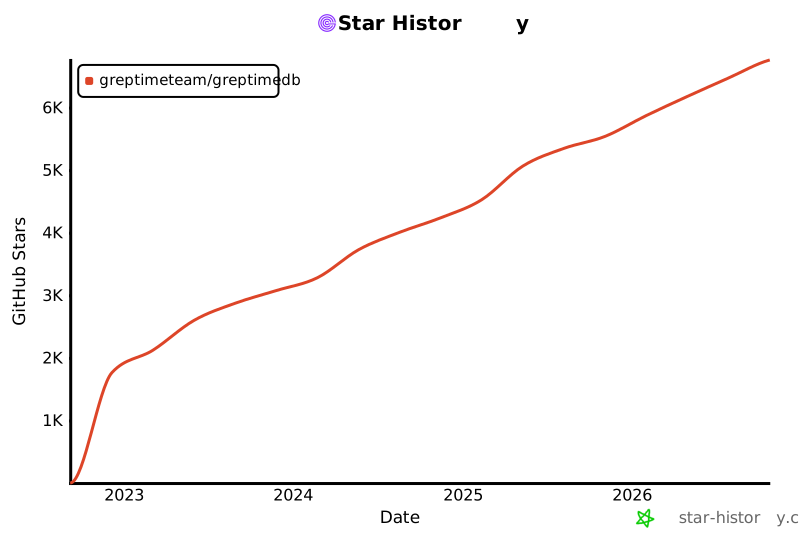](https://www.star-history.com/#GreptimeTeam/GreptimeDB&Date)
|
||||
|
||||
@@ -222,5 +214,5 @@ Special thanks to all contributors! See [AUTHORS.md](https://github.com/Greptime
|
||||
|
||||
- Uses [Apache Arrow™](https://arrow.apache.org/) (memory model)
|
||||
- [Apache Parquet™](https://parquet.apache.org/) (file storage)
|
||||
- [Apache DataFusion™](https://arrow.apache.org/datafusion/) (query engine)
|
||||
- [Apache Arrow DataFusion™](https://arrow.apache.org/datafusion/) (query engine)
|
||||
- [Apache OpenDAL™](https://opendal.apache.org/) (data access abstraction)
|
||||
|
||||
@@ -14,12 +14,11 @@
|
||||
| --- | -----| ------- | ----------- |
|
||||
| `default_timezone` | String | Unset | The default timezone of the server. |
|
||||
| `default_column_prefix` | String | Unset | The default column prefix for auto-created time index and value columns. |
|
||||
| `max_in_flight_write_bytes` | String | Unset | Maximum total memory for all concurrent write request bodies and messages (HTTP, gRPC, Flight).<br/>Set to 0 to disable the limit. Default: "0" (unlimited) |
|
||||
| `write_bytes_exhausted_policy` | String | Unset | Policy when write bytes quota is exhausted.<br/>Options: "wait" (default, 10s timeout), "wait(<duration>)" (e.g., "wait(30s)"), "fail" |
|
||||
| `init_regions_in_background` | Bool | `false` | Initialize all regions in the background during the startup.<br/>By default, it provides services after all regions have been initialized. |
|
||||
| `init_regions_parallelism` | Integer | `16` | Parallelism of initializing regions. |
|
||||
| `max_concurrent_queries` | Integer | `0` | The maximum current queries allowed to be executed. Zero means unlimited.<br/>NOTE: This setting affects scan_memory_limit's privileged tier allocation.<br/>When set, 70% of queries get privileged memory access (full scan_memory_limit).<br/>The remaining 30% get standard tier access (70% of scan_memory_limit). |
|
||||
| `max_concurrent_queries` | Integer | `0` | The maximum current queries allowed to be executed. Zero means unlimited. |
|
||||
| `enable_telemetry` | Bool | `true` | Enable telemetry to collect anonymous usage data. Enabled by default. |
|
||||
| `max_in_flight_write_bytes` | String | Unset | The maximum in-flight write bytes. |
|
||||
| `runtime` | -- | -- | The runtime options. |
|
||||
| `runtime.global_rt_size` | Integer | `8` | The number of threads to execute the runtime for global read operations. |
|
||||
| `runtime.compact_rt_size` | Integer | `4` | The number of threads to execute the runtime for global write operations. |
|
||||
@@ -27,12 +26,14 @@
|
||||
| `http.addr` | String | `127.0.0.1:4000` | The address to bind the HTTP server. |
|
||||
| `http.timeout` | String | `0s` | HTTP request timeout. Set to 0 to disable timeout. |
|
||||
| `http.body_limit` | String | `64MB` | HTTP request body limit.<br/>The following units are supported: `B`, `KB`, `KiB`, `MB`, `MiB`, `GB`, `GiB`, `TB`, `TiB`, `PB`, `PiB`.<br/>Set to 0 to disable limit. |
|
||||
| `http.max_total_body_memory` | String | Unset | Maximum total memory for all concurrent HTTP request bodies.<br/>Set to 0 to disable the limit. Default: "0" (unlimited) |
|
||||
| `http.enable_cors` | Bool | `true` | HTTP CORS support, it's turned on by default<br/>This allows browser to access http APIs without CORS restrictions |
|
||||
| `http.cors_allowed_origins` | Array | Unset | Customize allowed origins for HTTP CORS. |
|
||||
| `http.prom_validation_mode` | String | `strict` | Whether to enable validation for Prometheus remote write requests.<br/>Available options:<br/>- strict: deny invalid UTF-8 strings (default).<br/>- lossy: allow invalid UTF-8 strings, replace invalid characters with REPLACEMENT_CHARACTER(U+FFFD).<br/>- unchecked: do not valid strings. |
|
||||
| `grpc` | -- | -- | The gRPC server options. |
|
||||
| `grpc.bind_addr` | String | `127.0.0.1:4001` | The address to bind the gRPC server. |
|
||||
| `grpc.runtime_size` | Integer | `8` | The number of server worker threads. |
|
||||
| `grpc.max_total_message_memory` | String | Unset | Maximum total memory for all concurrent gRPC request messages.<br/>Set to 0 to disable the limit. Default: "0" (unlimited) |
|
||||
| `grpc.max_connection_age` | String | Unset | The maximum connection age for gRPC connection.<br/>The value can be a human-readable time string. For example: `10m` for ten minutes or `1h` for one hour.<br/>Refer to https://grpc.io/docs/guides/keepalive/ for more details. |
|
||||
| `grpc.tls` | -- | -- | gRPC server TLS options, see `mysql.tls` section. |
|
||||
| `grpc.tls.mode` | String | `disable` | TLS mode. |
|
||||
@@ -82,8 +83,6 @@
|
||||
| `wal.sync_period` | String | `10s` | Duration for fsyncing log files.<br/>**It's only used when the provider is `raft_engine`**. |
|
||||
| `wal.recovery_parallelism` | Integer | `2` | Parallelism during WAL recovery. |
|
||||
| `wal.broker_endpoints` | Array | -- | The Kafka broker endpoints.<br/>**It's only used when the provider is `kafka`**. |
|
||||
| `wal.connect_timeout` | String | `3s` | The connect timeout for kafka client.<br/>**It's only used when the provider is `kafka`**. |
|
||||
| `wal.timeout` | String | `3s` | The timeout for kafka client.<br/>**It's only used when the provider is `kafka`**. |
|
||||
| `wal.auto_create_topics` | Bool | `true` | Automatically create topics for WAL.<br/>Set to `true` to automatically create topics for WAL.<br/>Otherwise, use topics named `topic_name_prefix_[0..num_topics)` |
|
||||
| `wal.num_topics` | Integer | `64` | Number of topics.<br/>**It's only used when the provider is `kafka`**. |
|
||||
| `wal.selector_type` | String | `round_robin` | Topic selector type.<br/>Available selector types:<br/>- `round_robin` (default)<br/>**It's only used when the provider is `kafka`**. |
|
||||
@@ -105,10 +104,12 @@
|
||||
| `flow.num_workers` | Integer | `0` | The number of flow worker in flownode.<br/>Not setting(or set to 0) this value will use the number of CPU cores divided by 2. |
|
||||
| `query` | -- | -- | The query engine options. |
|
||||
| `query.parallelism` | Integer | `0` | Parallelism of the query engine.<br/>Default to 0, which means the number of CPU cores. |
|
||||
| `query.memory_pool_size` | String | `50%` | Memory pool size for query execution operators (aggregation, sorting, join).<br/>Supports absolute size (e.g., "2GB", "4GB") or percentage of system memory (e.g., "20%").<br/>Setting it to 0 disables the limit (unbounded, default behavior).<br/>When this limit is reached, queries will fail with ResourceExhausted error.<br/>NOTE: This does NOT limit memory used by table scans. |
|
||||
| `storage` | -- | -- | The data storage options. |
|
||||
| `storage.data_home` | String | `./greptimedb_data` | The working home directory. |
|
||||
| `storage.type` | String | `File` | The storage type used to store the data.<br/>- `File`: the data is stored in the local file system.<br/>- `S3`: the data is stored in the S3 object storage.<br/>- `Gcs`: the data is stored in the Google Cloud Storage.<br/>- `Azblob`: the data is stored in the Azure Blob Storage.<br/>- `Oss`: the data is stored in the Aliyun OSS. |
|
||||
| `storage.enable_read_cache` | Bool | `true` | Whether to enable read cache. If not set, the read cache will be enabled by default when using object storage. |
|
||||
| `storage.cache_path` | String | Unset | Read cache configuration for object storage such as 'S3' etc, it's configured by default when using object storage. It is recommended to configure it when using object storage for better performance.<br/>A local file directory, defaults to `{data_home}`. An empty string means disabling. |
|
||||
| `storage.cache_capacity` | String | Unset | The local file cache capacity in bytes. If your disk space is sufficient, it is recommended to set it larger. |
|
||||
| `storage.bucket` | String | Unset | The S3 bucket name.<br/>**It's only used when the storage type is `S3`, `Oss` and `Gcs`**. |
|
||||
| `storage.root` | String | Unset | The S3 data will be stored in the specified prefix, for example, `s3://${bucket}/${root}`.<br/>**It's only used when the storage type is `S3`, `Oss` and `Azblob`**. |
|
||||
| `storage.access_key_id` | String | Unset | The access key id of the aws account.<br/>It's **highly recommended** to use AWS IAM roles instead of hardcoding the access key id and secret key.<br/>**It's only used when the storage type is `S3` and `Oss`**. |
|
||||
@@ -139,8 +140,6 @@
|
||||
| `region_engine.mito.max_background_flushes` | Integer | Auto | Max number of running background flush jobs (default: 1/2 of cpu cores). |
|
||||
| `region_engine.mito.max_background_compactions` | Integer | Auto | Max number of running background compaction jobs (default: 1/4 of cpu cores). |
|
||||
| `region_engine.mito.max_background_purges` | Integer | Auto | Max number of running background purge jobs (default: number of cpu cores). |
|
||||
| `region_engine.mito.experimental_compaction_memory_limit` | String | 0 | Memory budget for compaction tasks. Setting it to 0 or "unlimited" disables the limit. |
|
||||
| `region_engine.mito.experimental_compaction_on_exhausted` | String | wait | Behavior when compaction cannot acquire memory from the budget.<br/>Options: "wait" (default, 10s), "wait(<duration>)", "fail" |
|
||||
| `region_engine.mito.auto_flush_interval` | String | `1h` | Interval to auto flush a region if it has not flushed yet. |
|
||||
| `region_engine.mito.global_write_buffer_size` | String | Auto | Global write buffer size for all regions. If not set, it's default to 1/8 of OS memory with a max limitation of 1GB. |
|
||||
| `region_engine.mito.global_write_buffer_reject_size` | String | Auto | Global write buffer size threshold to reject write requests. If not set, it's default to 2 times of `global_write_buffer_size`. |
|
||||
@@ -152,15 +151,10 @@
|
||||
| `region_engine.mito.write_cache_path` | String | `""` | File system path for write cache, defaults to `{data_home}`. |
|
||||
| `region_engine.mito.write_cache_size` | String | `5GiB` | Capacity for write cache. If your disk space is sufficient, it is recommended to set it larger. |
|
||||
| `region_engine.mito.write_cache_ttl` | String | Unset | TTL for write cache. |
|
||||
| `region_engine.mito.preload_index_cache` | Bool | `true` | Preload index (puffin) files into cache on region open (default: true).<br/>When enabled, index files are loaded into the write cache during region initialization,<br/>which can improve query performance at the cost of longer startup times. |
|
||||
| `region_engine.mito.index_cache_percent` | Integer | `20` | Percentage of write cache capacity allocated for index (puffin) files (default: 20).<br/>The remaining capacity is used for data (parquet) files.<br/>Must be between 0 and 100 (exclusive). For example, with a 5GiB write cache and 20% allocation,<br/>1GiB is reserved for index files and 4GiB for data files. |
|
||||
| `region_engine.mito.enable_refill_cache_on_read` | Bool | `true` | Enable refilling cache on read operations (default: true).<br/>When disabled, cache refilling on read won't happen. |
|
||||
| `region_engine.mito.manifest_cache_size` | String | `256MB` | Capacity for manifest cache (default: 256MB). |
|
||||
| `region_engine.mito.sst_write_buffer_size` | String | `8MB` | Buffer size for SST writing. |
|
||||
| `region_engine.mito.parallel_scan_channel_size` | Integer | `32` | Capacity of the channel to send data from parallel scan tasks to the main task. |
|
||||
| `region_engine.mito.max_concurrent_scan_files` | Integer | `384` | Maximum number of SST files to scan concurrently. |
|
||||
| `region_engine.mito.allow_stale_entries` | Bool | `false` | Whether to allow stale WAL entries read during replay. |
|
||||
| `region_engine.mito.scan_memory_limit` | String | `50%` | Memory limit for table scans across all queries.<br/>Supports absolute size (e.g., "2GB") or percentage of system memory (e.g., "20%").<br/>Setting it to 0 disables the limit.<br/>NOTE: Works with max_concurrent_queries for tiered memory allocation.<br/>- If max_concurrent_queries is set: 70% of queries get full access, 30% get 70% access.<br/>- If max_concurrent_queries is 0 (unlimited): first 20 queries get full access, rest get 70% access. |
|
||||
| `region_engine.mito.min_compaction_interval` | String | `0m` | Minimum time interval between two compactions.<br/>To align with the old behavior, the default value is 0 (no restrictions). |
|
||||
| `region_engine.mito.default_experimental_flat_format` | Bool | `false` | Whether to enable experimental flat format as the default format. |
|
||||
| `region_engine.mito.index` | -- | -- | The options for index in Mito engine. |
|
||||
@@ -194,7 +188,7 @@
|
||||
| `region_engine.mito.memtable.fork_dictionary_bytes` | String | `1GiB` | Max dictionary bytes.<br/>Only available for `partition_tree` memtable. |
|
||||
| `region_engine.file` | -- | -- | Enable the file engine. |
|
||||
| `region_engine.metric` | -- | -- | Metric engine options. |
|
||||
| `region_engine.metric.sparse_primary_key_encoding` | Bool | `true` | Whether to use sparse primary key encoding. |
|
||||
| `region_engine.metric.experimental_sparse_primary_key_encoding` | Bool | `false` | Whether to enable the experimental sparse primary key encoding. |
|
||||
| `logging` | -- | -- | The logging options. |
|
||||
| `logging.dir` | String | `./greptimedb_data/logs` | The directory to store the log files. If set to empty, logs will not be written to files. |
|
||||
| `logging.level` | String | Unset | The log level. Can be `info`/`debug`/`warn`/`error`. |
|
||||
@@ -212,6 +206,14 @@
|
||||
| `slow_query.record_type` | String | Unset | The record type of slow queries. It can be `system_table` or `log`. |
|
||||
| `slow_query.threshold` | String | Unset | The threshold of slow query. |
|
||||
| `slow_query.sample_ratio` | Float | Unset | The sampling ratio of slow query log. The value should be in the range of (0, 1]. |
|
||||
| `export_metrics` | -- | -- | The standalone can export its metrics and send to Prometheus compatible service (e.g. `greptimedb`) from remote-write API.<br/>This is only used for `greptimedb` to export its own metrics internally. It's different from prometheus scrape. |
|
||||
| `export_metrics.enable` | Bool | `false` | whether enable export metrics. |
|
||||
| `export_metrics.write_interval` | String | `30s` | The interval of export metrics. |
|
||||
| `export_metrics.self_import` | -- | -- | For `standalone` mode, `self_import` is recommended to collect metrics generated by itself<br/>You must create the database before enabling it. |
|
||||
| `export_metrics.self_import.db` | String | Unset | -- |
|
||||
| `export_metrics.remote_write` | -- | -- | -- |
|
||||
| `export_metrics.remote_write.url` | String | `""` | The prometheus remote write endpoint that the metrics send to. The url example can be: `http://127.0.0.1:4000/v1/prometheus/write?db=greptime_metrics`. |
|
||||
| `export_metrics.remote_write.headers` | InlineTable | -- | HTTP headers of Prometheus remote-write carry. |
|
||||
| `tracing` | -- | -- | The tracing options. Only effect when compiled with `tokio-console` feature. |
|
||||
| `tracing.tokio_console_addr` | String | Unset | The tokio console address. |
|
||||
| `memory` | -- | -- | The memory options. |
|
||||
@@ -226,8 +228,7 @@
|
||||
| --- | -----| ------- | ----------- |
|
||||
| `default_timezone` | String | Unset | The default timezone of the server. |
|
||||
| `default_column_prefix` | String | Unset | The default column prefix for auto-created time index and value columns. |
|
||||
| `max_in_flight_write_bytes` | String | Unset | Maximum total memory for all concurrent write request bodies and messages (HTTP, gRPC, Flight).<br/>Set to 0 to disable the limit. Default: "0" (unlimited) |
|
||||
| `write_bytes_exhausted_policy` | String | Unset | Policy when write bytes quota is exhausted.<br/>Options: "wait" (default, 10s timeout), "wait(<duration>)" (e.g., "wait(30s)"), "fail" |
|
||||
| `max_in_flight_write_bytes` | String | Unset | The maximum in-flight write bytes. |
|
||||
| `runtime` | -- | -- | The runtime options. |
|
||||
| `runtime.global_rt_size` | Integer | `8` | The number of threads to execute the runtime for global read operations. |
|
||||
| `runtime.compact_rt_size` | Integer | `4` | The number of threads to execute the runtime for global write operations. |
|
||||
@@ -238,6 +239,7 @@
|
||||
| `http.addr` | String | `127.0.0.1:4000` | The address to bind the HTTP server. |
|
||||
| `http.timeout` | String | `0s` | HTTP request timeout. Set to 0 to disable timeout. |
|
||||
| `http.body_limit` | String | `64MB` | HTTP request body limit.<br/>The following units are supported: `B`, `KB`, `KiB`, `MB`, `MiB`, `GB`, `GiB`, `TB`, `TiB`, `PB`, `PiB`.<br/>Set to 0 to disable limit. |
|
||||
| `http.max_total_body_memory` | String | Unset | Maximum total memory for all concurrent HTTP request bodies.<br/>Set to 0 to disable the limit. Default: "0" (unlimited) |
|
||||
| `http.enable_cors` | Bool | `true` | HTTP CORS support, it's turned on by default<br/>This allows browser to access http APIs without CORS restrictions |
|
||||
| `http.cors_allowed_origins` | Array | Unset | Customize allowed origins for HTTP CORS. |
|
||||
| `http.prom_validation_mode` | String | `strict` | Whether to enable validation for Prometheus remote write requests.<br/>Available options:<br/>- strict: deny invalid UTF-8 strings (default).<br/>- lossy: allow invalid UTF-8 strings, replace invalid characters with REPLACEMENT_CHARACTER(U+FFFD).<br/>- unchecked: do not valid strings. |
|
||||
@@ -245,6 +247,7 @@
|
||||
| `grpc.bind_addr` | String | `127.0.0.1:4001` | The address to bind the gRPC server. |
|
||||
| `grpc.server_addr` | String | `127.0.0.1:4001` | The address advertised to the metasrv, and used for connections from outside the host.<br/>If left empty or unset, the server will automatically use the IP address of the first network interface<br/>on the host, with the same port number as the one specified in `grpc.bind_addr`. |
|
||||
| `grpc.runtime_size` | Integer | `8` | The number of server worker threads. |
|
||||
| `grpc.max_total_message_memory` | String | Unset | Maximum total memory for all concurrent gRPC request messages.<br/>Set to 0 to disable the limit. Default: "0" (unlimited) |
|
||||
| `grpc.flight_compression` | String | `arrow_ipc` | Compression mode for frontend side Arrow IPC service. Available options:<br/>- `none`: disable all compression<br/>- `transport`: only enable gRPC transport compression (zstd)<br/>- `arrow_ipc`: only enable Arrow IPC compression (lz4)<br/>- `all`: enable all compression.<br/>Default to `none` |
|
||||
| `grpc.max_connection_age` | String | Unset | The maximum connection age for gRPC connection.<br/>The value can be a human-readable time string. For example: `10m` for ten minutes or `1h` for one hour.<br/>Refer to https://grpc.io/docs/guides/keepalive/ for more details. |
|
||||
| `grpc.tls` | -- | -- | gRPC server TLS options, see `mysql.tls` section. |
|
||||
@@ -295,6 +298,7 @@
|
||||
| `meta_client` | -- | -- | The metasrv client options. |
|
||||
| `meta_client.metasrv_addrs` | Array | -- | The addresses of the metasrv. |
|
||||
| `meta_client.timeout` | String | `3s` | Operation timeout. |
|
||||
| `meta_client.heartbeat_timeout` | String | `500ms` | Heartbeat timeout. |
|
||||
| `meta_client.ddl_timeout` | String | `10s` | DDL timeout. |
|
||||
| `meta_client.connect_timeout` | String | `1s` | Connect server timeout. |
|
||||
| `meta_client.tcp_nodelay` | Bool | `true` | `TCP_NODELAY` option for accepted connections. |
|
||||
@@ -304,7 +308,6 @@
|
||||
| `query` | -- | -- | The query engine options. |
|
||||
| `query.parallelism` | Integer | `0` | Parallelism of the query engine.<br/>Default to 0, which means the number of CPU cores. |
|
||||
| `query.allow_query_fallback` | Bool | `false` | Whether to allow query fallback when push down optimize fails.<br/>Default to false, meaning when push down optimize failed, return error msg |
|
||||
| `query.memory_pool_size` | String | `50%` | Memory pool size for query execution operators (aggregation, sorting, join).<br/>Supports absolute size (e.g., "4GB", "8GB") or percentage of system memory (e.g., "30%").<br/>Setting it to 0 disables the limit (unbounded, default behavior).<br/>When this limit is reached, queries will fail with ResourceExhausted error.<br/>NOTE: This does NOT limit memory used by table scans (only applies to datanodes). |
|
||||
| `datanode` | -- | -- | Datanode options. |
|
||||
| `datanode.client` | -- | -- | Datanode client options. |
|
||||
| `datanode.client.connect_timeout` | String | `10s` | -- |
|
||||
@@ -327,6 +330,12 @@
|
||||
| `slow_query.threshold` | String | `30s` | The threshold of slow query. It can be human readable time string, for example: `10s`, `100ms`, `1s`. |
|
||||
| `slow_query.sample_ratio` | Float | `1.0` | The sampling ratio of slow query log. The value should be in the range of (0, 1]. For example, `0.1` means 10% of the slow queries will be logged and `1.0` means all slow queries will be logged. |
|
||||
| `slow_query.ttl` | String | `90d` | The TTL of the `slow_queries` system table. Default is `90d` when `record_type` is `system_table`. |
|
||||
| `export_metrics` | -- | -- | The frontend can export its metrics and send to Prometheus compatible service (e.g. `greptimedb` itself) from remote-write API.<br/>This is only used for `greptimedb` to export its own metrics internally. It's different from prometheus scrape. |
|
||||
| `export_metrics.enable` | Bool | `false` | whether enable export metrics. |
|
||||
| `export_metrics.write_interval` | String | `30s` | The interval of export metrics. |
|
||||
| `export_metrics.remote_write` | -- | -- | -- |
|
||||
| `export_metrics.remote_write.url` | String | `""` | The prometheus remote write endpoint that the metrics send to. The url example can be: `http://127.0.0.1:4000/v1/prometheus/write?db=greptime_metrics`. |
|
||||
| `export_metrics.remote_write.headers` | InlineTable | -- | HTTP headers of Prometheus remote-write carry. |
|
||||
| `tracing` | -- | -- | The tracing options. Only effect when compiled with `tokio-console` feature. |
|
||||
| `tracing.tokio_console_addr` | String | Unset | The tokio console address. |
|
||||
| `memory` | -- | -- | The memory options. |
|
||||
@@ -340,40 +349,34 @@
|
||||
| Key | Type | Default | Descriptions |
|
||||
| --- | -----| ------- | ----------- |
|
||||
| `data_home` | String | `./greptimedb_data` | The working home directory. |
|
||||
| `store_addrs` | Array | -- | Store server address(es). The format depends on the selected backend.<br/><br/>For etcd: a list of "host:port" endpoints.<br/>e.g. ["192.168.1.1:2379", "192.168.1.2:2379"]<br/><br/>For PostgreSQL: a connection string in libpq format or URI.<br/>e.g.<br/>- "host=localhost port=5432 user=postgres password=<PASSWORD> dbname=postgres"<br/>- "postgresql://user:password@localhost:5432/mydb?connect_timeout=10"<br/>The detail see: https://docs.rs/tokio-postgres/latest/tokio_postgres/config/struct.Config.html<br/><br/>For mysql store, the format is a MySQL connection URL.<br/>e.g. "mysql://user:password@localhost:3306/greptime_meta?ssl-mode=VERIFY_CA&ssl-ca=/path/to/ca.pem" |
|
||||
| `store_addrs` | Array | -- | Store server address default to etcd store.<br/>For postgres store, the format is:<br/>"password=password dbname=postgres user=postgres host=localhost port=5432"<br/>For etcd store, the format is:<br/>"127.0.0.1:2379" |
|
||||
| `store_key_prefix` | String | `""` | If it's not empty, the metasrv will store all data with this key prefix. |
|
||||
| `backend` | String | `etcd_store` | The datastore for meta server.<br/>Available values:<br/>- `etcd_store` (default value)<br/>- `memory_store`<br/>- `postgres_store`<br/>- `mysql_store` |
|
||||
| `meta_table_name` | String | `greptime_metakv` | Table name in RDS to store metadata. Effect when using a RDS kvbackend.<br/>**Only used when backend is `postgres_store`.** |
|
||||
| `meta_schema_name` | String | `greptime_schema` | Optional PostgreSQL schema for metadata table and election table name qualification.<br/>When PostgreSQL public schema is not writable (e.g., PostgreSQL 15+ with restricted public),<br/>set this to a writable schema. GreptimeDB will use `meta_schema_name`.`meta_table_name`.<br/>**Only used when backend is `postgres_store`.** |
|
||||
| `auto_create_schema` | Bool | `true` | Automatically create PostgreSQL schema if it doesn't exist.<br/>When enabled, the system will execute `CREATE SCHEMA IF NOT EXISTS <schema_name>`<br/>before creating metadata tables. This is useful in production environments where<br/>manual schema creation may be restricted.<br/>Default is true.<br/>Note: The PostgreSQL user must have CREATE SCHEMA permission for this to work.<br/>**Only used when backend is `postgres_store`.** |
|
||||
| `meta_schema_name` | String | `greptime_schema` | Optional PostgreSQL schema for metadata table and election table name qualification.<br/>When PostgreSQL public schema is not writable (e.g., PostgreSQL 15+ with restricted public),<br/>set this to a writable schema. GreptimeDB will use `meta_schema_name`.`meta_table_name`.<br/>GreptimeDB will NOT create the schema automatically; please ensure it exists or the user has permission.<br/>**Only used when backend is `postgres_store`.** |
|
||||
| `meta_election_lock_id` | Integer | `1` | Advisory lock id in PostgreSQL for election. Effect when using PostgreSQL as kvbackend<br/>Only used when backend is `postgres_store`. |
|
||||
| `selector` | String | `round_robin` | Datanode selector type.<br/>- `round_robin` (default value)<br/>- `lease_based`<br/>- `load_based`<br/>For details, please see "https://docs.greptime.com/developer-guide/metasrv/selector". |
|
||||
| `use_memory_store` | Bool | `false` | Store data in memory. |
|
||||
| `enable_region_failover` | Bool | `false` | Whether to enable region failover.<br/>This feature is only available on GreptimeDB running on cluster mode and<br/>- Using Remote WAL<br/>- Using shared storage (e.g., s3). |
|
||||
| `region_failure_detector_initialization_delay` | String | `10m` | The delay before starting region failure detection.<br/>This delay helps prevent Metasrv from triggering unnecessary region failovers before all Datanodes are fully started.<br/>Especially useful when the cluster is not deployed with GreptimeDB Operator and maintenance mode is not enabled. |
|
||||
| `allow_region_failover_on_local_wal` | Bool | `false` | Whether to allow region failover on local WAL.<br/>**This option is not recommended to be set to true, because it may lead to data loss during failover.** |
|
||||
| `node_max_idle_time` | String | `24hours` | Max allowed idle time before removing node info from metasrv memory. |
|
||||
| `heartbeat_interval` | String | `3s` | Base heartbeat interval for calculating distributed time constants.<br/>The frontend heartbeat interval is 6 times of the base heartbeat interval.<br/>The flownode/datanode heartbeat interval is 1 times of the base heartbeat interval.<br/>e.g., If the base heartbeat interval is 3s, the frontend heartbeat interval is 18s, the flownode/datanode heartbeat interval is 3s.<br/>If you change this value, you need to change the heartbeat interval of the flownode/frontend/datanode accordingly. |
|
||||
| `enable_telemetry` | Bool | `true` | Whether to enable greptimedb telemetry. Enabled by default. |
|
||||
| `runtime` | -- | -- | The runtime options. |
|
||||
| `runtime.global_rt_size` | Integer | `8` | The number of threads to execute the runtime for global read operations. |
|
||||
| `runtime.compact_rt_size` | Integer | `4` | The number of threads to execute the runtime for global write operations. |
|
||||
| `backend_tls` | -- | -- | TLS configuration for kv store backend (applicable for etcd, PostgreSQL, and MySQL backends)<br/>When using etcd, PostgreSQL, or MySQL as metadata store, you can configure TLS here<br/><br/>Note: if TLS is configured in both this section and the `store_addrs` connection string, the<br/>settings here will override the TLS settings in `store_addrs`. |
|
||||
| `backend_tls` | -- | -- | TLS configuration for kv store backend (applicable for etcd, PostgreSQL, and MySQL backends)<br/>When using etcd, PostgreSQL, or MySQL as metadata store, you can configure TLS here |
|
||||
| `backend_tls.mode` | String | `prefer` | TLS mode, refer to https://www.postgresql.org/docs/current/libpq-ssl.html<br/>- "disable" - No TLS<br/>- "prefer" (default) - Try TLS, fallback to plain<br/>- "require" - Require TLS<br/>- "verify_ca" - Require TLS and verify CA<br/>- "verify_full" - Require TLS and verify hostname |
|
||||
| `backend_tls.cert_path` | String | `""` | Path to client certificate file (for client authentication)<br/>Like "/path/to/client.crt" |
|
||||
| `backend_tls.key_path` | String | `""` | Path to client private key file (for client authentication)<br/>Like "/path/to/client.key" |
|
||||
| `backend_tls.ca_cert_path` | String | `""` | Path to CA certificate file (for server certificate verification)<br/>Required when using custom CAs or self-signed certificates<br/>Leave empty to use system root certificates only<br/>Like "/path/to/ca.crt" |
|
||||
| `backend_client` | -- | -- | The backend client options.<br/>Currently, only applicable when using etcd as the metadata store. |
|
||||
| `backend_client.keep_alive_timeout` | String | `3s` | The keep alive timeout for backend client. |
|
||||
| `backend_client.keep_alive_interval` | String | `10s` | The keep alive interval for backend client. |
|
||||
| `backend_client.connect_timeout` | String | `3s` | The connect timeout for backend client. |
|
||||
| `backend_tls.watch` | Bool | `false` | Watch for certificate file changes and auto reload |
|
||||
| `grpc` | -- | -- | The gRPC server options. |
|
||||
| `grpc.bind_addr` | String | `127.0.0.1:3002` | The address to bind the gRPC server. |
|
||||
| `grpc.server_addr` | String | `127.0.0.1:3002` | The communication server address for the frontend and datanode to connect to metasrv.<br/>If left empty or unset, the server will automatically use the IP address of the first network interface<br/>on the host, with the same port number as the one specified in `bind_addr`. |
|
||||
| `grpc.runtime_size` | Integer | `8` | The number of server worker threads. |
|
||||
| `grpc.max_recv_message_size` | String | `512MB` | The maximum receive message size for gRPC server. |
|
||||
| `grpc.max_send_message_size` | String | `512MB` | The maximum send message size for gRPC server. |
|
||||
| `grpc.http2_keep_alive_interval` | String | `10s` | The server side HTTP/2 keep-alive interval |
|
||||
| `grpc.http2_keep_alive_timeout` | String | `3s` | The server side HTTP/2 keep-alive timeout. |
|
||||
| `http` | -- | -- | The HTTP server options. |
|
||||
| `http.addr` | String | `127.0.0.1:4000` | The address to bind the HTTP server. |
|
||||
| `http.timeout` | String | `0s` | HTTP request timeout. Set to 0 to disable timeout. |
|
||||
@@ -422,6 +425,12 @@
|
||||
| `logging.otlp_headers` | -- | -- | Additional OTLP headers, only valid when using OTLP http |
|
||||
| `logging.tracing_sample_ratio` | -- | Unset | The percentage of tracing will be sampled and exported.<br/>Valid range `[0, 1]`, 1 means all traces are sampled, 0 means all traces are not sampled, the default value is 1.<br/>ratio > 1 are treated as 1. Fractions < 0 are treated as 0 |
|
||||
| `logging.tracing_sample_ratio.default_ratio` | Float | `1.0` | -- |
|
||||
| `export_metrics` | -- | -- | The metasrv can export its metrics and send to Prometheus compatible service (e.g. `greptimedb` itself) from remote-write API.<br/>This is only used for `greptimedb` to export its own metrics internally. It's different from prometheus scrape. |
|
||||
| `export_metrics.enable` | Bool | `false` | whether enable export metrics. |
|
||||
| `export_metrics.write_interval` | String | `30s` | The interval of export metrics. |
|
||||
| `export_metrics.remote_write` | -- | -- | -- |
|
||||
| `export_metrics.remote_write.url` | String | `""` | The prometheus remote write endpoint that the metrics send to. The url example can be: `http://127.0.0.1:4000/v1/prometheus/write?db=greptime_metrics`. |
|
||||
| `export_metrics.remote_write.headers` | InlineTable | -- | HTTP headers of Prometheus remote-write carry. |
|
||||
| `tracing` | -- | -- | The tracing options. Only effect when compiled with `tokio-console` feature. |
|
||||
| `tracing.tokio_console_addr` | String | Unset | The tokio console address. |
|
||||
| `memory` | -- | -- | The memory options. |
|
||||
@@ -437,7 +446,7 @@
|
||||
| `require_lease_before_startup` | Bool | `false` | Start services after regions have obtained leases.<br/>It will block the datanode start if it can't receive leases in the heartbeat from metasrv. |
|
||||
| `init_regions_in_background` | Bool | `false` | Initialize all regions in the background during the startup.<br/>By default, it provides services after all regions have been initialized. |
|
||||
| `init_regions_parallelism` | Integer | `16` | Parallelism of initializing regions. |
|
||||
| `max_concurrent_queries` | Integer | `0` | The maximum current queries allowed to be executed. Zero means unlimited.<br/>NOTE: This setting affects scan_memory_limit's privileged tier allocation.<br/>When set, 70% of queries get privileged memory access (full scan_memory_limit).<br/>The remaining 30% get standard tier access (70% of scan_memory_limit). |
|
||||
| `max_concurrent_queries` | Integer | `0` | The maximum current queries allowed to be executed. Zero means unlimited. |
|
||||
| `enable_telemetry` | Bool | `true` | Enable telemetry to collect anonymous usage data. Enabled by default. |
|
||||
| `http` | -- | -- | The HTTP server options. |
|
||||
| `http.addr` | String | `127.0.0.1:4000` | The address to bind the HTTP server. |
|
||||
@@ -464,6 +473,7 @@
|
||||
| `meta_client` | -- | -- | The metasrv client options. |
|
||||
| `meta_client.metasrv_addrs` | Array | -- | The addresses of the metasrv. |
|
||||
| `meta_client.timeout` | String | `3s` | Operation timeout. |
|
||||
| `meta_client.heartbeat_timeout` | String | `500ms` | Heartbeat timeout. |
|
||||
| `meta_client.ddl_timeout` | String | `10s` | DDL timeout. |
|
||||
| `meta_client.connect_timeout` | String | `1s` | Connect server timeout. |
|
||||
| `meta_client.tcp_nodelay` | Bool | `true` | `TCP_NODELAY` option for accepted connections. |
|
||||
@@ -483,8 +493,6 @@
|
||||
| `wal.sync_period` | String | `10s` | Duration for fsyncing log files.<br/>**It's only used when the provider is `raft_engine`**. |
|
||||
| `wal.recovery_parallelism` | Integer | `2` | Parallelism during WAL recovery. |
|
||||
| `wal.broker_endpoints` | Array | -- | The Kafka broker endpoints.<br/>**It's only used when the provider is `kafka`**. |
|
||||
| `wal.connect_timeout` | String | `3s` | The connect timeout for kafka client.<br/>**It's only used when the provider is `kafka`**. |
|
||||
| `wal.timeout` | String | `3s` | The timeout for kafka client.<br/>**It's only used when the provider is `kafka`**. |
|
||||
| `wal.max_batch_bytes` | String | `1MB` | The max size of a single producer batch.<br/>Warning: Kafka has a default limit of 1MB per message in a topic.<br/>**It's only used when the provider is `kafka`**. |
|
||||
| `wal.consumer_wait_timeout` | String | `100ms` | The consumer wait timeout.<br/>**It's only used when the provider is `kafka`**. |
|
||||
| `wal.create_index` | Bool | `true` | Whether to enable WAL index creation.<br/>**It's only used when the provider is `kafka`**. |
|
||||
@@ -492,10 +500,12 @@
|
||||
| `wal.overwrite_entry_start_id` | Bool | `false` | Ignore missing entries during read WAL.<br/>**It's only used when the provider is `kafka`**.<br/><br/>This option ensures that when Kafka messages are deleted, the system<br/>can still successfully replay memtable data without throwing an<br/>out-of-range error.<br/>However, enabling this option might lead to unexpected data loss,<br/>as the system will skip over missing entries instead of treating<br/>them as critical errors. |
|
||||
| `query` | -- | -- | The query engine options. |
|
||||
| `query.parallelism` | Integer | `0` | Parallelism of the query engine.<br/>Default to 0, which means the number of CPU cores. |
|
||||
| `query.memory_pool_size` | String | `50%` | Memory pool size for query execution operators (aggregation, sorting, join).<br/>Supports absolute size (e.g., "2GB", "4GB") or percentage of system memory (e.g., "20%").<br/>Setting it to 0 disables the limit (unbounded, default behavior).<br/>When this limit is reached, queries will fail with ResourceExhausted error.<br/>NOTE: This does NOT limit memory used by table scans. |
|
||||
| `storage` | -- | -- | The data storage options. |
|
||||
| `storage.data_home` | String | `./greptimedb_data` | The working home directory. |
|
||||
| `storage.type` | String | `File` | The storage type used to store the data.<br/>- `File`: the data is stored in the local file system.<br/>- `S3`: the data is stored in the S3 object storage.<br/>- `Gcs`: the data is stored in the Google Cloud Storage.<br/>- `Azblob`: the data is stored in the Azure Blob Storage.<br/>- `Oss`: the data is stored in the Aliyun OSS. |
|
||||
| `storage.cache_path` | String | Unset | Read cache configuration for object storage such as 'S3' etc, it's configured by default when using object storage. It is recommended to configure it when using object storage for better performance.<br/>A local file directory, defaults to `{data_home}`. An empty string means disabling. |
|
||||
| `storage.enable_read_cache` | Bool | `true` | Whether to enable read cache. If not set, the read cache will be enabled by default when using object storage. |
|
||||
| `storage.cache_capacity` | String | Unset | The local file cache capacity in bytes. If your disk space is sufficient, it is recommended to set it larger. |
|
||||
| `storage.bucket` | String | Unset | The S3 bucket name.<br/>**It's only used when the storage type is `S3`, `Oss` and `Gcs`**. |
|
||||
| `storage.root` | String | Unset | The S3 data will be stored in the specified prefix, for example, `s3://${bucket}/${root}`.<br/>**It's only used when the storage type is `S3`, `Oss` and `Azblob`**. |
|
||||
| `storage.access_key_id` | String | Unset | The access key id of the aws account.<br/>It's **highly recommended** to use AWS IAM roles instead of hardcoding the access key id and secret key.<br/>**It's only used when the storage type is `S3` and `Oss`**. |
|
||||
@@ -528,8 +538,6 @@
|
||||
| `region_engine.mito.max_background_flushes` | Integer | Auto | Max number of running background flush jobs (default: 1/2 of cpu cores). |
|
||||
| `region_engine.mito.max_background_compactions` | Integer | Auto | Max number of running background compaction jobs (default: 1/4 of cpu cores). |
|
||||
| `region_engine.mito.max_background_purges` | Integer | Auto | Max number of running background purge jobs (default: number of cpu cores). |
|
||||
| `region_engine.mito.experimental_compaction_memory_limit` | String | 0 | Memory budget for compaction tasks. Setting it to 0 or "unlimited" disables the limit. |
|
||||
| `region_engine.mito.experimental_compaction_on_exhausted` | String | wait | Behavior when compaction cannot acquire memory from the budget.<br/>Options: "wait" (default, 10s), "wait(<duration>)", "fail" |
|
||||
| `region_engine.mito.auto_flush_interval` | String | `1h` | Interval to auto flush a region if it has not flushed yet. |
|
||||
| `region_engine.mito.global_write_buffer_size` | String | Auto | Global write buffer size for all regions. If not set, it's default to 1/8 of OS memory with a max limitation of 1GB. |
|
||||
| `region_engine.mito.global_write_buffer_reject_size` | String | Auto | Global write buffer size threshold to reject write requests. If not set, it's default to 2 times of `global_write_buffer_size` |
|
||||
@@ -541,15 +549,10 @@
|
||||
| `region_engine.mito.write_cache_path` | String | `""` | File system path for write cache, defaults to `{data_home}`. |
|
||||
| `region_engine.mito.write_cache_size` | String | `5GiB` | Capacity for write cache. If your disk space is sufficient, it is recommended to set it larger. |
|
||||
| `region_engine.mito.write_cache_ttl` | String | Unset | TTL for write cache. |
|
||||
| `region_engine.mito.preload_index_cache` | Bool | `true` | Preload index (puffin) files into cache on region open (default: true).<br/>When enabled, index files are loaded into the write cache during region initialization,<br/>which can improve query performance at the cost of longer startup times. |
|
||||
| `region_engine.mito.index_cache_percent` | Integer | `20` | Percentage of write cache capacity allocated for index (puffin) files (default: 20).<br/>The remaining capacity is used for data (parquet) files.<br/>Must be between 0 and 100 (exclusive). For example, with a 5GiB write cache and 20% allocation,<br/>1GiB is reserved for index files and 4GiB for data files. |
|
||||
| `region_engine.mito.enable_refill_cache_on_read` | Bool | `true` | Enable refilling cache on read operations (default: true).<br/>When disabled, cache refilling on read won't happen. |
|
||||
| `region_engine.mito.manifest_cache_size` | String | `256MB` | Capacity for manifest cache (default: 256MB). |
|
||||
| `region_engine.mito.sst_write_buffer_size` | String | `8MB` | Buffer size for SST writing. |
|
||||
| `region_engine.mito.parallel_scan_channel_size` | Integer | `32` | Capacity of the channel to send data from parallel scan tasks to the main task. |
|
||||
| `region_engine.mito.max_concurrent_scan_files` | Integer | `384` | Maximum number of SST files to scan concurrently. |
|
||||
| `region_engine.mito.allow_stale_entries` | Bool | `false` | Whether to allow stale WAL entries read during replay. |
|
||||
| `region_engine.mito.scan_memory_limit` | String | `50%` | Memory limit for table scans across all queries.<br/>Supports absolute size (e.g., "2GB") or percentage of system memory (e.g., "20%").<br/>Setting it to 0 disables the limit.<br/>NOTE: Works with max_concurrent_queries for tiered memory allocation.<br/>- If max_concurrent_queries is set: 70% of queries get full access, 30% get 70% access.<br/>- If max_concurrent_queries is 0 (unlimited): first 20 queries get full access, rest get 70% access. |
|
||||
| `region_engine.mito.min_compaction_interval` | String | `0m` | Minimum time interval between two compactions.<br/>To align with the old behavior, the default value is 0 (no restrictions). |
|
||||
| `region_engine.mito.default_experimental_flat_format` | Bool | `false` | Whether to enable experimental flat format as the default format. |
|
||||
| `region_engine.mito.index` | -- | -- | The options for index in Mito engine. |
|
||||
@@ -583,7 +586,7 @@
|
||||
| `region_engine.mito.memtable.fork_dictionary_bytes` | String | `1GiB` | Max dictionary bytes.<br/>Only available for `partition_tree` memtable. |
|
||||
| `region_engine.file` | -- | -- | Enable the file engine. |
|
||||
| `region_engine.metric` | -- | -- | Metric engine options. |
|
||||
| `region_engine.metric.sparse_primary_key_encoding` | Bool | `true` | Whether to use sparse primary key encoding. |
|
||||
| `region_engine.metric.experimental_sparse_primary_key_encoding` | Bool | `false` | Whether to enable the experimental sparse primary key encoding. |
|
||||
| `logging` | -- | -- | The logging options. |
|
||||
| `logging.dir` | String | `./greptimedb_data/logs` | The directory to store the log files. If set to empty, logs will not be written to files. |
|
||||
| `logging.level` | String | Unset | The log level. Can be `info`/`debug`/`warn`/`error`. |
|
||||
@@ -596,6 +599,12 @@
|
||||
| `logging.otlp_headers` | -- | -- | Additional OTLP headers, only valid when using OTLP http |
|
||||
| `logging.tracing_sample_ratio` | -- | Unset | The percentage of tracing will be sampled and exported.<br/>Valid range `[0, 1]`, 1 means all traces are sampled, 0 means all traces are not sampled, the default value is 1.<br/>ratio > 1 are treated as 1. Fractions < 0 are treated as 0 |
|
||||
| `logging.tracing_sample_ratio.default_ratio` | Float | `1.0` | -- |
|
||||
| `export_metrics` | -- | -- | The datanode can export its metrics and send to Prometheus compatible service (e.g. `greptimedb` itself) from remote-write API.<br/>This is only used for `greptimedb` to export its own metrics internally. It's different from prometheus scrape. |
|
||||
| `export_metrics.enable` | Bool | `false` | whether enable export metrics. |
|
||||
| `export_metrics.write_interval` | String | `30s` | The interval of export metrics. |
|
||||
| `export_metrics.remote_write` | -- | -- | -- |
|
||||
| `export_metrics.remote_write.url` | String | `""` | The prometheus remote write endpoint that the metrics send to. The url example can be: `http://127.0.0.1:4000/v1/prometheus/write?db=greptime_metrics`. |
|
||||
| `export_metrics.remote_write.headers` | InlineTable | -- | HTTP headers of Prometheus remote-write carry. |
|
||||
| `tracing` | -- | -- | The tracing options. Only effect when compiled with `tokio-console` feature. |
|
||||
| `tracing.tokio_console_addr` | String | Unset | The tokio console address. |
|
||||
| `memory` | -- | -- | The memory options. |
|
||||
@@ -638,6 +647,7 @@
|
||||
| `meta_client` | -- | -- | The metasrv client options. |
|
||||
| `meta_client.metasrv_addrs` | Array | -- | The addresses of the metasrv. |
|
||||
| `meta_client.timeout` | String | `3s` | Operation timeout. |
|
||||
| `meta_client.heartbeat_timeout` | String | `500ms` | Heartbeat timeout. |
|
||||
| `meta_client.ddl_timeout` | String | `10s` | DDL timeout. |
|
||||
| `meta_client.connect_timeout` | String | `1s` | Connect server timeout. |
|
||||
| `meta_client.tcp_nodelay` | Bool | `true` | `TCP_NODELAY` option for accepted connections. |
|
||||
@@ -663,6 +673,5 @@
|
||||
| `tracing.tokio_console_addr` | String | Unset | The tokio console address. |
|
||||
| `query` | -- | -- | -- |
|
||||
| `query.parallelism` | Integer | `1` | Parallelism of the query engine for query sent by flownode.<br/>Default to 1, so it won't use too much cpu or memory |
|
||||
| `query.memory_pool_size` | String | `50%` | Memory pool size for query execution operators (aggregation, sorting, join).<br/>Supports absolute size (e.g., "1GB", "2GB") or percentage of system memory (e.g., "20%").<br/>Setting it to 0 disables the limit (unbounded, default behavior).<br/>When this limit is reached, queries will fail with ResourceExhausted error.<br/>NOTE: This does NOT limit memory used by table scans. |
|
||||
| `memory` | -- | -- | The memory options. |
|
||||
| `memory.enable_heap_profiling` | Bool | `true` | Whether to enable heap profiling activation during startup.<br/>When enabled, heap profiling will be activated if the `MALLOC_CONF` environment variable<br/>is set to "prof:true,prof_active:false". The official image adds this env variable.<br/>Default is true. |
|
||||
|
||||
@@ -18,9 +18,6 @@ init_regions_in_background = false
|
||||
init_regions_parallelism = 16
|
||||
|
||||
## The maximum current queries allowed to be executed. Zero means unlimited.
|
||||
## NOTE: This setting affects scan_memory_limit's privileged tier allocation.
|
||||
## When set, 70% of queries get privileged memory access (full scan_memory_limit).
|
||||
## The remaining 30% get standard tier access (70% of scan_memory_limit).
|
||||
max_concurrent_queries = 0
|
||||
|
||||
## Enable telemetry to collect anonymous usage data. Enabled by default.
|
||||
@@ -99,6 +96,9 @@ metasrv_addrs = ["127.0.0.1:3002"]
|
||||
## Operation timeout.
|
||||
timeout = "3s"
|
||||
|
||||
## Heartbeat timeout.
|
||||
heartbeat_timeout = "500ms"
|
||||
|
||||
## DDL timeout.
|
||||
ddl_timeout = "10s"
|
||||
|
||||
@@ -169,14 +169,6 @@ recovery_parallelism = 2
|
||||
## **It's only used when the provider is `kafka`**.
|
||||
broker_endpoints = ["127.0.0.1:9092"]
|
||||
|
||||
## The connect timeout for kafka client.
|
||||
## **It's only used when the provider is `kafka`**.
|
||||
#+ connect_timeout = "3s"
|
||||
|
||||
## The timeout for kafka client.
|
||||
## **It's only used when the provider is `kafka`**.
|
||||
#+ timeout = "3s"
|
||||
|
||||
## The max size of a single producer batch.
|
||||
## Warning: Kafka has a default limit of 1MB per message in a topic.
|
||||
## **It's only used when the provider is `kafka`**.
|
||||
@@ -233,7 +225,6 @@ overwrite_entry_start_id = false
|
||||
# endpoint = "https://s3.amazonaws.com"
|
||||
# region = "us-west-2"
|
||||
# enable_virtual_host_style = false
|
||||
# disable_ec2_metadata = false
|
||||
|
||||
# Example of using Oss as the storage.
|
||||
# [storage]
|
||||
@@ -270,13 +261,6 @@ overwrite_entry_start_id = false
|
||||
## Default to 0, which means the number of CPU cores.
|
||||
parallelism = 0
|
||||
|
||||
## Memory pool size for query execution operators (aggregation, sorting, join).
|
||||
## Supports absolute size (e.g., "2GB", "4GB") or percentage of system memory (e.g., "20%").
|
||||
## Setting it to 0 disables the limit (unbounded, default behavior).
|
||||
## When this limit is reached, queries will fail with ResourceExhausted error.
|
||||
## NOTE: This does NOT limit memory used by table scans.
|
||||
memory_pool_size = "50%"
|
||||
|
||||
## The data storage options.
|
||||
[storage]
|
||||
## The working home directory.
|
||||
@@ -290,6 +274,18 @@ data_home = "./greptimedb_data"
|
||||
## - `Oss`: the data is stored in the Aliyun OSS.
|
||||
type = "File"
|
||||
|
||||
## Read cache configuration for object storage such as 'S3' etc, it's configured by default when using object storage. It is recommended to configure it when using object storage for better performance.
|
||||
## A local file directory, defaults to `{data_home}`. An empty string means disabling.
|
||||
## @toml2docs:none-default
|
||||
#+ cache_path = ""
|
||||
|
||||
## Whether to enable read cache. If not set, the read cache will be enabled by default when using object storage.
|
||||
#+ enable_read_cache = true
|
||||
|
||||
## The local file cache capacity in bytes. If your disk space is sufficient, it is recommended to set it larger.
|
||||
## @toml2docs:none-default
|
||||
cache_capacity = "5GiB"
|
||||
|
||||
## The S3 bucket name.
|
||||
## **It's only used when the storage type is `S3`, `Oss` and `Gcs`**.
|
||||
## @toml2docs:none-default
|
||||
@@ -449,15 +445,6 @@ compress_manifest = false
|
||||
## @toml2docs:none-default="Auto"
|
||||
#+ max_background_purges = 8
|
||||
|
||||
## Memory budget for compaction tasks. Setting it to 0 or "unlimited" disables the limit.
|
||||
## @toml2docs:none-default="0"
|
||||
#+ experimental_compaction_memory_limit = "0"
|
||||
|
||||
## Behavior when compaction cannot acquire memory from the budget.
|
||||
## Options: "wait" (default, 10s), "wait(<duration>)", "fail"
|
||||
## @toml2docs:none-default="wait"
|
||||
#+ experimental_compaction_on_exhausted = "wait"
|
||||
|
||||
## Interval to auto flush a region if it has not flushed yet.
|
||||
auto_flush_interval = "1h"
|
||||
|
||||
@@ -502,24 +489,6 @@ write_cache_size = "5GiB"
|
||||
## @toml2docs:none-default
|
||||
write_cache_ttl = "8h"
|
||||
|
||||
## Preload index (puffin) files into cache on region open (default: true).
|
||||
## When enabled, index files are loaded into the write cache during region initialization,
|
||||
## which can improve query performance at the cost of longer startup times.
|
||||
preload_index_cache = true
|
||||
|
||||
## Percentage of write cache capacity allocated for index (puffin) files (default: 20).
|
||||
## The remaining capacity is used for data (parquet) files.
|
||||
## Must be between 0 and 100 (exclusive). For example, with a 5GiB write cache and 20% allocation,
|
||||
## 1GiB is reserved for index files and 4GiB for data files.
|
||||
index_cache_percent = 20
|
||||
|
||||
## Enable refilling cache on read operations (default: true).
|
||||
## When disabled, cache refilling on read won't happen.
|
||||
enable_refill_cache_on_read = true
|
||||
|
||||
## Capacity for manifest cache (default: 256MB).
|
||||
manifest_cache_size = "256MB"
|
||||
|
||||
## Buffer size for SST writing.
|
||||
sst_write_buffer_size = "8MB"
|
||||
|
||||
@@ -532,14 +501,6 @@ max_concurrent_scan_files = 384
|
||||
## Whether to allow stale WAL entries read during replay.
|
||||
allow_stale_entries = false
|
||||
|
||||
## Memory limit for table scans across all queries.
|
||||
## Supports absolute size (e.g., "2GB") or percentage of system memory (e.g., "20%").
|
||||
## Setting it to 0 disables the limit.
|
||||
## NOTE: Works with max_concurrent_queries for tiered memory allocation.
|
||||
## - If max_concurrent_queries is set: 70% of queries get full access, 30% get 70% access.
|
||||
## - If max_concurrent_queries is 0 (unlimited): first 20 queries get full access, rest get 70% access.
|
||||
scan_memory_limit = "50%"
|
||||
|
||||
## Minimum time interval between two compactions.
|
||||
## To align with the old behavior, the default value is 0 (no restrictions).
|
||||
min_compaction_interval = "0m"
|
||||
@@ -679,8 +640,8 @@ fork_dictionary_bytes = "1GiB"
|
||||
[[region_engine]]
|
||||
## Metric engine options.
|
||||
[region_engine.metric]
|
||||
## Whether to use sparse primary key encoding.
|
||||
sparse_primary_key_encoding = true
|
||||
## Whether to enable the experimental sparse primary key encoding.
|
||||
experimental_sparse_primary_key_encoding = false
|
||||
|
||||
## The logging options.
|
||||
[logging]
|
||||
@@ -722,6 +683,21 @@ otlp_export_protocol = "http"
|
||||
[logging.tracing_sample_ratio]
|
||||
default_ratio = 1.0
|
||||
|
||||
## The datanode can export its metrics and send to Prometheus compatible service (e.g. `greptimedb` itself) from remote-write API.
|
||||
## This is only used for `greptimedb` to export its own metrics internally. It's different from prometheus scrape.
|
||||
[export_metrics]
|
||||
## whether enable export metrics.
|
||||
enable = false
|
||||
## The interval of export metrics.
|
||||
write_interval = "30s"
|
||||
|
||||
[export_metrics.remote_write]
|
||||
## The prometheus remote write endpoint that the metrics send to. The url example can be: `http://127.0.0.1:4000/v1/prometheus/write?db=greptime_metrics`.
|
||||
url = ""
|
||||
|
||||
## HTTP headers of Prometheus remote-write carry.
|
||||
headers = { }
|
||||
|
||||
## The tracing options. Only effect when compiled with `tokio-console` feature.
|
||||
#+ [tracing]
|
||||
## The tokio console address.
|
||||
|
||||
@@ -78,6 +78,9 @@ metasrv_addrs = ["127.0.0.1:3002"]
|
||||
## Operation timeout.
|
||||
timeout = "3s"
|
||||
|
||||
## Heartbeat timeout.
|
||||
heartbeat_timeout = "500ms"
|
||||
|
||||
## DDL timeout.
|
||||
ddl_timeout = "10s"
|
||||
|
||||
@@ -155,13 +158,6 @@ default_ratio = 1.0
|
||||
## Default to 1, so it won't use too much cpu or memory
|
||||
parallelism = 1
|
||||
|
||||
## Memory pool size for query execution operators (aggregation, sorting, join).
|
||||
## Supports absolute size (e.g., "1GB", "2GB") or percentage of system memory (e.g., "20%").
|
||||
## Setting it to 0 disables the limit (unbounded, default behavior).
|
||||
## When this limit is reached, queries will fail with ResourceExhausted error.
|
||||
## NOTE: This does NOT limit memory used by table scans.
|
||||
memory_pool_size = "50%"
|
||||
|
||||
## The memory options.
|
||||
[memory]
|
||||
## Whether to enable heap profiling activation during startup.
|
||||
|
||||
@@ -6,15 +6,9 @@ default_timezone = "UTC"
|
||||
## @toml2docs:none-default
|
||||
default_column_prefix = "greptime"
|
||||
|
||||
## Maximum total memory for all concurrent write request bodies and messages (HTTP, gRPC, Flight).
|
||||
## Set to 0 to disable the limit. Default: "0" (unlimited)
|
||||
## The maximum in-flight write bytes.
|
||||
## @toml2docs:none-default
|
||||
#+ max_in_flight_write_bytes = "1GB"
|
||||
|
||||
## Policy when write bytes quota is exhausted.
|
||||
## Options: "wait" (default, 10s timeout), "wait(<duration>)" (e.g., "wait(30s)"), "fail"
|
||||
## @toml2docs:none-default
|
||||
#+ write_bytes_exhausted_policy = "wait"
|
||||
#+ max_in_flight_write_bytes = "500MB"
|
||||
|
||||
## The runtime options.
|
||||
#+ [runtime]
|
||||
@@ -41,6 +35,10 @@ timeout = "0s"
|
||||
## The following units are supported: `B`, `KB`, `KiB`, `MB`, `MiB`, `GB`, `GiB`, `TB`, `TiB`, `PB`, `PiB`.
|
||||
## Set to 0 to disable limit.
|
||||
body_limit = "64MB"
|
||||
## Maximum total memory for all concurrent HTTP request bodies.
|
||||
## Set to 0 to disable the limit. Default: "0" (unlimited)
|
||||
## @toml2docs:none-default
|
||||
#+ max_total_body_memory = "1GB"
|
||||
## HTTP CORS support, it's turned on by default
|
||||
## This allows browser to access http APIs without CORS restrictions
|
||||
enable_cors = true
|
||||
@@ -64,6 +62,10 @@ bind_addr = "127.0.0.1:4001"
|
||||
server_addr = "127.0.0.1:4001"
|
||||
## The number of server worker threads.
|
||||
runtime_size = 8
|
||||
## Maximum total memory for all concurrent gRPC request messages.
|
||||
## Set to 0 to disable the limit. Default: "0" (unlimited)
|
||||
## @toml2docs:none-default
|
||||
#+ max_total_message_memory = "1GB"
|
||||
## Compression mode for frontend side Arrow IPC service. Available options:
|
||||
## - `none`: disable all compression
|
||||
## - `transport`: only enable gRPC transport compression (zstd)
|
||||
@@ -129,6 +131,7 @@ key_path = ""
|
||||
## For now, gRPC tls config does not support auto reload.
|
||||
watch = false
|
||||
|
||||
|
||||
## MySQL server options.
|
||||
[mysql]
|
||||
## Whether to enable.
|
||||
@@ -223,6 +226,9 @@ metasrv_addrs = ["127.0.0.1:3002"]
|
||||
## Operation timeout.
|
||||
timeout = "3s"
|
||||
|
||||
## Heartbeat timeout.
|
||||
heartbeat_timeout = "500ms"
|
||||
|
||||
## DDL timeout.
|
||||
ddl_timeout = "10s"
|
||||
|
||||
@@ -250,13 +256,6 @@ parallelism = 0
|
||||
## Default to false, meaning when push down optimize failed, return error msg
|
||||
allow_query_fallback = false
|
||||
|
||||
## Memory pool size for query execution operators (aggregation, sorting, join).
|
||||
## Supports absolute size (e.g., "4GB", "8GB") or percentage of system memory (e.g., "30%").
|
||||
## Setting it to 0 disables the limit (unbounded, default behavior).
|
||||
## When this limit is reached, queries will fail with ResourceExhausted error.
|
||||
## NOTE: This does NOT limit memory used by table scans (only applies to datanodes).
|
||||
memory_pool_size = "50%"
|
||||
|
||||
## Datanode options.
|
||||
[datanode]
|
||||
## Datanode client options.
|
||||
@@ -323,6 +322,21 @@ sample_ratio = 1.0
|
||||
## The TTL of the `slow_queries` system table. Default is `90d` when `record_type` is `system_table`.
|
||||
ttl = "90d"
|
||||
|
||||
## The frontend can export its metrics and send to Prometheus compatible service (e.g. `greptimedb` itself) from remote-write API.
|
||||
## This is only used for `greptimedb` to export its own metrics internally. It's different from prometheus scrape.
|
||||
[export_metrics]
|
||||
## whether enable export metrics.
|
||||
enable = false
|
||||
## The interval of export metrics.
|
||||
write_interval = "30s"
|
||||
|
||||
[export_metrics.remote_write]
|
||||
## The prometheus remote write endpoint that the metrics send to. The url example can be: `http://127.0.0.1:4000/v1/prometheus/write?db=greptime_metrics`.
|
||||
url = ""
|
||||
|
||||
## HTTP headers of Prometheus remote-write carry.
|
||||
headers = { }
|
||||
|
||||
## The tracing options. Only effect when compiled with `tokio-console` feature.
|
||||
#+ [tracing]
|
||||
## The tokio console address.
|
||||
|
||||
@@ -1,19 +1,11 @@
|
||||
## The working home directory.
|
||||
data_home = "./greptimedb_data"
|
||||
|
||||
## Store server address(es). The format depends on the selected backend.
|
||||
##
|
||||
## For etcd: a list of "host:port" endpoints.
|
||||
## e.g. ["192.168.1.1:2379", "192.168.1.2:2379"]
|
||||
##
|
||||
## For PostgreSQL: a connection string in libpq format or URI.
|
||||
## e.g.
|
||||
## - "host=localhost port=5432 user=postgres password=<PASSWORD> dbname=postgres"
|
||||
## - "postgresql://user:password@localhost:5432/mydb?connect_timeout=10"
|
||||
## The detail see: https://docs.rs/tokio-postgres/latest/tokio_postgres/config/struct.Config.html
|
||||
##
|
||||
## For mysql store, the format is a MySQL connection URL.
|
||||
## e.g. "mysql://user:password@localhost:3306/greptime_meta?ssl-mode=VERIFY_CA&ssl-ca=/path/to/ca.pem"
|
||||
## Store server address default to etcd store.
|
||||
## For postgres store, the format is:
|
||||
## "password=password dbname=postgres user=postgres host=localhost port=5432"
|
||||
## For etcd store, the format is:
|
||||
## "127.0.0.1:2379"
|
||||
store_addrs = ["127.0.0.1:2379"]
|
||||
|
||||
## If it's not empty, the metasrv will store all data with this key prefix.
|
||||
@@ -34,17 +26,10 @@ meta_table_name = "greptime_metakv"
|
||||
## Optional PostgreSQL schema for metadata table and election table name qualification.
|
||||
## When PostgreSQL public schema is not writable (e.g., PostgreSQL 15+ with restricted public),
|
||||
## set this to a writable schema. GreptimeDB will use `meta_schema_name`.`meta_table_name`.
|
||||
## GreptimeDB will NOT create the schema automatically; please ensure it exists or the user has permission.
|
||||
## **Only used when backend is `postgres_store`.**
|
||||
meta_schema_name = "greptime_schema"
|
||||
|
||||
## Automatically create PostgreSQL schema if it doesn't exist.
|
||||
## When enabled, the system will execute `CREATE SCHEMA IF NOT EXISTS <schema_name>`
|
||||
## before creating metadata tables. This is useful in production environments where
|
||||
## manual schema creation may be restricted.
|
||||
## Default is true.
|
||||
## Note: The PostgreSQL user must have CREATE SCHEMA permission for this to work.
|
||||
## **Only used when backend is `postgres_store`.**
|
||||
auto_create_schema = true
|
||||
meta_schema_name = "greptime_schema"
|
||||
|
||||
## Advisory lock id in PostgreSQL for election. Effect when using PostgreSQL as kvbackend
|
||||
## Only used when backend is `postgres_store`.
|
||||
@@ -57,6 +42,9 @@ meta_election_lock_id = 1
|
||||
## For details, please see "https://docs.greptime.com/developer-guide/metasrv/selector".
|
||||
selector = "round_robin"
|
||||
|
||||
## Store data in memory.
|
||||
use_memory_store = false
|
||||
|
||||
## Whether to enable region failover.
|
||||
## This feature is only available on GreptimeDB running on cluster mode and
|
||||
## - Using Remote WAL
|
||||
@@ -75,13 +63,6 @@ allow_region_failover_on_local_wal = false
|
||||
## Max allowed idle time before removing node info from metasrv memory.
|
||||
node_max_idle_time = "24hours"
|
||||
|
||||
## Base heartbeat interval for calculating distributed time constants.
|
||||
## The frontend heartbeat interval is 6 times of the base heartbeat interval.
|
||||
## The flownode/datanode heartbeat interval is 1 times of the base heartbeat interval.
|
||||
## e.g., If the base heartbeat interval is 3s, the frontend heartbeat interval is 18s, the flownode/datanode heartbeat interval is 3s.
|
||||
## If you change this value, you need to change the heartbeat interval of the flownode/frontend/datanode accordingly.
|
||||
#+ heartbeat_interval = "3s"
|
||||
|
||||
## Whether to enable greptimedb telemetry. Enabled by default.
|
||||
#+ enable_telemetry = true
|
||||
|
||||
@@ -94,9 +75,6 @@ node_max_idle_time = "24hours"
|
||||
|
||||
## TLS configuration for kv store backend (applicable for etcd, PostgreSQL, and MySQL backends)
|
||||
## When using etcd, PostgreSQL, or MySQL as metadata store, you can configure TLS here
|
||||
##
|
||||
## Note: if TLS is configured in both this section and the `store_addrs` connection string, the
|
||||
## settings here will override the TLS settings in `store_addrs`.
|
||||
[backend_tls]
|
||||
## TLS mode, refer to https://www.postgresql.org/docs/current/libpq-ssl.html
|
||||
## - "disable" - No TLS
|
||||
@@ -120,15 +98,8 @@ key_path = ""
|
||||
## Like "/path/to/ca.crt"
|
||||
ca_cert_path = ""
|
||||
|
||||
## The backend client options.
|
||||
## Currently, only applicable when using etcd as the metadata store.
|
||||
#+ [backend_client]
|
||||
## The keep alive timeout for backend client.
|
||||
#+ keep_alive_timeout = "3s"
|
||||
## The keep alive interval for backend client.
|
||||
#+ keep_alive_interval = "10s"
|
||||
## The connect timeout for backend client.
|
||||
#+ connect_timeout = "3s"
|
||||
## Watch for certificate file changes and auto reload
|
||||
watch = false
|
||||
|
||||
## The gRPC server options.
|
||||
[grpc]
|
||||
@@ -144,10 +115,6 @@ runtime_size = 8
|
||||
max_recv_message_size = "512MB"
|
||||
## The maximum send message size for gRPC server.
|
||||
max_send_message_size = "512MB"
|
||||
## The server side HTTP/2 keep-alive interval
|
||||
#+ http2_keep_alive_interval = "10s"
|
||||
## The server side HTTP/2 keep-alive timeout.
|
||||
#+ http2_keep_alive_timeout = "3s"
|
||||
|
||||
## The HTTP server options.
|
||||
[http]
|
||||
@@ -356,6 +323,21 @@ otlp_export_protocol = "http"
|
||||
[logging.tracing_sample_ratio]
|
||||
default_ratio = 1.0
|
||||
|
||||
## The metasrv can export its metrics and send to Prometheus compatible service (e.g. `greptimedb` itself) from remote-write API.
|
||||
## This is only used for `greptimedb` to export its own metrics internally. It's different from prometheus scrape.
|
||||
[export_metrics]
|
||||
## whether enable export metrics.
|
||||
enable = false
|
||||
## The interval of export metrics.
|
||||
write_interval = "30s"
|
||||
|
||||
[export_metrics.remote_write]
|
||||
## The prometheus remote write endpoint that the metrics send to. The url example can be: `http://127.0.0.1:4000/v1/prometheus/write?db=greptime_metrics`.
|
||||
url = ""
|
||||
|
||||
## HTTP headers of Prometheus remote-write carry.
|
||||
headers = { }
|
||||
|
||||
## The tracing options. Only effect when compiled with `tokio-console` feature.
|
||||
#+ [tracing]
|
||||
## The tokio console address.
|
||||
|
||||
@@ -6,16 +6,6 @@ default_timezone = "UTC"
|
||||
## @toml2docs:none-default
|
||||
default_column_prefix = "greptime"
|
||||
|
||||
## Maximum total memory for all concurrent write request bodies and messages (HTTP, gRPC, Flight).
|
||||
## Set to 0 to disable the limit. Default: "0" (unlimited)
|
||||
## @toml2docs:none-default
|
||||
#+ max_in_flight_write_bytes = "1GB"
|
||||
|
||||
## Policy when write bytes quota is exhausted.
|
||||
## Options: "wait" (default, 10s timeout), "wait(<duration>)" (e.g., "wait(30s)"), "fail"
|
||||
## @toml2docs:none-default
|
||||
#+ write_bytes_exhausted_policy = "wait"
|
||||
|
||||
## Initialize all regions in the background during the startup.
|
||||
## By default, it provides services after all regions have been initialized.
|
||||
init_regions_in_background = false
|
||||
@@ -24,14 +14,15 @@ init_regions_in_background = false
|
||||
init_regions_parallelism = 16
|
||||
|
||||
## The maximum current queries allowed to be executed. Zero means unlimited.
|
||||
## NOTE: This setting affects scan_memory_limit's privileged tier allocation.
|
||||
## When set, 70% of queries get privileged memory access (full scan_memory_limit).
|
||||
## The remaining 30% get standard tier access (70% of scan_memory_limit).
|
||||
max_concurrent_queries = 0
|
||||
|
||||
## Enable telemetry to collect anonymous usage data. Enabled by default.
|
||||
#+ enable_telemetry = true
|
||||
|
||||
## The maximum in-flight write bytes.
|
||||
## @toml2docs:none-default
|
||||
#+ max_in_flight_write_bytes = "500MB"
|
||||
|
||||
## The runtime options.
|
||||
#+ [runtime]
|
||||
## The number of threads to execute the runtime for global read operations.
|
||||
@@ -49,6 +40,10 @@ timeout = "0s"
|
||||
## The following units are supported: `B`, `KB`, `KiB`, `MB`, `MiB`, `GB`, `GiB`, `TB`, `TiB`, `PB`, `PiB`.
|
||||
## Set to 0 to disable limit.
|
||||
body_limit = "64MB"
|
||||
## Maximum total memory for all concurrent HTTP request bodies.
|
||||
## Set to 0 to disable the limit. Default: "0" (unlimited)
|
||||
## @toml2docs:none-default
|
||||
#+ max_total_body_memory = "1GB"
|
||||
## HTTP CORS support, it's turned on by default
|
||||
## This allows browser to access http APIs without CORS restrictions
|
||||
enable_cors = true
|
||||
@@ -69,6 +64,10 @@ prom_validation_mode = "strict"
|
||||
bind_addr = "127.0.0.1:4001"
|
||||
## The number of server worker threads.
|
||||
runtime_size = 8
|
||||
## Maximum total memory for all concurrent gRPC request messages.
|
||||
## Set to 0 to disable the limit. Default: "0" (unlimited)
|
||||
## @toml2docs:none-default
|
||||
#+ max_total_message_memory = "1GB"
|
||||
## The maximum connection age for gRPC connection.
|
||||
## The value can be a human-readable time string. For example: `10m` for ten minutes or `1h` for one hour.
|
||||
## Refer to https://grpc.io/docs/guides/keepalive/ for more details.
|
||||
@@ -228,14 +227,6 @@ recovery_parallelism = 2
|
||||
## **It's only used when the provider is `kafka`**.
|
||||
broker_endpoints = ["127.0.0.1:9092"]
|
||||
|
||||
## The connect timeout for kafka client.
|
||||
## **It's only used when the provider is `kafka`**.
|
||||
#+ connect_timeout = "3s"
|
||||
|
||||
## The timeout for kafka client.
|
||||
## **It's only used when the provider is `kafka`**.
|
||||
#+ timeout = "3s"
|
||||
|
||||
## Automatically create topics for WAL.
|
||||
## Set to `true` to automatically create topics for WAL.
|
||||
## Otherwise, use topics named `topic_name_prefix_[0..num_topics)`
|
||||
@@ -338,7 +329,6 @@ max_running_procedures = 128
|
||||
# endpoint = "https://s3.amazonaws.com"
|
||||
# region = "us-west-2"
|
||||
# enable_virtual_host_style = false
|
||||
# disable_ec2_metadata = false
|
||||
|
||||
# Example of using Oss as the storage.
|
||||
# [storage]
|
||||
@@ -375,13 +365,6 @@ max_running_procedures = 128
|
||||
## Default to 0, which means the number of CPU cores.
|
||||
parallelism = 0
|
||||
|
||||
## Memory pool size for query execution operators (aggregation, sorting, join).
|
||||
## Supports absolute size (e.g., "2GB", "4GB") or percentage of system memory (e.g., "20%").
|
||||
## Setting it to 0 disables the limit (unbounded, default behavior).
|
||||
## When this limit is reached, queries will fail with ResourceExhausted error.
|
||||
## NOTE: This does NOT limit memory used by table scans.
|
||||
memory_pool_size = "50%"
|
||||
|
||||
## The data storage options.
|
||||
[storage]
|
||||
## The working home directory.
|
||||
@@ -395,6 +378,18 @@ data_home = "./greptimedb_data"
|
||||
## - `Oss`: the data is stored in the Aliyun OSS.
|
||||
type = "File"
|
||||
|
||||
## Whether to enable read cache. If not set, the read cache will be enabled by default when using object storage.
|
||||
#+ enable_read_cache = true
|
||||
|
||||
## Read cache configuration for object storage such as 'S3' etc, it's configured by default when using object storage. It is recommended to configure it when using object storage for better performance.
|
||||
## A local file directory, defaults to `{data_home}`. An empty string means disabling.
|
||||
## @toml2docs:none-default
|
||||
#+ cache_path = ""
|
||||
|
||||
## The local file cache capacity in bytes. If your disk space is sufficient, it is recommended to set it larger.
|
||||
## @toml2docs:none-default
|
||||
cache_capacity = "5GiB"
|
||||
|
||||
## The S3 bucket name.
|
||||
## **It's only used when the storage type is `S3`, `Oss` and `Gcs`**.
|
||||
## @toml2docs:none-default
|
||||
@@ -541,15 +536,6 @@ compress_manifest = false
|
||||
## @toml2docs:none-default="Auto"
|
||||
#+ max_background_purges = 8
|
||||
|
||||
## Memory budget for compaction tasks. Setting it to 0 or "unlimited" disables the limit.
|
||||
## @toml2docs:none-default="0"
|
||||
#+ experimental_compaction_memory_limit = "0"
|
||||
|
||||
## Behavior when compaction cannot acquire memory from the budget.
|
||||
## Options: "wait" (default, 10s), "wait(<duration>)", "fail"
|
||||
## @toml2docs:none-default="wait"
|
||||
#+ experimental_compaction_on_exhausted = "wait"
|
||||
|
||||
## Interval to auto flush a region if it has not flushed yet.
|
||||
auto_flush_interval = "1h"
|
||||
|
||||
@@ -594,24 +580,6 @@ write_cache_size = "5GiB"
|
||||
## @toml2docs:none-default
|
||||
write_cache_ttl = "8h"
|
||||
|
||||
## Preload index (puffin) files into cache on region open (default: true).
|
||||
## When enabled, index files are loaded into the write cache during region initialization,
|
||||
## which can improve query performance at the cost of longer startup times.
|
||||
preload_index_cache = true
|
||||
|
||||
## Percentage of write cache capacity allocated for index (puffin) files (default: 20).
|
||||
## The remaining capacity is used for data (parquet) files.
|
||||
## Must be between 0 and 100 (exclusive). For example, with a 5GiB write cache and 20% allocation,
|
||||
## 1GiB is reserved for index files and 4GiB for data files.
|
||||
index_cache_percent = 20
|
||||
|
||||
## Enable refilling cache on read operations (default: true).
|
||||
## When disabled, cache refilling on read won't happen.
|
||||
enable_refill_cache_on_read = true
|
||||
|
||||
## Capacity for manifest cache (default: 256MB).
|
||||
manifest_cache_size = "256MB"
|
||||
|
||||
## Buffer size for SST writing.
|
||||
sst_write_buffer_size = "8MB"
|
||||
|
||||
@@ -624,14 +592,6 @@ max_concurrent_scan_files = 384
|
||||
## Whether to allow stale WAL entries read during replay.
|
||||
allow_stale_entries = false
|
||||
|
||||
## Memory limit for table scans across all queries.
|
||||
## Supports absolute size (e.g., "2GB") or percentage of system memory (e.g., "20%").
|
||||
## Setting it to 0 disables the limit.
|
||||
## NOTE: Works with max_concurrent_queries for tiered memory allocation.
|
||||
## - If max_concurrent_queries is set: 70% of queries get full access, 30% get 70% access.
|
||||
## - If max_concurrent_queries is 0 (unlimited): first 20 queries get full access, rest get 70% access.
|
||||
scan_memory_limit = "50%"
|
||||
|
||||
## Minimum time interval between two compactions.
|
||||
## To align with the old behavior, the default value is 0 (no restrictions).
|
||||
min_compaction_interval = "0m"
|
||||
@@ -771,8 +731,8 @@ fork_dictionary_bytes = "1GiB"
|
||||
[[region_engine]]
|
||||
## Metric engine options.
|
||||
[region_engine.metric]
|
||||
## Whether to use sparse primary key encoding.
|
||||
sparse_primary_key_encoding = true
|
||||
## Whether to enable the experimental sparse primary key encoding.
|
||||
experimental_sparse_primary_key_encoding = false
|
||||
|
||||
## The logging options.
|
||||
[logging]
|
||||
@@ -831,6 +791,27 @@ default_ratio = 1.0
|
||||
## @toml2docs:none-default
|
||||
#+ sample_ratio = 1.0
|
||||
|
||||
## The standalone can export its metrics and send to Prometheus compatible service (e.g. `greptimedb`) from remote-write API.
|
||||
## This is only used for `greptimedb` to export its own metrics internally. It's different from prometheus scrape.
|
||||
[export_metrics]
|
||||
## whether enable export metrics.
|
||||
enable = false
|
||||
## The interval of export metrics.
|
||||
write_interval = "30s"
|
||||
|
||||
## For `standalone` mode, `self_import` is recommended to collect metrics generated by itself
|
||||
## You must create the database before enabling it.
|
||||
[export_metrics.self_import]
|
||||
## @toml2docs:none-default
|
||||
db = "greptime_metrics"
|
||||
|
||||
[export_metrics.remote_write]
|
||||
## The prometheus remote write endpoint that the metrics send to. The url example can be: `http://127.0.0.1:4000/v1/prometheus/write?db=greptime_metrics`.
|
||||
url = ""
|
||||
|
||||
## HTTP headers of Prometheus remote-write carry.
|
||||
headers = { }
|
||||
|
||||
## The tracing options. Only effect when compiled with `tokio-console` feature.
|
||||
#+ [tracing]
|
||||
## The tokio console address.
|
||||
|
||||
@@ -1,10 +1,10 @@
|
||||
FROM centos:7 AS builder
|
||||
FROM centos:7 as builder
|
||||
|
||||
ARG CARGO_PROFILE
|
||||
ARG FEATURES
|
||||
ARG OUTPUT_DIR
|
||||
|
||||
ENV LANG=en_US.utf8
|
||||
ENV LANG en_US.utf8
|
||||
WORKDIR /greptimedb
|
||||
|
||||
# Install dependencies
|
||||
@@ -22,7 +22,7 @@ RUN unzip protoc-3.15.8-linux-x86_64.zip -d /usr/local/
|
||||
# Install Rust
|
||||
SHELL ["/bin/bash", "-c"]
|
||||
RUN curl --proto '=https' --tlsv1.2 -sSf https://sh.rustup.rs | sh -s -- --no-modify-path --default-toolchain none -y
|
||||
ENV PATH=/usr/local/bin:/root/.cargo/bin/:$PATH
|
||||
ENV PATH /usr/local/bin:/root/.cargo/bin/:$PATH
|
||||
|
||||
# Build the project in release mode.
|
||||
RUN --mount=target=.,rw \
|
||||
@@ -33,7 +33,7 @@ RUN --mount=target=.,rw \
|
||||
TARGET_DIR=/out/target
|
||||
|
||||
# Export the binary to the clean image.
|
||||
FROM centos:7 AS base
|
||||
FROM centos:7 as base
|
||||
|
||||
ARG OUTPUT_DIR
|
||||
|
||||
@@ -45,7 +45,7 @@ RUN yum install -y epel-release \
|
||||
|
||||
WORKDIR /greptime
|
||||
COPY --from=builder /out/target/${OUTPUT_DIR}/greptime /greptime/bin/
|
||||
ENV PATH=/greptime/bin/:$PATH
|
||||
ENV PATH /greptime/bin/:$PATH
|
||||
|
||||
ENV MALLOC_CONF="prof:true,prof_active:false"
|
||||
|
||||
|
||||
@@ -1,65 +0,0 @@
|
||||
FROM ubuntu:22.04 AS builder
|
||||
|
||||
ARG CARGO_PROFILE
|
||||
ARG FEATURES
|
||||
ARG OUTPUT_DIR
|
||||
|
||||
ENV LANG=en_US.utf8
|
||||
WORKDIR /greptimedb
|
||||
|
||||
RUN apt-get update && \
|
||||
DEBIAN_FRONTEND=noninteractive apt-get install -y software-properties-common
|
||||
|
||||
# Install dependencies.
|
||||
RUN --mount=type=cache,target=/var/cache/apt \
|
||||
apt-get update && apt-get install -y \
|
||||
libssl-dev \
|
||||
protobuf-compiler \
|
||||
curl \
|
||||
git \
|
||||
build-essential \
|
||||
pkg-config
|
||||
|
||||
# Install Rust.
|
||||
SHELL ["/bin/bash", "-c"]
|
||||
RUN curl --proto '=https' --tlsv1.2 -sSf https://sh.rustup.rs | sh -s -- --no-modify-path --default-toolchain none -y
|
||||
ENV PATH=/root/.cargo/bin/:$PATH
|
||||
|
||||
# Build the project in release mode.
|
||||
RUN --mount=target=. \
|
||||
--mount=type=cache,target=/root/.cargo/registry \
|
||||
make build \
|
||||
CARGO_PROFILE=${CARGO_PROFILE} \
|
||||
FEATURES=${FEATURES} \
|
||||
TARGET_DIR=/out/target
|
||||
|
||||
FROM ubuntu:22.04 AS libs
|
||||
|
||||
ARG TARGETARCH
|
||||
|
||||
# Copy required library dependencies based on architecture
|
||||
RUN if [ "$TARGETARCH" = "amd64" ]; then \
|
||||
cp /lib/x86_64-linux-gnu/libz.so.1.2.11 /lib/x86_64-linux-gnu/libz.so.1; \
|
||||
elif [ "$TARGETARCH" = "arm64" ]; then \
|
||||
cp /lib/aarch64-linux-gnu/libz.so.1.2.11 /lib/aarch64-linux-gnu/libz.so.1; \
|
||||
else \
|
||||
echo "Unsupported architecture: $TARGETARCH" && exit 1; \
|
||||
fi
|
||||
|
||||
# Export the binary to the clean distroless image.
|
||||
FROM gcr.io/distroless/cc-debian12:latest AS base
|
||||
|
||||
ARG OUTPUT_DIR
|
||||
ARG TARGETARCH
|
||||
|
||||
# Copy required library dependencies
|
||||
COPY --from=libs /lib /lib
|
||||
COPY --from=busybox:stable /bin/busybox /bin/busybox
|
||||
|
||||
WORKDIR /greptime
|
||||
COPY --from=builder /out/target/${OUTPUT_DIR}/greptime /greptime/bin/greptime
|
||||
ENV PATH=/greptime/bin/:$PATH
|
||||
|
||||
ENV MALLOC_CONF="prof:true,prof_active:false"
|
||||
|
||||
ENTRYPOINT ["greptime"]
|
||||
@@ -1,10 +1,10 @@
|
||||
FROM ubuntu:22.04 AS builder
|
||||
FROM ubuntu:22.04 as builder
|
||||
|
||||
ARG CARGO_PROFILE
|
||||
ARG FEATURES
|
||||
ARG OUTPUT_DIR
|
||||
|
||||
ENV LANG=en_US.utf8
|
||||
ENV LANG en_US.utf8
|
||||
WORKDIR /greptimedb
|
||||
|
||||
RUN apt-get update && \
|
||||
@@ -23,7 +23,7 @@ RUN --mount=type=cache,target=/var/cache/apt \
|
||||
# Install Rust.
|
||||
SHELL ["/bin/bash", "-c"]
|
||||
RUN curl --proto '=https' --tlsv1.2 -sSf https://sh.rustup.rs | sh -s -- --no-modify-path --default-toolchain none -y
|
||||
ENV PATH=/root/.cargo/bin/:$PATH
|
||||
ENV PATH /root/.cargo/bin/:$PATH
|
||||
|
||||
# Build the project in release mode.
|
||||
RUN --mount=target=. \
|
||||
@@ -35,7 +35,7 @@ RUN --mount=target=. \
|
||||
|
||||
# Export the binary to the clean image.
|
||||
# TODO(zyy17): Maybe should use the more secure container image.
|
||||
FROM ubuntu:22.04 AS base
|
||||
FROM ubuntu:22.04 as base
|
||||
|
||||
ARG OUTPUT_DIR
|
||||
|
||||
@@ -45,7 +45,7 @@ RUN apt-get update && DEBIAN_FRONTEND=noninteractive apt-get \
|
||||
|
||||
WORKDIR /greptime
|
||||
COPY --from=builder /out/target/${OUTPUT_DIR}/greptime /greptime/bin/
|
||||
ENV PATH=/greptime/bin/:$PATH
|
||||
ENV PATH /greptime/bin/:$PATH
|
||||
|
||||
ENV MALLOC_CONF="prof:true,prof_active:false"
|
||||
|
||||
|
||||
@@ -13,7 +13,7 @@ ARG TARGETARCH
|
||||
|
||||
ADD $TARGETARCH/greptime /greptime/bin/
|
||||
|
||||
ENV PATH=/greptime/bin/:$PATH
|
||||
ENV PATH /greptime/bin/:$PATH
|
||||
|
||||
ENV MALLOC_CONF="prof:true,prof_active:false"
|
||||
|
||||
|
||||
@@ -1,40 +0,0 @@
|
||||
FROM ubuntu:22.04 AS libs
|
||||
|
||||
ARG TARGETARCH
|
||||
|
||||
# Copy required library dependencies based on architecture
|
||||
# TARGETARCH values: amd64, arm64
|
||||
# Ubuntu library paths: x86_64-linux-gnu, aarch64-linux-gnu
|
||||
RUN if [ "$TARGETARCH" = "amd64" ]; then \
|
||||
mkdir -p /output/x86_64-linux-gnu && \
|
||||
cp /lib/x86_64-linux-gnu/libz.so.1.2.11 /output/x86_64-linux-gnu/libz.so.1; \
|
||||
elif [ "$TARGETARCH" = "arm64" ]; then \
|
||||
mkdir -p /output/aarch64-linux-gnu && \
|
||||
cp /lib/aarch64-linux-gnu/libz.so.1.2.11 /output/aarch64-linux-gnu/libz.so.1; \
|
||||
else \
|
||||
echo "Unsupported architecture: $TARGETARCH" && exit 1; \
|
||||
fi
|
||||
|
||||
FROM gcr.io/distroless/cc-debian12:latest
|
||||
|
||||
# The root path under which contains all the dependencies to build this Dockerfile.
|
||||
ARG DOCKER_BUILD_ROOT=.
|
||||
# The binary name of GreptimeDB executable.
|
||||
# Defaults to "greptime", but sometimes in other projects it might be different.
|
||||
ARG TARGET_BIN=greptime
|
||||
|
||||
ARG TARGETARCH
|
||||
|
||||
# Copy required library dependencies
|
||||
COPY --from=libs /output /lib
|
||||
COPY --from=busybox:stable /bin/busybox /bin/busybox
|
||||
|
||||
ADD $TARGETARCH/$TARGET_BIN /greptime/bin/
|
||||
|
||||
ENV PATH=/greptime/bin/:$PATH
|
||||
|
||||
ENV TARGET_BIN=$TARGET_BIN
|
||||
|
||||
ENV MALLOC_CONF="prof:true,prof_active:false"
|
||||
|
||||
ENTRYPOINT ["greptime"]
|
||||
@@ -14,7 +14,7 @@ ARG TARGETARCH
|
||||
|
||||
ADD $TARGETARCH/$TARGET_BIN /greptime/bin/
|
||||
|
||||
ENV PATH=/greptime/bin/:$PATH
|
||||
ENV PATH /greptime/bin/:$PATH
|
||||
|
||||
ENV TARGET_BIN=$TARGET_BIN
|
||||
|
||||
|
||||
@@ -13,19 +13,4 @@ Log Level changed from Some("info") to "trace,flow=debug"%
|
||||
|
||||
The data is a string in the format of `global_level,module1=level1,module2=level2,...` that follows the same rule of `RUST_LOG`.
|
||||
|
||||
The module is the module name of the log, and the level is the log level. The log level can be one of the following: `trace`, `debug`, `info`, `warn`, `error`, `off`(case insensitive).
|
||||
|
||||
# Enable/Disable Trace on the Fly
|
||||
|
||||
## HTTP API
|
||||
|
||||
example:
|
||||
```bash
|
||||
curl --data "true" 127.0.0.1:4000/debug/enable_trace
|
||||
```
|
||||
And database will reply with something like:
|
||||
```
|
||||
trace enabled%
|
||||
```
|
||||
|
||||
Possible values are "true" or "false".
|
||||
The module is the module name of the log, and the level is the log level. The log level can be one of the following: `trace`, `debug`, `info`, `warn`, `error`, `off`(case insensitive).
|
||||
@@ -92,6 +92,9 @@ curl -X POST localhost:4000/debug/prof/mem > greptime.hprof
|
||||
curl -X POST "localhost:4000/debug/prof/mem?output=flamegraph" > greptime.svg
|
||||
# or output pprof format
|
||||
curl -X POST "localhost:4000/debug/prof/mem?output=proto" > greptime.pprof
|
||||
|
||||
|
||||
curl -X POST "localhost:4000/debug/prof/bytes" > greptime.svg
|
||||
```
|
||||
|
||||
You can periodically dump profiling data and compare them to find the delta memory usage.
|
||||
|
||||
@@ -106,37 +106,6 @@ This mechanism may be too complex to implement at once. We can consider a two-ph
|
||||
Also the read replica shouldn't be later in manifest version for more than the lingering time of obsolete files, otherwise it might ref to files that are already deleted by the GC worker.
|
||||
- need to upload tmp manifest to object storage, which may introduce additional complexity and potential performance overhead. But since long-running queries are typically not frequent, the performance impact is expected to be minimal.
|
||||
|
||||
one potential race condition with region-migration is illustrated below:
|
||||
|
||||
```mermaid
|
||||
sequenceDiagram
|
||||
participant gc_worker as GC Worker(same dn as region 1)
|
||||
participant region1 as Region 1 (Leader → Follower)
|
||||
participant region2 as Region 2 (Follower → Leader)
|
||||
participant region_dir as Region Directory
|
||||
|
||||
gc_worker->>region1: Start GC, get region manifest
|
||||
activate region1
|
||||
region1-->>gc_worker: Region 1 manifest
|
||||
deactivate region1
|
||||
gc_worker->>region_dir: Scan region directory
|
||||
|
||||
Note over region1,region2: Region Migration Occurs
|
||||
region1-->>region2: Downgrade to Follower
|
||||
region2-->>region1: Becomes Leader
|
||||
|
||||
region2->>region_dir: Add new file
|
||||
|
||||
gc_worker->>region_dir: Continue scanning
|
||||
gc_worker-->>region_dir: Discovers new file
|
||||
Note over gc_worker: New file not in Region 1's manifest
|
||||
gc_worker->>gc_worker: Mark file as orphan(incorrectly)
|
||||
```
|
||||
which could cause gc worker to incorrectly mark the new file as orphan and delete it, if config the lingering time for orphan files(files not mentioned anywhere(in used or unused)) is not long enough.
|
||||
|
||||
A good enough solution could be to use lock to prevent gc worker to happen on the region if region migration is happening on the region, and vise versa.
|
||||
|
||||
The race condition between gc worker and repartition also needs to be considered carefully. For now, acquiring lock for both region-migration and repartition during gc worker process could be a simple solution.
|
||||
|
||||
## Conclusion and Rationale
|
||||
|
||||
|
||||
@@ -1,94 +0,0 @@
|
||||
---
|
||||
Feature Name: Vector Index
|
||||
Tracking Issue: TBD
|
||||
Date: 2025-12-04
|
||||
Author: "TBD"
|
||||
---
|
||||
|
||||
# Summary
|
||||
Introduce a per-SST approximate nearest neighbor (ANN) index for `VECTOR(dim)` columns with a pluggable engine. USearch HNSW is the initial engine, while the design keeps VSAG (default when linked) and future engines selectable at DDL or alter time and encoded in the index metadata. The index is built alongside SST creation and accelerates `ORDER BY vec_*_distance(column, <literal vector>) LIMIT k` queries, falling back to the existing brute-force path when an index is unavailable or ineligible.
|
||||
|
||||
# Motivation
|
||||
Vector distances are currently computed with nalgebra across all rows (O(N)) before sorting, which does not scale to millions of vectors. An on-disk ANN index with sub-linear search reduces latency and compute cost for common RAG, semantic search, and recommendation workloads without changing SQL.
|
||||
|
||||
# Details
|
||||
|
||||
## Current Behavior
|
||||
`VECTOR(dim)` values are stored as binary blobs. Queries call `vec_cos_distance`/`vec_l2sq_distance`/`vec_dot_product` via nalgebra for every row and then sort; there is no indexing or caching.
|
||||
|
||||
## Index Eligibility and Configuration
|
||||
Only `VECTOR(dim)` columns can be indexed. A column metadata flag follows the existing column-option pattern with an intentionally small surface area:
|
||||
- `engine`: `vsag` (default when the binding is built) or `usearch`. If a configured engine is unavailable at runtime, the builder logs and falls back to `usearch` while leaving the option intact for future rebuilds.
|
||||
- `metric`: `cosine` (default), `l2sq`, or `dot`; mismatches with query functions force brute-force execution.
|
||||
- `m`: HNSW graph connectivity (higher = denser graph, more memory, better recall), default `16`.
|
||||
- `ef_construct`: build-time expansion, default `128`.
|
||||
- `ef_search`: query-time expansion, default `64`; engines may clamp values.
|
||||
|
||||
Option semantics mirror HNSW defaults so both USearch and VSAG can honor them; engine-specific tunables stay in reserved key-value pairs inside the blob header for forward compatibility.
|
||||
|
||||
DDL reuses column extensions similar to inverted/fulltext indexes:
|
||||
|
||||
```sql
|
||||
CREATE TABLE embeddings (
|
||||
ts TIMESTAMP TIME INDEX,
|
||||
id STRING PRIMARY KEY,
|
||||
vec VECTOR(384) VECTOR INDEX WITH (engine = 'vsag', metric = 'cosine', ef_search = 64)
|
||||
);
|
||||
```
|
||||
|
||||
Altering column options toggles the flag, can switch engines (for example `usearch` -> `vsag`), and triggers rebuilds through the existing alter/compaction flow. Engine choice stays in table metadata and each blob header; new SSTs use the configured engine while older SSTs remain readable under their recorded engine until compaction or a manual rebuild rewrites them.
|
||||
|
||||
## Storage and Format
|
||||
- One vector index per indexed column per SST, stored as a Puffin blob with type `greptime-vector-index-v1`.
|
||||
- Each blob records the engine (`usearch`, `vsag`, future values) and engine parameters in the header so readers can select the matching decoder. Mixed-engine SSTs remain readable because the engine id travels with the blob.
|
||||
- USearch uses `f32` vectors and SST row offsets (`u64`) as keys; nulls and `OpType::Delete` rows are skipped. Row ids are the absolute SST ordinal so readers can derive `RowSelection` directly from parquet row group lengths without extra side tables.
|
||||
- Blob layout:
|
||||
- Header: version, column id, dimension, engine id, metric, `m`, `ef_construct`, `ef_search`, and reserved engine-specific key-value pairs.
|
||||
- Counts: total rows written and indexed rows.
|
||||
- Payload: USearch binary produced by `save_to_buffer`.
|
||||
- An empty index (no eligible vectors) results in no available index entry for that column.
|
||||
- `puffin_manager` registers the blob type so caches and readers discover it alongside inverted/fulltext/bloom blobs in the same index file.
|
||||
|
||||
## Row Visibility and Duplicates
|
||||
- The indexer increments `row_offset` for every incoming row (including skipped/null/delete rows) so offsets stay aligned with parquet ordering across row groups.
|
||||
- Only `OpType::Put` rows with the expected dimension are inserted; `OpType::Delete` and malformed rows are skipped but still advance `row_offset`, matching the data plane’s visibility rules.
|
||||
- Multiple versions of the same primary key remain in the graph; the read path intersects search hits with the standard mito2 deduplication/visibility pipeline (sequence-aware dedup, delete filtering, projection) before returning results.
|
||||
- Searches overfetch beyond `k` to compensate for rows discarded by visibility checks and to avoid reissuing index reads.
|
||||
|
||||
## Build Path (mito2 write)
|
||||
Extend `sst::index::Indexer` to optionally create a `VectorIndexer` when region metadata marks a column as vector-indexed, mirroring how inverted/fulltext/bloom filters attach to `IndexerBuilderImpl` in `mito2`.
|
||||
|
||||
The indexer consumes `Batch`/`RecordBatch` data and shares memory tracking and abort semantics with existing indexers:
|
||||
- Maintain a running `row_offset` that follows SST write order and spans row groups so the search result can be turned into `RowSelection`.
|
||||
- For each `OpType::Put`, if the vector is non-null and matches the declared dimension, insert into USearch with `row_offset` as the key; otherwise skip.
|
||||
- Track memory with existing index build metrics; on failure, abort only the vector index while keeping SST writing unaffected.
|
||||
|
||||
Engine selection is table-driven: the builder picks the configured engine (default `vsag`, fallback `usearch` if `vsag` is not compiled in) and dispatches to the matching implementation. Unknown engines skip index build with a warning.
|
||||
|
||||
On `finish`, serialize the engine-tagged index into the Puffin writer and record `IndexType::Vector` metadata for the column. `IndexOutput` and `FileMeta::indexes/available_indexes` gain a vector entry so manifest updates and `RegionVersion` surface per-column presence, following patterns used by inverted/fulltext/bloom indexes. Planner/metadata validation ensures that mismatched dimensions only reduce the indexed-row count and do not break reads.
|
||||
|
||||
## Read Path (mito2 query)
|
||||
A planner rule in `query` identifies eligible plans on mito2 tables: a single `ORDER BY vec_cos_distance|vec_l2sq_distance|vec_dot_product(<vector column>, <literal vector>)` in ascending order plus a `LIMIT`/`TopK`. The rule rejects plans with multiple sort keys, non-literal query vectors, or additional projections that would change the distance expression and falls back to brute-force in those cases.
|
||||
|
||||
For eligible scans, build a `VectorIndexScan` execution node that:
|
||||
- Consults SST metadata for `IndexType::Vector`, loads the index via Puffin using the existing `mito2::cache::index` infrastructure, and dispatches to the engine declared in the blob header (USearch/VSAG/etc.).
|
||||
- Runs the engine’s `search` with an overfetch (for example 2×k) to tolerate rows filtered by deletes, dimension mismatches, or late-stage dedup; keys already match SST row offsets produced by the writer.
|
||||
- Converts hits to `RowSelection` using parquet row group lengths and reuses the parquet reader so visibility, projection, and deduplication logic stay unchanged; distances are recomputed with `vec_*_distance` before the final trim to k to guarantee ordering and to merge distributed partial results deterministically.
|
||||
|
||||
Any unsupported shape, load error, or cache miss falls back to the current brute-force execution path.
|
||||
|
||||
## Lifecycle and Maintenance
|
||||
Lifecycle piggybacks on the existing SST/index flow: rebuilds run where other secondary indexes do, graphs are always rebuilt from source rows (no HNSW merge), and cleanup/versioning/caching reuse the existing Puffin and index cache paths.
|
||||
|
||||
# Implementation Plan
|
||||
1. Add the `usearch` dependency (wrapper module in `index` or `mito2`) and map minimal HNSW options; keep an engine trait that allows plugging VSAG without changing the rest of the pipeline.
|
||||
2. Introduce `IndexType::Vector` and a column metadata key for vector index options (including `engine`); add SQL parser and `SHOW CREATE TABLE` support for `VECTOR INDEX WITH (...)`.
|
||||
3. Implement `vector_index` build/read modules under `mito2` (and `index` if shared), including Puffin serialization that records engine id, blob-type registration with `puffin_manager`, and integration with the `Indexer` builder, `IndexOutput`, manifest updates, and compaction rebuild.
|
||||
4. Extend the query planner/execution to detect eligible plans and drive a `RowSelection`-based ANN scan with a fallback path, dispatching by engine at read time and using existing Puffin and index caches.
|
||||
5. Add unit tests for serialization/search correctness and an end-to-end test covering plan rewrite, cache usage, engine selection, and fallback; add a mixed-engine test to confirm old USearch blobs still serve after a VSAG switch.
|
||||
6. Follow up with an optional VSAG engine binding (feature flag), validate parity with USearch on dense vectors, exercise alternative algorithms (for example PQ), and flip the default `engine` to `vsag` when the binding is present.
|
||||
|
||||
# Alternatives
|
||||
- **VSAG (follow-up engine):** C++ library with HNSW and additional algorithms (for example SINDI for sparse vectors and PQ) targeting in-memory and disk-friendly search. Provides parameter generators and a roadmap for GPU-assisted build and graph compression. Compared to FAISS it is newer with fewer integrations but bundles sparse/dense coverage and out-of-core focus in one engine. Fits the pluggable-engine design and would become the default `engine = 'vsag'` when linked; USearch remains available for lighter dependencies.
|
||||
- **FAISS:** Broad feature set (IVF/IVFPQ/PQ/HNSW, GPU acceleration, scalar filtering, pre/post filters) and battle-tested performance across datasets, but it requires a heavier C++/GPU toolchain, has no official Rust binding, and is less disk-centric than VSAG; integrating it would add more build/distribution burden than USearch/VSAG.
|
||||
- **Do nothing:** Keep brute-force evaluation, which remains O(N) and unacceptable at scale.
|
||||
20
flake.lock
generated
20
flake.lock
generated
@@ -8,11 +8,11 @@
|
||||
"rust-analyzer-src": "rust-analyzer-src"
|
||||
},
|
||||
"locked": {
|
||||
"lastModified": 1765252472,
|
||||
"narHash": "sha256-byMt/uMi7DJ8tRniFopDFZMO3leSjGp6GS4zWOFT+uQ=",
|
||||
"lastModified": 1760078406,
|
||||
"narHash": "sha256-JeJK0ZA845PtkCHkfo4KjeI1mYrsr2s3cxBYKhF4BoE=",
|
||||
"owner": "nix-community",
|
||||
"repo": "fenix",
|
||||
"rev": "8456b985f6652e3eef0632ee9992b439735c5544",
|
||||
"rev": "351277c60d104944122ee389cdf581c5ce2c6732",
|
||||
"type": "github"
|
||||
},
|
||||
"original": {
|
||||
@@ -41,16 +41,16 @@
|
||||
},
|
||||
"nixpkgs": {
|
||||
"locked": {
|
||||
"lastModified": 1764983851,
|
||||
"narHash": "sha256-y7RPKl/jJ/KAP/VKLMghMgXTlvNIJMHKskl8/Uuar7o=",
|
||||
"lastModified": 1759994382,
|
||||
"narHash": "sha256-wSK+3UkalDZRVHGCRikZ//CyZUJWDJkBDTQX1+G77Ow=",
|
||||
"owner": "NixOS",
|
||||
"repo": "nixpkgs",
|
||||
"rev": "d9bc5c7dceb30d8d6fafa10aeb6aa8a48c218454",
|
||||
"rev": "5da4a26309e796daa7ffca72df93dbe53b8164c7",
|
||||
"type": "github"
|
||||
},
|
||||
"original": {
|
||||
"owner": "NixOS",
|
||||
"ref": "nixos-25.11",
|
||||
"ref": "nixos-25.05",
|
||||
"repo": "nixpkgs",
|
||||
"type": "github"
|
||||
}
|
||||
@@ -65,11 +65,11 @@
|
||||
"rust-analyzer-src": {
|
||||
"flake": false,
|
||||
"locked": {
|
||||
"lastModified": 1765120009,
|
||||
"narHash": "sha256-nG76b87rkaDzibWbnB5bYDm6a52b78A+fpm+03pqYIw=",
|
||||
"lastModified": 1760014945,
|
||||
"narHash": "sha256-ySdl7F9+oeWNHVrg3QL/brazqmJvYFEdpGnF3pyoDH8=",
|
||||
"owner": "rust-lang",
|
||||
"repo": "rust-analyzer",
|
||||
"rev": "5e3e9c4e61bba8a5e72134b9ffefbef8f531d008",
|
||||
"rev": "90d2e1ce4dfe7dc49250a8b88a0f08ffdb9cb23f",
|
||||
"type": "github"
|
||||
},
|
||||
"original": {
|
||||
|
||||
@@ -2,7 +2,7 @@
|
||||
description = "Development environment flake";
|
||||
|
||||
inputs = {
|
||||
nixpkgs.url = "github:NixOS/nixpkgs/nixos-25.11";
|
||||
nixpkgs.url = "github:NixOS/nixpkgs/nixos-25.05";
|
||||
fenix = {
|
||||
url = "github:nix-community/fenix";
|
||||
inputs.nixpkgs.follows = "nixpkgs";
|
||||
@@ -48,7 +48,7 @@
|
||||
gnuplot ## for cargo bench
|
||||
];
|
||||
|
||||
buildInputs = buildInputs;
|
||||
LD_LIBRARY_PATH = pkgs.lib.makeLibraryPath buildInputs;
|
||||
NIX_HARDENING_ENABLE = "";
|
||||
};
|
||||
});
|
||||
|
||||
@@ -8,7 +8,6 @@ license.workspace = true
|
||||
workspace = true
|
||||
|
||||
[dependencies]
|
||||
arrow-schema.workspace = true
|
||||
common-base.workspace = true
|
||||
common-decimal.workspace = true
|
||||
common-error.workspace = true
|
||||
|
||||
@@ -12,7 +12,7 @@
|
||||
// See the License for the specific language governing permissions and
|
||||
// limitations under the License.
|
||||
|
||||
use std::collections::{BTreeMap, HashSet};
|
||||
use std::collections::HashSet;
|
||||
use std::sync::Arc;
|
||||
|
||||
use common_decimal::Decimal128;
|
||||
@@ -20,12 +20,13 @@ use common_decimal::decimal128::{DECIMAL128_DEFAULT_SCALE, DECIMAL128_MAX_PRECIS
|
||||
use common_time::time::Time;
|
||||
use common_time::timestamp::TimeUnit;
|
||||
use common_time::{Date, IntervalDayTime, IntervalMonthDayNano, IntervalYearMonth, Timestamp};
|
||||
use datatypes::json::value::{JsonNumber, JsonValue, JsonValueRef, JsonVariant};
|
||||
use datatypes::prelude::{ConcreteDataType, ValueRef};
|
||||
use datatypes::types::{
|
||||
IntervalType, JsonFormat, JsonType, StructField, StructType, TimeType, TimestampType,
|
||||
IntervalType, JsonFormat, StructField, StructType, TimeType, TimestampType,
|
||||
};
|
||||
use datatypes::value::{
|
||||
ListValue, ListValueRef, OrderedF32, OrderedF64, StructValue, StructValueRef, Value,
|
||||
};
|
||||
use datatypes::value::{ListValueRef, OrderedF32, OrderedF64, StructValueRef, Value};
|
||||
use datatypes::vectors::VectorRef;
|
||||
use greptime_proto::v1::column_data_type_extension::TypeExt;
|
||||
use greptime_proto::v1::ddl_request::Expr;
|
||||
@@ -33,9 +34,9 @@ use greptime_proto::v1::greptime_request::Request;
|
||||
use greptime_proto::v1::query_request::Query;
|
||||
use greptime_proto::v1::value::ValueData;
|
||||
use greptime_proto::v1::{
|
||||
self, ColumnDataTypeExtension, DdlRequest, DecimalTypeExtension, DictionaryTypeExtension,
|
||||
JsonList, JsonNativeTypeExtension, JsonObject, JsonTypeExtension, ListTypeExtension,
|
||||
QueryRequest, Row, SemanticType, StructTypeExtension, VectorTypeExtension, json_value,
|
||||
self, ColumnDataTypeExtension, DdlRequest, DecimalTypeExtension, JsonNativeTypeExtension,
|
||||
JsonTypeExtension, ListTypeExtension, QueryRequest, Row, SemanticType, StructTypeExtension,
|
||||
VectorTypeExtension,
|
||||
};
|
||||
use paste::paste;
|
||||
use snafu::prelude::*;
|
||||
@@ -80,10 +81,6 @@ impl ColumnDataTypeWrapper {
|
||||
pub fn to_parts(&self) -> (ColumnDataType, Option<ColumnDataTypeExtension>) {
|
||||
(self.datatype, self.datatype_ext.clone())
|
||||
}
|
||||
|
||||
pub fn into_parts(self) -> (ColumnDataType, Option<ColumnDataTypeExtension>) {
|
||||
(self.datatype, self.datatype_ext)
|
||||
}
|
||||
}
|
||||
|
||||
impl From<ColumnDataTypeWrapper> for ConcreteDataType {
|
||||
@@ -129,7 +126,6 @@ impl From<ColumnDataTypeWrapper> for ConcreteDataType {
|
||||
};
|
||||
ConcreteDataType::json_native_datatype(inner_type.into())
|
||||
}
|
||||
None => ConcreteDataType::Json(JsonType::null()),
|
||||
_ => {
|
||||
// invalid state, type extension is missing or invalid
|
||||
ConcreteDataType::null_datatype()
|
||||
@@ -219,26 +215,6 @@ impl From<ColumnDataTypeWrapper> for ConcreteDataType {
|
||||
ConcreteDataType::null_datatype()
|
||||
}
|
||||
}
|
||||
ColumnDataType::Dictionary => {
|
||||
if let Some(TypeExt::DictionaryType(d)) = datatype_wrapper
|
||||
.datatype_ext
|
||||
.as_ref()
|
||||
.and_then(|datatype_ext| datatype_ext.type_ext.as_ref())
|
||||
{
|
||||
let key_type = ColumnDataTypeWrapper {
|
||||
datatype: d.key_datatype(),
|
||||
datatype_ext: d.key_datatype_extension.clone().map(|ext| *ext),
|
||||
};
|
||||
let value_type = ColumnDataTypeWrapper {
|
||||
datatype: d.value_datatype(),
|
||||
datatype_ext: d.value_datatype_extension.clone().map(|ext| *ext),
|
||||
};
|
||||
ConcreteDataType::dictionary_datatype(key_type.into(), value_type.into())
|
||||
} else {
|
||||
// invalid state: type extension not found
|
||||
ConcreteDataType::null_datatype()
|
||||
}
|
||||
}
|
||||
}
|
||||
}
|
||||
}
|
||||
@@ -362,30 +338,13 @@ impl ColumnDataTypeWrapper {
|
||||
}),
|
||||
}
|
||||
}
|
||||
|
||||
pub fn dictionary_datatype(
|
||||
key_type: ColumnDataTypeWrapper,
|
||||
value_type: ColumnDataTypeWrapper,
|
||||
) -> Self {
|
||||
ColumnDataTypeWrapper {
|
||||
datatype: ColumnDataType::Dictionary,
|
||||
datatype_ext: Some(ColumnDataTypeExtension {
|
||||
type_ext: Some(TypeExt::DictionaryType(Box::new(DictionaryTypeExtension {
|
||||
key_datatype: key_type.datatype().into(),
|
||||
key_datatype_extension: key_type.datatype_ext.map(Box::new),
|
||||
value_datatype: value_type.datatype().into(),
|
||||
value_datatype_extension: value_type.datatype_ext.map(Box::new),
|
||||
}))),
|
||||
}),
|
||||
}
|
||||
}
|
||||
}
|
||||
|
||||
impl TryFrom<ConcreteDataType> for ColumnDataTypeWrapper {
|
||||
type Error = error::Error;
|
||||
|
||||
fn try_from(datatype: ConcreteDataType) -> Result<Self> {
|
||||
let column_datatype = match &datatype {
|
||||
let column_datatype = match datatype {
|
||||
ConcreteDataType::Boolean(_) => ColumnDataType::Boolean,
|
||||
ConcreteDataType::Int8(_) => ColumnDataType::Int8,
|
||||
ConcreteDataType::Int16(_) => ColumnDataType::Int16,
|
||||
@@ -422,8 +381,9 @@ impl TryFrom<ConcreteDataType> for ColumnDataTypeWrapper {
|
||||
ConcreteDataType::Vector(_) => ColumnDataType::Vector,
|
||||
ConcreteDataType::List(_) => ColumnDataType::List,
|
||||
ConcreteDataType::Struct(_) => ColumnDataType::Struct,
|
||||
ConcreteDataType::Dictionary(_) => ColumnDataType::Dictionary,
|
||||
ConcreteDataType::Null(_) | ConcreteDataType::Duration(_) => {
|
||||
ConcreteDataType::Null(_)
|
||||
| ConcreteDataType::Dictionary(_)
|
||||
| ConcreteDataType::Duration(_) => {
|
||||
return error::IntoColumnDataTypeSnafu { from: datatype }.fail();
|
||||
}
|
||||
};
|
||||
@@ -444,22 +404,16 @@ impl TryFrom<ConcreteDataType> for ColumnDataTypeWrapper {
|
||||
JsonFormat::Jsonb => Some(ColumnDataTypeExtension {
|
||||
type_ext: Some(TypeExt::JsonType(JsonTypeExtension::JsonBinary.into())),
|
||||
}),
|
||||
JsonFormat::Native(native_type) => {
|
||||
if native_type.is_null() {
|
||||
None
|
||||
} else {
|
||||
let native_type = ConcreteDataType::from(native_type.as_ref());
|
||||
let (datatype, datatype_extension) =
|
||||
ColumnDataTypeWrapper::try_from(native_type)?.into_parts();
|
||||
Some(ColumnDataTypeExtension {
|
||||
type_ext: Some(TypeExt::JsonNativeType(Box::new(
|
||||
JsonNativeTypeExtension {
|
||||
datatype: datatype as i32,
|
||||
datatype_extension: datatype_extension.map(Box::new),
|
||||
},
|
||||
))),
|
||||
})
|
||||
}
|
||||
JsonFormat::Native(inner) => {
|
||||
let inner_type = ColumnDataTypeWrapper::try_from(*inner.clone())?;
|
||||
Some(ColumnDataTypeExtension {
|
||||
type_ext: Some(TypeExt::JsonNativeType(Box::new(
|
||||
JsonNativeTypeExtension {
|
||||
datatype: inner_type.datatype.into(),
|
||||
datatype_extension: inner_type.datatype_ext.map(Box::new),
|
||||
},
|
||||
))),
|
||||
})
|
||||
}
|
||||
}
|
||||
} else {
|
||||
@@ -509,25 +463,6 @@ impl TryFrom<ConcreteDataType> for ColumnDataTypeWrapper {
|
||||
None
|
||||
}
|
||||
}
|
||||
ColumnDataType::Dictionary => {
|
||||
if let ConcreteDataType::Dictionary(dict_type) = &datatype {
|
||||
let key_type = ColumnDataTypeWrapper::try_from(dict_type.key_type().clone())?;
|
||||
let value_type =
|
||||
ColumnDataTypeWrapper::try_from(dict_type.value_type().clone())?;
|
||||
Some(ColumnDataTypeExtension {
|
||||
type_ext: Some(TypeExt::DictionaryType(Box::new(
|
||||
DictionaryTypeExtension {
|
||||
key_datatype: key_type.datatype.into(),
|
||||
key_datatype_extension: key_type.datatype_ext.map(Box::new),
|
||||
value_datatype: value_type.datatype.into(),
|
||||
value_datatype_extension: value_type.datatype_ext.map(Box::new),
|
||||
},
|
||||
))),
|
||||
})
|
||||
} else {
|
||||
None
|
||||
}
|
||||
}
|
||||
_ => None,
|
||||
};
|
||||
Ok(Self {
|
||||
@@ -666,9 +601,6 @@ pub fn values_with_capacity(datatype: ColumnDataType, capacity: usize) -> Values
|
||||
struct_values: Vec::with_capacity(capacity),
|
||||
..Default::default()
|
||||
},
|
||||
ColumnDataType::Dictionary => Values {
|
||||
..Default::default()
|
||||
},
|
||||
}
|
||||
}
|
||||
|
||||
@@ -708,7 +640,6 @@ fn ddl_request_type(request: &DdlRequest) -> &'static str {
|
||||
Some(Expr::CreateView(_)) => "ddl.create_view",
|
||||
Some(Expr::DropView(_)) => "ddl.drop_view",
|
||||
Some(Expr::AlterDatabase(_)) => "ddl.alter_database",
|
||||
Some(Expr::CommentOn(_)) => "ddl.comment_on",
|
||||
None => "ddl.empty",
|
||||
}
|
||||
}
|
||||
@@ -870,8 +801,21 @@ pub fn pb_value_to_value_ref<'a>(
|
||||
}
|
||||
|
||||
ValueData::JsonValue(inner_value) => {
|
||||
let value = decode_json_value(inner_value);
|
||||
ValueRef::Json(Box::new(value))
|
||||
let json_datatype_ext = datatype_ext
|
||||
.as_ref()
|
||||
.and_then(|ext| {
|
||||
if let Some(TypeExt::JsonNativeType(l)) = &ext.type_ext {
|
||||
Some(l)
|
||||
} else {
|
||||
None
|
||||
}
|
||||
})
|
||||
.expect("json value must contain datatype ext");
|
||||
|
||||
ValueRef::Json(Box::new(pb_value_to_value_ref(
|
||||
inner_value,
|
||||
json_datatype_ext.datatype_extension.as_deref(),
|
||||
)))
|
||||
}
|
||||
}
|
||||
}
|
||||
@@ -895,64 +839,125 @@ pub fn is_column_type_value_eq(
|
||||
.unwrap_or(false)
|
||||
}
|
||||
|
||||
fn encode_json_value(value: JsonValue) -> v1::JsonValue {
|
||||
fn helper(json: JsonVariant) -> v1::JsonValue {
|
||||
let value = match json {
|
||||
JsonVariant::Null => None,
|
||||
JsonVariant::Bool(x) => Some(json_value::Value::Boolean(x)),
|
||||
JsonVariant::Number(x) => Some(match x {
|
||||
JsonNumber::PosInt(i) => json_value::Value::Uint(i),
|
||||
JsonNumber::NegInt(i) => json_value::Value::Int(i),
|
||||
JsonNumber::Float(f) => json_value::Value::Float(f.0),
|
||||
}),
|
||||
JsonVariant::String(x) => Some(json_value::Value::Str(x)),
|
||||
JsonVariant::Array(x) => Some(json_value::Value::Array(JsonList {
|
||||
items: x.into_iter().map(helper).collect::<Vec<_>>(),
|
||||
/// Convert value into proto's value.
|
||||
pub fn to_proto_value(value: Value) -> v1::Value {
|
||||
match value {
|
||||
Value::Null => v1::Value { value_data: None },
|
||||
Value::Boolean(v) => v1::Value {
|
||||
value_data: Some(ValueData::BoolValue(v)),
|
||||
},
|
||||
Value::UInt8(v) => v1::Value {
|
||||
value_data: Some(ValueData::U8Value(v.into())),
|
||||
},
|
||||
Value::UInt16(v) => v1::Value {
|
||||
value_data: Some(ValueData::U16Value(v.into())),
|
||||
},
|
||||
Value::UInt32(v) => v1::Value {
|
||||
value_data: Some(ValueData::U32Value(v)),
|
||||
},
|
||||
Value::UInt64(v) => v1::Value {
|
||||
value_data: Some(ValueData::U64Value(v)),
|
||||
},
|
||||
Value::Int8(v) => v1::Value {
|
||||
value_data: Some(ValueData::I8Value(v.into())),
|
||||
},
|
||||
Value::Int16(v) => v1::Value {
|
||||
value_data: Some(ValueData::I16Value(v.into())),
|
||||
},
|
||||
Value::Int32(v) => v1::Value {
|
||||
value_data: Some(ValueData::I32Value(v)),
|
||||
},
|
||||
Value::Int64(v) => v1::Value {
|
||||
value_data: Some(ValueData::I64Value(v)),
|
||||
},
|
||||
Value::Float32(v) => v1::Value {
|
||||
value_data: Some(ValueData::F32Value(*v)),
|
||||
},
|
||||
Value::Float64(v) => v1::Value {
|
||||
value_data: Some(ValueData::F64Value(*v)),
|
||||
},
|
||||
Value::String(v) => v1::Value {
|
||||
value_data: Some(ValueData::StringValue(v.as_utf8().to_string())),
|
||||
},
|
||||
Value::Binary(v) => v1::Value {
|
||||
value_data: Some(ValueData::BinaryValue(v.to_vec())),
|
||||
},
|
||||
Value::Date(v) => v1::Value {
|
||||
value_data: Some(ValueData::DateValue(v.val())),
|
||||
},
|
||||
Value::Timestamp(v) => match v.unit() {
|
||||
TimeUnit::Second => v1::Value {
|
||||
value_data: Some(ValueData::TimestampSecondValue(v.value())),
|
||||
},
|
||||
TimeUnit::Millisecond => v1::Value {
|
||||
value_data: Some(ValueData::TimestampMillisecondValue(v.value())),
|
||||
},
|
||||
TimeUnit::Microsecond => v1::Value {
|
||||
value_data: Some(ValueData::TimestampMicrosecondValue(v.value())),
|
||||
},
|
||||
TimeUnit::Nanosecond => v1::Value {
|
||||
value_data: Some(ValueData::TimestampNanosecondValue(v.value())),
|
||||
},
|
||||
},
|
||||
Value::Time(v) => match v.unit() {
|
||||
TimeUnit::Second => v1::Value {
|
||||
value_data: Some(ValueData::TimeSecondValue(v.value())),
|
||||
},
|
||||
TimeUnit::Millisecond => v1::Value {
|
||||
value_data: Some(ValueData::TimeMillisecondValue(v.value())),
|
||||
},
|
||||
TimeUnit::Microsecond => v1::Value {
|
||||
value_data: Some(ValueData::TimeMicrosecondValue(v.value())),
|
||||
},
|
||||
TimeUnit::Nanosecond => v1::Value {
|
||||
value_data: Some(ValueData::TimeNanosecondValue(v.value())),
|
||||
},
|
||||
},
|
||||
Value::IntervalYearMonth(v) => v1::Value {
|
||||
value_data: Some(ValueData::IntervalYearMonthValue(v.to_i32())),
|
||||
},
|
||||
Value::IntervalDayTime(v) => v1::Value {
|
||||
value_data: Some(ValueData::IntervalDayTimeValue(v.to_i64())),
|
||||
},
|
||||
Value::IntervalMonthDayNano(v) => v1::Value {
|
||||
value_data: Some(ValueData::IntervalMonthDayNanoValue(
|
||||
convert_month_day_nano_to_pb(v),
|
||||
)),
|
||||
},
|
||||
Value::Decimal128(v) => v1::Value {
|
||||
value_data: Some(ValueData::Decimal128Value(convert_to_pb_decimal128(v))),
|
||||
},
|
||||
Value::List(list_value) => v1::Value {
|
||||
value_data: Some(ValueData::ListValue(v1::ListValue {
|
||||
items: convert_list_to_pb_values(list_value),
|
||||
})),
|
||||
JsonVariant::Object(x) => {
|
||||
let entries = x
|
||||
.into_iter()
|
||||
.map(|(key, v)| v1::json_object::Entry {
|
||||
key,
|
||||
value: Some(helper(v)),
|
||||
})
|
||||
.collect::<Vec<_>>();
|
||||
Some(json_value::Value::Object(JsonObject { entries }))
|
||||
}
|
||||
};
|
||||
v1::JsonValue { value }
|
||||
},
|
||||
Value::Struct(struct_value) => v1::Value {
|
||||
value_data: Some(ValueData::StructValue(v1::StructValue {
|
||||
items: convert_struct_to_pb_values(struct_value),
|
||||
})),
|
||||
},
|
||||
Value::Json(v) => v1::Value {
|
||||
value_data: Some(ValueData::JsonValue(Box::new(to_proto_value(*v)))),
|
||||
},
|
||||
Value::Duration(_) => v1::Value { value_data: None },
|
||||
}
|
||||
helper(value.into_variant())
|
||||
}
|
||||
|
||||
fn decode_json_value(value: &v1::JsonValue) -> JsonValueRef<'_> {
|
||||
let Some(value) = &value.value else {
|
||||
return JsonValueRef::null();
|
||||
};
|
||||
match value {
|
||||
json_value::Value::Boolean(x) => (*x).into(),
|
||||
json_value::Value::Int(x) => (*x).into(),
|
||||
json_value::Value::Uint(x) => (*x).into(),
|
||||
json_value::Value::Float(x) => (*x).into(),
|
||||
json_value::Value::Str(x) => (x.as_str()).into(),
|
||||
json_value::Value::Array(array) => array
|
||||
.items
|
||||
.iter()
|
||||
.map(|x| decode_json_value(x).into_variant())
|
||||
.collect::<Vec<_>>()
|
||||
.into(),
|
||||
json_value::Value::Object(x) => x
|
||||
.entries
|
||||
.iter()
|
||||
.filter_map(|entry| {
|
||||
entry
|
||||
.value
|
||||
.as_ref()
|
||||
.map(|v| (entry.key.as_str(), decode_json_value(v).into_variant()))
|
||||
})
|
||||
.collect::<BTreeMap<_, _>>()
|
||||
.into(),
|
||||
}
|
||||
fn convert_list_to_pb_values(list_value: ListValue) -> Vec<v1::Value> {
|
||||
list_value
|
||||
.take_items()
|
||||
.into_iter()
|
||||
.map(to_proto_value)
|
||||
.collect()
|
||||
}
|
||||
|
||||
fn convert_struct_to_pb_values(struct_value: StructValue) -> Vec<v1::Value> {
|
||||
struct_value
|
||||
.take_items()
|
||||
.into_iter()
|
||||
.map(to_proto_value)
|
||||
.collect()
|
||||
}
|
||||
|
||||
/// Returns the [ColumnDataTypeWrapper] of the value.
|
||||
@@ -1001,14 +1006,14 @@ pub fn vectors_to_rows<'a>(
|
||||
let mut rows = vec![Row { values: vec![] }; row_count];
|
||||
for column in columns {
|
||||
for (row_index, row) in rows.iter_mut().enumerate() {
|
||||
row.values.push(to_grpc_value(column.get(row_index)))
|
||||
row.values.push(value_to_grpc_value(column.get(row_index)))
|
||||
}
|
||||
}
|
||||
|
||||
rows
|
||||
}
|
||||
|
||||
pub fn to_grpc_value(value: Value) -> GrpcValue {
|
||||
pub fn value_to_grpc_value(value: Value) -> GrpcValue {
|
||||
GrpcValue {
|
||||
value_data: match value {
|
||||
Value::Null => None,
|
||||
@@ -1048,7 +1053,7 @@ pub fn to_grpc_value(value: Value) -> GrpcValue {
|
||||
let items = list_value
|
||||
.take_items()
|
||||
.into_iter()
|
||||
.map(to_grpc_value)
|
||||
.map(value_to_grpc_value)
|
||||
.collect();
|
||||
Some(ValueData::ListValue(v1::ListValue { items }))
|
||||
}
|
||||
@@ -1056,11 +1061,13 @@ pub fn to_grpc_value(value: Value) -> GrpcValue {
|
||||
let items = struct_value
|
||||
.take_items()
|
||||
.into_iter()
|
||||
.map(to_grpc_value)
|
||||
.map(value_to_grpc_value)
|
||||
.collect();
|
||||
Some(ValueData::StructValue(v1::StructValue { items }))
|
||||
}
|
||||
Value::Json(v) => Some(ValueData::JsonValue(encode_json_value(*v))),
|
||||
Value::Json(inner_value) => Some(ValueData::JsonValue(Box::new(value_to_grpc_value(
|
||||
*inner_value,
|
||||
)))),
|
||||
Value::Duration(_) => unreachable!(),
|
||||
},
|
||||
}
|
||||
@@ -1156,7 +1163,6 @@ mod tests {
|
||||
use common_time::interval::IntervalUnit;
|
||||
use datatypes::scalars::ScalarVector;
|
||||
use datatypes::types::{Int8Type, Int32Type, UInt8Type, UInt32Type};
|
||||
use datatypes::value::{ListValue, StructValue};
|
||||
use datatypes::vectors::{
|
||||
BooleanVector, DateVector, Float32Vector, PrimitiveVector, StringVector,
|
||||
};
|
||||
@@ -1253,9 +1259,6 @@ mod tests {
|
||||
let values = values_with_capacity(ColumnDataType::Json, 2);
|
||||
assert_eq!(2, values.json_values.capacity());
|
||||
assert_eq!(2, values.string_values.capacity());
|
||||
|
||||
let values = values_with_capacity(ColumnDataType::Dictionary, 2);
|
||||
assert!(values.bool_values.is_empty());
|
||||
}
|
||||
|
||||
#[test]
|
||||
@@ -1352,17 +1355,6 @@ mod tests {
|
||||
ConcreteDataType::list_datatype(Arc::new(ConcreteDataType::string_datatype())),
|
||||
ColumnDataTypeWrapper::list_datatype(ColumnDataTypeWrapper::string_datatype()).into()
|
||||
);
|
||||
assert_eq!(
|
||||
ConcreteDataType::dictionary_datatype(
|
||||
ConcreteDataType::int32_datatype(),
|
||||
ConcreteDataType::string_datatype()
|
||||
),
|
||||
ColumnDataTypeWrapper::dictionary_datatype(
|
||||
ColumnDataTypeWrapper::int32_datatype(),
|
||||
ColumnDataTypeWrapper::string_datatype()
|
||||
)
|
||||
.into()
|
||||
);
|
||||
let struct_type = StructType::new(Arc::new(vec![
|
||||
StructField::new("id".to_string(), ConcreteDataType::int64_datatype(), true),
|
||||
StructField::new(
|
||||
@@ -1533,18 +1525,6 @@ mod tests {
|
||||
ColumnDataTypeWrapper::vector_datatype(3),
|
||||
ConcreteDataType::vector_datatype(3).try_into().unwrap()
|
||||
);
|
||||
assert_eq!(
|
||||
ColumnDataTypeWrapper::dictionary_datatype(
|
||||
ColumnDataTypeWrapper::int32_datatype(),
|
||||
ColumnDataTypeWrapper::string_datatype()
|
||||
),
|
||||
ConcreteDataType::dictionary_datatype(
|
||||
ConcreteDataType::int32_datatype(),
|
||||
ConcreteDataType::string_datatype()
|
||||
)
|
||||
.try_into()
|
||||
.unwrap()
|
||||
);
|
||||
|
||||
let result: Result<ColumnDataTypeWrapper> = ConcreteDataType::null_datatype().try_into();
|
||||
assert!(result.is_err());
|
||||
@@ -1600,20 +1580,6 @@ mod tests {
|
||||
datatype_extension: Some(Box::new(ColumnDataTypeExtension {
|
||||
type_ext: Some(TypeExt::StructType(StructTypeExtension {
|
||||
fields: vec![
|
||||
v1::StructField {
|
||||
name: "address".to_string(),
|
||||
datatype: ColumnDataTypeWrapper::string_datatype()
|
||||
.datatype()
|
||||
.into(),
|
||||
datatype_extension: None
|
||||
},
|
||||
v1::StructField {
|
||||
name: "age".to_string(),
|
||||
datatype: ColumnDataTypeWrapper::int64_datatype()
|
||||
.datatype()
|
||||
.into(),
|
||||
datatype_extension: None
|
||||
},
|
||||
v1::StructField {
|
||||
name: "id".to_string(),
|
||||
datatype: ColumnDataTypeWrapper::int64_datatype()
|
||||
@@ -1628,6 +1594,20 @@ mod tests {
|
||||
.into(),
|
||||
datatype_extension: None
|
||||
},
|
||||
v1::StructField {
|
||||
name: "age".to_string(),
|
||||
datatype: ColumnDataTypeWrapper::int32_datatype()
|
||||
.datatype()
|
||||
.into(),
|
||||
datatype_extension: None
|
||||
},
|
||||
v1::StructField {
|
||||
name: "address".to_string(),
|
||||
datatype: ColumnDataTypeWrapper::string_datatype()
|
||||
.datatype()
|
||||
.into(),
|
||||
datatype_extension: None
|
||||
}
|
||||
]
|
||||
}))
|
||||
}))
|
||||
@@ -1760,7 +1740,7 @@ mod tests {
|
||||
Arc::new(ConcreteDataType::boolean_datatype()),
|
||||
));
|
||||
|
||||
let pb_value = to_grpc_value(value);
|
||||
let pb_value = to_proto_value(value);
|
||||
|
||||
match pb_value.value_data.unwrap() {
|
||||
ValueData::ListValue(pb_list_value) => {
|
||||
@@ -1789,7 +1769,7 @@ mod tests {
|
||||
.unwrap(),
|
||||
);
|
||||
|
||||
let pb_value = to_grpc_value(value);
|
||||
let pb_value = to_proto_value(value);
|
||||
|
||||
match pb_value.value_data.unwrap() {
|
||||
ValueData::StructValue(pb_struct_value) => {
|
||||
@@ -1798,199 +1778,4 @@ mod tests {
|
||||
_ => panic!("Unexpected value type"),
|
||||
}
|
||||
}
|
||||
|
||||
#[test]
|
||||
fn test_encode_decode_json_value() {
|
||||
let json = JsonValue::null();
|
||||
let proto = encode_json_value(json.clone());
|
||||
assert!(proto.value.is_none());
|
||||
let value = decode_json_value(&proto);
|
||||
assert_eq!(json.as_ref(), value);
|
||||
|
||||
let json: JsonValue = true.into();
|
||||
let proto = encode_json_value(json.clone());
|
||||
assert_eq!(proto.value, Some(json_value::Value::Boolean(true)));
|
||||
let value = decode_json_value(&proto);
|
||||
assert_eq!(json.as_ref(), value);
|
||||
|
||||
let json: JsonValue = (-1i64).into();
|
||||
let proto = encode_json_value(json.clone());
|
||||
assert_eq!(proto.value, Some(json_value::Value::Int(-1)));
|
||||
let value = decode_json_value(&proto);
|
||||
assert_eq!(json.as_ref(), value);
|
||||
|
||||
let json: JsonValue = 1u64.into();
|
||||
let proto = encode_json_value(json.clone());
|
||||
assert_eq!(proto.value, Some(json_value::Value::Uint(1)));
|
||||
let value = decode_json_value(&proto);
|
||||
assert_eq!(json.as_ref(), value);
|
||||
|
||||
let json: JsonValue = 1.0f64.into();
|
||||
let proto = encode_json_value(json.clone());
|
||||
assert_eq!(proto.value, Some(json_value::Value::Float(1.0)));
|
||||
let value = decode_json_value(&proto);
|
||||
assert_eq!(json.as_ref(), value);
|
||||
|
||||
let json: JsonValue = "s".into();
|
||||
let proto = encode_json_value(json.clone());
|
||||
assert_eq!(proto.value, Some(json_value::Value::Str("s".to_string())));
|
||||
let value = decode_json_value(&proto);
|
||||
assert_eq!(json.as_ref(), value);
|
||||
|
||||
let json: JsonValue = [1i64, 2, 3].into();
|
||||
let proto = encode_json_value(json.clone());
|
||||
assert_eq!(
|
||||
proto.value,
|
||||
Some(json_value::Value::Array(JsonList {
|
||||
items: vec![
|
||||
v1::JsonValue {
|
||||
value: Some(json_value::Value::Int(1))
|
||||
},
|
||||
v1::JsonValue {
|
||||
value: Some(json_value::Value::Int(2))
|
||||
},
|
||||
v1::JsonValue {
|
||||
value: Some(json_value::Value::Int(3))
|
||||
}
|
||||
]
|
||||
}))
|
||||
);
|
||||
let value = decode_json_value(&proto);
|
||||
assert_eq!(json.as_ref(), value);
|
||||
|
||||
let json: JsonValue = [(); 0].into();
|
||||
let proto = encode_json_value(json.clone());
|
||||
assert_eq!(
|
||||
proto.value,
|
||||
Some(json_value::Value::Array(JsonList { items: vec![] }))
|
||||
);
|
||||
let value = decode_json_value(&proto);
|
||||
assert_eq!(json.as_ref(), value);
|
||||
|
||||
let json: JsonValue = [("k3", 3i64), ("k2", 2i64), ("k1", 1i64)].into();
|
||||
let proto = encode_json_value(json.clone());
|
||||
assert_eq!(
|
||||
proto.value,
|
||||
Some(json_value::Value::Object(JsonObject {
|
||||
entries: vec![
|
||||
v1::json_object::Entry {
|
||||
key: "k1".to_string(),
|
||||
value: Some(v1::JsonValue {
|
||||
value: Some(json_value::Value::Int(1))
|
||||
}),
|
||||
},
|
||||
v1::json_object::Entry {
|
||||
key: "k2".to_string(),
|
||||
value: Some(v1::JsonValue {
|
||||
value: Some(json_value::Value::Int(2))
|
||||
}),
|
||||
},
|
||||
v1::json_object::Entry {
|
||||
key: "k3".to_string(),
|
||||
value: Some(v1::JsonValue {
|
||||
value: Some(json_value::Value::Int(3))
|
||||
}),
|
||||
},
|
||||
]
|
||||
}))
|
||||
);
|
||||
let value = decode_json_value(&proto);
|
||||
assert_eq!(json.as_ref(), value);
|
||||
|
||||
let json: JsonValue = [("null", ()); 0].into();
|
||||
let proto = encode_json_value(json.clone());
|
||||
assert_eq!(
|
||||
proto.value,
|
||||
Some(json_value::Value::Object(JsonObject { entries: vec![] }))
|
||||
);
|
||||
let value = decode_json_value(&proto);
|
||||
assert_eq!(json.as_ref(), value);
|
||||
|
||||
let json: JsonValue = [
|
||||
("null", JsonVariant::from(())),
|
||||
("bool", false.into()),
|
||||
("list", ["hello", "world"].into()),
|
||||
(
|
||||
"object",
|
||||
[
|
||||
("positive_i", JsonVariant::from(42u64)),
|
||||
("negative_i", (-42i64).into()),
|
||||
("nested", [("what", "blah")].into()),
|
||||
]
|
||||
.into(),
|
||||
),
|
||||
]
|
||||
.into();
|
||||
let proto = encode_json_value(json.clone());
|
||||
assert_eq!(
|
||||
proto.value,
|
||||
Some(json_value::Value::Object(JsonObject {
|
||||
entries: vec![
|
||||
v1::json_object::Entry {
|
||||
key: "bool".to_string(),
|
||||
value: Some(v1::JsonValue {
|
||||
value: Some(json_value::Value::Boolean(false))
|
||||
}),
|
||||
},
|
||||
v1::json_object::Entry {
|
||||
key: "list".to_string(),
|
||||
value: Some(v1::JsonValue {
|
||||
value: Some(json_value::Value::Array(JsonList {
|
||||
items: vec![
|
||||
v1::JsonValue {
|
||||
value: Some(json_value::Value::Str("hello".to_string()))
|
||||
},
|
||||
v1::JsonValue {
|
||||
value: Some(json_value::Value::Str("world".to_string()))
|
||||
},
|
||||
]
|
||||
}))
|
||||
}),
|
||||
},
|
||||
v1::json_object::Entry {
|
||||
key: "null".to_string(),
|
||||
value: Some(v1::JsonValue { value: None }),
|
||||
},
|
||||
v1::json_object::Entry {
|
||||
key: "object".to_string(),
|
||||
value: Some(v1::JsonValue {
|
||||
value: Some(json_value::Value::Object(JsonObject {
|
||||
entries: vec![
|
||||
v1::json_object::Entry {
|
||||
key: "negative_i".to_string(),
|
||||
value: Some(v1::JsonValue {
|
||||
value: Some(json_value::Value::Int(-42))
|
||||
}),
|
||||
},
|
||||
v1::json_object::Entry {
|
||||
key: "nested".to_string(),
|
||||
value: Some(v1::JsonValue {
|
||||
value: Some(json_value::Value::Object(JsonObject {
|
||||
entries: vec![v1::json_object::Entry {
|
||||
key: "what".to_string(),
|
||||
value: Some(v1::JsonValue {
|
||||
value: Some(json_value::Value::Str(
|
||||
"blah".to_string()
|
||||
))
|
||||
}),
|
||||
},]
|
||||
}))
|
||||
}),
|
||||
},
|
||||
v1::json_object::Entry {
|
||||
key: "positive_i".to_string(),
|
||||
value: Some(v1::JsonValue {
|
||||
value: Some(json_value::Value::Uint(42))
|
||||
}),
|
||||
},
|
||||
]
|
||||
}))
|
||||
}),
|
||||
},
|
||||
]
|
||||
}))
|
||||
);
|
||||
let value = decode_json_value(&proto);
|
||||
assert_eq!(json.as_ref(), value);
|
||||
}
|
||||
}
|
||||
|
||||
@@ -14,11 +14,10 @@
|
||||
|
||||
use std::collections::HashMap;
|
||||
|
||||
use arrow_schema::extension::{EXTENSION_TYPE_METADATA_KEY, EXTENSION_TYPE_NAME_KEY};
|
||||
use datatypes::schema::{
|
||||
COMMENT_KEY, ColumnDefaultConstraint, ColumnSchema, FULLTEXT_KEY, FulltextAnalyzer,
|
||||
FulltextBackend, FulltextOptions, INVERTED_INDEX_KEY, SKIPPING_INDEX_KEY, SkippingIndexOptions,
|
||||
SkippingIndexType,
|
||||
FulltextBackend, FulltextOptions, INVERTED_INDEX_KEY, JSON_STRUCTURE_SETTINGS_KEY,
|
||||
SKIPPING_INDEX_KEY, SkippingIndexOptions, SkippingIndexType,
|
||||
};
|
||||
use greptime_proto::v1::{
|
||||
Analyzer, FulltextBackend as PbFulltextBackend, SkippingIndexType as PbSkippingIndexType,
|
||||
@@ -69,14 +68,8 @@ pub fn try_as_column_schema(column_def: &ColumnDef) -> Result<ColumnSchema> {
|
||||
if let Some(skipping_index) = options.options.get(SKIPPING_INDEX_GRPC_KEY) {
|
||||
metadata.insert(SKIPPING_INDEX_KEY.to_string(), skipping_index.to_owned());
|
||||
}
|
||||
if let Some(extension_name) = options.options.get(EXTENSION_TYPE_NAME_KEY) {
|
||||
metadata.insert(EXTENSION_TYPE_NAME_KEY.to_string(), extension_name.clone());
|
||||
}
|
||||
if let Some(extension_metadata) = options.options.get(EXTENSION_TYPE_METADATA_KEY) {
|
||||
metadata.insert(
|
||||
EXTENSION_TYPE_METADATA_KEY.to_string(),
|
||||
extension_metadata.clone(),
|
||||
);
|
||||
if let Some(settings) = options.options.get(JSON_STRUCTURE_SETTINGS_KEY) {
|
||||
metadata.insert(JSON_STRUCTURE_SETTINGS_KEY.to_string(), settings.clone());
|
||||
}
|
||||
}
|
||||
|
||||
@@ -149,16 +142,10 @@ pub fn options_from_column_schema(column_schema: &ColumnSchema) -> Option<Column
|
||||
.options
|
||||
.insert(SKIPPING_INDEX_GRPC_KEY.to_string(), skipping_index.clone());
|
||||
}
|
||||
if let Some(extension_name) = column_schema.metadata().get(EXTENSION_TYPE_NAME_KEY) {
|
||||
if let Some(settings) = column_schema.metadata().get(JSON_STRUCTURE_SETTINGS_KEY) {
|
||||
options
|
||||
.options
|
||||
.insert(EXTENSION_TYPE_NAME_KEY.to_string(), extension_name.clone());
|
||||
}
|
||||
if let Some(extension_metadata) = column_schema.metadata().get(EXTENSION_TYPE_METADATA_KEY) {
|
||||
options.options.insert(
|
||||
EXTENSION_TYPE_METADATA_KEY.to_string(),
|
||||
extension_metadata.clone(),
|
||||
);
|
||||
.insert(JSON_STRUCTURE_SETTINGS_KEY.to_string(), settings.clone());
|
||||
}
|
||||
|
||||
(!options.options.is_empty()).then_some(options)
|
||||
|
||||
@@ -15,11 +15,11 @@ workspace = true
|
||||
api.workspace = true
|
||||
async-trait.workspace = true
|
||||
common-base.workspace = true
|
||||
common-config.workspace = true
|
||||
common-error.workspace = true
|
||||
common-macro.workspace = true
|
||||
common-telemetry.workspace = true
|
||||
digest = "0.10"
|
||||
notify.workspace = true
|
||||
sha1 = "0.10"
|
||||
snafu.workspace = true
|
||||
sql.workspace = true
|
||||
|
||||
@@ -75,12 +75,11 @@ pub enum Error {
|
||||
username: String,
|
||||
},
|
||||
|
||||
#[snafu(display("Failed to initialize a file watcher"))]
|
||||
#[snafu(display("Failed to initialize a watcher for file {}", path))]
|
||||
FileWatch {
|
||||
path: String,
|
||||
#[snafu(source)]
|
||||
source: common_config::error::Error,
|
||||
#[snafu(implicit)]
|
||||
location: Location,
|
||||
error: notify::Error,
|
||||
},
|
||||
|
||||
#[snafu(display("User is not authorized to perform this action"))]
|
||||
|
||||
@@ -12,14 +12,16 @@
|
||||
// See the License for the specific language governing permissions and
|
||||
// limitations under the License.
|
||||
|
||||
use std::path::Path;
|
||||
use std::sync::mpsc::channel;
|
||||
use std::sync::{Arc, Mutex};
|
||||
|
||||
use async_trait::async_trait;
|
||||
use common_config::file_watcher::{FileWatcherBuilder, FileWatcherConfig};
|
||||
use common_telemetry::{info, warn};
|
||||
use snafu::ResultExt;
|
||||
use notify::{EventKind, RecursiveMode, Watcher};
|
||||
use snafu::{ResultExt, ensure};
|
||||
|
||||
use crate::error::{FileWatchSnafu, Result};
|
||||
use crate::error::{FileWatchSnafu, InvalidConfigSnafu, Result};
|
||||
use crate::user_provider::{UserInfoMap, authenticate_with_credential, load_credential_from_file};
|
||||
use crate::{Identity, Password, UserInfoRef, UserProvider};
|
||||
|
||||
@@ -39,36 +41,61 @@ impl WatchFileUserProvider {
|
||||
pub fn new(filepath: &str) -> Result<Self> {
|
||||
let credential = load_credential_from_file(filepath)?;
|
||||
let users = Arc::new(Mutex::new(credential));
|
||||
let this = WatchFileUserProvider {
|
||||
users: users.clone(),
|
||||
};
|
||||
|
||||
let users_clone = users.clone();
|
||||
let filepath_owned = filepath.to_string();
|
||||
let (tx, rx) = channel::<notify::Result<notify::Event>>();
|
||||
let mut debouncer =
|
||||
notify::recommended_watcher(tx).context(FileWatchSnafu { path: "<none>" })?;
|
||||
let mut dir = Path::new(filepath).to_path_buf();
|
||||
ensure!(
|
||||
dir.pop(),
|
||||
InvalidConfigSnafu {
|
||||
value: filepath,
|
||||
msg: "UserProvider path must be a file path",
|
||||
}
|
||||
);
|
||||
debouncer
|
||||
.watch(&dir, RecursiveMode::NonRecursive)
|
||||
.context(FileWatchSnafu { path: filepath })?;
|
||||
|
||||
FileWatcherBuilder::new()
|
||||
.watch_path(filepath)
|
||||
.context(FileWatchSnafu)?
|
||||
.config(FileWatcherConfig::new())
|
||||
.spawn(move || match load_credential_from_file(&filepath_owned) {
|
||||
Ok(credential) => {
|
||||
let mut users = users_clone.lock().expect("users credential must be valid");
|
||||
#[cfg(not(test))]
|
||||
info!("User provider file {} reloaded", &filepath_owned);
|
||||
#[cfg(test)]
|
||||
info!(
|
||||
"User provider file {} reloaded: {:?}",
|
||||
&filepath_owned, credential
|
||||
let filepath = filepath.to_string();
|
||||
std::thread::spawn(move || {
|
||||
let filename = Path::new(&filepath).file_name();
|
||||
let _hold = debouncer;
|
||||
while let Ok(res) = rx.recv() {
|
||||
if let Ok(event) = res {
|
||||
let is_this_file = event.paths.iter().any(|p| p.file_name() == filename);
|
||||
let is_relevant_event = matches!(
|
||||
event.kind,
|
||||
EventKind::Modify(_) | EventKind::Create(_) | EventKind::Remove(_)
|
||||
);
|
||||
*users = credential;
|
||||
if is_this_file && is_relevant_event {
|
||||
info!(?event.kind, "User provider file {} changed", &filepath);
|
||||
match load_credential_from_file(&filepath) {
|
||||
Ok(credential) => {
|
||||
let mut users =
|
||||
users.lock().expect("users credential must be valid");
|
||||
#[cfg(not(test))]
|
||||
info!("User provider file {filepath} reloaded");
|
||||
#[cfg(test)]
|
||||
info!("User provider file {filepath} reloaded: {credential:?}");
|
||||
*users = credential;
|
||||
}
|
||||
Err(err) => {
|
||||
warn!(
|
||||
?err,
|
||||
"Fail to load credential from file {filepath}; keep the old one",
|
||||
)
|
||||
}
|
||||
}
|
||||
}
|
||||
}
|
||||
Err(err) => {
|
||||
warn!(
|
||||
?err,
|
||||
"Fail to load credential from file {}; keep the old one", &filepath_owned
|
||||
)
|
||||
}
|
||||
})
|
||||
.context(FileWatchSnafu)?;
|
||||
}
|
||||
});
|
||||
|
||||
Ok(WatchFileUserProvider { users })
|
||||
Ok(this)
|
||||
}
|
||||
}
|
||||
|
||||
|
||||
@@ -5,6 +5,7 @@ edition.workspace = true
|
||||
license.workspace = true
|
||||
|
||||
[features]
|
||||
enterprise = []
|
||||
testing = []
|
||||
|
||||
[lints]
|
||||
|
||||
@@ -12,14 +12,13 @@
|
||||
// See the License for the specific language governing permissions and
|
||||
// limitations under the License.
|
||||
|
||||
pub use client::{CachedKvBackend, CachedKvBackendBuilder, MetaKvBackend};
|
||||
|
||||
mod builder;
|
||||
mod client;
|
||||
mod manager;
|
||||
mod table_cache;
|
||||
|
||||
pub use builder::{
|
||||
CatalogManagerConfigurator, CatalogManagerConfiguratorRef, KvBackendCatalogManagerBuilder,
|
||||
};
|
||||
pub use client::{CachedKvBackend, CachedKvBackendBuilder, MetaKvBackend};
|
||||
pub use builder::KvBackendCatalogManagerBuilder;
|
||||
pub use manager::KvBackendCatalogManager;
|
||||
pub use table_cache::{TableCache, TableCacheRef, new_table_cache};
|
||||
|
||||
@@ -12,11 +12,9 @@
|
||||
// See the License for the specific language governing permissions and
|
||||
// limitations under the License.
|
||||
|
||||
use std::collections::HashMap;
|
||||
use std::sync::Arc;
|
||||
|
||||
use common_catalog::consts::DEFAULT_CATALOG_NAME;
|
||||
use common_error::ext::BoxedError;
|
||||
use common_meta::cache::LayeredCacheRegistryRef;
|
||||
use common_meta::key::TableMetadataManager;
|
||||
use common_meta::key::flow::FlowMetadataManager;
|
||||
@@ -25,34 +23,24 @@ use common_procedure::ProcedureManagerRef;
|
||||
use moka::sync::Cache;
|
||||
use partition::manager::PartitionRuleManager;
|
||||
|
||||
use crate::information_schema::{
|
||||
InformationExtensionRef, InformationSchemaProvider, InformationSchemaTableFactoryRef,
|
||||
};
|
||||
#[cfg(feature = "enterprise")]
|
||||
use crate::information_schema::InformationSchemaTableFactoryRef;
|
||||
use crate::information_schema::{InformationExtensionRef, InformationSchemaProvider};
|
||||
use crate::kvbackend::KvBackendCatalogManager;
|
||||
use crate::kvbackend::manager::{CATALOG_CACHE_MAX_CAPACITY, SystemCatalog};
|
||||
use crate::process_manager::ProcessManagerRef;
|
||||
use crate::system_schema::numbers_table_provider::NumbersTableProvider;
|
||||
use crate::system_schema::pg_catalog::PGCatalogProvider;
|
||||
|
||||
/// The configurator that customizes or enhances the [`KvBackendCatalogManagerBuilder`].
|
||||
#[async_trait::async_trait]
|
||||
pub trait CatalogManagerConfigurator<C>: Send + Sync {
|
||||
async fn configure(
|
||||
&self,
|
||||
builder: KvBackendCatalogManagerBuilder,
|
||||
ctx: C,
|
||||
) -> std::result::Result<KvBackendCatalogManagerBuilder, BoxedError>;
|
||||
}
|
||||
|
||||
pub type CatalogManagerConfiguratorRef<C> = Arc<dyn CatalogManagerConfigurator<C>>;
|
||||
|
||||
pub struct KvBackendCatalogManagerBuilder {
|
||||
information_extension: InformationExtensionRef,
|
||||
backend: KvBackendRef,
|
||||
cache_registry: LayeredCacheRegistryRef,
|
||||
procedure_manager: Option<ProcedureManagerRef>,
|
||||
process_manager: Option<ProcessManagerRef>,
|
||||
extra_information_table_factories: HashMap<String, InformationSchemaTableFactoryRef>,
|
||||
#[cfg(feature = "enterprise")]
|
||||
extra_information_table_factories:
|
||||
std::collections::HashMap<String, InformationSchemaTableFactoryRef>,
|
||||
}
|
||||
|
||||
impl KvBackendCatalogManagerBuilder {
|
||||
@@ -67,7 +55,8 @@ impl KvBackendCatalogManagerBuilder {
|
||||
cache_registry,
|
||||
procedure_manager: None,
|
||||
process_manager: None,
|
||||
extra_information_table_factories: HashMap::new(),
|
||||
#[cfg(feature = "enterprise")]
|
||||
extra_information_table_factories: std::collections::HashMap::new(),
|
||||
}
|
||||
}
|
||||
|
||||
@@ -82,9 +71,10 @@ impl KvBackendCatalogManagerBuilder {
|
||||
}
|
||||
|
||||
/// Sets the extra information tables.
|
||||
#[cfg(feature = "enterprise")]
|
||||
pub fn with_extra_information_table_factories(
|
||||
mut self,
|
||||
factories: HashMap<String, InformationSchemaTableFactoryRef>,
|
||||
factories: std::collections::HashMap<String, InformationSchemaTableFactoryRef>,
|
||||
) -> Self {
|
||||
self.extra_information_table_factories = factories;
|
||||
self
|
||||
@@ -97,6 +87,7 @@ impl KvBackendCatalogManagerBuilder {
|
||||
cache_registry,
|
||||
procedure_manager,
|
||||
process_manager,
|
||||
#[cfg(feature = "enterprise")]
|
||||
extra_information_table_factories,
|
||||
} = self;
|
||||
Arc::new_cyclic(|me| KvBackendCatalogManager {
|
||||
@@ -120,6 +111,7 @@ impl KvBackendCatalogManagerBuilder {
|
||||
process_manager.clone(),
|
||||
backend.clone(),
|
||||
);
|
||||
#[cfg(feature = "enterprise")]
|
||||
let provider = provider
|
||||
.with_extra_table_factories(extra_information_table_factories.clone());
|
||||
Arc::new(provider)
|
||||
@@ -131,6 +123,7 @@ impl KvBackendCatalogManagerBuilder {
|
||||
numbers_table_provider: NumbersTableProvider,
|
||||
backend,
|
||||
process_manager,
|
||||
#[cfg(feature = "enterprise")]
|
||||
extra_information_table_factories,
|
||||
},
|
||||
cache_registry,
|
||||
|
||||
@@ -53,9 +53,9 @@ use crate::error::{
|
||||
CacheNotFoundSnafu, GetTableCacheSnafu, InvalidTableInfoInCatalogSnafu, ListCatalogsSnafu,
|
||||
ListSchemasSnafu, ListTablesSnafu, Result, TableMetadataManagerSnafu,
|
||||
};
|
||||
use crate::information_schema::{
|
||||
InformationExtensionRef, InformationSchemaProvider, InformationSchemaTableFactoryRef,
|
||||
};
|
||||
#[cfg(feature = "enterprise")]
|
||||
use crate::information_schema::InformationSchemaTableFactoryRef;
|
||||
use crate::information_schema::{InformationExtensionRef, InformationSchemaProvider};
|
||||
use crate::kvbackend::TableCacheRef;
|
||||
use crate::process_manager::ProcessManagerRef;
|
||||
use crate::system_schema::SystemSchemaProvider;
|
||||
@@ -557,6 +557,7 @@ pub(super) struct SystemCatalog {
|
||||
pub(super) numbers_table_provider: NumbersTableProvider,
|
||||
pub(super) backend: KvBackendRef,
|
||||
pub(super) process_manager: Option<ProcessManagerRef>,
|
||||
#[cfg(feature = "enterprise")]
|
||||
pub(super) extra_information_table_factories:
|
||||
std::collections::HashMap<String, InformationSchemaTableFactoryRef>,
|
||||
}
|
||||
@@ -627,6 +628,7 @@ impl SystemCatalog {
|
||||
self.process_manager.clone(),
|
||||
self.backend.clone(),
|
||||
);
|
||||
#[cfg(feature = "enterprise")]
|
||||
let provider = provider
|
||||
.with_extra_table_factories(self.extra_information_table_factories.clone());
|
||||
Arc::new(provider)
|
||||
|
||||
@@ -22,6 +22,7 @@ mod procedure_info;
|
||||
pub mod process_list;
|
||||
pub mod region_peers;
|
||||
mod region_statistics;
|
||||
mod runtime_metrics;
|
||||
pub mod schemata;
|
||||
mod ssts;
|
||||
mod table_constraints;
|
||||
@@ -64,6 +65,7 @@ use crate::system_schema::information_schema::information_memory_table::get_sche
|
||||
use crate::system_schema::information_schema::key_column_usage::InformationSchemaKeyColumnUsage;
|
||||
use crate::system_schema::information_schema::partitions::InformationSchemaPartitions;
|
||||
use crate::system_schema::information_schema::region_peers::InformationSchemaRegionPeers;
|
||||
use crate::system_schema::information_schema::runtime_metrics::InformationSchemaMetrics;
|
||||
use crate::system_schema::information_schema::schemata::InformationSchemaSchemata;
|
||||
use crate::system_schema::information_schema::ssts::{
|
||||
InformationSchemaSstsIndexMeta, InformationSchemaSstsManifest, InformationSchemaSstsStorage,
|
||||
@@ -95,6 +97,7 @@ lazy_static! {
|
||||
ROUTINES,
|
||||
SCHEMA_PRIVILEGES,
|
||||
TABLE_PRIVILEGES,
|
||||
TRIGGERS,
|
||||
GLOBAL_STATUS,
|
||||
SESSION_STATUS,
|
||||
PARTITIONS,
|
||||
@@ -117,6 +120,7 @@ macro_rules! setup_memory_table {
|
||||
};
|
||||
}
|
||||
|
||||
#[cfg(feature = "enterprise")]
|
||||
pub struct MakeInformationTableRequest {
|
||||
pub catalog_name: String,
|
||||
pub catalog_manager: Weak<dyn CatalogManager>,
|
||||
@@ -127,10 +131,12 @@ pub struct MakeInformationTableRequest {
|
||||
///
|
||||
/// This trait allows for extensibility of the information schema by providing
|
||||
/// a way to dynamically create custom information schema tables.
|
||||
#[cfg(feature = "enterprise")]
|
||||
pub trait InformationSchemaTableFactory {
|
||||
fn make_information_table(&self, req: MakeInformationTableRequest) -> SystemTableRef;
|
||||
}
|
||||
|
||||
#[cfg(feature = "enterprise")]
|
||||
pub type InformationSchemaTableFactoryRef = Arc<dyn InformationSchemaTableFactory + Send + Sync>;
|
||||
|
||||
/// The `information_schema` tables info provider.
|
||||
@@ -140,7 +146,9 @@ pub struct InformationSchemaProvider {
|
||||
process_manager: Option<ProcessManagerRef>,
|
||||
flow_metadata_manager: Arc<FlowMetadataManager>,
|
||||
tables: HashMap<String, TableRef>,
|
||||
#[allow(dead_code)]
|
||||
kv_backend: KvBackendRef,
|
||||
#[cfg(feature = "enterprise")]
|
||||
extra_table_factories: HashMap<String, InformationSchemaTableFactoryRef>,
|
||||
}
|
||||
|
||||
@@ -161,6 +169,7 @@ impl SystemSchemaProviderInner for InformationSchemaProvider {
|
||||
}
|
||||
|
||||
fn system_table(&self, name: &str) -> Option<SystemTableRef> {
|
||||
#[cfg(feature = "enterprise")]
|
||||
if let Some(factory) = self.extra_table_factories.get(name) {
|
||||
let req = MakeInformationTableRequest {
|
||||
catalog_name: self.catalog_name.clone(),
|
||||
@@ -198,6 +207,7 @@ impl SystemSchemaProviderInner for InformationSchemaProvider {
|
||||
ROUTINES => setup_memory_table!(ROUTINES),
|
||||
SCHEMA_PRIVILEGES => setup_memory_table!(SCHEMA_PRIVILEGES),
|
||||
TABLE_PRIVILEGES => setup_memory_table!(TABLE_PRIVILEGES),
|
||||
TRIGGERS => setup_memory_table!(TRIGGERS),
|
||||
GLOBAL_STATUS => setup_memory_table!(GLOBAL_STATUS),
|
||||
SESSION_STATUS => setup_memory_table!(SESSION_STATUS),
|
||||
KEY_COLUMN_USAGE => Some(Arc::new(InformationSchemaKeyColumnUsage::new(
|
||||
@@ -208,6 +218,7 @@ impl SystemSchemaProviderInner for InformationSchemaProvider {
|
||||
self.catalog_name.clone(),
|
||||
self.catalog_manager.clone(),
|
||||
)) as _),
|
||||
RUNTIME_METRICS => Some(Arc::new(InformationSchemaMetrics::new())),
|
||||
PARTITIONS => Some(Arc::new(InformationSchemaPartitions::new(
|
||||
self.catalog_name.clone(),
|
||||
self.catalog_manager.clone(),
|
||||
@@ -275,6 +286,7 @@ impl InformationSchemaProvider {
|
||||
process_manager,
|
||||
tables: HashMap::new(),
|
||||
kv_backend,
|
||||
#[cfg(feature = "enterprise")]
|
||||
extra_table_factories: HashMap::new(),
|
||||
};
|
||||
|
||||
@@ -283,6 +295,7 @@ impl InformationSchemaProvider {
|
||||
provider
|
||||
}
|
||||
|
||||
#[cfg(feature = "enterprise")]
|
||||
pub(crate) fn with_extra_table_factories(
|
||||
mut self,
|
||||
factories: HashMap<String, InformationSchemaTableFactoryRef>,
|
||||
@@ -300,6 +313,10 @@ impl InformationSchemaProvider {
|
||||
// authentication details, and other critical information.
|
||||
// Only put these tables under `greptime` catalog to prevent info leak.
|
||||
if self.catalog_name == DEFAULT_CATALOG_NAME {
|
||||
tables.insert(
|
||||
RUNTIME_METRICS.to_string(),
|
||||
self.build_table(RUNTIME_METRICS).unwrap(),
|
||||
);
|
||||
tables.insert(
|
||||
BUILD_INFO.to_string(),
|
||||
self.build_table(BUILD_INFO).unwrap(),
|
||||
@@ -350,6 +367,7 @@ impl InformationSchemaProvider {
|
||||
if let Some(process_list) = self.build_table(PROCESS_LIST) {
|
||||
tables.insert(PROCESS_LIST.to_string(), process_list);
|
||||
}
|
||||
#[cfg(feature = "enterprise")]
|
||||
for name in self.extra_table_factories.keys() {
|
||||
tables.insert(name.clone(), self.build_table(name).expect(name));
|
||||
}
|
||||
@@ -428,7 +446,7 @@ pub trait InformationExtension {
|
||||
}
|
||||
|
||||
/// The request to inspect the datanode.
|
||||
#[derive(Debug, Clone, PartialEq)]
|
||||
#[derive(Debug, Clone, PartialEq, Eq)]
|
||||
pub struct DatanodeInspectRequest {
|
||||
/// Kind to fetch from datanode.
|
||||
pub kind: DatanodeInspectKind,
|
||||
|
||||
@@ -15,7 +15,8 @@
|
||||
use std::sync::Arc;
|
||||
|
||||
use common_catalog::consts::{METRIC_ENGINE, MITO_ENGINE};
|
||||
use datatypes::schema::{Schema, SchemaRef};
|
||||
use datatypes::data_type::ConcreteDataType;
|
||||
use datatypes::schema::{ColumnSchema, Schema, SchemaRef};
|
||||
use datatypes::vectors::{Int64Vector, StringVector, VectorRef};
|
||||
|
||||
use crate::system_schema::information_schema::table_names::*;
|
||||
@@ -365,6 +366,16 @@ pub(super) fn get_schema_columns(table_name: &str) -> (SchemaRef, Vec<VectorRef>
|
||||
vec![],
|
||||
),
|
||||
|
||||
TRIGGERS => (
|
||||
vec![
|
||||
string_column("TRIGGER_NAME"),
|
||||
ColumnSchema::new("trigger_id", ConcreteDataType::uint64_datatype(), false),
|
||||
string_column("TRIGGER_DEFINITION"),
|
||||
ColumnSchema::new("flownode_id", ConcreteDataType::uint64_datatype(), true),
|
||||
],
|
||||
vec![],
|
||||
),
|
||||
|
||||
// TODO: Considering store internal metrics in `global_status` and
|
||||
// `session_status` tables.
|
||||
GLOBAL_STATUS => (
|
||||
|
||||
@@ -211,7 +211,6 @@ struct InformationSchemaPartitionsBuilder {
|
||||
partition_names: StringVectorBuilder,
|
||||
partition_ordinal_positions: Int64VectorBuilder,
|
||||
partition_expressions: StringVectorBuilder,
|
||||
partition_descriptions: StringVectorBuilder,
|
||||
create_times: TimestampSecondVectorBuilder,
|
||||
partition_ids: UInt64VectorBuilder,
|
||||
}
|
||||
@@ -232,7 +231,6 @@ impl InformationSchemaPartitionsBuilder {
|
||||
partition_names: StringVectorBuilder::with_capacity(INIT_CAPACITY),
|
||||
partition_ordinal_positions: Int64VectorBuilder::with_capacity(INIT_CAPACITY),
|
||||
partition_expressions: StringVectorBuilder::with_capacity(INIT_CAPACITY),
|
||||
partition_descriptions: StringVectorBuilder::with_capacity(INIT_CAPACITY),
|
||||
create_times: TimestampSecondVectorBuilder::with_capacity(INIT_CAPACITY),
|
||||
partition_ids: UInt64VectorBuilder::with_capacity(INIT_CAPACITY),
|
||||
}
|
||||
@@ -321,21 +319,6 @@ impl InformationSchemaPartitionsBuilder {
|
||||
return;
|
||||
}
|
||||
|
||||
// Get partition column names (shared by all partitions)
|
||||
// In MySQL, PARTITION_EXPRESSION is the partitioning function expression (e.g., column name)
|
||||
let partition_columns: String = table_info
|
||||
.meta
|
||||
.partition_column_names()
|
||||
.cloned()
|
||||
.collect::<Vec<_>>()
|
||||
.join(", ");
|
||||
|
||||
let partition_expr_str = if partition_columns.is_empty() {
|
||||
None
|
||||
} else {
|
||||
Some(partition_columns)
|
||||
};
|
||||
|
||||
for (index, partition) in partitions.iter().enumerate() {
|
||||
let partition_name = format!("p{index}");
|
||||
|
||||
@@ -345,12 +328,8 @@ impl InformationSchemaPartitionsBuilder {
|
||||
self.partition_names.push(Some(&partition_name));
|
||||
self.partition_ordinal_positions
|
||||
.push(Some((index + 1) as i64));
|
||||
// PARTITION_EXPRESSION: partition column names (same for all partitions)
|
||||
self.partition_expressions
|
||||
.push(partition_expr_str.as_deref());
|
||||
// PARTITION_DESCRIPTION: partition boundary expression (different for each partition)
|
||||
let description = partition.partition_expr.as_ref().map(|e| e.to_string());
|
||||
self.partition_descriptions.push(description.as_deref());
|
||||
let expression = partition.partition_expr.as_ref().map(|e| e.to_string());
|
||||
self.partition_expressions.push(expression.as_deref());
|
||||
self.create_times.push(Some(TimestampSecond::from(
|
||||
table_info.meta.created_on.timestamp(),
|
||||
)));
|
||||
@@ -390,7 +369,7 @@ impl InformationSchemaPartitionsBuilder {
|
||||
null_string_vector.clone(),
|
||||
Arc::new(self.partition_expressions.finish()),
|
||||
null_string_vector.clone(),
|
||||
Arc::new(self.partition_descriptions.finish()),
|
||||
null_string_vector.clone(),
|
||||
// TODO(dennis): rows and index statistics info
|
||||
null_i64_vector.clone(),
|
||||
null_i64_vector.clone(),
|
||||
|
||||
@@ -0,0 +1,265 @@
|
||||
// Copyright 2023 Greptime Team
|
||||
//
|
||||
// Licensed under the Apache License, Version 2.0 (the "License");
|
||||
// you may not use this file except in compliance with the License.
|
||||
// You may obtain a copy of the License at
|
||||
//
|
||||
// http://www.apache.org/licenses/LICENSE-2.0
|
||||
//
|
||||
// Unless required by applicable law or agreed to in writing, software
|
||||
// distributed under the License is distributed on an "AS IS" BASIS,
|
||||
// WITHOUT WARRANTIES OR CONDITIONS OF ANY KIND, either express or implied.
|
||||
// See the License for the specific language governing permissions and
|
||||
// limitations under the License.
|
||||
|
||||
use std::sync::Arc;
|
||||
|
||||
use arrow_schema::SchemaRef as ArrowSchemaRef;
|
||||
use common_catalog::consts::INFORMATION_SCHEMA_RUNTIME_METRICS_TABLE_ID;
|
||||
use common_error::ext::BoxedError;
|
||||
use common_recordbatch::adapter::RecordBatchStreamAdapter;
|
||||
use common_recordbatch::{RecordBatch, SendableRecordBatchStream};
|
||||
use common_time::util::current_time_millis;
|
||||
use datafusion::execution::TaskContext;
|
||||
use datafusion::physical_plan::SendableRecordBatchStream as DfSendableRecordBatchStream;
|
||||
use datafusion::physical_plan::stream::RecordBatchStreamAdapter as DfRecordBatchStreamAdapter;
|
||||
use datafusion::physical_plan::streaming::PartitionStream as DfPartitionStream;
|
||||
use datatypes::prelude::{ConcreteDataType, MutableVector};
|
||||
use datatypes::scalars::ScalarVectorBuilder;
|
||||
use datatypes::schema::{ColumnSchema, Schema, SchemaRef};
|
||||
use datatypes::vectors::{
|
||||
ConstantVector, Float64VectorBuilder, StringVectorBuilder, TimestampMillisecondVector,
|
||||
VectorRef,
|
||||
};
|
||||
use itertools::Itertools;
|
||||
use snafu::ResultExt;
|
||||
use store_api::storage::{ScanRequest, TableId};
|
||||
|
||||
use crate::error::{CreateRecordBatchSnafu, InternalSnafu, Result};
|
||||
use crate::system_schema::information_schema::{InformationTable, RUNTIME_METRICS};
|
||||
|
||||
#[derive(Debug)]
|
||||
pub(super) struct InformationSchemaMetrics {
|
||||
schema: SchemaRef,
|
||||
}
|
||||
|
||||
const METRIC_NAME: &str = "metric_name";
|
||||
const METRIC_VALUE: &str = "value";
|
||||
const METRIC_LABELS: &str = "labels";
|
||||
const PEER_ADDR: &str = "peer_addr";
|
||||
const PEER_TYPE: &str = "peer_type";
|
||||
const TIMESTAMP: &str = "timestamp";
|
||||
|
||||
/// The `information_schema.runtime_metrics` virtual table.
|
||||
/// It provides the GreptimeDB runtime metrics for the users by SQL.
|
||||
impl InformationSchemaMetrics {
|
||||
pub(super) fn new() -> Self {
|
||||
Self {
|
||||
schema: Self::schema(),
|
||||
}
|
||||
}
|
||||
|
||||
fn schema() -> SchemaRef {
|
||||
Arc::new(Schema::new(vec![
|
||||
ColumnSchema::new(METRIC_NAME, ConcreteDataType::string_datatype(), false),
|
||||
ColumnSchema::new(METRIC_VALUE, ConcreteDataType::float64_datatype(), false),
|
||||
ColumnSchema::new(METRIC_LABELS, ConcreteDataType::string_datatype(), true),
|
||||
ColumnSchema::new(PEER_ADDR, ConcreteDataType::string_datatype(), true),
|
||||
ColumnSchema::new(PEER_TYPE, ConcreteDataType::string_datatype(), false),
|
||||
ColumnSchema::new(
|
||||
TIMESTAMP,
|
||||
ConcreteDataType::timestamp_millisecond_datatype(),
|
||||
false,
|
||||
),
|
||||
]))
|
||||
}
|
||||
|
||||
fn builder(&self) -> InformationSchemaMetricsBuilder {
|
||||
InformationSchemaMetricsBuilder::new(self.schema.clone())
|
||||
}
|
||||
}
|
||||
|
||||
impl InformationTable for InformationSchemaMetrics {
|
||||
fn table_id(&self) -> TableId {
|
||||
INFORMATION_SCHEMA_RUNTIME_METRICS_TABLE_ID
|
||||
}
|
||||
|
||||
fn table_name(&self) -> &'static str {
|
||||
RUNTIME_METRICS
|
||||
}
|
||||
|
||||
fn schema(&self) -> SchemaRef {
|
||||
self.schema.clone()
|
||||
}
|
||||
|
||||
fn to_stream(&self, request: ScanRequest) -> Result<SendableRecordBatchStream> {
|
||||
let schema = self.schema.arrow_schema().clone();
|
||||
let mut builder = self.builder();
|
||||
let stream = Box::pin(DfRecordBatchStreamAdapter::new(
|
||||
schema,
|
||||
futures::stream::once(async move {
|
||||
builder
|
||||
.make_metrics(Some(request))
|
||||
.await
|
||||
.map(|x| x.into_df_record_batch())
|
||||
.map_err(Into::into)
|
||||
}),
|
||||
));
|
||||
|
||||
Ok(Box::pin(
|
||||
RecordBatchStreamAdapter::try_new(stream)
|
||||
.map_err(BoxedError::new)
|
||||
.context(InternalSnafu)?,
|
||||
))
|
||||
}
|
||||
}
|
||||
|
||||
struct InformationSchemaMetricsBuilder {
|
||||
schema: SchemaRef,
|
||||
|
||||
metric_names: StringVectorBuilder,
|
||||
metric_values: Float64VectorBuilder,
|
||||
metric_labels: StringVectorBuilder,
|
||||
peer_addrs: StringVectorBuilder,
|
||||
peer_types: StringVectorBuilder,
|
||||
}
|
||||
|
||||
impl InformationSchemaMetricsBuilder {
|
||||
fn new(schema: SchemaRef) -> Self {
|
||||
Self {
|
||||
schema,
|
||||
metric_names: StringVectorBuilder::with_capacity(42),
|
||||
metric_values: Float64VectorBuilder::with_capacity(42),
|
||||
metric_labels: StringVectorBuilder::with_capacity(42),
|
||||
peer_addrs: StringVectorBuilder::with_capacity(42),
|
||||
peer_types: StringVectorBuilder::with_capacity(42),
|
||||
}
|
||||
}
|
||||
|
||||
fn add_metric(
|
||||
&mut self,
|
||||
metric_name: &str,
|
||||
labels: String,
|
||||
metric_value: f64,
|
||||
peer: Option<&str>,
|
||||
peer_type: &str,
|
||||
) {
|
||||
self.metric_names.push(Some(metric_name));
|
||||
self.metric_values.push(Some(metric_value));
|
||||
self.metric_labels.push(Some(&labels));
|
||||
self.peer_addrs.push(peer);
|
||||
self.peer_types.push(Some(peer_type));
|
||||
}
|
||||
|
||||
async fn make_metrics(&mut self, _request: Option<ScanRequest>) -> Result<RecordBatch> {
|
||||
let metric_families = prometheus::gather();
|
||||
|
||||
let write_request =
|
||||
common_telemetry::metric::convert_metric_to_write_request(metric_families, None, 0);
|
||||
|
||||
for ts in write_request.timeseries {
|
||||
//Safety: always has `__name__` label
|
||||
let metric_name = ts
|
||||
.labels
|
||||
.iter()
|
||||
.find_map(|label| {
|
||||
if label.name == "__name__" {
|
||||
Some(label.value.clone())
|
||||
} else {
|
||||
None
|
||||
}
|
||||
})
|
||||
.unwrap();
|
||||
|
||||
self.add_metric(
|
||||
&metric_name,
|
||||
ts.labels
|
||||
.into_iter()
|
||||
.filter_map(|label| {
|
||||
if label.name == "__name__" {
|
||||
None
|
||||
} else {
|
||||
Some(format!("{}={}", label.name, label.value))
|
||||
}
|
||||
})
|
||||
.join(", "),
|
||||
// Safety: always has a sample
|
||||
ts.samples[0].value,
|
||||
// The peer column is always `None` for standalone
|
||||
None,
|
||||
"STANDALONE",
|
||||
);
|
||||
}
|
||||
|
||||
// FIXME(dennis): fetching other peers metrics
|
||||
self.finish()
|
||||
}
|
||||
|
||||
fn finish(&mut self) -> Result<RecordBatch> {
|
||||
let rows_num = self.metric_names.len();
|
||||
|
||||
let timestamps = Arc::new(ConstantVector::new(
|
||||
Arc::new(TimestampMillisecondVector::from_slice([
|
||||
current_time_millis(),
|
||||
])),
|
||||
rows_num,
|
||||
));
|
||||
|
||||
let columns: Vec<VectorRef> = vec![
|
||||
Arc::new(self.metric_names.finish()),
|
||||
Arc::new(self.metric_values.finish()),
|
||||
Arc::new(self.metric_labels.finish()),
|
||||
Arc::new(self.peer_addrs.finish()),
|
||||
Arc::new(self.peer_types.finish()),
|
||||
timestamps,
|
||||
];
|
||||
|
||||
RecordBatch::new(self.schema.clone(), columns).context(CreateRecordBatchSnafu)
|
||||
}
|
||||
}
|
||||
|
||||
impl DfPartitionStream for InformationSchemaMetrics {
|
||||
fn schema(&self) -> &ArrowSchemaRef {
|
||||
self.schema.arrow_schema()
|
||||
}
|
||||
|
||||
fn execute(&self, _: Arc<TaskContext>) -> DfSendableRecordBatchStream {
|
||||
let schema = self.schema.arrow_schema().clone();
|
||||
let mut builder = self.builder();
|
||||
Box::pin(DfRecordBatchStreamAdapter::new(
|
||||
schema,
|
||||
futures::stream::once(async move {
|
||||
builder
|
||||
.make_metrics(None)
|
||||
.await
|
||||
.map(|x| x.into_df_record_batch())
|
||||
.map_err(Into::into)
|
||||
}),
|
||||
))
|
||||
}
|
||||
}
|
||||
|
||||
#[cfg(test)]
|
||||
mod tests {
|
||||
use common_recordbatch::RecordBatches;
|
||||
|
||||
use super::*;
|
||||
|
||||
#[tokio::test]
|
||||
async fn test_make_metrics() {
|
||||
let metrics = InformationSchemaMetrics::new();
|
||||
|
||||
let stream = metrics.to_stream(ScanRequest::default()).unwrap();
|
||||
|
||||
let batches = RecordBatches::try_collect(stream).await.unwrap();
|
||||
|
||||
let result_literal = batches.pretty_print().unwrap();
|
||||
|
||||
assert!(result_literal.contains(METRIC_NAME));
|
||||
assert!(result_literal.contains(METRIC_VALUE));
|
||||
assert!(result_literal.contains(METRIC_LABELS));
|
||||
assert!(result_literal.contains(PEER_ADDR));
|
||||
assert!(result_literal.contains(PEER_TYPE));
|
||||
assert!(result_literal.contains(TIMESTAMP));
|
||||
}
|
||||
}
|
||||
@@ -38,6 +38,7 @@ pub const TABLE_PRIVILEGES: &str = "table_privileges";
|
||||
pub const TRIGGERS: &str = "triggers";
|
||||
pub const GLOBAL_STATUS: &str = "global_status";
|
||||
pub const SESSION_STATUS: &str = "session_status";
|
||||
pub const RUNTIME_METRICS: &str = "runtime_metrics";
|
||||
pub const PARTITIONS: &str = "partitions";
|
||||
pub const REGION_PEERS: &str = "region_peers";
|
||||
pub const TABLE_CONSTRAINTS: &str = "table_constraints";
|
||||
|
||||
@@ -12,6 +12,7 @@
|
||||
// See the License for the specific language governing permissions and
|
||||
// limitations under the License.
|
||||
|
||||
use std::collections::HashSet;
|
||||
use std::sync::{Arc, Weak};
|
||||
|
||||
use arrow_schema::SchemaRef as ArrowSchemaRef;
|
||||
@@ -254,17 +255,14 @@ impl InformationSchemaTablesBuilder {
|
||||
// TODO(dennis): `region_stats` API is not stable in distributed cluster because of network issue etc.
|
||||
// But we don't want the statements such as `show tables` fail,
|
||||
// so using `unwrap_or_else` here instead of `?` operator.
|
||||
let region_stats = {
|
||||
let mut x = information_extension
|
||||
.region_stats()
|
||||
.await
|
||||
.unwrap_or_else(|e| {
|
||||
error!(e; "Failed to find region stats in information_schema, fallback to all empty");
|
||||
vec![]
|
||||
});
|
||||
x.sort_unstable_by_key(|x| x.id);
|
||||
x
|
||||
};
|
||||
let region_stats = information_extension
|
||||
.region_stats()
|
||||
.await
|
||||
.map_err(|e| {
|
||||
error!(e; "Failed to call region_stats");
|
||||
e
|
||||
})
|
||||
.unwrap_or_else(|_| vec![]);
|
||||
|
||||
for schema_name in catalog_manager.schema_names(&catalog_name, None).await? {
|
||||
let mut stream = catalog_manager.tables(&catalog_name, &schema_name, None);
|
||||
@@ -275,16 +273,16 @@ impl InformationSchemaTablesBuilder {
|
||||
// TODO(dennis): make it working for metric engine
|
||||
let table_region_stats =
|
||||
if table_info.meta.engine == MITO_ENGINE || table_info.is_physical_table() {
|
||||
table_info
|
||||
let region_ids = table_info
|
||||
.meta
|
||||
.region_numbers
|
||||
.iter()
|
||||
.map(|n| RegionId::new(table_info.ident.table_id, *n))
|
||||
.flat_map(|region_id| {
|
||||
region_stats
|
||||
.binary_search_by_key(®ion_id, |x| x.id)
|
||||
.map(|i| ®ion_stats[i])
|
||||
})
|
||||
.collect::<HashSet<_>>();
|
||||
|
||||
region_stats
|
||||
.iter()
|
||||
.filter(|stat| region_ids.contains(&stat.id))
|
||||
.collect::<Vec<_>>()
|
||||
} else {
|
||||
vec![]
|
||||
|
||||
@@ -67,7 +67,6 @@ tracing-appender.workspace = true
|
||||
|
||||
[dev-dependencies]
|
||||
common-meta = { workspace = true, features = ["testing"] }
|
||||
common-test-util.workspace = true
|
||||
common-version.workspace = true
|
||||
serde.workspace = true
|
||||
tempfile.workspace = true
|
||||
|
||||
@@ -15,8 +15,5 @@
|
||||
mod object_store;
|
||||
mod store;
|
||||
|
||||
pub use object_store::{
|
||||
ObjectStoreConfig, PrefixedAzblobConnection, PrefixedGcsConnection, PrefixedOssConnection,
|
||||
PrefixedS3Connection, new_fs_object_store,
|
||||
};
|
||||
pub use object_store::{ObjectStoreConfig, new_fs_object_store};
|
||||
pub use store::StoreConfig;
|
||||
|
||||
@@ -12,7 +12,7 @@
|
||||
// See the License for the specific language governing permissions and
|
||||
// limitations under the License.
|
||||
|
||||
use common_base::secrets::{ExposeSecret, SecretString};
|
||||
use common_base::secrets::SecretString;
|
||||
use common_error::ext::BoxedError;
|
||||
use object_store::services::{Azblob, Fs, Gcs, Oss, S3};
|
||||
use object_store::util::{with_instrument_layers, with_retry_layers};
|
||||
@@ -22,69 +22,9 @@ use snafu::ResultExt;
|
||||
|
||||
use crate::error::{self};
|
||||
|
||||
/// Trait to convert CLI field types to target struct field types.
|
||||
/// This enables `Option<SecretString>` (CLI) -> `SecretString` (target) conversions,
|
||||
/// allowing us to distinguish "not provided" from "provided but empty".
|
||||
trait IntoField<T> {
|
||||
fn into_field(self) -> T;
|
||||
}
|
||||
|
||||
/// Identity conversion for types that are the same.
|
||||
impl<T> IntoField<T> for T {
|
||||
fn into_field(self) -> T {
|
||||
self
|
||||
}
|
||||
}
|
||||
|
||||
/// Convert `Option<SecretString>` to `SecretString`, using default for None.
|
||||
impl IntoField<SecretString> for Option<SecretString> {
|
||||
fn into_field(self) -> SecretString {
|
||||
self.unwrap_or_default()
|
||||
}
|
||||
}
|
||||
|
||||
/// Trait for checking if a field is effectively empty.
|
||||
///
|
||||
/// **`is_empty()`**: Checks if the field has no meaningful value
|
||||
/// - Used when backend is enabled to validate required fields
|
||||
/// - `None`, `Some("")`, `false`, or `""` are considered empty
|
||||
trait FieldValidator {
|
||||
/// Check if the field is empty (has no meaningful value).
|
||||
fn is_empty(&self) -> bool;
|
||||
}
|
||||
|
||||
/// String fields: empty if the string is empty
|
||||
impl FieldValidator for String {
|
||||
fn is_empty(&self) -> bool {
|
||||
self.is_empty()
|
||||
}
|
||||
}
|
||||
|
||||
/// Bool fields: false is considered "empty", true is "provided"
|
||||
impl FieldValidator for bool {
|
||||
fn is_empty(&self) -> bool {
|
||||
!self
|
||||
}
|
||||
}
|
||||
|
||||
/// Option<String> fields: None or empty content is empty
|
||||
impl FieldValidator for Option<String> {
|
||||
fn is_empty(&self) -> bool {
|
||||
self.as_ref().is_none_or(|s| s.is_empty())
|
||||
}
|
||||
}
|
||||
|
||||
/// Option<SecretString> fields: None or empty secret is empty
|
||||
/// For secrets, Some("") is treated as "not provided" for both checks
|
||||
impl FieldValidator for Option<SecretString> {
|
||||
fn is_empty(&self) -> bool {
|
||||
self.as_ref().is_none_or(|s| s.expose_secret().is_empty())
|
||||
}
|
||||
}
|
||||
|
||||
macro_rules! wrap_with_clap_prefix {
|
||||
(
|
||||
$new_name:ident, $prefix:literal, $enable_flag:literal, $base:ty, {
|
||||
$new_name:ident, $prefix:literal, $base:ty, {
|
||||
$( $( #[doc = $doc:expr] )? $( #[alias = $alias:literal] )? $field:ident : $type:ty $( = $default:expr )? ),* $(,)?
|
||||
}
|
||||
) => {
|
||||
@@ -94,16 +34,15 @@ macro_rules! wrap_with_clap_prefix {
|
||||
$(
|
||||
$( #[doc = $doc] )?
|
||||
$( #[clap(alias = $alias)] )?
|
||||
#[clap(long, requires = $enable_flag $(, default_value_t = $default )? )]
|
||||
pub [<$prefix $field>]: $type,
|
||||
#[clap(long $(, default_value_t = $default )? )]
|
||||
[<$prefix $field>]: $type,
|
||||
)*
|
||||
}
|
||||
|
||||
impl From<$new_name> for $base {
|
||||
fn from(w: $new_name) -> Self {
|
||||
Self {
|
||||
// Use into_field() to handle Option<SecretString> -> SecretString conversion
|
||||
$( $field: w.[<$prefix $field>].into_field() ),*
|
||||
$( $field: w.[<$prefix $field>] ),*
|
||||
}
|
||||
}
|
||||
}
|
||||
@@ -111,90 +50,9 @@ macro_rules! wrap_with_clap_prefix {
|
||||
};
|
||||
}
|
||||
|
||||
/// Macro for declarative backend validation.
|
||||
///
|
||||
/// # Validation Rules
|
||||
///
|
||||
/// For each storage backend (S3, OSS, GCS, Azblob), this function validates:
|
||||
/// **When backend is enabled** (e.g., `--s3`): All required fields must be non-empty
|
||||
///
|
||||
/// Note: When backend is disabled, clap's `requires` attribute ensures no configuration
|
||||
/// fields can be provided at parse time.
|
||||
///
|
||||
/// # Syntax
|
||||
///
|
||||
/// ```ignore
|
||||
/// validate_backend!(
|
||||
/// enable: self.enable_s3,
|
||||
/// name: "S3",
|
||||
/// required: [(field1, "name1"), (field2, "name2"), ...],
|
||||
/// custom_validator: |missing| { ... } // optional
|
||||
/// )
|
||||
/// ```
|
||||
///
|
||||
/// # Arguments
|
||||
///
|
||||
/// - `enable`: Boolean expression indicating if backend is enabled
|
||||
/// - `name`: Human-readable backend name for error messages
|
||||
/// - `required`: Array of (field_ref, field_name) tuples for required fields
|
||||
/// - `custom_validator`: Optional closure for complex validation logic
|
||||
///
|
||||
/// # Example
|
||||
///
|
||||
/// ```ignore
|
||||
/// validate_backend!(
|
||||
/// enable: self.enable_s3,
|
||||
/// name: "S3",
|
||||
/// required: [
|
||||
/// (&self.s3.s3_bucket, "bucket"),
|
||||
/// (&self.s3.s3_access_key_id, "access key ID"),
|
||||
/// ]
|
||||
/// )
|
||||
/// ```
|
||||
macro_rules! validate_backend {
|
||||
(
|
||||
enable: $enable:expr,
|
||||
name: $backend_name:expr,
|
||||
required: [ $( ($field:expr, $field_name:expr) ),* $(,)? ]
|
||||
$(, custom_validator: $custom_validator:expr)?
|
||||
) => {{
|
||||
if $enable {
|
||||
// Check required fields when backend is enabled
|
||||
let mut missing = Vec::new();
|
||||
$(
|
||||
if FieldValidator::is_empty($field) {
|
||||
missing.push($field_name);
|
||||
}
|
||||
)*
|
||||
|
||||
// Run custom validation if provided
|
||||
$(
|
||||
$custom_validator(&mut missing);
|
||||
)?
|
||||
|
||||
if !missing.is_empty() {
|
||||
return Err(BoxedError::new(
|
||||
error::MissingConfigSnafu {
|
||||
msg: format!(
|
||||
"{} {} must be set when --{} is enabled.",
|
||||
$backend_name,
|
||||
missing.join(", "),
|
||||
$backend_name.to_lowercase()
|
||||
),
|
||||
}
|
||||
.build(),
|
||||
));
|
||||
}
|
||||
}
|
||||
|
||||
Ok(())
|
||||
}};
|
||||
}
|
||||
|
||||
wrap_with_clap_prefix! {
|
||||
PrefixedAzblobConnection,
|
||||
"azblob-",
|
||||
"enable_azblob",
|
||||
AzblobConnection,
|
||||
{
|
||||
#[doc = "The container of the object store."]
|
||||
@@ -202,9 +60,9 @@ wrap_with_clap_prefix! {
|
||||
#[doc = "The root of the object store."]
|
||||
root: String = Default::default(),
|
||||
#[doc = "The account name of the object store."]
|
||||
account_name: Option<SecretString>,
|
||||
account_name: SecretString = Default::default(),
|
||||
#[doc = "The account key of the object store."]
|
||||
account_key: Option<SecretString>,
|
||||
account_key: SecretString = Default::default(),
|
||||
#[doc = "The endpoint of the object store."]
|
||||
endpoint: String = Default::default(),
|
||||
#[doc = "The SAS token of the object store."]
|
||||
@@ -212,33 +70,9 @@ wrap_with_clap_prefix! {
|
||||
}
|
||||
}
|
||||
|
||||
impl PrefixedAzblobConnection {
|
||||
pub fn validate(&self) -> Result<(), BoxedError> {
|
||||
validate_backend!(
|
||||
enable: true,
|
||||
name: "AzBlob",
|
||||
required: [
|
||||
(&self.azblob_container, "container"),
|
||||
(&self.azblob_root, "root"),
|
||||
(&self.azblob_account_name, "account name"),
|
||||
(&self.azblob_endpoint, "endpoint"),
|
||||
],
|
||||
custom_validator: |missing: &mut Vec<&str>| {
|
||||
// account_key is only required if sas_token is not provided
|
||||
if self.azblob_sas_token.is_none()
|
||||
&& self.azblob_account_key.is_empty()
|
||||
{
|
||||
missing.push("account key (when sas_token is not provided)");
|
||||
}
|
||||
}
|
||||
)
|
||||
}
|
||||
}
|
||||
|
||||
wrap_with_clap_prefix! {
|
||||
PrefixedS3Connection,
|
||||
"s3-",
|
||||
"enable_s3",
|
||||
S3Connection,
|
||||
{
|
||||
#[doc = "The bucket of the object store."]
|
||||
@@ -246,39 +80,21 @@ wrap_with_clap_prefix! {
|
||||
#[doc = "The root of the object store."]
|
||||
root: String = Default::default(),
|
||||
#[doc = "The access key ID of the object store."]
|
||||
access_key_id: Option<SecretString>,
|
||||
access_key_id: SecretString = Default::default(),
|
||||
#[doc = "The secret access key of the object store."]
|
||||
secret_access_key: Option<SecretString>,
|
||||
secret_access_key: SecretString = Default::default(),
|
||||
#[doc = "The endpoint of the object store."]
|
||||
endpoint: Option<String>,
|
||||
#[doc = "The region of the object store."]
|
||||
region: Option<String>,
|
||||
#[doc = "Enable virtual host style for the object store."]
|
||||
enable_virtual_host_style: bool = Default::default(),
|
||||
#[doc = "Disable EC2 metadata service for the object store."]
|
||||
disable_ec2_metadata: bool = Default::default(),
|
||||
}
|
||||
}
|
||||
|
||||
impl PrefixedS3Connection {
|
||||
pub fn validate(&self) -> Result<(), BoxedError> {
|
||||
validate_backend!(
|
||||
enable: true,
|
||||
name: "S3",
|
||||
required: [
|
||||
(&self.s3_bucket, "bucket"),
|
||||
(&self.s3_access_key_id, "access key ID"),
|
||||
(&self.s3_secret_access_key, "secret access key"),
|
||||
(&self.s3_region, "region"),
|
||||
]
|
||||
)
|
||||
}
|
||||
}
|
||||
|
||||
wrap_with_clap_prefix! {
|
||||
PrefixedOssConnection,
|
||||
"oss-",
|
||||
"enable_oss",
|
||||
OssConnection,
|
||||
{
|
||||
#[doc = "The bucket of the object store."]
|
||||
@@ -286,33 +102,17 @@ wrap_with_clap_prefix! {
|
||||
#[doc = "The root of the object store."]
|
||||
root: String = Default::default(),
|
||||
#[doc = "The access key ID of the object store."]
|
||||
access_key_id: Option<SecretString>,
|
||||
access_key_id: SecretString = Default::default(),
|
||||
#[doc = "The access key secret of the object store."]
|
||||
access_key_secret: Option<SecretString>,
|
||||
access_key_secret: SecretString = Default::default(),
|
||||
#[doc = "The endpoint of the object store."]
|
||||
endpoint: String = Default::default(),
|
||||
}
|
||||
}
|
||||
|
||||
impl PrefixedOssConnection {
|
||||
pub fn validate(&self) -> Result<(), BoxedError> {
|
||||
validate_backend!(
|
||||
enable: true,
|
||||
name: "OSS",
|
||||
required: [
|
||||
(&self.oss_bucket, "bucket"),
|
||||
(&self.oss_access_key_id, "access key ID"),
|
||||
(&self.oss_access_key_secret, "access key secret"),
|
||||
(&self.oss_endpoint, "endpoint"),
|
||||
]
|
||||
)
|
||||
}
|
||||
}
|
||||
|
||||
wrap_with_clap_prefix! {
|
||||
PrefixedGcsConnection,
|
||||
"gcs-",
|
||||
"enable_gcs",
|
||||
GcsConnection,
|
||||
{
|
||||
#[doc = "The root of the object store."]
|
||||
@@ -322,72 +122,40 @@ wrap_with_clap_prefix! {
|
||||
#[doc = "The scope of the object store."]
|
||||
scope: String = Default::default(),
|
||||
#[doc = "The credential path of the object store."]
|
||||
credential_path: Option<SecretString>,
|
||||
credential_path: SecretString = Default::default(),
|
||||
#[doc = "The credential of the object store."]
|
||||
credential: Option<SecretString>,
|
||||
credential: SecretString = Default::default(),
|
||||
#[doc = "The endpoint of the object store."]
|
||||
endpoint: String = Default::default(),
|
||||
}
|
||||
}
|
||||
|
||||
impl PrefixedGcsConnection {
|
||||
pub fn validate(&self) -> Result<(), BoxedError> {
|
||||
validate_backend!(
|
||||
enable: true,
|
||||
name: "GCS",
|
||||
required: [
|
||||
(&self.gcs_bucket, "bucket"),
|
||||
(&self.gcs_root, "root"),
|
||||
(&self.gcs_scope, "scope"),
|
||||
]
|
||||
// No custom_validator needed: GCS supports Application Default Credentials (ADC)
|
||||
// where neither credential_path nor credential is required.
|
||||
// Endpoint is also optional (defaults to https://storage.googleapis.com).
|
||||
)
|
||||
}
|
||||
}
|
||||
|
||||
/// Common config for object store.
|
||||
///
|
||||
/// # Dependency Enforcement
|
||||
///
|
||||
/// Each backend's configuration fields (e.g., `--s3-bucket`) requires its corresponding
|
||||
/// enable flag (e.g., `--s3`) to be present. This is enforced by `clap` at parse time
|
||||
/// using the `requires` attribute.
|
||||
///
|
||||
/// For example, attempting to use `--s3-bucket my-bucket` without `--s3` will result in:
|
||||
/// ```text
|
||||
/// error: The argument '--s3-bucket <BUCKET>' requires '--s3'
|
||||
/// ```
|
||||
///
|
||||
/// This ensures that users cannot accidentally provide backend-specific configuration
|
||||
/// without explicitly enabling that backend.
|
||||
/// common config for object store.
|
||||
#[derive(clap::Parser, Debug, Clone, PartialEq, Default)]
|
||||
#[clap(group(clap::ArgGroup::new("storage_backend").required(false).multiple(false)))]
|
||||
pub struct ObjectStoreConfig {
|
||||
/// Whether to use S3 object store.
|
||||
#[clap(long = "s3", group = "storage_backend")]
|
||||
#[clap(long, alias = "s3")]
|
||||
pub enable_s3: bool,
|
||||
|
||||
#[clap(flatten)]
|
||||
pub s3: PrefixedS3Connection,
|
||||
|
||||
/// Whether to use OSS.
|
||||
#[clap(long = "oss", group = "storage_backend")]
|
||||
#[clap(long, alias = "oss")]
|
||||
pub enable_oss: bool,
|
||||
|
||||
#[clap(flatten)]
|
||||
pub oss: PrefixedOssConnection,
|
||||
|
||||
/// Whether to use GCS.
|
||||
#[clap(long = "gcs", group = "storage_backend")]
|
||||
#[clap(long, alias = "gcs")]
|
||||
pub enable_gcs: bool,
|
||||
|
||||
#[clap(flatten)]
|
||||
pub gcs: PrefixedGcsConnection,
|
||||
|
||||
/// Whether to use Azure Blob.
|
||||
#[clap(long = "azblob", group = "storage_backend")]
|
||||
#[clap(long, alias = "azblob")]
|
||||
pub enable_azblob: bool,
|
||||
|
||||
#[clap(flatten)]
|
||||
@@ -405,66 +173,52 @@ pub fn new_fs_object_store(root: &str) -> std::result::Result<ObjectStore, Boxed
|
||||
Ok(with_instrument_layers(object_store, false))
|
||||
}
|
||||
|
||||
macro_rules! gen_object_store_builder {
|
||||
($method:ident, $field:ident, $conn_type:ty, $service_type:ty) => {
|
||||
pub fn $method(&self) -> Result<ObjectStore, BoxedError> {
|
||||
let config = <$conn_type>::from(self.$field.clone());
|
||||
common_telemetry::info!(
|
||||
"Building object store with {}: {:?}",
|
||||
stringify!($field),
|
||||
config
|
||||
);
|
||||
let object_store = ObjectStore::new(<$service_type>::from(&config))
|
||||
.context(error::InitBackendSnafu)
|
||||
.map_err(BoxedError::new)?
|
||||
.finish();
|
||||
Ok(with_instrument_layers(
|
||||
with_retry_layers(object_store),
|
||||
false,
|
||||
))
|
||||
}
|
||||
};
|
||||
}
|
||||
|
||||
impl ObjectStoreConfig {
|
||||
gen_object_store_builder!(build_s3, s3, S3Connection, S3);
|
||||
|
||||
gen_object_store_builder!(build_oss, oss, OssConnection, Oss);
|
||||
|
||||
gen_object_store_builder!(build_gcs, gcs, GcsConnection, Gcs);
|
||||
|
||||
gen_object_store_builder!(build_azblob, azblob, AzblobConnection, Azblob);
|
||||
|
||||
pub fn validate(&self) -> Result<(), BoxedError> {
|
||||
if self.enable_s3 {
|
||||
self.s3.validate()?;
|
||||
}
|
||||
if self.enable_oss {
|
||||
self.oss.validate()?;
|
||||
}
|
||||
if self.enable_gcs {
|
||||
self.gcs.validate()?;
|
||||
}
|
||||
if self.enable_azblob {
|
||||
self.azblob.validate()?;
|
||||
}
|
||||
Ok(())
|
||||
}
|
||||
|
||||
/// Builds the object store from the config.
|
||||
pub fn build(&self) -> Result<Option<ObjectStore>, BoxedError> {
|
||||
self.validate()?;
|
||||
|
||||
if self.enable_s3 {
|
||||
self.build_s3().map(Some)
|
||||
let object_store = if self.enable_s3 {
|
||||
let s3 = S3Connection::from(self.s3.clone());
|
||||
common_telemetry::info!("Building object store with s3: {:?}", s3);
|
||||
Some(
|
||||
ObjectStore::new(S3::from(&s3))
|
||||
.context(error::InitBackendSnafu)
|
||||
.map_err(BoxedError::new)?
|
||||
.finish(),
|
||||
)
|
||||
} else if self.enable_oss {
|
||||
self.build_oss().map(Some)
|
||||
let oss = OssConnection::from(self.oss.clone());
|
||||
common_telemetry::info!("Building object store with oss: {:?}", oss);
|
||||
Some(
|
||||
ObjectStore::new(Oss::from(&oss))
|
||||
.context(error::InitBackendSnafu)
|
||||
.map_err(BoxedError::new)?
|
||||
.finish(),
|
||||
)
|
||||
} else if self.enable_gcs {
|
||||
self.build_gcs().map(Some)
|
||||
let gcs = GcsConnection::from(self.gcs.clone());
|
||||
common_telemetry::info!("Building object store with gcs: {:?}", gcs);
|
||||
Some(
|
||||
ObjectStore::new(Gcs::from(&gcs))
|
||||
.context(error::InitBackendSnafu)
|
||||
.map_err(BoxedError::new)?
|
||||
.finish(),
|
||||
)
|
||||
} else if self.enable_azblob {
|
||||
self.build_azblob().map(Some)
|
||||
let azblob = AzblobConnection::from(self.azblob.clone());
|
||||
common_telemetry::info!("Building object store with azblob: {:?}", azblob);
|
||||
Some(
|
||||
ObjectStore::new(Azblob::from(&azblob))
|
||||
.context(error::InitBackendSnafu)
|
||||
.map_err(BoxedError::new)?
|
||||
.finish(),
|
||||
)
|
||||
} else {
|
||||
Ok(None)
|
||||
}
|
||||
None
|
||||
};
|
||||
|
||||
let object_store = object_store
|
||||
.map(|object_store| with_instrument_layers(with_retry_layers(object_store), false));
|
||||
|
||||
Ok(object_store)
|
||||
}
|
||||
}
|
||||
|
||||
@@ -19,7 +19,7 @@ use common_error::ext::BoxedError;
|
||||
use common_meta::kv_backend::KvBackendRef;
|
||||
use common_meta::kv_backend::chroot::ChrootKvBackend;
|
||||
use common_meta::kv_backend::etcd::EtcdStore;
|
||||
use meta_srv::metasrv::{BackendClientOptions, BackendImpl};
|
||||
use meta_srv::metasrv::BackendImpl;
|
||||
use meta_srv::utils::etcd::create_etcd_client_with_tls;
|
||||
use servers::tls::{TlsMode, TlsOption};
|
||||
|
||||
@@ -61,12 +61,6 @@ pub struct StoreConfig {
|
||||
#[cfg(feature = "pg_kvbackend")]
|
||||
#[clap(long)]
|
||||
pub meta_schema_name: Option<String>,
|
||||
|
||||
/// Automatically create PostgreSQL schema if it doesn't exist (default: true).
|
||||
#[cfg(feature = "pg_kvbackend")]
|
||||
#[clap(long, default_value_t = true)]
|
||||
pub auto_create_schema: bool,
|
||||
|
||||
/// TLS mode for backend store connections (etcd, PostgreSQL, MySQL)
|
||||
#[clap(long = "backend-tls-mode", value_enum, default_value = "disable")]
|
||||
pub backend_tls_mode: TlsMode,
|
||||
@@ -118,13 +112,9 @@ impl StoreConfig {
|
||||
let kvbackend = match self.backend {
|
||||
BackendImpl::EtcdStore => {
|
||||
let tls_config = self.tls_config();
|
||||
let etcd_client = create_etcd_client_with_tls(
|
||||
store_addrs,
|
||||
&BackendClientOptions::default(),
|
||||
tls_config.as_ref(),
|
||||
)
|
||||
.await
|
||||
.map_err(BoxedError::new)?;
|
||||
let etcd_client = create_etcd_client_with_tls(store_addrs, tls_config.as_ref())
|
||||
.await
|
||||
.map_err(BoxedError::new)?;
|
||||
Ok(EtcdStore::with_etcd_client(etcd_client, max_txn_ops))
|
||||
}
|
||||
#[cfg(feature = "pg_kvbackend")]
|
||||
@@ -144,7 +134,6 @@ impl StoreConfig {
|
||||
schema_name,
|
||||
table_name,
|
||||
max_txn_ops,
|
||||
self.auto_create_schema,
|
||||
)
|
||||
.await
|
||||
.map_err(BoxedError::new)?)
|
||||
|
||||
@@ -14,7 +14,6 @@
|
||||
|
||||
mod export;
|
||||
mod import;
|
||||
mod storage_export;
|
||||
|
||||
use clap::Subcommand;
|
||||
use client::DEFAULT_CATALOG_NAME;
|
||||
@@ -24,8 +23,6 @@ use crate::Tool;
|
||||
use crate::data::export::ExportCommand;
|
||||
use crate::data::import::ImportCommand;
|
||||
|
||||
pub(crate) const COPY_PATH_PLACEHOLDER: &str = "<PATH/TO/FILES>";
|
||||
|
||||
/// Command for data operations including exporting data from and importing data into GreptimeDB.
|
||||
#[derive(Subcommand)]
|
||||
pub enum DataCommand {
|
||||
|
||||
File diff suppressed because it is too large
Load Diff
@@ -21,13 +21,13 @@ use clap::{Parser, ValueEnum};
|
||||
use common_catalog::consts::DEFAULT_SCHEMA_NAME;
|
||||
use common_error::ext::BoxedError;
|
||||
use common_telemetry::{error, info, warn};
|
||||
use snafu::{OptionExt, ResultExt, ensure};
|
||||
use snafu::{OptionExt, ResultExt};
|
||||
use tokio::sync::Semaphore;
|
||||
use tokio::time::Instant;
|
||||
|
||||
use crate::data::{COPY_PATH_PLACEHOLDER, default_database};
|
||||
use crate::data::default_database;
|
||||
use crate::database::{DatabaseClient, parse_proxy_opts};
|
||||
use crate::error::{Error, FileIoSnafu, InvalidArgumentsSnafu, Result, SchemaNotFoundSnafu};
|
||||
use crate::error::{Error, FileIoSnafu, Result, SchemaNotFoundSnafu};
|
||||
use crate::{Tool, database};
|
||||
|
||||
#[derive(Debug, Default, Clone, ValueEnum)]
|
||||
@@ -56,11 +56,9 @@ pub struct ImportCommand {
|
||||
#[clap(long, default_value_t = default_database())]
|
||||
database: String,
|
||||
|
||||
/// The number of databases imported in parallel.
|
||||
/// For example, if there are 20 databases and `db_parallelism` is 4,
|
||||
/// 4 databases will be imported concurrently.
|
||||
#[clap(long, short = 'j', default_value = "1", alias = "import-jobs")]
|
||||
db_parallelism: usize,
|
||||
/// Parallelism of the import.
|
||||
#[clap(long, short = 'j', default_value = "1")]
|
||||
import_jobs: usize,
|
||||
|
||||
/// Max retry times for each job.
|
||||
#[clap(long, default_value = "3")]
|
||||
@@ -111,7 +109,7 @@ impl ImportCommand {
|
||||
schema,
|
||||
database_client,
|
||||
input_dir: self.input_dir.clone(),
|
||||
parallelism: self.db_parallelism,
|
||||
parallelism: self.import_jobs,
|
||||
target: self.target.clone(),
|
||||
}))
|
||||
}
|
||||
@@ -150,15 +148,12 @@ impl Import {
|
||||
let _permit = semaphore_moved.acquire().await.unwrap();
|
||||
let database_input_dir = self.catalog_path().join(&schema);
|
||||
let sql_file = database_input_dir.join(filename);
|
||||
let mut sql = tokio::fs::read_to_string(sql_file)
|
||||
let sql = tokio::fs::read_to_string(sql_file)
|
||||
.await
|
||||
.context(FileIoSnafu)?;
|
||||
if sql.trim().is_empty() {
|
||||
if sql.is_empty() {
|
||||
info!("Empty `{filename}` {database_input_dir:?}");
|
||||
} else {
|
||||
if filename == "copy_from.sql" {
|
||||
sql = self.rewrite_copy_database_sql(&schema, &sql)?;
|
||||
}
|
||||
let db = exec_db.unwrap_or(&schema);
|
||||
self.database_client.sql(&sql, db).await?;
|
||||
info!("Imported `{filename}` for database {schema}");
|
||||
@@ -231,57 +226,6 @@ impl Import {
|
||||
}
|
||||
Ok(db_names)
|
||||
}
|
||||
|
||||
fn rewrite_copy_database_sql(&self, schema: &str, sql: &str) -> Result<String> {
|
||||
let target_location = self.build_copy_database_location(schema);
|
||||
let escaped_location = target_location.replace('\'', "''");
|
||||
|
||||
let mut first_stmt_checked = false;
|
||||
for line in sql.lines() {
|
||||
let trimmed = line.trim_start();
|
||||
if trimmed.is_empty() || trimmed.starts_with("--") {
|
||||
continue;
|
||||
}
|
||||
|
||||
ensure!(
|
||||
trimmed.starts_with("COPY DATABASE"),
|
||||
InvalidArgumentsSnafu {
|
||||
msg: "Expected COPY DATABASE statement at start of copy_from.sql"
|
||||
}
|
||||
);
|
||||
first_stmt_checked = true;
|
||||
break;
|
||||
}
|
||||
|
||||
ensure!(
|
||||
first_stmt_checked,
|
||||
InvalidArgumentsSnafu {
|
||||
msg: "COPY DATABASE statement not found in copy_from.sql"
|
||||
}
|
||||
);
|
||||
|
||||
ensure!(
|
||||
sql.contains(COPY_PATH_PLACEHOLDER),
|
||||
InvalidArgumentsSnafu {
|
||||
msg: format!(
|
||||
"Placeholder `{}` not found in COPY DATABASE statement",
|
||||
COPY_PATH_PLACEHOLDER
|
||||
)
|
||||
}
|
||||
);
|
||||
|
||||
Ok(sql.replacen(COPY_PATH_PLACEHOLDER, &escaped_location, 1))
|
||||
}
|
||||
|
||||
fn build_copy_database_location(&self, schema: &str) -> String {
|
||||
let mut path = self.catalog_path();
|
||||
path.push(schema);
|
||||
let mut path_str = path.to_string_lossy().into_owned();
|
||||
if !path_str.ends_with('/') {
|
||||
path_str.push('/');
|
||||
}
|
||||
path_str
|
||||
}
|
||||
}
|
||||
|
||||
#[async_trait]
|
||||
@@ -297,52 +241,3 @@ impl Tool for Import {
|
||||
}
|
||||
}
|
||||
}
|
||||
|
||||
#[cfg(test)]
|
||||
mod tests {
|
||||
use std::time::Duration;
|
||||
|
||||
use super::*;
|
||||
|
||||
fn build_import(input_dir: &str) -> Import {
|
||||
Import {
|
||||
catalog: "catalog".to_string(),
|
||||
schema: None,
|
||||
database_client: DatabaseClient::new(
|
||||
"127.0.0.1:4000".to_string(),
|
||||
"catalog".to_string(),
|
||||
None,
|
||||
Duration::from_secs(0),
|
||||
None,
|
||||
),
|
||||
input_dir: input_dir.to_string(),
|
||||
parallelism: 1,
|
||||
target: ImportTarget::Data,
|
||||
}
|
||||
}
|
||||
|
||||
#[test]
|
||||
fn rewrite_copy_database_sql_replaces_placeholder() {
|
||||
let import = build_import("/tmp/export-path");
|
||||
let comment = "-- COPY DATABASE \"catalog\".\"schema\" FROM 's3://bucket/demo/' WITH (format = 'parquet') CONNECTION (region = 'us-west-2')";
|
||||
let sql = format!(
|
||||
"{comment}\nCOPY DATABASE \"catalog\".\"schema\" FROM '{}' WITH (format = 'parquet');",
|
||||
COPY_PATH_PLACEHOLDER
|
||||
);
|
||||
|
||||
let rewritten = import.rewrite_copy_database_sql("schema", &sql).unwrap();
|
||||
let expected_location = import.build_copy_database_location("schema");
|
||||
let escaped = expected_location.replace('\'', "''");
|
||||
|
||||
assert!(rewritten.starts_with(comment));
|
||||
assert!(rewritten.contains(&format!("FROM '{escaped}'")));
|
||||
assert!(!rewritten.contains(COPY_PATH_PLACEHOLDER));
|
||||
}
|
||||
|
||||
#[test]
|
||||
fn rewrite_copy_database_sql_requires_placeholder() {
|
||||
let import = build_import("/tmp/export-path");
|
||||
let sql = "COPY DATABASE \"catalog\".\"schema\" FROM '/tmp/export-path/catalog/schema/' WITH (format = 'parquet');";
|
||||
assert!(import.rewrite_copy_database_sql("schema", sql).is_err());
|
||||
}
|
||||
}
|
||||
|
||||
@@ -1,373 +0,0 @@
|
||||
// Copyright 2023 Greptime Team
|
||||
//
|
||||
// Licensed under the Apache License, Version 2.0 (the "License");
|
||||
// you may not use this file except in compliance with the License.
|
||||
// You may obtain a copy of the License at
|
||||
//
|
||||
// http://www.apache.org/licenses/LICENSE-2.0
|
||||
//
|
||||
// Unless required by applicable law or agreed to in writing, software
|
||||
// distributed under the License is distributed on an "AS IS" BASIS,
|
||||
// WITHOUT WARRANTIES OR CONDITIONS OF ANY KIND, either express or implied.
|
||||
// See the License for the specific language governing permissions and
|
||||
// limitations under the License.
|
||||
|
||||
use std::path::PathBuf;
|
||||
|
||||
use common_base::secrets::{ExposeSecret, SecretString};
|
||||
use common_error::ext::BoxedError;
|
||||
|
||||
use crate::common::{
|
||||
PrefixedAzblobConnection, PrefixedGcsConnection, PrefixedOssConnection, PrefixedS3Connection,
|
||||
};
|
||||
|
||||
/// Helper function to extract secret string from Option<SecretString>.
|
||||
/// Returns empty string if None.
|
||||
fn expose_optional_secret(secret: &Option<SecretString>) -> &str {
|
||||
secret
|
||||
.as_ref()
|
||||
.map(|s| s.expose_secret().as_str())
|
||||
.unwrap_or("")
|
||||
}
|
||||
|
||||
/// Helper function to format root path with leading slash if non-empty.
|
||||
fn format_root_path(root: &str) -> String {
|
||||
if root.is_empty() {
|
||||
String::new()
|
||||
} else {
|
||||
format!("/{}", root)
|
||||
}
|
||||
}
|
||||
|
||||
/// Helper function to mask multiple secrets in a string.
|
||||
fn mask_secrets(mut sql: String, secrets: &[&str]) -> String {
|
||||
for secret in secrets {
|
||||
if !secret.is_empty() {
|
||||
sql = sql.replace(secret, "[REDACTED]");
|
||||
}
|
||||
}
|
||||
sql
|
||||
}
|
||||
|
||||
/// Helper function to format storage URI.
|
||||
fn format_uri(scheme: &str, bucket: &str, root: &str, path: &str) -> String {
|
||||
let root = format_root_path(root);
|
||||
format!("{}://{}{}/{}", scheme, bucket, root, path)
|
||||
}
|
||||
|
||||
/// Trait for storage backends that can be used for data export.
|
||||
pub trait StorageExport: Send + Sync {
|
||||
/// Generate the storage path for COPY DATABASE command.
|
||||
/// Returns (path, connection_string) where connection_string includes CONNECTION clause.
|
||||
fn get_storage_path(&self, catalog: &str, schema: &str) -> (String, String);
|
||||
|
||||
/// Format the output path for logging purposes.
|
||||
fn format_output_path(&self, file_path: &str) -> String;
|
||||
|
||||
/// Mask sensitive information in SQL commands for safe logging.
|
||||
fn mask_sensitive_info(&self, sql: &str) -> String;
|
||||
}
|
||||
|
||||
macro_rules! define_backend {
|
||||
($name:ident, $config:ty) => {
|
||||
#[derive(Clone)]
|
||||
pub struct $name {
|
||||
config: $config,
|
||||
}
|
||||
|
||||
impl $name {
|
||||
pub fn new(config: $config) -> Result<Self, BoxedError> {
|
||||
config.validate()?;
|
||||
Ok(Self { config })
|
||||
}
|
||||
}
|
||||
};
|
||||
}
|
||||
|
||||
/// Local file system storage backend.
|
||||
#[derive(Clone)]
|
||||
pub struct FsBackend {
|
||||
output_dir: String,
|
||||
}
|
||||
|
||||
impl FsBackend {
|
||||
pub fn new(output_dir: String) -> Self {
|
||||
Self { output_dir }
|
||||
}
|
||||
}
|
||||
|
||||
impl StorageExport for FsBackend {
|
||||
fn get_storage_path(&self, catalog: &str, schema: &str) -> (String, String) {
|
||||
if self.output_dir.is_empty() {
|
||||
unreachable!("output_dir must be set when not using remote storage")
|
||||
}
|
||||
let path = PathBuf::from(&self.output_dir)
|
||||
.join(catalog)
|
||||
.join(format!("{schema}/"))
|
||||
.to_string_lossy()
|
||||
.to_string();
|
||||
(path, String::new())
|
||||
}
|
||||
|
||||
fn format_output_path(&self, file_path: &str) -> String {
|
||||
format!("{}/{}", self.output_dir, file_path)
|
||||
}
|
||||
|
||||
fn mask_sensitive_info(&self, sql: &str) -> String {
|
||||
sql.to_string()
|
||||
}
|
||||
}
|
||||
|
||||
define_backend!(S3Backend, PrefixedS3Connection);
|
||||
|
||||
impl StorageExport for S3Backend {
|
||||
fn get_storage_path(&self, catalog: &str, schema: &str) -> (String, String) {
|
||||
let s3_path = format_uri(
|
||||
"s3",
|
||||
&self.config.s3_bucket,
|
||||
&self.config.s3_root,
|
||||
&format!("{}/{}/", catalog, schema),
|
||||
);
|
||||
|
||||
let mut connection_options = vec![
|
||||
format!(
|
||||
"ACCESS_KEY_ID='{}'",
|
||||
expose_optional_secret(&self.config.s3_access_key_id)
|
||||
),
|
||||
format!(
|
||||
"SECRET_ACCESS_KEY='{}'",
|
||||
expose_optional_secret(&self.config.s3_secret_access_key)
|
||||
),
|
||||
];
|
||||
|
||||
if let Some(region) = &self.config.s3_region {
|
||||
connection_options.push(format!("REGION='{}'", region));
|
||||
}
|
||||
|
||||
if let Some(endpoint) = &self.config.s3_endpoint {
|
||||
connection_options.push(format!("ENDPOINT='{}'", endpoint));
|
||||
}
|
||||
|
||||
let connection_str = format!(" CONNECTION ({})", connection_options.join(", "));
|
||||
(s3_path, connection_str)
|
||||
}
|
||||
|
||||
fn format_output_path(&self, file_path: &str) -> String {
|
||||
format_uri(
|
||||
"s3",
|
||||
&self.config.s3_bucket,
|
||||
&self.config.s3_root,
|
||||
file_path,
|
||||
)
|
||||
}
|
||||
|
||||
fn mask_sensitive_info(&self, sql: &str) -> String {
|
||||
mask_secrets(
|
||||
sql.to_string(),
|
||||
&[
|
||||
expose_optional_secret(&self.config.s3_access_key_id),
|
||||
expose_optional_secret(&self.config.s3_secret_access_key),
|
||||
],
|
||||
)
|
||||
}
|
||||
}
|
||||
|
||||
define_backend!(OssBackend, PrefixedOssConnection);
|
||||
|
||||
impl StorageExport for OssBackend {
|
||||
fn get_storage_path(&self, catalog: &str, schema: &str) -> (String, String) {
|
||||
let oss_path = format_uri(
|
||||
"oss",
|
||||
&self.config.oss_bucket,
|
||||
&self.config.oss_root,
|
||||
&format!("{}/{}/", catalog, schema),
|
||||
);
|
||||
|
||||
let connection_options = [
|
||||
format!(
|
||||
"ACCESS_KEY_ID='{}'",
|
||||
expose_optional_secret(&self.config.oss_access_key_id)
|
||||
),
|
||||
format!(
|
||||
"ACCESS_KEY_SECRET='{}'",
|
||||
expose_optional_secret(&self.config.oss_access_key_secret)
|
||||
),
|
||||
];
|
||||
|
||||
let connection_str = format!(" CONNECTION ({})", connection_options.join(", "));
|
||||
(oss_path, connection_str)
|
||||
}
|
||||
|
||||
fn format_output_path(&self, file_path: &str) -> String {
|
||||
format_uri(
|
||||
"oss",
|
||||
&self.config.oss_bucket,
|
||||
&self.config.oss_root,
|
||||
file_path,
|
||||
)
|
||||
}
|
||||
|
||||
fn mask_sensitive_info(&self, sql: &str) -> String {
|
||||
mask_secrets(
|
||||
sql.to_string(),
|
||||
&[
|
||||
expose_optional_secret(&self.config.oss_access_key_id),
|
||||
expose_optional_secret(&self.config.oss_access_key_secret),
|
||||
],
|
||||
)
|
||||
}
|
||||
}
|
||||
|
||||
define_backend!(GcsBackend, PrefixedGcsConnection);
|
||||
|
||||
impl StorageExport for GcsBackend {
|
||||
fn get_storage_path(&self, catalog: &str, schema: &str) -> (String, String) {
|
||||
let gcs_path = format_uri(
|
||||
"gcs",
|
||||
&self.config.gcs_bucket,
|
||||
&self.config.gcs_root,
|
||||
&format!("{}/{}/", catalog, schema),
|
||||
);
|
||||
|
||||
let mut connection_options = Vec::new();
|
||||
|
||||
let credential_path = expose_optional_secret(&self.config.gcs_credential_path);
|
||||
if !credential_path.is_empty() {
|
||||
connection_options.push(format!("CREDENTIAL_PATH='{}'", credential_path));
|
||||
}
|
||||
|
||||
let credential = expose_optional_secret(&self.config.gcs_credential);
|
||||
if !credential.is_empty() {
|
||||
connection_options.push(format!("CREDENTIAL='{}'", credential));
|
||||
}
|
||||
|
||||
if !self.config.gcs_endpoint.is_empty() {
|
||||
connection_options.push(format!("ENDPOINT='{}'", self.config.gcs_endpoint));
|
||||
}
|
||||
|
||||
let connection_str = if connection_options.is_empty() {
|
||||
String::new()
|
||||
} else {
|
||||
format!(" CONNECTION ({})", connection_options.join(", "))
|
||||
};
|
||||
|
||||
(gcs_path, connection_str)
|
||||
}
|
||||
|
||||
fn format_output_path(&self, file_path: &str) -> String {
|
||||
format_uri(
|
||||
"gcs",
|
||||
&self.config.gcs_bucket,
|
||||
&self.config.gcs_root,
|
||||
file_path,
|
||||
)
|
||||
}
|
||||
|
||||
fn mask_sensitive_info(&self, sql: &str) -> String {
|
||||
mask_secrets(
|
||||
sql.to_string(),
|
||||
&[
|
||||
expose_optional_secret(&self.config.gcs_credential_path),
|
||||
expose_optional_secret(&self.config.gcs_credential),
|
||||
],
|
||||
)
|
||||
}
|
||||
}
|
||||
|
||||
define_backend!(AzblobBackend, PrefixedAzblobConnection);
|
||||
|
||||
impl StorageExport for AzblobBackend {
|
||||
fn get_storage_path(&self, catalog: &str, schema: &str) -> (String, String) {
|
||||
let azblob_path = format_uri(
|
||||
"azblob",
|
||||
&self.config.azblob_container,
|
||||
&self.config.azblob_root,
|
||||
&format!("{}/{}/", catalog, schema),
|
||||
);
|
||||
|
||||
let mut connection_options = vec![
|
||||
format!(
|
||||
"ACCOUNT_NAME='{}'",
|
||||
expose_optional_secret(&self.config.azblob_account_name)
|
||||
),
|
||||
format!(
|
||||
"ACCOUNT_KEY='{}'",
|
||||
expose_optional_secret(&self.config.azblob_account_key)
|
||||
),
|
||||
];
|
||||
|
||||
if let Some(sas_token) = &self.config.azblob_sas_token {
|
||||
connection_options.push(format!("SAS_TOKEN='{}'", sas_token));
|
||||
}
|
||||
|
||||
let connection_str = format!(" CONNECTION ({})", connection_options.join(", "));
|
||||
(azblob_path, connection_str)
|
||||
}
|
||||
|
||||
fn format_output_path(&self, file_path: &str) -> String {
|
||||
format_uri(
|
||||
"azblob",
|
||||
&self.config.azblob_container,
|
||||
&self.config.azblob_root,
|
||||
file_path,
|
||||
)
|
||||
}
|
||||
|
||||
fn mask_sensitive_info(&self, sql: &str) -> String {
|
||||
mask_secrets(
|
||||
sql.to_string(),
|
||||
&[
|
||||
expose_optional_secret(&self.config.azblob_account_name),
|
||||
expose_optional_secret(&self.config.azblob_account_key),
|
||||
],
|
||||
)
|
||||
}
|
||||
}
|
||||
|
||||
#[derive(Clone)]
|
||||
pub enum StorageType {
|
||||
Fs(FsBackend),
|
||||
S3(S3Backend),
|
||||
Oss(OssBackend),
|
||||
Gcs(GcsBackend),
|
||||
Azblob(AzblobBackend),
|
||||
}
|
||||
|
||||
impl StorageExport for StorageType {
|
||||
fn get_storage_path(&self, catalog: &str, schema: &str) -> (String, String) {
|
||||
match self {
|
||||
StorageType::Fs(backend) => backend.get_storage_path(catalog, schema),
|
||||
StorageType::S3(backend) => backend.get_storage_path(catalog, schema),
|
||||
StorageType::Oss(backend) => backend.get_storage_path(catalog, schema),
|
||||
StorageType::Gcs(backend) => backend.get_storage_path(catalog, schema),
|
||||
StorageType::Azblob(backend) => backend.get_storage_path(catalog, schema),
|
||||
}
|
||||
}
|
||||
|
||||
fn format_output_path(&self, file_path: &str) -> String {
|
||||
match self {
|
||||
StorageType::Fs(backend) => backend.format_output_path(file_path),
|
||||
StorageType::S3(backend) => backend.format_output_path(file_path),
|
||||
StorageType::Oss(backend) => backend.format_output_path(file_path),
|
||||
StorageType::Gcs(backend) => backend.format_output_path(file_path),
|
||||
StorageType::Azblob(backend) => backend.format_output_path(file_path),
|
||||
}
|
||||
}
|
||||
|
||||
fn mask_sensitive_info(&self, sql: &str) -> String {
|
||||
match self {
|
||||
StorageType::Fs(backend) => backend.mask_sensitive_info(sql),
|
||||
StorageType::S3(backend) => backend.mask_sensitive_info(sql),
|
||||
StorageType::Oss(backend) => backend.mask_sensitive_info(sql),
|
||||
StorageType::Gcs(backend) => backend.mask_sensitive_info(sql),
|
||||
StorageType::Azblob(backend) => backend.mask_sensitive_info(sql),
|
||||
}
|
||||
}
|
||||
}
|
||||
|
||||
impl StorageType {
|
||||
/// Returns true if the storage backend is remote (not local filesystem).
|
||||
pub fn is_remote_storage(&self) -> bool {
|
||||
!matches!(self, StorageType::Fs(_))
|
||||
}
|
||||
}
|
||||
@@ -253,6 +253,12 @@ pub enum Error {
|
||||
error: ObjectStoreError,
|
||||
},
|
||||
|
||||
#[snafu(display("S3 config need be set"))]
|
||||
S3ConfigNotSet {
|
||||
#[snafu(implicit)]
|
||||
location: Location,
|
||||
},
|
||||
|
||||
#[snafu(display("Output directory not set"))]
|
||||
OutputDirNotSet {
|
||||
#[snafu(implicit)]
|
||||
@@ -358,9 +364,9 @@ impl ErrorExt for Error {
|
||||
|
||||
Error::Other { source, .. } => source.status_code(),
|
||||
Error::OpenDal { .. } | Error::InitBackend { .. } => StatusCode::Internal,
|
||||
Error::OutputDirNotSet { .. } | Error::EmptyStoreAddrs { .. } => {
|
||||
StatusCode::InvalidArguments
|
||||
}
|
||||
Error::S3ConfigNotSet { .. }
|
||||
| Error::OutputDirNotSet { .. }
|
||||
| Error::EmptyStoreAddrs { .. } => StatusCode::InvalidArguments,
|
||||
|
||||
Error::BuildRuntime { source, .. } => source.status_code(),
|
||||
|
||||
|
||||
@@ -20,9 +20,7 @@ use api::v1::health_check_client::HealthCheckClient;
|
||||
use api::v1::prometheus_gateway_client::PrometheusGatewayClient;
|
||||
use api::v1::region::region_client::RegionClient as PbRegionClient;
|
||||
use arrow_flight::flight_service_client::FlightServiceClient;
|
||||
use common_grpc::channel_manager::{
|
||||
ChannelConfig, ChannelManager, ClientTlsOption, load_client_tls_config,
|
||||
};
|
||||
use common_grpc::channel_manager::{ChannelConfig, ChannelManager, ClientTlsOption};
|
||||
use parking_lot::RwLock;
|
||||
use snafu::{OptionExt, ResultExt};
|
||||
use tonic::codec::CompressionEncoding;
|
||||
@@ -95,10 +93,9 @@ impl Client {
|
||||
U: AsRef<str>,
|
||||
A: AsRef<[U]>,
|
||||
{
|
||||
let channel_config = ChannelConfig::default().client_tls_config(client_tls.clone());
|
||||
let tls_config =
|
||||
load_client_tls_config(Some(client_tls)).context(error::CreateTlsChannelSnafu)?;
|
||||
let channel_manager = ChannelManager::with_config(channel_config, tls_config);
|
||||
let channel_config = ChannelConfig::default().client_tls_config(client_tls);
|
||||
let channel_manager = ChannelManager::with_tls_config(channel_config)
|
||||
.context(error::CreateTlsChannelSnafu)?;
|
||||
Ok(Self::with_manager_and_urls(channel_manager, urls))
|
||||
}
|
||||
|
||||
|
||||
@@ -74,7 +74,7 @@ impl FlownodeManager for NodeClients {
|
||||
impl NodeClients {
|
||||
pub fn new(config: ChannelConfig) -> Self {
|
||||
Self {
|
||||
channel_manager: ChannelManager::with_config(config, None),
|
||||
channel_manager: ChannelManager::with_config(config),
|
||||
clients: CacheBuilder::new(1024)
|
||||
.time_to_live(Duration::from_secs(30 * 60))
|
||||
.time_to_idle(Duration::from_secs(5 * 60))
|
||||
|
||||
@@ -435,10 +435,10 @@ impl Database {
|
||||
.context(ExternalSnafu)?;
|
||||
match flight_message {
|
||||
FlightMessage::RecordBatch(arrow_batch) => {
|
||||
yield Ok(RecordBatch::from_df_record_batch(
|
||||
yield RecordBatch::try_from_df_record_batch(
|
||||
schema_cloned.clone(),
|
||||
arrow_batch,
|
||||
))
|
||||
)
|
||||
}
|
||||
FlightMessage::Metrics(_) => {}
|
||||
FlightMessage::AffectedRows(_) | FlightMessage::Schema(_) => {
|
||||
|
||||
@@ -182,8 +182,10 @@ impl RegionRequester {
|
||||
|
||||
match flight_message {
|
||||
FlightMessage::RecordBatch(record_batch) => {
|
||||
let result_to_yield =
|
||||
RecordBatch::from_df_record_batch(schema_cloned.clone(), record_batch);
|
||||
let result_to_yield = RecordBatch::try_from_df_record_batch(
|
||||
schema_cloned.clone(),
|
||||
record_batch,
|
||||
);
|
||||
|
||||
// get the next message from the stream. normally it should be a metrics message.
|
||||
if let Some(next_flight_message_result) = flight_message_stream.next().await
|
||||
@@ -217,7 +219,7 @@ impl RegionRequester {
|
||||
stream_ended = true;
|
||||
}
|
||||
|
||||
yield Ok(result_to_yield);
|
||||
yield result_to_yield;
|
||||
}
|
||||
FlightMessage::Metrics(s) => {
|
||||
// just a branch in case of some metrics message comes after other things.
|
||||
|
||||
@@ -16,7 +16,7 @@ default = [
|
||||
"meta-srv/pg_kvbackend",
|
||||
"meta-srv/mysql_kvbackend",
|
||||
]
|
||||
enterprise = ["common-meta/enterprise", "frontend/enterprise", "meta-srv/enterprise"]
|
||||
enterprise = ["common-meta/enterprise", "frontend/enterprise", "meta-srv/enterprise", "catalog/enterprise"]
|
||||
tokio-console = ["common-telemetry/tokio-console"]
|
||||
|
||||
[lints]
|
||||
|
||||
@@ -145,17 +145,6 @@ impl ObjbenchCommand {
|
||||
let region_meta = extract_region_metadata(&self.source, &parquet_meta)?;
|
||||
let num_rows = parquet_meta.file_metadata().num_rows() as u64;
|
||||
let num_row_groups = parquet_meta.num_row_groups() as u64;
|
||||
let max_row_group_uncompressed_size: u64 = parquet_meta
|
||||
.row_groups()
|
||||
.iter()
|
||||
.map(|rg| {
|
||||
rg.columns()
|
||||
.iter()
|
||||
.map(|c| c.uncompressed_size() as u64)
|
||||
.sum::<u64>()
|
||||
})
|
||||
.max()
|
||||
.unwrap_or(0);
|
||||
|
||||
println!(
|
||||
"{} Metadata loaded - rows: {}, size: {} bytes",
|
||||
@@ -171,11 +160,8 @@ impl ObjbenchCommand {
|
||||
time_range: Default::default(),
|
||||
level: 0,
|
||||
file_size,
|
||||
max_row_group_uncompressed_size,
|
||||
available_indexes: Default::default(),
|
||||
indexes: Default::default(),
|
||||
index_file_size: 0,
|
||||
index_version: 0,
|
||||
num_rows,
|
||||
num_row_groups,
|
||||
sequence: None,
|
||||
@@ -576,7 +562,7 @@ fn new_noop_file_purger() -> FilePurgerRef {
|
||||
#[derive(Debug)]
|
||||
struct Noop;
|
||||
impl FilePurger for Noop {
|
||||
fn remove_file(&self, _file_meta: FileMeta, _is_delete: bool, _index_outdated: bool) {}
|
||||
fn remove_file(&self, _file_meta: FileMeta, _is_delete: bool) {}
|
||||
}
|
||||
Arc::new(Noop)
|
||||
}
|
||||
|
||||
@@ -99,6 +99,13 @@ pub enum Error {
|
||||
source: flow::Error,
|
||||
},
|
||||
|
||||
#[snafu(display("Servers error"))]
|
||||
Servers {
|
||||
#[snafu(implicit)]
|
||||
location: Location,
|
||||
source: servers::error::Error,
|
||||
},
|
||||
|
||||
#[snafu(display("Failed to start frontend"))]
|
||||
StartFrontend {
|
||||
#[snafu(implicit)]
|
||||
@@ -329,6 +336,7 @@ impl ErrorExt for Error {
|
||||
Error::ShutdownFrontend { source, .. } => source.status_code(),
|
||||
Error::StartMetaServer { source, .. } => source.status_code(),
|
||||
Error::ShutdownMetaServer { source, .. } => source.status_code(),
|
||||
Error::Servers { source, .. } => source.status_code(),
|
||||
Error::BuildMetaServer { source, .. } => source.status_code(),
|
||||
Error::UnsupportedSelectorType { source, .. } => source.status_code(),
|
||||
Error::BuildCli { source, .. } => source.status_code(),
|
||||
|
||||
@@ -12,7 +12,6 @@
|
||||
// See the License for the specific language governing permissions and
|
||||
// limitations under the License.
|
||||
|
||||
use std::fmt::Debug;
|
||||
use std::path::Path;
|
||||
use std::sync::Arc;
|
||||
use std::time::Duration;
|
||||
@@ -40,14 +39,12 @@ use flow::{
|
||||
get_flow_auth_options,
|
||||
};
|
||||
use meta_client::{MetaClientOptions, MetaClientType};
|
||||
use plugins::flownode::context::GrpcConfigureContext;
|
||||
use servers::configurator::GrpcBuilderConfiguratorRef;
|
||||
use snafu::{OptionExt, ResultExt, ensure};
|
||||
use tracing_appender::non_blocking::WorkerGuard;
|
||||
|
||||
use crate::error::{
|
||||
BuildCacheRegistrySnafu, InitMetadataSnafu, LoadLayeredConfigSnafu, MetaClientInitSnafu,
|
||||
MissingConfigSnafu, OtherSnafu, Result, ShutdownFlownodeSnafu, StartFlownodeSnafu,
|
||||
MissingConfigSnafu, Result, ShutdownFlownodeSnafu, StartFlownodeSnafu,
|
||||
};
|
||||
use crate::options::{GlobalOptions, GreptimeOptions};
|
||||
use crate::{App, create_resource_limit_metrics, log_versions, maybe_activate_heap_profile};
|
||||
@@ -58,14 +55,33 @@ type FlownodeOptions = GreptimeOptions<flow::FlownodeOptions>;
|
||||
|
||||
pub struct Instance {
|
||||
flownode: FlownodeInstance,
|
||||
|
||||
// The components of flownode, which make it easier to expand based
|
||||
// on the components.
|
||||
#[cfg(feature = "enterprise")]
|
||||
components: Components,
|
||||
|
||||
// Keep the logging guard to prevent the worker from being dropped.
|
||||
_guard: Vec<WorkerGuard>,
|
||||
}
|
||||
|
||||
#[cfg(feature = "enterprise")]
|
||||
pub struct Components {
|
||||
pub catalog_manager: catalog::CatalogManagerRef,
|
||||
pub fe_client: Arc<FrontendClient>,
|
||||
pub kv_backend: common_meta::kv_backend::KvBackendRef,
|
||||
}
|
||||
|
||||
impl Instance {
|
||||
pub fn new(flownode: FlownodeInstance, guard: Vec<WorkerGuard>) -> Self {
|
||||
pub fn new(
|
||||
flownode: FlownodeInstance,
|
||||
#[cfg(feature = "enterprise")] components: Components,
|
||||
guard: Vec<WorkerGuard>,
|
||||
) -> Self {
|
||||
Self {
|
||||
flownode,
|
||||
#[cfg(feature = "enterprise")]
|
||||
components,
|
||||
_guard: guard,
|
||||
}
|
||||
}
|
||||
@@ -78,6 +94,11 @@ impl Instance {
|
||||
pub fn flownode_mut(&mut self) -> &mut FlownodeInstance {
|
||||
&mut self.flownode
|
||||
}
|
||||
|
||||
#[cfg(feature = "enterprise")]
|
||||
pub fn components(&self) -> &Components {
|
||||
&self.components
|
||||
}
|
||||
}
|
||||
|
||||
#[async_trait::async_trait]
|
||||
@@ -375,7 +396,7 @@ impl StartCommand {
|
||||
let frontend_client = Arc::new(frontend_client);
|
||||
let flownode_builder = FlownodeBuilder::new(
|
||||
opts.clone(),
|
||||
plugins.clone(),
|
||||
plugins,
|
||||
table_metadata_manager,
|
||||
catalog_manager.clone(),
|
||||
flow_metadata_manager,
|
||||
@@ -384,29 +405,8 @@ impl StartCommand {
|
||||
.with_heartbeat_task(heartbeat_task);
|
||||
|
||||
let mut flownode = flownode_builder.build().await.context(StartFlownodeSnafu)?;
|
||||
|
||||
let builder =
|
||||
FlownodeServiceBuilder::grpc_server_builder(&opts, flownode.flownode_server());
|
||||
let builder = if let Some(configurator) =
|
||||
plugins.get::<GrpcBuilderConfiguratorRef<GrpcConfigureContext>>()
|
||||
{
|
||||
let context = GrpcConfigureContext {
|
||||
kv_backend: cached_meta_backend.clone(),
|
||||
fe_client: frontend_client.clone(),
|
||||
flownode_id: member_id,
|
||||
catalog_manager: catalog_manager.clone(),
|
||||
};
|
||||
configurator
|
||||
.configure(builder, context)
|
||||
.await
|
||||
.context(OtherSnafu)?
|
||||
} else {
|
||||
builder
|
||||
};
|
||||
let grpc_server = builder.build();
|
||||
|
||||
let services = FlownodeServiceBuilder::new(&opts)
|
||||
.with_grpc_server(grpc_server)
|
||||
.with_default_grpc_server(flownode.flownode_server())
|
||||
.enable_http_service()
|
||||
.build()
|
||||
.context(StartFlownodeSnafu)?;
|
||||
@@ -430,6 +430,16 @@ impl StartCommand {
|
||||
.set_frontend_invoker(invoker)
|
||||
.await;
|
||||
|
||||
Ok(Instance::new(flownode, guard))
|
||||
#[cfg(feature = "enterprise")]
|
||||
let components = Components {
|
||||
catalog_manager: catalog_manager.clone(),
|
||||
fe_client: frontend_client,
|
||||
kv_backend: cached_meta_backend,
|
||||
};
|
||||
|
||||
#[cfg(not(feature = "enterprise"))]
|
||||
return Ok(Instance::new(flownode, guard));
|
||||
#[cfg(feature = "enterprise")]
|
||||
Ok(Instance::new(flownode, components, guard))
|
||||
}
|
||||
}
|
||||
|
||||
@@ -12,7 +12,6 @@
|
||||
// See the License for the specific language governing permissions and
|
||||
// limitations under the License.
|
||||
|
||||
use std::fmt::Debug;
|
||||
use std::path::Path;
|
||||
use std::sync::Arc;
|
||||
use std::time::Duration;
|
||||
@@ -20,10 +19,7 @@ use std::time::Duration;
|
||||
use async_trait::async_trait;
|
||||
use cache::{build_fundamental_cache_registry, with_default_composite_cache_registry};
|
||||
use catalog::information_extension::DistributedInformationExtension;
|
||||
use catalog::kvbackend::{
|
||||
CachedKvBackendBuilder, CatalogManagerConfiguratorRef, KvBackendCatalogManagerBuilder,
|
||||
MetaKvBackend,
|
||||
};
|
||||
use catalog::kvbackend::{CachedKvBackendBuilder, KvBackendCatalogManagerBuilder, MetaKvBackend};
|
||||
use catalog::process_manager::ProcessManager;
|
||||
use clap::Parser;
|
||||
use client::client_manager::NodeClients;
|
||||
@@ -35,7 +31,6 @@ use common_meta::cache::{CacheRegistryBuilder, LayeredCacheRegistryBuilder};
|
||||
use common_meta::heartbeat::handler::HandlerGroupExecutor;
|
||||
use common_meta::heartbeat::handler::invalidate_table_cache::InvalidateCacheHandler;
|
||||
use common_meta::heartbeat::handler::parse_mailbox_message::ParseMailboxMessageHandler;
|
||||
use common_meta::heartbeat::handler::suspend::SuspendHandler;
|
||||
use common_query::prelude::set_default_prefix;
|
||||
use common_stat::ResourceStatImpl;
|
||||
use common_telemetry::info;
|
||||
@@ -46,17 +41,15 @@ use frontend::frontend::Frontend;
|
||||
use frontend::heartbeat::HeartbeatTask;
|
||||
use frontend::instance::builder::FrontendBuilder;
|
||||
use frontend::server::Services;
|
||||
use meta_client::{MetaClientOptions, MetaClientRef, MetaClientType};
|
||||
use plugins::frontend::context::{
|
||||
CatalogManagerConfigureContext, DistributedCatalogManagerConfigureContext,
|
||||
};
|
||||
use meta_client::{MetaClientOptions, MetaClientType};
|
||||
use servers::addrs;
|
||||
use servers::export_metrics::ExportMetricsTask;
|
||||
use servers::grpc::GrpcOptions;
|
||||
use servers::tls::{TlsMode, TlsOption, merge_tls_option};
|
||||
use servers::tls::{TlsMode, TlsOption};
|
||||
use snafu::{OptionExt, ResultExt};
|
||||
use tracing_appender::non_blocking::WorkerGuard;
|
||||
|
||||
use crate::error::{self, OtherSnafu, Result};
|
||||
use crate::error::{self, Result};
|
||||
use crate::options::{GlobalOptions, GreptimeOptions};
|
||||
use crate::{App, create_resource_limit_metrics, log_versions, maybe_activate_heap_profile};
|
||||
|
||||
@@ -184,8 +177,6 @@ pub struct StartCommand {
|
||||
#[clap(long)]
|
||||
tls_key_path: Option<String>,
|
||||
#[clap(long)]
|
||||
tls_watch: bool,
|
||||
#[clap(long)]
|
||||
user_provider: Option<String>,
|
||||
#[clap(long)]
|
||||
disable_dashboard: Option<bool>,
|
||||
@@ -239,7 +230,6 @@ impl StartCommand {
|
||||
self.tls_mode.clone(),
|
||||
self.tls_cert_path.clone(),
|
||||
self.tls_key_path.clone(),
|
||||
self.tls_watch,
|
||||
);
|
||||
|
||||
if let Some(addr) = &self.http_addr {
|
||||
@@ -256,7 +246,7 @@ impl StartCommand {
|
||||
|
||||
if let Some(addr) = &self.rpc_bind_addr {
|
||||
opts.grpc.bind_addr.clone_from(addr);
|
||||
opts.grpc.tls = merge_tls_option(&opts.grpc.tls, tls_opts.clone());
|
||||
opts.grpc.tls = tls_opts.clone();
|
||||
}
|
||||
|
||||
if let Some(addr) = &self.rpc_server_addr {
|
||||
@@ -291,13 +281,13 @@ impl StartCommand {
|
||||
if let Some(addr) = &self.mysql_addr {
|
||||
opts.mysql.enable = true;
|
||||
opts.mysql.addr.clone_from(addr);
|
||||
opts.mysql.tls = merge_tls_option(&opts.mysql.tls, tls_opts.clone());
|
||||
opts.mysql.tls = tls_opts.clone();
|
||||
}
|
||||
|
||||
if let Some(addr) = &self.postgres_addr {
|
||||
opts.postgres.enable = true;
|
||||
opts.postgres.addr.clone_from(addr);
|
||||
opts.postgres.tls = merge_tls_option(&opts.postgres.tls, tls_opts.clone());
|
||||
opts.postgres.tls = tls_opts;
|
||||
}
|
||||
|
||||
if let Some(enable) = self.influxdb_enable {
|
||||
@@ -424,30 +414,38 @@ impl StartCommand {
|
||||
layered_cache_registry.clone(),
|
||||
)
|
||||
.with_process_manager(process_manager.clone());
|
||||
let builder = if let Some(configurator) =
|
||||
plugins.get::<CatalogManagerConfiguratorRef<CatalogManagerConfigureContext>>()
|
||||
{
|
||||
let ctx = DistributedCatalogManagerConfigureContext {
|
||||
meta_client: meta_client.clone(),
|
||||
};
|
||||
let ctx = CatalogManagerConfigureContext::Distributed(ctx);
|
||||
|
||||
configurator
|
||||
.configure(builder, ctx)
|
||||
.await
|
||||
.context(OtherSnafu)?
|
||||
#[cfg(feature = "enterprise")]
|
||||
let builder = if let Some(factories) = plugins.get() {
|
||||
builder.with_extra_information_table_factories(factories)
|
||||
} else {
|
||||
builder
|
||||
};
|
||||
let catalog_manager = builder.build();
|
||||
|
||||
let executor = HandlerGroupExecutor::new(vec![
|
||||
Arc::new(ParseMailboxMessageHandler),
|
||||
Arc::new(InvalidateCacheHandler::new(layered_cache_registry.clone())),
|
||||
]);
|
||||
|
||||
let mut resource_stat = ResourceStatImpl::default();
|
||||
resource_stat.start_collect_cpu_usage();
|
||||
|
||||
let heartbeat_task = HeartbeatTask::new(
|
||||
&opts,
|
||||
meta_client.clone(),
|
||||
opts.heartbeat.clone(),
|
||||
Arc::new(executor),
|
||||
Arc::new(resource_stat),
|
||||
);
|
||||
let heartbeat_task = Some(heartbeat_task);
|
||||
|
||||
let instance = FrontendBuilder::new(
|
||||
opts.clone(),
|
||||
cached_meta_backend.clone(),
|
||||
layered_cache_registry.clone(),
|
||||
catalog_manager,
|
||||
client,
|
||||
meta_client.clone(),
|
||||
meta_client,
|
||||
process_manager,
|
||||
)
|
||||
.with_plugin(plugins.clone())
|
||||
@@ -455,11 +453,11 @@ impl StartCommand {
|
||||
.try_build()
|
||||
.await
|
||||
.context(error::StartFrontendSnafu)?;
|
||||
|
||||
let heartbeat_task = Some(create_heartbeat_task(&opts, meta_client, &instance));
|
||||
|
||||
let instance = Arc::new(instance);
|
||||
|
||||
let export_metrics_task = ExportMetricsTask::try_new(&opts.export_metrics, Some(&plugins))
|
||||
.context(error::ServersSnafu)?;
|
||||
|
||||
let servers = Services::new(opts, instance.clone(), plugins)
|
||||
.build()
|
||||
.context(error::StartFrontendSnafu)?;
|
||||
@@ -468,34 +466,13 @@ impl StartCommand {
|
||||
instance,
|
||||
servers,
|
||||
heartbeat_task,
|
||||
export_metrics_task,
|
||||
};
|
||||
|
||||
Ok(Instance::new(frontend, guard))
|
||||
}
|
||||
}
|
||||
|
||||
pub fn create_heartbeat_task(
|
||||
options: &frontend::frontend::FrontendOptions,
|
||||
meta_client: MetaClientRef,
|
||||
instance: &frontend::instance::Instance,
|
||||
) -> HeartbeatTask {
|
||||
let executor = Arc::new(HandlerGroupExecutor::new(vec![
|
||||
Arc::new(ParseMailboxMessageHandler),
|
||||
Arc::new(SuspendHandler::new(instance.suspend_state())),
|
||||
Arc::new(InvalidateCacheHandler::new(
|
||||
instance.cache_invalidator().clone(),
|
||||
)),
|
||||
]));
|
||||
|
||||
let stat = {
|
||||
let mut stat = ResourceStatImpl::default();
|
||||
stat.start_collect_cpu_usage();
|
||||
Arc::new(stat)
|
||||
};
|
||||
|
||||
HeartbeatTask::new(options, meta_client, executor, stat)
|
||||
}
|
||||
|
||||
#[cfg(test)]
|
||||
mod tests {
|
||||
use std::io::Write;
|
||||
|
||||
@@ -12,7 +12,7 @@
|
||||
// See the License for the specific language governing permissions and
|
||||
// limitations under the License.
|
||||
|
||||
use std::fmt::{self, Debug};
|
||||
use std::fmt;
|
||||
use std::path::Path;
|
||||
use std::time::Duration;
|
||||
|
||||
@@ -20,11 +20,10 @@ use async_trait::async_trait;
|
||||
use clap::Parser;
|
||||
use common_base::Plugins;
|
||||
use common_config::Configurable;
|
||||
use common_meta::distributed_time_constants::init_distributed_time_constants;
|
||||
use common_telemetry::info;
|
||||
use common_telemetry::logging::{DEFAULT_LOGGING_DIR, TracingOptions};
|
||||
use common_version::{short_version, verbose_version};
|
||||
use meta_srv::bootstrap::{MetasrvInstance, metasrv_builder};
|
||||
use meta_srv::bootstrap::MetasrvInstance;
|
||||
use meta_srv::metasrv::BackendImpl;
|
||||
use snafu::ResultExt;
|
||||
use tracing_appender::non_blocking::WorkerGuard;
|
||||
@@ -155,6 +154,8 @@ pub struct StartCommand {
|
||||
#[clap(short, long)]
|
||||
selector: Option<String>,
|
||||
#[clap(long)]
|
||||
use_memory_store: Option<bool>,
|
||||
#[clap(long)]
|
||||
enable_region_failover: Option<bool>,
|
||||
#[clap(long)]
|
||||
http_addr: Option<String>,
|
||||
@@ -176,7 +177,7 @@ pub struct StartCommand {
|
||||
backend: Option<BackendImpl>,
|
||||
}
|
||||
|
||||
impl Debug for StartCommand {
|
||||
impl fmt::Debug for StartCommand {
|
||||
fn fmt(&self, f: &mut fmt::Formatter<'_>) -> fmt::Result {
|
||||
f.debug_struct("StartCommand")
|
||||
.field("rpc_bind_addr", &self.rpc_bind_addr)
|
||||
@@ -184,6 +185,7 @@ impl Debug for StartCommand {
|
||||
.field("store_addrs", &self.sanitize_store_addrs())
|
||||
.field("config_file", &self.config_file)
|
||||
.field("selector", &self.selector)
|
||||
.field("use_memory_store", &self.use_memory_store)
|
||||
.field("enable_region_failover", &self.enable_region_failover)
|
||||
.field("http_addr", &self.http_addr)
|
||||
.field("http_timeout", &self.http_timeout)
|
||||
@@ -265,6 +267,10 @@ impl StartCommand {
|
||||
.context(error::UnsupportedSelectorTypeSnafu { selector_type })?;
|
||||
}
|
||||
|
||||
if let Some(use_memory_store) = self.use_memory_store {
|
||||
opts.use_memory_store = use_memory_store;
|
||||
}
|
||||
|
||||
if let Some(enable_region_failover) = self.enable_region_failover {
|
||||
opts.enable_region_failover = enable_region_failover;
|
||||
}
|
||||
@@ -321,7 +327,6 @@ impl StartCommand {
|
||||
log_versions(verbose_version(), short_version(), APP_NAME);
|
||||
maybe_activate_heap_profile(&opts.component.memory);
|
||||
create_resource_limit_metrics(APP_NAME);
|
||||
init_distributed_time_constants(opts.component.heartbeat_interval);
|
||||
|
||||
info!("Metasrv start command: {:#?}", self);
|
||||
|
||||
@@ -336,7 +341,7 @@ impl StartCommand {
|
||||
.await
|
||||
.context(StartMetaServerSnafu)?;
|
||||
|
||||
let builder = metasrv_builder(&opts, plugins, None)
|
||||
let builder = meta_srv::bootstrap::metasrv_builder(&opts, plugins, None)
|
||||
.await
|
||||
.context(error::BuildMetaServerSnafu)?;
|
||||
let metasrv = builder.build().await.context(error::BuildMetaServerSnafu)?;
|
||||
@@ -384,6 +389,7 @@ mod tests {
|
||||
server_addr = "127.0.0.1:3002"
|
||||
store_addr = "127.0.0.1:2379"
|
||||
selector = "LeaseBased"
|
||||
use_memory_store = false
|
||||
|
||||
[logging]
|
||||
level = "debug"
|
||||
@@ -462,6 +468,7 @@ mod tests {
|
||||
server_addr = "127.0.0.1:3002"
|
||||
datanode_lease_secs = 15
|
||||
selector = "LeaseBased"
|
||||
use_memory_store = false
|
||||
|
||||
[http]
|
||||
addr = "127.0.0.1:4000"
|
||||
|
||||
@@ -12,7 +12,6 @@
|
||||
// See the License for the specific language governing permissions and
|
||||
// limitations under the License.
|
||||
|
||||
use std::fmt::Debug;
|
||||
use std::net::SocketAddr;
|
||||
use std::path::Path;
|
||||
use std::sync::Arc;
|
||||
@@ -21,7 +20,7 @@ use std::{fs, path};
|
||||
use async_trait::async_trait;
|
||||
use cache::{build_fundamental_cache_registry, with_default_composite_cache_registry};
|
||||
use catalog::information_schema::InformationExtensionRef;
|
||||
use catalog::kvbackend::{CatalogManagerConfiguratorRef, KvBackendCatalogManagerBuilder};
|
||||
use catalog::kvbackend::KvBackendCatalogManagerBuilder;
|
||||
use catalog::process_manager::ProcessManager;
|
||||
use clap::Parser;
|
||||
use common_base::Plugins;
|
||||
@@ -32,7 +31,7 @@ use common_meta::cache::LayeredCacheRegistryBuilder;
|
||||
use common_meta::ddl::flow_meta::FlowMetadataAllocator;
|
||||
use common_meta::ddl::table_meta::TableMetadataAllocator;
|
||||
use common_meta::ddl::{DdlContext, NoopRegionFailureDetectorControl};
|
||||
use common_meta::ddl_manager::{DdlManager, DdlManagerConfiguratorRef};
|
||||
use common_meta::ddl_manager::DdlManager;
|
||||
use common_meta::key::flow::FlowMetadataManager;
|
||||
use common_meta::key::{TableMetadataManager, TableMetadataManagerRef};
|
||||
use common_meta::kv_backend::KvBackendRef;
|
||||
@@ -58,17 +57,14 @@ use frontend::instance::StandaloneDatanodeManager;
|
||||
use frontend::instance::builder::FrontendBuilder;
|
||||
use frontend::server::Services;
|
||||
use meta_srv::metasrv::{FLOW_ID_SEQ, TABLE_ID_SEQ};
|
||||
use plugins::frontend::context::{
|
||||
CatalogManagerConfigureContext, StandaloneCatalogManagerConfigureContext,
|
||||
};
|
||||
use plugins::standalone::context::DdlManagerConfigureContext;
|
||||
use servers::tls::{TlsMode, TlsOption, merge_tls_option};
|
||||
use servers::export_metrics::ExportMetricsTask;
|
||||
use servers::tls::{TlsMode, TlsOption};
|
||||
use snafu::ResultExt;
|
||||
use standalone::StandaloneInformationExtension;
|
||||
use standalone::options::StandaloneOptions;
|
||||
use tracing_appender::non_blocking::WorkerGuard;
|
||||
|
||||
use crate::error::{OtherSnafu, Result, StartFlownodeSnafu};
|
||||
use crate::error::{Result, StartFlownodeSnafu};
|
||||
use crate::options::{GlobalOptions, GreptimeOptions};
|
||||
use crate::{App, create_resource_limit_metrics, error, log_versions, maybe_activate_heap_profile};
|
||||
|
||||
@@ -121,15 +117,34 @@ pub struct Instance {
|
||||
flownode: FlownodeInstance,
|
||||
procedure_manager: ProcedureManagerRef,
|
||||
wal_options_allocator: WalOptionsAllocatorRef,
|
||||
|
||||
// The components of standalone, which make it easier to expand based
|
||||
// on the components.
|
||||
#[cfg(feature = "enterprise")]
|
||||
components: Components,
|
||||
|
||||
// Keep the logging guard to prevent the worker from being dropped.
|
||||
_guard: Vec<WorkerGuard>,
|
||||
}
|
||||
|
||||
#[cfg(feature = "enterprise")]
|
||||
pub struct Components {
|
||||
pub plugins: Plugins,
|
||||
pub kv_backend: KvBackendRef,
|
||||
pub frontend_client: Arc<FrontendClient>,
|
||||
pub catalog_manager: catalog::CatalogManagerRef,
|
||||
}
|
||||
|
||||
impl Instance {
|
||||
/// Find the socket addr of a server by its `name`.
|
||||
pub fn server_addr(&self, name: &str) -> Option<SocketAddr> {
|
||||
self.frontend.server_handlers().addr(name)
|
||||
}
|
||||
|
||||
#[cfg(feature = "enterprise")]
|
||||
pub fn components(&self) -> &Components {
|
||||
&self.components
|
||||
}
|
||||
}
|
||||
|
||||
#[async_trait]
|
||||
@@ -213,8 +228,6 @@ pub struct StartCommand {
|
||||
#[clap(long)]
|
||||
tls_key_path: Option<String>,
|
||||
#[clap(long)]
|
||||
tls_watch: bool,
|
||||
#[clap(long)]
|
||||
user_provider: Option<String>,
|
||||
#[clap(long, default_value = "GREPTIMEDB_STANDALONE")]
|
||||
pub env_prefix: String,
|
||||
@@ -264,7 +277,6 @@ impl StartCommand {
|
||||
self.tls_mode.clone(),
|
||||
self.tls_cert_path.clone(),
|
||||
self.tls_key_path.clone(),
|
||||
self.tls_watch,
|
||||
);
|
||||
|
||||
if let Some(addr) = &self.http_addr {
|
||||
@@ -293,20 +305,19 @@ impl StartCommand {
|
||||
),
|
||||
}.fail();
|
||||
}
|
||||
opts.grpc.bind_addr.clone_from(addr);
|
||||
opts.grpc.tls = merge_tls_option(&opts.grpc.tls, tls_opts.clone());
|
||||
opts.grpc.bind_addr.clone_from(addr)
|
||||
}
|
||||
|
||||
if let Some(addr) = &self.mysql_addr {
|
||||
opts.mysql.enable = true;
|
||||
opts.mysql.addr.clone_from(addr);
|
||||
opts.mysql.tls = merge_tls_option(&opts.mysql.tls, tls_opts.clone());
|
||||
opts.mysql.tls = tls_opts.clone();
|
||||
}
|
||||
|
||||
if let Some(addr) = &self.postgres_addr {
|
||||
opts.postgres.enable = true;
|
||||
opts.postgres.addr.clone_from(addr);
|
||||
opts.postgres.tls = merge_tls_option(&opts.postgres.tls, tls_opts.clone());
|
||||
opts.postgres.tls = tls_opts;
|
||||
}
|
||||
|
||||
if self.influxdb_enable {
|
||||
@@ -402,13 +413,6 @@ impl StartCommand {
|
||||
plugins.insert::<InformationExtensionRef>(information_extension.clone());
|
||||
|
||||
let process_manager = Arc::new(ProcessManager::new(opts.grpc.server_addr.clone(), None));
|
||||
|
||||
// for standalone not use grpc, but get a handler to frontend grpc client without
|
||||
// actually make a connection
|
||||
let (frontend_client, frontend_instance_handler) =
|
||||
FrontendClient::from_empty_grpc_handler(opts.query.clone());
|
||||
let frontend_client = Arc::new(frontend_client);
|
||||
|
||||
let builder = KvBackendCatalogManagerBuilder::new(
|
||||
information_extension.clone(),
|
||||
kv_backend.clone(),
|
||||
@@ -416,17 +420,9 @@ impl StartCommand {
|
||||
)
|
||||
.with_procedure_manager(procedure_manager.clone())
|
||||
.with_process_manager(process_manager.clone());
|
||||
let builder = if let Some(configurator) =
|
||||
plugins.get::<CatalogManagerConfiguratorRef<CatalogManagerConfigureContext>>()
|
||||
{
|
||||
let ctx = StandaloneCatalogManagerConfigureContext {
|
||||
fe_client: frontend_client.clone(),
|
||||
};
|
||||
let ctx = CatalogManagerConfigureContext::Standalone(ctx);
|
||||
configurator
|
||||
.configure(builder, ctx)
|
||||
.await
|
||||
.context(OtherSnafu)?
|
||||
#[cfg(feature = "enterprise")]
|
||||
let builder = if let Some(factories) = plugins.get() {
|
||||
builder.with_extra_information_table_factories(factories)
|
||||
} else {
|
||||
builder
|
||||
};
|
||||
@@ -441,6 +437,11 @@ impl StartCommand {
|
||||
..Default::default()
|
||||
};
|
||||
|
||||
// for standalone not use grpc, but get a handler to frontend grpc client without
|
||||
// actually make a connection
|
||||
let (frontend_client, frontend_instance_handler) =
|
||||
FrontendClient::from_empty_grpc_handler(opts.query.clone());
|
||||
let frontend_client = Arc::new(frontend_client);
|
||||
let flow_builder = FlownodeBuilder::new(
|
||||
flownode_options,
|
||||
plugins.clone(),
|
||||
@@ -511,21 +512,11 @@ impl StartCommand {
|
||||
|
||||
let ddl_manager = DdlManager::try_new(ddl_context, procedure_manager.clone(), true)
|
||||
.context(error::InitDdlManagerSnafu)?;
|
||||
|
||||
let ddl_manager = if let Some(configurator) =
|
||||
plugins.get::<DdlManagerConfiguratorRef<DdlManagerConfigureContext>>()
|
||||
{
|
||||
let ctx = DdlManagerConfigureContext {
|
||||
kv_backend: kv_backend.clone(),
|
||||
fe_client: frontend_client.clone(),
|
||||
catalog_manager: catalog_manager.clone(),
|
||||
};
|
||||
configurator
|
||||
.configure(ddl_manager, ctx)
|
||||
.await
|
||||
.context(OtherSnafu)?
|
||||
} else {
|
||||
ddl_manager
|
||||
#[cfg(feature = "enterprise")]
|
||||
let ddl_manager = {
|
||||
let trigger_ddl_manager: Option<common_meta::ddl_manager::TriggerDdlManagerRef> =
|
||||
plugins.get();
|
||||
ddl_manager.with_trigger_ddl_manager(trigger_ddl_manager)
|
||||
};
|
||||
|
||||
let procedure_executor = Arc::new(LocalProcedureExecutor::new(
|
||||
@@ -552,8 +543,9 @@ impl StartCommand {
|
||||
let grpc_handler = fe_instance.clone() as Arc<dyn GrpcQueryHandlerWithBoxedError>;
|
||||
let weak_grpc_handler = Arc::downgrade(&grpc_handler);
|
||||
frontend_instance_handler
|
||||
.set_handler(weak_grpc_handler)
|
||||
.await;
|
||||
.lock()
|
||||
.unwrap()
|
||||
.replace(weak_grpc_handler);
|
||||
|
||||
// set the frontend invoker for flownode
|
||||
let flow_streaming_engine = flownode.flow_engine().streaming_engine();
|
||||
@@ -570,6 +562,9 @@ impl StartCommand {
|
||||
.context(StartFlownodeSnafu)?;
|
||||
flow_streaming_engine.set_frontend_invoker(invoker).await;
|
||||
|
||||
let export_metrics_task = ExportMetricsTask::try_new(&opts.export_metrics, Some(&plugins))
|
||||
.context(error::ServersSnafu)?;
|
||||
|
||||
let servers = Services::new(opts, fe_instance.clone(), plugins.clone())
|
||||
.build()
|
||||
.context(error::StartFrontendSnafu)?;
|
||||
@@ -578,6 +573,15 @@ impl StartCommand {
|
||||
instance: fe_instance,
|
||||
servers,
|
||||
heartbeat_task: None,
|
||||
export_metrics_task,
|
||||
};
|
||||
|
||||
#[cfg(feature = "enterprise")]
|
||||
let components = Components {
|
||||
plugins,
|
||||
kv_backend,
|
||||
frontend_client,
|
||||
catalog_manager,
|
||||
};
|
||||
|
||||
Ok(Instance {
|
||||
@@ -586,6 +590,8 @@ impl StartCommand {
|
||||
flownode,
|
||||
procedure_manager,
|
||||
wal_options_allocator,
|
||||
#[cfg(feature = "enterprise")]
|
||||
components,
|
||||
_guard: guard,
|
||||
})
|
||||
}
|
||||
@@ -763,8 +769,6 @@ mod tests {
|
||||
fn test_load_log_options_from_cli() {
|
||||
let cmd = StartCommand {
|
||||
user_provider: Some("static_user_provider:cmd:test=test".to_string()),
|
||||
mysql_addr: Some("127.0.0.1:4002".to_string()),
|
||||
postgres_addr: Some("127.0.0.1:4003".to_string()),
|
||||
..Default::default()
|
||||
};
|
||||
|
||||
|
||||
@@ -15,7 +15,6 @@
|
||||
use std::time::Duration;
|
||||
|
||||
use cmd::options::GreptimeOptions;
|
||||
use common_base::memory_limit::MemoryLimit;
|
||||
use common_config::{Configurable, DEFAULT_DATA_HOME};
|
||||
use common_options::datanode::{ClientOptions, DatanodeClientOptions};
|
||||
use common_telemetry::logging::{DEFAULT_LOGGING_DIR, DEFAULT_OTLP_HTTP_ENDPOINT, LoggingOptions};
|
||||
@@ -31,6 +30,7 @@ use meta_srv::selector::SelectorType;
|
||||
use metric_engine::config::EngineConfig as MetricEngineConfig;
|
||||
use mito2::config::MitoConfig;
|
||||
use query::options::QueryOptions;
|
||||
use servers::export_metrics::ExportMetricsOption;
|
||||
use servers::grpc::GrpcOptions;
|
||||
use servers::http::HttpOptions;
|
||||
use servers::tls::{TlsMode, TlsOption};
|
||||
@@ -52,6 +52,7 @@ fn test_load_datanode_example_config() {
|
||||
meta_client: Some(MetaClientOptions {
|
||||
metasrv_addrs: vec!["127.0.0.1:3002".to_string()],
|
||||
timeout: Duration::from_secs(3),
|
||||
heartbeat_timeout: Duration::from_millis(500),
|
||||
ddl_timeout: Duration::from_secs(10),
|
||||
connect_timeout: Duration::from_secs(1),
|
||||
tcp_nodelay: true,
|
||||
@@ -73,19 +74,14 @@ fn test_load_datanode_example_config() {
|
||||
RegionEngineConfig::Mito(MitoConfig {
|
||||
auto_flush_interval: Duration::from_secs(3600),
|
||||
write_cache_ttl: Some(Duration::from_secs(60 * 60 * 8)),
|
||||
scan_memory_limit: MemoryLimit::Percentage(50),
|
||||
..Default::default()
|
||||
}),
|
||||
RegionEngineConfig::File(FileEngineConfig {}),
|
||||
RegionEngineConfig::Metric(MetricEngineConfig {
|
||||
sparse_primary_key_encoding: true,
|
||||
experimental_sparse_primary_key_encoding: false,
|
||||
flush_metadata_region_interval: Duration::from_secs(30),
|
||||
}),
|
||||
],
|
||||
query: QueryOptions {
|
||||
memory_pool_size: MemoryLimit::Percentage(50),
|
||||
..Default::default()
|
||||
},
|
||||
logging: LoggingOptions {
|
||||
level: Some("info".to_string()),
|
||||
dir: format!("{}/{}", DEFAULT_DATA_HOME, DEFAULT_LOGGING_DIR),
|
||||
@@ -93,6 +89,11 @@ fn test_load_datanode_example_config() {
|
||||
tracing_sample_ratio: Some(Default::default()),
|
||||
..Default::default()
|
||||
},
|
||||
export_metrics: ExportMetricsOption {
|
||||
self_import: None,
|
||||
remote_write: Some(Default::default()),
|
||||
..Default::default()
|
||||
},
|
||||
grpc: GrpcOptions::default()
|
||||
.with_bind_addr("127.0.0.1:3001")
|
||||
.with_server_addr("127.0.0.1:3001"),
|
||||
@@ -117,6 +118,7 @@ fn test_load_frontend_example_config() {
|
||||
meta_client: Some(MetaClientOptions {
|
||||
metasrv_addrs: vec!["127.0.0.1:3002".to_string()],
|
||||
timeout: Duration::from_secs(3),
|
||||
heartbeat_timeout: Duration::from_millis(500),
|
||||
ddl_timeout: Duration::from_secs(10),
|
||||
connect_timeout: Duration::from_secs(1),
|
||||
tcp_nodelay: true,
|
||||
@@ -138,6 +140,11 @@ fn test_load_frontend_example_config() {
|
||||
..Default::default()
|
||||
},
|
||||
},
|
||||
export_metrics: ExportMetricsOption {
|
||||
self_import: None,
|
||||
remote_write: Some(Default::default()),
|
||||
..Default::default()
|
||||
},
|
||||
grpc: GrpcOptions {
|
||||
bind_addr: "127.0.0.1:4001".to_string(),
|
||||
server_addr: "127.0.0.1:4001".to_string(),
|
||||
@@ -148,10 +155,6 @@ fn test_load_frontend_example_config() {
|
||||
cors_allowed_origins: vec!["https://example.com".to_string()],
|
||||
..Default::default()
|
||||
},
|
||||
query: QueryOptions {
|
||||
memory_pool_size: MemoryLimit::Percentage(50),
|
||||
..Default::default()
|
||||
},
|
||||
..Default::default()
|
||||
},
|
||||
..Default::default()
|
||||
@@ -188,6 +191,11 @@ fn test_load_metasrv_example_config() {
|
||||
tcp_nodelay: true,
|
||||
},
|
||||
},
|
||||
export_metrics: ExportMetricsOption {
|
||||
self_import: None,
|
||||
remote_write: Some(Default::default()),
|
||||
..Default::default()
|
||||
},
|
||||
backend_tls: Some(TlsOption {
|
||||
mode: TlsMode::Prefer,
|
||||
cert_path: String::new(),
|
||||
@@ -234,11 +242,11 @@ fn test_load_flownode_example_config() {
|
||||
query: QueryOptions {
|
||||
parallelism: 1,
|
||||
allow_query_fallback: false,
|
||||
memory_pool_size: MemoryLimit::Percentage(50),
|
||||
},
|
||||
meta_client: Some(MetaClientOptions {
|
||||
metasrv_addrs: vec!["127.0.0.1:3002".to_string()],
|
||||
timeout: Duration::from_secs(3),
|
||||
heartbeat_timeout: Duration::from_millis(500),
|
||||
ddl_timeout: Duration::from_secs(10),
|
||||
connect_timeout: Duration::from_secs(1),
|
||||
tcp_nodelay: true,
|
||||
@@ -278,12 +286,11 @@ fn test_load_standalone_example_config() {
|
||||
RegionEngineConfig::Mito(MitoConfig {
|
||||
auto_flush_interval: Duration::from_secs(3600),
|
||||
write_cache_ttl: Some(Duration::from_secs(60 * 60 * 8)),
|
||||
scan_memory_limit: MemoryLimit::Percentage(50),
|
||||
..Default::default()
|
||||
}),
|
||||
RegionEngineConfig::File(FileEngineConfig {}),
|
||||
RegionEngineConfig::Metric(MetricEngineConfig {
|
||||
sparse_primary_key_encoding: true,
|
||||
experimental_sparse_primary_key_encoding: false,
|
||||
flush_metadata_region_interval: Duration::from_secs(30),
|
||||
}),
|
||||
],
|
||||
@@ -298,14 +305,16 @@ fn test_load_standalone_example_config() {
|
||||
tracing_sample_ratio: Some(Default::default()),
|
||||
..Default::default()
|
||||
},
|
||||
export_metrics: ExportMetricsOption {
|
||||
self_import: Some(Default::default()),
|
||||
remote_write: Some(Default::default()),
|
||||
..Default::default()
|
||||
},
|
||||
http: HttpOptions {
|
||||
cors_allowed_origins: vec!["https://example.com".to_string()],
|
||||
..Default::default()
|
||||
},
|
||||
query: QueryOptions {
|
||||
memory_pool_size: MemoryLimit::Percentage(50),
|
||||
..Default::default()
|
||||
},
|
||||
|
||||
..Default::default()
|
||||
},
|
||||
..Default::default()
|
||||
|
||||
@@ -15,7 +15,6 @@
|
||||
pub mod bit_vec;
|
||||
pub mod bytes;
|
||||
pub mod cancellation;
|
||||
pub mod memory_limit;
|
||||
pub mod plugins;
|
||||
pub mod range_read;
|
||||
#[allow(clippy::all)]
|
||||
|
||||
@@ -1,265 +0,0 @@
|
||||
// Copyright 2023 Greptime Team
|
||||
//
|
||||
// Licensed under the Apache License, Version 2.0 (the "License");
|
||||
// you may not use this file except in compliance with the License.
|
||||
// You may obtain a copy of the License at
|
||||
//
|
||||
// http://www.apache.org/licenses/LICENSE-2.0
|
||||
//
|
||||
// Unless required by applicable law or agreed to in writing, software
|
||||
// distributed under the License is distributed on an "AS IS" BASIS,
|
||||
// WITHOUT WARRANTIES OR CONDITIONS OF ANY KIND, either express or implied.
|
||||
// See the License for the specific language governing permissions and
|
||||
// limitations under the License.
|
||||
|
||||
use std::fmt::{self, Display};
|
||||
use std::str::FromStr;
|
||||
|
||||
use serde::{Deserialize, Deserializer, Serialize, Serializer};
|
||||
|
||||
use crate::readable_size::ReadableSize;
|
||||
|
||||
/// Memory limit configuration that supports both absolute size and percentage.
|
||||
///
|
||||
/// Examples:
|
||||
/// - Absolute size: "2GB", "4GiB", "512MB"
|
||||
/// - Percentage: "50%", "75%"
|
||||
/// - Unlimited: "unlimited", "0"
|
||||
#[derive(Debug, Clone, Copy, PartialEq, Eq, Default)]
|
||||
pub enum MemoryLimit {
|
||||
/// Absolute memory size.
|
||||
Size(ReadableSize),
|
||||
/// Percentage of total system memory (0-100).
|
||||
Percentage(u8),
|
||||
/// No memory limit.
|
||||
#[default]
|
||||
Unlimited,
|
||||
}
|
||||
|
||||
impl MemoryLimit {
|
||||
/// Resolve the memory limit to bytes based on total system memory.
|
||||
/// Returns 0 if the limit is unlimited.
|
||||
pub fn resolve(&self, total_memory_bytes: u64) -> u64 {
|
||||
match self {
|
||||
MemoryLimit::Size(size) => size.as_bytes(),
|
||||
MemoryLimit::Percentage(pct) => total_memory_bytes * (*pct as u64) / 100,
|
||||
MemoryLimit::Unlimited => 0,
|
||||
}
|
||||
}
|
||||
|
||||
/// Returns true if this limit is unlimited.
|
||||
pub fn is_unlimited(&self) -> bool {
|
||||
match self {
|
||||
MemoryLimit::Size(size) => size.as_bytes() == 0,
|
||||
MemoryLimit::Percentage(pct) => *pct == 0,
|
||||
MemoryLimit::Unlimited => true,
|
||||
}
|
||||
}
|
||||
}
|
||||
|
||||
impl FromStr for MemoryLimit {
|
||||
type Err = String;
|
||||
|
||||
fn from_str(s: &str) -> Result<Self, Self::Err> {
|
||||
let s = s.trim();
|
||||
|
||||
if s.eq_ignore_ascii_case("unlimited") {
|
||||
return Ok(MemoryLimit::Unlimited);
|
||||
}
|
||||
|
||||
if let Some(pct_str) = s.strip_suffix('%') {
|
||||
let pct = pct_str
|
||||
.trim()
|
||||
.parse::<u8>()
|
||||
.map_err(|e| format!("invalid percentage value '{}': {}", pct_str, e))?;
|
||||
|
||||
if pct > 100 {
|
||||
return Err(format!("percentage must be between 0 and 100, got {}", pct));
|
||||
}
|
||||
|
||||
if pct == 0 {
|
||||
Ok(MemoryLimit::Unlimited)
|
||||
} else {
|
||||
Ok(MemoryLimit::Percentage(pct))
|
||||
}
|
||||
} else {
|
||||
let size = ReadableSize::from_str(s)?;
|
||||
if size.as_bytes() == 0 {
|
||||
Ok(MemoryLimit::Unlimited)
|
||||
} else {
|
||||
Ok(MemoryLimit::Size(size))
|
||||
}
|
||||
}
|
||||
}
|
||||
}
|
||||
|
||||
impl Display for MemoryLimit {
|
||||
fn fmt(&self, f: &mut fmt::Formatter<'_>) -> fmt::Result {
|
||||
match self {
|
||||
MemoryLimit::Size(size) => write!(f, "{}", size),
|
||||
MemoryLimit::Percentage(pct) => write!(f, "{}%", pct),
|
||||
MemoryLimit::Unlimited => write!(f, "unlimited"),
|
||||
}
|
||||
}
|
||||
}
|
||||
|
||||
impl Serialize for MemoryLimit {
|
||||
fn serialize<S>(&self, serializer: S) -> Result<S::Ok, S::Error>
|
||||
where
|
||||
S: Serializer,
|
||||
{
|
||||
serializer.serialize_str(&self.to_string())
|
||||
}
|
||||
}
|
||||
|
||||
impl<'de> Deserialize<'de> for MemoryLimit {
|
||||
fn deserialize<D>(deserializer: D) -> Result<Self, D::Error>
|
||||
where
|
||||
D: Deserializer<'de>,
|
||||
{
|
||||
let s = String::deserialize(deserializer)?;
|
||||
MemoryLimit::from_str(&s).map_err(serde::de::Error::custom)
|
||||
}
|
||||
}
|
||||
|
||||
#[cfg(test)]
|
||||
mod tests {
|
||||
use super::*;
|
||||
|
||||
#[test]
|
||||
fn test_parse_absolute_size() {
|
||||
assert_eq!(
|
||||
"2GB".parse::<MemoryLimit>().unwrap(),
|
||||
MemoryLimit::Size(ReadableSize(2 * 1024 * 1024 * 1024))
|
||||
);
|
||||
assert_eq!(
|
||||
"512MB".parse::<MemoryLimit>().unwrap(),
|
||||
MemoryLimit::Size(ReadableSize(512 * 1024 * 1024))
|
||||
);
|
||||
assert_eq!("0".parse::<MemoryLimit>().unwrap(), MemoryLimit::Unlimited);
|
||||
}
|
||||
|
||||
#[test]
|
||||
fn test_parse_percentage() {
|
||||
assert_eq!(
|
||||
"50%".parse::<MemoryLimit>().unwrap(),
|
||||
MemoryLimit::Percentage(50)
|
||||
);
|
||||
assert_eq!(
|
||||
"75%".parse::<MemoryLimit>().unwrap(),
|
||||
MemoryLimit::Percentage(75)
|
||||
);
|
||||
assert_eq!("0%".parse::<MemoryLimit>().unwrap(), MemoryLimit::Unlimited);
|
||||
}
|
||||
|
||||
#[test]
|
||||
fn test_parse_invalid() {
|
||||
assert!("150%".parse::<MemoryLimit>().is_err());
|
||||
assert!("-10%".parse::<MemoryLimit>().is_err());
|
||||
assert!("invalid".parse::<MemoryLimit>().is_err());
|
||||
}
|
||||
|
||||
#[test]
|
||||
fn test_resolve() {
|
||||
let total = 8 * 1024 * 1024 * 1024; // 8GB
|
||||
|
||||
assert_eq!(
|
||||
MemoryLimit::Size(ReadableSize(2 * 1024 * 1024 * 1024)).resolve(total),
|
||||
2 * 1024 * 1024 * 1024
|
||||
);
|
||||
assert_eq!(
|
||||
MemoryLimit::Percentage(50).resolve(total),
|
||||
4 * 1024 * 1024 * 1024
|
||||
);
|
||||
assert_eq!(MemoryLimit::Unlimited.resolve(total), 0);
|
||||
}
|
||||
|
||||
#[test]
|
||||
fn test_is_unlimited() {
|
||||
assert!(MemoryLimit::Unlimited.is_unlimited());
|
||||
assert!(!MemoryLimit::Size(ReadableSize(1024)).is_unlimited());
|
||||
assert!(!MemoryLimit::Percentage(50).is_unlimited());
|
||||
assert!(!MemoryLimit::Percentage(1).is_unlimited());
|
||||
|
||||
// Defensive: these states shouldn't exist via public API, but check anyway
|
||||
assert!(MemoryLimit::Size(ReadableSize(0)).is_unlimited());
|
||||
assert!(MemoryLimit::Percentage(0).is_unlimited());
|
||||
}
|
||||
|
||||
#[test]
|
||||
fn test_parse_100_percent() {
|
||||
assert_eq!(
|
||||
"100%".parse::<MemoryLimit>().unwrap(),
|
||||
MemoryLimit::Percentage(100)
|
||||
);
|
||||
}
|
||||
|
||||
#[test]
|
||||
fn test_display_percentage() {
|
||||
assert_eq!(MemoryLimit::Percentage(20).to_string(), "20%");
|
||||
assert_eq!(MemoryLimit::Percentage(50).to_string(), "50%");
|
||||
assert_eq!(MemoryLimit::Percentage(100).to_string(), "100%");
|
||||
}
|
||||
|
||||
#[test]
|
||||
fn test_parse_unlimited() {
|
||||
assert_eq!(
|
||||
"unlimited".parse::<MemoryLimit>().unwrap(),
|
||||
MemoryLimit::Unlimited
|
||||
);
|
||||
assert_eq!(
|
||||
"UNLIMITED".parse::<MemoryLimit>().unwrap(),
|
||||
MemoryLimit::Unlimited
|
||||
);
|
||||
assert_eq!(
|
||||
"Unlimited".parse::<MemoryLimit>().unwrap(),
|
||||
MemoryLimit::Unlimited
|
||||
);
|
||||
}
|
||||
|
||||
#[test]
|
||||
fn test_display_unlimited() {
|
||||
assert_eq!(MemoryLimit::Unlimited.to_string(), "unlimited");
|
||||
}
|
||||
|
||||
#[test]
|
||||
fn test_parse_display_roundtrip() {
|
||||
let cases = vec![
|
||||
"50%",
|
||||
"100%",
|
||||
"1%",
|
||||
"2GB",
|
||||
"512MB",
|
||||
"unlimited",
|
||||
"UNLIMITED",
|
||||
"0", // normalized to unlimited
|
||||
"0%", // normalized to unlimited
|
||||
];
|
||||
|
||||
for input in cases {
|
||||
let parsed = input.parse::<MemoryLimit>().unwrap();
|
||||
let displayed = parsed.to_string();
|
||||
let reparsed = displayed.parse::<MemoryLimit>().unwrap();
|
||||
assert_eq!(
|
||||
parsed, reparsed,
|
||||
"round-trip failed: '{}' -> '{}' -> '{:?}'",
|
||||
input, displayed, reparsed
|
||||
);
|
||||
}
|
||||
}
|
||||
|
||||
#[test]
|
||||
fn test_zero_normalization() {
|
||||
// All forms of zero should normalize to Unlimited
|
||||
assert_eq!("0".parse::<MemoryLimit>().unwrap(), MemoryLimit::Unlimited);
|
||||
assert_eq!("0%".parse::<MemoryLimit>().unwrap(), MemoryLimit::Unlimited);
|
||||
assert_eq!("0B".parse::<MemoryLimit>().unwrap(), MemoryLimit::Unlimited);
|
||||
assert_eq!(
|
||||
"0KB".parse::<MemoryLimit>().unwrap(),
|
||||
MemoryLimit::Unlimited
|
||||
);
|
||||
|
||||
// Unlimited always displays as "unlimited"
|
||||
assert_eq!(MemoryLimit::Unlimited.to_string(), "unlimited");
|
||||
}
|
||||
}
|
||||
@@ -32,12 +32,7 @@ impl Plugins {
|
||||
|
||||
pub fn insert<T: 'static + Send + Sync>(&self, value: T) {
|
||||
let last = self.write().insert(value);
|
||||
if last.is_some() {
|
||||
panic!(
|
||||
"Plugin of type {} already exists",
|
||||
std::any::type_name::<T>()
|
||||
);
|
||||
}
|
||||
assert!(last.is_none(), "each type of plugins must be one and only");
|
||||
}
|
||||
|
||||
pub fn get<T: 'static + Send + Sync + Clone>(&self) -> Option<T> {
|
||||
@@ -145,7 +140,7 @@ mod tests {
|
||||
}
|
||||
|
||||
#[test]
|
||||
#[should_panic(expected = "Plugin of type i32 already exists")]
|
||||
#[should_panic(expected = "each type of plugins must be one and only")]
|
||||
fn test_plugin_uniqueness() {
|
||||
let plugins = Plugins::new();
|
||||
plugins.insert(1i32);
|
||||
|
||||
@@ -86,6 +86,8 @@ pub const INFORMATION_SCHEMA_TRIGGERS_TABLE_ID: u32 = 24;
|
||||
pub const INFORMATION_SCHEMA_GLOBAL_STATUS_TABLE_ID: u32 = 25;
|
||||
/// id for information_schema.SESSION_STATUS
|
||||
pub const INFORMATION_SCHEMA_SESSION_STATUS_TABLE_ID: u32 = 26;
|
||||
/// id for information_schema.RUNTIME_METRICS
|
||||
pub const INFORMATION_SCHEMA_RUNTIME_METRICS_TABLE_ID: u32 = 27;
|
||||
/// id for information_schema.PARTITIONS
|
||||
pub const INFORMATION_SCHEMA_PARTITIONS_TABLE_ID: u32 = 28;
|
||||
/// id for information_schema.REGION_PEERS
|
||||
@@ -110,8 +112,6 @@ pub const INFORMATION_SCHEMA_SSTS_MANIFEST_TABLE_ID: u32 = 37;
|
||||
pub const INFORMATION_SCHEMA_SSTS_STORAGE_TABLE_ID: u32 = 38;
|
||||
/// id for information_schema.ssts_index_meta
|
||||
pub const INFORMATION_SCHEMA_SSTS_INDEX_META_TABLE_ID: u32 = 39;
|
||||
/// id for information_schema.alerts
|
||||
pub const INFORMATION_SCHEMA_ALERTS_TABLE_ID: u32 = 40;
|
||||
|
||||
// ----- End of information_schema tables -----
|
||||
|
||||
|
||||
@@ -11,10 +11,8 @@ workspace = true
|
||||
common-base.workspace = true
|
||||
common-error.workspace = true
|
||||
common-macro.workspace = true
|
||||
common-telemetry.workspace = true
|
||||
config.workspace = true
|
||||
humantime-serde.workspace = true
|
||||
notify.workspace = true
|
||||
object-store.workspace = true
|
||||
serde.workspace = true
|
||||
serde_json.workspace = true
|
||||
|
||||
@@ -49,31 +49,14 @@ pub enum Error {
|
||||
#[snafu(implicit)]
|
||||
location: Location,
|
||||
},
|
||||
|
||||
#[snafu(display("Failed to watch file: {}", path))]
|
||||
FileWatch {
|
||||
path: String,
|
||||
#[snafu(source)]
|
||||
error: notify::Error,
|
||||
#[snafu(implicit)]
|
||||
location: Location,
|
||||
},
|
||||
|
||||
#[snafu(display("Invalid path '{}': expected a file, not a directory", path))]
|
||||
InvalidPath {
|
||||
path: String,
|
||||
#[snafu(implicit)]
|
||||
location: Location,
|
||||
},
|
||||
}
|
||||
|
||||
impl ErrorExt for Error {
|
||||
fn status_code(&self) -> StatusCode {
|
||||
match self {
|
||||
Error::TomlFormat { .. }
|
||||
| Error::LoadLayeredConfig { .. }
|
||||
| Error::FileWatch { .. }
|
||||
| Error::InvalidPath { .. } => StatusCode::InvalidArguments,
|
||||
Error::TomlFormat { .. } | Error::LoadLayeredConfig { .. } => {
|
||||
StatusCode::InvalidArguments
|
||||
}
|
||||
Error::SerdeJson { .. } => StatusCode::Unexpected,
|
||||
}
|
||||
}
|
||||
|
||||
@@ -1,277 +0,0 @@
|
||||
// Copyright 2023 Greptime Team
|
||||
//
|
||||
// Licensed under the Apache License, Version 2.0 (the "License");
|
||||
// you may not use this file except in compliance with the License.
|
||||
// You may obtain a copy of the License at
|
||||
//
|
||||
// http://www.apache.org/licenses/LICENSE-2.0
|
||||
//
|
||||
// Unless required by applicable law or agreed to in writing, software
|
||||
// distributed under the License is distributed on an "AS IS" BASIS,
|
||||
// WITHOUT WARRANTIES OR CONDITIONS OF ANY KIND, either express or implied.
|
||||
// See the License for the specific language governing permissions and
|
||||
// limitations under the License.
|
||||
|
||||
//! Common file watching utilities for configuration hot-reloading.
|
||||
//!
|
||||
//! This module provides a generic file watcher that can be used to watch
|
||||
//! files for changes and trigger callbacks when changes occur.
|
||||
//!
|
||||
//! The watcher monitors the parent directory of each file rather than the
|
||||
//! file itself. This ensures that file deletions and recreations are properly
|
||||
//! tracked, which is common with editors that use atomic saves or when
|
||||
//! configuration files are replaced.
|
||||
|
||||
use std::collections::HashSet;
|
||||
use std::path::{Path, PathBuf};
|
||||
use std::sync::mpsc::channel;
|
||||
|
||||
use common_telemetry::{error, info, warn};
|
||||
use notify::{EventKind, RecursiveMode, Watcher};
|
||||
use snafu::ResultExt;
|
||||
|
||||
use crate::error::{FileWatchSnafu, InvalidPathSnafu, Result};
|
||||
|
||||
/// Configuration for the file watcher behavior.
|
||||
#[derive(Debug, Clone, Default)]
|
||||
pub struct FileWatcherConfig {
|
||||
/// Whether to include Remove events in addition to Modify and Create.
|
||||
pub include_remove_events: bool,
|
||||
}
|
||||
|
||||
impl FileWatcherConfig {
|
||||
pub fn new() -> Self {
|
||||
Default::default()
|
||||
}
|
||||
|
||||
pub fn include_remove_events(mut self) -> Self {
|
||||
self.include_remove_events = true;
|
||||
self
|
||||
}
|
||||
}
|
||||
|
||||
/// A builder for creating file watchers with flexible configuration.
|
||||
///
|
||||
/// The watcher monitors the parent directory of each file to handle file
|
||||
/// deletion and recreation properly. Events are filtered to only trigger
|
||||
/// callbacks for the specific files being watched.
|
||||
pub struct FileWatcherBuilder {
|
||||
config: FileWatcherConfig,
|
||||
/// Canonicalized paths of files to watch.
|
||||
file_paths: Vec<PathBuf>,
|
||||
}
|
||||
|
||||
impl FileWatcherBuilder {
|
||||
/// Create a new builder with default configuration.
|
||||
pub fn new() -> Self {
|
||||
Self {
|
||||
config: FileWatcherConfig::default(),
|
||||
file_paths: Vec::new(),
|
||||
}
|
||||
}
|
||||
|
||||
/// Set the watcher configuration.
|
||||
pub fn config(mut self, config: FileWatcherConfig) -> Self {
|
||||
self.config = config;
|
||||
self
|
||||
}
|
||||
|
||||
/// Add a file path to watch.
|
||||
///
|
||||
/// Returns an error if the path is a directory.
|
||||
/// The path is canonicalized for reliable comparison with events.
|
||||
pub fn watch_path<P: AsRef<Path>>(mut self, path: P) -> Result<Self> {
|
||||
let path = path.as_ref();
|
||||
snafu::ensure!(
|
||||
path.is_file(),
|
||||
InvalidPathSnafu {
|
||||
path: path.display().to_string(),
|
||||
}
|
||||
);
|
||||
|
||||
self.file_paths.push(path.to_path_buf());
|
||||
Ok(self)
|
||||
}
|
||||
|
||||
/// Add multiple file paths to watch.
|
||||
///
|
||||
/// Returns an error if any path is a directory.
|
||||
pub fn watch_paths<P: AsRef<Path>, I: IntoIterator<Item = P>>(
|
||||
mut self,
|
||||
paths: I,
|
||||
) -> Result<Self> {
|
||||
for path in paths {
|
||||
self = self.watch_path(path)?;
|
||||
}
|
||||
Ok(self)
|
||||
}
|
||||
|
||||
/// Build and spawn the file watcher with the given callback.
|
||||
///
|
||||
/// The callback is invoked when relevant file events are detected for
|
||||
/// the watched files. The watcher monitors the parent directories to
|
||||
/// handle file deletion and recreation properly.
|
||||
///
|
||||
/// The spawned watcher thread runs for the lifetime of the process.
|
||||
pub fn spawn<F>(self, callback: F) -> Result<()>
|
||||
where
|
||||
F: Fn() + Send + 'static,
|
||||
{
|
||||
let (tx, rx) = channel::<notify::Result<notify::Event>>();
|
||||
let mut watcher =
|
||||
notify::recommended_watcher(tx).context(FileWatchSnafu { path: "<none>" })?;
|
||||
|
||||
// Collect unique parent directories to watch
|
||||
let mut watched_dirs: HashSet<PathBuf> = HashSet::new();
|
||||
for file_path in &self.file_paths {
|
||||
if let Some(parent) = file_path.parent()
|
||||
&& watched_dirs.insert(parent.to_path_buf())
|
||||
{
|
||||
watcher
|
||||
.watch(parent, RecursiveMode::NonRecursive)
|
||||
.context(FileWatchSnafu {
|
||||
path: parent.display().to_string(),
|
||||
})?;
|
||||
}
|
||||
}
|
||||
|
||||
let config = self.config;
|
||||
|
||||
info!(
|
||||
"Spawning file watcher for paths: {:?} (watching parent directories)",
|
||||
self.file_paths
|
||||
.iter()
|
||||
.map(|p| p.display().to_string())
|
||||
.collect::<Vec<_>>()
|
||||
);
|
||||
|
||||
std::thread::spawn(move || {
|
||||
// Keep watcher alive in the thread
|
||||
let _watcher = watcher;
|
||||
|
||||
while let Ok(res) = rx.recv() {
|
||||
match res {
|
||||
Ok(event) => {
|
||||
if !is_relevant_event(&event.kind, &config) {
|
||||
continue;
|
||||
}
|
||||
|
||||
info!(?event.kind, ?event.paths, "Detected folder change");
|
||||
callback();
|
||||
}
|
||||
Err(err) => {
|
||||
warn!("File watcher error: {}", err);
|
||||
}
|
||||
}
|
||||
}
|
||||
|
||||
error!("File watcher channel closed unexpectedly");
|
||||
});
|
||||
|
||||
Ok(())
|
||||
}
|
||||
}
|
||||
|
||||
impl Default for FileWatcherBuilder {
|
||||
fn default() -> Self {
|
||||
Self::new()
|
||||
}
|
||||
}
|
||||
|
||||
/// Check if an event kind is relevant based on the configuration.
|
||||
fn is_relevant_event(kind: &EventKind, config: &FileWatcherConfig) -> bool {
|
||||
match kind {
|
||||
EventKind::Modify(_) | EventKind::Create(_) => true,
|
||||
EventKind::Remove(_) => config.include_remove_events,
|
||||
_ => false,
|
||||
}
|
||||
}
|
||||
|
||||
#[cfg(test)]
|
||||
mod tests {
|
||||
use std::sync::Arc;
|
||||
use std::sync::atomic::{AtomicUsize, Ordering};
|
||||
use std::time::Duration;
|
||||
|
||||
use common_test_util::temp_dir::create_temp_dir;
|
||||
|
||||
use super::*;
|
||||
|
||||
#[test]
|
||||
fn test_file_watcher_detects_changes() {
|
||||
common_telemetry::init_default_ut_logging();
|
||||
|
||||
let dir = create_temp_dir("test_file_watcher");
|
||||
let file_path = dir.path().join("test_file.txt");
|
||||
|
||||
// Create initial file
|
||||
std::fs::write(&file_path, "initial content").unwrap();
|
||||
|
||||
let counter = Arc::new(AtomicUsize::new(0));
|
||||
let counter_clone = counter.clone();
|
||||
|
||||
FileWatcherBuilder::new()
|
||||
.watch_path(&file_path)
|
||||
.unwrap()
|
||||
.config(FileWatcherConfig::new())
|
||||
.spawn(move || {
|
||||
counter_clone.fetch_add(1, Ordering::SeqCst);
|
||||
})
|
||||
.unwrap();
|
||||
|
||||
// Give watcher time to start
|
||||
std::thread::sleep(Duration::from_millis(100));
|
||||
|
||||
// Modify the file
|
||||
std::fs::write(&file_path, "modified content").unwrap();
|
||||
|
||||
// Wait for the event to be processed
|
||||
std::thread::sleep(Duration::from_millis(500));
|
||||
|
||||
assert!(
|
||||
counter.load(Ordering::SeqCst) >= 1,
|
||||
"Watcher should have detected at least one change"
|
||||
);
|
||||
}
|
||||
|
||||
#[test]
|
||||
fn test_file_watcher_detects_delete_and_recreate() {
|
||||
common_telemetry::init_default_ut_logging();
|
||||
|
||||
let dir = create_temp_dir("test_file_watcher_recreate");
|
||||
let file_path = dir.path().join("test_file.txt");
|
||||
|
||||
// Create initial file
|
||||
std::fs::write(&file_path, "initial content").unwrap();
|
||||
|
||||
let counter = Arc::new(AtomicUsize::new(0));
|
||||
let counter_clone = counter.clone();
|
||||
|
||||
FileWatcherBuilder::new()
|
||||
.watch_path(&file_path)
|
||||
.unwrap()
|
||||
.config(FileWatcherConfig::new())
|
||||
.spawn(move || {
|
||||
counter_clone.fetch_add(1, Ordering::SeqCst);
|
||||
})
|
||||
.unwrap();
|
||||
|
||||
// Give watcher time to start
|
||||
std::thread::sleep(Duration::from_millis(100));
|
||||
|
||||
// Delete the file
|
||||
std::fs::remove_file(&file_path).unwrap();
|
||||
std::thread::sleep(Duration::from_millis(100));
|
||||
|
||||
// Recreate the file - this should still be detected because we watch the directory
|
||||
std::fs::write(&file_path, "recreated content").unwrap();
|
||||
|
||||
// Wait for the event to be processed
|
||||
std::thread::sleep(Duration::from_millis(500));
|
||||
|
||||
assert!(
|
||||
counter.load(Ordering::SeqCst) >= 1,
|
||||
"Watcher should have detected file recreation"
|
||||
);
|
||||
}
|
||||
}
|
||||
@@ -14,7 +14,6 @@
|
||||
|
||||
pub mod config;
|
||||
pub mod error;
|
||||
pub mod file_watcher;
|
||||
|
||||
use std::time::Duration;
|
||||
|
||||
|
||||
@@ -12,11 +12,28 @@
|
||||
// See the License for the specific language governing permissions and
|
||||
// limitations under the License.
|
||||
|
||||
use std::future::Future;
|
||||
|
||||
use arrow::record_batch::RecordBatch;
|
||||
use async_trait::async_trait;
|
||||
use datafusion::parquet::format::FileMetaData;
|
||||
use snafu::{OptionExt, ResultExt};
|
||||
use tokio::io::{AsyncWrite, AsyncWriteExt};
|
||||
|
||||
use crate::error::Result;
|
||||
use crate::error::{self, Result};
|
||||
use crate::share_buffer::SharedBuffer;
|
||||
|
||||
pub struct LazyBufferedWriter<T, U, F> {
|
||||
path: String,
|
||||
writer_factory: F,
|
||||
writer: Option<T>,
|
||||
/// None stands for [`LazyBufferedWriter`] closed.
|
||||
encoder: Option<U>,
|
||||
buffer: SharedBuffer,
|
||||
rows_written: usize,
|
||||
bytes_written: u64,
|
||||
threshold: usize,
|
||||
}
|
||||
|
||||
pub trait DfRecordBatchEncoder {
|
||||
fn write(&mut self, batch: &RecordBatch) -> Result<()>;
|
||||
@@ -26,3 +43,126 @@ pub trait DfRecordBatchEncoder {
|
||||
pub trait ArrowWriterCloser {
|
||||
async fn close(mut self) -> Result<FileMetaData>;
|
||||
}
|
||||
|
||||
impl<
|
||||
T: AsyncWrite + Send + Unpin,
|
||||
U: DfRecordBatchEncoder + ArrowWriterCloser,
|
||||
F: Fn(String) -> Fut,
|
||||
Fut: Future<Output = Result<T>>,
|
||||
> LazyBufferedWriter<T, U, F>
|
||||
{
|
||||
/// Closes `LazyBufferedWriter` and optionally flushes all data to underlying storage
|
||||
/// if any row's been written.
|
||||
pub async fn close_with_arrow_writer(mut self) -> Result<(FileMetaData, u64)> {
|
||||
let encoder = self
|
||||
.encoder
|
||||
.take()
|
||||
.context(error::BufferedWriterClosedSnafu)?;
|
||||
let metadata = encoder.close().await?;
|
||||
|
||||
// It's important to shut down! flushes all pending writes
|
||||
self.close_inner_writer().await?;
|
||||
Ok((metadata, self.bytes_written))
|
||||
}
|
||||
}
|
||||
|
||||
impl<
|
||||
T: AsyncWrite + Send + Unpin,
|
||||
U: DfRecordBatchEncoder,
|
||||
F: Fn(String) -> Fut,
|
||||
Fut: Future<Output = Result<T>>,
|
||||
> LazyBufferedWriter<T, U, F>
|
||||
{
|
||||
/// Closes the writer and flushes the buffer data.
|
||||
pub async fn close_inner_writer(&mut self) -> Result<()> {
|
||||
// Use `rows_written` to keep a track of if any rows have been written.
|
||||
// If no row's been written, then we can simply close the underlying
|
||||
// writer without flush so that no file will be actually created.
|
||||
if self.rows_written != 0 {
|
||||
self.bytes_written += self.try_flush(true).await?;
|
||||
}
|
||||
|
||||
if let Some(writer) = &mut self.writer {
|
||||
writer.shutdown().await.context(error::AsyncWriteSnafu)?;
|
||||
}
|
||||
Ok(())
|
||||
}
|
||||
|
||||
pub fn new(
|
||||
threshold: usize,
|
||||
buffer: SharedBuffer,
|
||||
encoder: U,
|
||||
path: impl AsRef<str>,
|
||||
writer_factory: F,
|
||||
) -> Self {
|
||||
Self {
|
||||
path: path.as_ref().to_string(),
|
||||
threshold,
|
||||
encoder: Some(encoder),
|
||||
buffer,
|
||||
rows_written: 0,
|
||||
bytes_written: 0,
|
||||
writer_factory,
|
||||
writer: None,
|
||||
}
|
||||
}
|
||||
|
||||
pub async fn write(&mut self, batch: &RecordBatch) -> Result<()> {
|
||||
let encoder = self
|
||||
.encoder
|
||||
.as_mut()
|
||||
.context(error::BufferedWriterClosedSnafu)?;
|
||||
encoder.write(batch)?;
|
||||
self.rows_written += batch.num_rows();
|
||||
self.bytes_written += self.try_flush(false).await?;
|
||||
Ok(())
|
||||
}
|
||||
|
||||
async fn try_flush(&mut self, all: bool) -> Result<u64> {
|
||||
let mut bytes_written: u64 = 0;
|
||||
|
||||
// Once buffered data size reaches threshold, split the data in chunks (typically 4MB)
|
||||
// and write to underlying storage.
|
||||
while self.buffer.buffer.lock().unwrap().len() >= self.threshold {
|
||||
let chunk = {
|
||||
let mut buffer = self.buffer.buffer.lock().unwrap();
|
||||
buffer.split_to(self.threshold)
|
||||
};
|
||||
let size = chunk.len();
|
||||
|
||||
self.maybe_init_writer()
|
||||
.await?
|
||||
.write_all(&chunk)
|
||||
.await
|
||||
.context(error::AsyncWriteSnafu)?;
|
||||
|
||||
bytes_written += size as u64;
|
||||
}
|
||||
|
||||
if all {
|
||||
bytes_written += self.try_flush_all().await?;
|
||||
}
|
||||
Ok(bytes_written)
|
||||
}
|
||||
|
||||
/// Only initiates underlying file writer when rows have been written.
|
||||
async fn maybe_init_writer(&mut self) -> Result<&mut T> {
|
||||
if let Some(ref mut writer) = self.writer {
|
||||
Ok(writer)
|
||||
} else {
|
||||
let writer = (self.writer_factory)(self.path.clone()).await?;
|
||||
Ok(self.writer.insert(writer))
|
||||
}
|
||||
}
|
||||
|
||||
async fn try_flush_all(&mut self) -> Result<u64> {
|
||||
let remain = self.buffer.buffer.lock().unwrap().split();
|
||||
let size = remain.len();
|
||||
self.maybe_init_writer()
|
||||
.await?
|
||||
.write_all(&remain)
|
||||
.await
|
||||
.context(error::AsyncWriteSnafu)?;
|
||||
Ok(size as u64)
|
||||
}
|
||||
}
|
||||
|
||||
@@ -1,202 +0,0 @@
|
||||
// Copyright 2023 Greptime Team
|
||||
//
|
||||
// Licensed under the Apache License, Version 2.0 (the "License");
|
||||
// you may not use this file except in compliance with the License.
|
||||
// You may obtain a copy of the License at
|
||||
//
|
||||
// http://www.apache.org/licenses/LICENSE-2.0
|
||||
//
|
||||
// Unless required by applicable law or agreed to in writing, software
|
||||
// distributed under the License is distributed on an "AS IS" BASIS,
|
||||
// WITHOUT WARRANTIES OR CONDITIONS OF ANY KIND, either express or implied.
|
||||
// See the License for the specific language governing permissions and
|
||||
// limitations under the License.
|
||||
|
||||
use std::io;
|
||||
use std::pin::Pin;
|
||||
use std::task::{Context, Poll};
|
||||
|
||||
use async_compression::tokio::write::{BzEncoder, GzipEncoder, XzEncoder, ZstdEncoder};
|
||||
use snafu::ResultExt;
|
||||
use tokio::io::{AsyncWrite, AsyncWriteExt};
|
||||
|
||||
use crate::compression::CompressionType;
|
||||
use crate::error::{self, Result};
|
||||
|
||||
/// A compressed writer that wraps an underlying async writer with compression.
|
||||
///
|
||||
/// This writer supports multiple compression formats including GZIP, BZIP2, XZ, and ZSTD.
|
||||
/// It provides transparent compression for any async writer implementation.
|
||||
pub struct CompressedWriter {
|
||||
inner: Box<dyn AsyncWrite + Unpin + Send>,
|
||||
compression_type: CompressionType,
|
||||
}
|
||||
|
||||
impl CompressedWriter {
|
||||
/// Creates a new compressed writer with the specified compression type.
|
||||
///
|
||||
/// # Arguments
|
||||
///
|
||||
/// * `writer` - The underlying writer to wrap with compression
|
||||
/// * `compression_type` - The type of compression to apply
|
||||
pub fn new(
|
||||
writer: impl AsyncWrite + Unpin + Send + 'static,
|
||||
compression_type: CompressionType,
|
||||
) -> Self {
|
||||
let inner: Box<dyn AsyncWrite + Unpin + Send> = match compression_type {
|
||||
CompressionType::Gzip => Box::new(GzipEncoder::new(writer)),
|
||||
CompressionType::Bzip2 => Box::new(BzEncoder::new(writer)),
|
||||
CompressionType::Xz => Box::new(XzEncoder::new(writer)),
|
||||
CompressionType::Zstd => Box::new(ZstdEncoder::new(writer)),
|
||||
CompressionType::Uncompressed => Box::new(writer),
|
||||
};
|
||||
|
||||
Self {
|
||||
inner,
|
||||
compression_type,
|
||||
}
|
||||
}
|
||||
|
||||
/// Returns the compression type used by this writer.
|
||||
pub fn compression_type(&self) -> CompressionType {
|
||||
self.compression_type
|
||||
}
|
||||
|
||||
/// Flush the writer and shutdown compression
|
||||
pub async fn shutdown(mut self) -> Result<()> {
|
||||
self.inner
|
||||
.shutdown()
|
||||
.await
|
||||
.context(error::AsyncWriteSnafu)?;
|
||||
Ok(())
|
||||
}
|
||||
}
|
||||
|
||||
impl AsyncWrite for CompressedWriter {
|
||||
fn poll_write(
|
||||
mut self: Pin<&mut Self>,
|
||||
cx: &mut Context<'_>,
|
||||
buf: &[u8],
|
||||
) -> Poll<io::Result<usize>> {
|
||||
Pin::new(&mut self.inner).poll_write(cx, buf)
|
||||
}
|
||||
|
||||
fn poll_flush(mut self: Pin<&mut Self>, cx: &mut Context<'_>) -> Poll<io::Result<()>> {
|
||||
Pin::new(&mut self.inner).poll_flush(cx)
|
||||
}
|
||||
|
||||
fn poll_shutdown(mut self: Pin<&mut Self>, cx: &mut Context<'_>) -> Poll<io::Result<()>> {
|
||||
Pin::new(&mut self.inner).poll_shutdown(cx)
|
||||
}
|
||||
}
|
||||
|
||||
/// A trait for converting async writers into compressed writers.
|
||||
///
|
||||
/// This trait is automatically implemented for all types that implement [`AsyncWrite`].
|
||||
pub trait IntoCompressedWriter {
|
||||
/// Converts this writer into a [`CompressedWriter`] with the specified compression type.
|
||||
///
|
||||
/// # Arguments
|
||||
///
|
||||
/// * `self` - The underlying writer to wrap with compression
|
||||
/// * `compression_type` - The type of compression to apply
|
||||
fn into_compressed_writer(self, compression_type: CompressionType) -> CompressedWriter
|
||||
where
|
||||
Self: AsyncWrite + Unpin + Send + 'static + Sized,
|
||||
{
|
||||
CompressedWriter::new(self, compression_type)
|
||||
}
|
||||
}
|
||||
|
||||
impl<W: AsyncWrite + Unpin + Send + 'static> IntoCompressedWriter for W {}
|
||||
|
||||
#[cfg(test)]
|
||||
mod tests {
|
||||
use tokio::io::{AsyncReadExt, AsyncWriteExt, duplex};
|
||||
|
||||
use super::*;
|
||||
|
||||
#[tokio::test]
|
||||
async fn test_compressed_writer_gzip() {
|
||||
let (duplex_writer, mut duplex_reader) = duplex(1024);
|
||||
let mut writer = duplex_writer.into_compressed_writer(CompressionType::Gzip);
|
||||
let original = b"test data for gzip compression";
|
||||
|
||||
writer.write_all(original).await.unwrap();
|
||||
writer.shutdown().await.unwrap();
|
||||
|
||||
let mut buffer = Vec::new();
|
||||
duplex_reader.read_to_end(&mut buffer).await.unwrap();
|
||||
|
||||
// The compressed data should be different from the original
|
||||
assert_ne!(buffer, original);
|
||||
assert!(!buffer.is_empty());
|
||||
}
|
||||
|
||||
#[tokio::test]
|
||||
async fn test_compressed_writer_bzip2() {
|
||||
let (duplex_writer, mut duplex_reader) = duplex(1024);
|
||||
let mut writer = duplex_writer.into_compressed_writer(CompressionType::Bzip2);
|
||||
let original = b"test data for bzip2 compression";
|
||||
|
||||
writer.write_all(original).await.unwrap();
|
||||
writer.shutdown().await.unwrap();
|
||||
|
||||
let mut buffer = Vec::new();
|
||||
duplex_reader.read_to_end(&mut buffer).await.unwrap();
|
||||
|
||||
// The compressed data should be different from the original
|
||||
assert_ne!(buffer, original);
|
||||
assert!(!buffer.is_empty());
|
||||
}
|
||||
|
||||
#[tokio::test]
|
||||
async fn test_compressed_writer_xz() {
|
||||
let (duplex_writer, mut duplex_reader) = duplex(1024);
|
||||
let mut writer = duplex_writer.into_compressed_writer(CompressionType::Xz);
|
||||
let original = b"test data for xz compression";
|
||||
|
||||
writer.write_all(original).await.unwrap();
|
||||
writer.shutdown().await.unwrap();
|
||||
|
||||
let mut buffer = Vec::new();
|
||||
duplex_reader.read_to_end(&mut buffer).await.unwrap();
|
||||
|
||||
// The compressed data should be different from the original
|
||||
assert_ne!(buffer, original);
|
||||
assert!(!buffer.is_empty());
|
||||
}
|
||||
|
||||
#[tokio::test]
|
||||
async fn test_compressed_writer_zstd() {
|
||||
let (duplex_writer, mut duplex_reader) = duplex(1024);
|
||||
let mut writer = duplex_writer.into_compressed_writer(CompressionType::Zstd);
|
||||
let original = b"test data for zstd compression";
|
||||
|
||||
writer.write_all(original).await.unwrap();
|
||||
writer.shutdown().await.unwrap();
|
||||
|
||||
let mut buffer = Vec::new();
|
||||
duplex_reader.read_to_end(&mut buffer).await.unwrap();
|
||||
|
||||
// The compressed data should be different from the original
|
||||
assert_ne!(buffer, original);
|
||||
assert!(!buffer.is_empty());
|
||||
}
|
||||
|
||||
#[tokio::test]
|
||||
async fn test_compressed_writer_uncompressed() {
|
||||
let (duplex_writer, mut duplex_reader) = duplex(1024);
|
||||
let mut writer = duplex_writer.into_compressed_writer(CompressionType::Uncompressed);
|
||||
let original = b"test data for uncompressed";
|
||||
|
||||
writer.write_all(original).await.unwrap();
|
||||
writer.shutdown().await.unwrap();
|
||||
|
||||
let mut buffer = Vec::new();
|
||||
duplex_reader.read_to_end(&mut buffer).await.unwrap();
|
||||
|
||||
// Uncompressed data should be the same as the original
|
||||
assert_eq!(buffer, original);
|
||||
}
|
||||
}
|
||||
@@ -194,6 +194,12 @@ pub enum Error {
|
||||
location: Location,
|
||||
},
|
||||
|
||||
#[snafu(display("Buffered writer closed"))]
|
||||
BufferedWriterClosed {
|
||||
#[snafu(implicit)]
|
||||
location: Location,
|
||||
},
|
||||
|
||||
#[snafu(display("Failed to write parquet file, path: {}", path))]
|
||||
WriteParquet {
|
||||
path: String,
|
||||
@@ -202,14 +208,6 @@ pub enum Error {
|
||||
#[snafu(source)]
|
||||
error: parquet::errors::ParquetError,
|
||||
},
|
||||
|
||||
#[snafu(display("Failed to build file stream"))]
|
||||
BuildFileStream {
|
||||
#[snafu(implicit)]
|
||||
location: Location,
|
||||
#[snafu(source)]
|
||||
error: datafusion::error::DataFusionError,
|
||||
},
|
||||
}
|
||||
|
||||
pub type Result<T> = std::result::Result<T, Error>;
|
||||
@@ -241,7 +239,7 @@ impl ErrorExt for Error {
|
||||
| ReadRecordBatch { .. }
|
||||
| WriteRecordBatch { .. }
|
||||
| EncodeRecordBatch { .. }
|
||||
| BuildFileStream { .. }
|
||||
| BufferedWriterClosed { .. }
|
||||
| OrcReader { .. } => StatusCode::Unexpected,
|
||||
}
|
||||
}
|
||||
|
||||
@@ -30,22 +30,12 @@ use arrow::record_batch::RecordBatch;
|
||||
use arrow_schema::{ArrowError, Schema as ArrowSchema};
|
||||
use async_trait::async_trait;
|
||||
use bytes::{Buf, Bytes};
|
||||
use common_recordbatch::DfSendableRecordBatchStream;
|
||||
use datafusion::datasource::file_format::file_compression_type::FileCompressionType as DfCompressionType;
|
||||
use datafusion::datasource::listing::PartitionedFile;
|
||||
use datafusion::datasource::object_store::ObjectStoreUrl;
|
||||
use datafusion::datasource::physical_plan::{
|
||||
FileGroup, FileOpenFuture, FileScanConfigBuilder, FileSource, FileStream,
|
||||
};
|
||||
use datafusion::datasource::physical_plan::FileOpenFuture;
|
||||
use datafusion::error::{DataFusionError, Result as DataFusionResult};
|
||||
use datafusion::physical_plan::SendableRecordBatchStream;
|
||||
use datafusion::physical_plan::metrics::ExecutionPlanMetricsSet;
|
||||
use datatypes::arrow::datatypes::SchemaRef;
|
||||
use futures::{StreamExt, TryStreamExt};
|
||||
use object_store::ObjectStore;
|
||||
use object_store_opendal::OpendalStore;
|
||||
use snafu::ResultExt;
|
||||
use tokio::io::AsyncWriteExt;
|
||||
use tokio_util::compat::FuturesAsyncWriteCompatExt;
|
||||
|
||||
use self::csv::CsvFormat;
|
||||
@@ -53,8 +43,7 @@ use self::json::JsonFormat;
|
||||
use self::orc::OrcFormat;
|
||||
use self::parquet::ParquetFormat;
|
||||
use crate::DEFAULT_WRITE_BUFFER_SIZE;
|
||||
use crate::buffered_writer::DfRecordBatchEncoder;
|
||||
use crate::compressed_writer::{CompressedWriter, IntoCompressedWriter};
|
||||
use crate::buffered_writer::{DfRecordBatchEncoder, LazyBufferedWriter};
|
||||
use crate::compression::CompressionType;
|
||||
use crate::error::{self, Result};
|
||||
use crate::share_buffer::SharedBuffer;
|
||||
@@ -206,128 +195,33 @@ pub async fn infer_schemas(
|
||||
ArrowSchema::try_merge(schemas).context(error::MergeSchemaSnafu)
|
||||
}
|
||||
|
||||
/// Writes data to a compressed writer if the data is not empty.
|
||||
///
|
||||
/// Does nothing if `data` is empty; otherwise writes all data and returns any error.
|
||||
async fn write_to_compressed_writer(
|
||||
compressed_writer: &mut CompressedWriter,
|
||||
data: &[u8],
|
||||
) -> Result<()> {
|
||||
if !data.is_empty() {
|
||||
compressed_writer
|
||||
.write_all(data)
|
||||
.await
|
||||
.context(error::AsyncWriteSnafu)?;
|
||||
}
|
||||
Ok(())
|
||||
}
|
||||
|
||||
/// Streams [SendableRecordBatchStream] to a file with optional compression support.
|
||||
/// Data is buffered and flushed according to the given `threshold`.
|
||||
/// Ensures that writer resources are cleanly released and that an empty file is not
|
||||
/// created if no rows are written.
|
||||
///
|
||||
/// Returns the total number of rows successfully written.
|
||||
pub async fn stream_to_file<E>(
|
||||
pub async fn stream_to_file<T: DfRecordBatchEncoder, U: Fn(SharedBuffer) -> T>(
|
||||
mut stream: SendableRecordBatchStream,
|
||||
store: ObjectStore,
|
||||
path: &str,
|
||||
threshold: usize,
|
||||
concurrency: usize,
|
||||
compression_type: CompressionType,
|
||||
encoder_factory: impl Fn(SharedBuffer) -> E,
|
||||
) -> Result<usize>
|
||||
where
|
||||
E: DfRecordBatchEncoder,
|
||||
{
|
||||
// Create the file writer with OpenDAL's built-in buffering
|
||||
let writer = store
|
||||
.writer_with(path)
|
||||
.concurrent(concurrency)
|
||||
.chunk(DEFAULT_WRITE_BUFFER_SIZE.as_bytes() as usize)
|
||||
.await
|
||||
.with_context(|_| error::WriteObjectSnafu { path })?
|
||||
.into_futures_async_write()
|
||||
.compat_write();
|
||||
|
||||
// Apply compression if needed
|
||||
let mut compressed_writer = writer.into_compressed_writer(compression_type);
|
||||
|
||||
// Create a buffer for the encoder
|
||||
encoder_factory: U,
|
||||
) -> Result<usize> {
|
||||
let buffer = SharedBuffer::with_capacity(threshold);
|
||||
let mut encoder = encoder_factory(buffer.clone());
|
||||
let encoder = encoder_factory(buffer.clone());
|
||||
let mut writer = LazyBufferedWriter::new(threshold, buffer, encoder, path, |path| async {
|
||||
store
|
||||
.writer_with(&path)
|
||||
.concurrent(concurrency)
|
||||
.chunk(DEFAULT_WRITE_BUFFER_SIZE.as_bytes() as usize)
|
||||
.await
|
||||
.map(|v| v.into_futures_async_write().compat_write())
|
||||
.context(error::WriteObjectSnafu { path })
|
||||
});
|
||||
|
||||
let mut rows = 0;
|
||||
|
||||
// Process each record batch
|
||||
while let Some(batch) = stream.next().await {
|
||||
let batch = batch.context(error::ReadRecordBatchSnafu)?;
|
||||
|
||||
// Write batch using the encoder
|
||||
encoder.write(&batch)?;
|
||||
writer.write(&batch).await?;
|
||||
rows += batch.num_rows();
|
||||
|
||||
loop {
|
||||
let chunk = {
|
||||
let mut buffer_guard = buffer.buffer.lock().unwrap();
|
||||
if buffer_guard.len() < threshold {
|
||||
break;
|
||||
}
|
||||
buffer_guard.split_to(threshold)
|
||||
};
|
||||
write_to_compressed_writer(&mut compressed_writer, &chunk).await?;
|
||||
}
|
||||
}
|
||||
|
||||
// If no row's been written, just simply close the underlying writer
|
||||
// without flush so that no file will be actually created.
|
||||
if rows != 0 {
|
||||
// Final flush of any remaining data
|
||||
let final_data = {
|
||||
let mut buffer_guard = buffer.buffer.lock().unwrap();
|
||||
buffer_guard.split()
|
||||
};
|
||||
write_to_compressed_writer(&mut compressed_writer, &final_data).await?;
|
||||
}
|
||||
|
||||
// Shutdown compression and close writer
|
||||
compressed_writer.shutdown().await?;
|
||||
|
||||
writer.close_inner_writer().await?;
|
||||
Ok(rows)
|
||||
}
|
||||
|
||||
/// Creates a [FileStream] for reading data from a file with optional column projection
|
||||
/// and compression support.
|
||||
///
|
||||
/// Returns [SendableRecordBatchStream].
|
||||
pub async fn file_to_stream(
|
||||
store: &ObjectStore,
|
||||
filename: &str,
|
||||
file_schema: SchemaRef,
|
||||
file_source: Arc<dyn FileSource>,
|
||||
projection: Option<Vec<usize>>,
|
||||
compression_type: CompressionType,
|
||||
) -> Result<DfSendableRecordBatchStream> {
|
||||
let df_compression: DfCompressionType = compression_type.into();
|
||||
let config = FileScanConfigBuilder::new(
|
||||
ObjectStoreUrl::local_filesystem(),
|
||||
file_schema,
|
||||
file_source.clone(),
|
||||
)
|
||||
.with_file_group(FileGroup::new(vec![PartitionedFile::new(
|
||||
filename.to_string(),
|
||||
0,
|
||||
)]))
|
||||
.with_projection(projection)
|
||||
.with_file_compression_type(df_compression)
|
||||
.build();
|
||||
|
||||
let store = Arc::new(OpendalStore::new(store.clone()));
|
||||
let file_opener = file_source
|
||||
.with_projection(&config)
|
||||
.create_file_opener(store, &config, 0);
|
||||
let stream = FileStream::new(&config, 0, file_opener, &ExecutionPlanMetricsSet::new())
|
||||
.context(error::BuildFileStreamSnafu)?;
|
||||
|
||||
Ok(Box::pin(stream))
|
||||
}
|
||||
|
||||
@@ -157,27 +157,19 @@ pub async fn stream_to_csv(
|
||||
concurrency: usize,
|
||||
format: &CsvFormat,
|
||||
) -> Result<usize> {
|
||||
stream_to_file(
|
||||
stream,
|
||||
store,
|
||||
path,
|
||||
threshold,
|
||||
concurrency,
|
||||
format.compression_type,
|
||||
|buffer| {
|
||||
let mut builder = WriterBuilder::new();
|
||||
if let Some(timestamp_format) = &format.timestamp_format {
|
||||
builder = builder.with_timestamp_format(timestamp_format.to_owned())
|
||||
}
|
||||
if let Some(date_format) = &format.date_format {
|
||||
builder = builder.with_date_format(date_format.to_owned())
|
||||
}
|
||||
if let Some(time_format) = &format.time_format {
|
||||
builder = builder.with_time_format(time_format.to_owned())
|
||||
}
|
||||
builder.build(buffer)
|
||||
},
|
||||
)
|
||||
stream_to_file(stream, store, path, threshold, concurrency, |buffer| {
|
||||
let mut builder = WriterBuilder::new();
|
||||
if let Some(timestamp_format) = &format.timestamp_format {
|
||||
builder = builder.with_timestamp_format(timestamp_format.to_owned())
|
||||
}
|
||||
if let Some(date_format) = &format.date_format {
|
||||
builder = builder.with_date_format(date_format.to_owned())
|
||||
}
|
||||
if let Some(time_format) = &format.time_format {
|
||||
builder = builder.with_time_format(time_format.to_owned())
|
||||
}
|
||||
builder.build(buffer)
|
||||
})
|
||||
.await
|
||||
}
|
||||
|
||||
@@ -189,21 +181,13 @@ impl DfRecordBatchEncoder for csv::Writer<SharedBuffer> {
|
||||
|
||||
#[cfg(test)]
|
||||
mod tests {
|
||||
use std::sync::Arc;
|
||||
|
||||
use common_recordbatch::adapter::DfRecordBatchStreamAdapter;
|
||||
use common_recordbatch::{RecordBatch, RecordBatches};
|
||||
use common_test_util::find_workspace_path;
|
||||
use datafusion::datasource::physical_plan::{CsvSource, FileSource};
|
||||
use datatypes::prelude::ConcreteDataType;
|
||||
use datatypes::schema::{ColumnSchema, Schema};
|
||||
use datatypes::vectors::{Float64Vector, StringVector, UInt32Vector, VectorRef};
|
||||
use futures::TryStreamExt;
|
||||
|
||||
use super::*;
|
||||
use crate::file_format::{
|
||||
FORMAT_COMPRESSION_TYPE, FORMAT_DELIMITER, FORMAT_HAS_HEADER,
|
||||
FORMAT_SCHEMA_INFER_MAX_RECORD, FileFormat, file_to_stream,
|
||||
FORMAT_SCHEMA_INFER_MAX_RECORD, FileFormat,
|
||||
};
|
||||
use crate::test_util::{format_schema, test_store};
|
||||
|
||||
@@ -313,166 +297,4 @@ mod tests {
|
||||
}
|
||||
);
|
||||
}
|
||||
|
||||
#[tokio::test]
|
||||
async fn test_compressed_csv() {
|
||||
// Create test data
|
||||
let column_schemas = vec![
|
||||
ColumnSchema::new("id", ConcreteDataType::uint32_datatype(), false),
|
||||
ColumnSchema::new("name", ConcreteDataType::string_datatype(), false),
|
||||
ColumnSchema::new("value", ConcreteDataType::float64_datatype(), false),
|
||||
];
|
||||
let schema = Arc::new(Schema::new(column_schemas));
|
||||
|
||||
// Create multiple record batches with different data
|
||||
let batch1_columns: Vec<VectorRef> = vec![
|
||||
Arc::new(UInt32Vector::from_slice(vec![1, 2, 3])),
|
||||
Arc::new(StringVector::from(vec!["Alice", "Bob", "Charlie"])),
|
||||
Arc::new(Float64Vector::from_slice(vec![10.5, 20.3, 30.7])),
|
||||
];
|
||||
let batch1 = RecordBatch::new(schema.clone(), batch1_columns).unwrap();
|
||||
|
||||
let batch2_columns: Vec<VectorRef> = vec![
|
||||
Arc::new(UInt32Vector::from_slice(vec![4, 5, 6])),
|
||||
Arc::new(StringVector::from(vec!["David", "Eva", "Frank"])),
|
||||
Arc::new(Float64Vector::from_slice(vec![40.1, 50.2, 60.3])),
|
||||
];
|
||||
let batch2 = RecordBatch::new(schema.clone(), batch2_columns).unwrap();
|
||||
|
||||
let batch3_columns: Vec<VectorRef> = vec![
|
||||
Arc::new(UInt32Vector::from_slice(vec![7, 8, 9])),
|
||||
Arc::new(StringVector::from(vec!["Grace", "Henry", "Ivy"])),
|
||||
Arc::new(Float64Vector::from_slice(vec![70.4, 80.5, 90.6])),
|
||||
];
|
||||
let batch3 = RecordBatch::new(schema.clone(), batch3_columns).unwrap();
|
||||
|
||||
// Combine all batches into a RecordBatches collection
|
||||
let recordbatches = RecordBatches::try_new(schema, vec![batch1, batch2, batch3]).unwrap();
|
||||
|
||||
// Test with different compression types
|
||||
let compression_types = vec![
|
||||
CompressionType::Gzip,
|
||||
CompressionType::Bzip2,
|
||||
CompressionType::Xz,
|
||||
CompressionType::Zstd,
|
||||
];
|
||||
|
||||
// Create a temporary file path
|
||||
let temp_dir = common_test_util::temp_dir::create_temp_dir("test_compressed_csv");
|
||||
for compression_type in compression_types {
|
||||
let format = CsvFormat {
|
||||
compression_type,
|
||||
..CsvFormat::default()
|
||||
};
|
||||
|
||||
// Use correct format without Debug formatter
|
||||
let compressed_file_name =
|
||||
format!("test_compressed_csv.{}", compression_type.file_extension());
|
||||
let compressed_file_path = temp_dir.path().join(&compressed_file_name);
|
||||
let compressed_file_path_str = compressed_file_path.to_str().unwrap();
|
||||
|
||||
// Create a simple file store for testing
|
||||
let store = test_store("/");
|
||||
|
||||
// Export CSV with compression
|
||||
let rows = stream_to_csv(
|
||||
Box::pin(DfRecordBatchStreamAdapter::new(recordbatches.as_stream())),
|
||||
store,
|
||||
compressed_file_path_str,
|
||||
1024,
|
||||
1,
|
||||
&format,
|
||||
)
|
||||
.await
|
||||
.unwrap();
|
||||
|
||||
assert_eq!(rows, 9);
|
||||
|
||||
// Verify compressed file was created and has content
|
||||
assert!(compressed_file_path.exists());
|
||||
let file_size = std::fs::metadata(&compressed_file_path).unwrap().len();
|
||||
assert!(file_size > 0);
|
||||
|
||||
// Verify the file is actually compressed
|
||||
let file_content = std::fs::read(&compressed_file_path).unwrap();
|
||||
// Compressed files should not start with CSV header
|
||||
// They should have compression magic bytes
|
||||
match compression_type {
|
||||
CompressionType::Gzip => {
|
||||
// Gzip magic bytes: 0x1f 0x8b
|
||||
assert_eq!(file_content[0], 0x1f, "Gzip file should start with 0x1f");
|
||||
assert_eq!(
|
||||
file_content[1], 0x8b,
|
||||
"Gzip file should have 0x8b as second byte"
|
||||
);
|
||||
}
|
||||
CompressionType::Bzip2 => {
|
||||
// Bzip2 magic bytes: 'BZ'
|
||||
assert_eq!(file_content[0], b'B', "Bzip2 file should start with 'B'");
|
||||
assert_eq!(
|
||||
file_content[1], b'Z',
|
||||
"Bzip2 file should have 'Z' as second byte"
|
||||
);
|
||||
}
|
||||
CompressionType::Xz => {
|
||||
// XZ magic bytes: 0xFD '7zXZ'
|
||||
assert_eq!(file_content[0], 0xFD, "XZ file should start with 0xFD");
|
||||
}
|
||||
CompressionType::Zstd => {
|
||||
// Zstd magic bytes: 0x28 0xB5 0x2F 0xFD
|
||||
assert_eq!(file_content[0], 0x28, "Zstd file should start with 0x28");
|
||||
assert_eq!(
|
||||
file_content[1], 0xB5,
|
||||
"Zstd file should have 0xB5 as second byte"
|
||||
);
|
||||
}
|
||||
_ => {}
|
||||
}
|
||||
|
||||
// Verify the compressed file can be decompressed and content matches original data
|
||||
let store = test_store("/");
|
||||
let schema = Arc::new(
|
||||
CsvFormat {
|
||||
compression_type,
|
||||
..Default::default()
|
||||
}
|
||||
.infer_schema(&store, compressed_file_path_str)
|
||||
.await
|
||||
.unwrap(),
|
||||
);
|
||||
let csv_source = CsvSource::new(true, b',', b'"')
|
||||
.with_schema(schema.clone())
|
||||
.with_batch_size(8192);
|
||||
|
||||
let stream = file_to_stream(
|
||||
&store,
|
||||
compressed_file_path_str,
|
||||
schema.clone(),
|
||||
csv_source.clone(),
|
||||
None,
|
||||
compression_type,
|
||||
)
|
||||
.await
|
||||
.unwrap();
|
||||
|
||||
let batches = stream.try_collect::<Vec<_>>().await.unwrap();
|
||||
let pretty_print = arrow::util::pretty::pretty_format_batches(&batches)
|
||||
.unwrap()
|
||||
.to_string();
|
||||
let expected = r#"+----+---------+-------+
|
||||
| id | name | value |
|
||||
+----+---------+-------+
|
||||
| 1 | Alice | 10.5 |
|
||||
| 2 | Bob | 20.3 |
|
||||
| 3 | Charlie | 30.7 |
|
||||
| 4 | David | 40.1 |
|
||||
| 5 | Eva | 50.2 |
|
||||
| 6 | Frank | 60.3 |
|
||||
| 7 | Grace | 70.4 |
|
||||
| 8 | Henry | 80.5 |
|
||||
| 9 | Ivy | 90.6 |
|
||||
+----+---------+-------+"#;
|
||||
assert_eq!(expected, pretty_print);
|
||||
}
|
||||
}
|
||||
}
|
||||
|
||||
@@ -115,17 +115,10 @@ pub async fn stream_to_json(
|
||||
path: &str,
|
||||
threshold: usize,
|
||||
concurrency: usize,
|
||||
format: &JsonFormat,
|
||||
) -> Result<usize> {
|
||||
stream_to_file(
|
||||
stream,
|
||||
store,
|
||||
path,
|
||||
threshold,
|
||||
concurrency,
|
||||
format.compression_type,
|
||||
json::LineDelimitedWriter::new,
|
||||
)
|
||||
stream_to_file(stream, store, path, threshold, concurrency, |buffer| {
|
||||
json::LineDelimitedWriter::new(buffer)
|
||||
})
|
||||
.await
|
||||
}
|
||||
|
||||
@@ -137,21 +130,10 @@ impl DfRecordBatchEncoder for json::Writer<SharedBuffer, LineDelimited> {
|
||||
|
||||
#[cfg(test)]
|
||||
mod tests {
|
||||
use std::sync::Arc;
|
||||
|
||||
use common_recordbatch::adapter::DfRecordBatchStreamAdapter;
|
||||
use common_recordbatch::{RecordBatch, RecordBatches};
|
||||
use common_test_util::find_workspace_path;
|
||||
use datafusion::datasource::physical_plan::{FileSource, JsonSource};
|
||||
use datatypes::prelude::ConcreteDataType;
|
||||
use datatypes::schema::{ColumnSchema, Schema};
|
||||
use datatypes::vectors::{Float64Vector, StringVector, UInt32Vector, VectorRef};
|
||||
use futures::TryStreamExt;
|
||||
|
||||
use super::*;
|
||||
use crate::file_format::{
|
||||
FORMAT_COMPRESSION_TYPE, FORMAT_SCHEMA_INFER_MAX_RECORD, FileFormat, file_to_stream,
|
||||
};
|
||||
use crate::file_format::{FORMAT_COMPRESSION_TYPE, FORMAT_SCHEMA_INFER_MAX_RECORD, FileFormat};
|
||||
use crate::test_util::{format_schema, test_store};
|
||||
|
||||
fn test_data_root() -> String {
|
||||
@@ -221,165 +203,4 @@ mod tests {
|
||||
}
|
||||
);
|
||||
}
|
||||
|
||||
#[tokio::test]
|
||||
async fn test_compressed_json() {
|
||||
// Create test data
|
||||
let column_schemas = vec![
|
||||
ColumnSchema::new("id", ConcreteDataType::uint32_datatype(), false),
|
||||
ColumnSchema::new("name", ConcreteDataType::string_datatype(), false),
|
||||
ColumnSchema::new("value", ConcreteDataType::float64_datatype(), false),
|
||||
];
|
||||
let schema = Arc::new(Schema::new(column_schemas));
|
||||
|
||||
// Create multiple record batches with different data
|
||||
let batch1_columns: Vec<VectorRef> = vec![
|
||||
Arc::new(UInt32Vector::from_slice(vec![1, 2, 3])),
|
||||
Arc::new(StringVector::from(vec!["Alice", "Bob", "Charlie"])),
|
||||
Arc::new(Float64Vector::from_slice(vec![10.5, 20.3, 30.7])),
|
||||
];
|
||||
let batch1 = RecordBatch::new(schema.clone(), batch1_columns).unwrap();
|
||||
|
||||
let batch2_columns: Vec<VectorRef> = vec![
|
||||
Arc::new(UInt32Vector::from_slice(vec![4, 5, 6])),
|
||||
Arc::new(StringVector::from(vec!["David", "Eva", "Frank"])),
|
||||
Arc::new(Float64Vector::from_slice(vec![40.1, 50.2, 60.3])),
|
||||
];
|
||||
let batch2 = RecordBatch::new(schema.clone(), batch2_columns).unwrap();
|
||||
|
||||
let batch3_columns: Vec<VectorRef> = vec![
|
||||
Arc::new(UInt32Vector::from_slice(vec![7, 8, 9])),
|
||||
Arc::new(StringVector::from(vec!["Grace", "Henry", "Ivy"])),
|
||||
Arc::new(Float64Vector::from_slice(vec![70.4, 80.5, 90.6])),
|
||||
];
|
||||
let batch3 = RecordBatch::new(schema.clone(), batch3_columns).unwrap();
|
||||
|
||||
// Combine all batches into a RecordBatches collection
|
||||
let recordbatches = RecordBatches::try_new(schema, vec![batch1, batch2, batch3]).unwrap();
|
||||
|
||||
// Test with different compression types
|
||||
let compression_types = vec![
|
||||
CompressionType::Gzip,
|
||||
CompressionType::Bzip2,
|
||||
CompressionType::Xz,
|
||||
CompressionType::Zstd,
|
||||
];
|
||||
|
||||
// Create a temporary file path
|
||||
let temp_dir = common_test_util::temp_dir::create_temp_dir("test_compressed_json");
|
||||
for compression_type in compression_types {
|
||||
let format = JsonFormat {
|
||||
compression_type,
|
||||
..JsonFormat::default()
|
||||
};
|
||||
|
||||
let compressed_file_name =
|
||||
format!("test_compressed_json.{}", compression_type.file_extension());
|
||||
let compressed_file_path = temp_dir.path().join(&compressed_file_name);
|
||||
let compressed_file_path_str = compressed_file_path.to_str().unwrap();
|
||||
|
||||
// Create a simple file store for testing
|
||||
let store = test_store("/");
|
||||
|
||||
// Export JSON with compression
|
||||
let rows = stream_to_json(
|
||||
Box::pin(DfRecordBatchStreamAdapter::new(recordbatches.as_stream())),
|
||||
store,
|
||||
compressed_file_path_str,
|
||||
1024,
|
||||
1,
|
||||
&format,
|
||||
)
|
||||
.await
|
||||
.unwrap();
|
||||
|
||||
assert_eq!(rows, 9);
|
||||
|
||||
// Verify compressed file was created and has content
|
||||
assert!(compressed_file_path.exists());
|
||||
let file_size = std::fs::metadata(&compressed_file_path).unwrap().len();
|
||||
assert!(file_size > 0);
|
||||
|
||||
// Verify the file is actually compressed
|
||||
let file_content = std::fs::read(&compressed_file_path).unwrap();
|
||||
// Compressed files should not start with '{' (JSON character)
|
||||
// They should have compression magic bytes
|
||||
match compression_type {
|
||||
CompressionType::Gzip => {
|
||||
// Gzip magic bytes: 0x1f 0x8b
|
||||
assert_eq!(file_content[0], 0x1f, "Gzip file should start with 0x1f");
|
||||
assert_eq!(
|
||||
file_content[1], 0x8b,
|
||||
"Gzip file should have 0x8b as second byte"
|
||||
);
|
||||
}
|
||||
CompressionType::Bzip2 => {
|
||||
// Bzip2 magic bytes: 'BZ'
|
||||
assert_eq!(file_content[0], b'B', "Bzip2 file should start with 'B'");
|
||||
assert_eq!(
|
||||
file_content[1], b'Z',
|
||||
"Bzip2 file should have 'Z' as second byte"
|
||||
);
|
||||
}
|
||||
CompressionType::Xz => {
|
||||
// XZ magic bytes: 0xFD '7zXZ'
|
||||
assert_eq!(file_content[0], 0xFD, "XZ file should start with 0xFD");
|
||||
}
|
||||
CompressionType::Zstd => {
|
||||
// Zstd magic bytes: 0x28 0xB5 0x2F 0xFD
|
||||
assert_eq!(file_content[0], 0x28, "Zstd file should start with 0x28");
|
||||
assert_eq!(
|
||||
file_content[1], 0xB5,
|
||||
"Zstd file should have 0xB5 as second byte"
|
||||
);
|
||||
}
|
||||
_ => {}
|
||||
}
|
||||
|
||||
// Verify the compressed file can be decompressed and content matches original data
|
||||
let store = test_store("/");
|
||||
let schema = Arc::new(
|
||||
JsonFormat {
|
||||
compression_type,
|
||||
..Default::default()
|
||||
}
|
||||
.infer_schema(&store, compressed_file_path_str)
|
||||
.await
|
||||
.unwrap(),
|
||||
);
|
||||
let json_source = JsonSource::new()
|
||||
.with_schema(schema.clone())
|
||||
.with_batch_size(8192);
|
||||
|
||||
let stream = file_to_stream(
|
||||
&store,
|
||||
compressed_file_path_str,
|
||||
schema.clone(),
|
||||
json_source.clone(),
|
||||
None,
|
||||
compression_type,
|
||||
)
|
||||
.await
|
||||
.unwrap();
|
||||
|
||||
let batches = stream.try_collect::<Vec<_>>().await.unwrap();
|
||||
let pretty_print = arrow::util::pretty::pretty_format_batches(&batches)
|
||||
.unwrap()
|
||||
.to_string();
|
||||
let expected = r#"+----+---------+-------+
|
||||
| id | name | value |
|
||||
+----+---------+-------+
|
||||
| 1 | Alice | 10.5 |
|
||||
| 2 | Bob | 20.3 |
|
||||
| 3 | Charlie | 30.7 |
|
||||
| 4 | David | 40.1 |
|
||||
| 5 | Eva | 50.2 |
|
||||
| 6 | Frank | 60.3 |
|
||||
| 7 | Grace | 70.4 |
|
||||
| 8 | Henry | 80.5 |
|
||||
| 9 | Ivy | 90.6 |
|
||||
+----+---------+-------+"#;
|
||||
assert_eq!(expected, pretty_print);
|
||||
}
|
||||
}
|
||||
}
|
||||
|
||||
@@ -16,7 +16,6 @@
|
||||
#![feature(type_alias_impl_trait)]
|
||||
|
||||
pub mod buffered_writer;
|
||||
pub mod compressed_writer;
|
||||
pub mod compression;
|
||||
pub mod error;
|
||||
pub mod file_format;
|
||||
|
||||
@@ -27,7 +27,6 @@ const SECRET_ACCESS_KEY: &str = "secret_access_key";
|
||||
const SESSION_TOKEN: &str = "session_token";
|
||||
const REGION: &str = "region";
|
||||
const ENABLE_VIRTUAL_HOST_STYLE: &str = "enable_virtual_host_style";
|
||||
const DISABLE_EC2_METADATA: &str = "disable_ec2_metadata";
|
||||
|
||||
pub fn is_supported_in_s3(key: &str) -> bool {
|
||||
[
|
||||
@@ -37,7 +36,6 @@ pub fn is_supported_in_s3(key: &str) -> bool {
|
||||
SESSION_TOKEN,
|
||||
REGION,
|
||||
ENABLE_VIRTUAL_HOST_STYLE,
|
||||
DISABLE_EC2_METADATA,
|
||||
]
|
||||
.contains(&key)
|
||||
}
|
||||
@@ -84,21 +82,6 @@ pub fn build_s3_backend(
|
||||
}
|
||||
}
|
||||
|
||||
if let Some(disable_str) = connection.get(DISABLE_EC2_METADATA) {
|
||||
let disable = disable_str.as_str().parse::<bool>().map_err(|e| {
|
||||
error::InvalidConnectionSnafu {
|
||||
msg: format!(
|
||||
"failed to parse the option {}={}, {}",
|
||||
DISABLE_EC2_METADATA, disable_str, e
|
||||
),
|
||||
}
|
||||
.build()
|
||||
})?;
|
||||
if disable {
|
||||
builder = builder.disable_ec2_metadata();
|
||||
}
|
||||
}
|
||||
|
||||
// TODO(weny): Consider finding a better way to eliminate duplicate code.
|
||||
Ok(ObjectStore::new(builder)
|
||||
.context(error::BuildBackendSnafu)?
|
||||
@@ -126,7 +109,6 @@ mod tests {
|
||||
assert!(is_supported_in_s3(SESSION_TOKEN));
|
||||
assert!(is_supported_in_s3(REGION));
|
||||
assert!(is_supported_in_s3(ENABLE_VIRTUAL_HOST_STYLE));
|
||||
assert!(is_supported_in_s3(DISABLE_EC2_METADATA));
|
||||
assert!(!is_supported_in_s3("foo"))
|
||||
}
|
||||
}
|
||||
|
||||
@@ -28,7 +28,7 @@ use object_store::ObjectStore;
|
||||
use object_store::services::Fs;
|
||||
|
||||
use crate::file_format::csv::{CsvFormat, stream_to_csv};
|
||||
use crate::file_format::json::{JsonFormat, stream_to_json};
|
||||
use crate::file_format::json::stream_to_json;
|
||||
use crate::test_util;
|
||||
|
||||
pub const TEST_BATCH_SIZE: usize = 100;
|
||||
@@ -122,16 +122,13 @@ pub async fn setup_stream_to_json_test(origin_path: &str, threshold: impl Fn(usi
|
||||
|
||||
let output_path = format!("{}/{}", dir.path().display(), "output");
|
||||
|
||||
let json_format = JsonFormat::default();
|
||||
|
||||
assert!(
|
||||
stream_to_json(
|
||||
Box::pin(stream),
|
||||
tmp_store.clone(),
|
||||
&output_path,
|
||||
threshold(size),
|
||||
8,
|
||||
&json_format,
|
||||
8
|
||||
)
|
||||
.await
|
||||
.is_ok()
|
||||
|
||||
@@ -21,8 +21,6 @@ pub mod status_code;
|
||||
use http::{HeaderMap, HeaderValue};
|
||||
pub use snafu;
|
||||
|
||||
use crate::status_code::StatusCode;
|
||||
|
||||
// HACK - these headers are here for shared in gRPC services. For common HTTP headers,
|
||||
// please define in `src/servers/src/http/header.rs`.
|
||||
pub const GREPTIME_DB_HEADER_ERROR_CODE: &str = "x-greptime-err-code";
|
||||
@@ -47,42 +45,3 @@ pub fn from_err_code_msg_to_header(code: u32, msg: &str) -> HeaderMap {
|
||||
header.insert(GREPTIME_DB_HEADER_ERROR_MSG, msg);
|
||||
header
|
||||
}
|
||||
|
||||
/// Extract [StatusCode] and error message from [HeaderMap], if any.
|
||||
///
|
||||
/// Note that if the [StatusCode] is illegal, for example, a random number that is not pre-defined
|
||||
/// as a [StatusCode], the result is still `None`.
|
||||
pub fn from_header_to_err_code_msg(headers: &HeaderMap) -> Option<(StatusCode, &str)> {
|
||||
let code = headers
|
||||
.get(GREPTIME_DB_HEADER_ERROR_CODE)
|
||||
.and_then(|value| {
|
||||
value
|
||||
.to_str()
|
||||
.ok()
|
||||
.and_then(|x| x.parse::<u32>().ok())
|
||||
.and_then(StatusCode::from_u32)
|
||||
});
|
||||
let msg = headers
|
||||
.get(GREPTIME_DB_HEADER_ERROR_MSG)
|
||||
.and_then(|x| x.to_str().ok());
|
||||
match (code, msg) {
|
||||
(Some(code), Some(msg)) => Some((code, msg)),
|
||||
_ => None,
|
||||
}
|
||||
}
|
||||
|
||||
/// Returns the external root cause of the source error (exclude the current error).
|
||||
pub fn root_source(err: &dyn std::error::Error) -> Option<&dyn std::error::Error> {
|
||||
// There are some divergence about the behavior of the `sources()` API
|
||||
// in https://github.com/rust-lang/rust/issues/58520
|
||||
// So this function iterates the sources manually.
|
||||
let mut root = err.source();
|
||||
while let Some(r) = root {
|
||||
if let Some(s) = r.source() {
|
||||
root = Some(s);
|
||||
} else {
|
||||
break;
|
||||
}
|
||||
}
|
||||
root
|
||||
}
|
||||
|
||||
@@ -42,8 +42,6 @@ pub enum StatusCode {
|
||||
External = 1007,
|
||||
/// The request is deadline exceeded (typically server-side).
|
||||
DeadlineExceeded = 1008,
|
||||
/// Service got suspended for various reason. For example, resources exceed limit.
|
||||
Suspended = 1009,
|
||||
// ====== End of common status code ================
|
||||
|
||||
// ====== Begin of SQL related status code =========
|
||||
@@ -177,8 +175,7 @@ impl StatusCode {
|
||||
| StatusCode::AccessDenied
|
||||
| StatusCode::PermissionDenied
|
||||
| StatusCode::RequestOutdated
|
||||
| StatusCode::External
|
||||
| StatusCode::Suspended => false,
|
||||
| StatusCode::External => false,
|
||||
}
|
||||
}
|
||||
|
||||
@@ -226,8 +223,7 @@ impl StatusCode {
|
||||
| StatusCode::InvalidAuthHeader
|
||||
| StatusCode::AccessDenied
|
||||
| StatusCode::PermissionDenied
|
||||
| StatusCode::RequestOutdated
|
||||
| StatusCode::Suspended => false,
|
||||
| StatusCode::RequestOutdated => false,
|
||||
}
|
||||
}
|
||||
|
||||
@@ -351,8 +347,7 @@ pub fn status_to_tonic_code(status_code: StatusCode) -> Code {
|
||||
| StatusCode::RegionNotReady => Code::Unavailable,
|
||||
StatusCode::RuntimeResourcesExhausted
|
||||
| StatusCode::RateLimited
|
||||
| StatusCode::RegionBusy
|
||||
| StatusCode::Suspended => Code::ResourceExhausted,
|
||||
| StatusCode::RegionBusy => Code::ResourceExhausted,
|
||||
StatusCode::UnsupportedPasswordType
|
||||
| StatusCode::UserPasswordMismatch
|
||||
| StatusCode::AuthHeaderNotFound
|
||||
|
||||
@@ -97,9 +97,9 @@ pub trait Event: Send + Sync + Debug {
|
||||
vec![]
|
||||
}
|
||||
|
||||
/// Add the extra rows to the event with the default row.
|
||||
fn extra_rows(&self) -> Result<Vec<Row>> {
|
||||
Ok(vec![Row { values: vec![] }])
|
||||
/// Add the extra row to the event with the default row.
|
||||
fn extra_row(&self) -> Result<Row> {
|
||||
Ok(Row { values: vec![] })
|
||||
}
|
||||
|
||||
/// Returns the event as any type.
|
||||
@@ -159,17 +159,15 @@ pub fn build_row_inserts_request(events: &[&Box<dyn Event>]) -> Result<RowInsert
|
||||
|
||||
let mut rows: Vec<Row> = Vec::with_capacity(events.len());
|
||||
for event in events {
|
||||
let extra_rows = event.extra_rows()?;
|
||||
for extra_row in extra_rows {
|
||||
let mut values = Vec::with_capacity(3 + extra_row.values.len());
|
||||
values.extend([
|
||||
ValueData::StringValue(event.event_type().to_string()).into(),
|
||||
ValueData::BinaryValue(event.json_payload()?.into_bytes()).into(),
|
||||
ValueData::TimestampNanosecondValue(event.timestamp().value()).into(),
|
||||
]);
|
||||
values.extend(extra_row.values);
|
||||
rows.push(Row { values });
|
||||
}
|
||||
let extra_row = event.extra_row()?;
|
||||
let mut values = Vec::with_capacity(3 + extra_row.values.len());
|
||||
values.extend([
|
||||
ValueData::StringValue(event.event_type().to_string()).into(),
|
||||
ValueData::BinaryValue(event.json_payload()?.into_bytes()).into(),
|
||||
ValueData::TimestampNanosecondValue(event.timestamp().value()).into(),
|
||||
]);
|
||||
values.extend(extra_row.values);
|
||||
rows.push(Row { values });
|
||||
}
|
||||
|
||||
Ok(RowInsertRequests {
|
||||
|
||||
@@ -104,7 +104,7 @@ impl MetaClientSelector {
|
||||
let cfg = ChannelConfig::new()
|
||||
.connect_timeout(Duration::from_secs(30))
|
||||
.timeout(Duration::from_secs(30));
|
||||
let channel_manager = ChannelManager::with_config(cfg, None);
|
||||
let channel_manager = ChannelManager::with_config(cfg);
|
||||
Self {
|
||||
meta_client,
|
||||
channel_manager,
|
||||
|
||||
@@ -107,8 +107,8 @@ impl Event for SlowQueryEvent {
|
||||
]
|
||||
}
|
||||
|
||||
fn extra_rows(&self) -> Result<Vec<Row>> {
|
||||
Ok(vec![Row {
|
||||
fn extra_row(&self) -> Result<Row> {
|
||||
Ok(Row {
|
||||
values: vec![
|
||||
ValueData::U64Value(self.cost).into(),
|
||||
ValueData::U64Value(self.threshold).into(),
|
||||
@@ -119,7 +119,7 @@ impl Event for SlowQueryEvent {
|
||||
ValueData::TimestampMillisecondValue(self.promql_start.unwrap_or(0)).into(),
|
||||
ValueData::TimestampMillisecondValue(self.promql_end.unwrap_or(0)).into(),
|
||||
],
|
||||
}])
|
||||
})
|
||||
}
|
||||
|
||||
fn json_payload(&self) -> Result<String> {
|
||||
|
||||
@@ -19,7 +19,7 @@ arc-swap = "1.0"
|
||||
arrow.workspace = true
|
||||
arrow-schema.workspace = true
|
||||
async-trait.workspace = true
|
||||
bincode = "=1.3.3"
|
||||
bincode = "1.3"
|
||||
catalog.workspace = true
|
||||
chrono.workspace = true
|
||||
common-base.workspace = true
|
||||
@@ -39,7 +39,7 @@ datafusion-functions-aggregate-common.workspace = true
|
||||
datafusion-pg-catalog.workspace = true
|
||||
datafusion-physical-expr.workspace = true
|
||||
datatypes.workspace = true
|
||||
derive_more.workspace = true
|
||||
derive_more = { version = "1", default-features = false, features = ["display"] }
|
||||
geo = { version = "0.29", optional = true }
|
||||
geo-types = { version = "0.7", optional = true }
|
||||
geohash = { version = "0.13", optional = true }
|
||||
@@ -47,7 +47,6 @@ h3o = { version = "0.6", optional = true }
|
||||
hyperloglogplus = "0.4"
|
||||
jsonb.workspace = true
|
||||
memchr = "2.7"
|
||||
mito-codec.workspace = true
|
||||
nalgebra.workspace = true
|
||||
num = "0.4"
|
||||
num-traits = "0.2"
|
||||
|
||||
Some files were not shown because too many files have changed in this diff Show More
Reference in New Issue
Block a user