After one exchange, a new session's empty prompt box showed a horizontal scrollbar and a vertical thumb (visible with always-on scrollbars): the CodeMirror scroller kept a fixed height slightly taller than its content and allowed horizontal overflow. The scroller now sizes to its wrapped text, never scrolls horizontally, and scrolls vertically only past its 280 px limit.
Running or debugging a Java main class of a project attached to the window failed to compile (its Maven dependencies were missing): launch preparation used the primary project's root, build model, settings and cache. Run/Debug/test launches now resolve the owning attached project (innermost root containing the module) and use its build model, Maven reactor, settings, classpath and launch-snapshot cache; older saved configurations resolve the same way.
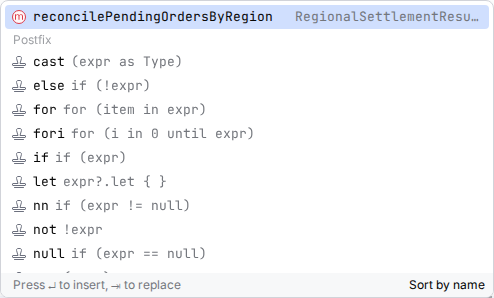
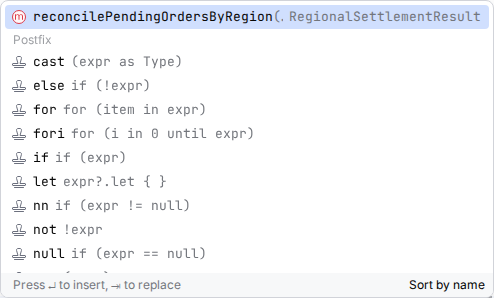
After expanding Java `fori`, the three occurrences of `i` were all editing selections, so arrow keys moved three carets. The shared snippet engine now selects only the first occurrence of each variable and mirrors edits to the others, for every live template and language and for LSP snippets with repeated placeholders; the Java-specific handling is gone.

Co-authored-by: jiejie1133 <116809768+jiejie1133@users.noreply.github.com>
Clicking a link to a heading in another file (e.g. [§5.2](b.md#52-状态机)) in the Markdown preview opened the file at the top. The destination now opens at the heading, in Preview Only and split mode, also when the file wasn't open yet (the preview scrolls once it has rendered). Markdown file-type aliases are honoured and a later link click wins over a slower earlier one.

Co-authored-by: fun90 <13536188+fun90@users.noreply.github.com>
Lombok-generated members (@SuperBuilder, @Data) put one override/implemented marker per generated method on the annotation line, filling the gutter. Markers of the same kind on a line now collapse into one icon with a combined tooltip; clicking it opens the target chooser (a single target still opens directly). Applies to all four inheritance marker kinds.
Select Opened File could not reveal a class opened from a dependency JAR that used a Maven classifier and was absent from External Libraries. The document knew its exact archive, but the Project view only searches registered archive roots.
External Libraries now adds the exact archive referenced by the active library document, labels it with its Maven coordinate when available, and removes the temporary entry once the build model lists the same archive.

Co-authored-by: kradme <17811095+kradme@users.noreply.github.com>
Copy Path/Reference… built a different submenu per entry point: the project view and the editor caret chooser list the contributed copy items (features/vcs: Path From Repository Root, GitHub Link), while the editor tab menu and the External Libraries menu hand-wrote theirs and silently dropped every contribution. Both hand-written submenus now append the same `copyPath` menu group, so all four entry points agree — and future contributions appear everywhere at once.

Co-authored-by: muutot <92625353+muutot@users.noreply.github.com>
With **Settings › Editor › General › Editor Tabs › Enable preview tab** on, a single click on a file in the Project view now opens it in the preview tab, and the next single click reuses that tab. Before, the click did nothing. The cause was two switches that weren't connected. The Project view checked its own "Enable Preview Tab" view option, which was off by default and only reachable from the view's ⋮ menu. The Settings checkbox was a separate setting, `editor.tabs.previewTab`, which was only read when a preview tab was created.
IntelliJ IDEA documents these as two ways into one setting, so this PR makes them one. The Project view reads `editor.tabs.previewTab` for single click and for Autoscroll to Source. Its ⋮ › Behavior › Enable Preview Tab item and the `project.option.previewTab` action (the id is unchanged) now write that setting. The old view option is removed from the saved Project view options when they load.
What existing users will see:
- Defaults (Settings on, view option off): single click now opens a preview tab. This is the fix. The editor setting already defaulted to on, so users who never changed anything get single-click preview after this change.
- Both on: no change.
- Both off: no change.

Co-authored-by: bertyhell <1710840+bertyhell@users.noreply.github.com>
In the Project view, copy a keyword, press ⌘F, then ⌘V: the app reported "No files on the clipboard" and the search box stayed empty, instead of pasting the keyword the user had copied to search with.
A tree's speed search is not a text field — its query is built from printable keydowns. So `⌘V` never reached the query: the keymap dispatcher ran `project.paste` on the selected folder, and the paste event that followed bubbled to the Project view's clipboard fallback, which runs the same action again.
The shared `Tree` now claims `⌘V` while a search is active (as it already claims `⌫` since #3226) and takes the clipboard text into its query: pasted text is flattened onto one line and the search jumps to the nearest match. With the search closed, or with a clipboard that holds no text, the view's Paste runs exactly as before.
Every tree with a speed search gets this — the Project view, the Database view, the Services tree and the GitHub changes tree all render `src/ui/Tree.tsx`.

Co-authored-by: aconeshana <52204454+aconeshana@users.noreply.github.com>
Drag-selecting in a long Find in Files query (or any text field) and moving the pointer past the field's left or right edge didn't scroll the text, so you couldn't select past what's visible. IntelliJ IDEA does scroll. WebKitGTK extends the selection in this case but never scrolls the field to follow it. Arrow keys do scroll. Now, while a drag that started in the field is past one of its edges, the field moves the selection end and the scroll position itself, faster the further out the pointer is. Once the pointer is back inside, WebKit's own selection takes over again. Both `Input` and `SearchField` get this.

Co-authored-by: bertyhell <1710840+bertyhell@users.noreply.github.com>
The Code Vision row above a declaration (usage count, author) cut off the top or bottom of its text, most visibly for Chinese labels like "10 个用法" / "无用法". The row was a fixed `height: 16px` with `overflow: hidden`, while its text is the editor font size minus 1px. At larger editor fonts, or with CJK fallback fonts that ink below the Latin metrics (Microsoft YaHei, Noto Sans CJK), the glyphs didn't fit.
The row now has `min-height: 16px`, and its items use `line-height: normal`, so the row grows to the ascent and descent of the fonts actually used. At the default font a Latin-only row is still exactly 16px. The line-end hint (Code Vision kinds set to "right") has the same 1em box with `overflow: hidden`. It keeps its size and position but now clips only horizontally.

Co-authored-by: bertyhell <1710840+bertyhell@users.noreply.github.com>
A Git Log page costs a fixed ~15 ms in a repository with 248 refs (the 100k-commit fixture), even for a one-row page. Every page listed and peeled all refs twice (once for the decorations, once more for the view cache key via `log_refs`), at ~25 µs per ref. The decorations are now cached until `HEAD`, `packed-refs` or a directory under `refs/` changes, and the cache key uses a change counter instead of the full ref map. A warm page no longer reads any ref.
The cost scales with the number of refs, not commits: the audit's 10k/100k fixtures have 50/248 refs, which is why it looked proportional to the commit count. A repository with thousands of remote branches pays correspondingly more.

Co-authored-by: Mr0Bread <55754540+Mr0Bread@users.noreply.github.com>
With a User filter on a merge-heavy history, the first page of the Git Log fanned the top merge out into dozens of dashed lanes, and the graph column pushed the commit subjects to the right. It went back to one line only after every match was loaded. The cause: `pruneFilteredEdges` (the #2670 fix) only judges a filtered connection when its target is on the loaded page. With the first 300 rows of the issue's repository, the merge kept 43 connections, 42 of them to rows that weren't loaded yet.
Now, while another kept connection of the commit already leads below the page, a filtered connection to an unloaded target waits until that target loads, and is then judged exactly like before. If no kept connection leads below the page, one filtered connection stays, so a row never looks like the end of its history. This is a heuristic: a connection that turns out to be needed (two unrelated side branches, both below the page) appears once its target loads. The sibling-branch test pins that behaviour. An exact answer on the first page would need the backend projection (`Visibility::parents`) to drop ancestors that another projected parent already reaches. This PR doesn't touch Rust; that could be a follow-up.
Go to Parent now pages until every unpruned connection of the commit is loaded, as it did before, so a merge still offers all its parents.

Co-authored-by: bertyhell <1710840+bertyhell@users.noreply.github.com>
Closes#4112 (its remaining half: #4347 stopped the terminal sliding sideways while composing, the
candidate window still opened at the far right of pi's input box).
xterm anchors the IME candidate window on its hidden helper textarea, and keeps that textarea on the
terminal cursor — on every render, on `compositionstart` and again on each `compositionupdate`. A
program that paints its own caret leaves the terminal cursor elsewhere: pi asks for a column past the
right edge of its input box (`ESC[21;411H` in a 206-column terminal, which xterm clamps) while it
Co-authored-by: H-TWINKLE <34811911+H-TWINKLE@users.noreply.github.com>
Claude Code can return an image from a tool call without including a Markdown image in its final reply. OpenIDEA discarded that image while normalizing and saving the tool result, so the conversation showed no preview.
Preserve inline tool images separately from truncated text and show them below the folded work summary. The existing image viewer opens the full preview; expanding the work does not duplicate it, and old conversations without an image field still load.

Co-authored-by: YannABC <9603157+YannABC@users.noreply.github.com>
After a compaction the context meter kept the pre-compaction usage until the next request. compact_boundary now sets the usage to post_tokens; without it the driver asks Claude Code (get_context_usage).

Co-authored-by: bertyhell <1710840+bertyhell@users.noreply.github.com>
The **File mask** menu in Find in Files now lists every language file type present in the project, most common first, after the recently used masks. Before, `refreshProjectMasks` kept only the 5 most common types, so in a project with six (rs, md, json, toml, yml, properties) the least common one, `*.properties`, could not be picked. The menu already scrolls and stays inside the window, so a long list stays usable.

Co-authored-by: bertyhell <1710840+bertyhell@users.noreply.github.com>
Backspacing through a closing tag such as `</div>` also emptied the opening tag, leaving `<>`. The first Backspace removes `>`. The parser still reads `</div` as the element's close tag, so every later Backspace in the name counted as a rename and was mirrored. Linked tag editing now only pairs two tags that both still end in `>`. A tag missing its `>` is being deleted, so nothing is mirrored into it or out of it. The same applies to an opening tag deleted before its children, in all the HTML-based modes and in JSX/TSX. XML does not use linked tags (`LINKED_TAG_LANGUAGES` in `prefs.ts`).

Co-authored-by: bertyhell <1710840+bertyhell@users.noreply.github.com>
The New menu had no built-in template for `.svelte` files. Add **Svelte Component** for Vite and Node.js projects, including SvelteKit workspace members. The template accepts SvelteKit filenames such as `+page.svelte`.

Co-authored-by: shohruh-genius <7658451+shohruh-genius@users.noreply.github.com>
The Git Log graph-equivalence test compares layouts for eight option combinations, each with five fragment configurations. Running all 40 comparisons in one Vitest case exceeded the five-second timeout on shared Linux runners. Give each option combination its own test for histories with and without refs. Each case still compares the complete layout with the dense reference implementation for all five fragment configurations and the same 2,400 commits.

Co-authored-by: faysou <893862+faysou@users.noreply.github.com>
The action-search test could time out before reaching its first search assertion when the runner delayed the second Shift press. Open Search Everywhere through the title-bar button for this test, then enter a query and run the matching action. The adjacent shortcut test exercises double Shift directly.

Co-authored-by: faysou <893862+faysou@users.noreply.github.com>
The Project tree test moves the pointer diagonally toward the New submenu in ten steps. On a busy runner, the time spent delivering input and checking assertions can exceed the menu’s hover delay and close it mid-gesture. Use Playwright’s browser clock to advance 75 ms at each step and check that the submenu stays open through the final 350 ms pause.

Co-authored-by: faysou <893862+faysou@users.noreply.github.com>
With auxiliary windows open (comparison, diff, etc. that share the project's documents), every backend event was serialised once per window, because `emit_to` serialises its payload on each call. For a large diagnostics event that is 2.3 MB (10k items) or 11.6 MB (50k items) of JSON built again for each window, on the thread that emits the event. `TauriSink` now serialises the event once and sends the same JSON string to each window with `emit_str_to`. The payload is the same `serde_json::to_string(&event)` that `emit_to` produced, so the frontend (`getCurrentWebviewWindow().listen` in `src/platform/ipc.ts`) receives exactly what it did before. Which windows get which events is unchanged.

Co-authored-by: Mr0Bread <55754540+Mr0Bread@users.noreply.github.com>
In Restricted Mode, the refresh after a watcher batch (`status_paths`) ignored its paths and answered with the full gitoxide status, which walks the whole tree to report one saved file. In a 100k-file repository that took about 87 ms against about 15 ms for a trusted project. It now runs `git status` with the pathspec, as a trusted project does.
The audit (row S4) blamed the extra `git config --null --list` process. That process is not the cause: the full `status()` never runs it (it runs `gitoxide`), and the old restricted `status_paths` did not run it either. The cause is the early return to the full status in `Repo::status_paths`, left from #3267, when the scoped read was in-process and `git` was not allowed. #3280 moved the scoped read to `git`, with the filter overrides the restricted fallback already used, but the restricted bypass stayed.

Co-authored-by: Mr0Bread <55754540+Mr0Bread@users.noreply.github.com>
The Windows Clippy job fails because the test reader `Counted` is compiled on Windows, where its only caller is excluded. The flooding-process test uses `awk` and already requires Unix. Apply the same condition to the reader and its `Read` implementation. The cross-platform queue shutdown test keeps its own reader.

Co-authored-by: faysou <893862+faysou@users.noreply.github.com>
The per-directory watcher skips the contents of excluded directories. A watch on the parent can still report the directory itself, which macOS did for `node_modules`. The regression test now accepts that event while continuing to reject events for descendants.

Co-authored-by: faysou <893862+faysou@users.noreply.github.com>
Update the transitive `cookie` dependency from 0.18.2 to 0.18.3. Cargo Deny reports the older release for possible nonce reuse when encrypting private cookies across a fork. The patched crate obtains those nonces from the operating system. [RustSec advisory](https://rustsec.org/advisories/RUSTSEC-2026-0594.html)

Co-authored-by: faysou <893862+faysou@users.noreply.github.com>
A commit preview or a commit of selected changes can omit a same-size edit made on the same filesystem clock tick as the Git index. Git uses the index timestamp to decide when it must inspect the file contents. The temporary copy now preserves that timestamp so Git detects the edit.

Co-authored-by: faysou <893862+faysou@users.noreply.github.com>
Show History (and Add to VCS / the ignore actions) took the editor's file when the shortcut ran right after clicking a Project view row: the row publishes its selection on mousedown, but tree focus is a separate DOM event, so projectViewFocus was still false. File actions now use the Project view selection while the tree owns the context (its lead is set and the editor has no focus), the same rule External Tools use (shared projectViewContextLead helper).

Co-authored-by: akshathayadav378-boop <287247196+akshathayadav378-boop@users.noreply.github.com>
External Tools expanded $FilePath$ and the other file macros from the editor's file even while the Project view was the user's context. They now take the Project view's selected file while it is the context (no editor focus, not a virtual document); caret macros apply only when the editor shows that same file.

Co-authored-by: bertyhell <1710840+bertyhell@users.noreply.github.com>
Go to Hash/Branch/Tag reads refs from the repositories it searches (shown log tab, else the filtered ones, else every root) instead of an empty Repository filter, which offered only HEAD.
Move Statement on a case label in Go, JavaScript and Java moves the whole branch (stacked labels through its last line) past the neighbouring branch instead of only the label line.
In the Git Log Branches pane with several repositories, a branch every
repository has is listed once with no repository name. Hovering it now
lists each repository with the branch it tracks there.
The wheel now scrolls only the innermost scrollable container under the
pointer: a run of tool calls from its headers, a tool output from its text,
the conversation elsewhere. A nested container at its edge no longer hands
the rest of the gesture to the conversation, and a gesture stays with the
container it started in.

Opening or closing a section keeps its header where it was. Closing one near
the end leaves temporary room below the conversation that scrolling up or new
content takes back.
The Whole Task / Last Turn switch in the agent Changes pane was a full-width
segmented pill. It now uses the compact Tabs strip that tool window sub-views
use elsewhere.
Unified Diff shows original line numbers in the first column and modified line numbers in the second. Matching rows show both. Removed and inserted rows show the number for their own revision.

Line numbers stay beside the start of their rows when code wraps, and follow scrolling inside a large removed block. Matching rows keep their original numbers when empty lines are ignored. The column order also applies when the editable side is the Git index.
- Align the repository, checkout, branch, name, location and setup fields in one label-and-control grid. Use the standard dialog type size for labels and keep the worktree path preview beneath the Location field.
- Let the `.worktreeinclude` edit action wrap below its checkbox in narrow windows. With setup expanded, the standard dialog is about 118 logical pixels shorter, and the setup field fits without scrolling in a 440 × 520 window.
Limit the inline Find and Replace fields to three visible lines each. Longer text scrolls inside the fields, leaving more of the matched code on screen.
The Compose project dashboard listed only container chips, so resource usage meant opening each container, and the project's named volumes were only findable in the global Volumes group among anonymous hashes. It now shows a per-service table (status, CPU, memory, network and block I/O, PIDs) sampled with bounded concurrency and refreshed every 3 s without overlapping requests while the dashboard is visible (paused when the tool window or app is hidden; the container dashboard's stats use the same live sampling instead of a manual Refresh), plus a Volumes section with the project's named volumes that links to each Volume Overview and back.

Co-authored-by: dengliu <5108773+dengliu@users.noreply.github.com>
 l0ng-ai
 jiejie1133

 fun90andfun90

 langxpandkradme

 Muuandmuutot

 Bert Verhelstandbertyhell

 aconeshanaandaconeshana
 Mr0Bread
 TWINKLE
 Yann

 faysouandfaysou

 Shohruh Ismoilovandshohruh-genius

 akshathayadav378-boopandakshathayadav378-boop
 l0ng-ai

 Deng Liuanddengliu