Compare commits
307 Commits
python-v0.
...
python-v0.
| Author | SHA1 | Date | |
|---|---|---|---|

|
ce2242e06d | ||

|
778339388a | ||
|
|
7f8637a0b4 | ||

|
09cd08222d | ||

|
a248d7feec | ||
|
|
cc9473a94a | ||
|
|
d77e95a4f4 | ||

|
62f053ac92 | ||

|
34e10caad2 | ||
|
|
f5726e2d0c | ||
|
|
12b4fb42fc | ||
|
|
1328cd46f1 | ||
|
|
0c940ed9f8 | ||
|
|
5f59e51583 | ||

|
8d0ea29f89 | ||

|
b9468bb980 | ||
|
|
a42df158a3 | ||

|
9df6905d86 | ||

|
3ffed89793 | ||

|
f150768739 | ||
|
|
b432ecf2f6 | ||
|
|
d1a7257810 | ||
|
|
5c5e23bbb9 | ||
|
|
e5796a4836 | ||
|
|
b9c5323265 | ||
|
|
e41a52863a | ||

|
13acc8a480 | ||
|
|
22b9eceb12 | ||
|
|
5f62302614 | ||
|
|
d84e0d1db8 | ||
|
|
ac94b2a420 | ||
|
|
b49bc113c4 | ||
|
|
77b5b1cf0e | ||
|
|
e910809de0 | ||
|
|
90b5b55126 | ||
|
|
488e4f8452 | ||
|
|
ba6f949515 | ||
|
|
3dd8522bc9 | ||
|
|
e01ef63488 | ||
|
|
a6cf24b359 | ||
|
|
9a07c9aad8 | ||
|
|
d405798952 | ||
|
|
e8a8b92b2a | ||
|
|
66362c6506 | ||
|
|
5228ca4b6b | ||
|
|
dcc216a244 | ||
|
|
a7aa168c7f | ||
|
|
7a89b5ec68 | ||
|
|
ee862abd29 | ||
|
|
4e1ed2b139 | ||
|
|
008e0b1a93 | ||
|
|
82cbcf6d07 | ||
|
|
1cd5426aea | ||
|
|
41f0e32a06 | ||
|
|
ccfd043939 | ||
|
|
b4d451ed21 | ||
|
|
4c303ba293 | ||
|
|
66eaa2a00e | ||
|
|
5f14a411af | ||
|
|
bea3cef627 | ||
|
|
0e92a7277c | ||
|
|
83ed8d1e49 | ||
|
|
a1ab549457 | ||
|
|
3ba1618be9 | ||
|
|
9a9fc77a95 | ||
|
|
c89d5e6e6d | ||
|
|
d012db24c2 | ||
|
|
7af213801a | ||
|
|
8f54cfcde9 | ||
|
|
119b928a52 | ||
|
|
8bcdc81fd3 | ||
|
|
39e14c70c5 | ||
|
|
af8263af94 | ||
|
|
be4ab9eef3 | ||
|
|
184d2bc969 | ||

|
ff6f005336 | ||
|
|
49333e522c | ||

|
44eba363b5 | ||
|
|
4568df422d | ||
|
|
a90358a1e3 | ||
|
|
f7f9beaf31 | ||
|
|
cfdbddc5cf | ||
|
|
88affc1428 | ||
|
|
a7be064f00 | ||
|
|
707df47c3f | ||
|
|
6e97fada13 | ||
|
|
3f66be666d | ||

|
eda4c587fc | ||
|
|
91d64d86e0 | ||
|
|
ff81c0d698 | ||
|
|
fcfb4587bb | ||
|
|
f43c06d9ce | ||
|
|
ba01d274eb | ||
|
|
615c469af2 | ||
|
|
a649b3b1e4 | ||
|
|
be76242884 | ||
|
|
f4994cb0ec | ||

|
00b0c75710 | ||

|
47299385fa | ||

|
9dea884a7f | ||

|
85f8cf20aa | ||
|
|
5e720b2776 | ||
|
|
30a8223944 | ||

|
5b1587d84a | ||
|
|
78bafb3007 | ||
|
|
4417f7c5a7 | ||
|
|
577d6ea16e | ||
|
|
53d2ef5e81 | ||
|
|
e48ceb2ebd | ||
|
|
327692ccb1 | ||

|
bc224a6a0b | ||
|
|
2dcb39f556 | ||
|
|
6bda6f2f2a | ||
|
|
a3fafd6b54 | ||
|
|
dc8d6835c0 | ||
|
|
f55d99cec5 | ||

|
3d8b2f5531 | ||
|
|
b71aa4117f | ||
|
|
55db26f59a | ||
|
|
7e42f58dec | ||
|
|
2790b19279 | ||

|
4ba655d05e | ||
|
|
986891db98 | ||
|
|
036bf02901 | ||
|
|
4e31f0cc7a | ||
|
|
0a16e29b93 | ||
|
|
cf7d7a19f5 | ||
|
|
fe2fb91a8b | ||
|
|
81af350d85 | ||
|
|
99adfe065a | ||
|
|
277406509e | ||
|
|
63411b4d8b | ||
|
|
d998f80b04 | ||
|
|
629379a532 | ||
|
|
821cf0e434 | ||
|
|
99ba5331f0 | ||
|
|
121687231c | ||
|
|
ac40d4b235 | ||
|
|
c5a52565ac | ||
|
|
b0a88a7286 | ||
|
|
d41d849e0e | ||
|
|
bf5202f196 | ||
|
|
8be2861061 | ||
|
|
0560e3a0e5 | ||
|
|
b83fbfc344 | ||
|
|
60b22d84bf | ||
|
|
7d55a94efd | ||
|
|
4d8e401d34 | ||
|
|
684eb8b087 | ||
|
|
4e3b82feaa | ||
|
|
8e248a9d67 | ||
|
|
065ffde443 | ||
|
|
c3059dc689 | ||
|
|
a9caa5f2d4 | ||
|
|
8411c36b96 | ||
|
|
7773bda7ee | ||
|
|
392777952f | ||
|
|
7e75e50d3a | ||
|
|
4b8af261a3 | ||
|
|
c8728d4ca1 | ||
|
|
446f837335 | ||
|
|
8f9ad978f5 | ||
|
|
0df38341d5 | ||
|
|
60260018cf | ||
|
|
bb100c5c19 | ||
|
|
eab9072bb5 | ||
|
|
ee1d0b596f | ||
|
|
38a4524893 | ||
|
|
ee0f0611d9 | ||
|
|
34966312cb | ||
|
|
756188358c | ||
|
|
dc5126d8d1 | ||
|
|
50c20af060 | ||
|
|
0965d7dd5a | ||
|
|
7bbb2872de | ||
|
|
e81d2975da | ||
|
|
2c7f96ba4f | ||
|
|
f9dd7a5d8a | ||
|
|
1d4943688d | ||
|
|
7856a94d2c | ||
|
|
371d2f979e | ||
|
|
fff8e399a3 | ||
|
|
73e4015797 | ||
|
|
5142a27482 | ||
|
|
81df2a524e | ||
|
|
40638e5515 | ||
|
|
018314a5c1 | ||
|
|
409eb30ea5 | ||
|
|
ff9872fd44 | ||
|
|
a0608044a1 | ||
|
|
2e4ea7d2bc | ||
|
|
57e5695a54 | ||
|
|
ce58ea7c38 | ||
|
|
57207eff4a | ||

|
2d78bff120 | ||
|
|
7c09b9b9a9 | ||
|
|
bd0034a157 | ||
|
|
144b3b5d83 | ||
|
|
b6f0a31686 | ||
|
|
9ec526f73f | ||
|
|
600bfd7237 | ||
|
|
d087e7891d | ||
|
|
098e397cf0 | ||
|
|
63ee8fa6a1 | ||
|
|
693091db29 | ||
|
|
dca4533dbe | ||
|
|
f6bbe199dc | ||

|
366e522c2b | ||
|
|
244b6919cc | ||
|
|
aca785ff98 | ||
|
|
bbdebf2c38 | ||
|
|
1336cce0dc | ||
|
|
6c83b6a513 | ||
|
|
6bec4bec51 | ||
|
|
23d30dfc78 | ||
|
|
94c8c50f96 | ||
|
|
72765d8e1a | ||
|
|
a2a8f9615e | ||

|
b085d9aaa1 | ||
|
|
6eb662de9b | ||
|
|
2bb2bb581a | ||
|
|
38321fa226 | ||
|
|
22749c3fa2 | ||
|
|
123a49df77 | ||
|
|
a57aa4b142 | ||

|
d8e3e54226 | ||
|
|
ccfdf4853a | ||
|
|
87e5d86e90 | ||
|
|
1cf8a3e4e0 | ||
|
|
5372843281 | ||
|
|
54677b8f0b | ||
|
|
ebcf9bf6ae | ||
|
|
797514bcbf | ||
|
|
1c872ce501 | ||
|
|
479f471c14 | ||
|
|
ae0d2f2599 | ||
|
|
1e8678f11a | ||
|
|
662968559d | ||
|
|
9d895801f2 | ||
|
|
80613a40fd | ||
|
|
d43ef7f11e | ||
|
|
554e068917 | ||
|
|
567734dd6e | ||
|
|
1589499f89 | ||
|
|
682e95fa83 | ||
|
|
1ad5e7f2f0 | ||
|
|
ddb3ef4ce5 | ||
|
|
ef20b2a138 | ||
|
|
2e0f251bfd | ||
|
|
2cb91e818d | ||
|
|
2835c76336 | ||
|
|
8068a2bbc3 | ||
|
|
24111d543a | ||
|
|
7eec2b8f9a | ||
|
|
b2b70ea399 | ||
|
|
e50a3c1783 | ||
|
|
b517134309 | ||
|
|
6fb539b5bf | ||
|
|
f37fe120fd | ||
|
|
2e115acb9a | ||
|
|
27a638362d | ||
|
|
22a6695d7a | ||
|
|
57eff82ee7 | ||
|
|
7732f7d41c | ||
|
|
5ca98c326f | ||
|
|
b55db397eb | ||
|
|
c04d72ac8a | ||
|
|
28b02fb72a | ||
|
|
f3cf986777 | ||
|
|
c73fcc8898 | ||
|
|
cd9debc3b7 | ||
|
|
26a97ba997 | ||
|
|
ce19fedb08 | ||
|
|
14e8e48de2 | ||
|
|
c30faf6083 | ||
|
|
64a4f025bb | ||
|
|
6dc968e7d3 | ||
|
|
06b5b69f1e | ||
|
|
6bd3a838fc | ||
|
|
f36fea8f20 | ||
|
|
0a30591729 | ||
|
|
0ed39b6146 | ||
|
|
a8c7f80073 | ||
|
|
0293bbe142 | ||
|
|
7372656369 | ||
|
|
d46bc5dd6e | ||
|
|
86efb11572 | ||
|
|
bb01ad5290 | ||
|
|
1b8cda0941 | ||
|
|
bc85a749a3 | ||
|
|
02c35d3457 | ||
|
|
345c136cfb | ||
|
|
043e388254 | ||
|
|
fe64fc4671 | ||
|
|
6d66404506 | ||
|
|
eff94ecea8 | ||
|
|
7dfb555fea | ||
|
|
f762a669e7 | ||
|
|
0bdc7140dd | ||
|
|
8f6e955b24 | ||
|
|
1096da09da | ||
|
|
683824f1e9 | ||
|
|
db7bdefe77 | ||
|
|
e41894b071 | ||
|
|
e1ae2bcbd8 | ||

|
ababc3f8ec | ||
|
|
a1377afcaa |
12
.bumpversion.cfg
Normal file
@@ -0,0 +1,12 @@
|
||||
[bumpversion]
|
||||
current_version = 0.4.7
|
||||
commit = True
|
||||
message = Bump version: {current_version} → {new_version}
|
||||
tag = True
|
||||
tag_name = v{new_version}
|
||||
|
||||
[bumpversion:file:node/package.json]
|
||||
|
||||
[bumpversion:file:rust/ffi/node/Cargo.toml]
|
||||
|
||||
[bumpversion:file:rust/vectordb/Cargo.toml]
|
||||
@@ -1,57 +0,0 @@
|
||||
[tool.bumpversion]
|
||||
current_version = "0.10.0-beta.0"
|
||||
parse = """(?x)
|
||||
(?P<major>0|[1-9]\\d*)\\.
|
||||
(?P<minor>0|[1-9]\\d*)\\.
|
||||
(?P<patch>0|[1-9]\\d*)
|
||||
(?:-(?P<pre_l>[a-zA-Z-]+)\\.(?P<pre_n>0|[1-9]\\d*))?
|
||||
"""
|
||||
serialize = [
|
||||
"{major}.{minor}.{patch}-{pre_l}.{pre_n}",
|
||||
"{major}.{minor}.{patch}",
|
||||
]
|
||||
search = "{current_version}"
|
||||
replace = "{new_version}"
|
||||
regex = false
|
||||
ignore_missing_version = false
|
||||
ignore_missing_files = false
|
||||
tag = true
|
||||
sign_tags = false
|
||||
tag_name = "v{new_version}"
|
||||
tag_message = "Bump version: {current_version} → {new_version}"
|
||||
allow_dirty = true
|
||||
commit = true
|
||||
message = "Bump version: {current_version} → {new_version}"
|
||||
commit_args = ""
|
||||
|
||||
[tool.bumpversion.parts.pre_l]
|
||||
values = ["beta", "final"]
|
||||
optional_value = "final"
|
||||
|
||||
[[tool.bumpversion.files]]
|
||||
filename = "node/package.json"
|
||||
search = "\"version\": \"{current_version}\","
|
||||
replace = "\"version\": \"{new_version}\","
|
||||
|
||||
[[tool.bumpversion.files]]
|
||||
filename = "nodejs/package.json"
|
||||
search = "\"version\": \"{current_version}\","
|
||||
replace = "\"version\": \"{new_version}\","
|
||||
|
||||
# nodejs binary packages
|
||||
[[tool.bumpversion.files]]
|
||||
glob = "nodejs/npm/*/package.json"
|
||||
search = "\"version\": \"{current_version}\","
|
||||
replace = "\"version\": \"{new_version}\","
|
||||
|
||||
# Cargo files
|
||||
# ------------
|
||||
[[tool.bumpversion.files]]
|
||||
filename = "rust/ffi/node/Cargo.toml"
|
||||
search = "\nversion = \"{current_version}\""
|
||||
replace = "\nversion = \"{new_version}\""
|
||||
|
||||
[[tool.bumpversion.files]]
|
||||
filename = "rust/lancedb/Cargo.toml"
|
||||
search = "\nversion = \"{current_version}\""
|
||||
replace = "\nversion = \"{new_version}\""
|
||||
@@ -1,40 +0,0 @@
|
||||
[profile.release]
|
||||
lto = "fat"
|
||||
codegen-units = 1
|
||||
|
||||
[profile.release-with-debug]
|
||||
inherits = "release"
|
||||
debug = true
|
||||
# Prioritize compile time over runtime performance
|
||||
codegen-units = 16
|
||||
lto = "thin"
|
||||
|
||||
[target.'cfg(all())']
|
||||
rustflags = [
|
||||
"-Wclippy::all",
|
||||
"-Wclippy::style",
|
||||
"-Wclippy::fallible_impl_from",
|
||||
"-Wclippy::manual_let_else",
|
||||
"-Wclippy::redundant_pub_crate",
|
||||
"-Wclippy::string_add_assign",
|
||||
"-Wclippy::string_add",
|
||||
"-Wclippy::string_lit_as_bytes",
|
||||
"-Wclippy::string_to_string",
|
||||
"-Wclippy::use_self",
|
||||
"-Dclippy::cargo",
|
||||
"-Dclippy::dbg_macro",
|
||||
# not too much we can do to avoid multiple crate versions
|
||||
"-Aclippy::multiple-crate-versions",
|
||||
"-Aclippy::wildcard_dependencies",
|
||||
]
|
||||
|
||||
[target.x86_64-unknown-linux-gnu]
|
||||
rustflags = ["-C", "target-cpu=haswell", "-C", "target-feature=+avx2,+fma,+f16c"]
|
||||
|
||||
[target.aarch64-apple-darwin]
|
||||
rustflags = ["-C", "target-cpu=apple-m1", "-C", "target-feature=+neon,+fp16,+fhm,+dotprod"]
|
||||
|
||||
# Not all Windows systems have the C runtime installed, so this avoids library
|
||||
# not found errors on systems that are missing it.
|
||||
[target.x86_64-pc-windows-msvc]
|
||||
rustflags = ["-Ctarget-feature=+crt-static"]
|
||||
33
.github/labeler.yml
vendored
@@ -1,33 +0,0 @@
|
||||
version: 1
|
||||
appendOnly: true
|
||||
# Labels are applied based on conventional commits standard
|
||||
# https://www.conventionalcommits.org/en/v1.0.0/
|
||||
# These labels are later used in release notes. See .github/release.yml
|
||||
labels:
|
||||
# If the PR title has an ! before the : it will be considered a breaking change
|
||||
# For example, `feat!: add new feature` will be considered a breaking change
|
||||
- label: breaking-change
|
||||
title: "^[^:]+!:.*"
|
||||
- label: breaking-change
|
||||
body: "BREAKING CHANGE"
|
||||
- label: enhancement
|
||||
title: "^feat(\\(.+\\))?!?:.*"
|
||||
- label: bug
|
||||
title: "^fix(\\(.+\\))?!?:.*"
|
||||
- label: documentation
|
||||
title: "^docs(\\(.+\\))?!?:.*"
|
||||
- label: performance
|
||||
title: "^perf(\\(.+\\))?!?:.*"
|
||||
- label: ci
|
||||
title: "^ci(\\(.+\\))?!?:.*"
|
||||
- label: chore
|
||||
title: "^(chore|test|build|style)(\\(.+\\))?!?:.*"
|
||||
- label: Python
|
||||
files:
|
||||
- "^python\\/.*"
|
||||
- label: Rust
|
||||
files:
|
||||
- "^rust\\/.*"
|
||||
- label: typescript
|
||||
files:
|
||||
- "^node\\/.*"
|
||||
41
.github/release_notes.json
vendored
@@ -1,41 +0,0 @@
|
||||
{
|
||||
"ignore_labels": ["chore"],
|
||||
"pr_template": "- ${{TITLE}} by @${{AUTHOR}} in ${{URL}}",
|
||||
"categories": [
|
||||
{
|
||||
"title": "## 🏆 Highlights",
|
||||
"labels": ["highlight"]
|
||||
},
|
||||
{
|
||||
"title": "## 🛠 Breaking Changes",
|
||||
"labels": ["breaking-change"]
|
||||
},
|
||||
{
|
||||
"title": "## ⚠️ Deprecations ",
|
||||
"labels": ["deprecation"]
|
||||
},
|
||||
{
|
||||
"title": "## 🎉 New Features",
|
||||
"labels": ["enhancement"]
|
||||
},
|
||||
{
|
||||
"title": "## 🐛 Bug Fixes",
|
||||
"labels": ["bug"]
|
||||
},
|
||||
{
|
||||
"title": "## 📚 Documentation",
|
||||
"labels": ["documentation"]
|
||||
},
|
||||
{
|
||||
"title": "## 🚀 Performance Improvements",
|
||||
"labels": ["performance"]
|
||||
},
|
||||
{
|
||||
"title": "## Other Changes"
|
||||
},
|
||||
{
|
||||
"title": "## 🔧 Build and CI",
|
||||
"labels": ["ci"]
|
||||
}
|
||||
]
|
||||
}
|
||||
63
.github/workflows/build_linux_wheel/action.yml
vendored
@@ -1,63 +0,0 @@
|
||||
# We create a composite action to be re-used both for testing and for releasing
|
||||
name: build-linux-wheel
|
||||
description: "Build a manylinux wheel for lance"
|
||||
inputs:
|
||||
python-minor-version:
|
||||
description: "8, 9, 10, 11, 12"
|
||||
required: true
|
||||
args:
|
||||
description: "--release"
|
||||
required: false
|
||||
default: ""
|
||||
arm-build:
|
||||
description: "Build for arm64 instead of x86_64"
|
||||
# Note: this does *not* mean the host is arm64, since we might be cross-compiling.
|
||||
required: false
|
||||
default: "false"
|
||||
manylinux:
|
||||
description: "The manylinux version to build for"
|
||||
required: false
|
||||
default: "2_17"
|
||||
runs:
|
||||
using: "composite"
|
||||
steps:
|
||||
- name: CONFIRM ARM BUILD
|
||||
shell: bash
|
||||
run: |
|
||||
echo "ARM BUILD: ${{ inputs.arm-build }}"
|
||||
- name: Build x86_64 Manylinux wheel
|
||||
if: ${{ inputs.arm-build == 'false' }}
|
||||
uses: PyO3/maturin-action@v1
|
||||
with:
|
||||
command: build
|
||||
working-directory: python
|
||||
target: x86_64-unknown-linux-gnu
|
||||
manylinux: ${{ inputs.manylinux }}
|
||||
args: ${{ inputs.args }}
|
||||
before-script-linux: |
|
||||
set -e
|
||||
yum install -y openssl-devel \
|
||||
&& curl -L https://github.com/protocolbuffers/protobuf/releases/download/v24.4/protoc-24.4-linux-$(uname -m).zip > /tmp/protoc.zip \
|
||||
&& unzip /tmp/protoc.zip -d /usr/local \
|
||||
&& rm /tmp/protoc.zip
|
||||
- name: Build Arm Manylinux Wheel
|
||||
if: ${{ inputs.arm-build == 'true' }}
|
||||
uses: PyO3/maturin-action@v1
|
||||
with:
|
||||
command: build
|
||||
working-directory: python
|
||||
docker-options: "-e PIP_EXTRA_INDEX_URL=https://pypi.fury.io/lancedb/"
|
||||
target: aarch64-unknown-linux-gnu
|
||||
manylinux: ${{ inputs.manylinux }}
|
||||
args: ${{ inputs.args }}
|
||||
before-script-linux: |
|
||||
set -e
|
||||
apt install -y unzip
|
||||
if [ $(uname -m) = "x86_64" ]; then
|
||||
PROTOC_ARCH="x86_64"
|
||||
else
|
||||
PROTOC_ARCH="aarch_64"
|
||||
fi
|
||||
curl -L https://github.com/protocolbuffers/protobuf/releases/download/v24.4/protoc-24.4-linux-$PROTOC_ARCH.zip > /tmp/protoc.zip \
|
||||
&& unzip /tmp/protoc.zip -d /usr/local \
|
||||
&& rm /tmp/protoc.zip
|
||||
26
.github/workflows/build_mac_wheel/action.yml
vendored
@@ -1,26 +0,0 @@
|
||||
# We create a composite action to be re-used both for testing and for releasing
|
||||
name: build_wheel
|
||||
description: "Build a lance wheel"
|
||||
inputs:
|
||||
python-minor-version:
|
||||
description: "8, 9, 10, 11"
|
||||
required: true
|
||||
args:
|
||||
description: "--release"
|
||||
required: false
|
||||
default: ""
|
||||
runs:
|
||||
using: "composite"
|
||||
steps:
|
||||
- name: Install macos dependency
|
||||
shell: bash
|
||||
run: |
|
||||
brew install protobuf
|
||||
- name: Build wheel
|
||||
uses: PyO3/maturin-action@v1
|
||||
with:
|
||||
command: build
|
||||
args: ${{ inputs.args }}
|
||||
docker-options: "-e PIP_EXTRA_INDEX_URL=https://pypi.fury.io/lancedb/"
|
||||
working-directory: python
|
||||
interpreter: 3.${{ inputs.python-minor-version }}
|
||||
34
.github/workflows/build_windows_wheel/action.yml
vendored
@@ -1,34 +0,0 @@
|
||||
# We create a composite action to be re-used both for testing and for releasing
|
||||
name: build_wheel
|
||||
description: "Build a lance wheel"
|
||||
inputs:
|
||||
python-minor-version:
|
||||
description: "8, 9, 10, 11"
|
||||
required: true
|
||||
args:
|
||||
description: "--release"
|
||||
required: false
|
||||
default: ""
|
||||
runs:
|
||||
using: "composite"
|
||||
steps:
|
||||
- name: Install Protoc v21.12
|
||||
working-directory: C:\
|
||||
run: |
|
||||
New-Item -Path 'C:\protoc' -ItemType Directory
|
||||
Set-Location C:\protoc
|
||||
Invoke-WebRequest https://github.com/protocolbuffers/protobuf/releases/download/v21.12/protoc-21.12-win64.zip -OutFile C:\protoc\protoc.zip
|
||||
7z x protoc.zip
|
||||
Add-Content $env:GITHUB_PATH "C:\protoc\bin"
|
||||
shell: powershell
|
||||
- name: Build wheel
|
||||
uses: PyO3/maturin-action@v1
|
||||
with:
|
||||
command: build
|
||||
args: ${{ inputs.args }}
|
||||
docker-options: "-e PIP_EXTRA_INDEX_URL=https://pypi.fury.io/lancedb/"
|
||||
working-directory: python
|
||||
- uses: actions/upload-artifact@v3
|
||||
with:
|
||||
name: windows-wheels
|
||||
path: python\target\wheels
|
||||
13
.github/workflows/cargo-publish.yml
vendored
@@ -1,20 +1,13 @@
|
||||
name: Cargo Publish
|
||||
|
||||
on:
|
||||
push:
|
||||
tags-ignore:
|
||||
# We don't publish pre-releases for Rust. Crates.io is just a source
|
||||
# distribution, so we don't need to publish pre-releases.
|
||||
- 'v*-beta*'
|
||||
- '*-v*' # for example, python-vX.Y.Z
|
||||
release:
|
||||
types: [ published ]
|
||||
|
||||
env:
|
||||
# This env var is used by Swatinem/rust-cache@v2 for the cache
|
||||
# key, so we set it to make sure it is always consistent.
|
||||
CARGO_TERM_COLOR: always
|
||||
# Up-to-date compilers needed for fp16kernels.
|
||||
CC: gcc-12
|
||||
CXX: g++-12
|
||||
|
||||
jobs:
|
||||
build:
|
||||
@@ -33,4 +26,4 @@ jobs:
|
||||
sudo apt install -y protobuf-compiler libssl-dev
|
||||
- name: Publish the package
|
||||
run: |
|
||||
cargo publish -p lancedb --all-features --token ${{ secrets.CARGO_REGISTRY_TOKEN }}
|
||||
cargo publish -p vectordb --all-features --token ${{ secrets.CARGO_REGISTRY_TOKEN }}
|
||||
|
||||
81
.github/workflows/dev.yml
vendored
@@ -1,81 +0,0 @@
|
||||
name: PR Checks
|
||||
|
||||
on:
|
||||
pull_request_target:
|
||||
types: [opened, edited, synchronize, reopened]
|
||||
|
||||
concurrency:
|
||||
group: ${{ github.workflow }}-${{ github.event.pull_request.number || github.ref }}
|
||||
cancel-in-progress: true
|
||||
|
||||
jobs:
|
||||
labeler:
|
||||
permissions:
|
||||
pull-requests: write
|
||||
name: Label PR
|
||||
runs-on: ubuntu-latest
|
||||
steps:
|
||||
- uses: srvaroa/labeler@master
|
||||
env:
|
||||
GITHUB_TOKEN: ${{ secrets.GITHUB_TOKEN }}
|
||||
commitlint:
|
||||
permissions:
|
||||
pull-requests: write
|
||||
name: Verify PR title / description conforms to semantic-release
|
||||
runs-on: ubuntu-latest
|
||||
steps:
|
||||
- uses: actions/setup-node@v3
|
||||
with:
|
||||
node-version: "18"
|
||||
# These rules are disabled because Github will always ensure there
|
||||
# is a blank line between the title and the body and Github will
|
||||
# word wrap the description field to ensure a reasonable max line
|
||||
# length.
|
||||
- run: npm install @commitlint/config-conventional
|
||||
- run: >
|
||||
echo 'module.exports = {
|
||||
"rules": {
|
||||
"body-max-line-length": [0, "always", Infinity],
|
||||
"footer-max-line-length": [0, "always", Infinity],
|
||||
"body-leading-blank": [0, "always"]
|
||||
}
|
||||
}' > .commitlintrc.js
|
||||
- run: npx commitlint --extends @commitlint/config-conventional --verbose <<< $COMMIT_MSG
|
||||
env:
|
||||
COMMIT_MSG: >
|
||||
${{ github.event.pull_request.title }}
|
||||
|
||||
${{ github.event.pull_request.body }}
|
||||
- if: failure()
|
||||
uses: actions/github-script@v6
|
||||
with:
|
||||
script: |
|
||||
const message = `**ACTION NEEDED**
|
||||
|
||||
Lance follows the [Conventional Commits specification](https://www.conventionalcommits.org/en/v1.0.0/) for release automation.
|
||||
|
||||
The PR title and description are used as the merge commit message.\
|
||||
Please update your PR title and description to match the specification.
|
||||
|
||||
For details on the error please inspect the "PR Title Check" action.
|
||||
`
|
||||
// Get list of current comments
|
||||
const comments = await github.paginate(github.rest.issues.listComments, {
|
||||
owner: context.repo.owner,
|
||||
repo: context.repo.repo,
|
||||
issue_number: context.issue.number
|
||||
});
|
||||
// Check if this job already commented
|
||||
for (const comment of comments) {
|
||||
if (comment.body === message) {
|
||||
return // Already commented
|
||||
}
|
||||
}
|
||||
// Post the comment about Conventional Commits
|
||||
github.rest.issues.createComment({
|
||||
owner: context.repo.owner,
|
||||
repo: context.repo.repo,
|
||||
issue_number: context.issue.number,
|
||||
body: message
|
||||
})
|
||||
core.setFailed(message)
|
||||
6
.github/workflows/docs.yml
vendored
@@ -24,14 +24,10 @@ jobs:
|
||||
environment:
|
||||
name: github-pages
|
||||
url: ${{ steps.deployment.outputs.page_url }}
|
||||
runs-on: buildjet-8vcpu-ubuntu-2204
|
||||
runs-on: ubuntu-22.04
|
||||
steps:
|
||||
- name: Checkout
|
||||
uses: actions/checkout@v4
|
||||
- name: Install dependecies needed for ubuntu
|
||||
run: |
|
||||
sudo apt install -y protobuf-compiler libssl-dev
|
||||
rustup update && rustup default
|
||||
- name: Set up Python
|
||||
uses: actions/setup-python@v5
|
||||
with:
|
||||
|
||||
26
.github/workflows/docs_test.yml
vendored
@@ -18,30 +18,22 @@ on:
|
||||
env:
|
||||
# Disable full debug symbol generation to speed up CI build and keep memory down
|
||||
# "1" means line tables only, which is useful for panic tracebacks.
|
||||
RUSTFLAGS: "-C debuginfo=1 -C target-cpu=haswell -C target-feature=+f16c,+avx2,+fma"
|
||||
RUSTFLAGS: "-C debuginfo=1 -C target-cpu=native -C target-feature=+f16c,+avx2,+fma"
|
||||
RUST_BACKTRACE: "1"
|
||||
|
||||
jobs:
|
||||
test-python:
|
||||
name: Test doc python code
|
||||
runs-on: "warp-ubuntu-latest-x64-4x"
|
||||
runs-on: "ubuntu-latest"
|
||||
steps:
|
||||
- name: Checkout
|
||||
uses: actions/checkout@v4
|
||||
- name: Print CPU capabilities
|
||||
run: cat /proc/cpuinfo
|
||||
- name: Install dependecies needed for ubuntu
|
||||
run: |
|
||||
sudo apt install -y protobuf-compiler libssl-dev
|
||||
rustup update && rustup default
|
||||
- name: Set up Python
|
||||
uses: actions/setup-python@v5
|
||||
with:
|
||||
python-version: 3.11
|
||||
cache: "pip"
|
||||
cache-dependency-path: "docs/test/requirements.txt"
|
||||
- name: Rust cache
|
||||
uses: swatinem/rust-cache@v2
|
||||
- name: Build Python
|
||||
working-directory: docs/test
|
||||
run:
|
||||
@@ -56,18 +48,13 @@ jobs:
|
||||
for d in *; do cd "$d"; echo "$d".py; python "$d".py; cd ..; done
|
||||
test-node:
|
||||
name: Test doc nodejs code
|
||||
runs-on: "warp-ubuntu-latest-x64-4x"
|
||||
timeout-minutes: 60
|
||||
strategy:
|
||||
fail-fast: false
|
||||
runs-on: "ubuntu-latest"
|
||||
steps:
|
||||
- name: Checkout
|
||||
uses: actions/checkout@v4
|
||||
with:
|
||||
fetch-depth: 0
|
||||
lfs: true
|
||||
- name: Print CPU capabilities
|
||||
run: cat /proc/cpuinfo
|
||||
- name: Set up Node
|
||||
uses: actions/setup-node@v4
|
||||
with:
|
||||
@@ -75,17 +62,10 @@ jobs:
|
||||
- name: Install dependecies needed for ubuntu
|
||||
run: |
|
||||
sudo apt install -y protobuf-compiler libssl-dev
|
||||
rustup update && rustup default
|
||||
- name: Rust cache
|
||||
uses: swatinem/rust-cache@v2
|
||||
- name: Install node dependencies
|
||||
run: |
|
||||
sudo swapoff -a
|
||||
sudo fallocate -l 8G /swapfile
|
||||
sudo chmod 600 /swapfile
|
||||
sudo mkswap /swapfile
|
||||
sudo swapon /swapfile
|
||||
sudo swapon --show
|
||||
cd node
|
||||
npm ci
|
||||
npm run build-release
|
||||
|
||||
113
.github/workflows/java.yml
vendored
@@ -1,113 +0,0 @@
|
||||
name: Build and Run Java JNI Tests
|
||||
on:
|
||||
push:
|
||||
branches:
|
||||
- main
|
||||
paths:
|
||||
- java/**
|
||||
pull_request:
|
||||
paths:
|
||||
- java/**
|
||||
- rust/**
|
||||
- .github/workflows/java.yml
|
||||
env:
|
||||
# This env var is used by Swatinem/rust-cache@v2 for the cache
|
||||
# key, so we set it to make sure it is always consistent.
|
||||
CARGO_TERM_COLOR: always
|
||||
# Disable full debug symbol generation to speed up CI build and keep memory down
|
||||
# "1" means line tables only, which is useful for panic tracebacks.
|
||||
RUSTFLAGS: "-C debuginfo=1"
|
||||
RUST_BACKTRACE: "1"
|
||||
# according to: https://matklad.github.io/2021/09/04/fast-rust-builds.html
|
||||
# CI builds are faster with incremental disabled.
|
||||
CARGO_INCREMENTAL: "0"
|
||||
CARGO_BUILD_JOBS: "1"
|
||||
jobs:
|
||||
linux-build-java-11:
|
||||
runs-on: ubuntu-22.04
|
||||
name: ubuntu-22.04 + Java 11
|
||||
defaults:
|
||||
run:
|
||||
working-directory: ./java
|
||||
steps:
|
||||
- name: Checkout repository
|
||||
uses: actions/checkout@v4
|
||||
- uses: Swatinem/rust-cache@v2
|
||||
with:
|
||||
workspaces: java/core/lancedb-jni
|
||||
- name: Run cargo fmt
|
||||
run: cargo fmt --check
|
||||
working-directory: ./java/core/lancedb-jni
|
||||
- name: Install dependencies
|
||||
run: |
|
||||
sudo apt update
|
||||
sudo apt install -y protobuf-compiler libssl-dev
|
||||
- name: Install Java 11
|
||||
uses: actions/setup-java@v4
|
||||
with:
|
||||
distribution: temurin
|
||||
java-version: 11
|
||||
cache: "maven"
|
||||
- name: Java Style Check
|
||||
run: mvn checkstyle:check
|
||||
# Disable because of issues in lancedb rust core code
|
||||
# - name: Rust Clippy
|
||||
# working-directory: java/core/lancedb-jni
|
||||
# run: cargo clippy --all-targets -- -D warnings
|
||||
- name: Running tests with Java 11
|
||||
run: mvn clean test
|
||||
linux-build-java-17:
|
||||
runs-on: ubuntu-22.04
|
||||
name: ubuntu-22.04 + Java 17
|
||||
defaults:
|
||||
run:
|
||||
working-directory: ./java
|
||||
steps:
|
||||
- name: Checkout repository
|
||||
uses: actions/checkout@v4
|
||||
- uses: Swatinem/rust-cache@v2
|
||||
with:
|
||||
workspaces: java/core/lancedb-jni
|
||||
- name: Run cargo fmt
|
||||
run: cargo fmt --check
|
||||
working-directory: ./java/core/lancedb-jni
|
||||
- name: Install dependencies
|
||||
run: |
|
||||
sudo apt update
|
||||
sudo apt install -y protobuf-compiler libssl-dev
|
||||
- name: Install Java 17
|
||||
uses: actions/setup-java@v4
|
||||
with:
|
||||
distribution: temurin
|
||||
java-version: 17
|
||||
cache: "maven"
|
||||
- run: echo "JAVA_17=$JAVA_HOME" >> $GITHUB_ENV
|
||||
- name: Java Style Check
|
||||
run: mvn checkstyle:check
|
||||
# Disable because of issues in lancedb rust core code
|
||||
# - name: Rust Clippy
|
||||
# working-directory: java/core/lancedb-jni
|
||||
# run: cargo clippy --all-targets -- -D warnings
|
||||
- name: Running tests with Java 17
|
||||
run: |
|
||||
export JAVA_TOOL_OPTIONS="$JAVA_TOOL_OPTIONS \
|
||||
-XX:+IgnoreUnrecognizedVMOptions \
|
||||
--add-opens=java.base/java.lang=ALL-UNNAMED \
|
||||
--add-opens=java.base/java.lang.invoke=ALL-UNNAMED \
|
||||
--add-opens=java.base/java.lang.reflect=ALL-UNNAMED \
|
||||
--add-opens=java.base/java.io=ALL-UNNAMED \
|
||||
--add-opens=java.base/java.net=ALL-UNNAMED \
|
||||
--add-opens=java.base/java.nio=ALL-UNNAMED \
|
||||
--add-opens=java.base/java.util=ALL-UNNAMED \
|
||||
--add-opens=java.base/java.util.concurrent=ALL-UNNAMED \
|
||||
--add-opens=java.base/java.util.concurrent.atomic=ALL-UNNAMED \
|
||||
--add-opens=java.base/jdk.internal.ref=ALL-UNNAMED \
|
||||
--add-opens=java.base/sun.nio.ch=ALL-UNNAMED \
|
||||
--add-opens=java.base/sun.nio.cs=ALL-UNNAMED \
|
||||
--add-opens=java.base/sun.security.action=ALL-UNNAMED \
|
||||
--add-opens=java.base/sun.util.calendar=ALL-UNNAMED \
|
||||
--add-opens=java.security.jgss/sun.security.krb5=ALL-UNNAMED \
|
||||
-Djdk.reflect.useDirectMethodHandle=false \
|
||||
-Dio.netty.tryReflectionSetAccessible=true"
|
||||
JAVA_HOME=$JAVA_17 mvn clean test
|
||||
|
||||
90
.github/workflows/make-release-commit.yml
vendored
@@ -1,62 +1,37 @@
|
||||
name: Create release commit
|
||||
|
||||
# This workflow increments versions, tags the version, and pushes it.
|
||||
# When a tag is pushed, another workflow is triggered that creates a GH release
|
||||
# and uploads the binaries. This workflow is only for creating the tag.
|
||||
|
||||
# This script will enforce that a minor version is incremented if there are any
|
||||
# breaking changes since the last minor increment. However, it isn't able to
|
||||
# differentiate between breaking changes in Node versus Python. If you wish to
|
||||
# bypass this check, you can manually increment the version and push the tag.
|
||||
on:
|
||||
workflow_dispatch:
|
||||
inputs:
|
||||
dry_run:
|
||||
description: 'Dry run (create the local commit/tags but do not push it)'
|
||||
required: true
|
||||
default: false
|
||||
type: boolean
|
||||
type:
|
||||
description: 'What kind of release is this?'
|
||||
required: true
|
||||
default: 'preview'
|
||||
default: "false"
|
||||
type: choice
|
||||
options:
|
||||
- preview
|
||||
- stable
|
||||
python:
|
||||
description: 'Make a Python release'
|
||||
- "true"
|
||||
- "false"
|
||||
part:
|
||||
description: 'What kind of release is this?'
|
||||
required: true
|
||||
default: true
|
||||
type: boolean
|
||||
other:
|
||||
description: 'Make a Node/Rust release'
|
||||
required: true
|
||||
default: true
|
||||
type: boolean
|
||||
bump-minor:
|
||||
description: 'Bump minor version'
|
||||
required: true
|
||||
default: false
|
||||
type: boolean
|
||||
default: 'patch'
|
||||
type: choice
|
||||
options:
|
||||
- patch
|
||||
- minor
|
||||
- major
|
||||
|
||||
jobs:
|
||||
make-release:
|
||||
# Creates tag and GH release. The GH release will trigger the build and release jobs.
|
||||
bump-version:
|
||||
runs-on: ubuntu-latest
|
||||
permissions:
|
||||
contents: write
|
||||
steps:
|
||||
- name: Output Inputs
|
||||
run: echo "${{ toJSON(github.event.inputs) }}"
|
||||
- uses: actions/checkout@v4
|
||||
- name: Check out main
|
||||
uses: actions/checkout@v4
|
||||
with:
|
||||
ref: main
|
||||
persist-credentials: false
|
||||
fetch-depth: 0
|
||||
lfs: true
|
||||
# It's important we use our token here, as the default token will NOT
|
||||
# trigger any workflows watching for new tags. See:
|
||||
# https://docs.github.com/en/actions/using-workflows/triggering-a-workflow#triggering-a-workflow-from-a-workflow
|
||||
token: ${{ secrets.LANCEDB_RELEASE_TOKEN }}
|
||||
- name: Set git configs for bumpversion
|
||||
shell: bash
|
||||
run: |
|
||||
@@ -66,34 +41,19 @@ jobs:
|
||||
uses: actions/setup-python@v5
|
||||
with:
|
||||
python-version: "3.11"
|
||||
- name: Bump Python version
|
||||
if: ${{ inputs.python }}
|
||||
working-directory: python
|
||||
env:
|
||||
GITHUB_TOKEN: ${{ secrets.GITHUB_TOKEN }}
|
||||
- name: Bump version, create tag and commit
|
||||
run: |
|
||||
# Need to get the commit before bumping the version, so we can
|
||||
# determine if there are breaking changes in the next step as well.
|
||||
echo "COMMIT_BEFORE_BUMP=$(git rev-parse HEAD)" >> $GITHUB_ENV
|
||||
|
||||
pip install bump-my-version PyGithub packaging
|
||||
bash ../ci/bump_version.sh ${{ inputs.type }} ${{ inputs.bump-minor }} python-v
|
||||
- name: Bump Node/Rust version
|
||||
if: ${{ inputs.other }}
|
||||
env:
|
||||
GITHUB_TOKEN: ${{ secrets.GITHUB_TOKEN }}
|
||||
run: |
|
||||
pip install bump-my-version PyGithub packaging
|
||||
bash ci/bump_version.sh ${{ inputs.type }} ${{ inputs.bump-minor }} v $COMMIT_BEFORE_BUMP
|
||||
- name: Push new version tag
|
||||
if: ${{ !inputs.dry_run }}
|
||||
pip install bump2version
|
||||
bumpversion --verbose ${{ inputs.part }}
|
||||
- name: Push new version and tag
|
||||
if: ${{ inputs.dry_run }} == "false"
|
||||
uses: ad-m/github-push-action@master
|
||||
with:
|
||||
# Need to use PAT here too to trigger next workflow. See comment above.
|
||||
github_token: ${{ secrets.LANCEDB_RELEASE_TOKEN }}
|
||||
branch: ${{ github.ref }}
|
||||
branch: main
|
||||
tags: true
|
||||
- uses: ./.github/workflows/update_package_lock
|
||||
if: ${{ !inputs.dry_run && inputs.other }}
|
||||
if: ${{ inputs.dry_run }} == "false"
|
||||
with:
|
||||
github_token: ${{ secrets.GITHUB_TOKEN }}
|
||||
github_token: ${{ secrets.LANCEDB_RELEASE_TOKEN }}
|
||||
|
||||
|
||||
25
.github/workflows/node.yml
vendored
@@ -20,11 +20,31 @@ env:
|
||||
# "1" means line tables only, which is useful for panic tracebacks.
|
||||
#
|
||||
# Use native CPU to accelerate tests if possible, especially for f16
|
||||
# target-cpu=haswell fixes failing ci build
|
||||
RUSTFLAGS: "-C debuginfo=1 -C target-cpu=haswell -C target-feature=+f16c,+avx2,+fma"
|
||||
RUSTFLAGS: "-C debuginfo=1 -C target-cpu=native -C target-feature=+f16c,+avx2,+fma"
|
||||
RUST_BACKTRACE: "1"
|
||||
|
||||
jobs:
|
||||
lint:
|
||||
name: Lint
|
||||
runs-on: ubuntu-22.04
|
||||
defaults:
|
||||
run:
|
||||
shell: bash
|
||||
working-directory: node
|
||||
steps:
|
||||
- uses: actions/checkout@v4
|
||||
with:
|
||||
fetch-depth: 0
|
||||
lfs: true
|
||||
- uses: actions/setup-node@v3
|
||||
with:
|
||||
node-version: 20
|
||||
cache: 'npm'
|
||||
cache-dependency-path: node/package-lock.json
|
||||
- name: Lint
|
||||
run: |
|
||||
npm ci
|
||||
npm run lint
|
||||
linux:
|
||||
name: Linux (Node ${{ matrix.node-version }})
|
||||
timeout-minutes: 30
|
||||
@@ -107,7 +127,6 @@ jobs:
|
||||
AWS_ENDPOINT: http://localhost:4566
|
||||
# this one is for dynamodb
|
||||
DYNAMODB_ENDPOINT: http://localhost:4566
|
||||
ALLOW_HTTP: true
|
||||
steps:
|
||||
- uses: actions/checkout@v4
|
||||
with:
|
||||
|
||||
12
.github/workflows/nodejs.yml
vendored
@@ -28,10 +28,6 @@ jobs:
|
||||
run:
|
||||
shell: bash
|
||||
working-directory: nodejs
|
||||
env:
|
||||
# Need up-to-date compilers for kernels
|
||||
CC: gcc-12
|
||||
CXX: g++-12
|
||||
steps:
|
||||
- uses: actions/checkout@v4
|
||||
with:
|
||||
@@ -52,7 +48,7 @@ jobs:
|
||||
cargo fmt --all -- --check
|
||||
cargo clippy --all --all-features -- -D warnings
|
||||
npm ci
|
||||
npm run lint-ci
|
||||
npm run lint
|
||||
linux:
|
||||
name: Linux (NodeJS ${{ matrix.node-version }})
|
||||
timeout-minutes: 30
|
||||
@@ -84,12 +80,7 @@ jobs:
|
||||
run: |
|
||||
npm ci
|
||||
npm run build
|
||||
- name: Setup localstack
|
||||
working-directory: .
|
||||
run: docker compose up --detach --wait
|
||||
- name: Test
|
||||
env:
|
||||
S3_TEST: "1"
|
||||
run: npm run test
|
||||
macos:
|
||||
timeout-minutes: 30
|
||||
@@ -120,3 +111,4 @@ jobs:
|
||||
- name: Test
|
||||
run: |
|
||||
npm run test
|
||||
|
||||
|
||||
327
.github/workflows/npm-publish.yml
vendored
@@ -1,13 +1,11 @@
|
||||
name: NPM Publish
|
||||
|
||||
on:
|
||||
push:
|
||||
tags:
|
||||
- "v*"
|
||||
release:
|
||||
types: [ published ]
|
||||
|
||||
jobs:
|
||||
node:
|
||||
name: vectordb Typescript
|
||||
runs-on: ubuntu-latest
|
||||
# Only runs on tags that matches the make-release action
|
||||
if: startsWith(github.ref, 'refs/tags/v')
|
||||
@@ -21,7 +19,7 @@ jobs:
|
||||
- uses: actions/setup-node@v3
|
||||
with:
|
||||
node-version: 20
|
||||
cache: "npm"
|
||||
cache: 'npm'
|
||||
cache-dependency-path: node/package-lock.json
|
||||
- name: Install dependencies
|
||||
run: |
|
||||
@@ -33,14 +31,13 @@ jobs:
|
||||
npm run tsc
|
||||
npm pack
|
||||
- name: Upload Linux Artifacts
|
||||
uses: actions/upload-artifact@v4
|
||||
uses: actions/upload-artifact@v3
|
||||
with:
|
||||
name: node-package
|
||||
path: |
|
||||
node/vectordb-*.tgz
|
||||
|
||||
node-macos:
|
||||
name: vectordb ${{ matrix.config.arch }}
|
||||
strategy:
|
||||
matrix:
|
||||
config:
|
||||
@@ -64,45 +61,15 @@ jobs:
|
||||
- name: Build MacOS native node modules
|
||||
run: bash ci/build_macos_artifacts.sh ${{ matrix.config.arch }}
|
||||
- name: Upload Darwin Artifacts
|
||||
uses: actions/upload-artifact@v4
|
||||
uses: actions/upload-artifact@v3
|
||||
with:
|
||||
name: node-native-darwin-${{ matrix.config.arch }}
|
||||
name: native-darwin
|
||||
path: |
|
||||
node/dist/lancedb-vectordb-darwin*.tgz
|
||||
|
||||
nodejs-macos:
|
||||
name: lancedb ${{ matrix.config.arch }}
|
||||
strategy:
|
||||
matrix:
|
||||
config:
|
||||
- arch: x86_64-apple-darwin
|
||||
runner: macos-13
|
||||
- arch: aarch64-apple-darwin
|
||||
# xlarge is implicitly arm64.
|
||||
runner: macos-14
|
||||
runs-on: ${{ matrix.config.runner }}
|
||||
# Only runs on tags that matches the make-release action
|
||||
if: startsWith(github.ref, 'refs/tags/v')
|
||||
steps:
|
||||
- name: Checkout
|
||||
uses: actions/checkout@v4
|
||||
- name: Install system dependencies
|
||||
run: brew install protobuf
|
||||
- name: Install npm dependencies
|
||||
run: |
|
||||
cd nodejs
|
||||
npm ci
|
||||
- name: Build MacOS native nodejs modules
|
||||
run: bash ci/build_macos_artifacts_nodejs.sh ${{ matrix.config.arch }}
|
||||
- name: Upload Darwin Artifacts
|
||||
uses: actions/upload-artifact@v4
|
||||
with:
|
||||
name: nodejs-native-darwin-${{ matrix.config.arch }}
|
||||
path: |
|
||||
nodejs/dist/*.node
|
||||
|
||||
node-linux:
|
||||
name: vectordb (${{ matrix.config.arch}}-unknown-linux-gnu)
|
||||
name: node-linux (${{ matrix.config.arch}}-unknown-linux-gnu
|
||||
runs-on: ${{ matrix.config.runner }}
|
||||
# Only runs on tags that matches the make-release action
|
||||
if: startsWith(github.ref, 'refs/tags/v')
|
||||
@@ -113,87 +80,21 @@ jobs:
|
||||
- arch: x86_64
|
||||
runner: ubuntu-latest
|
||||
- arch: aarch64
|
||||
# For successful fat LTO builds, we need a large runner to avoid OOM errors.
|
||||
runner: warp-ubuntu-latest-arm64-4x
|
||||
runner: buildjet-4vcpu-ubuntu-2204-arm
|
||||
steps:
|
||||
- name: Checkout
|
||||
uses: actions/checkout@v4
|
||||
# To avoid OOM errors on ARM, we create a swap file.
|
||||
- name: Configure aarch64 build
|
||||
if: ${{ matrix.config.arch == 'aarch64' }}
|
||||
run: |
|
||||
free -h
|
||||
sudo fallocate -l 16G /swapfile
|
||||
sudo chmod 600 /swapfile
|
||||
sudo mkswap /swapfile
|
||||
sudo swapon /swapfile
|
||||
echo "/swapfile swap swap defaults 0 0" >> sudo /etc/fstab
|
||||
# print info
|
||||
swapon --show
|
||||
free -h
|
||||
- name: Build Linux Artifacts
|
||||
run: |
|
||||
bash ci/build_linux_artifacts.sh ${{ matrix.config.arch }}
|
||||
- name: Upload Linux Artifacts
|
||||
uses: actions/upload-artifact@v4
|
||||
uses: actions/upload-artifact@v3
|
||||
with:
|
||||
name: node-native-linux-${{ matrix.config.arch }}
|
||||
name: native-linux
|
||||
path: |
|
||||
node/dist/lancedb-vectordb-linux*.tgz
|
||||
|
||||
nodejs-linux:
|
||||
name: lancedb (${{ matrix.config.arch}}-unknown-linux-gnu
|
||||
runs-on: ${{ matrix.config.runner }}
|
||||
# Only runs on tags that matches the make-release action
|
||||
if: startsWith(github.ref, 'refs/tags/v')
|
||||
strategy:
|
||||
fail-fast: false
|
||||
matrix:
|
||||
config:
|
||||
- arch: x86_64
|
||||
runner: ubuntu-latest
|
||||
- arch: aarch64
|
||||
# For successful fat LTO builds, we need a large runner to avoid OOM errors.
|
||||
runner: buildjet-16vcpu-ubuntu-2204-arm
|
||||
steps:
|
||||
- name: Checkout
|
||||
uses: actions/checkout@v4
|
||||
# Buildjet aarch64 runners have only 1.5 GB RAM per core, vs 3.5 GB per core for
|
||||
# x86_64 runners. To avoid OOM errors on ARM, we create a swap file.
|
||||
- name: Configure aarch64 build
|
||||
if: ${{ matrix.config.arch == 'aarch64' }}
|
||||
run: |
|
||||
free -h
|
||||
sudo fallocate -l 16G /swapfile
|
||||
sudo chmod 600 /swapfile
|
||||
sudo mkswap /swapfile
|
||||
sudo swapon /swapfile
|
||||
echo "/swapfile swap swap defaults 0 0" >> sudo /etc/fstab
|
||||
# print info
|
||||
swapon --show
|
||||
free -h
|
||||
- name: Build Linux Artifacts
|
||||
run: |
|
||||
bash ci/build_linux_artifacts_nodejs.sh ${{ matrix.config.arch }}
|
||||
- name: Upload Linux Artifacts
|
||||
uses: actions/upload-artifact@v4
|
||||
with:
|
||||
name: nodejs-native-linux-${{ matrix.config.arch }}
|
||||
path: |
|
||||
nodejs/dist/*.node
|
||||
# The generic files are the same in all distros so we just pick
|
||||
# one to do the upload.
|
||||
- name: Upload Generic Artifacts
|
||||
if: ${{ matrix.config.arch == 'x86_64' }}
|
||||
uses: actions/upload-artifact@v4
|
||||
with:
|
||||
name: nodejs-dist
|
||||
path: |
|
||||
nodejs/dist/*
|
||||
!nodejs/dist/*.node
|
||||
|
||||
node-windows:
|
||||
name: vectordb ${{ matrix.target }}
|
||||
runs-on: windows-2022
|
||||
# Only runs on tags that matches the make-release action
|
||||
if: startsWith(github.ref, 'refs/tags/v')
|
||||
@@ -220,150 +121,37 @@ jobs:
|
||||
- name: Build Windows native node modules
|
||||
run: .\ci\build_windows_artifacts.ps1 ${{ matrix.target }}
|
||||
- name: Upload Windows Artifacts
|
||||
uses: actions/upload-artifact@v4
|
||||
uses: actions/upload-artifact@v3
|
||||
with:
|
||||
name: node-native-windows
|
||||
name: native-windows
|
||||
path: |
|
||||
node/dist/lancedb-vectordb-win32*.tgz
|
||||
|
||||
nodejs-windows:
|
||||
name: lancedb ${{ matrix.target }}
|
||||
runs-on: windows-2022
|
||||
# Only runs on tags that matches the make-release action
|
||||
if: startsWith(github.ref, 'refs/tags/v')
|
||||
strategy:
|
||||
fail-fast: false
|
||||
matrix:
|
||||
target: [x86_64-pc-windows-msvc]
|
||||
steps:
|
||||
- name: Checkout
|
||||
uses: actions/checkout@v4
|
||||
- name: Install Protoc v21.12
|
||||
working-directory: C:\
|
||||
run: |
|
||||
New-Item -Path 'C:\protoc' -ItemType Directory
|
||||
Set-Location C:\protoc
|
||||
Invoke-WebRequest https://github.com/protocolbuffers/protobuf/releases/download/v21.12/protoc-21.12-win64.zip -OutFile C:\protoc\protoc.zip
|
||||
7z x protoc.zip
|
||||
Add-Content $env:GITHUB_PATH "C:\protoc\bin"
|
||||
shell: powershell
|
||||
- name: Install npm dependencies
|
||||
run: |
|
||||
cd nodejs
|
||||
npm ci
|
||||
- name: Build Windows native node modules
|
||||
run: .\ci\build_windows_artifacts_nodejs.ps1 ${{ matrix.target }}
|
||||
- name: Upload Windows Artifacts
|
||||
uses: actions/upload-artifact@v4
|
||||
with:
|
||||
name: nodejs-native-windows
|
||||
path: |
|
||||
nodejs/dist/*.node
|
||||
|
||||
release:
|
||||
name: vectordb NPM Publish
|
||||
needs: [node, node-macos, node-linux, node-windows]
|
||||
runs-on: ubuntu-latest
|
||||
# Only runs on tags that matches the make-release action
|
||||
if: startsWith(github.ref, 'refs/tags/v')
|
||||
steps:
|
||||
- uses: actions/download-artifact@v4
|
||||
with:
|
||||
pattern: node-*
|
||||
- uses: actions/download-artifact@v3
|
||||
- name: Display structure of downloaded files
|
||||
run: ls -R
|
||||
- uses: actions/setup-node@v3
|
||||
with:
|
||||
node-version: 20
|
||||
registry-url: "https://registry.npmjs.org"
|
||||
registry-url: 'https://registry.npmjs.org'
|
||||
- name: Publish to NPM
|
||||
env:
|
||||
NODE_AUTH_TOKEN: ${{ secrets.LANCEDB_NPM_REGISTRY_TOKEN }}
|
||||
run: |
|
||||
# Tag beta as "preview" instead of default "latest". See lancedb
|
||||
# npm publish step for more info.
|
||||
if [[ $GITHUB_REF =~ refs/tags/v(.*)-beta.* ]]; then
|
||||
PUBLISH_ARGS="--tag preview"
|
||||
fi
|
||||
|
||||
mv */*.tgz .
|
||||
for filename in *.tgz; do
|
||||
npm publish $PUBLISH_ARGS $filename
|
||||
npm publish $filename
|
||||
done
|
||||
- name: Notify Slack Action
|
||||
uses: ravsamhq/notify-slack-action@2.3.0
|
||||
if: ${{ always() }}
|
||||
with:
|
||||
status: ${{ job.status }}
|
||||
notify_when: "failure"
|
||||
notification_title: "{workflow} is failing"
|
||||
env:
|
||||
SLACK_WEBHOOK_URL: ${{ secrets.ACTION_MONITORING_SLACK }}
|
||||
|
||||
release-nodejs:
|
||||
name: lancedb NPM Publish
|
||||
needs: [nodejs-macos, nodejs-linux, nodejs-windows]
|
||||
runs-on: ubuntu-latest
|
||||
# Only runs on tags that matches the make-release action
|
||||
if: startsWith(github.ref, 'refs/tags/v')
|
||||
defaults:
|
||||
run:
|
||||
shell: bash
|
||||
working-directory: nodejs
|
||||
steps:
|
||||
- name: Checkout
|
||||
uses: actions/checkout@v4
|
||||
- uses: actions/download-artifact@v4
|
||||
with:
|
||||
name: nodejs-dist
|
||||
path: nodejs/dist
|
||||
- uses: actions/download-artifact@v4
|
||||
name: Download arch-specific binaries
|
||||
with:
|
||||
pattern: nodejs-*
|
||||
path: nodejs/nodejs-artifacts
|
||||
merge-multiple: true
|
||||
- name: Display structure of downloaded files
|
||||
run: find .
|
||||
- uses: actions/setup-node@v3
|
||||
with:
|
||||
node-version: 20
|
||||
registry-url: "https://registry.npmjs.org"
|
||||
- name: Install napi-rs
|
||||
run: npm install -g @napi-rs/cli
|
||||
- name: Prepare artifacts
|
||||
run: npx napi artifacts -d nodejs-artifacts
|
||||
- name: Display structure of staged files
|
||||
run: find npm
|
||||
- name: Publish to NPM
|
||||
env:
|
||||
NODE_AUTH_TOKEN: ${{ secrets.LANCEDB_NPM_REGISTRY_TOKEN }}
|
||||
# By default, things are published to the latest tag. This is what is
|
||||
# installed by default if the user does not specify a version. This is
|
||||
# good for stable releases, but for pre-releases, we want to publish to
|
||||
# the "preview" tag so they can install with `npm install lancedb@preview`.
|
||||
# See: https://medium.com/@mbostock/prereleases-and-npm-e778fc5e2420
|
||||
run: |
|
||||
if [[ $GITHUB_REF =~ refs/tags/v(.*)-beta.* ]]; then
|
||||
npm publish --access public --tag preview
|
||||
else
|
||||
npm publish --access public
|
||||
fi
|
||||
- name: Notify Slack Action
|
||||
uses: ravsamhq/notify-slack-action@2.3.0
|
||||
if: ${{ always() }}
|
||||
with:
|
||||
status: ${{ job.status }}
|
||||
notify_when: "failure"
|
||||
notification_title: "{workflow} is failing"
|
||||
env:
|
||||
SLACK_WEBHOOK_URL: ${{ secrets.ACTION_MONITORING_SLACK }}
|
||||
|
||||
update-package-lock:
|
||||
needs: [release]
|
||||
runs-on: ubuntu-latest
|
||||
permissions:
|
||||
contents: write
|
||||
steps:
|
||||
- name: Checkout
|
||||
uses: actions/checkout@v4
|
||||
@@ -374,87 +162,4 @@ jobs:
|
||||
lfs: true
|
||||
- uses: ./.github/workflows/update_package_lock
|
||||
with:
|
||||
github_token: ${{ secrets.GITHUB_TOKEN }}
|
||||
|
||||
update-package-lock-nodejs:
|
||||
needs: [release-nodejs]
|
||||
runs-on: ubuntu-latest
|
||||
permissions:
|
||||
contents: write
|
||||
steps:
|
||||
- name: Checkout
|
||||
uses: actions/checkout@v4
|
||||
with:
|
||||
ref: main
|
||||
persist-credentials: false
|
||||
fetch-depth: 0
|
||||
lfs: true
|
||||
- uses: ./.github/workflows/update_package_lock_nodejs
|
||||
with:
|
||||
github_token: ${{ secrets.GITHUB_TOKEN }}
|
||||
|
||||
gh-release:
|
||||
runs-on: ubuntu-latest
|
||||
permissions:
|
||||
contents: write
|
||||
steps:
|
||||
- uses: actions/checkout@v4
|
||||
with:
|
||||
fetch-depth: 0
|
||||
lfs: true
|
||||
- name: Extract version
|
||||
id: extract_version
|
||||
env:
|
||||
GITHUB_REF: ${{ github.ref }}
|
||||
run: |
|
||||
set -e
|
||||
echo "Extracting tag and version from $GITHUB_REF"
|
||||
if [[ $GITHUB_REF =~ refs/tags/v(.*) ]]; then
|
||||
VERSION=${BASH_REMATCH[1]}
|
||||
TAG=v$VERSION
|
||||
echo "tag=$TAG" >> $GITHUB_OUTPUT
|
||||
echo "version=$VERSION" >> $GITHUB_OUTPUT
|
||||
else
|
||||
echo "Failed to extract version from $GITHUB_REF"
|
||||
exit 1
|
||||
fi
|
||||
echo "Extracted version $VERSION from $GITHUB_REF"
|
||||
if [[ $VERSION =~ beta ]]; then
|
||||
echo "This is a beta release"
|
||||
|
||||
# Get last release (that is not this one)
|
||||
FROM_TAG=$(git tag --sort='version:refname' \
|
||||
| grep ^v \
|
||||
| grep -vF "$TAG" \
|
||||
| python ci/semver_sort.py v \
|
||||
| tail -n 1)
|
||||
else
|
||||
echo "This is a stable release"
|
||||
# Get last stable tag (ignore betas)
|
||||
FROM_TAG=$(git tag --sort='version:refname' \
|
||||
| grep ^v \
|
||||
| grep -vF "$TAG" \
|
||||
| grep -v beta \
|
||||
| python ci/semver_sort.py v \
|
||||
| tail -n 1)
|
||||
fi
|
||||
echo "Found from tag $FROM_TAG"
|
||||
echo "from_tag=$FROM_TAG" >> $GITHUB_OUTPUT
|
||||
- name: Create Release Notes
|
||||
id: release_notes
|
||||
uses: mikepenz/release-changelog-builder-action@v4
|
||||
with:
|
||||
configuration: .github/release_notes.json
|
||||
toTag: ${{ steps.extract_version.outputs.tag }}
|
||||
fromTag: ${{ steps.extract_version.outputs.from_tag }}
|
||||
env:
|
||||
GITHUB_TOKEN: ${{ secrets.GITHUB_TOKEN }}
|
||||
- name: Create GH release
|
||||
uses: softprops/action-gh-release@v2
|
||||
with:
|
||||
prerelease: ${{ contains('beta', github.ref) }}
|
||||
tag_name: ${{ steps.extract_version.outputs.tag }}
|
||||
token: ${{ secrets.GITHUB_TOKEN }}
|
||||
generate_release_notes: false
|
||||
name: Node/Rust LanceDB v${{ steps.extract_version.outputs.version }}
|
||||
body: ${{ steps.release_notes.outputs.changelog }}
|
||||
github_token: ${{ secrets.LANCEDB_RELEASE_TOKEN }}
|
||||
|
||||
169
.github/workflows/pypi-publish.yml
vendored
@@ -1,160 +1,31 @@
|
||||
name: PyPI Publish
|
||||
|
||||
on:
|
||||
push:
|
||||
tags:
|
||||
- 'python-v*'
|
||||
release:
|
||||
types: [ published ]
|
||||
|
||||
jobs:
|
||||
linux:
|
||||
name: Python ${{ matrix.config.platform }} manylinux${{ matrix.config.manylinux }}
|
||||
timeout-minutes: 60
|
||||
strategy:
|
||||
matrix:
|
||||
config:
|
||||
- platform: x86_64
|
||||
manylinux: "2_17"
|
||||
extra_args: ""
|
||||
- platform: x86_64
|
||||
manylinux: "2_28"
|
||||
extra_args: "--features fp16kernels"
|
||||
- platform: aarch64
|
||||
manylinux: "2_24"
|
||||
extra_args: ""
|
||||
# We don't build fp16 kernels for aarch64, because it uses
|
||||
# cross compilation image, which doesn't have a new enough compiler.
|
||||
runs-on: "ubuntu-22.04"
|
||||
steps:
|
||||
- uses: actions/checkout@v4
|
||||
with:
|
||||
fetch-depth: 0
|
||||
lfs: true
|
||||
- name: Set up Python
|
||||
uses: actions/setup-python@v4
|
||||
with:
|
||||
python-version: 3.8
|
||||
- uses: ./.github/workflows/build_linux_wheel
|
||||
with:
|
||||
python-minor-version: 8
|
||||
args: "--release --strip ${{ matrix.config.extra_args }}"
|
||||
arm-build: ${{ matrix.config.platform == 'aarch64' }}
|
||||
manylinux: ${{ matrix.config.manylinux }}
|
||||
- uses: ./.github/workflows/upload_wheel
|
||||
with:
|
||||
pypi_token: ${{ secrets.LANCEDB_PYPI_API_TOKEN }}
|
||||
fury_token: ${{ secrets.FURY_TOKEN }}
|
||||
mac:
|
||||
timeout-minutes: 60
|
||||
runs-on: ${{ matrix.config.runner }}
|
||||
strategy:
|
||||
matrix:
|
||||
config:
|
||||
- target: x86_64-apple-darwin
|
||||
runner: macos-13
|
||||
- target: aarch64-apple-darwin
|
||||
runner: macos-14
|
||||
env:
|
||||
MACOSX_DEPLOYMENT_TARGET: 10.15
|
||||
steps:
|
||||
- uses: actions/checkout@v4
|
||||
with:
|
||||
fetch-depth: 0
|
||||
lfs: true
|
||||
- name: Set up Python
|
||||
uses: actions/setup-python@v4
|
||||
with:
|
||||
python-version: 3.12
|
||||
- uses: ./.github/workflows/build_mac_wheel
|
||||
with:
|
||||
python-minor-version: 8
|
||||
args: "--release --strip --target ${{ matrix.config.target }} --features fp16kernels"
|
||||
- uses: ./.github/workflows/upload_wheel
|
||||
with:
|
||||
pypi_token: ${{ secrets.LANCEDB_PYPI_API_TOKEN }}
|
||||
fury_token: ${{ secrets.FURY_TOKEN }}
|
||||
windows:
|
||||
timeout-minutes: 60
|
||||
runs-on: windows-latest
|
||||
steps:
|
||||
- uses: actions/checkout@v4
|
||||
with:
|
||||
fetch-depth: 0
|
||||
lfs: true
|
||||
- name: Set up Python
|
||||
uses: actions/setup-python@v4
|
||||
with:
|
||||
python-version: 3.8
|
||||
- uses: ./.github/workflows/build_windows_wheel
|
||||
with:
|
||||
python-minor-version: 8
|
||||
args: "--release --strip"
|
||||
vcpkg_token: ${{ secrets.VCPKG_GITHUB_PACKAGES }}
|
||||
- uses: ./.github/workflows/upload_wheel
|
||||
with:
|
||||
pypi_token: ${{ secrets.LANCEDB_PYPI_API_TOKEN }}
|
||||
fury_token: ${{ secrets.FURY_TOKEN }}
|
||||
gh-release:
|
||||
publish:
|
||||
runs-on: ubuntu-latest
|
||||
permissions:
|
||||
contents: write
|
||||
# Only runs on tags that matches the python-make-release action
|
||||
if: startsWith(github.ref, 'refs/tags/python-v')
|
||||
defaults:
|
||||
run:
|
||||
shell: bash
|
||||
working-directory: python
|
||||
steps:
|
||||
- uses: actions/checkout@v4
|
||||
- name: Set up Python
|
||||
uses: actions/setup-python@v5
|
||||
with:
|
||||
fetch-depth: 0
|
||||
lfs: true
|
||||
- name: Extract version
|
||||
id: extract_version
|
||||
env:
|
||||
GITHUB_REF: ${{ github.ref }}
|
||||
python-version: "3.8"
|
||||
- name: Build distribution
|
||||
run: |
|
||||
set -e
|
||||
echo "Extracting tag and version from $GITHUB_REF"
|
||||
if [[ $GITHUB_REF =~ refs/tags/python-v(.*) ]]; then
|
||||
VERSION=${BASH_REMATCH[1]}
|
||||
TAG=python-v$VERSION
|
||||
echo "tag=$TAG" >> $GITHUB_OUTPUT
|
||||
echo "version=$VERSION" >> $GITHUB_OUTPUT
|
||||
else
|
||||
echo "Failed to extract version from $GITHUB_REF"
|
||||
exit 1
|
||||
fi
|
||||
echo "Extracted version $VERSION from $GITHUB_REF"
|
||||
if [[ $VERSION =~ beta ]]; then
|
||||
echo "This is a beta release"
|
||||
|
||||
# Get last release (that is not this one)
|
||||
FROM_TAG=$(git tag --sort='version:refname' \
|
||||
| grep ^python-v \
|
||||
| grep -vF "$TAG" \
|
||||
| python ci/semver_sort.py python-v \
|
||||
| tail -n 1)
|
||||
else
|
||||
echo "This is a stable release"
|
||||
# Get last stable tag (ignore betas)
|
||||
FROM_TAG=$(git tag --sort='version:refname' \
|
||||
| grep ^python-v \
|
||||
| grep -vF "$TAG" \
|
||||
| grep -v beta \
|
||||
| python ci/semver_sort.py python-v \
|
||||
| tail -n 1)
|
||||
fi
|
||||
echo "Found from tag $FROM_TAG"
|
||||
echo "from_tag=$FROM_TAG" >> $GITHUB_OUTPUT
|
||||
- name: Create Python Release Notes
|
||||
id: python_release_notes
|
||||
uses: mikepenz/release-changelog-builder-action@v4
|
||||
ls -la
|
||||
pip install wheel setuptools --upgrade
|
||||
python setup.py sdist bdist_wheel
|
||||
- name: Publish
|
||||
uses: pypa/gh-action-pypi-publish@v1.8.5
|
||||
with:
|
||||
configuration: .github/release_notes.json
|
||||
toTag: ${{ steps.extract_version.outputs.tag }}
|
||||
fromTag: ${{ steps.extract_version.outputs.from_tag }}
|
||||
env:
|
||||
GITHUB_TOKEN: ${{ secrets.GITHUB_TOKEN }}
|
||||
- name: Create Python GH release
|
||||
uses: softprops/action-gh-release@v2
|
||||
with:
|
||||
prerelease: ${{ contains('beta', github.ref) }}
|
||||
tag_name: ${{ steps.extract_version.outputs.tag }}
|
||||
token: ${{ secrets.GITHUB_TOKEN }}
|
||||
generate_release_notes: false
|
||||
name: Python LanceDB v${{ steps.extract_version.outputs.version }}
|
||||
body: ${{ steps.python_release_notes.outputs.changelog }}
|
||||
password: ${{ secrets.LANCEDB_PYPI_API_TOKEN }}
|
||||
packages-dir: python/dist
|
||||
|
||||
56
.github/workflows/python-make-release-commit.yml
vendored
Normal file
@@ -0,0 +1,56 @@
|
||||
name: Python - Create release commit
|
||||
|
||||
on:
|
||||
workflow_dispatch:
|
||||
inputs:
|
||||
dry_run:
|
||||
description: 'Dry run (create the local commit/tags but do not push it)'
|
||||
required: true
|
||||
default: "false"
|
||||
type: choice
|
||||
options:
|
||||
- "true"
|
||||
- "false"
|
||||
part:
|
||||
description: 'What kind of release is this?'
|
||||
required: true
|
||||
default: 'patch'
|
||||
type: choice
|
||||
options:
|
||||
- patch
|
||||
- minor
|
||||
- major
|
||||
|
||||
jobs:
|
||||
bump-version:
|
||||
runs-on: ubuntu-latest
|
||||
steps:
|
||||
- name: Check out main
|
||||
uses: actions/checkout@v4
|
||||
with:
|
||||
ref: main
|
||||
persist-credentials: false
|
||||
fetch-depth: 0
|
||||
lfs: true
|
||||
- name: Set git configs for bumpversion
|
||||
shell: bash
|
||||
run: |
|
||||
git config user.name 'Lance Release'
|
||||
git config user.email 'lance-dev@lancedb.com'
|
||||
- name: Set up Python
|
||||
uses: actions/setup-python@v5
|
||||
with:
|
||||
python-version: "3.11"
|
||||
- name: Bump version, create tag and commit
|
||||
working-directory: python
|
||||
run: |
|
||||
pip install bump2version
|
||||
bumpversion --verbose ${{ inputs.part }}
|
||||
- name: Push new version and tag
|
||||
if: ${{ inputs.dry_run }} == "false"
|
||||
uses: ad-m/github-push-action@master
|
||||
with:
|
||||
github_token: ${{ secrets.LANCEDB_RELEASE_TOKEN }}
|
||||
branch: main
|
||||
tags: true
|
||||
|
||||
206
.github/workflows/python.yml
vendored
@@ -14,135 +14,49 @@ concurrency:
|
||||
cancel-in-progress: true
|
||||
|
||||
jobs:
|
||||
lint:
|
||||
name: "Lint"
|
||||
timeout-minutes: 30
|
||||
runs-on: "ubuntu-22.04"
|
||||
defaults:
|
||||
run:
|
||||
shell: bash
|
||||
working-directory: python
|
||||
steps:
|
||||
- uses: actions/checkout@v4
|
||||
with:
|
||||
fetch-depth: 0
|
||||
lfs: true
|
||||
- name: Set up Python
|
||||
uses: actions/setup-python@v5
|
||||
with:
|
||||
python-version: "3.11"
|
||||
- name: Install ruff
|
||||
run: |
|
||||
pip install ruff==0.5.4
|
||||
- name: Format check
|
||||
run: ruff format --check .
|
||||
- name: Lint
|
||||
run: ruff check .
|
||||
doctest:
|
||||
name: "Doctest"
|
||||
timeout-minutes: 30
|
||||
runs-on: "ubuntu-22.04"
|
||||
defaults:
|
||||
run:
|
||||
shell: bash
|
||||
working-directory: python
|
||||
steps:
|
||||
- uses: actions/checkout@v4
|
||||
with:
|
||||
fetch-depth: 0
|
||||
lfs: true
|
||||
- name: Set up Python
|
||||
uses: actions/setup-python@v5
|
||||
with:
|
||||
python-version: "3.11"
|
||||
cache: "pip"
|
||||
- name: Install protobuf
|
||||
run: |
|
||||
sudo apt update
|
||||
sudo apt install -y protobuf-compiler
|
||||
- uses: Swatinem/rust-cache@v2
|
||||
with:
|
||||
workspaces: python
|
||||
- name: Install
|
||||
run: |
|
||||
pip install --extra-index-url https://pypi.fury.io/lancedb/ -e .[tests,dev,embeddings]
|
||||
pip install tantivy
|
||||
pip install mlx
|
||||
- name: Doctest
|
||||
run: pytest --doctest-modules python/lancedb
|
||||
linux:
|
||||
name: "Linux: python-3.${{ matrix.python-minor-version }}"
|
||||
timeout-minutes: 30
|
||||
strategy:
|
||||
matrix:
|
||||
python-minor-version: ["9", "11"]
|
||||
python-minor-version: [ "8", "11" ]
|
||||
runs-on: "ubuntu-22.04"
|
||||
defaults:
|
||||
run:
|
||||
shell: bash
|
||||
working-directory: python
|
||||
steps:
|
||||
- uses: actions/checkout@v4
|
||||
with:
|
||||
fetch-depth: 0
|
||||
lfs: true
|
||||
- name: Install protobuf
|
||||
run: |
|
||||
sudo apt update
|
||||
sudo apt install -y protobuf-compiler
|
||||
- name: Set up Python
|
||||
uses: actions/setup-python@v5
|
||||
with:
|
||||
python-version: 3.${{ matrix.python-minor-version }}
|
||||
- uses: Swatinem/rust-cache@v2
|
||||
with:
|
||||
workspaces: python
|
||||
- uses: ./.github/workflows/build_linux_wheel
|
||||
- uses: ./.github/workflows/run_tests
|
||||
with:
|
||||
integration: true
|
||||
# Make sure wheels are not included in the Rust cache
|
||||
- name: Delete wheels
|
||||
run: rm -rf target/wheels
|
||||
- uses: actions/checkout@v4
|
||||
with:
|
||||
fetch-depth: 0
|
||||
lfs: true
|
||||
- name: Set up Python
|
||||
uses: actions/setup-python@v5
|
||||
with:
|
||||
python-version: 3.${{ matrix.python-minor-version }}
|
||||
- name: Install lancedb
|
||||
run: |
|
||||
pip install -e .[tests]
|
||||
pip install tantivy@git+https://github.com/quickwit-oss/tantivy-py#164adc87e1a033117001cf70e38c82a53014d985
|
||||
pip install pytest pytest-mock ruff
|
||||
- name: Format check
|
||||
run: ruff format --check .
|
||||
- name: Lint
|
||||
run: ruff .
|
||||
- name: Run tests
|
||||
run: pytest -m "not slow" -x -v --durations=30 tests
|
||||
- name: doctest
|
||||
run: pytest --doctest-modules lancedb
|
||||
platform:
|
||||
name: "Mac: ${{ matrix.config.name }}"
|
||||
name: "Platform: ${{ matrix.config.name }}"
|
||||
timeout-minutes: 30
|
||||
strategy:
|
||||
matrix:
|
||||
config:
|
||||
- name: x86
|
||||
- name: x86 Mac
|
||||
runner: macos-13
|
||||
- name: Arm
|
||||
- name: Arm Mac
|
||||
runner: macos-14
|
||||
runs-on: "${{ matrix.config.runner }}"
|
||||
defaults:
|
||||
run:
|
||||
shell: bash
|
||||
working-directory: python
|
||||
steps:
|
||||
- uses: actions/checkout@v4
|
||||
with:
|
||||
fetch-depth: 0
|
||||
lfs: true
|
||||
- name: Set up Python
|
||||
uses: actions/setup-python@v5
|
||||
with:
|
||||
python-version: "3.11"
|
||||
- uses: Swatinem/rust-cache@v2
|
||||
with:
|
||||
workspaces: python
|
||||
- uses: ./.github/workflows/build_mac_wheel
|
||||
- uses: ./.github/workflows/run_tests
|
||||
# Make sure wheels are not included in the Rust cache
|
||||
- name: Delete wheels
|
||||
run: rm -rf target/wheels
|
||||
windows:
|
||||
name: "Windows: ${{ matrix.config.name }}"
|
||||
timeout-minutes: 30
|
||||
strategy:
|
||||
matrix:
|
||||
config:
|
||||
- name: x86
|
||||
- name: x86 Windows
|
||||
runner: windows-latest
|
||||
runs-on: "${{ matrix.config.runner }}"
|
||||
defaults:
|
||||
@@ -150,22 +64,21 @@ jobs:
|
||||
shell: bash
|
||||
working-directory: python
|
||||
steps:
|
||||
- uses: actions/checkout@v4
|
||||
with:
|
||||
fetch-depth: 0
|
||||
lfs: true
|
||||
- name: Set up Python
|
||||
uses: actions/setup-python@v5
|
||||
with:
|
||||
python-version: "3.11"
|
||||
- uses: Swatinem/rust-cache@v2
|
||||
with:
|
||||
workspaces: python
|
||||
- uses: ./.github/workflows/build_windows_wheel
|
||||
- uses: ./.github/workflows/run_tests
|
||||
# Make sure wheels are not included in the Rust cache
|
||||
- name: Delete wheels
|
||||
run: rm -rf target/wheels
|
||||
- uses: actions/checkout@v4
|
||||
with:
|
||||
fetch-depth: 0
|
||||
lfs: true
|
||||
- name: Set up Python
|
||||
uses: actions/setup-python@v5
|
||||
with:
|
||||
python-version: "3.11"
|
||||
- name: Install lancedb
|
||||
run: |
|
||||
pip install -e .[tests]
|
||||
pip install tantivy@git+https://github.com/quickwit-oss/tantivy-py#164adc87e1a033117001cf70e38c82a53014d985
|
||||
pip install pytest pytest-mock
|
||||
- name: Run tests
|
||||
run: pytest -m "not slow" -x -v --durations=30 tests
|
||||
pydantic1x:
|
||||
timeout-minutes: 30
|
||||
runs-on: "ubuntu-22.04"
|
||||
@@ -174,22 +87,21 @@ jobs:
|
||||
shell: bash
|
||||
working-directory: python
|
||||
steps:
|
||||
- uses: actions/checkout@v4
|
||||
with:
|
||||
fetch-depth: 0
|
||||
lfs: true
|
||||
- name: Install dependencies
|
||||
run: |
|
||||
sudo apt update
|
||||
sudo apt install -y protobuf-compiler
|
||||
- name: Set up Python
|
||||
uses: actions/setup-python@v5
|
||||
with:
|
||||
python-version: 3.9
|
||||
- name: Install lancedb
|
||||
run: |
|
||||
pip install "pydantic<2"
|
||||
pip install --extra-index-url https://pypi.fury.io/lancedb/ -e .[tests]
|
||||
pip install tantivy
|
||||
- name: Run tests
|
||||
run: pytest -m "not slow and not s3_test" -x -v --durations=30 python/tests
|
||||
- uses: actions/checkout@v4
|
||||
with:
|
||||
fetch-depth: 0
|
||||
lfs: true
|
||||
- name: Set up Python
|
||||
uses: actions/setup-python@v5
|
||||
with:
|
||||
python-version: 3.9
|
||||
- name: Install lancedb
|
||||
run: |
|
||||
pip install "pydantic<2"
|
||||
pip install -e .[tests]
|
||||
pip install tantivy@git+https://github.com/quickwit-oss/tantivy-py#164adc87e1a033117001cf70e38c82a53014d985
|
||||
pip install pytest pytest-mock
|
||||
- name: Run tests
|
||||
run: pytest -m "not slow" -x -v --durations=30 tests
|
||||
- name: doctest
|
||||
run: pytest --doctest-modules lancedb
|
||||
|
||||
31
.github/workflows/run_tests/action.yml
vendored
@@ -1,31 +0,0 @@
|
||||
name: run-tests
|
||||
|
||||
description: "Install lance wheel and run unit tests"
|
||||
inputs:
|
||||
python-minor-version:
|
||||
required: true
|
||||
description: "8 9 10 11 12"
|
||||
integration:
|
||||
required: false
|
||||
description: "Run integration tests"
|
||||
default: "false"
|
||||
runs:
|
||||
using: "composite"
|
||||
steps:
|
||||
- name: Install lancedb
|
||||
shell: bash
|
||||
run: |
|
||||
pip3 install --extra-index-url https://pypi.fury.io/lancedb/ $(ls target/wheels/lancedb-*.whl)[tests,dev]
|
||||
- name: Setup localstack for integration tests
|
||||
if: ${{ inputs.integration == 'true' }}
|
||||
shell: bash
|
||||
working-directory: .
|
||||
run: docker compose up --detach --wait
|
||||
- name: pytest (with integration)
|
||||
shell: bash
|
||||
if: ${{ inputs.integration == 'true' }}
|
||||
run: pytest -m "not slow" -x -v --durations=30 python/python/tests
|
||||
- name: pytest (no integration tests)
|
||||
shell: bash
|
||||
if: ${{ inputs.integration != 'true' }}
|
||||
run: pytest -m "not slow and not s3_test" -x -v --durations=30 python/python/tests
|
||||
19
.github/workflows/rust.yml
vendored
@@ -31,10 +31,6 @@ jobs:
|
||||
run:
|
||||
shell: bash
|
||||
working-directory: rust
|
||||
env:
|
||||
# Need up-to-date compilers for kernels
|
||||
CC: gcc-12
|
||||
CXX: g++-12
|
||||
steps:
|
||||
- uses: actions/checkout@v4
|
||||
with:
|
||||
@@ -53,18 +49,11 @@ jobs:
|
||||
run: cargo clippy --all --all-features -- -D warnings
|
||||
linux:
|
||||
timeout-minutes: 30
|
||||
# To build all features, we need more disk space than is available
|
||||
# on the GitHub-provided runner. This is mostly due to the the
|
||||
# sentence-transformers feature.
|
||||
runs-on: warp-ubuntu-latest-x64-4x
|
||||
runs-on: ubuntu-22.04
|
||||
defaults:
|
||||
run:
|
||||
shell: bash
|
||||
working-directory: rust
|
||||
env:
|
||||
# Need up-to-date compilers for kernels
|
||||
CC: gcc-12
|
||||
CXX: g++-12
|
||||
steps:
|
||||
- uses: actions/checkout@v4
|
||||
with:
|
||||
@@ -77,9 +66,6 @@ jobs:
|
||||
run: |
|
||||
sudo apt update
|
||||
sudo apt install -y protobuf-compiler libssl-dev
|
||||
- name: Start S3 integration test environment
|
||||
working-directory: .
|
||||
run: docker compose up --detach --wait
|
||||
- name: Build
|
||||
run: cargo build --all-features
|
||||
- name: Run tests
|
||||
@@ -111,8 +97,7 @@ jobs:
|
||||
- name: Build
|
||||
run: cargo build --all-features
|
||||
- name: Run tests
|
||||
# Run with everything except the integration tests.
|
||||
run: cargo test --features remote,fp16kernels
|
||||
run: cargo test --all-features
|
||||
windows:
|
||||
runs-on: windows-2022
|
||||
steps:
|
||||
|
||||
@@ -1,33 +0,0 @@
|
||||
name: update_package_lock_nodejs
|
||||
description: "Update nodejs's package.lock"
|
||||
|
||||
inputs:
|
||||
github_token:
|
||||
required: true
|
||||
description: "github token for the repo"
|
||||
|
||||
runs:
|
||||
using: "composite"
|
||||
steps:
|
||||
- uses: actions/setup-node@v3
|
||||
with:
|
||||
node-version: 20
|
||||
- name: Set git configs
|
||||
shell: bash
|
||||
run: |
|
||||
git config user.name 'Lance Release'
|
||||
git config user.email 'lance-dev@lancedb.com'
|
||||
- name: Update package-lock.json file
|
||||
working-directory: ./nodejs
|
||||
run: |
|
||||
npm install
|
||||
git add package-lock.json
|
||||
git commit -m "Updating package-lock.json"
|
||||
shell: bash
|
||||
- name: Push changes
|
||||
if: ${{ inputs.dry_run }} == "false"
|
||||
uses: ad-m/github-push-action@master
|
||||
with:
|
||||
github_token: ${{ inputs.github_token }}
|
||||
branch: main
|
||||
tags: true
|
||||
@@ -1,19 +0,0 @@
|
||||
name: Update NodeJs package-lock.json
|
||||
|
||||
on:
|
||||
workflow_dispatch:
|
||||
|
||||
jobs:
|
||||
publish:
|
||||
runs-on: ubuntu-latest
|
||||
steps:
|
||||
- name: Checkout
|
||||
uses: actions/checkout@v4
|
||||
with:
|
||||
ref: main
|
||||
persist-credentials: false
|
||||
fetch-depth: 0
|
||||
lfs: true
|
||||
- uses: ./.github/workflows/update_package_lock_nodejs
|
||||
with:
|
||||
github_token: ${{ secrets.LANCEDB_RELEASE_TOKEN }}
|
||||
44
.github/workflows/upload_wheel/action.yml
vendored
@@ -1,44 +0,0 @@
|
||||
name: upload-wheel
|
||||
|
||||
description: "Upload wheels to Pypi"
|
||||
inputs:
|
||||
pypi_token:
|
||||
required: true
|
||||
description: "release token for the repo"
|
||||
fury_token:
|
||||
required: true
|
||||
description: "release token for the fury repo"
|
||||
|
||||
runs:
|
||||
using: "composite"
|
||||
steps:
|
||||
- name: Install dependencies
|
||||
shell: bash
|
||||
run: |
|
||||
python -m pip install --upgrade pip
|
||||
pip install twine
|
||||
- name: Choose repo
|
||||
shell: bash
|
||||
id: choose_repo
|
||||
run: |
|
||||
if [ ${{ github.ref }} == "*beta*" ]; then
|
||||
echo "repo=fury" >> $GITHUB_OUTPUT
|
||||
else
|
||||
echo "repo=pypi" >> $GITHUB_OUTPUT
|
||||
fi
|
||||
- name: Publish to PyPI
|
||||
shell: bash
|
||||
env:
|
||||
FURY_TOKEN: ${{ inputs.fury_token }}
|
||||
PYPI_TOKEN: ${{ inputs.pypi_token }}
|
||||
run: |
|
||||
if [ ${{ steps.choose_repo.outputs.repo }} == "fury" ]; then
|
||||
WHEEL=$(ls target/wheels/lancedb-*.whl 2> /dev/null | head -n 1)
|
||||
echo "Uploading $WHEEL to Fury"
|
||||
curl -f -F package=@$WHEEL https://$FURY_TOKEN@push.fury.io/lancedb/
|
||||
else
|
||||
twine upload --repository ${{ steps.choose_repo.outputs.repo }} \
|
||||
--username __token__ \
|
||||
--password $PYPI_TOKEN \
|
||||
target/wheels/lancedb-*.whl
|
||||
fi
|
||||
11
.gitignore
vendored
@@ -4,10 +4,9 @@
|
||||
**/__pycache__
|
||||
.DS_Store
|
||||
venv
|
||||
.venv
|
||||
|
||||
.vscode
|
||||
.zed
|
||||
|
||||
rust/target
|
||||
rust/Cargo.lock
|
||||
|
||||
@@ -23,11 +22,6 @@ python/dist
|
||||
|
||||
**/.hypothesis
|
||||
|
||||
# Compiled Dynamic libraries
|
||||
*.so
|
||||
*.dylib
|
||||
*.dll
|
||||
|
||||
## Javascript
|
||||
*.node
|
||||
**/node_modules
|
||||
@@ -35,12 +29,9 @@ python/dist
|
||||
node/dist
|
||||
node/examples/**/package-lock.json
|
||||
node/examples/**/dist
|
||||
nodejs/lancedb/native*
|
||||
dist
|
||||
|
||||
## Rust
|
||||
target
|
||||
|
||||
**/sccache.log
|
||||
|
||||
Cargo.lock
|
||||
|
||||
@@ -5,17 +5,17 @@ repos:
|
||||
- id: check-yaml
|
||||
- id: end-of-file-fixer
|
||||
- id: trailing-whitespace
|
||||
- repo: https://github.com/psf/black
|
||||
rev: 22.12.0
|
||||
hooks:
|
||||
- id: black
|
||||
- repo: https://github.com/astral-sh/ruff-pre-commit
|
||||
# Ruff version.
|
||||
rev: v0.2.2
|
||||
rev: v0.0.277
|
||||
hooks:
|
||||
- id: ruff
|
||||
- repo: local
|
||||
hooks:
|
||||
- id: local-biome-check
|
||||
name: biome check
|
||||
entry: npx @biomejs/biome@1.8.3 check --config-path nodejs/biome.json nodejs/
|
||||
language: system
|
||||
types: [text]
|
||||
files: "nodejs/.*"
|
||||
exclude: nodejs/lancedb/native.d.ts|nodejs/dist/.*|nodejs/examples/.*
|
||||
- repo: https://github.com/pycqa/isort
|
||||
rev: 5.12.0
|
||||
hooks:
|
||||
- id: isort
|
||||
name: isort (python)
|
||||
49
Cargo.toml
@@ -1,52 +1,37 @@
|
||||
[workspace]
|
||||
members = [
|
||||
"rust/ffi/node",
|
||||
"rust/lancedb",
|
||||
"nodejs",
|
||||
"python",
|
||||
"java/core/lancedb-jni",
|
||||
]
|
||||
members = ["rust/ffi/node", "rust/vectordb", "nodejs"]
|
||||
# Python package needs to be built by maturin.
|
||||
exclude = ["python"]
|
||||
resolver = "2"
|
||||
|
||||
[workspace.package]
|
||||
edition = "2021"
|
||||
authors = ["LanceDB Devs <dev@lancedb.com>"]
|
||||
authors = ["Lance Devs <dev@lancedb.com>"]
|
||||
license = "Apache-2.0"
|
||||
repository = "https://github.com/lancedb/lancedb"
|
||||
description = "Serverless, low-latency vector database for AI applications"
|
||||
keywords = ["lancedb", "lance", "database", "vector", "search"]
|
||||
categories = ["database-implementations"]
|
||||
|
||||
[workspace.dependencies]
|
||||
lance = { "version" = "=0.16.1", "features" = ["dynamodb"] }
|
||||
lance-index = { "version" = "=0.16.1" }
|
||||
lance-linalg = { "version" = "=0.16.1" }
|
||||
lance-testing = { "version" = "=0.16.1" }
|
||||
lance-datafusion = { "version" = "=0.16.1" }
|
||||
lance-encoding = { "version" = "=0.16.1" }
|
||||
lance = { "version" = "=0.9.12", "features" = ["dynamodb"] }
|
||||
lance-index = { "version" = "=0.9.12" }
|
||||
lance-linalg = { "version" = "=0.9.12" }
|
||||
lance-testing = { "version" = "=0.9.12" }
|
||||
# Note that this one does not include pyarrow
|
||||
arrow = { version = "52.2", optional = false }
|
||||
arrow-array = "52.2"
|
||||
arrow-data = "52.2"
|
||||
arrow-ipc = "52.2"
|
||||
arrow-ord = "52.2"
|
||||
arrow-schema = "52.2"
|
||||
arrow-arith = "52.2"
|
||||
arrow-cast = "52.2"
|
||||
arrow = { version = "50.0", optional = false }
|
||||
arrow-array = "50.0"
|
||||
arrow-data = "50.0"
|
||||
arrow-ipc = "50.0"
|
||||
arrow-ord = "50.0"
|
||||
arrow-schema = "50.0"
|
||||
arrow-arith = "50.0"
|
||||
arrow-cast = "50.0"
|
||||
async-trait = "0"
|
||||
chrono = "0.4.35"
|
||||
datafusion-physical-plan = "40.0"
|
||||
half = { "version" = "=2.4.1", default-features = false, features = [
|
||||
chrono = "0.4.23"
|
||||
half = { "version" = "=2.3.1", default-features = false, features = [
|
||||
"num-traits",
|
||||
] }
|
||||
futures = "0"
|
||||
log = "0.4"
|
||||
object_store = "0.10.2"
|
||||
pin-project = "1.0.7"
|
||||
object_store = "0.9.0"
|
||||
snafu = "0.7.4"
|
||||
url = "2"
|
||||
num-traits = "0.2"
|
||||
regex = "1.10"
|
||||
lazy_static = "1"
|
||||
|
||||
38
README.md
@@ -1,14 +1,14 @@
|
||||
<div align="center">
|
||||
<p align="center">
|
||||
|
||||
<img width="275" alt="LanceDB Logo" src="https://github.com/lancedb/lancedb/assets/5846846/37d7c7ad-c2fd-4f56-9f16-fffb0d17c73a">
|
||||
<img width="275" alt="LanceDB Logo" src="https://user-images.githubusercontent.com/917119/226205734-6063d87a-1ecc-45fe-85be-1dea6383a3d8.png">
|
||||
|
||||
**Developer-friendly, database for multimodal AI**
|
||||
**Developer-friendly, serverless vector database for AI applications**
|
||||
|
||||
<a href='https://github.com/lancedb/vectordb-recipes/tree/main' target="_blank"><img alt='LanceDB' src='https://img.shields.io/badge/VectorDB_Recipes-100000?style=for-the-badge&logo=LanceDB&logoColor=white&labelColor=645cfb&color=645cfb'/></a>
|
||||
<a href='https://lancedb.github.io/lancedb/' target="_blank"><img alt='lancdb' src='https://img.shields.io/badge/DOCS-100000?style=for-the-badge&logo=lancdb&logoColor=white&labelColor=645cfb&color=645cfb'/></a>
|
||||
[](https://blog.lancedb.com/)
|
||||
[](https://discord.gg/zMM32dvNtd)
|
||||
[](https://blog.lancedb.com/)
|
||||
[](https://discord.gg/zMM32dvNtd)
|
||||
[](https://twitter.com/lancedb)
|
||||
|
||||
</p>
|
||||
@@ -20,7 +20,7 @@
|
||||
|
||||
<hr />
|
||||
|
||||
LanceDB is an open-source database for vector-search built with persistent storage, which greatly simplifies retrieval, filtering and management of embeddings.
|
||||
LanceDB is an open-source database for vector-search built with persistent storage, which greatly simplifies retrevial, filtering and management of embeddings.
|
||||
|
||||
The key features of LanceDB include:
|
||||
|
||||
@@ -36,7 +36,7 @@ The key features of LanceDB include:
|
||||
|
||||
* GPU support in building vector index(*).
|
||||
|
||||
* Ecosystem integrations with [LangChain 🦜️🔗](https://python.langchain.com/docs/integrations/vectorstores/lancedb/), [LlamaIndex 🦙](https://gpt-index.readthedocs.io/en/latest/examples/vector_stores/LanceDBIndexDemo.html), Apache-Arrow, Pandas, Polars, DuckDB and more on the way.
|
||||
* Ecosystem integrations with [LangChain 🦜️🔗](https://python.langchain.com/en/latest/modules/indexes/vectorstores/examples/lanecdb.html), [LlamaIndex 🦙](https://gpt-index.readthedocs.io/en/latest/examples/vector_stores/LanceDBIndexDemo.html), Apache-Arrow, Pandas, Polars, DuckDB and more on the way.
|
||||
|
||||
LanceDB's core is written in Rust 🦀 and is built using <a href="https://github.com/lancedb/lance">Lance</a>, an open-source columnar format designed for performant ML workloads.
|
||||
|
||||
@@ -44,24 +44,26 @@ LanceDB's core is written in Rust 🦀 and is built using <a href="https://githu
|
||||
|
||||
**Javascript**
|
||||
```shell
|
||||
npm install @lancedb/lancedb
|
||||
npm install vectordb
|
||||
```
|
||||
|
||||
```javascript
|
||||
import * as lancedb from "@lancedb/lancedb";
|
||||
const lancedb = require('vectordb');
|
||||
const db = await lancedb.connect('data/sample-lancedb');
|
||||
|
||||
const db = await lancedb.connect("data/sample-lancedb");
|
||||
const table = await db.createTable("vectors", [
|
||||
{ id: 1, vector: [0.1, 0.2], item: "foo", price: 10 },
|
||||
{ id: 2, vector: [1.1, 1.2], item: "bar", price: 50 },
|
||||
], {mode: 'overwrite'});
|
||||
const table = await db.createTable({
|
||||
name: 'vectors',
|
||||
data: [
|
||||
{ id: 1, vector: [0.1, 0.2], item: "foo", price: 10 },
|
||||
{ id: 2, vector: [1.1, 1.2], item: "bar", price: 50 }
|
||||
]
|
||||
})
|
||||
|
||||
|
||||
const query = table.vectorSearch([0.1, 0.3]).limit(2);
|
||||
const results = await query.toArray();
|
||||
const query = table.search([0.1, 0.3]).limit(2);
|
||||
const results = await query.execute();
|
||||
|
||||
// You can also search for rows by specific criteria without involving a vector search.
|
||||
const rowsByCriteria = await table.query().where("price >= 10").toArray();
|
||||
const rowsByCriteria = await table.search(undefined).where("price >= 10").execute();
|
||||
```
|
||||
|
||||
**Python**
|
||||
@@ -81,5 +83,5 @@ result = table.search([100, 100]).limit(2).to_pandas()
|
||||
```
|
||||
|
||||
## Blogs, Tutorials & Videos
|
||||
* 📈 <a href="https://blog.lancedb.com/benchmarking-random-access-in-lance/">2000x better performance with Lance over Parquet</a>
|
||||
* 📈 <a href="https://blog.eto.ai/benchmarking-random-access-in-lance-ed690757a826">2000x better performance with Lance over Parquet</a>
|
||||
* 🤖 <a href="https://github.com/lancedb/lancedb/blob/main/docs/src/notebooks/youtube_transcript_search.ipynb">Build a question and answer bot with LanceDB</a>
|
||||
|
||||
@@ -13,9 +13,7 @@ docker build \
|
||||
.
|
||||
popd
|
||||
|
||||
# We turn on memory swap to avoid OOM killer
|
||||
docker run \
|
||||
-v $(pwd):/io -w /io \
|
||||
--memory-swap=-1 \
|
||||
lancedb-node-manylinux \
|
||||
bash ci/manylinux_node/build_vectordb.sh $ARCH
|
||||
bash ci/manylinux_node/build.sh $ARCH
|
||||
|
||||
@@ -1,21 +0,0 @@
|
||||
#!/bin/bash
|
||||
set -e
|
||||
ARCH=${1:-x86_64}
|
||||
|
||||
# We pass down the current user so that when we later mount the local files
|
||||
# into the container, the files are accessible by the current user.
|
||||
pushd ci/manylinux_node
|
||||
docker build \
|
||||
-t lancedb-node-manylinux-$ARCH \
|
||||
--build-arg="ARCH=$ARCH" \
|
||||
--build-arg="DOCKER_USER=$(id -u)" \
|
||||
--progress=plain \
|
||||
.
|
||||
popd
|
||||
|
||||
# We turn on memory swap to avoid OOM killer
|
||||
docker run \
|
||||
-v $(pwd):/io -w /io \
|
||||
--memory-swap=-1 \
|
||||
lancedb-node-manylinux-$ARCH \
|
||||
bash ci/manylinux_node/build_lancedb.sh $ARCH
|
||||
@@ -1,34 +0,0 @@
|
||||
# Builds the macOS artifacts (nodejs binaries).
|
||||
# Usage: ./ci/build_macos_artifacts_nodejs.sh [target]
|
||||
# Targets supported: x86_64-apple-darwin aarch64-apple-darwin
|
||||
set -e
|
||||
|
||||
prebuild_rust() {
|
||||
# Building here for the sake of easier debugging.
|
||||
pushd rust/lancedb
|
||||
echo "Building rust library for $1"
|
||||
export RUST_BACKTRACE=1
|
||||
cargo build --release --target $1
|
||||
popd
|
||||
}
|
||||
|
||||
build_node_binaries() {
|
||||
pushd nodejs
|
||||
echo "Building nodejs library for $1"
|
||||
export RUST_TARGET=$1
|
||||
npm run build-release
|
||||
popd
|
||||
}
|
||||
|
||||
if [ -n "$1" ]; then
|
||||
targets=$1
|
||||
else
|
||||
targets="x86_64-apple-darwin aarch64-apple-darwin"
|
||||
fi
|
||||
|
||||
echo "Building artifacts for targets: $targets"
|
||||
for target in $targets
|
||||
do
|
||||
prebuild_rust $target
|
||||
build_node_binaries $target
|
||||
done
|
||||
@@ -1,41 +0,0 @@
|
||||
# Builds the Windows artifacts (nodejs binaries).
|
||||
# Usage: .\ci\build_windows_artifacts_nodejs.ps1 [target]
|
||||
# Targets supported:
|
||||
# - x86_64-pc-windows-msvc
|
||||
# - i686-pc-windows-msvc
|
||||
|
||||
function Prebuild-Rust {
|
||||
param (
|
||||
[string]$target
|
||||
)
|
||||
|
||||
# Building here for the sake of easier debugging.
|
||||
Push-Location -Path "rust/lancedb"
|
||||
Write-Host "Building rust library for $target"
|
||||
$env:RUST_BACKTRACE=1
|
||||
cargo build --release --target $target
|
||||
Pop-Location
|
||||
}
|
||||
|
||||
function Build-NodeBinaries {
|
||||
param (
|
||||
[string]$target
|
||||
)
|
||||
|
||||
Push-Location -Path "nodejs"
|
||||
Write-Host "Building nodejs library for $target"
|
||||
$env:RUST_TARGET=$target
|
||||
npm run build-release
|
||||
Pop-Location
|
||||
}
|
||||
|
||||
$targets = $args[0]
|
||||
if (-not $targets) {
|
||||
$targets = "x86_64-pc-windows-msvc"
|
||||
}
|
||||
|
||||
Write-Host "Building artifacts for targets: $targets"
|
||||
foreach ($target in $targets) {
|
||||
Prebuild-Rust $target
|
||||
Build-NodeBinaries $target
|
||||
}
|
||||
@@ -1,51 +0,0 @@
|
||||
set -e
|
||||
|
||||
RELEASE_TYPE=${1:-"stable"}
|
||||
BUMP_MINOR=${2:-false}
|
||||
TAG_PREFIX=${3:-"v"} # Such as "python-v"
|
||||
HEAD_SHA=${4:-$(git rev-parse HEAD)}
|
||||
|
||||
readonly SELF_DIR=$(cd "$( dirname "${BASH_SOURCE[0]}" )" && pwd )
|
||||
|
||||
PREV_TAG=$(git tag --sort='version:refname' | grep ^$TAG_PREFIX | python $SELF_DIR/semver_sort.py $TAG_PREFIX | tail -n 1)
|
||||
echo "Found previous tag $PREV_TAG"
|
||||
|
||||
# Initially, we don't want to tag if we are doing stable, because we will bump
|
||||
# again later. See comment at end for why.
|
||||
if [[ "$RELEASE_TYPE" == 'stable' ]]; then
|
||||
BUMP_ARGS="--no-tag"
|
||||
fi
|
||||
|
||||
# If last is stable and not bumping minor
|
||||
if [[ $PREV_TAG != *beta* ]]; then
|
||||
if [[ "$BUMP_MINOR" != "false" ]]; then
|
||||
# X.Y.Z -> X.(Y+1).0-beta.0
|
||||
bump-my-version bump -vv $BUMP_ARGS minor
|
||||
else
|
||||
# X.Y.Z -> X.Y.(Z+1)-beta.0
|
||||
bump-my-version bump -vv $BUMP_ARGS patch
|
||||
fi
|
||||
else
|
||||
if [[ "$BUMP_MINOR" != "false" ]]; then
|
||||
# X.Y.Z-beta.N -> X.(Y+1).0-beta.0
|
||||
bump-my-version bump -vv $BUMP_ARGS minor
|
||||
else
|
||||
# X.Y.Z-beta.N -> X.Y.Z-beta.(N+1)
|
||||
bump-my-version bump -vv $BUMP_ARGS pre_n
|
||||
fi
|
||||
fi
|
||||
|
||||
# The above bump will always bump to a pre-release version. If we are releasing
|
||||
# a stable version, bump the pre-release level ("pre_l") to make it stable.
|
||||
if [[ $RELEASE_TYPE == 'stable' ]]; then
|
||||
# X.Y.Z-beta.N -> X.Y.Z
|
||||
bump-my-version bump -vv pre_l
|
||||
fi
|
||||
|
||||
# Validate that we have incremented version appropriately for breaking changes
|
||||
NEW_TAG=$(git describe --tags --exact-match HEAD)
|
||||
NEW_VERSION=$(echo $NEW_TAG | sed "s/^$TAG_PREFIX//")
|
||||
LAST_STABLE_RELEASE=$(git tag --sort='version:refname' | grep ^$TAG_PREFIX | grep -v beta | grep -vF "$NEW_TAG" | python $SELF_DIR/semver_sort.py $TAG_PREFIX | tail -n 1)
|
||||
LAST_STABLE_VERSION=$(echo $LAST_STABLE_RELEASE | sed "s/^$TAG_PREFIX//")
|
||||
|
||||
python $SELF_DIR/check_breaking_changes.py $LAST_STABLE_RELEASE $HEAD_SHA $LAST_STABLE_VERSION $NEW_VERSION
|
||||
@@ -1,35 +0,0 @@
|
||||
"""
|
||||
Check whether there are any breaking changes in the PRs between the base and head commits.
|
||||
If there are, assert that we have incremented the minor version.
|
||||
"""
|
||||
import argparse
|
||||
import os
|
||||
from packaging.version import parse
|
||||
|
||||
from github import Github
|
||||
|
||||
if __name__ == "__main__":
|
||||
parser = argparse.ArgumentParser()
|
||||
parser.add_argument("base")
|
||||
parser.add_argument("head")
|
||||
parser.add_argument("last_stable_version")
|
||||
parser.add_argument("current_version")
|
||||
args = parser.parse_args()
|
||||
|
||||
repo = Github(os.environ["GITHUB_TOKEN"]).get_repo(os.environ["GITHUB_REPOSITORY"])
|
||||
commits = repo.compare(args.base, args.head).commits
|
||||
prs = (pr for commit in commits for pr in commit.get_pulls())
|
||||
|
||||
for pr in prs:
|
||||
if any(label.name == "breaking-change" for label in pr.labels):
|
||||
print(f"Breaking change in PR: {pr.html_url}")
|
||||
break
|
||||
else:
|
||||
print("No breaking changes found.")
|
||||
exit(0)
|
||||
|
||||
last_stable_version = parse(args.last_stable_version)
|
||||
current_version = parse(args.current_version)
|
||||
if current_version.minor <= last_stable_version.minor:
|
||||
print("Minor version is not greater than the last stable version.")
|
||||
exit(1)
|
||||
@@ -4,7 +4,7 @@
|
||||
# range of linux distributions.
|
||||
ARG ARCH=x86_64
|
||||
|
||||
FROM quay.io/pypa/manylinux_2_28_${ARCH}
|
||||
FROM quay.io/pypa/manylinux2014_${ARCH}
|
||||
|
||||
ARG ARCH=x86_64
|
||||
ARG DOCKER_USER=default_user
|
||||
@@ -18,8 +18,8 @@ COPY install_protobuf.sh install_protobuf.sh
|
||||
RUN ./install_protobuf.sh ${ARCH}
|
||||
|
||||
ENV DOCKER_USER=${DOCKER_USER}
|
||||
# Create a group and user, but only if it doesn't exist
|
||||
RUN echo ${ARCH} && id -u ${DOCKER_USER} >/dev/null 2>&1 || adduser --user-group --create-home --uid ${DOCKER_USER} build_user
|
||||
# Create a group and user
|
||||
RUN echo ${ARCH} && adduser --user-group --create-home --uid ${DOCKER_USER} build_user
|
||||
|
||||
# We switch to the user to install Rust and Node, since those like to be
|
||||
# installed at the user level.
|
||||
|
||||
@@ -1,18 +0,0 @@
|
||||
#!/bin/bash
|
||||
# Builds the nodejs module for manylinux. Invoked by ci/build_linux_artifacts_nodejs.sh.
|
||||
set -e
|
||||
ARCH=${1:-x86_64}
|
||||
|
||||
if [ "$ARCH" = "x86_64" ]; then
|
||||
export OPENSSL_LIB_DIR=/usr/local/lib64/
|
||||
else
|
||||
export OPENSSL_LIB_DIR=/usr/local/lib/
|
||||
fi
|
||||
export OPENSSL_STATIC=1
|
||||
export OPENSSL_INCLUDE_DIR=/usr/local/include/openssl
|
||||
|
||||
source $HOME/.bashrc
|
||||
|
||||
cd nodejs
|
||||
npm ci
|
||||
npm run build-release
|
||||
@@ -6,7 +6,7 @@
|
||||
# /usr/bin/ld: failed to set dynamic section sizes: Bad value
|
||||
set -e
|
||||
|
||||
git clone -b OpenSSL_1_1_1v \
|
||||
git clone -b OpenSSL_1_1_1u \
|
||||
--single-branch \
|
||||
https://github.com/openssl/openssl.git
|
||||
|
||||
|
||||
@@ -8,7 +8,7 @@ install_node() {
|
||||
|
||||
source "$HOME"/.bashrc
|
||||
|
||||
nvm install --no-progress 18
|
||||
nvm install --no-progress 16
|
||||
}
|
||||
|
||||
install_rust() {
|
||||
|
||||
@@ -1,35 +0,0 @@
|
||||
"""
|
||||
Takes a list of semver strings and sorts them in ascending order.
|
||||
"""
|
||||
|
||||
import sys
|
||||
from packaging.version import parse, InvalidVersion
|
||||
|
||||
if __name__ == "__main__":
|
||||
import argparse
|
||||
parser = argparse.ArgumentParser()
|
||||
parser.add_argument("prefix", default="v")
|
||||
args = parser.parse_args()
|
||||
|
||||
# Read the input from stdin
|
||||
lines = sys.stdin.readlines()
|
||||
|
||||
# Parse the versions
|
||||
versions = []
|
||||
for line in lines:
|
||||
line = line.strip()
|
||||
try:
|
||||
version_str = line.removeprefix(args.prefix)
|
||||
version = parse(version_str)
|
||||
except InvalidVersion:
|
||||
# There are old tags that don't follow the semver format
|
||||
print(f"Invalid version: {line}", file=sys.stderr)
|
||||
continue
|
||||
versions.append((line, version))
|
||||
|
||||
# Sort the versions
|
||||
versions.sort(key=lambda x: x[1])
|
||||
|
||||
# Print the sorted versions as original strings
|
||||
for line, _ in versions:
|
||||
print(line)
|
||||
@@ -1,18 +1,18 @@
|
||||
version: "3.9"
|
||||
services:
|
||||
localstack:
|
||||
image: localstack/localstack:3.3
|
||||
image: localstack/localstack:0.14
|
||||
ports:
|
||||
- 4566:4566
|
||||
environment:
|
||||
- SERVICES=s3,dynamodb,kms
|
||||
- SERVICES=s3,dynamodb
|
||||
- DEBUG=1
|
||||
- LS_LOG=trace
|
||||
- DOCKER_HOST=unix:///var/run/docker.sock
|
||||
- AWS_ACCESS_KEY_ID=ACCESSKEY
|
||||
- AWS_SECRET_ACCESS_KEY=SECRETKEY
|
||||
healthcheck:
|
||||
test: [ "CMD", "curl", "-s", "http://localhost:4566/_localstack/health" ]
|
||||
test: [ "CMD", "curl", "-f", "http://localhost:4566/health" ]
|
||||
interval: 5s
|
||||
retries: 3
|
||||
start_period: 10s
|
||||
|
||||
@@ -1,27 +0,0 @@
|
||||
#Simple base dockerfile that supports basic dependencies required to run lance with FTS and Hybrid Search
|
||||
#Usage docker build -t lancedb:latest -f Dockerfile .
|
||||
FROM python:3.10-slim-buster
|
||||
|
||||
# Install Rust
|
||||
RUN apt-get update && apt-get install -y curl build-essential && \
|
||||
curl https://sh.rustup.rs -sSf | sh -s -- -y
|
||||
|
||||
# Set the environment variable for Rust
|
||||
ENV PATH="/root/.cargo/bin:${PATH}"
|
||||
|
||||
# Install protobuf compiler
|
||||
RUN apt-get install -y protobuf-compiler && \
|
||||
apt-get clean && \
|
||||
rm -rf /var/lib/apt/lists/*
|
||||
|
||||
RUN apt-get -y update &&\
|
||||
apt-get -y upgrade && \
|
||||
apt-get -y install git
|
||||
|
||||
|
||||
# Verify installations
|
||||
RUN python --version && \
|
||||
rustc --version && \
|
||||
protoc --version
|
||||
|
||||
RUN pip install tantivy lancedb
|
||||
382
docs/mkdocs.yml
@@ -27,6 +27,7 @@ theme:
|
||||
- content.tabs.link
|
||||
- content.action.edit
|
||||
- toc.follow
|
||||
# - toc.integrate
|
||||
- navigation.top
|
||||
- navigation.tabs
|
||||
- navigation.tabs.sticky
|
||||
@@ -38,234 +39,162 @@ theme:
|
||||
custom_dir: overrides
|
||||
|
||||
plugins:
|
||||
- search
|
||||
- autorefs
|
||||
- mkdocstrings:
|
||||
handlers:
|
||||
python:
|
||||
paths: [../python]
|
||||
options:
|
||||
docstring_style: numpy
|
||||
heading_level: 3
|
||||
show_source: true
|
||||
show_symbol_type_in_heading: true
|
||||
show_signature_annotations: true
|
||||
show_root_heading: true
|
||||
members_order: source
|
||||
import:
|
||||
# for cross references
|
||||
- https://arrow.apache.org/docs/objects.inv
|
||||
- https://pandas.pydata.org/docs/objects.inv
|
||||
- mkdocs-jupyter
|
||||
- render_swagger:
|
||||
allow_arbitrary_locations: true
|
||||
- search
|
||||
- autorefs
|
||||
- mkdocstrings:
|
||||
handlers:
|
||||
python:
|
||||
paths: [../python]
|
||||
options:
|
||||
docstring_style: numpy
|
||||
heading_level: 4
|
||||
show_source: true
|
||||
show_symbol_type_in_heading: true
|
||||
show_signature_annotations: true
|
||||
members_order: source
|
||||
import:
|
||||
# for cross references
|
||||
- https://arrow.apache.org/docs/objects.inv
|
||||
- https://pandas.pydata.org/docs/objects.inv
|
||||
- mkdocs-jupyter
|
||||
|
||||
markdown_extensions:
|
||||
- admonition
|
||||
- footnotes
|
||||
- pymdownx.details
|
||||
- pymdownx.highlight:
|
||||
anchor_linenums: true
|
||||
line_spans: __span
|
||||
pygments_lang_class: true
|
||||
- pymdownx.inlinehilite
|
||||
- pymdownx.snippets:
|
||||
base_path: ..
|
||||
dedent_subsections: true
|
||||
- pymdownx.superfences
|
||||
- pymdownx.tabbed:
|
||||
alternate_style: true
|
||||
- md_in_html
|
||||
- attr_list
|
||||
- admonition
|
||||
- footnotes
|
||||
- pymdownx.details
|
||||
- pymdownx.highlight:
|
||||
anchor_linenums: true
|
||||
line_spans: __span
|
||||
pygments_lang_class: true
|
||||
- pymdownx.inlinehilite
|
||||
- pymdownx.snippets:
|
||||
base_path: ..
|
||||
dedent_subsections: true
|
||||
- pymdownx.superfences
|
||||
- pymdownx.tabbed:
|
||||
alternate_style: true
|
||||
- md_in_html
|
||||
- attr_list
|
||||
|
||||
nav:
|
||||
- Home:
|
||||
- LanceDB: index.md
|
||||
- 🏃🏼♂️ Quick start: basic.md
|
||||
- 📚 Concepts:
|
||||
- Vector search: concepts/vector_search.md
|
||||
- Indexing: concepts/index_ivfpq.md
|
||||
- Storage: concepts/storage.md
|
||||
- Data management: concepts/data_management.md
|
||||
- 🔨 Guides:
|
||||
- Working with tables: guides/tables.md
|
||||
- Building a vector index: ann_indexes.md
|
||||
- Vector Search: search.md
|
||||
- Full-text search: fts.md
|
||||
- Building a scalar index: guides/scalar_index.md
|
||||
- Hybrid search:
|
||||
- Overview: hybrid_search/hybrid_search.md
|
||||
- Comparing Rerankers: hybrid_search/eval.md
|
||||
- Airbnb financial data example: notebooks/hybrid_search.ipynb
|
||||
- Reranking:
|
||||
- Quickstart: reranking/index.md
|
||||
- Cohere Reranker: reranking/cohere.md
|
||||
- Linear Combination Reranker: reranking/linear_combination.md
|
||||
- Reciprocal Rank Fusion Reranker: reranking/rrf.md
|
||||
- Cross Encoder Reranker: reranking/cross_encoder.md
|
||||
- ColBERT Reranker: reranking/colbert.md
|
||||
- Jina Reranker: reranking/jina.md
|
||||
- OpenAI Reranker: reranking/openai.md
|
||||
- Building Custom Rerankers: reranking/custom_reranker.md
|
||||
- Example: notebooks/lancedb_reranking.ipynb
|
||||
- Filtering: sql.md
|
||||
- Versioning & Reproducibility: notebooks/reproducibility.ipynb
|
||||
- Configuring Storage: guides/storage.md
|
||||
- Migration Guide: migration.md
|
||||
- Tuning retrieval performance:
|
||||
- Choosing right query type: guides/tuning_retrievers/1_query_types.md
|
||||
- Reranking: guides/tuning_retrievers/2_reranking.md
|
||||
- Embedding fine-tuning: guides/tuning_retrievers/3_embed_tuning.md
|
||||
- 🧬 Managing embeddings:
|
||||
- Overview: embeddings/index.md
|
||||
- Embedding functions: embeddings/embedding_functions.md
|
||||
- Available models: embeddings/default_embedding_functions.md
|
||||
- User-defined embedding functions: embeddings/custom_embedding_function.md
|
||||
- "Example: Multi-lingual semantic search": notebooks/multi_lingual_example.ipynb
|
||||
- "Example: MultiModal CLIP Embeddings": notebooks/DisappearingEmbeddingFunction.ipynb
|
||||
- 🔌 Integrations:
|
||||
- Tools and data formats: integrations/index.md
|
||||
- Pandas and PyArrow: python/pandas_and_pyarrow.md
|
||||
- Polars: python/polars_arrow.md
|
||||
- DuckDB: python/duckdb.md
|
||||
- LangChain:
|
||||
- LangChain 🔗: integrations/langchain.md
|
||||
- LangChain demo: notebooks/langchain_demo.ipynb
|
||||
- LangChain JS/TS 🔗: https://js.langchain.com/docs/integrations/vectorstores/lancedb
|
||||
- LlamaIndex 🦙:
|
||||
- LlamaIndex docs: integrations/llamaIndex.md
|
||||
- LlamaIndex demo: notebooks/llamaIndex_demo.ipynb
|
||||
- Pydantic: python/pydantic.md
|
||||
- Voxel51: integrations/voxel51.md
|
||||
- PromptTools: integrations/prompttools.md
|
||||
- dlt: integrations/dlt.md
|
||||
- 🎯 Examples:
|
||||
- Overview: examples/index.md
|
||||
- 🐍 Python:
|
||||
- Overview: examples/examples_python.md
|
||||
- Build From Scratch: examples/python_examples/build_from_scratch.md
|
||||
- Multimodal: examples/python_examples/multimodal.md
|
||||
- Rag: examples/python_examples/rag.md
|
||||
- Vector Search: examples/python_examples/vector_search.md
|
||||
- Chatbot: examples/python_examples/chatbot.md
|
||||
- Evaluation: examples/python_examples/evaluations.md
|
||||
- AI Agent: examples/python_examples/aiagent.md
|
||||
- Miscellaneous:
|
||||
- YouTube Transcript Search: notebooks/youtube_transcript_search.ipynb
|
||||
- Documentation QA Bot using LangChain: notebooks/code_qa_bot.ipynb
|
||||
- Multimodal search using CLIP: notebooks/multimodal_search.ipynb
|
||||
- Serverless QA Bot with S3 and Lambda: examples/serverless_lancedb_with_s3_and_lambda.md
|
||||
- Serverless QA Bot with Modal: examples/serverless_qa_bot_with_modal_and_langchain.md
|
||||
- 👾 JavaScript:
|
||||
- Overview: examples/examples_js.md
|
||||
- Serverless Website Chatbot: examples/serverless_website_chatbot.md
|
||||
- YouTube Transcript Search: examples/youtube_transcript_bot_with_nodejs.md
|
||||
- TransformersJS Embedding Search: examples/transformerjs_embedding_search_nodejs.md
|
||||
- 🦀 Rust:
|
||||
- Overview: examples/examples_rust.md
|
||||
- 💭 FAQs: faq.md
|
||||
- ⚙️ API reference:
|
||||
- 🐍 Python: python/python.md
|
||||
- 👾 JavaScript (vectordb): javascript/modules.md
|
||||
- 👾 JavaScript (lancedb): js/globals.md
|
||||
- 🦀 Rust: https://docs.rs/lancedb/latest/lancedb/
|
||||
- ☁️ LanceDB Cloud:
|
||||
- Overview: cloud/index.md
|
||||
- API reference:
|
||||
- 🐍 Python: python/saas-python.md
|
||||
- 👾 JavaScript: javascript/modules.md
|
||||
- REST API: cloud/rest.md
|
||||
- Home:
|
||||
- LanceDB: index.md
|
||||
- 🏃🏼♂️ Quick start: basic.md
|
||||
- 📚 Concepts:
|
||||
- Vector search: concepts/vector_search.md
|
||||
- Indexing: concepts/index_ivfpq.md
|
||||
- Storage: concepts/storage.md
|
||||
- Data management: concepts/data_management.md
|
||||
- 🔨 Guides:
|
||||
- Working with tables: guides/tables.md
|
||||
- Building an ANN index: ann_indexes.md
|
||||
- Vector Search: search.md
|
||||
- Full-text search: fts.md
|
||||
- Hybrid search: hybrid_search.md
|
||||
- Filtering: sql.md
|
||||
- Versioning & Reproducibility: notebooks/reproducibility.ipynb
|
||||
- Configuring Storage: guides/storage.md
|
||||
- 🧬 Managing embeddings:
|
||||
- Overview: embeddings/index.md
|
||||
- Explicit management: embeddings/embedding_explicit.md
|
||||
- Implicit management: embeddings/embedding_functions.md
|
||||
- Available Functions: embeddings/default_embedding_functions.md
|
||||
- Custom Embedding Functions: embeddings/api.md
|
||||
- "Example: Multi-lingual semantic search": notebooks/multi_lingual_example.ipynb
|
||||
- "Example: MultiModal CLIP Embeddings": notebooks/DisappearingEmbeddingFunction.ipynb
|
||||
- 🔌 Integrations:
|
||||
- Tools and data formats: integrations/index.md
|
||||
- Pandas and PyArrow: python/pandas_and_pyarrow.md
|
||||
- Polars: python/polars_arrow.md
|
||||
- DuckDB: python/duckdb.md
|
||||
- LangChain 🔗: https://python.langchain.com/en/latest/modules/indexes/vectorstores/examples/lancedb.html
|
||||
- LangChain JS/TS 🔗: https://js.langchain.com/docs/modules/data_connection/vectorstores/integrations/lancedb
|
||||
- LlamaIndex 🦙: https://gpt-index.readthedocs.io/en/latest/examples/vector_stores/LanceDBIndexDemo.html
|
||||
- Pydantic: python/pydantic.md
|
||||
- Voxel51: integrations/voxel51.md
|
||||
- PromptTools: integrations/prompttools.md
|
||||
- 🎯 Examples:
|
||||
- Overview: examples/index.md
|
||||
- 🐍 Python:
|
||||
- Overview: examples/examples_python.md
|
||||
- YouTube Transcript Search: notebooks/youtube_transcript_search.ipynb
|
||||
- Documentation QA Bot using LangChain: notebooks/code_qa_bot.ipynb
|
||||
- Multimodal search using CLIP: notebooks/multimodal_search.ipynb
|
||||
- Example - Calculate CLIP Embeddings with Roboflow Inference: examples/image_embeddings_roboflow.md
|
||||
- Serverless QA Bot with S3 and Lambda: examples/serverless_lancedb_with_s3_and_lambda.md
|
||||
- Serverless QA Bot with Modal: examples/serverless_qa_bot_with_modal_and_langchain.md
|
||||
- 👾 JavaScript:
|
||||
- Overview: examples/examples_js.md
|
||||
- Serverless Website Chatbot: examples/serverless_website_chatbot.md
|
||||
- YouTube Transcript Search: examples/youtube_transcript_bot_with_nodejs.md
|
||||
- TransformersJS Embedding Search: examples/transformerjs_embedding_search_nodejs.md
|
||||
- 🔧 CLI & Config: cli_config.md
|
||||
- 💭 FAQs: faq.md
|
||||
- ⚙️ API reference:
|
||||
- 🐍 Python: python/python.md
|
||||
- 👾 JavaScript: javascript/modules.md
|
||||
- 🦀 Rust: https://docs.rs/vectordb/latest/vectordb/
|
||||
- ☁️ LanceDB Cloud:
|
||||
- Overview: cloud/index.md
|
||||
- API reference:
|
||||
- 🐍 Python: python/saas-python.md
|
||||
- 👾 JavaScript: javascript/saas-modules.md
|
||||
|
||||
- Quick start: basic.md
|
||||
- Concepts:
|
||||
- Vector search: concepts/vector_search.md
|
||||
- Indexing: concepts/index_ivfpq.md
|
||||
- Storage: concepts/storage.md
|
||||
- Data management: concepts/data_management.md
|
||||
- Guides:
|
||||
- Working with tables: guides/tables.md
|
||||
- Building an ANN index: ann_indexes.md
|
||||
- Vector Search: search.md
|
||||
- Full-text search: fts.md
|
||||
- Building a scalar index: guides/scalar_index.md
|
||||
- Hybrid search:
|
||||
- Overview: hybrid_search/hybrid_search.md
|
||||
- Comparing Rerankers: hybrid_search/eval.md
|
||||
- Airbnb financial data example: notebooks/hybrid_search.ipynb
|
||||
- Reranking:
|
||||
- Quickstart: reranking/index.md
|
||||
- Cohere Reranker: reranking/cohere.md
|
||||
- Linear Combination Reranker: reranking/linear_combination.md
|
||||
- Reciprocal Rank Fusion Reranker: reranking/rrf.md
|
||||
- Cross Encoder Reranker: reranking/cross_encoder.md
|
||||
- ColBERT Reranker: reranking/colbert.md
|
||||
- Jina Reranker: reranking/jina.md
|
||||
- OpenAI Reranker: reranking/openai.md
|
||||
- Building Custom Rerankers: reranking/custom_reranker.md
|
||||
- Example: notebooks/lancedb_reranking.ipynb
|
||||
- Filtering: sql.md
|
||||
- Versioning & Reproducibility: notebooks/reproducibility.ipynb
|
||||
- Configuring Storage: guides/storage.md
|
||||
- Migration Guide: migration.md
|
||||
- Tuning retrieval performance:
|
||||
- Choosing right query type: guides/tuning_retrievers/1_query_types.md
|
||||
- Reranking: guides/tuning_retrievers/2_reranking.md
|
||||
- Embedding fine-tuning: guides/tuning_retrievers/3_embed_tuning.md
|
||||
- Managing Embeddings:
|
||||
- Overview: embeddings/index.md
|
||||
- Embedding functions: embeddings/embedding_functions.md
|
||||
- Available models: embeddings/default_embedding_functions.md
|
||||
- User-defined embedding functions: embeddings/custom_embedding_function.md
|
||||
- "Example: Multi-lingual semantic search": notebooks/multi_lingual_example.ipynb
|
||||
- "Example: MultiModal CLIP Embeddings": notebooks/DisappearingEmbeddingFunction.ipynb
|
||||
- Integrations:
|
||||
- Overview: integrations/index.md
|
||||
- Pandas and PyArrow: python/pandas_and_pyarrow.md
|
||||
- Polars: python/polars_arrow.md
|
||||
- DuckDB: python/duckdb.md
|
||||
- LangChain 🦜️🔗↗: integrations/langchain.md
|
||||
- LangChain.js 🦜️🔗↗: https://js.langchain.com/docs/integrations/vectorstores/lancedb
|
||||
- LlamaIndex 🦙↗: integrations/llamaIndex.md
|
||||
- Pydantic: python/pydantic.md
|
||||
- Voxel51: integrations/voxel51.md
|
||||
- PromptTools: integrations/prompttools.md
|
||||
- dlt: integrations/dlt.md
|
||||
- Examples:
|
||||
- examples/index.md
|
||||
- 🐍 Python:
|
||||
- Overview: examples/examples_python.md
|
||||
- Build From Scratch: examples/python_examples/build_from_scratch.md
|
||||
- Multimodal: examples/python_examples/multimodal.md
|
||||
- Rag: examples/python_examples/rag.md
|
||||
- Vector Search: examples/python_examples/vector_search.md
|
||||
- Chatbot: examples/python_examples/chatbot.md
|
||||
- Evaluation: examples/python_examples/evaluations.md
|
||||
- AI Agent: examples/python_examples/aiagent.md
|
||||
- Miscellaneous:
|
||||
- YouTube Transcript Search: notebooks/youtube_transcript_search.ipynb
|
||||
- Documentation QA Bot using LangChain: notebooks/code_qa_bot.ipynb
|
||||
- Multimodal search using CLIP: notebooks/multimodal_search.ipynb
|
||||
- Serverless QA Bot with S3 and Lambda: examples/serverless_lancedb_with_s3_and_lambda.md
|
||||
- Serverless QA Bot with Modal: examples/serverless_qa_bot_with_modal_and_langchain.md
|
||||
- 👾 JavaScript:
|
||||
- Overview: examples/examples_js.md
|
||||
- Serverless Website Chatbot: examples/serverless_website_chatbot.md
|
||||
- YouTube Transcript Search: examples/youtube_transcript_bot_with_nodejs.md
|
||||
- TransformersJS Embedding Search: examples/transformerjs_embedding_search_nodejs.md
|
||||
- 🦀 Rust:
|
||||
- Overview: examples/examples_rust.md
|
||||
- API reference:
|
||||
- Overview: api_reference.md
|
||||
- Python: python/python.md
|
||||
- Javascript (vectordb): javascript/modules.md
|
||||
- Javascript (lancedb): js/globals.md
|
||||
- Rust: https://docs.rs/lancedb/latest/lancedb/index.html
|
||||
- LanceDB Cloud:
|
||||
- Overview: cloud/index.md
|
||||
- API reference:
|
||||
- 🐍 Python: python/saas-python.md
|
||||
- 👾 JavaScript: javascript/modules.md
|
||||
- REST API: cloud/rest.md
|
||||
|
||||
- Quick start: basic.md
|
||||
- Concepts:
|
||||
- Vector search: concepts/vector_search.md
|
||||
- Indexing: concepts/index_ivfpq.md
|
||||
- Storage: concepts/storage.md
|
||||
- Data management: concepts/data_management.md
|
||||
- Guides:
|
||||
- Working with tables: guides/tables.md
|
||||
- Building an ANN index: ann_indexes.md
|
||||
- Vector Search: search.md
|
||||
- Full-text search: fts.md
|
||||
- Hybrid search: hybrid_search.md
|
||||
- Filtering: sql.md
|
||||
- Versioning & Reproducibility: notebooks/reproducibility.ipynb
|
||||
- Configuring Storage: guides/storage.md
|
||||
- Managing Embeddings:
|
||||
- Overview: embeddings/index.md
|
||||
- Explicit management: embeddings/embedding_explicit.md
|
||||
- Implicit management: embeddings/embedding_functions.md
|
||||
- Available Functions: embeddings/default_embedding_functions.md
|
||||
- Custom Embedding Functions: embeddings/api.md
|
||||
- "Example: Multi-lingual semantic search": notebooks/multi_lingual_example.ipynb
|
||||
- "Example: MultiModal CLIP Embeddings": notebooks/DisappearingEmbeddingFunction.ipynb
|
||||
- Integrations:
|
||||
- Overview: integrations/index.md
|
||||
- Pandas and PyArrow: python/pandas_and_pyarrow.md
|
||||
- Polars: python/polars_arrow.md
|
||||
- DuckDB : python/duckdb.md
|
||||
- LangChain 🦜️🔗↗: https://python.langchain.com/en/latest/modules/indexes/vectorstores/examples/lancedb.html
|
||||
- LangChain.js 🦜️🔗↗: https://js.langchain.com/docs/modules/data_connection/vectorstores/integrations/lancedb
|
||||
- LlamaIndex 🦙↗: https://gpt-index.readthedocs.io/en/latest/examples/vector_stores/LanceDBIndexDemo.html
|
||||
- Pydantic: python/pydantic.md
|
||||
- Voxel51: integrations/voxel51.md
|
||||
- PromptTools: integrations/prompttools.md
|
||||
- Python examples:
|
||||
- examples/index.md
|
||||
- YouTube Transcript Search: notebooks/youtube_transcript_search.ipynb
|
||||
- Documentation QA Bot using LangChain: notebooks/code_qa_bot.ipynb
|
||||
- Multimodal search using CLIP: notebooks/multimodal_search.ipynb
|
||||
- Serverless QA Bot with S3 and Lambda: examples/serverless_lancedb_with_s3_and_lambda.md
|
||||
- Serverless QA Bot with Modal: examples/serverless_qa_bot_with_modal_and_langchain.md
|
||||
- Javascript examples:
|
||||
- Overview: examples/examples_js.md
|
||||
- YouTube Transcript Search: examples/youtube_transcript_bot_with_nodejs.md
|
||||
- Serverless Chatbot from any website: examples/serverless_website_chatbot.md
|
||||
- TransformersJS Embedding Search: examples/transformerjs_embedding_search_nodejs.md
|
||||
- API reference:
|
||||
- Python: python/python.md
|
||||
- Javascript: javascript/modules.md
|
||||
- LanceDB Cloud:
|
||||
- Overview: cloud/index.md
|
||||
- API reference:
|
||||
- 🐍 Python: python/saas-python.md
|
||||
- 👾 JavaScript: javascript/saas-modules.md
|
||||
|
||||
extra_css:
|
||||
- styles/global.css
|
||||
@@ -278,10 +207,3 @@ extra:
|
||||
analytics:
|
||||
provider: google
|
||||
property: G-B7NFM40W74
|
||||
social:
|
||||
- icon: fontawesome/brands/github
|
||||
link: https://github.com/lancedb/lancedb
|
||||
- icon: fontawesome/brands/x-twitter
|
||||
link: https://twitter.com/lancedb
|
||||
- icon: fontawesome/brands/linkedin
|
||||
link: https://www.linkedin.com/company/lancedb
|
||||
|
||||
487
docs/openapi.yml
@@ -1,487 +0,0 @@
|
||||
openapi: 3.1.0
|
||||
info:
|
||||
version: 1.0.0
|
||||
title: LanceDB Cloud API
|
||||
description: |
|
||||
LanceDB Cloud API is a RESTful API that allows users to access and modify data stored in LanceDB Cloud.
|
||||
Table actions are considered temporary resource creations and all use POST method.
|
||||
contact:
|
||||
name: LanceDB support
|
||||
url: https://lancedb.com
|
||||
email: contact@lancedb.com
|
||||
|
||||
servers:
|
||||
- url: https://{db}.{region}.api.lancedb.com
|
||||
description: LanceDB Cloud REST endpoint.
|
||||
variables:
|
||||
db:
|
||||
default: ""
|
||||
description: the name of DB
|
||||
region:
|
||||
default: "us-east-1"
|
||||
description: the service region of the DB
|
||||
|
||||
security:
|
||||
- key_auth: []
|
||||
|
||||
components:
|
||||
securitySchemes:
|
||||
key_auth:
|
||||
name: x-api-key
|
||||
type: apiKey
|
||||
in: header
|
||||
parameters:
|
||||
table_name:
|
||||
name: name
|
||||
in: path
|
||||
description: name of the table
|
||||
required: true
|
||||
schema:
|
||||
type: string
|
||||
responses:
|
||||
invalid_request:
|
||||
description: Invalid request
|
||||
content:
|
||||
text/plain:
|
||||
schema:
|
||||
type: string
|
||||
not_found:
|
||||
description: Not found
|
||||
content:
|
||||
text/plain:
|
||||
schema:
|
||||
type: string
|
||||
unauthorized:
|
||||
description: Unauthorized
|
||||
content:
|
||||
text/plain:
|
||||
schema:
|
||||
type: string
|
||||
requestBodies:
|
||||
arrow_stream_buffer:
|
||||
description: Arrow IPC stream buffer
|
||||
required: true
|
||||
content:
|
||||
application/vnd.apache.arrow.stream:
|
||||
schema:
|
||||
type: string
|
||||
format: binary
|
||||
|
||||
paths:
|
||||
/v1/table/:
|
||||
get:
|
||||
description: List tables, optionally, with pagination.
|
||||
tags:
|
||||
- Tables
|
||||
summary: List Tables
|
||||
operationId: listTables
|
||||
parameters:
|
||||
- name: limit
|
||||
in: query
|
||||
description: Limits the number of items to return.
|
||||
schema:
|
||||
type: integer
|
||||
- name: page_token
|
||||
in: query
|
||||
description: Specifies the starting position of the next query
|
||||
schema:
|
||||
type: string
|
||||
responses:
|
||||
"200":
|
||||
description: Successfully returned a list of tables in the DB
|
||||
content:
|
||||
application/json:
|
||||
schema:
|
||||
type: object
|
||||
properties:
|
||||
tables:
|
||||
type: array
|
||||
items:
|
||||
type: string
|
||||
page_token:
|
||||
type: string
|
||||
|
||||
"400":
|
||||
$ref: "#/components/responses/invalid_request"
|
||||
"401":
|
||||
$ref: "#/components/responses/unauthorized"
|
||||
"404":
|
||||
$ref: "#/components/responses/not_found"
|
||||
|
||||
/v1/table/{name}/create/:
|
||||
post:
|
||||
description: Create a new table
|
||||
summary: Create a new table
|
||||
operationId: createTable
|
||||
tags:
|
||||
- Tables
|
||||
parameters:
|
||||
- $ref: "#/components/parameters/table_name"
|
||||
requestBody:
|
||||
$ref: "#/components/requestBodies/arrow_stream_buffer"
|
||||
responses:
|
||||
"200":
|
||||
description: Table successfully created
|
||||
"400":
|
||||
$ref: "#/components/responses/invalid_request"
|
||||
"401":
|
||||
$ref: "#/components/responses/unauthorized"
|
||||
"404":
|
||||
$ref: "#/components/responses/not_found"
|
||||
|
||||
/v1/table/{name}/query/:
|
||||
post:
|
||||
description: Vector Query
|
||||
url: https://{db-uri}.{aws-region}.api.lancedb.com/v1/table/{name}/query/
|
||||
tags:
|
||||
- Data
|
||||
summary: Vector Query
|
||||
parameters:
|
||||
- $ref: "#/components/parameters/table_name"
|
||||
requestBody:
|
||||
required: true
|
||||
content:
|
||||
application/json:
|
||||
schema:
|
||||
type: object
|
||||
properties:
|
||||
vector:
|
||||
type: FixedSizeList
|
||||
description: |
|
||||
The targetted vector to search for. Required.
|
||||
vector_column:
|
||||
type: string
|
||||
description: |
|
||||
The column to query, it can be inferred from the schema if there is only one vector column.
|
||||
prefilter:
|
||||
type: boolean
|
||||
description: |
|
||||
Whether to prefilter the data. Optional.
|
||||
k:
|
||||
type: integer
|
||||
description: |
|
||||
The number of search results to return. Default is 10.
|
||||
distance_type:
|
||||
type: string
|
||||
description: |
|
||||
The distance metric to use for search. L2, Cosine, Dot and Hamming are supported. Default is L2.
|
||||
bypass_vector_index:
|
||||
type: boolean
|
||||
description: |
|
||||
Whether to bypass vector index. Optional.
|
||||
filter:
|
||||
type: string
|
||||
description: |
|
||||
A filter expression that specifies the rows to query. Optional.
|
||||
columns:
|
||||
type: array
|
||||
items:
|
||||
type: string
|
||||
description: |
|
||||
The columns to return. Optional.
|
||||
nprobe:
|
||||
type: integer
|
||||
description: |
|
||||
The number of probes to use for search. Optional.
|
||||
refine_factor:
|
||||
type: integer
|
||||
description: |
|
||||
The refine factor to use for search. Optional.
|
||||
default: null
|
||||
fast_search:
|
||||
type: boolean
|
||||
description: |
|
||||
Whether to use fast search. Optional.
|
||||
default: false
|
||||
required:
|
||||
- vector
|
||||
|
||||
responses:
|
||||
"200":
|
||||
description: top k results if query is successfully executed
|
||||
content:
|
||||
application/json:
|
||||
schema:
|
||||
type: object
|
||||
properties:
|
||||
results:
|
||||
type: array
|
||||
items:
|
||||
type: object
|
||||
properties:
|
||||
id:
|
||||
type: integer
|
||||
selected_col_1_to_return:
|
||||
type: col_1_type
|
||||
selected_col_n_to_return:
|
||||
type: col_n_type
|
||||
_distance:
|
||||
type: float
|
||||
|
||||
"400":
|
||||
$ref: "#/components/responses/invalid_request"
|
||||
"401":
|
||||
$ref: "#/components/responses/unauthorized"
|
||||
"404":
|
||||
$ref: "#/components/responses/not_found"
|
||||
|
||||
/v1/table/{name}/insert/:
|
||||
post:
|
||||
description: Insert new data to the Table.
|
||||
tags:
|
||||
- Data
|
||||
operationId: insertData
|
||||
summary: Insert new data.
|
||||
parameters:
|
||||
- $ref: "#/components/parameters/table_name"
|
||||
requestBody:
|
||||
$ref: "#/components/requestBodies/arrow_stream_buffer"
|
||||
responses:
|
||||
"200":
|
||||
description: Insert successful
|
||||
"400":
|
||||
$ref: "#/components/responses/invalid_request"
|
||||
"401":
|
||||
$ref: "#/components/responses/unauthorized"
|
||||
"404":
|
||||
$ref: "#/components/responses/not_found"
|
||||
/v1/table/{name}/merge_insert/:
|
||||
post:
|
||||
description: Create a "merge insert" operation
|
||||
This operation can add rows, update rows, and remove rows all in a single
|
||||
transaction. See python method `lancedb.table.Table.merge_insert` for examples.
|
||||
tags:
|
||||
- Data
|
||||
summary: Merge Insert
|
||||
operationId: mergeInsert
|
||||
parameters:
|
||||
- $ref: "#/components/parameters/table_name"
|
||||
- name: on
|
||||
in: query
|
||||
description: |
|
||||
The column to use as the primary key for the merge operation.
|
||||
required: true
|
||||
schema:
|
||||
type: string
|
||||
- name: when_matched_update_all
|
||||
in: query
|
||||
description: |
|
||||
Rows that exist in both the source table (new data) and
|
||||
the target table (old data) will be updated, replacing
|
||||
the old row with the corresponding matching row.
|
||||
required: false
|
||||
schema:
|
||||
type: boolean
|
||||
- name: when_matched_update_all_filt
|
||||
in: query
|
||||
description: |
|
||||
If present then only rows that satisfy the filter expression will
|
||||
be updated
|
||||
required: false
|
||||
schema:
|
||||
type: string
|
||||
- name: when_not_matched_insert_all
|
||||
in: query
|
||||
description: |
|
||||
Rows that exist only in the source table (new data) will be
|
||||
inserted into the target table (old data).
|
||||
required: false
|
||||
schema:
|
||||
type: boolean
|
||||
- name: when_not_matched_by_source_delete
|
||||
in: query
|
||||
description: |
|
||||
Rows that exist only in the target table (old data) will be
|
||||
deleted. An optional condition (`when_not_matched_by_source_delete_filt`)
|
||||
can be provided to limit what data is deleted.
|
||||
required: false
|
||||
schema:
|
||||
type: boolean
|
||||
- name: when_not_matched_by_source_delete_filt
|
||||
in: query
|
||||
description: |
|
||||
The filter expression that specifies the rows to delete.
|
||||
required: false
|
||||
schema:
|
||||
type: string
|
||||
requestBody:
|
||||
$ref: "#/components/requestBodies/arrow_stream_buffer"
|
||||
responses:
|
||||
"200":
|
||||
description: Merge Insert successful
|
||||
"400":
|
||||
$ref: "#/components/responses/invalid_request"
|
||||
"401":
|
||||
$ref: "#/components/responses/unauthorized"
|
||||
"404":
|
||||
$ref: "#/components/responses/not_found"
|
||||
/v1/table/{name}/delete/:
|
||||
post:
|
||||
description: Delete rows from a table.
|
||||
tags:
|
||||
- Data
|
||||
summary: Delete rows from a table
|
||||
operationId: deleteData
|
||||
parameters:
|
||||
- $ref: "#/components/parameters/table_name"
|
||||
requestBody:
|
||||
required: true
|
||||
content:
|
||||
application/json:
|
||||
schema:
|
||||
type: object
|
||||
properties:
|
||||
predicate:
|
||||
type: string
|
||||
description: |
|
||||
A filter expression that specifies the rows to delete.
|
||||
responses:
|
||||
"200":
|
||||
description: Delete successful
|
||||
"401":
|
||||
$ref: "#/components/responses/unauthorized"
|
||||
/v1/table/{name}/drop/:
|
||||
post:
|
||||
description: Drop a table
|
||||
tags:
|
||||
- Tables
|
||||
summary: Drop a table
|
||||
operationId: dropTable
|
||||
parameters:
|
||||
- $ref: "#/components/parameters/table_name"
|
||||
requestBody:
|
||||
$ref: "#/components/requestBodies/arrow_stream_buffer"
|
||||
responses:
|
||||
"200":
|
||||
description: Drop successful
|
||||
"401":
|
||||
$ref: "#/components/responses/unauthorized"
|
||||
|
||||
/v1/table/{name}/describe/:
|
||||
post:
|
||||
description: Describe a table and return Table Information.
|
||||
tags:
|
||||
- Tables
|
||||
summary: Describe a table
|
||||
operationId: describeTable
|
||||
parameters:
|
||||
- $ref: "#/components/parameters/table_name"
|
||||
responses:
|
||||
"200":
|
||||
description: Table information
|
||||
content:
|
||||
application/json:
|
||||
schema:
|
||||
type: object
|
||||
properties:
|
||||
table:
|
||||
type: string
|
||||
version:
|
||||
type: integer
|
||||
schema:
|
||||
type: string
|
||||
stats:
|
||||
type: object
|
||||
"401":
|
||||
$ref: "#/components/responses/unauthorized"
|
||||
"404":
|
||||
$ref: "#/components/responses/not_found"
|
||||
|
||||
/v1/table/{name}/index/list/:
|
||||
post:
|
||||
description: List indexes of a table
|
||||
tags:
|
||||
- Tables
|
||||
summary: List indexes of a table
|
||||
operationId: listIndexes
|
||||
parameters:
|
||||
- $ref: "#/components/parameters/table_name"
|
||||
responses:
|
||||
"200":
|
||||
description: Available list of indexes on the table.
|
||||
content:
|
||||
application/json:
|
||||
schema:
|
||||
type: object
|
||||
properties:
|
||||
indexes:
|
||||
type: array
|
||||
items:
|
||||
type: object
|
||||
properties:
|
||||
columns:
|
||||
type: array
|
||||
items:
|
||||
type: string
|
||||
index_name:
|
||||
type: string
|
||||
index_uuid:
|
||||
type: string
|
||||
"401":
|
||||
$ref: "#/components/responses/unauthorized"
|
||||
"404":
|
||||
$ref: "#/components/responses/not_found"
|
||||
/v1/table/{name}/create_index/:
|
||||
post:
|
||||
description: Create vector index on a Table
|
||||
tags:
|
||||
- Tables
|
||||
summary: Create vector index on a Table
|
||||
operationId: createIndex
|
||||
parameters:
|
||||
- $ref: "#/components/parameters/table_name"
|
||||
requestBody:
|
||||
required: true
|
||||
content:
|
||||
application/json:
|
||||
schema:
|
||||
type: object
|
||||
properties:
|
||||
column:
|
||||
type: string
|
||||
metric_type:
|
||||
type: string
|
||||
nullable: false
|
||||
description: |
|
||||
The metric type to use for the index. L2, Cosine, Dot are supported.
|
||||
index_type:
|
||||
type: string
|
||||
responses:
|
||||
"200":
|
||||
description: Index successfully created
|
||||
"400":
|
||||
$ref: "#/components/responses/invalid_request"
|
||||
"401":
|
||||
$ref: "#/components/responses/unauthorized"
|
||||
"404":
|
||||
$ref: "#/components/responses/not_found"
|
||||
/v1/table/{name}/create_scalar_index/:
|
||||
post:
|
||||
description: Create a scalar index on a table
|
||||
tags:
|
||||
- Tables
|
||||
summary: Create a scalar index on a table
|
||||
operationId: createScalarIndex
|
||||
parameters:
|
||||
- $ref: "#/components/parameters/table_name"
|
||||
requestBody:
|
||||
required: true
|
||||
content:
|
||||
application/json:
|
||||
schema:
|
||||
type: object
|
||||
properties:
|
||||
column:
|
||||
type: string
|
||||
index_type:
|
||||
type: string
|
||||
required: false
|
||||
responses:
|
||||
"200":
|
||||
description: Scalar Index successfully created
|
||||
"400":
|
||||
$ref: "#/components/responses/invalid_request"
|
||||
"401":
|
||||
$ref: "#/components/responses/unauthorized"
|
||||
"404":
|
||||
$ref: "#/components/responses/not_found"
|
||||
@@ -1,7 +1,5 @@
|
||||
mkdocs==1.5.3
|
||||
mkdocs-jupyter==0.24.1
|
||||
mkdocs-material==9.5.3
|
||||
mkdocstrings[python]==0.25.2
|
||||
griffe
|
||||
mkdocs-render-swagger-plugin
|
||||
pydantic
|
||||
mkdocstrings[python]==0.20.0
|
||||
pydantic
|
||||
@@ -7,11 +7,20 @@ for brute-force scanning of the entire vector space.
|
||||
A vector index is faster but less accurate than exhaustive search (kNN or flat search).
|
||||
LanceDB provides many parameters to fine-tune the index's size, the speed of queries, and the accuracy of results.
|
||||
|
||||
## Disk-based Index
|
||||
Currently, LanceDB does _not_ automatically create the ANN index.
|
||||
LanceDB has optimized code for kNN as well. For many use-cases, datasets under 100K vectors won't require index creation at all.
|
||||
If you can live with <100ms latency, skipping index creation is a simpler workflow while guaranteeing 100% recall.
|
||||
|
||||
Lance provides an `IVF_PQ` disk-based index. It uses **Inverted File Index (IVF)** to first divide
|
||||
the dataset into `N` partitions, and then applies **Product Quantization** to compress vectors in each partition.
|
||||
See the [indexing](concepts/index_ivfpq.md) concepts guide for more information on how this works.
|
||||
In the future we will look to automatically create and configure the ANN index as data comes in.
|
||||
|
||||
## Types of Index
|
||||
|
||||
Lance can support multiple index types, the most widely used one is `IVF_PQ`.
|
||||
|
||||
- `IVF_PQ`: use **Inverted File Index (IVF)** to first divide the dataset into `N` partitions,
|
||||
and then use **Product Quantization** to compress vectors in each partition.
|
||||
- `DiskANN` (**Experimental**): organize the vector as a on-disk graph, where the vertices approximately
|
||||
represent the nearest neighbors of each vector.
|
||||
|
||||
## Creating an IVF_PQ Index
|
||||
|
||||
@@ -19,75 +28,39 @@ Lance supports `IVF_PQ` index type by default.
|
||||
|
||||
=== "Python"
|
||||
|
||||
Creating indexes is done via the [create_index](https://lancedb.github.io/lancedb/python/#lancedb.table.LanceTable.create_index) method.
|
||||
Creating indexes is done via the [create_index](https://lancedb.github.io/lancedb/python/#lancedb.table.LanceTable.create_index) method.
|
||||
|
||||
```python
|
||||
import lancedb
|
||||
import numpy as np
|
||||
uri = "data/sample-lancedb"
|
||||
db = lancedb.connect(uri)
|
||||
```python
|
||||
import lancedb
|
||||
import numpy as np
|
||||
uri = "data/sample-lancedb"
|
||||
db = lancedb.connect(uri)
|
||||
|
||||
# Create 10,000 sample vectors
|
||||
data = [{"vector": row, "item": f"item {i}"}
|
||||
# Create 10,000 sample vectors
|
||||
data = [{"vector": row, "item": f"item {i}"}
|
||||
for i, row in enumerate(np.random.random((10_000, 1536)).astype('float32'))]
|
||||
|
||||
# Add the vectors to a table
|
||||
tbl = db.create_table("my_vectors", data=data)
|
||||
# Add the vectors to a table
|
||||
tbl = db.create_table("my_vectors", data=data)
|
||||
|
||||
# Create and train the index - you need to have enough data in the table for an effective training step
|
||||
tbl.create_index(num_partitions=256, num_sub_vectors=96)
|
||||
```
|
||||
# Create and train the index - you need to have enough data in the table for an effective training step
|
||||
tbl.create_index(num_partitions=256, num_sub_vectors=96)
|
||||
```
|
||||
|
||||
=== "TypeScript"
|
||||
=== "Typescript"
|
||||
|
||||
=== "@lancedb/lancedb"
|
||||
```typescript
|
||||
--8<--- "docs/src/ann_indexes.ts:import"
|
||||
|
||||
Creating indexes is done via the [lancedb.Table.createIndex](../js/classes/Table.md/#createIndex) method.
|
||||
--8<-- "docs/src/ann_indexes.ts:ingest"
|
||||
```
|
||||
|
||||
```typescript
|
||||
--8<--- "nodejs/examples/ann_indexes.ts:import"
|
||||
|
||||
--8<-- "nodejs/examples/ann_indexes.ts:ingest"
|
||||
```
|
||||
|
||||
=== "vectordb (deprecated)"
|
||||
|
||||
Creating indexes is done via the [lancedb.Table.createIndex](../javascript/interfaces/Table.md/#createIndex) method.
|
||||
|
||||
```typescript
|
||||
--8<--- "docs/src/ann_indexes.ts:import"
|
||||
|
||||
--8<-- "docs/src/ann_indexes.ts:ingest"
|
||||
```
|
||||
|
||||
=== "Rust"
|
||||
|
||||
```rust
|
||||
--8<-- "rust/lancedb/examples/ivf_pq.rs:create_index"
|
||||
```
|
||||
|
||||
IVF_PQ index parameters are more fully defined in the [crate docs](https://docs.rs/lancedb/latest/lancedb/index/vector/struct.IvfPqIndexBuilder.html).
|
||||
|
||||
The following IVF_PQ paramters can be specified:
|
||||
|
||||
- **distance_type**: The distance metric to use. By default it uses euclidean distance "`L2`".
|
||||
- **metric** (default: "L2"): The distance metric to use. By default it uses euclidean distance "`L2`".
|
||||
We also support "cosine" and "dot" distance as well.
|
||||
- **num_partitions**: The number of partitions in the index. The default is the square root
|
||||
of the number of rows.
|
||||
|
||||
!!! note
|
||||
|
||||
In the synchronous python SDK and node's `vectordb` the default is 256. This default has
|
||||
changed in the asynchronous python SDK and node's `lancedb`.
|
||||
|
||||
- **num_sub_vectors**: The number of sub-vectors (M) that will be created during Product Quantization (PQ).
|
||||
For D dimensional vector, it will be divided into `M` subvectors with dimension `D/M`, each of which is replaced by
|
||||
a single PQ code. The default is the dimension of the vector divided by 16.
|
||||
|
||||
!!! note
|
||||
|
||||
In the synchronous python SDK and node's `vectordb` the default is currently 96. This default has
|
||||
changed in the asynchronous python SDK and node's `lancedb`.
|
||||
- **num_partitions** (default: 256): The number of partitions of the index.
|
||||
- **num_sub_vectors** (default: 96): The number of sub-vectors (M) that will be created during Product Quantization (PQ).
|
||||
For D dimensional vector, it will be divided into `M` of `D/M` sub-vectors, each of which is presented by
|
||||
a single PQ code.
|
||||
|
||||
<figure markdown>
|
||||

|
||||
@@ -105,29 +78,29 @@ You can specify the GPU device to train IVF partitions via
|
||||
|
||||
=== "Linux"
|
||||
|
||||
<!-- skip-test -->
|
||||
``` { .python .copy }
|
||||
# Create index using CUDA on Nvidia GPUs.
|
||||
tbl.create_index(
|
||||
num_partitions=256,
|
||||
num_sub_vectors=96,
|
||||
accelerator="cuda"
|
||||
)
|
||||
```
|
||||
<!-- skip-test -->
|
||||
``` { .python .copy }
|
||||
# Create index using CUDA on Nvidia GPUs.
|
||||
tbl.create_index(
|
||||
num_partitions=256,
|
||||
num_sub_vectors=96,
|
||||
accelerator="cuda"
|
||||
)
|
||||
```
|
||||
|
||||
=== "MacOS"
|
||||
=== "Macos"
|
||||
|
||||
<!-- skip-test -->
|
||||
```python
|
||||
# Create index using MPS on Apple Silicon.
|
||||
tbl.create_index(
|
||||
num_partitions=256,
|
||||
num_sub_vectors=96,
|
||||
accelerator="mps"
|
||||
)
|
||||
```
|
||||
<!-- skip-test -->
|
||||
```python
|
||||
# Create index using MPS on Apple Silicon.
|
||||
tbl.create_index(
|
||||
num_partitions=256,
|
||||
num_sub_vectors=96,
|
||||
accelerator="mps"
|
||||
)
|
||||
```
|
||||
|
||||
Troubleshooting:
|
||||
Trouble shootings:
|
||||
|
||||
If you see `AssertionError: Torch not compiled with CUDA enabled`, you need to [install
|
||||
PyTorch with CUDA support](https://pytorch.org/get-started/locally/).
|
||||
@@ -150,41 +123,25 @@ There are a couple of parameters that can be used to fine-tune the search:
|
||||
|
||||
=== "Python"
|
||||
|
||||
```python
|
||||
tbl.search(np.random.random((1536))) \
|
||||
.limit(2) \
|
||||
.nprobes(20) \
|
||||
.refine_factor(10) \
|
||||
.to_pandas()
|
||||
```
|
||||
```python
|
||||
tbl.search(np.random.random((1536))) \
|
||||
.limit(2) \
|
||||
.nprobes(20) \
|
||||
.refine_factor(10) \
|
||||
.to_pandas()
|
||||
```
|
||||
|
||||
```text
|
||||
```text
|
||||
vector item _distance
|
||||
0 [0.44949695, 0.8444449, 0.06281311, 0.23338133... item 1141 103.575333
|
||||
1 [0.48587373, 0.269207, 0.15095535, 0.65531915,... item 3953 108.393867
|
||||
```
|
||||
0 [0.44949695, 0.8444449, 0.06281311, 0.23338133... item 1141 103.575333
|
||||
1 [0.48587373, 0.269207, 0.15095535, 0.65531915,... item 3953 108.393867
|
||||
```
|
||||
|
||||
=== "TypeScript"
|
||||
=== "Typescript"
|
||||
|
||||
=== "@lancedb/lancedb"
|
||||
|
||||
```typescript
|
||||
--8<-- "nodejs/examples/ann_indexes.ts:search1"
|
||||
```
|
||||
|
||||
=== "vectordb (deprecated)"
|
||||
|
||||
```typescript
|
||||
--8<-- "docs/src/ann_indexes.ts:search1"
|
||||
```
|
||||
|
||||
=== "Rust"
|
||||
|
||||
```rust
|
||||
--8<-- "rust/lancedb/examples/ivf_pq.rs:search1"
|
||||
```
|
||||
|
||||
Vector search options are more fully defined in the [crate docs](https://docs.rs/lancedb/latest/lancedb/query/struct.Query.html#method.nearest_to).
|
||||
```typescript
|
||||
--8<-- "docs/src/ann_indexes.ts:search1"
|
||||
```
|
||||
|
||||
The search will return the data requested in addition to the distance of each item.
|
||||
|
||||
@@ -194,23 +151,15 @@ You can further filter the elements returned by a search using a where clause.
|
||||
|
||||
=== "Python"
|
||||
|
||||
```python
|
||||
tbl.search(np.random.random((1536))).where("item != 'item 1141'").to_pandas()
|
||||
```
|
||||
```python
|
||||
tbl.search(np.random.random((1536))).where("item != 'item 1141'").to_pandas()
|
||||
```
|
||||
|
||||
=== "TypeScript"
|
||||
=== "Typescript"
|
||||
|
||||
=== "@lancedb/lancedb"
|
||||
|
||||
```typescript
|
||||
--8<-- "nodejs/examples/ann_indexes.ts:search2"
|
||||
```
|
||||
|
||||
=== "vectordb (deprecated)"
|
||||
|
||||
```javascript
|
||||
--8<-- "docs/src/ann_indexes.ts:search2"
|
||||
```
|
||||
```javascript
|
||||
--8<-- "docs/src/ann_indexes.ts:search2"
|
||||
```
|
||||
|
||||
### Projections (select clause)
|
||||
|
||||
@@ -218,49 +167,33 @@ You can select the columns returned by the query using a select clause.
|
||||
|
||||
=== "Python"
|
||||
|
||||
```python
|
||||
tbl.search(np.random.random((1536))).select(["vector"]).to_pandas()
|
||||
```
|
||||
```python
|
||||
tbl.search(np.random.random((1536))).select(["vector"]).to_pandas()
|
||||
```
|
||||
|
||||
|
||||
```text
|
||||
vector _distance
|
||||
0 [0.30928212, 0.022668175, 0.1756372, 0.4911822... 93.971092
|
||||
1 [0.2525465, 0.01723831, 0.261568, 0.002007689,... 95.173485
|
||||
...
|
||||
```
|
||||
```text
|
||||
vector _distance
|
||||
0 [0.30928212, 0.022668175, 0.1756372, 0.4911822... 93.971092
|
||||
1 [0.2525465, 0.01723831, 0.261568, 0.002007689,... 95.173485
|
||||
...
|
||||
```
|
||||
|
||||
=== "TypeScript"
|
||||
=== "Typescript"
|
||||
|
||||
=== "@lancedb/lancedb"
|
||||
|
||||
```typescript
|
||||
--8<-- "nodejs/examples/ann_indexes.ts:search3"
|
||||
```
|
||||
|
||||
=== "vectordb (deprecated)"
|
||||
|
||||
```typescript
|
||||
--8<-- "docs/src/ann_indexes.ts:search3"
|
||||
```
|
||||
```typescript
|
||||
--8<-- "docs/src/ann_indexes.ts:search3"
|
||||
```
|
||||
|
||||
## FAQ
|
||||
|
||||
### Why do I need to manually create an index?
|
||||
|
||||
Currently, LanceDB does _not_ automatically create the ANN index.
|
||||
LanceDB is well-optimized for kNN (exhaustive search) via a disk-based index. For many use-cases,
|
||||
datasets of the order of ~100K vectors don't require index creation. If you can live with up to
|
||||
100ms latency, skipping index creation is a simpler workflow while guaranteeing 100% recall.
|
||||
|
||||
### When is it necessary to create an ANN vector index?
|
||||
|
||||
`LanceDB` comes out-of-the-box with highly optimized SIMD code for computing vector similarity.
|
||||
In our benchmarks, computing distances for 100K pairs of 1K dimension vectors takes **less than 20ms**.
|
||||
We observe that for small datasets (~100K rows) or for applications that can accept 100ms latency,
|
||||
vector indices are usually not necessary.
|
||||
`LanceDB` has manually-tuned SIMD code for computing vector distances.
|
||||
In our benchmarks, computing 100K pairs of 1K dimension vectors takes **less than 20ms**.
|
||||
For small datasets (< 100K rows) or applications that can accept 100ms latency, vector indices are usually not necessary.
|
||||
|
||||
For large-scale or higher dimension vectors, it can beneficial to create vector index for performance.
|
||||
For large-scale or higher dimension vectors, it is beneficial to create vector index.
|
||||
|
||||
### How big is my index, and how many memory will it take?
|
||||
|
||||
|
||||
@@ -1,8 +0,0 @@
|
||||
# API Reference
|
||||
|
||||
The API reference for the LanceDB client SDKs are available at the following locations:
|
||||
|
||||
- [Python](python/python.md)
|
||||
- [JavaScript (legacy vectordb package)](javascript/modules.md)
|
||||
- [JavaScript (newer @lancedb/lancedb package)](js/globals.md)
|
||||
- [Rust](https://docs.rs/lancedb/latest/lancedb/index.html)
|
||||

@@ -1 +0,0 @@
|
||||
<svg xmlns="http://www.w3.org/2000/svg" xmlns:xlink="http://www.w3.org/1999/xlink" width="117" height="20"><linearGradient id="b" x2="0" y2="100%"><stop offset="0" stop-color="#bbb" stop-opacity=".1"/><stop offset="1" stop-opacity=".1"/></linearGradient><clipPath id="a"><rect width="117" height="20" rx="3" fill="#fff"/></clipPath><g clip-path="url(#a)"><path fill="#555" d="M0 0h30v20H0z"/><path fill="#007ec6" d="M30 0h87v20H30z"/><path fill="url(#b)" d="M0 0h117v20H0z"/></g><g fill="#fff" text-anchor="middle" font-family="DejaVu Sans,Verdana,Geneva,sans-serif" font-size="110"><svg x="4px" y="0px" width="22px" height="20px" viewBox="-2 0 28 24" style="background-color: #fff;border-radius: 1px;"><path style="fill:#e8710a;" d="M1.977,16.77c-2.667-2.277-2.605-7.079,0-9.357C2.919,8.057,3.522,9.075,4.49,9.691c-1.152,1.6-1.146,3.201-0.004,4.803C3.522,15.111,2.918,16.126,1.977,16.77z"/><path style="fill:#f9ab00;" d="M12.257,17.114c-1.767-1.633-2.485-3.658-2.118-6.02c0.451-2.91,2.139-4.893,4.946-5.678c2.565-0.718,4.964-0.217,6.878,1.819c-0.884,0.743-1.707,1.547-2.434,2.446C18.488,8.827,17.319,8.435,16,8.856c-2.404,0.767-3.046,3.241-1.494,5.644c-0.241,0.275-0.493,0.541-0.721,0.826C13.295,15.939,12.511,16.3,12.257,17.114z"/><path style="fill:#e8710a;" d="M19.529,9.682c0.727-0.899,1.55-1.703,2.434-2.446c2.703,2.783,2.701,7.031-0.005,9.764c-2.648,2.674-6.936,2.725-9.701,0.115c0.254-0.814,1.038-1.175,1.528-1.788c0.228-0.285,0.48-0.552,0.721-0.826c1.053,0.916,2.254,1.268,3.6,0.83C20.502,14.551,21.151,11.927,19.529,9.682z"/><path style="fill:#f9ab00;" d="M4.49,9.691C3.522,9.075,2.919,8.057,1.977,7.413c2.209-2.398,5.721-2.942,8.476-1.355c0.555,0.32,0.719,0.606,0.285,1.128c-0.157,0.188-0.258,0.422-0.391,0.631c-0.299,0.47-0.509,1.067-0.929,1.371C8.933,9.539,8.523,8.847,8.021,8.746C6.673,8.475,5.509,8.787,4.49,9.691z"/><path style="fill:#f9ab00;" d="M1.977,16.77c0.941-0.644,1.545-1.659,2.509-2.277c1.373,1.152,2.85,1.433,4.45,0.499c0.332-0.194,0.503-0.088,0.673,0.19c0.386,0.635,0.753,1.285,1.181,1.89c0.34,0.48,0.222,0.715-0.253,1.006C7.84,19.73,4.205,19.188,1.977,16.77z"/></svg><text x="245" y="140" transform="scale(.1)" textLength="30"> </text><text x="725" y="150" fill="#010101" fill-opacity=".3" transform="scale(.1)" textLength="770">Open in Colab</text><text x="725" y="140" transform="scale(.1)" textLength="770">Open in Colab</text></g> </svg>
|
||||
|
Before Width: | Height: | Size: 2.3 KiB |

|
Before Width: | Height: | Size: 147 KiB After Width: | Height: | Size: 104 KiB |

|
Before Width: | Height: | Size: 98 KiB After Width: | Height: | Size: 83 KiB |

@@ -1 +0,0 @@
|
||||
<svg xmlns="http://www.w3.org/2000/svg" xmlns:xlink="http://www.w3.org/1999/xlink" width="88.25" height="28" role="img" aria-label="GHOST"><title>GHOST</title><g shape-rendering="crispEdges"><rect width="88.25" height="28" fill="#000"/></g><g fill="#fff" text-anchor="middle" font-family="Verdana,Geneva,DejaVu Sans,sans-serif" text-rendering="geometricPrecision" font-size="100"><image x="9" y="7" width="14" height="14" xlink:href="data:image/svg+xml;base64,PHN2ZyBmaWxsPSIjZjdkZjFlIiByb2xlPSJpbWciIHZpZXdCb3g9IjAgMCAyNCAyNCIgeG1sbnM9Imh0dHA6Ly93d3cudzMub3JnLzIwMDAvc3ZnIj48dGl0bGU+R2hvc3Q8L3RpdGxlPjxwYXRoIGQ9Ik0xMiAwQzUuMzczIDAgMCA1LjM3MyAwIDEyczUuMzczIDEyIDEyIDEyIDEyLTUuMzczIDEyLTEyUzE4LjYyNyAwIDEyIDB6bS4yNTYgMi4zMTNjMi40Ny4wMDUgNS4xMTYgMi4wMDggNS44OTggMi45NjJsLjI0NC4zYzEuNjQgMS45OTQgMy41NjkgNC4zNCAzLjU2OSA2Ljk2NiAwIDMuNzE5LTIuOTggNS44MDgtNi4xNTggNy41MDgtMS40MzMuNzY2LTIuOTggMS41MDgtNC43NDggMS41MDgtNC41NDMgMC04LjM2Ni0zLjU2OS04LjM2Ni04LjExMiAwLS43MDYuMTctMS40MjUuMzQyLTIuMTUuMTIyLS41MTUuMjQ0LTEuMDMzLjMwNy0xLjU0OS41NDgtNC41MzkgMi45NjctNi43OTUgOC40MjItNy40MDhhNC4yOSA0LjI5IDAgMDEuNDktLjAyNloiLz48L3N2Zz4="/><text transform="scale(.1)" x="541.25" y="175" textLength="442.5" fill="#fff" font-weight="bold">GHOST</text></g></svg>
|
||||
|
Before Width: | Height: | Size: 1.2 KiB |

@@ -1 +0,0 @@
|
||||
<svg xmlns="http://www.w3.org/2000/svg" xmlns:xlink="http://www.w3.org/1999/xlink" width="95.5" height="28" role="img" aria-label="GITHUB"><title>GITHUB</title><g shape-rendering="crispEdges"><rect width="95.5" height="28" fill="#121011"/></g><g fill="#fff" text-anchor="middle" font-family="Verdana,Geneva,DejaVu Sans,sans-serif" text-rendering="geometricPrecision" font-size="100"><image x="9" y="7" width="14" height="14" xlink:href="data:image/svg+xml;base64,PHN2ZyBmaWxsPSJ3aGl0ZSIgcm9sZT0iaW1nIiB2aWV3Qm94PSIwIDAgMjQgMjQiIHhtbG5zPSJodHRwOi8vd3d3LnczLm9yZy8yMDAwL3N2ZyI+PHRpdGxlPkdpdEh1YjwvdGl0bGU+PHBhdGggZD0iTTEyIC4yOTdjLTYuNjMgMC0xMiA1LjM3My0xMiAxMiAwIDUuMzAzIDMuNDM4IDkuOCA4LjIwNSAxMS4zODUuNi4xMTMuODItLjI1OC44Mi0uNTc3IDAtLjI4NS0uMDEtMS4wNC0uMDE1LTIuMDQtMy4zMzguNzI0LTQuMDQyLTEuNjEtNC4wNDItMS42MUM0LjQyMiAxOC4wNyAzLjYzMyAxNy43IDMuNjMzIDE3LjdjLTEuMDg3LS43NDQuMDg0LS43MjkuMDg0LS43MjkgMS4yMDUuMDg0IDEuODM4IDEuMjM2IDEuODM4IDEuMjM2IDEuMDcgMS44MzUgMi44MDkgMS4zMDUgMy40OTUuOTk4LjEwOC0uNzc2LjQxNy0xLjMwNS43Ni0xLjYwNS0yLjY2NS0uMy01LjQ2Ni0xLjMzMi01LjQ2Ni01LjkzIDAtMS4zMS40NjUtMi4zOCAxLjIzNS0zLjIyLS4xMzUtLjMwMy0uNTQtMS41MjMuMTA1LTMuMTc2IDAgMCAxLjAwNS0uMzIyIDMuMyAxLjIzLjk2LS4yNjcgMS45OC0uMzk5IDMtLjQwNSAxLjAyLjAwNiAyLjA0LjEzOCAzIC40MDUgMi4yOC0xLjU1MiAzLjI4NS0xLjIzIDMuMjg1LTEuMjMuNjQ1IDEuNjUzLjI0IDIuODczLjEyIDMuMTc2Ljc2NS44NCAxLjIzIDEuOTEgMS4yMyAzLjIyIDAgNC42MS0yLjgwNSA1LjYyNS01LjQ3NSA1LjkyLjQyLjM2LjgxIDEuMDk2LjgxIDIuMjIgMCAxLjYwNi0uMDE1IDIuODk2LS4wMTUgMy4yODYgMCAuMzE1LjIxLjY5LjgyNS41N0MyMC41NjUgMjIuMDkyIDI0IDE3LjU5MiAyNCAxMi4yOTdjMC02LjYyNy01LjM3My0xMi0xMi0xMiIvPjwvc3ZnPg=="/><text transform="scale(.1)" x="577.5" y="175" textLength="515" fill="#fff" font-weight="bold">GITHUB</text></g></svg>
|
||||
|
Before Width: | Height: | Size: 1.7 KiB |

|
Before Width: | Height: | Size: 204 KiB After Width: | Height: | Size: 131 KiB |

|
Before Width: | Height: | Size: 112 KiB After Width: | Height: | Size: 82 KiB |

|
Before Width: | Height: | Size: 217 KiB After Width: | Height: | Size: 113 KiB |

|
Before Width: | Height: | Size: 256 KiB After Width: | Height: | Size: 97 KiB |

|
Before Width: | Height: | Size: 20 KiB After Width: | Height: | Size: 6.7 KiB |

@@ -1,22 +0,0 @@
|
||||
<svg width="147" height="20" viewBox="0 0 147 20" fill="none" xmlns="http://www.w3.org/2000/svg">
|
||||
<rect x="0.5" y="0.5" width="145.482" height="19" rx="9.5" fill="white" stroke="#EFEFEF"/>
|
||||
<path d="M14.1863 10.9251V12.7593H16.0205V10.9251H14.1863Z" fill="#FF3270"/>
|
||||
<path d="M17.8707 10.9251V12.7593H19.7049V10.9251H17.8707Z" fill="#861FFF"/>
|
||||
<path d="M14.1863 7.24078V9.07496H16.0205V7.24078H14.1863Z" fill="#097EFF"/>
|
||||
<path fill-rule="evenodd" clip-rule="evenodd" d="M12.903 6.77179C12.903 6.32194 13.2676 5.95728 13.7175 5.95728C14.1703 5.95728 15.2556 5.95728 16.1094 5.95728C16.7538 5.95728 17.2758 6.47963 17.2758 7.12398V9.6698H19.8217C20.4661 9.6698 20.9884 10.1922 20.9884 10.8365C20.9884 11.6337 20.9884 12.4309 20.9884 13.2282C20.9884 13.678 20.6237 14.0427 20.1738 14.0427H17.3039H16.5874H13.7175C13.2676 14.0427 12.903 13.678 12.903 13.2282V9.71653V9.64174V6.77179ZM14.1863 7.24066V9.07485H16.0205V7.24066H14.1863ZM14.1863 12.7593V10.9251H16.0205V12.7593H14.1863ZM17.8708 12.7593V10.9251H19.705V12.7593H17.8708Z" fill="black"/>
|
||||
<path d="M18.614 8.35468L20.7796 6.18905M20.7796 6.18905V7.66073M20.7796 6.18905L19.2724 6.18905" stroke="black" stroke-width="0.686298" stroke-linecap="round" stroke-linejoin="round"/>
|
||||
<path d="M31.6082 13.9838C30.8546 13.9838 30.1895 13.802 29.6132 13.4385C29.0368 13.066 28.5846 12.5429 28.2565 11.869C27.9373 11.1862 27.7777 10.3749 27.7777 9.43501C27.7777 8.49511 27.9373 7.69265 28.2565 7.02762C28.5846 6.3626 29.0368 5.85275 29.6132 5.49807C30.1895 5.14339 30.8546 4.96605 31.6082 4.96605C32.3708 4.96605 33.0403 5.14339 33.6166 5.49807C34.193 5.85275 34.6408 6.3626 34.96 7.02762C35.2881 7.69265 35.4521 8.49511 35.4521 9.43501C35.4521 10.3749 35.2881 11.1862 34.96 11.869C34.6408 12.5429 34.193 13.066 33.6166 13.4385C33.0403 13.802 32.3708 13.9838 31.6082 13.9838ZM31.6082 12.6404C32.291 12.6404 32.8363 12.3523 33.2442 11.7759C33.6521 11.1907 33.856 10.4104 33.856 9.43501C33.856 8.45964 33.6521 7.69708 33.2442 7.14733C32.8363 6.58871 32.291 6.3094 31.6082 6.3094C30.9255 6.3094 30.3802 6.58871 29.9723 7.14733C29.5644 7.69708 29.3605 8.45964 29.3605 9.43501C29.3605 10.4104 29.5644 11.1907 29.9723 11.7759C30.3802 12.3523 30.9255 12.6404 31.6082 12.6404Z" fill="#2C3236"/>
|
||||
<path d="M37.0592 16.4045V7.29363H38.3227L38.4291 7.98526H38.4823C38.7572 7.75472 39.0631 7.55521 39.4 7.38674C39.7459 7.21826 40.0961 7.13403 40.4508 7.13403C41.2665 7.13403 41.8961 7.43551 42.3395 8.03846C42.7917 8.64142 43.0178 9.44831 43.0178 10.4591C43.0178 11.204 42.8848 11.8424 42.6188 12.3744C42.3528 12.8976 42.0069 13.2966 41.5813 13.5715C41.1646 13.8463 40.7124 13.9838 40.2247 13.9838C39.9409 13.9838 39.6572 13.9217 39.3734 13.7976C39.0897 13.6646 38.8148 13.4872 38.5488 13.2656L38.5887 14.3562V16.4045H37.0592ZM39.9055 12.7202C40.3399 12.7202 40.7035 12.5296 40.9961 12.1483C41.2887 11.767 41.435 11.2084 41.435 10.4724C41.435 9.81629 41.3242 9.30644 41.1025 8.94289C40.8808 8.57935 40.5217 8.39757 40.0252 8.39757C39.5641 8.39757 39.0853 8.64142 38.5887 9.1291V12.1749C38.8281 12.37 39.0587 12.5119 39.2803 12.6005C39.502 12.6803 39.7104 12.7202 39.9055 12.7202Z" fill="#2C3236"/>
|
||||
<path d="M47.3598 13.9838C46.7568 13.9838 46.2115 13.8508 45.7238 13.5848C45.2361 13.3099 44.8504 12.9197 44.5667 12.4143C44.2829 11.9 44.141 11.2838 44.141 10.5656C44.141 9.85619 44.2829 9.24437 44.5667 8.73009C44.8593 8.2158 45.2361 7.82122 45.6972 7.54634C46.1583 7.27147 46.6415 7.13403 47.147 7.13403C47.741 7.13403 48.2376 7.26703 48.6366 7.53304C49.0356 7.79018 49.3371 8.15373 49.541 8.62368C49.745 9.08476 49.847 9.62122 49.847 10.233C49.847 10.5523 49.8248 10.8005 49.7805 10.9779H45.6307C45.7016 11.5542 45.91 12.002 46.2558 12.3212C46.6016 12.6404 47.0361 12.8 47.5593 12.8C47.843 12.8 48.1046 12.7601 48.344 12.6803C48.5923 12.5917 48.8361 12.472 49.0755 12.3212L49.5942 13.2789C49.2839 13.4828 48.9381 13.6513 48.5568 13.7843C48.1755 13.9173 47.7765 13.9838 47.3598 13.9838ZM45.6174 9.94043H48.5169C48.5169 9.43501 48.4061 9.04043 48.1844 8.75669C47.9627 8.46408 47.6302 8.31777 47.1869 8.31777C46.8056 8.31777 46.4642 8.45964 46.1627 8.74339C45.8701 9.01826 45.6883 9.41728 45.6174 9.94043Z" fill="#2C3236"/>
|
||||
<path d="M51.3078 13.8242V7.29363H52.5714L52.6778 8.17147H52.731C53.0236 7.88772 53.3428 7.64388 53.6886 7.43994C54.0344 7.236 54.429 7.13403 54.8724 7.13403C55.5728 7.13403 56.0827 7.36014 56.4019 7.81235C56.7211 8.26457 56.8807 8.90299 56.8807 9.72762V13.8242H55.3512V9.92713C55.3512 9.38624 55.2714 9.00496 55.1118 8.78329C54.9522 8.56161 54.6906 8.45078 54.327 8.45078C54.0433 8.45078 53.7906 8.52171 53.5689 8.66358C53.3561 8.79659 53.1123 8.99609 52.8374 9.2621V13.8242H51.3078Z" fill="#2C3236"/>
|
||||
<path d="M61.4131 13.8242V7.29363H62.9426V13.8242H61.4131ZM62.1845 6.14979C61.9096 6.14979 61.6879 6.06999 61.5195 5.91038C61.351 5.75078 61.2668 5.53797 61.2668 5.27196C61.2668 5.01482 61.351 4.80644 61.5195 4.64684C61.6879 4.48723 61.9096 4.40743 62.1845 4.40743C62.4594 4.40743 62.6811 4.48723 62.8495 4.64684C63.018 4.80644 63.1022 5.01482 63.1022 5.27196C63.1022 5.53797 63.018 5.75078 62.8495 5.91038C62.6811 6.06999 62.4594 6.14979 62.1845 6.14979Z" fill="#2C3236"/>
|
||||
<path d="M64.8941 13.8242V7.29363H66.1576L66.264 8.17147H66.3172C66.6098 7.88772 66.929 7.64388 67.2748 7.43994C67.6207 7.236 68.0152 7.13403 68.4586 7.13403C69.1591 7.13403 69.6689 7.36014 69.9881 7.81235C70.3074 8.26457 70.467 8.90299 70.467 9.72762V13.8242H68.9374V9.92713C68.9374 9.38624 68.8576 9.00496 68.698 8.78329C68.5384 8.56161 68.2768 8.45078 67.9133 8.45078C67.6295 8.45078 67.3768 8.52171 67.1551 8.66358C66.9423 8.79659 66.6985 8.99609 66.4236 9.2621V13.8242H64.8941Z" fill="#2C3236"/>
|
||||
<path d="M75.1323 13.8242V5.12565H76.6752V8.62368H80.1998V5.12565H81.7427V13.8242H80.1998V9.96703H76.6752V13.8242H75.1323Z" fill="#2C3236"/>
|
||||
<path d="M83.9517 13.8242V5.12565H89.2054V6.4291H85.4945V8.88969H88.6601V10.1931H85.4945V13.8242H83.9517Z" fill="#2C3236"/>
|
||||
<path d="M95.9349 13.9838C95.3497 13.9838 94.7822 13.8729 94.2324 13.6513C93.6915 13.4296 93.2127 13.1148 92.796 12.7069L93.7004 11.6562C94.0108 11.9488 94.3654 12.1882 94.7645 12.3744C95.1635 12.5518 95.5625 12.6404 95.9615 12.6404C96.458 12.6404 96.8349 12.5385 97.092 12.3345C97.3492 12.1306 97.4778 11.8601 97.4778 11.5232C97.4778 11.1596 97.3492 10.8981 97.092 10.7385C96.8438 10.5789 96.5245 10.4148 96.1344 10.2463L94.9374 9.72762C94.6536 9.60348 94.3743 9.44388 94.0994 9.2488C93.8334 9.05373 93.6117 8.80546 93.4344 8.50398C93.2659 8.2025 93.1817 7.83895 93.1817 7.41334C93.1817 6.95225 93.3058 6.53994 93.5541 6.17639C93.8113 5.80398 94.1571 5.51137 94.5915 5.29856C95.0349 5.07689 95.5403 4.96605 96.1078 4.96605C96.6132 4.96605 97.1009 5.06802 97.5709 5.27196C98.0408 5.46703 98.4442 5.73304 98.7812 6.06999L97.9965 7.05423C97.7216 6.82368 97.429 6.64191 97.1186 6.5089C96.8172 6.3759 96.4802 6.3094 96.1078 6.3094C95.6999 6.3094 95.3674 6.4025 95.1103 6.58871C94.862 6.76605 94.7379 7.01432 94.7379 7.33353C94.7379 7.55521 94.7999 7.74142 94.9241 7.89215C95.0571 8.03403 95.23 8.15816 95.4428 8.26457C95.6556 8.36211 95.8817 8.45964 96.1211 8.55718L97.3048 9.0493C97.8191 9.27097 98.2403 9.56358 98.5684 9.92713C98.8965 10.2818 99.0605 10.7739 99.0605 11.4035C99.0605 11.8734 98.9364 12.3035 98.6881 12.6936C98.4398 13.0838 98.0807 13.3986 97.6108 13.638C97.1497 13.8685 96.591 13.9838 95.9349 13.9838Z" fill="#2C3236"/>
|
||||
<path d="M100.509 16.4045V7.29363H101.773L101.879 7.98526H101.932C102.207 7.75472 102.513 7.55521 102.85 7.38674C103.196 7.21826 103.546 7.13403 103.901 7.13403C104.717 7.13403 105.346 7.43551 105.79 8.03846C106.242 8.64142 106.468 9.44831 106.468 10.4591C106.468 11.204 106.335 11.8424 106.069 12.3744C105.803 12.8976 105.457 13.2966 105.031 13.5715C104.615 13.8463 104.162 13.9838 103.675 13.9838C103.391 13.9838 103.107 13.9217 102.824 13.7976C102.54 13.6646 102.265 13.4872 101.999 13.2656L102.039 14.3562V16.4045H100.509ZM103.356 12.7202C103.79 12.7202 104.154 12.5296 104.446 12.1483C104.739 11.767 104.885 11.2084 104.885 10.4724C104.885 9.81629 104.774 9.30644 104.553 8.94289C104.331 8.57935 103.972 8.39757 103.475 8.39757C103.014 8.39757 102.535 8.64142 102.039 9.1291V12.1749C102.278 12.37 102.509 12.5119 102.73 12.6005C102.952 12.6803 103.16 12.7202 103.356 12.7202Z" fill="#2C3236"/>
|
||||
<path d="M109.444 13.9838C108.876 13.9838 108.411 13.8064 108.047 13.4518C107.692 13.0971 107.515 12.636 107.515 12.0685C107.515 11.368 107.821 10.8271 108.433 10.4458C109.045 10.0557 110.02 9.78969 111.359 9.64782C111.35 9.30201 111.257 9.00496 111.08 8.75669C110.911 8.49954 110.605 8.37097 110.162 8.37097C109.843 8.37097 109.528 8.43304 109.218 8.55718C108.916 8.68132 108.619 8.83206 108.326 9.0094L107.768 7.98526C108.131 7.75472 108.539 7.55521 108.991 7.38674C109.452 7.21826 109.94 7.13403 110.454 7.13403C111.27 7.13403 111.878 7.37787 112.277 7.86555C112.685 8.34437 112.888 9.04043 112.888 9.95373V13.8242H111.625L111.518 13.1059H111.465C111.173 13.3542 110.858 13.5626 110.521 13.7311C110.193 13.8995 109.834 13.9838 109.444 13.9838ZM109.936 12.7867C110.202 12.7867 110.441 12.7247 110.654 12.6005C110.876 12.4675 111.111 12.2902 111.359 12.0685V10.6055C110.472 10.7207 109.856 10.8936 109.51 11.1242C109.164 11.3458 108.991 11.6207 108.991 11.9488C108.991 12.2414 109.08 12.4542 109.257 12.5872C109.435 12.7202 109.661 12.7867 109.936 12.7867Z" fill="#2C3236"/>
|
||||
<path d="M117.446 13.9838C116.851 13.9838 116.315 13.8508 115.836 13.5848C115.366 13.3099 114.989 12.9197 114.706 12.4143C114.431 11.9 114.293 11.2838 114.293 10.5656C114.293 9.83846 114.444 9.2222 114.746 8.71679C115.047 8.2025 115.446 7.81235 115.943 7.54634C116.448 7.27147 116.989 7.13403 117.565 7.13403C117.982 7.13403 118.346 7.20496 118.656 7.34684C118.966 7.48871 119.241 7.66161 119.48 7.86555L118.736 8.86309C118.567 8.71235 118.394 8.59708 118.217 8.51728C118.04 8.42861 117.849 8.38427 117.645 8.38427C117.122 8.38427 116.692 8.58378 116.355 8.98279C116.027 9.38181 115.863 9.9094 115.863 10.5656C115.863 11.2128 116.022 11.736 116.342 12.135C116.67 12.534 117.091 12.7335 117.605 12.7335C117.862 12.7335 118.102 12.6803 118.323 12.5739C118.554 12.4587 118.762 12.3256 118.948 12.1749L119.574 13.1857C119.272 13.4518 118.935 13.6513 118.563 13.7843C118.19 13.9173 117.818 13.9838 117.446 13.9838Z" fill="#2C3236"/>
|
||||
<path d="M123.331 13.9838C122.728 13.9838 122.183 13.8508 121.695 13.5848C121.207 13.3099 120.822 12.9197 120.538 12.4143C120.254 11.9 120.112 11.2838 120.112 10.5656C120.112 9.85619 120.254 9.24437 120.538 8.73009C120.83 8.2158 121.207 7.82122 121.668 7.54634C122.13 7.27147 122.613 7.13403 123.118 7.13403C123.712 7.13403 124.209 7.26703 124.608 7.53304C125.007 7.79018 125.308 8.15373 125.512 8.62368C125.716 9.08476 125.818 9.62122 125.818 10.233C125.818 10.5523 125.796 10.8005 125.752 10.9779H121.602C121.673 11.5542 121.881 12.002 122.227 12.3212C122.573 12.6404 123.007 12.8 123.53 12.8C123.814 12.8 124.076 12.7601 124.315 12.6803C124.563 12.5917 124.807 12.472 125.047 12.3212L125.565 13.2789C125.255 13.4828 124.909 13.6513 124.528 13.7843C124.147 13.9173 123.748 13.9838 123.331 13.9838ZM121.589 9.94043H124.488C124.488 9.43501 124.377 9.04043 124.156 8.75669C123.934 8.46408 123.601 8.31777 123.158 8.31777C122.777 8.31777 122.435 8.45964 122.134 8.74339C121.841 9.01826 121.66 9.41728 121.589 9.94043Z" fill="#2C3236"/>
|
||||
<path d="M129.101 13.9838C128.658 13.9838 128.215 13.8995 127.771 13.7311C127.328 13.5537 126.947 13.3365 126.627 13.0793L127.346 12.0951C127.638 12.3168 127.931 12.4941 128.223 12.6271C128.516 12.7601 128.826 12.8266 129.154 12.8266C129.509 12.8266 129.771 12.7513 129.939 12.6005C130.108 12.4498 130.192 12.2636 130.192 12.0419C130.192 11.8557 130.121 11.705 129.979 11.5897C129.846 11.4656 129.673 11.3591 129.46 11.2705C129.248 11.1729 129.026 11.0798 128.795 10.9912C128.512 10.8848 128.228 10.7562 127.944 10.6055C127.669 10.4458 127.443 10.2463 127.266 10.0069C127.088 9.75866 127 9.45274 127 9.0892C127 8.51284 127.213 8.04289 127.638 7.67935C128.064 7.3158 128.64 7.13403 129.367 7.13403C129.828 7.13403 130.241 7.21383 130.604 7.37344C130.968 7.53304 131.282 7.71482 131.548 7.91876L130.844 8.84979C130.613 8.68132 130.378 8.54831 130.139 8.45078C129.908 8.34437 129.664 8.29117 129.407 8.29117C129.079 8.29117 128.835 8.36211 128.676 8.50398C128.516 8.63698 128.436 8.80545 128.436 9.0094C128.436 9.26654 128.569 9.46161 128.835 9.59462C129.101 9.72762 129.412 9.85619 129.766 9.98033C130.068 10.0867 130.36 10.2197 130.644 10.3793C130.928 10.5301 131.163 10.7296 131.349 10.9779C131.544 11.2261 131.642 11.5542 131.642 11.9621C131.642 12.5207 131.424 12.9995 130.99 13.3986C130.555 13.7887 129.926 13.9838 129.101 13.9838Z" fill="#2C3236"/>
|
||||
</svg>
|
||||
|
Before Width: | Height: | Size: 12 KiB |

@@ -1 +0,0 @@
|
||||
<svg xmlns="http://www.w3.org/2000/svg" xmlns:xlink="http://www.w3.org/1999/xlink" width="97.5" height="28" role="img" aria-label="PYTHON"><title>PYTHON</title><g shape-rendering="crispEdges"><rect width="97.5" height="28" fill="#3670a0"/></g><g fill="#fff" text-anchor="middle" font-family="Verdana,Geneva,DejaVu Sans,sans-serif" text-rendering="geometricPrecision" font-size="100"><image x="9" y="7" width="14" height="14" xlink:href="data:image/svg+xml;base64,PHN2ZyBmaWxsPSIjZmZkZDU0IiByb2xlPSJpbWciIHZpZXdCb3g9IjAgMCAyNCAyNCIgeG1sbnM9Imh0dHA6Ly93d3cudzMub3JnLzIwMDAvc3ZnIj48dGl0bGU+UHl0aG9uPC90aXRsZT48cGF0aCBkPSJNMTQuMjUuMThsLjkuMi43My4yNi41OS4zLjQ1LjMyLjM0LjM0LjI1LjM0LjE2LjMzLjEuMy4wNC4yNi4wMi4yLS4wMS4xM1Y4LjVsLS4wNS42My0uMTMuNTUtLjIxLjQ2LS4yNi4zOC0uMy4zMS0uMzMuMjUtLjM1LjE5LS4zNS4xNC0uMzMuMS0uMy4wNy0uMjYuMDQtLjIxLjAySDguNzdsLS42OS4wNS0uNTkuMTQtLjUuMjItLjQxLjI3LS4zMy4zMi0uMjcuMzUtLjIuMzYtLjE1LjM3LS4xLjM1LS4wNy4zMi0uMDQuMjctLjAyLjIxdjMuMDZIMy4xN2wtLjIxLS4wMy0uMjgtLjA3LS4zMi0uMTItLjM1LS4xOC0uMzYtLjI2LS4zNi0uMzYtLjM1LS40Ni0uMzItLjU5LS4yOC0uNzMtLjIxLS44OC0uMTQtMS4wNS0uMDUtMS4yMy4wNi0xLjIyLjE2LTEuMDQuMjQtLjg3LjMyLS43MS4zNi0uNTcuNC0uNDQuNDItLjMzLjQyLS4yNC40LS4xNi4zNi0uMS4zMi0uMDUuMjQtLjAxaC4xNmwuMDYuMDFoOC4xNnYtLjgzSDYuMThsLS4wMS0yLjc1LS4wMi0uMzcuMDUtLjM0LjExLS4zMS4xNy0uMjguMjUtLjI2LjMxLS4yMy4zOC0uMi40NC0uMTguNTEtLjE1LjU4LS4xMi42NC0uMS43MS0uMDYuNzctLjA0Ljg0LS4wMiAxLjI3LjA1em0tNi4zIDEuOThsLS4yMy4zMy0uMDguNDEuMDguNDEuMjMuMzQuMzMuMjIuNDEuMDkuNDEtLjA5LjMzLS4yMi4yMy0uMzQuMDgtLjQxLS4wOC0uNDEtLjIzLS4zMy0uMzMtLjIyLS40MS0uMDktLjQxLjA5em0xMy4wOSAzLjk1bC4yOC4wNi4zMi4xMi4zNS4xOC4zNi4yNy4zNi4zNS4zNS40Ny4zMi41OS4yOC43My4yMS44OC4xNCAxLjA0LjA1IDEuMjMtLjA2IDEuMjMtLjE2IDEuMDQtLjI0Ljg2LS4zMi43MS0uMzYuNTctLjQuNDUtLjQyLjMzLS40Mi4yNC0uNC4xNi0uMzYuMDktLjMyLjA1LS4yNC4wMi0uMTYtLjAxaC04LjIydi44Mmg1Ljg0bC4wMSAyLjc2LjAyLjM2LS4wNS4zNC0uMTEuMzEtLjE3LjI5LS4yNS4yNS0uMzEuMjQtLjM4LjItLjQ0LjE3LS41MS4xNS0uNTguMTMtLjY0LjA5LS43MS4wNy0uNzcuMDQtLjg0LjAxLTEuMjctLjA0LTEuMDctLjE0LS45LS4yLS43My0uMjUtLjU5LS4zLS40NS0uMzMtLjM0LS4zNC0uMjUtLjM0LS4xNi0uMzMtLjEtLjMtLjA0LS4yNS0uMDItLjIuMDEtLjEzdi01LjM0bC4wNS0uNjQuMTMtLjU0LjIxLS40Ni4yNi0uMzguMy0uMzIuMzMtLjI0LjM1LS4yLjM1LS4xNC4zMy0uMS4zLS4wNi4yNi0uMDQuMjEtLjAyLjEzLS4wMWg1Ljg0bC42OS0uMDUuNTktLjE0LjUtLjIxLjQxLS4yOC4zMy0uMzIuMjctLjM1LjItLjM2LjE1LS4zNi4xLS4zNS4wNy0uMzIuMDQtLjI4LjAyLS4yMVY2LjA3aDIuMDlsLjE0LjAxem0tNi40NyAxNC4yNWwtLjIzLjMzLS4wOC40MS4wOC40MS4yMy4zMy4zMy4yMy40MS4wOC40MS0uMDguMzMtLjIzLjIzLS4zMy4wOC0uNDEtLjA4LS40MS0uMjMtLjMzLS4zMy0uMjMtLjQxLS4wOC0uNDEuMDh6Ii8+PC9zdmc+"/><text transform="scale(.1)" x="587.5" y="175" textLength="535" fill="#fff" font-weight="bold">PYTHON</text></g></svg>
|
||||
|
Before Width: | Height: | Size: 2.6 KiB |

|
Before Width: | Height: | Size: 54 KiB After Width: | Height: | Size: 205 KiB |
@@ -3,7 +3,7 @@
|
||||
!!! info "LanceDB can be run in a number of ways:"
|
||||
|
||||
* Embedded within an existing backend (like your Django, Flask, Node.js or FastAPI application)
|
||||
* Directly from a client application like a Jupyter notebook for analytical workloads
|
||||
* Connected to directly from a client application like a Jupyter notebook for analytical workloads
|
||||
* Deployed as a remote serverless database
|
||||
|
||||

|
||||
@@ -16,68 +16,21 @@
|
||||
pip install lancedb
|
||||
```
|
||||
|
||||
=== "Typescript[^1]"
|
||||
=== "@lancedb/lancedb"
|
||||
=== "Typescript"
|
||||
|
||||
```shell
|
||||
npm install @lancedb/lancedb
|
||||
```
|
||||
!!! note "Bundling `@lancedb/lancedb` apps with Webpack"
|
||||
|
||||
Since LanceDB contains a prebuilt Node binary, you must configure `next.config.js` to exclude it from webpack. This is required for both using Next.js and deploying a LanceDB app on Vercel.
|
||||
|
||||
```javascript
|
||||
/** @type {import('next').NextConfig} */
|
||||
module.exports = ({
|
||||
webpack(config) {
|
||||
config.externals.push({ '@lancedb/lancedb': '@lancedb/lancedb' })
|
||||
return config;
|
||||
}
|
||||
})
|
||||
```
|
||||
|
||||
!!! note "Yarn users"
|
||||
|
||||
Unlike other package managers, Yarn does not automatically resolve peer dependencies. If you are using Yarn, you will need to manually install 'apache-arrow':
|
||||
|
||||
```shell
|
||||
yarn add apache-arrow
|
||||
```
|
||||
|
||||
=== "vectordb (deprecated)"
|
||||
|
||||
```shell
|
||||
npm install vectordb
|
||||
```
|
||||
!!! note "Bundling `vectordb` apps with Webpack"
|
||||
|
||||
Since LanceDB contains a prebuilt Node binary, you must configure `next.config.js` to exclude it from webpack. This is required for both using Next.js and deploying a LanceDB app on Vercel.
|
||||
|
||||
```javascript
|
||||
/** @type {import('next').NextConfig} */
|
||||
module.exports = ({
|
||||
webpack(config) {
|
||||
config.externals.push({ vectordb: 'vectordb' })
|
||||
return config;
|
||||
}
|
||||
})
|
||||
```
|
||||
|
||||
!!! note "Yarn users"
|
||||
|
||||
Unlike other package managers, Yarn does not automatically resolve peer dependencies. If you are using Yarn, you will need to manually install 'apache-arrow':
|
||||
|
||||
```shell
|
||||
yarn add apache-arrow
|
||||
```
|
||||
```shell
|
||||
npm install vectordb
|
||||
```
|
||||
|
||||
=== "Rust"
|
||||
|
||||
!!! warning "Rust SDK is experimental, might introduce breaking changes in the near future"
|
||||
|
||||
```shell
|
||||
cargo add lancedb
|
||||
cargo add vectordb
|
||||
```
|
||||
|
||||
!!! info "To use the lancedb create, you first need to install protobuf."
|
||||
!!! info "To use the vectordb create, you first need to install protobuf."
|
||||
|
||||
=== "macOS"
|
||||
|
||||
@@ -91,109 +44,49 @@
|
||||
sudo apt install -y protobuf-compiler libssl-dev
|
||||
```
|
||||
|
||||
!!! info "Please also make sure you're using the same version of Arrow as in the [lancedb crate](https://github.com/lancedb/lancedb/blob/main/Cargo.toml)"
|
||||
!!! info "Please also make sure you're using the same version of Arrow as in the [vectordb crate](https://github.com/lancedb/lancedb/blob/main/Cargo.toml)"
|
||||
|
||||
### Preview releases
|
||||
|
||||
Stable releases are created about every 2 weeks. For the latest features and bug
|
||||
fixes, you can install the preview release. These releases receive the same
|
||||
level of testing as stable releases, but are not guaranteed to be available for
|
||||
more than 6 months after they are released. Once your application is stable, we
|
||||
recommend switching to stable releases.
|
||||
## How to connect to a database
|
||||
|
||||
=== "Python"
|
||||
|
||||
```shell
|
||||
pip install --pre --extra-index-url https://pypi.fury.io/lancedb/ lancedb
|
||||
```python
|
||||
import lancedb
|
||||
uri = "data/sample-lancedb"
|
||||
db = lancedb.connect(uri)
|
||||
```
|
||||
|
||||
=== "Typescript[^1]"
|
||||
=== "Typescript"
|
||||
|
||||
=== "@lancedb/lancedb"
|
||||
```typescript
|
||||
--8<-- "docs/src/basic_legacy.ts:import"
|
||||
|
||||
```shell
|
||||
npm install @lancedb/lancedb@preview
|
||||
```
|
||||
=== "vectordb (deprecated)"
|
||||
|
||||
```shell
|
||||
npm install vectordb@preview
|
||||
```
|
||||
|
||||
=== "Rust"
|
||||
|
||||
We don't push preview releases to crates.io, but you can referent the tag
|
||||
in GitHub within your Cargo dependencies:
|
||||
|
||||
```toml
|
||||
[dependencies]
|
||||
lancedb = { git = "https://github.com/lancedb/lancedb.git", tag = "vX.Y.Z-beta.N" }
|
||||
--8<-- "docs/src/basic_legacy.ts:open_db"
|
||||
```
|
||||
|
||||
## Connect to a database
|
||||
|
||||
=== "Python"
|
||||
|
||||
```python
|
||||
--8<-- "python/python/tests/docs/test_basic.py:imports"
|
||||
--8<-- "python/python/tests/docs/test_basic.py:connect"
|
||||
|
||||
--8<-- "python/python/tests/docs/test_basic.py:connect_async"
|
||||
```
|
||||
|
||||
!!! note "Asynchronous Python API"
|
||||
|
||||
The asynchronous Python API is new and has some slight differences compared
|
||||
to the synchronous API. Feel free to start using the asynchronous version.
|
||||
Once all features have migrated we will start to move the synchronous API to
|
||||
use the same syntax as the asynchronous API. To help with this migration we
|
||||
have created a [migration guide](migration.md) detailing the differences.
|
||||
|
||||
=== "Typescript[^1]"
|
||||
|
||||
=== "@lancedb/lancedb"
|
||||
|
||||
```typescript
|
||||
import * as lancedb from "@lancedb/lancedb";
|
||||
import * as arrow from "apache-arrow";
|
||||
|
||||
--8<-- "nodejs/examples/basic.ts:connect"
|
||||
```
|
||||
|
||||
=== "vectordb (deprecated)"
|
||||
|
||||
```typescript
|
||||
--8<-- "docs/src/basic_legacy.ts:open_db"
|
||||
```
|
||||
|
||||
=== "Rust"
|
||||
|
||||
```rust
|
||||
#[tokio::main]
|
||||
async fn main() -> Result<()> {
|
||||
--8<-- "rust/lancedb/examples/simple.rs:connect"
|
||||
--8<-- "rust/vectordb/examples/simple.rs:connect"
|
||||
}
|
||||
```
|
||||
|
||||
!!! info "See [examples/simple.rs](https://github.com/lancedb/lancedb/tree/main/rust/lancedb/examples/simple.rs) for a full working example."
|
||||
!!! info "See [examples/simple.rs](https://github.com/lancedb/lancedb/tree/main/rust/vectordb/examples/simple.rs) for a full working example."
|
||||
|
||||
LanceDB will create the directory if it doesn't exist (including parent directories).
|
||||
|
||||
If you need a reminder of the uri, you can call `db.uri()`.
|
||||
|
||||
## Create a table
|
||||
|
||||
### Create a table from initial data
|
||||
|
||||
If you have data to insert into the table at creation time, you can simultaneously create a
|
||||
table and insert the data into it. The schema of the data will be used as the schema of the
|
||||
table.
|
||||
## How to create a table
|
||||
|
||||
=== "Python"
|
||||
|
||||
```python
|
||||
--8<-- "python/python/tests/docs/test_basic.py:create_table"
|
||||
--8<-- "python/python/tests/docs/test_basic.py:create_table_async"
|
||||
tbl = db.create_table("my_table",
|
||||
data=[{"vector": [3.1, 4.1], "item": "foo", "price": 10.0},
|
||||
{"vector": [5.9, 26.5], "item": "bar", "price": 20.0}])
|
||||
```
|
||||
|
||||
If the table already exists, LanceDB will raise an error by default.
|
||||
@@ -203,115 +96,80 @@ table.
|
||||
You can also pass in a pandas DataFrame directly:
|
||||
|
||||
```python
|
||||
--8<-- "python/python/tests/docs/test_basic.py:create_table_pandas"
|
||||
--8<-- "python/python/tests/docs/test_basic.py:create_table_async_pandas"
|
||||
import pandas as pd
|
||||
df = pd.DataFrame([{"vector": [3.1, 4.1], "item": "foo", "price": 10.0},
|
||||
{"vector": [5.9, 26.5], "item": "bar", "price": 20.0}])
|
||||
tbl = db.create_table("table_from_df", data=df)
|
||||
```
|
||||
|
||||
=== "Typescript[^1]"
|
||||
=== "Typescript"
|
||||
|
||||
=== "@lancedb/lancedb"
|
||||
```typescript
|
||||
--8<-- "docs/src/basic_legacy.ts:create_table"
|
||||
```
|
||||
|
||||
```typescript
|
||||
--8<-- "nodejs/examples/basic.ts:create_table"
|
||||
```
|
||||
|
||||
=== "vectordb (deprecated)"
|
||||
|
||||
```typescript
|
||||
--8<-- "docs/src/basic_legacy.ts:create_table"
|
||||
```
|
||||
|
||||
If the table already exists, LanceDB will raise an error by default.
|
||||
If you want to overwrite the table, you can pass in `mode:"overwrite"`
|
||||
to the `createTable` function.
|
||||
If the table already exists, LanceDB will raise an error by default.
|
||||
If you want to overwrite the table, you can pass in `mode="overwrite"`
|
||||
to the `createTable` function.
|
||||
|
||||
=== "Rust"
|
||||
|
||||
```rust
|
||||
--8<-- "rust/lancedb/examples/simple.rs:create_table"
|
||||
use arrow_schema::{DataType, Schema, Field};
|
||||
use arrow_array::{RecordBatch, RecordBatchIterator};
|
||||
|
||||
--8<-- "rust/vectordb/examples/simple.rs:create_table"
|
||||
```
|
||||
|
||||
If the table already exists, LanceDB will raise an error by default. See
|
||||
[the mode option](https://docs.rs/lancedb/latest/lancedb/connection/struct.CreateTableBuilder.html#method.mode)
|
||||
for details on how to overwrite (or open) existing tables instead.
|
||||
If the table already exists, LanceDB will raise an error by default.
|
||||
|
||||
!!! Providing table records in Rust
|
||||
!!! info "Under the hood, LanceDB is converting the input data into an Apache Arrow table and persisting it to disk in [Lance format](https://www.github.com/lancedb/lance)."
|
||||
|
||||
The Rust SDK currently expects data to be provided as an Arrow
|
||||
[RecordBatchReader](https://docs.rs/arrow-array/latest/arrow_array/trait.RecordBatchReader.html)
|
||||
Support for additional formats (such as serde or polars) is on the roadmap.
|
||||
|
||||
!!! info "Under the hood, LanceDB reads in the Apache Arrow data and persists it to disk using the [Lance format](https://www.github.com/lancedb/lance)."
|
||||
|
||||
!!! info "Automatic embedding generation with Embedding API"
|
||||
When working with embedding models, it is recommended to use the LanceDB embedding API to automatically create vector representation of the data and queries in the background. See the [quickstart example](#using-the-embedding-api) or the embedding API [guide](./embeddings/)
|
||||
|
||||
### Create an empty table
|
||||
### Creating an empty table
|
||||
|
||||
Sometimes you may not have the data to insert into the table at creation time.
|
||||
In this case, you can create an empty table and specify the schema, so that you can add
|
||||
data to the table at a later time (as long as it conforms to the schema). This is
|
||||
similar to a `CREATE TABLE` statement in SQL.
|
||||
In this case, you can create an empty table and specify the schema.
|
||||
|
||||
=== "Python"
|
||||
|
||||
```python
|
||||
--8<-- "python/python/tests/docs/test_basic.py:create_empty_table"
|
||||
--8<-- "python/python/tests/docs/test_basic.py:create_empty_table_async"
|
||||
import pyarrow as pa
|
||||
schema = pa.schema([pa.field("vector", pa.list_(pa.float32(), list_size=2))])
|
||||
tbl = db.create_table("empty_table", schema=schema)
|
||||
```
|
||||
|
||||
!!! note "You can define schema in Pydantic"
|
||||
LanceDB comes with Pydantic support, which allows you to define the schema of your data using Pydantic models. This makes it easy to work with LanceDB tables and data. Learn more about all supported types in [tables guide](./guides/tables.md).
|
||||
=== "Typescript"
|
||||
|
||||
=== "Typescript[^1]"
|
||||
|
||||
=== "@lancedb/lancedb"
|
||||
|
||||
```typescript
|
||||
--8<-- "nodejs/examples/basic.ts:create_empty_table"
|
||||
```
|
||||
|
||||
=== "vectordb (deprecated)"
|
||||
|
||||
```typescript
|
||||
--8<-- "docs/src/basic_legacy.ts:create_empty_table"
|
||||
```
|
||||
```typescript
|
||||
--8<-- "docs/src/basic_legacy.ts:create_empty_table"
|
||||
```
|
||||
|
||||
=== "Rust"
|
||||
|
||||
```rust
|
||||
--8<-- "rust/lancedb/examples/simple.rs:create_empty_table"
|
||||
--8<-- "rust/vectordb/examples/simple.rs:create_empty_table"
|
||||
```
|
||||
|
||||
## Open an existing table
|
||||
## How to open an existing table
|
||||
|
||||
Once created, you can open a table as follows:
|
||||
Once created, you can open a table using the following code:
|
||||
|
||||
=== "Python"
|
||||
|
||||
```python
|
||||
--8<-- "python/python/tests/docs/test_basic.py:open_table"
|
||||
--8<-- "python/python/tests/docs/test_basic.py:open_table_async"
|
||||
tbl = db.open_table("my_table")
|
||||
```
|
||||
|
||||
=== "Typescript[^1]"
|
||||
=== "@lancedb/lancedb"
|
||||
|
||||
```typescript
|
||||
--8<-- "nodejs/examples/basic.ts:open_table"
|
||||
```
|
||||
|
||||
=== "vectordb (deprecated)"
|
||||
|
||||
```typescript
|
||||
const tbl = await db.openTable("myTable");
|
||||
```
|
||||
=== "Typescript"
|
||||
|
||||
```typescript
|
||||
const tbl = await db.openTable("myTable");
|
||||
```
|
||||
|
||||
=== "Rust"
|
||||
|
||||
```rust
|
||||
--8<-- "rust/lancedb/examples/simple.rs:open_existing_tbl"
|
||||
--8<-- "rust/vectordb/examples/simple.rs:open_with_existing_file"
|
||||
```
|
||||
|
||||
If you forget the name of your table, you can always get a listing of all table names:
|
||||
@@ -319,139 +177,101 @@ If you forget the name of your table, you can always get a listing of all table
|
||||
=== "Python"
|
||||
|
||||
```python
|
||||
--8<-- "python/python/tests/docs/test_basic.py:table_names"
|
||||
--8<-- "python/python/tests/docs/test_basic.py:table_names_async"
|
||||
print(db.table_names())
|
||||
```
|
||||
|
||||
=== "Typescript[^1]"
|
||||
=== "@lancedb/lancedb"
|
||||
=== "Javascript"
|
||||
|
||||
```typescript
|
||||
--8<-- "nodejs/examples/basic.ts:table_names"
|
||||
```
|
||||
|
||||
=== "vectordb (deprecated)"
|
||||
|
||||
```typescript
|
||||
console.log(await db.tableNames());
|
||||
```
|
||||
```javascript
|
||||
console.log(await db.tableNames());
|
||||
```
|
||||
|
||||
=== "Rust"
|
||||
|
||||
```rust
|
||||
--8<-- "rust/lancedb/examples/simple.rs:list_names"
|
||||
--8<-- "rust/vectordb/examples/simple.rs:list_names"
|
||||
```
|
||||
|
||||
## Add data to a table
|
||||
## How to add data to a table
|
||||
|
||||
After a table has been created, you can always add more data to it as follows:
|
||||
After a table has been created, you can always add more data to it using
|
||||
|
||||
=== "Python"
|
||||
|
||||
```python
|
||||
--8<-- "python/python/tests/docs/test_basic.py:add_data"
|
||||
--8<-- "python/python/tests/docs/test_basic.py:add_data_async"
|
||||
|
||||
# Option 1: Add a list of dicts to a table
|
||||
data = [{"vector": [1.3, 1.4], "item": "fizz", "price": 100.0},
|
||||
{"vector": [9.5, 56.2], "item": "buzz", "price": 200.0}]
|
||||
tbl.add(data)
|
||||
|
||||
# Option 2: Add a pandas DataFrame to a table
|
||||
df = pd.DataFrame(data)
|
||||
tbl.add(data)
|
||||
```
|
||||
|
||||
=== "Typescript[^1]"
|
||||
=== "@lancedb/lancedb"
|
||||
=== "Typescript"
|
||||
|
||||
```typescript
|
||||
--8<-- "nodejs/examples/basic.ts:add_data"
|
||||
```
|
||||
|
||||
=== "vectordb (deprecated)"
|
||||
|
||||
```typescript
|
||||
--8<-- "docs/src/basic_legacy.ts:add"
|
||||
```
|
||||
```typescript
|
||||
--8<-- "docs/src/basic_legacy.ts:add"
|
||||
```
|
||||
|
||||
=== "Rust"
|
||||
|
||||
```rust
|
||||
--8<-- "rust/lancedb/examples/simple.rs:add"
|
||||
--8<-- "rust/vectordb/examples/simple.rs:add"
|
||||
```
|
||||
|
||||
## Search for nearest neighbors
|
||||
## How to search for (approximate) nearest neighbors
|
||||
|
||||
Once you've embedded the query, you can find its nearest neighbors as follows:
|
||||
Once you've embedded the query, you can find its nearest neighbors using the following code:
|
||||
|
||||
=== "Python"
|
||||
|
||||
```python
|
||||
--8<-- "python/python/tests/docs/test_basic.py:vector_search"
|
||||
--8<-- "python/python/tests/docs/test_basic.py:vector_search_async"
|
||||
tbl.search([100, 100]).limit(2).to_pandas()
|
||||
```
|
||||
|
||||
This returns a pandas DataFrame with the results.
|
||||
|
||||
=== "Typescript[^1]"
|
||||
=== "@lancedb/lancedb"
|
||||
=== "Typescript"
|
||||
|
||||
```typescript
|
||||
--8<-- "nodejs/examples/basic.ts:vector_search"
|
||||
```
|
||||
|
||||
=== "vectordb (deprecated)"
|
||||
|
||||
```typescript
|
||||
--8<-- "docs/src/basic_legacy.ts:search"
|
||||
```
|
||||
```typescript
|
||||
--8<-- "docs/src/basic_legacy.ts:search"
|
||||
```
|
||||
|
||||
=== "Rust"
|
||||
|
||||
```rust
|
||||
use futures::TryStreamExt;
|
||||
|
||||
--8<-- "rust/lancedb/examples/simple.rs:search"
|
||||
--8<-- "rust/vectordb/examples/simple.rs:search"
|
||||
```
|
||||
|
||||
!!! Query vectors in Rust
|
||||
Rust does not yet support automatic execution of embedding functions. You will need to
|
||||
calculate embeddings yourself. Support for this is on the roadmap and can be tracked at
|
||||
https://github.com/lancedb/lancedb/issues/994
|
||||
|
||||
Query vectors can be provided as Arrow arrays or a Vec/slice of Rust floats.
|
||||
Support for additional formats (e.g. `polars::series::Series`) is on the roadmap.
|
||||
|
||||
By default, LanceDB runs a brute-force scan over dataset to find the K nearest neighbours (KNN).
|
||||
For tables with more than 50K vectors, creating an ANN index is recommended to speed up search performance.
|
||||
LanceDB allows you to create an ANN index on a table as follows:
|
||||
|
||||
=== "Python"
|
||||
|
||||
```py
|
||||
--8<-- "python/python/tests/docs/test_basic.py:create_index"
|
||||
--8<-- "python/python/tests/docs/test_basic.py:create_index_async"
|
||||
tbl.create_index()
|
||||
```
|
||||
|
||||
=== "Typescript[^1]"
|
||||
=== "@lancedb/lancedb"
|
||||
=== "Typescript"
|
||||
|
||||
```typescript
|
||||
--8<-- "nodejs/examples/basic.ts:create_index"
|
||||
```
|
||||
|
||||
=== "vectordb (deprecated)"
|
||||
|
||||
```{.typescript .ignore}
|
||||
--8<-- "docs/src/basic_legacy.ts:create_index"
|
||||
```
|
||||
```{.typescript .ignore}
|
||||
--8<-- "docs/src/basic_legacy.ts:create_index"
|
||||
```
|
||||
|
||||
=== "Rust"
|
||||
|
||||
```rust
|
||||
--8<-- "rust/lancedb/examples/simple.rs:create_index"
|
||||
--8<-- "rust/vectordb/examples/simple.rs:create_index"
|
||||
```
|
||||
|
||||
!!! note "Why do I need to create an index manually?"
|
||||
LanceDB does not automatically create the ANN index for two reasons. The first is that it's optimized
|
||||
for really fast retrievals via a disk-based index, and the second is that data and query workloads can
|
||||
be very diverse, so there's no one-size-fits-all index configuration. LanceDB provides many parameters
|
||||
to fine-tune index size, query latency and accuracy. See the section on
|
||||
[ANN indexes](ann_indexes.md) for more details.
|
||||
Check [Approximate Nearest Neighbor (ANN) Indexes](/ann_indices.md) section for more details.
|
||||
|
||||
## Delete rows from a table
|
||||
## How to delete rows from a table
|
||||
|
||||
Use the `delete()` method on tables to delete rows from a table. To choose
|
||||
which rows to delete, provide a filter that matches on the metadata columns.
|
||||
@@ -460,125 +280,78 @@ This can delete any number of rows that match the filter.
|
||||
=== "Python"
|
||||
|
||||
```python
|
||||
--8<-- "python/python/tests/docs/test_basic.py:delete_rows"
|
||||
--8<-- "python/python/tests/docs/test_basic.py:delete_rows_async"
|
||||
tbl.delete('item = "fizz"')
|
||||
```
|
||||
|
||||
=== "Typescript[^1]"
|
||||
=== "Typescript"
|
||||
|
||||
=== "@lancedb/lancedb"
|
||||
|
||||
```typescript
|
||||
--8<-- "nodejs/examples/basic.ts:delete_rows"
|
||||
```
|
||||
|
||||
=== "vectordb (deprecated)"
|
||||
|
||||
```typescript
|
||||
--8<-- "docs/src/basic_legacy.ts:delete"
|
||||
```
|
||||
```typescript
|
||||
--8<-- "docs/src/basic_legacy.ts:delete"
|
||||
```
|
||||
|
||||
=== "Rust"
|
||||
|
||||
```rust
|
||||
--8<-- "rust/lancedb/examples/simple.rs:delete"
|
||||
--8<-- "rust/vectordb/examples/simple.rs:delete"
|
||||
```
|
||||
|
||||
The deletion predicate is a SQL expression that supports the same expressions
|
||||
as the `where()` clause (`only_if()` in Rust) on a search. They can be as
|
||||
simple or complex as needed. To see what expressions are supported, see the
|
||||
[SQL filters](sql.md) section.
|
||||
as the `where()` clause on a search. They can be as simple or complex as needed.
|
||||
To see what expressions are supported, see the [SQL filters](sql.md) section.
|
||||
|
||||
=== "Python"
|
||||
|
||||
Read more: [lancedb.table.Table.delete][]
|
||||
|
||||
=== "Typescript[^1]"
|
||||
=== "Javascript"
|
||||
|
||||
=== "@lancedb/lancedb"
|
||||
Read more: [vectordb.Table.delete](javascript/interfaces/Table.md#delete)
|
||||
|
||||
Read more: [lancedb.Table.delete](javascript/interfaces/Table.md#delete)
|
||||
|
||||
=== "vectordb (deprecated)"
|
||||
|
||||
Read more: [vectordb.Table.delete](javascript/interfaces/Table.md#delete)
|
||||
|
||||
=== "Rust"
|
||||
|
||||
Read more: [lancedb::Table::delete](https://docs.rs/lancedb/latest/lancedb/table/struct.Table.html#method.delete)
|
||||
|
||||
## Drop a table
|
||||
## How to remove a table
|
||||
|
||||
Use the `drop_table()` method on the database to remove a table.
|
||||
|
||||
=== "Python"
|
||||
|
||||
```python
|
||||
--8<-- "python/python/tests/docs/test_basic.py:drop_table"
|
||||
--8<-- "python/python/tests/docs/test_basic.py:drop_table_async"
|
||||
```
|
||||
```python
|
||||
db.drop_table("my_table")
|
||||
```
|
||||
|
||||
This permanently removes the table and is not recoverable, unlike deleting rows.
|
||||
By default, if the table does not exist an exception is raised. To suppress this,
|
||||
you can pass in `ignore_missing=True`.
|
||||
This permanently removes the table and is not recoverable, unlike deleting rows.
|
||||
By default, if the table does not exist an exception is raised. To suppress this,
|
||||
you can pass in `ignore_missing=True`.
|
||||
|
||||
=== "Typescript[^1]"
|
||||
=== "Typescript"
|
||||
|
||||
=== "@lancedb/lancedb"
|
||||
```typescript
|
||||
--8<-- "docs/src/basic_legacy.ts:drop_table"
|
||||
```
|
||||
|
||||
```typescript
|
||||
--8<-- "nodejs/examples/basic.ts:drop_table"
|
||||
```
|
||||
|
||||
=== "vectordb (deprecated)"
|
||||
|
||||
```typescript
|
||||
--8<-- "docs/src/basic_legacy.ts:drop_table"
|
||||
```
|
||||
|
||||
This permanently removes the table and is not recoverable, unlike deleting rows.
|
||||
If the table does not exist an exception is raised.
|
||||
This permanently removes the table and is not recoverable, unlike deleting rows.
|
||||
If the table does not exist an exception is raised.
|
||||
|
||||
=== "Rust"
|
||||
|
||||
```rust
|
||||
--8<-- "rust/lancedb/examples/simple.rs:drop_table"
|
||||
--8<-- "rust/vectordb/examples/simple.rs:drop_table"
|
||||
```
|
||||
|
||||
!!! note "Bundling `vectordb` apps with Webpack"
|
||||
|
||||
## Using the Embedding API
|
||||
You can use the embedding API when working with embedding models. It automatically vectorizes the data at ingestion and query time and comes with built-in integrations with popular embedding models like Openai, Hugging Face, Sentence Transformers, CLIP and more.
|
||||
If you're using the `vectordb` module in JavaScript, since LanceDB contains a prebuilt Node binary, you must configure `next.config.js` to exclude it from webpack. This is required for both using Next.js and deploying a LanceDB app on Vercel.
|
||||
|
||||
=== "Python"
|
||||
|
||||
```python
|
||||
--8<-- "python/python/tests/docs/test_embeddings_optional.py:imports"
|
||||
--8<-- "python/python/tests/docs/test_embeddings_optional.py:openai_embeddings"
|
||||
```javascript
|
||||
/** @type {import('next').NextConfig} */
|
||||
module.exports = ({
|
||||
webpack(config) {
|
||||
config.externals.push({ vectordb: 'vectordb' })
|
||||
return config;
|
||||
}
|
||||
})
|
||||
```
|
||||
|
||||
=== "Typescript[^1]"
|
||||
|
||||
=== "@lancedb/lancedb"
|
||||
|
||||
```typescript
|
||||
--8<-- "nodejs/examples/embedding.ts:imports"
|
||||
--8<-- "nodejs/examples/embedding.ts:openai_embeddings"
|
||||
```
|
||||
|
||||
=== "Rust"
|
||||
|
||||
```rust
|
||||
--8<-- "rust/lancedb/examples/openai.rs:imports"
|
||||
--8<-- "rust/lancedb/examples/openai.rs:openai_embeddings"
|
||||
```
|
||||
|
||||
Learn about using the existing integrations and creating custom embedding functions in the [embedding API guide](./embeddings/).
|
||||
|
||||
|
||||
## What's next
|
||||
|
||||
This section covered the very basics of using LanceDB. If you're learning about vector databases for the first time, you may want to read the page on [indexing](concepts/index_ivfpq.md) to get familiar with the concepts.
|
||||
|
||||
If you've already worked with other vector databases, you may want to read the [guides](guides/tables.md) to learn how to work with LanceDB in more detail.
|
||||
|
||||
[^1]: The `vectordb` package is a legacy package that is deprecated in favor of `@lancedb/lancedb`. The `vectordb` package will continue to receive bug fixes and security updates until September 2024. We recommend all new projects use `@lancedb/lancedb`. See the [migration guide](migration.md) for more information.
|
||||
|
||||
@@ -1,14 +1,6 @@
|
||||
// --8<-- [start:import]
|
||||
import * as lancedb from "vectordb";
|
||||
import {
|
||||
Schema,
|
||||
Field,
|
||||
Float32,
|
||||
FixedSizeList,
|
||||
Int32,
|
||||
Float16,
|
||||
} from "apache-arrow";
|
||||
import * as arrow from "apache-arrow";
|
||||
import { Schema, Field, Float32, FixedSizeList, Int32, Float16 } from "apache-arrow";
|
||||
// --8<-- [end:import]
|
||||
import * as fs from "fs";
|
||||
import { Table as ArrowTable, Utf8 } from "apache-arrow";
|
||||
@@ -28,33 +20,9 @@ const example = async () => {
|
||||
{ vector: [3.1, 4.1], item: "foo", price: 10.0 },
|
||||
{ vector: [5.9, 26.5], item: "bar", price: 20.0 },
|
||||
],
|
||||
{ writeMode: lancedb.WriteMode.Overwrite },
|
||||
{ writeMode: lancedb.WriteMode.Overwrite }
|
||||
);
|
||||
// --8<-- [end:create_table]
|
||||
{
|
||||
// --8<-- [start:create_table_with_schema]
|
||||
const schema = new arrow.Schema([
|
||||
new arrow.Field(
|
||||
"vector",
|
||||
new arrow.FixedSizeList(
|
||||
2,
|
||||
new arrow.Field("item", new arrow.Float32(), true),
|
||||
),
|
||||
),
|
||||
new arrow.Field("item", new arrow.Utf8(), true),
|
||||
new arrow.Field("price", new arrow.Float32(), true),
|
||||
]);
|
||||
const data = [
|
||||
{ vector: [3.1, 4.1], item: "foo", price: 10.0 },
|
||||
{ vector: [5.9, 26.5], item: "bar", price: 20.0 },
|
||||
];
|
||||
const tbl = await db.createTable({
|
||||
name: "myTableWithSchema",
|
||||
data,
|
||||
schema,
|
||||
});
|
||||
// --8<-- [end:create_table_with_schema]
|
||||
}
|
||||
|
||||
// --8<-- [start:add]
|
||||
const newData = Array.from({ length: 500 }, (_, i) => ({
|
||||
@@ -74,35 +42,33 @@ const example = async () => {
|
||||
// --8<-- [end:create_index]
|
||||
|
||||
// --8<-- [start:create_empty_table]
|
||||
const schema = new arrow.Schema([
|
||||
new arrow.Field("id", new arrow.Int32()),
|
||||
new arrow.Field("name", new arrow.Utf8()),
|
||||
const schema = new Schema([
|
||||
new Field("id", new Int32()),
|
||||
new Field("name", new Utf8()),
|
||||
]);
|
||||
|
||||
const empty_tbl = await db.createTable({ name: "empty_table", schema });
|
||||
// --8<-- [end:create_empty_table]
|
||||
{
|
||||
// --8<-- [start:create_f16_table]
|
||||
const dim = 16;
|
||||
const total = 10;
|
||||
const schema = new Schema([
|
||||
new Field("id", new Int32()),
|
||||
|
||||
// --8<-- [start:create_f16_table]
|
||||
const dim = 16
|
||||
const total = 10
|
||||
const f16_schema = new Schema([
|
||||
new Field('id', new Int32()),
|
||||
new Field(
|
||||
"vector",
|
||||
new FixedSizeList(dim, new Field("item", new Float16(), true)),
|
||||
false,
|
||||
),
|
||||
]);
|
||||
const data = lancedb.makeArrowTable(
|
||||
'vector',
|
||||
new FixedSizeList(dim, new Field('item', new Float16(), true)),
|
||||
false
|
||||
)
|
||||
])
|
||||
const data = lancedb.makeArrowTable(
|
||||
Array.from(Array(total), (_, i) => ({
|
||||
id: i,
|
||||
vector: Array.from(Array(dim), Math.random),
|
||||
vector: Array.from(Array(dim), Math.random)
|
||||
})),
|
||||
{ schema },
|
||||
);
|
||||
const table = await db.createTable("f16_tbl", data);
|
||||
// --8<-- [end:create_f16_table]
|
||||
}
|
||||
{ f16_schema }
|
||||
)
|
||||
const table = await db.createTable('f16_tbl', data)
|
||||
// --8<-- [end:create_f16_table]
|
||||
|
||||
// --8<-- [start:search]
|
||||
const query = await tbl.search([100, 100]).limit(2).execute();
|
||||
|
||||
51
docs/src/cli_config.md
Normal file
@@ -0,0 +1,51 @@
|
||||
|
||||
# CLI & Config
|
||||
|
||||
## LanceDB CLI
|
||||
Once lanceDB is installed, you can access the CLI using `lancedb` command on the console.
|
||||
|
||||
```
|
||||
lancedb
|
||||
```
|
||||
|
||||
This lists out all the various command-line options available. You can get the usage or help for a particular command.
|
||||
|
||||
```
|
||||
lancedb {command} --help
|
||||
```
|
||||
|
||||
## LanceDB config
|
||||
LanceDB uses a global config file to store certain settings. These settings are configurable using the lanceDB cli.
|
||||
To view your config settings, you can use:
|
||||
|
||||
```
|
||||
lancedb config
|
||||
```
|
||||
|
||||
These config parameters can be tuned using the cli.
|
||||
|
||||
```
|
||||
lancedb {config_name} --{argument}
|
||||
```
|
||||
|
||||
## LanceDB Opt-in Diagnostics
|
||||
When enabled, LanceDB will send anonymous events to help us improve LanceDB. These diagnostics are used only for error reporting and no data is collected. Error & stats allow us to automate certain aspects of bug reporting, prioritization of fixes and feature requests.
|
||||
These diagnostics are opt-in and can be enabled or disabled using the `lancedb diagnostics` command. These are enabled by default.
|
||||
|
||||
### Get usage help
|
||||
|
||||
```
|
||||
lancedb diagnostics --help
|
||||
```
|
||||
|
||||
### Disable diagnostics
|
||||
|
||||
```
|
||||
lancedb diagnostics --disabled
|
||||
```
|
||||
|
||||
### Enable diagnostics
|
||||
|
||||
```
|
||||
lancedb diagnostics --enabled
|
||||
```
|
||||
@@ -1 +0,0 @@
|
||||
!!swagger ../../openapi.yml!!
|
||||
@@ -31,7 +31,7 @@ As an example, consider starting with 128-dimensional vector consisting of 32-bi
|
||||
|
||||
While PQ helps with reducing the size of the index, IVF primarily addresses search performance. The primary purpose of an inverted file index is to facilitate rapid and effective nearest neighbor search by narrowing down the search space.
|
||||
|
||||
In IVF, the PQ vector space is divided into *Voronoi cells*, which are essentially partitions that consist of all the points in the space that are within a threshold distance of the given region's seed point. These seed points are initialized by running K-means over the stored vectors. The centroids of K-means turn into the seed points which then each define a region. These regions are then are used to create an inverted index that correlates each centroid with a list of vectors in the space, allowing a search to be restricted to just a subset of vectors in the index.
|
||||
In IVF, the PQ vector space is divided into *Voronoi cells*, which are essentially partitions that consist of all the points in the space that are within a threshold distance of the given region's seed point. These seed points are used to create an inverted index that correlates each centroid with a list of vectors in the space, allowing a search to be restricted to just a subset of vectors in the index.
|
||||
|
||||

|
||||
|
||||
@@ -81,4 +81,24 @@ The above query will perform a search on the table `tbl` using the given query v
|
||||
* `to_pandas()`: Convert the results to a pandas DataFrame
|
||||
|
||||
And there you have it! You now understand what an IVF-PQ index is, and how to create and query it in LanceDB.
|
||||
To see how to create an IVF-PQ index in LanceDB, take a look at the [ANN indexes](../ann_indexes.md) section.
|
||||
|
||||
|
||||
## FAQ
|
||||
|
||||
### When is it necessary to create a vector index?
|
||||
|
||||
LanceDB has manually-tuned SIMD code for computing vector distances. In our benchmarks, computing 100K pairs of 1K dimension vectors takes **<20ms**. For small datasets (<100K rows) or applications that can accept up to 100ms latency, vector indices are usually not necessary.
|
||||
|
||||
For large-scale or higher dimension vectors, it is beneficial to create vector index.
|
||||
|
||||
### How big is my index, and how much memory will it take?
|
||||
|
||||
In LanceDB, all vector indices are disk-based, meaning that when responding to a vector query, only the relevant pages from the index file are loaded from disk and cached in memory. Additionally, each sub-vector is usually encoded into 1 byte PQ code.
|
||||
|
||||
For example, with 1024-dimension vectors, if we choose `num_sub_vectors = 64`, each sub-vector has `1024 / 64 = 16` float32 numbers. Product quantization can lead to approximately `16 * sizeof(float32) / 1 = 64` times of space reduction.
|
||||
|
||||
### How to choose `num_partitions` and `num_sub_vectors` for IVF_PQ index?
|
||||
|
||||
`num_partitions` is used to decide how many partitions the first level IVF index uses. Higher number of partitions could lead to more efficient I/O during queries and better accuracy, but it takes much more time to train. On SIFT-1M dataset, our benchmark shows that keeping each partition 1K-4K rows lead to a good latency/recall.
|
||||
|
||||
`num_sub_vectors` specifies how many PQ short codes to generate on each vector. Because PQ is a lossy compression of the original vector, a higher `num_sub_vectors` usually results in less space distortion, and thus yields better accuracy. However, a higher `num_sub_vectors` also causes heavier I/O and more PQ computation, and thus, higher latency. `dimension / num_sub_vectors` should be a multiple of 8 for optimum SIMD efficiency.
|
||||
211
docs/src/embeddings/api.md
Normal file
@@ -0,0 +1,211 @@
|
||||
To use your own custom embedding function, you can follow these 2 simple steps:
|
||||
|
||||
1. Create your embedding function by implementing the `EmbeddingFunction` interface
|
||||
2. Register your embedding function in the global `EmbeddingFunctionRegistry`.
|
||||
|
||||
Let us see how this looks like in action.
|
||||
|
||||

|
||||
|
||||
`EmbeddingFunction` and `EmbeddingFunctionRegistry` handle low-level details for serializing schema and model information as metadata. To build a custom embedding function, you don't have to worry about the finer details - simply focus on setting up the model and leave the rest to LanceDB.
|
||||
|
||||
## `TextEmbeddingFunction` interface
|
||||
|
||||
There is another optional layer of abstraction available: `TextEmbeddingFunction`. You can use this abstraction if your model isn't multi-modal in nature and only needs to operate on text. In such cases, both the source and vector fields will have the same work for vectorization, so you simply just need to setup the model and rest is handled by `TextEmbeddingFunction`. You can read more about the class and its attributes in the class reference.
|
||||
|
||||
Let's implement `SentenceTransformerEmbeddings` class. All you need to do is implement the `generate_embeddings()` and `ndims` function to handle the input types you expect and register the class in the global `EmbeddingFunctionRegistry`
|
||||
|
||||
```python
|
||||
from lancedb.embeddings import register
|
||||
|
||||
@register("sentence-transformers")
|
||||
class SentenceTransformerEmbeddings(TextEmbeddingFunction):
|
||||
name: str = "all-MiniLM-L6-v2"
|
||||
# set more default instance vars like device, etc.
|
||||
|
||||
def __init__(self, **kwargs):
|
||||
super().__init__(**kwargs)
|
||||
self._ndims = None
|
||||
|
||||
def generate_embeddings(self, texts):
|
||||
return self._embedding_model().encode(list(texts), ...).tolist()
|
||||
|
||||
def ndims(self):
|
||||
if self._ndims is None:
|
||||
self._ndims = len(self.generate_embeddings("foo")[0])
|
||||
return self._ndims
|
||||
|
||||
@cached(cache={})
|
||||
def _embedding_model(self):
|
||||
return sentence_transformers.SentenceTransformer(name)
|
||||
```
|
||||
|
||||
This is a stripped down version of our implementation of `SentenceTransformerEmbeddings` that removes certain optimizations and defaul settings.
|
||||
|
||||
Now you can use this embedding function to create your table schema and that's it! you can then ingest data and run queries without manually vectorizing the inputs.
|
||||
|
||||
```python
|
||||
from lancedb.pydantic import LanceModel, Vector
|
||||
|
||||
registry = EmbeddingFunctionRegistry.get_instance()
|
||||
stransformer = registry.get("sentence-transformers").create()
|
||||
|
||||
class TextModelSchema(LanceModel):
|
||||
vector: Vector(stransformer.ndims) = stransformer.VectorField()
|
||||
text: str = stransformer.SourceField()
|
||||
|
||||
tbl = db.create_table("table", schema=TextModelSchema)
|
||||
|
||||
tbl.add(pd.DataFrame({"text": ["halo", "world"]}))
|
||||
result = tbl.search("world").limit(5)
|
||||
```
|
||||
|
||||
NOTE:
|
||||
|
||||
You can always implement the `EmbeddingFunction` interface directly if you want or need to, `TextEmbeddingFunction` just makes it much simpler and faster for you to do so, by setting up the boiler plat for text-specific use case
|
||||
|
||||
## Multi-modal embedding function example
|
||||
You can also use the `EmbeddingFunction` interface to implement more complex workflows such as multi-modal embedding function support. LanceDB implements `OpenClipEmeddingFunction` class that suppports multi-modal seach. Here's the implementation that you can use as a reference to build your own multi-modal embedding functions.
|
||||
|
||||
```python
|
||||
@register("open-clip")
|
||||
class OpenClipEmbeddings(EmbeddingFunction):
|
||||
name: str = "ViT-B-32"
|
||||
pretrained: str = "laion2b_s34b_b79k"
|
||||
device: str = "cpu"
|
||||
batch_size: int = 64
|
||||
normalize: bool = True
|
||||
_model = PrivateAttr()
|
||||
_preprocess = PrivateAttr()
|
||||
_tokenizer = PrivateAttr()
|
||||
|
||||
def __init__(self, *args, **kwargs):
|
||||
super().__init__(*args, **kwargs)
|
||||
open_clip = self.safe_import("open_clip", "open-clip") # EmbeddingFunction util to import external libs and raise if not found
|
||||
model, _, preprocess = open_clip.create_model_and_transforms(
|
||||
self.name, pretrained=self.pretrained
|
||||
)
|
||||
model.to(self.device)
|
||||
self._model, self._preprocess = model, preprocess
|
||||
self._tokenizer = open_clip.get_tokenizer(self.name)
|
||||
self._ndims = None
|
||||
|
||||
def ndims(self):
|
||||
if self._ndims is None:
|
||||
self._ndims = self.generate_text_embeddings("foo").shape[0]
|
||||
return self._ndims
|
||||
|
||||
def compute_query_embeddings(
|
||||
self, query: Union[str, "PIL.Image.Image"], *args, **kwargs
|
||||
) -> List[np.ndarray]:
|
||||
"""
|
||||
Compute the embeddings for a given user query
|
||||
|
||||
Parameters
|
||||
----------
|
||||
query : Union[str, PIL.Image.Image]
|
||||
The query to embed. A query can be either text or an image.
|
||||
"""
|
||||
if isinstance(query, str):
|
||||
return [self.generate_text_embeddings(query)]
|
||||
else:
|
||||
PIL = self.safe_import("PIL", "pillow")
|
||||
if isinstance(query, PIL.Image.Image):
|
||||
return [self.generate_image_embedding(query)]
|
||||
else:
|
||||
raise TypeError("OpenClip supports str or PIL Image as query")
|
||||
|
||||
def generate_text_embeddings(self, text: str) -> np.ndarray:
|
||||
torch = self.safe_import("torch")
|
||||
text = self.sanitize_input(text)
|
||||
text = self._tokenizer(text)
|
||||
text.to(self.device)
|
||||
with torch.no_grad():
|
||||
text_features = self._model.encode_text(text.to(self.device))
|
||||
if self.normalize:
|
||||
text_features /= text_features.norm(dim=-1, keepdim=True)
|
||||
return text_features.cpu().numpy().squeeze()
|
||||
|
||||
def sanitize_input(self, images: IMAGES) -> Union[List[bytes], np.ndarray]:
|
||||
"""
|
||||
Sanitize the input to the embedding function.
|
||||
"""
|
||||
if isinstance(images, (str, bytes)):
|
||||
images = [images]
|
||||
elif isinstance(images, pa.Array):
|
||||
images = images.to_pylist()
|
||||
elif isinstance(images, pa.ChunkedArray):
|
||||
images = images.combine_chunks().to_pylist()
|
||||
return images
|
||||
|
||||
def compute_source_embeddings(
|
||||
self, images: IMAGES, *args, **kwargs
|
||||
) -> List[np.array]:
|
||||
"""
|
||||
Get the embeddings for the given images
|
||||
"""
|
||||
images = self.sanitize_input(images)
|
||||
embeddings = []
|
||||
for i in range(0, len(images), self.batch_size):
|
||||
j = min(i + self.batch_size, len(images))
|
||||
batch = images[i:j]
|
||||
embeddings.extend(self._parallel_get(batch))
|
||||
return embeddings
|
||||
|
||||
def _parallel_get(self, images: Union[List[str], List[bytes]]) -> List[np.ndarray]:
|
||||
"""
|
||||
Issue concurrent requests to retrieve the image data
|
||||
"""
|
||||
with concurrent.futures.ThreadPoolExecutor() as executor:
|
||||
futures = [
|
||||
executor.submit(self.generate_image_embedding, image)
|
||||
for image in images
|
||||
]
|
||||
return [future.result() for future in futures]
|
||||
|
||||
def generate_image_embedding(
|
||||
self, image: Union[str, bytes, "PIL.Image.Image"]
|
||||
) -> np.ndarray:
|
||||
"""
|
||||
Generate the embedding for a single image
|
||||
|
||||
Parameters
|
||||
----------
|
||||
image : Union[str, bytes, PIL.Image.Image]
|
||||
The image to embed. If the image is a str, it is treated as a uri.
|
||||
If the image is bytes, it is treated as the raw image bytes.
|
||||
"""
|
||||
torch = self.safe_import("torch")
|
||||
# TODO handle retry and errors for https
|
||||
image = self._to_pil(image)
|
||||
image = self._preprocess(image).unsqueeze(0)
|
||||
with torch.no_grad():
|
||||
return self._encode_and_normalize_image(image)
|
||||
|
||||
def _to_pil(self, image: Union[str, bytes]):
|
||||
PIL = self.safe_import("PIL", "pillow")
|
||||
if isinstance(image, bytes):
|
||||
return PIL.Image.open(io.BytesIO(image))
|
||||
if isinstance(image, PIL.Image.Image):
|
||||
return image
|
||||
elif isinstance(image, str):
|
||||
parsed = urlparse.urlparse(image)
|
||||
# TODO handle drive letter on windows.
|
||||
if parsed.scheme == "file":
|
||||
return PIL.Image.open(parsed.path)
|
||||
elif parsed.scheme == "":
|
||||
return PIL.Image.open(image if os.name == "nt" else parsed.path)
|
||||
elif parsed.scheme.startswith("http"):
|
||||
return PIL.Image.open(io.BytesIO(url_retrieve(image)))
|
||||
else:
|
||||
raise NotImplementedError("Only local and http(s) urls are supported")
|
||||
|
||||
def _encode_and_normalize_image(self, image_tensor: "torch.Tensor"):
|
||||
"""
|
||||
encode a single image tensor and optionally normalize the output
|
||||
"""
|
||||
image_features = self._model.encode_image(image_tensor)
|
||||
if self.normalize:
|
||||
image_features /= image_features.norm(dim=-1, keepdim=True)
|
||||
return image_features.cpu().numpy().squeeze()
|
||||
```
|
||||
@@ -1,240 +0,0 @@
|
||||
To use your own custom embedding function, you can follow these 2 simple steps:
|
||||
|
||||
1. Create your embedding function by implementing the `EmbeddingFunction` interface
|
||||
2. Register your embedding function in the global `EmbeddingFunctionRegistry`.
|
||||
|
||||
Let us see how this looks like in action.
|
||||
|
||||

|
||||
|
||||
`EmbeddingFunction` and `EmbeddingFunctionRegistry` handle low-level details for serializing schema and model information as metadata. To build a custom embedding function, you don't have to worry about the finer details - simply focus on setting up the model and leave the rest to LanceDB.
|
||||
|
||||
## `TextEmbeddingFunction` interface
|
||||
|
||||
There is another optional layer of abstraction available: `TextEmbeddingFunction`. You can use this abstraction if your model isn't multi-modal in nature and only needs to operate on text. In such cases, both the source and vector fields will have the same work for vectorization, so you simply just need to setup the model and rest is handled by `TextEmbeddingFunction`. You can read more about the class and its attributes in the class reference.
|
||||
|
||||
Let's implement `SentenceTransformerEmbeddings` class. All you need to do is implement the `generate_embeddings()` and `ndims` function to handle the input types you expect and register the class in the global `EmbeddingFunctionRegistry`
|
||||
|
||||
|
||||
=== "Python"
|
||||
|
||||
```python
|
||||
from lancedb.embeddings import register
|
||||
from lancedb.util import attempt_import_or_raise
|
||||
|
||||
@register("sentence-transformers")
|
||||
class SentenceTransformerEmbeddings(TextEmbeddingFunction):
|
||||
name: str = "all-MiniLM-L6-v2"
|
||||
# set more default instance vars like device, etc.
|
||||
|
||||
def __init__(self, **kwargs):
|
||||
super().__init__(**kwargs)
|
||||
self._ndims = None
|
||||
|
||||
def generate_embeddings(self, texts):
|
||||
return self._embedding_model().encode(list(texts), ...).tolist()
|
||||
|
||||
def ndims(self):
|
||||
if self._ndims is None:
|
||||
self._ndims = len(self.generate_embeddings("foo")[0])
|
||||
return self._ndims
|
||||
|
||||
@cached(cache={})
|
||||
def _embedding_model(self):
|
||||
return sentence_transformers.SentenceTransformer(name)
|
||||
```
|
||||
|
||||
=== "TypeScript"
|
||||
|
||||
```ts
|
||||
--8<--- "nodejs/examples/custom_embedding_function.ts:imports"
|
||||
|
||||
--8<--- "nodejs/examples/custom_embedding_function.ts:embedding_impl"
|
||||
```
|
||||
|
||||
|
||||
This is a stripped down version of our implementation of `SentenceTransformerEmbeddings` that removes certain optimizations and default settings.
|
||||
|
||||
Now you can use this embedding function to create your table schema and that's it! you can then ingest data and run queries without manually vectorizing the inputs.
|
||||
|
||||
=== "Python"
|
||||
|
||||
```python
|
||||
from lancedb.pydantic import LanceModel, Vector
|
||||
|
||||
registry = EmbeddingFunctionRegistry.get_instance()
|
||||
stransformer = registry.get("sentence-transformers").create()
|
||||
|
||||
class TextModelSchema(LanceModel):
|
||||
vector: Vector(stransformer.ndims) = stransformer.VectorField()
|
||||
text: str = stransformer.SourceField()
|
||||
|
||||
tbl = db.create_table("table", schema=TextModelSchema)
|
||||
|
||||
tbl.add(pd.DataFrame({"text": ["halo", "world"]}))
|
||||
result = tbl.search("world").limit(5)
|
||||
```
|
||||
|
||||
=== "TypeScript"
|
||||
|
||||
```ts
|
||||
--8<--- "nodejs/examples/custom_embedding_function.ts:call_custom_function"
|
||||
```
|
||||
|
||||
!!! note
|
||||
|
||||
You can always implement the `EmbeddingFunction` interface directly if you want or need to, `TextEmbeddingFunction` just makes it much simpler and faster for you to do so, by setting up the boiler plat for text-specific use case
|
||||
|
||||
## Multi-modal embedding function example
|
||||
You can also use the `EmbeddingFunction` interface to implement more complex workflows such as multi-modal embedding function support.
|
||||
|
||||
=== "Python"
|
||||
|
||||
LanceDB implements `OpenClipEmeddingFunction` class that suppports multi-modal seach. Here's the implementation that you can use as a reference to build your own multi-modal embedding functions.
|
||||
|
||||
```python
|
||||
@register("open-clip")
|
||||
class OpenClipEmbeddings(EmbeddingFunction):
|
||||
name: str = "ViT-B-32"
|
||||
pretrained: str = "laion2b_s34b_b79k"
|
||||
device: str = "cpu"
|
||||
batch_size: int = 64
|
||||
normalize: bool = True
|
||||
_model = PrivateAttr()
|
||||
_preprocess = PrivateAttr()
|
||||
_tokenizer = PrivateAttr()
|
||||
|
||||
def __init__(self, *args, **kwargs):
|
||||
super().__init__(*args, **kwargs)
|
||||
open_clip = attempt_import_or_raise("open_clip", "open-clip") # EmbeddingFunction util to import external libs and raise if not found
|
||||
model, _, preprocess = open_clip.create_model_and_transforms(
|
||||
self.name, pretrained=self.pretrained
|
||||
)
|
||||
model.to(self.device)
|
||||
self._model, self._preprocess = model, preprocess
|
||||
self._tokenizer = open_clip.get_tokenizer(self.name)
|
||||
self._ndims = None
|
||||
|
||||
def ndims(self):
|
||||
if self._ndims is None:
|
||||
self._ndims = self.generate_text_embeddings("foo").shape[0]
|
||||
return self._ndims
|
||||
|
||||
def compute_query_embeddings(
|
||||
self, query: Union[str, "PIL.Image.Image"], *args, **kwargs
|
||||
) -> List[np.ndarray]:
|
||||
"""
|
||||
Compute the embeddings for a given user query
|
||||
|
||||
Parameters
|
||||
----------
|
||||
query : Union[str, PIL.Image.Image]
|
||||
The query to embed. A query can be either text or an image.
|
||||
"""
|
||||
if isinstance(query, str):
|
||||
return [self.generate_text_embeddings(query)]
|
||||
else:
|
||||
PIL = attempt_import_or_raise("PIL", "pillow")
|
||||
if isinstance(query, PIL.Image.Image):
|
||||
return [self.generate_image_embedding(query)]
|
||||
else:
|
||||
raise TypeError("OpenClip supports str or PIL Image as query")
|
||||
|
||||
def generate_text_embeddings(self, text: str) -> np.ndarray:
|
||||
torch = attempt_import_or_raise("torch")
|
||||
text = self.sanitize_input(text)
|
||||
text = self._tokenizer(text)
|
||||
text.to(self.device)
|
||||
with torch.no_grad():
|
||||
text_features = self._model.encode_text(text.to(self.device))
|
||||
if self.normalize:
|
||||
text_features /= text_features.norm(dim=-1, keepdim=True)
|
||||
return text_features.cpu().numpy().squeeze()
|
||||
|
||||
def sanitize_input(self, images: IMAGES) -> Union[List[bytes], np.ndarray]:
|
||||
"""
|
||||
Sanitize the input to the embedding function.
|
||||
"""
|
||||
if isinstance(images, (str, bytes)):
|
||||
images = [images]
|
||||
elif isinstance(images, pa.Array):
|
||||
images = images.to_pylist()
|
||||
elif isinstance(images, pa.ChunkedArray):
|
||||
images = images.combine_chunks().to_pylist()
|
||||
return images
|
||||
|
||||
def compute_source_embeddings(
|
||||
self, images: IMAGES, *args, **kwargs
|
||||
) -> List[np.array]:
|
||||
"""
|
||||
Get the embeddings for the given images
|
||||
"""
|
||||
images = self.sanitize_input(images)
|
||||
embeddings = []
|
||||
for i in range(0, len(images), self.batch_size):
|
||||
j = min(i + self.batch_size, len(images))
|
||||
batch = images[i:j]
|
||||
embeddings.extend(self._parallel_get(batch))
|
||||
return embeddings
|
||||
|
||||
def _parallel_get(self, images: Union[List[str], List[bytes]]) -> List[np.ndarray]:
|
||||
"""
|
||||
Issue concurrent requests to retrieve the image data
|
||||
"""
|
||||
with concurrent.futures.ThreadPoolExecutor() as executor:
|
||||
futures = [
|
||||
executor.submit(self.generate_image_embedding, image)
|
||||
for image in images
|
||||
]
|
||||
return [future.result() for future in futures]
|
||||
|
||||
def generate_image_embedding(
|
||||
self, image: Union[str, bytes, "PIL.Image.Image"]
|
||||
) -> np.ndarray:
|
||||
"""
|
||||
Generate the embedding for a single image
|
||||
|
||||
Parameters
|
||||
----------
|
||||
image : Union[str, bytes, PIL.Image.Image]
|
||||
The image to embed. If the image is a str, it is treated as a uri.
|
||||
If the image is bytes, it is treated as the raw image bytes.
|
||||
"""
|
||||
torch = attempt_import_or_raise("torch")
|
||||
# TODO handle retry and errors for https
|
||||
image = self._to_pil(image)
|
||||
image = self._preprocess(image).unsqueeze(0)
|
||||
with torch.no_grad():
|
||||
return self._encode_and_normalize_image(image)
|
||||
|
||||
def _to_pil(self, image: Union[str, bytes]):
|
||||
PIL = attempt_import_or_raise("PIL", "pillow")
|
||||
if isinstance(image, bytes):
|
||||
return PIL.Image.open(io.BytesIO(image))
|
||||
if isinstance(image, PIL.Image.Image):
|
||||
return image
|
||||
elif isinstance(image, str):
|
||||
parsed = urlparse.urlparse(image)
|
||||
# TODO handle drive letter on windows.
|
||||
if parsed.scheme == "file":
|
||||
return PIL.Image.open(parsed.path)
|
||||
elif parsed.scheme == "":
|
||||
return PIL.Image.open(image if os.name == "nt" else parsed.path)
|
||||
elif parsed.scheme.startswith("http"):
|
||||
return PIL.Image.open(io.BytesIO(url_retrieve(image)))
|
||||
else:
|
||||
raise NotImplementedError("Only local and http(s) urls are supported")
|
||||
|
||||
def _encode_and_normalize_image(self, image_tensor: "torch.Tensor"):
|
||||
"""
|
||||
encode a single image tensor and optionally normalize the output
|
||||
"""
|
||||
image_features = self._model.encode_image(image_tensor)
|
||||
if self.normalize:
|
||||
image_features /= image_features.norm(dim=-1, keepdim=True)
|
||||
return image_features.cpu().numpy().squeeze()
|
||||
```
|
||||
|
||||
=== "TypeScript"
|
||||
|
||||
Coming Soon! See this [issue](https://github.com/lancedb/lancedb/issues/1482) to track the status!
|
||||
@@ -9,267 +9,56 @@ Contains the text embedding functions registered by default.
|
||||
### Sentence transformers
|
||||
Allows you to set parameters when registering a `sentence-transformers` object.
|
||||
|
||||
!!! info
|
||||
Sentence transformer embeddings are normalized by default. It is recommended to use normalized embeddings for similarity search.
|
||||
|
||||
| Parameter | Type | Default Value | Description |
|
||||
|---|---|---|---|
|
||||
| `name` | `str` | `all-MiniLM-L6-v2` | The name of the model |
|
||||
| `device` | `str` | `cpu` | The device to run the model on (can be `cpu` or `gpu`) |
|
||||
| `normalize` | `bool` | `True` | Whether to normalize the input text before feeding it to the model |
|
||||
| `trust_remote_code` | `bool` | `False` | Whether to trust and execute remote code from the model's Huggingface repository |
|
||||
|
||||
|
||||
??? "Check out available sentence-transformer models here!"
|
||||
```markdown
|
||||
- sentence-transformers/all-MiniLM-L12-v2
|
||||
- sentence-transformers/paraphrase-mpnet-base-v2
|
||||
- sentence-transformers/gtr-t5-base
|
||||
- sentence-transformers/LaBSE
|
||||
- sentence-transformers/all-MiniLM-L6-v2
|
||||
- sentence-transformers/bert-base-nli-max-tokens
|
||||
- sentence-transformers/bert-base-nli-mean-tokens
|
||||
- sentence-transformers/bert-base-nli-stsb-mean-tokens
|
||||
- sentence-transformers/bert-base-wikipedia-sections-mean-tokens
|
||||
- sentence-transformers/bert-large-nli-cls-token
|
||||
- sentence-transformers/bert-large-nli-max-tokens
|
||||
- sentence-transformers/bert-large-nli-mean-tokens
|
||||
- sentence-transformers/bert-large-nli-stsb-mean-tokens
|
||||
- sentence-transformers/distilbert-base-nli-max-tokens
|
||||
- sentence-transformers/distilbert-base-nli-mean-tokens
|
||||
- sentence-transformers/distilbert-base-nli-stsb-mean-tokens
|
||||
- sentence-transformers/distilroberta-base-msmarco-v1
|
||||
- sentence-transformers/distilroberta-base-msmarco-v2
|
||||
- sentence-transformers/nli-bert-base-cls-pooling
|
||||
- sentence-transformers/nli-bert-base-max-pooling
|
||||
- sentence-transformers/nli-bert-base
|
||||
- sentence-transformers/nli-bert-large-cls-pooling
|
||||
- sentence-transformers/nli-bert-large-max-pooling
|
||||
- sentence-transformers/nli-bert-large
|
||||
- sentence-transformers/nli-distilbert-base-max-pooling
|
||||
- sentence-transformers/nli-distilbert-base
|
||||
- sentence-transformers/nli-roberta-base
|
||||
- sentence-transformers/nli-roberta-large
|
||||
- sentence-transformers/roberta-base-nli-mean-tokens
|
||||
- sentence-transformers/roberta-base-nli-stsb-mean-tokens
|
||||
- sentence-transformers/roberta-large-nli-mean-tokens
|
||||
- sentence-transformers/roberta-large-nli-stsb-mean-tokens
|
||||
- sentence-transformers/stsb-bert-base
|
||||
- sentence-transformers/stsb-bert-large
|
||||
- sentence-transformers/stsb-distilbert-base
|
||||
- sentence-transformers/stsb-roberta-base
|
||||
- sentence-transformers/stsb-roberta-large
|
||||
- sentence-transformers/xlm-r-100langs-bert-base-nli-mean-tokens
|
||||
- sentence-transformers/xlm-r-100langs-bert-base-nli-stsb-mean-tokens
|
||||
- sentence-transformers/xlm-r-base-en-ko-nli-ststb
|
||||
- sentence-transformers/xlm-r-bert-base-nli-mean-tokens
|
||||
- sentence-transformers/xlm-r-bert-base-nli-stsb-mean-tokens
|
||||
- sentence-transformers/xlm-r-large-en-ko-nli-ststb
|
||||
- sentence-transformers/bert-base-nli-cls-token
|
||||
- sentence-transformers/all-distilroberta-v1
|
||||
- sentence-transformers/multi-qa-MiniLM-L6-dot-v1
|
||||
- sentence-transformers/multi-qa-distilbert-cos-v1
|
||||
- sentence-transformers/multi-qa-distilbert-dot-v1
|
||||
- sentence-transformers/multi-qa-mpnet-base-cos-v1
|
||||
- sentence-transformers/multi-qa-mpnet-base-dot-v1
|
||||
- sentence-transformers/nli-distilroberta-base-v2
|
||||
- sentence-transformers/all-MiniLM-L6-v1
|
||||
- sentence-transformers/all-mpnet-base-v1
|
||||
- sentence-transformers/all-mpnet-base-v2
|
||||
- sentence-transformers/all-roberta-large-v1
|
||||
- sentence-transformers/allenai-specter
|
||||
- sentence-transformers/average_word_embeddings_glove.6B.300d
|
||||
- sentence-transformers/average_word_embeddings_glove.840B.300d
|
||||
- sentence-transformers/average_word_embeddings_komninos
|
||||
- sentence-transformers/average_word_embeddings_levy_dependency
|
||||
- sentence-transformers/clip-ViT-B-32-multilingual-v1
|
||||
- sentence-transformers/clip-ViT-B-32
|
||||
- sentence-transformers/distilbert-base-nli-stsb-quora-ranking
|
||||
- sentence-transformers/distilbert-multilingual-nli-stsb-quora-ranking
|
||||
- sentence-transformers/distilroberta-base-paraphrase-v1
|
||||
- sentence-transformers/distiluse-base-multilingual-cased-v1
|
||||
- sentence-transformers/distiluse-base-multilingual-cased-v2
|
||||
- sentence-transformers/distiluse-base-multilingual-cased
|
||||
- sentence-transformers/facebook-dpr-ctx_encoder-multiset-base
|
||||
- sentence-transformers/facebook-dpr-ctx_encoder-single-nq-base
|
||||
- sentence-transformers/facebook-dpr-question_encoder-multiset-base
|
||||
- sentence-transformers/facebook-dpr-question_encoder-single-nq-base
|
||||
- sentence-transformers/gtr-t5-large
|
||||
- sentence-transformers/gtr-t5-xl
|
||||
- sentence-transformers/gtr-t5-xxl
|
||||
- sentence-transformers/msmarco-MiniLM-L-12-v3
|
||||
- sentence-transformers/msmarco-MiniLM-L-6-v3
|
||||
- sentence-transformers/msmarco-MiniLM-L12-cos-v5
|
||||
- sentence-transformers/msmarco-MiniLM-L6-cos-v5
|
||||
- sentence-transformers/msmarco-bert-base-dot-v5
|
||||
- sentence-transformers/msmarco-bert-co-condensor
|
||||
- sentence-transformers/msmarco-distilbert-base-dot-prod-v3
|
||||
- sentence-transformers/msmarco-distilbert-base-tas-b
|
||||
- sentence-transformers/msmarco-distilbert-base-v2
|
||||
- sentence-transformers/msmarco-distilbert-base-v3
|
||||
- sentence-transformers/msmarco-distilbert-base-v4
|
||||
- sentence-transformers/msmarco-distilbert-cos-v5
|
||||
- sentence-transformers/msmarco-distilbert-dot-v5
|
||||
- sentence-transformers/msmarco-distilbert-multilingual-en-de-v2-tmp-lng-aligned
|
||||
- sentence-transformers/msmarco-distilbert-multilingual-en-de-v2-tmp-trained-scratch
|
||||
- sentence-transformers/msmarco-distilroberta-base-v2
|
||||
- sentence-transformers/msmarco-roberta-base-ance-firstp
|
||||
- sentence-transformers/msmarco-roberta-base-v2
|
||||
- sentence-transformers/msmarco-roberta-base-v3
|
||||
- sentence-transformers/multi-qa-MiniLM-L6-cos-v1
|
||||
- sentence-transformers/nli-mpnet-base-v2
|
||||
- sentence-transformers/nli-roberta-base-v2
|
||||
- sentence-transformers/nq-distilbert-base-v1
|
||||
- sentence-transformers/paraphrase-MiniLM-L12-v2
|
||||
- sentence-transformers/paraphrase-MiniLM-L3-v2
|
||||
- sentence-transformers/paraphrase-MiniLM-L6-v2
|
||||
- sentence-transformers/paraphrase-TinyBERT-L6-v2
|
||||
- sentence-transformers/paraphrase-albert-base-v2
|
||||
- sentence-transformers/paraphrase-albert-small-v2
|
||||
- sentence-transformers/paraphrase-distilroberta-base-v1
|
||||
- sentence-transformers/paraphrase-distilroberta-base-v2
|
||||
- sentence-transformers/paraphrase-multilingual-MiniLM-L12-v2
|
||||
- sentence-transformers/paraphrase-multilingual-mpnet-base-v2
|
||||
- sentence-transformers/paraphrase-xlm-r-multilingual-v1
|
||||
- sentence-transformers/quora-distilbert-base
|
||||
- sentence-transformers/quora-distilbert-multilingual
|
||||
- sentence-transformers/sentence-t5-base
|
||||
- sentence-transformers/sentence-t5-large
|
||||
- sentence-transformers/sentence-t5-xxl
|
||||
- sentence-transformers/sentence-t5-xl
|
||||
- sentence-transformers/stsb-distilroberta-base-v2
|
||||
- sentence-transformers/stsb-mpnet-base-v2
|
||||
- sentence-transformers/stsb-roberta-base-v2
|
||||
- sentence-transformers/stsb-xlm-r-multilingual
|
||||
- sentence-transformers/xlm-r-distilroberta-base-paraphrase-v1
|
||||
- sentence-transformers/clip-ViT-L-14
|
||||
- sentence-transformers/clip-ViT-B-16
|
||||
- sentence-transformers/use-cmlm-multilingual
|
||||
- sentence-transformers/all-MiniLM-L12-v1
|
||||
```
|
||||
|
||||
!!! info
|
||||
You can also load many other model architectures from the library. For example models from sources such as BAAI, nomic, salesforce research, etc.
|
||||
See this HF hub page for all [supported models](https://huggingface.co/models?library=sentence-transformers).
|
||||
|
||||
!!! note "BAAI Embeddings example"
|
||||
Here is an example that uses BAAI embedding model from the HuggingFace Hub [supported models](https://huggingface.co/models?library=sentence-transformers)
|
||||
```python
|
||||
import lancedb
|
||||
from lancedb.pydantic import LanceModel, Vector
|
||||
from lancedb.embeddings import get_registry
|
||||
|
||||
db = lancedb.connect("/tmp/db")
|
||||
model = get_registry().get("sentence-transformers").create(name="BAAI/bge-small-en-v1.5", device="cpu")
|
||||
|
||||
class Words(LanceModel):
|
||||
text: str = model.SourceField()
|
||||
vector: Vector(model.ndims()) = model.VectorField()
|
||||
|
||||
table = db.create_table("words", schema=Words)
|
||||
table.add(
|
||||
[
|
||||
{"text": "hello world"},
|
||||
{"text": "goodbye world"}
|
||||
]
|
||||
)
|
||||
|
||||
query = "greetings"
|
||||
actual = table.search(query).limit(1).to_pydantic(Words)[0]
|
||||
print(actual.text)
|
||||
```
|
||||
Visit sentence-transformers [HuggingFace HUB](https://huggingface.co/sentence-transformers) page for more information on the available models.
|
||||
|
||||
|
||||
### Huggingface embedding models
|
||||
We offer support for all huggingface models (which can be loaded via [transformers](https://huggingface.co/docs/transformers/en/index) library). The default model is `colbert-ir/colbertv2.0` which also has its own special callout - `registry.get("colbert")`
|
||||
|
||||
Example usage -
|
||||
```python
|
||||
import lancedb
|
||||
import pandas as pd
|
||||
|
||||
from lancedb.embeddings import get_registry
|
||||
from lancedb.pydantic import LanceModel, Vector
|
||||
|
||||
model = get_registry().get("huggingface").create(name='facebook/bart-base')
|
||||
|
||||
class Words(LanceModel):
|
||||
text: str = model.SourceField()
|
||||
vector: Vector(model.ndims()) = model.VectorField()
|
||||
|
||||
df = pd.DataFrame({"text": ["hi hello sayonara", "goodbye world"]})
|
||||
table = db.create_table("greets", schema=Words)
|
||||
table.add(df)
|
||||
query = "old greeting"
|
||||
actual = table.search(query).limit(1).to_pydantic(Words)[0]
|
||||
print(actual.text)
|
||||
```
|
||||
|
||||
|
||||
### Ollama embeddings
|
||||
Generate embeddings via the [ollama](https://github.com/ollama/ollama-python) python library. More details:
|
||||
|
||||
- [Ollama docs on embeddings](https://github.com/ollama/ollama/blob/main/docs/api.md#generate-embeddings)
|
||||
- [Ollama blog on embeddings](https://ollama.com/blog/embedding-models)
|
||||
|
||||
| Parameter | Type | Default Value | Description |
|
||||
|------------------------|----------------------------|--------------------------|------------------------------------------------------------------------------------------------------------------------------------------------|
|
||||
| `name` | `str` | `nomic-embed-text` | The name of the model. |
|
||||
| `host` | `str` | `http://localhost:11434` | The Ollama host to connect to. |
|
||||
| `options` | `ollama.Options` or `dict` | `None` | Additional model parameters listed in the documentation for the Modelfile such as `temperature`. |
|
||||
| `keep_alive` | `float` or `str` | `"5m"` | Controls how long the model will stay loaded into memory following the request. |
|
||||
| `ollama_client_kwargs` | `dict` | `{}` | kwargs that can be past to the `ollama.Client`. |
|
||||
|
||||
```python
|
||||
import lancedb
|
||||
from lancedb.pydantic import LanceModel, Vector
|
||||
from lancedb.embeddings import get_registry
|
||||
|
||||
db = lancedb.connect("/tmp/db")
|
||||
func = get_registry().get("ollama").create(name="nomic-embed-text")
|
||||
registry = EmbeddingFunctionRegistry.get_instance()
|
||||
func = registry.get("sentence-transformers").create(device="cpu")
|
||||
|
||||
class Words(LanceModel):
|
||||
text: str = func.SourceField()
|
||||
vector: Vector(func.ndims()) = func.VectorField()
|
||||
|
||||
table = db.create_table("words", schema=Words, mode="overwrite")
|
||||
table.add([
|
||||
{"text": "hello world"},
|
||||
{"text": "goodbye world"}
|
||||
])
|
||||
table = db.create_table("words", schema=Words)
|
||||
table.add(
|
||||
[
|
||||
{"text": "hello world"}
|
||||
{"text": "goodbye world"}
|
||||
]
|
||||
)
|
||||
|
||||
query = "greetings"
|
||||
actual = table.search(query).limit(1).to_pydantic(Words)[0]
|
||||
print(actual.text)
|
||||
```
|
||||
|
||||
|
||||
### OpenAI embeddings
|
||||
LanceDB registers the OpenAI embeddings function in the registry by default, as `openai`. Below are the parameters that you can customize when creating the instances:
|
||||
|
||||
| Parameter | Type | Default Value | Description |
|
||||
|---|---|---|---|
|
||||
| `name` | `str` | `"text-embedding-ada-002"` | The name of the model. |
|
||||
| `dim` | `int` | Model default | For OpenAI's newer text-embedding-3 model, we can specify a dimensionality that is smaller than the 1536 size. This feature supports it |
|
||||
|
||||
|
||||
```python
|
||||
import lancedb
|
||||
from lancedb.pydantic import LanceModel, Vector
|
||||
from lancedb.embeddings import get_registry
|
||||
|
||||
db = lancedb.connect("/tmp/db")
|
||||
func = get_registry().get("openai").create(name="text-embedding-ada-002")
|
||||
registry = EmbeddingFunctionRegistry.get_instance()
|
||||
func = registry.get("openai").create()
|
||||
|
||||
class Words(LanceModel):
|
||||
text: str = func.SourceField()
|
||||
vector: Vector(func.ndims()) = func.VectorField()
|
||||
|
||||
table = db.create_table("words", schema=Words, mode="overwrite")
|
||||
table = db.create_table("words", schema=Words)
|
||||
table.add(
|
||||
[
|
||||
{"text": "hello world"},
|
||||
{"text": "hello world"}
|
||||
{"text": "goodbye world"}
|
||||
]
|
||||
)
|
||||
@@ -366,108 +155,6 @@ tbl.add(df)
|
||||
rs = tbl.search("hello").limit(1).to_pandas()
|
||||
```
|
||||
|
||||
### Cohere Embeddings
|
||||
Using cohere API requires cohere package, which can be installed using `pip install cohere`. Cohere embeddings are used to generate embeddings for text data. The embeddings can be used for various tasks like semantic search, clustering, and classification.
|
||||
You also need to set the `COHERE_API_KEY` environment variable to use the Cohere API.
|
||||
|
||||
Supported models are:
|
||||
```
|
||||
* embed-english-v3.0
|
||||
* embed-multilingual-v3.0
|
||||
* embed-english-light-v3.0
|
||||
* embed-multilingual-light-v3.0
|
||||
* embed-english-v2.0
|
||||
* embed-english-light-v2.0
|
||||
* embed-multilingual-v2.0
|
||||
```
|
||||
|
||||
Supported parameters (to be passed in `create` method) are:
|
||||
|
||||
| Parameter | Type | Default Value | Description |
|
||||
|---|---|---|---|
|
||||
| `name` | `str` | `"embed-english-v2.0"` | The model ID of the cohere model to use. Supported base models for Text Embeddings: embed-english-v3.0, embed-multilingual-v3.0, embed-english-light-v3.0, embed-multilingual-light-v3.0, embed-english-v2.0, embed-english-light-v2.0, embed-multilingual-v2.0 |
|
||||
| `source_input_type` | `str` | `"search_document"` | The type of input data to be used for the source column. |
|
||||
| `query_input_type` | `str` | `"search_query"` | The type of input data to be used for the query. |
|
||||
|
||||
Cohere supports following input types:
|
||||
|
||||
| Input Type | Description |
|
||||
|-------------------------|---------------------------------------|
|
||||
| "`search_document`" | Used for embeddings stored in a vector|
|
||||
| | database for search use-cases. |
|
||||
| "`search_query`" | Used for embeddings of search queries |
|
||||
| | run against a vector DB |
|
||||
| "`semantic_similarity`" | Specifies the given text will be used |
|
||||
| | for Semantic Textual Similarity (STS) |
|
||||
| "`classification`" | Used for embeddings passed through a |
|
||||
| | text classifier. |
|
||||
| "`clustering`" | Used for the embeddings run through a |
|
||||
| | clustering algorithm |
|
||||
|
||||
Usage Example:
|
||||
|
||||
```python
|
||||
import lancedb
|
||||
from lancedb.pydantic import LanceModel, Vector
|
||||
from lancedb.embeddings import EmbeddingFunctionRegistry
|
||||
|
||||
cohere = EmbeddingFunctionRegistry
|
||||
.get_instance()
|
||||
.get("cohere")
|
||||
.create(name="embed-multilingual-v2.0")
|
||||
|
||||
class TextModel(LanceModel):
|
||||
text: str = cohere.SourceField()
|
||||
vector: Vector(cohere.ndims()) = cohere.VectorField()
|
||||
|
||||
data = [ { "text": "hello world" },
|
||||
{ "text": "goodbye world" }]
|
||||
|
||||
db = lancedb.connect("~/.lancedb")
|
||||
tbl = db.create_table("test", schema=TextModel, mode="overwrite")
|
||||
|
||||
tbl.add(data)
|
||||
```
|
||||
|
||||
### Jina Embeddings
|
||||
Jina embeddings are used to generate embeddings for text and image data.
|
||||
You also need to set the `JINA_API_KEY` environment variable to use the Jina API.
|
||||
|
||||
You can find a list of supported models under [https://jina.ai/embeddings/](https://jina.ai/embeddings/)
|
||||
|
||||
Supported parameters (to be passed in `create` method) are:
|
||||
|
||||
| Parameter | Type | Default Value | Description |
|
||||
|---|---|---|---|
|
||||
| `name` | `str` | `"jina-clip-v1"` | The model ID of the jina model to use |
|
||||
|
||||
Usage Example:
|
||||
|
||||
```python
|
||||
import os
|
||||
import lancedb
|
||||
from lancedb.pydantic import LanceModel, Vector
|
||||
from lancedb.embeddings import EmbeddingFunctionRegistry
|
||||
|
||||
os.environ['JINA_API_KEY'] = 'jina_*'
|
||||
|
||||
jina_embed = EmbeddingFunctionRegistry.get_instance().get("jina").create(name="jina-embeddings-v2-base-en")
|
||||
|
||||
|
||||
class TextModel(LanceModel):
|
||||
text: str = jina_embed.SourceField()
|
||||
vector: Vector(jina_embed.ndims()) = jina_embed.VectorField()
|
||||
|
||||
|
||||
data = [{"text": "hello world"},
|
||||
{"text": "goodbye world"}]
|
||||
|
||||
db = lancedb.connect("~/.lancedb-2")
|
||||
tbl = db.create_table("test", schema=TextModel, mode="overwrite")
|
||||
|
||||
tbl.add(data)
|
||||
```
|
||||
|
||||
### AWS Bedrock Text Embedding Functions
|
||||
AWS Bedrock supports multiple base models for generating text embeddings. You need to setup the AWS credentials to use this embedding function.
|
||||
You can do so by using `awscli` and also add your session_token:
|
||||
@@ -485,8 +172,7 @@ Supported Embedding modelIDs are:
|
||||
* `cohere.embed-english-v3`
|
||||
* `cohere.embed-multilingual-v3`
|
||||
|
||||
Supported parameters (to be passed in `create` method) are:
|
||||
|
||||
Supported paramters (to be passed in `create` method) are:
|
||||
| Parameter | Type | Default Value | Description |
|
||||
|---|---|---|---|
|
||||
| **name** | str | "amazon.titan-embed-text-v1" | The model ID of the bedrock model to use. Supported base models for Text Embeddings: amazon.titan-embed-text-v1, cohere.embed-english-v3, cohere.embed-multilingual-v3 |
|
||||
@@ -500,10 +186,6 @@ Supported parameters (to be passed in `create` method) are:
|
||||
Usage Example:
|
||||
|
||||
```python
|
||||
import lancedb
|
||||
from lancedb.pydantic import LanceModel, Vector
|
||||
from lancedb.embeddings import get_registry
|
||||
|
||||
model = get_registry().get("bedrock-text").create()
|
||||
|
||||
class TextModel(LanceModel):
|
||||
@@ -518,82 +200,6 @@ tbl.add(df)
|
||||
rs = tbl.search("hello").limit(1).to_pandas()
|
||||
```
|
||||
|
||||
# IBM watsonx.ai Embeddings
|
||||
|
||||
Generate text embeddings using IBM's watsonx.ai platform.
|
||||
|
||||
## Supported Models
|
||||
|
||||
You can find a list of supported models at [IBM watsonx.ai Documentation](https://dataplatform.cloud.ibm.com/docs/content/wsj/analyze-data/fm-models-embed.html?context=wx). The currently supported model names are:
|
||||
|
||||
- `ibm/slate-125m-english-rtrvr`
|
||||
- `ibm/slate-30m-english-rtrvr`
|
||||
- `sentence-transformers/all-minilm-l12-v2`
|
||||
- `intfloat/multilingual-e5-large`
|
||||
|
||||
## Parameters
|
||||
|
||||
The following parameters can be passed to the `create` method:
|
||||
|
||||
| Parameter | Type | Default Value | Description |
|
||||
|------------|----------|----------------------------------|-----------------------------------------------------------|
|
||||
| name | str | "ibm/slate-125m-english-rtrvr" | The model ID of the watsonx.ai model to use |
|
||||
| api_key | str | None | Optional IBM Cloud API key (or set `WATSONX_API_KEY`) |
|
||||
| project_id | str | None | Optional watsonx project ID (or set `WATSONX_PROJECT_ID`) |
|
||||
| url | str | None | Optional custom URL for the watsonx.ai instance |
|
||||
| params | dict | None | Optional additional parameters for the embedding model |
|
||||
|
||||
## Usage Example
|
||||
|
||||
First, the watsonx.ai library is an optional dependency, so must be installed seperately:
|
||||
|
||||
```
|
||||
pip install ibm-watsonx-ai
|
||||
```
|
||||
|
||||
Optionally set environment variables (if not passing credentials to `create` directly):
|
||||
|
||||
```sh
|
||||
export WATSONX_API_KEY="YOUR_WATSONX_API_KEY"
|
||||
export WATSONX_PROJECT_ID="YOUR_WATSONX_PROJECT_ID"
|
||||
```
|
||||
|
||||
```python
|
||||
import os
|
||||
import lancedb
|
||||
from lancedb.pydantic import LanceModel, Vector
|
||||
from lancedb.embeddings import EmbeddingFunctionRegistry
|
||||
|
||||
watsonx_embed = EmbeddingFunctionRegistry
|
||||
.get_instance()
|
||||
.get("watsonx")
|
||||
.create(
|
||||
name="ibm/slate-125m-english-rtrvr",
|
||||
# Uncomment and set these if not using environment variables
|
||||
# api_key="your_api_key_here",
|
||||
# project_id="your_project_id_here",
|
||||
# url="your_watsonx_url_here",
|
||||
# params={...},
|
||||
)
|
||||
|
||||
class TextModel(LanceModel):
|
||||
text: str = watsonx_embed.SourceField()
|
||||
vector: Vector(watsonx_embed.ndims()) = watsonx_embed.VectorField()
|
||||
|
||||
data = [
|
||||
{"text": "hello world"},
|
||||
{"text": "goodbye world"},
|
||||
]
|
||||
|
||||
db = lancedb.connect("~/.lancedb")
|
||||
tbl = db.create_table("watsonx_test", schema=TextModel, mode="overwrite")
|
||||
|
||||
tbl.add(data)
|
||||
|
||||
rs = tbl.search("hello").limit(1).to_pandas()
|
||||
print(rs)
|
||||
```
|
||||
|
||||
## Multi-modal embedding functions
|
||||
Multi-modal embedding functions allow you to query your table using both images and text.
|
||||
|
||||
@@ -613,13 +219,12 @@ This embedding function supports ingesting images as both bytes and urls. You ca
|
||||
!!! info
|
||||
LanceDB supports ingesting images directly from accessible links.
|
||||
|
||||
|
||||
```python
|
||||
import lancedb
|
||||
from lancedb.pydantic import LanceModel, Vector
|
||||
from lancedb.embeddings import get_registry
|
||||
|
||||
db = lancedb.connect(tmp_path)
|
||||
func = get_registry.get("open-clip").create()
|
||||
registry = EmbeddingFunctionRegistry.get_instance()
|
||||
func = registry.get("open-clip").create()
|
||||
|
||||
class Images(LanceModel):
|
||||
label: str
|
||||
@@ -641,7 +246,7 @@ uris = [
|
||||
# get each uri as bytes
|
||||
image_bytes = [requests.get(uri).content for uri in uris]
|
||||
table.add(
|
||||
pd.DataFrame({"label": labels, "image_uri": uris, "image_bytes": image_bytes})
|
||||
[{"label": labels, "image_uri": uris, "image_bytes": image_bytes}]
|
||||
)
|
||||
```
|
||||
Now we can search using text from both the default vector column and the custom vector column
|
||||
@@ -680,121 +285,4 @@ print(actual.label)
|
||||
|
||||
```
|
||||
|
||||
### Imagebind embeddings
|
||||
We have support for [imagebind](https://github.com/facebookresearch/ImageBind) model embeddings. You can download our version of the packaged model via - `pip install imagebind-packaged==0.1.2`.
|
||||
|
||||
This function is registered as `imagebind` and supports Audio, Video and Text modalities(extending to Thermal,Depth,IMU data):
|
||||
|
||||
| Parameter | Type | Default Value | Description |
|
||||
|---|---|---|---|
|
||||
| `name` | `str` | `"imagebind_huge"` | Name of the model. |
|
||||
| `device` | `str` | `"cpu"` | The device to run the model on. Can be `"cpu"` or `"gpu"`. |
|
||||
| `normalize` | `bool` | `False` | set to `True` to normalize your inputs before model ingestion. |
|
||||
|
||||
Below is an example demonstrating how the API works:
|
||||
|
||||
```python
|
||||
import lancedb
|
||||
from lancedb.pydantic import LanceModel, Vector
|
||||
from lancedb.embeddings import get_registry
|
||||
|
||||
db = lancedb.connect(tmp_path)
|
||||
func = get_registry.get("imagebind").create()
|
||||
|
||||
class ImageBindModel(LanceModel):
|
||||
text: str
|
||||
image_uri: str = func.SourceField()
|
||||
audio_path: str
|
||||
vector: Vector(func.ndims()) = func.VectorField()
|
||||
|
||||
# add locally accessible image paths
|
||||
text_list=["A dog.", "A car", "A bird"]
|
||||
image_paths=[".assets/dog_image.jpg", ".assets/car_image.jpg", ".assets/bird_image.jpg"]
|
||||
audio_paths=[".assets/dog_audio.wav", ".assets/car_audio.wav", ".assets/bird_audio.wav"]
|
||||
|
||||
# Load data
|
||||
inputs = [
|
||||
{"text": a, "audio_path": b, "image_uri": c}
|
||||
for a, b, c in zip(text_list, audio_paths, image_paths)
|
||||
]
|
||||
|
||||
#create table and add data
|
||||
table = db.create_table("img_bind", schema=ImageBindModel)
|
||||
table.add(inputs)
|
||||
```
|
||||
|
||||
Now, we can search using any modality:
|
||||
|
||||
#### image search
|
||||
```python
|
||||
query_image = "./assets/dog_image2.jpg" #download an image and enter that path here
|
||||
actual = table.search(query_image).limit(1).to_pydantic(ImageBindModel)[0]
|
||||
print(actual.text == "dog")
|
||||
```
|
||||
#### audio search
|
||||
|
||||
```python
|
||||
query_audio = "./assets/car_audio2.wav" #download an audio clip and enter path here
|
||||
actual = table.search(query_audio).limit(1).to_pydantic(ImageBindModel)[0]
|
||||
print(actual.text == "car")
|
||||
```
|
||||
#### Text search
|
||||
You can add any input query and fetch the result as follows:
|
||||
```python
|
||||
query = "an animal which flies and tweets"
|
||||
actual = table.search(query).limit(1).to_pydantic(ImageBindModel)[0]
|
||||
print(actual.text == "bird")
|
||||
```
|
||||
|
||||
If you have any questions about the embeddings API, supported models, or see a relevant model missing, please raise an issue [on GitHub](https://github.com/lancedb/lancedb/issues).
|
||||
|
||||
### Jina Embeddings
|
||||
Jina embeddings can also be used to embed both text and image data, only some of the models support image data and you can check the list
|
||||
under [https://jina.ai/embeddings/](https://jina.ai/embeddings/)
|
||||
|
||||
Supported parameters (to be passed in `create` method) are:
|
||||
|
||||
| Parameter | Type | Default Value | Description |
|
||||
|---|---|---|---|
|
||||
| `name` | `str` | `"jina-clip-v1"` | The model ID of the jina model to use |
|
||||
|
||||
Usage Example:
|
||||
|
||||
```python
|
||||
import os
|
||||
import requests
|
||||
import lancedb
|
||||
from lancedb.pydantic import LanceModel, Vector
|
||||
from lancedb.embeddings import get_registry
|
||||
import pandas as pd
|
||||
|
||||
os.environ['JINA_API_KEY'] = 'jina_*'
|
||||
|
||||
db = lancedb.connect("~/.lancedb")
|
||||
func = get_registry().get("jina").create()
|
||||
|
||||
|
||||
class Images(LanceModel):
|
||||
label: str
|
||||
image_uri: str = func.SourceField() # image uri as the source
|
||||
image_bytes: bytes = func.SourceField() # image bytes as the source
|
||||
vector: Vector(func.ndims()) = func.VectorField() # vector column
|
||||
vec_from_bytes: Vector(func.ndims()) = func.VectorField() # Another vector column
|
||||
|
||||
|
||||
table = db.create_table("images", schema=Images)
|
||||
labels = ["cat", "cat", "dog", "dog", "horse", "horse"]
|
||||
uris = [
|
||||
"http://farm1.staticflickr.com/53/167798175_7c7845bbbd_z.jpg",
|
||||
"http://farm1.staticflickr.com/134/332220238_da527d8140_z.jpg",
|
||||
"http://farm9.staticflickr.com/8387/8602747737_2e5c2a45d4_z.jpg",
|
||||
"http://farm5.staticflickr.com/4092/5017326486_1f46057f5f_z.jpg",
|
||||
"http://farm9.staticflickr.com/8216/8434969557_d37882c42d_z.jpg",
|
||||
"http://farm6.staticflickr.com/5142/5835678453_4f3a4edb45_z.jpg",
|
||||
]
|
||||
# get each uri as bytes
|
||||
image_bytes = [requests.get(uri).content for uri in uris]
|
||||
table.add(
|
||||
pd.DataFrame({"label": labels, "image_uri": uris, "image_bytes": image_bytes})
|
||||
)
|
||||
```
|
||||
|
||||
141
docs/src/embeddings/embedding_explicit.md
Normal file
@@ -0,0 +1,141 @@
|
||||
In this workflow, you define your own embedding function and pass it as a callable to LanceDB, invoking it in your code to generate the embeddings. Let's look at some examples.
|
||||
|
||||
### Hugging Face
|
||||
|
||||
!!! note
|
||||
Currently, the Hugging Face method is only supported in the Python SDK.
|
||||
|
||||
=== "Python"
|
||||
The most popular open source option is to use the [sentence-transformers](https://www.sbert.net/)
|
||||
library, which can be installed via pip.
|
||||
|
||||
```bash
|
||||
pip install sentence-transformers
|
||||
```
|
||||
|
||||
The example below shows how to use the `paraphrase-albert-small-v2` model to generate embeddings
|
||||
for a given document.
|
||||
|
||||
```python
|
||||
from sentence_transformers import SentenceTransformer
|
||||
|
||||
name="paraphrase-albert-small-v2"
|
||||
model = SentenceTransformer(name)
|
||||
|
||||
# used for both training and querying
|
||||
def embed_func(batch):
|
||||
return [model.encode(sentence) for sentence in batch]
|
||||
```
|
||||
|
||||
### OpenAI
|
||||
|
||||
Another popular alternative is to use an external API like OpenAI's [embeddings API](https://platform.openai.com/docs/guides/embeddings/what-are-embeddings).
|
||||
|
||||
=== "Python"
|
||||
```python
|
||||
import openai
|
||||
import os
|
||||
|
||||
# Configuring the environment variable OPENAI_API_KEY
|
||||
if "OPENAI_API_KEY" not in os.environ:
|
||||
# OR set the key here as a variable
|
||||
openai.api_key = "sk-..."
|
||||
|
||||
# verify that the API key is working
|
||||
assert len(openai.Model.list()["data"]) > 0
|
||||
|
||||
def embed_func(c):
|
||||
rs = openai.Embedding.create(input=c, engine="text-embedding-ada-002")
|
||||
return [record["embedding"] for record in rs["data"]]
|
||||
```
|
||||
|
||||
=== "JavaScript"
|
||||
```javascript
|
||||
const lancedb = require("vectordb");
|
||||
|
||||
// You need to provide an OpenAI API key
|
||||
const apiKey = "sk-..."
|
||||
// The embedding function will create embeddings for the 'text' column
|
||||
const embedding = new lancedb.OpenAIEmbeddingFunction('text', apiKey)
|
||||
```
|
||||
|
||||
## Applying an embedding function to data
|
||||
|
||||
=== "Python"
|
||||
Using an embedding function, you can apply it to raw data
|
||||
to generate embeddings for each record.
|
||||
|
||||
Say you have a pandas DataFrame with a `text` column that you want embedded,
|
||||
you can use the `with_embeddings` function to generate embeddings and add them to
|
||||
an existing table.
|
||||
|
||||
```python
|
||||
import pandas as pd
|
||||
from lancedb.embeddings import with_embeddings
|
||||
|
||||
df = pd.DataFrame(
|
||||
[
|
||||
{"text": "pepperoni"},
|
||||
{"text": "pineapple"}
|
||||
]
|
||||
)
|
||||
data = with_embeddings(embed_func, df)
|
||||
|
||||
# The output is used to create / append to a table
|
||||
# db.create_table("my_table", data=data)
|
||||
```
|
||||
|
||||
If your data is in a different column, you can specify the `column` kwarg to `with_embeddings`.
|
||||
|
||||
By default, LanceDB calls the function with batches of 1000 rows. This can be configured
|
||||
using the `batch_size` parameter to `with_embeddings`.
|
||||
|
||||
LanceDB automatically wraps the function with retry and rate-limit logic to ensure the OpenAI
|
||||
API call is reliable.
|
||||
|
||||
=== "JavaScript"
|
||||
Using an embedding function, you can apply it to raw data
|
||||
to generate embeddings for each record.
|
||||
|
||||
Simply pass the embedding function created above and LanceDB will use it to generate
|
||||
embeddings for your data.
|
||||
|
||||
```javascript
|
||||
const db = await lancedb.connect("data/sample-lancedb");
|
||||
const data = [
|
||||
{ text: "pepperoni"},
|
||||
{ text: "pineapple"}
|
||||
]
|
||||
|
||||
const table = await db.createTable("vectors", data, embedding)
|
||||
```
|
||||
|
||||
## Querying using an embedding function
|
||||
|
||||
!!! warning
|
||||
At query time, you **must** use the same embedding function you used to vectorize your data.
|
||||
If you use a different embedding function, the embeddings will not reside in the same vector
|
||||
space and the results will be nonsensical.
|
||||
|
||||
=== "Python"
|
||||
```python
|
||||
query = "What's the best pizza topping?"
|
||||
query_vector = embed_func([query])[0]
|
||||
results = (
|
||||
tbl.search(query_vector)
|
||||
.limit(10)
|
||||
.to_pandas()
|
||||
)
|
||||
```
|
||||
|
||||
The above snippet returns a pandas DataFrame with the 10 closest vectors to the query.
|
||||
|
||||
=== "JavaScript"
|
||||
```javascript
|
||||
const results = await table
|
||||
.search("What's the best pizza topping?")
|
||||
.limit(10)
|
||||
.execute()
|
||||
```
|
||||
|
||||
The above snippet returns an array of records with the top 10 nearest neighbors to the query.
|
||||
@@ -2,164 +2,62 @@ Representing multi-modal data as vector embeddings is becoming a standard practi
|
||||
|
||||
For this purpose, LanceDB introduces an **embedding functions API**, that allow you simply set up once, during the configuration stage of your project. After this, the table remembers it, effectively making the embedding functions *disappear in the background* so you don't have to worry about manually passing callables, and instead, simply focus on the rest of your data engineering pipeline.
|
||||
|
||||
!!! Note "Embedding functions on LanceDB cloud"
|
||||
When using embedding functions with LanceDB cloud, the embeddings will be generated on the source device and sent to the cloud. This means that the source device must have the necessary resources to generate the embeddings.
|
||||
|
||||
!!! warning
|
||||
Using the embedding function registry means that you don't have to explicitly generate the embeddings yourself.
|
||||
However, if your embedding function changes, you'll have to re-configure your table with the new embedding function
|
||||
and regenerate the embeddings. In the future, we plan to support the ability to change the embedding function via
|
||||
table metadata and have LanceDB automatically take care of regenerating the embeddings.
|
||||
|
||||
Using the implicit embeddings management approach means that you can forget about the manually passing around embedding
|
||||
functions in your code, as long as you don't intend to change it at a later time. If your embedding function changes,
|
||||
you'll have to re-configure your table with the new embedding function and regenerate the embeddings.
|
||||
|
||||
## 1. Define the embedding function
|
||||
We have some pre-defined embedding functions in the global registry, with more coming soon. Here's let's an implementation of CLIP as example.
|
||||
```
|
||||
registry = EmbeddingFunctionRegistry.get_instance()
|
||||
clip = registry.get("open-clip").create()
|
||||
|
||||
=== "Python"
|
||||
In the LanceDB python SDK, we define a global embedding function registry with
|
||||
many different embedding models and even more coming soon.
|
||||
Here's let's an implementation of CLIP as example.
|
||||
|
||||
```python
|
||||
from lancedb.embeddings import get_registry
|
||||
|
||||
registry = get_registry()
|
||||
clip = registry.get("open-clip").create()
|
||||
```
|
||||
|
||||
You can also define your own embedding function by implementing the `EmbeddingFunction`
|
||||
abstract base interface. It subclasses Pydantic Model which can be utilized to write complex schemas simply as we'll see next!
|
||||
|
||||
=== "TypeScript"
|
||||
In the TypeScript SDK, the choices are more limited. For now, only the OpenAI
|
||||
embedding function is available.
|
||||
|
||||
```javascript
|
||||
import * as lancedb from '@lancedb/lancedb'
|
||||
import { getRegistry } from '@lancedb/lancedb/embeddings'
|
||||
|
||||
// You need to provide an OpenAI API key
|
||||
const apiKey = "sk-..."
|
||||
// The embedding function will create embeddings for the 'text' column
|
||||
const func = getRegistry().get("openai").create({apiKey})
|
||||
```
|
||||
=== "Rust"
|
||||
In the Rust SDK, the choices are more limited. For now, only the OpenAI
|
||||
embedding function is available. But unlike the Python and TypeScript SDKs, you need manually register the OpenAI embedding function.
|
||||
|
||||
```toml
|
||||
// Make sure to include the `openai` feature
|
||||
[dependencies]
|
||||
lancedb = {version = "*", features = ["openai"]}
|
||||
```
|
||||
|
||||
```rust
|
||||
--8<-- "rust/lancedb/examples/openai.rs:imports"
|
||||
--8<-- "rust/lancedb/examples/openai.rs:openai_embeddings"
|
||||
```
|
||||
```
|
||||
You can also define your own embedding function by implementing the `EmbeddingFunction` abstract base interface. It subclasses Pydantic Model which can be utilized to write complex schemas simply as we'll see next!
|
||||
|
||||
## 2. Define the data model or schema
|
||||
The embedding function defined above abstracts away all the details about the models and dimensions required to define the schema. You can simply set a field as **source** or **vector** column. Here's how:
|
||||
|
||||
=== "Python"
|
||||
The embedding function defined above abstracts away all the details about the models and dimensions required to define the schema. You can simply set a field as **source** or **vector** column. Here's how:
|
||||
```python
|
||||
class Pets(LanceModel):
|
||||
vector: Vector(clip.ndims) = clip.VectorField()
|
||||
image_uri: str = clip.SourceField()
|
||||
```
|
||||
|
||||
```python
|
||||
class Pets(LanceModel):
|
||||
vector: Vector(clip.ndims()) = clip.VectorField()
|
||||
image_uri: str = clip.SourceField()
|
||||
```
|
||||
`VectorField` tells LanceDB to use the clip embedding function to generate query embeddings for the `vector` column and `SourceField` ensures that when adding data, we automatically use the specified embedding function to encode `image_uri`.
|
||||
|
||||
`VectorField` tells LanceDB to use the clip embedding function to generate query embeddings for the `vector` column and `SourceField` ensures that when adding data, we automatically use the specified embedding function to encode `image_uri`.
|
||||
## 3. Create LanceDB table
|
||||
Now that we have chosen/defined our embedding function and the schema, we can create the table:
|
||||
|
||||
=== "TypeScript"
|
||||
```python
|
||||
db = lancedb.connect("~/lancedb")
|
||||
table = db.create_table("pets", schema=Pets)
|
||||
|
||||
For the TypeScript SDK, a schema can be inferred from input data, or an explicit
|
||||
Arrow schema can be provided.
|
||||
```
|
||||
|
||||
## 3. Create table and add data
|
||||
That's it! We've provided all the information needed to embed the source and query inputs. We can now forget about the model and dimension details and start to build our VectorDB pipeline.
|
||||
|
||||
Now that we have chosen/defined our embedding function and the schema,
|
||||
we can create the table and ingest data without needing to explicitly generate
|
||||
the embeddings at all:
|
||||
## 4. Ingest lots of data and query your table
|
||||
Any new or incoming data can just be added and it'll be vectorized automatically.
|
||||
|
||||
=== "Python"
|
||||
```python
|
||||
db = lancedb.connect("~/lancedb")
|
||||
table = db.create_table("pets", schema=Pets)
|
||||
```python
|
||||
table.add([{"image_uri": u} for u in uris])
|
||||
```
|
||||
|
||||
table.add([{"image_uri": u} for u in uris])
|
||||
```
|
||||
Our OpenCLIP query embedding function supports querying via both text and images:
|
||||
|
||||
=== "TypeScript"
|
||||
```python
|
||||
result = table.search("dog")
|
||||
```
|
||||
|
||||
=== "@lancedb/lancedb"
|
||||
Let's query an image:
|
||||
|
||||
```ts
|
||||
--8<-- "nodejs/examples/embedding.ts:imports"
|
||||
--8<-- "nodejs/examples/embedding.ts:embedding_function"
|
||||
```
|
||||
|
||||
=== "vectordb (deprecated)"
|
||||
|
||||
```ts
|
||||
const db = await lancedb.connect("data/sample-lancedb");
|
||||
const data = [
|
||||
{ text: "pepperoni"},
|
||||
{ text: "pineapple"}
|
||||
]
|
||||
|
||||
const table = await db.createTable("vectors", data, embedding)
|
||||
```
|
||||
|
||||
## 4. Querying your table
|
||||
Not only can you forget about the embeddings during ingestion, you also don't
|
||||
need to worry about it when you query the table:
|
||||
|
||||
=== "Python"
|
||||
|
||||
Our OpenCLIP query embedding function supports querying via both text and images:
|
||||
|
||||
```python
|
||||
results = (
|
||||
table.search("dog")
|
||||
.limit(10)
|
||||
.to_pandas()
|
||||
)
|
||||
```
|
||||
|
||||
Or we can search using an image:
|
||||
|
||||
```python
|
||||
p = Path("path/to/images/samoyed_100.jpg")
|
||||
query_image = Image.open(p)
|
||||
results = (
|
||||
table.search(query_image)
|
||||
.limit(10)
|
||||
.to_pandas()
|
||||
)
|
||||
```
|
||||
|
||||
Both of the above snippet returns a pandas DataFrame with the 10 closest vectors to the query.
|
||||
|
||||
=== "TypeScript"
|
||||
|
||||
=== "@lancedb/lancedb"
|
||||
|
||||
```ts
|
||||
const results = await table.search("What's the best pizza topping?")
|
||||
.limit(10)
|
||||
.toArray()
|
||||
```
|
||||
|
||||
=== "vectordb (deprecated)
|
||||
|
||||
```ts
|
||||
const results = await table
|
||||
.search("What's the best pizza topping?")
|
||||
.limit(10)
|
||||
.execute()
|
||||
```
|
||||
|
||||
The above snippet returns an array of records with the top 10 nearest neighbors to the query.
|
||||
```python
|
||||
p = Path("path/to/images/samoyed_100.jpg")
|
||||
query_image = Image.open(p)
|
||||
table.search(query_image)
|
||||
```
|
||||
|
||||
---
|
||||
|
||||
@@ -186,7 +84,7 @@ You can also use the integration for adding utility operations in the schema. Fo
|
||||
|
||||
```python
|
||||
class Pets(LanceModel):
|
||||
vector: Vector(clip.ndims()) = clip.VectorField()
|
||||
vector: Vector(clip.ndims) = clip.VectorField()
|
||||
image_uri: str = clip.SourceField()
|
||||
|
||||
@property
|
||||
@@ -202,5 +100,4 @@ rs[2].image
|
||||
|
||||

|
||||
|
||||
Now that you have the basic idea about LanceDB embedding functions and the embedding function registry,
|
||||
let's dive deeper into defining your own [custom functions](./custom_embedding_function.md).
|
||||
Now that you have the basic idea about implicit management via embedding functions, let's dive deeper into a [custom API](./api.md) that you can use to implement your own embedding functions.
|
||||
@@ -1,134 +1,8 @@
|
||||
Due to the nature of vector embeddings, they can be used to represent any kind of data, from text to images to audio.
|
||||
This makes them a very powerful tool for machine learning practitioners.
|
||||
However, there's no one-size-fits-all solution for generating embeddings - there are many different libraries and APIs
|
||||
(both commercial and open source) that can be used to generate embeddings from structured/unstructured data.
|
||||
Due to the nature of vector embeddings, they can be used to represent any kind of data, from text to images to audio. This makes them a very powerful tool for machine learning practitioners. However, there's no one-size-fits-all solution for generating embeddings - there are many different libraries and APIs (both commercial and open source) that can be used to generate embeddings from structured/unstructured data.
|
||||
|
||||
LanceDB supports 3 methods of working with embeddings.
|
||||
LanceDB supports 2 methods of vectorizing your raw data into embeddings.
|
||||
|
||||
1. You can manually generate embeddings for the data and queries. This is done outside of LanceDB.
|
||||
2. You can use the built-in [embedding functions](./embedding_functions.md) to embed the data and queries in the background.
|
||||
3. You can define your own [custom embedding function](./custom_embedding_function.md)
|
||||
that extends the default embedding functions.
|
||||
1. **Explicit**: By manually calling LanceDB's `with_embedding` function to vectorize your data via an `embed_func` of your choice
|
||||
2. **Implicit**: Allow LanceDB to embed the data and queries in the background as they come in, by using the table's `EmbeddingRegistry` information
|
||||
|
||||
For python users, there is also a legacy [with_embeddings API](./legacy.md).
|
||||
It is retained for compatibility and will be removed in a future version.
|
||||
|
||||
## Quickstart
|
||||
|
||||
To get started with embeddings, you can use the built-in embedding functions.
|
||||
|
||||
### OpenAI Embedding function
|
||||
|
||||
LanceDB registers the OpenAI embeddings function in the registry as `openai`. You can pass any supported model name to the `create`. By default it uses `"text-embedding-ada-002"`.
|
||||
|
||||
=== "Python"
|
||||
|
||||
```python
|
||||
import lancedb
|
||||
from lancedb.pydantic import LanceModel, Vector
|
||||
from lancedb.embeddings import get_registry
|
||||
|
||||
db = lancedb.connect("/tmp/db")
|
||||
func = get_registry().get("openai").create(name="text-embedding-ada-002")
|
||||
|
||||
class Words(LanceModel):
|
||||
text: str = func.SourceField()
|
||||
vector: Vector(func.ndims()) = func.VectorField()
|
||||
|
||||
table = db.create_table("words", schema=Words, mode="overwrite")
|
||||
table.add(
|
||||
[
|
||||
{"text": "hello world"},
|
||||
{"text": "goodbye world"}
|
||||
]
|
||||
)
|
||||
|
||||
query = "greetings"
|
||||
actual = table.search(query).limit(1).to_pydantic(Words)[0]
|
||||
print(actual.text)
|
||||
```
|
||||
|
||||
=== "TypeScript"
|
||||
|
||||
```typescript
|
||||
--8<--- "nodejs/examples/embedding.ts:imports"
|
||||
--8<--- "nodejs/examples/embedding.ts:openai_embeddings"
|
||||
```
|
||||
|
||||
=== "Rust"
|
||||
|
||||
```rust
|
||||
--8<--- "rust/lancedb/examples/openai.rs:imports"
|
||||
--8<--- "rust/lancedb/examples/openai.rs:openai_embeddings"
|
||||
```
|
||||
|
||||
### Sentence Transformers Embedding function
|
||||
LanceDB registers the Sentence Transformers embeddings function in the registry as `sentence-transformers`. You can pass any supported model name to the `create`. By default it uses `"sentence-transformers/paraphrase-MiniLM-L6-v2"`.
|
||||
|
||||
=== "Python"
|
||||
```python
|
||||
import lancedb
|
||||
from lancedb.pydantic import LanceModel, Vector
|
||||
from lancedb.embeddings import get_registry
|
||||
|
||||
db = lancedb.connect("/tmp/db")
|
||||
model = get_registry().get("sentence-transformers").create(name="BAAI/bge-small-en-v1.5", device="cpu")
|
||||
|
||||
class Words(LanceModel):
|
||||
text: str = model.SourceField()
|
||||
vector: Vector(model.ndims()) = model.VectorField()
|
||||
|
||||
table = db.create_table("words", schema=Words)
|
||||
table.add(
|
||||
[
|
||||
{"text": "hello world"},
|
||||
{"text": "goodbye world"}
|
||||
]
|
||||
)
|
||||
|
||||
query = "greetings"
|
||||
actual = table.search(query).limit(1).to_pydantic(Words)[0]
|
||||
print(actual.text)
|
||||
```
|
||||
|
||||
=== "TypeScript"
|
||||
|
||||
Coming Soon!
|
||||
|
||||
=== "Rust"
|
||||
|
||||
Coming Soon!
|
||||
|
||||
### Embedding function with LanceDB cloud
|
||||
Embedding functions are now supported on LanceDB cloud. The embeddings will be generated on the source device and sent to the cloud. This means that the source device must have the necessary resources to generate the embeddings. Here's an example using the OpenAI embedding function:
|
||||
|
||||
```python
|
||||
import os
|
||||
import lancedb
|
||||
from lancedb.pydantic import LanceModel, Vector
|
||||
from lancedb.embeddings import get_registry
|
||||
os.environ['OPENAI_API_KEY'] = "..."
|
||||
|
||||
db = lancedb.connect(
|
||||
uri="db://....",
|
||||
api_key="sk_...",
|
||||
region="us-east-1"
|
||||
)
|
||||
func = get_registry().get("openai").create()
|
||||
|
||||
class Words(LanceModel):
|
||||
text: str = func.SourceField()
|
||||
vector: Vector(func.ndims()) = func.VectorField()
|
||||
|
||||
table = db.create_table("words", schema=Words)
|
||||
table.add(
|
||||
[
|
||||
{"text": "hello world"},
|
||||
{"text": "goodbye world"}
|
||||
]
|
||||
)
|
||||
|
||||
query = "greetings"
|
||||
actual = table.search(query).limit(1).to_pydantic(Words)[0]
|
||||
print(actual.text)
|
||||
```
|
||||
See the [explicit](embedding_explicit.md) and [implicit](embedding_functions.md) embedding sections for more details.
|
||||
@@ -1,99 +0,0 @@
|
||||
The legacy `with_embeddings` API is for Python only and is deprecated.
|
||||
|
||||
### Hugging Face
|
||||
|
||||
The most popular open source option is to use the [sentence-transformers](https://www.sbert.net/)
|
||||
library, which can be installed via pip.
|
||||
|
||||
```bash
|
||||
pip install sentence-transformers
|
||||
```
|
||||
|
||||
The example below shows how to use the `paraphrase-albert-small-v2` model to generate embeddings
|
||||
for a given document.
|
||||
|
||||
```python
|
||||
from sentence_transformers import SentenceTransformer
|
||||
|
||||
name="paraphrase-albert-small-v2"
|
||||
model = SentenceTransformer(name)
|
||||
|
||||
# used for both training and querying
|
||||
def embed_func(batch):
|
||||
return [model.encode(sentence) for sentence in batch]
|
||||
```
|
||||
|
||||
|
||||
### OpenAI
|
||||
|
||||
Another popular alternative is to use an external API like OpenAI's [embeddings API](https://platform.openai.com/docs/guides/embeddings/what-are-embeddings).
|
||||
|
||||
```python
|
||||
import openai
|
||||
import os
|
||||
|
||||
# Configuring the environment variable OPENAI_API_KEY
|
||||
if "OPENAI_API_KEY" not in os.environ:
|
||||
# OR set the key here as a variable
|
||||
openai.api_key = "sk-..."
|
||||
|
||||
client = openai.OpenAI()
|
||||
|
||||
def embed_func(c):
|
||||
rs = client.embeddings.create(input=c, model="text-embedding-ada-002")
|
||||
return [record.embedding for record in rs["data"]]
|
||||
```
|
||||
|
||||
|
||||
## Applying an embedding function to data
|
||||
|
||||
Using an embedding function, you can apply it to raw data
|
||||
to generate embeddings for each record.
|
||||
|
||||
Say you have a pandas DataFrame with a `text` column that you want embedded,
|
||||
you can use the `with_embeddings` function to generate embeddings and add them to
|
||||
an existing table.
|
||||
|
||||
```python
|
||||
import pandas as pd
|
||||
from lancedb.embeddings import with_embeddings
|
||||
|
||||
df = pd.DataFrame(
|
||||
[
|
||||
{"text": "pepperoni"},
|
||||
{"text": "pineapple"}
|
||||
]
|
||||
)
|
||||
data = with_embeddings(embed_func, df)
|
||||
|
||||
# The output is used to create / append to a table
|
||||
tbl = db.create_table("my_table", data=data)
|
||||
```
|
||||
|
||||
If your data is in a different column, you can specify the `column` kwarg to `with_embeddings`.
|
||||
|
||||
By default, LanceDB calls the function with batches of 1000 rows. This can be configured
|
||||
using the `batch_size` parameter to `with_embeddings`.
|
||||
|
||||
LanceDB automatically wraps the function with retry and rate-limit logic to ensure the OpenAI
|
||||
API call is reliable.
|
||||
|
||||
## Querying using an embedding function
|
||||
|
||||
!!! warning
|
||||
At query time, you **must** use the same embedding function you used to vectorize your data.
|
||||
If you use a different embedding function, the embeddings will not reside in the same vector
|
||||
space and the results will be nonsensical.
|
||||
|
||||
=== "Python"
|
||||
```python
|
||||
query = "What's the best pizza topping?"
|
||||
query_vector = embed_func([query])[0]
|
||||
results = (
|
||||
tbl.search(query_vector)
|
||||
.limit(10)
|
||||
.to_pandas()
|
||||
)
|
||||
```
|
||||
|
||||
The above snippet returns a pandas DataFrame with the 10 closest vectors to the query.
|
||||
@@ -1,3 +0,0 @@
|
||||
# Examples: Rust
|
||||
|
||||
Our Rust SDK is now stable. Examples are coming soon.
|
||||
@@ -43,7 +43,7 @@ pip install lancedb
|
||||
We also need to install a specific commit of `tantivy`, a dependency of the LanceDB full text search engine we will use later in this guide:
|
||||
|
||||
```
|
||||
pip install tantivy
|
||||
pip install tantivy@git+https://github.com/quickwit-oss/tantivy-py#164adc87e1a033117001cf70e38c82a53014d985
|
||||
```
|
||||
|
||||
Create a new Python file and add the following code:
|
||||
|
||||
@@ -2,15 +2,14 @@
|
||||
|
||||
## Recipes and example code
|
||||
|
||||
LanceDB provides language APIs, allowing you to embed a database in your language of choice.
|
||||
LanceDB provides language APIs, allowing you to embed a database in your language of choice. We currently provide Python and Javascript APIs, with the Rust API and examples actively being worked on and will be available soon.
|
||||
|
||||
* 🐍 [Python](examples_python.md) examples
|
||||
* 👾 [JavaScript](examples_js.md) examples
|
||||
* 🦀 Rust examples (coming soon)
|
||||
* 👾 [JavaScript](exampled_js.md) examples
|
||||
|
||||
## Applications powered by LanceDB
|
||||
|
||||
| Project Name | Description |
|
||||
| --- | --- |
|
||||
| **Ultralytics Explorer 🚀**<br>[](https://docs.ultralytics.com/datasets/explorer/)<br>[](https://colab.research.google.com/github/ultralytics/ultralytics/blob/main/docs/en/datasets/explorer/explorer.ipynb) | - 🔍 **Explore CV Datasets**: Semantic search, SQL queries, vector similarity, natural language.<br>- 🖥️ **GUI & Python API**: Seamless dataset interaction.<br>- ⚡ **Efficient & Scalable**: Leverages LanceDB for large datasets.<br>- 📊 **Detailed Analysis**: Easily analyze data patterns.<br>- 🌐 **Browser GUI Demo**: Create embeddings, search images, run queries. |
|
||||
| **Website Chatbot🤖**<br>[](https://github.com/lancedb/lancedb-vercel-chatbot)<br>[](https://vercel.com/new/clone?repository-url=https%3A%2F%2Fgithub.com%2Flancedb%2Flancedb-vercel-chatbot&env=OPENAI_API_KEY&envDescription=OpenAI%20API%20Key%20for%20chat%20completion.&project-name=lancedb-vercel-chatbot&repository-name=lancedb-vercel-chatbot&demo-title=LanceDB%20Chatbot%20Demo&demo-description=Demo%20website%20chatbot%20with%20LanceDB.&demo-url=https%3A%2F%2Flancedb.vercel.app&demo-image=https%3A%2F%2Fi.imgur.com%2FazVJtvr.png) | - 🌐 **Chatbot from Sitemap/Docs**: Create a chatbot using site or document context.<br>- 🚀 **Embed LanceDB in Next.js**: Lightweight, on-prem storage.<br>- 🧠 **AI-Powered Context Retrieval**: Efficiently access relevant data.<br>- 🔧 **Serverless & Native JS**: Seamless integration with Next.js.<br>- ⚡ **One-Click Deploy on Vercel**: Quick and easy setup.. |
|
||||
| Project Name | Description | Screenshot |
|
||||
|-----------------------------------------------------|----------------------------------------------------------------------------------------------------------------------|-------------------------------------------|
|
||||
| [YOLOExplorer](https://github.com/lancedb/yoloexplorer) | Iterate on your YOLO / CV datasets using SQL, Vector semantic search, and more within seconds | 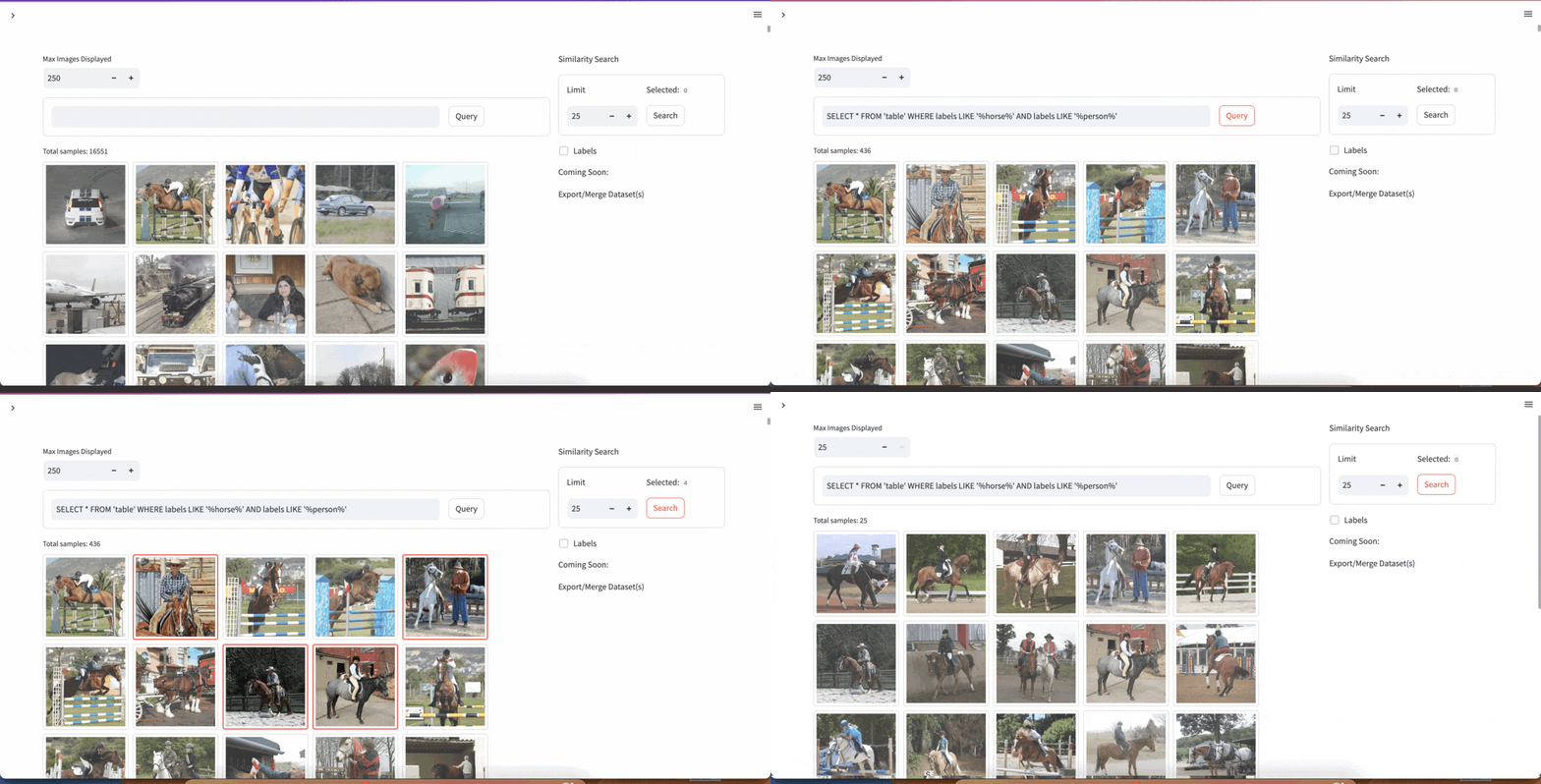 |
|
||||
| [Website Chatbot (Deployable Vercel Template)](https://github.com/lancedb/lancedb-vercel-chatbot) | Create a chatbot from the sitemap of any website/docs of your choice. Built using vectorDB serverless native javascript package. |  |
|
||||
|
||||
@@ -1,5 +1,6 @@
|
||||
import pickle
|
||||
import re
|
||||
import sys
|
||||
import zipfile
|
||||
from pathlib import Path
|
||||
|
||||
|
||||
@@ -1,27 +0,0 @@
|
||||
# AI Agents: Intelligent Collaboration🤖
|
||||
|
||||
Think of a platform💻 where AI Agents🤖 can seamlessly exchange information, coordinate over tasks, and achieve shared targets with great efficiency📈🚀.
|
||||
|
||||
## Vector-Based Coordination: The Technical Advantage
|
||||
Leveraging LanceDB's vector-based capabilities, our coordination application enables AI agents to communicate and collaborate through dense vector representations 🤖. AI agents can exchange information, coordinate on a task or work towards a common goal, just by giving queries📝.
|
||||
|
||||
| **AI Agents** | **Description** | **Links** |
|
||||
|:--------------|:----------------|:----------|
|
||||
| **AI Agents: Reducing Hallucinationt📊** | 🤖💡 Reduce AI hallucinations using Critique-Based Contexting! Learn by Simplifying and Automating tedious workflows by going through fitness trainer agent example.💪 | [][hullucination_github] <br>[][hullucination_colab] <br>[][hullucination_python] <br>[][hullucination_ghost] |
|
||||
| **AI Trends Searcher: CrewAI🔍️** | 🔍️ Learn about CrewAI Agents ! Utilize the features of CrewAI - Role-based Agents, Task Management, and Inter-agent Delegation ! Make AI agents work together to do tricky stuff 😺| [][trend_github] <br>[][trend_colab] <br>[][trend_ghost] |
|
||||
| **SuperAgent Autogen🤖** | 💻 AI interactions with the Super Agent! Integrating Autogen, LanceDB, LangChain, LiteLLM, and Ollama to create AI agent that excels in understanding and processing complex queries.🤖 | [][superagent_github] <br>[][superagent_colab] |
|
||||
|
||||
|
||||
[hullucination_github]: https://github.com/lancedb/vectordb-recipes/blob/main/examples/reducing_hallucinations_ai_agents
|
||||
[hullucination_colab]: https://colab.research.google.com/github/lancedb/vectordb-recipes/blob/main/examples/reducing_hallucinations_ai_agents/main.ipynb
|
||||
[hullucination_python]: https://github.com/lancedb/vectordb-recipes/blob/main/examples/reducing_hallucinations_ai_agents/main.py
|
||||
[hullucination_ghost]: https://blog.lancedb.com/how-to-reduce-hallucinations-from-llm-powered-agents-using-long-term-memory-72f262c3cc1f/
|
||||
|
||||
[trend_github]: https://github.com/lancedb/vectordb-recipes/blob/main/examples/AI-Trends-with-CrewAI
|
||||
[trend_colab]: https://colab.research.google.com/github/lancedb/vectordb-recipes/blob/main/examples/AI-Trends-with-CrewAI/CrewAI_AI_Trends.ipynb
|
||||
[trend_ghost]: https://blog.lancedb.com/track-ai-trends-crewai-agents-rag/
|
||||
|
||||
[superagent_github]: https://github.com/lancedb/vectordb-recipes/blob/main/examples/SuperAgent_Autogen
|
||||
[superagent_colab]: https://colab.research.google.com/github/lancedb/vectordb-recipes/blob/main/examples/SuperAgent_Autogen/main.ipynb
|
||||
|
||||
|
||||
@@ -1,13 +0,0 @@
|
||||
# **Build from Scratch with LanceDB 🛠️🚀**
|
||||
|
||||
Start building your GenAI applications from the ground up using LanceDB's efficient vector-based document retrieval capabilities! 📑
|
||||
|
||||
**Get Started in Minutes ⏱️**
|
||||
|
||||
These examples provide a solid foundation for building your own GenAI applications using LanceDB. Jump from idea to proof of concept quickly with applied examples. Get started and see what you can create! 💻
|
||||
|
||||
| **Build From Scratch** | **Description** | **Links** |
|
||||
|:-------------------------------------------|:-------------------------------------------------------------------------------------------------------------|:-------------------------------------------------------------------------------------------------------------------------------------------------------------------------------------------------------------------------------------------------------------------------------------------------------------------------------------------------------------------------------------------------------------------------|
|
||||
| **Build RAG from Scratch🚀💻** | 📝 Create a **Retrieval-Augmented Generation** (RAG) model from scratch using LanceDB. | [](https://github.com/lancedb/vectordb-recipes/tree/main/tutorials/RAG-from-Scratch)<br>[]() |
|
||||
| **Local RAG from Scratch with Llama3🔥💡** | 🐫 Build a local RAG model using **Llama3** and **LanceDB** for fast and efficient text generation. | [](https://github.com/lancedb/vectordb-recipes/tree/main/tutorials/Local-RAG-from-Scratch)<br>[](https://github.com/lancedb/vectordb-recipes/blob/main/tutorials/Local-RAG-from-Scratch/rag.py) |
|
||||
| **Multi-Head RAG from Scratch📚💻** | 🤯 Develop a **Multi-Head RAG model** from scratch, enabling generation of text based on multiple documents. | [](https://github.com/lancedb/vectordb-recipes/tree/main/tutorials/Multi-Head-RAG-from-Scratch)<br>[](https://github.com/lancedb/vectordb-recipes/tree/main/tutorials/Multi-Head-RAG-from-Scratch) |
|
||||
@@ -1,41 +0,0 @@
|
||||
**Chatbot Application with LanceDB 🤖**
|
||||
====================================================================
|
||||
|
||||
Create an innovative chatbot application that utilizes LanceDB for efficient vector-based response generation! 🌐✨
|
||||
|
||||
**Introduction 👋✨**
|
||||
|
||||
Users can input their queries, allowing the chatbot to retrieve relevant context seamlessly. 🔍📚 This enables the generation of coherent and context-aware replies that enhance user experience. 🌟🤝 Dive into the world of advanced conversational AI and streamline interactions with powerful data management! 🚀💡
|
||||
|
||||
|
||||
| **Chatbot** | **Description** | **Links** |
|
||||
|:----------------|:-----------------|:-----------|
|
||||
| **Databricks DBRX Website Bot ⚡️** | Unlock magical conversations with the Hogwarts chatbot, powered by Open-source RAG, DBRX, LanceDB, LLama-index, and Hugging Face Embeddings, delivering enchanting user experiences and spellbinding interactions ✨ | [][databricks_github] <br>[][databricks_python] |
|
||||
| **CLI SDK Manual Chatbot Locally 💻** | CLI chatbot for SDK/hardware documents, powered by Local RAG, LLama3, Ollama, LanceDB, and Openhermes Embeddings, built with Phidata Assistant and Knowledge Base for instant technical support 🤖 | [][clisdk_github] <br>[][clisdk_python] |
|
||||
| **Youtube Transcript Search QA Bot 📹** | Unlock the power of YouTube transcripts with a Q&A bot, leveraging natural language search and LanceDB for effortless data management and instant answers 💬 | [][youtube_github] <br>[][youtube_colab] <br>[][youtube_python] |
|
||||
| **Code Documentation Q&A Bot with LangChain 🤖** | Revolutionize code documentation with a Q&A bot, powered by LangChain and LanceDB, allowing effortless querying of documentation using natural language, demonstrated with Numpy 1.26 docs 📚 | [][docs_github] <br>[][docs_colab] <br>[][docs_python] |
|
||||
| **Context-aware Chatbot using Llama 2 & LanceDB 🤖** | Experience the future of conversational AI with a context-aware chatbot, powered by Llama 2, LanceDB, and LangChain, enabling intuitive and meaningful conversations with your data 📚💬 | [][aware_github] <br>[][aware_colab] <br>[][aware_ghost] |
|
||||
| **Chat with csv using Hybrid Search 📊** | Revolutionize data interaction with a chat application that harnesses LanceDB's hybrid search capabilities to converse with CSV and Excel files, enabling efficient and scalable data exploration and analysis 🚀 | [][csv_github] <br>[][csv_colab] <br>[][csv_ghost] |
|
||||
|
||||
|
||||
[databricks_github]: https://github.com/lancedb/vectordb-recipes/blob/main/examples/databricks_DBRX_website_bot
|
||||
[databricks_python]: https://github.com/lancedb/vectordb-recipes/blob/main/examples/databricks_DBRX_website_bot/main.py
|
||||
|
||||
[clisdk_github]: https://github.com/lancedb/vectordb-recipes/blob/main/examples/CLI-SDK-Manual-Chatbot-Locally
|
||||
[clisdk_python]: https://github.com/lancedb/vectordb-recipes/blob/main/examples/CLI-SDK-Manual-Chatbot-Locally/assistant.py
|
||||
|
||||
[youtube_github]: https://github.com/lancedb/vectordb-recipes/blob/main/examples/Youtube-Search-QA-Bot
|
||||
[youtube_colab]: https://colab.research.google.com/github/lancedb/vectordb-recipes/blob/main/examples/Youtube-Search-QA-Bot/main.ipynb
|
||||
[youtube_python]: https://github.com/lancedb/vectordb-recipes/blob/main/examples/Youtube-Search-QA-Bot/main.py
|
||||
|
||||
[docs_github]: https://github.com/lancedb/vectordb-recipes/blob/main/examples/Code-Documentation-QA-Bot
|
||||
[docs_colab]: https://colab.research.google.com/github/lancedb/vectordb-recipes/blob/main/examples/Code-Documentation-QA-Bot/main.ipynb
|
||||
[docs_python]: https://github.com/lancedb/vectordb-recipes/blob/main/examples/Code-Documentation-QA-Bot/main.py
|
||||
|
||||
[aware_github]: https://github.com/lancedb/vectordb-recipes/blob/main/tutorials/chatbot_using_Llama2_&_lanceDB
|
||||
[aware_colab]: https://colab.research.google.com/github/lancedb/vectordb-recipes/blob/main/tutorials/chatbot_using_Llama2_&_lanceDB/main.ipynb
|
||||
[aware_ghost]: https://blog.lancedb.com/context-aware-chatbot-using-llama-2-lancedb-as-vector-database-4d771d95c755
|
||||
|
||||
[csv_github]: https://github.com/lancedb/vectordb-recipes/blob/main/tutorials/Chat_with_csv_file
|
||||
[csv_colab]: https://colab.research.google.com/github/lancedb/vectordb-recipes/blob/main/tutorials/Chat_with_csv_file/main.ipynb
|
||||
[csv_ghost]: https://blog.lancedb.com/p/d8c71df4-e55f-479a-819e-cde13354a6a3/
|
||||
@@ -1,23 +0,0 @@
|
||||
**Evaluation: Assessing Text Performance with Precision 📊💡**
|
||||
====================================================================
|
||||
|
||||
**Evaluation Fundamentals 📊**
|
||||
|
||||
Evaluation is a comprehensive tool designed to measure the performance of text-based inputs, enabling data-driven optimization and improvement 📈.
|
||||
|
||||
**Text Evaluation 101 📚**
|
||||
|
||||
By leveraging cutting-edge technologies, this provides a robust framework for evaluating reference and candidate texts across various metrics 📊, ensuring high-quality text outputs that meet specific requirements and standards 📝.
|
||||
|
||||
| **Evaluation** | **Description** | **Links** |
|
||||
| -------------- | --------------- | --------- |
|
||||
| **Evaluating Prompts with Prompttools 🤖** | Compare, visualize & evaluate embedding functions (incl. OpenAI) across metrics like latency & custom evaluation 📈📊 | [][prompttools_github] <br>[][prompttools_colab] |
|
||||
| **Evaluating RAG with RAGAs and GPT-4o 📊** | Evaluate RAG pipelines with cutting-edge metrics and tools, integrate with CI/CD for continuous performance checks, and generate responses with GPT-4o 🤖📈 | [][RAGAs_github] <br>[][RAGAs_colab] |
|
||||
|
||||
|
||||
|
||||
[prompttools_github]: https://github.com/lancedb/vectordb-recipes/blob/main/examples/prompttools-eval-prompts
|
||||
[prompttools_colab]: https://colab.research.google.com/github/lancedb/vectordb-recipes/blob/main/examples/prompttools-eval-prompts/main.ipynb
|
||||
|
||||
[RAGAs_github]: https://github.com/lancedb/vectordb-recipes/blob/main/examples/Evaluating_RAG_with_RAGAs
|
||||
[RAGAs_colab]: https://colab.research.google.com/github/lancedb/vectordb-recipes/blob/main/examples/Evaluating_RAG_with_RAGAs/Evaluating_RAG_with_RAGAs.ipynb
|
||||
@@ -1,28 +0,0 @@
|
||||
# **Multimodal Search with LanceDB 🤹♂️🔍**
|
||||
|
||||
Experience the future of search with LanceDB's multimodal capabilities. Combine text and image queries to find the most relevant results in your corpus ! 🔓💡
|
||||
|
||||
**Explore the Future of Search 🚀**
|
||||
|
||||
LanceDB supports multimodal search by indexing and querying vector representations of text and image data 🤖. This enables efficient retrieval of relevant documents and images using vector-based similarity search 📊. The platform facilitates cross-modal search, allowing for text-image and image-text retrieval, and supports scalable indexing of high-dimensional vector spaces 💻.
|
||||
|
||||
|
||||
|
||||
| **Multimodal** | **Description** | **Links** |
|
||||
|:----------------|:-----------------|:-----------|
|
||||
| **Multimodal CLIP: DiffusionDB 🌐💥** | Revolutionize search with Multimodal CLIP and DiffusionDB, combining text and image understanding for a new dimension of discovery! 🔓 | [][Clip_diffusionDB_github] <br>[][Clip_diffusionDB_colab] <br>[][Clip_diffusionDB_python] <br>[][Clip_diffusionDB_ghost] |
|
||||
| **Multimodal CLIP: Youtube Videos 📹👀** | Search Youtube videos using Multimodal CLIP, finding relevant content with ease and accuracy! 🎯 | [][Clip_youtube_github] <br>[][Clip_youtube_colab] <br> [][Clip_youtube_python] <br>[][Clip_youtube_python] |
|
||||
| **Multimodal Image + Text Search 📸🔍** | Discover relevant documents and images with a single query, using LanceDB's multimodal search capabilities to bridge the gap between text and visuals! 🌉 | [](https://github.com/lancedb/vectordb-recipes/blob/main/examples/multimodal_search) <br>[](https://colab.research.google.com/github/lancedb/vectordb-recipes/blob/main/examples/multimodal_search/main.ipynb) <br> [](https://github.com/lancedb/vectordb-recipes/blob/main/examples/multimodal_search/main.py)<br> [](https://blog.lancedb.com/multi-modal-ai-made-easy-with-lancedb-clip-5aaf8801c939/) |
|
||||
| **Cambrian-1: Vision-Centric Image Exploration 🔍👀** | Dive into vision-centric exploration of images with Cambrian-1, powered by LanceDB's multimodal search to uncover new insights! 🔎 | [](https://www.kaggle.com/code/prasantdixit/cambrian-1-vision-centric-exploration-of-images/)<br> [](https://blog.lancedb.com/cambrian-1-vision-centric-exploration/) |
|
||||
|
||||
|
||||
[Clip_diffusionDB_github]: https://github.com/lancedb/vectordb-recipes/blob/main/examples/multimodal_clip_diffusiondb
|
||||
[Clip_diffusionDB_colab]: https://colab.research.google.com/github/lancedb/vectordb-recipes/blob/main/examples/multimodal_clip_diffusiondb/main.ipynb
|
||||
[Clip_diffusionDB_python]: https://github.com/lancedb/vectordb-recipes/blob/main/examples/multimodal_clip_diffusiondb/main.py
|
||||
[Clip_diffusionDB_ghost]: https://blog.lancedb.com/multi-modal-ai-made-easy-with-lancedb-clip-5aaf8801c939/
|
||||
|
||||
|
||||
[Clip_youtube_github]: https://github.com/lancedb/vectordb-recipes/blob/main/examples/multimodal_video_search
|
||||
[Clip_youtube_colab]: https://colab.research.google.com/github/lancedb/vectordb-recipes/blob/main/examples/multimodal_video_search/main.ipynb
|
||||
[Clip_youtube_python]: https://github.com/lancedb/vectordb-recipes/blob/main/examples/multimodal_video_search/main.py
|
||||
[Clip_youtube_ghost]: https://blog.lancedb.com/multi-modal-ai-made-easy-with-lancedb-clip-5aaf8801c939/
|
||||
@@ -1,84 +0,0 @@
|
||||
|
||||
**RAG: Revolutionize Information Retrieval with LanceDB 🔓🧐**
|
||||
====================================================================
|
||||
|
||||
Unlock the full potential of Retrieval-Augmented Generation (RAG) with LanceDB, a solution for efficient vector-based information retrieval 📊.
|
||||
|
||||
**Experience the Future of Search 🔄**
|
||||
|
||||
RAG integrates large language models (LLMs) with scalable knowledge bases, enabling efficient information retrieval and answer generation 🤖. By applying RAG to industry-specific use cases, developers can optimize query processing 📊, reduce response latency ⏱️, and improve resource utilization 💻. LanceDB provides a robust framework for integrating LLMs with external knowledge sources, facilitating accurate and informative responses 📝.
|
||||
|
||||
| **RAG** | **Description** | **Links** |
|
||||
|----------------------------------------------|------------------------------------------------------------------------------------------------------------------------------------------------------------------|----------------------------|
|
||||
| **RAG with Matryoshka Embeddings and LlamaIndex** 🪆🔗 | Utilize **Matryoshka embeddings** and **LlamaIndex** to improve the efficiency and accuracy of your RAG models. 📈✨ | [][matryoshka_github] <br>[][matryoshka_colab] |
|
||||
| **Improve RAG with Re-ranking** 📈🔄 | Enhance your RAG applications by implementing **re-ranking strategies** for more relevant document retrieval. 📚🔍 | [][rag_reranking_github] <br>[][rag_reranking_colab] <br>[][rag_reranking_ghost] |
|
||||
| **Instruct-Multitask** 🧠🎯 | Integrate the **Instruct Embedding Model** with LanceDB to streamline your embedding API, reducing redundant code and overhead. 🌐📊 | [][instruct_multitask_github] <br>[][instruct_multitask_colab] <br>[][instruct_multitask_python] <br>[][instruct_multitask_ghost] |
|
||||
| **Improve RAG with HyDE** 🌌🔍 | Use **Hypothetical Document Embeddings** for efficient, accurate, and unsupervised dense retrieval. 📄🔍 | [][hyde_github] <br>[][hyde_colab]<br>[][hyde_ghost] |
|
||||
| **Improve RAG with LOTR** 🧙♂️📜 | Enhance RAG with **Lord of the Retriever (LOTR)** to address 'Lost in the Middle' challenges, especially in medical data. 🌟📜 | [][lotr_github] <br>[][lotr_colab] <br>[][lotr_ghost] |
|
||||
| **Advanced RAG: Parent Document Retriever** 📑🔗 | Use **Parent Document & Bigger Chunk Retriever** to maintain context and relevance when generating related content. 🎵📄 | [][parent_doc_retriever_github] <br>[][parent_doc_retriever_colab] <br>[][parent_doc_retriever_ghost] |
|
||||
| **Corrective RAG with Langgraph** 🔧📊 | Enhance RAG reliability with **Corrective RAG (CRAG)** by self-reflecting and fact-checking for accurate and trustworthy results. ✅🔍 |[][corrective_rag_github] <br>[][corrective_rag_colab] <br>[][corrective_rag_ghost] |
|
||||
| **Contextual Compression with RAG** 🗜️🧠 | Apply **contextual compression techniques** to condense large documents while retaining essential information. 📄🗜️ | [][compression_rag_github] <br>[][compression_rag_colab] <br>[][compression_rag_ghost] |
|
||||
| **Improve RAG with FLARE** 🔥| Enable users to ask questions directly to academic papers, focusing on ArXiv papers, with Forward-Looking Active REtrieval augmented generation.🚀🌟 | [][flare_github] <br>[][flare_colab] <br>[][flare_ghost] |
|
||||
| **Query Expansion and Reranker** 🔍🔄 | Enhance RAG with query expansion using Large Language Models and advanced **reranking methods** like Cross Encoders, ColBERT v2, and FlashRank for improved document retrieval precision and recall 🔍📈 | [][query_github] <br>[][query_colab] |
|
||||
| **RAG Fusion** ⚡🌐 | Revolutionize search with RAG Fusion, utilizing the **RRF algorithm** to rerank documents based on user queries, and leveraging LanceDB and OPENAI Embeddings for efficient information retrieval ⚡🌐 | [][fusion_github] <br>[][fusion_colab] |
|
||||
| **Agentic RAG** 🤖📚 | Unlock autonomous information retrieval with **Agentic RAG**, a framework of **intelligent agents** that collaborate to synthesize, summarize, and compare data across sources, enabling proactive and informed decision-making 🤖📚 | [][agentic_github] <br>[][agentic_colab] |
|
||||
|
||||
|
||||
|
||||
|
||||
|
||||
|
||||
|
||||
|
||||
|
||||
|
||||
|
||||
|
||||
[matryoshka_github]: https://github.com/lancedb/vectordb-recipes/blob/main/tutorials/RAG-with_MatryoshkaEmbed-Llamaindex
|
||||
[matryoshka_colab]: https://colab.research.google.com/github/lancedb/vectordb-recipes/blob/main/tutorials/RAG-with_MatryoshkaEmbed-Llamaindex/RAG_with_MatryoshkaEmbedding_and_Llamaindex.ipynb
|
||||
|
||||
[rag_reranking_github]: https://github.com/lancedb/vectordb-recipes/blob/main/examples/RAG_Reranking
|
||||
[rag_reranking_colab]: https://colab.research.google.com/github/lancedb/vectordb-recipes/blob/main/examples/RAG_Reranking/main.ipynb
|
||||
[rag_reranking_ghost]: https://blog.lancedb.com/simplest-method-to-improve-rag-pipeline-re-ranking-cf6eaec6d544
|
||||
|
||||
|
||||
[instruct_multitask_github]: https://github.com/lancedb/vectordb-recipes/blob/main/examples/instruct-multitask
|
||||
[instruct_multitask_colab]: https://colab.research.google.com/github/lancedb/vectordb-recipes/blob/main/examples/instruct-multitask/main.ipynb
|
||||
[instruct_multitask_python]: https://github.com/lancedb/vectordb-recipes/blob/main/examples/instruct-multitask/main.py
|
||||
[instruct_multitask_ghost]: https://blog.lancedb.com/multitask-embedding-with-lancedb-be18ec397543
|
||||
|
||||
[hyde_github]: https://github.com/lancedb/vectordb-recipes/blob/main/examples/Advance-RAG-with-HyDE
|
||||
[hyde_colab]: https://colab.research.google.com/github/lancedb/vectordb-recipes/blob/main/examples/Advance-RAG-with-HyDE/main.ipynb
|
||||
[hyde_ghost]: https://blog.lancedb.com/advanced-rag-precise-zero-shot-dense-retrieval-with-hyde-0946c54dfdcb
|
||||
|
||||
[lotr_github]: https://github.com/lancedb/vectordb-recipes/blob/main/examples/Advance_RAG_LOTR
|
||||
[lotr_colab]: https://colab.research.google.com/github/lancedb/vectordb-recipes/blob/main/examples/Advance_RAG_LOTR/main.ipynb
|
||||
[lotr_ghost]: https://blog.lancedb.com/better-rag-with-lotr-lord-of-retriever-23c8336b9a35
|
||||
|
||||
[parent_doc_retriever_github]: https://github.com/lancedb/vectordb-recipes/blob/main/examples/parent_document_retriever
|
||||
[parent_doc_retriever_colab]: https://colab.research.google.com/github/lancedb/vectordb-recipes/blob/main/examples/parent_document_retriever/main.ipynb
|
||||
[parent_doc_retriever_ghost]: https://blog.lancedb.com/modified-rag-parent-document-bigger-chunk-retriever-62b3d1e79bc6
|
||||
|
||||
[corrective_rag_github]: https://github.com/lancedb/vectordb-recipes/blob/main/tutorials/Corrective-RAG-with_Langgraph
|
||||
[corrective_rag_colab]: https://colab.research.google.com/github/lancedb/vectordb-recipes/blob/main/tutorials/Corrective-RAG-with_Langgraph/CRAG_with_Langgraph.ipynb
|
||||
[corrective_rag_ghost]: https://blog.lancedb.com/implementing-corrective-rag-in-the-easiest-way-2/
|
||||
|
||||
[compression_rag_github]: https://github.com/lancedb/vectordb-recipes/blob/main/examples/Contextual-Compression-with-RAG
|
||||
[compression_rag_colab]: https://colab.research.google.com/github/lancedb/vectordb-recipes/blob/main/examples/Contextual-Compression-with-RAG/main.ipynb
|
||||
[compression_rag_ghost]: https://blog.lancedb.com/enhance-rag-integrate-contextual-compression-and-filtering-for-precision-a29d4a810301/
|
||||
|
||||
[flare_github]: https://github.com/lancedb/vectordb-recipes/blob/main/examples/better-rag-FLAIR
|
||||
[flare_colab]: https://colab.research.google.com/github/lancedb/vectordb-recipes/blob/main/examples/better-rag-FLAIR/main.ipynb
|
||||
[flare_ghost]: https://blog.lancedb.com/better-rag-with-active-retrieval-augmented-generation-flare-3b66646e2a9f/
|
||||
|
||||
[query_github]: https://github.com/lancedb/vectordb-recipes/blob/main/examples/QueryExpansion&Reranker
|
||||
[query_colab]: https://colab.research.google.com/github/lancedb/vectordb-recipes/blob/main/examples/QueryExpansion&Reranker/main.ipynb
|
||||
|
||||
|
||||
[fusion_github]: https://github.com/lancedb/vectordb-recipes/blob/main/examples/RAG_Fusion
|
||||
[fusion_colab]: https://colab.research.google.com/github/lancedb/vectordb-recipes/blob/main/examples/RAG_Fusion/main.ipynb
|
||||
|
||||
[agentic_github]: https://github.com/lancedb/vectordb-recipes/blob/main/tutorials/Agentic_RAG
|
||||
[agentic_colab]: https://colab.research.google.com/github/lancedb/vectordb-recipes/blob/main/tutorials/Agentic_RAG/main.ipynb
|
||||
|
||||
|
||||
@@ -1,80 +0,0 @@
|
||||
**Vector Search: Unlock Efficient Document Retrieval 🔓👀**
|
||||
====================================================================
|
||||
|
||||
Unlock the power of vector search with LanceDB, a cutting-edge solution for efficient vector-based document retrieval 📊.
|
||||
|
||||
**Vector Search Capabilities in LanceDB🔝**
|
||||
|
||||
LanceDB implements vector search algorithms for efficient document retrieval and analysis 📊. This enables fast and accurate discovery of relevant documents, leveraging dense vector representations 🤖. The platform supports scalable indexing and querying of high-dimensional vector spaces, facilitating precise document matching and retrieval 📈.
|
||||
|
||||
| **Vector Search** | **Description** | **Links** |
|
||||
|:-----------------|:---------------|:---------|
|
||||
| **Inbuilt Hybrid Search 🔄** | Combine the power of traditional search algorithms with LanceDB's vector-based search for a robust and efficient search experience 📊 | [][inbuilt_hybrid_search_github] <br>[][inbuilt_hybrid_search_colab] |
|
||||
| **Hybrid Search with BM25 and LanceDB 💡** | Synergizes BM25's keyword-focused precision (term frequency, document length normalization, bias-free retrieval) with LanceDB's semantic understanding (contextual analysis, query intent alignment) for nuanced search results in complex datasets 📈 | [][BM25_github] <br>[][BM25_colab] <br>[][BM25_ghost] |
|
||||
| **NER-powered Semantic Search 🔎** | Unlock contextual understanding with Named Entity Recognition (NER) methods: Dictionary-Based, Rule-Based, and Deep Learning-Based, to accurately identify and extract entities, enabling precise semantic search results 🗂️ | [][NER_github] <br>[][NER_colab] <br>[][NER_ghost]|
|
||||
| **Audio Similarity Search using Vector Embeddings 🎵** | Create vector embeddings of audio files to find similar audio content, enabling efficient audio similarity search and retrieval in LanceDB's vector store 📻 |[][audio_search_github] <br>[][audio_search_colab] <br>[][audio_search_python]|
|
||||
| **LanceDB Embeddings API: Multi-lingual Semantic Search 🌎** | Build a universal semantic search table with LanceDB's Embeddings API, supporting multiple languages (e.g., English, French) using cohere's multi-lingual model, for accurate cross-lingual search results 📄 | [][mls_github] <br>[][mls_colab] <br>[][mls_python] |
|
||||
| **Facial Recognition: Face Embeddings 🤖** | Detect, crop, and embed faces using Facenet, then store and query face embeddings in LanceDB for efficient facial recognition and top-K matching results 👥 | [][fr_github] <br>[][fr_colab] |
|
||||
| **Sentiment Analysis: Hotel Reviews 🏨** | Analyze customer sentiments towards the hotel industry using BERT models, storing sentiment labels, scores, and embeddings in LanceDB, enabling queries on customer opinions and potential areas for improvement 💬 | [][sentiment_analysis_github] <br>[][sentiment_analysis_colab] <br>[][sentiment_analysis_ghost] |
|
||||
| **Vector Arithmetic with LanceDB ⚖️** | Unlock powerful semantic search capabilities by performing vector arithmetic on embeddings, enabling complex relationships and nuances in data to be captured, and simplifying the process of retrieving semantically similar results 📊 | [][arithmetic_github] <br>[][arithmetic_colab] <br>[][arithmetic_ghost] |
|
||||
| **Imagebind Demo 🖼️** | Explore the multi-modal capabilities of Imagebind through a Gradio app, leveraging LanceDB API for seamless image search and retrieval experiences 📸 | [][imagebind_github] <br> [][imagebind_huggingface] |
|
||||
| **Search Engine using SAM & CLIP 🔍** | Build a search engine within an image using SAM and CLIP models, enabling object-level search and retrieval, with LanceDB indexing and search capabilities to find the closest match between image embeddings and user queries 📸 | [][swi_github] <br>[][swi_colab] <br>[][swi_ghost] |
|
||||
| **Zero Shot Object Localization and Detection with CLIP 🔎** | Perform object detection on images using OpenAI's CLIP, enabling zero-shot localization and detection of objects, with capabilities to split images into patches, parse with CLIP, and plot bounding boxes 📊 | [][zsod_github] <br>[][zsod_colab] |
|
||||
| **Accelerate Vector Search with OpenVINO 🚀** | Boost vector search applications using OpenVINO, achieving significant speedups with CLIP for text-to-image and image-to-image searching, through PyTorch model optimization, FP16 and INT8 format conversion, and quantization with OpenVINO NNCF 📈 | [][openvino_github] <br>[][openvino_colab] <br>[][openvino_ghost] |
|
||||
| **Zero-Shot Image Classification with CLIP and LanceDB 📸** | Achieve zero-shot image classification using CLIP and LanceDB, enabling models to classify images without prior training on specific use cases, unlocking flexible and adaptable image classification capabilities 🔓 | [][zsic_github] <br>[][zsic_colab] <br>[][zsic_ghost] |
|
||||
|
||||
|
||||
|
||||
|
||||
[inbuilt_hybrid_search_github]: https://github.com/lancedb/vectordb-recipes/blob/main/examples/Inbuilt-Hybrid-Search
|
||||
[inbuilt_hybrid_search_colab]: https://colab.research.google.com/github/lancedb/vectordb-recipes/blob/main/examples/Inbuilt-Hybrid-Search/Inbuilt_Hybrid_Search_with_LanceDB.ipynb
|
||||
|
||||
[BM25_github]: https://github.com/lancedb/vectordb-recipes/blob/main/examples/Hybrid_search_bm25_lancedb
|
||||
[BM25_colab]: https://colab.research.google.com/github/lancedb/vectordb-recipes/blob/main/examples/Hybrid_search_bm25_lancedb/main.ipynb
|
||||
[BM25_ghost]: https://blog.lancedb.com/hybrid-search-combining-bm25-and-semantic-search-for-better-results-with-lan-1358038fe7e6
|
||||
|
||||
[NER_github]: https://github.com/lancedb/vectordb-recipes/blob/main/tutorials/NER-powered-Semantic-Search
|
||||
[NER_colab]: https://colab.research.google.com/github/lancedb/vectordb-recipes/blob/main/tutorials/NER-powered-Semantic-Search/NER_powered_Semantic_Search_with_LanceDB.ipynb
|
||||
[NER_ghost]: https://blog.lancedb.com/ner-powered-semantic-search-using-lancedb-51051dc3e493
|
||||
|
||||
[audio_search_github]: https://github.com/lancedb/vectordb-recipes/blob/main/examples/audio_search
|
||||
[audio_search_colab]: https://colab.research.google.com/github/lancedb/vectordb-recipes/blob/main/examples/audio_search/main.ipynb
|
||||
[audio_search_python]: https://github.com/lancedb/vectordb-recipes/blob/main/examples/audio_search/main.py
|
||||
|
||||
[mls_github]: https://github.com/lancedb/vectordb-recipes/blob/main/examples/multi-lingual-wiki-qa
|
||||
[mls_colab]: https://colab.research.google.com/github/lancedb/vectordb-recipes/blob/main/examples/multi-lingual-wiki-qa/main.ipynb
|
||||
[mls_python]: https://github.com/lancedb/vectordb-recipes/blob/main/examples/multi-lingual-wiki-qa/main.py
|
||||
|
||||
[fr_github]: https://github.com/lancedb/vectordb-recipes/blob/main/examples/facial_recognition
|
||||
[fr_colab]: https://colab.research.google.com/github/lancedb/vectordb-recipes/blob/main/examples/facial_recognition/main.ipynb
|
||||
|
||||
[sentiment_analysis_github]: https://github.com/lancedb/vectordb-recipes/blob/main/examples/Sentiment-Analysis-Analyse-Hotel-Reviews
|
||||
[sentiment_analysis_colab]: https://colab.research.google.com/github/lancedb/vectordb-recipes/blob/main/examples/Sentiment-Analysis-Analyse-Hotel-Reviews/Sentiment_Analysis_using_LanceDB.ipynb
|
||||
[sentiment_analysis_ghost]: https://blog.lancedb.com/sentiment-analysis-using-lancedb-2da3cb1e3fa6
|
||||
|
||||
[arithmetic_github]: https://github.com/lancedb/vectordb-recipes/blob/main/examples/Vector-Arithmetic-with-LanceDB
|
||||
[arithmetic_colab]: https://colab.research.google.com/github/lancedb/vectordb-recipes/blob/main/examples/Vector-Arithmetic-with-LanceDB/main.ipynb
|
||||
[arithmetic_ghost]: https://blog.lancedb.com/vector-arithmetic-with-lancedb-an-intro-to-vector-embeddings/
|
||||
|
||||
[imagebind_github]: https://github.com/lancedb/vectordb-recipes/blob/main/examples/imagebind_demo
|
||||
[imagebind_huggingface]: https://huggingface.co/spaces/raghavd99/imagebind2
|
||||
|
||||
[swi_github]: https://github.com/lancedb/vectordb-recipes/blob/main/examples/search-within-images-with-sam-and-clip
|
||||
[swi_colab]: https://colab.research.google.com/github/lancedb/vectordb-recipes/blob/main/examples/search-within-images-with-sam-and-clip/main.ipynb
|
||||
[swi_ghost]: https://blog.lancedb.com/search-within-an-image-331b54e4285e
|
||||
|
||||
[zsod_github]: https://github.com/lancedb/vectordb-recipes/blob/main/examples/zero-shot-object-detection-CLIP
|
||||
[zsod_colab]: https://colab.research.google.com/github/lancedb/vectordb-recipes/blob/main/examples/zero-shot-object-detection-CLIP/zero_shot_object_detection_clip.ipynb
|
||||
|
||||
[openvino_github]: https://github.com/lancedb/vectordb-recipes/blob/main/examples/Accelerate-Vector-Search-Applications-Using-OpenVINO
|
||||
[openvino_colab]: https://colab.research.google.com/github/lancedb/vectordb-recipes/blob/main/examples/Accelerate-Vector-Search-Applications-Using-OpenVINO/clip_text_image_search.ipynb
|
||||
[openvino_ghost]: https://blog.lancedb.com/accelerate-vector-search-applications-using-openvino-lancedb/
|
||||
|
||||
[zsic_github]: https://github.com/lancedb/vectordb-recipes/blob/main/examples/zero-shot-image-classification
|
||||
[zsic_colab]: https://colab.research.google.com/github/lancedb/vectordb-recipes/blob/main/examples/zero-shot-image-classification/main.ipynb
|
||||
[zsic_ghost]: https://blog.lancedb.com/zero-shot-image-classification-with-vector-search/
|
||||
|
||||
|
||||
|
||||
|
||||
|
||||
@@ -1,79 +1,11 @@
|
||||
// Creates an SVG robot icon (from Lucide)
|
||||
function robotSVG() {
|
||||
var svg = document.createElementNS("http://www.w3.org/2000/svg", "svg");
|
||||
svg.setAttribute("width", "24");
|
||||
svg.setAttribute("height", "24");
|
||||
svg.setAttribute("viewBox", "0 0 24 24");
|
||||
svg.setAttribute("fill", "none");
|
||||
svg.setAttribute("stroke", "currentColor");
|
||||
svg.setAttribute("stroke-width", "2");
|
||||
svg.setAttribute("stroke-linecap", "round");
|
||||
svg.setAttribute("stroke-linejoin", "round");
|
||||
svg.setAttribute("class", "lucide lucide-bot-message-square");
|
||||
|
||||
var path1 = document.createElementNS("http://www.w3.org/2000/svg", "path");
|
||||
path1.setAttribute("d", "M12 6V2H8");
|
||||
svg.appendChild(path1);
|
||||
|
||||
var path2 = document.createElementNS("http://www.w3.org/2000/svg", "path");
|
||||
path2.setAttribute("d", "m8 18-4 4V8a2 2 0 0 1 2-2h12a2 2 0 0 1 2 2v8a2 2 0 0 1-2 2Z");
|
||||
svg.appendChild(path2);
|
||||
|
||||
var path3 = document.createElementNS("http://www.w3.org/2000/svg", "path");
|
||||
path3.setAttribute("d", "M2 12h2");
|
||||
svg.appendChild(path3);
|
||||
|
||||
var path4 = document.createElementNS("http://www.w3.org/2000/svg", "path");
|
||||
path4.setAttribute("d", "M9 11v2");
|
||||
svg.appendChild(path4);
|
||||
|
||||
var path5 = document.createElementNS("http://www.w3.org/2000/svg", "path");
|
||||
path5.setAttribute("d", "M15 11v2");
|
||||
svg.appendChild(path5);
|
||||
|
||||
var path6 = document.createElementNS("http://www.w3.org/2000/svg", "path");
|
||||
path6.setAttribute("d", "M20 12h2");
|
||||
svg.appendChild(path6);
|
||||
|
||||
return svg
|
||||
}
|
||||
|
||||
// Creates the Fluidic Chatbot buttom
|
||||
function fluidicButton() {
|
||||
var btn = document.createElement("a");
|
||||
btn.href = "https://asklancedb.com";
|
||||
btn.target = "_blank";
|
||||
btn.style.position = "fixed";
|
||||
btn.style.fontWeight = "bold";
|
||||
btn.style.fontSize = ".8rem";
|
||||
btn.style.right = "10px";
|
||||
btn.style.bottom = "10px";
|
||||
btn.style.width = "80px";
|
||||
btn.style.height = "80px";
|
||||
btn.style.background = "linear-gradient(135deg, #7C5EFF 0%, #625eff 100%)";
|
||||
btn.style.color = "white";
|
||||
btn.style.borderRadius = "5px";
|
||||
btn.style.display = "flex";
|
||||
btn.style.flexDirection = "column";
|
||||
btn.style.justifyContent = "center";
|
||||
btn.style.alignItems = "center";
|
||||
btn.style.zIndex = "1000";
|
||||
btn.style.opacity = "0";
|
||||
btn.style.boxShadow = "0 0 0 rgba(0, 0, 0, 0)";
|
||||
btn.style.transition = "opacity 0.2s ease-in, box-shadow 0.2s ease-in";
|
||||
|
||||
setTimeout(function() {
|
||||
btn.style.opacity = "1";
|
||||
btn.style.boxShadow = "0 0 .2rem #0000001a,0 .2rem .4rem #0003"
|
||||
}, 0);
|
||||
|
||||
return btn
|
||||
}
|
||||
|
||||
document.addEventListener("DOMContentLoaded", function() {
|
||||
var btn = fluidicButton()
|
||||
btn.appendChild(robotSVG());
|
||||
var text = document.createTextNode("Ask AI");
|
||||
btn.appendChild(text);
|
||||
document.body.appendChild(btn);
|
||||
});
|
||||
document.addEventListener("DOMContentLoaded", function () {
|
||||
var script = document.createElement("script");
|
||||
script.src = "https://widget.kapa.ai/kapa-widget.bundle.js";
|
||||
script.setAttribute("data-website-id", "c5881fae-cec0-490b-b45e-d83d131d4f25");
|
||||
script.setAttribute("data-project-name", "LanceDB");
|
||||
script.setAttribute("data-project-color", "#000000");
|
||||
script.setAttribute("data-project-logo", "https://avatars.githubusercontent.com/u/108903835?s=200&v=4");
|
||||
script.setAttribute("data-modal-example-questions","Help me create an IVF_PQ index,How do I do an exhaustive search?,How do I create a LanceDB table?,Can I use my own embedding function?");
|
||||
script.async = true;
|
||||
document.head.appendChild(script);
|
||||
});
|
||||
@@ -16,7 +16,7 @@ As we mention in our talk titled “[Lance, a modern columnar data format](https
|
||||
|
||||
### Why build in Rust? 🦀
|
||||
|
||||
We believe that the Rust ecosystem has attained mainstream maturity and that Rust will form the underpinnings of large parts of the data and ML landscape in a few years. Performance, latency and reliability are paramount to a vector DB, and building in Rust allows us to iterate and release updates more rapidly due to Rust’s safety guarantees. Both Lance (the data format) and LanceDB (the database) are written entirely in Rust. We also provide Python, JavaScript, and Rust client libraries to interact with the database.
|
||||
We believe that the Rust ecosystem has attained mainstream maturity and that Rust will form the underpinnings of large parts of the data and ML landscape in a few years. Performance, latency and reliability are paramount to a vector DB, and building in Rust allows us to iterate and release updates more rapidly due to Rust’s safety guarantees. Both Lance (the data format) and LanceDB (the database) are written entirely in Rust. We also provide Python and JavaScript client libraries to interact with the database. Our Rust API is a little rough around the edges right now, but is fast becoming on par with the Python and JS APIs.
|
||||
|
||||
### What is the difference between LanceDB OSS and LanceDB Cloud?
|
||||
|
||||
@@ -40,11 +40,11 @@ LanceDB and its underlying data format, Lance, are built to scale to really larg
|
||||
|
||||
No. LanceDB is blazing fast (due to its disk-based index) for even brute force kNN search, within reason. In our benchmarks, computing 100K pairs of 1000-dimension vectors takes less than 20ms. For small datasets of ~100K records or applications that can accept ~100ms latency, an ANN index is usually not necessary.
|
||||
|
||||
For large-scale (>1M) or higher dimension vectors, it is beneficial to create an ANN index. See the [ANN indexes](ann_indexes.md) section for more details.
|
||||
For large-scale (>1M) or higher dimension vectors, it is beneficial to create an ANN index.
|
||||
|
||||
### Does LanceDB support full-text search?
|
||||
|
||||
Yes, LanceDB supports full-text search (FTS) via [Tantivy](https://github.com/quickwit-oss/tantivy). Our current FTS integration is Python-only, and our goal is to push it down to the Rust level in future versions to enable much more powerful search capabilities available to our Python, JavaScript and Rust clients. Follow along in the [Github issue](https://github.com/lancedb/lance/issues/1195)
|
||||
Yes, LanceDB supports full-text search (FTS) via [Tantivy](https://github.com/quickwit-oss/tantivy). Our current FTS integration is Python-only, and our goal is to push it down to the Rust level in future versions to enable much more powerful search capabilities available to our Python, JavaScript and Rust clients.
|
||||
|
||||
### How can I speed up data inserts?
|
||||
|
||||
@@ -69,19 +69,3 @@ MinIO supports an S3 compatible API. In order to connect to a MinIO instance, yo
|
||||
- Set the envvar `AWS_ENDPOINT` to the URL of your MinIO API
|
||||
- Set the envvars `AWS_ACCESS_KEY_ID` and `AWS_SECRET_ACCESS_KEY` with your MinIO credential
|
||||
- Call `lancedb.connect("s3://minio_bucket_name")`
|
||||
|
||||
### Where can I find benchmarks for LanceDB?
|
||||
|
||||
Refer to this [post](https://blog.lancedb.com/benchmarking-lancedb-92b01032874a) for recent benchmarks.
|
||||
|
||||
### How much data can LanceDB practically manage without effecting performance?
|
||||
|
||||
We target good performance on ~10-50 billion rows and ~10-30 TB of data.
|
||||
|
||||
### Does LanceDB support concurrent operations?
|
||||
|
||||
LanceDB can handle concurrent reads very well, and can scale horizontally. The main constraint is how well the [storage layer](https://lancedb.github.io/lancedb/concepts/storage/) you've chosen scales. For writes, we support concurrent writing, though too many concurrent writers can lead to failing writes as there is a limited number of times a writer retries a commit
|
||||
|
||||
!!! info "Multiprocessing with LanceDB"
|
||||
|
||||
For multiprocessing you should probably not use ```fork``` as lance is multi-threaded internally and ```fork``` and multi-thread do not work well.[Refer to this discussion](https://discuss.python.org/t/concerns-regarding-deprecation-of-fork-with-alive-threads/33555)
|
||||
|
||||
249
docs/src/fts.md
@@ -1,14 +1,10 @@
|
||||
# Full-text search
|
||||
|
||||
LanceDB provides support for full-text search via Lance (before via [Tantivy](https://github.com/quickwit-oss/tantivy) (Python only)), allowing you to incorporate keyword-based search (based on BM25) in your retrieval solutions.
|
||||
LanceDB provides support for full-text search via [Tantivy](https://github.com/quickwit-oss/tantivy) (currently Python only), allowing you to incorporate keyword-based search (based on BM25) in your retrieval solutions. Our goal is to push the FTS integration down to the Rust level in the future, so that it's available for JavaScript users as well.
|
||||
|
||||
Currently, the Lance full text search is missing some features that are in the Tantivy full text search. This includes phrase queries, re-ranking, and customizing the tokenizer. Thus, in Python, Tantivy is still the default way to do full text search and many of the instructions below apply just to Tantivy-based indices.
|
||||
A hybrid search solution combining vector and full-text search is also on the way.
|
||||
|
||||
|
||||
## Installation (Only for Tantivy-based FTS)
|
||||
|
||||
!!! note
|
||||
No need to install the tantivy dependency if using native FTS
|
||||
## Installation
|
||||
|
||||
To use full-text search, install the dependency [`tantivy-py`](https://github.com/quickwit-oss/tantivy-py):
|
||||
|
||||
@@ -19,117 +15,53 @@ pip install tantivy==0.20.1
|
||||
|
||||
## Example
|
||||
|
||||
Consider that we have a LanceDB table named `my_table`, whose string column `text` we want to index and query via keyword search, the FTS index must be created before you can search via keywords.
|
||||
Consider that we have a LanceDB table named `my_table`, whose string column `text` we want to index and query via keyword search.
|
||||
|
||||
=== "Python"
|
||||
```python
|
||||
import lancedb
|
||||
|
||||
```python
|
||||
import lancedb
|
||||
uri = "data/sample-lancedb"
|
||||
db = lancedb.connect(uri)
|
||||
|
||||
uri = "data/sample-lancedb"
|
||||
db = lancedb.connect(uri)
|
||||
table = db.create_table(
|
||||
"my_table",
|
||||
data=[
|
||||
{"vector": [3.1, 4.1], "text": "Frodo was a happy puppy"},
|
||||
{"vector": [5.9, 26.5], "text": "There are several kittens playing"},
|
||||
],
|
||||
)
|
||||
```
|
||||
|
||||
table = db.create_table(
|
||||
"my_table",
|
||||
data=[
|
||||
{"vector": [3.1, 4.1], "text": "Frodo was a happy puppy"},
|
||||
{"vector": [5.9, 26.5], "text": "There are several kittens playing"},
|
||||
],
|
||||
)
|
||||
## Create FTS index on single column
|
||||
|
||||
# passing `use_tantivy=False` to use lance FTS index
|
||||
# `use_tantivy=True` by default
|
||||
table.create_fts_index("text")
|
||||
table.search("puppy").limit(10).select(["text"]).to_list()
|
||||
# [{'text': 'Frodo was a happy puppy', '_score': 0.6931471824645996}]
|
||||
# ...
|
||||
```
|
||||
The FTS index must be created before you can search via keywords.
|
||||
|
||||
=== "TypeScript"
|
||||
```python
|
||||
table.create_fts_index("text")
|
||||
```
|
||||
|
||||
```typescript
|
||||
import * as lancedb from "@lancedb/lancedb";
|
||||
const uri = "data/sample-lancedb"
|
||||
const db = await lancedb.connect(uri);
|
||||
To search an FTS index via keywords, LanceDB's `table.search` accepts a string as input:
|
||||
|
||||
const data = [
|
||||
{ vector: [3.1, 4.1], text: "Frodo was a happy puppy" },
|
||||
{ vector: [5.9, 26.5], text: "There are several kittens playing" },
|
||||
];
|
||||
const tbl = await db.createTable("my_table", data, { mode: "overwrite" });
|
||||
await tbl.createIndex("text", {
|
||||
config: lancedb.Index.fts(),
|
||||
});
|
||||
```python
|
||||
table.search("puppy").limit(10).select(["text"]).to_list()
|
||||
```
|
||||
|
||||
await tbl
|
||||
.search("puppy")
|
||||
.select(["text"])
|
||||
.limit(10)
|
||||
.toArray();
|
||||
```
|
||||
This returns the result as a list of dictionaries as follows.
|
||||
|
||||
=== "Rust"
|
||||
|
||||
```rust
|
||||
let uri = "data/sample-lancedb";
|
||||
let db = connect(uri).execute().await?;
|
||||
let initial_data: Box<dyn RecordBatchReader + Send> = create_some_records()?;
|
||||
let tbl = db
|
||||
.create_table("my_table", initial_data)
|
||||
.execute()
|
||||
.await?;
|
||||
tbl
|
||||
.create_index(&["text"], Index::FTS(FtsIndexBuilder::default()))
|
||||
.execute()
|
||||
.await?;
|
||||
|
||||
tbl
|
||||
.query()
|
||||
.full_text_search(FullTextSearchQuery::new("puppy".to_owned()))
|
||||
.select(lancedb::query::Select::Columns(vec!["text".to_owned()]))
|
||||
.limit(10)
|
||||
.execute()
|
||||
.await?;
|
||||
```
|
||||
|
||||
It would search on all indexed columns by default, so it's useful when there are multiple indexed columns.
|
||||
For now, this is supported in tantivy way only.
|
||||
|
||||
Passing `fts_columns="text"` if you want to specify the columns to search, but it's not available for Tantivy-based full text search.
|
||||
```python
|
||||
[{'text': 'Frodo was a happy puppy', 'score': 0.6931471824645996}]
|
||||
```
|
||||
|
||||
!!! note
|
||||
LanceDB automatically searches on the existing FTS index if the input to the search is of type `str`. If you provide a vector as input, LanceDB will search the ANN index instead.
|
||||
|
||||
## Tokenization
|
||||
By default the text is tokenized by splitting on punctuation and whitespaces and then removing tokens that are longer than 40 chars. For more language specific tokenization then provide the argument tokenizer_name with the 2 letter language code followed by "_stem". So for english it would be "en_stem".
|
||||
|
||||
For now, only the Tantivy-based FTS index supports to specify the tokenizer, so it's only available in Python with `use_tantivy=True`.
|
||||
|
||||
=== "use_tantivy=True"
|
||||
|
||||
```python
|
||||
table.create_fts_index("text", use_tantivy=True, tokenizer_name="en_stem")
|
||||
```
|
||||
|
||||
=== "use_tantivy=False"
|
||||
|
||||
[**Not supported yet**](https://github.com/lancedb/lance/issues/1195)
|
||||
|
||||
the following [languages](https://docs.rs/tantivy/latest/tantivy/tokenizer/enum.Language.html) are currently supported.
|
||||
|
||||
## Index multiple columns
|
||||
|
||||
If you have multiple string columns to index, there's no need to combine them manually -- simply pass them all as a list to `create_fts_index`:
|
||||
|
||||
=== "use_tantivy=True"
|
||||
|
||||
```python
|
||||
table.create_fts_index(["text1", "text2"])
|
||||
```
|
||||
|
||||
=== "use_tantivy=False"
|
||||
|
||||
[**Not supported yet**](https://github.com/lancedb/lance/issues/1195)
|
||||
```python
|
||||
table.create_fts_index(["text1", "text2"])
|
||||
```
|
||||
|
||||
Note that the search API call does not change - you can search over all indexed columns at once.
|
||||
|
||||
@@ -139,111 +71,29 @@ Currently the LanceDB full text search feature supports *post-filtering*, meanin
|
||||
applied on top of the full text search results. This can be invoked via the familiar
|
||||
`where` syntax:
|
||||
|
||||
=== "Python"
|
||||
|
||||
```python
|
||||
table.search("puppy").limit(10).where("meta='foo'").to_list()
|
||||
```
|
||||
|
||||
=== "TypeScript"
|
||||
|
||||
```typescript
|
||||
await tbl
|
||||
.search("apple")
|
||||
.select(["id", "doc"])
|
||||
.limit(10)
|
||||
.where("meta='foo'")
|
||||
.toArray();
|
||||
```
|
||||
|
||||
=== "Rust"
|
||||
|
||||
```rust
|
||||
table
|
||||
.query()
|
||||
.full_text_search(FullTextSearchQuery::new(words[0].to_owned()))
|
||||
.select(lancedb::query::Select::Columns(vec!["doc".to_owned()]))
|
||||
.limit(10)
|
||||
.only_if("meta='foo'")
|
||||
.execute()
|
||||
.await?;
|
||||
```
|
||||
|
||||
## Sorting
|
||||
|
||||
!!! warning "Warn"
|
||||
Sorting is available for only Tantivy-based FTS
|
||||
|
||||
You can pre-sort the documents by specifying `ordering_field_names` when
|
||||
creating the full-text search index. Once pre-sorted, you can then specify
|
||||
`ordering_field_name` while searching to return results sorted by the given
|
||||
field. For example,
|
||||
|
||||
```python
|
||||
table.create_fts_index(["text_field"], use_tantivy=True, ordering_field_names=["sort_by_field"])
|
||||
|
||||
(table.search("terms", ordering_field_name="sort_by_field")
|
||||
.limit(20)
|
||||
.to_list())
|
||||
table.search("puppy").limit(10).where("meta='foo'").to_list()
|
||||
```
|
||||
|
||||
!!! note
|
||||
If you wish to specify an ordering field at query time, you must also
|
||||
have specified it during indexing time. Otherwise at query time, an
|
||||
error will be raised that looks like `ValueError: The field does not exist: xxx`
|
||||
## Syntax
|
||||
|
||||
!!! note
|
||||
The fields to sort on must be of typed unsigned integer, or else you will see
|
||||
an error during indexing that looks like
|
||||
`TypeError: argument 'value': 'float' object cannot be interpreted as an integer`.
|
||||
For full-text search you can perform either a phrase query like "the old man and the sea",
|
||||
or a structured search query like "(Old AND Man) AND Sea".
|
||||
Double quotes are used to disambiguate.
|
||||
|
||||
!!! note
|
||||
You can specify multiple fields for ordering at indexing time.
|
||||
But at query time only one ordering field is supported.
|
||||
For example:
|
||||
|
||||
If you intended "they could have been dogs OR cats" as a phrase query, this actually
|
||||
raises a syntax error since `OR` is a recognized operator. If you make `or` lower case,
|
||||
this avoids the syntax error. However, it is cumbersome to have to remember what will
|
||||
conflict with the query syntax. Instead, if you search using
|
||||
`table.search('"they could have been dogs OR cats"')`, then the syntax checker avoids
|
||||
checking inside the quotes.
|
||||
|
||||
|
||||
## Phrase queries vs. terms queries
|
||||
## Configurations
|
||||
|
||||
!!! warning "Warn"
|
||||
Phrase queries are available for only Tantivy-based FTS
|
||||
|
||||
For full-text search you can specify either a **phrase** query like `"the old man and the sea"`,
|
||||
or a **terms** search query like `"(Old AND Man) AND Sea"`. For more details on the terms
|
||||
query syntax, see Tantivy's [query parser rules](https://docs.rs/tantivy/latest/tantivy/query/struct.QueryParser.html).
|
||||
|
||||
!!! tip "Note"
|
||||
The query parser will raise an exception on queries that are ambiguous. For example, in the query `they could have been dogs OR cats`, `OR` is capitalized so it's considered a keyword query operator. But it's ambiguous how the left part should be treated. So if you submit this search query as is, you'll get `Syntax Error: they could have been dogs OR cats`.
|
||||
|
||||
```py
|
||||
# This raises a syntax error
|
||||
table.search("they could have been dogs OR cats")
|
||||
```
|
||||
|
||||
On the other hand, lowercasing `OR` to `or` will work, because there are no capitalized logical operators and
|
||||
the query is treated as a phrase query.
|
||||
|
||||
```py
|
||||
# This works!
|
||||
table.search("they could have been dogs or cats")
|
||||
```
|
||||
|
||||
It can be cumbersome to have to remember what will cause a syntax error depending on the type of
|
||||
query you want to perform. To make this simpler, when you want to perform a phrase query, you can
|
||||
enforce it in one of two ways:
|
||||
|
||||
1. Place the double-quoted query inside single quotes. For example, `table.search('"they could have been dogs OR cats"')` is treated as
|
||||
a phrase query.
|
||||
1. Explicitly declare the `phrase_query()` method. This is useful when you have a phrase query that
|
||||
itself contains double quotes. For example, `table.search('the cats OR dogs were not really "pets" at all').phrase_query()`
|
||||
is treated as a phrase query.
|
||||
|
||||
In general, a query that's declared as a phrase query will be wrapped in double quotes during parsing, with nested
|
||||
double quotes replaced by single quotes.
|
||||
|
||||
|
||||
## Configurations (Only for Tantivy-based FTS)
|
||||
|
||||
By default, LanceDB configures a 1GB heap size limit for creating the index. You can
|
||||
By default, LanceDB configures a 1GB heap size limit for creating the index. You can
|
||||
reduce this if running on a smaller node, or increase this for faster performance while
|
||||
indexing a larger corpus.
|
||||
|
||||
@@ -255,12 +105,11 @@ table.create_fts_index(["text1", "text2"], writer_heap_size=heap, replace=True)
|
||||
|
||||
## Current limitations
|
||||
|
||||
For that Tantivy-based FTS:
|
||||
|
||||
1. Currently we do not yet support incremental writes.
|
||||
If you add data after FTS index creation, it won't be reflected
|
||||
in search results until you do a full reindex.
|
||||
|
||||
2. We currently only support local filesystem paths for the FTS index.
|
||||
2. We currently only support local filesystem paths for the FTS index.
|
||||
This is a tantivy limitation. We've implemented an object store plugin
|
||||
but there's no way in tantivy-py to specify to use it.
|
||||
|
||||
|
||||
@@ -1,108 +0,0 @@
|
||||
# Building Scalar Index
|
||||
|
||||
Similar to many SQL databases, LanceDB supports several types of Scalar indices to accelerate search
|
||||
over scalar columns.
|
||||
|
||||
- `BTREE`: The most common type is BTREE. This index is inspired by the btree data structure
|
||||
although only the first few layers of the btree are cached in memory.
|
||||
It will perform well on columns with a large number of unique values and few rows per value.
|
||||
- `BITMAP`: this index stores a bitmap for each unique value in the column.
|
||||
This index is useful for columns with a finite number of unique values and many rows per value.
|
||||
For example, columns that represent "categories", "labels", or "tags"
|
||||
- `LABEL_LIST`: a special index that is used to index list columns whose values have a finite set of possibilities.
|
||||
For example, a column that contains lists of tags (e.g. `["tag1", "tag2", "tag3"]`) can be indexed with a `LABEL_LIST` index.
|
||||
|
||||
| Data Type | Filter | Index Type |
|
||||
| --------------------------------------------------------------- | ----------------------------------------- | ------------ |
|
||||
| Numeric, String, Temporal | `<`, `=`, `>`, `in`, `between`, `is null` | `BTREE` |
|
||||
| Boolean, numbers or strings with fewer than 1,000 unique values | `<`, `=`, `>`, `in`, `between`, `is null` | `BITMAP` |
|
||||
| List of low cardinality of numbers or strings | `array_has_any`, `array_has_all` | `LABEL_LIST` |
|
||||
|
||||
=== "Python"
|
||||
|
||||
```python
|
||||
import lancedb
|
||||
books = [
|
||||
{"book_id": 1, "publisher": "plenty of books", "tags": ["fantasy", "adventure"]},
|
||||
{"book_id": 2, "publisher": "book town", "tags": ["non-fiction"]},
|
||||
{"book_id": 3, "publisher": "oreilly", "tags": ["textbook"]}
|
||||
]
|
||||
|
||||
db = lancedb.connect("./db")
|
||||
table = db.create_table("books", books)
|
||||
table.create_scalar_index("book_id") # BTree by default
|
||||
table.create_scalar_index("publisher", index_type="BITMAP")
|
||||
```
|
||||
|
||||
=== "Typescript"
|
||||
|
||||
=== "@lancedb/lancedb"
|
||||
|
||||
```js
|
||||
const db = await lancedb.connect("data");
|
||||
const tbl = await db.openTable("my_vectors");
|
||||
|
||||
await tbl.create_index("book_id");
|
||||
await tlb.create_index("publisher", { config: lancedb.Index.bitmap() })
|
||||
```
|
||||
|
||||
For example, the following scan will be faster if the column `my_col` has a scalar index:
|
||||
|
||||
=== "Python"
|
||||
|
||||
```python
|
||||
import lancedb
|
||||
|
||||
table = db.open_table("books")
|
||||
my_df = table.search().where("book_id = 2").to_pandas()
|
||||
```
|
||||
|
||||
=== "Typescript"
|
||||
|
||||
=== "@lancedb/lancedb"
|
||||
|
||||
```js
|
||||
const db = await lancedb.connect("data");
|
||||
const tbl = await db.openTable("books");
|
||||
|
||||
await tbl
|
||||
.query()
|
||||
.where("book_id = 2")
|
||||
.limit(10)
|
||||
.toArray();
|
||||
```
|
||||
|
||||
Scalar indices can also speed up scans containing a vector search or full text search, and a prefilter:
|
||||
|
||||
=== "Python"
|
||||
|
||||
```python
|
||||
import lancedb
|
||||
|
||||
data = [
|
||||
{"book_id": 1, "vector": [1, 2]},
|
||||
{"book_id": 2, "vector": [3, 4]},
|
||||
{"book_id": 3, "vector": [5, 6]}
|
||||
]
|
||||
table = db.create_table("book_with_embeddings", data)
|
||||
|
||||
(
|
||||
table.search([1, 2])
|
||||
.where("book_id != 3", prefilter=True)
|
||||
.to_pandas()
|
||||
)
|
||||
```
|
||||
|
||||
=== "Typescript"
|
||||
|
||||
=== "@lancedb/lancedb"
|
||||
|
||||
```js
|
||||
const db = await lancedb.connect("data/lance");
|
||||
const tbl = await db.openTable("book_with_embeddings");
|
||||
|
||||
await tbl.search(Array(1536).fill(1.2))
|
||||
.where("book_id != 3") // prefilter is default behavior.
|
||||
.limit(10)
|
||||
.toArray();
|
||||
```
|
||||
@@ -32,232 +32,41 @@ LanceDB OSS supports object stores such as AWS S3 (and compatible stores), Azure
|
||||
db = lancedb.connect("az://bucket/path")
|
||||
```
|
||||
|
||||
=== "TypeScript"
|
||||
=== "JavaScript"
|
||||
|
||||
=== "@lancedb/lancedb"
|
||||
AWS S3:
|
||||
|
||||
AWS S3:
|
||||
|
||||
```ts
|
||||
import * as lancedb from "@lancedb/lancedb";
|
||||
const db = await lancedb.connect("s3://bucket/path");
|
||||
```
|
||||
|
||||
Google Cloud Storage:
|
||||
|
||||
```ts
|
||||
import * as lancedb from "@lancedb/lancedb";
|
||||
const db = await lancedb.connect("gs://bucket/path");
|
||||
```
|
||||
|
||||
Azure Blob Storage:
|
||||
|
||||
```ts
|
||||
import * as lancedb from "@lancedb/lancedb";
|
||||
const db = await lancedb.connect("az://bucket/path");
|
||||
```
|
||||
|
||||
|
||||
=== "vectordb (deprecated)"
|
||||
|
||||
AWS S3:
|
||||
|
||||
```ts
|
||||
const lancedb = require("lancedb");
|
||||
const db = await lancedb.connect("s3://bucket/path");
|
||||
```
|
||||
|
||||
Google Cloud Storage:
|
||||
|
||||
```ts
|
||||
const lancedb = require("lancedb");
|
||||
const db = await lancedb.connect("gs://bucket/path");
|
||||
```
|
||||
|
||||
Azure Blob Storage:
|
||||
|
||||
```ts
|
||||
const lancedb = require("lancedb");
|
||||
const db = await lancedb.connect("az://bucket/path");
|
||||
```
|
||||
|
||||
In most cases, when running in the respective cloud and permissions are set up correctly, no additional configuration is required. When running outside of the respective cloud, authentication credentials must be provided. Credentials and other configuration options can be set in two ways: first, by setting environment variables. And second, by passing a `storage_options` object to the `connect` function. For example, to increase the request timeout to 60 seconds, you can set the `TIMEOUT` environment variable to `60s`:
|
||||
|
||||
```bash
|
||||
export TIMEOUT=60s
|
||||
```
|
||||
|
||||
!!! note "`storage_options` availability"
|
||||
|
||||
The `storage_options` parameter is only available in Python *async* API and JavaScript API.
|
||||
It is not yet supported in the Python synchronous API.
|
||||
|
||||
If you only want this to apply to one particular connection, you can pass the `storage_options` argument when opening the connection:
|
||||
|
||||
=== "Python"
|
||||
|
||||
```python
|
||||
import lancedb
|
||||
db = await lancedb.connect_async(
|
||||
"s3://bucket/path",
|
||||
storage_options={"timeout": "60s"}
|
||||
)
|
||||
```javascript
|
||||
const lancedb = require("lancedb");
|
||||
const db = await lancedb.connect("s3://bucket/path");
|
||||
```
|
||||
|
||||
=== "TypeScript"
|
||||
Google Cloud Storage:
|
||||
|
||||
=== "@lancedb/lancedb"
|
||||
|
||||
```ts
|
||||
import * as lancedb from "@lancedb/lancedb";
|
||||
|
||||
const db = await lancedb.connect("s3://bucket/path", {
|
||||
storageOptions: {timeout: "60s"}
|
||||
});
|
||||
```
|
||||
|
||||
=== "vectordb (deprecated)"
|
||||
|
||||
```ts
|
||||
const lancedb = require("lancedb");
|
||||
const db = await lancedb.connect("s3://bucket/path", {
|
||||
storageOptions: {timeout: "60s"}
|
||||
});
|
||||
```
|
||||
|
||||
Getting even more specific, you can set the `timeout` for only a particular table:
|
||||
|
||||
=== "Python"
|
||||
|
||||
<!-- skip-test -->
|
||||
```python
|
||||
import lancedb
|
||||
db = await lancedb.connect_async("s3://bucket/path")
|
||||
table = await db.create_table(
|
||||
"table",
|
||||
[{"a": 1, "b": 2}],
|
||||
storage_options={"timeout": "60s"}
|
||||
)
|
||||
```javascript
|
||||
const lancedb = require("lancedb");
|
||||
const db = await lancedb.connect("gs://bucket/path");
|
||||
```
|
||||
|
||||
=== "TypeScript"
|
||||
Azure Blob Storage:
|
||||
|
||||
=== "@lancedb/lancedb"
|
||||
```javascript
|
||||
const lancedb = require("lancedb");
|
||||
const db = await lancedb.connect("az://bucket/path");
|
||||
```
|
||||
|
||||
<!-- skip-test -->
|
||||
```ts
|
||||
import * as lancedb from "@lancedb/lancedb";
|
||||
const db = await lancedb.connect("s3://bucket/path");
|
||||
const table = db.createTable(
|
||||
"table",
|
||||
[{ a: 1, b: 2}],
|
||||
{storageOptions: {timeout: "60s"}}
|
||||
);
|
||||
```
|
||||
In most cases, when running in the respective cloud and permissions are set up correctly, no additional configuration is required. When running outside of the respective cloud, authentication credentials must be provided using environment variables. In general, these environment variables are the same as those used by the respective cloud SDKs. The sections below describe the environment variables that can be used to configure each object store.
|
||||
|
||||
=== "vectordb (deprecated)"
|
||||
LanceDB OSS uses the [object-store](https://docs.rs/object_store/latest/object_store/) Rust crate for object store access. There are general environment variables that can be used to configure the object store, such as the request timeout and proxy configuration. See the [object_store ClientConfigKey](https://docs.rs/object_store/latest/object_store/enum.ClientConfigKey.html) doc for available configuration options. The environment variables that can be set are the snake-cased versions of these variable names. For example, to set `ProxyUrl` use the environment variable `PROXY_URL`. (Don't let the Rust docs intimidate you! We link to them so you can see an up-to-date list of the available options.)
|
||||
|
||||
<!-- skip-test -->
|
||||
```ts
|
||||
const lancedb = require("lancedb");
|
||||
const db = await lancedb.connect("s3://bucket/path");
|
||||
const table = db.createTable(
|
||||
"table",
|
||||
[{ a: 1, b: 2}],
|
||||
{storageOptions: {timeout: "60s"}}
|
||||
);
|
||||
```
|
||||
|
||||
!!! info "Storage option casing"
|
||||
|
||||
The storage option keys are case-insensitive. So `connect_timeout` and `CONNECT_TIMEOUT` are the same setting. Usually lowercase is used in the `storage_options` argument and uppercase is used for environment variables. In the `lancedb` Node package, the keys can also be provided in `camelCase` capitalization. For example, `connectTimeout` is equivalent to `connect_timeout`.
|
||||
|
||||
### General configuration
|
||||
|
||||
There are several options that can be set for all object stores, mostly related to network client configuration.
|
||||
|
||||
<!-- from here: https://docs.rs/object_store/latest/object_store/enum.ClientConfigKey.html -->
|
||||
|
||||
| Key | Description |
|
||||
|----------------------------|--------------------------------------------------------------------------------------------------|
|
||||
| `allow_http` | Allow non-TLS, i.e. non-HTTPS connections. Default: `False`. |
|
||||
| `allow_invalid_certificates`| Skip certificate validation on HTTPS connections. Default: `False`. |
|
||||
| `connect_timeout` | Timeout for only the connect phase of a Client. Default: `5s`. |
|
||||
| `timeout` | Timeout for the entire request, from connection until the response body has finished. Default: `30s`. |
|
||||
| `user_agent` | User agent string to use in requests. |
|
||||
| `proxy_url` | URL of a proxy server to use for requests. Default: `None`. |
|
||||
| `proxy_ca_certificate` | PEM-formatted CA certificate for proxy connections. |
|
||||
| `proxy_excludes` | List of hosts that bypass the proxy. This is a comma-separated list of domains and IP masks. Any subdomain of the provided domain will be bypassed. For example, `example.com, 192.168.1.0/24` would bypass `https://api.example.com`, `https://www.example.com`, and any IP in the range `192.168.1.0/24`. |
|
||||
|
||||
### AWS S3
|
||||
|
||||
To configure credentials for AWS S3, you can use the `AWS_ACCESS_KEY_ID`, `AWS_SECRET_ACCESS_KEY`, and `AWS_SESSION_TOKEN` keys. Region can also be set, but it is not mandatory when using AWS.
|
||||
These can be set as environment variables or passed in the `storage_options` parameter:
|
||||
|
||||
=== "Python"
|
||||
|
||||
```python
|
||||
import lancedb
|
||||
db = await lancedb.connect_async(
|
||||
"s3://bucket/path",
|
||||
storage_options={
|
||||
"aws_access_key_id": "my-access-key",
|
||||
"aws_secret_access_key": "my-secret-key",
|
||||
"aws_session_token": "my-session-token",
|
||||
}
|
||||
)
|
||||
```
|
||||
|
||||
=== "TypeScript"
|
||||
|
||||
=== "@lancedb/lancedb"
|
||||
|
||||
```ts
|
||||
import * as lancedb from "@lancedb/lancedb";
|
||||
const db = await lancedb.connect(
|
||||
"s3://bucket/path",
|
||||
{
|
||||
storageOptions: {
|
||||
awsAccessKeyId: "my-access-key",
|
||||
awsSecretAccessKey: "my-secret-key",
|
||||
awsSessionToken: "my-session-token",
|
||||
}
|
||||
}
|
||||
);
|
||||
```
|
||||
|
||||
=== "vectordb (deprecated)"
|
||||
|
||||
```ts
|
||||
const lancedb = require("lancedb");
|
||||
const db = await lancedb.connect(
|
||||
"s3://bucket/path",
|
||||
{
|
||||
storageOptions: {
|
||||
awsAccessKeyId: "my-access-key",
|
||||
awsSecretAccessKey: "my-secret-key",
|
||||
awsSessionToken: "my-session-token",
|
||||
}
|
||||
}
|
||||
);
|
||||
```
|
||||
To configure credentials for AWS S3, you can use the `AWS_ACCESS_KEY_ID`, `AWS_SECRET_ACCESS_KEY`, and `AWS_SESSION_TOKEN` environment variables.
|
||||
|
||||
Alternatively, if you are using AWS SSO, you can use the `AWS_PROFILE` and `AWS_DEFAULT_REGION` environment variables.
|
||||
|
||||
The following keys can be used as both environment variables or keys in the `storage_options` parameter:
|
||||
|
||||
| Key | Description |
|
||||
|------------------------------------|------------------------------------------------------------------------------------------------------|
|
||||
| `aws_region` / `region` | The AWS region the bucket is in. This can be automatically detected when using AWS S3, but must be specified for S3-compatible stores. |
|
||||
| `aws_access_key_id` / `access_key_id` | The AWS access key ID to use. |
|
||||
| `aws_secret_access_key` / `secret_access_key` | The AWS secret access key to use. |
|
||||
| `aws_session_token` / `session_token` | The AWS session token to use. |
|
||||
| `aws_endpoint` / `endpoint` | The endpoint to use for S3-compatible stores. |
|
||||
| `aws_virtual_hosted_style_request` / `virtual_hosted_style_request` | Whether to use virtual hosted-style requests, where the bucket name is part of the endpoint. Meant to be used with `aws_endpoint`. Default: `False`. |
|
||||
| `aws_s3_express` / `s3_express` | Whether to use S3 Express One Zone endpoints. Default: `False`. See more details below. |
|
||||
| `aws_server_side_encryption` | The server-side encryption algorithm to use. Must be one of `"AES256"`, `"aws:kms"`, or `"aws:kms:dsse"`. Default: `None`. |
|
||||
| `aws_sse_kms_key_id` | The KMS key ID to use for server-side encryption. If set, `aws_server_side_encryption` must be `"aws:kms"` or `"aws:kms:dsse"`. |
|
||||
| `aws_sse_bucket_key_enabled` | Whether to use bucket keys for server-side encryption. |
|
||||
You can see a full list of environment variables [here](https://docs.rs/object_store/latest/object_store/aws/struct.AmazonS3Builder.html#method.from_env).
|
||||
|
||||
!!! tip "Automatic cleanup for failed writes"
|
||||
|
||||
@@ -335,349 +144,24 @@ For **read-only access**, LanceDB will need a policy such as:
|
||||
}
|
||||
```
|
||||
|
||||
#### DynamoDB Commit Store for concurrent writes
|
||||
|
||||
By default, S3 does not support concurrent writes. Having two or more processes
|
||||
writing to the same table at the same time can lead to data corruption. This is
|
||||
because S3, unlike other object stores, does not have any atomic put or copy
|
||||
operation.
|
||||
|
||||
To enable concurrent writes, you can configure LanceDB to use a DynamoDB table
|
||||
as a commit store. This table will be used to coordinate writes between
|
||||
different processes. To enable this feature, you must modify your connection
|
||||
URI to use the `s3+ddb` scheme and add a query parameter `ddbTableName` with the
|
||||
name of the table to use.
|
||||
|
||||
=== "Python"
|
||||
|
||||
```python
|
||||
import lancedb
|
||||
db = await lancedb.connect_async(
|
||||
"s3+ddb://bucket/path?ddbTableName=my-dynamodb-table",
|
||||
)
|
||||
```
|
||||
|
||||
=== "JavaScript"
|
||||
|
||||
```javascript
|
||||
const lancedb = require("lancedb");
|
||||
|
||||
const db = await lancedb.connect(
|
||||
"s3+ddb://bucket/path?ddbTableName=my-dynamodb-table",
|
||||
);
|
||||
```
|
||||
|
||||
The DynamoDB table must be created with the following schema:
|
||||
|
||||
- Hash key: `base_uri` (string)
|
||||
- Range key: `version` (number)
|
||||
|
||||
You can create this programmatically with:
|
||||
|
||||
=== "Python"
|
||||
|
||||
<!-- skip-test -->
|
||||
```python
|
||||
import boto3
|
||||
|
||||
dynamodb = boto3.client("dynamodb")
|
||||
table = dynamodb.create_table(
|
||||
TableName=table_name,
|
||||
KeySchema=[
|
||||
{"AttributeName": "base_uri", "KeyType": "HASH"},
|
||||
{"AttributeName": "version", "KeyType": "RANGE"},
|
||||
],
|
||||
AttributeDefinitions=[
|
||||
{"AttributeName": "base_uri", "AttributeType": "S"},
|
||||
{"AttributeName": "version", "AttributeType": "N"},
|
||||
],
|
||||
ProvisionedThroughput={"ReadCapacityUnits": 1, "WriteCapacityUnits": 1},
|
||||
)
|
||||
```
|
||||
|
||||
=== "JavaScript"
|
||||
|
||||
<!-- skip-test -->
|
||||
```javascript
|
||||
import {
|
||||
CreateTableCommand,
|
||||
DynamoDBClient,
|
||||
} from "@aws-sdk/client-dynamodb";
|
||||
|
||||
const dynamodb = new DynamoDBClient({
|
||||
region: CONFIG.awsRegion,
|
||||
credentials: {
|
||||
accessKeyId: CONFIG.awsAccessKeyId,
|
||||
secretAccessKey: CONFIG.awsSecretAccessKey,
|
||||
},
|
||||
endpoint: CONFIG.awsEndpoint,
|
||||
});
|
||||
const command = new CreateTableCommand({
|
||||
TableName: table_name,
|
||||
AttributeDefinitions: [
|
||||
{
|
||||
AttributeName: "base_uri",
|
||||
AttributeType: "S",
|
||||
},
|
||||
{
|
||||
AttributeName: "version",
|
||||
AttributeType: "N",
|
||||
},
|
||||
],
|
||||
KeySchema: [
|
||||
{ AttributeName: "base_uri", KeyType: "HASH" },
|
||||
{ AttributeName: "version", KeyType: "RANGE" },
|
||||
],
|
||||
ProvisionedThroughput: {
|
||||
ReadCapacityUnits: 1,
|
||||
WriteCapacityUnits: 1,
|
||||
},
|
||||
});
|
||||
await client.send(command);
|
||||
```
|
||||
|
||||
|
||||
#### S3-compatible stores
|
||||
|
||||
LanceDB can also connect to S3-compatible stores, such as MinIO. To do so, you must specify both region and endpoint:
|
||||
LanceDB can also connect to S3-compatible stores, such as MinIO. To do so, you must specify two environment variables: `AWS_ENDPOINT` and `AWS_DEFAULT_REGION`. `AWS_ENDPOINT` should be the URL of the S3-compatible store, and `AWS_DEFAULT_REGION` should be the region to use.
|
||||
|
||||
=== "Python"
|
||||
|
||||
```python
|
||||
import lancedb
|
||||
db = await lancedb.connect_async(
|
||||
"s3://bucket/path",
|
||||
storage_options={
|
||||
"region": "us-east-1",
|
||||
"endpoint": "http://minio:9000",
|
||||
}
|
||||
)
|
||||
```
|
||||
|
||||
=== "TypeScript"
|
||||
|
||||
=== "@lancedb/lancedb"
|
||||
|
||||
```ts
|
||||
import * as lancedb from "@lancedb/lancedb";
|
||||
const db = await lancedb.connect(
|
||||
"s3://bucket/path",
|
||||
{
|
||||
storageOptions: {
|
||||
region: "us-east-1",
|
||||
endpoint: "http://minio:9000",
|
||||
}
|
||||
}
|
||||
);
|
||||
```
|
||||
|
||||
=== "vectordb (deprecated)"
|
||||
|
||||
```ts
|
||||
const lancedb = require("lancedb");
|
||||
const db = await lancedb.connect(
|
||||
"s3://bucket/path",
|
||||
{
|
||||
storageOptions: {
|
||||
region: "us-east-1",
|
||||
endpoint: "http://minio:9000",
|
||||
}
|
||||
}
|
||||
);
|
||||
```
|
||||
|
||||
This can also be done with the ``AWS_ENDPOINT`` and ``AWS_DEFAULT_REGION`` environment variables.
|
||||
|
||||
!!! tip "Local servers"
|
||||
|
||||
For local development, the server often has a `http` endpoint rather than a
|
||||
secure `https` endpoint. In this case, you must also set the `ALLOW_HTTP`
|
||||
environment variable to `true` to allow non-TLS connections, or pass the
|
||||
storage option `allow_http` as `true`. If you do not do this, you will get
|
||||
an error like `URL scheme is not allowed`.
|
||||
|
||||
#### S3 Express
|
||||
|
||||
LanceDB supports [S3 Express One Zone](https://aws.amazon.com/s3/storage-classes/express-one-zone/) endpoints, but requires additional configuration. Also, S3 Express endpoints only support connecting from an EC2 instance within the same region.
|
||||
|
||||
To configure LanceDB to use an S3 Express endpoint, you must set the storage option `s3_express`. The bucket name in your table URI should **include the suffix**.
|
||||
|
||||
=== "Python"
|
||||
|
||||
```python
|
||||
import lancedb
|
||||
db = await lancedb.connect_async(
|
||||
"s3://my-bucket--use1-az4--x-s3/path",
|
||||
storage_options={
|
||||
"region": "us-east-1",
|
||||
"s3_express": "true",
|
||||
}
|
||||
)
|
||||
```
|
||||
|
||||
=== "TypeScript"
|
||||
|
||||
=== "@lancedb/lancedb"
|
||||
|
||||
```ts
|
||||
import * as lancedb from "@lancedb/lancedb";
|
||||
const db = await lancedb.connect(
|
||||
"s3://my-bucket--use1-az4--x-s3/path",
|
||||
{
|
||||
storageOptions: {
|
||||
region: "us-east-1",
|
||||
s3Express: "true",
|
||||
}
|
||||
}
|
||||
);
|
||||
```
|
||||
|
||||
=== "vectordb (deprecated)"
|
||||
|
||||
```ts
|
||||
const lancedb = require("lancedb");
|
||||
const db = await lancedb.connect(
|
||||
"s3://my-bucket--use1-az4--x-s3/path",
|
||||
{
|
||||
storageOptions: {
|
||||
region: "us-east-1",
|
||||
s3Express: "true",
|
||||
}
|
||||
}
|
||||
);
|
||||
```
|
||||
<!-- TODO: we should also document the use of S3 Express once we fully support it -->
|
||||
|
||||
### Google Cloud Storage
|
||||
|
||||
GCS credentials are configured by setting the `GOOGLE_SERVICE_ACCOUNT` environment variable to the path of a JSON file containing the service account credentials. Alternatively, you can pass the path to the JSON file in the `storage_options`:
|
||||
GCS credentials are configured by setting the `GOOGLE_SERVICE_ACCOUNT` environment variable to the path of a JSON file containing the service account credentials. There are several aliases for this environment variable, documented [here](https://docs.rs/object_store/latest/object_store/gcp/struct.GoogleCloudStorageBuilder.html#method.from_env).
|
||||
|
||||
=== "Python"
|
||||
|
||||
<!-- skip-test -->
|
||||
```python
|
||||
import lancedb
|
||||
db = await lancedb.connect_async(
|
||||
"gs://my-bucket/my-database",
|
||||
storage_options={
|
||||
"service_account": "path/to/service-account.json",
|
||||
}
|
||||
)
|
||||
```
|
||||
|
||||
=== "TypeScript"
|
||||
|
||||
=== "@lancedb/lancedb"
|
||||
|
||||
```ts
|
||||
import * as lancedb from "@lancedb/lancedb";
|
||||
const db = await lancedb.connect(
|
||||
"gs://my-bucket/my-database",
|
||||
{
|
||||
storageOptions: {
|
||||
serviceAccount: "path/to/service-account.json",
|
||||
}
|
||||
}
|
||||
);
|
||||
```
|
||||
|
||||
=== "vectordb (deprecated)"
|
||||
|
||||
```ts
|
||||
const lancedb = require("lancedb");
|
||||
const db = await lancedb.connect(
|
||||
"gs://my-bucket/my-database",
|
||||
{
|
||||
storageOptions: {
|
||||
serviceAccount: "path/to/service-account.json",
|
||||
}
|
||||
}
|
||||
);
|
||||
```
|
||||
|
||||
!!! info "HTTP/2 support"
|
||||
|
||||
By default, GCS uses HTTP/1 for communication, as opposed to HTTP/2. This improves maximum throughput significantly. However, if you wish to use HTTP/2 for some reason, you can set the environment variable `HTTP1_ONLY` to `false`.
|
||||
|
||||
The following keys can be used as both environment variables or keys in the `storage_options` parameter:
|
||||
<!-- source: https://docs.rs/object_store/latest/object_store/gcp/enum.GoogleConfigKey.html -->
|
||||
|
||||
| Key | Description |
|
||||
|---------------------------------------|----------------------------------------------|
|
||||
| ``google_service_account`` / `service_account` | Path to the service account JSON file. |
|
||||
| ``google_service_account_key`` | The serialized service account key. |
|
||||
| ``google_application_credentials`` | Path to the application credentials. |
|
||||
|
||||
### Azure Blob Storage
|
||||
|
||||
Azure Blob Storage credentials can be configured by setting the `AZURE_STORAGE_ACCOUNT_NAME`and `AZURE_STORAGE_ACCOUNT_KEY` environment variables. Alternatively, you can pass the account name and key in the `storage_options` parameter:
|
||||
Azure Blob Storage credentials can be configured by setting the `AZURE_STORAGE_ACCOUNT_NAME` and ``AZURE_STORAGE_ACCOUNT_KEY`` environment variables. The full list of environment variables that can be set are documented [here](https://docs.rs/object_store/latest/object_store/azure/struct.MicrosoftAzureBuilder.html#method.from_env).
|
||||
|
||||
=== "Python"
|
||||
|
||||
<!-- skip-test -->
|
||||
```python
|
||||
import lancedb
|
||||
db = await lancedb.connect_async(
|
||||
"az://my-container/my-database",
|
||||
storage_options={
|
||||
account_name: "some-account",
|
||||
account_key: "some-key",
|
||||
}
|
||||
)
|
||||
```
|
||||
|
||||
=== "TypeScript"
|
||||
|
||||
=== "@lancedb/lancedb"
|
||||
|
||||
```ts
|
||||
import * as lancedb from "@lancedb/lancedb";
|
||||
const db = await lancedb.connect(
|
||||
"az://my-container/my-database",
|
||||
{
|
||||
storageOptions: {
|
||||
accountName: "some-account",
|
||||
accountKey: "some-key",
|
||||
}
|
||||
}
|
||||
);
|
||||
```
|
||||
|
||||
=== "vectordb (deprecated)"
|
||||
|
||||
```ts
|
||||
const lancedb = require("lancedb");
|
||||
const db = await lancedb.connect(
|
||||
"az://my-container/my-database",
|
||||
{
|
||||
storageOptions: {
|
||||
accountName: "some-account",
|
||||
accountKey: "some-key",
|
||||
}
|
||||
}
|
||||
);
|
||||
```
|
||||
|
||||
These keys can be used as both environment variables or keys in the `storage_options` parameter:
|
||||
|
||||
<!-- source: https://docs.rs/object_store/latest/object_store/azure/enum.AzureConfigKey.html -->
|
||||
|
||||
| Key | Description |
|
||||
|---------------------------------------|--------------------------------------------------------------------------------------------------|
|
||||
| ``azure_storage_account_name`` | The name of the azure storage account. |
|
||||
| ``azure_storage_account_key`` | The serialized service account key. |
|
||||
| ``azure_client_id`` | Service principal client id for authorizing requests. |
|
||||
| ``azure_client_secret`` | Service principal client secret for authorizing requests. |
|
||||
| ``azure_tenant_id`` | Tenant id used in oauth flows. |
|
||||
| ``azure_storage_sas_key`` | Shared access signature. The signature is expected to be percent-encoded, much like they are provided in the azure storage explorer or azure portal. |
|
||||
| ``azure_storage_token`` | Bearer token. |
|
||||
| ``azure_storage_use_emulator`` | Use object store with azurite storage emulator. |
|
||||
| ``azure_endpoint`` | Override the endpoint used to communicate with blob storage. |
|
||||
| ``azure_use_fabric_endpoint`` | Use object store with url scheme account.dfs.fabric.microsoft.com. |
|
||||
| ``azure_msi_endpoint`` | Endpoint to request a imds managed identity token. |
|
||||
| ``azure_object_id`` | Object id for use with managed identity authentication. |
|
||||
| ``azure_msi_resource_id`` | Msi resource id for use with managed identity authentication. |
|
||||
| ``azure_federated_token_file`` | File containing token for Azure AD workload identity federation. |
|
||||
| ``azure_use_azure_cli`` | Use azure cli for acquiring access token. |
|
||||
| ``azure_disable_tagging`` | Disables tagging objects. This can be desirable if not supported by the backing store. |
|
||||
|
||||
<!-- TODO: demonstrate how to configure networked file systems for optimal performance -->
|
||||
<!-- TODO: demonstrate how to configure networked file systems for optimal performance -->
|
||||
@@ -3,46 +3,32 @@
|
||||
|
||||
A Table is a collection of Records in a LanceDB Database. Tables in Lance have a schema that defines the columns and their types. These schemas can include nested columns and can evolve over time.
|
||||
|
||||
This guide will show how to create tables, insert data into them, and update the data.
|
||||
This guide will show how to create tables, insert data into them, and update the data.
|
||||
|
||||
|
||||
## Creating a LanceDB Table
|
||||
|
||||
Initialize a LanceDB connection and create a table
|
||||
|
||||
=== "Python"
|
||||
Initialize a LanceDB connection and create a table using one of the many methods listed below.
|
||||
|
||||
```python
|
||||
import lancedb
|
||||
db = lancedb.connect("./.lancedb")
|
||||
```
|
||||
|
||||
=== "Javascript"
|
||||
|
||||
Initialize a VectorDB connection and create a table using one of the many methods listed below.
|
||||
|
||||
```javascript
|
||||
const lancedb = require("vectordb");
|
||||
|
||||
const uri = "data/sample-lancedb";
|
||||
const db = await lancedb.connect(uri);
|
||||
```
|
||||
|
||||
LanceDB allows ingesting data from various sources - `dict`, `list[dict]`, `pd.DataFrame`, `pa.Table` or a `Iterator[pa.RecordBatch]`. Let's take a look at some of the these.
|
||||
|
||||
=== "Typescript[^1]"
|
||||
|
||||
=== "@lancedb/lancedb"
|
||||
|
||||
```typescript
|
||||
import * as lancedb from "@lancedb/lancedb";
|
||||
import * as arrow from "apache-arrow";
|
||||
|
||||
const uri = "data/sample-lancedb";
|
||||
const db = await lancedb.connect(uri);
|
||||
```
|
||||
|
||||
=== "vectordb (deprecated)"
|
||||
|
||||
```typescript
|
||||
const lancedb = require("vectordb");
|
||||
const arrow = require("apache-arrow");
|
||||
|
||||
const uri = "data/sample-lancedb";
|
||||
const db = await lancedb.connect(uri);
|
||||
```
|
||||
|
||||
|
||||
|
||||
### From list of tuples or dictionaries
|
||||
|
||||
=== "Python"
|
||||
@@ -59,150 +45,102 @@ Initialize a LanceDB connection and create a table
|
||||
|
||||
db["my_table"].head()
|
||||
```
|
||||
|
||||
!!! info "Note"
|
||||
If the table already exists, LanceDB will raise an error by default.
|
||||
If the table already exists, LanceDB will raise an error by default.
|
||||
|
||||
`create_table` supports an optional `exist_ok` parameter. When set to True
|
||||
and the table exists, then it simply opens the existing table. The data you
|
||||
passed in will NOT be appended to the table in that case.
|
||||
|
||||
```python
|
||||
db.create_table("name", data, exist_ok=True)
|
||||
```python
|
||||
db.create_table("name", data, exist_ok=True)
|
||||
```
|
||||
|
||||
Sometimes you want to make sure that you start fresh. If you want to
|
||||
overwrite the table, you can pass in mode="overwrite" to the createTable function.
|
||||
|
||||
```python
|
||||
db.create_table("name", data, mode="overwrite")
|
||||
```
|
||||
|
||||
=== "Javascript"
|
||||
You can create a LanceDB table in JavaScript using an array of JSON records as follows.
|
||||
|
||||
```javascript
|
||||
const tb = await db.createTable("my_table", [{
|
||||
"vector": [3.1, 4.1],
|
||||
"item": "foo",
|
||||
"price": 10.0
|
||||
}, {
|
||||
"vector": [5.9, 26.5],
|
||||
"item": "bar",
|
||||
"price": 20.0
|
||||
}]);
|
||||
```
|
||||
!!! info "Note"
|
||||
If the table already exists, LanceDB will raise an error by default. If you want to overwrite the table, you need to specify the `WriteMode` in the createTable function.
|
||||
|
||||
```javascript
|
||||
const table = await con.createTable(tableName, data, { writeMode: WriteMode.Overwrite })
|
||||
```
|
||||
|
||||
Sometimes you want to make sure that you start fresh. If you want to
|
||||
overwrite the table, you can pass in mode="overwrite" to the createTable function.
|
||||
### From a Pandas DataFrame
|
||||
|
||||
```python
|
||||
db.create_table("name", data, mode="overwrite")
|
||||
import pandas as pd
|
||||
|
||||
data = pd.DataFrame({
|
||||
"vector": [[1.1, 1.2, 1.3, 1.4], [0.2, 1.8, 0.4, 3.6]],
|
||||
"lat": [45.5, 40.1],
|
||||
"long": [-122.7, -74.1]
|
||||
})
|
||||
|
||||
db.create_table("my_table", data)
|
||||
|
||||
db["my_table"].head()
|
||||
```
|
||||
|
||||
=== "Typescript[^1]"
|
||||
You can create a LanceDB table in JavaScript using an array of records as follows.
|
||||
|
||||
=== "@lancedb/lancedb"
|
||||
|
||||
|
||||
```ts
|
||||
--8<-- "nodejs/examples/basic.ts:create_table"
|
||||
```
|
||||
|
||||
This will infer the schema from the provided data. If you want to explicitly provide a schema, you can use `apache-arrow` to declare a schema
|
||||
|
||||
```ts
|
||||
--8<-- "nodejs/examples/basic.ts:create_table_with_schema"
|
||||
```
|
||||
|
||||
!!! info "Note"
|
||||
`createTable` supports an optional `existsOk` parameter. When set to true
|
||||
and the table exists, then it simply opens the existing table. The data you
|
||||
passed in will NOT be appended to the table in that case.
|
||||
|
||||
```ts
|
||||
--8<-- "nodejs/examples/basic.ts:create_table_exists_ok"
|
||||
```
|
||||
|
||||
Sometimes you want to make sure that you start fresh. If you want to
|
||||
overwrite the table, you can pass in mode: "overwrite" to the createTable function.
|
||||
|
||||
```ts
|
||||
--8<-- "nodejs/examples/basic.ts:create_table_overwrite"
|
||||
```
|
||||
|
||||
=== "vectordb (deprecated)"
|
||||
|
||||
```ts
|
||||
--8<-- "docs/src/basic_legacy.ts:create_table"
|
||||
```
|
||||
|
||||
This will infer the schema from the provided data. If you want to explicitly provide a schema, you can use apache-arrow to declare a schema
|
||||
|
||||
|
||||
|
||||
```ts
|
||||
--8<-- "docs/src/basic_legacy.ts:create_table_with_schema"
|
||||
```
|
||||
|
||||
!!! warning
|
||||
`existsOk` is not available in `vectordb`
|
||||
|
||||
|
||||
|
||||
If the table already exists, vectordb will raise an error by default.
|
||||
You can use `writeMode: WriteMode.Overwrite` to overwrite the table.
|
||||
But this will delete the existing table and create a new one with the same name.
|
||||
|
||||
|
||||
Sometimes you want to make sure that you start fresh.
|
||||
|
||||
If you want to overwrite the table, you can pass in `writeMode: lancedb.WriteMode.Overwrite` to the createTable function.
|
||||
|
||||
```ts
|
||||
const table = await con.createTable(tableName, data, {
|
||||
writeMode: WriteMode.Overwrite
|
||||
})
|
||||
```
|
||||
|
||||
### From a Pandas DataFrame
|
||||
|
||||
```python
|
||||
import pandas as pd
|
||||
|
||||
data = pd.DataFrame({
|
||||
"vector": [[1.1, 1.2, 1.3, 1.4], [0.2, 1.8, 0.4, 3.6]],
|
||||
"lat": [45.5, 40.1],
|
||||
"long": [-122.7, -74.1]
|
||||
})
|
||||
|
||||
db.create_table("my_table", data)
|
||||
|
||||
db["my_table"].head()
|
||||
```
|
||||
|
||||
!!! info "Note"
|
||||
!!! info "Note"
|
||||
Data is converted to Arrow before being written to disk. For maximum control over how data is saved, either provide the PyArrow schema to convert to or else provide a PyArrow Table directly.
|
||||
|
||||
The **`vector`** column needs to be a [Vector](../python/pydantic.md#vector-field) (defined as [pyarrow.FixedSizeList](https://arrow.apache.org/docs/python/generated/pyarrow.list_.html)) type.
|
||||
The **`vector`** column needs to be a [Vector](../python/pydantic.md#vector-field) (defined as [pyarrow.FixedSizeList](https://arrow.apache.org/docs/python/generated/pyarrow.list_.html)) type.
|
||||
|
||||
```python
|
||||
custom_schema = pa.schema([
|
||||
pa.field("vector", pa.list_(pa.float32(), 4)),
|
||||
pa.field("lat", pa.float32()),
|
||||
pa.field("long", pa.float32())
|
||||
])
|
||||
```python
|
||||
custom_schema = pa.schema([
|
||||
pa.field("vector", pa.list_(pa.float32(), 4)),
|
||||
pa.field("lat", pa.float32()),
|
||||
pa.field("long", pa.float32())
|
||||
])
|
||||
|
||||
table = db.create_table("my_table", data, schema=custom_schema)
|
||||
```
|
||||
table = db.create_table("my_table", data, schema=custom_schema)
|
||||
```
|
||||
|
||||
### From a Polars DataFrame
|
||||
|
||||
LanceDB supports [Polars](https://pola.rs/), a modern, fast DataFrame library
|
||||
written in Rust. Just like in Pandas, the Polars integration is enabled by PyArrow
|
||||
under the hood. A deeper integration between LanceDB Tables and Polars DataFrames
|
||||
is on the way.
|
||||
LanceDB supports [Polars](https://pola.rs/), a modern, fast DataFrame library
|
||||
written in Rust. Just like in Pandas, the Polars integration is enabled by PyArrow
|
||||
under the hood. A deeper integration between LanceDB Tables and Polars DataFrames
|
||||
is on the way.
|
||||
|
||||
```python
|
||||
import polars as pl
|
||||
```python
|
||||
import polars as pl
|
||||
|
||||
data = pl.DataFrame({
|
||||
"vector": [[3.1, 4.1], [5.9, 26.5]],
|
||||
"item": ["foo", "bar"],
|
||||
"price": [10.0, 20.0]
|
||||
})
|
||||
table = db.create_table("pl_table", data=data)
|
||||
```
|
||||
data = pl.DataFrame({
|
||||
"vector": [[3.1, 4.1], [5.9, 26.5]],
|
||||
"item": ["foo", "bar"],
|
||||
"price": [10.0, 20.0]
|
||||
})
|
||||
table = db.create_table("pl_table", data=data)
|
||||
```
|
||||
|
||||
### From an Arrow Table
|
||||
You can also create LanceDB tables directly from Arrow tables.
|
||||
LanceDB supports float16 data type!
|
||||
|
||||
=== "Python"
|
||||
You can also create LanceDB tables directly from Arrow tables.
|
||||
LanceDB supports float16 data type!
|
||||
|
||||
```python
|
||||
import pyarrows as pa
|
||||
import numpy as np
|
||||
|
||||
|
||||
dim = 16
|
||||
total = 2
|
||||
schema = pa.schema(
|
||||
@@ -222,165 +160,159 @@ LanceDB supports float16 data type!
|
||||
tbl = db.create_table("f16_tbl", data, schema=schema)
|
||||
```
|
||||
|
||||
=== "Typescript[^1]"
|
||||
=== "Javascript"
|
||||
You can also create LanceDB tables directly from Arrow tables.
|
||||
LanceDB supports Float16 data type!
|
||||
|
||||
=== "@lancedb/lancedb"
|
||||
```javascript
|
||||
--8<-- "docs/src/basic_legacy.ts:create_f16_table"
|
||||
```
|
||||
|
||||
```typescript
|
||||
--8<-- "nodejs/examples/basic.ts:create_f16_table"
|
||||
```
|
||||
### From Pydantic Models
|
||||
|
||||
=== "vectordb (deprecated)"
|
||||
When you create an empty table without data, you must specify the table schema.
|
||||
LanceDB supports creating tables by specifying a PyArrow schema or a specialized
|
||||
Pydantic model called `LanceModel`.
|
||||
|
||||
```typescript
|
||||
--8<-- "docs/src/basic_legacy.ts:create_f16_table"
|
||||
```
|
||||
For example, the following Content model specifies a table with 5 columns:
|
||||
`movie_id`, `vector`, `genres`, `title`, and `imdb_id`. When you create a table, you can
|
||||
pass the class as the value of the `schema` parameter to `create_table`.
|
||||
The `vector` column is a `Vector` type, which is a specialized Pydantic type that
|
||||
can be configured with the vector dimensions. It is also important to note that
|
||||
LanceDB only understands subclasses of `lancedb.pydantic.LanceModel`
|
||||
(which itself derives from `pydantic.BaseModel`).
|
||||
|
||||
### From Pydantic Models
|
||||
```python
|
||||
from lancedb.pydantic import Vector, LanceModel
|
||||
|
||||
When you create an empty table without data, you must specify the table schema.
|
||||
LanceDB supports creating tables by specifying a PyArrow schema or a specialized
|
||||
Pydantic model called `LanceModel`.
|
||||
class Content(LanceModel):
|
||||
movie_id: int
|
||||
vector: Vector(128)
|
||||
genres: str
|
||||
title: str
|
||||
imdb_id: int
|
||||
|
||||
For example, the following Content model specifies a table with 5 columns:
|
||||
`movie_id`, `vector`, `genres`, `title`, and `imdb_id`. When you create a table, you can
|
||||
pass the class as the value of the `schema` parameter to `create_table`.
|
||||
The `vector` column is a `Vector` type, which is a specialized Pydantic type that
|
||||
can be configured with the vector dimensions. It is also important to note that
|
||||
LanceDB only understands subclasses of `lancedb.pydantic.LanceModel`
|
||||
(which itself derives from `pydantic.BaseModel`).
|
||||
@property
|
||||
def imdb_url(self) -> str:
|
||||
return f"https://www.imdb.com/title/tt{self.imdb_id}"
|
||||
|
||||
```python
|
||||
from lancedb.pydantic import Vector, LanceModel
|
||||
import pyarrow as pa
|
||||
db = lancedb.connect("~/.lancedb")
|
||||
table_name = "movielens_small"
|
||||
table = db.create_table(table_name, schema=Content)
|
||||
```
|
||||
|
||||
class Content(LanceModel):
|
||||
movie_id: int
|
||||
vector: Vector(128)
|
||||
genres: str
|
||||
title: str
|
||||
imdb_id: int
|
||||
#### Nested schemas
|
||||
|
||||
@property
|
||||
def imdb_url(self) -> str:
|
||||
return f"https://www.imdb.com/title/tt{self.imdb_id}"
|
||||
Sometimes your data model may contain nested objects.
|
||||
For example, you may want to store the document string
|
||||
and the document soure name as a nested Document object:
|
||||
|
||||
import pyarrow as pa
|
||||
db = lancedb.connect("~/.lancedb")
|
||||
table_name = "movielens_small"
|
||||
table = db.create_table(table_name, schema=Content)
|
||||
```
|
||||
```python
|
||||
class Document(BaseModel):
|
||||
content: str
|
||||
source: str
|
||||
```
|
||||
|
||||
#### Nested schemas
|
||||
This can be used as the type of a LanceDB table column:
|
||||
|
||||
Sometimes your data model may contain nested objects.
|
||||
For example, you may want to store the document string
|
||||
and the document soure name as a nested Document object:
|
||||
```python
|
||||
class NestedSchema(LanceModel):
|
||||
id: str
|
||||
vector: Vector(1536)
|
||||
document: Document
|
||||
|
||||
```python
|
||||
class Document(BaseModel):
|
||||
content: str
|
||||
source: str
|
||||
```
|
||||
tbl = db.create_table("nested_table", schema=NestedSchema, mode="overwrite")
|
||||
```
|
||||
|
||||
This can be used as the type of a LanceDB table column:
|
||||
This creates a struct column called "document" that has two subfields
|
||||
called "content" and "source":
|
||||
|
||||
```python
|
||||
class NestedSchema(LanceModel):
|
||||
id: str
|
||||
vector: Vector(1536)
|
||||
document: Document
|
||||
```
|
||||
In [28]: tbl.schema
|
||||
Out[28]:
|
||||
id: string not null
|
||||
vector: fixed_size_list<item: float>[1536] not null
|
||||
child 0, item: float
|
||||
document: struct<content: string not null, source: string not null> not null
|
||||
child 0, content: string not null
|
||||
child 1, source: string not null
|
||||
```
|
||||
|
||||
tbl = db.create_table("nested_table", schema=NestedSchema, mode="overwrite")
|
||||
```
|
||||
#### Validators
|
||||
|
||||
This creates a struct column called "document" that has two subfields
|
||||
called "content" and "source":
|
||||
Note that neither Pydantic nor PyArrow automatically validates that input data
|
||||
is of the correct timezone, but this is easy to add as a custom field validator:
|
||||
|
||||
```
|
||||
In [28]: tbl.schema
|
||||
Out[28]:
|
||||
id: string not null
|
||||
vector: fixed_size_list<item: float>[1536] not null
|
||||
child 0, item: float
|
||||
document: struct<content: string not null, source: string not null> not null
|
||||
child 0, content: string not null
|
||||
child 1, source: string not null
|
||||
```
|
||||
```python
|
||||
from datetime import datetime
|
||||
from zoneinfo import ZoneInfo
|
||||
|
||||
#### Validators
|
||||
from lancedb.pydantic import LanceModel
|
||||
from pydantic import Field, field_validator, ValidationError, ValidationInfo
|
||||
|
||||
Note that neither Pydantic nor PyArrow automatically validates that input data
|
||||
is of the correct timezone, but this is easy to add as a custom field validator:
|
||||
tzname = "America/New_York"
|
||||
tz = ZoneInfo(tzname)
|
||||
|
||||
```python
|
||||
from datetime import datetime
|
||||
from zoneinfo import ZoneInfo
|
||||
class TestModel(LanceModel):
|
||||
dt_with_tz: datetime = Field(json_schema_extra={"tz": tzname})
|
||||
|
||||
from lancedb.pydantic import LanceModel
|
||||
from pydantic import Field, field_validator, ValidationError, ValidationInfo
|
||||
@field_validator('dt_with_tz')
|
||||
@classmethod
|
||||
def tz_must_match(cls, dt: datetime) -> datetime:
|
||||
assert dt.tzinfo == tz
|
||||
return dt
|
||||
|
||||
tzname = "America/New_York"
|
||||
tz = ZoneInfo(tzname)
|
||||
ok = TestModel(dt_with_tz=datetime.now(tz))
|
||||
|
||||
class TestModel(LanceModel):
|
||||
dt_with_tz: datetime = Field(json_schema_extra={"tz": tzname})
|
||||
try:
|
||||
TestModel(dt_with_tz=datetime.now(ZoneInfo("Asia/Shanghai")))
|
||||
assert 0 == 1, "this should raise ValidationError"
|
||||
except ValidationError:
|
||||
print("A ValidationError was raised.")
|
||||
pass
|
||||
```
|
||||
|
||||
@field_validator('dt_with_tz')
|
||||
@classmethod
|
||||
def tz_must_match(cls, dt: datetime) -> datetime:
|
||||
assert dt.tzinfo == tz
|
||||
return dt
|
||||
When you run this code it should print "A ValidationError was raised."
|
||||
|
||||
ok = TestModel(dt_with_tz=datetime.now(tz))
|
||||
#### Pydantic custom types
|
||||
|
||||
try:
|
||||
TestModel(dt_with_tz=datetime.now(ZoneInfo("Asia/Shanghai")))
|
||||
assert 0 == 1, "this should raise ValidationError"
|
||||
except ValidationError:
|
||||
print("A ValidationError was raised.")
|
||||
pass
|
||||
```
|
||||
LanceDB does NOT yet support converting pydantic custom types. If this is something you need,
|
||||
please file a feature request on the [LanceDB Github repo](https://github.com/lancedb/lancedb/issues/new).
|
||||
|
||||
When you run this code it should print "A ValidationError was raised."
|
||||
### Using Iterators / Writing Large Datasets
|
||||
|
||||
#### Pydantic custom types
|
||||
It is recommended to use iterators to add large datasets in batches when creating your table in one go. This does not create multiple versions of your dataset unlike manually adding batches using `table.add()`
|
||||
|
||||
LanceDB does NOT yet support converting pydantic custom types. If this is something you need,
|
||||
please file a feature request on the [LanceDB Github repo](https://github.com/lancedb/lancedb/issues/new).
|
||||
LanceDB additionally supports PyArrow's `RecordBatch` Iterators or other generators producing supported data types.
|
||||
|
||||
### Using Iterators / Writing Large Datasets
|
||||
Here's an example using using `RecordBatch` iterator for creating tables.
|
||||
|
||||
It is recommended to use iterators to add large datasets in batches when creating your table in one go. This does not create multiple versions of your dataset unlike manually adding batches using `table.add()`
|
||||
```python
|
||||
import pyarrow as pa
|
||||
|
||||
LanceDB additionally supports PyArrow's `RecordBatch` Iterators or other generators producing supported data types.
|
||||
def make_batches():
|
||||
for i in range(5):
|
||||
yield pa.RecordBatch.from_arrays(
|
||||
[
|
||||
pa.array([[3.1, 4.1, 5.1, 6.1], [5.9, 26.5, 4.7, 32.8]],
|
||||
pa.list_(pa.float32(), 4)),
|
||||
pa.array(["foo", "bar"]),
|
||||
pa.array([10.0, 20.0]),
|
||||
],
|
||||
["vector", "item", "price"],
|
||||
)
|
||||
|
||||
Here's an example using using `RecordBatch` iterator for creating tables.
|
||||
schema = pa.schema([
|
||||
pa.field("vector", pa.list_(pa.float32(), 4)),
|
||||
pa.field("item", pa.utf8()),
|
||||
pa.field("price", pa.float32()),
|
||||
])
|
||||
|
||||
```python
|
||||
import pyarrow as pa
|
||||
db.create_table("batched_tale", make_batches(), schema=schema)
|
||||
```
|
||||
|
||||
def make_batches():
|
||||
for i in range(5):
|
||||
yield pa.RecordBatch.from_arrays(
|
||||
[
|
||||
pa.array([[3.1, 4.1, 5.1, 6.1], [5.9, 26.5, 4.7, 32.8]],
|
||||
pa.list_(pa.float32(), 4)),
|
||||
pa.array(["foo", "bar"]),
|
||||
pa.array([10.0, 20.0]),
|
||||
],
|
||||
["vector", "item", "price"],
|
||||
)
|
||||
|
||||
schema = pa.schema([
|
||||
pa.field("vector", pa.list_(pa.float32(), 4)),
|
||||
pa.field("item", pa.utf8()),
|
||||
pa.field("price", pa.float32()),
|
||||
])
|
||||
|
||||
db.create_table("batched_tale", make_batches(), schema=schema)
|
||||
```
|
||||
|
||||
You can also use iterators of other types like Pandas DataFrame or Pylists directly in the above example.
|
||||
You can also use iterators of other types like Pandas DataFrame or Pylists directly in the above example.
|
||||
|
||||
## Open existing tables
|
||||
|
||||
@@ -397,24 +329,23 @@ You can also use iterators of other types like Pandas DataFrame or Pylists direc
|
||||
tbl = db.open_table("my_table")
|
||||
```
|
||||
|
||||
=== "Typescript[^1]"
|
||||
|
||||
=== "JavaScript"
|
||||
If you forget the name of your table, you can always get a listing of all table names.
|
||||
|
||||
```typescript
|
||||
```javascript
|
||||
console.log(await db.tableNames());
|
||||
```
|
||||
|
||||
Then, you can open any existing tables.
|
||||
|
||||
```typescript
|
||||
```javascript
|
||||
const tbl = await db.openTable("my_table");
|
||||
```
|
||||
|
||||
## Creating empty table
|
||||
You can create an empty table for scenarios where you want to add data to the table later. An example would be when you want to collect data from a stream/external file and then add it to a table in batches.
|
||||
|
||||
=== "Python"
|
||||
In Python, you can create an empty table for scenarios where you want to add data to the table later. An example would be when you want to collect data from a stream/external file and then add it to a table in batches.
|
||||
|
||||
```python
|
||||
|
||||
@@ -433,8 +364,8 @@ You can create an empty table for scenarios where you want to add data to the ta
|
||||
tbl = db.create_table("empty_table_add", schema=schema)
|
||||
```
|
||||
|
||||
Alternatively, you can also use Pydantic to specify the schema for the empty table. Note that we do not
|
||||
directly import `pydantic` but instead use `lancedb.pydantic` which is a subclass of `pydantic.BaseModel`
|
||||
Alternatively, you can also use Pydantic to specify the schema for the empty table. Note that we do not
|
||||
directly import `pydantic` but instead use `lancedb.pydantic` which is a subclass of `pydantic.BaseModel`
|
||||
that has been extended to support LanceDB specific types like `Vector`.
|
||||
|
||||
```python
|
||||
@@ -451,23 +382,9 @@ You can create an empty table for scenarios where you want to add data to the ta
|
||||
|
||||
Once the empty table has been created, you can add data to it via the various methods listed in the [Adding to a table](#adding-to-a-table) section.
|
||||
|
||||
=== "Typescript[^1]"
|
||||
|
||||
=== "@lancedb/lancedb"
|
||||
|
||||
```typescript
|
||||
--8<-- "nodejs/examples/basic.ts:create_empty_table"
|
||||
```
|
||||
|
||||
=== "vectordb (deprecated)"
|
||||
|
||||
```typescript
|
||||
--8<-- "docs/src/basic_legacy.ts:create_empty_table"
|
||||
```
|
||||
|
||||
## Adding to a table
|
||||
|
||||
After a table has been created, you can always add more data to it usind the `add` method
|
||||
After a table has been created, you can always add more data to it using the various methods available.
|
||||
|
||||
=== "Python"
|
||||
You can add any of the valid data structures accepted by LanceDB table, i.e, `dict`, `list[dict]`, `pd.DataFrame`, or `Iterator[pa.RecordBatch]`. Below are some examples.
|
||||
@@ -535,27 +452,8 @@ After a table has been created, you can always add more data to it usind the `ad
|
||||
tbl.add(pydantic_model_items)
|
||||
```
|
||||
|
||||
??? "Ingesting Pydantic models with LanceDB embedding API"
|
||||
When using LanceDB's embedding API, you can add Pydantic models directly to the table. LanceDB will automatically convert the `vector` field to a vector before adding it to the table. You need to specify the default value of `vector` feild as None to allow LanceDB to automatically vectorize the data.
|
||||
|
||||
```python
|
||||
import lancedb
|
||||
from lancedb.pydantic import LanceModel, Vector
|
||||
from lancedb.embeddings import get_registry
|
||||
|
||||
db = lancedb.connect("~/tmp")
|
||||
embed_fcn = get_registry().get("huggingface").create(name="BAAI/bge-small-en-v1.5")
|
||||
|
||||
class Schema(LanceModel):
|
||||
text: str = embed_fcn.SourceField()
|
||||
vector: Vector(embed_fcn.ndims()) = embed_fcn.VectorField(default=None)
|
||||
|
||||
tbl = db.create_table("my_table", schema=Schema, mode="overwrite")
|
||||
models = [Schema(text="hello"), Schema(text="world")]
|
||||
tbl.add(models)
|
||||
```
|
||||
|
||||
=== "Typescript[^1]"
|
||||
=== "JavaScript"
|
||||
|
||||
```javascript
|
||||
await tbl.add(
|
||||
@@ -611,15 +509,15 @@ Use the `delete()` method on tables to delete rows from a table. To choose which
|
||||
# 0 3 [5.0, 6.0]
|
||||
```
|
||||
|
||||
=== "Typescript[^1]"
|
||||
=== "JavaScript"
|
||||
|
||||
```ts
|
||||
```javascript
|
||||
await tbl.delete('item = "fizz"')
|
||||
```
|
||||
|
||||
### Deleting row with specific column value
|
||||
|
||||
```ts
|
||||
```javascript
|
||||
const con = await lancedb.connect("./.lancedb")
|
||||
const data = [
|
||||
{id: 1, vector: [1, 2]},
|
||||
@@ -633,7 +531,7 @@ Use the `delete()` method on tables to delete rows from a table. To choose which
|
||||
|
||||
### Delete from a list of values
|
||||
|
||||
```ts
|
||||
```javascript
|
||||
const to_remove = [1, 5];
|
||||
await tbl.delete(`id IN (${to_remove.join(",")})`)
|
||||
await tbl.countRows() // Returns 1
|
||||
@@ -690,49 +588,26 @@ This can be used to update zero to all rows depending on how many rows match the
|
||||
2 2 [10.0, 10.0]
|
||||
```
|
||||
|
||||
=== "Typescript[^1]"
|
||||
=== "JavaScript/Typescript"
|
||||
|
||||
=== "@lancedb/lancedb"
|
||||
API Reference: [vectordb.Table.update](../javascript/interfaces/Table.md/#update)
|
||||
|
||||
API Reference: [lancedb.Table.update](../js/classes/Table.md/#update)
|
||||
```javascript
|
||||
const lancedb = require("vectordb");
|
||||
|
||||
```ts
|
||||
import * as lancedb from "@lancedb/lancedb";
|
||||
const db = await lancedb.connect("./.lancedb");
|
||||
|
||||
const db = await lancedb.connect("./.lancedb");
|
||||
const data = [
|
||||
{x: 1, vector: [1, 2]},
|
||||
{x: 2, vector: [3, 4]},
|
||||
{x: 3, vector: [5, 6]},
|
||||
];
|
||||
const tbl = await db.createTable("my_table", data)
|
||||
|
||||
const data = [
|
||||
{x: 1, vector: [1, 2]},
|
||||
{x: 2, vector: [3, 4]},
|
||||
{x: 3, vector: [5, 6]},
|
||||
];
|
||||
const tbl = await db.createTable("my_table", data)
|
||||
await tbl.update({ where: "x = 2", values: {vector: [10, 10]} })
|
||||
```
|
||||
|
||||
await tbl.update({vector: [10, 10]}, { where: "x = 2"})
|
||||
```
|
||||
|
||||
=== "vectordb (deprecated)"
|
||||
|
||||
API Reference: [vectordb.Table.update](../javascript/interfaces/Table.md/#update)
|
||||
|
||||
```ts
|
||||
const lancedb = require("vectordb");
|
||||
|
||||
const db = await lancedb.connect("./.lancedb");
|
||||
|
||||
const data = [
|
||||
{x: 1, vector: [1, 2]},
|
||||
{x: 2, vector: [3, 4]},
|
||||
{x: 3, vector: [5, 6]},
|
||||
];
|
||||
const tbl = await db.createTable("my_table", data)
|
||||
|
||||
await tbl.update({ where: "x = 2", values: {vector: [10, 10]} })
|
||||
```
|
||||
|
||||
#### Updating using a sql query
|
||||
|
||||
The `values` parameter is used to provide the new values for the columns as literal values. You can also use the `values_sql` / `valuesSql` parameter to provide SQL expressions for the new values. For example, you can use `values_sql="x + 1"` to increment the value of the `x` column by 1.
|
||||
The `values` parameter is used to provide the new values for the columns as literal values. You can also use the `values_sql` / `valuesSql` parameter to provide SQL expressions for the new values. For example, you can use `values_sql="x + 1"` to increment the value of the `x` column by 1.
|
||||
|
||||
=== "Python"
|
||||
|
||||
@@ -751,113 +626,16 @@ This can be used to update zero to all rows depending on how many rows match the
|
||||
2 3 [10.0, 10.0]
|
||||
```
|
||||
|
||||
=== "Typescript[^1]"
|
||||
=== "JavaScript/Typescript"
|
||||
|
||||
=== "@lancedb/lancedb"
|
||||
|
||||
Coming Soon!
|
||||
|
||||
=== "vectordb (deprecated)"
|
||||
|
||||
```ts
|
||||
await tbl.update({ valuesSql: { x: "x + 1" } })
|
||||
```
|
||||
```javascript
|
||||
await tbl.update({ valuesSql: { x: "x + 1" } })
|
||||
```
|
||||
|
||||
!!! info "Note"
|
||||
|
||||
When rows are updated, they are moved out of the index. The row will still show up in ANN queries, but the query will not be as fast as it would be if the row was in the index. If you update a large proportion of rows, consider rebuilding the index afterwards.
|
||||
|
||||
## Drop a table
|
||||
|
||||
Use the `drop_table()` method on the database to remove a table.
|
||||
|
||||
=== "Python"
|
||||
|
||||
```python
|
||||
--8<-- "python/python/tests/docs/test_basic.py:drop_table"
|
||||
--8<-- "python/python/tests/docs/test_basic.py:drop_table_async"
|
||||
```
|
||||
|
||||
This permanently removes the table and is not recoverable, unlike deleting rows.
|
||||
By default, if the table does not exist an exception is raised. To suppress this,
|
||||
you can pass in `ignore_missing=True`.
|
||||
|
||||
=== "TypeScript"
|
||||
|
||||
```typescript
|
||||
--8<-- "docs/src/basic_legacy.ts:drop_table"
|
||||
```
|
||||
|
||||
This permanently removes the table and is not recoverable, unlike deleting rows.
|
||||
If the table does not exist an exception is raised.
|
||||
|
||||
|
||||
## Consistency
|
||||
|
||||
In LanceDB OSS, users can set the `read_consistency_interval` parameter on connections to achieve different levels of read consistency. This parameter determines how frequently the database synchronizes with the underlying storage system to check for updates made by other processes. If another process updates a table, the database will not see the changes until the next synchronization.
|
||||
|
||||
There are three possible settings for `read_consistency_interval`:
|
||||
|
||||
1. **Unset (default)**: The database does not check for updates to tables made by other processes. This provides the best query performance, but means that clients may not see the most up-to-date data. This setting is suitable for applications where the data does not change during the lifetime of the table reference.
|
||||
2. **Zero seconds (Strong consistency)**: The database checks for updates on every read. This provides the strongest consistency guarantees, ensuring that all clients see the latest committed data. However, it has the most overhead. This setting is suitable when consistency matters more than having high QPS.
|
||||
3. **Custom interval (Eventual consistency)**: The database checks for updates at a custom interval, such as every 5 seconds. This provides eventual consistency, allowing for some lag between write and read operations. Performance wise, this is a middle ground between strong consistency and no consistency check. This setting is suitable for applications where immediate consistency is not critical, but clients should see updated data eventually.
|
||||
|
||||
!!! tip "Consistency in LanceDB Cloud"
|
||||
|
||||
This is only tune-able in LanceDB OSS. In LanceDB Cloud, readers are always eventually consistent.
|
||||
|
||||
=== "Python"
|
||||
|
||||
To set strong consistency, use `timedelta(0)`:
|
||||
|
||||
```python
|
||||
from datetime import timedelta
|
||||
db = lancedb.connect("./.lancedb",. read_consistency_interval=timedelta(0))
|
||||
table = db.open_table("my_table")
|
||||
```
|
||||
|
||||
For eventual consistency, use a custom `timedelta`:
|
||||
|
||||
```python
|
||||
from datetime import timedelta
|
||||
db = lancedb.connect("./.lancedb", read_consistency_interval=timedelta(seconds=5))
|
||||
table = db.open_table("my_table")
|
||||
```
|
||||
|
||||
By default, a `Table` will never check for updates from other writers. To manually check for updates you can use `checkout_latest`:
|
||||
|
||||
```python
|
||||
db = lancedb.connect("./.lancedb")
|
||||
table = db.open_table("my_table")
|
||||
|
||||
# (Other writes happen to my_table from another process)
|
||||
|
||||
# Check for updates
|
||||
table.checkout_latest()
|
||||
```
|
||||
|
||||
=== "Typescript[^1]"
|
||||
|
||||
To set strong consistency, use `0`:
|
||||
|
||||
```ts
|
||||
const db = await lancedb.connect({ uri: "./.lancedb", readConsistencyInterval: 0 });
|
||||
const table = await db.openTable("my_table");
|
||||
```
|
||||
|
||||
For eventual consistency, specify the update interval as seconds:
|
||||
|
||||
```ts
|
||||
const db = await lancedb.connect({ uri: "./.lancedb", readConsistencyInterval: 5 });
|
||||
const table = await db.openTable("my_table");
|
||||
```
|
||||
|
||||
<!-- Node doesn't yet support the version time travel: https://github.com/lancedb/lancedb/issues/1007
|
||||
Once it does, we can show manual consistency check for Node as well.
|
||||
-->
|
||||
|
||||
## What's next?
|
||||
|
||||
Learn the best practices on creating an ANN index and getting the most out of it.
|
||||
|
||||
[^1]: The `vectordb` package is a legacy package that is deprecated in favor of `@lancedb/lancedb`. The `vectordb` package will continue to receive bug fixes and security updates until September 2024. We recommend all new projects use `@lancedb/lancedb`. See the [migration guide](migration.md) for more information.
|
||||
Learn the best practices on creating an ANN index and getting the most out of it.
|
||||
@@ -1,131 +0,0 @@
|
||||
## Improving retriever performance
|
||||
|
||||
Try it yourself - <a href="https://colab.research.google.com/github/lancedb/lancedb/blob/main/docs/src/notebooks/lancedb_reranking.ipynb"><img src="https://colab.research.google.com/assets/colab-badge.svg" alt="Open In Colab"></a><br/>
|
||||
|
||||
VectorDBs are used as retreivers in recommender or chatbot-based systems for retrieving relevant data based on user queries. For example, retriever is a critical component of Retrieval Augmented Generation (RAG) acrhitectures. In this section, we will discuss how to improve the performance of retrievers.
|
||||
|
||||
There are serveral ways to improve the performance of retrievers. Some of the common techniques are:
|
||||
|
||||
* Using different query types
|
||||
* Using hybrid search
|
||||
* Fine-tuning the embedding models
|
||||
* Using different embedding models
|
||||
|
||||
Using different embedding models is something that's very specific to the use case and the data. So we will not discuss it here. In this section, we will discuss the first three techniques.
|
||||
|
||||
|
||||
!!! note "Note"
|
||||
We'll be using a simple metric called "hit-rate" for evaluating the performance of the retriever across this guide. Hit-rate is the percentage of queries for which the retriever returned the correct answer in the top-k results. For example, if the retriever returned the correct answer in the top-3 results for 70% of the queries, then the hit-rate@3 is 0.7.
|
||||
|
||||
|
||||
## The dataset
|
||||
We'll be using a QA dataset generated using a LLama2 review paper. The dataset contains 221 query, context and answer triplets. The queries and answers are generated using GPT-4 based on a given query. Full script used to generate the dataset can be found on this [repo](https://github.com/lancedb/ragged). It can be downloaded from [here](https://github.com/AyushExel/assets/blob/main/data_qa.csv)
|
||||
|
||||
### Using different query types
|
||||
Let's setup the embeddings and the dataset first. We'll use the LanceDB's `huggingface` embeddings integration for this guide.
|
||||
|
||||
```python
|
||||
import lancedb
|
||||
import pandas as pd
|
||||
from lancedb.embeddings import get_registry
|
||||
from lancedb.pydantic import Vector, LanceModel
|
||||
|
||||
db = lancedb.connect("~/lancedb/query_types")
|
||||
df = pd.read_csv("data_qa.csv")
|
||||
|
||||
embed_fcn = get_registry().get("huggingface").create(name="BAAI/bge-small-en-v1.")
|
||||
|
||||
class Schema(LanceModel):
|
||||
context: str = embed_fcn.SourceField()
|
||||
vector: Vector(embed_fcn.ndims()) = embed_fcn.VectorField()
|
||||
|
||||
table = db.create_table("qa", schema=Schema)
|
||||
table.add(df[["context"]].to_dict(orient="records"))
|
||||
|
||||
queries = df["query"].tolist()
|
||||
```
|
||||
|
||||
Now that we have the dataset and embeddings table set up, here's how you can run different query types on the dataset.
|
||||
|
||||
* <b> Vector Search: </b>
|
||||
|
||||
```python
|
||||
table.search(quries[0], query_type="vector").limit(5).to_pandas()
|
||||
```
|
||||
By default, LanceDB uses vector search query type for searching and it automatically converts the input query to a vector before searching when using embedding API. So, the following statement is equivalent to the above statement.
|
||||
|
||||
```python
|
||||
table.search(quries[0]).limit(5).to_pandas()
|
||||
```
|
||||
|
||||
Vector or semantic search is useful when you want to find documents that are similar to the query in terms of meaning.
|
||||
|
||||
---
|
||||
|
||||
* <b> Full-text Search: </b>
|
||||
|
||||
FTS requires creating an index on the column you want to search on. `replace=True` will replace the existing index if it exists.
|
||||
Once the index is created, you can search using the `fts` query type.
|
||||
```python
|
||||
table.create_fts_index("context", replace=True)
|
||||
table.search(quries[0], query_type="fts").limit(5).to_pandas()
|
||||
```
|
||||
|
||||
Full-text search is useful when you want to find documents that contain the query terms.
|
||||
|
||||
---
|
||||
|
||||
* <b> Hybrid Search: </b>
|
||||
|
||||
Hybrid search is a combination of vector and full-text search. Here's how you can run a hybrid search query on the dataset.
|
||||
```python
|
||||
table.search(quries[0], query_type="hybrid").limit(5).to_pandas()
|
||||
```
|
||||
Hybrid search requires a reranker to combine and rank the results from vector and full-text search. We'll cover reranking as a concept in the next section.
|
||||
|
||||
Hybrid search is useful when you want to combine the benefits of both vector and full-text search.
|
||||
|
||||
!!! note "Note"
|
||||
By default, it uses `LinearCombinationReranker` that combines the scores from vector and full-text search using a weighted linear combination. It is the simplest reranker implementation available in LanceDB. You can also use other rerankers like `CrossEncoderReranker` or `CohereReranker` for reranking the results.
|
||||
Learn more about rerankers [here](https://lancedb.github.io/lancedb/reranking/)
|
||||
|
||||
|
||||
|
||||
### Hit rate evaluation results
|
||||
|
||||
Now that we have seen how to run different query types on the dataset, let's evaluate the hit-rate of each query type on the dataset.
|
||||
For brevity, the entire evaluation script is not shown here. You can find the complete evaluation and benchmarking utility scripts [here](https://github.com/lancedb/ragged).
|
||||
|
||||
Here are the hit-rate results for the dataset:
|
||||
|
||||
| Query Type | Hit-rate@5 |
|
||||
| --- | --- |
|
||||
| Vector Search | 0.640 |
|
||||
| Full-text Search | 0.595 |
|
||||
| Hybrid Search (w/ LinearCombinationReranker) | 0.645 |
|
||||
|
||||
**Choosing query type** is very specific to the use case and the data. This synthetic dataset has been generated to be semantically challenging, i.e, the queries don't have a lot of keywords in common with the context. So, vector search performs better than full-text search. However, in real-world scenarios, full-text search might perform better than vector search. Hybrid search is a good choice when you want to combine the benefits of both vector and full-text search.
|
||||
|
||||
### Evaluation results on other datasets
|
||||
|
||||
The hit-rate results can vary based on the dataset and the query type. Here are the hit-rate results for the other datasets using the same embedding function.
|
||||
|
||||
* <b> SQuAD Dataset: </b>
|
||||
|
||||
| Query Type | Hit-rate@5 |
|
||||
| --- | --- |
|
||||
| Vector Search | 0.822 |
|
||||
| Full-text Search | 0.835 |
|
||||
| Hybrid Search (w/ LinearCombinationReranker) | 0.8874 |
|
||||
|
||||
* <b> Uber10K sec filing Dataset: </b>
|
||||
|
||||
| Query Type | Hit-rate@5 |
|
||||
| --- | --- |
|
||||
| Vector Search | 0.608 |
|
||||
| Full-text Search | 0.82 |
|
||||
| Hybrid Search (w/ LinearCombinationReranker) | 0.80 |
|
||||
|
||||
In these standard datasets, FTS seems to perform much better than vector search because the queries have a lot of keywords in common with the context. So, in general choosing the query type is very specific to the use case and the data.
|
||||
|
||||
|
||||
@@ -1,80 +0,0 @@
|
||||
Continuing from the previous section, we can now rerank the results using more complex rerankers.
|
||||
|
||||
Try it yourself - <a href="https://colab.research.google.com/github/lancedb/lancedb/blob/main/docs/src/notebooks/lancedb_reranking.ipynb"><img src="https://colab.research.google.com/assets/colab-badge.svg" alt="Open In Colab"></a><br/>
|
||||
|
||||
## Reranking search results
|
||||
You can rerank any search results using a reranker. The syntax for reranking is as follows:
|
||||
|
||||
```python
|
||||
from lancedb.rerankers import LinearCombinationReranker
|
||||
|
||||
reranker = LinearCombinationReranker()
|
||||
table.search(quries[0], query_type="hybrid").rerank(reranker=reranker).limit(5).to_pandas()
|
||||
```
|
||||
Based on the `query_type`, the `rerank()` function can accept other arguments as well. For example, hybrid search accepts a `normalize` param to determine the score normalization method.
|
||||
|
||||
!!! note "Note"
|
||||
LanceDB provides a `Reranker` base class that can be extended to implement custom rerankers. Each reranker must implement the `rerank_hybrid` method. `rerank_vector` and `rerank_fts` methods are optional. For example, the `LinearCombinationReranker` only implements the `rerank_hybrid` method and so it can only be used for reranking hybrid search results.
|
||||
|
||||
## Choosing a Reranker
|
||||
There are many rerankers available in LanceDB like `CrossEncoderReranker`, `CohereReranker`, and `ColBERT`. The choice of reranker depends on the dataset and the application. You can even implement you own custom reranker by extending the `Reranker` class. For more details about each available reranker and performance comparison, refer to the [rerankers](https://lancedb.github.io/lancedb/reranking/) documentation.
|
||||
|
||||
In this example, we'll use the `CohereReranker` to rerank the search results. It requires `cohere` to be installed and `COHERE_API_KEY` to be set in the environment. To get your API key, sign up on [Cohere](https://cohere.ai/).
|
||||
|
||||
```python
|
||||
from lancedb.rerankers import CohereReranker
|
||||
|
||||
# use Cohere reranker v3
|
||||
reranker = CohereReranker(model_name="rerank-english-v3.0") # default model is "rerank-english-v2.0"
|
||||
```
|
||||
|
||||
### Reranking search results
|
||||
Now we can rerank all query type results using the `CohereReranker`:
|
||||
|
||||
```python
|
||||
|
||||
# rerank hybrid search results
|
||||
table.search(quries[0], query_type="hybrid").rerank(reranker=reranker).limit(5).to_pandas()
|
||||
|
||||
# rerank vector search results
|
||||
table.search(quries[0], query_type="vector").rerank(reranker=reranker).limit(5).to_pandas()
|
||||
|
||||
# rerank fts search results
|
||||
table.search(quries[0], query_type="fts").rerank(reranker=reranker).limit(5).to_pandas()
|
||||
```
|
||||
|
||||
Each reranker can accept additional arguments. For example, `CohereReranker` accepts `top_k` and `batch_size` params to control the number of documents to rerank and the batch size for reranking respectively. Similarly, a custom reranker can accept any number of arguments based on the implementation. For example, a reranker can accept a `filter` that implements some custom logic to filter out documents before reranking.
|
||||
|
||||
## Results
|
||||
|
||||
Let us take a look at the same datasets from the previous sections, using the same embedding table but with Cohere reranker applied to all query types.
|
||||
|
||||
!!! note "Note"
|
||||
When reranking fts or vector search results, the search results are over-fetched by a factor of 2 and then reranked. From the reranked set, `top_k` (5 in this case) results are taken. This is done because reranking will have no effect on the hit-rate if we only fetch the `top_k` results.
|
||||
|
||||
### Synthetic LLama2 paper dataset
|
||||
|
||||
| Query Type | Hit-rate@5 |
|
||||
| --- | --- |
|
||||
| Vector | 0.640 |
|
||||
| FTS | 0.595 |
|
||||
| Reranked vector | 0.677 |
|
||||
| Reranked fts | 0.672 |
|
||||
| Hybrid | 0.759 |
|
||||
|
||||
### SQuAD Dataset
|
||||
|
||||
|
||||
### Uber10K sec filing Dataset
|
||||
|
||||
| Query Type | Hit-rate@5 |
|
||||
| --- | --- |
|
||||
| Vector | 0.608 |
|
||||
| FTS | 0.824 |
|
||||
| Reranked vector | 0.671 |
|
||||
| Reranked fts | 0.843 |
|
||||
| Hybrid | 0.849 |
|
||||
|
||||
|
||||
|
||||
|
||||
@@ -1,82 +0,0 @@
|
||||
## Finetuning the Embedding Model
|
||||
Try it yourself - <a href="https://colab.research.google.com/github/lancedb/lancedb/blob/main/docs/src/notebooks/embedding_tuner.ipynb"><img src="https://colab.research.google.com/assets/colab-badge.svg" alt="Open In Colab"></a><br/>
|
||||
|
||||
Another way to improve retriever performance is to fine-tune the embedding model itself. Fine-tuning the embedding model can help in learning better representations for the documents and queries in the dataset. This can be particularly useful when the dataset is very different from the pre-trained data used to train the embedding model.
|
||||
|
||||
We'll use the same dataset as in the previous sections. Start off by splitting the dataset into training and validation sets:
|
||||
```python
|
||||
from sklearn.model_selection import train_test_split
|
||||
|
||||
train_df, validation_df = train_test_split("data_qa.csv", test_size=0.2, random_state=42)
|
||||
|
||||
train_df.to_csv("data_train.csv", index=False)
|
||||
validation_df.to_csv("data_val.csv", index=False)
|
||||
```
|
||||
|
||||
You can use any tuning API to fine-tune embedding models. In this example, we'll utilise Llama-index as it also comes with utilities for synthetic data generation and training the model.
|
||||
|
||||
|
||||
Then parse the dataset as llama-index text nodes and generate synthetic QA pairs from each node.
|
||||
```python
|
||||
from llama_index.core.node_parser import SentenceSplitter
|
||||
from llama_index.readers.file import PagedCSVReader
|
||||
from llama_index.finetuning import generate_qa_embedding_pairs
|
||||
from llama_index.core.evaluation import EmbeddingQAFinetuneDataset
|
||||
|
||||
def load_corpus(file):
|
||||
loader = PagedCSVReader(encoding="utf-8")
|
||||
docs = loader.load_data(file=Path(file))
|
||||
|
||||
parser = SentenceSplitter()
|
||||
nodes = parser.get_nodes_from_documents(docs)
|
||||
|
||||
return nodes
|
||||
|
||||
from llama_index.llms.openai import OpenAI
|
||||
|
||||
|
||||
train_dataset = generate_qa_embedding_pairs(
|
||||
llm=OpenAI(model="gpt-3.5-turbo"), nodes=train_nodes, verbose=False
|
||||
)
|
||||
val_dataset = generate_qa_embedding_pairs(
|
||||
llm=OpenAI(model="gpt-3.5-turbo"), nodes=val_nodes, verbose=False
|
||||
)
|
||||
```
|
||||
|
||||
Now we'll use `SentenceTransformersFinetuneEngine` engine to fine-tune the model. You can also use `sentence-transformers` or `transformers` library to fine-tune the model.
|
||||
|
||||
```python
|
||||
from llama_index.finetuning import SentenceTransformersFinetuneEngine
|
||||
|
||||
finetune_engine = SentenceTransformersFinetuneEngine(
|
||||
train_dataset,
|
||||
model_id="BAAI/bge-small-en-v1.5",
|
||||
model_output_path="tuned_model",
|
||||
val_dataset=val_dataset,
|
||||
)
|
||||
finetune_engine.finetune()
|
||||
embed_model = finetune_engine.get_finetuned_model()
|
||||
```
|
||||
This saves the fine tuned embedding model in `tuned_model` folder. This al
|
||||
|
||||
# Evaluation results
|
||||
In order to eval the retriever, you can either use this model to ingest the data into LanceDB directly or llama-index's LanceDB integration to create a `VectorStoreIndex` and use it as a retriever.
|
||||
On performing the same hit-rate evaluation as before, we see a significant improvement in the hit-rate across all query types.
|
||||
|
||||
### Baseline
|
||||
| Query Type | Hit-rate@5 |
|
||||
| --- | --- |
|
||||
| Vector Search | 0.640 |
|
||||
| Full-text Search | 0.595 |
|
||||
| Reranked Vector Search | 0.677 |
|
||||
| Reranked Full-text Search | 0.672 |
|
||||
| Hybrid Search (w/ CohereReranker) | 0.759|
|
||||
|
||||
### Fine-tuned model ( 2 iterations )
|
||||
| Query Type | Hit-rate@5 |
|
||||
| --- | --- |
|
||||
| Vector Search | 0.672 |
|
||||
| Full-text Search | 0.595 |
|
||||
| Reranked Vector Search | 0.754 |
|
||||
| Reranked Full-text Search | 0.672|
|
||||
| Hybrid Search (w/ CohereReranker) | 0.768 |
|
||||
@@ -1,29 +1,22 @@
|
||||
# Hybrid Search
|
||||
|
||||
LanceDB supports both semantic and keyword-based search (also termed full-text search, or FTS). In real world applications, it is often useful to combine these two approaches to get the best best results. For example, you may want to search for a document that is semantically similar to a query document, but also contains a specific keyword. This is an example of *hybrid search*, a search algorithm that combines multiple search techniques.
|
||||
LanceDB supports both semantic and keyword-based search. In real world applications, it is often useful to combine these two approaches to get the best best results. For example, you may want to search for a document that is semantically similar to a query document, but also contains a specific keyword. This is an example of *hybrid search*, a search algorithm that combines multiple search techniques.
|
||||
|
||||
## Hybrid search in LanceDB
|
||||
You can perform hybrid search in LanceDB by combining the results of semantic and full-text search via a reranking algorithm of your choice. LanceDB provides multiple rerankers out of the box. However, you can always write a custom reranker if your use case need more sophisticated logic .
|
||||
|
||||
```python
|
||||
import os
|
||||
|
||||
import lancedb
|
||||
import openai
|
||||
from lancedb.embeddings import get_registry
|
||||
from lancedb.pydantic import LanceModel, Vector
|
||||
from lancedb.pydanatic import LanceModel, Vector
|
||||
|
||||
db = lancedb.connect("~/.lancedb")
|
||||
|
||||
# Ingest embedding function in LanceDB table
|
||||
# Configuring the environment variable OPENAI_API_KEY
|
||||
if "OPENAI_API_KEY" not in os.environ:
|
||||
# OR set the key here as a variable
|
||||
openai.api_key = "sk-..."
|
||||
embeddings = get_registry().get("openai").create()
|
||||
|
||||
class Documents(LanceModel):
|
||||
vector: Vector(embeddings.ndims()) = embeddings.VectorField()
|
||||
vector: Vector(embeddings.ndims) = embeddings.VectorField()
|
||||
text: str = embeddings.SourceField()
|
||||
|
||||
table = db.create_table("documents", schema=Documents)
|
||||
@@ -38,19 +31,17 @@ data = [
|
||||
# ingest docs with auto-vectorization
|
||||
table.add(data)
|
||||
|
||||
# Create a fts index before the hybrid search
|
||||
table.create_fts_index("text")
|
||||
# hybrid search with default re-ranker
|
||||
results = table.search("flower moon", query_type="hybrid").to_pandas()
|
||||
```
|
||||
|
||||
By default, LanceDB uses `LinearCombinationReranker(weight=0.7)` to combine and rerank the results of semantic and full-text search. You can customize the hyperparameters as needed or write your own custom reranker. Here's how you can use any of the available rerankers:
|
||||
By default, LanceDB uses `LinearCombinationReranker(weights=0.7)` to combine and rerank the results of semantic and full-text search. You can customize the hyperparameters as needed or write your own custom reranker. Here's how you can use any of the available rerankers:
|
||||
|
||||
|
||||
### `rerank()` arguments
|
||||
* `normalize`: `str`, default `"score"`:
|
||||
The method to normalize the scores. Can be "rank" or "score". If "rank", the scores are converted to ranks and then normalized. If "score", the scores are normalized directly.
|
||||
* `reranker`: `Reranker`, default `LinearCombinationReranker(weight=0.7)`.
|
||||
* `reranker`: `Reranker`, default `LinearCombinationReranker(weights=0.7)`.
|
||||
The reranker to use. If not specified, the default reranker is used.
|
||||
|
||||
|
||||
@@ -64,12 +55,12 @@ This is the default re-ranker used by LanceDB. It combines the results of semant
|
||||
```python
|
||||
from lancedb.rerankers import LinearCombinationReranker
|
||||
|
||||
reranker = LinearCombinationReranker(weight=0.3) # Use 0.3 as the weight for vector search
|
||||
reranker = LinearCombinationReranker(weights=0.3) # Use 0.3 as the weight for vector search
|
||||
|
||||
results = table.search("rebel", query_type="hybrid").rerank(reranker=reranker).to_pandas()
|
||||
```
|
||||
|
||||
### Arguments
|
||||
Arguments
|
||||
----------------
|
||||
* `weight`: `float`, default `0.7`:
|
||||
The weight to use for the semantic search score. The weight for the full-text search score is `1 - weights`.
|
||||
@@ -91,9 +82,9 @@ reranker = CohereReranker()
|
||||
results = table.search("vampire weekend", query_type="hybrid").rerank(reranker=reranker).to_pandas()
|
||||
```
|
||||
|
||||
### Arguments
|
||||
Arguments
|
||||
----------------
|
||||
* `model_name` : str, default `"rerank-english-v2.0"`
|
||||
* `model_name`` : str, default `"rerank-english-v2.0"``
|
||||
The name of the cross encoder model to use. Available cohere models are:
|
||||
- rerank-english-v2.0
|
||||
- rerank-multilingual-v2.0
|
||||
@@ -117,7 +108,7 @@ results = table.search("harmony hall", query_type="hybrid").rerank(reranker=rera
|
||||
```
|
||||
|
||||
|
||||
### Arguments
|
||||
Arguments
|
||||
----------------
|
||||
* `model` : str, default `"cross-encoder/ms-marco-TinyBERT-L-6"`
|
||||
The name of the cross encoder model to use. Available cross encoder models can be found [here](https://www.sbert.net/docs/pretrained_cross-encoders.html)
|
||||
@@ -130,61 +121,6 @@ results = table.search("harmony hall", query_type="hybrid").rerank(reranker=rera
|
||||
Only returns `_relevance_score`. Does not support `return_score = "all"`.
|
||||
|
||||
|
||||
### ColBERT Reranker
|
||||
This reranker uses the ColBERT model to combine the results of semantic and full-text search. You can use it by passing `ColbertrReranker()` to the `rerank()` method.
|
||||
|
||||
ColBERT reranker model calculates relevance of given docs against the query and don't take existing fts and vector search scores into account, so it currently only supports `return_score="relevance"`. By default, it looks for `text` column to rerank the results. But you can specify the column name to use as input to the cross encoder model as described below.
|
||||
|
||||
```python
|
||||
from lancedb.rerankers import ColbertReranker
|
||||
|
||||
reranker = ColbertReranker()
|
||||
|
||||
results = table.search("harmony hall", query_type="hybrid").rerank(reranker=reranker).to_pandas()
|
||||
```
|
||||
|
||||
### Arguments
|
||||
----------------
|
||||
* `model_name` : `str`, default `"colbert-ir/colbertv2.0"`
|
||||
The name of the cross encoder model to use.
|
||||
* `column` : `str`, default `"text"`
|
||||
The name of the column to use as input to the cross encoder model.
|
||||
* `return_score` : `str`, default `"relevance"`
|
||||
options are `"relevance"` or `"all"`. Only `"relevance"` is supported for now.
|
||||
|
||||
!!! Note
|
||||
Only returns `_relevance_score`. Does not support `return_score = "all"`.
|
||||
|
||||
### OpenAI Reranker
|
||||
This reranker uses the OpenAI API to combine the results of semantic and full-text search. You can use it by passing `OpenaiReranker()` to the `rerank()` method.
|
||||
|
||||
!!! Note
|
||||
This prompts chat model to rerank results which is not a dedicated reranker model. This should be treated as experimental.
|
||||
|
||||
!!! Tip
|
||||
- You might run out of token limit so set the search `limits` based on your token limit.
|
||||
- It is recommended to use gpt-4-turbo-preview, the default model, older models might lead to undesired behaviour
|
||||
|
||||
```python
|
||||
from lancedb.rerankers import OpenaiReranker
|
||||
|
||||
reranker = OpenaiReranker()
|
||||
|
||||
results = table.search("harmony hall", query_type="hybrid").rerank(reranker=reranker).to_pandas()
|
||||
```
|
||||
|
||||
### Arguments
|
||||
----------------
|
||||
* `model_name` : `str`, default `"gpt-4-turbo-preview"`
|
||||
The name of the cross encoder model to use.
|
||||
* `column` : `str`, default `"text"`
|
||||
The name of the column to use as input to the cross encoder model.
|
||||
* `return_score` : `str`, default `"relevance"`
|
||||
options are "relevance" or "all". Only "relevance" is supported for now.
|
||||
* `api_key` : `str`, default `None`
|
||||
The API key to use. If None, will use the OPENAI_API_KEY environment variable.
|
||||
|
||||
|
||||
## Building Custom Rerankers
|
||||
You can build your own custom reranker by subclassing the `Reranker` class and implementing the `rerank_hybrid()` method. Here's an example of a custom reranker that combines the results of semantic and full-text search using a linear combination of the scores.
|
||||
|
||||
@@ -201,7 +137,7 @@ class MyReranker(Reranker):
|
||||
self.param1 = param1
|
||||
self.param2 = param2
|
||||
|
||||
def rerank_hybrid(self, query: str, vector_results: pa.Table, fts_results: pa.Table):
|
||||
def rerank_hybrid(self, vector_results: pa.Table, fts_results: pa.Table):
|
||||
# Use the built-in merging function
|
||||
combined_result = self.merge_results(vector_results, fts_results)
|
||||
|
||||
@@ -213,30 +149,24 @@ class MyReranker(Reranker):
|
||||
|
||||
```
|
||||
|
||||
### Example of a Custom Reranker
|
||||
For the sake of simplicity let's build custom reranker that just enchances the Cohere Reranker by accepting a filter query, and accept other CohereReranker params as kwags.
|
||||
You can also accept additional arguments like a filter along with fts and vector search results
|
||||
|
||||
```python
|
||||
|
||||
from typing import List, Union
|
||||
import pandas as pd
|
||||
from lancedb.rerankers import CohereReranker
|
||||
from lancedb.rerankers import Reranker
|
||||
import pyarrow as pa
|
||||
|
||||
class MofidifiedCohereReranker(CohereReranker):
|
||||
def __init__(self, filters: Union[str, List[str]], **kwargs):
|
||||
super().__init__(**kwargs)
|
||||
filters = filters if isinstance(filters, list) else [filters]
|
||||
self.filters = filters
|
||||
class MyReranker(Reranker):
|
||||
...
|
||||
|
||||
def rerank_hybrid(self, vector_results: pa.Table, fts_results: pa.Table, filter: str):
|
||||
# Use the built-in merging function
|
||||
combined_result = self.merge_results(vector_results, fts_results)
|
||||
|
||||
# Do something with the combined results & filter
|
||||
# ...
|
||||
|
||||
def rerank_hybrid(self, query: str, vector_results: pa.Table, fts_results: pa.Table)-> pa.Table:
|
||||
combined_result = super().rerank_hybrid(query, vector_results, fts_results)
|
||||
df = combined_result.to_pandas()
|
||||
for filter in self.filters:
|
||||
df = df.query("not text.str.contains(@filter)")
|
||||
|
||||
return pa.Table.from_pandas(df)
|
||||
# Return the combined results
|
||||
return combined_result
|
||||
|
||||
```
|
||||
|
||||
!!! tip
|
||||
The `vector_results` and `fts_results` are pyarrow tables. You can convert them to pandas dataframes using `to_pandas()` method and perform any operations you want. After you are done, you can convert the dataframe back to pyarrow table using `pa.Table.from_pandas()` method and return it.
|
||||
@@ -1,51 +0,0 @@
|
||||
# Hybrid Search
|
||||
|
||||
Hybrid Search is a broad (often misused) term. It can mean anything from combining multiple methods for searching, to applying ranking methods to better sort the results. In this blog, we use the definition of "hybrid search" to mean using a combination of keyword-based and vector search.
|
||||
|
||||
## The challenge of (re)ranking search results
|
||||
Once you have a group of the most relevant search results from multiple search sources, you'd likely standardize the score and rank them accordingly. This process can also be seen as another independent step - reranking.
|
||||
There are two approaches for reranking search results from multiple sources.
|
||||
|
||||
* <b>Score-based</b>: Calculate final relevance scores based on a weighted linear combination of individual search algorithm scores. Example - Weighted linear combination of semantic search & keyword-based search results.
|
||||
|
||||
* <b>Relevance-based</b>: Discards the existing scores and calculates the relevance of each search result - query pair. Example - Cross Encoder models
|
||||
|
||||
Even though there are many strategies for reranking search results, none works for all cases. Moreover, evaluating them itself is a challenge. Also, reranking can be dataset, application specific so it's hard to generalize.
|
||||
|
||||
### Example evaluation of hybrid search with Reranking
|
||||
|
||||
Here's some evaluation numbers from experiment comparing these re-rankers on about 800 queries. It is modified version of an evaluation script from [llama-index](https://github.com/run-llama/finetune-embedding/blob/main/evaluate.ipynb) that measures hit-rate at top-k.
|
||||
|
||||
<b> With OpenAI ada2 embedding </b>
|
||||
|
||||
Vector Search baseline - `0.64`
|
||||
|
||||
| Reranker | Top-3 | Top-5 | Top-10 |
|
||||
| --- | --- | --- | --- |
|
||||
| Linear Combination | `0.73` | `0.74` | `0.85` |
|
||||
| Cross Encoder | `0.71` | `0.70` | `0.77` |
|
||||
| Cohere | `0.81` | `0.81` | `0.85` |
|
||||
| ColBERT | `0.68` | `0.68` | `0.73` |
|
||||
|
||||
<p>
|
||||
<img src="https://github.com/AyushExel/assets/assets/15766192/d57b1780-ef27-414c-a5c3-73bee7808a45">
|
||||
</p>
|
||||
|
||||
<b> With OpenAI embedding-v3-small </b>
|
||||
|
||||
Vector Search baseline - `0.59`
|
||||
|
||||
| Reranker | Top-3 | Top-5 | Top-10 |
|
||||
| --- | --- | --- | --- |
|
||||
| Linear Combination | `0.68` | `0.70` | `0.84` |
|
||||
| Cross Encoder | `0.72` | `0.72` | `0.79` |
|
||||
| Cohere | `0.79` | `0.79` | `0.84` |
|
||||
| ColBERT | `0.70` | `0.70` | `0.76` |
|
||||
|
||||
<p>
|
||||
<img src="https://github.com/AyushExel/assets/assets/15766192/259adfd2-6ec6-4df6-a77d-1456598970dd">
|
||||
</p>
|
||||
|
||||
### Conclusion
|
||||
|
||||
The results show that the reranking methods are able to improve the search results. However, the improvement is not consistent across all rerankers. The choice of reranker depends on the dataset and the application. It is also important to note that the reranking methods are not a replacement for the search methods. They are complementary and should be used together to get the best results. The speed to recall tradeoff is also an important factor to consider when choosing the reranker.
|
||||
@@ -28,7 +28,7 @@ LanceDB **Cloud** is a SaaS (software-as-a-service) solution that runs serverles
|
||||
|
||||
* Fast production-scale vector similarity, full-text & hybrid search and a SQL query interface (via [DataFusion](https://github.com/apache/arrow-datafusion))
|
||||
|
||||
* Python, Javascript/Typescript, and Rust support
|
||||
* Native Python and Javascript/Typescript support
|
||||
|
||||
* Store, query & manage multi-modal data (text, images, videos, point clouds, etc.), not just the embeddings and metadata
|
||||
|
||||
@@ -54,4 +54,3 @@ The following pages go deeper into the internal of LanceDB and how to use it.
|
||||
* [Ecosystem Integrations](integrations/index.md): Integrate LanceDB with other tools in the data ecosystem
|
||||
* [Python API Reference](python/python.md): Python OSS and Cloud API references
|
||||
* [JavaScript API Reference](javascript/modules.md): JavaScript OSS and Cloud API references
|
||||
* [Rust API Reference](https://docs.rs/lancedb/latest/lancedb/index.html): Rust API reference
|
||||
|
||||
@@ -1,142 +0,0 @@
|
||||
# dlt
|
||||
|
||||
[dlt](https://dlthub.com/docs/intro) is an open-source library that you can add to your Python scripts to load data from various and often messy data sources into well-structured, live datasets. dlt's [integration with LanceDB](https://dlthub.com/docs/dlt-ecosystem/destinations/lancedb) lets you ingest data from any source (databases, APIs, CSVs, dataframes, JSONs, and more) into LanceDB with a few lines of simple python code. The integration enables automatic normalization of nested data, schema inference, incremental loading and embedding the data. dlt also has integrations with several other tools like dbt, airflow, dagster etc. that can be inserted into your LanceDB workflow.
|
||||
|
||||
## How to ingest data into LanceDB
|
||||
|
||||
In this example, we will be fetching movie information from the [Open Movie Database (OMDb) API](https://www.omdbapi.com/) and loading it into a local LanceDB instance. To implement it, you will need an API key for the OMDb API (which can be created freely [here](https://www.omdbapi.com/apikey.aspx)).
|
||||
|
||||
1. **Install `dlt` with LanceDB extras:**
|
||||
```sh
|
||||
pip install dlt[lancedb]
|
||||
```
|
||||
|
||||
2. **Inside an empty directory, initialize a `dlt` project with:**
|
||||
```sh
|
||||
dlt init rest_api lancedb
|
||||
```
|
||||
This will add all the files necessary to create a `dlt` pipeline that can ingest data from any REST API (ex: OMDb API) and load into LanceDB.
|
||||
```text
|
||||
├── .dlt
|
||||
│ ├── config.toml
|
||||
│ └── secrets.toml
|
||||
├── rest_api
|
||||
├── rest_api_pipeline.py
|
||||
└── requirements.txt
|
||||
```
|
||||
|
||||
dlt has a list of pre-built [sources](https://dlthub.com/docs/dlt-ecosystem/verified-sources/) like [SQL databases](https://dlthub.com/docs/dlt-ecosystem/verified-sources/sql_database), [REST APIs](https://dlthub.com/docs/dlt-ecosystem/verified-sources/rest_api), [Google Sheets](https://dlthub.com/docs/dlt-ecosystem/verified-sources/google_sheets), [Notion](https://dlthub.com/docs/dlt-ecosystem/verified-sources/notion) etc., that can be used out-of-the-box by running `dlt init <source_name> lancedb`. Since dlt is a python library, it is also very easy to modify these pre-built sources or to write your own custom source from scratch.
|
||||
|
||||
|
||||
3. **Specify necessary credentials and/or embedding model details:**
|
||||
|
||||
In order to fetch data from the OMDb API, you will need to pass a valid API key into your pipeline. Depending on whether you're using LanceDB OSS or LanceDB cloud, you also may need to provide the necessary credentials to connect to the LanceDB instance. These can be pasted inside `.dlt/sercrets.toml`.
|
||||
|
||||
dlt's LanceDB integration also allows you to automatically embed the data during ingestion. Depending on the embedding model chosen, you may need to paste the necessary credentials inside `.dlt/sercrets.toml`:
|
||||
```toml
|
||||
[sources.rest_api]
|
||||
api_key = "api_key" # Enter the API key for the OMDb API
|
||||
|
||||
[destination.lancedb]
|
||||
embedding_model_provider = "sentence-transformers"
|
||||
embedding_model = "all-MiniLM-L6-v2"
|
||||
[destination.lancedb.credentials]
|
||||
uri = ".lancedb"
|
||||
api_key = "api_key" # API key to connect to LanceDB Cloud. Leave out if you are using LanceDB OSS.
|
||||
embedding_model_provider_api_key = "embedding_model_provider_api_key" # Not needed for providers that don't need authentication (ollama, sentence-transformers).
|
||||
```
|
||||
See [here](https://dlthub.com/docs/dlt-ecosystem/destinations/lancedb#configure-the-destination) for more information and for a list of available models and model providers.
|
||||
|
||||
|
||||
4. **Write the pipeline code inside `rest_api_pipeline.py`:**
|
||||
|
||||
The following code shows how you can configure dlt's REST API source to connect to the [OMDb API](https://www.omdbapi.com/), fetch all movies with the word "godzilla" in the title, and load it into a LanceDB table. The REST API source allows you to pull data from any API with minimal code, to learn more read the [dlt docs](https://dlthub.com/docs/dlt-ecosystem/verified-sources/rest_api).
|
||||
|
||||
```python
|
||||
|
||||
# Import necessary modules
|
||||
import dlt
|
||||
from rest_api import rest_api_source
|
||||
|
||||
# Configure the REST API source
|
||||
movies_source = rest_api_source(
|
||||
{
|
||||
"client": {
|
||||
"base_url": "https://www.omdbapi.com/",
|
||||
"auth": { # authentication strategy for the OMDb API
|
||||
"type": "api_key",
|
||||
"name": "apikey",
|
||||
"api_key": dlt.secrets["sources.rest_api.api_token"], # read API credentials directly from secrets.toml
|
||||
"location": "query"
|
||||
},
|
||||
"paginator": { # pagination strategy for the OMDb API
|
||||
"type": "page_number",
|
||||
"base_page": 1,
|
||||
"total_path": "totalResults",
|
||||
"maximum_page": 5
|
||||
}
|
||||
},
|
||||
"resources": [ # list of API endpoints to request
|
||||
{
|
||||
"name": "movie_search",
|
||||
"endpoint": {
|
||||
"path": "/",
|
||||
"params": {
|
||||
"s": "godzilla",
|
||||
"type": "movie"
|
||||
}
|
||||
}
|
||||
}
|
||||
]
|
||||
})
|
||||
|
||||
|
||||
if __name__ == "__main__":
|
||||
# Create a pipeline object
|
||||
pipeline = dlt.pipeline(
|
||||
pipeline_name='movies_pipeline',
|
||||
destination='lancedb', # this tells dlt to load the data into LanceDB
|
||||
dataset_name='movies_data_pipeline',
|
||||
)
|
||||
|
||||
# Run the pipeline
|
||||
load_info = pipeline.run(movies_source)
|
||||
|
||||
# pretty print the information on data that was loaded
|
||||
print(load_info)
|
||||
```
|
||||
|
||||
The script above will ingest the data into LanceDB as it is, i.e. without creating any embeddings. If we want to embed one of the fields (for example, `"Title"` that contains the movie titles), then we will use dlt's `lancedb_adapter` and modify the script as follows:
|
||||
|
||||
- Add the following import statement:
|
||||
```python
|
||||
from dlt.destinations.adapters import lancedb_adapter
|
||||
```
|
||||
- Modify the pipeline run like this:
|
||||
```python
|
||||
load_info = pipeline.run(
|
||||
lancedb_adapter(
|
||||
movies_source,
|
||||
embed="Title",
|
||||
)
|
||||
)
|
||||
```
|
||||
This will use the embedding model specified inside `.dlt/secrets.toml` to embed the field `"Title"`.
|
||||
|
||||
5. **Install necessary dependencies:**
|
||||
```sh
|
||||
pip install -r requirements.txt
|
||||
```
|
||||
|
||||
Note: You may need to install the dependencies for your embedding models separately.
|
||||
```sh
|
||||
pip install sentence-transformers
|
||||
```
|
||||
|
||||
6. **Run the pipeline:**
|
||||
Finally, running the following command will ingest the data into your LanceDB instance.
|
||||
```sh
|
||||
python custom_source.py
|
||||
```
|
||||
|
||||
For more information and advanced usage of dlt's LanceDB integration, read [the dlt documentation](https://dlthub.com/docs/dlt-ecosystem/destinations/lancedb).
|
||||
@@ -13,7 +13,7 @@ Get started using these examples and quick links.
|
||||
| Integrations | |
|
||||
|---|---:|
|
||||
| <h3> LlamaIndex </h3>LlamaIndex is a simple, flexible data framework for connecting custom data sources to large language models. Llama index integrates with LanceDB as the serverless VectorDB. <h3>[Lean More](https://gpt-index.readthedocs.io/en/latest/examples/vector_stores/LanceDBIndexDemo.html) </h3> |<img src="../assets/llama-index.jpg" alt="image" width="150" height="auto">|
|
||||
| <h3>Langchain</h3>Langchain allows building applications with LLMs through composability <h3>[Lean More](https://lancedb.github.io/lancedb/integrations/langchain/) | <img src="../assets/langchain.png" alt="image" width="150" height="auto">|
|
||||
| <h3>Langchain</h3>Langchain allows building applications with LLMs through composability <h3>[Lean More](https://python.langchain.com/en/latest/modules/indexes/vectorstores/examples/lancedb.html) | <img src="../assets/langchain.png" alt="image" width="150" height="auto">|
|
||||
| <h3>Langchain TS</h3> Javascript bindings for Langchain. It integrates with LanceDB's serverless vectordb allowing you to build powerful AI applications through composibility using only serverless functions. <h3>[Learn More]( https://js.langchain.com/docs/modules/data_connection/vectorstores/integrations/lancedb) | <img src="../assets/langchain.png" alt="image" width="150" height="auto">|
|
||||
| <h3>Voxel51</h3> It is an open source toolkit that enables you to build better computer vision workflows by improving the quality of your datasets and delivering insights about your models.<h3>[Learn More](./voxel51.md) | <img src="../assets/voxel.gif" alt="image" width="150" height="auto">|
|
||||
| <h3>PromptTools</h3> Offers a set of free, open-source tools for testing and experimenting with models, prompts, and configurations. The core idea is to enable developers to evaluate prompts using familiar interfaces like code and notebooks. You can use it to experiment with different configurations of LanceDB, and test how LanceDB integrates with the LLM of your choice.<h3>[Learn More](./prompttools.md) | <img src="../assets/prompttools.jpeg" alt="image" width="150" height="auto">|
|
||||
|
||||
@@ -1,201 +0,0 @@
|
||||
# Langchain
|
||||

|
||||
|
||||
## Quick Start
|
||||
You can load your document data using langchain's loaders, for this example we are using `TextLoader` and `OpenAIEmbeddings` as the embedding model. Checkout Complete example here - [LangChain demo](../notebooks/langchain_example.ipynb)
|
||||
```python
|
||||
import os
|
||||
from langchain.document_loaders import TextLoader
|
||||
from langchain.vectorstores import LanceDB
|
||||
from langchain_openai import OpenAIEmbeddings
|
||||
from langchain_text_splitters import CharacterTextSplitter
|
||||
|
||||
os.environ["OPENAI_API_KEY"] = "sk-..."
|
||||
|
||||
loader = TextLoader("../../modules/state_of_the_union.txt") # Replace with your data path
|
||||
documents = loader.load()
|
||||
|
||||
documents = CharacterTextSplitter().split_documents(documents)
|
||||
embeddings = OpenAIEmbeddings()
|
||||
|
||||
docsearch = LanceDB.from_documents(documents, embeddings)
|
||||
query = "What did the president say about Ketanji Brown Jackson"
|
||||
docs = docsearch.similarity_search(query)
|
||||
print(docs[0].page_content)
|
||||
```
|
||||
|
||||
## Documentation
|
||||
In the above example `LanceDB` vector store class object is created using `from_documents()` method which is a `classmethod` and returns the initialized class object.
|
||||
You can also use `LanceDB.from_texts(texts: List[str],embedding: Embeddings)` class method.
|
||||
|
||||
The exhaustive list of parameters for `LanceDB` vector store are :
|
||||
- `connection`: (Optional) `lancedb.db.LanceDBConnection` connection object to use. If not provided, a new connection will be created.
|
||||
- `embedding`: Langchain embedding model.
|
||||
- `vector_key`: (Optional) Column name to use for vector's in the table. Defaults to `'vector'`.
|
||||
- `id_key`: (Optional) Column name to use for id's in the table. Defaults to `'id'`.
|
||||
- `text_key`: (Optional) Column name to use for text in the table. Defaults to `'text'`.
|
||||
- `table_name`: (Optional) Name of your table in the database. Defaults to `'vectorstore'`.
|
||||
- `api_key`: (Optional) API key to use for LanceDB cloud database. Defaults to `None`.
|
||||
- `region`: (Optional) Region to use for LanceDB cloud database. Only for LanceDB Cloud, defaults to `None`.
|
||||
- `mode`: (Optional) Mode to use for adding data to the table. Defaults to `'overwrite'`.
|
||||
- `reranker`: (Optional) The reranker to use for LanceDB.
|
||||
- `relevance_score_fn`: (Optional[Callable[[float], float]]) Langchain relevance score function to be used. Defaults to `None`.
|
||||
|
||||
```python
|
||||
db_url = "db://lang_test" # url of db you created
|
||||
api_key = "xxxxx" # your API key
|
||||
region="us-east-1-dev" # your selected region
|
||||
|
||||
vector_store = LanceDB(
|
||||
uri=db_url,
|
||||
api_key=api_key, #(dont include for local API)
|
||||
region=region, #(dont include for local API)
|
||||
embedding=embeddings,
|
||||
table_name='langchain_test' #Optional
|
||||
)
|
||||
```
|
||||
|
||||
### Methods
|
||||
|
||||
##### add_texts()
|
||||
- `texts`: `Iterable` of strings to add to the vectorstore.
|
||||
- `metadatas`: Optional `list[dict()]` of metadatas associated with the texts.
|
||||
- `ids`: Optional `list` of ids to associate with the texts.
|
||||
- `kwargs`: `Any`
|
||||
|
||||
This method adds texts and stores respective embeddings automatically.
|
||||
|
||||
```python
|
||||
vector_store.add_texts(texts = ['test_123'], metadatas =[{'source' :'wiki'}])
|
||||
|
||||
#Additionaly, to explore the table you can load it into a df or save it in a csv file:
|
||||
|
||||
tbl = vector_store.get_table()
|
||||
print("tbl:", tbl)
|
||||
pd_df = tbl.to_pandas()
|
||||
pd_df.to_csv("docsearch.csv", index=False)
|
||||
|
||||
# you can also create a new vector store object using an older connection object:
|
||||
vector_store = LanceDB(connection=tbl, embedding=embeddings)
|
||||
```
|
||||
##### create_index()
|
||||
- `col_name`: `Optional[str] = None`
|
||||
- `vector_col`: `Optional[str] = None`
|
||||
- `num_partitions`: `Optional[int] = 256`
|
||||
- `num_sub_vectors`: `Optional[int] = 96`
|
||||
- `index_cache_size`: `Optional[int] = None`
|
||||
|
||||
This method creates an index for the vector store. For index creation make sure your table has enough data in it. An ANN index is ususally not needed for datasets ~100K vectors. For large-scale (>1M) or higher dimension vectors, it is beneficial to create an ANN index.
|
||||
|
||||
```python
|
||||
# for creating vector index
|
||||
vector_store.create_index(vector_col='vector', metric = 'cosine')
|
||||
|
||||
# for creating scalar index(for non-vector columns)
|
||||
vector_store.create_index(col_name='text')
|
||||
|
||||
```
|
||||
|
||||
##### similarity_search()
|
||||
- `query`: `str`
|
||||
- `k`: `Optional[int] = None`
|
||||
- `filter`: `Optional[Dict[str, str]] = None`
|
||||
- `fts`: `Optional[bool] = False`
|
||||
- `name`: `Optional[str] = None`
|
||||
- `kwargs`: `Any`
|
||||
|
||||
Return documents most similar to the query without relevance scores
|
||||
|
||||
```python
|
||||
docs = docsearch.similarity_search(query)
|
||||
print(docs[0].page_content)
|
||||
```
|
||||
|
||||
##### similarity_search_by_vector()
|
||||
- `embedding`: `List[float]`
|
||||
- `k`: `Optional[int] = None`
|
||||
- `filter`: `Optional[Dict[str, str]] = None`
|
||||
- `name`: `Optional[str] = None`
|
||||
- `kwargs`: `Any`
|
||||
|
||||
Returns documents most similar to the query vector.
|
||||
|
||||
```python
|
||||
docs = docsearch.similarity_search_by_vector(query)
|
||||
print(docs[0].page_content)
|
||||
```
|
||||
|
||||
##### similarity_search_with_score()
|
||||
- `query`: `str`
|
||||
- `k`: `Optional[int] = None`
|
||||
- `filter`: `Optional[Dict[str, str]] = None`
|
||||
- `kwargs`: `Any`
|
||||
|
||||
Returns documents most similar to the query string with relevance scores, gets called by base class's `similarity_search_with_relevance_scores` which selects relevance score based on our `_select_relevance_score_fn`.
|
||||
|
||||
```python
|
||||
docs = docsearch.similarity_search_with_relevance_scores(query)
|
||||
print("relevance score - ", docs[0][1])
|
||||
print("text- ", docs[0][0].page_content[:1000])
|
||||
```
|
||||
|
||||
##### similarity_search_by_vector_with_relevance_scores()
|
||||
- `embedding`: `List[float]`
|
||||
- `k`: `Optional[int] = None`
|
||||
- `filter`: `Optional[Dict[str, str]] = None`
|
||||
- `name`: `Optional[str] = None`
|
||||
- `kwargs`: `Any`
|
||||
|
||||
Return documents most similar to the query vector with relevance scores.
|
||||
Relevance score
|
||||
|
||||
```python
|
||||
docs = docsearch.similarity_search_by_vector_with_relevance_scores(query_embedding)
|
||||
print("relevance score - ", docs[0][1])
|
||||
print("text- ", docs[0][0].page_content[:1000])
|
||||
```
|
||||
|
||||
##### max_marginal_relevance_search()
|
||||
- `query`: `str`
|
||||
- `k`: `Optional[int] = None`
|
||||
- `fetch_k` : Number of Documents to fetch to pass to MMR algorithm, `Optional[int] = None`
|
||||
- `lambda_mult`: Number between 0 and 1 that determines the degree
|
||||
of diversity among the results with 0 corresponding
|
||||
to maximum diversity and 1 to minimum diversity.
|
||||
Defaults to 0.5. `float = 0.5`
|
||||
- `filter`: `Optional[Dict[str, str]] = None`
|
||||
- `kwargs`: `Any`
|
||||
|
||||
Returns docs selected using the maximal marginal relevance(MMR).
|
||||
Maximal marginal relevance optimizes for similarity to query AND diversity among selected documents.
|
||||
|
||||
Similarly, `max_marginal_relevance_search_by_vector()` function returns docs most similar to the embedding passed to the function using MMR. instead of a string query you need to pass the embedding to be searched for.
|
||||
|
||||
```python
|
||||
result = docsearch.max_marginal_relevance_search(
|
||||
query="text"
|
||||
)
|
||||
result_texts = [doc.page_content for doc in result]
|
||||
print(result_texts)
|
||||
|
||||
## search by vector :
|
||||
result = docsearch.max_marginal_relevance_search_by_vector(
|
||||
embeddings.embed_query("text")
|
||||
)
|
||||
result_texts = [doc.page_content for doc in result]
|
||||
print(result_texts)
|
||||
```
|
||||
|
||||
##### add_images()
|
||||
- `uris` : File path to the image. `List[str]`.
|
||||
- `metadatas` : Optional list of metadatas. `(Optional[List[dict]], optional)`
|
||||
- `ids` : Optional list of IDs. `(Optional[List[str]], optional)`
|
||||
|
||||
Adds images by automatically creating their embeddings and adds them to the vectorstore.
|
||||
|
||||
```python
|
||||
vec_store.add_images(uris=image_uris)
|
||||
# here image_uris are local fs paths to the images.
|
||||
```
|
||||
|
||||
|
||||
@@ -1,142 +0,0 @@
|
||||
# Llama-Index
|
||||

|
||||
|
||||
## Quick start
|
||||
You would need to install the integration via `pip install llama-index-vector-stores-lancedb` in order to use it.
|
||||
You can run the below script to try it out :
|
||||
```python
|
||||
import logging
|
||||
import sys
|
||||
|
||||
# Uncomment to see debug logs
|
||||
# logging.basicConfig(stream=sys.stdout, level=logging.DEBUG)
|
||||
# logging.getLogger().addHandler(logging.StreamHandler(stream=sys.stdout))
|
||||
|
||||
from llama_index.core import SimpleDirectoryReader, Document, StorageContext
|
||||
from llama_index.core import VectorStoreIndex
|
||||
from llama_index.vector_stores.lancedb import LanceDBVectorStore
|
||||
import textwrap
|
||||
import openai
|
||||
|
||||
openai.api_key = "sk-..."
|
||||
|
||||
documents = SimpleDirectoryReader("./data/your-data-dir/").load_data()
|
||||
print("Document ID:", documents[0].doc_id, "Document Hash:", documents[0].hash)
|
||||
|
||||
## For LanceDB cloud :
|
||||
# vector_store = LanceDBVectorStore(
|
||||
# uri="db://db_name", # your remote DB URI
|
||||
# api_key="sk_..", # lancedb cloud api key
|
||||
# region="your-region" # the region you configured
|
||||
# ...
|
||||
# )
|
||||
|
||||
vector_store = LanceDBVectorStore(
|
||||
uri="./lancedb", mode="overwrite", query_type="vector"
|
||||
)
|
||||
storage_context = StorageContext.from_defaults(vector_store=vector_store)
|
||||
|
||||
index = VectorStoreIndex.from_documents(
|
||||
documents, storage_context=storage_context
|
||||
)
|
||||
lance_filter = "metadata.file_name = 'paul_graham_essay.txt' "
|
||||
retriever = index.as_retriever(vector_store_kwargs={"where": lance_filter})
|
||||
response = retriever.retrieve("What did the author do growing up?")
|
||||
```
|
||||
|
||||
Checkout Complete example here - [LlamaIndex demo](../notebooks/LlamaIndex_example.ipynb)
|
||||
|
||||
### Filtering
|
||||
For metadata filtering, you can use a Lance SQL-like string filter as demonstrated in the example above. Additionally, you can also filter using the `MetadataFilters` class from LlamaIndex:
|
||||
```python
|
||||
from llama_index.core.vector_stores import (
|
||||
MetadataFilters,
|
||||
FilterOperator,
|
||||
FilterCondition,
|
||||
MetadataFilter,
|
||||
)
|
||||
|
||||
query_filters = MetadataFilters(
|
||||
filters=[
|
||||
MetadataFilter(
|
||||
key="creation_date", operator=FilterOperator.EQ, value="2024-05-23"
|
||||
),
|
||||
MetadataFilter(
|
||||
key="file_size", value=75040, operator=FilterOperator.GT
|
||||
),
|
||||
],
|
||||
condition=FilterCondition.AND,
|
||||
)
|
||||
```
|
||||
|
||||
### Hybrid Search
|
||||
For complete documentation, refer [here](https://lancedb.github.io/lancedb/hybrid_search/hybrid_search/). This example uses the `colbert` reranker. Make sure to install necessary dependencies for the reranker you choose.
|
||||
```python
|
||||
from lancedb.rerankers import ColbertReranker
|
||||
|
||||
reranker = ColbertReranker()
|
||||
vector_store._add_reranker(reranker)
|
||||
|
||||
query_engine = index.as_query_engine(
|
||||
filters=query_filters,
|
||||
vector_store_kwargs={
|
||||
"query_type": "hybrid",
|
||||
}
|
||||
)
|
||||
|
||||
response = query_engine.query("How much did Viaweb charge per month?")
|
||||
```
|
||||
|
||||
In the above snippet, you can change/specify query_type again when creating the engine/retriever.
|
||||
|
||||
## API reference
|
||||
The exhaustive list of parameters for `LanceDBVectorStore` vector store are :
|
||||
- `connection`: Optional, `lancedb.db.LanceDBConnection` connection object to use. If not provided, a new connection will be created.
|
||||
- `uri`: Optional[str], the uri of your database. Defaults to `"/tmp/lancedb"`.
|
||||
- `table_name` : Optional[str], Name of your table in the database. Defaults to `"vectors"`.
|
||||
- `table`: Optional[Any], `lancedb.db.LanceTable` object to be passed. Defaults to `None`.
|
||||
- `vector_column_name`: Optional[Any], Column name to use for vector's in the table. Defaults to `'vector'`.
|
||||
- `doc_id_key`: Optional[str], Column name to use for document id's in the table. Defaults to `'doc_id'`.
|
||||
- `text_key`: Optional[str], Column name to use for text in the table. Defaults to `'text'`.
|
||||
- `api_key`: Optional[str], API key to use for LanceDB cloud database. Defaults to `None`.
|
||||
- `region`: Optional[str], Region to use for LanceDB cloud database. Only for LanceDB Cloud, defaults to `None`.
|
||||
- `nprobes` : Optional[int], Set the number of probes to use. Only applicable if ANN index is created on the table else its ignored. Defaults to `20`.
|
||||
- `refine_factor` : Optional[int], Refine the results by reading extra elements and re-ranking them in memory. Defaults to `None`.
|
||||
- `reranker`: Optional[Any], The reranker to use for LanceDB.
|
||||
Defaults to `None`.
|
||||
- `overfetch_factor`: Optional[int], The factor by which to fetch more results.
|
||||
Defaults to `1`.
|
||||
- `mode`: Optional[str], The mode to use for LanceDB.
|
||||
Defaults to `"overwrite"`.
|
||||
- `query_type`:Optional[str], The type of query to use for LanceDB.
|
||||
Defaults to `"vector"`.
|
||||
|
||||
|
||||
### Methods
|
||||
|
||||
- __from_table(cls, table: lancedb.db.LanceTable) -> `LanceDBVectorStore`__ : (class method) Creates instance from lancedb table.
|
||||
|
||||
- **_add_reranker(self, reranker: lancedb.rerankers.Reranker) -> `None`** : Add a reranker to an existing vector store.
|
||||
- Usage :
|
||||
```python
|
||||
from lancedb.rerankers import ColbertReranker
|
||||
reranker = ColbertReranker()
|
||||
vector_store._add_reranker(reranker)
|
||||
```
|
||||
- **_table_exists(self, tbl_name: `Optional[str]` = `None`) -> `bool`** : Returns `True` if `tbl_name` exists in database.
|
||||
- __create_index(
|
||||
self, scalar: `Optional[bool]` = False, col_name: `Optional[str]` = None, num_partitions: `Optional[int]` = 256, num_sub_vectors: `Optional[int]` = 96, index_cache_size: `Optional[int]` = None, metric: `Optional[str]` = "L2",
|
||||
) -> `None`__ : Creates a scalar(for non-vector cols) or a vector index on a table.
|
||||
Make sure your vector column has enough data before creating an index on it.
|
||||
|
||||
- __add(self, nodes: `List[BaseNode]`, **add_kwargs: `Any`, ) -> `List[str]`__ :
|
||||
adds Nodes to the table
|
||||
|
||||
- **delete(self, ref_doc_id: `str`) -> `None`**: Delete nodes using with node_ids.
|
||||
- **delete_nodes(self, node_ids: `List[str]`) -> `None`** : Delete nodes using with node_ids.
|
||||
- __query(
|
||||
self,
|
||||
query: `VectorStoreQuery`,
|
||||
**kwargs: `Any`,
|
||||
) -> `VectorStoreQueryResult`__:
|
||||
Query index(`VectorStoreIndex`) for top k most similar nodes. Accepts llamaIndex `VectorStoreQuery` object.
|
||||